Let me tell you something about Springfield, Ohio that nobody asked you to care about and you’re going to care about anyway: in 1900, just west of what is now some community college, there was a roller coaster and a merry-go-round and a dance hall and a lake, all rolled into one magnificent sprawling fun zone they called Spring Grove Park, later renamed Avalon Park — until the dance hall caught fire, the roof caved in, and the whole beautiful disaster shut down forever in the 1930s.
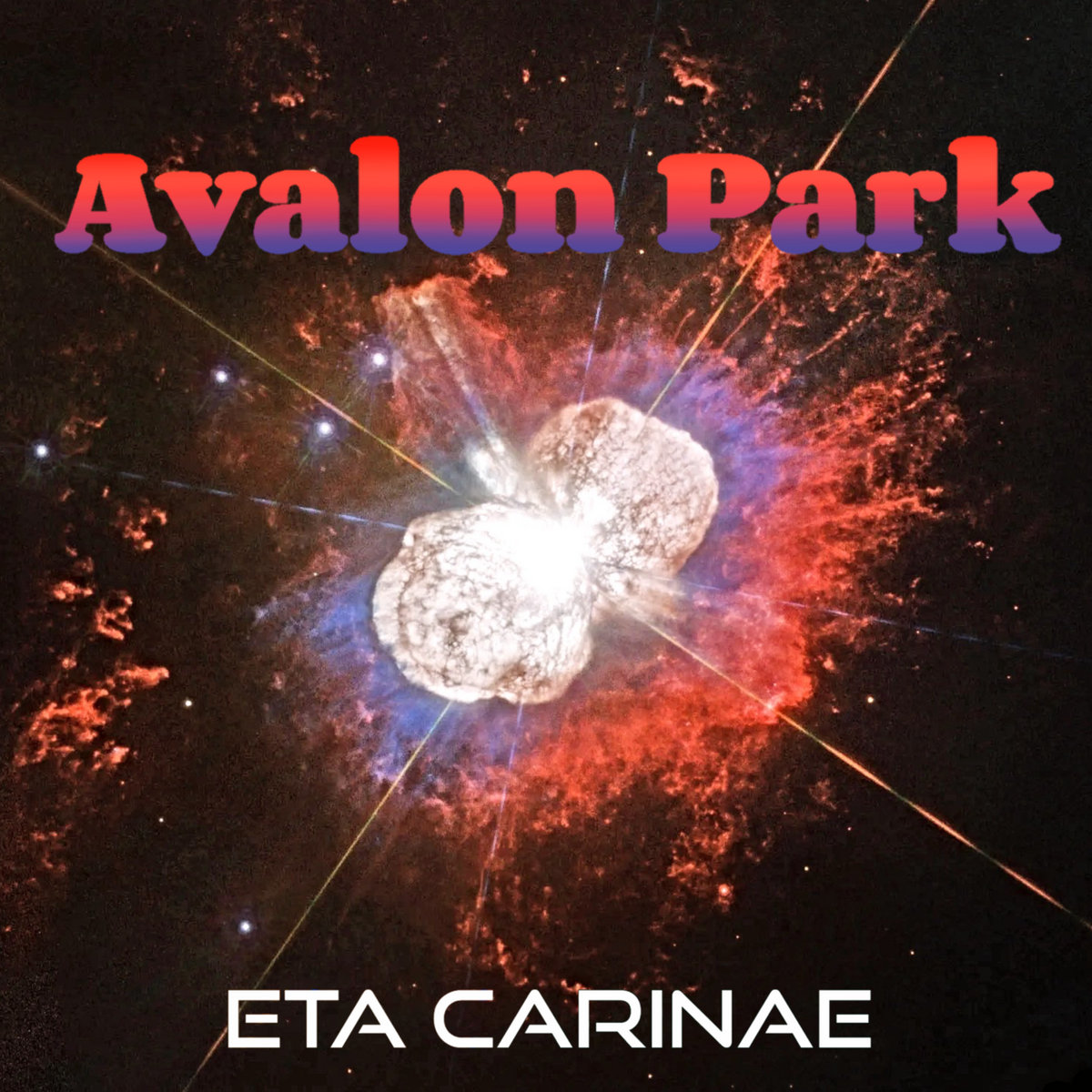
I bring this up because that mythology — the burned-down dance hall, the ghost of American leisure, the whole gorgeous wreckage of the past — is exactly what Charlie and Amanda Jackson have bottled on Eta Carinae, their debut record as Avalon Park, and I want you to understand that this is one of those albums you hold up against the light and see something real moving inside it.
Charlie told Brandon Berry of The Dayton Daily News that they “slowly turned into Jackson Browne — so slowly that nobody noticed.” That is one of the finest self-descriptions in rock and roll journalism; I don’t care who disagrees with me. Because that’s exactly what happened. The shift from old-time country into classic 1970s pop with an alt feel is significant but hardly abrupt — leaning into 12-string riffage when appropriate, while still arranging with three- to four-chord progressions, drawing on Jackson Browne and Fleetwood Mac on one end, the Velvet Underground and 1960s pop on the other, with Charlie even bringing back rapid strum patterns from his punk rock days. You hear all of that on this record, and somehow it doesn’t sound like a shopping list of influences; it sounds like one coherent, aching human voice.
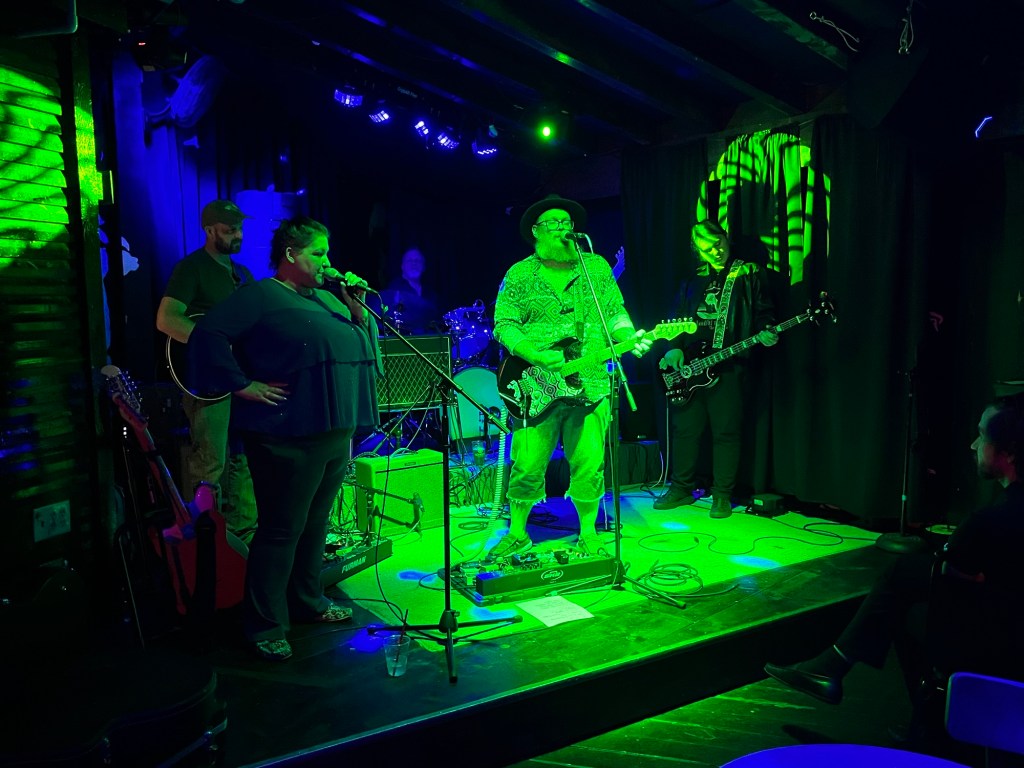
Avalon Park at the Oregon Express on May 30h for their release show.
“Bloodshot Moon” kicks things off, and this song is as good an opening track as I’ve heard in years — warm beer on the jukebox, boots full of lead, a man wandering down 5th and Main in the blue hours looking for somebody he’s already lost. It’s classic country-rock structure, but the feel is pure California 1972, the kind of song that makes you want to roll the windows down at two in the morning and drive nowhere specific. Amanda’s harmonies ghost through the background like something half-remembered, and the marriage is audible in every bar.
“Dandelion Wine” is this album’s heart. Four winds blowing you home, the pot of gold at the rainbow’s end resolving into something simpler and better — just dandelion wine. That’s songwriting, folks. Not chord tricks, not production gimmicks. The couple’s voices braid together in the chorus in a way that sounds completely uncontrived, because they’ve spent years singing around the house together, harmonizing because they know each other’s voices — his voice, her voice, twenty years of stories. You can’t fake that. You really can’t.
Then there’s “Broken Branches,” which is where this record stops being pleasant and becomes genuinely important. A bloodstain on the floor, a child left to look after themself. Charlie wrote every word of it, but it’s about Amanda’s childhood — and because he’s known her for twenty-seven years total, he can write from her perspective as if she wrote it herself. That kind of intimacy between writer and subject is what separates the craftsmen from the confessors, and the confessors always win. The lyric “I thought everybody felt” — describing a childhood so abnormal she had no framework to recognize it as such — is the kind of line that hits you in a place beyond words.
“Pink Carnations” is the album’s rawest wound: a eulogy for someone gone too soon, church bells ringing, the singer telling God exactly where he can stick his plan. It earns that anger. And “The Cynic” — written by Amanda — cuts with the controlled precision of someone who’s been dismissed once too often by people who had easier childhoods.
The title track uses Eta Carinae — a binary stellar system so luminous it’s five million times brighter than our sun — as a metaphor for two people locked in a gravitational dance. The only thing keeping those two massive stars from going full supernova is the gravitational pull of each other — locked in what Charlie called a death dance. He wrote the song in 2020, which, as the Daily News noted, feels entirely appropriate. Out of all the years to write about two volatile forces holding each other together.
The album closes with “Feels Like Summertime,” and it contains a reference to “beyond the dusty road” — which was among the first songs Charlie ever wrote for Amanda when they were dating. Now they harmonize on it together. Everything comes back around. If that doesn’t do something to your chest, I’m not sure music is for you.
Eta Carinae was engineered and produced by David Payne (The New Old Fashioned) at Reel Love Recording Company, with the band consisting of son Gideon on bass, Karl Woschitz on drums, Casey Abbott on guitar that simply lifts every song, Emma Woodruff (Novena) on backing vocals, and Charlie’s brother Leigh on additional guitar. It’s a family record in every sense — named for a park that burned down, sustained by the gravity of two people who haven’t let go of each other yet.
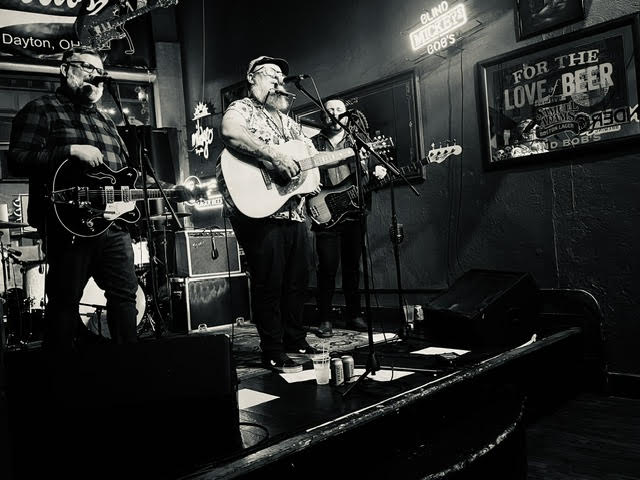
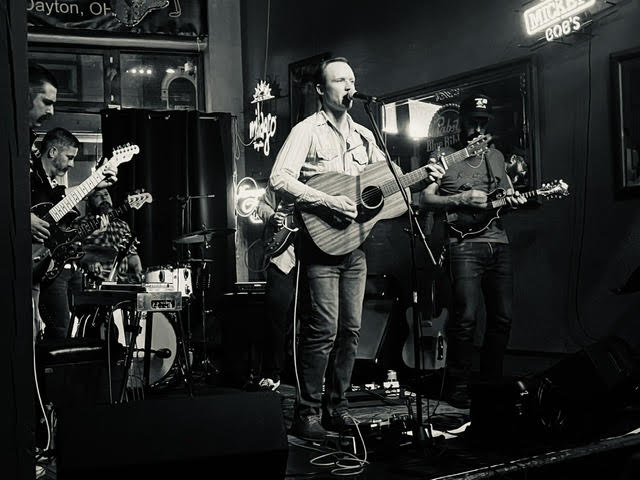
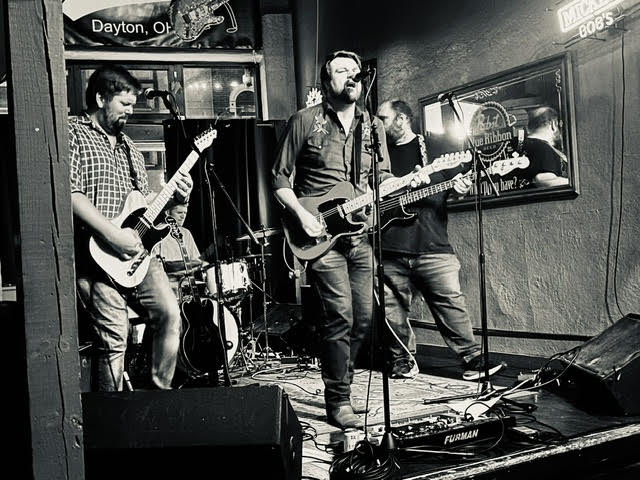
There are reunion shows that feel like exercises in forced nostalgia, half-remembered songs dragged out of storage like old winter coats that still smell faintly of dirt and heartbreak. And then there are reunion shows that remind you why music mattered in the first place. Last night at Blind Bob’s, Charlie Jackson and the Heartland Railway didn’t just reunite — they detonated. They transformed a packed bar into a sanctuary for those who believe in loud guitars played with genuine soul, rust-belt poetry, and the notion that music can still bear the weight of everyday lives without succumbing to irony.
The whole night felt less like a concert and more like a gathering of survivors. Dayton has always been one of those cities where music grows out of cracked pavement and factory smoke, where bands don’t emerge from marketing strategies but from long nights, cheap beer, broken hearts, and a refusal to disappear quietly. The room at Blind Bob’s had that sacred grime to it — sweat on the walls, people pressed together, everyone buzzing with the nervous electricity of seeing something that might actually matter.
Opening the night was Age Nowhere, and if you’ve been foolish enough to think alt-country has become nothing but boutique sadness for people who buy $70 vinyl reissues, this band would’ve knocked that idea straight out of your skull. They played with the kind of battered sincerity that can’t be faked. No posturing. No carefully curated “Americana” cosplay. Just songs that sounded lived in.
And then came the Ray Price cover. Damn. Paul Monin has a deep appreciation for country music that staggers the imagination.
Most bands cover classic country songs like they’re handling museum artifacts. Age Nowhere attacked theirs like they were trying to pull the ghost of every lonely highway bar in America directly into the room. The song swayed and cried and staggered with that beautiful drunken dignity that old country music understood so well.
You could practically hear decades of jukeboxes rattling inside it. It wasn’t revivalism; it was resurrection. For a few minutes, Blind Bob’s stopped being a bar in Dayton and became every neon-lit tavern where somebody ever sat staring into a whiskey glass, wondering where their life wandered off to.
That is the effect of real country music.
Then came The New Old Fashioned, who delivered a set so fierce and emotionally direct it felt like being punched in the chest repeatedly by someone who genuinely loved you. There’s always a danger with bands carrying that kind of roots-rock torch that things drift into bar-band competency — pleasant enough, ultimately forgettable. But The New Old Fashioned played like they understood the stakes.
Their songs had dirt under their fingernails.
The guitars roared without becoming indulgent, the rhythm section locked into a relentless heartbeat, and every song carried the feeling that the world outside the club doors is coming apart faster than anyone wants to admit. They weren’t selling nostalgia for some imaginary better America. They were documenting the actual emotional wreckage people are dragging around right now.
And then they closed with a new song called “What the Hell.” That title alone sounds like a muttered prayer from modern America.
The song built slowly, almost cautiously, before exploding into this furious, weary anthem that captured the confusion and exhaustion of living through an era where everything feels simultaneously absurd and terrifying. It wasn’t political sloganeering. It was something rarer and more valuable: honest emotional testimony. The chorus hit the room like a collapsing ceiling. People weren’t politely applauding; they were reacting physically, shouting the words back by the end like they’d known the song for years. That’s the mark of something real. Great songs don’t introduce themselves. They reveal that they’ve been hiding inside people all along.
By the time Charlie Jackson and the Heartland Railway took the stage, the room already felt transformed, but what happened next elevated the night into something mythic. They didn’t play like a reunited band trying to recapture former glory. They played like a band that had spent years absorbing life and came back with scars and love worth singing about. From the first notes, they sounded enormous — not polished, not slick, but alive in the way only truly great rock and roll can be alive.
Charlie Jackson himself commanded the room with the weary charisma of somebody who has seen enough disappointment to understand joy properly. His voice carried that beautiful raggedness that can’t be manufactured in studios or singing lessons. It cracked in exactly the right places. Every lyric sounded earned. To call Charlie a great songwriter is to underplay the hand you’ve just been dealt. He writes about everyday life, family, real true love like his heart could explode from the weight it carries. A more real songwriter would be almost impossible to find.
And the band — good lord, the band.
The Heartland Railway lived up to their name. They sounded like freight trains rolling through Midwestern darkness, all momentum and thunder and aching beauty. The guitars shimmered and roared, songs expanded and contracted organically, and every player seemed completely locked into the same emotional frequency. This wasn’t technical perfection. It was something better: conviction.
That’s what made the night extraordinary. Conviction.
Nobody on that stage seemed interested in trends, algorithms, branding strategies, or whatever hollow nonsense currently passes for music industry ambition. These bands played because they had to do so, as if their very lives depended upon it. Because songs remain one of the few ways human beings can tell each other the truth without immediately looking away.
And maybe that’s why the reunion mattered so much.
One of the things that elevated Charlie Jackson and the Heartland Railway beyond merely being a great bar band reunion was the sheer emotional force of the harmonies between Charlie Jackson, Denny Cottle, and Brad Bowling. These weren’t polished, antiseptic harmonies built for pop radio or Nashville songwriting camps. These were human harmonies — rough around the edges in all the right ways, voices colliding and lifting each other like old friends finishing each other’s stories after years of hard living. Honestly, I believe that Denny could harmonize with anyone and make them sound better.
At times they sounded almost impossibly huge for such a small room, rising above the guitars with this aching, blue-collar grandeur that felt deeply Midwestern. There were moments when the three voices locked together so perfectly the entire room seemed to lean forward instinctively, like everyone suddenly realized they were hearing something increasingly rare: genuine musical chemistry that can’t be rehearsed into existence.
And underneath all of it was the drumming of Ricky Terrell, who played with the kind of instinctive power that held the whole night together. Terrell didn’t overplay because drummers like him understand something too many modern musicians forget — groove is emotional architecture. His playing was muscular but deeply human, giving the songs both propulsion and gravity. At times he sounded like a runaway freight train hammering through the Rust Belt at midnight; at others he pulled back with astonishing restraint, letting the songs breathe and ache before kicking them forward again. He was the engine underneath the Heartland Railway name, keeping everything moving with relentless heart and soul.
In an age where music is increasingly flattened into disposable content — background noise for scrolling and advertising — Charlie Jackson and the Heartland Railway reminded everyone packed into Blind Bob’s that live music can still feel dangerous, communal, and spiritually necessary. The show wasn’t about reliving the past. It was about proving there’s still life in this battered old form called rock and roll.
If you want to understand American music, you don’t start in the places that market themselves as capitals. You start in places where people have learned how to survive without being watched. Dayton, Ohio, is one of those places. It’s not a brand; it’s a frequency—sometimes distorted, sometimes melodic, often both at once. It’s the sound of basements, nondescript halls, record stores, radio studios on the left side of the dial, and people who keep making music because not making it would be worse.
Dayton has long lived with the mythology of The Ohio Players, Brainiac, The Breeders, and Guided By Voices, and rightly so. Those bands didn’t just “come from” Dayton; they carried its nervous system with them. The Ohio Players reshaped the structure of music. Brainiac turned post-industrial anxiety into neon futurism. The Breeders made abrasion feel intimate. Guided By Voices proved that lo-fi wasn’t an aesthetic so much as a work ethic—songs written because they had to be written, not because the market asked for them. But the mistake outsiders make is assuming the story ended there, like a museum exhibit frozen in amber. Dayton never stopped. It just got better at multiplying.
What makes Dayton’s music community distinct is density. Musicians don’t just play in one band; they circulate. You’ll see David Payne one night in The New Old Fashioned, another night anchoring something else entirely, as if styles were jackets you try on before walking back out into the weather. You’ll hear Rich Reuter bring the same melodic intelligence to Kittinger. You can see Howard Hensley sing the narratives of your life that you keep hidden in a private journal. You’ll catch Kyleen Downes making vulnerability sound like strength, then turn around and hear Chad Wells and Aarika Voegele in Cricketbows and Creepy Crawlers remind you that psychedelia is still a radical act.
There’s a particular Dayton knack for bands that feel communal rather than hierarchical. Shrug operated like a shared engine—power pop with muscle memory, hooks built from collective trust. Smug Brothers do something similar in an indie lo-fi manner, but with a wink, as if to say: yes, we love the song, but we also love the joke inside it. Me Time pares things down until you can hear the room breathe, while Oh Condor leans into texture and atmosphere, stretching Dayton’s sound outward without losing its spine where punk urgency meets craft instead of fighting it.
And then there’s the streak of theatricality that runs through the city—not showbiz gloss, but the drama of people who know that art is a way to survive the week. Moira thrives on that tension between polish and pulse, while Todd The Fox reminds us that music doesn’t have to be ironic to be intelligent. Novena creates music that wraps around you and takes you through the experiences that you need not categorize but live within. Ghost Town Silence and Sadbox explore all of the corners, not as cosplay, but as honest terrain. They understand that Midwestern quiet can be loud if you listen closely enough.
Dayton also knows how to honor the songwriters—the ones who can stop a room with a voice and a guitar. Shannon Clark and The Sugar balance heart and harmony without sentimentality. Nick Kizinis crafts music that feels deeply personal and belonging to all of us at the same time. Mike Bankhead and Heather Redman carry storytelling traditions forward without turning them into nostalgia acts. Charlie Jackson, Sharon Lane, and Colin Richards and Spare Change all work in that space where craft meets community, where the goal isn’t fame but connection.
What’s striking is how the city supports experiments that don’t fit easy categories. The Nautical Theme reminds us that pop intelligence doesn’t have to announce itself with a thesis statement. Motel Faces and Motel Beds (separate names, shared grit) translate restlessness into motion, road songs for people who might not leave but still want to move. John Dubuc’s Guilty Pleasures embraces joy without apology, while Nick Kizirnis’s various projects show how longevity comes from curiosity, not branding.
Dayton’s rap and hip hop scene carries the same DIY backbone as its rock underground, but filtered through sharp lyricism, lived experience, and a deep sense of place. Tino delivers verses with clarity and purpose, balancing organic storytelling with an ear for hooks that stick without softening the message. Illwin brings a cerebral edge, blending introspection and technical skill in ways that reward close listening, while KCarter operates with a commanding presence, turning personal narrative into something anthemic and communal. Around them is a broader network of MCs, producers, DJs, and collaborators who treat hip hop not as a trend but as a language—one spoken fluently across clubs, community spaces, and independent releases. Like every vital Dayton scene, it thrives on collaboration over competition, local pride over imitation, and the belief that telling your own story, in your own voice, is the most radical move there is.
One of Dayton’s greatest strengths, too often undersold, never underpowered, is the depth and range of its women songwriters and musicians, artists who write with clarity, risk, and emotional authority. Amber Heart brings a fearless intimacy to her songs, pairing melodic grace with lyrical honesty that cuts clean through pretense. Samantha King writes with a restless intelligence, her work balancing vulnerability and bite, proof that introspection can still swing. Khrys Blank bends genre until it gives way, crafting songs that feel both deeply personal and quietly defiant, while Sharon Lane carries a lineage of soul, grit, and resilience that anchors the community itself. Add to this constellation the many other women shaping stages, sessions, and scenes across the city—singers, instrumentalists, bandleaders, collaborators—and a clearer picture emerges: Dayton doesn’t just feature women in its music culture; it is being actively defined by them. Their presence isn’t a sidebar or a trend. It’s the spine, the pulse, and the future of the sound.
Poptek Records operates like a pressure valve for Dayton pop intelligence, a label that understands hooks are a form of radical communication. The 1984 Draft brings nervy, literate indie punk rock that sounds like it’s pacing the room while thinking three steps ahead—melody sharpened by urgency, guitars wired straight into the bloodstream. Jill & Micah offer a different kind of voltage: intimate, harmonically rich, emotionally precise songs that trust quiet moments as much as crescendos, proving that restraint can hit just as hard as distortion. XL427 leans into power pop’s finest tradition—tight structures, smart turns, choruses that land without asking permission—while still carrying that unmistakable Dayton DNA of grit and sincerity. Taken together, and alongside the label’s other releases, Poptek’s roster feels less like a genre exercise and more like a shared belief system: songs matter, craft matters, and community matters. It’s pop music that knows where it’s from, isn’t embarrassed by joy, and refuses to confuse ambition with emptiness.
This ecosystem works because Dayton listens to itself. Bands go to each other’s shows. Musicians play on each other’s records. Area radio, house shows, small clubs, and DIY spaces form an infrastructure that doesn’t depend on permission. You can hear that lineage in The New Old Fashioned’s country infused power precision, in Oh Condor’s punk economy, in The Paint Splats’ melodic insistence, in Guided By Voices’s expansive moods still evolving. It’s a scene where influence flows sideways instead of top-down.
If the great rock critic, Lester Bangs (who I have been reading a lot of lately) taught us anything, it’s that scenes matter not because they’re perfect, but because they’re alive. Dayton’s scene is alive in the way a good band rehearsal is alive—messy, loud, generous, occasionally miraculous. It’s alive in the refusal to wait for validation. It’s alive in the way new bands grow up hearing old ones not as legends, but as neighbors.
So yes, celebrate Brainiac,The Breeders, and Guided By Voices. You should. But don’t stop there. Pay attention to Sharon Lane, Shrug, Amber Heart, Smug Brothers, The 1984Draft, Age Nowhere, Moira, Tino, The Heisy Glass Company, Harold Hensley, Todd The Fox, Ghost Town Silence, Sadbox, Novena, Me Time, Oh Condor, Motel Faces, Motel Beds, Mike Bankhead, Cricketbows and Creepy Crawlers, The Nautical Theme, Illwin, Khrys Blank, Seth Canan, XL427, Samantha King, The Typical Johnsons, KCarter and all the songwriters and collaborators who keep showing up. Dayton isn’t a chapter in a rock history book. It’s an ongoing argument about why music matters—and it keeps winning that argument one show at a time.
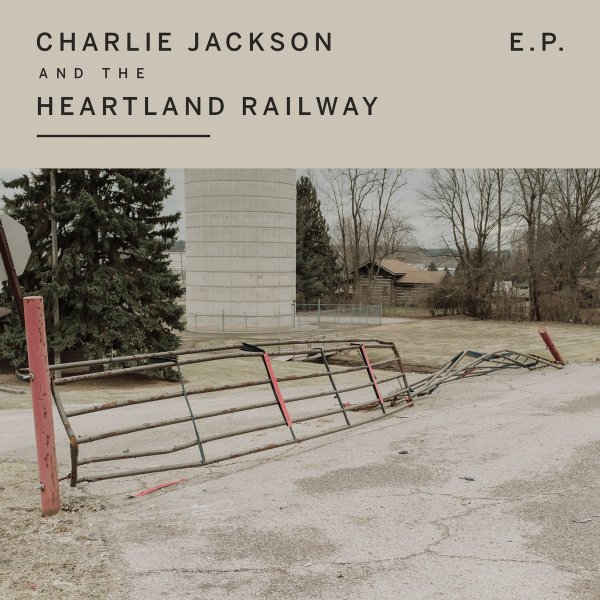
Our sixth installment of 11 Questions with… features one of the best songwriters in the Dayton Music Scene! Charlie Jackson burst onto our consciousness with his solo record ‘These Days’ (released in late 2015-early 2016) that featured some of the most well crafted, mature and relatable songs about the problems of real life. Wanting a broader sonic textures for his songs, Charlie recruited Denny Cottle, Ricky Terrell and Brad Bowling for ‘Charlie Jackson and the Heartland Railway‘ which released their eponymous titled record in 2018. A terrific EP called well… ‘EP’ followed roughly a year later. Anyone who has had the good fortune to be able to attend some of those lives shows know that Charlie was often joined on stage with his amazing vocalist spouse, Amanda, who added not only vocal harmonies but some fantastic singing of her own to those songs and a series of classic country covers. In a more just world, these songs would be at the top of the country charts!
We especially wanted to catch up with Charlie and Amanda as they are preparing to release their first record together. The release show will be happening on July 25th at the Yellow Cab Tavern which has done a terrific job of continuing to be a safe source for local music during the pandemic.
As always we wish to extend our heartfelt appreciation to Charlie and Amanda who took time out of their busy schedule to answer 11 questions for our readers/listeners on YTAA! We appreciate learning about how these terrific songs came together.
Charlie & Amanda Jackson (CAJ): We actually first started recording in Feb 2019 after just having our first show in Dec 18. After both of us (understandably) had some issues, we decided that we (and the songs) weren’t quite ready to be in the studio yet. So, we practiced a ton, and played a lot of shows and got more familiar with the material. In November of ’19 we went back in with Patrick, but the songs had all changed and evolved enough that we just started over from scratch. We had two full sessions in Nov, then another in January with Patrick and David Payne, and then a final one near the end of February with just David at the helm.
Dr. J: You have worked closely with Patrick Himes at Reel Love Recording Company here in Dayton, Ohio for several years, what first led to your recording with Patrick? How has that relationship shaped your music?
CAJ: Yes, Patrick mixed the first Railway record, and he had done such amazing work with so many artists in Dayton, I knew I really wanted to work with him in a broader capacity. We had hung out with Patrick quite a bit at shows and the Slovak Club so he had heard us play, and got to know us on a personal level. We had talked with him about what we would want a potential record to sound like, so we already had a head start toward making the album we really wanted.
Dr. J: The King & Queen of Dayton Country is a very different record than E.P. and Charlie Jackson and the Heartland Railway, how do these records compare? What influenced your work on each of them?
CJ: The two projects definitely have quite a few similarities and differences. The work I did with The Heartland Railway is far less country than this new album. My writing has always leaned more on the country side, but while working with the guys in the Railway it took more of a rock vibe to it. I have said before, we were a rock and roll band playing country songs. This new project certainly leans more toward a classic country/americana sound. Amanda and I both listen to a LOT of old country music. Like, the old stuff from the Sun Records days, 50’s and 60’s country. Stuff like Johnny Cash, Carl Perkins, and Patsy Cline. This really influenced our sound more than it did for the Railway. I have always been a big proponent of letting things progress organically.
With the Railway and with this new album. I don’t try to tell the other players what to play or how to play it. I’ve told all of them, that I’m not going to tell them how to play their instrument when they’re better at it than me. I didn’t have a bullet-pointed list of what I wanted, or where and when I wanted it. I let them feel it out and flesh it out. I could’ve said I wanted a straight Nashville sounding Tele lead guitar on the album, and it probably would have ended up sounding very Merle Haggard and I would have loved it. By stepping back and letting Casey breathe with it, he gave the lead guitar a very Knopfler-esque quality that I wouldn’t have asked for, but I absolutely dig. My songwriting across all three releases, I think, hasn’t changed a whole lot, I feel like I’ve evolved as a writer but every release combines new material with songs that I’ve had for a decade or more, and they all seem to fit together nicely. Amanda and I are even breathing some new life into some songs I wrote about 13 years ago, and they’re turning out great. Its all about letting it breathe, and seeing where it can go.
Dr. J: ‘Call This Home’ – the first single from The King & Queen of Dayton Country – addresses forms of love and support that someone finds at home – is that a correct interpretation of the title? If that is correct, did you intend to address how difficult it is to make a loving home or did the song evolve in that direction over time?
CAJ: The song absolutely reflects love and support found within a partner. We didn’t intend to address difficulties in making/keeping a loving home. Every partnership requires communication and work, but when love is there, it is just there. We do fuss at each other and we playfully argue but in our 17-years of being a couple we have never truly fought. Our love and communication have kept the big blowouts at bay.
Dr. J: How did the song ‘Call This Home’ come together musically for you?
CJ: I wrote the chorus first; I had no idea what direction I wanted for the verses yet. I told Amanda I wanted her to write her verse. She (of course) told me that she couldn’t write a verse, but then started sending me lines. They were just some insight to how she feels and how she thinks. I used those lines to craft her verse. Her verse was written before mine. But this was the first song that Amanda really had a hand in writing.
Dr. J: Where do you often derive inspiration to make music?
CJ: I can draw inspiration from just about anywhere, but my biggest muse has definitely always been Amanda. In the love songs (even if they aren’t autobiographical) I use her as the focal point of the love itself. For the sad songs and the heartbreak songs I recall back to our times apart in the rockier years of our early relationship, or I look at what I now know I would be missing out on if that love wasn’t there. Now, with this new level where I’m writing songs about her and for her to sing, she’s even more of a muse than she already was. Not just lyrically, but even the way I arrange the music revolves more around her. I write in keys that showcase her as much as possible. When I can coax her out of her shyness and get her to sing out, especially in her higher register, she has this natural vibrato in her voice that is just beautiful.
Dr. J: How would you describe the music that you typically create? How has that process evolved or changed over time (especially as you think about your journey from These Days to Charlie Jackson and the Heartland Railway to The King & Queen of Dayton Country)?
CJ: Ok, first let me just say that I think it’s hilarious that you even put ‘These Days’ in with the others. Those are really just demo tracks, at best. I really didn’t know what I was doing with any of the 4 home recorded albums I released.
Anyway, I like to think of my music as honest and relatable. I try to lean more on being clever, I don’t usually delve deep into poetic symbolism and imagery. It’s a little stripped down, a little raw. Maybe it draws from the years in Punk Rock, but I like to get to the point and make it clear. I like to tell a story.
Dr. J: What is next for you musically? Do you have plans to record again with The Heartland Railway? How would you describe your thoughts at this point for your next project?
CJ: Up next, I’m really looking to record a solo record. I don’t know how many songs yet, more than likely just an EP. I want it to be much more stripped down, kinda like Nebraska, or Southeastern, or Cheaper Than Therapy. Not much more (if any) instrumentation than just me and an acoustic. Kind of a ‘back to basics’ approach.
Amanda and I also already have several songs on deck for a second Charlie & Amanda release. Some brand new, some of them are songs that I wrote at the very beginning of my journey into country music writing. We really have the advantage of the fact that before the Railway got together, I already had 4 self-released albums worth of songs in my back catalog. Amanda has taken over the duties of figuring out which of those lend themselves to a duet format, and figuring out who should sing which verse, changing pronouns so it makes sense, etc. So, we have plenty to call back on.
I’m really focusing as much as I can on this project. We have been practicing with the other players and I’m loving the band format with Amanda in the mix. That being said, while a Heartland Railway show in the future wouldn’t be off the table, I really see this project, with Amanda at my side, is really the direction I see myself moving forward.
Dr. J: What is your favorite song to perform with Amanda? What is your favorite song to perform with the Heartland Railway? What makes it a current favorite in your performances? Do you enjoy Live Streaming?
CJ: My favorite song with the Railway, definitely ‘Sugarbeet‘. Such a fun song to play, plus it has like 4 guitar solos in it. Just a barn burner.
With Amanda, from the record, my favorite would have to be Oasis. I love the way our harmonies intertwine on that one. My favorite one to sing with her, however, would have to be one of our new ones named Carolyn. She really belts it out, it’s a whole lot of fun. Once the world opens back up, I promise it will be a regular addition to the set list.
I do enjoy Live streaming to a point, but I really miss the interactions. That was one of my favorite parts of the show. Hanging out, laughing, raising a beer. There really is no virtual replacement for that.
Dr. J: What is one message you would hope that listeners find in the unique nature of your latest music?
CAJ: Laughter and love. Its really something when you not only share a household, and share love, and share a life with your Partner, but now sharing our music together, and sharing it with others. Being a little bit vulnerable and sharing some of the truths about life and love that we’ve learned. It really helps you connect. We’ve heard people say that our voices blend so well together, and we like to believe that it’s a direct result of us trying to be so in tune with one another on every level, that it really comes forward in our music. We are not overly private people and we share real life within our songs, some of the real-life issues are hard ones that we deal with every day or issues we have overcome. We hope people can look at those and understand that regardless of what life throws at you there are always ways to help you move forward in life. One of the ways to get through muddy situations has always been, and will always be, love and support. We offer that to each other and others.
Dr. J: As a musician, how are you adapting to the challenges of the Coronavirus?
CAJ: It’s a really weird time. Especially for those in the entertainment industry. Amanda and I are lucky that this isn’t our regular gig. We don’t depend on our music to help finance our daily life. Amanda works from home, so she hasn’t missed a day over the virus, my work has been a little spottier than usual, but I’ve still worked more than I’ve been off.
We have definitely missed the shows and all of our friends through all of this. Now, on the cusp of releasing out debut album, with the Covid numbers getting worse, we are definitely afraid that our release show won’t happen the way we have planned, and that certainly bums us out. But we are healthy, and we have each other. So, we can’t complain too hard.
Thanks again to Charlie and Amanda for taking the time to answer these questions! All pictures and images courtesy of Charlie & Amanda Jackson.
The first couple of Dayton Country Music have their first single from their upcoming debut record! Harkening back to the classic country duets and duos of classic country past, Charlie & Amanda craft songs that address and document the challenges of real life with heart, sincerity and authenticity. Their music reminds us of the legendary country duos of Conway Twitty and Loretta Lynn, George Jones and Tammy Wynette, Kenny Rodgers and Dolly Parton and Johnny Cash and June Carter. The most appropriately titled full length album “The King & Queen of Dayton Country” is available for pre-order now at at the duo’s bandcamp page. The record will be available everywhere on July 25, 2020. You owe it to yourself to check out the first single!
Well, here we are, the end of another year is upon us. If you’re like I am, you are fighting to break out of your self-imposed echo chamber which you have ensconced yourself in and (possibly) you are thoroughly convinced life as you know it is falling apart. Yes, 2019 has been one of “those” years. As we all watch the worlds political systems, economies and climates stretch and strain under the forces that be, it is easy to fall into a state of hopelessness and despair. For a great many of us, however, the thing that keeps us upright and a productive part of society is an unnatural reliance upon popular music, rock n roll in particular, and the almost mystical way it seems to be able to make life bearable. Almost like a gigantic connective web covering the world, for those of us who are tuned in, music is the prime mover, the voice of generations, the highest form of expression and ultimately, the reason behind it all. Like legendary Who guitarist Pete Townsend said, “… the elegance of pop music [is] that it [is] reflective: we were holding up a mirror to our audience and reflecting them philosophically and spiritually, rather than just reflecting society or something called ‘rock n roll.’” Indeed, this is the way it was then when The Who was at the forefront of new music and the way it still is now.
Fortunately for almost everyone, I am not prone to writing long pieces extemporaneously, but initially and for reasons unknown, I was asked by my friend Art Jipson, (a Dayton Ohio music legend in his own right), to write a small piece on what I have been listening to this past year and write a couple of review lines about each of the artists. Not being someone who routinely turns legends down, I agreed to the project and found that in attempting to put the piece together I was forced into deep water asking myself why was it exactly I was listening to what I was listening to. Why was I drawn to things I was drawn to and what did they truly mean to me? The truth is, I’m not sure I came up with any solid answers and I definitely did no music reviewing in the process of writing this article, but here are some things I think are worth mentioning.
2019, for all intents and purposes, was a year of great turmoil in the United States. Social upheaval and political division was at an all time high and I have found that with only a few notable exceptions, artists from previous eras have become suddenly and starkly relevant again in a way that has never happened for many of us before. For instance, 2019 saw the release of the album Colorado by Neil Young, which is objectively an amazing piece of artistry and social commentary. Take into evidence the song “Shut It Down” where the venerable Mr. Young sings:
“All around the planet There’s a blindness that just can’t see Have to shut the whole system down They’re all wearing climate change As cool as they can be”
I was, and am, immediately drawn to this album for reasons other than just being a decidedly die hard and zealous Neil Young fan. There are things afoot which we haven’t dealt with in many years and they are starting to show in the edges of the musical spectrum of rock-n-roll.
The Drive By Truckers, the die hard stalwart hardest working rock band in the business, this year released a single and a teaser for they upcoming album with the titles being respectively, Perilous Night and Armageddon’s Back In Town. My friends, there are things moving, whether you want them to or not, which we have not seen in many years. In Perilous Night, Patterson Hood sings:
“Dumb, white and angry with their cup half filled
Running over people down in Charlottesville
White House Fury, it’s the killing side, he defends
Defend the up-ender, yes he played that tune
it ain’t the ending but it’s coming soon
We’re making love beneath a sputnik moon again
White House is glowing from the Red Square light
The gates at the border being slammed down tight
We’re moving into the perilous night, my friend”
These are heady and potentially dangerous times, and Rock N Roll, maybe even all of pop music, is standing in the gap ice again ready to take up the cause. Yes, there were many albums released this year and singles which have absolutely nothing to do with the general climate in the world, for instance (and I am showing my age here) Juliana Hatfield, and Swervedriver both released albums this past year. However, I find myself continually drawn back to music which is speaking to our times, even when those times are from years which have seemingly passed out of relevance.
Bob Dylan, Neil Young, The Drive By Truckers are all in my rotation on a constant basis now because they are in the process of capturing a point in time for me. I need to post a disclaimer for everyone who has made it this far in the article. I am not living some sort of 60’s battle reenactment; (This is a line from a Frank Turner song, if you don’t know him you should look him up). I am suddenly and very acutely aware at this point in history we, in this country, and on this planet, are watching huge tectonic plates grinding and moving against one another in a way that has not been seen in many many moons. Put your antenna up friends, the truth is out there and it’s starting to be sung about out on the fringes.
Ultimately, however, and when I finally pull my mind away from the morass of the public spectacle in front of us, I gravitate back towards the people and places I love and am familiar with. For instance, local bands Like Seth Canan and The Carriers, The Boxcar Suite and the 1984 Draft. Artists like Charlie Jackson and Amber Hartgett, and really everything Patrick Himes touches, are always somewhere in my headspace leaving sonic trails through the synapses. I miss Tom Petty more and more every day and wish I could let it all go again but did you hear? Rage Against the Machine is coming back for one more go. Coincidence? I suspect as we roll into the next year we will see an even greater resurgence of politically and socially charged music and lyrics and I for one think it is long overdue. In this case, hindsight is truly 2020.
Today on the show we will be talking to Lindsay Murray of Gretchen’s Wheel about her Nada Surf project ‘Moth to Lamplight’ which you can preorder in advance of the March 22nd release!
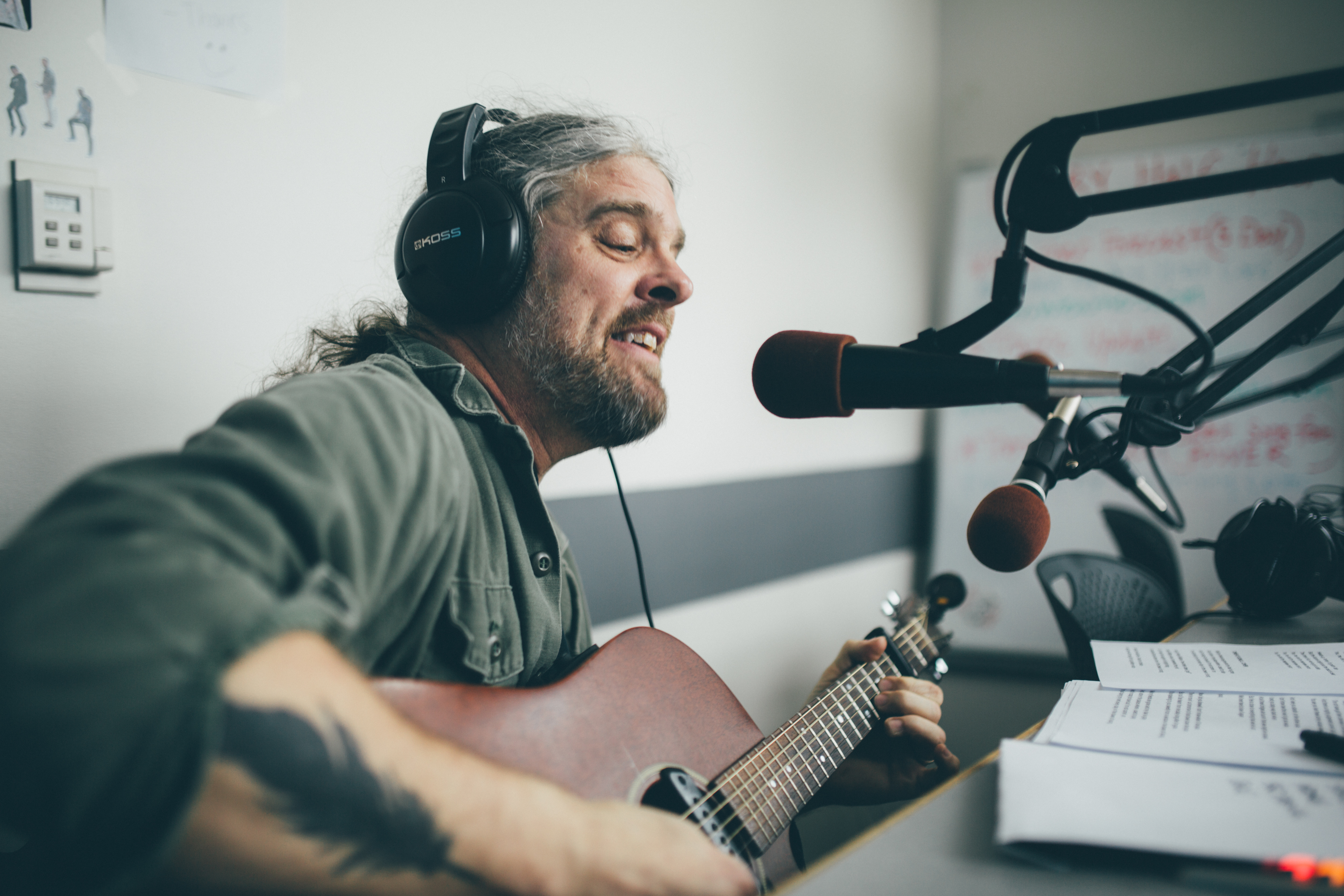
And we are joined in the studio by our pals Charlie and Amanda Jackson! They are making their first joint appearance on Your Tuesday Afternoon Alternative! The perfect example of a power couple! Charlie known for his solo work and his music with The Heartland Railway makes a return to YTAA. We welcome Amanda to the show! She has been singing with Charlie for years but recently the duo have begun playing out together! We will talk about their music, fantastic singing, amazing harmonies and great songwriting!
If you have heard their amazing music than you know why we are so excited about this visit! So, make the plans, set up the schedule and do whatever you need to do to join us from 3-6pm online over on wudr.udayton.edu or 99.5 & 98.1fm in Dayton, Ohio!
One of our favorite singers in Dayton has a new record that we want to share with you! We refer to him as the “Golden Voice” in Dayton. His voice is simple amazing! And now you can pre-order a copy of his forthcoming solo record! You are a lucky person.
Harold Hensley is a staple of the vibrant Dayton music scene! His work with The Repeating Arms deserves your attention. You know it is going to be an excellent music experience when you see Harold is in the room whether he is singing his own songs or jumping up and singing with pals like Charlie Jackson and The Heartland Railway or The New Old Fashioned!
On Your Tuesday Afternoon Alternative this week we have planned over an hour of local musicians who have played the YTAA studio over the past several years! Expect live music from Chad & Aarika of Cricketbows, Tod Weidner of Shrug, Tom Gilliam of Ghost Town Silence, Mack McKenzie, Manray, David Payne, OldNews, Charlie Jackson, The Nautical Theme and TEAM VOID! This is part of our celebration of thirteen years of Your Tuesday Afternoon Alternative!
Don’t be late. Set the alarm and join us from 3-6pm on Tuesday over at WUDR and 2-5pm on RevealCentral.com on Wednesday for a live music extravaganza over at YTAA!
We have some new music from Mr. Joe Anderl and a cool demo from Fleetwood Mac that has Dr. J rethinking the sound and influence of that band!
Join us from 3-6pm on WUDR tomorrow – wudr.udayton.edu. or 99.5 & 98.1fm in the Dayton, Ohio area! You can always request music by contacting drjytaa on twitter!
We also have special guest Gail Pop in the studio to talk about the important COAT initiative (Community Overdose Action Team). Our pal Gail is on the prevention branch of the team. Check out their important work –http://www.phdmc.org/coat!
Streaming Forward, Powered By The Past - if you love the 80s music, new music, Eurovision, cheesy pop and awesome playlists then let's get this pop party started!




 Our sixth installment of 11 Questions with… features one of the best songwriters in the Dayton Music Scene! Charlie Jackson burst onto our consciousness with his solo record ‘These Days’ (released in late 2015-early 2016) that featured some of the most well crafted, mature and relatable songs about the problems of real life. Wanting a broader sonic textures for his songs, Charlie recruited Denny Cottle, Ricky Terrell and Brad Bowling for ‘
 Dr. J: What can you share with us about when and how you both started recording your latest record,
  Dr. J: You have worked closely with Patrick Himes at
  Dr. J: The King & Queen of Dayton Country is a very different record than E.P. and Charlie Jackson and the Heartland Railway, how do these records compare? What influenced your work on each of them?
 Dr. J: ‘Call This Home’ – the first single from The King & Queen of Dayton Country – addresses forms of love and support that someone finds at home – is that a correct interpretation of the title? If that is correct, did you intend to address how difficult it is to make a loving home or did the song evolve in that direction over time?
 CJ: I can draw inspiration from just about anywhere, but my biggest muse has definitely always been Amanda. In the love songs (even if they aren’t autobiographical) I use her as the focal point of the love itself. For the sad songs and the heartbreak songs I recall back to our times apart in the rockier years of our early relationship, or I look at what I now know I would be missing out on if that love wasn’t there. Now, with this new level where I’m writing songs about her and for her to sing, she’s even more of a muse than she already was. Not just lyrically, but even the way I arrange the music revolves more around her. I write in keys that showcase her as much as possible. When I can coax her out of her shyness and get her to sing out, especially in her higher register, she has this natural vibrato in her voice that is just beautiful.
 Dr. J: How would you describe the music that you typically create? How has that process evolved or changed over time (especially as you think about your journey from These Days to Charlie Jackson and the Heartland Railway to The King & Queen of Dayton Country)?
 Dr. J: What is next for you musically? Do you have plans to record again with The Heartland Railway? How would you describe your thoughts at this point for your next project?
 Dr. J: What is your favorite song to perform with Amanda? What is your favorite song to perform with the Heartland Railway? What makes it a current favorite in your performances? Do you enjoy Live Streaming?
 Dr. J: What is one message you would hope that listeners find in the unique nature of your latest music?
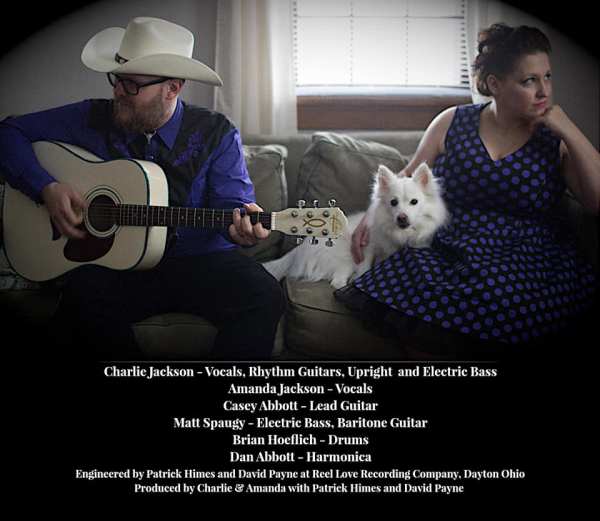 The first couple of Dayton Country Music have their first single from their upcoming debut record! Harkening back to the classic country duets and duos of classic country past, Charlie & Amanda craft songs that address and document the challenges of real life with heart, sincerity and authenticity. Their music reminds us of the legendary country duos of Conway Twitty and Loretta Lynn, George Jones and Tammy Wynette, Kenny Rodgers and Dolly Parton and Johnny Cash and June Carter. The most appropriately titled full length album “The King & Queen of Dayton Country” is available for pre-order now at at the duo’s
  Well, here we are, the end of another year is upon us. If you’re like I am, you are fighting to break out of your self-imposed echo chamber which you have ensconced yourself in and (possibly) you are thoroughly convinced life as you know it is falling apart. Yes, 2019 has been one of “those” years. As we all watch the worlds political systems, economies and climates stretch and strain under the forces that be, it is easy to fall into a state of hopelessness and despair. For a great many of us, however, the thing that keeps us upright and a productive part of society is an unnatural reliance upon popular music, rock n roll in particular, and the almost mystical way it seems to be able to make life bearable. Almost like a gigantic connective web covering the world, for those of us who are tuned in, music is the prime mover, the voice of generations, the highest form of expression and ultimately, the reason behind it all. Like legendary Who guitarist Pete Townsend said, “… the elegance of pop music [is] that it [is] reflective: we were holding up a mirror to our audience and reflecting them philosophically and spiritually, rather than just reflecting society or something called ‘rock n roll.’” Indeed, this is the way it was then when The Who was at the forefront of new music and the way it still is now.
 upheaval and political division was at an all time high and I have found that with only a few notable exceptions, artists from previous eras have become suddenly and starkly relevant again in a way that has never happened for many of us before. For instance, 2019 saw the release of the album Colorado by Neil Young, which is objectively an amazing piece of artistry and social commentary. Take into evidence the song “Shut It Down” where the venerable Mr. Young sings:
 Jeremy Siegrist describes himself as “a no one, from no where, in a small band in Ohio called
  Today on the show we will be talking to Lindsay Murray of Gretchen’s Wheel about her Nada Surf project ‘Moth to Lamplight’ which you can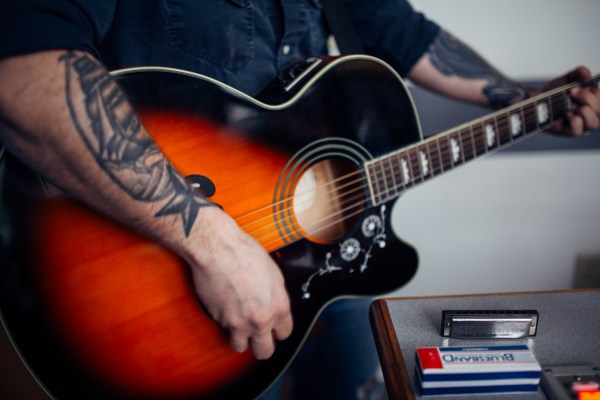
 If you have heard their amazing music than you know why we are so excited about this visit! So, make the plans, set up the schedule and do whatever you need to do to join us from 3-6pm online over on
  One of our favorite singers in Dayton has a new record that we want to share with you! We refer to him as the “Golden Voice” in Dayton. His voice is simple amazing! And now you can pre-order a copy of his forthcoming solo record! You are a lucky person.


 We have some new music from Mr.