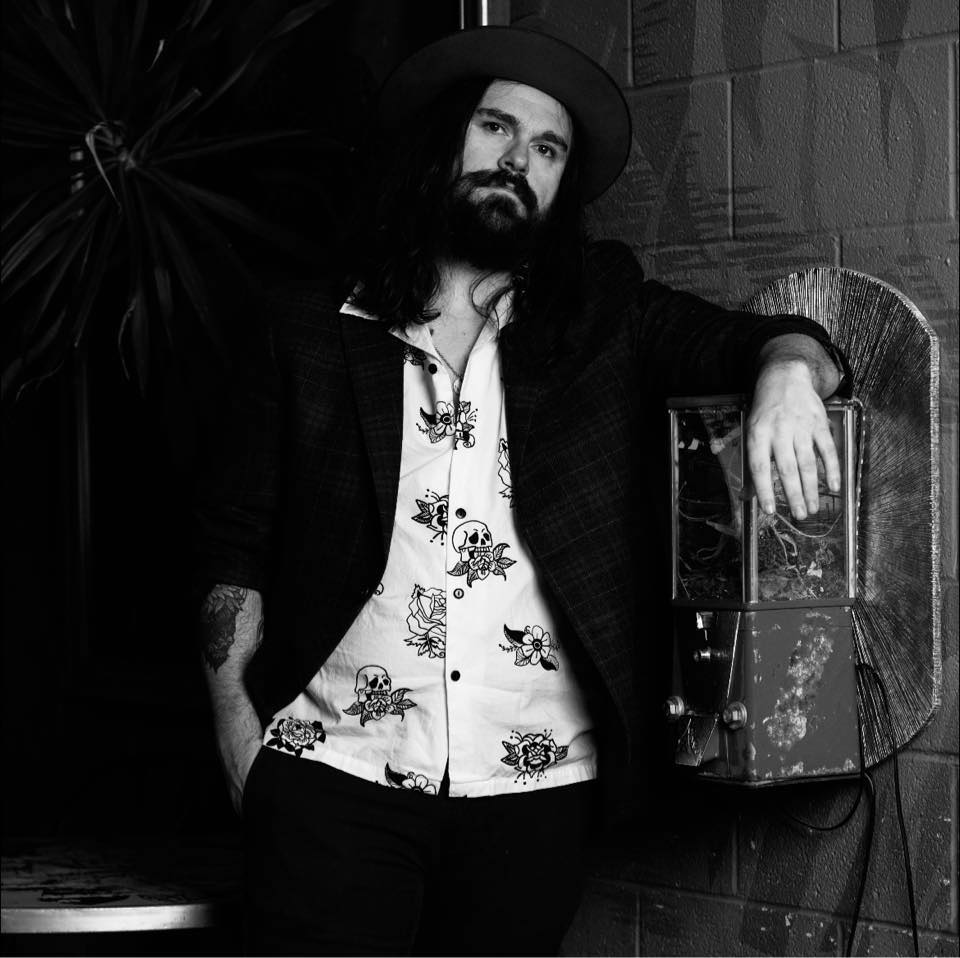
Dayton’s own American Whale stopped by the YTAA studio for a great conversation about music and songwriting. The show has already aired—and you can catch the whole thing now on Mixcloud. Turn it up and give it a listen!

Dayton’s own American Whale stopped by the YTAA studio for a great conversation about music and songwriting. The show has already aired—and you can catch the whole thing now on Mixcloud. Turn it up and give it a listen!
There are people who become famous, and there are people who quietly change lives without ever expecting to. Dave Kendall belonged to the second category. If you came of age in the late 1980s or early 1990s with an antenna pointed toward MTV, chances are you remember him not because he tried to become the star, but because he never did. He simply opened the door, stepped aside, and invited the music to speak.
That was his gift.
Long before algorithms promised to “discover” artists for us—and then promptly served us more of what we already liked—there was 120 Minutes. Sunday nights. Midnight. The weekend fading into Monday morning. Homework not quite finished. A school day or workday looming only a few hours away. Common sense said to go to bed.
Instead, there was Dave Kendall. He would appear on the screen with that unmistakable calm confidence, introducing bands that felt like transmissions from another planet. There were no pyrotechnics. No shouting. No manufactured excitement. Just someone who clearly loved music enough to assume you might love it too.
That assumption changed everything. I stayed up far later than I should have. Every Sunday.
Looking back now, I realize I wasn’t simply watching a television show. I was attending church.
Not the church of nostalgia—that disease that convinces us everything was better before—but the church of possibility. Every week there might be a new band from Manchester, Glasgow, Athens, Minneapolis, or some college town I’d never heard of. Every video suggested there was another musical universe waiting just outside the Top 40.
American rock critic Lester Bangs once argued that rock and roll was never really about perfection. It was about collision. Noise. Discovery. Joy wrapped inside imperfection. 120 Minutes lived by that philosophy. It wasn’t polished into something safe. It was a glorious collision of goth, shoegaze, industrial, punk, dream pop, college rock, post-punk, alternative, and artists that refused to fit inside convenient marketing categories.
It trusted its audience. Imagine that.
Today we speak endlessly about “content.” We optimize playlists. We chase engagement metrics. We let recommendation engines tell us what listeners supposedly want before they’ve even heard it. Dave Kendall practiced something radically different: Curation. He wasn’t selling us music. He was introducing us to friends we hadn’t met yet.
Some weeks I loved every song. Some weeks I wondered what in the world he had just played. Those weeks were often the most important. Because taste doesn’t grow by hearing things we already understand. Taste grows by being puzzled. By being challenged.
By sitting through three songs that don’t connect so the fourth one changes your life.
Years later, when I found myself behind a radio microphone hosting Your Tuesday Afternoon Alternative, I realized just how much of Dave Kendall had followed me into the studio.
Not consciously. Almost by osmosis. I don’t think about playlists as products. I think about conversations.
A DJ isn’t there to prove superior taste. A DJ is there to make introductions.
“You’ve never heard this before.”
“You might not like it.”
“But give it three minutes.”
That’s Dave Kendall talking through decades of accumulated records and memories.
Every Tuesday afternoon I catch myself making the same leap of faith he made every Sunday night: trusting listeners to be curious.
College radio occupies a strange and beautiful corner of the musical ecosystem because curiosity still matters there. No shareholders are demanding that every song sound like the previous hit. Sometimes we make odd transitions. Sometimes we mispronounce names. Sometimes the levels aren’t perfect. Sometimes we discover an incredible Dayton band that deserves far more attention than it receives. That humanity matters.
Curating music experiences is celebrating the beautiful messiness of people chasing an unknowns, chasing something authentic instead of something market-tested. College radio remains one of the few places where authenticity still regularly beats efficiency.
Dave Kendall understood that instinctively.
His interviews reflected it too. He asked musicians about music rather than celebrity. He treated artists as creators instead of commodities. Watching those conversations taught many of us that intelligence and enthusiasm could occupy the same sentence.
That’s a lesson that extends well beyond broadcasting.
As a sociologist, I spend much of my professional life thinking about communities—how they form, how they sustain themselves, how ideas travel. Looking back, 120 Minutes wasn’t simply a television program. It was an invisible community.
We didn’t know each other. But every Monday morning there were thousands of us carrying around the same songs, the same videos, the same feeling that we’d glimpsed something just outside the mainstream.
Before social media. Before streaming. Before someone could immediately search every lyric. The mystery was part of the experience. You scribbled band names onto notebook paper. You drove to record stores hoping they carried the album.
Sometimes they didn’t.
The search became part of the love. We’ve gained remarkable convenience since then, but we’ve lost something harder to name. Discovery has become frictionless. Yet friction often created devotion. Maybe that’s why I still enjoy digging through crates of vinyl or hearing a local band no algorithm would ever recommend. Discovery still feels like work worth doing.
Dave Kendall reminded us that music is not background noise.
It’s geography.
It’s identity.
It’s memory.
Years after those Sunday nights, I still hear certain songs and immediately remember where I was sitting in the house, how dimly lit the room seemed, how everyone else had gone to bed while I stayed awake believing there might be one more extraordinary song before the closing credits.
Usually there was.
Dave Kendall died having influenced countless listeners who may never have realized just how much they borrowed from him. DJs. Record store clerks. Music journalists. Professors. Lifelong fans. People like me.
Kendall’s legacy isn’t measured by ratings. It’s measured by record collections. By independent radio stations still taking chances. By conversations beginning with, “Have you heard this?” By listeners willing to stay awake a little longer because they believe the next song might change something.
Most weeks it didn’t. Sometimes it did. Those were the Sundays that became part of who we are.
Every Tuesday afternoon, when I slide the microphone fader up and introduce another artist who deserves to be heard, I like to think those late Sunday nights are still echoing somewhere in the background.
Not as nostalgia.
As gratitude.
Thanks, Dave.
Now…here’s another song you might not know.
Yet.

Or in true Rocky and Bullwinkle, subtitle form:
Why criticism has made me a better radio DJ—and a better listener.

There is a peculiar vulnerability that comes with opening a microphone every Tuesday afternoon.
For three hours, I invite complete strangers into my musical world. I ask them to trust me enough to follow a trail that might begin with a jangly indie band from Dayton, wander through Americana, stop briefly for a forgotten punk single from 1979, and somehow arrive at a songwriter whose latest album has only a few hundred streams.
Sometimes the journey makes perfect sense. Sometimes it resembles someone spilling an entire record collection down a flight of stairs.
That’s live radio.
After more than four decades behind microphones at four different stations—and more than twenty years hosting Your Tuesday Afternoon Alternative on WUDR—I’ve learned something that took me much longer than it should have.
People aren’t really criticizing the music.
They’re telling you something about themselves.
One listener wonders why I played that song. Another wishes I’d feature more local music. Someone else thinks the show has become too eclectic, while another insists it isn’t eclectic enough. One person loves hearing deep album cuts; another just wants songs they recognize. If I post too often on social media, someone notices. If I don’t post enough, someone notices that too.
In my day job as a prof of sociology, we spend a lot of time thinking about perspective. Music reminds me every week that perspective isn’t just an academic concept. It’s deeply personal.
Every listener arrives carrying an invisible soundtrack.
Their first concert. The song that got them through divorce. The album they shared with their father. The band they discovered in college that convinced them life could be larger than their hometown. A song or an album or a band that changed their life.
No wonder people feel strongly.

Music has never been merely entertainment.
It’s autobiography set to melody. That gradual realization has slowly changed how I hear criticism.
Early on, I sometimes took it personally. I wondered whether I’d chosen poorly or somehow failed the audience. But radio has a remarkable way of sanding down your ego. You miss a cue. You mispronounce an artist’s name. You accidentally leave the microphone on while shuffling papers. You introduce the wrong song. You post something on social media that could have been written more clearly or more thoughtfully.
Live radio has an excellent memory. And so does the internet.
The temptation is to become defensive. To explain yourself. To remind everyone that producing three hours of live radio every week involves juggling playlists, interviews, engineering, timing, software, breaking music news, community events, and trying to sound like you’re not simultaneously wondering whether you remembered to turn off the coffee pot before leaving the house.
But explanations rarely build community.
Listening does.
One of my favorite observations about radio comes from legendary broadcaster John Peel, who believed a DJ should surprise listeners, not simply reassure them. His programs became famous because he trusted audiences enough to let them discover music they didn’t yet know they loved.
I’ve always admired that philosophy.
Not because I think every song I choose deserves universal praise. Far from it. Some songs simply don’t connect. Some artists I become excited about fade away. Others I overlooked become favorites years later.
Curiosity requires humility.
And humility means accepting that you won’t always get it right — And that is a hard fact to accept.
Years ago, I wrote that if even one person found comfort in a song, then the show mattered. I still believe that. In fact, I believe it more deeply now than when I first wrote those words.
But I’ve also come to appreciate the other side of that equation. If someone tells me a transition felt awkward, maybe it did.
If they point out that I interrupted a guest too quickly, I should think about that.
If they wish I spent more time letting the music breathe instead of talking over an introduction, perhaps they’re hearing something I missed.
Not every criticism is correct. Neither is every compliment. The challenge is learning which voices help you become the person—and broadcaster—you hope to be.
This isn’t easy.
Social media encourages certainty. Radio rewards confidence. Neither naturally encourages reflection. Yet reflection may be the most important skill a broadcaster can cultivate.
After every show I hear the things no one else probably noticed. The sentence I stumbled over. The interview question I wish I’d asked differently. The local band I forgot to mention.
The moment I rushed because I glanced at the clock instead of trusting the conversation.
These aren’t failures. They’re tomorrow’s lesson plan.
Lester Bangs once wrote about rock and roll as though every record might save civilization or accidentally set the amplifier on fire trying. That’s probably the right amount of drama for radio too.
Every Tuesday I still believe the next song could change someone’s afternoon. Maybe not their life. But perhaps their day. Maybe they’ll pull into their driveway and sit in the car for another three minutes because they need to hear how the song ends.
That’s enough.
What I’ve learned is that radio isn’t really about proving your taste. It’s about sharing your enthusiasm generously enough that other people feel invited into it.
The older I get, the less interested I am in winning arguments about music. I’d rather introduce someone to a band they’ve never heard before. I’d rather give a Dayton musician their first interview. I’d rather make room for voices that commercial radio has forgotten.
I’ve often said that “support your local music scene” isn’t just a slogan. It’s a philosophy. Supporting musicians means showing up, buying records, paying cover charges, telling friends about great bands, and creating spaces where artists can be heard. Radio is one small part of a larger ecosystem.
The funny thing is that criticism has become part of that ecosystem too. It reminds me that people are listening carefully or reading passionately enough to care. That’s a privilege.
I still make mistakes.
I always will.
I’ll occasionally hit the wrong button, misidentify an album, write a social media post that could have been more thoughtful, or discover that what sounded brilliant in my head landed somewhere closer to “well, that was awkward.”
Good. Because perfection has never made memorable radio.
Human beings, well at this radio station anyway, make memorable radio. The slight hesitation before introducing a favorite song. The laugh when something unexpectedly goes wrong.
The excitement of hearing a new artist who reminds you why you fell in love with music in the first place.
Those moments can’t be automated. They can’t be programmed. At least it is hard to create perfect mistakes. And they certainly can’t be focus-grouped.
They simply happen because another imperfect human being is sitting behind a microphone trying to connect one song—and one listener—to another. Sure, voice tracking and the other computerized soulless efforts strive for that ‘sounds real effect’ but it misses the mark in ways we can all tell when listening.
Every Tuesday afternoon I still hope I can do the show a little better than I did the week before. Not because criticism tells me I’m failing. Rather because listening—to music, to musicians, and sometimes to the people who disagree with me—reminds me that learning never stops.
Maybe that’s the real job of a radio DJ. Not simply to play songs. But to keep listening.
You know what I love about radio? One minute you’re getting your soul rattled by Elephants and Stars sounding like somebody spray-painted heartbreak across the side of a collapsing bowling alley, and the next minute The Linda Lindas come flying through the speakers like they just hijacked your older cousin’s garage band and turned it into a revolution. THAT’S radio, baby. Chaos with a heartbeat.
Sonic Whip’s “Survive” sounds like the inside of a jukebox after three cups of gas station coffee and a nervous breakdown somewhere outside Akron at 2 a.m. And I mean that as the highest compliment imaginable.
Cliff Hillis comes in with “The Square Route” like Big Star wandered into a neighborhood bar where somebody’s uncle still argues about whether power pop ever really died. Spoiler: it didn’t. It just learned how to drive at night with the windows down.
And then Bruce Hornsby shows up with Ezra Koenig like some kind of impossible musical blind date that SHOULD NOT WORK but absolutely does. It’s jazz-adjacent adult existentialism for people who still own concert ticket stubs from 1997 in a shoebox under the bed.
American Aquarium’s “History Repeats Itself” sounds like somebody reading tomorrow’s headlines through a busted neon sign in a Southern roadside diner. There’s dust on the boots, blood in the memory, and enough truth in there to make politicians nervous.
You hear a band name like Sports Boyfriend and think maybe you’re getting irony. Nope. You’re getting sharp little pop songs that ricochet around your skull like pinballs in a dive bar arcade nobody’s cleaned since the Clinton administration.
And then BOOM — Pere Ubu crashes into the set like a shopping cart full of sparks and loose wires. “Non-Alignment Pact” still sounds like the future arguing with itself in a Cleveland factory basement. Some songs age. That song mutates.
The Menzingers always sound like they know exactly how it feels to miss somebody while staring out the window of a moving car at 1:17 in the morning wondering where all your old friends went. Nobody writes working-class nostalgia with this much gasoline and heart.
Joe Pernice drops in with “Twenty-Thousand Times” sounding like a man who has quietly mastered the art of surviving disappointment beautifully. Some songs shout at you. Pernice just leans over and tells you the truth softly enough that you actually listen.
And The Laughing Chimes? Man, those songs sound like Midwest summers that disappeared before anybody realized they mattered. Jangling guitars, beautiful ache, tiny moments turned cosmic. Dayton understands that kind of music. Ohio INVENTED that emotional weather.
This is why we do this show. Because somewhere between Kiwi Jr., Humbird, Couchboy, The New Old-Fashioned, and The Long Ryders, somebody listening right now is hearing their new favorite song for the first time. And that little moment? That’s still magic.
Listen along at https://listen.streamon.fm/wudr

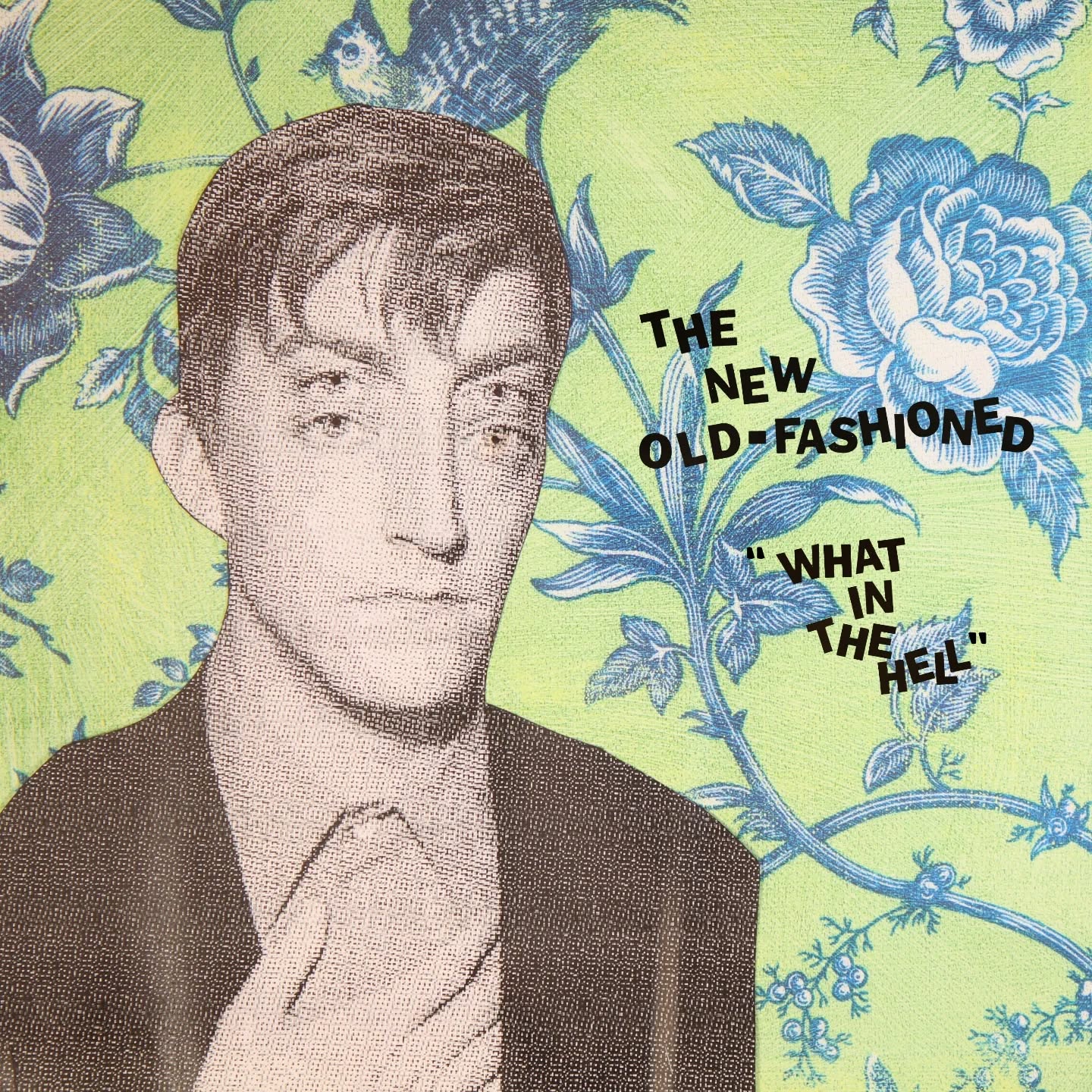
Today on YTAA, The New Old-Fashioned crashes into the studio, carrying the kind of anticipation that only comes when a band has been quietly building something behind the scenes instead of flooding the world with half-finished updates and social media breadcrumbs.
For fans of the Dayton scene, this is a notable moment. The band’s upcoming single, arriving June 6, marks the first new music released since the Big City EP. This record captured their knack for balancing heartland storytelling, jangling guitars, and the restless energy of musicians who understand that the best songs are often born somewhere between nostalgia and forward motion.
Listening to The New Old-Fashioned has always felt a little like finding a stack of well-worn records in a friend’s basement: familiar enough to immediately feel comforting, and alive enough to remind you why rock and roll keeps reinventing itself while recognizing where it came from in the first place. Their music pulls from the past without becoming trapped by it. That’s a difficult trick. Plenty of bands know how to imitate history; far fewer know how to converse with it.
And that’s what makes this new material intriguing. After the long stretch since Big City, the question isn’t whether the band can pick up where they left off. The question is what they’ve discovered in the meantime. What stories have accumulated? What rough edges have become sharper? What melodies have been waiting for the right moment to emerge?
Tune in this afternoon for a sneak peek at the new song and a conversation with the band about the road from Big City to this next chapter. If rock and roll is a continuing argument between who we were and who we’re trying to become, then The New Old-Fashioned sounds ready to pick that argument back up.
Listen here: WUDR YTAA Stream
When Billy Bragg released She’s Got a New Spell, he proved that a protest singer could also write one of the sharpest love songs of the late twentieth century — not syrupy, not starry-eyed, but wired with anxiety, wit, and the uneasy thrill of falling hard when you know better.
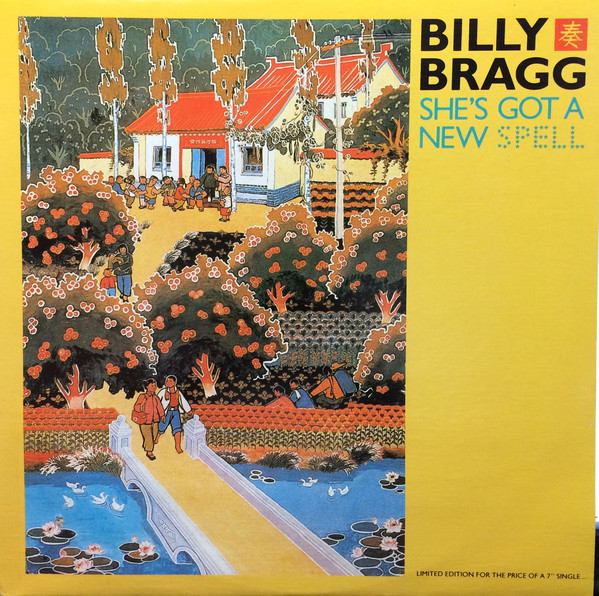
This is romance as ideological crisis. The guitars jangle like nervous energy, and the lyrics read like marginal notes in a dog-eared paperback about class struggle and heartbreak. He’s not surrendering to love so much as negotiating with it — bargaining, questioning, trying to keep his political principles intact while his heart stages a coup.
What makes the song endure is that tension. It understands that love isn’t just chemistry; it’s disruption. It rearranges your priorities, scrambles your certainty, makes you reconsider the tidy theories you built to explain the world. One minute you’re organizing meetings and quoting manifestos, the next minute you’re staring at the phone, wondering if the revolution can wait until after dinner.
There’s humor in it, too — that dry, knowing grin running underneath the melody. Bragg isn’t mocking love; he’s marveling at how powerful it is, how it sneaks past your defenses and rewrites the rules. The “spell” isn’t magic in the fairy-tale sense. It’s the quiet, relentless pull of connection — the realization that vulnerability might be the most radical act of all.
Play it loud enough, and it still sounds like possibility.

Broadcasting from the slightly tilted tower of WUDR Flyer Radio in Dayton, where the miracle of rock and roll still shows up every Tuesday like it’s punching a time clock.
There are days when a radio show feels like a job, and then there are days when it feels like a confession booth wired directly into an amplifier. This set list — this wild, unruly parade of sound — felt like the latter. It rolled through the studio like weather, unpredictable and alive, rattling the windows and reminding me that music is still the best argument against despair we’ve got. Not a cure, mind you. More like a flashlight you carry into the dark because you’re stubborn enough to keep walking.
It started with “Take It All” by Elephants and Stars from their forthcoming Philistine Vulgarity, a song that didn’t so much begin as erupt. The guitars came in like somebody kicking open a classroom door to announce that the lecture was canceled and the revolution had been rescheduled for immediately. There was a righteous scrappiness to it — the sound of people discovering that the world is negotiable and deciding, right then and there, to renegotiate the terms. You could practically smell the sweat and overheated amplifiers. That’s how you know something real is happening.
Then “Man on the Run” by Flycatcher from their album,Wrench, hit the airwaves, and suddenly the whole room felt like it was moving faster. Urgency dripped off that track the way condensation runs down the side of a glass in August. It sounded like sprinting through town with your jacket half on, heart pounding because maybe this time the consequences are real. The featured vocal cut through like a flare — emotional, sharp, a reminder that running away is still a form of motion, and sometimes motion is the only prayer you’ve got left when the rest of your plans collapse.
By the time “Intrusive Thots” by The Library is On Fire off of the Ground of The Last spun up, the atmosphere had shifted into something twitchy and electric. The song bounced around like a brain that refuses to shut off at three in the morning, cycling through memories, anxieties, and half-formed jokes. It was funny and frantic and brutally honest about the way modern life keeps whispering nonsense into your ear until you start humming along just to keep your sanity intact. Two minutes of chaos that felt like a documentary about the inside of your own head.
And then came “Driving” by Leah Callahan off of the soon-to-be-released Our Lady of the Sad Adventure, which slowed the whole operation down just enough to let the air back into the room. A road song for people who don’t know where they’re going but refuse to stay still. There was melancholy baked into the melody, the kind that sneaks up on you somewhere between the third stoplight and the edge of town. Windows down, radio up, existential dread riding shotgun — and somehow it all still felt like freedom. That’s the magic trick of a good song: it turns uncertainty into momentum.
“Locked and Loaded” by The Cab stomped in next, boots hitting the floor like a challenge. It had swagger, sure, but underneath the bravado there was vulnerability — the sense that all that noise was really a shield against invisibility. Loudness as survival strategy. Teenagers and twenty-somethings have been using that tactic since the first guitar cable got plugged into the first amplifier, and it still works because sometimes the only way to be heard is to be unapologetically loud.
Then the wonderfully strange “Balloon Man Running” by Public Opinion floated into the mix, and suddenly the show felt like a parade that had taken a wrong turn and decided to keep marching anyway. The melody bounced along with a kind of cheerful instability, colorful and slightly off-balance. There was humor in it, but also dignity — the quiet heroism of people who keep moving even when the world refuses to make sense. Absurdity, it turns out, can be a form of courage.
When “Still Around” by Friko arrived, it carried the weight of survival in its pocket. This wasn’t triumph in the fireworks-and-confetti sense. It was quieter than that. The kind of victory that looks like getting out of bed, showing up, and refusing to disappear. Every chord felt like a small declaration: I made it through another year, another heartbreak, another stretch of bad news, and I’m still here. In an era that celebrates spectacle, there’s something radical about persistence.
“Watchdog” by Caroline Carter snapped the mood back into alertness. The rhythm stalked forward like a guard dog pacing a fence line, ears up, eyes scanning the horizon. It felt political without preaching — the musical equivalent of keeping the lights on and the doors unlocked while still paying attention to who’s walking down the street. Vigilance has a sound, and it sounds a lot like a bass line that refuses to sit still.
Then the dreamy shimmer of “(Looking Through) Rose Colored Glasses” by Mikaela Davis drifted through the speakers like memory wrapped in gauze. Beautiful, yes, but with just enough tension underneath to keep you from relaxing completely. Nostalgia is a tricky thing — it softens the edges of the past while quietly erasing the parts that hurt. This song seemed to know that and lean into it, creating something both comforting and unsettling at the same time.
By the time “ALL I WANT” by FAST CAMELS exploded onto the air, subtlety had officially left the building. This was desire in its rawest form — loud, messy, unapologetic. The kind of track that makes you roll down the car windows and shout along even if you don’t know all the words. It reminded me that wanting something intensely is still one of the most human experiences we have, even when it makes us look ridiculous.
And then, just when the volume threatened to overwhelm everything, “The One That Makes You Happy” by The Greenberry Woods arrived like a cool breeze through an open window. Pure pop joy, but not the shallow, disposable kind. This felt earned — the smile that shows up after the storm passes and the cleanup begins. Happiness, in that context, becomes a kind of rebellion. A refusal to let cynicism have the last word.
Heartbreak followed, as it always does, in the form of “Don’t Leave” by Bummer Camp. You could hear the pacing in the melody — the late-night conversations that never quite happen, the words rehearsed but never spoken. It was vulnerable in the way only good rock can be: loud enough to mask the fear, soft enough to reveal it anyway. There’s bravery in admitting you need someone, even if they’re already halfway out the door.
“The Way I Feel” by Basement took that vulnerability and turned it into catharsis. The guitars slammed forward like they were trying to break through drywall, and the vocal carried the kind of honesty that comes from running out of patience with pretense. Therapy by a distortion pedal. Sometimes the healthiest thing you can do is scream into a microphone and let the sound carry the weight you’ve been holding.
Then “Doors” by Noah Kahan opened up the sonic landscape into something wide and reflective. It felt like standing at a threshold, looking out at a horizon you’re not entirely ready to cross. The melody breathed, the lyrics lingered, and the whole thing carried that quiet sense of possibility that comes with big decisions. Change is terrifying, but it’s also inevitable, and this song captured both sides of that truth.
“Planting Tomatoes” by Lucy Dacus grounded the set in something beautifully ordinary. The act of putting seeds into soil became a metaphor for patience, care, and the stubborn hope that something will grow if you give it enough time. In a culture obsessed with speed and spectacle, there’s something radical about tending a garden. It’s a slow, deliberate investment in the future.
From there, “One Day” by Future Islands surged upward like a sunrise breaking through clouds. Synths swelled, emotions followed, and suddenly the room felt bigger than it had a few minutes earlier. There was longing in the arrangement, but also momentum — the belief that tomorrow might deliver something better if we just hold on long enough. Hope, in musical form, doesn’t have to be quiet.
“Erryday” by The 1984 Draft brought things back down to the level of friendship — the everyday rituals that keep us grounded. Shared jokes, cheap meals, long conversations that stretch past midnight. The song celebrated the ordinary bonds that make life bearable. Community doesn’t always announce itself with fireworks. Sometimes it shows up in the form of someone who answers the phone.
When “Hollywood Forever” by Jesse Malin rolled in, it carried the ghost of glamour with it. The melody wandered through memories of bright lights and late nights, but there was resilience in the delivery — a refusal to live entirely in the past. Nostalgia can be a trap, but it can also be a source of strength if you use it to keep moving forward.

Then came “Ride Lonesome” by Beck, which felt like a long stretch of highway cutting through open country. Dust in the air, horizon in the distance, solitude settling in like an old friend. There’s a strange peace that comes from traveling alone with your thoughts, and this song captured that feeling perfectly. Not loneliness, exactly — more like independence.
The mood darkened beautifully with “House of I” by The Afghan Whigs, a track drenched in drama and atmosphere. It wrapped around the listener like heavy velvet curtains, shutting out the outside world while the emotional storm played out inside. Sensual, mysterious, unapologetically theatrical — proof that rock and roll still knows how to wear a tuxedo.
“If You Change” by Widowspeak followed with a gentler touch, drifting through the speakers like a memory you can’t quite place. The melody whispered instead of shouting, inviting you to lean in and listen closely. It reminded me that quiet songs can carry enormous weight, especially when they trust the listener to meet them halfway.
Then “Silver Ford” by Sunday (1994) put us back on the road again, headlights cutting through darkness, tension humming under the hood. It felt cinematic, like the soundtrack to a late-night drive when the world is asleep and your thoughts finally have room to breathe. There’s clarity in those moments — the kind that only shows up when everything else goes quiet.
By the time “WAITING FOR THE PHONE CALL” by The Twilight Sad arrived, anticipation had taken center stage. The song stretched time into something elastic, every second loaded with expectation. It captured that universal experience of staring at a silent phone and wondering what the next ring might bring. Anxiety, hope, fear — all tangled together in a single melody.
Then “I Believe” by The Rallies stepped in with a simple declaration of faith. Not blind optimism, not naïve cheerfulness — just a steady conviction that things can improve. It felt grounded, practical, almost workmanlike in its sincerity. The musical equivalent of rolling up your sleeves and getting back to work.
And finally, the set closed with “Eveready” by The 1984 Draft, a song that refused to fade quietly into the background. Bright, energetic, stubbornly alive — the kind of track that leaves you with the sense that the story isn’t over yet. That somewhere, another band is plugging in, another crowd is gathering, another song is about to begin.
That’s the real promise of radio, after all. Not perfection, not certainty — just continuity.
The signal keeps going. The noise keeps making sense.
And as long as there’s a guitar humming somewhere in the distance, there’s still reason to tune in.
Today on YTAA, we’ve got a full slate of fresh sounds and standout artists lighting up the airwaves! Tune in for new music from Elephants and Stars, Leah Callahan, Mythical Motors, Knotts, TV Star, Kevin Robertson, Otoliths, Devvy Dub, Mike Chick, The Saint Cecilia, Sean Solomon, and plenty more discoveries you won’t want to miss.
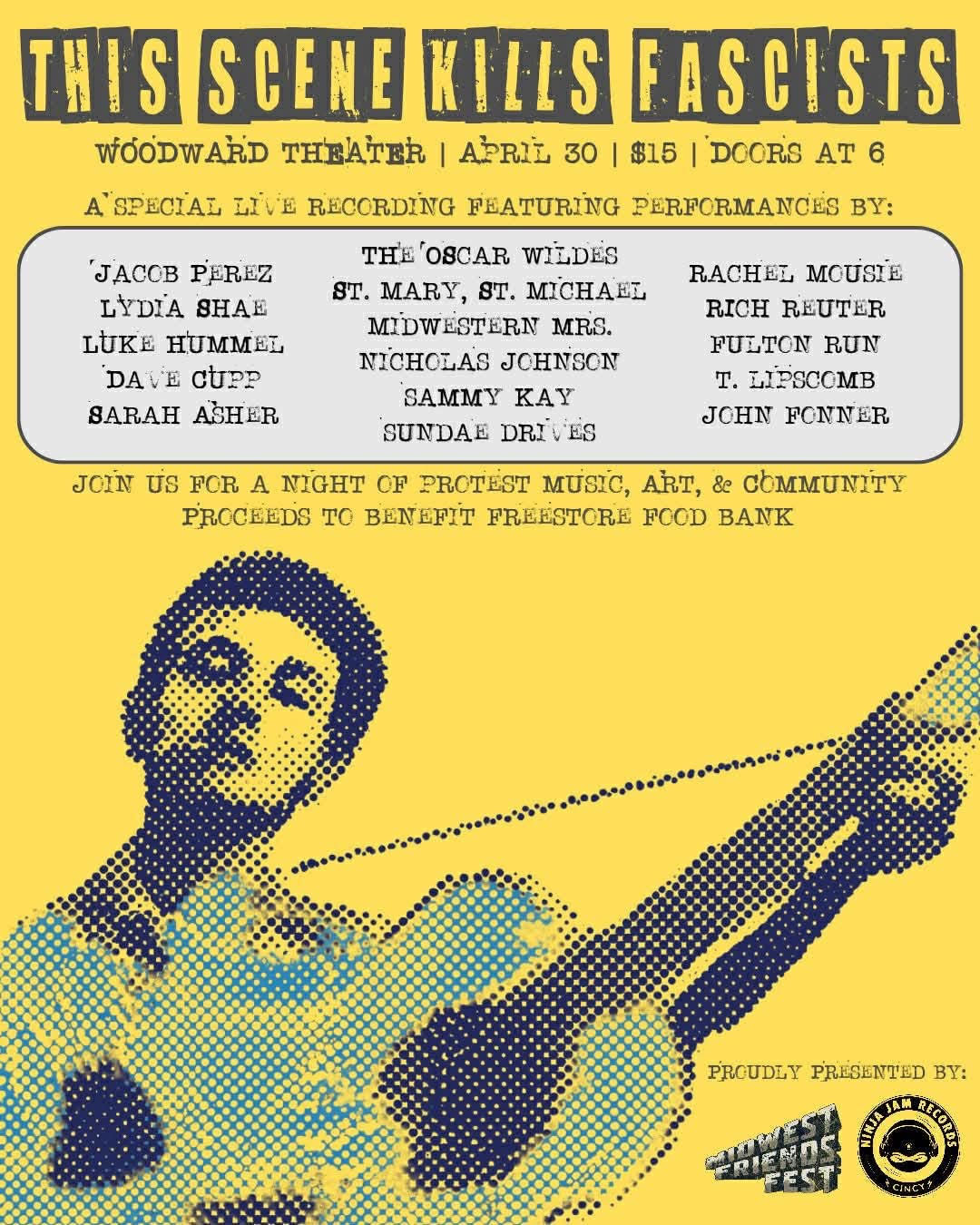
We’re also excited to welcome Nicholas Johnson into the studio to talk about the upcoming anti-fascism show on April 30 at the fine Woodward Theater—a great chance to hear about the music, the scene, and what audiences can expect from a night of live performance.
Whether you’re listening from campus, your office, or the road, Your Tuesday Afternoon Alternative is your soundtrack for new music, local voices, and creative energy.
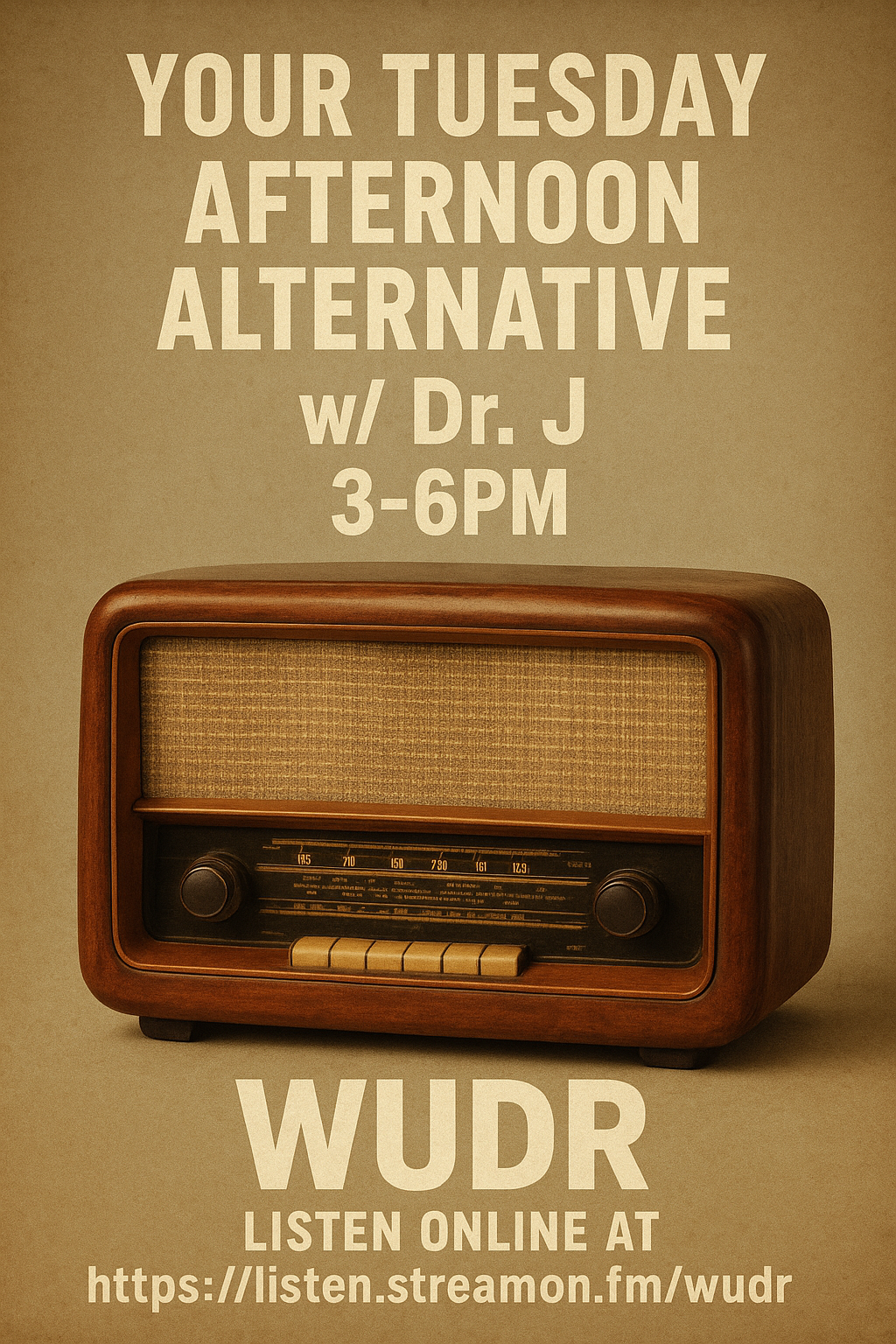
🎧 Listen live online 3-6pm (eastern) at: https://listen.streamon.fm/wudr
📻 Turn it up, discover something new, and spend your afternoon with us!
If you’ve ever driven around town with the radio on and the sun doing that late-afternoon slant that makes everything look like a memory already—gas stations glowing, parking lots half empty, the air buzzing with possibility and dread—then you already understand what Your Tuesday Afternoon Alternative is supposed to feel like.
And now, for the first time in a while, the last two full three-hour broadcasts are sitting online in all their sprawling, unruly glory over on Mixcloud. That’s six straight hours of music, ideas, weird segues, accidental poetry, and the kind of radio that only really works when nobody is trying too hard to make it work. Which, if we’re being honest, is the best kind.
Think of it as a kind of sonic time capsule: three hours where the world’s chaos gets distilled into guitars, synthesizers, a stray folk lament, maybe a punk blast that lasts ninety seconds but somehow resets your whole nervous system. Then you do it all again the next week. Radio as ritual. Radio as wandering conversation.
The thing about listening to these shows after the fact is that they become something slightly different than they were in the moment. Live radio is adrenaline and improvisation—you throw a song into the air and see what it does to the room. But on replay, the structure reveals itself. Themes emerge like ghosts in the static. Songs talk to each other across decades. A jangly indie track from 2024 suddenly feels like it’s answering a garage-rock scream from 1966.
That’s the secret architecture of good radio: it sounds loose but it’s secretly a web of connections. Which makes these two archived episodes especially fun to revisit. Over six hours, the mood drifts the way an actual Tuesday afternoon does. One minute the sun is out and everything sounds hopeful; the next minute you’re staring out the windshield thinking about every mistake you’ve ever made while some beautifully melancholy track hums through the speakers.
And that emotional whiplash is the point.
Great radio—especially college radio—has always been about resisting the algorithm. The streaming services want to smooth everything out into playlists that never challenge you. But real DJs still believe that music should occasionally knock the wind out of you. A dreamy pop song might suddenly give way to something ragged and noisy, and then a minute later you’re floating through a slow acoustic tune that feels like someone left a window open in your heart. That’s not bad programming. That’s life.
The two newly available shows capture that beautifully messy spirit. Across the six hours, you’ll hear indie rock rubbing shoulders with folk, garage, synth-pop, and the occasional left turn that makes you sit up and say, “Wait—what was that?” The answer, of course, is that it doesn’t always matter. Discovery is half the thrill.
And because the shows were recorded live, you also get the little human moments that make radio feel alive: the slightly crooked transitions, the spontaneous reflections, the sense that the whole thing could veer off the rails at any moment but somehow lands exactly where it needs to.
It’s the opposite of polished. It’s the sound of someone digging through a record collection and saying, You need to hear this.
Which is why having the full episodes archived on Mixcloud matters. Instead of a clipped highlight or a tidy playlist, you get the whole ride—the long arc of the afternoon, the gradual build, the strange emotional geography of three uninterrupted hours.
In other words: real radio.

Sometimes the world feels like it’s running a little too hot.
Everywhere you look there’s another argument, another disaster, another reminder that people can be cruel to each other in ways that are exhausting just to witness. The noise of it all can make the world feel smaller, harsher… like kindness is getting drowned out.
And that’s where music comes in.
Because music does this strange, beautiful thing: it reminds us that other people are feeling the same things we are. Someone, somewhere, picked up a guitar or sat down at a piano and turned confusion, anger, heartbreak, hope—whatever it was—into sound.
And when you hear it, something clicks.

Maybe it’s a melody that suddenly lifts the weight of the day. Maybe it’s a lyric that says the exact thing you couldn’t find the words for. Maybe it’s just a drumbeat that makes you remember you’re still alive and moving forward.
That’s the magic of music.
It connects strangers. It softens the edges of the world. It gives us a place to breathe when everything else feels like too much.
So tonight, wherever you are, let the songs do what they’ve always done.
Turn the volume up a little. Listen closely. And remember that even in a noisy, difficult world, people are still making beautiful things.
And that’s something worth holding onto.
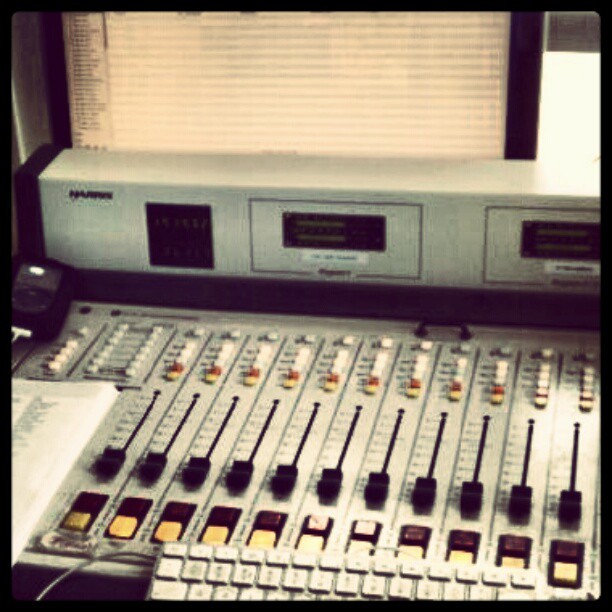
There’s a particular electricity to walking into a college radio station on a Tuesday afternoon that no algorithm has yet figured out how to bottle. The hallway smells faintly of burnt coffee and overworked carpet, even in the new Glass Center. The console used to look like it survived three administrative restructurings and at least one existential crisis. Maybe I am just channeling the ghost of the old board from when WUDR was in ArtStreet. Regardless, somewhere in the hum of the board, you can hear the ghost of every DJ who ever believed that three minutes and twenty seconds of noise could change a life.
Welcome to Your Tuesday Afternoon Alternative on WUDR Flyer Radio, broadcasting from the heart of Dayton, where the signal wobbles just enough to remind you that perfection is for tyrants and streaming platforms.
We open with “Se Llama (Tell Me What You Want)” by The Props from their Arrow – EP, and it’s the kind of track that doesn’t ask what you want so much as demand you admit you don’t know. It’s all nervous propulsion and sideways glances, the guitars like somebody rifling through your emotional junk drawer. I let it breathe. College radio isn’t about polite fades; it’s about letting the song finish its cigarette before you barge back in with your baritone wisdom.
Then comes “Delete Ya” by Djo (you know, the guy who played Steve on Stranger Things) from his record, The Crux. Now there’s a title for our era. Delete ya. Unfriend, unfollow, unremember. The song kicks like a garage door slamming shut on a relationship that was already half-packed. It’s jagged, but it’s catchy, the kind of melody that worms into your skull and starts redecorating. I imagine some sophomore in a dorm room texting someone they shouldn’t while this is playing and thinking it’s a sign from the universe. It’s not a sign. It’s just a good hook.
“Gone Baby Gone,” courtesy of Aysanabee from his Edge Of The Earth album, follows, and suddenly we’re in widescreen. Reverb like a prairie sky. Drums that sound like they were recorded in an abandoned aircraft hangar somewhere off I-75. This is the moment in the set where the car windows roll down even though it’s 42 degrees out, because transcendence doesn’t check the forecast.
“Regrets” from the Double Exposure record released by Penny Arcade (the secret name of James Hoare) doesn’t wallow; it smirks. It knows you’ll have them, and it’s already writing the sequel. There’s a kind of tensile bounce to it, a reminder that remorse can dance if you let it. I talk over the intro just a hair—because that’s the DJ’s prerogative—and muse about how regret is just memory with better lighting.
Then we snap into “Feelin’ A Rise” by Pimmer from their recent release, Trans Am. Now we’re cooking with circuitry. This is the motorik heartbeat of a robot who read too much Kerouac. The synths pulse like fluorescent lights in a 24-hour laundromat. You can’t half-listen to this; it drags you by the collar and says, “Move.”
We pause for the “Mrs. Dr. J WUDR legal ID,” eleven seconds of bureaucratic poetry. There is something profoundly punk about the legal ID. It’s the FCC’s reminder that even anarchy has paperwork. And then—right back into the fray.
“Nevermind” from the excellent record The Refrigerator created with love by Remember Sports. A title that shrugs and a band name that hums in the kitchen at 2 a.m. The song feels domestic in the best way—small-room guitars, a vocal that sounds like it was recorded with the singer leaning against the sink. It’s intimate without being precious. You can hear the plumbing in the walls.
“The Bitter End” (from The Bitter End – Single) by Trashcan Sinatras is next, and yes, we are aware of the recursion. Bitter about the end? Or is the end itself bitter? The track surges forward like it’s trying to outrun its own conclusion. There’s something defiant in it, a refusal to go quietly into whatever good night Spotify has queued up next. “Nothing” by nerve scales arrives like a gray cloud that’s decided it enjoys being gray. It sprawls. It hums. It lets the guitars smear into each other like oil paints. This is the point in the show where I remind listeners that silence is overrated and distortion is honest.
We keep it clean—“Nobody’s Heroes (CLEAN)” – The Menzingers and “Born To Kill (CLEAN)” by Social Distortion—because college radio lives in that tightrope space between rebellion and regulation. “Nobody’s Heroes” punches upward, as it should. It’s a rallying cry for the beautifully unexceptional. “Born To Kill,” scrubbed for broadcast, still crackles with danger. You can remove a word, but you can’t take out an attitude.
“Private” by The Neighborhood from their excellent album (((((ultraSOUND))))) feels like a transmission intercepted from a basement laboratory. It’s angular and twitchy, guitars cutting in geometric shapes. If privacy is dead, this song is the autopsy report. Then the sweet ache of “Can I Call You Tonight?” from Dayglow from the atmospheric Fuzzybrain. The melody glows like a phone screen in the dark. It’s longing in four minutes and thirty-nine seconds, the kind that makes you reconsider every “you up?” text you ever sent. I let that one play almost untouched. Some songs need space to confess.
“You got time and I got money” from Smerz Big city life strolls in with a grin. It’s transactional romance turned into a groove. There’s swagger here, but it’s self-aware, like it knows the joke is partly on itself. And that is the first hour in the books. We hit the Smug Brothers YTAA Theme—thirty-five seconds of identity—and then the “Dr. J New WUDR legal ID,” twenty-seven seconds reminding you that this is real, terrestrial, imperfect radio. Not a curated playlist assembled by a machine learning model with a minor in heartbreak.
The Pretty Flowers YTAA Theme Song blooms briefly, and then we dive into “It Is What It Isn’t” from The Black Watch from the collection, Varied Superstitions. Seven minutes and change. Now we’re talking. The guitars stretch out like they’ve paid rent on the horizon. The rhythm section locks into a trance. This is where the show stops being background and becomes an environment. You could build a small philosophy inside this track and still have room for doubt.
“Here’s The Thing” from Fontaines D.C. off of their Romance record snaps us back to conversational scale. It’s concise, almost cheeky. Here’s the thing: love is complicated, and so are guitar pedals. The song knows both. “Holy Roller” by The Format taken from Boycott Heaven thunders in next. There’s righteous fire here, but it’s not sanctimonious. It’s sweaty, urgent, maybe a little unhinged. The drums sound like they’re trying to kick down the pearly gates just to see what happens.
Then, because radio loves a wink—“Private Eyes” K.T. Tunstall from NUT released in 2022. You think you know that title, but this isn’t your dad’s yacht-rock paranoia. It’s sharper, more nervous, like someone swapped the sunglasses for safety goggles. “Cold Waves (featuring Mac McCaughan)” by Crooked Fingers (Eric Bachman’s project of the moment) from the album Swet Deth glides in with a chill that feels earned. The guest vocal threads through the mix like a lighthouse beam. It’s melancholy without surrender. The guitars shimmer, the drums keep their cool, and the whole thing feels like driving past Lake Erie in November with the heater on full blast.
Another “Mrs. Dr. J WUDR legal ID”—because the law insists—and then “Machines” from HAPPY LANDING. Aptly titled. The rhythm clanks and whirs, but there’s a human pulse inside it, a reminder that we built the machines in our image and then acted surprised when they reflected us. “Coming Home” from Lucky Now by Lande Hekt softens the edges. It’s all warmth and open chords, the musical equivalent of a porch light left on. After the clang and crash, it feels like forgiveness.
“The River Knows” from The Steeldrivers flows steadily and patiently. It suggests that maybe the landscape outlasts our noise. The guitars ripple. The drums roll like a current over stones. And “Dusking” from Concerns Of Wasp And Willow by The Corner Laughers. So damn glad to see that band back. It is a beautiful song. A title that sounds like a line from a lost pastoral poem. The song is brief, but it lingers. Twilight in two minutes and fifty-four seconds. The guitars fade not into silence, but into possibility.
That’s the thing about a Tuesday afternoon alternative show. It’s not about dominance or metrics. It’s about curation as conversation. It’s about trusting that somewhere in Dayton, someone heard one of these songs at exactly the right moment and felt less alone. And that is just part of the second hour for the show today!
The board goes quiet. The red “on air” light clicks off. And for a second, the room hums with the afterimage of sound. Radio isn’t dead. It’s just waiting for someone reckless enough to press play.
Someone asked me the other day if we actually write notes for all of the music we play on the show. And I love that question, because it gets at the heart of what this whole strange, beautiful ritual is about.
The short answer? Yes. Absolutely. Maybe not always in the neat, bullet-point, producer-approved sense. But every song has a story attached to it. Every track gets time, attention, a listen with the lights low or the car windows cracked. We don’t just drag and drop files into a playlist and hope for magic. The magic is in the listening.
Sometimes the notes are scribbled in a notebook—half-legible phrases about a guitar tone that sounds like “late summer asphalt” or a chorus that feels like it’s trying to outrun heartbreak. Sometimes they’re typed up neatly: where the band’s from, who produced the record, why this particular track matters right now. And sometimes the notes are just a feeling we carry into the mic—a memory, a connection, a reason this song needs to be heard tonight.
Writing notes is a way of honoring the artists. Someone spent months, maybe years, making that three-minute song. They argued over snare sounds. They rewrote verses. They risked something personal in the lyrics. The least we can do is meet that effort with attention. To listen closely. To ask: what is this song trying to say? Where does it sit in the arc of the record? Why does it belong in this hour, next to these other songs?
It’s also about you—the listener. When we share a few thoughts before or after a track, we’re not trying to lecture. We’re building a bridge. Maybe you’ll hear a lyric differently. Maybe you’ll catch a harmony you might’ve missed. Maybe you’ll go home and play the whole album because something about it stuck.
Radio, at its best, is companionship. It’s someone in the dark saying, “Hey, listen to this.” The notes are part of that companionship. They’re proof that this isn’t background noise. It’s a conversation. A relationship. A shared moment in time.
So yes, we write notes. We think about sequencing. We care about transitions. We argue lovingly over which song should close the set. Because music deserves that care. And honestly? So do you.
Thanks for listening closely enough to even ask.
writing your next obsession
By G.C. Stein
Music and Interviews w/ Dr. J on Tuesdays 3-6 pm on WUDR Radio
An Uncool Podcast by two uncool guys.
College Sports, History, Music, Movies, NASCAR, Technology, Television and last but not least ... anything Southern!
Music and stuff....
online hub for this least-selling author
A Glasgow view of Americana and related music and writings.
Streaming Forward, Powered By The Past - if you love the 80s music, new music, Eurovision, cheesy pop and awesome playlists then let's get this pop party started!
Music and Interviews w/ Dr. J on Tuesdays 3-6 pm on WUDR Radio
Revealing the True Origins of Silence
Photographer, Designer, Editor and Educator Ray Laskowitz talks about pictures and their back stories.
Revisiting my extensive music collection, one artist at a time
Follow my blog for books, poems, photos, music, art, education, views...
Sweet, sweet pages of blissful music
Fanblog for the Raleigh, North Carolina-based band The Connells (formerly onesimpleband.net)
www.MusicConnectionDayton.com
Music Blog
This WordPress.com site is the cat’s pajamas
Musicology, songwriting, teaching, writing and research
 your tuesday afternoon alternative