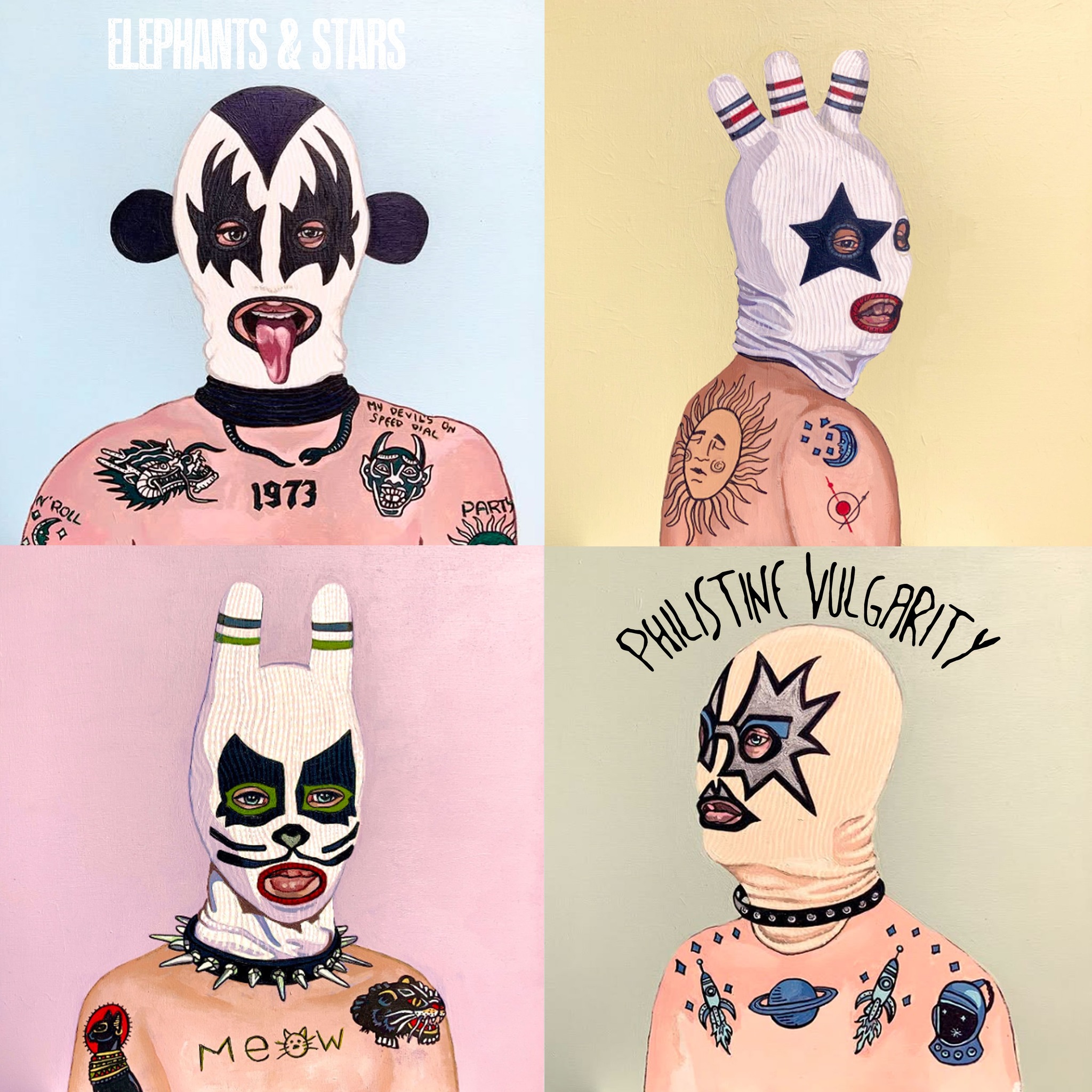
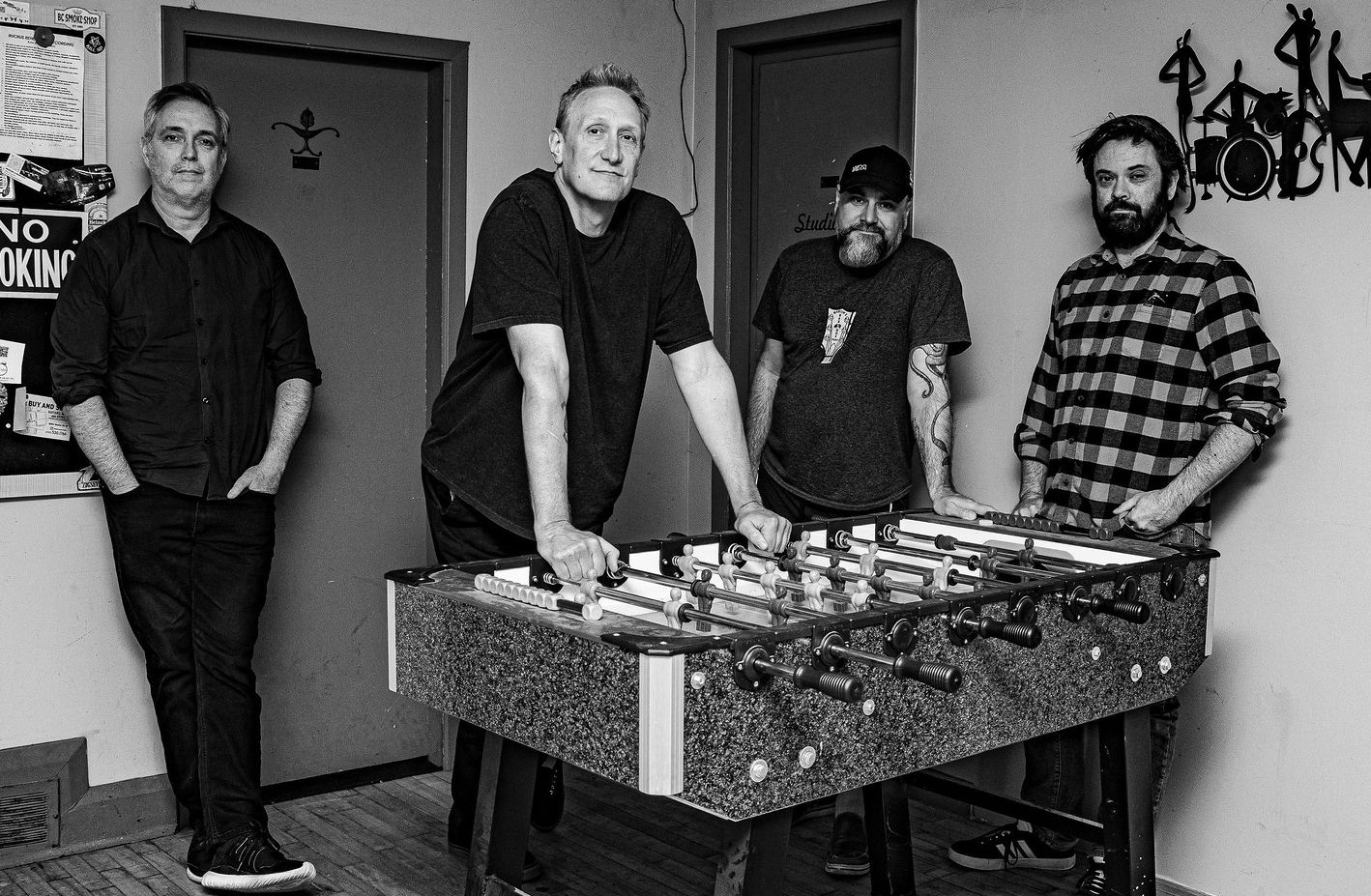
Elephants and Stars have been stalking the edges of the Canadian underground for years, the kind of band that doesn’t so much arrive as accumulate—record by record, show by sweat-soaked show, turning small rooms into minor revelations for anyone paying attention. They’re not interested in being the coolest band in the room, which is probably why they end up being the most necessary. Literate but never precious, political but allergic to slogans, they deal in the messy stuff: doubt, friction, the uneasy truce between wanting to care and wanting to check out entirely.
And here’s the thing—they don’t sound like they’re trying to prove anything anymore. That fight is over. What you get instead is a band that knows exactly what it is: a guitar and drum band, yeah, but the kind that treats guitars like blunt instruments and percussion you feel in your body, both instruments opening wounds at the same time. There’s punk in there, and heartland rock, and that old alternative ache that used to mean something before it got turned into background noise for coffee shops. But none of it feels curated. It feels lived in, like these songs have been rattling around in their bones for years before anyone bothered to hit record.
Frontman Manfred Sittmann comes off like a guy who’d rather torch the idea of “high art” than ever be caught polishing his feelings for display. And that’s the secret engine here: nothing is overly arranged, nothing is too clever for its own good. The band trusts the songs to stand up straight on their own bruised legs. In a time when so much music winks at you like it’s all one big joke, Elephants and Stars stare you down and mean every word—and somehow that lands harder than any grand statement ever could.
For more than half a decade, Elephants and Stars have carved out a distinctive place in independent music: literate without pretension, political without sloganeering, melodic without sacrificing urgency. That balance defines this record. Across six albums, they’ve built a reputation the slow way—through relentless songwriting, word of mouth, and songs that land somewhere between the gut and the conscience. Philistine Vulgarity feels like the clearest distillation of that identity yet.
The guitars hit first—not with flash, but with presence. They breathe. Each riff carries tension; each melody leans against something just out of frame. Producer Ron Hawkins (The Lowest of the Low) understands the assignment completely. His approach favors clarity over gloss and atmosphere over excess, sharpening the band’s core qualities: passion, confrontation, humanity, and melody. Nothing feels buried or inflated. The songs arrive mid-conversation, as if they’ve been unfolding long before you pressed play.
“Drowning in Doubt” opens with anxious propulsion, a reminder that alternative rock was never meant to feel comfortable. “Propensity for Violence” compresses fury into a tight burst without tipping into caricature. Meanwhile, “Take It All” and “Brief, Shining Moment” showcase the band’s quietest strength: choruses that don’t beg for attention but linger anyway, settling in over time rather than announcing themselves.
By the midpoint, the album reveals its deeper concerns. “Kinda” and the strikingly titled “Of Halfway Houses and Ambulances” resist easy resolution. These are not songs about triumph; they’re about endurance—another Tuesday, another misstep, another fragile attempt at faith in other people. It’s difficult terrain, and Elephants and Stars navigate it with unusual grace.
The album’s title is not incidental. Philistine Vulgarity wrestles directly with political violence, alienation, economic anxiety, and emotional exhaustion, but it refuses to surrender empathy in the process. Echoes of punk, heartland rock, post-hardcore, and alternative textures run throughout, yet the songwriting never feels like a genre exercise. It remains rooted in narrative and emotional truth.
That ethos is summed up by Sittmann: “These songs are just honest rock songs played with feeling… they’ll never be mistaken for high art, and I couldn’t be happier about it.” In a musical landscape that often hides behind irony or self-awareness, that kind of directness feels quietly radical. Elephants and Stars don’t hedge. They mean what they say.
“One Light at a Time” and “Even Out the Lies” carry that philosophy forward with restraint and confidence. There’s no attempt to overwhelm—only a trust that honesty has its own momentum, and that listeners are willing to meet the band halfway.
“The Reckoning (Come On Down)” plays less like judgment than invitation, setting up the closing statement: the seven-minute “Sanctuary Cities.” It’s a rare kind of finale—patient, searching, willing to wander. Instead of racing toward a climax, it expands and circles back on itself, ultimately landing somewhere that feels earned rather than engineered. By the time it fades, the silence it leaves behind feels intentional.
What resonates most is how little of this feels manufactured. Elephants and Stars are not chasing trends or optimizing for algorithms. They are refining a voice—layered guitars, thoughtful construction, and melodies that reveal themselves gradually. The audience they’ve built reflects that same patience: one song, one record, one believer at a time.
Philistine Vulgarity is a reminder that guitar bands still matter—not as preservationists of some sacred past, but as translators of ordinary anxiety into something shared and bearable. The album doesn’t pretend the world makes sense. It simply insists that making honest music within that confusion still matters.
And that’s more than enough reason to turn it up again.
Broadcasting from the slightly tilted tower of WUDR Flyer Radio in Dayton, where the miracle of rock and roll still shows up every Tuesday like it’s punching a time clock.
There are days when a radio show feels like a job, and then there are days when it feels like a confession booth wired directly into an amplifier. This set list — this wild, unruly parade of sound — felt like the latter. It rolled through the studio like weather, unpredictable and alive, rattling the windows and reminding me that music is still the best argument against despair we’ve got. Not a cure, mind you. More like a flashlight you carry into the dark because you’re stubborn enough to keep walking.
It started with “Take It All” by Elephants and Stars from their forthcoming Philistine Vulgarity, a song that didn’t so much begin as erupt. The guitars came in like somebody kicking open a classroom door to announce that the lecture was canceled and the revolution had been rescheduled for immediately. There was a righteous scrappiness to it — the sound of people discovering that the world is negotiable and deciding, right then and there, to renegotiate the terms. You could practically smell the sweat and overheated amplifiers. That’s how you know something real is happening.
Then “Man on the Run” by Flycatcher from their album,Wrench, hit the airwaves, and suddenly the whole room felt like it was moving faster. Urgency dripped off that track the way condensation runs down the side of a glass in August. It sounded like sprinting through town with your jacket half on, heart pounding because maybe this time the consequences are real. The featured vocal cut through like a flare — emotional, sharp, a reminder that running away is still a form of motion, and sometimes motion is the only prayer you’ve got left when the rest of your plans collapse.
By the time “Intrusive Thots” by The Library is On Fire off of the Ground of The Last spun up, the atmosphere had shifted into something twitchy and electric. The song bounced around like a brain that refuses to shut off at three in the morning, cycling through memories, anxieties, and half-formed jokes. It was funny and frantic and brutally honest about the way modern life keeps whispering nonsense into your ear until you start humming along just to keep your sanity intact. Two minutes of chaos that felt like a documentary about the inside of your own head.
And then came “Driving” by Leah Callahan off of the soon-to-be-released Our Lady of the Sad Adventure, which slowed the whole operation down just enough to let the air back into the room. A road song for people who don’t know where they’re going but refuse to stay still. There was melancholy baked into the melody, the kind that sneaks up on you somewhere between the third stoplight and the edge of town. Windows down, radio up, existential dread riding shotgun — and somehow it all still felt like freedom. That’s the magic trick of a good song: it turns uncertainty into momentum.
“Locked and Loaded” by The Cab stomped in next, boots hitting the floor like a challenge. It had swagger, sure, but underneath the bravado there was vulnerability — the sense that all that noise was really a shield against invisibility. Loudness as survival strategy. Teenagers and twenty-somethings have been using that tactic since the first guitar cable got plugged into the first amplifier, and it still works because sometimes the only way to be heard is to be unapologetically loud.
Then the wonderfully strange “Balloon Man Running” by Public Opinion floated into the mix, and suddenly the show felt like a parade that had taken a wrong turn and decided to keep marching anyway. The melody bounced along with a kind of cheerful instability, colorful and slightly off-balance. There was humor in it, but also dignity — the quiet heroism of people who keep moving even when the world refuses to make sense. Absurdity, it turns out, can be a form of courage.
When “Still Around” by Friko arrived, it carried the weight of survival in its pocket. This wasn’t triumph in the fireworks-and-confetti sense. It was quieter than that. The kind of victory that looks like getting out of bed, showing up, and refusing to disappear. Every chord felt like a small declaration: I made it through another year, another heartbreak, another stretch of bad news, and I’m still here. In an era that celebrates spectacle, there’s something radical about persistence.
“Watchdog” by Caroline Carter snapped the mood back into alertness. The rhythm stalked forward like a guard dog pacing a fence line, ears up, eyes scanning the horizon. It felt political without preaching — the musical equivalent of keeping the lights on and the doors unlocked while still paying attention to who’s walking down the street. Vigilance has a sound, and it sounds a lot like a bass line that refuses to sit still.
Then the dreamy shimmer of “(Looking Through) Rose Colored Glasses” by Mikaela Davis drifted through the speakers like memory wrapped in gauze. Beautiful, yes, but with just enough tension underneath to keep you from relaxing completely. Nostalgia is a tricky thing — it softens the edges of the past while quietly erasing the parts that hurt. This song seemed to know that and lean into it, creating something both comforting and unsettling at the same time.
By the time “ALL I WANT” by FAST CAMELS exploded onto the air, subtlety had officially left the building. This was desire in its rawest form — loud, messy, unapologetic. The kind of track that makes you roll down the car windows and shout along even if you don’t know all the words. It reminded me that wanting something intensely is still one of the most human experiences we have, even when it makes us look ridiculous.
And then, just when the volume threatened to overwhelm everything, “The One That Makes You Happy” by The Greenberry Woods arrived like a cool breeze through an open window. Pure pop joy, but not the shallow, disposable kind. This felt earned — the smile that shows up after the storm passes and the cleanup begins. Happiness, in that context, becomes a kind of rebellion. A refusal to let cynicism have the last word.
Heartbreak followed, as it always does, in the form of “Don’t Leave” by Bummer Camp. You could hear the pacing in the melody — the late-night conversations that never quite happen, the words rehearsed but never spoken. It was vulnerable in the way only good rock can be: loud enough to mask the fear, soft enough to reveal it anyway. There’s bravery in admitting you need someone, even if they’re already halfway out the door.
“The Way I Feel” by Basement took that vulnerability and turned it into catharsis. The guitars slammed forward like they were trying to break through drywall, and the vocal carried the kind of honesty that comes from running out of patience with pretense. Therapy by a distortion pedal. Sometimes the healthiest thing you can do is scream into a microphone and let the sound carry the weight you’ve been holding.
Then “Doors” by Noah Kahan opened up the sonic landscape into something wide and reflective. It felt like standing at a threshold, looking out at a horizon you’re not entirely ready to cross. The melody breathed, the lyrics lingered, and the whole thing carried that quiet sense of possibility that comes with big decisions. Change is terrifying, but it’s also inevitable, and this song captured both sides of that truth.
“Planting Tomatoes” by Lucy Dacus grounded the set in something beautifully ordinary. The act of putting seeds into soil became a metaphor for patience, care, and the stubborn hope that something will grow if you give it enough time. In a culture obsessed with speed and spectacle, there’s something radical about tending a garden. It’s a slow, deliberate investment in the future.
From there, “One Day” by Future Islands surged upward like a sunrise breaking through clouds. Synths swelled, emotions followed, and suddenly the room felt bigger than it had a few minutes earlier. There was longing in the arrangement, but also momentum — the belief that tomorrow might deliver something better if we just hold on long enough. Hope, in musical form, doesn’t have to be quiet.
“Erryday” by The 1984 Draft brought things back down to the level of friendship — the everyday rituals that keep us grounded. Shared jokes, cheap meals, long conversations that stretch past midnight. The song celebrated the ordinary bonds that make life bearable. Community doesn’t always announce itself with fireworks. Sometimes it shows up in the form of someone who answers the phone.
When “Hollywood Forever” by Jesse Malin rolled in, it carried the ghost of glamour with it. The melody wandered through memories of bright lights and late nights, but there was resilience in the delivery — a refusal to live entirely in the past. Nostalgia can be a trap, but it can also be a source of strength if you use it to keep moving forward.
Then came “Ride Lonesome” by Beck, which felt like a long stretch of highway cutting through open country. Dust in the air, horizon in the distance, solitude settling in like an old friend. There’s a strange peace that comes from traveling alone with your thoughts, and this song captured that feeling perfectly. Not loneliness, exactly — more like independence.
The mood darkened beautifully with “House of I” by The Afghan Whigs, a track drenched in drama and atmosphere. It wrapped around the listener like heavy velvet curtains, shutting out the outside world while the emotional storm played out inside. Sensual, mysterious, unapologetically theatrical — proof that rock and roll still knows how to wear a tuxedo.
“If You Change” by Widowspeak followed with a gentler touch, drifting through the speakers like a memory you can’t quite place. The melody whispered instead of shouting, inviting you to lean in and listen closely. It reminded me that quiet songs can carry enormous weight, especially when they trust the listener to meet them halfway.
Then “Silver Ford” by Sunday (1994) put us back on the road again, headlights cutting through darkness, tension humming under the hood. It felt cinematic, like the soundtrack to a late-night drive when the world is asleep and your thoughts finally have room to breathe. There’s clarity in those moments — the kind that only shows up when everything else goes quiet.
By the time “WAITING FOR THE PHONE CALL” by The Twilight Sad arrived, anticipation had taken center stage. The song stretched time into something elastic, every second loaded with expectation. It captured that universal experience of staring at a silent phone and wondering what the next ring might bring. Anxiety, hope, fear — all tangled together in a single melody.
Then “I Believe” by The Rallies stepped in with a simple declaration of faith. Not blind optimism, not naïve cheerfulness — just a steady conviction that things can improve. It felt grounded, practical, almost workmanlike in its sincerity. The musical equivalent of rolling up your sleeves and getting back to work.
And finally, the set closed with “Eveready” by The 1984 Draft, a song that refused to fade quietly into the background. Bright, energetic, stubbornly alive — the kind of track that leaves you with the sense that the story isn’t over yet. That somewhere, another band is plugging in, another crowd is gathering, another song is about to begin.
That’s the real promise of radio, after all. Not perfection, not certainty — just continuity. The signal keeps going. The noise keeps making sense.
And as long as there’s a guitar humming somewhere in the distance, there’s still reason to tune in.
Streaming Forward, Powered By The Past - if you love the 80s music, new music, Eurovision, cheesy pop and awesome playlists then let's get this pop party started!