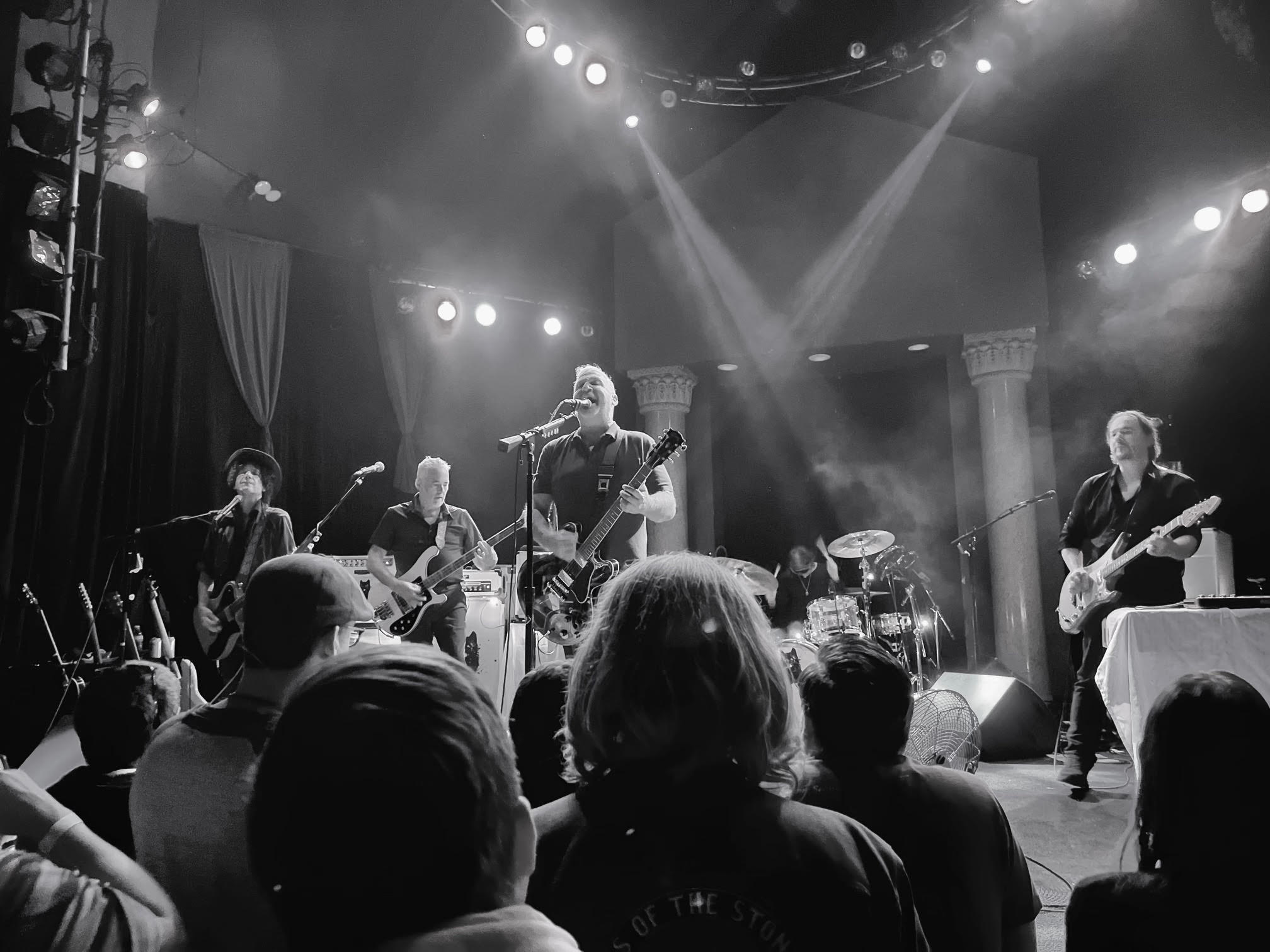
There are bands that play concerts, and then there are bands that stroll onto a stage, plug into some ancient, humming current of lust, regret, swagger, and soul, and remind you why rock and roll remains a religion worth occasionally backsliding for. Tonight in Pittsburgh, The Afghan Whigs did exactly that.
From the opening seconds, this was no ordinary trip through the catalog. Kicking things off with “Fountain and Fairfax” was a glorious curveball—a deep-cut invocation that landed like an electric shock. The crowd recognized immediately that this was going to be one of those nights, the kind where the setlist feels less like a checklist and more like a living, breathing argument for the band’s enduring greatness. And as the band celebrates 40 years, they have nothing to prove but played like they did. It was rousing, surprising, and just a little bit dangerous—exactly as it should be.
“I’m Her Slave” arrived like a sly, swaggering confession, all coiled tension and dark seduction. It carried that unmistakable Afghan Whigs signature—the ability to make emotional ruin sound irresistibly glamorous. There was a wink in its menace, a grin curled at the edge of its bite, that perfect balance of danger and delight the band has always wielded so well. Greg Dulli delivered it with the knowing charm of a man who understands that the line between devotion and destruction has always made for the best rock and roll. The song strutted rather than simply moved, reveling in its own delicious ambiguity, while the band locked into a groove that was equal parts menace, muscle, and mischief. It was classic Afghan Whigs: emotionally complicated, a little dangerous, and entirely irresistible.
And then there was “66.” Too often, bands race through beloved songs as if they’re late for a flight. And on several occasions ‘66’ becomes a casualty of reckless abandon for the Whigs, but not tonight. They let it breathe. They gave it room to strut, to ache, to simmer. Every note felt deliberate, luxuriant even, as if the song itself were stretching out across the room, basking in the affection of an audience that knew every turn.
The material from, one of my favorite records, In Spades was nothing short of revelatory, a reminder that The Afghan Whigs never lost their ability to conjure beauty from menace. “Light as a Feather,” “Oriole,” “Demon in Profile,” and “Into the Floor” unfolded like midnight sermons—lush, brooding, and steeped in an almost cinematic darkness. The arrangements seemed to hover and swirl, all shadow and shimmer, while Greg Dulli stalked through them with absolute command. And then there is that voice he possesses: still one of rock’s most singular instruments, capable of moving from a conspiratorial murmur to a full-throated, soul-rattling scream in an instant. Those eruptions weren’t merely displays of power; they were emotional detonations, raw and cathartic, cutting through the haze like lightning across a black summer sky. These songs didn’t just sound great—they sounded haunted, alive, and utterly mesmerizing.
The set moved effortlessly between eras, stitching together the bruised grandeur of classics like “Gentlemen” with newer material such as “Duveteen.” And that’s the real trick, isn’t it? Making songs separated by decades feel like they were all written in the same fevered week. Nothing felt nostalgic or obligatory. It all felt immediate.
At the center of it all was the chemistry between John Curley and Greg Dulli—that easy, telepathic rapport that only comes from 40 years of shared history, shared scars, and shared triumphs. They looked like they were having an absolute blast, grinning, trading riffs and glances, clearly reveling in the sheer joy of making this music together. There’s something deeply satisfying about seeing veterans not merely going through the motions, but still finding fresh pleasure in the noise they make.
“Something Hot” was exactly that—sultry, explosive, utterly commanding. And “Summer’s Kiss” was one of the night’s true high points, a perfect collision of yearning and release, with the crowd singing so loudly they nearly became a second lead vocalist. For a few glorious minutes, the line between performer and audience simply disappeared.
And then the finale: part of “Miles Iz Ded.” Closing with that immortal, ragged chorus was less an ending than a communal exorcism. The whole room seemed to levitate, voices raised in unison, celebrating not just a song but an entire body of work that has somehow only grown richer, stranger, and more vital with time.
The Afghan Whigs didn’t just play Pittsburgh tonight. They seduced it, shook it, and left it gloriously disheveled. Rock and roll, in the right hands, can still feel like a secret being whispered directly into your bloodstream. Tonight, it did.


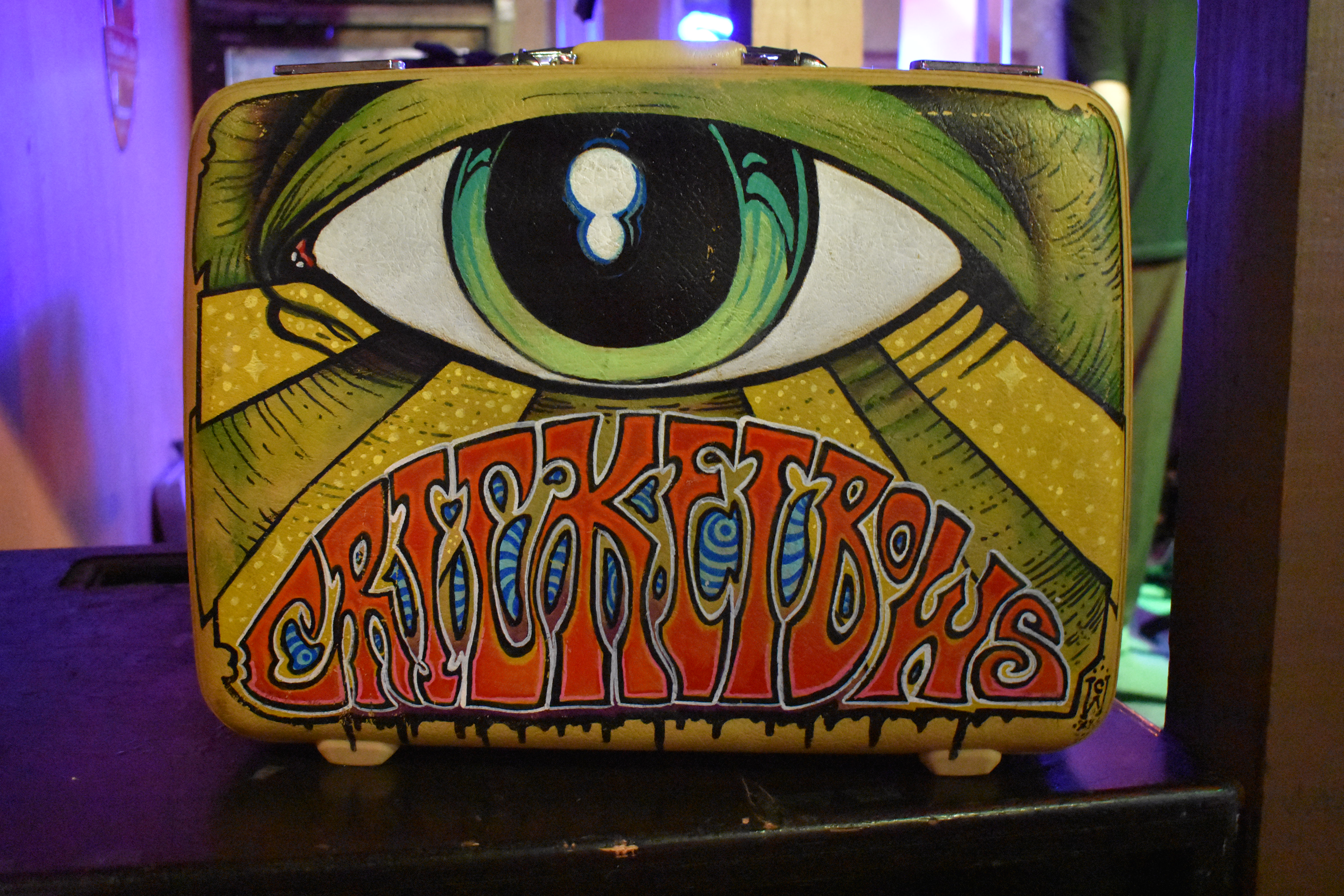 What is magic? The Anthropologist Bronislaw Malinowski wrote that magic involves the use of paranormal methods to manipulate natural forces to accomplish important life goals. Malinowski discussed how the Trobriand Islanders used magic to manage anxieties of necessary yet dangerous deep sea fishing. According to most scholars, magic is a self-direct activity where an individual manipulates the supernatural to shape the natural. This approach sees magic as an individual practice. However, what if magic is communal? What if magic is something that people create together when they gather for special circumstances and become changed in the process?
 This is what happened on Saturday night at Blind Bob’s Bar when
 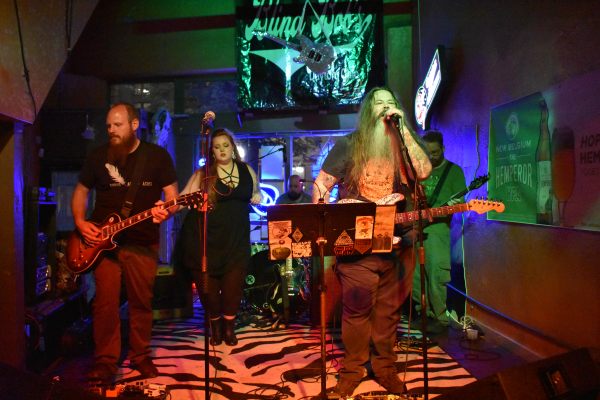 From the very moment the band took the stage, the crowd could sense an otherworldly musical magic taking hold of them. The band began their set with some of the fantastic songs from their most recent record, ‘Communion’ — a rather apt metaphor for what was happening between the band and the audience that night.
 The audience was transfixed — as with all good magic where the individual loses their sense of separated self and becomes part of the group, collective experience — the audience repeatedly called out for more and the band happily obliged with the cover of the Porpoise Song with a burning intensity that led to cheering and clapping for several minutes until Chad Wells profusely thanked the crowd and had to ignore the calls for more songs from the crowd as the house music came up because the bar was closing soon.
 The musicianship throughout the evening was incredible. Christopher Corn on bass was giving a master class in how the bass guitar could not only support a song but could be used as a main instrument in service to a song. The twin guitar attack of Michael Bisig and Chad Wells was amazing. Both are stellar musicians separately however together they transform a song into something powerful with their guitar styles. Kyle Sweney on drums and percussion was incredible through his efforts at propelling a song like an illusion of a runaway freight train yet in reality always in control.
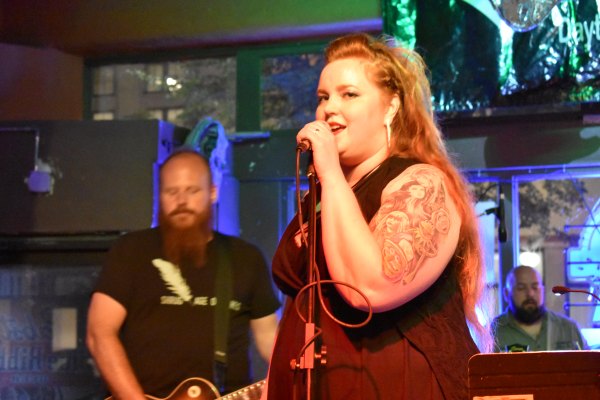 As a concert goer, what is it that you want from singers? Skill? Power? Vocal artistry? Something intangible that cannot be easily grasped? Aarika Watson is a vocalist with few peers. Her singing is more than mere melody. Her screams, yelps, and shouts are more than mere power. She has a rare vocal talent that pulls in the listener as if you believe that she is singing directly to you and only you in that moment in that song. It is difficult to describe the feeling if you have not seen her sing. Dare one say, it is magical.
 And Chad Wells, the leader of this spiritual journey, sings with the passion and precision that escapes many singers. His voice is energy. He bends the notes with a fervor of a mission to save souls and convert the listener to a musical salvation. Chad feels the song in a way that will send chills down your spine. And when Aarika and Chad sing together, weaving their voices in a tapestry of the honest human voice such as with ‘Landing on the Moon’ or ‘Sea Green’, nothing else matters. The listener is not thinking about what to do tomorrow, you are there in that moment hearing those sounds, those voices and you are transported, you are indeed changed.






 your tuesday afternoon alternative