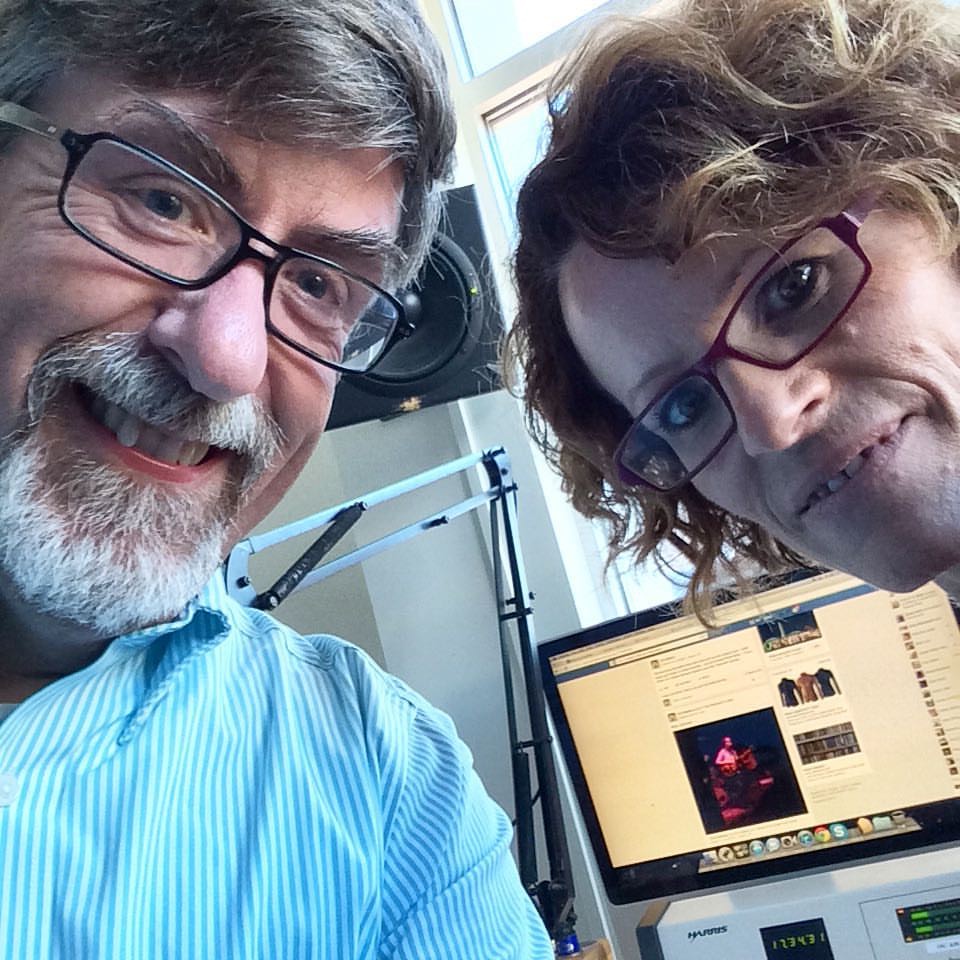
I’ll be taking a little break from the airwaves this week to celebrate something pretty special: 25 years of marriage to my favorite person.
Twenty-five years.
It’s a simple number, but it carries the weight of a lifetime. It holds thousands of ordinary days that, somehow, became extraordinary simply because we lived them together.
Yesterday I celebrated twenty-five years of marriage with the love of my life, Mrs. Dr. J, and I find myself thinking less about the milestones than about the quiet moments that truly define a life. The maps messily folded across dashboards on road trips with no particular urgency. The music that has always been the soundtrack to our lives. Long conversations that stretched late into the night. Shared laughter over things no one else would ever understand. The comfortable silence that only comes when you’ve spent enough years together that words are no longer required.
I’ve come to believe that love is built less by fireworks than by simple faithful presence.
Life has never unfolded in a straight line. There have been moments of celebration and moments of heartbreak, seasons of confidence and seasons of uncertainty. There have been professional triumphs, disappointments that lingered longer than they should have, losses that changed us, illnesses that reminded us of our fragility, and countless unexpected detours that no carefully made plan could have anticipated.
Through all of it, Tracey has been my constant.
She has loved me not only when I was easy to love, but when I was distracted, discouraged, overwhelmed, stubborn, or convinced I had to carry every burden. She has met my imperfections not with judgment, but with a generosity of spirit that still humbles me. Her kindness has softened my rough edges. Her patience has steadied me when I was anxious to move too quickly. Her quiet acceptance has given me the freedom to become more fully myself.
That is no small gift.
As a sociologist, I spend much of my professional life studying conflict, division, extremism, and the ways people can lose sight of one another’s humanity. Perhaps that is why I treasure what we have even more deeply. Every day, she reminds me that the world is also held together by quieter forces—compassion, grace, forgiveness, humor, generosity, and the simple decision to keep choosing one another, day after day, year after year.
Those choices don’t make headlines. They don’t go viral. Yet they are among the most revolutionary acts we can offer another human being.
Looking back over twenty-five years, I realize that our greatest adventures were never really about the places we traveled. They were about becoming who we are together. Every new city, every concert, every road, every unexpected stop became another chapter in a story that neither of us could have written alone.
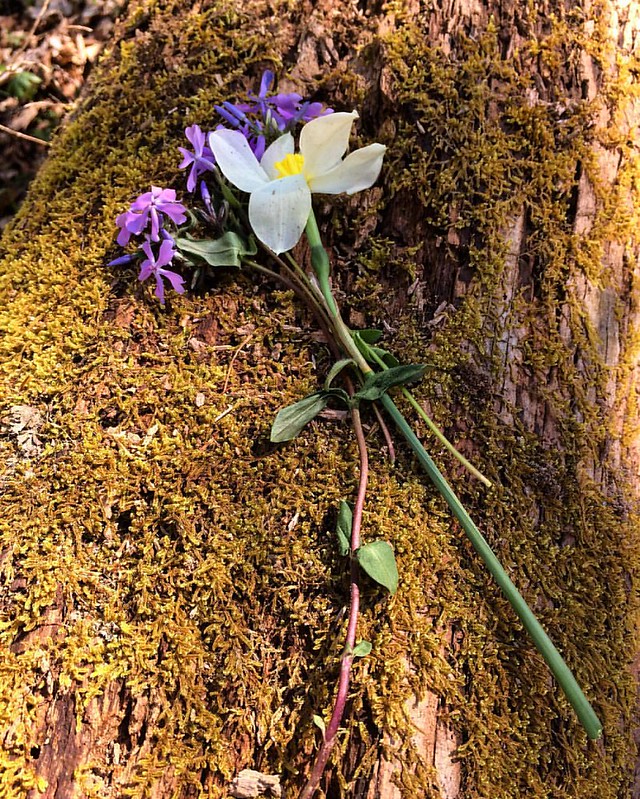
Time has a way of changing us. The people standing here today are not the same two people who exchanged vows twenty-five years ago in the Elizabethan Gardens in North Carolina in 2001. We’ve been shaped by joy and grief, success and failure, certainty and doubt. But if anything has deepened with time, it is my gratitude.
The older I become, the more convinced I am that the richest lives are measured not by accomplishments or accolades, but by the people who make us feel known. Truly known. Seen without pretense. Loved without condition. Accepted not for who we hope to become someday, but for who we are, even when we fall short of our own expectations.
I am grateful for the life we’ve built—not because it has been perfect, but because it has been real. Beautifully, wonderfully, imperfectly real and true.
Thank you for every mile we’ve traveled, every song we’ve sung, every hand you’ve held through uncertain moments, every laugh we’ve shared until we couldn’t breathe, and every ordinary day that quietly became part of an extraordinary life.
That is the gift she has given me. She has been my home in every season of life.
So, I celebrate much more than an anniversary. I celebrate a remarkable woman whose kindness has made me gentler, whose patience has made me wiser, whose unwavering love has made every joy brighter and every burden a bit lighter.
Twenty-five years feels both like forever and like the blink of an eye.
If I’ve learned anything, it’s that love is not found in the grand gestures that movies promise us. It’s found in the accumulated grace of thousands of ordinary days, faithfully shared.
And if I were given the chance to begin this journey again, knowing everything that life would bring, there is only one decision I would make exactly the same.
Every few years somebody announces that music is dead. They say streaming killed it. Algorithms killed it. Social media killed it. Attention spans killed it. Artificial intelligence killed it. Radio killed it. MTV killed it. Napster killed it. Vinyl prices killed it. Somebody is always writing the obituary while another kid is sitting on the floor with a cheap pair of headphones hearing a song that rearranges their nervous system forever.
Music keeps surviving because it isn’t a product first. It’s evidence that human beings are still trying to tell each other the truth.
That’s why music still matters.
Not because every new release is a masterpiece. Most records have always been forgettable. If you wandered into a record store in 1974—the supposed golden age—you’d discover mountains of disposable junk stacked beside the classics. History performs ruthless editing. We remember the albums that changed lives and conveniently forget the landfill.
The miracle isn’t perfection. The miracle is persistence.
Somewhere tonight a band is loading battered amplifiers into a rusty van because thirty people in a neighborhood bar deserve something louder than despair. Somewhere a songwriter is spending six hours chasing a lyric that will eventually sound effortless. Somewhere a teenager in a bedroom is discovering that three chords are enough to begin constructing an identity.
That’s civilization.
Music isn’t background noise. It’s one of the oldest technologies human beings ever invented for surviving themselves.
The best songs don’t merely entertain; they interrupt us. They stop the machinery of everyday life long enough to whisper—or scream—that we’re not crazy for feeling what we’re feeling. They give shape to grief before we know how to describe loss. They turn anger into rhythm instead of violence. They transform loneliness into harmony. They make joy communal instead of private.
You don’t dance because life is easy.
You dance because for three minutes somebody convinced you it was worth staying in the room.
And here’s the part the streaming executives and data analysts never quite understand. Nobody has ever cried because an algorithm correctly predicted what they wanted to hear next.
People cry because artists like Jay Farrar, Bruce Springsteen, and American Aquarium sound like they are carrying every factory town in America on their shoulders. They cry because Nina Simone makes heartbreak sound like a moral philosophy. They cry because the Replacements stumble into emotional perfection just as they’re threatening to fall apart. They cry because Aretha Franklin doesn’t simply sing respect—she demands that the universe finally recognize human dignity.
Music matters because authenticity is still audible.
You can’t fake conviction forever. The microphones eventually catch you cheating.
That’s why local music scenes remain sacred. Every city has them. Dayton. Detroit. Austin. Toronto. Minneapolis. Glasgow. Liverpool. Manchester. Places where musicians keep creating despite indifferent audiences, shrinking budgets, and the economic absurdity of trying to build a life around songs. They aren’t doing it because it’s profitable.
They’re doing it because silence would be worse.
Go stand in a club where forty people are watching a band you’ve never heard before. Listen carefully. That’s democracy working better than most legislatures. Complete strangers agreeing that for the next hour they’ll surrender their individual anxieties and become one audience. Every applause break says, “I hear you.” Every encore says, “Stay a little longer.”
We desperately need more of that.
Our politics rewards outrage. Our technology monetizes distraction. Our economy encourages isolation. Music quietly rebels against all three. It insists that listening is an ethical act. Really listening means allowing another person’s experience to occupy your own emotional space.
That’s empathy with a backbeat.
The old critics loved to argue about what was “real rock and roll,” but the argument was always bigger than guitars. They were really asking whether culture could still produce honesty in a world increasingly devoted to image. That’s still the question today, except now image comes filtered, optimized, branded, monetized, and endlessly recycled across glowing screens.
A great song cuts through all of it.
Three minutes.
One voice.
One unforgettable melody.
Suddenly you’re sixteen again, or grieving your mother, or driving nowhere with your best friend, or falling in love, or surviving the worst year of your life. Time collapses. Memory becomes physical. Your pulse syncs with a snare drum. A lyric you’ve heard a hundred times suddenly reveals a meaning it was saving until you were finally ready to understand it.
No other art form enters ordinary life with quite that kind of stealth.
Books demand stillness. Films require schedules. Paintings wait in museums.
Songs climb into your car, your kitchen, your headphones, your funeral, your wedding, your first kiss, your last goodbye.
They accompany us through the ordinary until the ordinary becomes unforgettable.
So no, music isn’t dying.
The industry changes. Formats disappear. Genres mutate. Technologies evolve. Critics grow old. Trends come and go with exhausting predictability. But somewhere, right now, somebody is writing the song another stranger will someday need to survive a terrible Tuesday afternoon.
That possibility alone is enough to keep believing.
Turn it up. Not because louder is always better.
Because sometimes hope arrives disguised as feedback, wrapped inside a melody, played through a beat-up amplifier by people who still believe that a song can change a life.
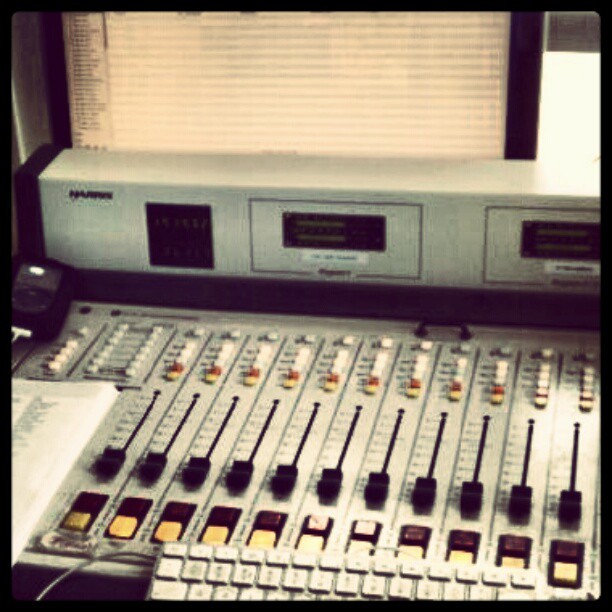
Broadcasting from the slightly tilted tower of WUDR Flyer Radio in Dayton, where the miracle of rock and roll still shows up every Tuesday like it’s punching a time clock.
There are days when a radio show feels like a job, and then there are days when it feels like a confession booth wired directly into an amplifier. This set list — this wild, unruly parade of sound — felt like the latter. It rolled through the studio like weather, unpredictable and alive, rattling the windows and reminding me that music is still the best argument against despair we’ve got. Not a cure, mind you. More like a flashlight you carry into the dark because you’re stubborn enough to keep walking.
It started with “Take It All” by Elephants and Stars from their forthcoming Philistine Vulgarity, a song that didn’t so much begin as erupt. The guitars came in like somebody kicking open a classroom door to announce that the lecture was canceled and the revolution had been rescheduled for immediately. There was a righteous scrappiness to it — the sound of people discovering that the world is negotiable and deciding, right then and there, to renegotiate the terms. You could practically smell the sweat and overheated amplifiers. That’s how you know something real is happening.
Then “Man on the Run” by Flycatcher from their album,Wrench, hit the airwaves, and suddenly the whole room felt like it was moving faster. Urgency dripped off that track the way condensation runs down the side of a glass in August. It sounded like sprinting through town with your jacket half on, heart pounding because maybe this time the consequences are real. The featured vocal cut through like a flare — emotional, sharp, a reminder that running away is still a form of motion, and sometimes motion is the only prayer you’ve got left when the rest of your plans collapse.
By the time “Intrusive Thots” by The Library is On Fire off of the Ground of The Last spun up, the atmosphere had shifted into something twitchy and electric. The song bounced around like a brain that refuses to shut off at three in the morning, cycling through memories, anxieties, and half-formed jokes. It was funny and frantic and brutally honest about the way modern life keeps whispering nonsense into your ear until you start humming along just to keep your sanity intact. Two minutes of chaos that felt like a documentary about the inside of your own head.
And then came “Driving” by Leah Callahan off of the soon-to-be-released Our Lady of the Sad Adventure, which slowed the whole operation down just enough to let the air back into the room. A road song for people who don’t know where they’re going but refuse to stay still. There was melancholy baked into the melody, the kind that sneaks up on you somewhere between the third stoplight and the edge of town. Windows down, radio up, existential dread riding shotgun — and somehow it all still felt like freedom. That’s the magic trick of a good song: it turns uncertainty into momentum.
“Locked and Loaded” by The Cab stomped in next, boots hitting the floor like a challenge. It had swagger, sure, but underneath the bravado there was vulnerability — the sense that all that noise was really a shield against invisibility. Loudness as survival strategy. Teenagers and twenty-somethings have been using that tactic since the first guitar cable got plugged into the first amplifier, and it still works because sometimes the only way to be heard is to be unapologetically loud.
Then the wonderfully strange “Balloon Man Running” by Public Opinion floated into the mix, and suddenly the show felt like a parade that had taken a wrong turn and decided to keep marching anyway. The melody bounced along with a kind of cheerful instability, colorful and slightly off-balance. There was humor in it, but also dignity — the quiet heroism of people who keep moving even when the world refuses to make sense. Absurdity, it turns out, can be a form of courage.
When “Still Around” by Friko arrived, it carried the weight of survival in its pocket. This wasn’t triumph in the fireworks-and-confetti sense. It was quieter than that. The kind of victory that looks like getting out of bed, showing up, and refusing to disappear. Every chord felt like a small declaration: I made it through another year, another heartbreak, another stretch of bad news, and I’m still here. In an era that celebrates spectacle, there’s something radical about persistence.
“Watchdog” by Caroline Carter snapped the mood back into alertness. The rhythm stalked forward like a guard dog pacing a fence line, ears up, eyes scanning the horizon. It felt political without preaching — the musical equivalent of keeping the lights on and the doors unlocked while still paying attention to who’s walking down the street. Vigilance has a sound, and it sounds a lot like a bass line that refuses to sit still.
Then the dreamy shimmer of “(Looking Through) Rose Colored Glasses” by Mikaela Davis drifted through the speakers like memory wrapped in gauze. Beautiful, yes, but with just enough tension underneath to keep you from relaxing completely. Nostalgia is a tricky thing — it softens the edges of the past while quietly erasing the parts that hurt. This song seemed to know that and lean into it, creating something both comforting and unsettling at the same time.
By the time “ALL I WANT” by FAST CAMELS exploded onto the air, subtlety had officially left the building. This was desire in its rawest form — loud, messy, unapologetic. The kind of track that makes you roll down the car windows and shout along even if you don’t know all the words. It reminded me that wanting something intensely is still one of the most human experiences we have, even when it makes us look ridiculous.
And then, just when the volume threatened to overwhelm everything, “The One That Makes You Happy” by The Greenberry Woods arrived like a cool breeze through an open window. Pure pop joy, but not the shallow, disposable kind. This felt earned — the smile that shows up after the storm passes and the cleanup begins. Happiness, in that context, becomes a kind of rebellion. A refusal to let cynicism have the last word.
Heartbreak followed, as it always does, in the form of “Don’t Leave” by Bummer Camp. You could hear the pacing in the melody — the late-night conversations that never quite happen, the words rehearsed but never spoken. It was vulnerable in the way only good rock can be: loud enough to mask the fear, soft enough to reveal it anyway. There’s bravery in admitting you need someone, even if they’re already halfway out the door.
“The Way I Feel” by Basement took that vulnerability and turned it into catharsis. The guitars slammed forward like they were trying to break through drywall, and the vocal carried the kind of honesty that comes from running out of patience with pretense. Therapy by a distortion pedal. Sometimes the healthiest thing you can do is scream into a microphone and let the sound carry the weight you’ve been holding.
Then “Doors” by Noah Kahan opened up the sonic landscape into something wide and reflective. It felt like standing at a threshold, looking out at a horizon you’re not entirely ready to cross. The melody breathed, the lyrics lingered, and the whole thing carried that quiet sense of possibility that comes with big decisions. Change is terrifying, but it’s also inevitable, and this song captured both sides of that truth.
“Planting Tomatoes” by Lucy Dacus grounded the set in something beautifully ordinary. The act of putting seeds into soil became a metaphor for patience, care, and the stubborn hope that something will grow if you give it enough time. In a culture obsessed with speed and spectacle, there’s something radical about tending a garden. It’s a slow, deliberate investment in the future.
From there, “One Day” by Future Islands surged upward like a sunrise breaking through clouds. Synths swelled, emotions followed, and suddenly the room felt bigger than it had a few minutes earlier. There was longing in the arrangement, but also momentum — the belief that tomorrow might deliver something better if we just hold on long enough. Hope, in musical form, doesn’t have to be quiet.
“Erryday” by The 1984 Draft brought things back down to the level of friendship — the everyday rituals that keep us grounded. Shared jokes, cheap meals, long conversations that stretch past midnight. The song celebrated the ordinary bonds that make life bearable. Community doesn’t always announce itself with fireworks. Sometimes it shows up in the form of someone who answers the phone.
When “Hollywood Forever” by Jesse Malin rolled in, it carried the ghost of glamour with it. The melody wandered through memories of bright lights and late nights, but there was resilience in the delivery — a refusal to live entirely in the past. Nostalgia can be a trap, but it can also be a source of strength if you use it to keep moving forward.
Then came “Ride Lonesome” by Beck, which felt like a long stretch of highway cutting through open country. Dust in the air, horizon in the distance, solitude settling in like an old friend. There’s a strange peace that comes from traveling alone with your thoughts, and this song captured that feeling perfectly. Not loneliness, exactly — more like independence.
The mood darkened beautifully with “House of I” by The Afghan Whigs, a track drenched in drama and atmosphere. It wrapped around the listener like heavy velvet curtains, shutting out the outside world while the emotional storm played out inside. Sensual, mysterious, unapologetically theatrical — proof that rock and roll still knows how to wear a tuxedo.
“If You Change” by Widowspeak followed with a gentler touch, drifting through the speakers like a memory you can’t quite place. The melody whispered instead of shouting, inviting you to lean in and listen closely. It reminded me that quiet songs can carry enormous weight, especially when they trust the listener to meet them halfway.
Then “Silver Ford” by Sunday (1994) put us back on the road again, headlights cutting through darkness, tension humming under the hood. It felt cinematic, like the soundtrack to a late-night drive when the world is asleep and your thoughts finally have room to breathe. There’s clarity in those moments — the kind that only shows up when everything else goes quiet.
By the time “WAITING FOR THE PHONE CALL” by The Twilight Sad arrived, anticipation had taken center stage. The song stretched time into something elastic, every second loaded with expectation. It captured that universal experience of staring at a silent phone and wondering what the next ring might bring. Anxiety, hope, fear — all tangled together in a single melody.
Then “I Believe” by The Rallies stepped in with a simple declaration of faith. Not blind optimism, not naïve cheerfulness — just a steady conviction that things can improve. It felt grounded, practical, almost workmanlike in its sincerity. The musical equivalent of rolling up your sleeves and getting back to work.
And finally, the set closed with “Eveready” by The 1984 Draft, a song that refused to fade quietly into the background. Bright, energetic, stubbornly alive — the kind of track that leaves you with the sense that the story isn’t over yet. That somewhere, another band is plugging in, another crowd is gathering, another song is about to begin.
That’s the real promise of radio, after all. Not perfection, not certainty — just continuity. The signal keeps going. The noise keeps making sense.
And as long as there’s a guitar humming somewhere in the distance, there’s still reason to tune in.
Let’s talk about sad songs. Not just the ones that make you sniffle politely into your latte or stare wistfully out the bus window like you’re in a Sofia Coppola montage. I mean the real gut-wrenchers. The ones that hit like a tire iron to the heart at 2 a.m., that make you want to lie down in the wreckage of your own teenage angst and just feel things, goddammit. Why do these songs—these elegies in three chords and a cloud of distortion or whispered strings—move us in ways that triumph, joy, or even white-hot rage rarely can?
It’s because melancholy is the one universal that doesn’t require a passport. You don’t have to be fluent in a language, rich, cool, or even particularly literate to feel the weight of a minor chord progression in your bones. It slips through the gaps in your defenses like cigarette smoke under a locked door. Everyone, everywhere, has had their heart broken, or their dreams flicker out like busted neon. And sad songs? They’re the mixtape we make for our ghosts.
And look, I’m not talking about some weepy Ed Sheeran tripe here. I mean the good sad songs. The Big Stars and Elliott Smiths and Billie Holidays of the world. Galaxie 500 staring blankly at the floor through layers of reverb. Nick Drake whispering from inside a velvet-lined coffin. Songs that ache, that bleed, that mean it.
Sad music, real sad music, doesn’t pretend to fix you. It meets you in your pit and pulls up a folding chair. It doesn’t offer a hug so much as sit in the corner, staring into the same void you are, nodding along like, “Yeah, man. It’s messed up. Pass the bottle.” And in that moment, in that terrible mutual silence, there is communion.
Melancholy is Truth in a World of Happy Lies
Let’s face it: most of life is a hustle. A series of grins, resumes, likes, and hollow how-you-doins. Upbeat songs are marketing jingles for this illusion of perpetual sunshine. But sadness? Melancholy doesn’t lie. It doesn’t sell. It just is.
In a world obsessed with productivity and performative optimism—“good vibes only” and “rise and grind” and all that garbage—sad songs are the last rebellion. They remind you it’s okay to break down. That you can’t always be okay. That maybe you’re not the only one dragging a bag of old regrets down a long hallway of wrong turns.
Lester Bangs once said music should be honest, even if it’s ugly. Especially if it’s ugly. And sadness is honest. It’s the realest thing there is. It comes uninvited and leaves when it damn well pleases. And the best artists don’t try to outrun it—they give it a voice. They tune it into something spectral and strange and heartbreakingly beautiful.
It’s in the Sound, Man—That Wound in the Note
Musically, sadness is baked into the DNA. Minor chords, descending progressions, dissonance—it’s a language the body understands instinctively. You don’t think a sad song. You feel it.
Take a piano and slam out a C major. Clean. Uplifting. Now slide that E down to an E-flat. Boom: C minor. Everything changes. That one little shift, and suddenly it’s not a party anymore—it’s a funeral. That’s the thing about music—it doesn’t have to explain itself. The note is the feeling.
And then there’s the delivery. The human voice, trembling at the edge of breaking, is the most honest instrument on Earth. When Nina Simone sang “I Loves You, Porgy,” she wasn’t just performing—she was confessing. When Kurt Cobain howled “I miss you / I’m not gonna crack,” you knew he already had. Sadness in song isn’t neat or polished. It’s raw. Unfiltered. It stumbles through the chorus half-drunk and bleeding.
The best sad songs sound like they barely made it to the end. Like the tape is unraveling, the band is falling apart, the singer might cry or disappear or explode. And that tension? That’s the beauty. It’s art made from the edge.
The Autobiography of a Heartbreak
Every sad song is a memory in search of a body. A soundtrack for the first time you watched someone walk away, or the night you stared at the ceiling wishing you could just hit “off” on your brain. And when a song gets it—when it echoes your exact misery back at you—it feels like it was written just for you, by someone who snuck into your life and took notes.
There’s a strange comfort in that, isn’t there? In knowing someone else has suffered just as deeply, cried just as stupidly, hurt just as foolishly. It’s the one-sided conversation that makes you feel less alone. You don’t even have to reply. Just press play, and bleed.
It’s not just nostalgia—it’s mythologizing your own damn sorrow. The sad song turns your pain into cinema. Suddenly your heartbreak is artistic, your suffering noble. You’re not just sad—you’re part of some great, tragic lineage of sad bastards stretching from Schubert to Phoebe Bridgers. It makes the pain feel important.
We Like Feeling Things (Even the Bad Stuff)
Let’s get perverse for a second: people like sad songs because they want to feel bad. Or more accurately, because they want to feel, period.
In an age of numbing—social media scrolls, medicated serenity, binge distractions—we’re desperate for something real. And sadness, for all its discomfort, is real. It’s proof we’re alive. Listening to a sad song is like picking at a scab: you know it’ll sting, but at least you can feel it.
Bangs would’ve said something like: music is supposed to jolt you out of your dumb meat-puppet routine and make you confront yourself. A sad song is a mirror you can’t look away from. And sometimes we need that. We need to wallow a little, scream into the void, and be broken for three and a half minutes.
There’s an odd sort of euphoria in it, too. A bittersweet ecstasy. Like how crying can feel like a release. Or how Leonard Cohen could make you feel elevated even as he dismantled your soul one verse at a time. Because sadness, in music, is not despair. It’s transcendence through pain. It’s catharsis with a backbeat.
Because Some Beauty Only Exists in the Sadness
There’s a kind of beauty you can only find in sadness. Not in spite of it, but because of it. The cracked voice, the wilted melody, the lyric that says “I’m sorry” without ever using the word—it’s like watching a flower bloom in a war zone. Fragile. Defiant. Weirdly hopeful.
And maybe that’s the secret at the core of it all. Sad songs aren’t just depressing—they’re affirming. They remind you that you’re not alone in the chaos. That your pain is shared, even if no one around you knows what to say. That someone, somewhere, felt exactly this way—and made something beautiful out of it.
It’s that transmutation that makes it powerful. Turning grief into grace. Hurt into harmony. It’s alchemy, man. Pure magic.
The Final Chorus
So why are sad songs so emotionally moving?
Because they mean it. Because they speak when you can’t. Because they let you feel when everything else tells you to shut up and move on. Because they remind you of everything you’ve lost, everything you’ve survived, and everything you still carry.
Because they are the soul, laid bare. A guitar with no filter. A voice with no armor. A truth with no apology.
And let’s be real: nobody ever got goosebumps from a happy song at 3 a.m. Nobody stood in the dark, half-drunk and broken, and put on “Walking on Sunshine.” No. They reached for “Holocaust” by Big Star. For “Between the Bars” by Elliott Smith. For that one Radiohead song that always sounds like winter.
Because sadness, in music, is a kind of salvation. Not escape—but understanding. A sacred ache. A wounded love letter to the worst parts of being human.
And that, friends, is why the sad song always hits harder. Even when—especially when—you don’t want it to.
End Scene. Drop the needle. Cue violins. Fade to silence.
Every year, like clockwork, the music world implodes into its annual rite of passage: the “Best of” lists. It doesn’t matter whether we need them or not. We could all be listening to something that absolutely shreds, some obscure record that deserves reverence. Still, here we are, obsessing over arbitrary rankings, as if these lists will unlock some divine, objective truth. It is as if, somehow, this tiny, self-appointed cult of critics, bloggers, and tastemakers can distill the whole sprawling mess of 365 days of music into neat little categories that tell you what was really good.
It’s a bit comical, really. These lists are nothing more than trendy cultural currency, an exercise in opinion policing. As if, come December, we all need some authority to tell us what albums we should have liked. Sure, there are some gems in those Top 10s, some records that hit like a lightning bolt, that maybe wouldn’t have been discovered without the almighty guidance of Pitchfork or Rolling Stone. But let’s not kid ourselves – the list itself is a product, a marketing tool, another algorithm feeding on your desire for validation. The music may be real, but the rankings? Please.
Every December, the ritual plays out like a predictable drama: the same predictable indie hits, the same half-baked arguments, the same flavor-of-the-month that gets hyped until the world collectively shrugs and moves on. It’s all just noise. And yet, we devour it like it’s gospel, eagerly waiting for the validation that maybe, just maybe, our choices are “correct.” But here’s the thing: music is personal. These lists? They’re just noise. It’s time we recognize them for what they are: empty, meaningless packaging for a world that’s forgotten how to just listen.
And with all that said, we do an annual show featuring several hours of bands, musicians, songs and albums that impressed the hell out of us. But not going to make some silly rank order, just a bunch of songs that we thought were incredible. So, yeah if this is a bit speaking from both sides of the mouth, so be it.
Our YTAA Faves of 2024 show includes music from many excellent musicians, such as Tamar Berk, Wussy, Palm Ghosts, Nada Surf, Waxahatchee, MJ Lenderman, JD McPherson, Jeremy Porter, Former Champ, Jason Benefield, J. Robins, Dreamjacket, David Payne, Bad Bad Hats, Bike Routes, Brian Wells, The Campbell Apartment, Amy Rigby, The Armoires, Librarians With Hickeys, Bottlecap Mountain, Liv, The Popravinas, The Nautical Theme, Smug Brothers, The Cure, The Reds, Pinks & Purples, The Umbreallas, Nick Kizirnis, Guided By Voices, and The English Beat and The Tragically Hip re-releases.
So, if this is just another end-of-the-year ritual that nobody needs but everybody wants, then maybe it is worthwhile as a way to share some of the music that deserves to be heard.
Streaming Forward, Powered By The Past - if you love the 80s music, new music, Eurovision, cheesy pop and awesome playlists then let's get this pop party started!