The Love Built in Ordinary Days

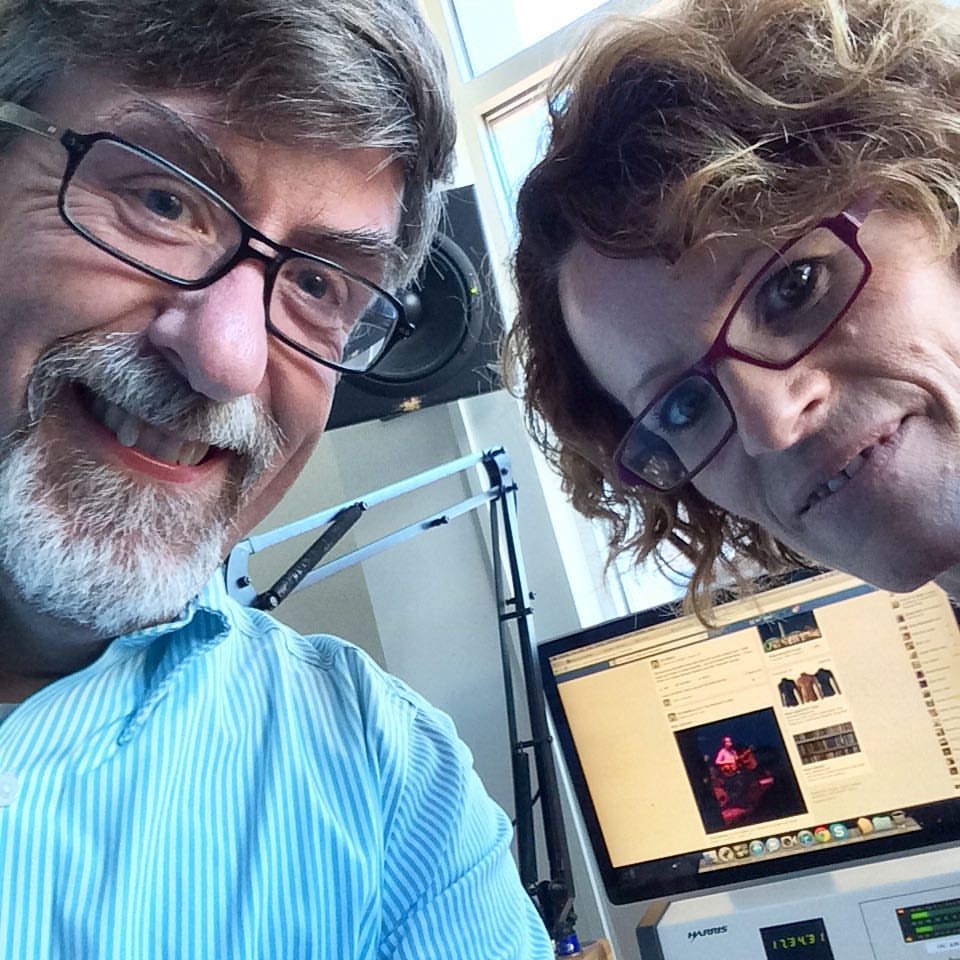
I’ll be taking a little break from the airwaves this week to celebrate something pretty special: 25 years of marriage to my favorite person.

Twenty-five years.

It’s a simple number, but it carries the weight of a lifetime. It holds thousands of ordinary days that, somehow, became extraordinary simply because we lived them together.

Yesterday I celebrated twenty-five years of marriage with the love of my life, Mrs. Dr. J, and I find myself thinking less about the milestones than about the quiet moments that truly define a life. The maps messily folded across dashboards on road trips with no particular urgency. The music that has always been the soundtrack to our lives. Long conversations that stretched late into the night. Shared laughter over things no one else would ever understand. The comfortable silence that only comes when you’ve spent enough years together that words are no longer required.

I’ve come to believe that love is built less by fireworks than by simple faithful presence.

Life has never unfolded in a straight line. There have been moments of celebration and moments of heartbreak, seasons of confidence and seasons of uncertainty. There have been professional triumphs, disappointments that lingered longer than they should have, losses that changed us, illnesses that reminded us of our fragility, and countless unexpected detours that no carefully made plan could have anticipated.

Through all of it, Tracey has been my constant.

She has loved me not only when I was easy to love, but when I was distracted, discouraged, overwhelmed, stubborn, or convinced I had to carry every burden. She has met my imperfections not with judgment, but with a generosity of spirit that still humbles me. Her kindness has softened my rough edges. Her patience has steadied me when I was anxious to move too quickly. Her quiet acceptance has given me the freedom to become more fully myself.

That is no small gift.

As a sociologist, I spend much of my professional life studying conflict, division, extremism, and the ways people can lose sight of one another’s humanity. Perhaps that is why I treasure what we have even more deeply. Every day, she reminds me that the world is also held together by quieter forces—compassion, grace, forgiveness, humor, generosity, and the simple decision to keep choosing one another, day after day, year after year.

Those choices don’t make headlines. They don’t go viral. Yet they are among the most revolutionary acts we can offer another human being.

Looking back over twenty-five years, I realize that our greatest adventures were never really about the places we traveled. They were about becoming who we are together. Every new city, every concert, every road, every unexpected stop became another chapter in a story that neither of us could have written alone.
Time has a way of changing us. The people standing here today are not the same two people who exchanged vows twenty-five years ago in the Elizabethan Gardens in North Carolina in 2001. We’ve been shaped by joy and grief, success and failure, certainty and doubt. But if anything has deepened with time, it is my gratitude.

The older I become, the more convinced I am that the richest lives are measured not by accomplishments or accolades, but by the people who make us feel known. Truly known. Seen without pretense. Loved without condition. Accepted not for who we hope to become someday, but for who we are, even when we fall short of our own expectations.

I am grateful for the life we’ve built—not because it has been perfect, but because it has been real. Beautifully, wonderfully, imperfectly real and true.

Thank you for every mile we’ve traveled, every song we’ve sung, every hand you’ve held through uncertain moments, every laugh we’ve shared until we couldn’t breathe, and every ordinary day that quietly became part of an extraordinary life.

That is the gift she has given me. She has been my home in every season of life.

So, I celebrate much more than an anniversary. I celebrate a remarkable woman whose kindness has made me gentler, whose patience has made me wiser, whose unwavering love has made every joy brighter and every burden a bit lighter.

Twenty-five years feels both like forever and like the blink of an eye.

If I’ve learned anything, it’s that love is not found in the grand gestures that movies promise us. It’s found in the accumulated grace of thousands of ordinary days, faithfully shared.

And if I were given the chance to begin this journey again, knowing everything that life would bring, there is only one decision I would make exactly the same.

I would choose you. Every single time.
Why the Sad Song Always Hits Harder: A Tear-Streaked Love Letter to Melancholy Music

Let’s talk about sad songs. Not just the ones that make you sniffle politely into your latte or stare wistfully out the bus window like you’re in a Sofia Coppola montage. I mean the real gut-wrenchers. The ones that hit like a tire iron to the heart at 2 a.m., that make you want to lie down in the wreckage of your own teenage angst and just feel things, goddammit. Why do these songs—these elegies in three chords and a cloud of distortion or whispered strings—move us in ways that triumph, joy, or even white-hot rage rarely can?

It’s because melancholy is the one universal that doesn’t require a passport. You don’t have to be fluent in a language, rich, cool, or even particularly literate to feel the weight of a minor chord progression in your bones. It slips through the gaps in your defenses like cigarette smoke under a locked door. Everyone, everywhere, has had their heart broken, or their dreams flicker out like busted neon. And sad songs? They’re the mixtape we make for our ghosts.

And look, I’m not talking about some weepy Ed Sheeran tripe here. I mean the good sad songs. The Big Stars and Elliott Smiths and Billie Holidays of the world. Galaxie 500 staring blankly at the floor through layers of reverb. Nick Drake whispering from inside a velvet-lined coffin. Songs that ache, that bleed, that mean it.

Sad music, real sad music, doesn’t pretend to fix you. It meets you in your pit and pulls up a folding chair. It doesn’t offer a hug so much as sit in the corner, staring into the same void you are, nodding along like, “Yeah, man. It’s messed up. Pass the bottle.” And in that moment, in that terrible mutual silence, there is communion.

Melancholy is Truth in a World of Happy Lies

Let’s face it: most of life is a hustle. A series of grins, resumes, likes, and hollow how-you-doins. Upbeat songs are marketing jingles for this illusion of perpetual sunshine. But sadness? Melancholy doesn’t lie. It doesn’t sell. It just is.

In a world obsessed with productivity and performative optimism—“good vibes only” and “rise and grind” and all that garbage—sad songs are the last rebellion. They remind you it’s okay to break down. That you can’t always be okay. That maybe you’re not the only one dragging a bag of old regrets down a long hallway of wrong turns.

Lester Bangs once said music should be honest, even if it’s ugly. Especially if it’s ugly. And sadness is honest. It’s the realest thing there is. It comes uninvited and leaves when it damn well pleases. And the best artists don’t try to outrun it—they give it a voice. They tune it into something spectral and strange and heartbreakingly beautiful.

It’s in the Sound, Man—That Wound in the Note

Musically, sadness is baked into the DNA. Minor chords, descending progressions, dissonance—it’s a language the body understands instinctively. You don’t think a sad song. You feel it.

Take a piano and slam out a C major. Clean. Uplifting. Now slide that E down to an E-flat. Boom: C minor. Everything changes. That one little shift, and suddenly it’s not a party anymore—it’s a funeral. That’s the thing about music—it doesn’t have to explain itself. The note is the feeling.

And then there’s the delivery. The human voice, trembling at the edge of breaking, is the most honest instrument on Earth. When Nina Simone sang “I Loves You, Porgy,” she wasn’t just performing—she was confessing. When Kurt Cobain howled “I miss you / I’m not gonna crack,” you knew he already had. Sadness in song isn’t neat or polished. It’s raw. Unfiltered. It stumbles through the chorus half-drunk and bleeding.

The best sad songs sound like they barely made it to the end. Like the tape is unraveling, the band is falling apart, the singer might cry or disappear or explode. And that tension? That’s the beauty. It’s art made from the edge.

The Autobiography of a Heartbreak

Every sad song is a memory in search of a body. A soundtrack for the first time you watched someone walk away, or the night you stared at the ceiling wishing you could just hit “off” on your brain. And when a song gets it—when it echoes your exact misery back at you—it feels like it was written just for you, by someone who snuck into your life and took notes.

There’s a strange comfort in that, isn’t there? In knowing someone else has suffered just as deeply, cried just as stupidly, hurt just as foolishly. It’s the one-sided conversation that makes you feel less alone. You don’t even have to reply. Just press play, and bleed.

It’s not just nostalgia—it’s mythologizing your own damn sorrow. The sad song turns your pain into cinema. Suddenly your heartbreak is artistic, your suffering noble. You’re not just sad—you’re part of some great, tragic lineage of sad bastards stretching from Schubert to Phoebe Bridgers. It makes the pain feel important.

We Like Feeling Things (Even the Bad Stuff)

Let’s get perverse for a second: people like sad songs because they want to feel bad. Or more accurately, because they want to feel, period.

In an age of numbing—social media scrolls, medicated serenity, binge distractions—we’re desperate for something real. And sadness, for all its discomfort, is real. It’s proof we’re alive. Listening to a sad song is like picking at a scab: you know it’ll sting, but at least you can feel it.

Bangs would’ve said something like: music is supposed to jolt you out of your dumb meat-puppet routine and make you confront yourself. A sad song is a mirror you can’t look away from. And sometimes we need that. We need to wallow a little, scream into the void, and be broken for three and a half minutes.

There’s an odd sort of euphoria in it, too. A bittersweet ecstasy. Like how crying can feel like a release. Or how Leonard Cohen could make you feel elevated even as he dismantled your soul one verse at a time. Because sadness, in music, is not despair. It’s transcendence through pain. It’s catharsis with a backbeat.

Because Some Beauty Only Exists in the Sadness

There’s a kind of beauty you can only find in sadness. Not in spite of it, but because of it. The cracked voice, the wilted melody, the lyric that says “I’m sorry” without ever using the word—it’s like watching a flower bloom in a war zone. Fragile. Defiant. Weirdly hopeful.

And maybe that’s the secret at the core of it all. Sad songs aren’t just depressing—they’re affirming. They remind you that you’re not alone in the chaos. That your pain is shared, even if no one around you knows what to say. That someone, somewhere, felt exactly this way—and made something beautiful out of it.

It’s that transmutation that makes it powerful. Turning grief into grace. Hurt into harmony. It’s alchemy, man. Pure magic.

The Final Chorus

So why are sad songs so emotionally moving?

Because they mean it. Because they speak when you can’t. Because they let you feel when everything else tells you to shut up and move on. Because they remind you of everything you’ve lost, everything you’ve survived, and everything you still carry.

Because they are the soul, laid bare. A guitar with no filter. A voice with no armor. A truth with no apology.

And let’s be real: nobody ever got goosebumps from a happy song at 3 a.m. Nobody stood in the dark, half-drunk and broken, and put on “Walking on Sunshine.” No. They reached for “Holocaust” by Big Star. For “Between the Bars” by Elliott Smith. For that one Radiohead song that always sounds like winter.

Because sadness, in music, is a kind of salvation. Not escape—but understanding. A sacred ache. A wounded love letter to the worst parts of being human.

And that, friends, is why the sad song always hits harder. Even when—especially when—you don’t want it to.

End Scene. Drop the needle. Cue violins. Fade to silence.