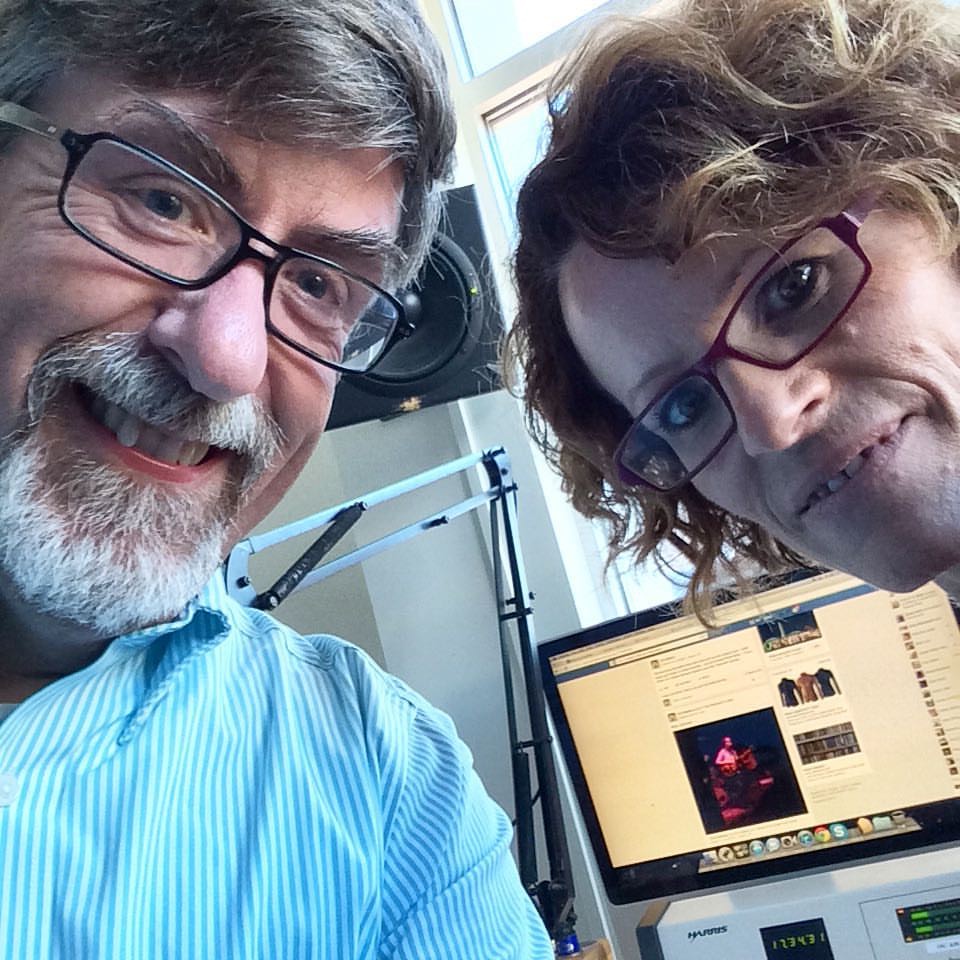
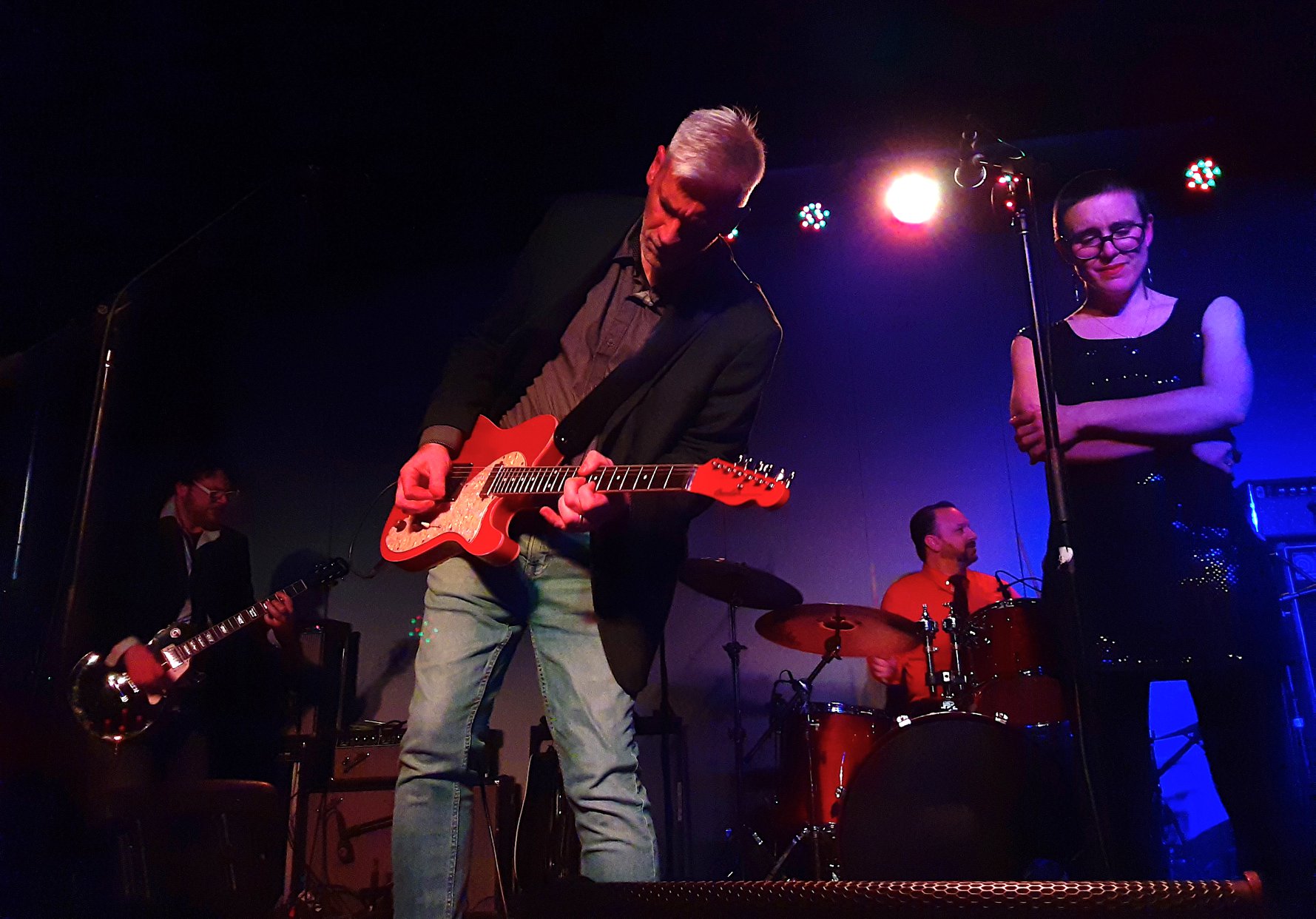
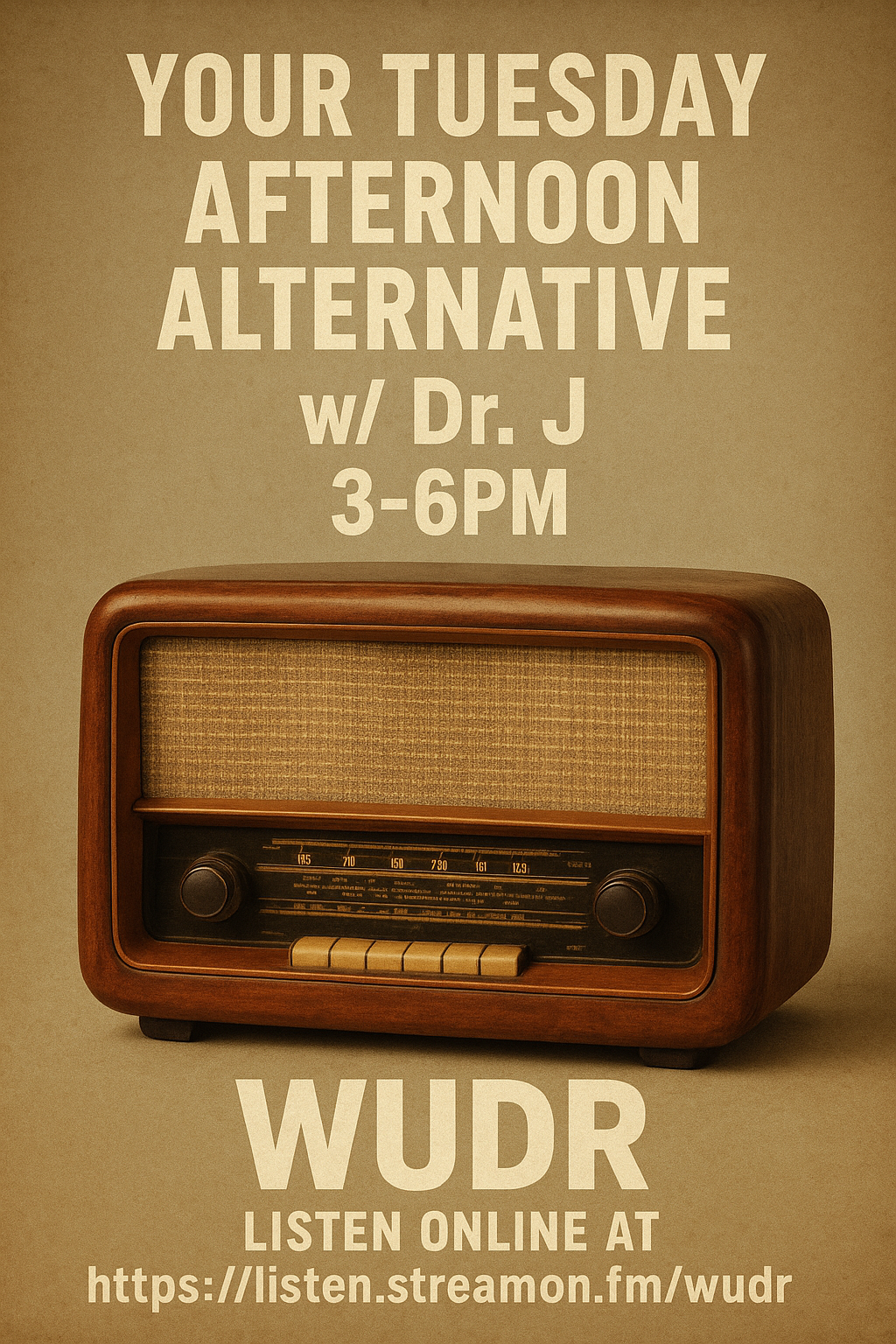
I’ll be taking a little break from the airwaves this week to celebrate something pretty special: 25 years of marriage to my favorite person.
Twenty-five years.
It’s a simple number, but it carries the weight of a lifetime. It holds thousands of ordinary days that, somehow, became extraordinary simply because we lived them together.
Yesterday I celebrated twenty-five years of marriage with the love of my life, Mrs. Dr. J, and I find myself thinking less about the milestones than about the quiet moments that truly define a life. The maps messily folded across dashboards on road trips with no particular urgency. The music that has always been the soundtrack to our lives. Long conversations that stretched late into the night. Shared laughter over things no one else would ever understand. The comfortable silence that only comes when you’ve spent enough years together that words are no longer required.
I’ve come to believe that love is built less by fireworks than by simple faithful presence.
Life has never unfolded in a straight line. There have been moments of celebration and moments of heartbreak, seasons of confidence and seasons of uncertainty. There have been professional triumphs, disappointments that lingered longer than they should have, losses that changed us, illnesses that reminded us of our fragility, and countless unexpected detours that no carefully made plan could have anticipated.
Through all of it, Tracey has been my constant.
She has loved me not only when I was easy to love, but when I was distracted, discouraged, overwhelmed, stubborn, or convinced I had to carry every burden. She has met my imperfections not with judgment, but with a generosity of spirit that still humbles me. Her kindness has softened my rough edges. Her patience has steadied me when I was anxious to move too quickly. Her quiet acceptance has given me the freedom to become more fully myself.
That is no small gift.
As a sociologist, I spend much of my professional life studying conflict, division, extremism, and the ways people can lose sight of one another’s humanity. Perhaps that is why I treasure what we have even more deeply. Every day, she reminds me that the world is also held together by quieter forces—compassion, grace, forgiveness, humor, generosity, and the simple decision to keep choosing one another, day after day, year after year.
Those choices don’t make headlines. They don’t go viral. Yet they are among the most revolutionary acts we can offer another human being.
Looking back over twenty-five years, I realize that our greatest adventures were never really about the places we traveled. They were about becoming who we are together. Every new city, every concert, every road, every unexpected stop became another chapter in a story that neither of us could have written alone.
Time has a way of changing us. The people standing here today are not the same two people who exchanged vows twenty-five years ago in the Elizabethan Gardens in North Carolina in 2001. We’ve been shaped by joy and grief, success and failure, certainty and doubt. But if anything has deepened with time, it is my gratitude.
The older I become, the more convinced I am that the richest lives are measured not by accomplishments or accolades, but by the people who make us feel known. Truly known. Seen without pretense. Loved without condition. Accepted not for who we hope to become someday, but for who we are, even when we fall short of our own expectations.
I am grateful for the life we’ve built—not because it has been perfect, but because it has been real. Beautifully, wonderfully, imperfectly real and true.
Thank you for every mile we’ve traveled, every song we’ve sung, every hand you’ve held through uncertain moments, every laugh we’ve shared until we couldn’t breathe, and every ordinary day that quietly became part of an extraordinary life.
That is the gift she has given me. She has been my home in every season of life.
So, I celebrate much more than an anniversary. I celebrate a remarkable woman whose kindness has made me gentler, whose patience has made me wiser, whose unwavering love has made every joy brighter and every burden a bit lighter.
Twenty-five years feels both like forever and like the blink of an eye.
If I’ve learned anything, it’s that love is not found in the grand gestures that movies promise us. It’s found in the accumulated grace of thousands of ordinary days, faithfully shared.
And if I were given the chance to begin this journey again, knowing everything that life would bring, there is only one decision I would make exactly the same.
Every few years somebody announces that music is dead. They say streaming killed it. Algorithms killed it. Social media killed it. Attention spans killed it. Artificial intelligence killed it. Radio killed it. MTV killed it. Napster killed it. Vinyl prices killed it. Somebody is always writing the obituary while another kid is sitting on the floor with a cheap pair of headphones hearing a song that rearranges their nervous system forever.
Music keeps surviving because it isn’t a product first. It’s evidence that human beings are still trying to tell each other the truth.
That’s why music still matters.
Not because every new release is a masterpiece. Most records have always been forgettable. If you wandered into a record store in 1974—the supposed golden age—you’d discover mountains of disposable junk stacked beside the classics. History performs ruthless editing. We remember the albums that changed lives and conveniently forget the landfill.
The miracle isn’t perfection. The miracle is persistence.
Somewhere tonight a band is loading battered amplifiers into a rusty van because thirty people in a neighborhood bar deserve something louder than despair. Somewhere a songwriter is spending six hours chasing a lyric that will eventually sound effortless. Somewhere a teenager in a bedroom is discovering that three chords are enough to begin constructing an identity.
That’s civilization.
Music isn’t background noise. It’s one of the oldest technologies human beings ever invented for surviving themselves.
The best songs don’t merely entertain; they interrupt us. They stop the machinery of everyday life long enough to whisper—or scream—that we’re not crazy for feeling what we’re feeling. They give shape to grief before we know how to describe loss. They turn anger into rhythm instead of violence. They transform loneliness into harmony. They make joy communal instead of private.
You don’t dance because life is easy.
You dance because for three minutes somebody convinced you it was worth staying in the room.
And here’s the part the streaming executives and data analysts never quite understand. Nobody has ever cried because an algorithm correctly predicted what they wanted to hear next.
People cry because artists like Jay Farrar, Bruce Springsteen, and American Aquarium sound like they are carrying every factory town in America on their shoulders. They cry because Nina Simone makes heartbreak sound like a moral philosophy. They cry because the Replacements stumble into emotional perfection just as they’re threatening to fall apart. They cry because Aretha Franklin doesn’t simply sing respect—she demands that the universe finally recognize human dignity.
Music matters because authenticity is still audible.
You can’t fake conviction forever. The microphones eventually catch you cheating.
That’s why local music scenes remain sacred. Every city has them. Dayton. Detroit. Austin. Toronto. Minneapolis. Glasgow. Liverpool. Manchester. Places where musicians keep creating despite indifferent audiences, shrinking budgets, and the economic absurdity of trying to build a life around songs. They aren’t doing it because it’s profitable.
They’re doing it because silence would be worse.
Go stand in a club where forty people are watching a band you’ve never heard before. Listen carefully. That’s democracy working better than most legislatures. Complete strangers agreeing that for the next hour they’ll surrender their individual anxieties and become one audience. Every applause break says, “I hear you.” Every encore says, “Stay a little longer.”
We desperately need more of that.
Our politics rewards outrage. Our technology monetizes distraction. Our economy encourages isolation. Music quietly rebels against all three. It insists that listening is an ethical act. Really listening means allowing another person’s experience to occupy your own emotional space.
That’s empathy with a backbeat.
The old critics loved to argue about what was “real rock and roll,” but the argument was always bigger than guitars. They were really asking whether culture could still produce honesty in a world increasingly devoted to image. That’s still the question today, except now image comes filtered, optimized, branded, monetized, and endlessly recycled across glowing screens.
A great song cuts through all of it.
Three minutes.
One voice.
One unforgettable melody.
Suddenly you’re sixteen again, or grieving your mother, or driving nowhere with your best friend, or falling in love, or surviving the worst year of your life. Time collapses. Memory becomes physical. Your pulse syncs with a snare drum. A lyric you’ve heard a hundred times suddenly reveals a meaning it was saving until you were finally ready to understand it.
No other art form enters ordinary life with quite that kind of stealth.
Books demand stillness. Films require schedules. Paintings wait in museums.
Songs climb into your car, your kitchen, your headphones, your funeral, your wedding, your first kiss, your last goodbye.
They accompany us through the ordinary until the ordinary becomes unforgettable.
So no, music isn’t dying.
The industry changes. Formats disappear. Genres mutate. Technologies evolve. Critics grow old. Trends come and go with exhausting predictability. But somewhere, right now, somebody is writing the song another stranger will someday need to survive a terrible Tuesday afternoon.
That possibility alone is enough to keep believing.
Turn it up. Not because louder is always better.
Because sometimes hope arrives disguised as feedback, wrapped inside a melody, played through a beat-up amplifier by people who still believe that a song can change a life.
Listening to new music is one of the last ways left to genuinely surprise yourself—no plane ticket, no self-help seminar required. It sneaks up on you. One minute you’re a fully formed adult with opinions calcified like bad arteries—I know what I like, thank you very much—and the next minute some racket you’ve never heard before is rewiring your nervous system. That’s the trick of new music: it doesn’t ask permission. It doesn’t care about your nostalgia. It kicks the door in and rearranges the furniture.
Because when you listen to new music—really listen, not the polite nodding you do while scrolling your phone—you’re admitting you might still be wrong about yourself. That’s a radical act. It means you’re willing to let a stranger sing directly into your bloodstream and tell you something you didn’t know you needed to hear. New music exposes the lie that your taste peaked at nineteen, that everything afterward is just footnotes and reissues. It says, No, pal, the story’s still going, and you’re in it whether you like it or not.
And here’s the positive part they don’t put on the brochure: new music keeps you human. It keeps you porous. It reminds you that other people are out there, sweating over guitars or laptops or busted drum kits, trying to translate whatever chaos is rattling around in their skulls into something that might connect. When you let that in, you’re practicing empathy without calling it that. You’re learning new emotional vocabulary. You’re discovering fresh ways to feel lousy, ecstatic, confused, horny, or hopeful—all of which beat the hell out of emotional reruns.
Listening to new music also wrecks your comfort zones in the best possible way. It makes you uncomfortable, and discomfort is growth with a lousy publicist. That weird rhythm you don’t “get”? That voice that sounds wrong to you? Those are the edges of your imagination being stretched. If you only listen to what already agrees with you, you’re not listening—you’re just reaffirming. New music says, Shut up for three minutes and try this on.
Most importantly, new music refuses to let you become a museum exhibit of your former cool. It doesn’t care that you once saw the band before they were famous or that you still own the original vinyl. It belongs to now, and by listening, you’re choosing to belong to now too. You’re saying that curiosity beats certainty, that becoming is better than having been.
So yeah, listening to new music shapes you in a positive way. It keeps you alert. It keeps you vulnerable. It keeps you alive. And in a world hell-bent on turning everyone into a predictable playlist, that might be the most rebellious thing you can still do.
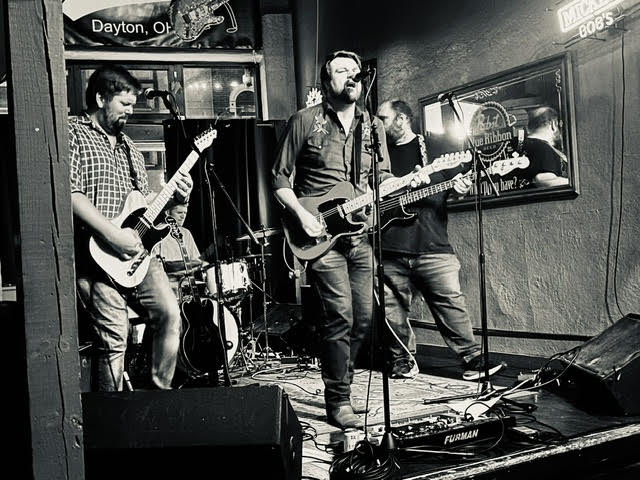
Dayton musician, Jay Madewell passed away unexpected on December 10, 2023 at the age of 51. Jay was not just a passionate music fan and avid record collector but a DJ, fantastic musician, and drummer who contributed to many musical projects in Dayton, Ohio. He had been active in the Dayton music community for well over 30 years where he encouraged many musicians to embark on their own sonic adventures and music-based journeys. His efforts in the legendary Dayton Dirt Collective, the Rock ‘n’ Roll Playdate as well as being an active and adventurous club DJ, hosting several themed nights such as the 1960s-focused Fab Gear, L’80s Night, and others. He was also considered to be the top wedding DJ for local musicians. Jay was involved in far more bands and music projects than can easily be listed here, but to list just a few — Real Lulu, Team Void, Power to the Peephole, Lexo & the Leapers, Dirty/Clean and GeeGee’s Punk Rock All Stars — are all evidence of a profound musical life.
A gathering of friends and family will be held at the Yellow Cab Tavern, 700 E. 4th St, Dayton, OH 45402 from 2-6 PM on Sunday, December 17, 2023 to share stores and memories of Jay.
When Team Void visited Your Tuesday Afternoon Alternative, we got to know Jay a little. His enthusiasm, passion for music, amazing drumming, and wry sense of humor were on keen display. It was a pleasure to spend time with him. He had a fascinating charm, easy nature and also decidedly deadly wit, terrific sense of humor and provocative observational skill. Jay was kind and good natured without speaking down to others.
Music has incredible power to cut across the barriers we put up to protect ourselves, the distance of time, and the expanse of place, weaving itself into the fabric of our lives and becoming an integral part of our identity. Often it also becomes part of the experience and sense of a place, music becomes part of how we think about community. For music enthusiasts, the relationship with their favorite musicians goes beyond mere fandom; it is a deeply emotional and personal connection. Music fans wear t-shirts of a loved band or artists not simply to become walking billboards but to illustrate in obvious, perhaps unavoidable fashion, their association with a band, artist, record, tour… whatever connects them in some distant way to the music.
When a beloved musician passes away unexpectedly, the waves of grief that ripple through a community are profound, leaving a deep void that seems impossible to fill in the immediacy of the grief. The shockwave of loss feels personal as if one has lost a member of their family or a dear childhood friend and that feeling is real. It matters. The sudden death of a cherished musician sends a seismic shift through the hearts of friends, colleagues, fans, and others, creating a collective sense of disbelief and sorrow. Unlike other forms of loss, the death of a musician carries a unique weight. Music is the soundtrack to our lives, marking milestones, soothing sorrows, markers of accomplishments, and heightening joys. When a musician unexpectedly departs, it feels as though a part of our own narrative has been abruptly severed, leaving us grappling with an overwhelming sense of emptiness. The intimate connection to something profound and personally meaningful is severed; and that bond cannot be easily repaired or replaced.
Music is a deeply personal experience, often serving as a companion in times of solitude, celebration, sadness, or introspection. The lyrics and melodies of an artist become intertwined with the listener’s memories and emotions. Those who hear the music develop an intimate connection with the artist’s work, feeling as though the musician understands their innermost thoughts and feelings. The unexpected loss of this artistic confidant can be akin to losing a dear friend or mentor who understood without judgement how you feel. That cut is especially acute when the musician is in actuality a friend.
For many, music is more than a form of entertainment; it is a lifeline. The music we listen to is more than mere background noise to many of us, it is a soundtrack to life. Musicians have a unique ability to articulate the human experience, expressing emotions that listeners may struggle to put into words. When an artist passes away, the soundtrack to life is forever altered. The songs that once brought comfort, joy, or solace may now carry a bittersweet resonance, serving as a poignant reminder of an artist’s absence.
In the digital age, social media platforms serve as virtual gathering spaces for fans to collectively mourn the loss of a musician. Social media creates the space for mourning that ripples throughout networks close and those separated and far away. The outpouring of grief on platforms like Twitter, Instagram, and Facebook creates a sense of solidarity among fans, friends, and colleagues who share a deep connection to the artist’s work. Hashtags memorializing the musician trend whether locally or farther afield, amplifying the collective voice of mourning and allowing fans to express their grief in a public forum.
Fans often channel their grief into creating and sharing tributes that celebrate the life and legacy of the departed musician. From fan art and cover performances to heartfelt messages, photos and playlists, these tributes become a way for the community to collectively honor the artist’s impact on their lives. In this shared creative process, fans find solace and a sense of connection with others who are navigating the same turbulent seas of grief. These shared memories and tributes remind us that we are not alone.
The unexpected death of a musician shatters the illusion of immortality that often surrounds artists in the eyes of their fans, colleagues and the wider community. Music has the power to transcend time, and supporters may have envisioned their favorite musician continuing to create and evolve indefinitely. The sudden loss confronts us with the harsh reality of mortality, forcing all of us to grapple with the finite nature of life and fragility of art.
The music we love forms a crucial part of our identity, shaping our tastes, values, and even our sense of self. When a beloved musician dies unexpectedly, fans, friends, and colleagues may experience a profound identity crisis as they navigate a world where the artist’s voice and sound is forever silenced. The process of mourning becomes intertwined with a search for meaning and a reevaluation of one’s own identity without the guiding influence of the departed artist. Whether the contribution would be a song, a sound, a reassuring comment, or a silly joke — that source of comfort is no longer available. In those moments, a community turns to one another to find solidarity, hope and the needed comfort.
As with any form of loss, grieving the death of a beloved musician follows the familiar stages of denial, anger, bargaining, depression, and acceptance. Navigating the stages of grief should not be considered a path to closure but rather a journey in establishing a sense of self and some grasp at understanding amongst the loss. The process is uniquely complex for members of a music community, as each stage is intertwined with the artist’s body of work, their influence on us and the fumbling efforts to come to some form of understanding. Denial may manifest as an unwillingness to accept that the musician will never create new music, while anger may be directed at the unfairness of a life cut short.
Bargaining takes on a unique form as members of a music community may replay “what if” scenarios in their minds, imagining alternative outcomes that would have allowed the musician to continue making music. Depression may settle in as fans grapple with the void left by the artist’s absence, and acceptance becomes a delicate dance between honoring the musician’s legacy and embracing the inevitability of their departure.
While the pain of loss is profound, the legacy of a beloved musician — at any level of experience — endures through their body of work, the contributions to a music community, and the creation of art. Colleagues, fans and friends often find solace in revisiting the artist’s discography, discovering nuances in the lyrics and melodies that take on new meaning in the context of personal and collective grief. The music becomes a bridge between the past and the present, allowing fans to maintain a connection with the artist even in their absence.
Music has always held a special and unique healing force in our lives. In the midst of grief, music has the power to serve as a healing force. Fans may find comfort in the familiar strains of a favorite song, using music as a therapeutic tool to navigate the tumultuous emotions associated with loss. Cover performances by fellow musicians, tribute concerts, sharing of photos, and posthumous releases become cathartic experiences, providing the music community with an opportunity to collectively mourn while celebrating the artist’s enduring impact. The love that they created remains with us if we can only find it and see it.
The death of a beloved musician does not mark the end of a relationship with the artist; rather, it transforms into an enduring bond that transcends a physical realm. Fans continue to carry the torch of the musician’s legacy, introducing their work to new generations and ensuring that the impact of their artistry is not forgotten. In this way, the community becomes the custodian of the artist’s memory, keeping the flame alive through shared stories, photos, traditions, and the perpetuation of the music itself.
The grief experienced by members of a music community when a beloved musician passes away unexpectedly is a complex and deeply personal journey. Music’s profound impact on our lives elevates the loss beyond the realm of simple fandom, creating a unique and enduring connection that transcends time. As music fans and supporters navigate the stages of grief, music becomes a source of solace, a bridge between the past and the present, and a recognition of artistic expression’s enduring power and beauty. While the pain of loss is undeniable, the legacy of a beloved musician lives on through the hearts and ears of those who continue to find comfort, inspiration, and connection in the melodies and lyrics that once emanated from the now-silent stage.
Streaming Forward, Powered By The Past - if you love the 80s music, new music, Eurovision, cheesy pop and awesome playlists then let's get this pop party started!