Turn It Up Before the World Goes Silent

Every few years somebody announces that music is dead. They say streaming killed it. Algorithms killed it. Social media killed it. Attention spans killed it. Artificial intelligence killed it. Radio killed it. MTV killed it. Napster killed it. Vinyl prices killed it. Somebody is always writing the obituary while another kid is sitting on the floor with a cheap pair of headphones hearing a song that rearranges their nervous system forever.

Music keeps surviving because it isn’t a product first. It’s evidence that human beings are still trying to tell each other the truth.

That’s why music still matters.

Not because every new release is a masterpiece. Most records have always been forgettable. If you wandered into a record store in 1974—the supposed golden age—you’d discover mountains of disposable junk stacked beside the classics. History performs ruthless editing. We remember the albums that changed lives and conveniently forget the landfill.

The miracle isn’t perfection. The miracle is persistence.

Somewhere tonight a band is loading battered amplifiers into a rusty van because thirty people in a neighborhood bar deserve something louder than despair. Somewhere a songwriter is spending six hours chasing a lyric that will eventually sound effortless. Somewhere a teenager in a bedroom is discovering that three chords are enough to begin constructing an identity.

That’s civilization.

Music isn’t background noise. It’s one of the oldest technologies human beings ever invented for surviving themselves.

The best songs don’t merely entertain; they interrupt us. They stop the machinery of everyday life long enough to whisper—or scream—that we’re not crazy for feeling what we’re feeling. They give shape to grief before we know how to describe loss. They turn anger into rhythm instead of violence. They transform loneliness into harmony. They make joy communal instead of private.

You don’t dance because life is easy.

You dance because for three minutes somebody convinced you it was worth staying in the room.

And here’s the part the streaming executives and data analysts never quite understand. Nobody has ever cried because an algorithm correctly predicted what they wanted to hear next.
People cry because artists like Jay Farrar, Bruce Springsteen, and American Aquarium sound like they are carrying every factory town in America on their shoulders. They cry because Nina Simone makes heartbreak sound like a moral philosophy. They cry because the Replacements stumble into emotional perfection just as they’re threatening to fall apart. They cry because Aretha Franklin doesn’t simply sing respect—she demands that the universe finally recognize human dignity.

Music matters because authenticity is still audible.

You can’t fake conviction forever. The microphones eventually catch you cheating.

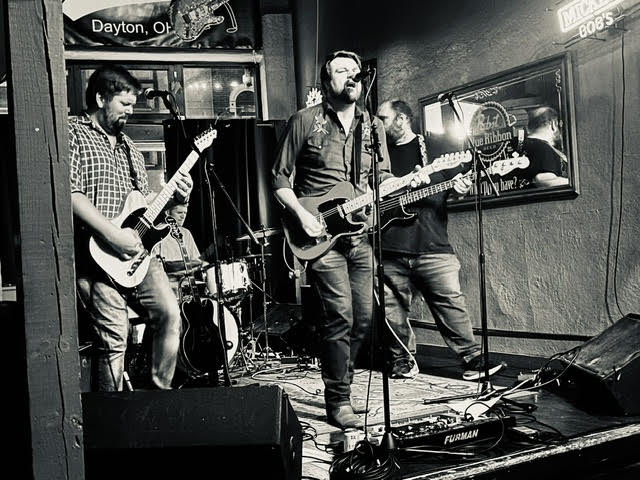
That’s why local music scenes remain sacred. Every city has them. Dayton. Detroit. Austin. Toronto. Minneapolis. Glasgow. Liverpool. Manchester. Places where musicians keep creating despite indifferent audiences, shrinking budgets, and the economic absurdity of trying to build a life around songs. They aren’t doing it because it’s profitable.

They’re doing it because silence would be worse.

Go stand in a club where forty people are watching a band you’ve never heard before. Listen carefully. That’s democracy working better than most legislatures. Complete strangers agreeing that for the next hour they’ll surrender their individual anxieties and become one audience. Every applause break says, “I hear you.” Every encore says, “Stay a little longer.”

We desperately need more of that.

Our politics rewards outrage. Our technology monetizes distraction. Our economy encourages isolation. Music quietly rebels against all three. It insists that listening is an ethical act. Really listening means allowing another person’s experience to occupy your own emotional space.

That’s empathy with a backbeat.

The old critics loved to argue about what was “real rock and roll,” but the argument was always bigger than guitars. They were really asking whether culture could still produce honesty in a world increasingly devoted to image. That’s still the question today, except now image comes filtered, optimized, branded, monetized, and endlessly recycled across glowing screens.

A great song cuts through all of it.

Three minutes.

One voice.

One unforgettable melody.

Suddenly you’re sixteen again, or grieving your mother, or driving nowhere with your best friend, or falling in love, or surviving the worst year of your life. Time collapses. Memory becomes physical. Your pulse syncs with a snare drum. A lyric you’ve heard a hundred times suddenly reveals a meaning it was saving until you were finally ready to understand it.

No other art form enters ordinary life with quite that kind of stealth.

Books demand stillness. Films require schedules. Paintings wait in museums.

Songs climb into your car, your kitchen, your headphones, your funeral, your wedding, your first kiss, your last goodbye.

They accompany us through the ordinary until the ordinary becomes unforgettable.

So no, music isn’t dying.

The industry changes. Formats disappear. Genres mutate. Technologies evolve. Critics grow old. Trends come and go with exhausting predictability. But somewhere, right now, somebody is writing the song another stranger will someday need to survive a terrible Tuesday afternoon.

That possibility alone is enough to keep believing.

Turn it up. Not because louder is always better.

Because sometimes hope arrives disguised as feedback, wrapped inside a melody, played through a beat-up amplifier by people who still believe that a song can change a life.

They’ve been right all along.

Doug Hopkins: The Bittersweet Symphony of a Troubled Songsmith

In Rock and Roll, there exists many unique narratives —tales of talent, turmoil, and tragic consequences—that often define the legacies of musicians who left an indelible mark on the music industry. How often have we read about the passing of Jimi Hendrix, Hank Williams, Kurt Cobain, Janis Joplin, Cliff Burton, Duane Allman, and Prince? So many artists left this mortal coil far too young due to tragedy. Doug Hopkins, the enigmatic guitarist, and songwriter of Gin Blossoms, is one such figure whose life, music, and untimely death encapsulate the tragedy of the passing of the rock and roll spirit.

Born on April 11, 1961, in Seattle, Washington, Douglas Hopkins manifested an early affinity for the guitar. Raised in a household resonating with the melodies of The Beatles, The Rolling Stones, and The Kinks, he quickly developed an ear for catchy hooks and poignant lyrics that would later become the hallmark of his own songwriting. His innate musical talent, combined with a restless spirit, drove him to form Gin Blossoms in late 1987 in the fertile musical grounds of Tempe, Arizona. The band began with Bassist Bill Leen, singer and guitarist Jesse Valenzuela, Guitarist Richard Taylor, and percussionist and drummer Chris McCann. The early years were treacherous and tumultuous leading to many personnel changes, performance difficulties, and problems in recording. The band’s independent debut “Dusted” was released in 1989 which led to interest from A&M Records.

The Gin Blossoms threw themselves into recording and playing with a feverish intensity. The band’s lineup eventually solidified with Hopkins, Robin Wilson (vocals and guitar) replacing Taylor, Jesse Valenzuela (transitioning from lead to rhythm guitar), Bill Leen (bass), and Phillip Rhodes (drums). This group of players was especially interested in the thriving college rock scene of the time but focused less attention on being heavy and was more interested in powerful rhythm and melody. Hopkins, the primary songwriter, possessed a unique ability to distill complex emotions into catchy, radio-friendly tunes. The band’s jangly guitars, infectious melodies, harmonies, and introspective lyrics set them apart in an era dominated by grunge and hard-edged alternative rock.

Hopkins’ gift for crafting songs that were both musically and emotionally resonant became evident in the band’s breakthrough album, “New Miserable Experience” (released in 1992 after he was already out of the band). The record spawned hits from Hopkins’ pen such as “Hey Jealousy” and “Found Out About You,” which catapulted The Gin Blossoms into mainstream success. However, behind the veneer of their infectious sound lay the darker undercurrents of Hopkins’ personal struggles.

The lyrical content of many of Hopkins’ songs on “New Miserable Experience” hinted at the internal battles he faced. “Hey Jealousy,” with its catchy hooks and sing-along chorus, belied the pain and frustration of unrequited love. This dichotomy between upbeat melodies and melancholic lyrics became a trademark of the Gin Blossoms’ sound, reflecting the deep personal inner turmoil that haunted Hopkins.

Hopkins’ battles with addiction and depression intensified, painting a stark contrast to the upbeat melodies he crafted. As the band recorded New Miserable Experience the tensions around the recording effort weighed heavily on Hopkins and only accelerated his struggles with alcoholism and mental health. The pressures of delivering an album, coupled with the weight of personal demons, strained his relationships within the band. Despite his pivotal role in the creation of their signature sound, tensions reached a breaking point, leading to Hopkins’ departure from Gin Blossoms in 1992 as the band finished recording their breakthrough album.

The aftermath of Hopkins’ departure marked a turning point for both the guitarist and the band. The Gin Blossoms continued their journey without him, achieving further success with subsequent albums. Meanwhile, Hopkins grappled with the demons but his reach exceeded his grasp. Despite contributing briefly to other musical projects, notably The Chimeras, he struggled to find his footing in an industry that had once embraced him. His brief attempt to launch another project met with challenges, most of his own making, only further exacerbating his sense of isolation and despair. The tragic denouement of Doug Hopkins’ life unfolded on December 5, 1993, when he took his own life at the age of 32.

In the years that followed, the band faced a series of personal and professional setbacks in part due to the tensions that surrounded Hopkins. His death cast a somber shadow over the legacy of Gin Blossoms, forever linking his name to the melancholy melodies that defined the band’s sound. The circumstances surrounding his suicide raised poignant questions about the toll of artistic brilliance, mental health, and the sometimes-cruel whims of the music industry.

The impact of Doug Hopkins’ musical contributions endures, as his songs remain staples of ’90s alternative rock playlists as well as being used in television programs and movies. The Gin Blossoms, despite the internal conflicts that led to his departure, continue to honor his memory by performing his compositions. The bitter irony of his posthumous influence is a testament to the enduring power of his songwriting.

In the years following his death, retrospectives on Doug Hopkins’ life and career have attempted to unravel the complex layers of his persona. Interviews with bandmates, friends, and family shed light on the dichotomy of a man who could craft infectious pop gems while battling inner demons. The story that emerges is one of a troubled genius whose artistry became inseparable from his personal struggles.

The story of Doug Hopkins serves as a cautionary tale about the harsh realities that can accompany artistic brilliance. His life was a tumultuous symphony of highs and lows, and his music remains a poignant reminder of the fragile line that separates creativity from despair. As Gin Blossoms continues to perform, the ghost of Doug Hopkins lingers in the chords of “Hey Jealousy” and the haunting refrains of “Found Out About You,” immortalizing a songwriter whose melodies transcended the boundaries of time and tragedy.