Yellow Cab Tavern: A Love Letter to a Dayton Original

A tribute from Dr. J — Your Tuesday Afternoon Alternative, WUDR Flyer Radio

There are places where you go to see a band. And then some places become part of the music itself — places that become part of your story and part of a city’s cultural identity, part of the reason you believe in the power of music and art to bring people together.

For me, and for so many people in Dayton’s music community, Yellow Cab Tavern was one of those places.
Today, I want to take a little time on Your Tuesday Afternoon Alternative to pay tribute to a place that gave so much to the Dayton music scene. With Yellow Cab preparing to close its doors on October 31, 2026, it’s hard not to think about everything that happened inside that former taxi garage on East Fourth Street — and everything that happened because that space existed.

As a radio DJ, I’ve spent years championing independent music, introducing listeners to new artists, and encouraging people to support the local music scene. I’ve seen how much it matters to have places where musicians can play, artists can share their work, and audiences can discover something unexpected. A thriving music community needs more than talented people. It needs spaces willing to take chances on them.

Yellow Cab Tavern was one of those special spaces.

Housed in a former taxi garage on East Fourth Street, Yellow Cab became much more than a tavern or a concert venue. It was a gathering place for Dayton’s creative community, a home for independent artists, and a reminder of what can happen when people believe in the cultural life of their city.

What began as an arts space in 2011 grew into a full-time tavern and live music venue in 2017. But it was never simply a bar with a stage. It was a gathering place for a community that understood that culture isn’t something handed down to us by corporations or manufactured by an algorithm. Culture is something we make together — one show, one song, one painting, one poem, one conversation at a time.

And Yellow Cab gave Dayton room to make it.

And what an extraordinary range of creativity passed through those doors.

There were rock shows, punk shows, indie bands, singer-songwriters, experimental musicians, electronic artists, hip-hop performers, DJs, and touring acts. There were established local musicians sharing stages with emerging artists, special collaborations bringing people together across bands, and homegrown groups playing their songs for audiences who might never otherwise have discovered them.

There were the regular showcases that gave local musicians a chance to perform, the secret shows that made an ordinary evening feel extraordinary, and the record-release celebrations that marked important milestones in the lives of independent artists. There were loud nights, intimate performances, unexpected musical combinations, and those wonderful moments when you walked in to see one band and walked out talking about three others.

But Yellow Cab was never just about music.

Its creative life extended into visual art, poetry, performance, festivals, workshops, and community gatherings. The Sideshow arts festivals brought together musicians, visual artists, installations, and performers in celebrations of Dayton’s creative spirit. Dayton Poetry Slam gave spoken-word artists a place to share their work and build a community over many years. Events connected to Dayton Music Fest and Sound Valley Music Festival brought local bands and audiences together, while special tribute concerts and themed performances created opportunities for musicians to collaborate in ways that ordinary bookings might never allow.

There were art exhibitions, sculpture, photography, painting, poetry readings, food truck rallies, holiday celebrations, fundraisers, and events that combined music with dance, theatrical performance, and other forms of artistic expression. There were opportunities for artists to experiment, organizers to try something new, and audiences to experience the unexpected.

There were Sideshow festivals, bringing together visual art, installations, sculpture, painting, live music, and performers in a sprawling celebration of Dayton creativity. In 2023, Sideshow’s 16th edition highlighted the work of more than 50 local artists and a musical tradition that had included over 40 acts in previous years.

Yellow Cab could be a rock venue one night, an arts festival the next, and a gathering place for an entirely different creative community the following week.

And then there were the events that could only happen when somebody was willing to say, “Sure, let’s try it.”

A Beatles tribute performed by an all-Dayton lineup on the rooftop. A celebration of The Last Waltz featuring more than 30 local musicians. A winter solstice concert series featuring Dayton artists performing music they loved. Variety shows featuring bands alongside dancers, aerial artists, burlesque performers, DJs, and vendors.

That openness was part of its magic. It didn’t have to fit into a single category because Dayton’s creative community doesn’t fit into one, either.

And that matters more than we sometimes recognize.

For a developing band, a first show can be a turning point. For an independent musician, a receptive audience can provide the encouragement to keep writing, recording, and performing. For a visual artist or poet, having a place to present work can turn a private creative practice into a shared experience. For audiences, these spaces offer the chance to discover something before it becomes familiar, to encounter art outside the mainstream, and to connect with people who share a passion for creativity.

Yellow Cab helped make those encounters possible.

As someone who has spent so much of his life behind a microphone, sharing music and talking with musicians, I know that the value of a venue can’t be measured solely by ticket sales or the number of people in a room. It’s also measured by the relationships that develop there, the artists who find their footing, the collaborations that begin, and the memories people carry with them long after the last song.

Think about the bands that played Yellow Cab, the artists whose work appeared on its walls, the poets who stepped up to its microphones, and the audiences who came together for festivals, workshops, special events, and ordinary nights out. Think about the musicians who met there and eventually played together, the friends who made a habit of showing up, and the people who discovered a new favorite artist because somebody gave that artist a stage.

Those experiences are part of Dayton’s cultural history.

And they happened because people made room for them.

That is why the closing of Yellow Cab Tavern at the end of this month (October 2026) feels like such a loss. The reasons behind the closing are a reminder that even beloved independent venues face difficult economic realities. A community can value a place deeply and still struggle to sustain the conditions that allow it to survive.

We can’t replace the history of a particular room simply by opening another one. Every venue develops its own character, its own traditions, and its own collection of memories. Yellow Cab had a personality that grew out of the people who worked there, the artists who performed there, the organizers who dreamed up events, and the audiences who kept coming back.

But the end of a venue doesn’t have to mean the end of the community it helped build.

The bands will keep making music. The poets will keep writing. The visual artists will keep creating. Promoters will find new spaces, musicians will form new collaborations, and audiences will continue searching for the next unforgettable performance. The people who met at Yellow Cab will carry those relationships forward, and the artists who found opportunities there will take what they learned into whatever comes next.

The challenge for Dayton is to make sure those artists have places to go.

We need to support the independent venues that remain. We need to buy tickets, purchase records and merchandise, attend local festivals, share the music, and make room in our lives for experiences that can’t be replicated by a streaming service. We need to recognize that independent venues are not simply businesses with stages; they can be essential parts of a city’s cultural infrastructure.

A music scene doesn’t thrive just because a city has talented musicians. It thrives when people create the conditions for those musicians to find one another, perform, experiment, and build an audience. It thrives when visual artists, poets, performers, organizers, and musicians can share space and inspire one another.

Yellow Cab gave Dayton a place to do those things.

So, from this radio DJ to everyone who helped make it happen: thank you.

Thank you to the owners and staff, the bookers and promoters, the sound engineers, the festival organizers, the musicians, the visual artists, the poets, the vendors, the volunteers, and every person who bought a ticket, came out to a show, or helped spread the word. Thank you to the people who took chances on unfamiliar bands and to the artists who brought their work into that space.

Thank you for the music, the art, the strange and wonderful performances, the unexpected discoveries, and the countless opportunities to experience something creative and real.

Yellow Cab Tavern was a reminder that a former taxi garage could become something extraordinary when a community came together around music and art. It became a place where independent creativity had room to breathe, where different scenes could intersect, and where people could participate in the cultural life of their city.

The building may close. The stage may go dark. But the music that happened there, the art that was shared there, and the relationships that grew there are not disappearing.

They live on in the recordings, the photographs, the stories, the friendships, the bands that keep playing, and the people who will carry that creative spirit into whatever comes next.

And that is what I hope we remember most about Yellow Cab: not simply that we lost a venue, but that we had a place that showed us what a community can accomplish when it makes room for its artists.

So, Dayton, let’s keep showing up. Let’s keep listening. Let’s keep making things happen. Let’s support the venues, musicians, artists, and organizers who are building the next chapter of our city’s creative life.

And let’s be grateful for the people who made Yellow Cab Tavern part of our story.

This one’s for you, Yellow Cab.

With gratitude, with love, and with a whole lot of rock and roll.

Support your local music scene. Always.

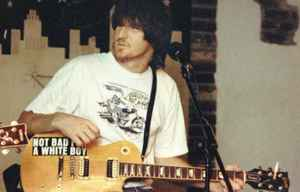
Doug Hopkins: The Bittersweet Symphony of a Troubled Songsmith

In Rock and Roll, there exists many unique narratives —tales of talent, turmoil, and tragic consequences—that often define the legacies of musicians who left an indelible mark on the music industry. How often have we read about the passing of Jimi Hendrix, Hank Williams, Kurt Cobain, Janis Joplin, Cliff Burton, Duane Allman, and Prince? So many artists left this mortal coil far too young due to tragedy. Doug Hopkins, the enigmatic guitarist, and songwriter of Gin Blossoms, is one such figure whose life, music, and untimely death encapsulate the tragedy of the passing of the rock and roll spirit.

Born on April 11, 1961, in Seattle, Washington, Douglas Hopkins manifested an early affinity for the guitar. Raised in a household resonating with the melodies of The Beatles, The Rolling Stones, and The Kinks, he quickly developed an ear for catchy hooks and poignant lyrics that would later become the hallmark of his own songwriting. His innate musical talent, combined with a restless spirit, drove him to form Gin Blossoms in late 1987 in the fertile musical grounds of Tempe, Arizona. The band began with Bassist Bill Leen, singer and guitarist Jesse Valenzuela, Guitarist Richard Taylor, and percussionist and drummer Chris McCann. The early years were treacherous and tumultuous leading to many personnel changes, performance difficulties, and problems in recording. The band’s independent debut “Dusted” was released in 1989 which led to interest from A&M Records.

The Gin Blossoms threw themselves into recording and playing with a feverish intensity. The band’s lineup eventually solidified with Hopkins, Robin Wilson (vocals and guitar) replacing Taylor, Jesse Valenzuela (transitioning from lead to rhythm guitar), Bill Leen (bass), and Phillip Rhodes (drums). This group of players was especially interested in the thriving college rock scene of the time but focused less attention on being heavy and was more interested in powerful rhythm and melody. Hopkins, the primary songwriter, possessed a unique ability to distill complex emotions into catchy, radio-friendly tunes. The band’s jangly guitars, infectious melodies, harmonies, and introspective lyrics set them apart in an era dominated by grunge and hard-edged alternative rock.

Hopkins’ gift for crafting songs that were both musically and emotionally resonant became evident in the band’s breakthrough album, “New Miserable Experience” (released in 1992 after he was already out of the band). The record spawned hits from Hopkins’ pen such as “Hey Jealousy” and “Found Out About You,” which catapulted The Gin Blossoms into mainstream success. However, behind the veneer of their infectious sound lay the darker undercurrents of Hopkins’ personal struggles.

The lyrical content of many of Hopkins’ songs on “New Miserable Experience” hinted at the internal battles he faced. “Hey Jealousy,” with its catchy hooks and sing-along chorus, belied the pain and frustration of unrequited love. This dichotomy between upbeat melodies and melancholic lyrics became a trademark of the Gin Blossoms’ sound, reflecting the deep personal inner turmoil that haunted Hopkins.

Hopkins’ battles with addiction and depression intensified, painting a stark contrast to the upbeat melodies he crafted. As the band recorded New Miserable Experience the tensions around the recording effort weighed heavily on Hopkins and only accelerated his struggles with alcoholism and mental health. The pressures of delivering an album, coupled with the weight of personal demons, strained his relationships within the band. Despite his pivotal role in the creation of their signature sound, tensions reached a breaking point, leading to Hopkins’ departure from Gin Blossoms in 1992 as the band finished recording their breakthrough album.

The aftermath of Hopkins’ departure marked a turning point for both the guitarist and the band. The Gin Blossoms continued their journey without him, achieving further success with subsequent albums. Meanwhile, Hopkins grappled with the demons but his reach exceeded his grasp. Despite contributing briefly to other musical projects, notably The Chimeras, he struggled to find his footing in an industry that had once embraced him. His brief attempt to launch another project met with challenges, most of his own making, only further exacerbating his sense of isolation and despair. The tragic denouement of Doug Hopkins’ life unfolded on December 5, 1993, when he took his own life at the age of 32.

In the years that followed, the band faced a series of personal and professional setbacks in part due to the tensions that surrounded Hopkins. His death cast a somber shadow over the legacy of Gin Blossoms, forever linking his name to the melancholy melodies that defined the band’s sound. The circumstances surrounding his suicide raised poignant questions about the toll of artistic brilliance, mental health, and the sometimes-cruel whims of the music industry.

The impact of Doug Hopkins’ musical contributions endures, as his songs remain staples of ’90s alternative rock playlists as well as being used in television programs and movies. The Gin Blossoms, despite the internal conflicts that led to his departure, continue to honor his memory by performing his compositions. The bitter irony of his posthumous influence is a testament to the enduring power of his songwriting.

In the years following his death, retrospectives on Doug Hopkins’ life and career have attempted to unravel the complex layers of his persona. Interviews with bandmates, friends, and family shed light on the dichotomy of a man who could craft infectious pop gems while battling inner demons. The story that emerges is one of a troubled genius whose artistry became inseparable from his personal struggles.

The story of Doug Hopkins serves as a cautionary tale about the harsh realities that can accompany artistic brilliance. His life was a tumultuous symphony of highs and lows, and his music remains a poignant reminder of the fragile line that separates creativity from despair. As Gin Blossoms continues to perform, the ghost of Doug Hopkins lingers in the chords of “Hey Jealousy” and the haunting refrains of “Found Out About You,” immortalizing a songwriter whose melodies transcended the boundaries of time and tragedy.

Hologram Concerts: Music’s Future?

arrow_copy_fee_hereA recent essay in the New York Times discussed the rise of Hologram concerts featuring long past musicians such as Buddy Holly, Roy Orbison, Tupac Shakur, Ronnie James Dio, Frank Zappa among plans for others. What to think of this?

How long before their are digital shows/holograms of Bowie, Joe Strummer, Prince, Petty, among a legion of aging (read post 60 years of age) musicians that management and record companies want to continue to profit on their art by finding a way to keep these artists performing.

Consider the consequence of a band or musicians ever ceasing. In the words of one executive: “We have to put them back on the road.” (Brian Baumley, publicist for Eyellusion quoted in the article).

The idea that companies can buy the rights to these images drawn from concert footage raises a host of questions about long term (perpetual, perhaps?) ownership of music and the image of musicians themselves. A recent episode of Black Mirror seemed to deal directly with this idea. If management cannot control the musician or band, simply digitize. In the end, the management company did not win — in a rare twist for Black Mirror — but in an industry built on the exploitation of artists, musicians, lyricists and other creatives, how accurate is that ending? While that level of control is not widely happening today, one has to wonder how long before it could?

The idea of a concert should be an exchange of ideas, enthusiasm and love of music not a pristine controlled event. Sometimes the most beautiful musical moments are the mistakes, the surprises that arise in the moment of artistic creation. Not planned. Not anticipated. Not controlled.

Read the article here — Old Musicians Never Die. They Just Become Holograms – The New York Times.

Let us know what you think about the practice in the comments or at Your Tuesday Afternoon Alternative on Facebook.

your-tuesday-afternoon-color copy


Gem City Podcast featuring our own Dr. J


Boston's First record and American Werewolf Academy's latest single
A peek at Dr. J’s record collection
 We wanted to share the kind podcast of Dr. J that Izzy from The Gem City Podcast did with him a few weeks ago!  We spoke about interests in music, independent music, and the fantastic music coming out of Dayton, Ohio now and in the past. Izzy was a scholar and a gentleman who demonstrated the reason that the Gem City Podcast is one of the best music podcasts being made today in the Miami Valley!  Whether you are a fan of music or just someone who is interested in how a college professor becomes fascinated by independent and alternative music, this podcast has something for everyone.  If you believe that a day without music like a day without air… Oh, yeah we may have overstated that a little bit but seriously if you believe that some of greatest musical discoveries are in your future and not in your past then this podcast is for you!  And you should check into their other podcasts while you are there!  They have some interviews and conversations with some of our favorite Dayton musicians, music enthusiasts, and others involved in the area music scene.  

Thank you Izzy and the folks at The Gem City Podcast for taking the time to talk about music with us!  You are terrific! 

Sometimes being a real Dr. can be cool

ImageThe coolest part of the UD Self, Community, and Society in the 21st Century Living and Learning Community this year…

From discussions on religion and social media, the C21 LLC turned our attention to entertainment, music, identity, and techniques of the use of social media in our community. On Tuesday, October 29th from 6:30-8:30pm the members of C21 met with local Dayton musicians in the Science Center Auditorium. What is Dayton music like? How do local musicians share information about their music, concerts, and other events? We learned that the independent music scene in the Miami valley is not only incredibly diverse and active but that they use social media and traditional media to share information with the larger community.

Speakers included:
Burris Dixon, Me & Mountains, Swim Diver
Tom Gilliam, The Rebel Set, TCB Hit Squad
Andy Ingram, Kris N., Poptek Records
M. Ross Perkins, Goodbye, Esther Caulfield Orchestra
Liz Rasmussen, Good English
Tifani Tanaka, Dear Fawn
Tod Weidner, Motel Beds, Shrug

Check These Out

downloadNew Releases to Check out because you love music and stuff

Paul Carrack – “Rain or Shine” (his 16th solo album features five new songs and five covers; Hear here;MP3) (U.K. – Carrack UK, Nov. 25)

Bill Cosby – “… far from finished” (his first TV concert special in 30 years airs on Nov. 24; MP3; DVD; Blu-ray) (Comedy Central)

Daniel Ash – “Anthology” (three CDs, 51 songs, containing the Bauhaus/Love and Rockets guitarist’s solo albums “Coming Down” and “Foolish Thing Desire,” plus a bonus disc of rarities, B-sides and demos;Read here) (U.K. – Cherry Red, Nov. 25)

Big Star – “Playlist: The Very Best of Big Star” (14 studio tracks, rehearsal takes and rare live performances; MP3; see related DVD/Blu-ray below) (Columbia / Legacy, Nov. 25)

George Carlin – “George Carlin: Life Is Worth Losing [Blu-ray]” (his 13th HBO special from 2005) (MPI Home Video)

Popthrillz---Alternative

Any thoughts on Morrissey’s Autobiography

Autobiography
Autobiography


Any thoughts on the new Morrissey book?  Let us know on the show by calling 937-229-2774 or text  drjwudr on twitter or on facebook at Your Tuesday Afternoon Alternative group page!

Fundraiser for Cats of All Sizes

Sami J - YTAA Office Assistant Cat
Sami J – YTAA Office Assistant Cat

A good friend of the show has created a wonderful and inventive swim marathon fundraiser throughout June to raise money for Lions Tigers and Bears sanctuary in California, which was instrumental in placing dozens of big cats from Ohio into new homes.  She is also raising support for the Cat Welfare Association, the biggest cat shelter in central Ohio.  You can read more about this effort — and if possible, contribute — to it at the blog for this important fundraiser for cat shelters: http://bigcatslittlecats.wordpress.com/

Please take a few minutes and see what you can do to help in this grassroots effort to support two great causes! Yours in Social Responsibility, – Dr. J