Dayton’s own American Whale stopped by the YTAA studio for a great conversation about music and songwriting. The show has already aired—and you can catch the whole thing now on Mixcloud. Turn it up and give it a listen!

Dayton’s own American Whale stopped by the YTAA studio for a great conversation about music and songwriting. The show has already aired—and you can catch the whole thing now on Mixcloud. Turn it up and give it a listen!
One of my favorite things about doing Your Tuesday Afternoon Alternative is discovering a band that somehow slipped under my radar and then wondering how on earth that happened.

That was exactly my reaction when a friend pointed me toward Lips Speak Louder.
The Minneapolis-based duo—guitarist and vocalist Rachel Brandsness and drummer Angela Lese—make the kind of rock records that remind you why guitars still matter. Big riffs. Bigger hooks. Songs that are melodic without losing their edge. Their album Consolation Prize has been getting plenty of spins on the show, and after talking with Rachel and Angie over Zoom, I came away even more impressed by the thought and intention behind the music.
Ironically, the band’s name began with another favorite band.
“We’re huge Yeah Yeah Yeahs fans,” they told me. “Lips Speak Louder” comes from a lyric buried inside the song “Soft Shock.” They loved the phrase because it sounded “anthemic,” but over time it took on a deeper meaning.
“It feels like permission to say what you really mean,” Rachel explained.
That philosophy runs through everything the band does.
Rock music, they argue, shouldn’t apologize for existing. It should be loud. Honest. Imperfect. It should refuse to shrink itself to make other people comfortable. “Rock music refuses to be quiet. It’s loud and kind of in your face. You’re saying what you mean, when you mean it, how you mean it.” That isn’t simply a philosophy about music—it’s a philosophy about life.
Angela pointed out that, particularly for women, there is often enormous social pressure to be agreeable and not “take up space.” Playing in Lips Speak Louder became an opportunity to reject that expectation. Angela explained that, particularly for women, there is often enormous social pressure to be agreeable and avoid drawing attention to yourself.
Rachel shared that “I feel like, especially as women, you’re raised to be polite and don’t step on anybody’s toes. Playing and singing is my chance to be loud and take up space.” It’s my chance to be loud and take up space.”
That statement may be the best summary of the band you’ll ever hear.
Of course, the music industry has not always made it easy. Both Rachel and Angie laughed while recounting stories of loading heavy equipment into venues only to have someone ask whether the gear belonged to their boyfriend. They’ve repeatedly encountered audiences and industry professionals who seemed surprised that two women could walk onstage and deliver unapologetically heavy rock music.
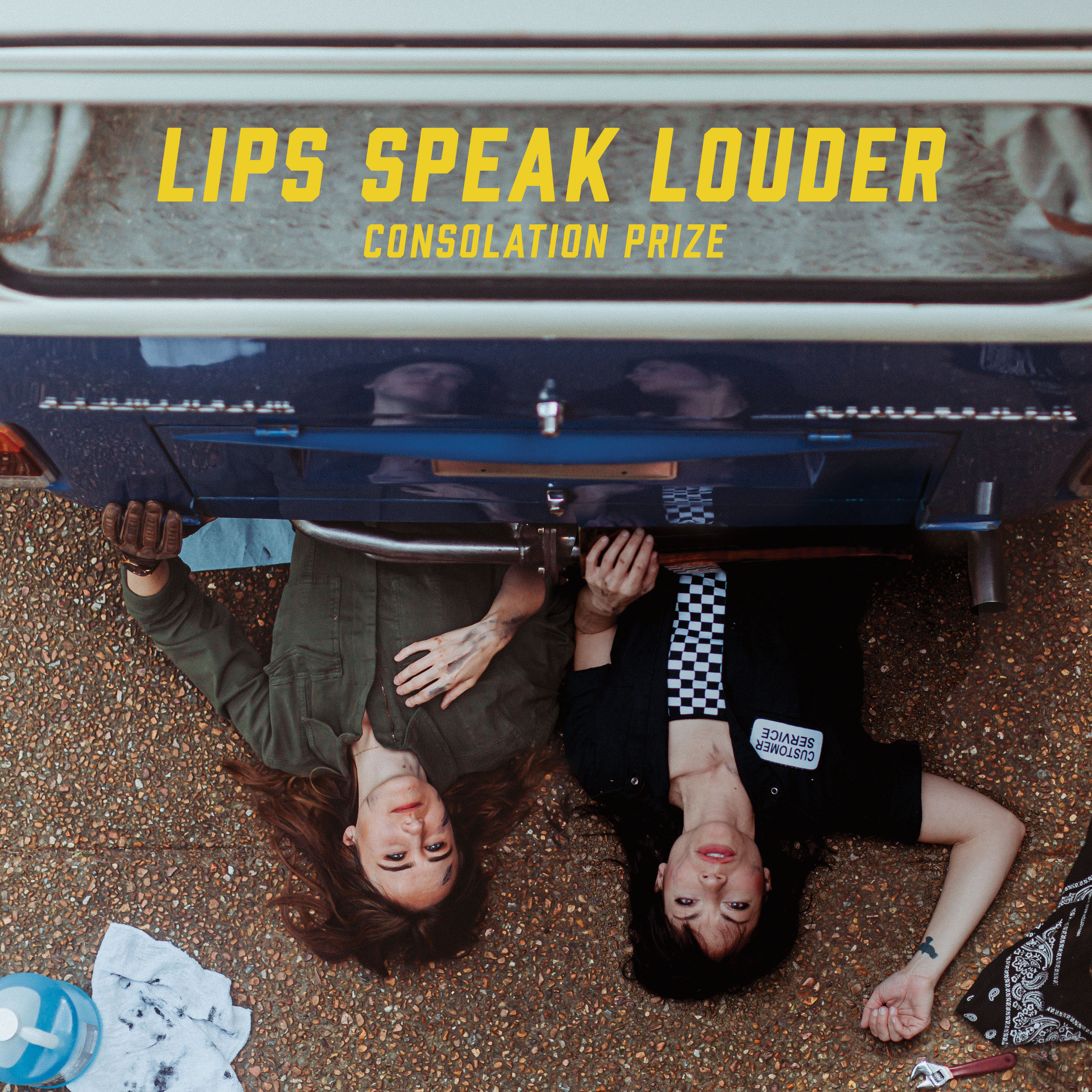
Those experiences even inspired the title of Consolation Prize.
The title is more than a clever phrase. It’s a tongue-in-cheek response to years of being passed over simply because they didn’t fit someone else’s expectations of what a rock band should look like. Angie noted that “we named our album Consolation Prize because we can’t tell you how many times we’ve come up short for a gig…just because we were women.”
The satisfying part, they admitted, comes after the music starts.
Angie observed the transformation on the faces of the audience: “We can actually watch people’s expressions change. Watching everyone’s eyes turn from a place of doubt to just being super into it—that’s pretty cool.”
Or, as Rachel put it, “If you can win a crowd over by being two females playing rock and roll, that’s a fun feeling.”
The audience goes from skepticism to raised fists, phones in the air, and enthusiastic applause. Few things are more satisfying than dismantling assumptions with a great performance.
Listening to Consolation Prize, one thing immediately stands out: this is an enormous-sounding record. That becomes even more impressive once you realize only two musicians are creating all that sound.
Rachel has developed an ingenious live guitar setup that simultaneously covers guitar and bass parts while Angela’s powerful drumming provides the foundation. Instead of treating the duo format as a limitation, they’ve embraced it as a creative advantage.
“It forced the vocal melodies to have to be better. It forced the songs to be better,” Rachel said.
Without multiple guitars and layers of studio overdubs to hide behind, “there wasn’t going to be a bunch of extra fluff” – the vocal melodies had to become stronger. The riffs had to matter. Every note had to earn its place. It’s a refreshing philosophy in an era when technology can often become a substitute for songwriting.
As we talked about their writing process, another theme emerged. Neither musician seems interested in showing off. They are interested in making great songs. Every note has to matter. Every hook has to earn its place. Rachel noted that “if I have that chorus hook, I feel like I can build whatever I need around that.” Because, as she admitted, “If the chorus doesn’t really anchor it, the song is only ever going to be okay.”
That’s a remarkably disciplined way to think about songwriting.
Rachel usually begins with a chorus because, in her words, if the chorus isn’t memorable, the rest of the song rarely comes together. From there, the pair trade demos back and forth, constantly refining arrangements while giving one another room to contribute new ideas.
What struck me most was the trust between them. Sure, there are disagreements. Different versions get recorded. Feelings occasionally get bruised. But they always arrive at the same destination because they’re pursuing the same goal.
“We both have the same end goal—trying to make a great song.”
That mutual trust is one reason the record sounds so cohesive. Their move from Nashville to Minneapolis also says a great deal about who they are as musicians and performers.
After years of working in one of America’s music capitals, they wanted something different. Nashville is full of extraordinary musicians, they told me, but it has also become crowded, expensive, and increasingly geared toward hired-session work.
The Midwest kept calling them back.
Every tour through Wisconsin, Minnesota, and surrounding states reinforced the same impression: audiences simply love rock music. “The whole region seems thirsty for some rock, so we’re just excited to be here.”
So, they relocated. The gamble appears to be paying off.
The Minneapolis music community has welcomed them warmly, local radio has embraced their songs, and they already feel at home in one of America’s great rock cities.
One observation Rachel made really stuck with me. Independent artists experience time differently from listeners.
While Consolation Prize no longer feels “new” to the band, it is brand new to nearly everyone discovering them for the first time. “To us the songs don’t feel brand new anymore…but to 99.9 percent of the population they’re brand new.” That’s an important reminder that great records never really have an expiration date.
When I asked about working with Emily Wolfe as producer, Rachel immediately emphasized something every artist hopes to find. “She helped us get the sound we wanted but preserve who we are.” Angela added that Wolfe pushed them creatively without changing their identity. The result is a record that feels polished but never sterile.
As Rachel explained, “We wanted it polished enough to sound professional, but we wanted to harness that raw energy.” That may be the single best description of Consolation Prize.
When I asked about favorite songs from Consolation Prize, the answers revealed another side of the record. Angela chose “Handle With Care,” partly because it lets her unleash an extended barrage of double-kick drumming that she had always wanted to play.
Rachel highlighted “Dog Days of Summer” and “Loser,” two emotionally cathartic songs that build from intimate moments into soaring, full-throttle rock anthems.
I understand exactly why.
“Loser” may have become my favorite track on the record. Every time I hear it, I find myself singing along before I even realize I’m doing it. That’s what good songwriting does.
Toward the end of our conversation, I asked about performing live. Their answer wasn’t about gear or logistics. It was about creating an experience. “How can we make it larger than life? How can we create a moment?” That’s exactly what every great rock band should be asking before walking onstage.
I asked the most important question of the afternoon as we neared the end of our conversation: “When are you coming to Dayton?” The answer was encouraging and promising.
Angela actually has family in Kettering, the band is working with a booking agent, and Midwest touring is very much in the plans. I immediately began recommending venues like Blind Bob’s, The Brightside, and South Park Tavern. Hopefully, we’ll see them here sooner rather than later.
If they do make it to Dayton, I’ll probably have a classroom full of University of Dayton students earning extra credit by attending the show. Going to local concerts is the only extra credit assignment I offer students.
After spending an hour talking with Rachel Brandsness and Angela Lese, it became obvious that the name Lips Speak Louder isn’t just clever. It’s a mission statement that encourages all of us to be authentic. Don’t apologize. Write great songs. Turn up the amplifiers. Let the music flow.
Let the music do the speaking.
I conducted this interview several months ago, but its ideas have lingered in ways that feel increasingly relevant with time. Returning to the conversation now, what stands out is not just the detail of Richard Flierl’s creative process, but the clarity of his artistic philosophy—one grounded in patience, emotional honesty, and a refusal to chase immediacy at the expense of depth. In the months since, as musical culture continues to accelerate toward shorter attention spans and algorithmic visibility, his commitment to making music that asks listeners to slow down and “lean in” feels even more quietly defiant. The distance has given the interview a different weight; what first read as reflective now feels almost prescient, capturing a mode of listening and creating that risks becoming increasingly rare.
There is a particular kind of indie music that never really leaves the people who discover it. It is not music designed for stadiums, algorithms, or fifteen-second clips floating through social media feeds. It belongs instead to late-night drives, college radio broadcasts, old record stores, and solitary moments when somebody puts on headphones and disappears into sound. The music of Dotsun Moon exists squarely within that tradition.


Dotsun Moon is the Buffalo-based project and brainchild of multi-instrumentalist Richard Flierl. Active since 2011, the project creates dream-laden shoegaze, atmospheric indie rock, and synth-inflected dream pop, with Flierl gradually evolving from producer into a one-man band handling nearly all instrumentation and vocals himself.
In a long and thoughtful interview, Richard described a creative life shaped by post-punk, dream pop, shoegaze, synth-pop, comics, cinema, and decades of obsessive listening. What emerged most clearly was not simply a catalog of influences, but a philosophy of music rooted in curiosity, emotional honesty, and the belief that songs can become deeply personal companions for listeners.
I initially framed Dotsun Moon’s sound through the lens of The Cure and New Order, hearing “eighties influences” and “synth-rock hybrid bands” in the music. Richard agreed while explaining that the newest record, Tiger, intentionally pushes further toward guitars and dream-pop textures. “I thought I wanted to make a shoegaze album,” he explained, “but honestly, this is more dream pop.”
For Richard, the distinction mattered. Shoegaze, in his telling, is not merely a label but a dense sonic architecture associated with bands like My Bloody Valentine. “I didn’t come up with an all-encompassing washing-machine guitar sound,” he admitted modestly, though the influence remains audible in the buried vocals and layered guitars throughout the record.
What makes Dotsun Moon compelling is the way these influences are filtered through lived experience rather than nostalgia. Richard recalled how the project originally began with just himself and a friend performing alongside prerecorded tracks because they lacked a full band. “We were like, what can we do? We don’t have a drummer,” he said. “If you have to wait for a band, you’ll never play out sometimes.” The comment captures something central to independent music culture: creativity often emerges through limitation rather than abundance.
That DIY sensibility still shapes the project. Richard spoke warmly about collaborating with producer Doug White at Watchmen Studios in Lockport. White, who had worked with punk, metal, and dream-pop bands alike, became a crucial creative partner. “Some of those songs I went in half done,” Richard explained, “and we walked out with them finished in a day.” Rather than imposing commercial polish, the process sounded exploratory and collaborative. Guitar parts evolved spontaneously. Songs changed shape organically. “You just don’t know what you’re gonna come up with,” he said.
The interview became especially fascinating whenever it turned toward songwriting itself. Richard repeatedly rejected romantic myths about composition arriving fully formed through sudden inspiration. Most songs begin with loops, keyboard parts, rhythms, or melodic fragments. “Keyboard is just so good to me,” he explained. He often improvises lyrics over music before fully understanding what the song is emotionally about.
That process is evident in “Bring Love,” which emerged almost unconsciously from a painful relationship experience. One lyric — “We’ll talk sometime when the future is not around” — reflected his emotional uncertainty entering a relationship involving children. “You should go into a relationship with excitement and love,” he admitted, “and I went in with apprehension and fear.” Other imagery came from a trip to Japan, where standing above a sudden ocean drop became metaphorically linked to emotional vulnerability and risk.
The songs rarely function as literal confessions; feelings dissolve into atmosphere and texture, producing something closer to dream logic than diary writing.
That emotional ambiguity becomes central on Tiger, particularly on “Never Had a Heart.” Richard described wanting the opening guitar line to feel “like yelling and punching forward,” while producer Doug White pushed for drums that felt enormous and physical. Richard enthusiastically described experimenting with layered loops and drum software: “The drums were really powerful. Doug loves powerful drums, and I like it too, a lot.”
Yet beneath the aggressive sonic architecture lies an unexpectedly warm song. Richard pointed to Roads by Portishead as an inspiration for that tension between melancholy and intimacy. He described hearing the lyric “Nobody loves me like you do” and realizing that what initially sounds mournful is actually deeply intimate. That realization shaped “Never Had a Heart,” particularly the line “Heaven never had a heart like yours.”
“This person has just got the most warm-hearted person in the world,” Richard explained. “So to have a positive message like that, but have it with a real punch — that’s how that came.”
The song gradually reveals itself not as despair, but as gratitude and emotional rescue:
“All the troubles you’ve ever known gripping you tight by the throat — a love that you’ve never known before.”“It’s like this person’s just saving you from these negatives,” Richard said.
That layered emotional quality extends into the album’s production philosophy. Richard resisted the contemporary tendency to push vocals aggressively to the foreground. Referencing bands like Slowdive, he described wanting listeners to “kind of listen” and “lean in a little bit.” Vocals on Tiger function as another texture within the mix rather than its center.
Our conversation drifted into compression, loudness wars, and the production legacy of Nevermind by Nirvana. Richard argued that many modern productions sacrifice dynamic range in pursuit of impact. Instead, he admires records where arrangements retain depth and space. “A well-made song is powerful,” he insisted, regardless of whether the vocals dominate the mix.
That emphasis on songcraft runs throughout Tiger. Richard spoke admiringly about seventies arrangements, sophisticated chord structures, and lush harmonies, citing influences ranging from Barry Manilow to yacht rock. “Inspiration can come from anywhere,” he said while discussing studying Manilow chord changes through sheet music archives. It is a refreshingly unpretentious approach in a musical culture often obsessed with “acceptable” influences.
The same openness extends to artists like Electric Light Orchestra, whose orchestral pop textures Richard deeply admires. In many ways, Dotsun Moon reflects a generation of listeners less interested in rigid genre tribalism than emotional resonance, drawing equally from post-punk melancholy, dream-pop atmosphere, synth experimentation, indie rock structure, and classic pop craftsmanship without feeling nostalgic or revivalist.
The album’s sequencing also reflects a cinematic sensibility. Richard described “Piano Trailer Melody 4” as an intentional dividing point — almost like flipping from side one to side two on vinyl. The abrupt transition from “Never Had a Heart” into the sparse piano instrumental creates a moment of deliberate disorientation.
That cinematic impulse surfaced repeatedly during our conversation, especially when Richard discussed Mercury Rev and their album All Is Dream. Hearing its opening track, he said, felt like watching “a John Ford western” unfold onscreen. Songs, for him, should create visual and emotional space rather than simply deliver hooks.
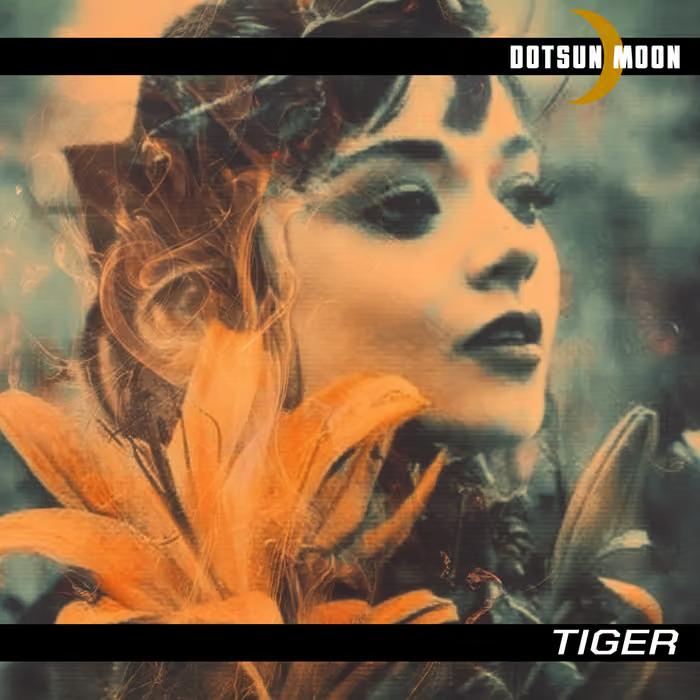
That same sensibility shapes the album artwork. Richard credited artist Doc Smith, working under the name Orb, with creating the cover image featuring a woman holding a tiger lily flower — a subtle visual pun connected to the album title Tiger. Richard admitted the title itself was intentionally playful, inspired partly by albums like Crocodiles and partly by comic-book references, especially Mary Jane Watson’s famous “Face it, Tiger…” line from Spider-Man comics.
The conversation frequently drifted into comic books, revealing another important aspect of Richard’s worldview. We bonded over the emotional resonance of eighties-era Marvel Comics storytelling, particularly The Uncanny X-Men and the outsider identities embedded within mutant narratives. Richard described how those books shaped him emotionally as a young reader. Like many listeners drawn toward dream pop and shoegaze, he gravitated toward stories about alienation, identity, and belonging.
Importantly, though, Tiger ultimately resists despair. Even its saddest moments remain grounded in warmth, connection, and endurance. “Give Up the Tears,” despite its title, is explicitly about release and emotional survival. “It’s about feeling good,” Richard said. “It’s about letting that hurt go.” He described the song as an invitation to briefly escape despair long enough to appreciate moments of peace — whether “at the beach” or simply “for the duration of a song.”
The one major exception, Richard admitted, may be “Winter Street,” which he described bluntly as “definitely a song about hurting.” Yet even there, the pain feels observational rather than performative — less spectacle than memory.
Perhaps the most moving moment of the interview came when Richard explained why he makes music at all. As a teenager, he discovered Heaven Up Here by Echo & the Bunnymen almost accidentally. Initially uncertain about the album, he gradually fell in love with its atmosphere, sequencing, and guitar work. That experience permanently shaped his artistic ambitions.
“Because that had that effect on me,” he said, “I wanted to create music that would do the same thing for someone else.”
It is an extraordinarily simple statement, but it explains nearly everything about Dotsun Moon’s music. Beneath the guitars, haze, and layered textures lies a fundamentally human desire: to create songs that matter deeply to strangers.
In an era increasingly dominated by disposable digital noise, that aspiration feels both old-fashioned and quietly radical.

On January 31st, Dr. J interviewed Irish musician, singer, and songwriter David Howley is appearing at the Sears Recital Hall at the University of Dayton on March 13, 2025. David will be joined by special guests Kiana June Weber and Caitlin Leahy.
David Howley is an award-winning folk artist from Ireland, blending traditional Irish music with modern folk. Founder of Billboard World #1 band We Banjo 3, Known for his soulful vocals and evocative storytelling, David’s solo work continues to captivate audiences with a rich, emotionally resonant sound. Kiana June Weber fuses classical chops with American and Irish folk music, she has played massive stages worldwide, recorded four Billboard #1 albums with Gaelic Storm, and brought the fiddle to Come From Away. Caitlin Leahy is a lifetime member of Milwaukee’s “Leahy Luck” and Bodhran player extraordinaire.


Yesterday, Nick Kizirnis joined Dr. J in the studio to discuss his latest record “Every Moment.” While Nick has been on the show before, it is still an exciting event for him to join us.
Nick Kizirnis, a name not unfamiliar to the echelons of the Dayton community rock and roll enthusiasts, has etched his mark in local music as a Dayton, Ohio-based musician, guitarist, and songwriter. With a career spanning several decades, Kizirnis has seamlessly blended his prowess as a guitarist with his innate talent for crafting compelling compositions, earning him a dedicated following and critical acclaim within the Dayton music community.
Born and raised in the vibrant musical landscape of Dayton, Ohio, Kizirnis was exposed to an array of musical genres from a young age. Inspired by the likes of Guided By Voices, Brainiac, and The Breeders, he embarked on his musical journey, honing his skills on the guitar and immersing himself in the rich tapestry of rock music across its many varied forms and styles.
Kizirnis’ musical odyssey gained momentum in the late 1980s when he co-founded the surf-rock band, The Mulchmen, alongside Greg Spence and Brian Hogarth. The Mulchmen quickly garnered attention for their infectious surf rock melodies, sweeping compositions, and electrifying live performances, establishing Kizirnis as a formidable force in the realm of rock music.
As a guitarist, Kizirnis’ virtuosity knows no bounds. His distinctive playing style, characterized by intricate riffs, blistering solos, and melodic phrasings, captivates audiences and fellow musicians alike, earning him admiration and respect within the music community. Whether unleashing thunderous power chords or delicately weaving nuanced melodies, Kizirnis’ guitar work serves as the sonic backbone of his musical endeavors, infusing each composition with depth, emotion, and vitality.
Beyond his prowess as a guitarist, Kizirnis’ songwriting prowess shines brightly, imbuing his music with poignant lyricism, infectious hooks, and irresistible charm. Drawing inspiration from personal experiences, introspection, and the human condition, his songs resonate on a deeply emotional level, offering listeners a glimpse into his innermost thoughts and feelings. From anthemic rockers to introspective ballads, Kizirnis’ songwriting versatility knows no bounds, showcasing his ability to craft timeless compositions that endure the test of time.
Throughout his illustrious career, Kizirnis has released a plethora of solo albums, each offering a unique sonic tapestry that reflects his artistic evolution and creative vision. From his debut solo effort, “Into the Loud” to atmospheric noir of “The Distance,” to the acoustic guitar and cello album “Quiet Signals” to the most recent release “Every Moment” Kizirnis’ discography serves as a testament to his unwavering commitment to his craft and his relentless pursuit of music that captivates the listener.
In addition to his solo endeavors, Kizirnis has collaborated with a diverse array of artists and musicians, further expanding his musical horizons and pushing the boundaries of his creativity. Whether lending his guitar prowess to recording sessions or sharing the stage with fellow luminaries, Kizirnis’ collaborative spirit and passion for music are evident in every endeavor he undertakes.
Beyond his contributions to the world of music, Kizirnis remains deeply rooted in his hometown of Dayton, Ohio, where he continues to inspire aspiring musicians and foster a vibrant musical community. Through his involvement in local music festivals, events, and educational initiatives, Kizirnis pays homage to his musical roots while paving the way for future generations of artists to thrive.

Nick Kizirnis stands as a testament to the enduring power of music to inspire, uplift, and unite. As a musician, guitarist, songwriter, and singer, he has left an indelible mark on the world of local rock music, captivating audiences with his unparalleled talent, boundless creativity, and unwavering passion. Whether shredding on stage, penning heartfelt lyrics, or mentoring aspiring musicians, Kizirnis’ dedication to his craft and his love for music shines brightly, illuminating the path for generations of musicians and music fans for years to come.
Nick is playing Blind Rage Records tomorrow, Thursday, May 2nd to celebrate the release of “Every Moment” which is out the next day, Friday, May 3rd everywhere you can get music.
Hyperfollow Bandcamp Facebook Instagram Every Moment
All images and pictures used with permission of the artist.
Dr. J spoke with Tamar Berk in the evening on Wednesday, May 11, 2022 for Your Tuesday Afternoon Alternative. Tamar spoke about the powerful new record Start at The End, her music career, songwriting and her approach to recording and producing her music.
Tamar shared some compelling insights as a songwriter in this interview! Anyone interested in the subject should explore her thoughts on the subject. Tamar was honest and remarkably introspective about how pain can be transformed into art through music. It was a real pleasure to speak with her about the music that she has made in her various music projects (Starball, Countdown, Pynnacles and Paradise to name a few). And it was a singular joy to talk to her about the exciting music that she has made in the past few years under her own name with The Restless Dreams of Youth (2021) and Start At The End (2022).
If you do not know these records, we highly recommend that you explore them. Tamar’s songs evokes The Spinanes/Rebecca Gates and Liz Phair but the musical space she surveys does not end there. She uses a variety of musical ideas to create a sound that paints with a rich pallet of color and texture. The music is infectious, passionate, personal and introspective in an adventure that leads the listener into a communal rather than singular experience. Start At The End is one of our favorite records of the year!
You can listen to Tamar’s music anywhere you stream but we recommend buying her excellent music at Bandcamp!

You can contact Tamar through her social media https://twitter.com/TamarBerk
For a complete list of her social media and music: https://ffm.bio/tamarberkmusic
Creating heartfelt melodies that probe deep subjects with a touch of vulnerability and a reminder of the promise of positivity is a tonic in these challenging times. 7000Apart – Jon Kresin and Amelie Eiding – is a band with a love story right out of a movie! In 2012, Amelie journeyed from Stockholm, Sweeden to attend high school in Green Bay, Wisconsin. And in music theory class, they met, became friends and overtime that friendship grew into a love that transcended the 7,000 kilometer distance when Amelie returned home.

After three years of managing a long distance relationship, Jon and Amelie married in Sweden and then returned to the United States. In 2019, they released their first record We Are More. Work on their second album, Feel Your Feelings, is already underway with Nashville-based songwriter and producer FEMKE.
Dr. J caught up with the band while they are on tour via zoom.
7000Apart are coming to Dayton on May 15, 2022 to play Blind Bob’s with Mike Bankhead and K.Carter! Dr. J interviewed the band over Zoom while they are on their May Tour! We spoke about how they got started, how they approach writing and making music and their plans for their next record. Learn more about them on their social media: twitter spotify instagram facebook and for a full list of their media and music check out their linktree.
And do not forget to go see them on tour!
Listen to the Interview on the YTAA Mixcloud Page!
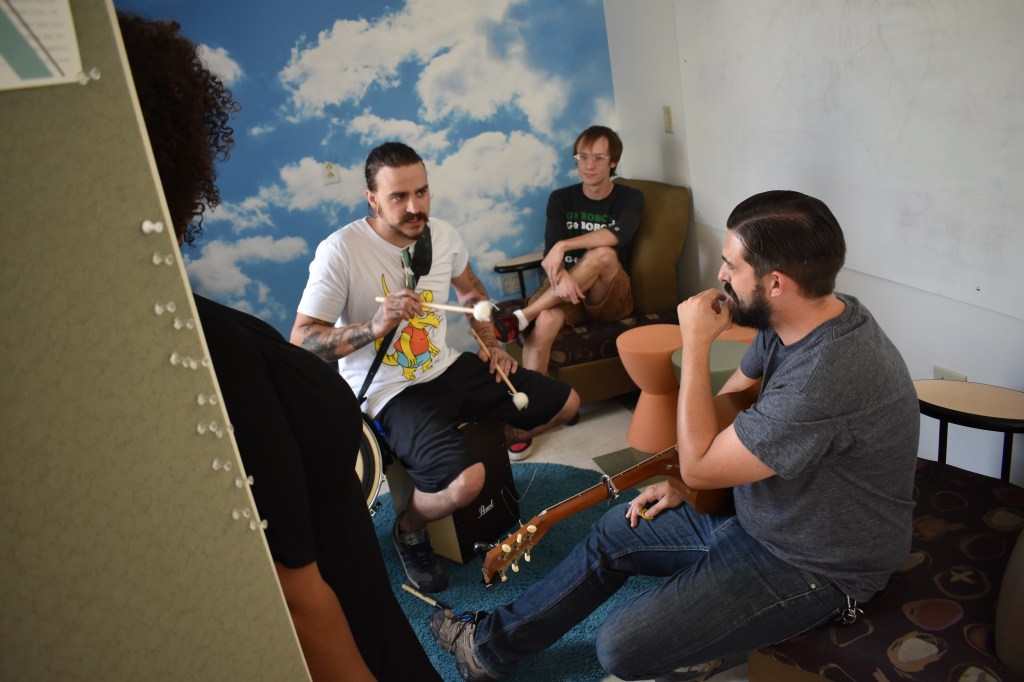


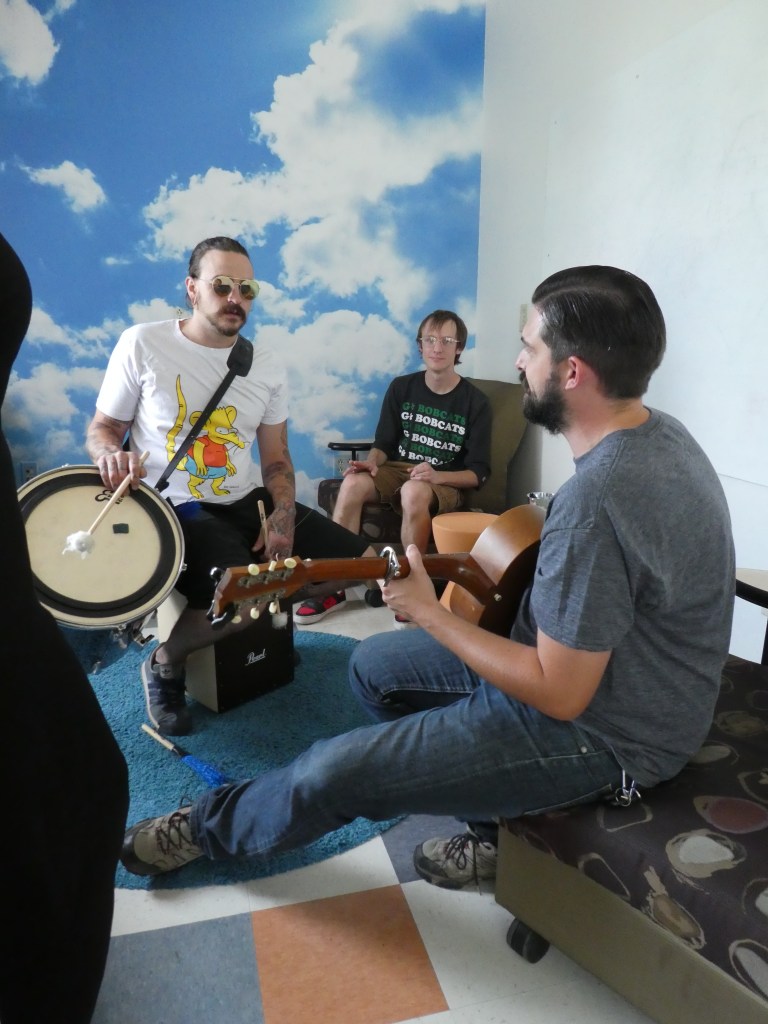


Neo American Pioneers visited Your Tuesday Afternoon Alternative on August 14, 2018! The band joined us for an interview and were kind enough to play a few songs for us! Happy to report that they are hard at work on a new record!


On April 24, 2018 Jerome of Winchester Gray visited the YTAA Studio for an interview and played a few songs live for us!

It was a real pleasure to talk with Charlie and Amanda about their music! The new record ‘The King & Queen of Dayton Country‘ is available this Saturday! You can follow them on Facebook! Their CD release is happening this Saturday at the Yellow Cab Tavern. Check the Yellow Cab Tavern’s page for information regarding the social distancing requirements and policies.
Part one of our interview with Charlie & Amanda Jackson about their new record, ‘The King & Queen of Dayton Country,’ recording, songwriting and their approach to music. We can consider this record to be a powerful return to a classic country duet sound that has been missing for quite some time. Check out their Facebook page! You can find their music on bandcamp! They are playing a safe outdoor show at the Yellow Cab Tavern on Saturday! Please check the Yellow Cab Tavern’s page regarding their policies for a social distancing outdoor show!
We had a great time when Lindsay Murray of Gretchen’s Wheel called in to talk about the Nada Surf tribute record “Moth to a lamplight.’ You can order a copy for yourself at bandcamp or the Gretchen’s Wheel website on March 22nd!
writing your next obsession
By G.C. Stein
Music and Interviews w/ Dr. J on Tuesdays 3-6 pm on WUDR Radio
An Uncool Podcast by two uncool guys.
College Sports, History, Music, Movies, NASCAR, Technology, Television and last but not least ... anything Southern!
Music and stuff....
online hub for this least-selling author
A Glasgow view of Americana and related music and writings.
Streaming Forward, Powered By The Past - if you love the 80s music, new music, Eurovision, cheesy pop and awesome playlists then let's get this pop party started!
Music and Interviews w/ Dr. J on Tuesdays 3-6 pm on WUDR Radio
Revealing the True Origins of Silence
Photographer, Designer, Editor and Educator Ray Laskowitz talks about pictures and their back stories.
Revisiting my extensive music collection, one artist at a time
Follow my blog for books, poems, photos, music, art, education, views...
Sweet, sweet pages of blissful music
Fanblog for the Raleigh, North Carolina-based band The Connells (formerly onesimpleband.net)
www.MusicConnectionDayton.com
Music Blog
This WordPress.com site is the cat’s pajamas
Musicology, songwriting, teaching, writing and research
 your tuesday afternoon alternative