Dreaming in Layers: Richard Flierl and the Sound of Dotsun Moon

I conducted this interview several months ago, but its ideas have lingered in ways that feel increasingly relevant with time. Returning to the conversation now, what stands out is not just the detail of Richard Flierl’s creative process, but the clarity of his artistic philosophy—one grounded in patience, emotional honesty, and a refusal to chase immediacy at the expense of depth. In the months since, as musical culture continues to accelerate toward shorter attention spans and algorithmic visibility, his commitment to making music that asks listeners to slow down and “lean in” feels even more quietly defiant. The distance has given the interview a different weight; what first read as reflective now feels almost prescient, capturing a mode of listening and creating that risks becoming increasingly rare.

There is a particular kind of indie music that never really leaves the people who discover it. It is not music designed for stadiums, algorithms, or fifteen-second clips floating through social media feeds. It belongs instead to late-night drives, college radio broadcasts, old record stores, and solitary moments when somebody puts on headphones and disappears into sound. The music of Dotsun Moon exists squarely within that tradition.

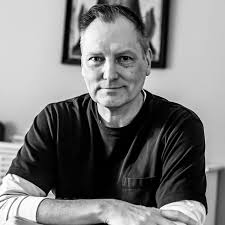
Dotsun Moon is the Buffalo-based project and brainchild of multi-instrumentalist Richard Flierl. Active since 2011, the project creates dream-laden shoegaze, atmospheric indie rock, and synth-inflected dream pop, with Flierl gradually evolving from producer into a one-man band handling nearly all instrumentation and vocals himself.

In a long and thoughtful interview, Richard described a creative life shaped by post-punk, dream pop, shoegaze, synth-pop, comics, cinema, and decades of obsessive listening. What emerged most clearly was not simply a catalog of influences, but a philosophy of music rooted in curiosity, emotional honesty, and the belief that songs can become deeply personal companions for listeners.

I initially framed Dotsun Moon’s sound through the lens of The Cure and New Order, hearing “eighties influences” and “synth-rock hybrid bands” in the music. Richard agreed while explaining that the newest record, Tiger, intentionally pushes further toward guitars and dream-pop textures. “I thought I wanted to make a shoegaze album,” he explained, “but honestly, this is more dream pop.”

For Richard, the distinction mattered. Shoegaze, in his telling, is not merely a label but a dense sonic architecture associated with bands like My Bloody Valentine. “I didn’t come up with an all-encompassing washing-machine guitar sound,” he admitted modestly, though the influence remains audible in the buried vocals and layered guitars throughout the record.

What makes Dotsun Moon compelling is the way these influences are filtered through lived experience rather than nostalgia. Richard recalled how the project originally began with just himself and a friend performing alongside prerecorded tracks because they lacked a full band. “We were like, what can we do? We don’t have a drummer,” he said. “If you have to wait for a band, you’ll never play out sometimes.” The comment captures something central to independent music culture: creativity often emerges through limitation rather than abundance.

That DIY sensibility still shapes the project. Richard spoke warmly about collaborating with producer Doug White at Watchmen Studios in Lockport. White, who had worked with punk, metal, and dream-pop bands alike, became a crucial creative partner. “Some of those songs I went in half done,” Richard explained, “and we walked out with them finished in a day.” Rather than imposing commercial polish, the process sounded exploratory and collaborative. Guitar parts evolved spontaneously. Songs changed shape organically. “You just don’t know what you’re gonna come up with,” he said.

The interview became especially fascinating whenever it turned toward songwriting itself. Richard repeatedly rejected romantic myths about composition arriving fully formed through sudden inspiration. Most songs begin with loops, keyboard parts, rhythms, or melodic fragments. “Keyboard is just so good to me,” he explained. He often improvises lyrics over music before fully understanding what the song is emotionally about.

That process is evident in “Bring Love,” which emerged almost unconsciously from a painful relationship experience. One lyric — “We’ll talk sometime when the future is not around” — reflected his emotional uncertainty entering a relationship involving children. “You should go into a relationship with excitement and love,” he admitted, “and I went in with apprehension and fear.” Other imagery came from a trip to Japan, where standing above a sudden ocean drop became metaphorically linked to emotional vulnerability and risk.

The songs rarely function as literal confessions; feelings dissolve into atmosphere and texture, producing something closer to dream logic than diary writing.

That emotional ambiguity becomes central on Tiger, particularly on “Never Had a Heart.” Richard described wanting the opening guitar line to feel “like yelling and punching forward,” while producer Doug White pushed for drums that felt enormous and physical. Richard enthusiastically described experimenting with layered loops and drum software: “The drums were really powerful. Doug loves powerful drums, and I like it too, a lot.”

Yet beneath the aggressive sonic architecture lies an unexpectedly warm song. Richard pointed to Roads by Portishead as an inspiration for that tension between melancholy and intimacy. He described hearing the lyric “Nobody loves me like you do” and realizing that what initially sounds mournful is actually deeply intimate. That realization shaped “Never Had a Heart,” particularly the line “Heaven never had a heart like yours.”

“This person has just got the most warm-hearted person in the world,” Richard explained. “So to have a positive message like that, but have it with a real punch — that’s how that came.”

The song gradually reveals itself not as despair, but as gratitude and emotional rescue:

“All the troubles you’ve ever known gripping you tight by the throat — a love that you’ve never known before.”“It’s like this person’s just saving you from these negatives,” Richard said.

That layered emotional quality extends into the album’s production philosophy. Richard resisted the contemporary tendency to push vocals aggressively to the foreground. Referencing bands like Slowdive, he described wanting listeners to “kind of listen” and “lean in a little bit.” Vocals on Tiger function as another texture within the mix rather than its center.

Our conversation drifted into compression, loudness wars, and the production legacy of Nevermind by Nirvana. Richard argued that many modern productions sacrifice dynamic range in pursuit of impact. Instead, he admires records where arrangements retain depth and space. “A well-made song is powerful,” he insisted, regardless of whether the vocals dominate the mix.

That emphasis on songcraft runs throughout Tiger. Richard spoke admiringly about seventies arrangements, sophisticated chord structures, and lush harmonies, citing influences ranging from Barry Manilow to yacht rock. “Inspiration can come from anywhere,” he said while discussing studying Manilow chord changes through sheet music archives. It is a refreshingly unpretentious approach in a musical culture often obsessed with “acceptable” influences.

The same openness extends to artists like Electric Light Orchestra, whose orchestral pop textures Richard deeply admires. In many ways, Dotsun Moon reflects a generation of listeners less interested in rigid genre tribalism than emotional resonance, drawing equally from post-punk melancholy, dream-pop atmosphere, synth experimentation, indie rock structure, and classic pop craftsmanship without feeling nostalgic or revivalist.

The album’s sequencing also reflects a cinematic sensibility. Richard described “Piano Trailer Melody 4” as an intentional dividing point — almost like flipping from side one to side two on vinyl. The abrupt transition from “Never Had a Heart” into the sparse piano instrumental creates a moment of deliberate disorientation.

That cinematic impulse surfaced repeatedly during our conversation, especially when Richard discussed Mercury Rev and their album All Is Dream. Hearing its opening track, he said, felt like watching “a John Ford western” unfold onscreen. Songs, for him, should create visual and emotional space rather than simply deliver hooks.

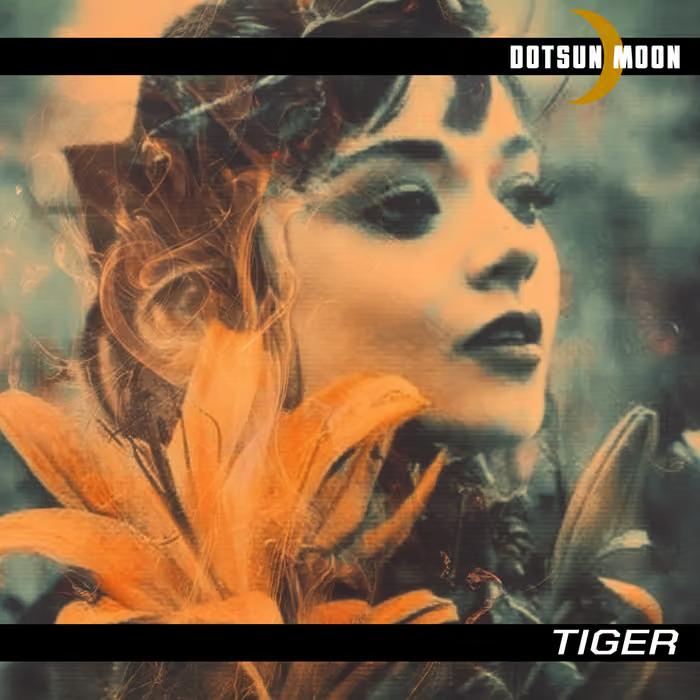
That same sensibility shapes the album artwork. Richard credited artist Doc Smith, working under the name Orb, with creating the cover image featuring a woman holding a tiger lily flower — a subtle visual pun connected to the album title Tiger. Richard admitted the title itself was intentionally playful, inspired partly by albums like Crocodiles and partly by comic-book references, especially Mary Jane Watson’s famous “Face it, Tiger…” line from Spider-Man comics.

The conversation frequently drifted into comic books, revealing another important aspect of Richard’s worldview. We bonded over the emotional resonance of eighties-era Marvel Comics storytelling, particularly The Uncanny X-Men and the outsider identities embedded within mutant narratives. Richard described how those books shaped him emotionally as a young reader. Like many listeners drawn toward dream pop and shoegaze, he gravitated toward stories about alienation, identity, and belonging.

Importantly, though, Tiger ultimately resists despair. Even its saddest moments remain grounded in warmth, connection, and endurance. “Give Up the Tears,” despite its title, is explicitly about release and emotional survival. “It’s about feeling good,” Richard said. “It’s about letting that hurt go.” He described the song as an invitation to briefly escape despair long enough to appreciate moments of peace — whether “at the beach” or simply “for the duration of a song.”

The one major exception, Richard admitted, may be “Winter Street,” which he described bluntly as “definitely a song about hurting.” Yet even there, the pain feels observational rather than performative — less spectacle than memory.

Perhaps the most moving moment of the interview came when Richard explained why he makes music at all. As a teenager, he discovered Heaven Up Here by Echo & the Bunnymen almost accidentally. Initially uncertain about the album, he gradually fell in love with its atmosphere, sequencing, and guitar work. That experience permanently shaped his artistic ambitions.

“Because that had that effect on me,” he said, “I wanted to create music that would do the same thing for someone else.”

It is an extraordinarily simple statement, but it explains nearly everything about Dotsun Moon’s music. Beneath the guitars, haze, and layered textures lies a fundamentally human desire: to create songs that matter deeply to strangers.

In an era increasingly dominated by disposable digital noise, that aspiration feels both old-fashioned and quietly radical.

Favorites of 2025: Tamar Berk – ‘ocd’

Why Tamar Berk deserves your attention

Tamar Berk is one of those rare musical talents who not only pour raw emotion into her songs but also writes, records, and produces them herself — forging a sound world that’s intensely personal, lo-fi‑grounded, and vivid. On her new 2025 album ocd, she delivers what many consider her most ambitious and emotionally immersive work yet: a reverb-soaked journey into looping thoughts, obsessions, and the restless inner life.

Raised on classical piano and early Disney soundtracks, Berk eventually gravitated toward influences like The Beatles, David Bowie, Liz Phair, and Elliott Smith — a mix that shaped her instinct for melody, emotional catharsis, and lyrical truth. What she makes now, though, is something singular: indie rock and dream‑pop fused with DIY grit, emotional honesty, and the courage to bare her inner world.

In what follows, I want to explore Tamar Berk’s strengths as a musician — her multi-instrumentalism, her knack for mood and texture — and how on ocd she channels overthinking, vulnerability, and occasional panic into songs that feel like listening to someone thinking aloud.

Multi‑layered musician: instruments, production & power of solo control

One of the most striking aspects of Tamar Berk’s work is how much of it she controls herself. On ocd, she handles not only vocals and songwriting but also guitars, piano, synths, Wurlitzer, organ, bass, strings, programming, percussion — often layering sounds to produce something both intimate and richly textured.

That DIY ethos gives her music a special honesty. Because she’s involved in nearly every aspect, nothing feels over-polished or disingenuous — the distortions, reverb, and ambient murkiness all serve the truth of her emotional landscape. The result: a sound that lingers, unsettles, and stays with you.

In musical terms, that means ocd isn’t strictly an indie‑pop or alt‑rock album. It’s more like a fever dream — alternately noisy and delicate, sometimes urgent, sometimes hazy. The instrumentation shifts fluidly: thick, fuzzy guitars and sparse, somber piano; ghostly synths and grounded bass; literal sonic loops echoing the mental loops the lyrics describe.

At times, Berk leans into distortion and echo to evoke disorientation; at others, she strips things down to nothing but light keys, soft vocals, and a sense of fragile introspection. That dynamic — the back‑and‑forth between chaos and calm — is exactly what gives ocd its power.

Lyrical honesty: overthinking, mental spirals, and the beauty inside the mess

If the music gives you the frame, the lyrics are the beating heart of ocd. This is an album that wears its anxieties on its sleeve — about obsession, memory, identity, self-doubt, longing, and the loops of anxiety and overthinking. As Berk puts it, she called the album ocd because she “lives in loops. I overthink everything. But this record helped me make a little bit of beautiful sense out of that.”

The lead single ‘Stay Close By’ sets the tone for the album: dreamy guitars and soft vocals weave around lyrics of indecision, longing, and inertia — “I don’t know why I can’t reply on time, or can’t make up my mind,” she sings. The result feels like a confession whispered in a quiet room: vulnerable, real, and ache-filled.

But not all of ocd wallows plaintively. The title track ocd itself confronts mental spirals head‑on, repeating lines like “I got OCD … over and over and over,” rendering the relentlessness of intrusive thoughts in musical form: looping, dizzying, claustrophobic.

Elsewhere, Berk’s songwriting explores memory, regret, longing, and desire for escape — or at least some kind of emotional catharsis. The songs move between bleak introspection and moments of fragile hope, capturing that tension many of us live with: the part that fears and ruminates, and the part that still wants connection, meaning, or release. As one summary puts it, ocd “invites listeners into her inner thoughts” — messy, complicated, yet somehow familiar and human.

A sonic and emotional arc: ocd as a map of inner turbulence

What makes ocd compelling — and perhaps unique in the indie scene this year — is how well its musical and lyrical elements align to create an overall arc: it feels less like a collection of songs and more like a single, immersive experience. Berk seems to want to draw listeners into her mind, step by step, track by track.

The album shifts between dream‑pop haze and rock‑tinged fervor, between introspective hush and emotional outburst. That dynamic — of contrast and layering — mirrors the experience of anxiety, overthinking, and identity searching. On one track you might be floating in soft guitars and wistful melodies; on the next you’re confronting distortion, repetition, and confessional urgency.

That tonal range reflects the alternation many of us know well: memory and regret, hope and despair, the attempt to control thoughts and the surrender when it becomes too much. In that sense, ocd isn’t just music — it’s a kind of emotional landscape, felt in sound as much as in words.

Importantly, Berk doesn’t pretend to provide tidy resolutions. Her voice doesn’t promise that overthinking will end, or that clarity will come. Instead, she offers catharsis, empathy, and solidarity — a map for all the tangled thoughts, the dark nights, the loops. It’s messy. It’s real. But it’s shared.

Why ocd matters as growth

For longtime followers of Tamar Berk, ocd may feel familiar in some ways: there are still fuzzy guitars, melodic hooks, and a DIY spirit. But this album marks a new level of ambition and vulnerability. As one review noted, this is her “most personal and intense work yet.”

Her growth is obvious — not just as a songwriter, but as a producer and composer. The fact that she plays multiple instruments, layers them herself, and co-produces the record gives ocd a cohesiveness and authenticity that few albums achieve. The emotional weight doesn’t come across as polished or packaged — it feels lived, raw, and human.

Moreover, at a time when mental health, overthinking, and the pressures of modern life feel increasingly pervasive, ocd offers something rare: a mirror that’s honest but compassionate. It doesn’t romanticize anxiety; it doesn’t idealize healing. It simply says: this is what it feels like. And maybe that’s enough — maybe that kind of honesty is exactly what art should do.

In that sense, Tamar Berk isn’t just writing songs — she’s doing what few musicians do: giving voice to inner chaos, shaping it into melody and texture, and inviting you to sit with it all. ocd isn’t easy listening. It’s hard, sometimes disquieting. But it’s real. And in its messy honesty lies its power.

Final thoughts: Tamar Berk as a voice for the over‑thinkers, the dreamers, the stranded

There’s a long tradition in music of turning pain into beauty, chaos into catharsis — but few artists do it with as much rawness, intimacy, and creative control as Tamar Berk. On ocd, she doesn’t just invite you in: she opens the door, hands you something fragile, and says, “this is what it feels like.”

That willingness to expose uncertainty, loops of thought, doubt — is an act of bravery. And as a listener, you’re not just a spectator: you become a companion in the spirals. Maybe you don’t walk out with answers. But you walk out with somewhere to begin.

If you’ve ever felt your thoughts spin too fast, if you’ve ever felt stuck in loops of regret or longing — ocd is for you. And even if you haven’t, this record might just show you what you never knew you could feel so deeply: the strange beauty of overthinking — and the power of turning it into art.

Give it a listen. Turn the lights down. And let Tamar Berk lead you through the loops.

11 Questions with… Given Names

Happy New Year to everyone! Welcome to 2024!

The new year opens with the return of our 11 Questions with… column. Given Names is an exciting new project from Dr. J’s home state of Minnesota. That state has always been home to thrilling music such as The Replacements, Husker Du, Soul Asylum, Prince, Semisonic, Babe in Toyland, The Jayhawks, The Suburbs, and many more.

Given Names is a group of friends who create music that combines elements of indie, rock, dream pop, and power pop, with hints of synth and dance. The group is an exciting indie pop quartet based in Mankato and Minneapolis, featuring Laura Schultz (lead vocals, rhythm guitar), Meghan Irwin (synth, backing vocals), Michelle Roche (drums, backing vocals), and Mandy Wirig (lead guitar, backing vocals). In 2023, they released their debut single, “Makin’ Eyes’ last year. It is a song that channels their influences while incorporating their distinctive musical vision. It is also one of our favorite singles from this past year.

Given Names creates a swirling yet solid indie dream pop that encapsulates the ethereal essence of dreams through a distinctly feminine lens. It is a musical realm where the boundaries between reality and imagination blur, and emotions cascade in a surreal mix of sound. The musicians collaborate to craft a sonic dreamscape that is both otherworldly and intimately connected to the intricacies of experience. It is real.

Dream pop is often characterized by its atmospheric soundscapes and lush melodies, sound becomes a canvas for these artistic collaborations to explore themes of loss, love, empowerment, and self-discovery. The almost ethereal vocals, layered and harmonized, transport listeners into a transcendent-like state where time seems to slow down, and emotions are amplified. The dreamy quality of the music is a manifestation of the artists’ collective desire to create a space that reflects the intricacies of the psyche.

Lyrically, ‘Makin Eyes’ delves into introspective narratives that navigate the complexities of relationships, self-realization, connection, and the pursuit of one’s dreams. Themes of resilience and empowerment seem to subtly weave through the verses, creating a tapestry of emotions that resonate with listeners on a deeply personal level.

The collaborative nature of Given Names fosters a bond among the artists involved, each contributing a unique perspective to the collective soundscape. This collaboration extends beyond the music itself, influencing the visuals, single art, and live performances. The result is a holistic artistic expression that celebrates the diversity of artists’ voices and experiences. As dreamy all-women-created power pop continues to evolve, it not only pushes the boundaries of musical exploration but also challenges preconceived notions about femininity in the music industry. It remembers and celebrates the creative prowess of women in shaping the sonic landscapes of sonic dreams and emotions, inviting listeners to immerse themselves in a world where the line between reality and reverie is beautifully blurred.

We contacted the band and Laura and Mandy kindly answered our questions for this column (LS: Laura Schultz; MW: Mandy Wirig).

Dr. J: What can you share with us about when and how you started writing music?

LS: I started writing music with a good friend, Laura MacDonald, in high school. She and I wrote songs about strange dreams we had or our World History Teacher, (some lyrics were “Mr. Schnieder, you’re a really cool guy. In World History, you taught us to ask why”). I started doing it more seriously in undergrad in Oshkosh, WI, where I played with some absolutely amazing musicians and friends.

MW: I started writing music in high school. I began playing guitar at thirteen and was in my first band, a punk band, at 16-17. I’ve always been influenced by singer/songwriters and the very melody-driven sounds of the sixties, particularly The Beatles and McCartney, and that influence can be found in almost all of my guitar parts.

Dr. J: What first led to your recording music? How do you approach production?

LS: I see recording as a snapshot of a song in a moment. It may not be how we always perform the song, but it is representative of that moment, with those players and resources that we had at the time. I think of a producer as an editor, someone who can look more objectively at the song and make suggestions, or provide an outside perspective that we might not have been able to access, since we are closer to the song itself.

Dr. J: ‘Makin Eyes’ is your most recent music, what led to the making of that song? What were the main influences on your recording this song?

LS: From the writing perspective, almost all of my songs are written the same way I wrote them with my high school friend, Laura. I free-write a full page of words, careful not to judge them as they come out, not thinking of them as lyrics but just as phrases or strings of words, then I go back and circle words or phrases I like, then I figure out how they all make sense together. The music comes last for me, but it comes easiest for me after I have lyrics.

MW: My love of melody is what inspired the main guitar riff in the song. I’ve always loved how “hummable” George Harrison’s guitar solos are, and how prominent melodic guitar work is in so much of the British Invasion and Power Pop songs that I love. I wanted a lead guitar part that could stand on its own as a melody while still incorporating that shimmery, jangly sound.

Dr. J: The song ‘Makin Eyes’ seems to capture a remarkable constellation of musical influences. The song seems to have an ‘80s pop feel. Is that a correct interpretation? If that is correct, did you intend to create a song that connects to that style? If that is not correct, how would you describe the feeling of the song?

LS: Well thank you! I think you can interpret the song however you like! ’80s pop feel sounds good to me! I try not to think about what style I’m writing songs in, just kind of letting the song ask for what it needs.

MW: I think it definitely hearkens back to bands like The Go-Gos and The Bangles, who themselves were influenced by a lot of Power Pop and earlier styles of music, and I love that you’ve grouped “Makin Eyes” in that category.

Dr. J: How did the song ‘Makin Eyes’ come together musically for you?

MW: Laura is our principal songwriter, and she brought the lyrics and chords to us shortly after I joined the band, so this is one of the first songs that was a true full-band collaboration for us. Within two weeks of our first rehearsal, I had brought the song home and developed what became the signature guitar riff, and the song has really fleshed out during the last couple of years as we’ve continued to perform it live. To see how it’s evolved into the multi-tracked studio version with all of its jangle and shimmer has been really gratifying.

Dr. J: Where do you often derive inspiration to make music?

LS: I think of my lyrics as a sort of amalgamation of what is happening in my life, the way I am consciously or unconsciously feeling about things; the worries or thrills or boredoms of everyday life. I think of songs as a container for my present moment experience.

MW: I’m also a visual artist in addition to a musician, and each medium has always influenced the other. I also derive inspiration from surrounding myself with art of all types—the books I read, the music I listen to, the films I watch, the events I attend. And as cliche as it sounds, there’s nothing quite like a hot shower, a weird dream, or boredom to spark an idea that can be scribbled down for creation.

Dr. J: What is next for you musically? How would you describe your thoughts at this point for your next project or release?

MW: We’re currently in the process of finishing up our first album and getting ready to choose our second single for release. The plan is to get those squared away, and then to start performing more often, hopefully expanding the areas we’re booking shows in beyond our southern Minnesota roots.

Dr. J: How would you describe the music that you create? How has that process evolved or changed over time (especially as you think about your journey in the last few years)?

MW: We describe the music we create as Indie Pop, which is a pretty broad category in and of itself. We originally began as a four-piece with a synth player, and that synth-heavy ‘80s influence is still prevalent in our work, but we also include influences like the Velvet Underground, Low, and reverb-heavy guitar work from the mid- to late-‘60s.

Dr. J: What is your favorite song to perform live? What is your favorite song to perform in general? What makes that song a current favorite in your performances?

MW: My personal favorite is “Game Was Rigged.” It’s a story of love gone wrong set to a bouncy melody that’s impossible not to dance to when you’re playing it.

Dr. J: What is one message you would hope that listeners find in ‘Makin Eyes’?

LS: Honestly what first comes to mind is that I’m interested in narrowing the gap between performer and audience member. I want people to feel as though they could write a song too, they could perform it, they could record it! If it’s something that inspires you, please let it! Let’s all make things.

Dr. J: a musician, how are you adapting to the challenges of creating music? What are your biggest challenges to creating music?

MW: We’ve got a somewhat unique situation where we don’t all live in the same location anymore, with Laura and Michelle living in Mankato while I’ve moved almost an hour-and-a-half away to Minneapolis. Things like practices and recording sessions definitely need to be planned out pretty well in advance to
accommodate this. We’re also three very busy women juggling full-time careers in addition to the band—I’m an artist, teaching artist, and gallery owner, Laura is a social worker, and Michelle is a full-time musician and music teacher who plays in several groups—which can make it challenging to not only coordinate our schedules, but also to make time for things like social media and finding new venues to perform.

We want to extend our sincere gratitude to Given Names and especially Laura and Mandy for answering our questions and continuing to make some really excellent music! Click on the links below the article to visit their social media or to listen to the song that we discussed! If any musicians or artists would like to participate in future ’11 Questions with…’ columns, please feel free to email us at drjytaa@gmail.com. All photos and images courtesy of Given Names.

Bandcamp  Instagram  YouTube