Elephants and Stars have been stalking the edges of the Canadian underground for years, the kind of band that doesn’t so much arrive as accumulate—record by record, show by sweat-soaked show, turning small rooms into minor revelations for anyone paying attention. They’re not interested in being the coolest band in the room, which is probably why they end up being the most necessary. Literate but never precious, political but allergic to slogans, they deal in the messy stuff: doubt, friction, the uneasy truce between wanting to care and wanting to check out entirely.
And here’s the thing—they don’t sound like they’re trying to prove anything anymore. That fight is over. What you get instead is a band that knows exactly what it is: a guitar and drum band, yeah, but the kind that treats guitars like blunt instruments and percussion you feel in your body, both instruments opening wounds at the same time. There’s punk in there, and heartland rock, and that old alternative ache that used to mean something before it got turned into background noise for coffee shops. But none of it feels curated. It feels lived in, like these songs have been rattling around in their bones for years before anyone bothered to hit record.
Frontman Manfred Sittmann comes off like a guy who’d rather torch the idea of “high art” than ever be caught polishing his feelings for display. And that’s the secret engine here: nothing is overly arranged, nothing is too clever for its own good. The band trusts the songs to stand up straight on their own bruised legs. In a time when so much music winks at you like it’s all one big joke, Elephants and Stars stare you down and mean every word—and somehow that lands harder than any grand statement ever could.
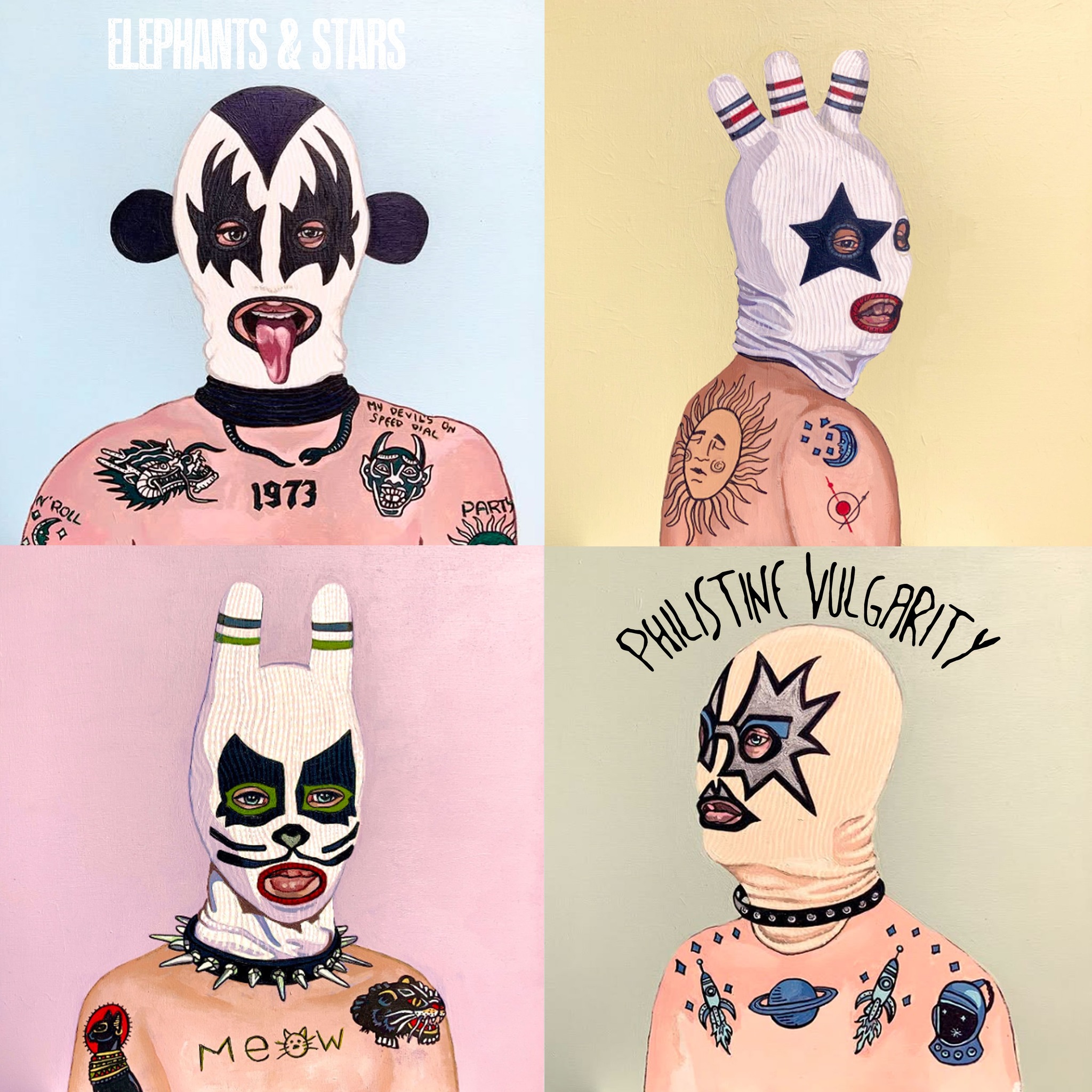
For more than half a decade, Elephants and Stars have carved out a distinctive place in independent music: literate without pretension, political without sloganeering, melodic without sacrificing urgency. That balance defines this record. Across six albums, they’ve built a reputation the slow way—through relentless songwriting, word of mouth, and songs that land somewhere between the gut and the conscience. Philistine Vulgarity feels like the clearest distillation of that identity yet.
The guitars hit first—not with flash, but with presence. They breathe. Each riff carries tension; each melody leans against something just out of frame. Producer Ron Hawkins (The Lowest of the Low) understands the assignment completely. His approach favors clarity over gloss and atmosphere over excess, sharpening the band’s core qualities: passion, confrontation, humanity, and melody. Nothing feels buried or inflated. The songs arrive mid-conversation, as if they’ve been unfolding long before you pressed play.
“Drowning in Doubt” opens with anxious propulsion, a reminder that alternative rock was never meant to feel comfortable. “Propensity for Violence” compresses fury into a tight burst without tipping into caricature. Meanwhile, “Take It All” and “Brief, Shining Moment” showcase the band’s quietest strength: choruses that don’t beg for attention but linger anyway, settling in over time rather than announcing themselves.
By the midpoint, the album reveals its deeper concerns. “Kinda” and the strikingly titled “Of Halfway Houses and Ambulances” resist easy resolution. These are not songs about triumph; they’re about endurance—another Tuesday, another misstep, another fragile attempt at faith in other people. It’s difficult terrain, and Elephants and Stars navigate it with unusual grace.
The album’s title is not incidental. Philistine Vulgarity wrestles directly with political violence, alienation, economic anxiety, and emotional exhaustion, but it refuses to surrender empathy in the process. Echoes of punk, heartland rock, post-hardcore, and alternative textures run throughout, yet the songwriting never feels like a genre exercise. It remains rooted in narrative and emotional truth.
That ethos is summed up by Sittmann: “These songs are just honest rock songs played with feeling… they’ll never be mistaken for high art, and I couldn’t be happier about it.” In a musical landscape that often hides behind irony or self-awareness, that kind of directness feels quietly radical. Elephants and Stars don’t hedge. They mean what they say.
“One Light at a Time” and “Even Out the Lies” carry that philosophy forward with restraint and confidence. There’s no attempt to overwhelm—only a trust that honesty has its own momentum, and that listeners are willing to meet the band halfway.
“The Reckoning (Come On Down)” plays less like judgment than invitation, setting up the closing statement: the seven-minute “Sanctuary Cities.” It’s a rare kind of finale—patient, searching, willing to wander. Instead of racing toward a climax, it expands and circles back on itself, ultimately landing somewhere that feels earned rather than engineered. By the time it fades, the silence it leaves behind feels intentional.
What resonates most is how little of this feels manufactured. Elephants and Stars are not chasing trends or optimizing for algorithms. They are refining a voice—layered guitars, thoughtful construction, and melodies that reveal themselves gradually. The audience they’ve built reflects that same patience: one song, one record, one believer at a time.
Philistine Vulgarity is a reminder that guitar bands still matter—not as preservationists of some sacred past, but as translators of ordinary anxiety into something shared and bearable. The album doesn’t pretend the world makes sense. It simply insists that making honest music within that confusion still matters.
And that’s more than enough reason to turn it up again.
Most songwriters spend their careers trying to sound profound. Matt Derda sounds like he’s trying to survive another Tuesday.
That’s not an insult. It’s the highest compliment I can think of.
Because somewhere between the barroom confession, the self-deprecating joke, the hard-earned wisdom, and the moment where the floor drops out beneath a lyric you thought was headed somewhere safe, Derda has built something increasingly rare in contemporary songwriting: songs that feel authentically lived in rather than written in service to ego or corporate overlords.
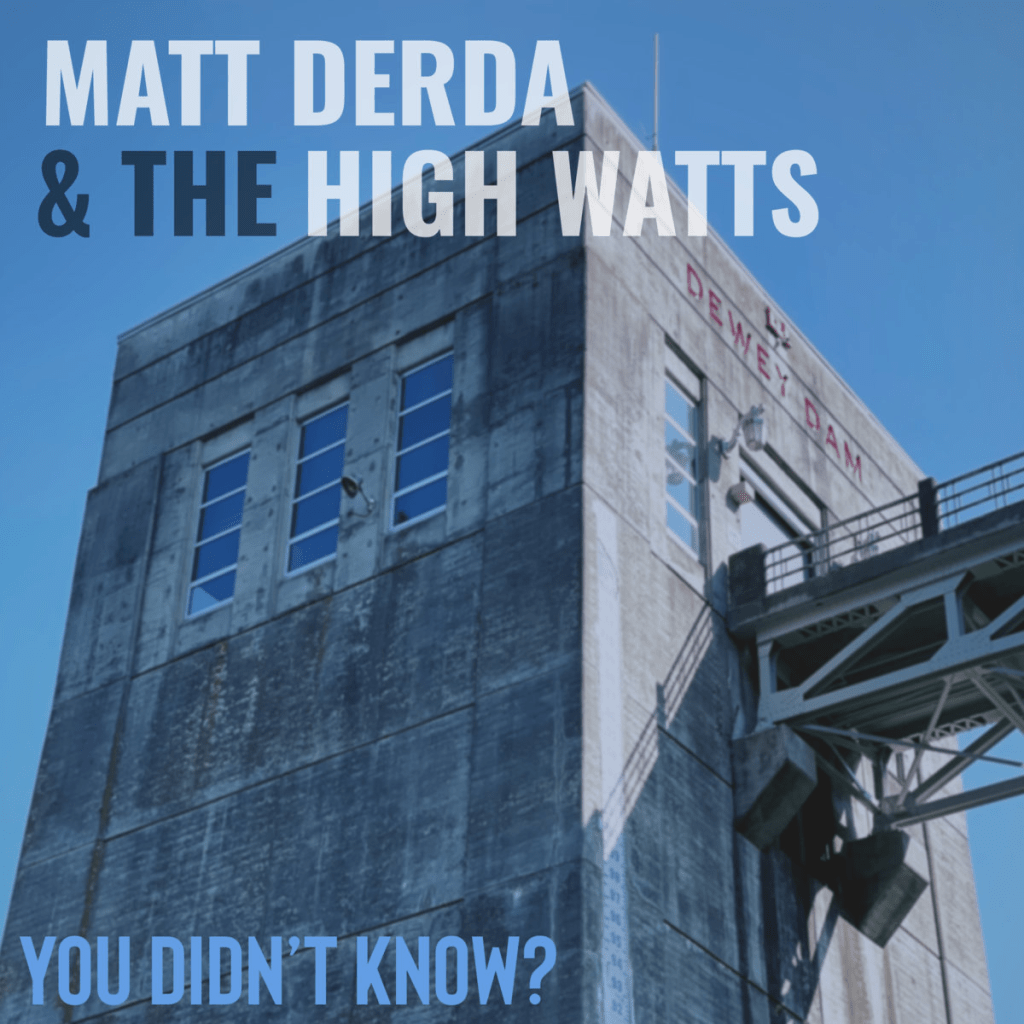
Matt Derda and The High Watts don’t announce themselves with grand statements. They don’t arrive carrying manifestos or pretending that every chorus is going to save your soul. Instead, they do something harder. They tell the truth in a language ordinary people actually use.
The first thing that strikes you about Derda’s writing is how conversational it is. Not conversational in the lazy sense that often passes for authenticity these days, but conversational in the way the best storytellers are telling the truth as they understand it from the perspective of being wrapped up in life. His songs sound like somebody sitting across from you at last call, finally deciding to admit what they’ve been avoiding all evening.
Then comes the twist.
Just when you think you’ve settled into a familiar phrase, Derda turns it sideways. A joke becomes a wound. A cliché becomes a revelation. A casual observation suddenly opens into something larger and more unsettling. His gift is not simply for cleverness, though he’s certainly clever. It’s for using cleverness as camouflage for vulnerability.
That’s a difficult balancing act. Too much wit and the listener never gets close enough to feel anything. Those songs may sound great but they never land as true. Too much confession and the song collapses under its own weight. Derda operates in the narrow space between those extremes, where humor and heartbreak become indistinguishable from one another.
The best songwriters understand that vulnerability isn’t about exposing everything. It’s about exposing the right thing in the right way at the right time. Derda seems to know this instinctively.
His songs are populated by imperfect narrators, people trying to make sense of disappointments they may have helped create. There is very little self-mythology in his work. He rarely casts himself as the hero. More often, he sounds like a participant-observer in his own life, documenting the mess while simultaneously contributing to it.
That perspective gives his lyrics a refreshing lack of certainty that is damn uncanny. Too much modern songwriting arrives prepackaged with conclusions. Every emotional conflict is resolved. Every lesson is learned. Every wound has already become wisdom. Or worse, they revel in being the problem.
Derda isn’t interested in those tidy endings. His songs frequently occupy the uncomfortable territory where most of us actually live: somewhere between understanding and confusion, hope and resignation, confidence and doubt. He trusts listeners enough to leave some questions unanswered. And thank all that is holy that he trusts an audience and treats us as intelligent if flawed human beings.
Musically, The High Watts understand a principle that should be tattooed on the forehead of every aspiring rock band: the arrangement serves the song. This sounds obvious until you realize how rarely it happens across styles and genres.
In lesser hands, strong lyrics become excuses for instrumental excess or emotional overstatement. Every feeling gets underlined three times. Every chorus is pushed toward artificial grandeur. The High Watts resist that temptation.
The arrangements feel less like decoration and more like architecture. Guitars enter when they’re needed and disappear when they’re not. Rhythms create momentum without demanding attention. Melodies carry emotional weight without becoming sentimental and falsely sweet.
Nothing feels accidental for Matt Derda and The High Watts, but nothing feels forced either. The band understands that a great lyric often needs room to breathe.
That’s where Derda’s writing flourishes. The spaces between notes become as important as the notes themselves. A well-placed guitar phrase can illuminate a line. A restrained rhythm section can make a confession land harder than any dramatic crescendo ever could.
The result is music that feels remarkably confident in its own skin. And maybe that’s what ultimately separates Matt Derda and The High Watts from so many contemporary acts. They aren’t trying to impress you. They’re trying to connect with you.
There’s a difference. A very big difference.
One approach asks listeners to admire the songwriter. The other invites listeners to recognize themselves in the song. Derda’s songs consistently choose the second path. And that is a very good choice.
They acknowledge failure without celebrating it. They embrace humor without hiding behind it. They explore vulnerability without turning it into spectacle. Most importantly, they understand that the details of ordinary lives are often where the biggest truths reside.
Rock and roll has always been at its best when it remembers that human beings are contradictory creatures—simultaneously brave and frightened, selfish and generous, ridiculous and profound.
Matt Derda writes songs for those contradictions. And The High Watts provide the electricity that makes them glow. The songs don’t shout. They don’t posture. They don’t demand attention. They earn it.
And in an era overflowing with noise based on what a corporation thinks it can sell to teenagers that may be the most radical thing a songwriter can do.
Some songs sound fragile because they’re carefully arranged that way. And then some songs sound fragile because the people making them are actually coming apart in real time. That’s the feeling you get listening to ‘Walking on a Wire’ by Richard and Linda Thompson.
The song appears on Shoot Out the Lights (1982), a record that has come to feel less like a collection of songs and more like a document of emotional collapse. By this point, Richard and Linda Thompson’s marriage was effectively over, and the tension that had been building for years wasn’t just informing the performances—it was structuring them.
And then there’s Linda Thompson’s voice.
During the recording of Shoot Out the Lights, Linda was dealing with significant vocal strain—problems that had been building and were made worse by the emotional and physical intensity of the sessions. You can hear it in the delivery: the controlled fragility, the slight break in tone, the sense that every phrase is being carefully negotiated in real time. But what’s striking is that the record never tries to smooth it out or hide it. Instead, it turns that limitation into part of the emotional architecture of the song.
A technically “perfect” vocal would actually feel like a lie here. Because ‘Walking on a Wire’ isn’t about resolution. It’s about the attempt to maintain balance when everything underneath you is already gone. Richard Thompson’s guitar is precise, almost cutting in its clarity—circling, tightening, never quite settling. And Linda sings like someone holding herself together by sheer force of will, line by line.
There’s a kind of emotional restraint in the performance that’s more devastating than overt breakdown. No shouting, no collapse—just endurance. And that’s what makes the song so difficult to turn away from.
Knowing what Shoot Out the Lights represents in the arc of their relationship only deepens it, but even without that context, ‘Walking on a Wire’ stands as one of the most harrowing and beautiful performances in British folk rock—intimate, controlled, and quietly shattering.
There are records that sound like they were made for streaming playlists, and there are records that sound like they were made because four guys still believe rock and roll is a sacred, sweaty, half-broken thing that can save your life for three and a half minutes at a time. Still Here by High on Stress belongs violently, gloriously to the second category.
This thing doesn’t stroll into the room. It kicks the jukebox until beer spills on the floor and somebody starts shouting along before they even know the words. It sounds like Minneapolis in winter — cracked lips, cigarette smoke curling outside the club at 1:45 a.m., somebody sleeping in a van behind First Avenue because gas money disappeared two towns ago. The ghosts of The Replacements are all over this record, not in the lazy tribute-band sense, but in the way these songs understand that melody only matters if there’s some damage underneath it. You can hear traces of Soul Asylum too — that desperate, bruised romanticism — and the working-class ache of The Gear Daddies humming beneath the amplifiers like an old furnace in a Midwestern basement.
“House of Cards” opens the album like somebody throwing open the door of a bar just before last call. Guitars slash across the room, Nick Leet sounding like he’s trying to outrun disappointment with pure momentum. It’s got that classic Twin Cities push-and-pull: huge hooks wrapped around the suspicion that everything might collapse tomorrow. Great rock songs don’t solve anything. They just make you want to survive long enough to hear the next chorus.
“Closer to the Truth” is pure heartland voltage. This thing could’ve fit on a lost Westerberg cassette between hangovers and revelations. The guitars don’t polish the pain — they grind it into something usable. There’s a ragged nobility here, the kind you only get from musicians who’ve actually lived inside these songs instead of assembling them from indie-rock instruction manuals.
“Over/Thru,” co-written with Kevin Salem, barrels forward with power-pop precision and bar-band recklessness colliding at full speed. It’s catchy in the way nicotine is addictive. Chad Wheeling’s guitar work throughout the album deserves its own shrine somewhere off Highway 61. These guitars don’t shimmer; they scrape paint off the walls.
Then comes “Uphill Climb,” which is exactly the kind of title Minneapolis rock bands have been earning honestly for forty years. No irony, no fashionable detachment, just exhausted perseverance transformed into a singalong. This is where High on Stress separate themselves from all the poseurs playing Americana dress-up. They understand that resilience is ugly sometimes. You drag it behind you. You don’t post inspirational quotes about it.
“Cliffhanger” barely pauses long enough to breathe before detonating into another tight, melodic punch to the ribs. There’s not an ounce of wasted motion anywhere on this record. Twelve songs, no self-indulgence, no bloated production tricks, just melodies delivered with the urgency of men who still think rock and roll matters because it does.
“Time Will Tell You” carries some of that old Soul Asylum melancholy — the feeling that wisdom arrives about thirty years too late to be useful. Mark Devaraj and Jim Soule lock into the kind of rhythm section groove that doesn’t call attention to itself because it’s too busy holding the whole damn enterprise together. The song rolls forward like an old car with a failing transmission that somehow keeps making it home.
“Can You Feel Me?” is two-and-a-half minutes of pure emotional combustion. No filler. No indulgence. Just direct transmission from nerve endings to amplifier tubes. Somewhere, the spirit of every lost Midwest dive bar is cheering. “Plans Have Plans” is the kind of title Lester Bangs himself would’ve appreciated because it sounds simultaneously profound and completely defeated. The song sways between fatalism and stubborn survival instinct, which is basically the entire emotional history of Minneapolis rock distilled into three minutes.
“Under the Table” brings a little extra grime into the mix, with Soule’s co-writing contribution adding a rougher edge. This is where the band’s love for the Del-Lords and old American garage rock really surfaces. It sounds lived-in. Beer-stained. Earned. “Ambassador” somehow manages to sound triumphant and world-weary at the same time, which is harder than most bands realize. High on Stress understand one of the central truths of rock and roll: the best anthems are usually about losing.
“Parachutes and Bandages” is one of the emotional high points of the whole record, all scar tissue and survival instinct wrapped in chiming guitars. You can practically hear the miles traveled in these songs. Not metaphorical miles. Actual miles. Snowstorms. Cheap motels. Bad coffee at gas stations somewhere outside Eau Claire.
And then the title track, “Still Here,” arrives like the mission statement for the entire album. Not triumphant. Not defeated. Just present. Alive. Scarred up but still standing in front of the amp while the speakers hum. That’s the whole philosophy of Midwestern rock and roll right there. The Replacements knew it. Soul Asylum knew it. The Gear Daddies knew it. And High on Stress know it too.
What makes Still Here hit so hard is the songwriting’s refusal to hide behind irony or studio gloss. High on Stress write songs the old-fashioned way: sharp hooks, emotional honesty, and enough grit in the machinery to make every chorus feel earned instead of manufactured. These songs are built from working-class frustration, late-night reflection, stubborn survival, and the kind of lived experience that can’t be faked. Nick Leet has a gift for writing lines that sound conversational until they suddenly land like revelations at 2 a.m. in a half-empty bar. There is heartbreak throughout the record, but it is never passive or self-pitying. Every song pushes forward with the determination of people who know life can knock you flat, but still insist on getting back up for one more round.
The record’s sound sits beautifully at the crossroads of power pop melody and ragged Midwestern rock and roll. You can hear echoes of many influences in the looseness and emotional urgency, while traces of the Minneapolis of the ’80s emerge in the album’s bruised sincerity and anthemic sweep. There is also that same blue-collar storytelling spirit that made so many indie bands so deeply enduring. But High on Stress never feels derivative. They take those influences and run them through their own sweat-soaked barroom filter until the result sounds completely alive and immediate.
The guitars are the engine that drives the entire album. Chad Wheeling layers ringing rhythm parts, rough-edged riffs, and sharp lead lines that never overpower the songs but constantly elevate them. Nothing here feels overproduced. The band wisely avoids sanding down the edges, allowing the album to breathe with the energy of a real rock band playing together in a room. Jim Soule’s bass lines give the songs warmth and movement, while Mark Devaraj’s drumming keeps everything charging forward with restless momentum. The production captures exactly what this kind of music needs: volume, tension, melody, and the feeling that things could come gloriously apart at any second.
Most importantly, Still Here understands something many modern rock records forget: great rock and roll should sound human. The imperfections matter. The strain in the vocals matters. The guitars buzzing just slightly against the red line matter. High on Stress makes music that feels worn-in rather than polished, and that humanity is exactly what gives the record its power. These songs do not chase trends or attempt reinvention. They simply trust the eternal force of loud guitars, unforgettable hooks, and emotional truth delivered without apology.
The miracle of is that it never sounds nostalgic even while carrying the DNA of every great Minneapolis bar band that ever staggered onto a stage with something to prove. This isn’t cosplay for aging punk survivors. This is a living, breathing rock and roll record made by musicians who still trust guitars, sweat, melody, and truth more than trends.
In an era where so much music feels algorithmically focus-grouped into emotional wallpaper, High on Stress have made an album that bleeds. And thank God for that.
There are songs that do not age so much as they sink deeper into the American soil, collecting ash, heartbreak, rusted-out Buicks, and the smell of bars where the neon has been buzzing since the the 1970s. “We’ve Been Had,” by Uncle Tupelo from their last studio album, Anodyne, is one of those songs. It always sounded less like a performance than a high energy Jeff Tweedy penned confession sung into a kitchen table at 2 a.m., after the fight, after the layoffs, after the dream has already packed its bags and left town.
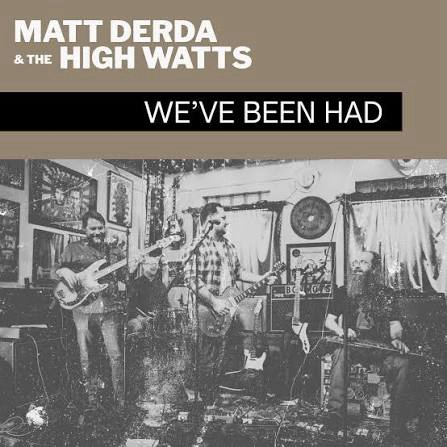
And now comes Matt Derda and The High Watts, stumbling gloriously into that sacred Midwestern wreckage with a cover that understands the central truth of the song: this is not music for winners. This is music for survivors.
A lot of bands cover Uncle Tupelo like they are handling a museum artifact. They treat the song with reverence, polish it up, preserve it in climate control. That is exactly the wrong instinct. Uncle Tupelo never sounded preserved. They sounded like they were coming apart at the seams in real time. The original version carried the exhausted genius of Jay Farrar and Jeff Tweedy trying to invent an entirely new American language out of punk rock, Woody Guthrie, and recession-era despair.
Matt Derda and The High Watts wisely avoid trying to “improve” any of that. Instead, they lean into the bruised humanity of the track. The guitars ring with the kind of weathered sincerity that modern Americana often tries to imitate but rarely earns. There is no pure algorithmic precision here, no sterile Nashville overproduction with twenty-seven tracks of digitally perfected authenticity. The song breathes. It sways slightly. It feels inhabited.
Most importantly, Derda sings like somebody who has actually lost things.
That matters.
Too much contemporary roots music is performed by people who seem like they discovered hardship through expensive vinyl reissues and prestige television dramas about coal miners. But this performance carries the emotional fatigue the song demands. His voice does not chase grandeur. It settles into resignation. And resignation, in a song like this, becomes its own strange kind of wisdom.
The beauty of “We’ve Been Had” has always been its refusal to explode. Lesser bands would turn this into an end of the show over-the-top cathartic anthem, all crashing drums and emotional release. Uncle Tupelo knew better. Real disappointment rarely arrives with fireworks. Usually it arrives quietly, in bills stacked on counters, relationships going cold, and the realization that adulthood is mostly a long negotiation with compromise.
This is not to say that the original does not rock and hit hard, it does. The song is not an anthem, it is a sonic recognition that you can feel the bad times and curse into the headwinds.
Matt Derda and The High Watts understand depth and restraint. Their version simmers rather than detonates. The arrangement leaves space for silence and ache. That takes confidence. In the streaming era, where every song is engineered to grab attention within eleven seconds before listeners drift away to TikTok videos of raccoons stealing donuts, restraint can feel almost radical.
And maybe that is why this cover works so well right now.
Because we are once again living in an America that feels profoundly exhausted. The economic anxieties, the cultural fragmentation, the sense that ordinary people are forever getting conned by institutions, corporations, politics, and sometimes by their own dreams — all of it hums beneath this song like electrical interference. “We’ve Been Had” remains painfully current because America remains painfully current.
That was always the secret engine beneath Anodyne. Released just before Uncle Tupelo imploded, the album sounded like a band realizing both the promise and failure of the American project simultaneously. Alt-country would later become a genre industry unto itself — beard oil, boutique guitars, curated authenticity for upscale audiences — but Uncle Tupelo came from somewhere real. Their music had dirt under its fingernails.
Matt Derda and The High Watts reconnect the song to that lineage. Their cover does not feel nostalgic. It feels lived in. There is an enormous difference.
And that may be the highest compliment possible for a song like this. Because “We’ve Been Had” was never supposed to make you feel good. It was supposed to make you feel less alone.
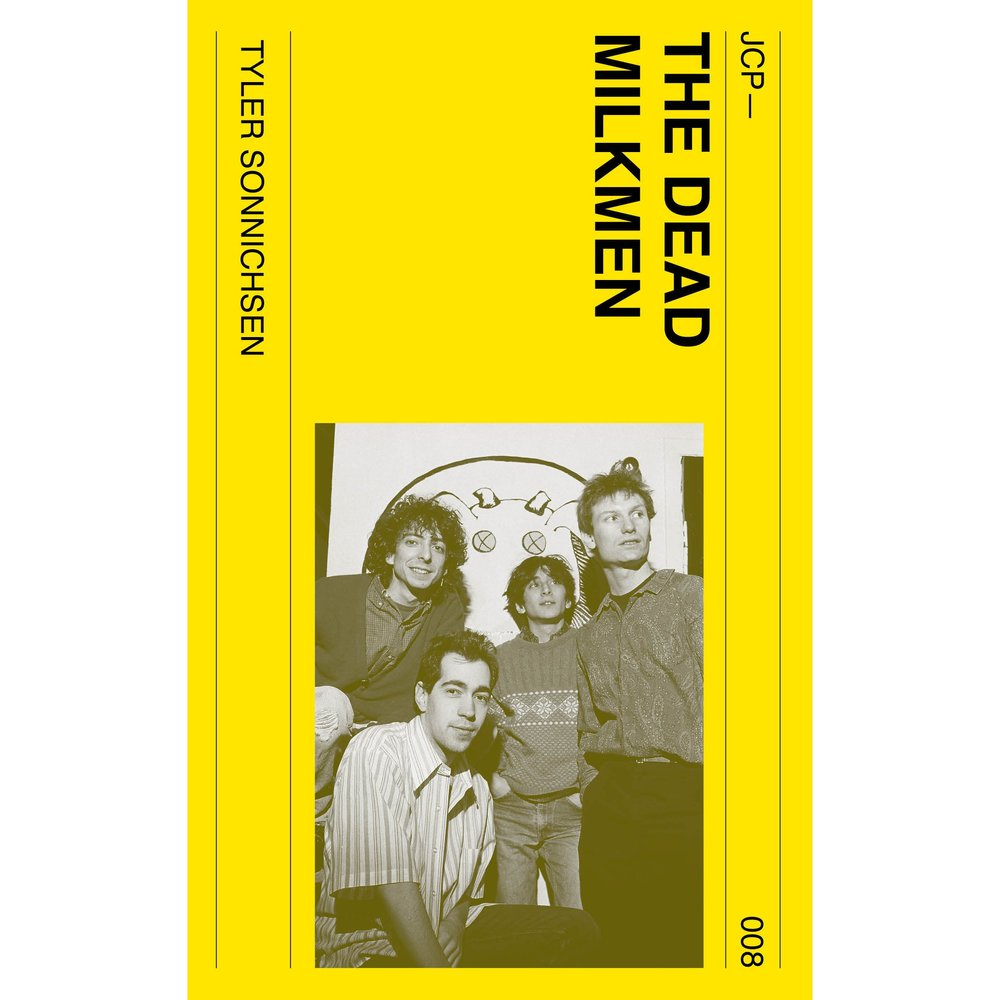
Sitting down to talk with Tyler Sonnichsen—author of Capitals of Punk (2020) and a scholar whose work bridges music, place, and cultural memory—quickly made clear that his new book on The Dead Milkmen isn’t just a nostalgia project. Instead, it reflects his “sonic geography” approach, using interviews, archival research, and deep scene knowledge to document a band that has quietly—and stubbornly—remained part of punk and alternative music culture for more than four decades.
Speaking from Vermont, where he teaches geography, Sonnichsen comes across as both grounded and aspirational, equally committed to his students, his scholarship, and punk music. The story of The Dead Milkmen, like his academic work more broadly, resists easy categorization, and his writing—also featured at SonicGeography.com—captures complexity with curiosity, humor, and a genuine love of the cultures he studies.
For Sonnichsen, the appeal of the Dead Milkmen began with that very contradiction. They are unmistakably a punk band, yet they do not sound like what many listeners expect punk to sound like. Their music often features minimal distortion, playful arrangements, and a strong dose of satire. At the same time, their lyrics tackle serious subjects—politics, culture, environmental issues, and the everyday frustrations of working-class life.
“They defy easy categorization,” Sonnichsen explained, noting that the band has been influential without fitting neatly into any one musical box. That paradox helped draw him into the project. His own background in amateur comedy also shaped his appreciation for the group’s irreverent style. The Dead Milkmen have always treated humor as a central element of their art, not a distraction from it.
That sense of humor, Sonnichsen emphasized, is deeply rooted in the history of punk itself. Early bands like the Ramones and the Dictators were often funny, even absurd, yet that aspect of punk culture has sometimes been overlooked in later retellings. The Dead Milkmen carried that tradition forward, blending satire with social commentary in ways that made their music both accessible and subversive.
When asked to explain who the band is, Sonnichsen immediately acknowledged the difficulty of capturing them in a single sentence.
“The Dead Milkmen are about as classic of an example of something that’s very difficult to boil down to a simple statement. They’re a punk band from Philadelphia, but they don’t really sound like much of what people consider stereotypical punk.”
That tension—between expectation and reality—runs throughout the band’s history. They are radical and satirical at the same time, working-class in orientation yet shaped by diverse personal backgrounds. As Sonnichsen explained, they represent the city of Philadelphia while also reflecting suburban and rural influences from their individual upbringings.
In short, they are complicated in the best possible way: a band whose deep catalog fits the streaming era, whose satire still lands in a polarized political climate, and whose fanbase has matured alongside them rather than simply moving on.
Humor, Seriousness, and the Spirit of Punk
One of the most striking themes that emerged in our conversation was the role of humor in punk music. While some listeners associate punk with anger and aggression, Sonnichsen emphasized that humor has always been part of the genre’s DNA. Bands like the Ramones and the Dictators, he noted, were often intentionally funny—even absurd. “Punk is funny,” he said. “The Ramones and the Dictators were very funny… early hardcore bands were very funny people.”
That insight helps explain the enduring appeal of the Dead Milkmen. Their songs often tackle serious political and cultural issues, but they do so with wit and accessibility. Rather than preaching or lecturing, they invite listeners to laugh while thinking critically about the world around them.
During the conversation, I reflected on this unusual combination of seriousness and humor—how the band can address heavy topics while still sounding approachable and relatable. Their music, I suggested, feels like a conversation with everyday people rather than a performance from distant rock stars.
Sonnichsen agreed, emphasizing that this accessibility is central to the band’s identity.
“You can email any of the members of the band. They’re not hidden behind PR agents… they’re all very accessible and usually very interested in talking to people.”
That openness stands in sharp contrast to the carefully managed public images of many musicians. It also reflects the band’s roots in a do-it-yourself ethos that values connection over celebrity.
More Than a ‘One-Hit Wonder’
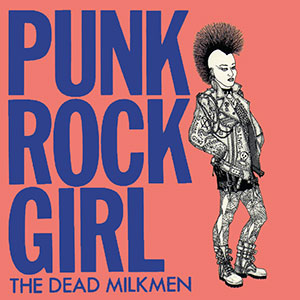
Many listeners first encountered the band through their 1989 hit song Punk Rock Girl, a track that remains a staple of alternative radio and college playlists. But Sonnichsen is quick to point out that reducing the band to a single song misses the larger story. “They’re not a one-hit wonder. That’s another thing about the Dead Milkmen that needs to be understood,” he said plainly. “They’ve been making music consistently for more than forty years, and their catalog is much deeper than people realize.”
Indeed, the band’s catalog spans decades and includes songs addressing topics ranging from environmental degradation to social inequality. Their work often blends satire with political commentary, creating music that is both entertaining and intellectually engaging.
Songs like Watching Scotty Die—which Sonnichsen jokingly described as a “three-credit course in environmental justice”—demonstrate the band’s ability to tackle serious issues through humor and storytelling. Other tracks, such as Two Feet Off the Ground and The Woman Who Was Also a Mongoose, showcase their creative range during their early years, while more recent releases continue to explore contemporary political themes.
One of the band’s newer songs, Grandpa’s Not a Racist (He Just Voted for One), illustrates how their satire remains relevant in today’s political climate. The title alone captures the band’s knack for confronting uncomfortable truths with sharp wit and disarming humor.
Sonnichsen described their sound as intentionally unconventional: “There’s a very confrontational element to their music that kind of takes the piss out of anyone who dares take themselves too seriously.”
That irreverence is not accidental. It is a deliberate strategy—one that allows the band to challenge authority and question social norms without losing their sense of humor.
Democracy as a Band Philosophy
One of the most distinctive aspects of the Dead Milkmen, according to Sonnichsen, is their internal structure. From the beginning, all songwriting and artwork have been credited collectively as “by the Dead Milkmen.” That decision was not accidental—it was a deliberate attempt to avoid the ego-driven dynamics that often plague rock bands.
The group’s creative process is fundamentally democratic. Everyone contributes music, lyrics, and ideas, and the band shares both the credit and the responsibility for the final product.
In many ways, this collaborative ethos reflects the core values of punk itself: independence, equality, and resistance to hierarchy. That philosophy also shaped the band’s decisions during critical moments in their career. When reunion offers surfaced after their breakup in the mid-1990s, the band refused to move forward unless every original member could participate. Replacing a member was never considered an option.
Their eventual reunion in the late 2000s came with clear conditions: they would continue only if they were making new music and genuinely enjoying the process. The goal was not to relive the past but to create something meaningful in the present.
Ironically, the band has now been reunited longer than they were active during their original run.
The DIY Ethos and the Changing Music Industry
Another recurring theme in our discussion was the band’s relationship with the music industry. Like many punk groups, the Dead Milkmen built their career through independent networks before briefly entering the world of major labels. The Dead Milkmen’s history reflects the changing realities of the music industry. In their early years, they operated at a relentless pace—touring constantly and releasing new albums at a rate comparable to major acts like R.E.M. That schedule eventually became unsustainable, contributing to the band’s breakup in 1994.
Their experiences with record labels were equally revealing. After early success with independent labels, they signed with Hollywood Records, expecting greater visibility and support. Instead, they found themselves largely ignored as the label focused its resources on blockbuster projects. “Hollywood Records did not promote them at all,” Sonnichsen explained. “They were focusing on Queen and selling the Beauty and the Beast soundtrack at that point.”
That experience reinforced the band’s commitment to independence. When the band reunited years later, they returned to their roots as a self-directed, DIY group—making music on their own terms rather than chasing commercial success. The lesson, Sonnichsen suggested, was both frustrating and liberating. Today, they operate comfortably outside the traditional major-label system.
“They’re content to never deal with major labels again,” he noted.
The Challenge of Telling a 42-Year Story
Writing the book itself presented a unique set of challenges. Unlike many bands that have been extensively documented, the Dead Milkmen lacked a centralized archive. Their history was scattered across decades of recordings, newsletters, photographs, and memorabilia.
Drummer Dean Sabatino eventually became the band’s unofficial archivist, largely because he had the stable housing necessary to store boxes of materials. Even so, Sonnichsen estimates that he was able to examine only a fraction of the available collection.
“All of them still have day jobs,” he explained. “So there isn’t a full-time archivist organizing everything.”
That reality made the research process both complicated and rewarding. It also reinforced one of the central themes of the book: the Dead Milkmen are not relics of the past. They are working musicians who continue to balance creative projects with everyday responsibilities.
Keeping It Fun (or Not Doing It at All)
Perhaps the most revealing insight from the interview concerned how the band members themselves understand their collective identity. After decades of performing, recording, and navigating industry changes, their priorities remain surprisingly simple.
“One of their pillars… is making sure that it’s always fun, and it’s always moving forward.”
That philosophy helps explain why the band has endured for so long. When they reunited in 2009, they set clear conditions for continuing: they would only stay together if they were enjoying the process and creating new music.
The result has been remarkable longevity. In fact, the band has now been reunited longer than they were active during their original run.
Sonnichsen captured this spirit with a quote from former bassist Dave Blood, who once described the band’s mission in straightforward terms:
“We’re very devoted to being part of something that makes a whole bunch of people very happy.”
In an industry often defined by competition and ego, that simple goal feels refreshingly human.
Vindication for the Fans
At its core, Sonnichsen’s book is as much about the fans as it is about the band. For years, loyal listeners defended the Dead Milkmen against critics who dismissed them as novelty performers or one-hit wonders. The book, he explained, is intended to validate those fans and recognize the band’s lasting cultural significance.
“I’d like the book to serve as a vindication to longtime fans… that they were correct in defending this band.”
He also hopes the book will change how people talk about the group. Too often, he noted, conversations about the Dead Milkmen occur in the past tense—as if the band belongs to a bygone era. In reality, they remain active, recording new music and performing for audiences that now span multiple generations.
In reality, they remain active, creative, and relevant. That longevity, Sonnichsen suggested, may be the band’s most meaningful achievement. In an industry often obsessed with chart positions and awards, the ability to maintain a dedicated fan base over decades is a powerful form of success.
“It’s a story that doesn’t really have an ending,” he said. “They’re just doing things on their terms.”
Still Here, Still Funny, Still Punk
As our conversation unfolded, it became clear that the Dead Milkmen’s enduring appeal lies in their balance of humor and seriousness. Their songs are funny, but the laughter often carries a deeper message. They challenge listeners to think critically about politics, culture, and society—while still enjoying the music. The Dead Milkmen’s longevity is rooted not in fame or commercial success, but in authenticity. They continue to make music because they enjoy it, they value their audience, and they believe in the creative freedom that defines punk culture.
That combination feels especially relevant now because the same concerns that animated the band in the 1980s remain urgent today: economic inequality, environmental degradation, and political polarization.
In that sense, the Dead Milkmen have not simply survived the passage of time. They have remained culturally relevant, continuing to reflect and critique the world around them.
Their songs may be funny, but the topics and issues—and the commitment—behind them are serious. And perhaps that is the ultimate takeaway from Sonnichsen’s work: punk music does not have to be loud, angry, or confrontational all of the time to be powerful. Sometimes it can be funny, thoughtful, and quietly subversive—all at the same time.
And after more than forty years, that balance of humor, accessibility, and independence remains one of The Dead Milkmen’s greatest strengths.
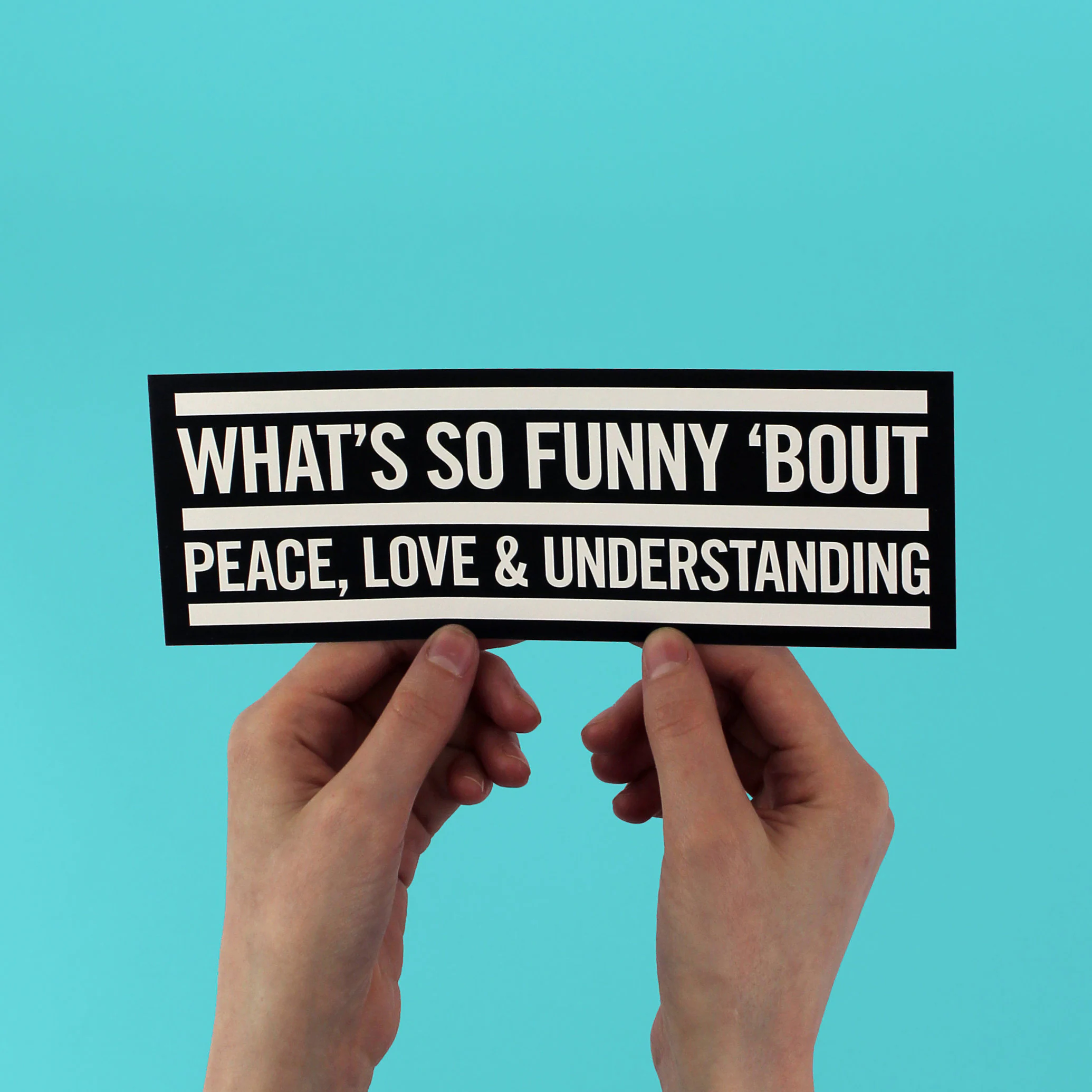
In 1974, Nick Lowe wrote a song that asks a question so earnest it borders on naïve: (What’s so funny ’bout) peace, love, and understanding? Lowe recorded the song with his band, Brinsley Schwarz, on their album The New Favourites of… Brinsley Schwarz.
When Elvis Costello later recorded it in 1978—with Lowe as producer—he “donated” it as a B-side secret cover to his producer’s A-side single. The song then became so popular that it was included on Costello’s next album in America, added as the final track to the US version of Costello’s 1979 album Armed Forces, replacing the song “Sunday’s Best”.
In Costello’s version the question took on a sharper edge. Sung with urgency and a trace of frustration, it sounded less like a slogan and more like a plea shouted into the wind.
Half a century later, the song still circulates, but its emotional register has shifted. What once sounded idealistic now risks being heard as faintly ridiculous. Peace, love, and understanding? In this economy?
The song’s humor was always there. Lowe didn’t write an anthem so much as a rhetorical shrug. The narrator isn’t triumphantly declaring belief in human goodness; the narrator sounds confused, even wounded. Someone trying to connect in a world that seems determined to misunderstand them. The repeated question—what’s so funny…?—suggests that someone, somewhere, is laughing. The joke, apparently, is on anyone who thinks empathy might still matter.
In the 1970s, this skepticism made sense. The optimism of the 1960s had curdled. Vietnam dragged on, Watergate unfolded, and rock music itself was getting louder, angrier, and more ironic by the minute. Punk was around the corner, sharpening its knives. Against that backdrop, asking for “peace and love” could sound hopelessly retro, like showing up to a street fight armed with a daisy.
But Lowe’s song never fully abandons the daisy. Instead, it holds it out stubbornly, as if daring the listener to swat it away. The narrator wants connection. They want understanding. A real need, a desperate urgency for someone—anyone—to meet them halfway. The joke, if there is one, is that these desires are treated as unserious, even embarrassing.
Fast forward to the Trump era, and the song begins to sound less like irony and more like anthropology. We now live in a political culture where empathy is routinely framed as dangerous, compassion is dismissed as weakness, and kindness is treated with deep suspicion. Caring too much is naïve; caring at all is often portrayed as manipulative. Understanding others is rebranded as “coddling.” Peace is for suckers. Love is sentimental nonsense. And understanding—well, that sounds like something an elite would do.
In this context, Lowe’s question lands differently. What’s so funny about peace, love, and understanding? The answer, it turns out, is that they violate the prevailing norms of performative toughness, constructed morality whose point is to judge others. Lowe’s lyrics plead to slow things down, to stop and look around you. They complicate simple stories about winners and losers. They ask us to imagine other people as human beings rather than as enemies, caricatures, or content.
The song’s narrator is lonely, but not in the grand, romantic sense. They’re lonely in a mundane, social way. They want to talk. They want to be heard. They wants to be understood without having to shout or sneer. This is not the loneliness of heroic alienation; it’s the loneliness of someone living in a world that has lost patience with vulnerability.
That loneliness feels oddly familiar today. Contemporary political discourse often rewards outrage over curiosity and certainty over reflection. Admitting uncertainty—or worse, seeking understanding—can be treated as a sign of weakness. In that environment, Lowe’s song sounds almost transgressive. It insists that connection is not only desirable but necessary, even if it makes you look foolish.
There’s also something delightfully inconvenient about the song’s moral framework. It doesn’t divide the world neatly into good people and bad people. Instead, it suggests that everyone is confused, defensive, and afraid—and that the solution is not domination but mutual recognition, mutual aid. This is not a message that lends itself easily to rally chants or cable news panels.
Perhaps that’s why the song feels so quaint now. Its moral universe assumes that understanding is possible and worth pursuing. It assumes that people might actually change if they felt heard. These are dangerous assumptions in a political culture built on permanent grievance and perpetual conflict.
And yet, the song persists. It keeps being covered, replayed, and rediscovered. It resists. Maybe that’s because its central question refuses to age out. Every era has its reasons for mocking peace, love, and understanding. Every era has its own version of the sneer. The song doesn’t argue back so much as it asks us to notice the sneer and sit with it uncomfortably.
In that sense, the song’s humor is less about punchlines than about exposure. It reveals how strange it is that basic human values need defending at all. Why is kindness funny? Why does empathy provoke eye-rolling? Why does understanding feel like a liability?
The joke, Lowe seems to suggest, isn’t on peace and love. It’s on a society that finds them laughable.
So maybe the song’s endurance isn’t ironic after all. Maybe it survives because, in moments when cruelty becomes fashionable and indifference is rebranded as realism, someone needs to keep asking the unfashionable question. Calmly. Repeatedly. Almost politely.
What’s so funny about peace, love, and understanding?
The unsettling answer, then and now, is not that they are absurd—but that we’ve worked very hard to pretend they are, so maybe… just maybe we can work to make them real.
Tamar Berk is one of those rare musical talents who not only pour raw emotion into her songs but also writes, records, and produces them herself — forging a sound world that’s intensely personal, lo-fi‑grounded, and vivid. On her new 2025 album ocd, she delivers what many consider her most ambitious and emotionally immersive work yet: a reverb-soaked journey into looping thoughts, obsessions, and the restless inner life.
Raised on classical piano and early Disney soundtracks, Berk eventually gravitated toward influences like The Beatles, David Bowie, Liz Phair, and Elliott Smith — a mix that shaped her instinct for melody, emotional catharsis, and lyrical truth. What she makes now, though, is something singular: indie rock and dream‑pop fused with DIY grit, emotional honesty, and the courage to bare her inner world.
In what follows, I want to explore Tamar Berk’s strengths as a musician — her multi-instrumentalism, her knack for mood and texture — and how on ocd she channels overthinking, vulnerability, and occasional panic into songs that feel like listening to someone thinking aloud.
Multi‑layered musician: instruments, production & power of solo control
One of the most striking aspects of Tamar Berk’s work is how much of it she controls herself. On ocd, she handles not only vocals and songwriting but also guitars, piano, synths, Wurlitzer, organ, bass, strings, programming, percussion — often layering sounds to produce something both intimate and richly textured.
That DIY ethos gives her music a special honesty. Because she’s involved in nearly every aspect, nothing feels over-polished or disingenuous — the distortions, reverb, and ambient murkiness all serve the truth of her emotional landscape. The result: a sound that lingers, unsettles, and stays with you.
In musical terms, that means ocd isn’t strictly an indie‑pop or alt‑rock album. It’s more like a fever dream — alternately noisy and delicate, sometimes urgent, sometimes hazy. The instrumentation shifts fluidly: thick, fuzzy guitars and sparse, somber piano; ghostly synths and grounded bass; literal sonic loops echoing the mental loops the lyrics describe.
At times, Berk leans into distortion and echo to evoke disorientation; at others, she strips things down to nothing but light keys, soft vocals, and a sense of fragile introspection. That dynamic — the back‑and‑forth between chaos and calm — is exactly what gives ocd its power.
Lyrical honesty: overthinking, mental spirals, and the beauty inside the mess
If the music gives you the frame, the lyrics are the beating heart of ocd. This is an album that wears its anxieties on its sleeve — about obsession, memory, identity, self-doubt, longing, and the loops of anxiety and overthinking. As Berk puts it, she called the album ocd because she “lives in loops. I overthink everything. But this record helped me make a little bit of beautiful sense out of that.”
The lead single ‘Stay Close By’ sets the tone for the album: dreamy guitars and soft vocals weave around lyrics of indecision, longing, and inertia — “I don’t know why I can’t reply on time, or can’t make up my mind,” she sings. The result feels like a confession whispered in a quiet room: vulnerable, real, and ache-filled.
But not all of ocd wallows plaintively. The title track ocd itself confronts mental spirals head‑on, repeating lines like “I got OCD … over and over and over,” rendering the relentlessness of intrusive thoughts in musical form: looping, dizzying, claustrophobic.
Elsewhere, Berk’s songwriting explores memory, regret, longing, and desire for escape — or at least some kind of emotional catharsis. The songs move between bleak introspection and moments of fragile hope, capturing that tension many of us live with: the part that fears and ruminates, and the part that still wants connection, meaning, or release. As one summary puts it, ocd “invites listeners into her inner thoughts” — messy, complicated, yet somehow familiar and human.
A sonic and emotional arc: ocd as a map of inner turbulence
What makes ocd compelling — and perhaps unique in the indie scene this year — is how well its musical and lyrical elements align to create an overall arc: it feels less like a collection of songs and more like a single, immersive experience. Berk seems to want to draw listeners into her mind, step by step, track by track.
The album shifts between dream‑pop haze and rock‑tinged fervor, between introspective hush and emotional outburst. That dynamic — of contrast and layering — mirrors the experience of anxiety, overthinking, and identity searching. On one track you might be floating in soft guitars and wistful melodies; on the next you’re confronting distortion, repetition, and confessional urgency.
That tonal range reflects the alternation many of us know well: memory and regret, hope and despair, the attempt to control thoughts and the surrender when it becomes too much. In that sense, ocd isn’t just music — it’s a kind of emotional landscape, felt in sound as much as in words.
Importantly, Berk doesn’t pretend to provide tidy resolutions. Her voice doesn’t promise that overthinking will end, or that clarity will come. Instead, she offers catharsis, empathy, and solidarity — a map for all the tangled thoughts, the dark nights, the loops. It’s messy. It’s real. But it’s shared.
Why ocd matters as growth
For longtime followers of Tamar Berk, ocd may feel familiar in some ways: there are still fuzzy guitars, melodic hooks, and a DIY spirit. But this album marks a new level of ambition and vulnerability. As one review noted, this is her “most personal and intense work yet.”
Her growth is obvious — not just as a songwriter, but as a producer and composer. The fact that she plays multiple instruments, layers them herself, and co-produces the record gives ocd a cohesiveness and authenticity that few albums achieve. The emotional weight doesn’t come across as polished or packaged — it feels lived, raw, and human.
Moreover, at a time when mental health, overthinking, and the pressures of modern life feel increasingly pervasive, ocd offers something rare: a mirror that’s honest but compassionate. It doesn’t romanticize anxiety; it doesn’t idealize healing. It simply says: this is what it feels like. And maybe that’s enough — maybe that kind of honesty is exactly what art should do.
In that sense, Tamar Berk isn’t just writing songs — she’s doing what few musicians do: giving voice to inner chaos, shaping it into melody and texture, and inviting you to sit with it all. ocd isn’t easy listening. It’s hard, sometimes disquieting. But it’s real. And in its messy honesty lies its power.
Final thoughts: Tamar Berk as a voice for the over‑thinkers, the dreamers, the stranded
There’s a long tradition in music of turning pain into beauty, chaos into catharsis — but few artists do it with as much rawness, intimacy, and creative control as Tamar Berk. On ocd, she doesn’t just invite you in: she opens the door, hands you something fragile, and says, “this is what it feels like.”
That willingness to expose uncertainty, loops of thought, doubt — is an act of bravery. And as a listener, you’re not just a spectator: you become a companion in the spirals. Maybe you don’t walk out with answers. But you walk out with somewhere to begin.
If you’ve ever felt your thoughts spin too fast, if you’ve ever felt stuck in loops of regret or longing — ocd is for you. And even if you haven’t, this record might just show you what you never knew you could feel so deeply: the strange beauty of overthinking — and the power of turning it into art.
Give it a listen. Turn the lights down. And let Tamar Berk lead you through the loops.
Wussy is one of those bands that everyone should know. They are an ongoing musical effort for over two decades with a deep catalog. The band’s lyrics — courtesy of Chuck Cleaver and Lisa Walker — are inescapable without being cloying or false, and the band’s observations are relatable, accurate, frighteningly honest, and perhaps more than a little sad. Yet, the dark lyrics hold a unique power to connect deeply with listeners, offering catharsis and shared understanding. They articulate complex emotions like heartbreak, grief, failure no matter what we do, the creeping realization of loss, or loneliness in ways that often resonate universally. We all have felt this way. We have all had to pick ourselves up and pack it up and continue.
This band does not ‘talk down’ or excuse the all too often unbearable. This shared complexity alongside relatability can provide solace, reminding us that struggles and loss are part of a broader human experience. Artists like Leonard Cohen, Nick Drake, XTC, and Wussy use poignant imagery and evocative language to turn personal pain into something captivatingly beautiful and communal. Research in psychology suggests that sad music, especially lyrics, can paradoxically uplift by helping listeners process emotions, offering empathy and a sense of emotional release.
Wussy’s music thrives on atmosphere and contrasts: jangly, distorted guitars and bending pedal steel coexist with heartfelt melodies, while lyrical introspection is paired with propulsive energy. The driving drums and bass arrangements further cement the band’s gravitational pull. This mix defines their aesthetic, often drawing comparisons to The Pixies, Sonic Youth, and Yo La Tengo for their dynamic range.
The band’s dual-vocal approach, featuring Chuck Cleaver and Lisa Walker, adds an emotionally layered dimension to their sound. Their harmonies weave between tenderness and grit, reflecting the tension and warmth present in their lyrics. Themes of heartache, resilience, and the mundane beauty of everyday life emerge vividly, often set against rich, guitar-driven arrangements. Wussy’s sonic identity also incorporates regional pride, as clearly evident in their references to Cincinnati and the Midwest. Critics frequently praise their ability to turn intimate, local stories into universal experiences. Their use of reverb-heavy production and jangling guitar textures evoke both nostalgic warmth and emotional depth, earning them cult status among fans and critics alike. This unique fusion of raw emotion, lyrical storytelling, and sonic experimentation cements Wussy as one of the most compelling voices in contemporary music. Their music is deeply personal yet profoundly accessible, it reminds us that we are not alone.
I consider Wussy an iconic band. Not because of a pose or prophetic statements. Their swirl and sway of instruments and voices are completely unique. No one sounds like them. Wussy, may be labeled an indie rock band from Cincinnati, Ohio, but that does not fully capture what they do. The band has returned with a highly anticipated album titled Cincinnati, Ohio (released on Friday, November 15, 2024) and we are all better for it. This record marks their first full-length album in six years and their first since the passing of guitarist and co-founder John Erhardt (who had been in The Ass Ponys with Cleaver) in 2020. Known for blending honest heartfelt storytelling with robust, guitar-driven sounds, Wussy’s latest work reflects a nuanced exploration of loss, resilience, and their enduring love for their hometown.
The new record, released through hometown label and actual record store, Shake It Records, features ten tracks, including the singles “The Great Divide,” “Sure as The Sun,” and “Inhaler.” The band’s characteristic mix of Americana, Post-Punk, lo-fi noise pop, and introspective lyrics remains central to their sound. Tracks like “The Great Divide” showcase their ability to layer droning, propulsive rhythms with deeply evocative storytelling, capturing the emotional intensity fans have come to expect from Wussy’s catalog. These songs signify a period of renewal and creativity after a period of reflection during their hiatus. Many fans are excited about the release of these songs having heard acoustic versions of several of them during live streams during the lockdown of the Covid Pandemic.
The album draws from personal experiences and the band’s shared history in Cincinnati, a city they frequently reference in their music and where they live. Themes of identity, community, and memory are woven throughout the record, with a tone that both mourns and celebrates. This duality underscores the resilience of a band that has endured significant changes while staying true to its artistic roots. The band members do not pretend or play false flag arguments about their ties to their hometown. The ties that bind here are part of the band’s identity.
Wussy also released two accompanying EPs, The Great Divide and Cellar Door, further showcasing their ability to experiment with sound and storytelling. This multi-release strategy highlights their dedication to producing layered and diverse music for their audience. And Wussy fans are happy for these releases.
The band is known — and rightly celebrated — for its DIY ethos and deeply collaborative nature. Since their formation in 2001, Wussy has been widely praised for their raw authenticity and ability to merge genres seamlessly. Cincinnati, Ohio continues this tradition while evolving their sound to address both personal and universal themes, making it a compelling addition to the discography.
You can explore the album further, and I recommend that you do so! Or better yet purchase it through Shake It Records or Bandcamp. For more insights into the band and their new music, check out their official site or the well-deserved recent press coverage.
More Than Chance: Review of Maps and Legends: The Story of R.E.M. by John Hunter
A good book on music becomes impossible to put down. The prose is compelling not just in the sense of wanting to finish a reading task, but with a sense of learning new facts or seeing a band from a different perspective. We used to call that a ‘page-turner’ – the reader could not stop. You know that you are reading a great book when you can feel the music, hear the music while reading. This book is just such an experience. I was so moved by the book that I sought out the author for an interview which will be shared here soon.
Maps and Legends: The Story of R.E.M. offers a captivating exploration of one of the most influential bands in alternative rock history. Written by John Hunter, the book deftly chronicles R.E.M.’s journey from their humble beginnings in Athens, Georgia, to international superstardom. Hunter brings rich depth from a fan’s perspective but shows the band’s warts and all for the reader without engaging in hero worship or gossip.
Far too often, books about successful rock bands are written in fait accompli style where the success of the project is assumed. That is not the case with Maps and Legends. Part of the reason for the success of R.E.M. is a series of lucky breaks that the band can capitalize on and does so with enthusiasm. Beyond blind luck, the band can capitalize on several situations that make the path possible. For example, the relationship between Bill Berry and Ian Copeland who formed Frontier Booking International (FBI) due to Berry’s internship when he was younger allows R.E.M. access as an opening band to several major opportunities to advance their career. Copeland’s brother’s ownership of IRS Records certainly gave the band a significant opportunity to have their music more widely distributed. However, the story of the band is not a series of unexpected chance moments or simply social networking, the work ethic and nearly herculean effort of the collective members played a role as well. Yet even with these opportunities the members as individuals and the band as a collective struggle with the transition from indie status to something larger to eventual international status. Hunter provides the facts so that the reader can see that in some ways the success was not foretold, it was not automatic.
(Photo used by courtesy of John Hunter)
Hunter provides a thorough account of the band’s evolution, analyzing their unique sound and lyrical depth, which set them apart from their contemporaries. The gradual growth of Peter Buck’s guitar work is especially well explained. Buck’s efforts to avoid music theory and play based on feel and intuition allow sonic choices that set the band apart from their contemporaries.
The narrative is rich with anecdotes, past interviews, and insights that highlight the band’s origins, development, creative process, personal dynamics, and the musical landscape they navigated. Hunter’s attention to the biographic detail of the four individuals who collectively gave life to the band brings into stark relief how the band began. To date, few books have explored Michael Stipe’s early musical career before co-forming R.E.M. Throughout this book key moments in R.E.M.’s career, including the release of landmark albums like Murmur, Reckoning, Document, Life’s Rich Pageant, Out of Time, and Automatic for the People are detailed engagingly and directly. The reasons that the albums sound the way that they do are answered.
One of the book’s strengths is its balance between personal stories and broader cultural commentary. Hunter situates R.E.M. within the context of a changing music industry, exploring their impact on the rise of indie and alternative rock. He captures the essence of their appeal: a blend of introspective lyrics, innovative sounds, and a commitment to making music. Hunter is deftly able to show how the words and music change across the early, mid, and late periods of the band without sounding trite or apologetic.
While the book is comprehensive, it also invites readers to reflect on the emotional resonance of R.E.M.’s music, making it a compelling read for both longtime fans and newcomers. Hunter’s engaging writing style and deep understanding of the band make Maps and Legends not just a good biography, but a celebration of a musical legacy that continues to inspire. Overall, it’s a must-read for anyone looking to understand the profound influence R.E.M. has had on music and popular culture.
Van Plating, the enigmatic musical virtuoso, has taken us on yet another mesmerizing journey through the polychromatic landscapes of her fertile musical imagination with her latest record, “Orange Blossom Child.” In this auditory odyssey — her third full-length album — Van Plating weaves together elements of Americana, bluegrass, folk, country, and rock music to create an album that’s nothing short of a contemporary sonic gestalt. With a nod to the spirit of experimentation and innovation that characterizes the country music troubadours, Outlaw Country, and innovators of the past (notably Tom Petty, Lucinda Williams, and Gram Parsons), Van Plating presents us with a record that sounds both nostalgic and profoundly modern; eschewing the contemporary bro-culture of country music, she has created a record that spins from introspection to controlled chaos while staying pure within a perspective that is far too rare in the country music of the charts. This is personal music made by a real, genuine person not by a committee trying to cram in all of the right words into a song to win a future promise of commerical endorsements.
Van Plating has always been a visionary artist, do yourself a favor and listen to her unbelievably captivating “The Way Down” from 2021 to hear her ability to paint a song with a hum or a vocalization. She has always been unafraid to traverse uncharted musical territories or bring together strands of sounds that when spun together capture the listener of a web of imaginative weaves of sound. She has accomplished this musical aerobatic artistry while staying true to her musical vision, and “Orange Blossom Child” is no exception. From the beginning of the album, it’s clear that Van Plating has embarked on a new sonic exploration that shows how country music can be made personal and political simultaneously. The record opens with the title track, “Orange Blossom Child,” a slow-build composition that blends drums, slinky guitar, and ethereal backing vocals, setting the stage for the sonic journey ahead. Plating’s distinctive vocals, filled with a sense of longing and wonder, guide us through this hypnotic dreamscape.
The album’s production quality is nothing short of exceptional. Every instrument and sound is meticulously crafted, and it’s evident that Van Plating and her team spared no effort in making every note count. The richness and depth of the arrangements are a testament to her dedication to her craft, as well as his commitment to delivering a listening experience that transcends the ordinary. The songs on this record defy the expected overly slick feel of contemporary country music.
One of the standout tracks on “Orange Blossom Child” is “Hole in My Chest (Big Feelings),” a sprawling acoustic and otherworldly composition that showcases Van Plating’s penchant for experimentation. Featuring Kirby Brown, the song begins with a mesmerizing guitar cadence that gradually gives way to layers of intricate vocals and haunting vocal harmonies. The result is an auditory space that feels both hauntingly beautiful and transcendental. Van Plating’s lyrics in this track delve into themes of being lost and yearning, adding an emotional depth that complements the musical intricacy.
Another highlight of the album is the track “The Heron,” which is a testament to Plating’s songwriting prowess. This song, featuring Elizabeth Cook, has a timeless quality to it, with a melody that feels like it could have been plucked from the annals of classic country music or written in the car listening to Lucinda Williams whether the road is gravel or paved. Van Plating’s storytelling ability shines through in this tune, with lyrics that invite the listener into a world of vivid imagery of place and a few moments of introspection about what we take from the places we come from and only realize later that impact was real and powerful. The song’s arrangement, featuring steel guitar, fiddle, and perfectly paired voices, creates a sense of intimacy and nostalgia that will have all of us wondering about how much of who we have become was/is a result of where we were raised.
“Orange Blossom Child” is an album that rewards deep and repeated listening. It’s a sonic tapestry that reveals new layers and nuances with each play that take elements of various genres and reassemble them. The complexity of Plating’s compositions is paired with a sense of accessibility, making it a record that can be enjoyed by both seasoned music aficionados and casual listeners alike. One can be a fan of Bluegrass and see the album as a revelation for its use of fiddle and peddle steel. Another listener could be a fan of Tom Petty and love the swing in the arrangements. An Outlaw Country fan can feel the influence of Willie Nelson, Waylon Jennings, and Jessi Colter across several tracks. The album’s diversity is evident in tracks like “The Hard Way” and “Jesus Saved Me On The Radio” which introduce a heavier, melodic electrified sound, reminiscent of the country rock of the late ’60s and ’70s with a sly nod to Gram Parsons and The Flying Burrito Brothers. Van Plating effortlessly shifts between musical styles, showcasing her versatility as an artist.
The record’s later section introduces a sense of introspection and vulnerability, with tracks like “The Sugar Plam Club” and “Zion is a Woman.” These songs offer a quieter and at the same time almost more playful side of Van Plating’s artistry. “Joel Called The Ravens” features a sway that captivates a listener with gentle vocal harmonies that lay upon the ground never forced but still inescapable, creating a hushed and meditative atmosphere. The spoken section of the song only adds to the storytelling as well as builds the music into the emotional depth of the song even further. “Joshua,” on the other hand, is a fiddle-driven ballad that showcases Van Plating’s ability to convey deep emotions through her voice and lyrics. Sometimes a whisper, a hum, a carried note convey as much as the loudest, longest yell.
As the album progresses, it becomes clear that “Orange Blossom Child” is a thematically connected album of sorts, with recurring themes and motifs that link the songs together through a reflection on place – often depictions and symbols of Florida – but many of the references could be from many different locations. Several songs explore the consequences of the choices we have made and the search for family and connections that move all of us. Often it is in the eyes of others that we truly see ourselves. The sense of a narrative arc is enhanced by Van Plating’s meticulous track sequencing, which takes the listener on a journey of self-discovery and opens the door to the possibility of self-transformation. The album’s closing track in particular, “Joshua,” ties the various threads of the record together, delivering a cathartic climax that leaves a lasting impression as the song fades around a heartfelt piece on the fiddle.
Lyrically, “Orange Blossom Child” is a poetic and personal journey about the places we feel and call home. Van Plating’s lyrical themes touch on universal subjects such as love, time, and the human condition. Her words are imbued with a sense of profound spirituality, inviting the listener to contemplate the deeper mysteries of life. Lines like “Good girls have edges that the boys can’t break” (from the opening title track) exemplify the lyrical depth and personal subject matter found throughout the album.
In terms of musicianship, Van Plating is joined by a talented ensemble of musicians who contribute to the album’s rich and diverse sound. All of the featured musicians add to the musical stew in unexpected and exciting ways. The synergy among the musicians is palpable, creating a sense of cohesion that is vital to the album’s overall impact. The intricate guitar work, the ethereal textures on fiddle, peddle steel, and the percussion arrangements whether intricate or all flat out on fire all come together to assemble a sonic landscape that is uniquely Van Plating’s own.
“Orange Blossom Child” is a testament to the power of music to transport and transform even if the discussion is tied to home. It’s an album that invites listeners to immerse themselves in its otherworldly sonic tapestry and embark on a journey of self-discovery while revealing the roots of where we stand and live. Van Plating has once again proven herself to be a musical visionary, unafraid to push the boundaries of creativity and artistry. With “Orange Blossom Child,” she has gifted us an album that will surely show country musicians that a statement can be so much more than a facile sing-along looking for a corporate sponsor. The album is a classic that transcends the confines of any specific era of country music.
In a country music industry often dominated by commercialism and formulaic compositions, Van Plating’s “Orange Blossom Child” is a refreshing and ambitious work of art that reminds us of the boundless possibilities of music. It’s a record that demands to be experienced, to be savored, and to be contemplated. Listen to this album with friends because you will want to talk about it. With this album, Van Plating has solidified her place as one of the most innovative and imaginative musicians of our time, and “Orange Blossom Child” is evidence of her enduring commitment to the pursuit of musical discovery.
All too often critics lament the state of the music industry as dying, stale, boring, or pick your poison-term to describe a so-called sorry state of music. Now, in our opinion these doom and gloom predictions about the state of music say more about the overt focus on a handful of artists, labels, and entertainers rather than saying anything meaningful about music that is being made by artists. 2017 was a great year for music across genres… Well, that is if one is willing to look beyond a small list of places and names. Case in point is the West Virginian band Farnsworth with their Zachary Gabbard produced Elk City.
Released in the Fall of 2017, this record puts so many better know albums to shame. Full of real, true rock and roll that cuts straight to the heart of the matter, this record stands as one of the most exciting records of 2017. The first song “American Dream” begins with a slash of guitar that leads into a 70s Stonesy swagger that recalls the fond memory of that band in its prime. But don’t jump to conclusions. Equal parts ’60s inspiration, ’70s rock and roll along with contemporary indie mixed with a healthy dollop of psychedelia, Farnsworth has created a record that sounds fresh, energetic and utterly captivating.
The music on this eight song collection recall past music and incorporate contemporary independent music. The jangly “Erased” recalls The Byrds, The Zombies, and far too many indie bands to list here (however, do not see that as a weakness — being influenced and incorporating those influences into your own sound is a strength). We challenge you to listen to this song and not start to sway. If you have a pulse, you will tap your toes. On “Better Days” we hear a combination of influences from The Buffalo Killers, The Monkees, Cricketbows, The Hollies, Salvadore Ross, and some of the best classic psychedelia.
On subsequent listens you will notice an almost heavy Big Star influence. Notably “Hold On” evokes a harder grooving Big Star. Imagine if Alec Chilton had a more blues voice. Just consider the crossing of Big Star and The Black Keys together. And if that was not enough, the bridge on this song just grabs you and takes you on a trip through bass runs, slinky guitar, and perfect percussion. All too often drums and bass sound like they were recorded in a room down the hall, that does not happen with this record. Nothing is tiny or tinny in these songs. The drums sound deep and resonate without getting in the way of the guitar and excellent Hammond Organ. The album closes on the standout”Green Valley” which takes the listener on an extended trip through what rock and roll can deliver when played with heft.
Lyrically the album evokes challenges of relationships, friendships, and the struggles of everyday life without sounding sullen. The vocals are crisp and clear while remaining bluesy and evocative. The interplay between the simplicity of the lyrics and the emotional release through the circling guitars, bass, and organ crescendo pack a powerful punch that dramatize the lyrical imagery; and the drums consistently drive the songs.
So, the next time you notice the usual music pundits talking about the same popular bands and artists that do not speak to you — take a moment or two or three and look a little further and you will find excellent music like that made by musicians like Farnsworth.
Streaming Forward, Powered By The Past - if you love the 80s music, new music, Eurovision, cheesy pop and awesome playlists then let's get this pop party started!












 All too often critics lament the state of the music industry as dying, stale, boring, or pick your poison-term to describe a so-called sorry state of music. Now, in our opinion these doom and gloom predictions about the state of music say more about the overt focus on a handful of artists, labels, and entertainers rather than saying anything meaningful about music that is being made by artists. 2017 was a great year for music across genres… Well, that is if one is willing to look beyond a small list of places and names. Case in point is the West Virginian band
  Farnsworth
 your tuesday afternoon alternative