
Most songwriters spend their careers trying to sound profound. Matt Derda sounds like he’s trying to survive another Tuesday.
That’s not an insult. It’s the highest compliment I can think of.
Because somewhere between the barroom confession, the self-deprecating joke, the hard-earned wisdom, and the moment where the floor drops out beneath a lyric you thought was headed somewhere safe, Derda has built something increasingly rare in contemporary songwriting: songs that feel authentically lived in rather than written in service to ego or corporate overlords.
Matt Derda and The High Watts don’t announce themselves with grand statements. They don’t arrive carrying manifestos or pretending that every chorus is going to save your soul. Instead, they do something harder. They tell the truth in a language ordinary people actually use.
The first thing that strikes you about Derda’s writing is how conversational it is. Not conversational in the lazy sense that often passes for authenticity these days, but conversational in the way the best storytellers are telling the truth as they understand it from the perspective of being wrapped up in life. His songs sound like somebody sitting across from you at last call, finally deciding to admit what they’ve been avoiding all evening.
Then comes the twist.

Just when you think you’ve settled into a familiar phrase, Derda turns it sideways. A joke becomes a wound. A cliché becomes a revelation. A casual observation suddenly opens into something larger and more unsettling. His gift is not simply for cleverness, though he’s certainly clever. It’s for using cleverness as camouflage for vulnerability.
That’s a difficult balancing act. Too much wit and the listener never gets close enough to feel anything. Those songs may sound great but they never land as true. Too much confession and the song collapses under its own weight. Derda operates in the narrow space between those extremes, where humor and heartbreak become indistinguishable from one another.
The best songwriters understand that vulnerability isn’t about exposing everything. It’s about exposing the right thing in the right way at the right time. Derda seems to know this instinctively.
His songs are populated by imperfect narrators, people trying to make sense of disappointments they may have helped create. There is very little self-mythology in his work. He rarely casts himself as the hero. More often, he sounds like a participant-observer in his own life, documenting the mess while simultaneously contributing to it.
That perspective gives his lyrics a refreshing lack of certainty that is damn uncanny. Too much modern songwriting arrives prepackaged with conclusions. Every emotional conflict is resolved. Every lesson is learned. Every wound has already become wisdom. Or worse, they revel in being the problem.
Derda isn’t interested in those tidy endings. His songs frequently occupy the uncomfortable territory where most of us actually live: somewhere between understanding and confusion, hope and resignation, confidence and doubt. He trusts listeners enough to leave some questions unanswered. And thank all that is holy that he trusts an audience and treats us as intelligent if flawed human beings.
Musically, The High Watts understand a principle that should be tattooed on the forehead of every aspiring rock band: the arrangement serves the song. This sounds obvious until you realize how rarely it happens across styles and genres.
In lesser hands, strong lyrics become excuses for instrumental excess or emotional overstatement. Every feeling gets underlined three times. Every chorus is pushed toward artificial grandeur. The High Watts resist that temptation.
The arrangements feel less like decoration and more like architecture. Guitars enter when they’re needed and disappear when they’re not. Rhythms create momentum without demanding attention. Melodies carry emotional weight without becoming sentimental and falsely sweet.
Nothing feels accidental for Matt Derda and The High Watts, but nothing feels forced either. The band understands that a great lyric often needs room to breathe.
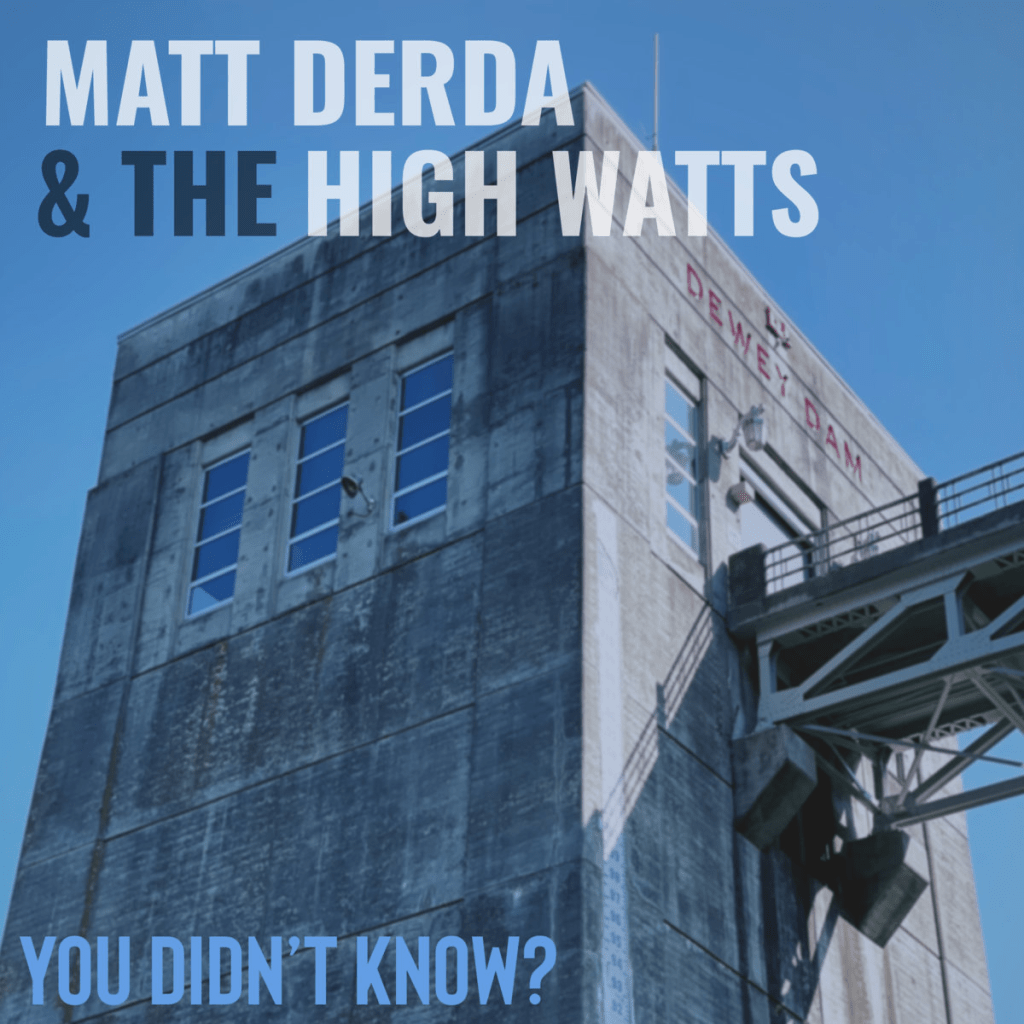
That’s where Derda’s writing flourishes. The spaces between notes become as important as the notes themselves. A well-placed guitar phrase can illuminate a line. A restrained rhythm section can make a confession land harder than any dramatic crescendo ever could.
The result is music that feels remarkably confident in its own skin. And maybe that’s what ultimately separates Matt Derda and The High Watts from so many contemporary acts. They aren’t trying to impress you. They’re trying to connect with you.
There’s a difference. A very big difference.
One approach asks listeners to admire the songwriter. The other invites listeners to recognize themselves in the song. Derda’s songs consistently choose the second path. And that is a very good choice.
They acknowledge failure without celebrating it. They embrace humor without hiding behind it. They explore vulnerability without turning it into spectacle. Most importantly, they understand that the details of ordinary lives are often where the biggest truths reside.
Rock and roll has always been at its best when it remembers that human beings are contradictory creatures—simultaneously brave and frightened, selfish and generous, ridiculous and profound.
Matt Derda writes songs for those contradictions. And The High Watts provide the electricity that makes them glow. The songs don’t shout. They don’t posture. They don’t demand attention. They earn it.
And in an era overflowing with noise based on what a corporation thinks it can sell to teenagers that may be the most radical thing a songwriter can do.


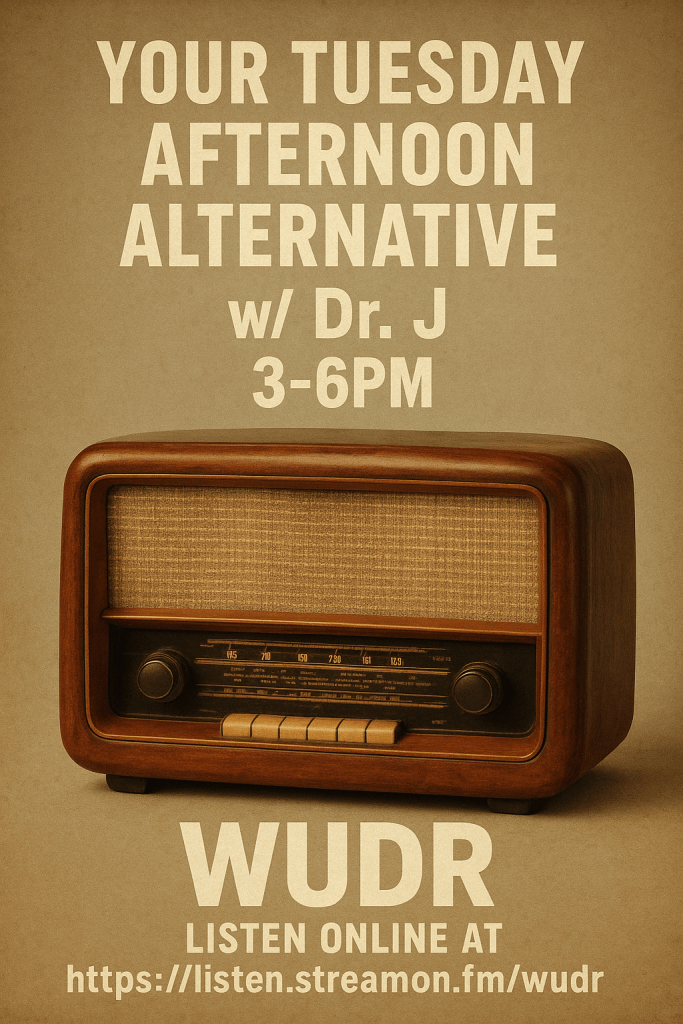
 your tuesday afternoon alternative