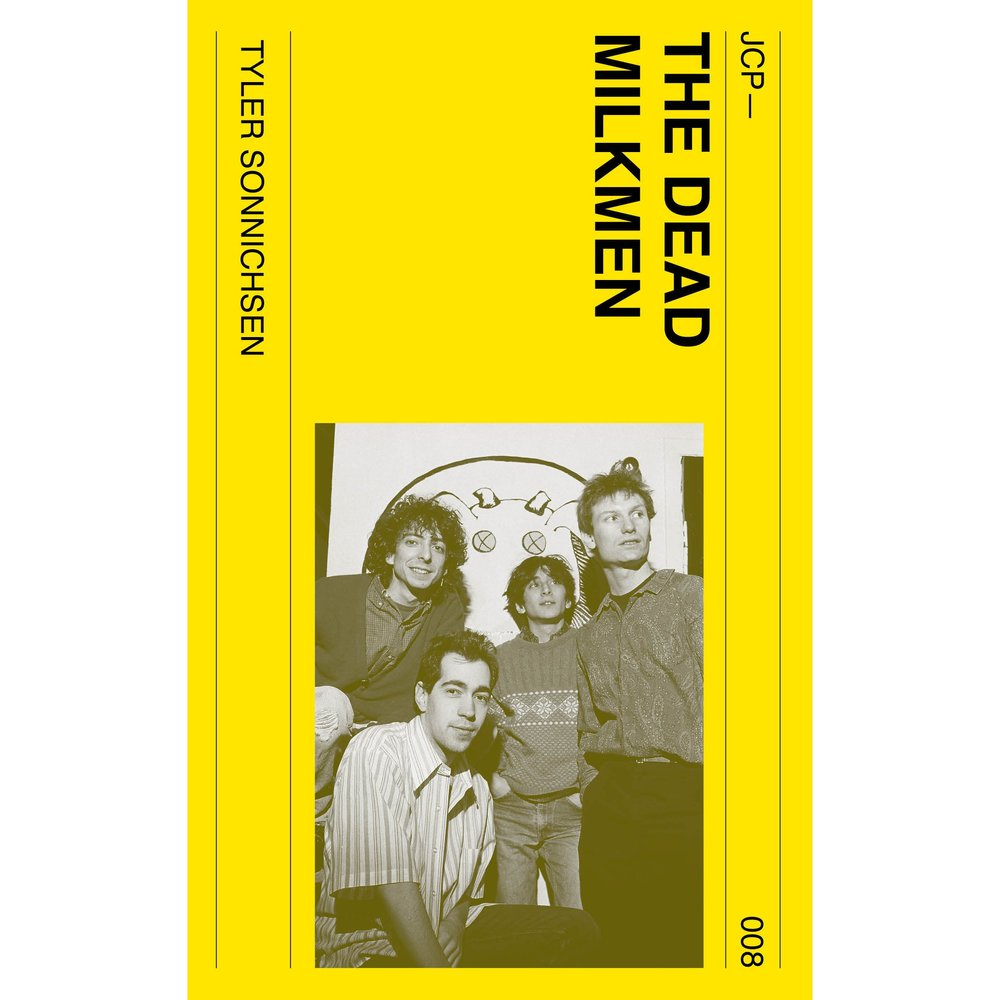
Sitting down to talk with Tyler Sonnichsen—author of Capitals of Punk (2020) and a scholar whose work bridges music, place, and cultural memory—quickly made clear that his new book on The Dead Milkmen isn’t just a nostalgia project. Instead, it reflects his “sonic geography” approach, using interviews, archival research, and deep scene knowledge to document a band that has quietly—and stubbornly—remained part of punk and alternative music culture for more than four decades.
Speaking from Vermont, where he teaches geography, Sonnichsen comes across as both grounded and aspirational, equally committed to his students, his scholarship, and punk music. The story of The Dead Milkmen, like his academic work more broadly, resists easy categorization, and his writing—also featured at SonicGeography.com—captures complexity with curiosity, humor, and a genuine love of the cultures he studies.
For Sonnichsen, the appeal of the Dead Milkmen began with that very contradiction. They are unmistakably a punk band, yet they do not sound like what many listeners expect punk to sound like. Their music often features minimal distortion, playful arrangements, and a strong dose of satire. At the same time, their lyrics tackle serious subjects—politics, culture, environmental issues, and the everyday frustrations of working-class life.
“They defy easy categorization,” Sonnichsen explained, noting that the band has been influential without fitting neatly into any one musical box. That paradox helped draw him into the project. His own background in amateur comedy also shaped his appreciation for the group’s irreverent style. The Dead Milkmen have always treated humor as a central element of their art, not a distraction from it.
That sense of humor, Sonnichsen emphasized, is deeply rooted in the history of punk itself. Early bands like the Ramones and the Dictators were often funny, even absurd, yet that aspect of punk culture has sometimes been overlooked in later retellings. The Dead Milkmen carried that tradition forward, blending satire with social commentary in ways that made their music both accessible and subversive.
When asked to explain who the band is, Sonnichsen immediately acknowledged the difficulty of capturing them in a single sentence.
“The Dead Milkmen are about as classic of an example of something that’s very difficult to boil down to a simple statement. They’re a punk band from Philadelphia, but they don’t really sound like much of what people consider stereotypical punk.”
That tension—between expectation and reality—runs throughout the band’s history. They are radical and satirical at the same time, working-class in orientation yet shaped by diverse personal backgrounds. As Sonnichsen explained, they represent the city of Philadelphia while also reflecting suburban and rural influences from their individual upbringings.
In short, they are complicated in the best possible way: a band whose deep catalog fits the streaming era, whose satire still lands in a polarized political climate, and whose fanbase has matured alongside them rather than simply moving on.
Humor, Seriousness, and the Spirit of Punk
One of the most striking themes that emerged in our conversation was the role of humor in punk music. While some listeners associate punk with anger and aggression, Sonnichsen emphasized that humor has always been part of the genre’s DNA. Bands like the Ramones and the Dictators, he noted, were often intentionally funny—even absurd. “Punk is funny,” he said. “The Ramones and the Dictators were very funny… early hardcore bands were very funny people.”
That insight helps explain the enduring appeal of the Dead Milkmen. Their songs often tackle serious political and cultural issues, but they do so with wit and accessibility. Rather than preaching or lecturing, they invite listeners to laugh while thinking critically about the world around them.
During the conversation, I reflected on this unusual combination of seriousness and humor—how the band can address heavy topics while still sounding approachable and relatable. Their music, I suggested, feels like a conversation with everyday people rather than a performance from distant rock stars.
Sonnichsen agreed, emphasizing that this accessibility is central to the band’s identity.
“You can email any of the members of the band. They’re not hidden behind PR agents… they’re all very accessible and usually very interested in talking to people.”
That openness stands in sharp contrast to the carefully managed public images of many musicians. It also reflects the band’s roots in a do-it-yourself ethos that values connection over celebrity.
More Than a ‘One-Hit Wonder’
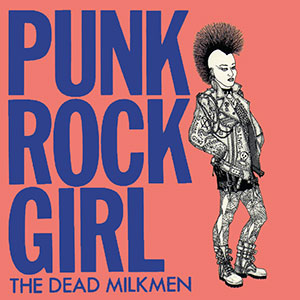
Many listeners first encountered the band through their 1989 hit song Punk Rock Girl, a track that remains a staple of alternative radio and college playlists. But Sonnichsen is quick to point out that reducing the band to a single song misses the larger story. “They’re not a one-hit wonder. That’s another thing about the Dead Milkmen that needs to be understood,” he said plainly. “They’ve been making music consistently for more than forty years, and their catalog is much deeper than people realize.”
Indeed, the band’s catalog spans decades and includes songs addressing topics ranging from environmental degradation to social inequality. Their work often blends satire with political commentary, creating music that is both entertaining and intellectually engaging.
Songs like Watching Scotty Die—which Sonnichsen jokingly described as a “three-credit course in environmental justice”—demonstrate the band’s ability to tackle serious issues through humor and storytelling. Other tracks, such as Two Feet Off the Ground and The Woman Who Was Also a Mongoose, showcase their creative range during their early years, while more recent releases continue to explore contemporary political themes.
One of the band’s newer songs, Grandpa’s Not a Racist (He Just Voted for One), illustrates how their satire remains relevant in today’s political climate. The title alone captures the band’s knack for confronting uncomfortable truths with sharp wit and disarming humor.
Sonnichsen described their sound as intentionally unconventional: “There’s a very confrontational element to their music that kind of takes the piss out of anyone who dares take themselves too seriously.”
That irreverence is not accidental. It is a deliberate strategy—one that allows the band to challenge authority and question social norms without losing their sense of humor.
Democracy as a Band Philosophy
One of the most distinctive aspects of the Dead Milkmen, according to Sonnichsen, is their internal structure. From the beginning, all songwriting and artwork have been credited collectively as “by the Dead Milkmen.” That decision was not accidental—it was a deliberate attempt to avoid the ego-driven dynamics that often plague rock bands.
The group’s creative process is fundamentally democratic. Everyone contributes music, lyrics, and ideas, and the band shares both the credit and the responsibility for the final product.
In many ways, this collaborative ethos reflects the core values of punk itself: independence, equality, and resistance to hierarchy. That philosophy also shaped the band’s decisions during critical moments in their career. When reunion offers surfaced after their breakup in the mid-1990s, the band refused to move forward unless every original member could participate. Replacing a member was never considered an option.
Their eventual reunion in the late 2000s came with clear conditions: they would continue only if they were making new music and genuinely enjoying the process. The goal was not to relive the past but to create something meaningful in the present.
Ironically, the band has now been reunited longer than they were active during their original run.
The DIY Ethos and the Changing Music Industry
Another recurring theme in our discussion was the band’s relationship with the music industry. Like many punk groups, the Dead Milkmen built their career through independent networks before briefly entering the world of major labels. The Dead Milkmen’s history reflects the changing realities of the music industry. In their early years, they operated at a relentless pace—touring constantly and releasing new albums at a rate comparable to major acts like R.E.M. That schedule eventually became unsustainable, contributing to the band’s breakup in 1994.
Their experiences with record labels were equally revealing. After early success with independent labels, they signed with Hollywood Records, expecting greater visibility and support. Instead, they found themselves largely ignored as the label focused its resources on blockbuster projects. “Hollywood Records did not promote them at all,” Sonnichsen explained. “They were focusing on Queen and selling the Beauty and the Beast soundtrack at that point.”
That experience reinforced the band’s commitment to independence. When the band reunited years later, they returned to their roots as a self-directed, DIY group—making music on their own terms rather than chasing commercial success. The lesson, Sonnichsen suggested, was both frustrating and liberating. Today, they operate comfortably outside the traditional major-label system.
“They’re content to never deal with major labels again,” he noted.
The Challenge of Telling a 42-Year Story
Writing the book itself presented a unique set of challenges. Unlike many bands that have been extensively documented, the Dead Milkmen lacked a centralized archive. Their history was scattered across decades of recordings, newsletters, photographs, and memorabilia.
Drummer Dean Sabatino eventually became the band’s unofficial archivist, largely because he had the stable housing necessary to store boxes of materials. Even so, Sonnichsen estimates that he was able to examine only a fraction of the available collection.
“All of them still have day jobs,” he explained. “So there isn’t a full-time archivist organizing everything.”
That reality made the research process both complicated and rewarding. It also reinforced one of the central themes of the book: the Dead Milkmen are not relics of the past. They are working musicians who continue to balance creative projects with everyday responsibilities.
Keeping It Fun (or Not Doing It at All)
Perhaps the most revealing insight from the interview concerned how the band members themselves understand their collective identity. After decades of performing, recording, and navigating industry changes, their priorities remain surprisingly simple.
“One of their pillars… is making sure that it’s always fun, and it’s always moving forward.”
That philosophy helps explain why the band has endured for so long. When they reunited in 2009, they set clear conditions for continuing: they would only stay together if they were enjoying the process and creating new music.
The result has been remarkable longevity. In fact, the band has now been reunited longer than they were active during their original run.
Sonnichsen captured this spirit with a quote from former bassist Dave Blood, who once described the band’s mission in straightforward terms:
“We’re very devoted to being part of something that makes a whole bunch of people very happy.”
In an industry often defined by competition and ego, that simple goal feels refreshingly human.
Vindication for the Fans
At its core, Sonnichsen’s book is as much about the fans as it is about the band. For years, loyal listeners defended the Dead Milkmen against critics who dismissed them as novelty performers or one-hit wonders. The book, he explained, is intended to validate those fans and recognize the band’s lasting cultural significance.
“I’d like the book to serve as a vindication to longtime fans… that they were correct in defending this band.”
He also hopes the book will change how people talk about the group. Too often, he noted, conversations about the Dead Milkmen occur in the past tense—as if the band belongs to a bygone era. In reality, they remain active, recording new music and performing for audiences that now span multiple generations.
In reality, they remain active, creative, and relevant. That longevity, Sonnichsen suggested, may be the band’s most meaningful achievement. In an industry often obsessed with chart positions and awards, the ability to maintain a dedicated fan base over decades is a powerful form of success.
“It’s a story that doesn’t really have an ending,” he said. “They’re just doing things on their terms.”
Still Here, Still Funny, Still Punk

As our conversation unfolded, it became clear that the Dead Milkmen’s enduring appeal lies in their balance of humor and seriousness. Their songs are funny, but the laughter often carries a deeper message. They challenge listeners to think critically about politics, culture, and society—while still enjoying the music. The Dead Milkmen’s longevity is rooted not in fame or commercial success, but in authenticity. They continue to make music because they enjoy it, they value their audience, and they believe in the creative freedom that defines punk culture.
That combination feels especially relevant now because the same concerns that animated the band in the 1980s remain urgent today: economic inequality, environmental degradation, and political polarization.
In that sense, the Dead Milkmen have not simply survived the passage of time. They have remained culturally relevant, continuing to reflect and critique the world around them.
Their songs may be funny, but the topics and issues—and the commitment—behind them are serious. And perhaps that is the ultimate takeaway from Sonnichsen’s work: punk music does not have to be loud, angry, or confrontational all of the time to be powerful. Sometimes it can be funny, thoughtful, and quietly subversive—all at the same time.
And after more than forty years, that balance of humor, accessibility, and independence remains one of The Dead Milkmen’s greatest strengths.


[…] (of Your Tuesday Afternoon Alternative in Dayton) had a great conversation, which he wrote about on his show’s website, here. He told me he would post some a/v clips of the interview soon, too. We shall […]