Hold on Hope: Why Sad Indie Music Makes Us Feel Less Alone

There is something almost heroic about a sad indie song. Not the theatrical heartbreak of arena rock, where somebody is always throwing a whiskey bottle against a wall while a power ballad swells behind them like a shampoo commercial. I mean the q7\48uieter stuff. The songs that sound like somebody sitting alone at 2:13 a.m. in a dim apartment, staring at a cracked ceiling fan while trying to figure out how to survive another Tuesday.

Indie music has always understood something the broader culture tries desperately to avoid: sadness is not a malfunction. It is not something to be “optimized away” with productivity hacks, mindfulness apps or motivational slogans printed on reusable water bottles. Sadness is part of being alive. The best indie musicians know this, and instead of hiding from it, they lean directly into the ache.

Take Ben Folds’ Late, his devastating tribute to Elliott Smith. It is one of those songs that sneaks up on you. No melodrama. No giant cathartic explosion. Just grief hanging in the air like cigarette smoke after everyone has left the room. Folds sings with the exhausted resignation of somebody trying to make sense of losing a friend who carried too much darkness for too long. The song feels unfinished emotionally because grief itself is unfinished. That is precisely why it works.

And Elliott Smith himself practically built an entire emotional architecture out of fragile sadness. His songs never begged for sympathy. They simply observed pain with unnerving precision. Listening to Smith was like overhearing somebody narrate their private collapse in real time, except somehow the honesty made listeners feel less alone rather than more isolated.

That paradox sits at the center of sad indie music: the lonelier the song, the more communal the experience becomes. Which brings me, naturally, to Dayton, Ohio. Because of course it does.

Dayton has always produced music that sounds like beautiful exhaustion. Maybe it is the Rust Belt atmosphere. Maybe it is the strange mixture of working-class realism, artistic ambition, and Midwestern isolation. Or maybe there is simply something in the water around the Gem City that encourages musicians to abandon pretense and get emotionally vulnerable.

Nobody embodied that spirit more than Guided By Voices. Robert Pollard and company made songs that sounded as though they had been recorded in the middle of a collapsing basement party using equipment rescued from a pawn shop fire. Yet buried beneath the glorious lo-fi chaos were moments of astonishing vulnerability.

Hold on Hope remains one of the great sad indie anthems precisely because it refuses easy redemption. The title sounds optimistic enough, but the song itself feels uncertain, wounded and tentative. Hope is not presented as triumph. It is presented as survival. A small flicker in the darkness. Pollard’s voice carries the exhaustion of somebody who has seen enough disappointment to understand that hope is not confidence. It is endurance.

That distinction matters.

Modern culture often treats happiness as a moral obligation. Social media especially has transformed emotional performance into a full-time job. Everybody is branding themselves as thriving, healing, crushing goals or living their best life. Meanwhile, millions of people are quietly anxious, lonely, overwhelmed and emotionally threadbare.

Sad indie music cuts through that performance.

It says: yes, things are difficult. Yes, people disappoint each other. Yes, your life may not resemble an inspirational TED Talk. But there is still meaning in the attempt to connect, to create, to keep going.

That honesty explains why so many listeners form almost intimate relationships with these songs. They become emotional landmarks attached to long drives, bad apartments, failed relationships and periods of uncertainty. A sad indie song often feels less like entertainment than companionship.

Dayton’s music scene has long specialized in this kind of emotional authenticity. Bands like Brainiac injected anxiety and instability directly into their sound, turning alienation into art-rock electricity. The Breeders balanced melodic sweetness with underlying tension and dislocation. Even the city’s punk and garage scenes carried a sense that beneath the noise lurked genuine vulnerability. The woefully under-appreciated Shrug, powered by Tod Weidner’s brilliant lyrics and melody, captured pure heartbreak in All Around the Underworld.

Real heartbreak in music rarely sounds cinematic. It sounds exhausted, confused, and unfinished. That is part of what makes Shrug’s All Around the Underworld so affecting. The song does not romanticize pain or turn emotional collapse into performance. Instead, it captures the dull ache of relationships and passing beyond this mortal coil, unraveling in real time — the kind of heartbreak where people keep talking past one another long after they have stopped understanding each other. The songs feel lived-in, carrying the emotional residue of late-night arguments, regret, and the strange silence that follows loss. Like the best sad indie music, All Around the Underworld understands that heartbreak is often less about dramatic endings than about learning to exist in the emotional wreckage when someone is no longer with us.

There is a reason so much great Midwestern indie music sounds slightly frayed around the edges. Perfection would ruin it.

The polished sterility of much mainstream pop leaves little room for emotional ambiguity. Everything arrives digitally perfected, emotionally focus-grouped, and algorithmically engineered for maximum playlist compatibility. Indie music, by contrast, often preserves the rough edges: cracked voices, awkward silences, tape hiss, lyrical uncertainty. Those imperfections create trust. The music sounds human because it allows itself to remain unfinished.

And maybe that is what listeners are really searching for. Not sadness itself, but recognition of what was once with us.

The feeling that somebody else has also sat awake at night, wondering whether things will improve. The reassurance that uncertainty, loneliness, and disappointment are not personal failures but shared human experiences.

That is why songs like “Late” or “Hold on Hope” or “All Along the Underworld” endure long after trendier music fades away. They do not promise transformation. They do not offer simplistic closure. Instead, they accompany listeners through difficult emotional terrain with honesty and humility. Sitting with the feelings rather than pretending that everything is alright.

The late and great (he would hate that) critic, Lester Bangs, once wrote about rock music as a force capable of exposing human truth beneath cultural nonsense. He understood that music mattered most not when it projected invulnerability, but when it documented confusion, desperation, and longing with enough sincerity to make people feel seen.

Sad indie music continues that tradition. Sometimes the most comforting thing a song can say is not “everything will be fine.” Sometimes it is simply: “I know.”

The Last Song

Last week, I wrote about albums that have a great first two-song combo. After thinking about that and sharing my thoughts, I was asked other than the start of an album, what else matters? What else leaves a lasting mark? Perhaps we could call it a musical bruise. And that led to thinking about the days when all music was released on vinyl. Side A and Side B each had a start and end. But the most definitive ending is the last song on a record.

The final song on an album holds a unique and important place, acting as the last note of a record’s journey and often shaping how listeners interpret the entire album. Where have we been? Where do we go now? Whether it’s a contemplative, quiet piece that allows the themes of the record to echo softly in the listener’s mind or a powerful anthem that closes the experience with a bang, the last track often serves as a reflection, summation, or even contradiction of what came before it (I feel that this happens often for several bands that I love, R.E.M., U2, and Uncle Tupelo to name a few that deeply matter to me). This closing moment can evoke a range of emotions: closure, anticipation, hope, or bittersweet melancholy. For many, a strong final track can define the entire listening experience, leaving a lasting impression that elevates the album from a collection of songs to a complete, resonant work of art.

Establishing Closure and Completeness

A thoughtfully chosen final track can make an album feel like a completed story, giving it a sense of narrative and emotional closure. Albums, particularly concept records, often unfold with a progression of emotions, themes, or stories, and a powerful last song can bring these to a satisfying conclusion. This role is especially crucial for artists aiming to take listeners on a journey, where the album acts as a cohesive unit rather than a series of disconnected songs. Ending an album with a song that reinforces the record’s primary themes or revisits earlier emotions can leave listeners feeling as though they’ve completed a meaningful journey, much like reaching the last chapter of a novel. Consider that the very last song that Uncle Tupelo put onto a record was ‘Steal the Crumbs’ on their brilliant masterpiece ‘Anodyne.’ It is crushing to me that the last echoes of ‘No more will I see you,” was a statement of intent from Jay Farrar to Jeff Tweedy. It is still hard for me to listen to that song today.

The last song can also play a vital role in underscoring an artist’s vision. If the rest of the album serves to establish a mood, a style, or a story, then the final track acts as the artist’s way of saying, “This is what I really want to leave you with.” It is the musical statement they want listeners to hold onto, an encapsulation of everything they poured into the album. The finality can be overpowering.

Examples of Powerful Final Tracks

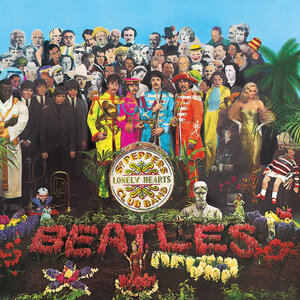
One standout example that is often discussed by those of us obsessed with music is “A Day in the Life” by The Beatles, the closing track of Sgt. Pepper’s Lonely Hearts Club Band. As a pioneering album in rock music history, Sgt. Pepper’s is an eclectic mix of sounds and styles that epitomizes The Beatles’ experimentation and innovation. The final track, “A Day in the Life,” is haunting and surreal, blending melancholy with a sense of curiosity and wonder. The song’s climactic, dissonant piano chord at the end creates a feeling of unresolved tension, inviting listeners to ponder its meaning long after the album is over. This impactful ending encapsulates the themes of discovery and mystery that pervade the album, making it feel timeless and open-ended.

Similarly, Radiohead’s OK Computer concludes with “The Tourist,” a slower, introspective track that contrasts with the chaotic energy of the rest of the album. OK Computer is known for its commentary on technology and alienation, exploring themes of existential anxiety and modern isolation. “The Tourist” stands apart from the album’s other songs in its simplicity, offering a moment of reflection that feels like a warning to “slow down” amid the dizzying pace of the digital age. The song’s restrained energy brings a reflective close to the album’s otherwise complex and unsettling journey, emphasizing its themes and leaving a deep impression.

Creating a Lasting Emotional Impact

Some final tracks are chosen to evoke powerful emotions, leaving listeners with an impression that will last beyond the music. For instance, David Bowie’s Blackstar closes with “I Can’t Give Everything Away.” This track, coming from Bowie’s final album before his death, is particularly poignant, dealing directly with themes of mortality, legacy, and departure. Bowie’s choice to end with this song feels like a farewell message, wrapping up his legendary career with a sense of grace and vulnerability. For listeners, the track is a heart-wrenching goodbye that gains even more weight within the context of Bowie’s life, allowing the album to transcend music and enter the realm of a personal, intimate farewell.

Nirvana’s In Utero, meanwhile, ends with the track “All Apologies.” The song reflects Kurt Cobain’s vulnerability and the conflicting emotions he experienced near the end of his life. It’s a bittersweet, haunting song that grapples with themes of forgiveness, regret, and identity. Given the rawness of In Utero, “All Apologies” acts as an understated yet emotionally charged conclusion. It’s a moment of both release and resignation, mirroring Cobain’s own inner conflicts. For listeners, it becomes a powerful closing note that brings a sense of poignancy to the album, especially in light of Cobain’s death just months after its release.

Offering Unexpected Twists

Sometimes, artists use the final track to surprise their audience, either by shifting the mood or presenting an unexpected style or message. This unpredictability can work as a memorable twist, leaving a lasting sense of intrigue. It changes the tone from the struggles explored in previous songs to pride and resilience, suggesting a sense of empowerment and identity that stays with the listener.

An example of an unexpected finale is the Arctic Monkeys’ “505” on their album Favourite Worst Nightmare. The song begins as a somber ballad but gradually builds into a soaring, intense climax. Its dynamic composition makes it feel like the album’s emotional pinnacle, one that explores themes of longing and nostalgia. “505” brings a sense of finality to the album but in a way that is both stirring and unpredictable, leaving listeners wanting more even as the music fades out.

Symbolism and Metaphor in Final Tracks

Artists also use the last track to imbue their album with metaphorical meaning, often turning the final moments into a symbolic experience. Pink Floyd’s The Wall famously ends with “Outside the Wall,” a soft, subdued song that contrasts with the bombastic nature of the album’s other tracks. As a conceptual record about isolation, rebellion, and self-destruction, The Wall reaches its emotional and narrative conclusion with this gentle, understated track. The song leaves listeners reflecting on the album’s themes with a mixture of sorrow and acceptance, making it an introspective and symbolic end to the epic story. Maybe it is a final track that can hint at continuity or invite speculation about future works.

The Final Song as a Reflection of the Album’s Themes

In many ways, the last song is the album’s most potent moment because it holds the power to tie all the preceding themes together in one emotional conclusion. The choice of final track is rarely arbitrary; it often holds the most weight and meaning. Whether it offers a moment of silence, explosive energy, quiet reflection, or unrestrained vulnerability, the final song gives shape and substance to the album, helping listeners make sense of the music as a whole.

In short, a powerful last track is not just the end of an album—it’s the parting message, the last look back, and the final chance to leave listeners with something unforgettable. When done well, it can transform the album into a cohesive, resonant work that remains with listeners long after the music has ended.

Hologram Concerts: Music’s Future?

arrow_copy_fee_hereA recent essay in the New York Times discussed the rise of Hologram concerts featuring long past musicians such as Buddy Holly, Roy Orbison, Tupac Shakur, Ronnie James Dio, Frank Zappa among plans for others. What to think of this?

How long before their are digital shows/holograms of Bowie, Joe Strummer, Prince, Petty, among a legion of aging (read post 60 years of age) musicians that management and record companies want to continue to profit on their art by finding a way to keep these artists performing.

Consider the consequence of a band or musicians ever ceasing. In the words of one executive: “We have to put them back on the road.” (Brian Baumley, publicist for Eyellusion quoted in the article).

The idea that companies can buy the rights to these images drawn from concert footage raises a host of questions about long term (perpetual, perhaps?) ownership of music and the image of musicians themselves. A recent episode of Black Mirror seemed to deal directly with this idea. If management cannot control the musician or band, simply digitize. In the end, the management company did not win — in a rare twist for Black Mirror — but in an industry built on the exploitation of artists, musicians, lyricists and other creatives, how accurate is that ending? While that level of control is not widely happening today, one has to wonder how long before it could?

The idea of a concert should be an exchange of ideas, enthusiasm and love of music not a pristine controlled event. Sometimes the most beautiful musical moments are the mistakes, the surprises that arise in the moment of artistic creation. Not planned. Not anticipated. Not controlled.

Read the article here — Old Musicians Never Die. They Just Become Holograms – The New York Times.

Let us know what you think about the practice in the comments or at Your Tuesday Afternoon Alternative on Facebook.

your-tuesday-afternoon-color copy


What is your song of the Summer?

P1020764Is it too late to choose a song of the summer? Are there any strong contenders? Thoughts? It does seem that every year there is an effort to say one song perfectly captures the feeling of the season? Is it wrong to always want to the song of the summer to be Alice Cooper’s ‘Schools Out’? What is your song for summer 2019? Or have you not picked one yet?

your-tuesday-afternoon-alternative-color copy

Song for a Sunday Morning

Image
Publicity shot of R.E.M. 1986

Time for a thoughtful song as we approach thoughtful times.  One of the overlooked songs from R.E.M. was the ninth track on Life’s Rich Pageant (1986, re-released in 1998).  This song asked the listener to pause and take a moment to reflect upon their actions and the effects of their actions on others.  A refrain heard on several other songs from Life’s Rich Pageant.  Without being preachy or overbearing, this song asked an important question about the kind of community that we all want to inhabit and in which we live our lives.

“What If We Give It Away?”

On the outside, underneath the wall
All the money couldn’t buy
You’re mistaken, no one’s standing there
For the record, no one triedOh, I try to
What if we give it away?Overlooking with a hollow eye
What’s pretending isn’t right
Eye for order, a hand for what’s in line
Couldn’t follow, couldn’t writeOh, I try to
What if we give it away?

And our life is fine here
Stitch it on your tie here

Here’s the trailer, Tom
A year has come and gone
We’re not moving, wasn’t right
Take the order, sew it on your tie
We couldn’t follow, couldn’t try

Oh, I try to
What if we give it away?

Dr-J-Machineb&w