Hold on Hope: Why Sad Indie Music Makes Us Feel Less Alone

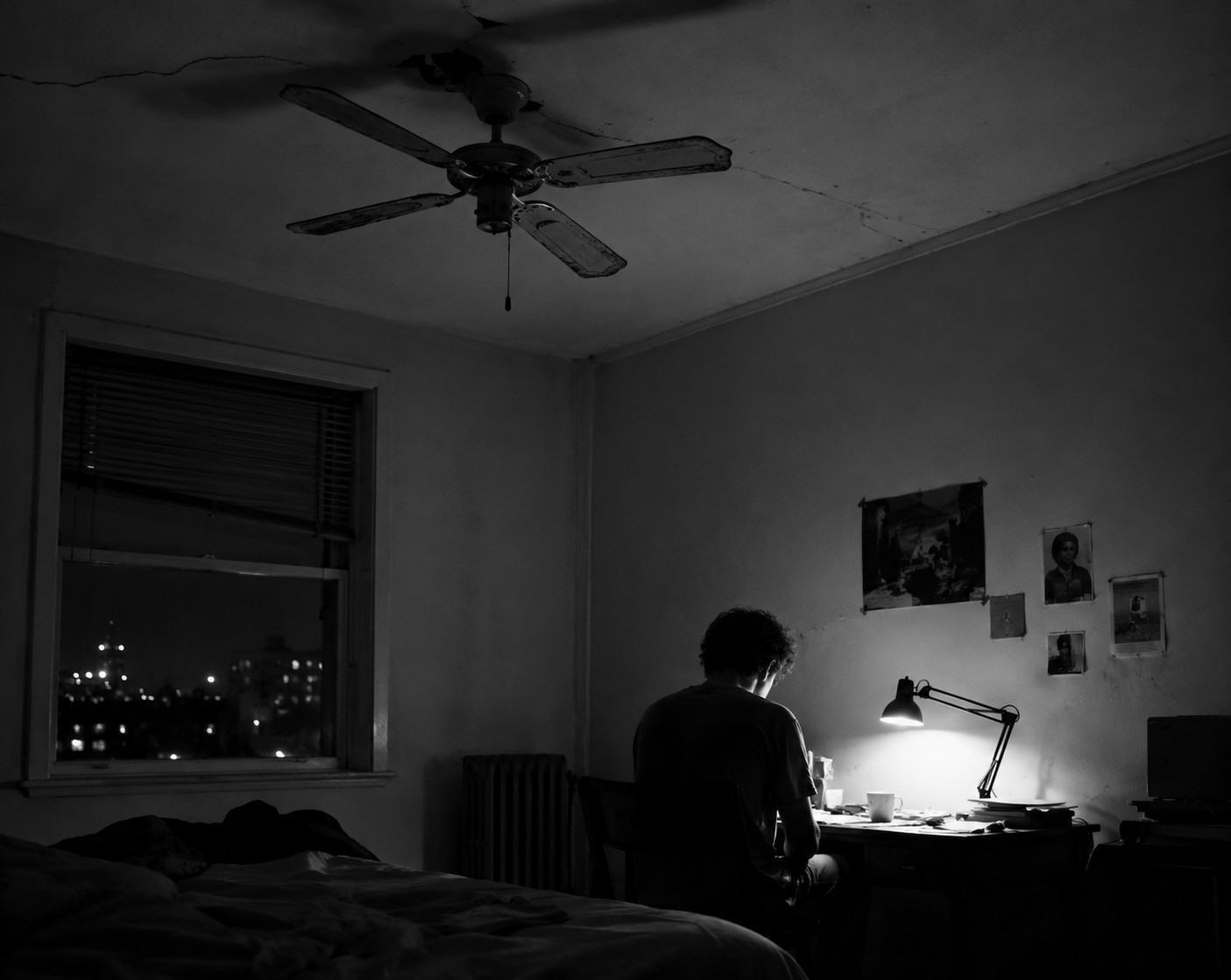
There is something almost heroic about a sad indie song. Not the theatrical heartbreak of arena rock, where somebody is always throwing a whiskey bottle against a wall while a power ballad swells behind them like a shampoo commercial. I mean the q7\48uieter stuff. The songs that sound like somebody sitting alone at 2:13 a.m. in a dim apartment, staring at a cracked ceiling fan while trying to figure out how to survive another Tuesday.

Indie music has always understood something the broader culture tries desperately to avoid: sadness is not a malfunction. It is not something to be “optimized away” with productivity hacks, mindfulness apps or motivational slogans printed on reusable water bottles. Sadness is part of being alive. The best indie musicians know this, and instead of hiding from it, they lean directly into the ache.

Take Ben Folds’ Late, his devastating tribute to Elliott Smith. It is one of those songs that sneaks up on you. No melodrama. No giant cathartic explosion. Just grief hanging in the air like cigarette smoke after everyone has left the room. Folds sings with the exhausted resignation of somebody trying to make sense of losing a friend who carried too much darkness for too long. The song feels unfinished emotionally because grief itself is unfinished. That is precisely why it works.

And Elliott Smith himself practically built an entire emotional architecture out of fragile sadness. His songs never begged for sympathy. They simply observed pain with unnerving precision. Listening to Smith was like overhearing somebody narrate their private collapse in real time, except somehow the honesty made listeners feel less alone rather than more isolated.

That paradox sits at the center of sad indie music: the lonelier the song, the more communal the experience becomes. Which brings me, naturally, to Dayton, Ohio. Because of course it does.

Dayton has always produced music that sounds like beautiful exhaustion. Maybe it is the Rust Belt atmosphere. Maybe it is the strange mixture of working-class realism, artistic ambition, and Midwestern isolation. Or maybe there is simply something in the water around the Gem City that encourages musicians to abandon pretense and get emotionally vulnerable.

Nobody embodied that spirit more than Guided By Voices. Robert Pollard and company made songs that sounded as though they had been recorded in the middle of a collapsing basement party using equipment rescued from a pawn shop fire. Yet buried beneath the glorious lo-fi chaos were moments of astonishing vulnerability.

Hold on Hope remains one of the great sad indie anthems precisely because it refuses easy redemption. The title sounds optimistic enough, but the song itself feels uncertain, wounded and tentative. Hope is not presented as triumph. It is presented as survival. A small flicker in the darkness. Pollard’s voice carries the exhaustion of somebody who has seen enough disappointment to understand that hope is not confidence. It is endurance.

That distinction matters.

Modern culture often treats happiness as a moral obligation. Social media especially has transformed emotional performance into a full-time job. Everybody is branding themselves as thriving, healing, crushing goals or living their best life. Meanwhile, millions of people are quietly anxious, lonely, overwhelmed and emotionally threadbare.

Sad indie music cuts through that performance.

It says: yes, things are difficult. Yes, people disappoint each other. Yes, your life may not resemble an inspirational TED Talk. But there is still meaning in the attempt to connect, to create, to keep going.

That honesty explains why so many listeners form almost intimate relationships with these songs. They become emotional landmarks attached to long drives, bad apartments, failed relationships and periods of uncertainty. A sad indie song often feels less like entertainment than companionship.

Dayton’s music scene has long specialized in this kind of emotional authenticity. Bands like Brainiac injected anxiety and instability directly into their sound, turning alienation into art-rock electricity. The Breeders balanced melodic sweetness with underlying tension and dislocation. Even the city’s punk and garage scenes carried a sense that beneath the noise lurked genuine vulnerability. The woefully under-appreciated Shrug, powered by Tod Weidner’s brilliant lyrics and melody, captured pure heartbreak in All Around the Underworld.

Real heartbreak in music rarely sounds cinematic. It sounds exhausted, confused, and unfinished. That is part of what makes Shrug’s All Around the Underworld so affecting. The song does not romanticize pain or turn emotional collapse into performance. Instead, it captures the dull ache of relationships and passing beyond this mortal coil, unraveling in real time — the kind of heartbreak where people keep talking past one another long after they have stopped understanding each other. The songs feel lived-in, carrying the emotional residue of late-night arguments, regret, and the strange silence that follows loss. Like the best sad indie music, All Around the Underworld understands that heartbreak is often less about dramatic endings than about learning to exist in the emotional wreckage when someone is no longer with us.

There is a reason so much great Midwestern indie music sounds slightly frayed around the edges. Perfection would ruin it.

The polished sterility of much mainstream pop leaves little room for emotional ambiguity. Everything arrives digitally perfected, emotionally focus-grouped, and algorithmically engineered for maximum playlist compatibility. Indie music, by contrast, often preserves the rough edges: cracked voices, awkward silences, tape hiss, lyrical uncertainty. Those imperfections create trust. The music sounds human because it allows itself to remain unfinished.

And maybe that is what listeners are really searching for. Not sadness itself, but recognition of what was once with us.

The feeling that somebody else has also sat awake at night, wondering whether things will improve. The reassurance that uncertainty, loneliness, and disappointment are not personal failures but shared human experiences.

That is why songs like “Late” or “Hold on Hope” or “All Along the Underworld” endure long after trendier music fades away. They do not promise transformation. They do not offer simplistic closure. Instead, they accompany listeners through difficult emotional terrain with honesty and humility. Sitting with the feelings rather than pretending that everything is alright.

The late and great (he would hate that) critic, Lester Bangs, once wrote about rock music as a force capable of exposing human truth beneath cultural nonsense. He understood that music mattered most not when it projected invulnerability, but when it documented confusion, desperation, and longing with enough sincerity to make people feel seen.

Sad indie music continues that tradition. Sometimes the most comforting thing a song can say is not “everything will be fine.” Sometimes it is simply: “I know.”

Short Songs Have Every Reason to Live

Apologies to Randy Newman for the title, I just could not help myself. We all love a good, long album, don’t we? The sprawling epics, the suites, the ambitious arcs that stretch into the horizon like the great classic rock composers, forever nudging us to find meaning in the slow build, the dramatic rise, and the quiet moments in between. But what about the short, sharp, explosive bursts of sound? What about the brief moments when the band isn’t asking you to follow them through a journey or listen to their complicated metaphors for life? No. These songs grab you by the throat, punch you in the gut, and leave you feeling strangely satisfied, if not slightly unsettled. They take less time than most elevator rides, yet they can leave an emotional scar more enduring than any prog-rock symphony.

So what is it about these short songs that keeps us coming back for more? Why do they work on us so profoundly, often without the luxury of extended introspection or complicated arrangements? Perhaps it’s because they are the sound of life itself—imperfect, intense, and fleeting. Some of the joy is in the very fact of existence. As much as the towering albums of our favorite bands represent a broader spectrum of emotion, there’s something brutally honest and pure about a song that cuts through all the clutter, hits you, and leaves. Let’s take a look at the power of these little bangers, and why they can sometimes be the most influential songs in the world.

Short Songs: The Art of the Quick Impact

Lester Bangs, god rest his sarcastic and critical soul, understood the beauty of brevity. Bangs wasn’t one to be bogged down by theory or length—he appreciated the visceral punch of the immediate, unfiltered emotion that comes from a quick blast of sound. Short songs demand attention, forcing listeners into an intense, often surprising relationship with the music. There’s no room for pretension or self-indulgence. The song either works, or it doesn’t. It’s just you and the music, for as long as it lasts—maybe a minute, maybe three, but never more. The art of the short song lies in its ability to do something profound in a limited time frame, leaving you with a lasting impression, or even a gnawing feeling, long after the final note has passed. This is something that Robert Pollard is an undisputed master of.

Consider a song like The Ramones’ “Blitzkrieg Bop.” It’s barely two minutes long, yet it feels like the embodiment of youthful rebellion, an anthem that encapsulates everything that punk was about—raw energy, simplicity, and urgency. You can hear it, and it’s already over before you’ve had time to think about it. The beauty of this lies in the idea that this song doesn’t ask for reflection, doesn’t demand your intellectual labor, and doesn’t beg for analysis. It just exists—a blur of riffs and hooks that sums up a generation in its frantic sprint.

The brevity of such songs allows them to penetrate deeper than a 10-minute waltz ever could, or at least with more immediate results. A song like “I Wanna Be Your Dog” by The Stooges, which comes in at just under three minutes, does more in those 180 seconds than most of the bloated albums of its time could ever hope to accomplish. It’s simple, dirty, primal, and unrelenting—stirring up more in you in a few short moments than you might expect from an entire album. The impact of these songs is often direct, like a cold slap in the face, forcing you to reckon with them immediately.

The Radio Effect: Why Short Songs Work on the Airwaves

Here’s the thing—short songs don’t just get to your head. They get to the ears of the listener. That’s because brevity is a tool that radio stations, especially in the era before streaming, loved to exploit. The shorter the song, the more it could be played in a given timeframe, and the more it could break through the noise. The best of these songs—ahem, the ones that actually had something to say—became iconic because they didn’t overstay their welcome.

Let’s talk about The Clash for a minute. Their song “London Calling” clocks in at just over three minutes. Sure, it’s a little longer than “Blitzkrieg Bop,” but it still falls into that sweet spot where it feels like a complete statement that doesn’t need to drag on. It’s infectious, it’s compelling, and it doesn’t waste time telling you what’s wrong with the world—it shows you. The energy of the song doesn’t let you get bogged down in excessive flourishes or unnecessary complexity. By stripping away the fat, the band leaves you with pure, unadulterated punk rock power.

Even though London Calling might not be the shortest song on the airwaves, its ability to harness the raw spirit of rebellion in such a brief time makes it the epitome of what a short song can do—take over the world, turn everything upside down, and leave you wanting more. Which, let’s face it, is what we all want from a song, anyway.

The Punch and the Aftertaste: How Short Songs Leave Their Mark

Here’s the funny thing about short songs—they often don’t have the time to linger. But that’s what gives them their staying power. They are designed to stick with you, like a one-night stand that leaves you with a hangover of thoughts and feelings you can’t shake off. After just a brief encounter, they slip into your subconscious, grabbing your brain and twisting it in unexpected ways. They linger, even though they don’t have the time to do so.

Take for example, a song like “Fell In Love With a Girl” by The White Stripes. It’s a burst of electric energy that clocks in at just under two minutes. But what makes it so unforgettable is its immediacy. The riff, the rhythm, the lyrics—they don’t give you time to do anything but react. You’re in it, you’re out of it, but the song sticks with you, lingering in your head long after it’s over.

This is the power of a short song. It may be over before you’ve even had time to process it fully, but that doesn’t matter because the impact is there. Bangs would understand that these moments—these songs that don’t let you breathe—carry an emotional weight that’s disproportionate to their length. The brevity works because it doesn’t give you time to second guess, to dissect, or to overthink. It’s pure, undiluted emotion that cuts through the noise, like a sucker punch to the gut.

“Walkaways” by Counting Crows is the kind of song that hits like a slow-motion crash—strummed guitar and Adam Duritz’s vocals unraveling with all the desperation of a last-ditch attempt to save something that was doomed from the start. There’s a bittersweet, almost reckless honesty in the way he sadly almost pleads the lines:

I’ve gotta rush away
She said, I’ve been to Boston before
And anyway, this change I’ve been feeling
Doesn’t make the rain fall
No big differences these days
Just the same old walkaways

The rhythm is wistful and haunting, like a dream you can’t escape but desperately need to get farther and farther from it and then find you did not take a single step. It’s a beautiful mess—a reflection of how all of us bleed, falter, and still somehow move forward.

Short Songs and the Change They Ignite

Now let’s get to the meat of it—the impact these songs have on listeners. Why are they so powerful? Because they demand attention. You blink and it’s gone. In a world saturated with noise, social media distractions, and endless content, these short songs remind us of a time when music could be something immediate, spontaneous, and anarchic. They explode into your world and leave you questioning everything, and then, before you can fully comprehend it, they vanish.

They also create a sense of community. Every fan of punk rock, indie, or garage knows that feeling when you’re in a room full of people and the first few chords of a short, familiar song kick in. The energy shifts. You can feel the collective understanding—everyone knows the song, everyone knows the intensity, and it’s about to hit us all at once. That communal feeling, that shared experience, amplifies the effect of the song, making it a primal ritual, a call to arms that’s delivered in the simplest of packages.

Short songs give us permission to feel in ways that long-winded tracks often can’t. They teach us that the most significant moments are often the briefest. That intensity doesn’t have to take hours to build. That revolution, rebellion, love, and loss can be boiled down to a few lines, a few chords, a few seconds. The brevity is part of their power.

Smug Brothers’ “Hang Up” is a sweaty, gritty blast of pop-punk that comes at you like a shot of espresso chased by a beer. It’s raw, it’s relentless, and it doesn’t care if you’re ready for it. The guitars jangle like a rusty chain being dragged across pavement, while the lyrics tap into that familiar frustration, the kind that never seems to go away. But the brilliance of this song is its brevity—it hits hard, gives you no room to breathe, and then it’s gone, leaving you half-alive, craving more. It’s chaos wrapped in catchy melodies—perfectly imperfect. Smug Brothers understand the power of a brilliant song can sometimes be best demonstrated by not lingering.

The Brief, the Bold, and the Beautiful

In the end, short songs are, to borrow from Lester Bangs himself, a “shotgun blast of truth” that demands to be felt, not analyzed. They are the anthems of chaos, the rebellion of simplicity, and the embodiment of that glorious moment when everything aligns just right. These songs may be brief, but in that briefness lies their eternal power.

Bangs would’ve told you that these little ditties are a reflection of life’s fleeting nature. Sometimes, you get a moment that burns so brightly, you’re left staring at the ashes afterward, not even sure how it happened. And the short song is the perfect vehicle for that kind of magic. Whether it’s two minutes, three minutes, or less, these songs will always have something to say—something that’s too urgent to stretch out, something that can only be told in a flash, like a lightning strike across the sky.