Lips Speak Louder Means Exactly What It Says

One of my favorite things about doing Your Tuesday Afternoon Alternative is discovering a band that somehow slipped under my radar and then wondering how on earth that happened.
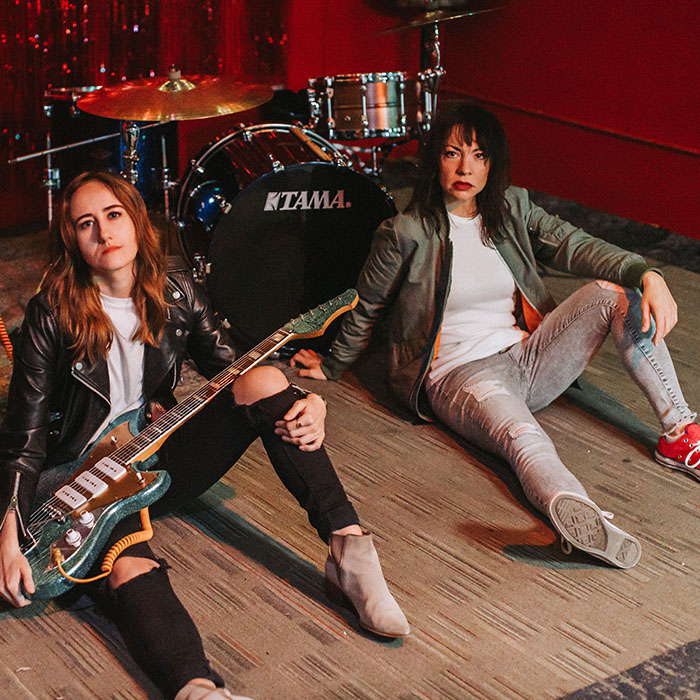
That was exactly my reaction when a friend pointed me toward Lips Speak Louder.

The Minneapolis-based duo—guitarist and vocalist Rachel Brandsness and drummer Angela Lese—make the kind of rock records that remind you why guitars still matter. Big riffs. Bigger hooks. Songs that are melodic without losing their edge. Their album Consolation Prize has been getting plenty of spins on the show, and after talking with Rachel and Angie over Zoom, I came away even more impressed by the thought and intention behind the music.

Ironically, the band’s name began with another favorite band.

“We’re huge Yeah Yeah Yeahs fans,” they told me. “Lips Speak Louder” comes from a lyric buried inside the song “Soft Shock.” They loved the phrase because it sounded “anthemic,” but over time it took on a deeper meaning.

“It feels like permission to say what you really mean,” Rachel explained.

That philosophy runs through everything the band does.

Rock music, they argue, shouldn’t apologize for existing. It should be loud. Honest. Imperfect. It should refuse to shrink itself to make other people comfortable. “Rock music refuses to be quiet. It’s loud and kind of in your face. You’re saying what you mean, when you mean it, how you mean it.” That isn’t simply a philosophy about music—it’s a philosophy about life.

Angela pointed out that, particularly for women, there is often enormous social pressure to be agreeable and not “take up space.” Playing in Lips Speak Louder became an opportunity to reject that expectation. Angela explained that, particularly for women, there is often enormous social pressure to be agreeable and avoid drawing attention to yourself.

Rachel shared that “I feel like, especially as women, you’re raised to be polite and don’t step on anybody’s toes. Playing and singing is my chance to be loud and take up space.” It’s my chance to be loud and take up space.”

That statement may be the best summary of the band you’ll ever hear.

Of course, the music industry has not always made it easy. Both Rachel and Angie laughed while recounting stories of loading heavy equipment into venues only to have someone ask whether the gear belonged to their boyfriend. They’ve repeatedly encountered audiences and industry professionals who seemed surprised that two women could walk onstage and deliver unapologetically heavy rock music.
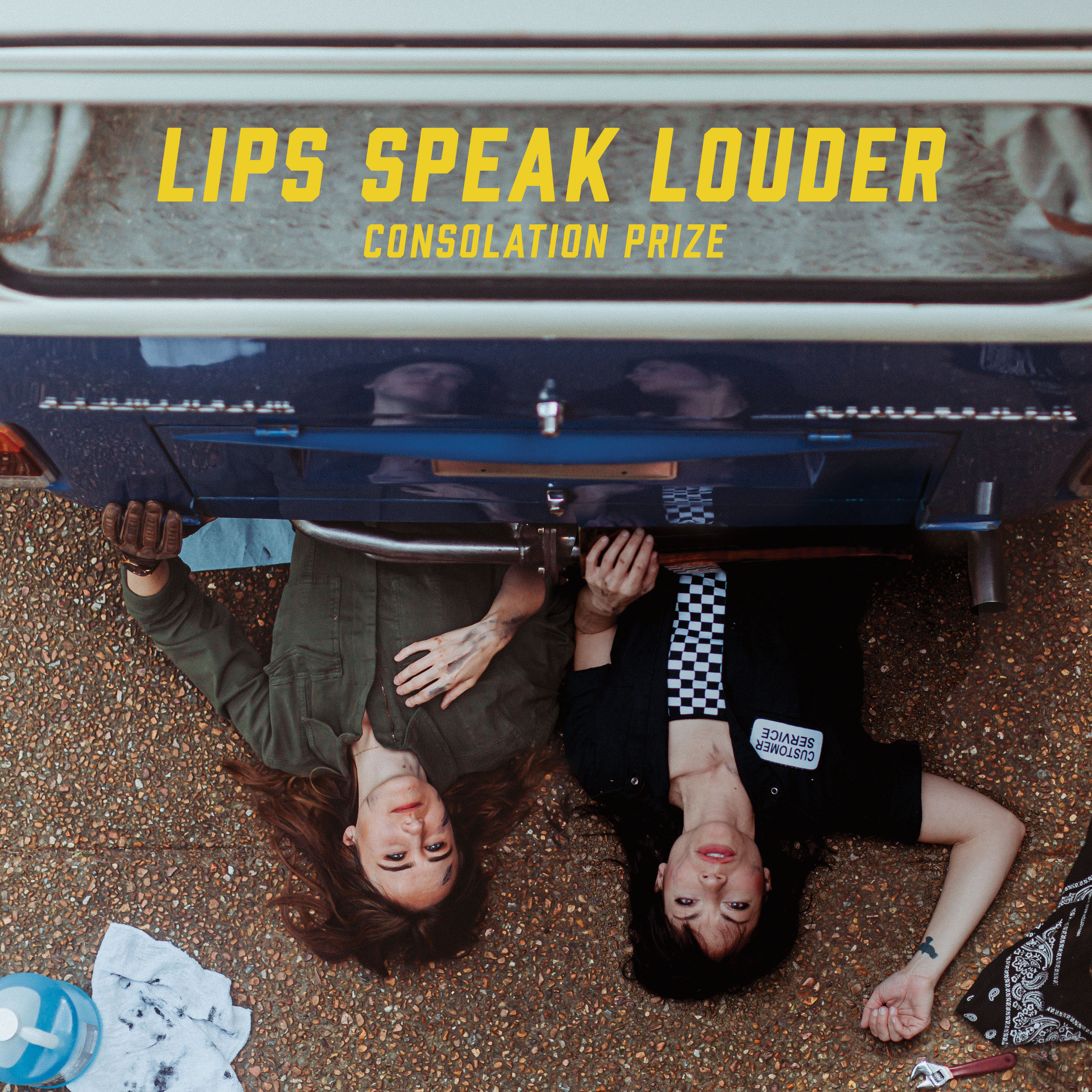
Those experiences even inspired the title of Consolation Prize.

The title is more than a clever phrase. It’s a tongue-in-cheek response to years of being passed over simply because they didn’t fit someone else’s expectations of what a rock band should look like. Angie noted that “we named our album Consolation Prize because we can’t tell you how many times we’ve come up short for a gig…just because we were women.”

The satisfying part, they admitted, comes after the music starts.

Angie observed the transformation on the faces of the audience: “We can actually watch people’s expressions change. Watching everyone’s eyes turn from a place of doubt to just being super into it—that’s pretty cool.”

Or, as Rachel put it, “If you can win a crowd over by being two females playing rock and roll, that’s a fun feeling.”

The audience goes from skepticism to raised fists, phones in the air, and enthusiastic applause. Few things are more satisfying than dismantling assumptions with a great performance.

Listening to Consolation Prize, one thing immediately stands out: this is an enormous-sounding record. That becomes even more impressive once you realize only two musicians are creating all that sound.

Rachel has developed an ingenious live guitar setup that simultaneously covers guitar and bass parts while Angela’s powerful drumming provides the foundation. Instead of treating the duo format as a limitation, they’ve embraced it as a creative advantage.

“It forced the vocal melodies to have to be better. It forced the songs to be better,” Rachel said.

Without multiple guitars and layers of studio overdubs to hide behind, “there wasn’t going to be a bunch of extra fluff” – the vocal melodies had to become stronger. The riffs had to matter. Every note had to earn its place. It’s a refreshing philosophy in an era when technology can often become a substitute for songwriting.

As we talked about their writing process, another theme emerged. Neither musician seems interested in showing off. They are interested in making great songs. Every note has to matter. Every hook has to earn its place. Rachel noted that “if I have that chorus hook, I feel like I can build whatever I need around that.” Because, as she admitted, “If the chorus doesn’t really anchor it, the song is only ever going to be okay.”

That’s a remarkably disciplined way to think about songwriting.

Rachel usually begins with a chorus because, in her words, if the chorus isn’t memorable, the rest of the song rarely comes together. From there, the pair trade demos back and forth, constantly refining arrangements while giving one another room to contribute new ideas.

What struck me most was the trust between them. Sure, there are disagreements. Different versions get recorded. Feelings occasionally get bruised. But they always arrive at the same destination because they’re pursuing the same goal.

“We both have the same end goal—trying to make a great song.”

That mutual trust is one reason the record sounds so cohesive. Their move from Nashville to Minneapolis also says a great deal about who they are as musicians and performers.

After years of working in one of America’s music capitals, they wanted something different. Nashville is full of extraordinary musicians, they told me, but it has also become crowded, expensive, and increasingly geared toward hired-session work.

The Midwest kept calling them back.

Every tour through Wisconsin, Minnesota, and surrounding states reinforced the same impression: audiences simply love rock music. “The whole region seems thirsty for some rock, so we’re just excited to be here.”

So, they relocated. The gamble appears to be paying off.

The Minneapolis music community has welcomed them warmly, local radio has embraced their songs, and they already feel at home in one of America’s great rock cities.

One observation Rachel made really stuck with me. Independent artists experience time differently from listeners.

While Consolation Prize no longer feels “new” to the band, it is brand new to nearly everyone discovering them for the first time. “To us the songs don’t feel brand new anymore…but to 99.9 percent of the population they’re brand new.” That’s an important reminder that great records never really have an expiration date.

When I asked about working with Emily Wolfe as producer, Rachel immediately emphasized something every artist hopes to find. “She helped us get the sound we wanted but preserve who we are.” Angela added that Wolfe pushed them creatively without changing their identity. The result is a record that feels polished but never sterile.

As Rachel explained, “We wanted it polished enough to sound professional, but we wanted to harness that raw energy.” That may be the single best description of Consolation Prize.

When I asked about favorite songs from Consolation Prize, the answers revealed another side of the record. Angela chose “Handle With Care,” partly because it lets her unleash an extended barrage of double-kick drumming that she had always wanted to play.

Rachel highlighted “Dog Days of Summer” and “Loser,” two emotionally cathartic songs that build from intimate moments into soaring, full-throttle rock anthems.

I understand exactly why.

“Loser” may have become my favorite track on the record. Every time I hear it, I find myself singing along before I even realize I’m doing it. That’s what good songwriting does.

Toward the end of our conversation, I asked about performing live. Their answer wasn’t about gear or logistics. It was about creating an experience. “How can we make it larger than life? How can we create a moment?” That’s exactly what every great rock band should be asking before walking onstage.

I asked the most important question of the afternoon as we neared the end of our conversation: “When are you coming to Dayton?” The answer was encouraging and promising.

Angela actually has family in Kettering, the band is working with a booking agent, and Midwest touring is very much in the plans. I immediately began recommending venues like Blind Bob’s, The Brightside, and South Park Tavern. Hopefully, we’ll see them here sooner rather than later.

If they do make it to Dayton, I’ll probably have a classroom full of University of Dayton students earning extra credit by attending the show. Going to local concerts is the only extra credit assignment I offer students.

After spending an hour talking with Rachel Brandsness and Angela Lese, it became obvious that the name Lips Speak Louder isn’t just clever. It’s a mission statement that encourages all of us to be authentic. Don’t apologize. Write great songs. Turn up the amplifiers. Let the music flow.

Let the music do the speaking.

Turn It Up Before the World Goes Silent

Every few years somebody announces that music is dead. They say streaming killed it. Algorithms killed it. Social media killed it. Attention spans killed it. Artificial intelligence killed it. Radio killed it. MTV killed it. Napster killed it. Vinyl prices killed it. Somebody is always writing the obituary while another kid is sitting on the floor with a cheap pair of headphones hearing a song that rearranges their nervous system forever.

Music keeps surviving because it isn’t a product first. It’s evidence that human beings are still trying to tell each other the truth.

That’s why music still matters.

Not because every new release is a masterpiece. Most records have always been forgettable. If you wandered into a record store in 1974—the supposed golden age—you’d discover mountains of disposable junk stacked beside the classics. History performs ruthless editing. We remember the albums that changed lives and conveniently forget the landfill.

The miracle isn’t perfection. The miracle is persistence.

Somewhere tonight a band is loading battered amplifiers into a rusty van because thirty people in a neighborhood bar deserve something louder than despair. Somewhere a songwriter is spending six hours chasing a lyric that will eventually sound effortless. Somewhere a teenager in a bedroom is discovering that three chords are enough to begin constructing an identity.

That’s civilization.

Music isn’t background noise. It’s one of the oldest technologies human beings ever invented for surviving themselves.

The best songs don’t merely entertain; they interrupt us. They stop the machinery of everyday life long enough to whisper—or scream—that we’re not crazy for feeling what we’re feeling. They give shape to grief before we know how to describe loss. They turn anger into rhythm instead of violence. They transform loneliness into harmony. They make joy communal instead of private.

You don’t dance because life is easy.

You dance because for three minutes somebody convinced you it was worth staying in the room.

And here’s the part the streaming executives and data analysts never quite understand. Nobody has ever cried because an algorithm correctly predicted what they wanted to hear next.

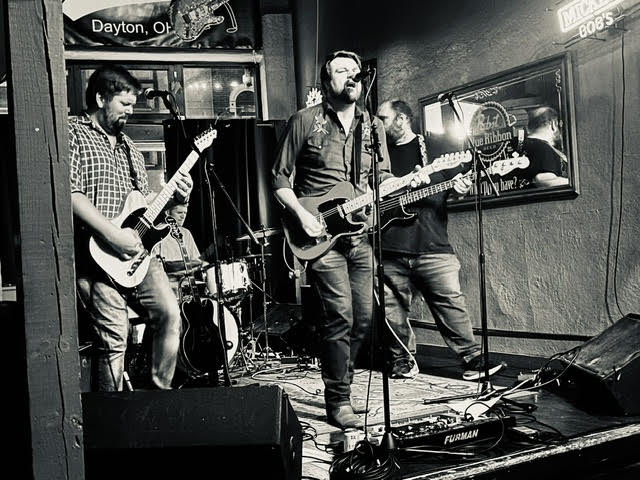
People cry because artists like Jay Farrar, Bruce Springsteen, and American Aquarium sound like they are carrying every factory town in America on their shoulders. They cry because Nina Simone makes heartbreak sound like a moral philosophy. They cry because the Replacements stumble into emotional perfection just as they’re threatening to fall apart. They cry because Aretha Franklin doesn’t simply sing respect—she demands that the universe finally recognize human dignity.

Music matters because authenticity is still audible.

You can’t fake conviction forever. The microphones eventually catch you cheating.

That’s why local music scenes remain sacred. Every city has them. Dayton. Detroit. Austin. Toronto. Minneapolis. Glasgow. Liverpool. Manchester. Places where musicians keep creating despite indifferent audiences, shrinking budgets, and the economic absurdity of trying to build a life around songs. They aren’t doing it because it’s profitable.

They’re doing it because silence would be worse.

Go stand in a club where forty people are watching a band you’ve never heard before. Listen carefully. That’s democracy working better than most legislatures. Complete strangers agreeing that for the next hour they’ll surrender their individual anxieties and become one audience. Every applause break says, “I hear you.” Every encore says, “Stay a little longer.”

We desperately need more of that.

Our politics rewards outrage. Our technology monetizes distraction. Our economy encourages isolation. Music quietly rebels against all three. It insists that listening is an ethical act. Really listening means allowing another person’s experience to occupy your own emotional space.

That’s empathy with a backbeat.

The old critics loved to argue about what was “real rock and roll,” but the argument was always bigger than guitars. They were really asking whether culture could still produce honesty in a world increasingly devoted to image. That’s still the question today, except now image comes filtered, optimized, branded, monetized, and endlessly recycled across glowing screens.

A great song cuts through all of it.

Three minutes.

One voice.

One unforgettable melody.

Suddenly you’re sixteen again, or grieving your mother, or driving nowhere with your best friend, or falling in love, or surviving the worst year of your life. Time collapses. Memory becomes physical. Your pulse syncs with a snare drum. A lyric you’ve heard a hundred times suddenly reveals a meaning it was saving until you were finally ready to understand it.

No other art form enters ordinary life with quite that kind of stealth.

Books demand stillness. Films require schedules. Paintings wait in museums.

Songs climb into your car, your kitchen, your headphones, your funeral, your wedding, your first kiss, your last goodbye.

They accompany us through the ordinary until the ordinary becomes unforgettable.

So no, music isn’t dying.

The industry changes. Formats disappear. Genres mutate. Technologies evolve. Critics grow old. Trends come and go with exhausting predictability. But somewhere, right now, somebody is writing the song another stranger will someday need to survive a terrible Tuesday afternoon.

That possibility alone is enough to keep believing.

Turn it up. Not because louder is always better.

Because sometimes hope arrives disguised as feedback, wrapped inside a melody, played through a beat-up amplifier by people who still believe that a song can change a life.

They’ve been right all along.

Six Hours in the Wild: The Latest Your Tuesday Afternoon Alternative Shows Land on Mixcloud

If you’ve ever driven around town with the radio on and the sun doing that late-afternoon slant that makes everything look like a memory already—gas stations glowing, parking lots half empty, the air buzzing with possibility and dread—then you already understand what Your Tuesday Afternoon Alternative is supposed to feel like.

And now, for the first time in a while, the last two full three-hour broadcasts are sitting online in all their sprawling, unruly glory over on Mixcloud. That’s six straight hours of music, ideas, weird segues, accidental poetry, and the kind of radio that only really works when nobody is trying too hard to make it work. Which, if we’re being honest, is the best kind.

Think of it as a kind of sonic time capsule: three hours where the world’s chaos gets distilled into guitars, synthesizers, a stray folk lament, maybe a punk blast that lasts ninety seconds but somehow resets your whole nervous system. Then you do it all again the next week. Radio as ritual. Radio as wandering conversation.

The thing about listening to these shows after the fact is that they become something slightly different than they were in the moment. Live radio is adrenaline and improvisation—you throw a song into the air and see what it does to the room. But on replay, the structure reveals itself. Themes emerge like ghosts in the static. Songs talk to each other across decades. A jangly indie track from 2024 suddenly feels like it’s answering a garage-rock scream from 1966.

That’s the secret architecture of good radio: it sounds loose but it’s secretly a web of connections. Which makes these two archived episodes especially fun to revisit. Over six hours, the mood drifts the way an actual Tuesday afternoon does. One minute the sun is out and everything sounds hopeful; the next minute you’re staring out the windshield thinking about every mistake you’ve ever made while some beautifully melancholy track hums through the speakers.

And that emotional whiplash is the point.

Great radio—especially college radio—has always been about resisting the algorithm. The streaming services want to smooth everything out into playlists that never challenge you. But real DJs still believe that music should occasionally knock the wind out of you. A dreamy pop song might suddenly give way to something ragged and noisy, and then a minute later you’re floating through a slow acoustic tune that feels like someone left a window open in your heart. That’s not bad programming. That’s life.

The two newly available shows capture that beautifully messy spirit. Across the six hours, you’ll hear indie rock rubbing shoulders with folk, garage, synth-pop, and the occasional left turn that makes you sit up and say, “Wait—what was that?” The answer, of course, is that it doesn’t always matter. Discovery is half the thrill.

And because the shows were recorded live, you also get the little human moments that make radio feel alive: the slightly crooked transitions, the spontaneous reflections, the sense that the whole thing could veer off the rails at any moment but somehow lands exactly where it needs to.

It’s the opposite of polished. It’s the sound of someone digging through a record collection and saying, You need to hear this.

Which is why having the full episodes archived on Mixcloud matters. Instead of a clipped highlight or a tidy playlist, you get the whole ride—the long arc of the afternoon, the gradual build, the strange emotional geography of three uninterrupted hours.

In other words: real radio.

Static Dreams: Why College and Community Independent Radio Still Matters

Let’s get something straight from the jump: independent radio—college stations, community stations, those hissing, crackling signals of barely legal wattage—are more than relics. They’re lifelines, and in a world drowning in curated blandness, they’re salvation that is desperately needed. Sure, you’ve got your algorithmic playlists and big-budget streaming platforms that can spit out the sonic equivalent of a hamburger combo meal, but let me ask you this: when’s the last time one of those songs on the apps and services truly blew your mind? When’s the last time a Spotify playlist made you feel something raw, something real, something alive?

Enter the humble, often-overlooked world of independent radio. These stations don’t play by the rules and thank God for that. College and community DJs who aren’t bound by focus groups or corporate overlords telling them which ten songs to cycle endlessly. They’re the anarchists of the airwaves, throwing down pop punk at 3 a.m., jazz fusion at noon, and some spoken-word poetry over ambient noise just because they can. They’re the kid in the back of the record store who’ll tell you that the B-side of a 7” pressed in someone’s basement in 1984 will change your life—and they’re right. Forgive me if this sounds trite or self-serving, but we believe in the power of music to change your life.

This is radio as it was meant to be: unpolished, unpredictable, and unafraid to go weird. College radio, especially, is often powered by the most crucial demographic for musical discovery—students who don’t yet know the rules they’re breaking. These DJs are sometimes just learning what it means to piece together a playlist, to tell a story in 20-minute sets, to unearth that obscure track nobody else has heard of. It’s raw, and it’s beautiful because it’s real.

And let’s not forget the community stations—the hyper-local powerhouses keeping neighborhoods and subcultures alive. These aren’t just radio shows; they’re conversations. They’re where you tune in to hear the pulse of your city, the heartbeat of your neighbors. It’s where activists and artists collide, where voices ignored by the mainstream get a microphone. It’s radio as rebellion, as resistance, as a refuge from the overpowering heavy challenges we all face.

Here’s the thing the big media conglomerates and tech giants don’t want you to realize: not everything should be convenient. Finding great music—or a great anything—takes work. It takes passion. That’s what makes it matter. Independent radio doesn’t spoon-feed you the hits; it hands you a map, points vaguely in a direction, and says, “Go get lost.” And in that wandering, you discover magic. You stumble across a DJ spinning a 10-minute opus made by an area band or a live set from some local group that sounds like they’re playing from the edge of the world. And you want to go there so you can be part of it.

In an era where everything feels like it’s been prepackaged, sanitized, and optimized for maximum engagement, independent radio stands as a glorious middle finger to the machine. It’s messy, it’s chaotic, and it’s alive in ways that nothing else in the modern media landscape can touch even thought they try to say that experimentation came from them.

What’s more, independent radio matters because it’s often the training ground for the voices we’ll be listening to in 10, 20, or 30 years. Think about all the media icons who got their start in college radio. Two words: Howard Stern. Ever heard of Rick Rubin? He was just some punk kid spinning records at NYU before founding Def Jam. Or Ira Glass, who honed his storytelling chops on the airwaves before becoming public radio’s golden boy. The indie stations are incubators for talent because they’re places where experimentation isn’t just allowed—it’s expected.

And don’t let anyone tell you radio is dead. Sure, the format’s shifted, and the big commercial stations are shells of their former selves, but indie radio persists because it’s adaptable. College stations now stream online, bringing their wild, untamed ethos to a global audience. Community stations podcast their shows, extending their reach far beyond the low-powered transmitter on the roof.

But more than that, indie radio matters because it’s personal. It’s not just about the music—it’s about the human connection. There’s something deeply comforting about hearing another person on the other end of the signal, someone who isn’t trying to sell you something, someone who’s just as excited about this obscure Brazilian psych-rock track as you are now that you’ve heard it. It’s a reminder that music isn’t just content—it’s communion.

And yeah, maybe it’s a little romantic to wax poetic about this scrappy corner of the media world. Maybe it’s easier to dismiss it as nostalgia for a pre-streaming era. But dismissing indie radio is to dismiss the very soul of music, the thing that makes it matter in the first place. It’s the idea that art doesn’t have to be perfect, that it doesn’t have to be profitable, that it can just be.

So the next time you’re scrolling through an endless stream of playlists that all sound the same, do yourself a favor: tune in to the static. Find the frequency where some over-caffeinated college kid is ranting about a new band you’ve never heard of, or where a local DJ is spinning records in a tiny room plastered with band posters and graffiti. Listen with your whole heart, and remember what it feels like to discover.

Because independent radio isn’t just a medium—it’s a movement. And in a world that desperately wants you to settle for the lowest common denominator, it’s the one place still daring to reach higher.