Turn It Up Before the World Goes Silent

Every few years somebody announces that music is dead. They say streaming killed it. Algorithms killed it. Social media killed it. Attention spans killed it. Artificial intelligence killed it. Radio killed it. MTV killed it. Napster killed it. Vinyl prices killed it. Somebody is always writing the obituary while another kid is sitting on the floor with a cheap pair of headphones hearing a song that rearranges their nervous system forever.

Music keeps surviving because it isn’t a product first. It’s evidence that human beings are still trying to tell each other the truth.

That’s why music still matters.

Not because every new release is a masterpiece. Most records have always been forgettable. If you wandered into a record store in 1974—the supposed golden age—you’d discover mountains of disposable junk stacked beside the classics. History performs ruthless editing. We remember the albums that changed lives and conveniently forget the landfill.

The miracle isn’t perfection. The miracle is persistence.

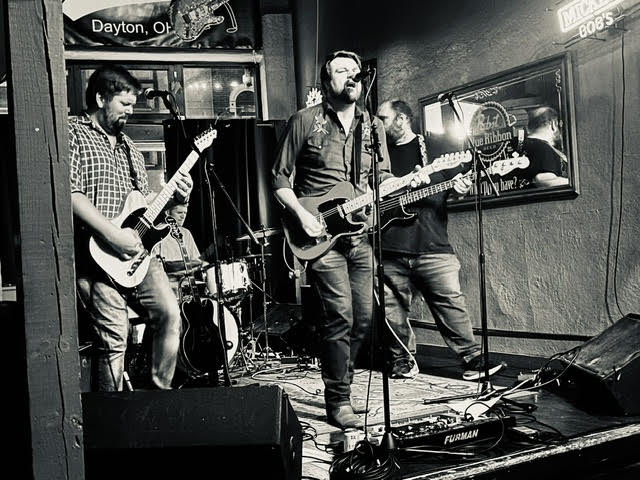
Somewhere tonight a band is loading battered amplifiers into a rusty van because thirty people in a neighborhood bar deserve something louder than despair. Somewhere a songwriter is spending six hours chasing a lyric that will eventually sound effortless. Somewhere a teenager in a bedroom is discovering that three chords are enough to begin constructing an identity.

That’s civilization.

Music isn’t background noise. It’s one of the oldest technologies human beings ever invented for surviving themselves.

The best songs don’t merely entertain; they interrupt us. They stop the machinery of everyday life long enough to whisper—or scream—that we’re not crazy for feeling what we’re feeling. They give shape to grief before we know how to describe loss. They turn anger into rhythm instead of violence. They transform loneliness into harmony. They make joy communal instead of private.

You don’t dance because life is easy.

You dance because for three minutes somebody convinced you it was worth staying in the room.

And here’s the part the streaming executives and data analysts never quite understand. Nobody has ever cried because an algorithm correctly predicted what they wanted to hear next.
People cry because artists like Jay Farrar, Bruce Springsteen, and American Aquarium sound like they are carrying every factory town in America on their shoulders. They cry because Nina Simone makes heartbreak sound like a moral philosophy. They cry because the Replacements stumble into emotional perfection just as they’re threatening to fall apart. They cry because Aretha Franklin doesn’t simply sing respect—she demands that the universe finally recognize human dignity.

Music matters because authenticity is still audible.

You can’t fake conviction forever. The microphones eventually catch you cheating.

That’s why local music scenes remain sacred. Every city has them. Dayton. Detroit. Austin. Toronto. Minneapolis. Glasgow. Liverpool. Manchester. Places where musicians keep creating despite indifferent audiences, shrinking budgets, and the economic absurdity of trying to build a life around songs. They aren’t doing it because it’s profitable.

They’re doing it because silence would be worse.

Go stand in a club where forty people are watching a band you’ve never heard before. Listen carefully. That’s democracy working better than most legislatures. Complete strangers agreeing that for the next hour they’ll surrender their individual anxieties and become one audience. Every applause break says, “I hear you.” Every encore says, “Stay a little longer.”

We desperately need more of that.

Our politics rewards outrage. Our technology monetizes distraction. Our economy encourages isolation. Music quietly rebels against all three. It insists that listening is an ethical act. Really listening means allowing another person’s experience to occupy your own emotional space.

That’s empathy with a backbeat.

The old critics loved to argue about what was “real rock and roll,” but the argument was always bigger than guitars. They were really asking whether culture could still produce honesty in a world increasingly devoted to image. That’s still the question today, except now image comes filtered, optimized, branded, monetized, and endlessly recycled across glowing screens.

A great song cuts through all of it.

Three minutes.

One voice.

One unforgettable melody.

Suddenly you’re sixteen again, or grieving your mother, or driving nowhere with your best friend, or falling in love, or surviving the worst year of your life. Time collapses. Memory becomes physical. Your pulse syncs with a snare drum. A lyric you’ve heard a hundred times suddenly reveals a meaning it was saving until you were finally ready to understand it.

No other art form enters ordinary life with quite that kind of stealth.

Books demand stillness. Films require schedules. Paintings wait in museums.

Songs climb into your car, your kitchen, your headphones, your funeral, your wedding, your first kiss, your last goodbye.

They accompany us through the ordinary until the ordinary becomes unforgettable.

So no, music isn’t dying.

The industry changes. Formats disappear. Genres mutate. Technologies evolve. Critics grow old. Trends come and go with exhausting predictability. But somewhere, right now, somebody is writing the song another stranger will someday need to survive a terrible Tuesday afternoon.

That possibility alone is enough to keep believing.

Turn it up. Not because louder is always better.

Because sometimes hope arrives disguised as feedback, wrapped inside a melody, played through a beat-up amplifier by people who still believe that a song can change a life.

They’ve been right all along.

Video of The Day: Band Aid – Do They Know It’s Christmas

In popular music, certain songs become more than there frames of sound to become cultural phenomena. Band Aid’s “Do They Know It’s Christmas?” is undeniably one such song. Released in 1984, this track emerged as a powerful anthem of compassion and a call to action, rallying the global community to address the famine crisis in Ethiopia. On Christmas Day, 2023, we explore the genesis of the collaboration, consider it’s impact, and ponder the enduring legacy of “Do They Know It’s Christmas?” as a positive example by some in the music industry for reach for an opportunity to create music in order to inspire social change.

The catalyst for the creation of Band Aid and its subsequent anthem was the devastating famine that swept across Ethiopia in the early 1980s. Witnessing the horrifying images of starvation and suffering on their television screens, Bob Geldof, lead singer of The Boomtown Rats, and Midge Ure, Ultravox’s frontman, felt compelled to channel their concern, grief, and empathy into action. The result was the formation of Band Aid, a collective of some of the most prominent British and Irish musicians of the time.

“Do They Know It’s Christmas?” penned by Geldof and Ure in a whirlwind of creativity. The songwriting process was fueled by a desire to craft a poignant yet accessible message that would resonate with listeners and inspire them to contribute to the relief efforts. The lyrics, though simplistic in structure, carried a profound emotional weight, urging people to reflect on their own fortunes and consider the less fortunate, particularly those directly affected by the Ethiopian famine.

The recording of “Do They Know It’s Christmas?” was a momentous event that brought together an unprecedented gathering of popular musicians. On November 25, 1984, a constellation of pop stars, including all of the members of Duran Duran, Bono of U2, Boy George of Culture Club, Phil Collins of Genesis, George Michael of Wham!, Bananarama, and Sting of The Police, members of Status Quo, Spandau Ballet, Kool and the Gang, Heaven 17, among others, converged at SARM West Studios in London to contribute their vocals to the charity single. The collaborative effort resulted in a rich tapestry of voices, each lending its unique timbre to the song’s emotional resonance.

Produced by Trevor Horn, the musical arrangement seamlessly blended pop and rock elements, providing a catchy and uplifting backdrop to the poignant lyrics. The opening piano riff, the iconic chorus, and the heartfelt solos all contributed to the song’s timeless quality. Moreover, the collective nature of the project reinforced the idea that music could be a powerful force for unity and positive change.

Released on December 3, 1984, “Do They Know It’s Christmas?” achieved immediate success, soaring to the top of the charts in multiple countries. Beyond its commercial success, the song became a symbol of solidarity and compassion, raising awareness about the Ethiopian famine and inspiring a global movement for charitable giving. The song sold over two million copies around the globe and raised more than $24 million dollars.

The accompanying music video, featuring clips of the recording sessions and footage from Ethiopia, served as a visual reinforcement of the song’s message. Viewers were confronted with the stark reality of the famine, prompting a visceral emotional response that transcended geographical boundaries. The visual impact of the music video further fueled the charitable momentum, prompting viewers to take action and contribute to the cause.

One of the key aspects of “Do They Know It’s Christmas?” was its explicit call to action. The song urged listeners to “Feed the World” and implored them to recognize the shared responsibility of the global community in addressing issues of poverty and famine. This call to action resonated with millions, fostering a sense of collective responsibility and encouraging individuals to make a tangible difference through charitable donations.

While “Do They Know It’s Christmas?” remains a revered song for many people, it has not been immune to criticism. Some have argued that the song perpetuates a Eurocentric and paternalistic perspective, portraying Africa as a monolithic entity in need of Western saviors. The line “Well tonight thank God it’s them instead of you” has been particularly scrutinized for its potentially insensitive implications. Some critics have noted that the “over the top” approach in the music leaves little sonic space for introspection and reflection. The bombastic arrangement, capitalistic enterprise and self-righteous nature of the effort have also drawn criticism.

In response to these critiques, it is essential to acknowledge the historical context in which the song was created. Band Aid’s intention was not to perpetuate stereotypes or reinforce a colonialist mindset but rather to urgently address a humanitarian crisis using music to convey the need for action. Nevertheless, the criticisms underscore the complexities inherent in using music as a tool for social change and the importance of approaching such endeavors with sensitivity and cultural awareness.

Despite the criticisms, the positive impact of “Do They Know It’s Christmas?” cannot be understated. The song’s success catalyzed the Live Aid concerts in 1985, which raised substantial funds for famine relief in Ethiopia. The ripple effect of Band Aid’s initiative also inspired subsequent charity singles, such as USA for Africa’s “We Are the World.” These collective efforts demonstrated the potential of the music industry to mobilize significant resources for humanitarian causes, leaving an indelible mark on the intersection of music and social responsibility. Band Aid and Live Aid combined raised about $150 million dollars for the famine relief effort in Ethiopia.

Band Aid II was formed in the 1989 to re-record the song. Band Aid II’s version of “Do They Know It’s Christmas?” was produced by the legendary songwriting and production team Stock, Aitken and Waterman and took the song in a different direction. The follow-up was released on December 11, 1989, it topped the UK Christmas charts for 3 weeks. The line-up featured some of the biggest British stars of the late ’80s. In 2014, Band Aid 30, Bob Geldof and Midge Ure relaunched the project with music artists in an effort to draw attention to the Ebola crisis in Western Africa.

Despite the criticisms that have been leveled against the song, “Do They Know It’s Christmas?” by Band Aid stands as an example of the transformative power of music in addressing pressing global issues. Born out of a genuine desire to make a difference, the song became a rallying cry for compassion, unity, and social responsibility. Its impact affected the charts, influencing a generation of musicians and listeners to recognize the potential of their art to effect positive change.

While acknowledging the song’s imperfections and criticisms of it, we believe it is crucial to view “Do They Know It’s Christmas?” within the historical context and empathy of its creation. The song’s enduring legacy lies not only in its music but also in its ability to galvanize people to contribute to the greater good. As we reflect on the song’s influence over the decades, it serves as a reminder that music has the power not only to entertain but also to inspire, challenge, and, ultimately, change the world.