When Billy Bragg released She’s Got a New Spell, he proved that a protest singer could also write one of the sharpest love songs of the late twentieth century — not syrupy, not starry-eyed, but wired with anxiety, wit, and the uneasy thrill of falling hard when you know better.
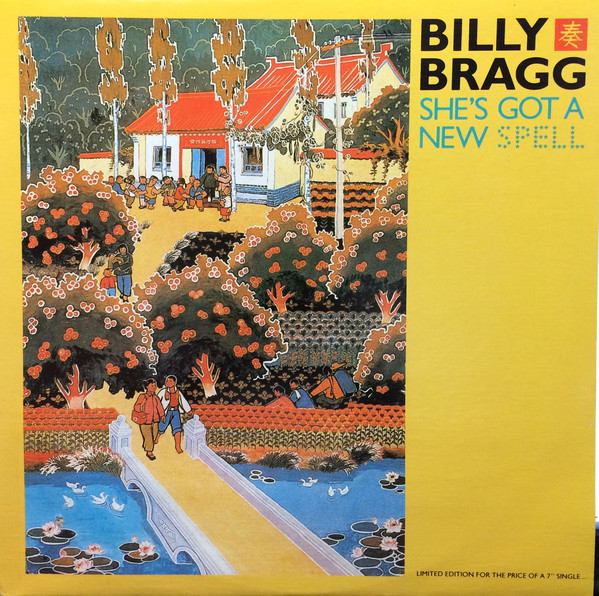
This is romance as ideological crisis. The guitars jangle like nervous energy, and the lyrics read like marginal notes in a dog-eared paperback about class struggle and heartbreak. He’s not surrendering to love so much as negotiating with it — bargaining, questioning, trying to keep his political principles intact while his heart stages a coup.
What makes the song endure is that tension. It understands that love isn’t just chemistry; it’s disruption. It rearranges your priorities, scrambles your certainty, makes you reconsider the tidy theories you built to explain the world. One minute you’re organizing meetings and quoting manifestos, the next minute you’re staring at the phone, wondering if the revolution can wait until after dinner.
There’s humor in it, too — that dry, knowing grin running underneath the melody. Bragg isn’t mocking love; he’s marveling at how powerful it is, how it sneaks past your defenses and rewrites the rules. The “spell” isn’t magic in the fairy-tale sense. It’s the quiet, relentless pull of connection — the realization that vulnerability might be the most radical act of all.
Play it loud enough, and it still sounds like possibility.


