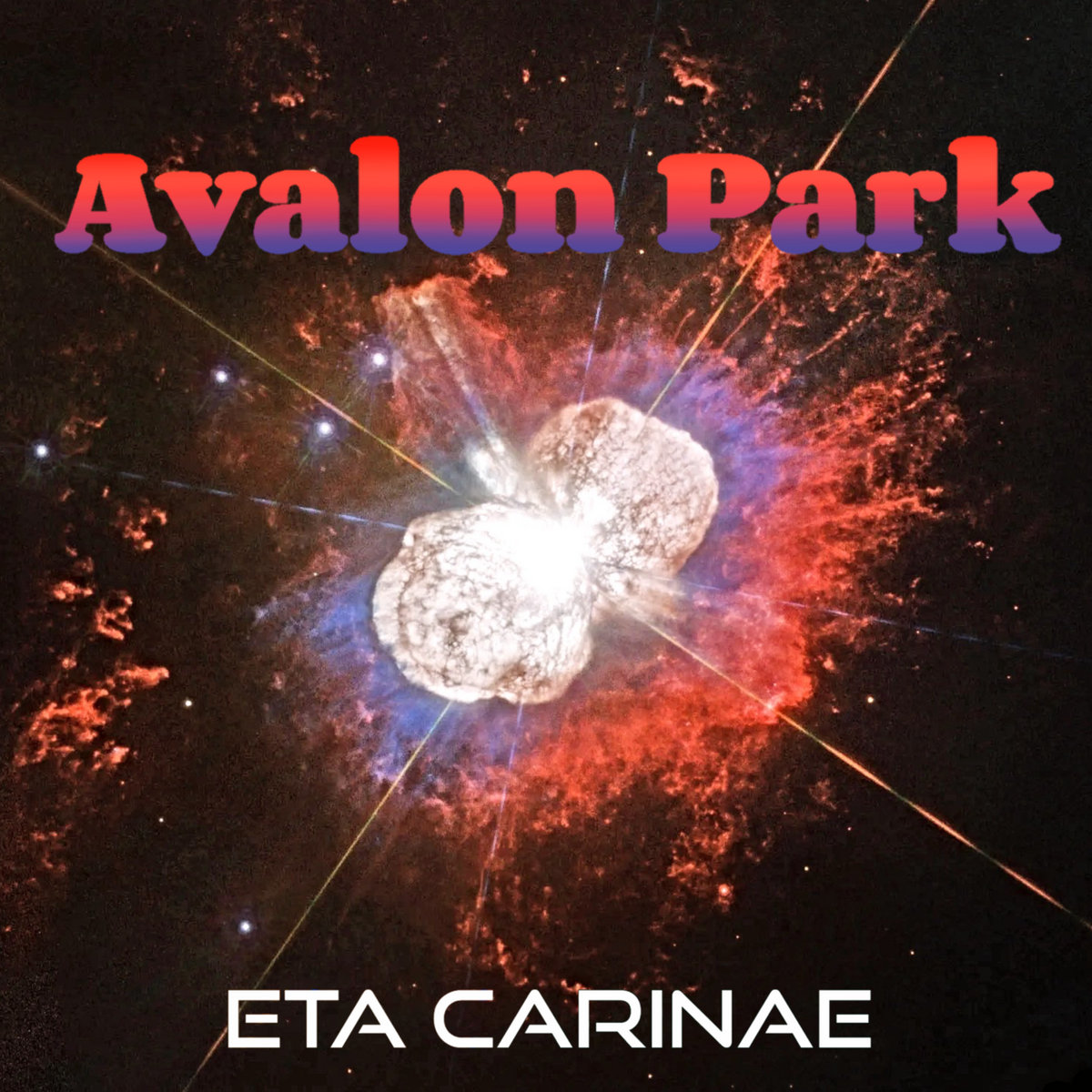
Let me tell you something about Springfield, Ohio that nobody asked you to care about and you’re going to care about anyway: in 1900, just west of what is now some community college, there was a roller coaster and a merry-go-round and a dance hall and a lake, all rolled into one magnificent sprawling fun zone they called Spring Grove Park, later renamed Avalon Park — until the dance hall caught fire, the roof caved in, and the whole beautiful disaster shut down forever in the 1930s.
I bring this up because that mythology — the burned-down dance hall, the ghost of American leisure, the whole gorgeous wreckage of the past — is exactly what Charlie and Amanda Jackson have bottled on Eta Carinae, their debut record as Avalon Park, and I want you to understand that this is one of those albums you hold up against the light and see something real moving inside it.
Charlie told Brandon Berry of The Dayton Daily News that they “slowly turned into Jackson Browne — so slowly that nobody noticed.” That is one of the finest self-descriptions in rock and roll journalism; I don’t care who disagrees with me. Because that’s exactly what happened. The shift from old-time country into classic 1970s pop with an alt feel is significant but hardly abrupt — leaning into 12-string riffage when appropriate, while still arranging with three- to four-chord progressions, drawing on Jackson Browne and Fleetwood Mac on one end, the Velvet Underground and 1960s pop on the other, with Charlie even bringing back rapid strum patterns from his punk rock days. You hear all of that on this record, and somehow it doesn’t sound like a shopping list of influences; it sounds like one coherent, aching human voice.
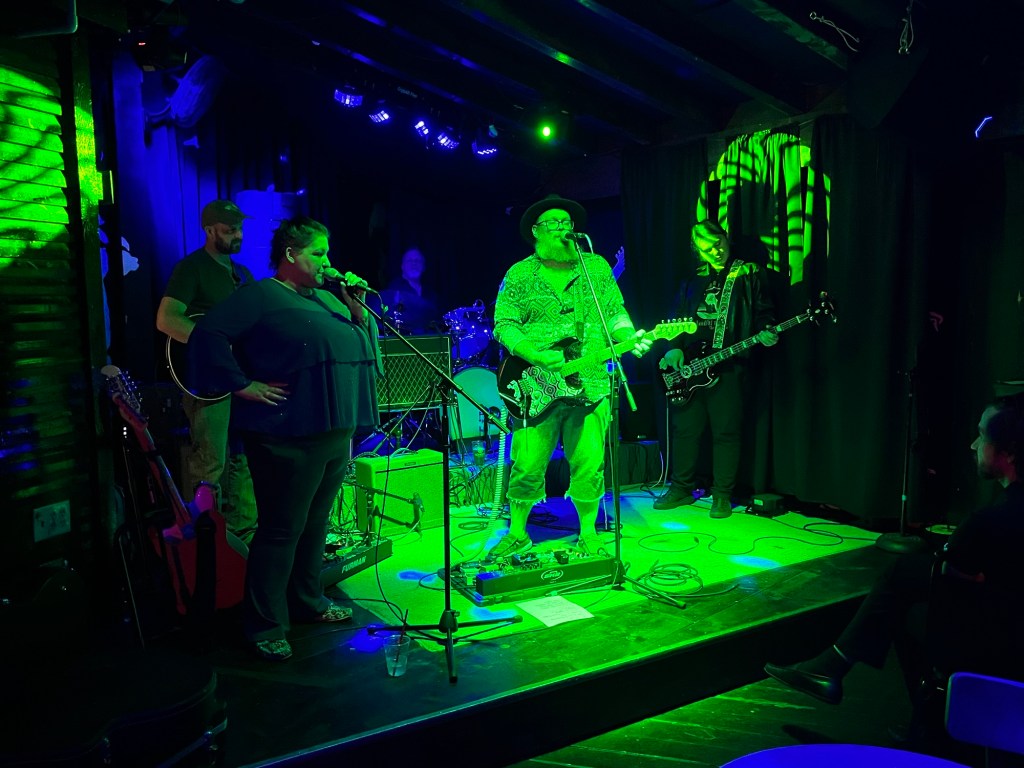
“Bloodshot Moon” kicks things off, and this song is as good an opening track as I’ve heard in years — warm beer on the jukebox, boots full of lead, a man wandering down 5th and Main in the blue hours looking for somebody he’s already lost. It’s classic country-rock structure, but the feel is pure California 1972, the kind of song that makes you want to roll the windows down at two in the morning and drive nowhere specific. Amanda’s harmonies ghost through the background like something half-remembered, and the marriage is audible in every bar.
“Dandelion Wine” is this album’s heart. Four winds blowing you home, the pot of gold at the rainbow’s end resolving into something simpler and better — just dandelion wine. That’s songwriting, folks. Not chord tricks, not production gimmicks. The couple’s voices braid together in the chorus in a way that sounds completely uncontrived, because they’ve spent years singing around the house together, harmonizing because they know each other’s voices — his voice, her voice, twenty years of stories. You can’t fake that. You really can’t.
Then there’s “Broken Branches,” which is where this record stops being pleasant and becomes genuinely important. A bloodstain on the floor, a child left to look after themself. Charlie wrote every word of it, but it’s about Amanda’s childhood — and because he’s known her for twenty-seven years total, he can write from her perspective as if she wrote it herself. That kind of intimacy between writer and subject is what separates the craftsmen from the confessors, and the confessors always win. The lyric “I thought everybody felt” — describing a childhood so abnormal she had no framework to recognize it as such — is the kind of line that hits you in a place beyond words.
“Pink Carnations” is the album’s rawest wound: a eulogy for someone gone too soon, church bells ringing, the singer telling God exactly where he can stick his plan. It earns that anger. And “The Cynic” — written by Amanda — cuts with the controlled precision of someone who’s been dismissed once too often by people who had easier childhoods.
The title track uses Eta Carinae — a binary stellar system so luminous it’s five million times brighter than our sun — as a metaphor for two people locked in a gravitational dance. The only thing keeping those two massive stars from going full supernova is the gravitational pull of each other — locked in what Charlie called a death dance. He wrote the song in 2020, which, as the Daily News noted, feels entirely appropriate. Out of all the years to write about two volatile forces holding each other together.
The album closes with “Feels Like Summertime,” and it contains a reference to “beyond the dusty road” — which was among the first songs Charlie ever wrote for Amanda when they were dating. Now they harmonize on it together. Everything comes back around. If that doesn’t do something to your chest, I’m not sure music is for you.
Eta Carinae was engineered and produced by David Payne (The New Old Fashioned) at Reel Love Recording Company, with the band consisting of son Gideon on bass, Karl Woschitz on drums, Casey Abbott on guitar that simply lifts every song, Emma Woodruff (Novena) on backing vocals, and Charlie’s brother Leigh on additional guitar. It’s a family record in every sense — named for a park that burned down, sustained by the gravity of two people who haven’t let go of each other yet.
Ten songs, forty-two minutes. Buy it.

 your tuesday afternoon alternative