
If you want to understand American music, you don’t start in the places that market themselves as capitals. You start in places where people have learned how to survive without being watched. Dayton, Ohio, is one of those places. It’s not a brand; it’s a frequency—sometimes distorted, sometimes melodic, often both at once. It’s the sound of basements, nondescript halls, record stores, radio studios on the left side of the dial, and people who keep making music because not making it would be worse.
Dayton has long lived with the mythology of The Ohio Players, Brainiac, The Breeders, and Guided By Voices, and rightly so. Those bands didn’t just “come from” Dayton; they carried its nervous system with them. The Ohio Players reshaped the structure of music. Brainiac turned post-industrial anxiety into neon futurism. The Breeders made abrasion feel intimate. Guided By Voices proved that lo-fi wasn’t an aesthetic so much as a work ethic—songs written because they had to be written, not because the market asked for them. But the mistake outsiders make is assuming the story ended there, like a museum exhibit frozen in amber. Dayton never stopped. It just got better at multiplying.
What makes Dayton’s music community distinct is density. Musicians don’t just play in one band; they circulate. You’ll see David Payne one night in The New Old Fashioned, another night anchoring something else entirely, as if styles were jackets you try on before walking back out into the weather. You’ll hear Rich Reuter bring the same melodic intelligence to Kittinger. You can see Howard Hensley sing the narratives of your life that you keep hidden in a private journal. You’ll catch Kyleen Downes making vulnerability sound like strength, then turn around and hear Chad Wells and Aarika Voegele in Cricketbows and Creepy Crawlers remind you that psychedelia is still a radical act.
There’s a particular Dayton knack for bands that feel communal rather than hierarchical. Shrug operated like a shared engine—power pop with muscle memory, hooks built from collective trust. Smug Brothers do something similar in an indie lo-fi manner, but with a wink, as if to say: yes, we love the song, but we also love the joke inside it. Me Time pares things down until you can hear the room breathe, while Oh Condor leans into texture and atmosphere, stretching Dayton’s sound outward without losing its spine where punk urgency meets craft instead of fighting it.

And then there’s the streak of theatricality that runs through the city—not showbiz gloss, but the drama of people who know that art is a way to survive the week. Moira thrives on that tension between polish and pulse, while Todd The Fox reminds us that music doesn’t have to be ironic to be intelligent. Novena creates music that wraps around you and takes you through the experiences that you need not categorize but live within. Ghost Town Silence and Sadbox explore all of the corners, not as cosplay, but as honest terrain. They understand that Midwestern quiet can be loud if you listen closely enough.
Dayton also knows how to honor the songwriters—the ones who can stop a room with a voice and a guitar. Shannon Clark and The Sugar balance heart and harmony without sentimentality. Nick Kizinis crafts music that feels deeply personal and belonging to all of us at the same time. Mike Bankhead and Heather Redman carry storytelling traditions forward without turning them into nostalgia acts. Charlie Jackson, Sharon Lane, and Colin Richards and Spare Change all work in that space where craft meets community, where the goal isn’t fame but connection.
What’s striking is how the city supports experiments that don’t fit easy categories. The Nautical Theme reminds us that pop intelligence doesn’t have to announce itself with a thesis statement. Motel Faces and Motel Beds (separate names, shared grit) translate restlessness into motion, road songs for people who might not leave but still want to move. John Dubuc’s Guilty Pleasures embraces joy without apology, while Nick Kizirnis’s various projects show how longevity comes from curiosity, not branding.
Dayton’s rap and hip hop scene carries the same DIY backbone as its rock underground, but filtered through sharp lyricism, lived experience, and a deep sense of place. Tino delivers verses with clarity and purpose, balancing organic storytelling with an ear for hooks that stick without softening the message. Illwin brings a cerebral edge, blending introspection and technical skill in ways that reward close listening, while KCarter operates with a commanding presence, turning personal narrative into something anthemic and communal. Around them is a broader network of MCs, producers, DJs, and collaborators who treat hip hop not as a trend but as a language—one spoken fluently across clubs, community spaces, and independent releases. Like every vital Dayton scene, it thrives on collaboration over competition, local pride over imitation, and the belief that telling your own story, in your own voice, is the most radical move there is.
One of Dayton’s greatest strengths, too often undersold, never underpowered, is the depth and range of its women songwriters and musicians, artists who write with clarity, risk, and emotional authority. Amber Heart brings a fearless intimacy to her songs, pairing melodic grace with lyrical honesty that cuts clean through pretense. Samantha King writes with a restless intelligence, her work balancing vulnerability and bite, proof that introspection can still swing. Khrys Blank bends genre until it gives way, crafting songs that feel both deeply personal and quietly defiant, while Sharon Lane carries a lineage of soul, grit, and resilience that anchors the community itself. Add to this constellation the many other women shaping stages, sessions, and scenes across the city—singers, instrumentalists, bandleaders, collaborators—and a clearer picture emerges: Dayton doesn’t just feature women in its music culture; it is being actively defined by them. Their presence isn’t a sidebar or a trend. It’s the spine, the pulse, and the future of the sound.
Poptek Records operates like a pressure valve for Dayton pop intelligence, a label that understands hooks are a form of radical communication. The 1984 Draft brings nervy, literate indie punk rock that sounds like it’s pacing the room while thinking three steps ahead—melody sharpened by urgency, guitars wired straight into the bloodstream. Jill & Micah offer a different kind of voltage: intimate, harmonically rich, emotionally precise songs that trust quiet moments as much as crescendos, proving that restraint can hit just as hard as distortion. XL427 leans into power pop’s finest tradition—tight structures, smart turns, choruses that land without asking permission—while still carrying that unmistakable Dayton DNA of grit and sincerity. Taken together, and alongside the label’s other releases, Poptek’s roster feels less like a genre exercise and more like a shared belief system: songs matter, craft matters, and community matters. It’s pop music that knows where it’s from, isn’t embarrassed by joy, and refuses to confuse ambition with emptiness.
This ecosystem works because Dayton listens to itself. Bands go to each other’s shows. Musicians play on each other’s records. Area radio, house shows, small clubs, and DIY spaces form an infrastructure that doesn’t depend on permission. You can hear that lineage in The New Old Fashioned’s country infused power precision, in Oh Condor’s punk economy, in The Paint Splats’ melodic insistence, in Guided By Voices’s expansive moods still evolving. It’s a scene where influence flows sideways instead of top-down.
If the great rock critic, Lester Bangs (who I have been reading a lot of lately) taught us anything, it’s that scenes matter not because they’re perfect, but because they’re alive. Dayton’s scene is alive in the way a good band rehearsal is alive—messy, loud, generous, occasionally miraculous. It’s alive in the refusal to wait for validation. It’s alive in the way new bands grow up hearing old ones not as legends, but as neighbors.
So yes, celebrate Brainiac, The Breeders, and Guided By Voices. You should. But don’t stop there. Pay attention to Sharon Lane, Shrug, Amber Heart, Smug Brothers, The 1984 Draft, Age Nowhere, Moira, Tino, The Heisy Glass Company, Harold Hensley, Todd The Fox, Ghost Town Silence, Sadbox, Novena, Me Time, Oh Condor, Motel Faces, Motel Beds, Mike Bankhead, Cricketbows and Creepy Crawlers, The Nautical Theme, Illwin, Khrys Blank, Seth Canan, XL427, Samantha King, The Typical Johnsons, KCarter and all the songwriters and collaborators who keep showing up. Dayton isn’t a chapter in a rock history book. It’s an ongoing argument about why music matters—and it keeps winning that argument one show at a time.


 Our sixth installment of 11 Questions with… features one of the best songwriters in the Dayton Music Scene! Charlie Jackson burst onto our consciousness with his solo record ‘These Days’ (released in late 2015-early 2016) that featured some of the most well crafted, mature and relatable songs about the problems of real life. Wanting a broader sonic textures for his songs, Charlie recruited Denny Cottle, Ricky Terrell and Brad Bowling for ‘
 Dr. J: What can you share with us about when and how you both started recording your latest record,
  Dr. J: You have worked closely with Patrick Himes at
 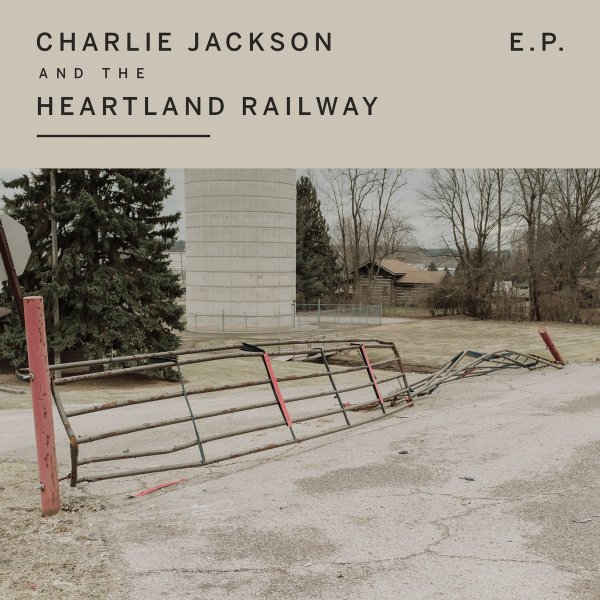 Dr. J: The King & Queen of Dayton Country is a very different record than E.P. and Charlie Jackson and the Heartland Railway, how do these records compare? What influenced your work on each of them?
 Dr. J: ‘Call This Home’ – the first single from The King & Queen of Dayton Country – addresses forms of love and support that someone finds at home – is that a correct interpretation of the title? If that is correct, did you intend to address how difficult it is to make a loving home or did the song evolve in that direction over time?
 CJ: I can draw inspiration from just about anywhere, but my biggest muse has definitely always been Amanda. In the love songs (even if they aren’t autobiographical) I use her as the focal point of the love itself. For the sad songs and the heartbreak songs I recall back to our times apart in the rockier years of our early relationship, or I look at what I now know I would be missing out on if that love wasn’t there. Now, with this new level where I’m writing songs about her and for her to sing, she’s even more of a muse than she already was. Not just lyrically, but even the way I arrange the music revolves more around her. I write in keys that showcase her as much as possible. When I can coax her out of her shyness and get her to sing out, especially in her higher register, she has this natural vibrato in her voice that is just beautiful.
 Dr. J: How would you describe the music that you typically create? How has that process evolved or changed over time (especially as you think about your journey from These Days to Charlie Jackson and the Heartland Railway to The King & Queen of Dayton Country)?
 Dr. J: What is next for you musically? Do you have plans to record again with The Heartland Railway? How would you describe your thoughts at this point for your next project?
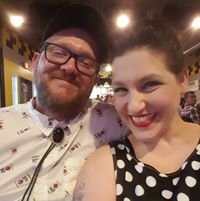 Dr. J: What is your favorite song to perform with Amanda? What is your favorite song to perform with the Heartland Railway? What makes it a current favorite in your performances? Do you enjoy Live Streaming?
 Dr. J: What is one message you would hope that listeners find in the unique nature of your latest music?
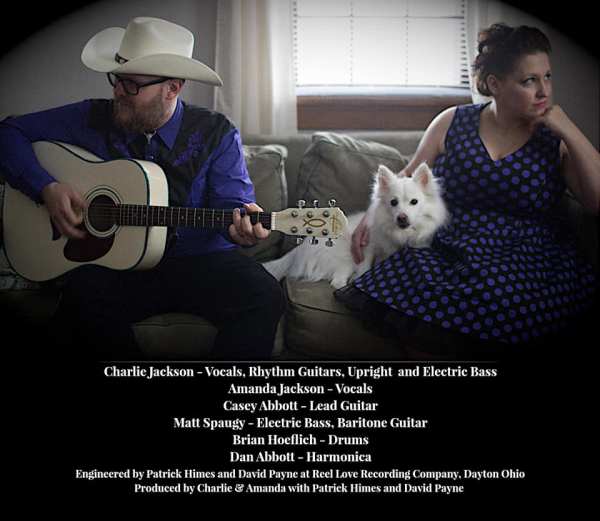 The first couple of Dayton Country Music have their first single from their upcoming debut record! Harkening back to the classic country duets and duos of classic country past, Charlie & Amanda craft songs that address and document the challenges of real life with heart, sincerity and authenticity. Their music reminds us of the legendary country duos of Conway Twitty and Loretta Lynn, George Jones and Tammy Wynette, Kenny Rodgers and Dolly Parton and Johnny Cash and June Carter. The most appropriately titled full length album “The King & Queen of Dayton Country” is available for pre-order now at at the duo’s
  Well, here we are, the end of another year is upon us. If you’re like I am, you are fighting to break out of your self-imposed echo chamber which you have ensconced yourself in and (possibly) you are thoroughly convinced life as you know it is falling apart. Yes, 2019 has been one of “those” years. As we all watch the worlds political systems, economies and climates stretch and strain under the forces that be, it is easy to fall into a state of hopelessness and despair. For a great many of us, however, the thing that keeps us upright and a productive part of society is an unnatural reliance upon popular music, rock n roll in particular, and the almost mystical way it seems to be able to make life bearable. Almost like a gigantic connective web covering the world, for those of us who are tuned in, music is the prime mover, the voice of generations, the highest form of expression and ultimately, the reason behind it all. Like legendary Who guitarist Pete Townsend said, “… the elegance of pop music [is] that it [is] reflective: we were holding up a mirror to our audience and reflecting them philosophically and spiritually, rather than just reflecting society or something called ‘rock n roll.’” Indeed, this is the way it was then when The Who was at the forefront of new music and the way it still is now.
 upheaval and political division was at an all time high and I have found that with only a few notable exceptions, artists from previous eras have become suddenly and starkly relevant again in a way that has never happened for many of us before. For instance, 2019 saw the release of the album Colorado by Neil Young, which is objectively an amazing piece of artistry and social commentary. Take into evidence the song “Shut It Down” where the venerable Mr. Young sings:
 Jeremy Siegrist describes himself as “a no one, from no where, in a small band in Ohio called
  Today on the show we will be talking to Lindsay Murray of Gretchen’s Wheel about her Nada Surf project ‘Moth to Lamplight’ which you can
 If you have heard their amazing music than you know why we are so excited about this visit! So, make the plans, set up the schedule and do whatever you need to do to join us from 3-6pm online over on
  One of our favorite singers in Dayton has a new record that we want to share with you! We refer to him as the “Golden Voice” in Dayton. His voice is simple amazing! And now you can pre-order a copy of his forthcoming solo record! You are a lucky person.


 We have some new music from Mr.
 your tuesday afternoon alternative