Listening to the Hiss: Why Nebraska Is Bruce Springsteen’s Most Dangerous Album

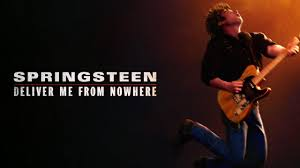
I have been watching a lot of music movies and documentaries. One of the most interesting music films I have seen is Deliver Me From Nowhere.

So, sure… I’m supposed to talk about a movie here, Deliver Me From Nowhere, which already sounds like a bootleg lyric scribbled on a diner napkin at 3 a.m., which is exactly right, because if you’re going to make a movie about Bruce Springsteen and you don’t start from the place where he’s half-lost, half-feral, recording songs alone with ghosts rattling around the room, running around his mind, then you’re just making another shrine, another museum exhibit with the volume turned down.

The trick with Springsteen—especially for film—is that he’s been embalmed while still breathing. Bandanas, stadiums, flag-waving, the myth of blue-collar transcendence with a backbeat you can chant to while buying merch. All of that is real enough, but it’s also the loudest, safest version of him. Deliver Me From Nowhere wisely points the camera in the opposite direction: toward the guy sitting alone with a cheap recorder, a harmonica, and a head full of the past that we all are trying to outrun from when we were kids, running as much from as well as to American dread. Toward Nebraska.

Let’s get this out of the way right now: Nebraska is one of the best albums Bruce Springsteen ever made. Maybe the best. And before the E Street choir starts humming “Born to Run” in protest, understand that this isn’t a knock on the big stuff. Those records are monuments. Nebraska is a crime scene. And crime scenes tell you more about a culture than monuments ever do.

The movie—at least in spirit, and somewhat in execution—gets that Nebraska wasn’t a detour or a demo tape that accidentally escaped. It was a confrontation. Springsteen stares straight into the cracked mirror of American masculinity and says, “Okay, let’s not lie about this.” No big band. No catharsis-by-chorus. Just flat voices telling flat stories about people who don’t get saved, or don’t even believe in salvation anymore (honestly, which is worse?).

If you want to understand why Deliver Me From Nowhere matters, you have to understand that Nebraska is a record made by someone who had already “won.” The success machine was humming. He could have turned the crank again and printed another anthem. Instead, he made a record where the American Dream shows up already foreclosed, the lawn brown, the marriage strained, the highway leading nowhere in particular.

That’s not an accident. That’s a choice. And it’s a deeply uncommercial one, which is what makes it all the more meaningful.

What the movie seems to grasp—again, fingers crossed as it doesn’t chicken out—is that Springsteen’s genius isn’t just empathy. A lot of critics stop there, because empathy is safe. Empathy doesn’t ask uncomfortable questions. But Nebraska isn’t just empathetic; it’s accusatory. Not in a preachy way, but in the way a good true-crime story accuses you by refusing to tidy itself up.

Take the title track. A killer talks. No moral lesson. No orchestral swell telling you how to feel. Just a voice explaining itself, almost bored, almost numb over the fact that the world is a place full of mean, anger, and hostility. That’s radical. Rock music, especially in the early ’80s, wasn’t supposed to do that. Rock was about triumph, even when it pretended to be about suffering. Nebraska lets suffering sit there without redemption, like an unpaid bill that you read in the dark after the electricity has been turned off.
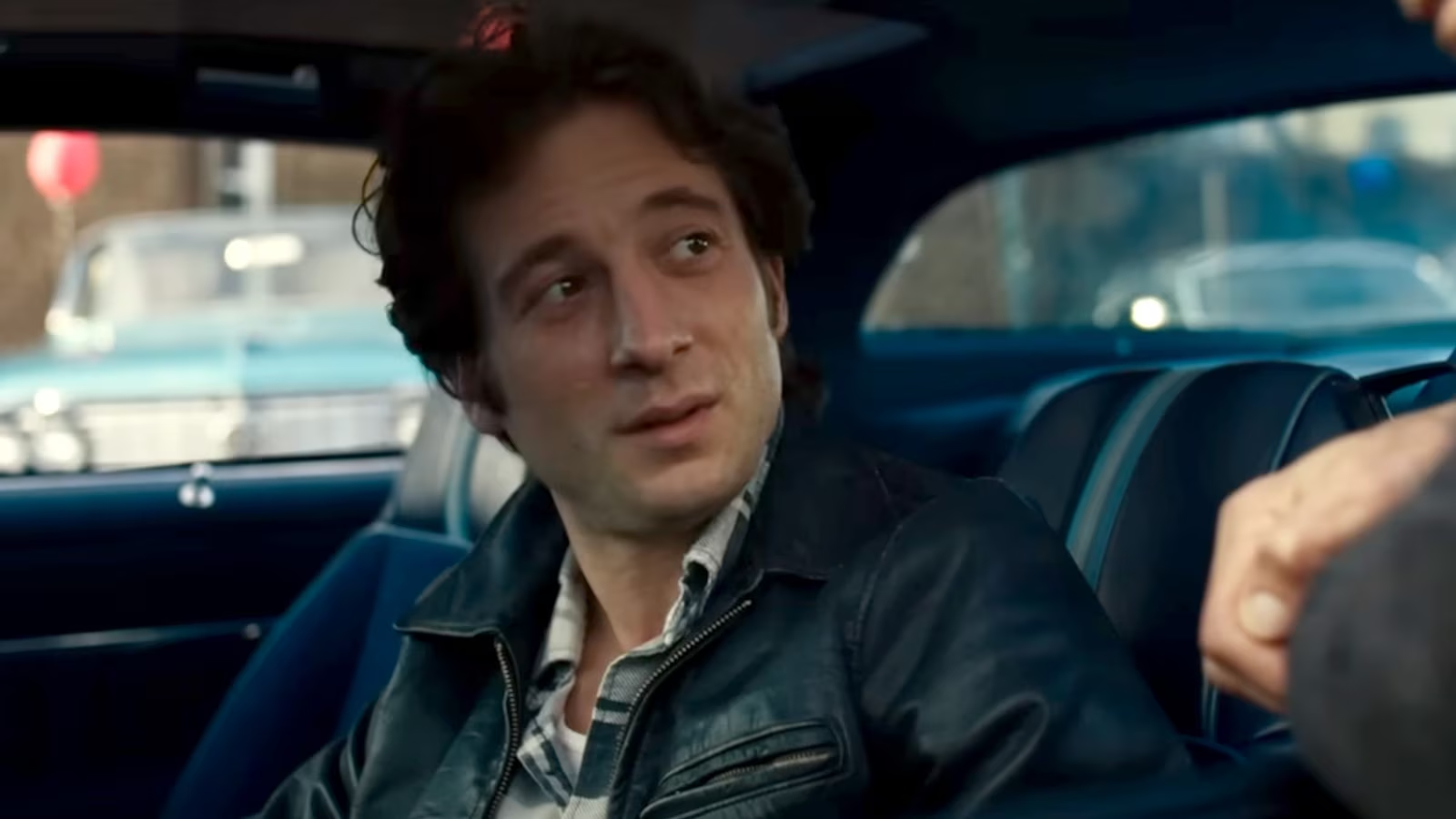
A film about this period has to resist the urge to explain too much. Explanation is the enemy of dread. If Deliver Me From Nowhere turns into a neat psychological case study—“here’s why Bruce felt sad”—then it misses the point. The power of Nebraska is that it doesn’t psychoanalyze its characters. It listens to them. And sometimes listening is more disturbing than understanding.

What makes Nebraska one of Springsteen’s best albums (I know, I already said that) is precisely what made it risky: it’s unfinished in all the right ways. The tape hiss is part of the meaning. The thin sound isn’t lo-fi nostalgia; it’s a sonic moral choice. These songs don’t deserve polish because their lives don’t have it. You don’t add reverb to a confession. You do not turn up a whisper, you lean in and listen hard.

If the movie captures that—if it lets silence do some of the talking—it could be one of the rare music films that understands restraint. Most biopics are loud because they’re afraid. Afraid the audience will get bored, afraid the myth won’t survive scrutiny. But Nebraska survives because it’s small. It’s the sound of someone realizing that being heard by millions doesn’t mean you’ve said what you needed to say. There’s also something profoundly American about the timing. Nebraska comes out in the early Reagan years, when optimism was being sold wholesale again, when flags were back in fashion, and the word “hardship” was being politely escorted off the stage. Springsteen responds not with protest anthems but with stories about people who don’t make it into speeches. That’s political without being programmatic. It’s sociology disguised as folk noir.

And here’s where the movie has an opportunity most Springsteen narratives avoid: showing that this record isn’t an aberration but a key. You can draw a line from Nebraska forward—to The Ghost of Tom Joad, to the quieter corners of Tunnel of Love, to every moment when Springsteen chooses unease over uplift. Nebraska isn’t the opposite of the stadium-Bruce; it’s the engine room underneath it.

In the end, Deliver Me From Nowhere doesn’t need to convince us that Springsteen is important. That argument was settled decades ago. What it needs to do is remind us that importance isn’t always loud, and greatness isn’t always communal. Sometimes it’s one guy, alone, trying to tell the truth without a safety net.

That’s why Nebraska endures. Not because it’s bleak, but because it’s honest. It refuses to fake hope, and in doing so, it earns whatever hope you find in it. If the movie understands that—if it trusts the audience to sit with discomfort, with ambiguity, with the hiss of the tape still running—then it won’t just be another rock biopic. It’ll be something rarer: a film that knows the quietest records sometimes make the most noise.
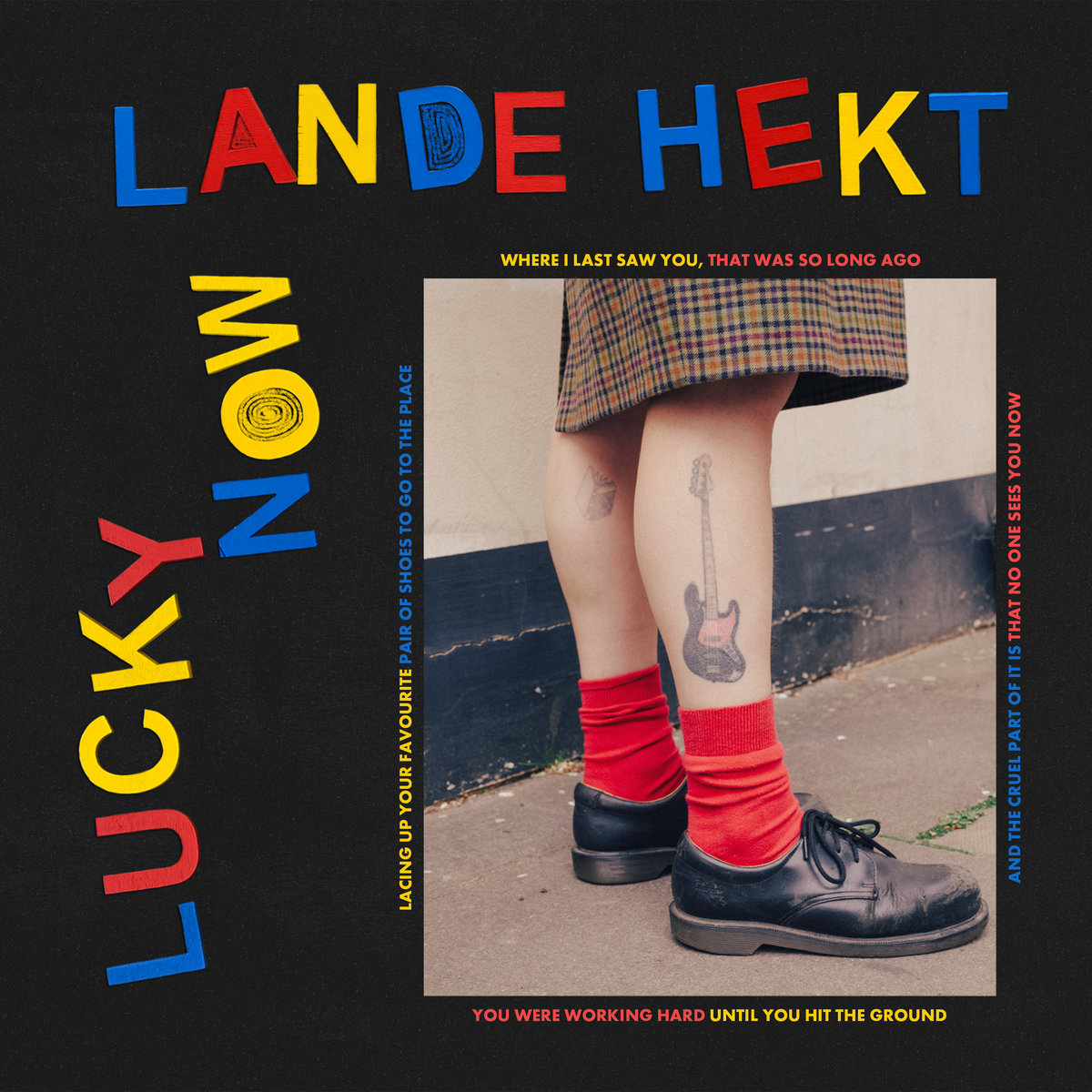
Video of The Day: Lande Hekt – Lucky Now

Lande Hekt’s Lucky Now arrives like a confession scribbled on the back of a tour flyer in the time right before the sun rises after a long, long night of no good, lipstick-smudged, coffee-stained, and vibrating with the kind of nervous honesty that makes you wonder whether pop music still remembers how to bleed. This is not an album that kicks the door in; it slips through the crack, sits on the edge of the bed, and starts telling you uncomfortable truths about wanting, about settling, about the strange arithmetic we do when we decide that this—this life, this love, this version of ourselves—is “enough.” And that, right there, is its quiet miracle.

Hekt has always had a knack for making emotional vulnerability sound like a strength rather than a plea, but Lucky Now sharpens that instinct into something almost surgical. These songs shimmer with indie-pop polish, sure, but beneath the gloss is a constant low-grade anxiety: the fear that happiness is temporary, that luck is borrowed, that joy might evaporate the moment you name it. It’s pop music that knows better than to trust pop music’s old lies.

What makes Lucky Now hum instead of collapse under its own sensitivity is Hekt’s voice—not just the literal instrument, though that’s lovely in a windswept, half-smiling way—but the narrative voice, the persona who sings like she’s talking herself through decisions she’s already made and regrets she hasn’t fully admitted yet. This is adult pop in the truest sense: not about growing up, but about realizing you already did and you’re still not sure you like the furniture.

Musically, the record flirts with brightness while refusing to fully commit. The melodies are catchy in that sneaky way—hooks that don’t announce themselves so much as move into your head and rearrange the place. Synths glimmer, guitars jangle politely, and the production keeps things buoyant enough that the emotional weight doesn’t drag the songs into dour introspection. This is where Hekt is smarter than a lot of her peers: she understands that sadness hits harder when it’s wearing a smile.

There’s something almost punk about that restraint. Not punk as in distortion and safety pins, but punk as in refusal—the refusal to oversell, to dramatize, to scream when a whisper will do more damage. Lucky Now feels like a record made by someone who’s seen the emotional theatrics of pop romance and decided to opt out, replacing grand declarations with small, cutting observations. The result is intimacy without exhibitionism, confession without spectacle.

And yet, don’t mistake this for background music. The cumulative effect of these songs is quietly devastating. By the time you reach the later tracks, you realize you’ve been lured into a meditation on luck itself—how we use it as a shield, how we say “I’m lucky” when what we really mean is “I’m afraid to ask for more.” Hekt isn’t romanticizing compromise; she’s interrogating it, holding it up to the light to see where it cracks.

If Lester Bangs taught us anything, it’s that great pop records are X-rays of their cultural moment, and Lucky Now feels like an X-ray of millennial adulthood: stable but restless, grateful but suspicious, emotionally literate yet still haunted by the suspicion that something essential got lost along the way. This is music for people who have learned the language of self-care and are still figuring out how to live with the self they’ve so carefully curated.

Lucky Now doesn’t shout for your attention. It doesn’t need to. It waits. And then, one day, halfway through the chorus of a song you thought you already understood, it guts you. That’s luck, maybe. Or maybe it’s just honesty, finally landing where it’s supposed to be all along.

Dr. J’s Desert Island Albums: Counting Crows and the Art of Emotional Aftermath

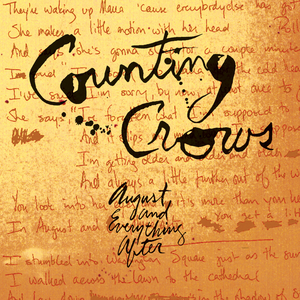
How often have you been asked to name your top ten albums, or debated which records you’d take to a desert island? The “desert island album” is a familiar, hypothetical concept among music fans: the one record you could listen to endlessly and never tire of. It’s simply a way of naming your most cherished, all-time favorite album. For Dr. J, one of those perfect records is Counting Crows’ 1993 debut, August and Everything After.

Some records arrive like polite guests, shaking hands with the radio, smiling for the cameras, making sure not to spill anything on the carpet. And then some records kick in the door at 3 a.m., overwhelmed on their own feelings, bleeding a little, asking you if you’ve ever actually lived or if you’ve just been killing time until something breaks your heart. August and Everything After is the latter. It doesn’t so much introduce Counting Crows as it announces them, like a cracked-voiced preacher stumbling into town with a suitcase full of secrets and a head full of weather. That it’s their first record feels almost obscene. Bands aren’t supposed to sound this fully formed, this bruised, this emotionally articulate right out of the gate. This is supposed to take years of failure, challenges, and ill-advised love affairs. But here it is, fully alive, staring you down.

If genius means anything in rock and roll—and it does, despite all the sneering irony we’re trained to wear like armor—it means the ability to translate private confusion into public communion. Adam Duritz doesn’t just write songs; he writes confessions that somehow feel like yours, even when you’ve never lived in California, never stood on a street corner at night wondering who you were supposed to be, never tried to make sense of love after it’s already gone feral and bitten you. These songs don’t explain feelings; they inhabit them. They sit in the mess. They let the awkward silences linger. They don’t clean up after themselves. And that’s why people keep coming back.

“Round Here” opens the album not with a bang but with a question mark. It’s a song about dislocation, about being young enough to believe that identity is something you can find if you just look hard enough, and old enough to know that it might already be slipping away. “She says she’s tired of life, she must be tired of something,” Duritz sings, and it’s not melodrama—it’s reportage. He’s documenting the emotional static of a generation that grew up on promises it didn’t quite believe. There’s no manifesto here, no slogans. Just the sound of someone pacing around a parking lot trying to figure out how to be real in a world that feels increasingly wrong and staged.

And that’s the trick of August and Everything After: it sounds intimate without being precious, expansive without being bombastic. The band plays like they’re backing a nervous breakdown that somehow learned how to swing. The guitars shimmer and sigh; the rhythm section keeps things grounded, like a friend who knows when to let you rant and when to hand you a glass of water. T Bone Burnett’s production (Burnett also contributed guitar and vocals to the record) gives everything room to breathe, which is crucial because these songs need the oxygen. Smother them, and they’d collapse into self-pity. Instead, they hover in that dangerous space between vulnerability and confidence, where the best rock records live.

“Omaha” — one of my favorite songs on the record — is where the album first threatens to explode. It’s restless, jittery, propelled by a sense that staying still is a kind of death. Duritz sounds like someone running not toward something but away from the version of himself he’s afraid to become. This is a recurring theme throughout the record: movement as salvation, travel as therapy, geography as a stand-in for emotional states. Cities become characters, roads become metaphors, and every mile marker is another chance to start over, or at least pretend you can.

Then there’s “Mr. Jones,” the song that doomed the band to a lifetime of misunderstanding by becoming a hit. People heard it as an anthem of ambition, a singalong about wanting to be famous, to be seen. But listen closer, and it’s a song about emptiness, about mistaking visibility for connection. “We all want to be big stars,” Duritz sings, and it’s not triumph—it’s confession. The song pulses with the anxiety of someone who knows that being watched isn’t the same as being known. That radio stations turned it into a party song is almost beside the point; the genius is that it works despite the misreading, smuggling existential dread onto pop playlists like contraband.

The middle stretch of the album is where August and Everything After really earns its indispensability. “Perfect Blue Buildings” and “Anna Begins” slow things down, letting the emotional weight settle in your chest. These are songs about relationships not as fairy tales but as negotiations, as ongoing attempts to be less alone without losing yourself entirely. “Anna Begins” in particular feels like eavesdropping on someone thinking out loud, trying to talk himself into love and out of fear at the same time. It’s hesitant, messy, human. The song doesn’t resolve so much as it exhales, which is exactly right. Love rarely comes with neat conclusions. And remember, this is the band’s first record — wow.

What makes this record one that everyone has either owned, borrowed, stolen, or at least absorbed through cultural osmosis is how unapologetically it centers feeling in an era that was increasingly suspicious of it. The early ’90s had irony for days. Grunge made disaffection fashionable; alternative radio thrived on detachment. Counting Crows, meanwhile, walked in waving their emotions like a white flag and dared you to flinch. They didn’t hide behind distortion or sarcasm. They sang about longing, loneliness, and the aching desire to matter. And people listened because, beneath all the posturing, that’s what everyone was dealing with anyway.

“Time and Time Again” and “Rain King” push the album toward something almost mythic. Duritz begins to sound less like a diarist and more like a prophet with stage fright, evoking imagery that feels both biblical and personal at the same time. “Rain King” is particularly a masterclass in building atmosphere. It swells and recedes, gathering momentum until it feels like the sky might actually open up. It’s about control and surrender, about wanting to command the elements of your life while knowing that you’re mostly at their mercy. It’s the sound of someone learning to live with uncertainty rather than trying to conquer it.

And then there’s “A Murder of One,” the closer that doesn’t tie things up so much as leave them humming in your bloodstream. It’s expansive, reflective, tinged with regret but not crushed by it. Ending the album here feels intentional: after all the searching, all the restless motion, the record concludes not with answers but with a kind of hard-won acceptance. Life is complicated. Love is risky. Identity is a moving target. The best you can do is keep singing, keep reaching out, keep trying to make sense of the mess.

What’s staggering is that this is a debut. Not a tentative first step, not a collection of demos dressed up for release, but a fully realized statement of purpose. Counting Crows sound like a band that already knows who they are, even as their songs wrestle with uncertainty. That tension—between confidence and doubt, polish and rawness—is what gives August and Everything After its staying power. It feels lived-in, like these songs existed long before they were recorded, waiting for the right moment to surface.

In the end, the genius of August and Everything After isn’t just in its songwriting or performances, though both are exceptional. It’s in its insistence that emotional honesty is a form of rebellion. That talking about loneliness, about the hunger for connection, about the struggle to define yourself in a world that keeps changing the rules—that all of this matters. This is a record that people return to at different stages of their lives and hear something new each time, because it grows with you. Or maybe it just reminds you of who you were when you first heard it, and who you thought you might become.

Either way, it’s indispensable. Not because it tells you what to feel, but because it reminds you that feeling deeply is still possible. And for a debut album to pull that off—to make itself a permanent fixture in the emotional furniture of rock and roll—that’s not just impressive. That’s a small miracle, wrapped in August light and delivered just in time.

New Music Isn’t Dead, You Just Stayed Home

They keep saying it like it’s a diagnosis, like a doctor lowering his voice: There’s no good new music anymore. As if the patient is culture itself, lying flatlined under a white sheet, while the rest of us are supposed to nod solemnly and accept that the last real song was written sometime around when they were sixteen and emotionally combustible. This is nonsense, of course, the laziest kind of nonsense, the kind that requires no listening, no leaving the house, no risk, no sweat, no awkward eye contact in a half-lit room where the band is setting up next to a stack of amps that smell like beer, ozone, and promise.

New music is not dead. It’s just not coming to you. It’s not ringing your doorbell or algorithmically tucking itself into your ears while you scroll. It’s happening out there, in rooms that require pants and presence and a willingness to be changed, even slightly. And that’s the real problem: new music demands participation. It demands that you show up.

The great (boy, would he hate that sentiment) rock critic, Lester Bangs, understood this instinctively. He knew that music wasn’t an artifact to be archived, but a live wire, something that crackles when bodies gather, and sound hits air, and something unpredictable happens. The excitement of new music isn’t about novelty for novelty’s sake; it’s about the shock of recognition when you hear something you didn’t know you needed until it’s already inside your head, rearranging the furniture.

Going out to see local music—real local music, not brand-approved “scenes” packaged for export—is a civic act. It’s how communities remember they’re alive. You walk into a bar, a VFW hall, a coffee shop after hours, a basement with questionable wiring, and suddenly you’re part of a temporary republic founded on volume and intent. You’re standing next to people who live where you live, who work the jobs you know, who are writing songs not because it will scale, but because it has to come out. That matters. That changes things.

The need for new music isn’t abstract. It’s psychic. It’s the need to hear someone else articulate the same confusion, joy, dread, or stubborn hope you’re carrying around without a language. No documentation, just a real human need. When people say nothing is exciting being made anymore, what they’re really saying is that they’ve stopped being curious about other people’s interior lives. They want the old songs because the old songs already agree with them. New music argues back, it’s the packaging/re-packaging of human feelings in new bottles.

And that argument is healthy. It keeps culture from calcifying into a museum gift shop stocked with endlessly remastered memories. Live local music reminds us that art is a process, not a product. Bands miss notes. Lyrics change. Drummers (guitarists, bass players, etc.) quit. Someone forgets the bridge and laughs. These imperfections are not flaws; they’re evidence of life. They’re proof that the thing you’re witnessing hasn’t been fully decided yet.

The positive consequences ripple outward. You support a venue, which supports staff, which keeps a place open where people can gather without a screen between them. You give musicians a reason to keep writing, to keep rehearsing, to keep believing that the hours spent hauling gear and arguing about tempos aren’t insane. You create informal networks—musicians meet other musicians, shows lead to collaborations, friendships form, ideas cross-pollinate. This is how scenes happen, not because someone declares one into existence, but because enough people decide that showing up matters.

Local music also recalibrates your sense of scale. Not everything needs to be monumental to be meaningful. A great song played for forty people can hit harder than a festival set swallowed by branding and distance. There’s an intimacy in local shows that can’t be replicated: eye contact with the singer, the thump of the kick drum in your sternum, the shared glance when a chorus lands just right. You don’t leave as a consumer; you leave as a witness to something that you cannot quite describe.

And let’s be honest about the frustration. The claim that nothing compelling is being released now is often a cover for disengagement. It’s easier to blame the times than to admit you’ve stopped listening actively. The world didn’t run out of ideas; you ran out of patience. Meanwhile, musicians are still out here folding genres into new shapes, writing songs about now—about precarity, community, grief, humor, survival—with tools and influences that didn’t exist twenty years ago.

If you want excitement, you have to seek it out. You have to court it. You have to risk boredom, risk disappointment, risk being wrong. That’s the deal. New music doesn’t owe you greatness on demand; it asks for your attention in exchange for the possibility of revelation.

So go out. Stand in the back or press up front. Clap awkwardly. Buy the record/CD/download/tape. Talk to the band. Argue with your friends about what you heard. This is how culture stays porous and human. This is how a town sounds like itself instead of a rerun.

The future of music isn’t missing—it’s tuning up, waiting for you to get off the couch and walk through the door.

Favorites of 2025: Bruce Springsteen – Nebraska 82 Expanded Edition

Look, Nebraska was already perfect in that cold-coffee, blackout-3-a.m. way that records sometimes accidentally are—Springsteen mumbling ghosts into a four-track like he’s afraid the neighbors might hear him unraveling. You don’t “improve” a hallucination. But here comes Nebraska ’82 with its alternate visions, its rust-belt apparitions, and suddenly you realize perfection isn’t the point anyway. What we’re getting now is the messy archaeology of a masterpiece—the dirt under its fingernails, the tape hiss, the roads not taken. It doesn’t dethrone the original bedroom-confessional monolith; it stands off to the side like a cracked mirror held up to the same bleak American sky. And damn if that mirror doesn’t show something worth staring into all over again.

Nebraska ’82: Expanded Edition arrives at the right time

With the 2025 release of Nebraska ’82: Expanded Edition, Springsteen and his team have delivered the most comprehensive, honest, and vivid portrait of one of the most haunted, intimate, and influential albums in rock history. The box set includes a newly remastered version of Nebraska as originally released, previously unheard demo outtakes, the long-rumored “Electric Nebraska” sessions with the full band, and a newly recorded live performance filmed in 2025.

For newcomers and longtime fans alike, this release offers both context and extension: context for how Nebraska came to be — from home demos on a TASCAM to a full LP — and extension in the form of alternate takes, jukebox-ready electric arrangements, and reflections of the songs through decades of memory.

It’s not just nostalgia or archival shelf-cleaning. What emerges is an album whose darkness, subtlety, and emotional power remain urgent. Nebraska ’82 still speaks — perhaps even more clearly now — to lives marked by uncertainty, longing, and resilience.

The original Nebraska — stark, personal, unforgettable

When Springsteen recorded Nebraska in late 1981 and early 1982, he did so not with a studio full of musicians but with a four-track recorder in his bedroom, an acoustic guitar, and a stark vision. The result was an album unlike anything else in his catalogue: bleak, intimate, confessional, but not confessional in a self-pitying sense. These were songs born from solitude, from the rawness of fear, regret, despair — made real by economy of arrangement.

Tracks like “Atlantic City,” “Johnny 99,” “State Trooper,” and “My Father’s House” traversed the margins of the American dream: economic hardship, moral desperation, violence, yearning for redemption. The spare instrumentation — sometimes only a guitar and a voice — made every lyric, every tremor of the vocal, every pause between notes count. The result is widely considered one of the great solo records in rock.

Decades later, Nebraska remains the gold standard for how quiet, low-fi recordings can deliver emotional immediacy. For many, it’s not just an album — it’s a private confessional, seen through the lens of loneliness and lost dreams.

What the Expanded Edition adds — and why it matters

Remastering with care

First, the 2025 remaster brings Nebraska into sharper focus without erasing its haunted intimacy. In a landscape where remasters often polish away character, this one preserves the album’s texture — the creaks, the echoes, the warmth of an acoustic guitar reverberating in a home studio — while improving clarity and depth. Critics who’ve heard the new edition note that the remastering reveals subtle layers previously buried: the quiet background of a mandolin here, the soft echo in the final chords there, the breath before a harsh lyric.

In short: the remastered Nebraska doesn’t feel like a revived relic — it feels alive again.

Solo outtakes and previously unreleased songs

The set’s first discs unearth acoustic outtakes and songs from the original 1982 sessions that didn’t make the album: Child Bride, The Losin’ Kind, Gun in Every Home, and On the Prowl — material fans have traded as bootlegs for decades or assumed lost forever.

Hearing them in official, high-quality form is revelatory. Tracks like “Gun in Every Home” offer a nightmarish portrait of domestic collapse and despair; “On the Prowl” pulses with a restless, searching energy that resonates with the rest of the album’s themes. Even though these songs were originally omitted, they expand the emotional terrain of Nebraska — reminding listeners that the darkness had multiple facets and that the record’s focus was always selective, not total.

Electric Nebraska — the “what might have been”

Perhaps the most dramatic and controversial addition is the long-rumored “Electric Nebraska” sessions. In April 1982, shortly after finishing the solo demos, Springsteen brought several members of the E Street Band into the studio (including Max Weinberg and Garry Tallent) and attempted full-band recordings of several Nebraska songs. In 2025, those sessions have finally emerged publicly — the first time many had heard them.

The results provoke awe — and ambivalence. On one hand, songs like electric versions of Atlantic City or Johnny 99 have a muscular, rock-ready energy. A demo of Born in the U.S.A. — originally written in the same era — appears in trio form (Springsteen, Weinberg, Tallent), described as “punk rockabilly.”  It is electrifying, raw, and historically fascinating.

On the other hand — and critics largely agree — turning Nebraska into a full-band rock record would have gutted much of its power. The original’s bleak intimacy, its ghost-town loneliness, its moral urgency — all flowed from isolation and austerity. As Uncut’s review put it: “Electric Nebraska might have produced a competent rock album, but it wouldn’t have been Nebraska.”

The electric versions often feel like exercises — intriguing, occasionally thrilling, but never quite as honest. The contrast only strengthens the myth of the original: a man alone with a guitar, bearing witness to the American underbelly.

A 2025 live performance: memory as lens

Rounding out the set is a newly filmed live performance — Springsteen playing the full Nebraska album in order, at the Count Basie Theatre, Red Bank, New Jersey. Accompanied subtly by veteran musicians such as Larry Campbell and Charlie Giordano, the performance is respectful rather than grandiose, earnest rather than nostalgic. In a press statement, Springsteen remarked on the experience: hearing the songs again, he was struck by their “weight” — their capacity to move, even after decades.

The filmed concert is not a re-creation but a meditation. Compared with the original 1982 recordings, the live versions reflect the distance of time — a deeper voice, more lived-in phrasing — but they carry the songs’ sorrow, hope, and grit into a present that, for many listeners, remains uncertain.

What Nebraska ’82: Expanded Edition reveals about Nebraska’s enduring power

Listening to the full box set is, in a way, a masterclass in artistic decision — what to keep, what to discard, what to preserve, what to experiment with.

The original Nebraska stands undiminished. If anything, the contrast with the electric takes and outtakes sharpens what made it special. The sparseness, the solitude, the haunted tonal space — all reveal that Springsteen’s choice to release demos instead of studio recordings was not a compromise but a commitment to emotional truth. As one critic writes, the set underscores that “even when testing out the material with his most intuitive collaborators … the definitive version of Nebraska remains the one he captured on tape… tracking solo demos.”

Yet the collection is not purely about preservation — it expands the artist’s vision. The outtakes and electric versions show songs as living things: malleable, re-interpretive, incomplete. They reflect a period of creative restlessness, of questioning whether Americana songs needed to be acoustic, dark, personal, or if they could rock, rage, and roar.

For fans and historians, Nebraska ’82 offers context. For new listeners, it might serve as the entry point. For all, it’s a reminder that rock — stripped-down or electric — can still carry the weight of real human stories.

A few tensions and enduring questions

The Expanded Edition is not without controversy. Some reviewers warn against over-romanticizing the demos and dismissing the electric takes outright. As one Guardian column argues, if listeners imagine full-scale E Street–style treatments, they’ll likely be disappointed: the electric tracks “take the edge off, neutralising their impact.”

Others worry that the outtakes and alternate versions — while fascinating — might dilute the mythic purity of Nebraska. After all, part of the record’s power lies in its restraint. The expanded set invites comparisons, second-guessing, and reconsideration that can feel like peeling away a protective layer.

But perhaps that is precisely the point: art is not a mausoleum. Revisiting is not desecration — it is re-examination. And Nebraska ’82 gives listeners the tools to understand not just what the album was, but what it might have been, and what it still can be.

Why this edition matters — now so many years later

2025 is not 1982. The world Springsteen sang about — poverty, despair, moral compromise, broken dreams — has changed in many ways, yet in others remains startlingly similar. Economic instability, social dislocation, disillusionment with institutions — many of the conditions that haunted Nebraska then still haunt us now.

In that sense, Nebraska ’82: Expanded Edition arrives not as nostalgia, but as relevance. The spare melodies, the tales of desperation and longing, the fractures in the American dream — they resonate with renewed urgency. And by revisiting them alongside alternate takes and newer interpretations, listeners are invited to reflect not just on the past, but on how songs age, shift, and heal.

For younger listeners who might only know Springsteen from his arena-rock anthems or later work, this box set offers a different face of “the Boss” — quieter, darker, more human.

For longtime fans, it’s a gift: a chance to listen again, to compare, to reconsider.

A masterpiece re-examined — and still alive

Nebraska ’82: Expanded Edition does more than archive a landmark record. It reopens its doors, pulls back the curtain, and lets us hear not just the final songs, but the echoes, the experiments, the what-ifs, and the near-misses.

In doing so, it reaffirms what made Nebraska a classic: the courage to strip away everything but voice and guitar, to trust silence, to speak plainly about fear, regret, and survival. But it also acknowledges that songs are not static. They breathe, shift, and can be reborn.

Whether you come for the electric sessions, the unheard demos, the 2025 live film — or simply to hear Nebraska again — the result is the same: you feel the weight of its stories, the depth of its sorrow, the faint but persistent light of hope.

Forty-three years after it was first recorded in a bedroom in Colts Neck, Nebraska still matters. Nebraska ’82: Expanded Edition proves that not just as history, but as living, breathing music.

Continuing Relevance of Rubber Soul

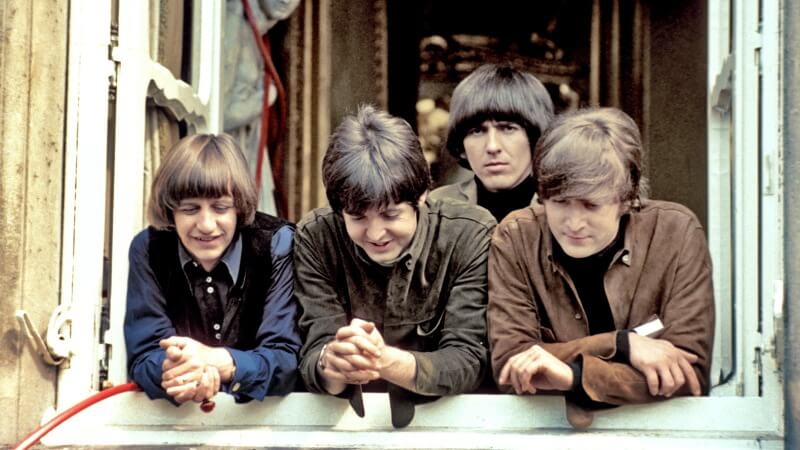
You know what? Saying rock and roll really began with Rubber Soul isn’t some heretical bolt from the blue; it’s the kind of wild-eyed truth you only admit after years of peeling back the layers of myth and noise. Because that record wasn’t just an album; it was the moment the Beatles stopped being mop-topped charm merchants and turned into full-blown sonic arsonists.

Rubber Soul is where the walls blew open — where pop hooks sprouted strange new limbs, where folk met psychedelia in a dark alley and decided to run away together, where music discovered it didn’t have to smile to be loved.

You can feel the whole future of rock wriggling under the skin of those tracks. It was the Big Bang disguised as a studio experiment, the blueprint for everyone who ever wanted their guitar to be both a confession and a weapon. So yeah — call it the beginning. Plenty of albums came before, but Rubber Soul is where rock stopped crawling and started walking into the fire.

“Rock and roll as we know it began with Rubber Soul” isn’t just a clever line—it’s the truth Paste is tapping into. Released on December 3rd in 1965, the album marks the moment the Beatles stepped out of the frenzy of Beatlemania and into a more mature, deeply intentional era of songwriting. Rubber Soul didn’t just elevate their own sound; it challenged everyone around them—most famously pushing the Beach Boys to rethink their sun-soaked formulas and ultimately inspiring Pet Sounds.

What makes Rubber Soul so enduring is how confidently it bridges pop accessibility with artistic experimentation. The band broadened the emotional and musical palette of rock, weaving in introspection, sharper storytelling, and new textures that hinted at the psychedelic shift to come. It’s the point where John, Paul, George, and Ringo became not just stars, but innovators—artists who were actively reshaping the possibilities of popular music.

Paste is right to celebrate it: Rubber Soul wasn’t just another release—it was the hinge on which the Beatles’ legacy, and arguably modern rock itself, turned.

December ’65 the Beatles were supposed to be polished mascots of Beatlemania, grinning through another round of yeah-yeah-yeahs. Instead they walked into the studio, slammed the door behind them, and came out holding a whole new universe in their hands.

Rubber Soul is the moment they stopped playing the pop-star game and started playing God with melody and mood. Suddenly the harmonies got darker, the jokes got stranger, and the whole band sounded like they’d actually been listening—to Dylan, to each other, to the static in their own heads. And the Beach Boys? Forget surfboards; this album practically shoved Brian Wilson into a sensory deprivation tank and dared him to come back with something better.

What Paste gets right is that Rubber Soul isn’t just a “mature” Beatles record—it’s the pivot where the mop-tops mutated into the mad scientists we mythologize. A band shedding its skin in real time. A warning shot to everyone else who thought they were making serious music.

If rock and roll has a Year Zero, this album is one of the few places you can actually hear the fuse catching.

Favorites of 2025: Elephants and Stars – Under The Earth and Above Heaven

Indie rock has always thrived on the fringes: small venues, tiny labels, and the slow-building careers that reward patience more than hype. Few contemporary bands embody this spirit better than Elephants and Stars, the Canadian band whose latest album, Under the Earth and Above Heaven, feels like the result of years dedicated to refining melody, guitar as truth, rock and roll meaning, and a hard-won optimism tempered with a slight sarcasm that comes from not taking oneself too seriously. A real understanding that life has ups and downs.

The album’s title suggests a band thinking about place, about being suspended between hardship and hope, about grounding themselves even as they reach. And in many ways, this duality captures the spirit of Elephants and Stars themselves: musicians who write like they’ve lived a little, but still believe that a good chorus can solve something in the soul. A great song can change the world.

Under the Earth and Above Heaven is, simply put, their most confident and emotionally resonant work to date. But the record is also a reminder of why rock, guitars, harmonies, and honest storytelling still matter.

The band behind the sound
To understand the record, it helps to understand the people who made it. Elephants and Stars operate in a tradition familiar to fans of early 2000s alternative rock: tight rhythm sections, guitars that shimmer and crunch, and lyrics that manage sincerity without slipping into sentimentality.

The lineup, anchored by frontman Manfred Sittmann, whose signature vocals blend warmth with a slight rasp, has solidified into a group whose interplay feels lived-in. Sittmann writes and sings with the clarity of someone who knows the exact weight of each line, but the band behind him keeps things agile rather than precious. Sittmann’s melodic instincts shape much of the band’s identity. He’s joined by Adam Seed, whose lead guitar work brings a sharp, expressive edge to their sound, and longtime collaborator Michael MacMillan, whose bass lines provide both structure, rhythm, and warmth. The rhythm section finds its heartbeat in drummer Stewart McKinney, while Simon Head expands the band’s sonic palette with textured, atmospheric keyboard layers. Together, they create a modern rock sound grounded in pop-punk roots. Music that’s unmistakably hook-driven yet designed with a clear mission: to help bring rock back to the forefront.

The band’s story stretches back years, especially for Sittmann and MacMillan, who previously played together in the excellent group Soap Opera. Their long creative history gives the songs on their latest release a natural chemistry and ease, the feeling of musicians who know exactly how to respond to one another. That chemistry reaches a new peak on Under the Earth and Above Heaven, released in February of this year and produced by Ian Blurton, a collaboration that sharpens their sound while preserving the emotional immediacy that defines their work.

The guitars, often handled in layered pairs, move between bright open-chord passages and more aggressive leads. The bass lines are melodic without overpowering the mix, and the drumming is purposeful and punchy where it should be, restrained where the lyrics need breathing room. The result is a sound built on chemistry rather than simply studio polish.

The band feels like a cohort of people who know how to play to each other’s strengths. This matters because Under the Earth and Above Heaven is an album that depends on emotional pacing: crescendos that feel earned, shifts in tone that feel organic, and choruses that arrive with the momentum of a live show.

A sound defined by uplift without naïveté
From the opening track, Elephants and Stars make it clear that they are uninterested in the cynicism that often dominates modern rock. Their guitars ring with a kind of unguarded cascade of sonic joy, even when the lyrics are wrestling with frustration or loss. One of the most striking qualities of this album is how hope and melancholy coexist—not in competition, but in conversation.

The production leans into this duality. Vocals sit slightly forward in the mix, giving Sittmann’s storytelling a sense of directness and intimacy. The guitars, meanwhile, expand outward: wide, textured, layered. It’s the kind of sound associated with late-afternoon festival sets—sunlight still visible, the air cooling, the crowd settling into a collective feeling. And the sound? Loud, propulsive, aggressive, like a sonic caress.

What keeps the record from drifting into nostalgia is the band’s sense of precision. Each song feels built, not merely written. The hooks land with purpose. The bridges feel like necessary expansions, not detours. And the choruses—Elephants and Stars’ greatest strength—arrive like emotional confirmations.
This is a band that believes in melody the way some bands believe in distortion pedals: as the emotional engine of the music.

The lyrical world of the album
If the sound carries the emotional lift, the lyrics provide the grounding. Under the Earth and Above Heaven reads like a record about transition—moving from one stage of life to another, reconciling who you were with who you’re trying to become. The “earth” and “heaven” of the title function less as metaphysical spaces and more as metaphors for the pressures we carry and the aspirations we hold. Across the record, recurring themes emerge.

Across Under the Earth and Above Heaven, Elephants and Stars weave a thematic through-line that feels both deeply personal and universally readable. The record begins by making peace with the past, returning again and again to the bittersweet truth that old mistakes never quite vanish. Yet the band refuses to sink into regret. Instead, they treat memory like an old photograph—something to regard with a mix of tenderness and hard-earned gratitude for having made it through. That reflective stance sets the stage for one of the album’s central concerns: the search for steadiness in a world that rarely offers it. Life, as their lyrics suggest, often feels precarious, a suspended moment in which you’re “almost there” but never fully settled. But rather than express anxiety, the band leans toward determination, riding out the instability with resolve.

That determination is buoyed by another recurring insight: the importance of connection. Throughout the album, relationships of all kinds—romantic partners, close friends, the communities we build around ourselves—appear as the forces that keep us grounded. These songs push against the temptation to withdraw, insisting instead that meaning comes from being in the world with others. And within that engagement, the band finds flashes of transcendence in the most ordinary places: singing in the car, watching the sunrise after a sleepless night, catching the sound of someone’s laughter at just the right moment. These quiet, luminous details echo the “above heaven” imagery of the album’s title, suggesting that the extraordinary often reveals itself in the spaces where we least expect it.

The record carries an autobiographical weight without tipping into confession. Rather than offering a straightforward personal narrative, it gestures toward shared emotional terrain—less “here is my story” and more “here is a feeling you have probably known.” And while a full song-by-song analysis would exceed the scope of this discussion, several tracks stand out for the way they shape the album’s emotional arc, guiding listeners through reflection, uncertainty, connection, and ultimately the little but meaningful possibilities of joy.

The opener: urgency with clarity
The opening track, The Ceiling, wastes no time establishing the album’s stakes. A driving beat, guitars that arrive fully formed, and lyrics that describe the moment when indecision becomes action. It feels like a thesis statement: the band is not here to wallow; they are here to move. A bit more than midway through the record comes a standout track that shifts the tempo and deepens the tone, ‘Unlucky.’ This is where the band’s lyrical strengths shine: reflections on resilience, the cost of growth, and the quiet strength found in simply continuing. The arrangement builds around a groove—guitar, sway in the keyboards, more subtle percussion, then a full electric swell—mirroring the emotional climb.

The late-album surge: an anthem of uplift
As the album nears its conclusion, the band leans into one of their most triumphant choruses to date on ‘Paint Me Alive’. It’s the kind of moment designed to be shouted back at the stage, hands in the air, the kind of collective catharsis that only rock music can produce. The lyrics, which center on choosing light even when darkness is familiar, feel earned precisely because the album has carried listeners through doubt and tension.

The final track, The Ghosts, does something rare: it provides closure without collapsing into tidy resolution. It acknowledges the uncertainties that remain but offers a melodic reassurance that moving forward—however imperfectly—is worth celebrating.

Three elements make Under the Earth and Above Heaven one of Elephants and Stars’ most compelling releases: 1) Musical consistency without monotony. 2) The band has refined their sound without becoming predictable. And 3) Each song feels connected to the whole, but no two entries collapse into each other.

Emotional honesty that creates community
In an era where irony often dominates indie music discourse, Elephants and Stars commit wholeheartedly to sincerity. Their stories are earnest but never naive. The band creates A sense of community embedded in the music. Listening to the album feels like being welcomed into a shared emotional space. It’s personal, but it’s not private.

Elephants and Stars occupy an interesting place in today’s musical world. They are neither trend-chasers nor purists. Instead, they carry forward the tradition of emotionally articulate guitar rock: bands like The Weakerthans, early Jimmy Eat World, or mid-period The Hold Steady—artists who treat songwriting as craft rather than marketing. Their music reminds listeners that rock still has a role to play in articulating everyday emotional life. Not the grand dramas, but the subtle struggles: trying to be better, trying to stay hopeful, trying to find footing. In a digital era marked by fragmentation and fatigue, Under the Earth and Above Heaven feels refreshingly grounded.

Perhaps the greatest achievement of the album is its replayability. The first listen offers immediacy—hooks that land, choruses that stick. But subsequent listens reveal the details: the way a harmony hangs in the background, the way a guitar line subtly echoes a lyrical theme, the way the rhythm section builds tension without overstating it. This is music built not just to impress, but to accompany. It is the kind of record listeners grow with and discover far more over repeated listens.

An album for the moment we’re in
Under the Earth and Above Heaven succeeds because it feels like an album made by people committed to the power of song—not spectacle, not persona, but the craft of building moments of connection. In a fractured cultural moment, that feels almost radical.

Elephants and Stars may never be the kind of band that dominates streaming algorithms or headlines massive festivals. But this record demonstrates why they matter: they make music that sees listeners clearly. They make music that names the feelings many of us carry. They make music that reaches upward, outward, toward one another.

And sometimes, that’s exactly what good rock music is supposed to do.

Favorites of 2025: The Kyle Sowashes – Start Making Sense

We could have easily titled this column ‘Making Sense of It All: The Kyle Sowashes and the Enduring Power of Indie Rock Honesty,’ because the band’s new record not only showcases their musical growth but also highlights how their plainspoken sincerity continues to resonate in a genre often crowded with irony and affectation.

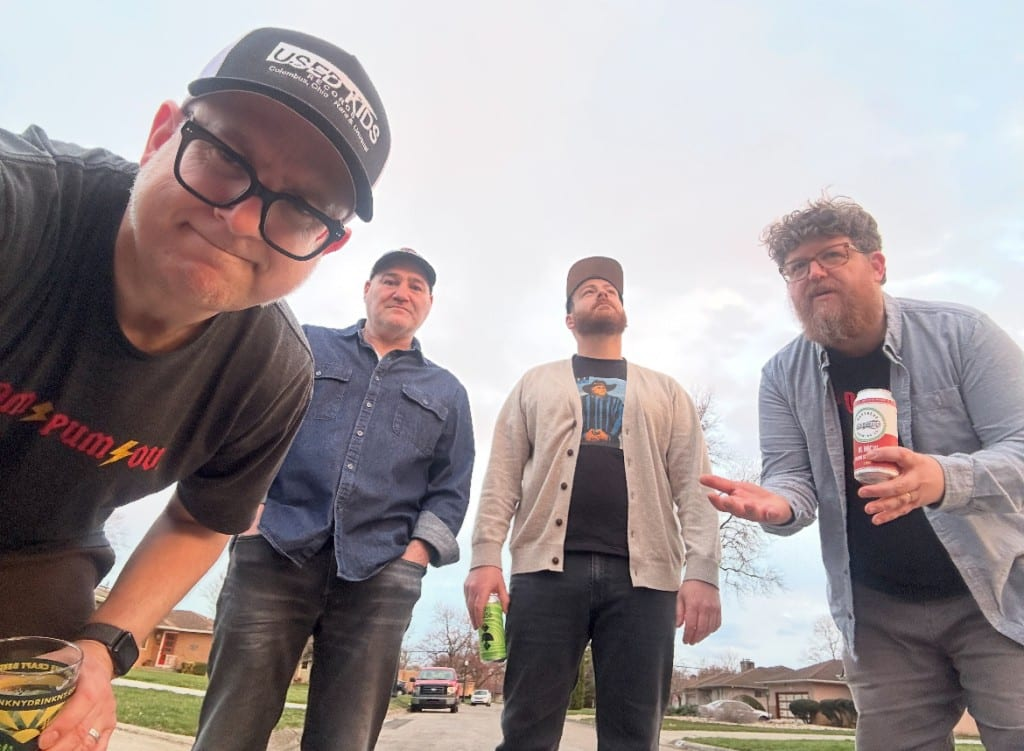
Independent rock has long thrived on the margins—small rooms, frayed gear, and bands that carve out meaning from the ordinary. Few groups embody this spirit as honestly and as energetically as The Kyle Sowashes, the long-running Columbus, Ohio outfit centered around singer, guitarist, and songwriter Kyle Sowash. Their terrific new record, Start Making Sense, feels both like a culmination of years of steady work and a refreshed sense of purpose. It is an album that sounds lived-in yet ambitious, familiar yet surprisingly expansive.

Like so many of their releases, it is driven by a collaborative band spirit, anchored by Sowash’s unmistakable songwriting voice. But on Start Making Sense, the musicians around him play an especially notable role. This is not merely a collection of songs written by a single songwriter—it is a group effort in the best sense, marked by thoughtful arrangements, spirited performances, and a chemistry that can only develop after years of making music together. The result is a record that feels warm, wry, cathartic, and deeply human.

A Band Made of People, Not Parts

The Kyle Sowashes have always been a band that foregrounds musicianship over mythology. No one is placed on a pedestal; every member shapes the sound. On Start Making Sense, the interplay among the musicians is central to what makes the record feel so alive.

At the center, of course, is Kyle Sowash, the principal songwriter, guitarist, and narrator of the band’s emotional landscape. His style has always blended self-deprecation with sincerity, humor with frustration, resignation with hope. He writes songs the way people talk when they’ve stopped trying to impress anyone. That honesty, paired with a gift for sticky melodies and driving chord progressions, continues to anchor the band.

But the supporting cast expands and elevates the material. The rhythm section, always a strength for the group, is especially tight on this release. The basslines give songs bounce and propulsion, while the drumming adds both momentum and nuance—capable of big-room punch but also subtle shifts in tone that mirror Sowash’s lyrical turns. Together they give the album its shape: urgent when needed, contemplative when the songs pull inward.

The guitar arrangements, too, show a band deeply comfortable playing with space. There are moments of noisy celebration, fuzzed-out riffs, and guitar lines that nod to 90s indie rock and power pop without ever feeling derivative. But there is also restraint when the songs call for it—arpeggiated lines, single-note phrases, and open-chord patterns that accent Sowash’s vocal pacing. The band understands when to push and when to stay out of the way, and that mutual sensitivity is one of the record’s quiet triumphs.

All of this makes Start Making Sense feel less like a front-person project and more like a snapshot of a genuine musical community. The band members are collaborators—not session players—and the record reflects that shared vision.

Sound: An Indie Rock Dial Tuned Just Right

The defining pleasure of listening to The Kyle Sowashes is the feeling that the band knows exactly who they are and that they approach their sound not as a limitation but as an expressive engine. Start Making Sense follows this tradition, delivering songs that are rooted in classic indie rock but refreshed through craft, energy, and emotional clarity.

The album’s guitar-forward sound recalls the big-hearted crunch of bands like Superchunk, The Weakerthans, early Guided by Voices, and 90s midwestern basement rock. But The Kyle Sowashes are not imitators. Their tone is warmer, their pacing more deliberate, their hooks more conversational. They capture what it feels like to be a functional adult who still carries adolescent anxieties; what it feels like to want to grow but not always know how.

The production strikes a careful balance. It is clean enough to reveal the band’s tight musicianship but raw enough to preserve the lived-in charm that defines their identity. The vocals are present but never over-polished; the guitars are textured but not overly layered; the drums have a live-room feel that makes even the more introspective songs sound communal.

This approach is particularly effective because Sowash’s songwriting thrives on immediacy. These songs feel like they were meant to be played in small rooms full of people who understand what it’s like to try, fail, and try again. The sonic palette—guitars that jangle and buzz, drums that sprint and shuffle, bass that grounds and guides—mirrors the emotional palette of the songs themselves.

What the Lyrics Reveal: Vulnerability Without Pretension

What has always separated Kyle Sowash from many of his indie rock peers is his ability to write lyrics that feel like real conversations. He avoids metaphors that spin out into abstraction and instead leans on the everyday: the tension between optimism and exhaustion, the mundane rhythms of adulthood, the stubborn persistence of doubt.

On Start Making Sense, the lyrics feel particularly pointed. There is a thematic thread running through the record about wanting to take stock of one’s life, wanting to be better (or at least different), but also feeling the tug of old habits or long-held insecurities. This tension animates the album emotionally.

Sowash wrestles with questions familiar to anyone who has lived long enough to feel the weight of their own decisions:

  • Am I becoming the person I hoped to be?
  • Am I letting people down without realizing it?
  • Is it too late to make meaningful changes?
  • Why does clarity arrive when I am least prepared for it?

And yet, the writing never lapses into self-pity. Sowash has a rare talent for pairing difficult emotions with flashes of humor or casual understatement. His delivery—half earnest, half exasperated—adds to this effect. Even in the most introspective moments, he trusts his audience. He doesn’t sermonize or hide behind dense metaphor. He simply tells the truth as he sees it.

The Album as a Whole: Why Start Making Sense Works

The strength of the record lies not just in its individual songs but in its overall narrative arc. Start Making Sense feels like a journey, not in a conceptual or theatrical sense, but in the emotional progression from beginning to end.

The early tracks tend to have a forward-thrusting, energetic urgency—songs filled with questions, doubts, and attempts to find clarity. As the album unfolds, the pacing shifts: there are moments of introspection, acceptance, humor, resignation, and renewed commitment.

By the final songs, the album arrives somewhere quieter and more grounded. The narrator has not solved everything—far from it—but there is a sense of movement, of incremental progress. And that sense is arguably more meaningful than any dramatic revelation would be.

This emotional pacing mirrors the band’s musical pacing. The guitars pull back when the lyrics sink deeper; the rhythm section tightens when the narrator feels unsettled; the arrangements widen when Sowash leans into hopeful refrains. The band listens to the songs, and the songs reward that attention.

Why They Matter Now

There is something profoundly refreshing about hearing a band like The Kyle Sowashes release a record like Start Making Sense in 2025. In a music culture where so many albums are shaped by algorithms, trends, or online personas, this record feels defiantly human. It is made by musicians who value craft, community, and honesty over spectacle.

Moreover, the themes of Start Making Sense—struggle, ambivalence, small victories, persistent hope—resonate in a cultural moment marked by fatigue and uncertainty. Many listeners will hear echoes of their own lives in the record: the feeling of trying to recalibrate when everything seems slightly off; the desire to “start making sense” of things that once felt straightforward.

The album does not promise transformation or transcendence. Instead, it offers companionship—a reminder that confusion and self-questioning are universal, and that music can help make sense of things even when life does not.

A Career Highlight and a Quiet Triumph

Start Making Sense stands as one of The Kyle Sowashes’ most affecting and best-crafted albums. It blends the energy of earlier records with a deeper emotional palette; it shows a band confident in its identity yet open to growth. The musicianship is sharp, the lyrics are resonant, and the sound manages to be both comfortingly familiar and subtly evolved.

It is not merely a strong indie rock record—it is a document of adulthood, of persistence, of reassessment, of trying again. In its modesty, it finds profundity; in its humor, it finds catharsis; in its unvarnished honesty, it finds connection. For longtime fans, Start Making Sense will feel like a natural and satisfying next chapter. For new listeners, it offers a compelling introduction to a band that has quietly built one of the most sincere bodies of work in Midwestern indie rock. And for everyone, it offers something increasingly rare: a rock album that makes you feel less alone.

Video of The Day: Third of Never – Damage The Pearl

Damage the Pearl,” the standout title track from Third of Never’s latest record, is one of those songs that feels instantly lived-in—emotionally weathered, musically tight, and lyrically honest in ways that reward repeat listens. What Third of Never does so well across their catalog, melding melodic rock with angular edges, reflective lyricism, and a sense of drama that never tips into excess, comes into sharper focus here. The song is as much about mood as it is about narrative, and it invites the listener into a world where beauty and fracture sit side-by-side.

From the opening seconds, the track establishes a sonic landscape marked by contrast. Guitars shimmer and bite, building a foundation that feels both urgent and dreamlike. That duality mirrors the song’s thematic tension: “damage” and “pearl” aren’t just opposing concepts; they’re the twin poles around which the emotional arc revolves. The metaphor is simple but resonant—the “pearl” as something precious, hard-won, and vulnerable to harm; the “damage” as both external force and self-inflicted consequence.

Doug McMillen’s vocal performance lends the song much of its emotional depth. His delivery is unhurried but charged, as though he’s carefully excavating each phrase. There’s a rasp at the edges that suggests long nights, regrets, and resilience. He doesn’t dramatize the lyrics so much as inhabit them, giving the impression that the story being told has been carried quietly for a long time before finally being voiced.

Musically, the band strikes an impressive balance between tight arrangement and spacious atmosphere. Steve Potak’s keyboard textures ripple through the mix, adding color without overwhelming the guitars. His playing brings a sense of uplift to the darker corners of the track, hinting that even in the midst of damage, there’s clarity or even transcendence to be found. The rhythm section keeps the song grounded, propulsive without being forceful, allowing the emotional tension to breathe.

Lyrically, “Damage the Pearl” explores the fragile points in relationships—the places where trust is tested, where mistakes leave marks, where people confront the limits of what can be repaired. But the song resists cynicism. Instead, it seems to inhabit that complicated emotional terrain where hope and regret coexist. When the chorus opens up, the sense of release is less cathartic triumph and more a weary, honest exhalation. The band understands that complexity is sometimes more powerful than resolution.

The production enhances this emotional palette. Clean, spacious, and unafraid of subtle imperfections, it allows each instrument to carry its own weight. There’s no sense of overpolishing; the track feels human, textured, and lived-in. That sense of authenticity shapes the listening experience: the song sounds like a confession whispered and then amplified into the open air.

“Damage the Pearl” ultimately succeeds because it serves as both a strong standalone track and a thematic touchstone for the album bearing its name. It captures Third of Never’s ability to marry craft and feeling—to write rock music that is polished but soulful, introspective but accessible. It lingers after it ends, like a bruise you only notice when you press on it, and like a pearl that gleams all the more for having survived pressure.

Rock and Roll Lives!

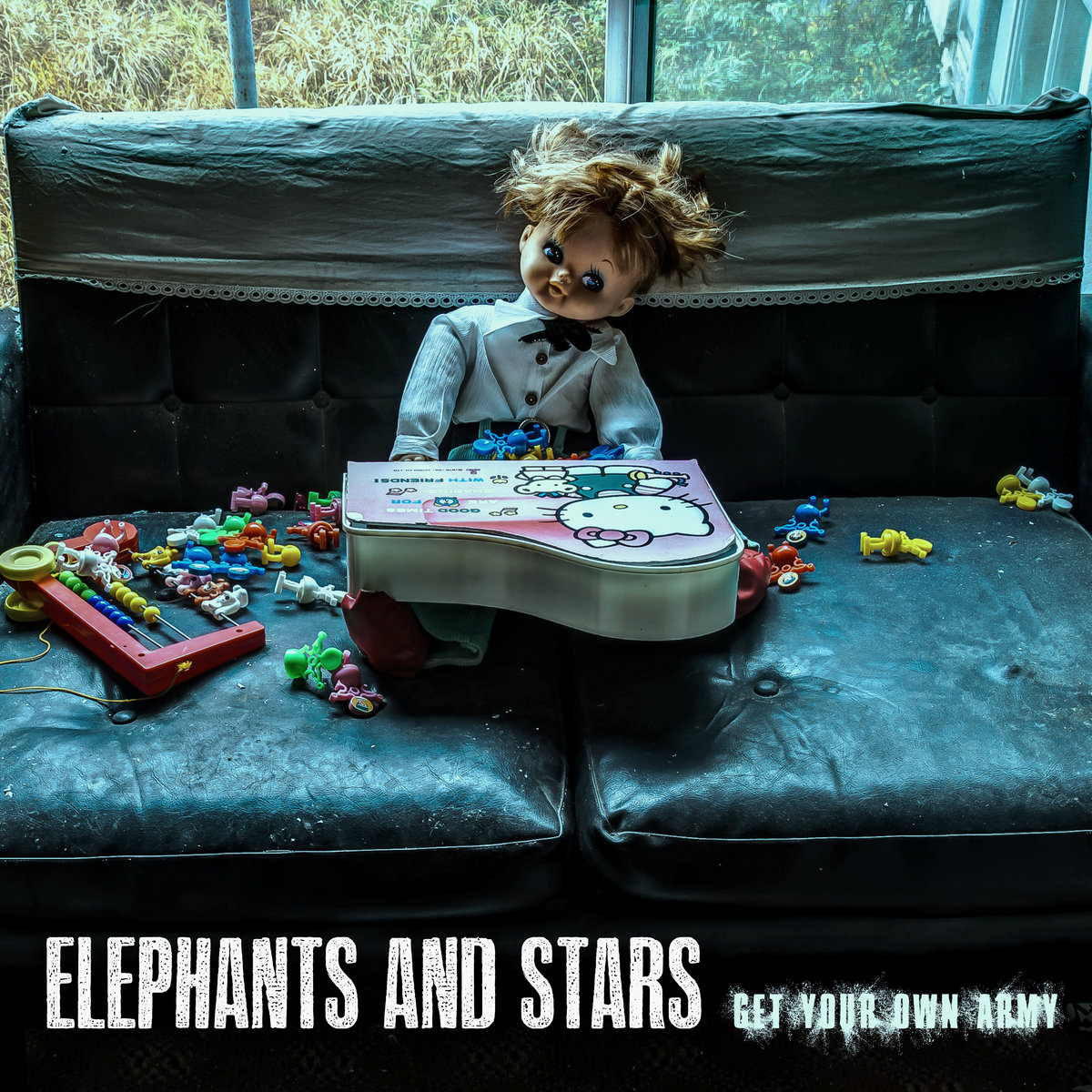
Elephants and Stars have put out an impressive array of albums in a few short years — Recovery (2020), Dreamland (2021), Last Chance Power Drive (2022) and Get Your Own Army (2023) — and have already made a meaningful impact to rock and roll with their incredible body of work. This Toronto-based band is like a supernova in the making, bursting onto the scene with a sound that’s as expansive and enthralling as the night sky. Elephants And Stars is the third project formed around the long-running creative partnership of Manfred Stittmann and bassist Mike MacMillan, both of whom also formed the core of the late-90s/early-2000s groups Soap Opera and The First Time. The band has consistently delivered well-crafted songs with catchy melodies and thoughtful lyrics.

In the tradition of the great melodic rock and roll and New Wave bands of the ’70s and ’80s, Elephants and Stars takes us on a voyage of emotional release through their latest ‘Get Your Own Army‘. Their sonic palette is a rich tapestry woven with elements of rock, new wave, power pop, psychedelia, and folk, creating a sound that feels both nostalgic and refreshingly contemporary, a task that is hard to do in an authentic way. From the opening chords to the final fade-out, this album is a rollercoaster ride of musical nostalgia and contemporary innovation that illustrates that a music group can be versatile while delving into various musical styles. The band’s name itself suggests a blend of the colossal and the celestial, and their music lives up to this cosmic promise in perfect melodies that sway around deep storytelling and powerful lyrics.

The album kicks off with a thunderous guitar riff that immediately grabs your attention, setting the tone for what’s to come. “Gimme Ketamine,” is a true rock and roll track that grabs the listener and refuses to let go. Lead vocalist Stittman’s voice is a force of nature, akin to the gravitational pull of a black hole, drawing listeners into the band’s orbit. The instrumentation, featuring muscular guitar work, bouncing rhythms, and Cars-like synths, provides the perfect sonic backdrop for the band’s passions.

Throughout the album, the musicianship is outstanding. The guitars shred through parts large and small. The solos are played with precision and passion, while the rhythm section provides a solid foundation that keeps the songs grounded. One of the standout tracks is “Green Lights to Pasadena,” a sprawling epic that stretches the boundaries of the rock road song. It is a reflection on travel, perhaps personal, that takes the listener on a sonic adventure through landscapes of longing for effort and feeling lost: “We try until we don’t / Just die a little more.” The band’s musicianship shines here, with each member contributing to a propulsive and immersive sonic gestalt, everything mixed together with just a pinch of chaos. And you may find yourself swaying despite your resistance.

While Elephants and Stars draws inspiration from the past, they infuse their music with a modern sensibility and directness that keeps it from feeling like a mere nostalgia trip. Tracks like “Bled Out at the Scene” and “How Can It Be?” blend vintage influences with contemporary production techniques, creating a sound that’s both timeless, cutting-edge and so damn catchy. How often do we want to sing along to the slow realization of the death of a relationship?

Get Your Own Army” is not just an album; it’s a sonic voyage through the heart of relationships viewed through a rock and roll lens. Elephants and Stars have crafted another fantastic record that showcases their immense talent and promises even greater rock and roll adventures in the future even while singing about the end, “On Your Deathbed (I wonder what you’ll think about).” With their captivating sound and down-to-earth vision, this Canadian band is poised to shine brightly in the ever-expanding universe of rock music with the simple realization that rock music lives.