Short Songs Have Every Reason to Live

Apologies to Randy Newman for the title, I just could not help myself. We all love a good, long album, don’t we? The sprawling epics, the suites, the ambitious arcs that stretch into the horizon like the great classic rock composers, forever nudging us to find meaning in the slow build, the dramatic rise, and the quiet moments in between. But what about the short, sharp, explosive bursts of sound? What about the brief moments when the band isn’t asking you to follow them through a journey or listen to their complicated metaphors for life? No. These songs grab you by the throat, punch you in the gut, and leave you feeling strangely satisfied, if not slightly unsettled. They take less time than most elevator rides, yet they can leave an emotional scar more enduring than any prog-rock symphony.

So what is it about these short songs that keeps us coming back for more? Why do they work on us so profoundly, often without the luxury of extended introspection or complicated arrangements? Perhaps it’s because they are the sound of life itself—imperfect, intense, and fleeting. Some of the joy is in the very fact of existence. As much as the towering albums of our favorite bands represent a broader spectrum of emotion, there’s something brutally honest and pure about a song that cuts through all the clutter, hits you, and leaves. Let’s take a look at the power of these little bangers, and why they can sometimes be the most influential songs in the world.

Short Songs: The Art of the Quick Impact

Lester Bangs, god rest his sarcastic and critical soul, understood the beauty of brevity. Bangs wasn’t one to be bogged down by theory or length—he appreciated the visceral punch of the immediate, unfiltered emotion that comes from a quick blast of sound. Short songs demand attention, forcing listeners into an intense, often surprising relationship with the music. There’s no room for pretension or self-indulgence. The song either works, or it doesn’t. It’s just you and the music, for as long as it lasts—maybe a minute, maybe three, but never more. The art of the short song lies in its ability to do something profound in a limited time frame, leaving you with a lasting impression, or even a gnawing feeling, long after the final note has passed. This is something that Robert Pollard is an undisputed master of.

Consider a song like The Ramones’ “Blitzkrieg Bop.” It’s barely two minutes long, yet it feels like the embodiment of youthful rebellion, an anthem that encapsulates everything that punk was about—raw energy, simplicity, and urgency. You can hear it, and it’s already over before you’ve had time to think about it. The beauty of this lies in the idea that this song doesn’t ask for reflection, doesn’t demand your intellectual labor, and doesn’t beg for analysis. It just exists—a blur of riffs and hooks that sums up a generation in its frantic sprint.

The brevity of such songs allows them to penetrate deeper than a 10-minute waltz ever could, or at least with more immediate results. A song like “I Wanna Be Your Dog” by The Stooges, which comes in at just under three minutes, does more in those 180 seconds than most of the bloated albums of its time could ever hope to accomplish. It’s simple, dirty, primal, and unrelenting—stirring up more in you in a few short moments than you might expect from an entire album. The impact of these songs is often direct, like a cold slap in the face, forcing you to reckon with them immediately.

The Radio Effect: Why Short Songs Work on the Airwaves

Here’s the thing—short songs don’t just get to your head. They get to the ears of the listener. That’s because brevity is a tool that radio stations, especially in the era before streaming, loved to exploit. The shorter the song, the more it could be played in a given timeframe, and the more it could break through the noise. The best of these songs—ahem, the ones that actually had something to say—became iconic because they didn’t overstay their welcome.

Let’s talk about The Clash for a minute. Their song “London Calling” clocks in at just over three minutes. Sure, it’s a little longer than “Blitzkrieg Bop,” but it still falls into that sweet spot where it feels like a complete statement that doesn’t need to drag on. It’s infectious, it’s compelling, and it doesn’t waste time telling you what’s wrong with the world—it shows you. The energy of the song doesn’t let you get bogged down in excessive flourishes or unnecessary complexity. By stripping away the fat, the band leaves you with pure, unadulterated punk rock power.

Even though London Calling might not be the shortest song on the airwaves, its ability to harness the raw spirit of rebellion in such a brief time makes it the epitome of what a short song can do—take over the world, turn everything upside down, and leave you wanting more. Which, let’s face it, is what we all want from a song, anyway.

The Punch and the Aftertaste: How Short Songs Leave Their Mark

Here’s the funny thing about short songs—they often don’t have the time to linger. But that’s what gives them their staying power. They are designed to stick with you, like a one-night stand that leaves you with a hangover of thoughts and feelings you can’t shake off. After just a brief encounter, they slip into your subconscious, grabbing your brain and twisting it in unexpected ways. They linger, even though they don’t have the time to do so.

Take for example, a song like “Fell In Love With a Girl” by The White Stripes. It’s a burst of electric energy that clocks in at just under two minutes. But what makes it so unforgettable is its immediacy. The riff, the rhythm, the lyrics—they don’t give you time to do anything but react. You’re in it, you’re out of it, but the song sticks with you, lingering in your head long after it’s over.

This is the power of a short song. It may be over before you’ve even had time to process it fully, but that doesn’t matter because the impact is there. Bangs would understand that these moments—these songs that don’t let you breathe—carry an emotional weight that’s disproportionate to their length. The brevity works because it doesn’t give you time to second guess, to dissect, or to overthink. It’s pure, undiluted emotion that cuts through the noise, like a sucker punch to the gut.

“Walkaways” by Counting Crows is the kind of song that hits like a slow-motion crash—strummed guitar and Adam Duritz’s vocals unraveling with all the desperation of a last-ditch attempt to save something that was doomed from the start. There’s a bittersweet, almost reckless honesty in the way he sadly almost pleads the lines:

I’ve gotta rush away
She said, I’ve been to Boston before
And anyway, this change I’ve been feeling
Doesn’t make the rain fall
No big differences these days
Just the same old walkaways

The rhythm is wistful and haunting, like a dream you can’t escape but desperately need to get farther and farther from it and then find you did not take a single step. It’s a beautiful mess—a reflection of how all of us bleed, falter, and still somehow move forward.

Short Songs and the Change They Ignite

Now let’s get to the meat of it—the impact these songs have on listeners. Why are they so powerful? Because they demand attention. You blink and it’s gone. In a world saturated with noise, social media distractions, and endless content, these short songs remind us of a time when music could be something immediate, spontaneous, and anarchic. They explode into your world and leave you questioning everything, and then, before you can fully comprehend it, they vanish.

They also create a sense of community. Every fan of punk rock, indie, or garage knows that feeling when you’re in a room full of people and the first few chords of a short, familiar song kick in. The energy shifts. You can feel the collective understanding—everyone knows the song, everyone knows the intensity, and it’s about to hit us all at once. That communal feeling, that shared experience, amplifies the effect of the song, making it a primal ritual, a call to arms that’s delivered in the simplest of packages.

Short songs give us permission to feel in ways that long-winded tracks often can’t. They teach us that the most significant moments are often the briefest. That intensity doesn’t have to take hours to build. That revolution, rebellion, love, and loss can be boiled down to a few lines, a few chords, a few seconds. The brevity is part of their power.

Smug Brothers’ “Hang Up” is a sweaty, gritty blast of pop-punk that comes at you like a shot of espresso chased by a beer. It’s raw, it’s relentless, and it doesn’t care if you’re ready for it. The guitars jangle like a rusty chain being dragged across pavement, while the lyrics tap into that familiar frustration, the kind that never seems to go away. But the brilliance of this song is its brevity—it hits hard, gives you no room to breathe, and then it’s gone, leaving you half-alive, craving more. It’s chaos wrapped in catchy melodies—perfectly imperfect. Smug Brothers understand the power of a brilliant song can sometimes be best demonstrated by not lingering.

The Brief, the Bold, and the Beautiful

In the end, short songs are, to borrow from Lester Bangs himself, a “shotgun blast of truth” that demands to be felt, not analyzed. They are the anthems of chaos, the rebellion of simplicity, and the embodiment of that glorious moment when everything aligns just right. These songs may be brief, but in that briefness lies their eternal power.

Bangs would’ve told you that these little ditties are a reflection of life’s fleeting nature. Sometimes, you get a moment that burns so brightly, you’re left staring at the ashes afterward, not even sure how it happened. And the short song is the perfect vehicle for that kind of magic. Whether it’s two minutes, three minutes, or less, these songs will always have something to say—something that’s too urgent to stretch out, something that can only be told in a flash, like a lightning strike across the sky.

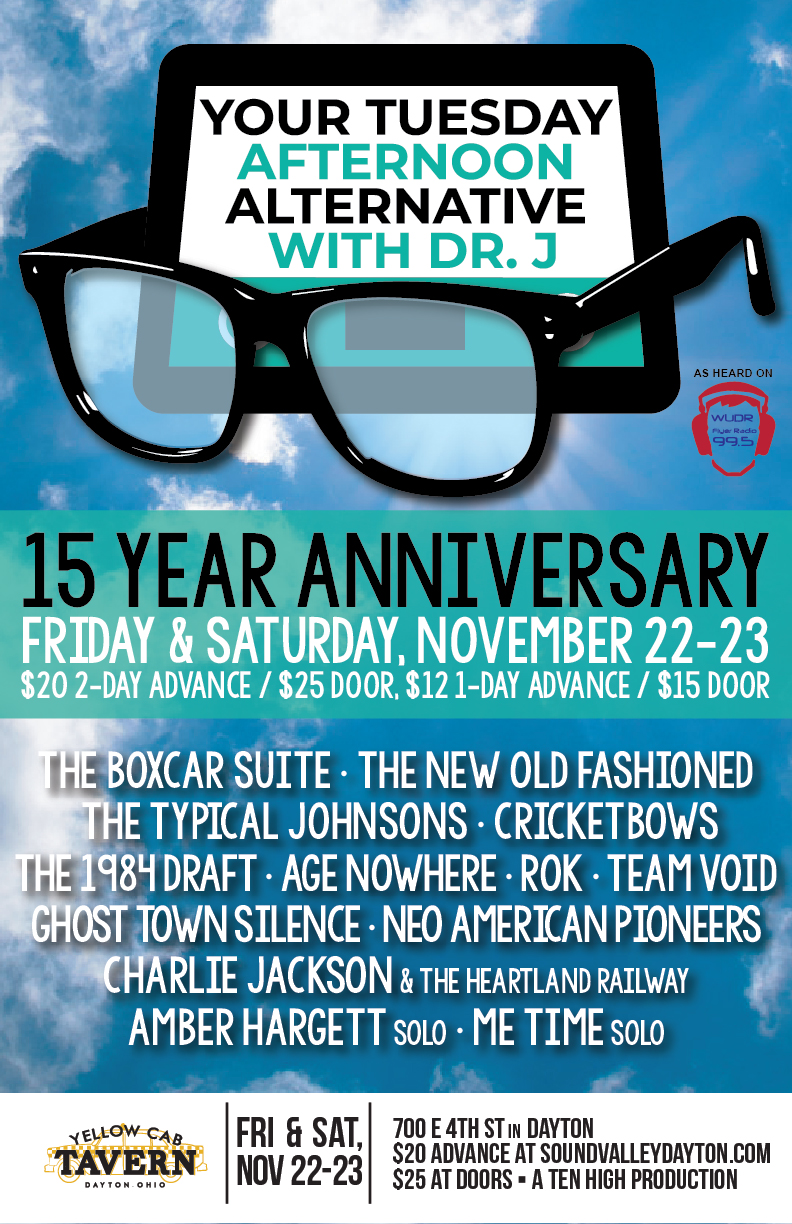
Grooving to the Beat of ‘Your Tuesday Afternoon Alternative’: The 19-Year Sonic Odyssey of a Radio DJ

Nineteen years feels like a long time to do anything. Why do a radio show when no one may be listening?

Let me tell you, being a radio DJ isn’t just a gig; it’s a cosmic voyage into the heart of musical expression and requires more endurance than you think. Just the other day, someone came up to me with ‘Hey, you’re that weird DJ guy!’ To which I answered, ‘Yup.’ And then they said, “Why do a show when you know no one is listening!” And, I stopped short, wondered about whether they were right, and then came to the conclusion that as long as one person finds comfort, as long as one person finds a song that speaks to them – then it matters. We are a community. We stand strong in the face of a destructive tide of avoidance and ignorance of new music. And that’s why I am who I am, standing behind the microphone every Tuesday afternoon, steering the ship that is ‘Your Tuesday Afternoon Alternative.’

If I were to condense 19 years of my life into a single, rhythmic heartbeat, it would be the pulsating cadence of a radio wave, broadcasting stories, music, and dreams to an invisible audience. My journey through college radio has been a dance with the ether, a passionate affair with sound, and a canvas for my creative expression. I invite you to join me on a nostalgic journey through the tapestry of my radio experience.

The Birth of an Odyssey

As the crackling needle touched vinyl for the first time in 1983, I found myself immersed in a world that was both electrifying and liberating. I began doing radio to work on improving my stutter but I also wanted to know more about music. I wanted to comb through the vinyl collection and find records that I had read about but never had the chance to hear. I was hungry for music old and new. College radio at the University of Minnesota was not just a hobby; it was a calling. Like music journalist David Marsh dissecting the nuances of rock lyrics, I dissected the frequencies and wavelengths that carried the voices of generations before me while anxiously awaiting the new music that was to come.

My first show, Radio Artifacts, was from 1983 to 1984 where I truly learned about indie music, Minnesota-based bands, and in so many ways the future of music through bands like R.E.M., Hüsker Dü, The Smiths, U2, The Replacements, The Cure, The Connells, and The Clash. From 1984 to 1988, a new show focused on alternative and college music and the art of music making, the poorly named ‘Art for Artsake’ that was both a play on my first name and — at least to me — a reflection of the mission of the show. During graduate school from 1988 to 1993, I was involved with Bowling Green State Universities’ WBGU where I had a succession of shows whose names were lost to reflections and glimpses of memory. After grad school, I dabbled in radio at WMUB in Oxford, Ohio from 1995 to 2000. For four years I had an itch I could not scratch.

The love of indie and alternative music was something that stayed with me even without a show. But eventually, that itch became unbearable and I started a show “The School of Rock with Dr. J” in 2004 at The University of Dayton’s WUDR. Modeled in some ways on the Jack Black movie — yeah I know: Cue the eye roll. TSOR was an almost didactic approach, I played music that mattered to me and explored current indie, local, and Dayton music. I explored how current unknown and undiscovered music was connected to the music of the past. Several shows explored how The Byrds – The Flying Burrito Brothers – The Eagles – Jason and the Scorchers – Cowpunk – Uncle Tupelo – Son Volt and Wilco were all connected. The airwaves were my playground from which I discovered the richness of independent, alternative, and college music.

During these various shows, I interviewed indie artists and underground bands. College radio was not just about the music; it was about the stories behind the notes. The vibrant community of DJs, producers, and listeners was a testament to the power of shared passion. Just like Dave Marsh in his work united rock aficionados, we united lovers of alternative sounds, forging connections beyond the frequencies.

Nineteen years is a long time to do anything, and within the span of my radio experiences, I have witnessed the tectonic shifts in the audio and radio landscape. College radio stations evolved from humble FM stations to digital juggernauts streaming across the globe. Writers and journalists have chronicled the evolution of rock music, and I chronicled the evolution of radio itself in the changes in my own practice. The use of digital tools has made so much of the “doing of radio” the clicks of buttons and the dragging of files. Many tasks that once involved carts and tape or vinyl were replaced with CDs which in turn were replaced themselves with digital files. The advent of the internet brought a new dawn, expanding our reach but also challenging our authenticity. Is radio still real in the digital age? In an era of Spotify, does radio still matter when you can listen to what you want, when you want, and do it all in the palm of your hand? Why do a radio show when no one might be listening?

The Sonic Shaman

You see, being a radio DJ is more than just “spinning tracks,” It’s more than just “playing music.” It is far more than just clicking a button and dragging a cursor across the soft glow of a computer screen. It’s about conjuring emotions and weaving stories through sound. When I join with the airwaves and internet signals, I am driven by faith in the power of new music. The beauty and the lifeblood of local music call to me. Maybe all of this is some strange and unchangeable part of being a “music evangelist.” Perhaps one becomes a sonic shaman of sorts, guiding listeners through the labyrinthine tapestry of music. Every tune I play carries a piece of my soul, and when those frequencies hit your ears, they transcend mere notes and rhythms. It’s a trip through time and space seeking the person who feels alone with a simple message that they are not disconnected, they matter and the community is better for their contributions.

The Rebel Cry

Lester Bangs, one of the quintessential American rock critics, taught us that music is the language of rebellion. And that’s precisely what I aim to channel with ‘Your Tuesday Afternoon Alternative.’ It’s a rebellion against the mundane, against the homogenized playlists of corporate radio. in my vision of myself, I am like the underground guerrilla fighter, battling the forces of mediocrity with a vinyl arsenal of sonic revolutionaries. Each song I play is a battle cry, a defiant scream against the mainstream. Or at least, that is probably what I really want to believe because, you know, 19 years is a long time.

The Community Connection

Radio is a lifeline to the community, a bridge between disparate souls. ‘Your Tuesday Afternoon Alternative’ is not just a show; it’s a lifeline for misfits, dreamers, and music lovers who still hang tight to the idea that music matters. I’m not just playing records; I’m forging connections. I’m the curator of a sonic underground, bringing people together through the magic of music. When that listener calls in to request a song, it’s more than a request; it’s a statement that says, “I’m part of this, too.” Those moments of connection are more important now than ever before. We need that musical validation: “Look, we are here and the music that speaks to us matters.”

The Quest for Obscurity

Lester Bangs was all about the obscure, the unknown, the raw. I share that passion. My show isn’t about chart-toppers or Billboard hits; it’s about the hidden gems, the indie bands struggling for recognition, the perfect voice that chills us while holding us close and telling us that everything is going to be alright. YTAA is about the beautiful unknowns, the forgotten tracks that deserve a second chance, and the great new songs that need to be heard. I think of myself as a musical archaeologist, digging through archives, near and far, and unearthing sonic treasures. It’s about unearthing the lost voices and forgotten riffs that deserve a place in the sun.

The Journey Continues

So why am I a radio DJ with ‘Your Tuesday Afternoon Alternative’? Why continue to be a DJ even if no one is listening? Because it’s not just a job; it’s a calling, a mission, a cosmic journey through the soundscape of the human experience. It’s a rebellion, a lifeline, and a quest for the obscure. It’s about community, connection, and the never-ending search for that perfect riff, that perfect groove, that unbelievable hit of the drum, that chilling voice that makes you catch your breath. It’s about the song that you cannot forget, no matter how hard you may try. It’s about the perfect lyric that shows you that you are not alone in feeling the way that you do.

Today, as I look back on 19 years of college/indie/alternative radio with YTAA, I see the echoes of countless voices, the resonance of music that touched souls, and the indelible mark it left on my life. David Marsh once wrote, “Rock and roll is an attitude, it’s not a musical form of a strict sort. It’s a way of doing things, of approaching things.” College radio, in my world, was — and is — that attitude – a way of doing things that transcended the mere act of broadcasting. So, yeah, it’s more than pushing a button and just playing a song. I would like to believe that it matters, and if it has meant something to just one person somewhere, anywhere then it was absolutely worth it for me.

Hopefully, this essay has helped chronicle my lifelong journey with college/indie radio – a journey that echoed the rhythms of my heart, shaped my identity, and allowed me to be a storyteller in a world of sound. Just as the radio DJs, Music writers, and journalists of the past contributed words that continue to resonate with music enthusiasts, the memories and experiences of 19 years on the airwaves/internet will forever resonate within me, a testament to the enduring power of radio and the magic of its transmission through time and space.

In the spirit of Lester Bangs, I’ll keep cranking up the volume, diving deep into the musical abyss, and taking you along for the ride. Because ‘Your Tuesday Afternoon Alternative’ is not just a show; it’s an alternative reality, a refuge for the sonic explorers, and a testament to the power of music to change our lives. So, tune in, turn it up, and let’s keep this cosmic journey rolling for as long as we are able to do so.