Favorites of 2025: The Cords – The Cords

The Cords: how a band turns pop instincts into craft

If rock and roll really is dead, then The Cords clearly missed the memo, because their new self-titled record kicks the coffin lid open, steals the eulogy notes, and sets the funeral pyre dancing like it’s 1979 again and tomorrow doesn’t exist. This thing isn’t just a debut—it’s a declaration, a sugar-buzzed jolt of pop-bright indie rock that doesn’t pretend to be cool, doesn’t hide behind irony, and doesn’t give a damn about whatever trend some influencer is spoon-feeding their followers this week. It’s melody as oxygen, chorus as lifeline, guitars strummed like they’re trying to shake loose every last excuse you’ve ever had for not feeling something. And thank God for that—because in a year drowning in algorithmic uselessness, The Cord showed up with color, conviction, and the kind of hooks that tattoo themselves on your spine: refreshingly infectious, all-ages indie-pop and jangle pop collection with bright, melodic hooks and irresistible harmonies.

When a band chooses to release a self-titled record deep into a career or at a moment of reinvention, it’s rarely an accident. A self-title asks listeners to pay attention: this is who we are, for better or worse. On The Cords, that gesture reads less like self-importance and more like quiet confidence. The album crystallizes a group whose greatest gift is the paradox of seeming easy: songs that land as immediate, catchy pop but reveal, on repeat listens, careful craftsmanship — arrangements that balance lift and restraint, choruses that stick without shouting, and lyrics that prize specificity over cliché.

This review explores why The Cords has quickly emerged as one of 2025’s most beloved releases (or at least for us at Your Tuesday Afternoon Alternative), examining how the record was made, what each musician brings to its radiant clarity, and how the band’s sound fits squarely—and confidently—within contemporary indie-pop and power-pop currents. Reviewers have praised the album’s effervescent hooks, bright harmonies, and early-Beatles-meets-C86 charm, calling it a reminder that joy, immediacy, and craft can still feel revelatory. By looking closely at the songs and the meticulous yet exuberant musicianship behind them, this piece makes the case echoed by critics across the board: The Cords proves that in an era of over-processed noise, genuine craftsmanship not only still matters—it stands out.

Who are The Cords?

Asking “Who are The Cords?” is entirely reasonable, especially given how quickly the duo seemed to burst onto the 2025 music landscape with a fully formed sound and a debut record that feels more like the work of seasoned veterans than newcomers. Their name appeared almost overnight in reviews, playlists, and year-end lists, prompting curious listeners to wonder how a band this polished could arrive with so little advance fanfare. The question reflects both genuine intrigue and the natural impulse to understand the people behind a record that has connected so widely, so suddenly. Ok, ok… let’s answer the question directly: The Cords are a rising Scottish indie-pop sister duo, Eva (guitar, vocals) and Grace (drums and percussion) Tedeschi, known for their catchy, jangle-pop sound reminiscent of ’80s/90s C86 indie, featuring loud guitars, drums, and infectious melodies. They gained buzz in the UK indie scene, playing with major bands like Belle and Sebastian, and released their self-titled debut album this year, solidifying their place as exciting new musicians with a fresh take on classic indie pop.

So, sure, The Cords are a rising indie rock band whose self-titled debut has pushed them from regional curiosity to one of the year’s most talked-about new acts. That love comes honestly. It is built around a shared love of sharp pop melodies, jangling guitars, and choruses designed to ignite rooms both small and large. The band blends classic power-pop instincts with the earnest shimmer of modern indie. While each member brings a distinct musical background to the project—ranging from DIY home-recording scenes to more polished studio work—they come together with a unity of purpose: to make songs that feel immediate, heartfelt, and boldly melodic. Their chemistry is unmistakable, the kind of collaborative spark that makes a first record sound less like a beginning and more like a band arriving fully formed.

A band in the room, not a solo project on a laptop

One of the first things you notice about The Cords is its sense of feel. The record breathes the way a live band breathes: near-mic’d guitars trade phrases, the bass doesn’t merely hold down the root but sings counterlines, and the drums are both precise and human — they click when they should and push when the song needs momentum. That sonic chemistry suggests an actual group in a room rather than a single songwriter piling tracks onto a click-track.

On this record, the players are careful taste-makers: a lead vocalist who carries the melody with an effortless honesty; a guitar riff is economical but unforgettable; bass lines that anchor and color in equal measure; a drummer who doubles as a dynamic architect; and occasional keys and backing vocals that thicken textures without smothering them. The album’s production is shaped in large part by Jonny Scott and Simon Liddell, who not only handled the recording and overall sonic direction but also contributed additional bass and keyboard parts. Their involvement adds depth, texture, and subtle melodic detail, helping the songs land with a clarity and fullness that elevate the duo’s core ideas. That production leans toward warm melody rather than slick overprocessing — vocals swirl, the guitars ring, and harmonies bloom in native stereo. The effect is immediate and intimate, like a favorite radio station that somehow still surprises you with classic Scottish indie pop, bringing energy and authenticity to the genre.

Classic hooks, modern precision

Musically, The Cords live at the intersection of indie-pop and modern indie rock. If power-pop is the art of building irresistible choruses around smart songcraft, this record nods to that lineage while keeping its feet in the present. The guitars often prefer jangle and concise counter-motifs over endless studio tinkering with reverb; the drum sounds favor snap and presence within the mix; the bass is melodic. Production choices keep the songs forward and communicative.

What’s clever about the album is how it uses contrast. A sleek, hummable chorus might follow a verse that’s rhythmically skittish or harmonically unusual; a bright hook will sit atop an unexpectedly rueful lyric. That push-and-pull keeps songs from flattening into mere earworms. The band knows how to write a chorus that hooks on first listen, but they’re more interested in building shoulders for those hooks to stand on so the singer can mean what she has to say within the sway of the song.

Ordinary detail, emotional honesty

Lyric writing on The Cords resists broad platitudes. Instead of grand pronouncements, these songs live in particulars: a lit street outside an apartment window, the wrong song playing on a cheap jukebox, saying goodbye, not knowing what to say. Those details anchor the songs emotionally; they make choruses feel earned rather than handed to the listener.

Themes recur — the ache of imperfect relationships, the friction between wanting to leave and wanting to belong, the peculiar loneliness of modern urban life — but the band treats these themes as lived experience, not albums’ worth of slogans. There’s tenderness here, an ability to hold both humor and regret in the same line. When the chorus opens up into sing-along clarity, the words are often small but direct, the kind that a listener can latch onto and repeat in daily life.

Rather than a list of titles, the album’s architecture is worth noting: it opens with a confident, urgent cut, “Fabulist” that announces the band’s melodic ambitions; it centers itself with a pair of mid-album songs that reveal its lyrical depth while stilling rocking (“You” and “I’m Not Sad”); and it closes with a return to the jangle with a reflective piece that leaves more questions than answers, “When You Said Goodbye” — a satisfying structure that mirrors human experience rather than manufactured catharsis.

The opener works as a thesis statement: brisk tempo, jangly guitars, a pre-chorus that sets up the payoff, and a chorus that lands like a bright bruise — it’s immediate and impossible to ignore. The arrangement focuses on guitar and drums, yet leaves space for letting the lyric breathe before swelling into a harmony-rich chorus. That dynamic — economy vs. abundance — is where the record’s emotional intelligence shows. The listener feels tugged along rather than pushed.

Musicianship: pop instincts, instrumental care

One of the pleasures of The Cords is hearing instrumentalists who understand restraint within the landscape of Scottish indie pop. The lead guitar rarely indulges in long solos; instead, short melodic figures become hooks in themselves. The bass often carries melodic interest in places a secondary vocal might have; the drums use space and silence as effectively as fills and cymbal swells. These are not instrumental showpieces; they are choices made to serve the song.

Backing vocals are used sparingly but to great effect: stacked parts in choruses heighten the sense of communal voice, whereas single harmony lines in bridges add emotional nuance. Keys and synths make tasteful cameos — a pad here, a tuned key there — supporting rather than competing. The overall musicianship communicates a band comfortable with pop’s mechanics yet allergic to disposable glitz.

Production plays a crucial role in a record like this. The engineers and producers behind The Cords opt for a live-room warmth; you can hear the string of the guitar and the breath before the vocal. The mix privileges midrange clarity so the melodies cut through without overwhelming the low end. Transients on percussion are preserved to give the drums snap, and the stereo image is used to place instruments in space rather than to dazzle with effects. That sonic philosophy — preserve the room, let the song guide the mix — keeps the album feeling human. It’s pop music with a pulse rather than sterilized pop.

For whom this record is made

The Cords will appeal to listeners who prize tunes that reward attention. Fans of classic power-pop and jangly indie rock will find the hooks irresistible, but casual listeners will also appreciate the plainspoken choruses and immediate melodies. The record sits comfortably between the worlds of radio friendliness and indie credibility: radio programmers get singable choruses; critics get craft and nuance.

Younger listeners who grew up with playlist culture may be surprised by how an album built around consistent melodic logic can still create small shocks of recognition — the kind of “I know this” feeling that a succinct chorus can produce. Older listeners will appreciate the band’s affinity for tradition without nostalgia.

This record matters

In a popular music moment dominated by hyper-production, viral singles, and an ever-shortening attention span, a record like The Cords is quietly radical. It insists on songcraft: beginning, middle, and end; it assumes the listener will return; it foregrounds human voices and real instruments. The album’s lack of pretense is, paradoxically, its statement. It shows how pop can be both pleasurable and thoughtful, how choruses can be cathartic without being manipulative.

For a listener who wants immediacy without cheapness — a hook that doesn’t insult intelligence — The Cords offers reassurance: good songs still matter, and a band playing together still sounds like something worth cherishing.

A self-titled album is a claim. The Cords lay claim to that title gently but firmly: here is a band confident in its pop instincts and literate in its emotional choices. The record’s charm rests on the marriage of classic pop construction with modern precision, the musicians’ disciplined instincts, and songwriting that values detail over slogan. It isn’t a manifesto; it’s a practice. And in an era of flash, there’s a particular pleasure in watching a band quietly do the work of making songs that last.

Favorites of 2025: Kim Ware and The Good Graces – Grand Epiphanies

I’ll just say it: Grand Epiphanies is one of the most human records you’re going to hear in 2025, and maybe one of the few that doesn’t insult your intelligence along the way. While many releases this year seem hell-bent on either drowning themselves in studio varnish or hiding behind hipster irony, Kim Ware walks in like someone who’s survived a few things and isn’t afraid to speak plainly about the bruises. These songs don’t howl, they don’t posture—they breathe. And in an era when pop throws confetti over every emotional breakdown and calls it catharsis, Ware has the guts to sit with the silence, to let the ache settle, to make music that’s actually about feeling something and not just Instagramming the wreckage. This is a record that believes in sincerity, and for that alone, it hits like a revelation.

Deepening the craft: Why Grand Epiphanies matters

When Grand Epiphanies was released in September 2025 via Fort Lowell Records, it arrived not as a gimmick or a throwback — but as an earnest statement from a songwriter who has spent nearly two decades refining her voice. For fans of Kim Ware and The Good Graces, the EP represents both continuity and evolution. It retains the emotional honesty and Southern-tinged indie-folk roots listeners have come to expect, while embracing fuller arrangements, sharper lyrical clarity, and a maturity of perspective that only time (and living) can provide.

What emerges is a collection of songs that treat heartbreak, regret, longing, and self-doubt not as melodrama, but as shared human truths. Ware doesn’t write to shock, to boast, or to gloss over. She writes to reach — to offer a mirror to listeners, and maybe a little company in whatever dark or quiet moment they find themselves. This EP is a reminder: vulnerability doesn’t have to be pretty. It just has to be honest.

The team: musicians behind the music

Although Kim Ware remains the creative heart of The Good Graces — vocals, guitar, and songwriting — Grand Epiphanies is a collaborative effort, supported by skilled players and producers who understand how to highlight nuance rather than mask it.

On this release, producers and multi-instrumentalists Steven Fiore and Justin Faircloth play central roles, adding guitar, piano, keyboards, bass, and even backing vocals, and in doing so, help shape the record’s rich but still intimate sonic layers. Their presence builds on a long tradition within The Good Graces: throughout previous albums, different collaborators have drifted in and out of the lineup, each contributing something distinct to the band’s evolving sound. That kind of fluid membership has always been part of the project’s identity, keeping Kim Ware’s songwriting deeply personal while allowing the music itself to remain open, flexible, and continually renewed rather than fixed in a single form.

This flexible model echoes what Ware once said about the band: not as a fixed entity but as a “very talented group of friends,” coming together when inspiration, time, and circumstance allow.

In practice, this means Grand Epiphanies doesn’t feel overproduced or manufactured. Instead, it feels like friends gathered in a room, listening, playing, and creating together — a mood that invites trust and intimacy rather than distance and gloss.

Sound and style: picking up old threads, weaving new ones

Listeners familiar with earlier Good Graces albums — from Sunset Over Saxapahaw (2008) through Ready (2022) — will find much that’s familiar on Grand Epiphanies. Ware’s Southern-tinged twang, her blend of folk, country, and indie-rock sensibilities, the unhurried melodies, the earnest vocal delivery — these remain essential.

Yet this EP also feels more expansive than some earlier efforts. The production, led by Fiore and Faircloth, layers guitars, piano, subtle harmonies, and occasionally banjo or other acoustic touches to build a richer emotional landscape around Ware’s voice. Although personal taste will always shape which tracks linger the longest, several songs on Grand Epiphanies stand out for the way they crystallize what the record does best. Take the track “Old/New”: its guitar strumming and vocal lines evoke late-afternoon melancholy, but as the song unfolds, piano and backing instrumentation widen the space — giving the listener room to sink into memory, longing, and possibility. unfolds like a gentle meditation on what we leave behind and what we carry forward, its subtle layers of instrumentation creating room for genuine emotional reflection.

Wish I Would’ve Missed You approaches heartbreak without melodrama, turning regret and longing into something more like the experience of leafing through old photographs—quiet, tender, and unexpectedly overwhelming. And then there is Missed the Mark,” a song that speaks directly to the insecure, the hopeful, and the uncertain, offering both an appeal for human connection and a confession of imperfection that feels disarmingly honest.

The choice to include a cover — a reimagined version of Some Guys Have All the Luck — also signals the confidence in balancing reverence and reinvention. On this EP, the cover doesn’t feel like a novelty; instead, it sits comfortably alongside Ware’s originals, transformed gently to align with the EP’s mood and tone. Some Guys Have All the Luck serves as a bridge between past and present, inspiration and reinterpretation. It doesn’t overshadow the original; it complements it, reminding listeners that songs evolve just as people do.

Overall, the sound of Grand Epiphanies suggests maturity without restraint, emotional depth without melodrama — the kind of record that lingers long after the final note fades.

The gift in the songs: everyday life, honest reflection, and human connection

What often sets the best singer-songwriters apart is a gift for translating ordinary moments into emotional touchstones. On Grand Epiphanies, Kim Ware exercises that gift with clarity and courage. Rather than lean on clichés — heartbreak melodrama, romantic tropes — she mines the subtler, messier terrain of real experiences: regret, nostalgia, second chances, self-doubt, hope, and quiet resilience. Many of these themes resonate universally: longing and loneliness, memory and loss, the ache of roads not taken, the fragile optimism that hums beneath everyday life.

In Wish I Would’ve Missed You”, Ware reflects on regret and longing with a spare lyricism that strikes more powerfully than most breakup ballads. “Spent it all on grad school… every now and then a memory stops me in my tracks,” she sings — not flaunting heartbreak but confessing to being human, vulnerable, flawed.

Elsewhere — in songs like “Missed the Mark” — she turns the lens inward, wrestling with feelings of inadequacy, uncertainty, and the desperate hope to connect. “I scan the room and hope the messages I send / Somehow reach a brand new stranger, and they become a brand new friend,” she confesses, exposing the artist’s fear and longing behind performing.

The album doesn’t promise closure. It doesn’t pretend that “everything works out.” Instead, it offers companionship: a voice that says, “I feel a lot of this too.” In that way, Grand Epiphanies avoids insulting the listener’s intelligence by offering simplistic solutions. It acknowledges complexity. It honors pain. And it believes in healing — not as a fairy tale but as a slow, sometimes messy process.

How Grand Epiphanies compares to previous work

To appreciate Grand Epiphanies, it helps to see it against the backdrop of Kim Ware’s musical journey. The Good Graces began in 2006 after Ware picked up an old acoustic guitar and started composing songs rooted in Southern indie-folk traditions.

Earlier records, like Close to the Sun (2014), showed a willingness to experiment — to mix folk and country, to play with ambient touches, drum machines, and subtle electronic textures. But even then, the core remained familiar: Ware’s voice, simple guitar patterns, emotionally candid lyrics.

With Ready (2022), the songwriting felt sharper, more intentional; melodies caught between wistful longing and restless urgency. Yet Grand Epiphanies pushes further. The songs are more cohesive; the instrumentation more deliberate; the emotional stakes clearer. Listeners can trace how time, experience, and loss have deepened Ware’s perspective.

This latest EP also suggests a renewed trust in collaboration. Rather than relying solely on acoustic minimalism — the refuge of vulnerability — Ware embraces fuller arrangements. The result isn’t flashy, but it feels abundant in feeling. It’s as though she’s saying: “These aren’t just my stories alone anymore; they are ours.”

Why Grand Epiphanies feels especially relevant in 2025

We live in a time when noise is constant — in our politics, our social media, our media cycles. Simplicity and quiet reflection often feel like luxuries. In that environment, an EP like Grand Epiphanies doesn’t just matter musically; it matters morally. It represents a kind of resistance — not flashy or confrontational, but human.

Kim Ware doesn’t demand answers; she offers empathy. She doesn’t pretend life gets clean after the hard parts; she reminds us that even when scars remain, beauty can survive. For listeners who feel worn down, uncertain, or haunted by memory, these songs can be small lamps in a dark room. For those simply seeking honest songwriting in a sea of glossy distractions, the EP offers relief.

Moreover, the collaborative, evolving model of The Good Graces — weaving friends, producers, rotating musicians into a living tapestry — speaks to music as community, not commodity. In an age of streaming algorithms and viral hits, that matters.

A few honest limitations — and why they don’t hurt the EP’s purpose

As with any release built around vulnerability and introspection, Grand Epiphanies may not cater to all tastes. Listeners expecting polished pop hooks, glossy production, and immediate gratification might find its pacing too slow, its mood too muted. The EP’s strength lies precisely in its restraint — in accepting that some feelings don’t come wrapped up neat and loud.

And with only five tracks, Grand Epiphanies can feel more like a snapshot than a full portrait. Themes are introduced, emotional arcs hinted at, but not always resolved. The sense is less of closure and more of continuation. Which, in many ways, may be the point: life rarely offers tidy endings.

Still — if you’re open to being held in uncertainty for a little while; if you’re willing to sit with a guitar, a voice, and a few gentle chords — the EP offers something rare: a place to breathe.

Kim Ware and The Good Graces — still speaking, still feeling

In a musical climate often dominated by spectacle, loudness, and overstated sentiment, Grand Epiphanies stands out not because it demands attention, but because it deserves it. Kim Ware’s songwriting remains a gift: honest, gentle, unguarded, but never cloying or insincere. Backed by The Good Graces, she continues to prove that folk and indie rock can still speak to our messy, uncertain lives with clarity and heart.

For longtime listeners, the EP will feel like a meaningful evolution — a band maturing, growing more confident, more open to collaboration. For those just discovering Ware, it offers a doorway into a catalogue full of stories that don’t hide behind cliches or affectation. And for anyone longing for music that reflects rather than distracts, that comforts rather than commodifies — Grand Epiphanies is a small, glowing jewel.

In 2025, when the world often seems determined to overwhelm us with noise, Kim Ware and The Good Graces invite us to slow down, listen, and remember: we are not alone. We are human. We are trying. And maybe — just maybe — that’s enough.

Favorites of 2025: Bruce Springsteen – Nebraska 82 Expanded Edition

Look, Nebraska was already perfect in that cold-coffee, blackout-3-a.m. way that records sometimes accidentally are—Springsteen mumbling ghosts into a four-track like he’s afraid the neighbors might hear him unraveling. You don’t “improve” a hallucination. But here comes Nebraska ’82 with its alternate visions, its rust-belt apparitions, and suddenly you realize perfection isn’t the point anyway. What we’re getting now is the messy archaeology of a masterpiece—the dirt under its fingernails, the tape hiss, the roads not taken. It doesn’t dethrone the original bedroom-confessional monolith; it stands off to the side like a cracked mirror held up to the same bleak American sky. And damn if that mirror doesn’t show something worth staring into all over again.

Nebraska ’82: Expanded Edition arrives at the right time

With the 2025 release of Nebraska ’82: Expanded Edition, Springsteen and his team have delivered the most comprehensive, honest, and vivid portrait of one of the most haunted, intimate, and influential albums in rock history. The box set includes a newly remastered version of Nebraska as originally released, previously unheard demo outtakes, the long-rumored “Electric Nebraska” sessions with the full band, and a newly recorded live performance filmed in 2025.

For newcomers and longtime fans alike, this release offers both context and extension: context for how Nebraska came to be — from home demos on a TASCAM to a full LP — and extension in the form of alternate takes, jukebox-ready electric arrangements, and reflections of the songs through decades of memory.

It’s not just nostalgia or archival shelf-cleaning. What emerges is an album whose darkness, subtlety, and emotional power remain urgent. Nebraska ’82 still speaks — perhaps even more clearly now — to lives marked by uncertainty, longing, and resilience.

The original Nebraska — stark, personal, unforgettable

When Springsteen recorded Nebraska in late 1981 and early 1982, he did so not with a studio full of musicians but with a four-track recorder in his bedroom, an acoustic guitar, and a stark vision. The result was an album unlike anything else in his catalogue: bleak, intimate, confessional, but not confessional in a self-pitying sense. These were songs born from solitude, from the rawness of fear, regret, despair — made real by economy of arrangement.

Tracks like “Atlantic City,” “Johnny 99,” “State Trooper,” and “My Father’s House” traversed the margins of the American dream: economic hardship, moral desperation, violence, yearning for redemption. The spare instrumentation — sometimes only a guitar and a voice — made every lyric, every tremor of the vocal, every pause between notes count. The result is widely considered one of the great solo records in rock.

Decades later, Nebraska remains the gold standard for how quiet, low-fi recordings can deliver emotional immediacy. For many, it’s not just an album — it’s a private confessional, seen through the lens of loneliness and lost dreams.

What the Expanded Edition adds — and why it matters

Remastering with care

First, the 2025 remaster brings Nebraska into sharper focus without erasing its haunted intimacy. In a landscape where remasters often polish away character, this one preserves the album’s texture — the creaks, the echoes, the warmth of an acoustic guitar reverberating in a home studio — while improving clarity and depth. Critics who’ve heard the new edition note that the remastering reveals subtle layers previously buried: the quiet background of a mandolin here, the soft echo in the final chords there, the breath before a harsh lyric.

In short: the remastered Nebraska doesn’t feel like a revived relic — it feels alive again.

Solo outtakes and previously unreleased songs

The set’s first discs unearth acoustic outtakes and songs from the original 1982 sessions that didn’t make the album: Child Bride, The Losin’ Kind, Gun in Every Home, and On the Prowl — material fans have traded as bootlegs for decades or assumed lost forever.

Hearing them in official, high-quality form is revelatory. Tracks like “Gun in Every Home” offer a nightmarish portrait of domestic collapse and despair; “On the Prowl” pulses with a restless, searching energy that resonates with the rest of the album’s themes. Even though these songs were originally omitted, they expand the emotional terrain of Nebraska — reminding listeners that the darkness had multiple facets and that the record’s focus was always selective, not total.

Electric Nebraska — the “what might have been”

Perhaps the most dramatic and controversial addition is the long-rumored “Electric Nebraska” sessions. In April 1982, shortly after finishing the solo demos, Springsteen brought several members of the E Street Band into the studio (including Max Weinberg and Garry Tallent) and attempted full-band recordings of several Nebraska songs. In 2025, those sessions have finally emerged publicly — the first time many had heard them.

The results provoke awe — and ambivalence. On one hand, songs like electric versions of Atlantic City or Johnny 99 have a muscular, rock-ready energy. A demo of Born in the U.S.A. — originally written in the same era — appears in trio form (Springsteen, Weinberg, Tallent), described as “punk rockabilly.”  It is electrifying, raw, and historically fascinating.

On the other hand — and critics largely agree — turning Nebraska into a full-band rock record would have gutted much of its power. The original’s bleak intimacy, its ghost-town loneliness, its moral urgency — all flowed from isolation and austerity. As Uncut’s review put it: “Electric Nebraska might have produced a competent rock album, but it wouldn’t have been Nebraska.”

The electric versions often feel like exercises — intriguing, occasionally thrilling, but never quite as honest. The contrast only strengthens the myth of the original: a man alone with a guitar, bearing witness to the American underbelly.

A 2025 live performance: memory as lens

Rounding out the set is a newly filmed live performance — Springsteen playing the full Nebraska album in order, at the Count Basie Theatre, Red Bank, New Jersey. Accompanied subtly by veteran musicians such as Larry Campbell and Charlie Giordano, the performance is respectful rather than grandiose, earnest rather than nostalgic. In a press statement, Springsteen remarked on the experience: hearing the songs again, he was struck by their “weight” — their capacity to move, even after decades.

The filmed concert is not a re-creation but a meditation. Compared with the original 1982 recordings, the live versions reflect the distance of time — a deeper voice, more lived-in phrasing — but they carry the songs’ sorrow, hope, and grit into a present that, for many listeners, remains uncertain.

What Nebraska ’82: Expanded Edition reveals about Nebraska’s enduring power

Listening to the full box set is, in a way, a masterclass in artistic decision — what to keep, what to discard, what to preserve, what to experiment with.

The original Nebraska stands undiminished. If anything, the contrast with the electric takes and outtakes sharpens what made it special. The sparseness, the solitude, the haunted tonal space — all reveal that Springsteen’s choice to release demos instead of studio recordings was not a compromise but a commitment to emotional truth. As one critic writes, the set underscores that “even when testing out the material with his most intuitive collaborators … the definitive version of Nebraska remains the one he captured on tape… tracking solo demos.”

Yet the collection is not purely about preservation — it expands the artist’s vision. The outtakes and electric versions show songs as living things: malleable, re-interpretive, incomplete. They reflect a period of creative restlessness, of questioning whether Americana songs needed to be acoustic, dark, personal, or if they could rock, rage, and roar.

For fans and historians, Nebraska ’82 offers context. For new listeners, it might serve as the entry point. For all, it’s a reminder that rock — stripped-down or electric — can still carry the weight of real human stories.

A few tensions and enduring questions

The Expanded Edition is not without controversy. Some reviewers warn against over-romanticizing the demos and dismissing the electric takes outright. As one Guardian column argues, if listeners imagine full-scale E Street–style treatments, they’ll likely be disappointed: the electric tracks “take the edge off, neutralising their impact.”

Others worry that the outtakes and alternate versions — while fascinating — might dilute the mythic purity of Nebraska. After all, part of the record’s power lies in its restraint. The expanded set invites comparisons, second-guessing, and reconsideration that can feel like peeling away a protective layer.

But perhaps that is precisely the point: art is not a mausoleum. Revisiting is not desecration — it is re-examination. And Nebraska ’82 gives listeners the tools to understand not just what the album was, but what it might have been, and what it still can be.

Why this edition matters — now so many years later

2025 is not 1982. The world Springsteen sang about — poverty, despair, moral compromise, broken dreams — has changed in many ways, yet in others remains startlingly similar. Economic instability, social dislocation, disillusionment with institutions — many of the conditions that haunted Nebraska then still haunt us now.

In that sense, Nebraska ’82: Expanded Edition arrives not as nostalgia, but as relevance. The spare melodies, the tales of desperation and longing, the fractures in the American dream — they resonate with renewed urgency. And by revisiting them alongside alternate takes and newer interpretations, listeners are invited to reflect not just on the past, but on how songs age, shift, and heal.

For younger listeners who might only know Springsteen from his arena-rock anthems or later work, this box set offers a different face of “the Boss” — quieter, darker, more human.

For longtime fans, it’s a gift: a chance to listen again, to compare, to reconsider.

A masterpiece re-examined — and still alive

Nebraska ’82: Expanded Edition does more than archive a landmark record. It reopens its doors, pulls back the curtain, and lets us hear not just the final songs, but the echoes, the experiments, the what-ifs, and the near-misses.

In doing so, it reaffirms what made Nebraska a classic: the courage to strip away everything but voice and guitar, to trust silence, to speak plainly about fear, regret, and survival. But it also acknowledges that songs are not static. They breathe, shift, and can be reborn.

Whether you come for the electric sessions, the unheard demos, the 2025 live film — or simply to hear Nebraska again — the result is the same: you feel the weight of its stories, the depth of its sorrow, the faint but persistent light of hope.

Forty-three years after it was first recorded in a bedroom in Colts Neck, Nebraska still matters. Nebraska ’82: Expanded Edition proves that not just as history, but as living, breathing music.

Favorites of 2025: Elephants and Stars – Under The Earth and Above Heaven

Indie rock has always thrived on the fringes: small venues, tiny labels, and the slow-building careers that reward patience more than hype. Few contemporary bands embody this spirit better than Elephants and Stars, the Canadian band whose latest album, Under the Earth and Above Heaven, feels like the result of years dedicated to refining melody, guitar as truth, rock and roll meaning, and a hard-won optimism tempered with a slight sarcasm that comes from not taking oneself too seriously. A real understanding that life has ups and downs.

The album’s title suggests a band thinking about place, about being suspended between hardship and hope, about grounding themselves even as they reach. And in many ways, this duality captures the spirit of Elephants and Stars themselves: musicians who write like they’ve lived a little, but still believe that a good chorus can solve something in the soul. A great song can change the world.

Under the Earth and Above Heaven is, simply put, their most confident and emotionally resonant work to date. But the record is also a reminder of why rock, guitars, harmonies, and honest storytelling still matter.

The band behind the sound
To understand the record, it helps to understand the people who made it. Elephants and Stars operate in a tradition familiar to fans of early 2000s alternative rock: tight rhythm sections, guitars that shimmer and crunch, and lyrics that manage sincerity without slipping into sentimentality.

The lineup, anchored by frontman Manfred Sittmann, whose signature vocals blend warmth with a slight rasp, has solidified into a group whose interplay feels lived-in. Sittmann writes and sings with the clarity of someone who knows the exact weight of each line, but the band behind him keeps things agile rather than precious. Sittmann’s melodic instincts shape much of the band’s identity. He’s joined by Adam Seed, whose lead guitar work brings a sharp, expressive edge to their sound, and longtime collaborator Michael MacMillan, whose bass lines provide both structure, rhythm, and warmth. The rhythm section finds its heartbeat in drummer Stewart McKinney, while Simon Head expands the band’s sonic palette with textured, atmospheric keyboard layers. Together, they create a modern rock sound grounded in pop-punk roots. Music that’s unmistakably hook-driven yet designed with a clear mission: to help bring rock back to the forefront.

The band’s story stretches back years, especially for Sittmann and MacMillan, who previously played together in the excellent group Soap Opera. Their long creative history gives the songs on their latest release a natural chemistry and ease, the feeling of musicians who know exactly how to respond to one another. That chemistry reaches a new peak on Under the Earth and Above Heaven, released in February of this year and produced by Ian Blurton, a collaboration that sharpens their sound while preserving the emotional immediacy that defines their work.

The guitars, often handled in layered pairs, move between bright open-chord passages and more aggressive leads. The bass lines are melodic without overpowering the mix, and the drumming is purposeful and punchy where it should be, restrained where the lyrics need breathing room. The result is a sound built on chemistry rather than simply studio polish.

The band feels like a cohort of people who know how to play to each other’s strengths. This matters because Under the Earth and Above Heaven is an album that depends on emotional pacing: crescendos that feel earned, shifts in tone that feel organic, and choruses that arrive with the momentum of a live show.

A sound defined by uplift without naïveté
From the opening track, Elephants and Stars make it clear that they are uninterested in the cynicism that often dominates modern rock. Their guitars ring with a kind of unguarded cascade of sonic joy, even when the lyrics are wrestling with frustration or loss. One of the most striking qualities of this album is how hope and melancholy coexist—not in competition, but in conversation.

The production leans into this duality. Vocals sit slightly forward in the mix, giving Sittmann’s storytelling a sense of directness and intimacy. The guitars, meanwhile, expand outward: wide, textured, layered. It’s the kind of sound associated with late-afternoon festival sets—sunlight still visible, the air cooling, the crowd settling into a collective feeling. And the sound? Loud, propulsive, aggressive, like a sonic caress.

What keeps the record from drifting into nostalgia is the band’s sense of precision. Each song feels built, not merely written. The hooks land with purpose. The bridges feel like necessary expansions, not detours. And the choruses—Elephants and Stars’ greatest strength—arrive like emotional confirmations.
This is a band that believes in melody the way some bands believe in distortion pedals: as the emotional engine of the music.

The lyrical world of the album
If the sound carries the emotional lift, the lyrics provide the grounding. Under the Earth and Above Heaven reads like a record about transition—moving from one stage of life to another, reconciling who you were with who you’re trying to become. The “earth” and “heaven” of the title function less as metaphysical spaces and more as metaphors for the pressures we carry and the aspirations we hold. Across the record, recurring themes emerge.

Across Under the Earth and Above Heaven, Elephants and Stars weave a thematic through-line that feels both deeply personal and universally readable. The record begins by making peace with the past, returning again and again to the bittersweet truth that old mistakes never quite vanish. Yet the band refuses to sink into regret. Instead, they treat memory like an old photograph—something to regard with a mix of tenderness and hard-earned gratitude for having made it through. That reflective stance sets the stage for one of the album’s central concerns: the search for steadiness in a world that rarely offers it. Life, as their lyrics suggest, often feels precarious, a suspended moment in which you’re “almost there” but never fully settled. But rather than express anxiety, the band leans toward determination, riding out the instability with resolve.

That determination is buoyed by another recurring insight: the importance of connection. Throughout the album, relationships of all kinds—romantic partners, close friends, the communities we build around ourselves—appear as the forces that keep us grounded. These songs push against the temptation to withdraw, insisting instead that meaning comes from being in the world with others. And within that engagement, the band finds flashes of transcendence in the most ordinary places: singing in the car, watching the sunrise after a sleepless night, catching the sound of someone’s laughter at just the right moment. These quiet, luminous details echo the “above heaven” imagery of the album’s title, suggesting that the extraordinary often reveals itself in the spaces where we least expect it.

The record carries an autobiographical weight without tipping into confession. Rather than offering a straightforward personal narrative, it gestures toward shared emotional terrain—less “here is my story” and more “here is a feeling you have probably known.” And while a full song-by-song analysis would exceed the scope of this discussion, several tracks stand out for the way they shape the album’s emotional arc, guiding listeners through reflection, uncertainty, connection, and ultimately the little but meaningful possibilities of joy.

The opener: urgency with clarity
The opening track, The Ceiling, wastes no time establishing the album’s stakes. A driving beat, guitars that arrive fully formed, and lyrics that describe the moment when indecision becomes action. It feels like a thesis statement: the band is not here to wallow; they are here to move. A bit more than midway through the record comes a standout track that shifts the tempo and deepens the tone, ‘Unlucky.’ This is where the band’s lyrical strengths shine: reflections on resilience, the cost of growth, and the quiet strength found in simply continuing. The arrangement builds around a groove—guitar, sway in the keyboards, more subtle percussion, then a full electric swell—mirroring the emotional climb.

The late-album surge: an anthem of uplift
As the album nears its conclusion, the band leans into one of their most triumphant choruses to date on ‘Paint Me Alive’. It’s the kind of moment designed to be shouted back at the stage, hands in the air, the kind of collective catharsis that only rock music can produce. The lyrics, which center on choosing light even when darkness is familiar, feel earned precisely because the album has carried listeners through doubt and tension.

The final track, The Ghosts, does something rare: it provides closure without collapsing into tidy resolution. It acknowledges the uncertainties that remain but offers a melodic reassurance that moving forward—however imperfectly—is worth celebrating.

Three elements make Under the Earth and Above Heaven one of Elephants and Stars’ most compelling releases: 1) Musical consistency without monotony. 2) The band has refined their sound without becoming predictable. And 3) Each song feels connected to the whole, but no two entries collapse into each other.

Emotional honesty that creates community
In an era where irony often dominates indie music discourse, Elephants and Stars commit wholeheartedly to sincerity. Their stories are earnest but never naive. The band creates A sense of community embedded in the music. Listening to the album feels like being welcomed into a shared emotional space. It’s personal, but it’s not private.

Elephants and Stars occupy an interesting place in today’s musical world. They are neither trend-chasers nor purists. Instead, they carry forward the tradition of emotionally articulate guitar rock: bands like The Weakerthans, early Jimmy Eat World, or mid-period The Hold Steady—artists who treat songwriting as craft rather than marketing. Their music reminds listeners that rock still has a role to play in articulating everyday emotional life. Not the grand dramas, but the subtle struggles: trying to be better, trying to stay hopeful, trying to find footing. In a digital era marked by fragmentation and fatigue, Under the Earth and Above Heaven feels refreshingly grounded.

Perhaps the greatest achievement of the album is its replayability. The first listen offers immediacy—hooks that land, choruses that stick. But subsequent listens reveal the details: the way a harmony hangs in the background, the way a guitar line subtly echoes a lyrical theme, the way the rhythm section builds tension without overstating it. This is music built not just to impress, but to accompany. It is the kind of record listeners grow with and discover far more over repeated listens.

An album for the moment we’re in
Under the Earth and Above Heaven succeeds because it feels like an album made by people committed to the power of song—not spectacle, not persona, but the craft of building moments of connection. In a fractured cultural moment, that feels almost radical.

Elephants and Stars may never be the kind of band that dominates streaming algorithms or headlines massive festivals. But this record demonstrates why they matter: they make music that sees listeners clearly. They make music that names the feelings many of us carry. They make music that reaches upward, outward, toward one another.

And sometimes, that’s exactly what good rock music is supposed to do.

Favorites of 2025: Tamar Berk – ‘ocd’

Why Tamar Berk deserves your attention

Tamar Berk is one of those rare musical talents who not only pour raw emotion into her songs but also writes, records, and produces them herself — forging a sound world that’s intensely personal, lo-fi‑grounded, and vivid. On her new 2025 album ocd, she delivers what many consider her most ambitious and emotionally immersive work yet: a reverb-soaked journey into looping thoughts, obsessions, and the restless inner life.

Raised on classical piano and early Disney soundtracks, Berk eventually gravitated toward influences like The Beatles, David Bowie, Liz Phair, and Elliott Smith — a mix that shaped her instinct for melody, emotional catharsis, and lyrical truth. What she makes now, though, is something singular: indie rock and dream‑pop fused with DIY grit, emotional honesty, and the courage to bare her inner world.

In what follows, I want to explore Tamar Berk’s strengths as a musician — her multi-instrumentalism, her knack for mood and texture — and how on ocd she channels overthinking, vulnerability, and occasional panic into songs that feel like listening to someone thinking aloud.

Multi‑layered musician: instruments, production & power of solo control

One of the most striking aspects of Tamar Berk’s work is how much of it she controls herself. On ocd, she handles not only vocals and songwriting but also guitars, piano, synths, Wurlitzer, organ, bass, strings, programming, percussion — often layering sounds to produce something both intimate and richly textured.

That DIY ethos gives her music a special honesty. Because she’s involved in nearly every aspect, nothing feels over-polished or disingenuous — the distortions, reverb, and ambient murkiness all serve the truth of her emotional landscape. The result: a sound that lingers, unsettles, and stays with you.

In musical terms, that means ocd isn’t strictly an indie‑pop or alt‑rock album. It’s more like a fever dream — alternately noisy and delicate, sometimes urgent, sometimes hazy. The instrumentation shifts fluidly: thick, fuzzy guitars and sparse, somber piano; ghostly synths and grounded bass; literal sonic loops echoing the mental loops the lyrics describe.

At times, Berk leans into distortion and echo to evoke disorientation; at others, she strips things down to nothing but light keys, soft vocals, and a sense of fragile introspection. That dynamic — the back‑and‑forth between chaos and calm — is exactly what gives ocd its power.

Lyrical honesty: overthinking, mental spirals, and the beauty inside the mess

If the music gives you the frame, the lyrics are the beating heart of ocd. This is an album that wears its anxieties on its sleeve — about obsession, memory, identity, self-doubt, longing, and the loops of anxiety and overthinking. As Berk puts it, she called the album ocd because she “lives in loops. I overthink everything. But this record helped me make a little bit of beautiful sense out of that.”

The lead single ‘Stay Close By’ sets the tone for the album: dreamy guitars and soft vocals weave around lyrics of indecision, longing, and inertia — “I don’t know why I can’t reply on time, or can’t make up my mind,” she sings. The result feels like a confession whispered in a quiet room: vulnerable, real, and ache-filled.

But not all of ocd wallows plaintively. The title track ocd itself confronts mental spirals head‑on, repeating lines like “I got OCD … over and over and over,” rendering the relentlessness of intrusive thoughts in musical form: looping, dizzying, claustrophobic.

Elsewhere, Berk’s songwriting explores memory, regret, longing, and desire for escape — or at least some kind of emotional catharsis. The songs move between bleak introspection and moments of fragile hope, capturing that tension many of us live with: the part that fears and ruminates, and the part that still wants connection, meaning, or release. As one summary puts it, ocd “invites listeners into her inner thoughts” — messy, complicated, yet somehow familiar and human.

A sonic and emotional arc: ocd as a map of inner turbulence

What makes ocd compelling — and perhaps unique in the indie scene this year — is how well its musical and lyrical elements align to create an overall arc: it feels less like a collection of songs and more like a single, immersive experience. Berk seems to want to draw listeners into her mind, step by step, track by track.

The album shifts between dream‑pop haze and rock‑tinged fervor, between introspective hush and emotional outburst. That dynamic — of contrast and layering — mirrors the experience of anxiety, overthinking, and identity searching. On one track you might be floating in soft guitars and wistful melodies; on the next you’re confronting distortion, repetition, and confessional urgency.

That tonal range reflects the alternation many of us know well: memory and regret, hope and despair, the attempt to control thoughts and the surrender when it becomes too much. In that sense, ocd isn’t just music — it’s a kind of emotional landscape, felt in sound as much as in words.

Importantly, Berk doesn’t pretend to provide tidy resolutions. Her voice doesn’t promise that overthinking will end, or that clarity will come. Instead, she offers catharsis, empathy, and solidarity — a map for all the tangled thoughts, the dark nights, the loops. It’s messy. It’s real. But it’s shared.

Why ocd matters as growth

For longtime followers of Tamar Berk, ocd may feel familiar in some ways: there are still fuzzy guitars, melodic hooks, and a DIY spirit. But this album marks a new level of ambition and vulnerability. As one review noted, this is her “most personal and intense work yet.”

Her growth is obvious — not just as a songwriter, but as a producer and composer. The fact that she plays multiple instruments, layers them herself, and co-produces the record gives ocd a cohesiveness and authenticity that few albums achieve. The emotional weight doesn’t come across as polished or packaged — it feels lived, raw, and human.

Moreover, at a time when mental health, overthinking, and the pressures of modern life feel increasingly pervasive, ocd offers something rare: a mirror that’s honest but compassionate. It doesn’t romanticize anxiety; it doesn’t idealize healing. It simply says: this is what it feels like. And maybe that’s enough — maybe that kind of honesty is exactly what art should do.

In that sense, Tamar Berk isn’t just writing songs — she’s doing what few musicians do: giving voice to inner chaos, shaping it into melody and texture, and inviting you to sit with it all. ocd isn’t easy listening. It’s hard, sometimes disquieting. But it’s real. And in its messy honesty lies its power.

Final thoughts: Tamar Berk as a voice for the over‑thinkers, the dreamers, the stranded

There’s a long tradition in music of turning pain into beauty, chaos into catharsis — but few artists do it with as much rawness, intimacy, and creative control as Tamar Berk. On ocd, she doesn’t just invite you in: she opens the door, hands you something fragile, and says, “this is what it feels like.”

That willingness to expose uncertainty, loops of thought, doubt — is an act of bravery. And as a listener, you’re not just a spectator: you become a companion in the spirals. Maybe you don’t walk out with answers. But you walk out with somewhere to begin.

If you’ve ever felt your thoughts spin too fast, if you’ve ever felt stuck in loops of regret or longing — ocd is for you. And even if you haven’t, this record might just show you what you never knew you could feel so deeply: the strange beauty of overthinking — and the power of turning it into art.

Give it a listen. Turn the lights down. And let Tamar Berk lead you through the loops.

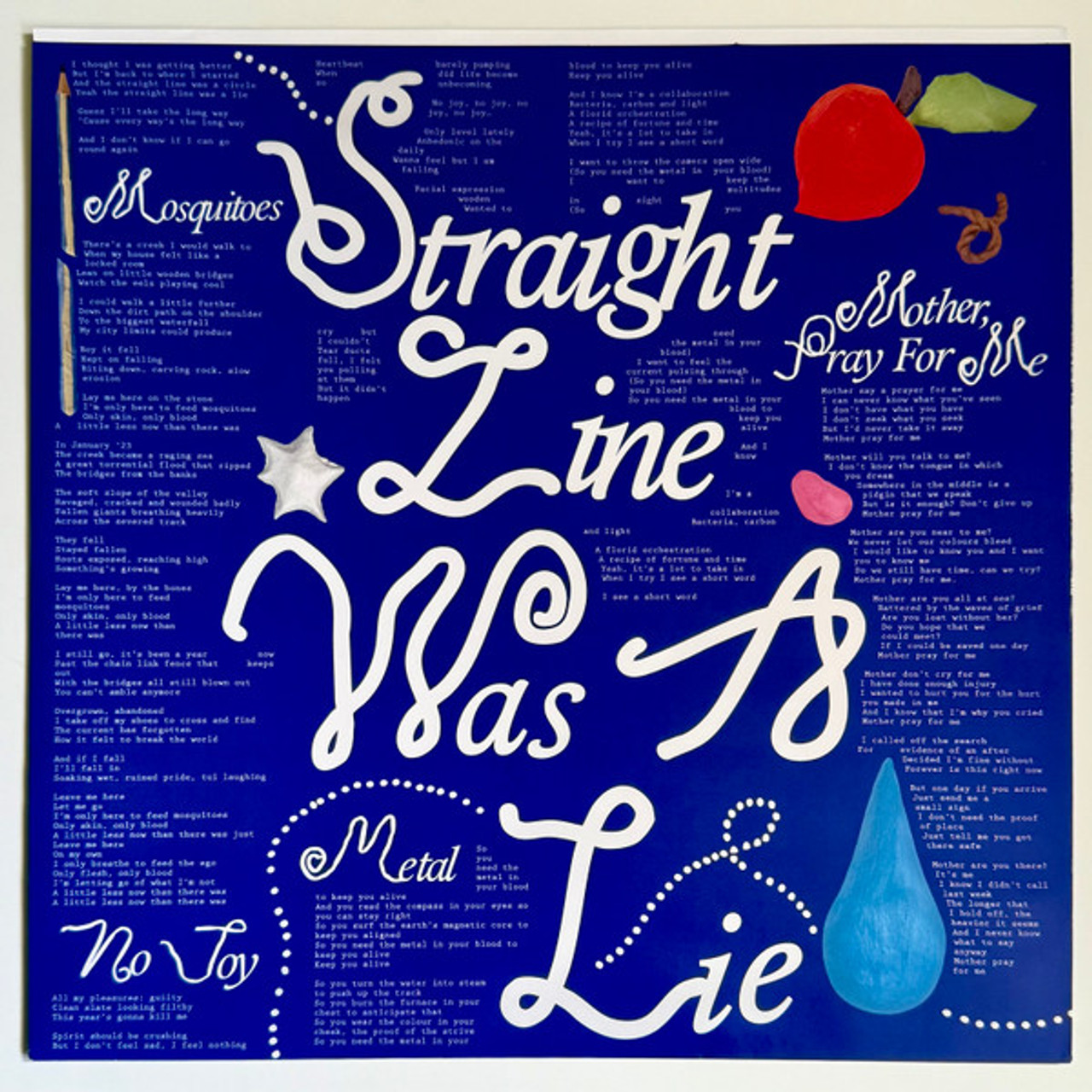
Favorite of 2025: The Beths – Straight Line Was A Lie

Introduction: Why The Beths Matter

The New Zealand indie‑pop quartet The Beths have long stood out for their sharp songwriting, earworm melodies, and the emotional honesty that pulses through their lyrics. With their 2025 album Straight Line Was a Lie, they arrive at a new peak — refined in sound yet deeply raw in sentiment. It’s a record that doesn’t just reaffirm what makes them special; it feels like a rebirth: more considered, more textured, and more vulnerable than ever. As the band enters this next chapter, it’s become increasingly clear that The Beths aren’t just good at what they do — they’re extraordinary.

I want to take a moment and explore how each member’s musical contributions blend to form the band’s signature sound, and how the lyrics on Straight Line Was a Lie carve out an intimate, unsettling, yet hopeful portrait of life, growth, and mental health.

First, a quick refresher on the lineup. The Beths consist of:

  • Elizabeth Stokes – lead vocals, rhythm guitar, main songwriter
  • Jonathan Pearce – lead guitar, backing vocals, producer/engineer (on this record)
  • Benjamin Sinclair – bass guitar, backing vocals
  • Tristan Deck – drums, cymbals and percussion, backing vocals

In past releases, The Beths were already celebrated for their “jangly” guitar pop, shimmering harmonies, and driving rhythm section.  On Straight Line Was a Lie, each member seems to lean more deeply into their strengths, and — crucially — into experimentation.

Elizabeth Stokes remains the heart of the band. Her voice — often conversational, sometimes aching — carries the emotional weight; her lyrical voice is sharper, more introspective, grappling frankly with themes of mental health, existential anxiety, familial ties, self-doubt, and the paradoxes of healing. The songs come from a place of personal upheaval, shaped by her experiences with health struggles, medication, and self‑reflection.

Jonathan Pearce wears dual hats on this record: lead guitarist and producer / engineer / mixer (on most tracks). That shift seems to have given the album a more cohesive, textured sonic palette: guitars (both his lead and Stokes’s rhythm) shimmer, sizzle, crash — sometimes jangly, sometimes atmospheric, sometimes dissonant. On songs like “Take,” the guitar solos ring with a fresh urgency; on “Ark of the Covenant,” guitar lines meld with subtle ambient touches to build something cinematic and haunting.

Benjamin Sinclair’s bass underpins the album with steady, often driving low‑end that grounds even the most introspective or experimental moments. While bass can be underappreciated in guitar‑heavy pop, here it anchors songs like “Take” with a muscular backbone that gives weight to the emotional landscape, and in upbeat numbers it drives the momentum forward, pushing choruses into sing‑along territory. The result is a rhythm section that feels both steady and alive.

Tristan Deck’s drumming and percussion complete the engine. On Straight Line Was a Lie, the drums don’t just keep time — they accentuate mood, shake loose tension, and steer transitions between jubilation and melancholy. Whether it’s propulsive beats on faster tracks or minimal, contemplative rhythms on the quieter ones, Deck’s playing adapts to the emotional terrain without overshadowing it. Backing vocals from Deck and Sinclair add subtle harmonic depth, reinforcing what has always been The Beths’ hallmark: layered vocal harmonies that linger.

Together, these four don’t just play instruments — they channel mood, memory, and meaning. On this record, the result feels less like a “band playing songs” and more like four people collaboratively mapping emotional terrain.

The sound of Straight Line Was a Lie: More than “jangly” pop

One of the defining qualities of The Beths’ earlier albums was that “jangly guitar + power‑pop hooks + emotional honesty” formula — and it worked beautifully. On Straight Line Was a Lie, they keep the hooks, but deepen the textures. The production (led by Pearce) emphasizes space, layering, contrast; songs can shift from bright, chiming pop to darker, atmospheric, even gritty territory. Critics note this album as “bigger, better and more complicated than they’ve ever been.”

The opening track and title song begins with a false start — a spoken “sorry I was thinking about something else” — a move that feels deliberate: it sets the tone for an album preoccupied with interruption, derailment, and return. The lyric “I thought I was getting better / But I’m back to where I started / And the straight line was a circle / Yeah the straight line was a lie” resounds as a central thesis. Life, the record suggests, is not a linear progression but a messy, looping, often contradictory journey.

Meanwhile, tracks like “No Joy” jolt with nervy urgency — the upbeat melody and driving beat bely lyrics that speak to anhedonia and existential stasis: “All my pleasures, guilty / Clean slate looking filthy / This year’s gonna kill me … Spirit should be crushing / But I don’t feel sad, I feel nothing.”

On “Metal,” they give form to something beautiful and strange: a metaphor about being alive as a “collaboration of bacteria, carbon and light,” needing “the metal in your blood to keep you alive.” It’s biological, cosmic, grounded, and dreamlike all at once — marrying emotion, science, and wonder in a simple but powerful package.

There’s also room for quiet minimalism. “Mother, Pray for Me” strips things back: gentle picking, soft vocals, aching longing. It’s a song about complicated family, grief, and generational wounds — and it lands not through bombast but through tender reserve.

Even the album’s final moments — on “Best Laid Plans” — feel bittersweet: jangly guitars and a buoyant rhythm, but implicit in the instrumentation and tone is a sense of unresolved longing, of “unfinished business.” It’s the sound of hope, but also of memory’s weight.

In sum: Straight Line Was a Lie isn’t simply “jangly indie pop with hooks” — it’s more ambitious: emotionally deeper, texturally richer, and willing to lean into shadows as much as light.

Lyrical worlds: Mental health, Memory, and the Myth of Progress

If the musical side is about textures, the lyrical work is about truth. On this record, The Beths — primarily through Stokes’s pen — interrogate themes of mental health, healing, identity, memory, and the uneasy breaks in between. The album’s title succinctly captures its philosophical impulse: that “linear progression is an illusion.” Life doesn’t follow a neat arc; healing does not happen on a straight line.

Much of that perspective comes from Stokes’s own life. In recent years she’s navigated serious health challenges (including a diagnosis with Graves’ disease), anxiety, and the disorienting effects of starting antidepressants for the first time. That upheaval forced a radical shift in how she writes: among other changes, she turned to stream‑of‑consciousness writing on a typewriter, exploring memories and feelings she’d avoided, and forcing herself to reckon with difficult emotions.

That kind of emotional honesty shows up throughout. On “Mosquitoes,” she wanders a creek near her home — a haven when “my house felt like a locked room” — only to find devastation: the same creek turned into a “raging sea” after floods. The song becomes quietly terrifying: an elegy to disappearance, impermanence, and the fragility of refuge.

In “Til My Heart Stops,” there’s a longing for simple embodied pleasures — riding a bike in the rain, flying a kite, dancing — even as the world feels heavy and weightless at once. According to one review, the song, with its unsettling distortion and ghostly atmosphere, “charts the fragility of life itself,” its abrupt ending like a heart’s final beat.

Elsewhere, “Ark of the Covenant” and “Best Laid Plans” explore inner excavation: digging through memory, confronting “fossilised nightmares,” searching for meaning — or closure — in the negative space of the self.

But it’s not purely despair or existential weight. There’s still wry humour, sharp imagery, and defiant tenderness. The need for “metal in your blood” in “Metal” — a call for grounding, resilience, a kind of elemental insistence on life — turns the personal and biological into something poetic and universal.

Taken together, the lyrics on Straight Line Was a Lie don’t just reflect mental health struggles or personal trauma — they interrogate the myth of constant improvement. They suggest healing is messy; growth is circular; humanity is fragile, often contradictory — but still worthy of wonder.

What this album means: Growth, Maturation, and a New Chapter for The Beths

For longtime fans, Straight Line Was a Lie may at first sound familiar: The Beths still write songs that stick in your brain. But this time, there’s a sense of expansion, of maturity, of ambition being reframed with nuance. Production is richer, the emotional stakes higher, and nothing feels simply disposable or background music. This is an album that rewards — demands — close listening.

Critically, the record has been widely praised. On aggregators it earns a strong Metascore, reflecting generally favorable to enthusiastic reviews. Reviewers note the band is “bigger, better and more complicated than they’ve ever been.” Others call it perhaps their “most incisive” album yet, one where existential anxieties and lyrical ambition meet pop hooks and evocative soundscapes.

Moreover, Straight Line Was a Lie feels like a milestone — not just in their discography, but in their artistic evolution. The move to have guitarist Jonathan Pearce handle production and engineering gives the album a more unified sonic identity. The decision by Stokes to overhaul her songwriting method — to face trauma, memory, and illness head‑on — brings a weight and vulnerability previously only hinted at. The whole band seems aligned: playing not just with precision and popcraft, but with emotional honesty.

For listeners, this album offers more than catchy choruses: it offers fellowship. It whispers that you are not alone if you’ve felt lost, stuck, or numb. It suggests that healing is not always about triumphs or tallies of progress, but about maintenance — about showing up, living, feeling, enduring. And it does all that while giving you songs you can dance to, or cry to, or sing loud at a concert.

Conclusion: The Beths as Emotional Architects

In a world that often feels driven by optimization, forward momentum, and constant productivity, Straight Line Was a Lie comes as a quiet, necessary reckoning. It refuses the idea that healing, growth, or life itself must follow a neat, linear trajectory. Instead, The Beths propose a different metaphor: life as cyclical, messy, and ongoing — something to be maintained, revisited, reflected upon, not “completed.”

As a band, The Beths have always been more than the sum of their catchy hooks or jangly guitars. On this album, they feel less like a pop act and more like emotional architects — sculptors of feeling, memory, and existential wonder. Each band member’s contribution is essential — from Stokes’s wrenching lyrics to Pearce’s layered production, from Sinclair’s grounding bass to Deck’s subtle but powerful rhythms.

Straight Line Was a Lie may end up being a soundtrack for an era — an album for when the world feels too fast, too forward, too relentlessly optimistic. It offers instead a different rhythm: patience, honesty, acceptance, and defiance.

If you haven’t listened to it yet — or haven’t listened closely — this is the moment: sit back, headphones on, and let The Beths guide you down the crooked, beautiful trail.

The Hellish Torture of Picking a Favorite Song in 2024: A Rant by Dr. J

Here’s the thing about picking a favorite song in 2024—it’s a damn Sisyphean task, one that makes you want to tear out your hair, break your phone, and maybe even burn down your local record store in a fit of existential frustration. Don’t do it. We need physical music stores now more than ever.

I mean, what is even a “favorite” song anymore? Do we even have favorite songs in 2024, or are we just scrolling endlessly through playlists, bouncing from genre to genre like a crazy, half-demented butterfly in a neon-lit, algorithmically-induced panic attack? The question itself is a trap, a cynical little puzzle designed by the universe to mock us because to pick one song from the sea of endless musical landscapes that bombards our senses every day is tantamount to choosing a favorite molecule in the air. You can’t—because it’s all over you, surrounding you, and there’s no escape. I wrote previously about the crisis one faces in selecting favorite albums of the year.

Let’s start with the obvious: the sheer volume of music out there in the year 2024. It’s unfathomable, right? It used to be that if you wanted to hear a song, you had to hunt it down either by flipping through vinyl crates, listening to underground radio stations, or begging the local DJ to spin something that wasn’t the flavor of the week. There was a reverence in that. Hell, there was an urgency to it. You’d find a gem, and it would be yours, buried in the back of your mind, your personal private treasure. Part of the joy of making a mixed tape was to share the gold of the discoveries that felt so powerful, so important, so ‘you.’ Maybe playlists allow for a similar personal curation. Still, now we have to consider the very real damage of artists not being fully compensated for the art that they made through Herculean efforts.

Now? You’re drowning in it. Over 100,000 songs are uploaded to Spotify every day — And to be honest that is a guess, so don’t shoot the messenger here. Do you realize how insane that is? You’re telling me, in a single 24-hour period, there are enough new songs uploaded to fill your entire year, and then some? It’s like trying to drink the entire ocean through a garden hose. And the worst part? Every single one of those songs is vying for your attention, screaming, “Hey! Pick me! I’m the one! You’ve gotta love me! I’m your favorite!” But how the hell are you supposed to pick just one? It’s not even about finding your favorite anymore—it’s about surviving the sensory overload long enough to even have a chance at making a decision. And to be entirely honest for a moment, every week when we select music to play on Your Tuesday Afternoon Alternative we fall in love with those songs just a little bit. And in some cases, we fall so hard that it feels unhealthy and obsessive.

If you’ve ever been on Spotify, Apple Music, or any of these heartless apps, you know the drill. You open the app, and it hits you like a freight train of recommendations, top charts, mood playlists, curated lists that you are told you simply cannot live without, and whatnot. There’s no room for your own thoughts, no breathing space to actually listen to the music. You’ve got algorithms now—the invisible, omnipotent, soulless overlords of taste—telling you what to love before you even have a chance to hear it. The recommendations, fine-tuned to your listening habits, are eerily accurate in ways that terrify me. One moment, you’re bouncing along to the latest viral hit that’s blowing up on TikTok, and the next thing you know, you’re down a rabbit hole of obscure, Japanese synthwave from 1987, which is somehow all your fault. And you don’t even realize how you got there. It’s like being a lab rat on a wheel, except instead of running, you’re hitting the play button over and over again, and you’re not getting anywhere. Perhaps that is not such a bad thing in the sense of music discovery but its not without faults and limitations.

Sure, I could tell you that the act of listening to music in 2024 is the most democratic it’s ever been, and that’s true on some level. You can access almost anything, anytime, anywhere. It’s like living in a world where you can have any candy you want from a never-ending vending machine. But here’s the catch, kids: when you have everything at your fingertips, how the hell do you choose? It’s like being stuck in a room filled with mirrors, each one reflecting a different version of yourself. And every version of yourself is telling you that they have the song you need, the one that will finally fill that hole inside you and resolve the pain, the contradictions, the awkwardness, and make you whole. But which one is the real you? Which version is the one that needs “the best song”?

You can sit there all day with your headphones on, flipping from track to track, struggling to decide. You’ll find yourself asking questions like, “Do I like this because it’s good, or do I like it because it’s been shoved down my throat 50 times this week?” Maybe that’s the most unsettling thing about music in 2024—it’s not just about what you genuinely enjoy anymore. It’s about what you’re told you should enjoy. It’s about the 4-second hooks, the viral TikTok snippets, the catchy beats, and the press releases that tell you what’s “hot” this month. Everything is crafted to be consumed, digested, and forgotten, all in a matter of days. Who has time to savor something when there’s always something newer, hotter, shinier coming down the pipeline?

And don’t even get me started on the “genre wars.” We’ve reached a point where genres no longer exist in any meaningful way. Everything is a mash-up, a hybrid, a Frankensteinian monstrosity that blends pop, hip-hop, indie rock, electronic, metal, jazz, etc. etc. and who knows what else. Every song is this sonic experiment that, more often than not, is as disorienting as it is electrifying. Hell, I’m listening to what can only be described as “chilltrap disco country” one minute and then hearing some avant-garde post-punk indie doom jazz the next. It’s the sonic equivalent of eating a five-course meal where none of the dishes go together, and yet somehow, you’re forced to swallow it all down.

To make things worse, the very concept of “authenticity” is becoming a joke. You’ve got artists that are so hyper-aware of their “brand” that their music feels like a carefully manufactured product rather than a genuine expression of emotion or soul. Sure, some of them might have a few lyrics that hit home, but it’s all part of the game. It’s all part of the plan. Music is no longer an escape, a retreat from the chaos of the world. It’s just another layer of noise, another brand that’s trying to sell you something, even if that something is just a feeling of “coolness” or “relatability.” They’re selling you a life you’ll never live, and you’re buying it. You’re listening to the songs that sound like they understand you, but do they? Do they really?

And here’s the kicker: no matter how much music you listen to, how many “best-of” playlists you curate, how many tracks you add to your personal rotation, you’re always left feeling empty. You can chase that high forever, but it’s never going to be enough. Music isn’t some magical cure for all of life’s problems anymore—it’s just a distraction, a fleeting feeling that you chase and chase until you burn out.

So, maybe that’s the answer: there is no answer. Picking a favorite song in 2024 is futile. It’s the ultimate existential exercise in futility. The more you listen, the more you feel alienated, lost in a sea of sound that keeps getting bigger and bigger. But isn’t that the point? Maybe the real challenge isn’t finding the “best” song, but simply surviving the noise long enough to hear something that feels like your own. And when you find that, maybe that’s the song that matters. But until then, we will all keep scrolling, skipping, and clicking. And that, my friend, is the great, maddening beauty of 2024.

Favorite Songs of 2024
(in no particular order)

Elephants and Stars – The Ceiling
Elephants and Stars’ latest track “The Ceiling” is a sonic explosion of atmospheric grandeur and raw, driving energy. It’s indie rock with a kick—electric guitars crash into layered synths, creating a euphoric wall of sound that’s both urgent and transcendent. The track builds momentum with relentless force, while the vocals ride the wave of tension and release, offering a narrative about pushing past limits and breaking boundaries. “The Ceiling” isn’t just a song; it’s anthemic chaos, meant for dancing with wild abandon, heart-pounding moments when you’re determined to shatter your own ceilings. A bold, thrilling ride.

Tino & DJ Marrrtin – Paris Fashion District
Tino and DJ Marrrtin’s latest single “Paris Fashion District” is a thrilling, genre-blending celebration of style, rhythm, and global swagger. The track pulses with an infectious groove, fusing electronic beats and smooth, layered production that feels both cosmopolitan and effortlessly cool. The collaboration between Tino’s laid-back flow and DJ Marrrtin’s sleek, polished beats captures the essence of urban elegance, while nodding to the boldness of fashion culture. It’s a celebration of luxury, but with a grounded, street-smart edge. “Paris Fashion District” is as slick and dynamic as the city it’s named after—an anthem for those who move through life with confidence and style.

Jason Benefied – Keep Coming Back
Jason Benefield’s “Keep Coming Back” is a heartfelt, foot-stompin’ country song that hits with the authenticity of mountain roots and the sincerity of a well-told tale. His earnest vocals, full of soul, draw you in, while the acoustic strumming and steady rhythm keep the track grounded in timeless tradition. The song’s message of return and resilience resonates deeply, offering a spirit of perseverance in the face of hardship. It’s a true testament to the power of music to heal and endure. Benefield delivers with the kind of grit and emotion that echoes the old-time country legends, reminding us all of the power of coming back home.

JC Miller – Wayward Son
JC Miller’s “Wayward Son” is a stirring testament to the American spirit, capturing the complexities of the journey home with grace and conviction. The song blends folk traditions with a touch of modern sensibility, its resonant lyrics echoing the struggles and triumphs of a lost soul seeking redemption. Miller’s rich, emotive voice tells a story as old as time—of wandering, longing, and the search for belonging. His mastery of storytelling, backed by a simple yet powerful arrangement, creates a song that feels both personal and universal, striking a chord with anyone who’s ever been lost and found. It’s a modern classic, filled with the kind of emotional depth that speaks to the heart of America’s musical soul.

Jenny Owen Youngs – Someone’s Ex
Jenny Owen Youngs is a gifted storyteller in the convention of a four-minute rock and roll song, but with “Someone’s Ex,” she takes her knack for detail and nuance to an entirely new level. It’s a track that quietly demands attention, drawing you in with its dark charm and unflinching honesty. If there’s one thing this song makes clear, it’s that Jenny Owen Youngs doesn’t shy away from complexity. She’s never been one for simple, obvious answers—and with “Someone’s Ex,” she delivers a song that speaks to the messy, beautiful reality of human relationships.

The song starts off with a smooth, almost haunting instrumental foundation—minimalistic ringing guitar lines that echo like distant memories, perfectly framing Youngs’ cool, conversational delivery. There’s a cool detachment in her voice that somehow makes it even more vulnerable. She’s not just singing about someone’s ex; she’s inhabiting it. You feel the weight of those words — “Everybody’s someone’s ex/I won’t let you be mine”—as if she’s unraveling the fabric of her own identity in real time. The admission feels like a subtle punch in the gut, the kind that hits you just as much with its implications as with its delivery.

Lyrically, Youngs is sharp, poetic, and unsentimental. The song’s brilliance lies in how it flips the script on traditional heartbreak tropes. It’s not just about being the ex; it’s about being someone’s ex, standing in that liminal space where identities shift and fade, a forgotten footnote in someone else’s history. The chorus — “Everybody falls in love/hoping it’s the last time”—presents a cold, almost clinical observation of how relationships have a way of turning people into passing phases, another chapter in a story you’re no longer part of. There’s no bitterness, no grand emotional outburst—just the quiet acceptance of a reality that’s as ordinary as it is painful.

Musically, the track is understated but powerful. The rhythm section feels like it’s walking a tightrope, a steady pulse beneath the ethereal guitar lines, and Youngs’ voice floats above it all—steady but vulnerable, raw but composed. There’s a perfect tension in how she carries the song: it’s the kind of track that doesn’t need to raise its voice to make an impact. She lets the space around her lyrics speak just as much as the words themselves, creating an atmosphere of melancholy and reflection that sticks with you long after the song fades out.

What’s so compelling about “Someone’s Ex” is that it’s a song about the in-between moments—those quiet, uncomfortable spaces that don’t often get captured in pop music. Youngs doesn’t present herself as a victim or a villain in this story. Instead, she’s a participant in the human experience, dealing with the universal truths of transition, loss, and the bittersweetness of moving on. The track is emotionally complex without being self-indulgent, intimate without feeling intrusive. It’s a reflection of the way relationships and identity shift over time, and how sometimes, just existing in someone else’s past is a complicated thing to navigate.

It’s hard to think of another song this year that handles the idea of post-relationship reinvention with the kind of quiet grace that Youngs pulls off here. “Someone’s Ex” is not just a breakup song—it’s a meditation on how we define ourselves in the wake of love’s dissolution. And in its subtle brilliance, it gets under your skin, asking questions about identity, memory, and the way we move forward from each other. It’s a song that’ll leave you thinking long after it’s over, a quietly devastating reminder of how, sometimes, being “someone’s ex” is just another part of the ongoing narrative of who we are.

Jesse Malin – Black Haired Girl (featuring Billie Joe Armstrong)
Alright, gather ‘round, you bandana-wearing, barstool-sittin’, rock-n-roll truth seekers because Jesse Malin who has had incredible health struggles received some most worthy attention this year. Now, let’s get this straight from the start — this isn’t your average half-baked, coffeehouse strum fest dressed up in leather and scarves. No, this is the real thing, the kind of song that drips with the sweat of something broken and burning, just waiting to claw its way out of your stereo and knock you back with something sweet and strong.

Malin’s no stranger to the grind but on this track? He doesn’t just stand at the crossroads of rock, punk, and poetry—he owns it. He’s wearing the black leather jacket with the sleeves torn off and singing like he knows damn well he’s got nothing to lose. “Black Haired Girl” is messy, it’s manic, it’s alive—it’s like he’s caught in the rapture of a midlife crisis, but one that’s lit by neon lights and bad decisions. And that’s the magic of it, right? That moment when you realize you’ve seen it all but you’re still willing to burn the whole damn thing down and start over. That’s the vibe we’re talking about.

The song starts with this rolling, jangly riff that makes you think of old-school rock anthems, but then Malin’s voice comes in—gravelly, urgent, soaked in a whiskey-soaked, cigarette-laced sense of disillusionment. It’s the kind of delivery that’s got everything—the desperation of a man who’s been around the block, but still believes in the beauty of a thing called destruction. And damn, does he believe. Every word feels like a confession, a dare, a prayer all wrapped up in a dirty, ragged edge.

And that “Black Haired Girl”? She’s the muse, the chaos, the promise of a beautiful wreckage. Malin paints her as a symbol, but she’s not some polished, angelic fantasy—no, she’s the kind of girl who can chew you up and spit you out with a wink. And you’ll let her. You want her to. She’s that force of nature that makes you want to drown in the mess of love and regret, a siren song that only Malin could write with such reckless abandon.

Musically, the track builds with the intensity of a runaway train, but it doesn’t just barrel forward—it grooves, it sways, it has this pulse that you can feel in your chest, like it’s somehow living and breathing along with you. The chorus? It explodes, and when Malin shouts, “She’s the black haired girl,” you feel that raw release. It’s like he’s finally broken the chains of the past and let himself howl at the moon with nothing but the echoes of his own broken heart as company. The song is a tear in the fabric of time, pulling together everything you’ve ever loved about rock ‘n’ roll and shredding it with a wicked grin.

The thing is, “Black Haired Girl” isn’t just a song. It’s Malin’s declaration that there’s still magic in the chaos, power in the kind of love that hurts, still life in the bones of a shattered heart. Forget trying to “mature” into something palatable for the mainstream, forget playing it safe and writing songs that’ll get you a place at the dinner table of indie acclaim. This is raw, this is real, this is Jesse Malin staring you in the eye and saying, “I’m still here, and I’m still going to burn everything down in a glorious, fiery mess.”

It’s the kind of song that makes you want to throw your arms around it, scream the lyrics at the top of your lungs, and maybe, just maybe, get a little lost in the wreckage of it all. Malin’s always had this ability to straddle the line between rebellion and reflection, but with “Black Haired Girl,” he’s tearing up the rulebook and rewriting it with every frenetic strum of his guitar. This is what rock ‘n’ roll is supposed to feel like. And if you don’t get that, well, maybe it’s time to throw in the towel and leave the room.

Johnny Cash – Sing It Pretty, Sue
Johnny Cash’s “Sing It Pretty, Sue” feels like an outlier in his catalog, an unexpected gem where tenderness and vulnerability weave through the gravel of his baritone. There’s a sense that Cash, ever the stoic figure, has let the walls drop just enough to reveal something raw — and in this case, it’s a beautiful, aching devotion to the woman at the center of the song, Sue.

The track is deceptively simple in structure: Cash, guitar in hand, invites us into a sparse arrangement with its gentle, yearning chords. But it’s in the subtleties of his delivery where the magic happens. There’s an earnestness in his voice that almost catches the listener off guard, as if Cash is not just singing for Sue, but to her, coaxing her through a world of complicated emotions with an almost childlike vulnerability. He’s not just a man serenading his muse; he’s a man reaching out to connect, to make sense of the way her beauty stirs him, the way her song elevates him to something beyond himself.

What makes “Sing It Pretty Sue” resonate, though, is its refusal to overdo anything. Cash’s voice — that unmistakable, warm, worn voice — doesn’t strive for anything more than the simple, unadorned truth of the moment. It’s a man singing his heart, not to impress, but to let the emotions spill out unimpeded, like a confession whispered in the dark. His phrasing is gentle but deliberate; every line lands with the weight of something carefully considered, yet unspoken.

The lyrics, too, are evocative in their simplicity. “Sing it pretty Sue, your song is mine,” he declares, a statement that’s part worship, part surrender. It’s clear that Cash doesn’t see this as just a love song; it’s a song of union, of two voices becoming one, where the power of Sue’s voice is the very thing that propels him forward in life. It’s a reverence that stretches beyond the personal and into the realm of the universal: the way art, music, and love intertwine and transform.

What strikes me most about “Sing It Pretty, Sue” is the way Cash, often known for his tough, rugged persona, allows his vulnerability to shine through. Here, there is no bravado, no grand gestures of heroism. Just a man, with his guitar, sharing a moment of pure emotion. And that, in its simplest form, is where Cash’s genius lies.

For fans of Cash’s more reflective moments, “Sing It Pretty, Sue” is a tender reminder of the soft-spoken heart that beats beneath the black leather and steel strings. It’s a song that lingers in the air long after the final chord fades, a quiet whisper that asks us, too, to sing our truths — simply, honestly, and beautifully.

Johnny Irion – Shoulder To Shoulder (featuring Mike Mills)
Johnny Irion’s “Shoulder to Shoulder” is the kind of song that sneaks up on you—softly, steadily, until it feels like a familiar, trusted friend. It’s a track wrapped in the quiet strength of unity, one that carries the weight of its message in both its gentle swells and its delicate pauses. Featuring Mike Mills of R.E.M., the song brings together two seasoned voices in a way that feels both intimate and expansive, an anthem for solidarity that never strays into preachiness.

From the opening notes, there’s a sense of space in “Shoulder to Shoulder.” Irion’s voice, warm and rich, has always had a kind of reflective stillness, and here, it weaves seamlessly with Mills’ harmonies, a gentle counterpoint that lifts the song to something larger than its individual parts. The interplay between the two is sublime—Mills’ voice, with its signature clarity, adds a layer of depth, a kind of ethereal quality that creates this perfect contrast to Irion’s earthy, almost gravelly tone. Together, they embody the very message of the song: standing side by side, supporting each other through the highs and the lows.

Lyrically, “Shoulder to Shoulder” is simple without being simplistic. It’s a song about camaraderie and strength in numbers, but it doesn’t lean into cliché. There’s an organic tenderness here, the kind that feels earned rather than manufactured. Irion’s delivery is tender but resolute, each word unhurried, but never lacking in conviction. He seems to be speaking directly to you, his voice pulling you closer, inviting you into this small, shared space of hope and perseverance. “We will stand, shoulder to shoulder / No matter how the world may turn,” he sings, and it’s impossible not to feel a flicker of warmth, a glimmer of collective resolve in those lines.

The arrangement is equally understated. The production is spare but not empty; it leaves room for the emotions to breathe. The instrumentation, mostly acoustic with just the right amount of atmospheric layering, feels like it’s cradling the song’s essence. There’s a timelessness to it, a sense that this could have been written yesterday or thirty years ago, and it would still carry the same weight. The rhythm is slow but purposeful, like a steady march forward.

What’s remarkable about “Shoulder to Shoulder” is how it balances optimism and realism. It’s not about ignoring the obstacles in life—it’s about facing them together, acknowledging the strain and uncertainty, but choosing to face them in unity. There’s no false bravado here; it’s a quiet, knowing strength that resonates long after the song ends. In a world where division and discord often dominate the airwaves, “Shoulder to Shoulder” feels like a breath of fresh air. It’s not shouting for attention; it’s whispering a simple truth: we are stronger together. It’s a song that leaves you feeling grounded, connected, and just a little less alone.

Johnny Irion and Mike Mills have crafted something both timeless and timely. “Shoulder to Shoulder” doesn’t try to solve the world’s problems, but it offers something much more profound—a moment of solidarity, a small, soulful reminder that, sometimes, the act of standing side by side is enough.

JPhono1 – Magic Here
JPhono1 is the name that former The Comas musician John Harrison records under. “Magic Here” is a revelation — a perfect distillation of the kind of sonic alchemy that makes indie rock feel alive. The track shimmers with a kaleidoscopic blend of atmospheric layers and crisp, forward-driving rhythms, creating a sound that’s both expansive and intimate, like stepping into a dream where the edges blur but the emotions remain razor-sharp. It’s a track that sneaks up on you, taking you on a journey that’s full of subtle turns and unexpected depth.

From the very first note, there’s a magnetic pull in “Magic Here,” a quality that’s equal parts reflective and ecstatic. The song’s lush instrumentation creates a sense of space, but it’s never airy or detached. The shimmering guitars and steady percussion build a rich, dynamic atmosphere that feels just as alive as the lyrics themselves. JPhono1, the musical alias of Jason Phono, has always had a way with mood, but on this track, his command of sonic texture feels more expansive than ever.

Lyrically, “Magic Here” is all about the power of the present moment — the kind of magic that emerges when you let go of the past and future and embrace what’s in front of you. Harrison’s delivery is confident but warm, his voice floating with ease between moments of calm and bursts of intensity. His lyrics are evocative, full of vivid imagery and subtle metaphor, but it’s the way he sings them — with a tenderness that’s never cloying, with a kind of quiet urgency that compels you to listen deeper — that truly sets the song apart.

There’s a pulse running through “Magic Here,” something in the rhythm section that anchors the ethereal flourishes of the arrangement. It’s one of those songs that feels like it could break open at any moment, but instead, it retains a sort of controlled chaos. The steady drumbeat, underpinned by intricate bass lines, provides a solid foundation for the sprawling, interwoven melodies. There’s a joy in this complexity, a joy that comes from embracing the many layers of sound and emotion and letting them coexist without losing focus.

The standout element of “Magic Here,” though, is its ability to balance that sense of wonder with a grounded sense of clarity. Even as the song soars into ambient swells and dreamy guitar lines, there’s an undeniable directness to it. Phono’s voice, simultaneously fragile and strong, gives the song its backbone. He sings as if he’s on the verge of something transformative — and in that sense, “Magic Here” feels like a kind of catharsis, an anthem for those moments when the world aligns just enough for us to see the magic that’s always been right there.

If you’ve been following JPhono1’s evolution, “Magic Here” feels like both a natural progression and an exciting departure. It’s a song that captures that rare sense of balance, where the energy of discovery meets the wisdom of experience. The production is lush, but never overwhelming. The instrumentation is intricate but always purposeful. And the lyrics, even when they verge on the abstract, have an undeniable immediacy — like a moment you can’t quite put your finger on, but you know you’re in the middle of something special.

Ultimately, “Magic Here” is a song that feels like it was made for repeat listening. There’s so much to uncover in its layers, but it’s also just as rewarding when you let it wash over you, letting the rhythms and melodies seep into your bones. It’s a song that, with its quiet yet insistent pulse, captures that exact feeling of magic: fleeting, complex, but always worth seeking out. And, in that sense, it feels like a perfect snapshot of where JPhono1 is at musically: confident, expansive, and more than ready to make the magic happen.

Come Break My Heart – Jr. Juggernaut
Jr. Juggernaut’s “Come Break My Heart” is the kind of song that grabs you by the scruff of the neck and doesn’t let go. From the first few notes, you can tell this isn’t your typical heartbreak anthem. The track blends swagger with vulnerability, dripping with a mix of swaggering confidence and an emotional honesty that feels refreshingly truthful. It’s a song for anyone who’s ever been torn between the allure of love and the inevitable hurt that comes with it, yet it’s delivered with a rocking sharpness that cuts through all the clichés of the genre.

There’s a certain grit to the track, a gritty charm that Juggernaut carries effortlessly. The vocals carry a sort of weathered quality—like someone who’s seen it all but still wants to dive headfirst into the storm. It’s a voice that resonates with feeling part Bob Mould/part Paul Westerberg/part John Doe, full of longing and defiance as if daring the heartbreak to come and find him. “Come break my heart,” he sings, but you get the sense that he’s not begging—bracing themself. It’s a moment of surrender, but a surrender born of strength, not weakness.

Musically, “Come Break My Heart” has this forward-driving energy that matches the attitude of the lyrics. The steady pulse of the drums and the strutting bassline give the song a foundation that’s both propulsive and assured. There’s a confidence in the way the song is built, with a groove that sinks in deep, inviting you to feel every beat. The guitar riff that cuts through the chorus is sharp and melodic, adding a layer of tension that heightens the emotional stakes.

Lyrically, Jr. Juggernaut does something brilliant here—taking the familiar narrative of love and pain and flips it on its head. This isn’t a song about lamenting a broken heart, but rather an invitation, an acknowledgment that the vulnerability that comes with love is just as much a part of the experience as the joy. There’s a sense of acceptance in the lyrics, a willingness to be open to whatever love might throw his way, even if it means falling apart. It’s honest, it’s daring, and it’s a reflection of a man who’s not afraid to face the messiness of his emotions head-on.

And yet, the song never takes itself too seriously. There’s a playful edge to the delivery, a wink in the way Juggernaut approaches the heavy themes of love and heartbreak. Even as the song reaches its emotional peak, there’s an air of swagger to it—like he’s simultaneously letting his guard down and daring the world to take its best shot. It’s a mix of contradictions that somehow works perfectly, capturing the paradox of the human heart: fragile yet resilient, broken yet whole.

What makes “Come Break My Heart” stand out is the way it leans into its imperfections and makes them work. It’s rawand honest, and it’s infused with a sense of humor that makes vulnerability feel less like a burden and more like an empowering choice. Jr. Juggernaut has crafted a song that manages to be both tough and tender, a reflection of someone who’s unafraid to expose the mess of relationships for all its worth. In a musical landscape that often trades authenticity for polish, Jr. Juggernault’s “Come Break My Heart” is a breath of fresh air. It’s a song that demands to be heard, that refuses to shy away from its complexity and invites the listener to dive in with both feet. It’s a confident, rocking track that doesn’t shy away from the dark edges of love, but still somehow manages to make it feel like a damn good ride.

Kacey Musgraves – Cardinal
Kacey Musgraves has always had a knack for blending the personal with the universal, the quiet ache with the sparkling moments of insight. And with “Cardinal,” she takes that gift to a new, lush, and haunting place. The track, from her album Deeper Well, swirls with a slow-burning intensity, drawing the listener in with its understated arrangement and Musgraves’ evocative voice. It’s a song about connection and unexpected loss, yes — but one that’s tinged with the sadness of realization, the fragility of human connection, and the ineffable ache of wondering about messages from ‘the other side.’

The song’s opening notes are spare but aching—an almost ghostly picking of an electric guitar that sets the stage for the longing that will fill every inch of “Cardinal.” It’s not the bright, country-pop Kacey we may have initially expected, but a more melancholy, atmospheric version of herself, one that knows how to let space speak as loudly as melody. The arrangement is elegant in its restraint; it doesn’t push, it doesn’t rush. The production is lush without being overbearing, and subtle in its beauty, allowing the lyrics and the melody to take center stage.

And those lyrics—oh, the lyrics. Musgraves has always been a writer who can thread a narrative with such delicate precision, and in “Cardinal,” she weaves a story of friendship, love, loss, and reflection with the wisdom that comes from both heartbreak and grace. The song focuses on a simple question: “Cardinal. Are you bringing me a message from the other side? Cardinal. Are you telling me I’m on somebody’s mind” This isn’t just a song about a person but about a sense of connection that feels fleeting, impossible to fully grasp, yet hauntingly beautiful in its impermanence? The cardinal, a bird that migrates, becomes a perfect metaphor for the transient nature of relationships and the way we hold on to moments that slip through our fingers like sand.

What’s striking here is Musgraves’ ability to convey the kind of quiet devastation that feels both tender and unrelenting. There’s something almost sacred in the way she lets herself be vulnerable in this song—no bravado, no defense mechanisms—just a raw, gentle acceptance of the complexity of love. Her voice, as always, is a thing of remarkable beauty. It’s soft and warm, but carries a quiet intensity, perfectly capturing the song’s delicate balance between yearning and acceptance. She doesn’t shout the pain; she lets it seep through the cracks, allowing the listener to feel it deeply without it ever becoming too heavy or overwrought.

The brilliance of “Cardinal” is in its subtlety. There’s a moment in the chorus, where the weight of the lyric lands with such quiet impact that it makes you pause, breathe, and feel the enormity of that simple statement. Musgraves never over-sells it. She just lets it breathe, letting the song’s atmosphere do the heavy lifting. The song is a reflection, yes—but it’s not a mournful lament. Instead, it’s a meditation on the quiet ways love and loss shift and settle into the spaces we occupy, both in our own hearts and in the world around us.

As Musgraves moves further away from her country roots, “Cardinal” feels like a confident embrace of the more atmospheric, pop direction she’s moving towards. But even as she experiments with texture and tone, she remains grounded in her roots as a storyteller. The details of this song—its symbolism, its meditative qualities, the way it lingers—remind us of her exceptional ability to tell stories that matter, to craft moments that are both personal and somehow timeless.

“Cardinal” is a song for those moments of quiet reflection, those spaces where the world falls away and we are left with nothing but the deep, personal truth of our connections—those we’ve lost, those we’ve kept, and those that still elude us. It’s a song that stays with you, not because it’s loud or grand, but because it’s deeply, softly unforgettable.

Katie Pruitt – All My Friends
Katie Pruitt delivered a track of the year with “All My Friends.” This isn’t just some run-of-the-mill, cliché-filled ditty about friendship and good times—no, no, no. This is raw, it’s vulnerable, it’s messy, and it’s the kind of song that punches you in the chest while making you realize just how much you need to confront the chaos in your own life.

From the first note, Pruitt pulls you in with this haunting, hypnotic melody—simple but saturated with emotion. There’s no need for bells and whistles here. It’s just her, the piano, and her voice that cuts through the air like a shard of glass. And that voice? It’s not trying to impress you with some glossy, overproduced bullshit. It’s real, it’s aching, and it’s as vulnerable as a confession whispered late at night. You can hear the weight of every word she sings: “All my friends are gone,” she repeats, and that line, that line, hits like a gut punch you didn’t see coming.

The brilliance of “All My Friends” is in how it takes the universal fear of losing connection and throws it out into the open like a confessional. It’s not just about friends leaving—it’s about the gnawing feeling of being left behind, of realizing that life doesn’t stop for anyone, and the people who once filled your world can drift away like dust in the wind.

This song isn’t just a reflection; it’s a statement. Katie Pruitt isn’t here to pander or sugarcoat. She’s laying her heart bare, and if you can’t feel it, then you’re not listening close enough. “All My Friends” is one of those rare tracks that grabs you by the soul and won’t let go. If you’re looking for some easy comfort, keep moving. But if you want to feel something real, this is your anthem.

Kyleen Downes – Left On The Pavement
Kyleen Downes just kicked down the door with “Lost on the Sidewalk,” and if you’re not paying attention, you’re missing out. This track isn’t just a song; it’s a gut punch wrapped in folk-pop sweetness. It feels like one of those late-night moments when you’ve walked too far, your feet are sore, your mind’s spinning, and you just can’t escape the feeling that you’re somehow lost—even when you’re standing still.

From the first pluck of that guitar, you know this isn’t just some cookie-cutter pop song. There’s a grit to it, a rawness that makes you lean in closer. It’s stripped down, intimate, like a confession whispered in the dark. Downes’ voice is the star here—it’s not trying to impress you with vocal acrobatics; it’s real, unvarnished, and raw, carrying this perfect blend of melancholy and grace. She doesn’t belt; she delivers, with this quiet intensity that feels like it’s coming straight from her gut.

The lyrics? Forget it. The song is a meditation on loneliness and searching for meaning in a world that never stops spinning. “Lost on the sidewalk,” she sings, and damn if that line doesn’t hit like a shot of whiskey on a cold night. You get the sense that Downes isn’t just singing about feeling lost—she’s inviting you into that space with her, asking you to come along for the ride, no matter how twisted and uncertain it might be.

What makes “Lost on the Sidewalk” so goddamn good is its unassuming power. It’s not trying to be some big, epic anthem; it’s the quiet heartbreak that catches you off guard, the one that lingers long after the song ends. Kyleen Downes is carving out a space all her own, and this track proves she’s got the talent to make us all stop and pay attention.

Last Scouts – All The Ghosts You Need
Last Scout dropped a track that rips, and if you’re not already hooked, you’re probably too busy living in some sterile, soul-sucking echo chamber where real music never gets through. “All The Ghosts You Need” is the kind of song that grabs you, shakes you up, demands your attention, makes you stop everything, and feels something deep in your gut. This isn’t some one-dimensional indie fluff; it’s a chaotic, cathartic journey through the wreckage of emotion, haunting yet electrifying.

The guitars? Good God, they burn. They sound like they’ve been dragged through the dirt and then doused with gasoline, but somehow, they still manage to sing with this ringing charging beauty. There’s this delicious tension—like a broken string, a knot in your chest you can’t untangle. The rhythm section? It’s like a pulse that refuses to slow down, always teetering on the edge of collapse, dragging you through every thumping heartbeat of it.

And the lyrics—hell, the lyrics are sharp, dripping with ghostly resignation and raw self-awareness. “All the ghosts you need,” they sing, and it’s not some throwaway phrase—it’s a revelation. We all walk around haunted, carrying the weight of the things we can’t shake, and this song digs into that space like a hot knife. It doesn’t let you off easy. It’s messy but in the best possible way. It’s got that feeling of being simultaneously alive and dead, a push and pull that burns your insides as you try to reconcile the things you’ve lost with the things that still cling to you.

There’s an urgency to “All The Ghosts You Need” that never lets up, and that’s what makes it so damn magnetic. It’s a wild, aching, beautiful thing. If you’ve got any fire left in you, this song will light it up. If you don’t, it might just drag you out of the dark.

Leah Callahan – Ordinary Face

Leah Callahan’s “Ordinary Face” is a rare kind of song that sneaks up on you, gently insinuating itself into your thoughts with its unassuming brilliance. Built around a simple yet emotionally complex melody, the track is as unflashy as its title suggests, but don’t mistake its subtleties for weakness. The song’s quiet power is in its restraint, in the way Callahan’s voice, warm and unadorned, draws you in without ever demanding attention.

The lyrics are where the magic lies—Callahan reflects on the tension between self-perception and external expectations, a theme both universal and deeply personal. She sings, “You wear an ordinary face / And I wear the weight of grace,” a line that encapsulates the song’s duality. It’s both an acknowledgment of vulnerability and a quiet defiance against it. Callahan doesn’t just express emotions; she crafts a narrative about the struggle for authenticity in a world that demands conformity. It’s melancholy but hopeful, a meditation on the tension between being seen and remaining true to oneself.

Musically, “Ordinary Face” feels like a delicate walk between electronic and indie-pop. The arrangement allows Callahan’s voice to take center stage, supported by a variety of instruments that meld together into a seamless whole. The result is a song that feels spacious, expansive, and lived-in—like a conversation with an old friend about something you are not sure you want to talk about. The melodies are deceptively simple, but the way they intertwine with the lyrics gives them an emotional weight that grows with each listen. The production feels acute, but never overdeveloped—each note serves the song’s atmosphere, never pushing too hard, keeping the feeling from fading into the background.

At its core, “Ordinary Face” feels like a song about self-acceptance, wrapped in melancholy and beauty. It’s the kind of track that works its way into your consciousness slowly, then stays there. Callahan’s voice is both unpretentious and deeply resonant, and the song captures that rare alchemy of emotional depth without the need for overwrought anguish. In an age where so much music tries to grab attention through spectacle, “Ordinary Face” succeeds by pulling you into its orbit—and that’s exactly what makes it unforgettable.

The Linda Lindas – Too Many Things
Pop Punk lives. The Linda Lindas’ “Too Many Things” is a blast of youthful urgency that feels both fresh and rooted in punk tradition. As soon as the track kicks off with a fuzzy guitar riff and crisp drums, it’s clear this band isn’t just here to play—it’s here to communicate a raw, unfiltered sense of frustration with the world we live within in this stolen moment. The song feels like a burst of catharsis, a sonic snapshot of a generation struggling to make sense of a world that’s piled high with distractions, expectations, and contradictions. Things are messed up and far too many adults want to hide that fact.

What’s striking about “Too Many Things” is how effortlessly it channels both energy and emotion without slipping into the cloying clichés that sometimes plague young bands trying to find their voice. The Linda Lindas, a quartet of teenagers with a powerhouse sound, balance the reckless abandon of their punk influences with a sharp sense of self-awareness. The song’s driving rhythm captures the tension between wanting to break free from societal pressures and feeling overwhelmed by the noise of modern life. Lyrics like “Too many things taken away/Not enough things left in my brain/There’s always so much push and pull/These parts, they’re not making a whole.” are simple, but speak to a generation grappling with information overload, climate anxiety, and a general sense of disillusionment.

Musically, the track is pure punk rock, but it has a distinct energy that sets it apart from its predecessors. The guitar lines are abrasive yet melodic, cutting through the chaos with just enough tunefulness to make the song catchy without losing any of its bite. The vocals, especially the harmonies, are raw but infectious, exuding a sense of camaraderie and rebellion. There’s something exhilarating about hearing teenagers capture such a wide range of emotions—frustration, confusion, defiance—all in a three-minute blast.

At a time when so much of modern punk can feel self-consciously retro or formulaic, “Too Many Things” manages to both honor its roots and inject something new into the mix. It’s fast, it’s loud, and it’s undeniably fun, but it also carries with it a sense of urgency and relevance that’s hard to ignore. The Linda Lindas are here to stay, and “Too Many Things” is proof that they’re capable of much more than just anthemic punk rock. They’ve got something to say, and we’d all better be listening.

Louisa Stancioff – Cigarette

“Cigarette” is the kind of song that burrows itself into your consciousness, quiet yet insistent, luring you into its hypnotic blend of vulnerability and defiance. From the first strum of the guitar, there’s an intimacy to the track that feels like a whispered confession shared between close friends, one that refuses to be ignored. But don’t mistake its slow-burn mood for passivity. “Cigarette” is a track about the slow unraveling of self, the kind of song that confronts both internal and external turmoil without apology.

Stancioff’s voice is the centerpiece, fragile yet commanding, with a breathy delivery that makes every line feel like it’s being sung just for you. The song opens with a gentle acoustic guitar, a slow, smoky pulse that sets the mood that feels like The Velvet Underground. But it’s in the moments where Stancioff’s voice rises—when she sings “But I’ll be your morning/I’ll be your cigarette/Pick me up in the morning/Cause you’re not done with me yet/No, you’re not done with me yet”—that the song’s full almost confrontational power emerges. She captures the weary resignation of someone who’s been down this road before, the weight of experience heavy in every note. It’s a sound that evokes the kind of personal reckoning only the most honest songs can convey.

The lyrics are sparse but sharp, carving out a narrative of self-reflection and retreat. Stancioff paints a picture of someone caught in the cycle of unhealthy coping mechanisms, trying to keep it all together while knowing full well they’re falling apart. There’s a deep ache in the simplicity of lines like “I heard you’ve got a new girlfriend/She’s really hot/Then why are you looking at me like you used to?” which undercut the song’s initially quiet resignation with a searing touch of defiance. It’s a moment of vulnerability, sure, but one that refuses to apologize for itself, refusing to be anyone’s pity case. It’s that balance of strength and fragility which makes “Cigarette” such a compelling listen.

Musically, the track is both sparse and luxurious—empty space giving the impression that the song could go anywhere at any moment, but never quite lets you escape its melancholy grip. The production adds to this atmosphere, the minimalist arrangement letting the emotional depth of the performance shine through without getting in the way. “Cigarette” is a song that lingers—slowly unfurling, unfussy in its execution, yet powerful in its emotional weight. Louisa Stancioff doesn’t need to shout to be heard. In fact, she gets her point across by saying less, making this track not just an earworm but a quiet revelation. It’s a subtle masterpiece, a song that speaks volumes in whispers.

Lunar Vacation – Tom
Some of our favorite music this year came from the Carolinas. Lunar Vacation’s “Tom” is the kind of track that slips under your skin without you even realizing it—effortlessly catchy, but with a lurking sense of melancholy that lingers long after the music fades. From the very first note, it’s clear this isn’t just another indie pop tune. This is a song with heart, with layers, with something to say beyond its glimmering surface.

There’s an undeniable retro feel to “Tom,” a track that sounds like it could’ve been plucked straight from the late ‘90s or early 2000s. But don’t mistake its familiarity for predictability. Lunar Vacation twists that nostalgia into something fresh, a modern take on an older, wiser sound. The guitar work is jangly and warm, drawing from a rich history of indie rock, but with a sheen that places it squarely in the present. The bassline is smooth and understated, weaving through the track with an effortless cool, while the drums keep everything tight without overwhelming the mood. But it’s the synth touches that really set the tone, adding a soft, dreamy layer that keeps things light while the lyrics pull you down into something darker.

Vocally, the track is a standout. The lead singer’s voice is the kind of effortless, understated delivery that feels just right—like the perfect companion to the song’s laid-back, almost wistful vibe. It’s not overtly emotional, but there’s an undeniable sense of yearning in every word. “Tom” isn’t exactly a love song, but it doesn’t need to be; it’s a snapshot of a fleeting connection, a moment suspended in time that feels equal parts sweet and sad. “I’m not yours,” the chorus repeats, a gentle deflection that somehow makes the song’s longing feel all the more intense.

What’s particularly striking about “Tom” is its ability to evoke a sense of nostalgia without being tied down by it. There’s an effortless sense of maturity to this song—a recognition that longing, while beautiful, is fleeting, that the world moves on whether you want it to or not. Lunar Vacation doesn’t just capture a moment—they make it timeless. “Tom” isn’t trying to reinvent the wheel; it’s too confident for that. Instead, it simply knows how to take what’s been done before and make it sound like something you’ve never heard. It’s the rare kind of track that feels like a classic from the first listen, and you’ll keep returning to it for years to come.

Matt Moran – Oh Brother
Real and authentic country music in every way. Matt Moran’s “Oh Brother” is a song that feels both deeply familiar and entirely new, a perfect blend of classic country storytelling with a modern sensibility that’s impossible to ignore. From the first few notes, the track hooks you with its warm, slightly worn-in vibe, like a well-loved record spinning on an old turntable. Moran’s voice carries that same timeless quality—raspy and meaningful — world-weary and sure, a little wiser than the family member the song follows, yet grounded in a sense of authenticity that makes every word feel earned.

The song’s centerpiece is its lyrics, and “Oh Brother” delivers in spades. It’s a tale of family, struggle, and reflection, told with the kind of honesty that can only come from someone who’s lived it. “Oh Brother” isn’t just a song about brotherhood—it’s a meditation on the complexities of relationships, the frustrations of feeling misunderstood, and the yearning for something more. The repeated refrain, “Brother… oh, brother, What have you done?” feels like a quiet cry for reconciliation, for an understanding of dark purpose that never quite arrives. It’s the kind of lyric that cuts deep, tapping into universal themes of connection and isolation as well as hopelessness that the brother the narrator cares for simply cannot be saved… no matter what we might want to do for them, they are damned.

Musically, Moran blends traditional country instrumentation with just the right touch of modern production, letting the song breathe without overwhelming it. The guitar work is sharp and deliberate, providing a sturdy backbone that gives the track a solid rhythm without ever rushing the story along. The pacing of sonic elements comes at just the right moments, adding a bittersweetness to the arrangement that complements the song’s emotional depth. The production is clean and spacious, letting the simplicity of the song shine through.

What really sets “Oh Brother” apart, though, is Moran’s ability to balance raw emotion with restraint. This isn’t a song about flashy hooks or over-the-top sentiment—it’s about quiet reflection, about feeling the weight of mistakes and experience. Moran doesn’t need to scream or over-explain. He lets the song unfold naturally, and in doing so, he taps into a deeper, more enduring truth about family and life. Matt Moran’s “Oh Brother” is a standout track that strikes that rare balance between the personal and the universal. It’s the kind of song you’ll want to hear over and over, each listen uncovering something new, something deeper about the song and yourself. This one’s a keeper.

Mediocre – Litterbug!
Indie rock lives. Medicore’s “Literbug” is the kind of song that hits you like a freight train and keeps on coming, a beautiful mess of noise and hooks wrapped in a frantic, hyperactive energy that’s impossible to ignore. From the first chaotic burst of distorted guitars and jittery drums, you know you’re in for something wild. It’s the sound of a band straddling the line between madness and genius, somehow managing to pull off both with a manic, unrelenting urgency.

The song is a blast of irreverent, post-punk chaos—a nervous breakdown set to music—but underneath all the noise is a real sense of craftsmanship. The rhythm section thrashes along like a runaway car, giving the track a sense of forward momentum that never lets up, while the guitars are sharp and angular, cutting through the track like jagged glass. There’s a kind of dissonant beauty in the way the instruments collide, pushing the boundaries of what’s considered “melodic” but still managing to create something that feels strangely, addictively listenable. The production is a perfect reflection of the music itself—messy, unpolished, but deliberate in its disarray.

And then there’s the vocals. Medicore’s singer isn’t so much singing as she’s spitting words, riding the chaos like a man on the edge of losing her mind. There’s a vocal delivery, an attitude that’s equal parts frustration and exhilaration. “Literbug” isn’t about being pretty; it’s about being real, and it doesn’t try to sugarcoat the mess of being alive in this world. The lyrics themselves are a blur of imagery, a stream-of-consciousness that feels more like an exorcism than a song. The opening lines “Had a thought but I didn’t write it down/I guess it’s gone forever or at least ‘till I remember/I wanna stop them from spilling out my mouth/Letter by letter I’ll collect the words littering the ground” evoke a sense of desperation, of being trapped in your own head, but the whole thing is delivered with such abandon that it becomes, somehow, joyous.

What’s so great about “Literbug” is its complete lack of pretension. This is a band that knows exactly what they’re doing, and they do it by throwing everything at the wall to see what sticks. And somehow, it all sticks. Medicore is not here to be your favorite band—they’re here to shake you up, to make you question your assumptions about what music can be, and to remind you that sometimes the best stuff is the messiest. “Literbug” isn’t just a song—it’s a feeling, raw and unfiltered, and that’s what makes it such an exhilarating ride.

MILLY – Drip From The Fountain
Yeah, indie rock still lives. MILLY’s “Drip From The Fountain” is a raucous, intoxicating blend of indie rock’s jagged edges and the lush, fast-paced dreamlike textures of shoegaze—like a fever dream in a basement venue, somewhere between clarity and chaos. From the first crashing chord, the song explodes into existence, a vortex of noise that seems to both envelope and drown you in its haze. But don’t let the distortion fool you—beneath all that fuzz is a track brimming with intent, a piece of art that channels confusion and exhilaration in equal measure.

The song’s central hook is deceptively simple, yet undeniably infectious. The slashing guitars pulse like a heartbeat, while the rhythm section creates a propulsive tension that keeps everything on edge. But what truly elevates “Drip From The Fountain” is the way MILLY toys with texture and atmosphere, blending walls of sound with moments of space. The track never quite lets you settle in, constantly moving and shifting like a restless creature, never afraid to embrace dissonance or pull back into something quieter and more serene before throwing you back into the fray. It’s that sense of unpredictability that makes the song so electrifying—you never know exactly what’s coming next, but it’s clear that it’s all part of the same chaotic vision.

Lyrically, “Drip From The Fountain” is steeped in surrealism, a cryptic narrative that feels like an unraveling stream of consciousness. The imagery is both vivid and elusive, like trying to grab hold of a shadow: “I know I know the years fall down/I know I know they’re spinning round/Still the dusk holds a broken home (I know)/All the days in your life are low.” The lyrics are drenched in melancholy, yet there’s an undeniable urgency in the way they’re delivered. It’s the sound of someone trying to make sense of their own mind, teetering on the edge of clarity and confusion, caught in the eternal search for meaning. The vocal performance, equal parts restrained and raw, conveys that unease with a haunting beauty.

What’s remarkable about “Drip From The Fountain” is its ability to blend contradictions seamlessly—chaotic yet controlled, abrasive yet alluring. MILLY’s refusal to give into any one genre or expectation is what makes the song so exhilarating. It’s messy in the best possible way, a sonic whirlpool that doesn’t apologize for its dissonance but instead revels in it. In a world full of formulaic indie rock, MILLY is doing something that feels alive and unpredictable. “Drip From The Fountain” is a reminder that music doesn’t always need to be neat and polished to be unforgettable; sometimes, it’s the messiest tracks that speak the loudest.

MJ Lenderman – She’s Leaving You
In a rare moment, the hype is right. MJ Lenderman just released the song you didn’t know you needed, and if you’re not listening to it, then you’re doing life wrong. “She’s Leaving You” is a masterclass in heartbreak wrapped up in a lo-fi, alt-country haze that makes you want to cry and laugh all at once. This isn’t your generic, “boo-hoo, she’s gone” garbage. Nah, this track is raw, real, and dripping with that beautiful, self-aware melancholy that only the truly broken can create.

The guitar? Goddamn, it’s like it’s coming from some dingy, smoke-filled bar in the middle of nowhere, but it’s got this perfect groove that pulls you in. It’s fuzzy, jangly, and so unpolished that it almost feels like it could collapse in on itself at any moment—but that’s where the magic lies. Lenderman’s not trying to impress you with slick production or fancy studio tricks. He’s giving you a glimpse into the wreckage, the real thing, and damn if it doesn’t hit you like a freight train.

The lyrics? Forget it. This isn’t some sugary, romantic ballad. “She’s Leaving You” is a gut-punch, delivered with that kind of resigned wisdom you only get when you’ve been there, really been there. “She’s leaving you, and there’s nothing you can do,” he sings, and you feel it in your chest. You know that feeling—the one where you can’t change a damn thing, and all you can do is watch it all fall apart. But Lenderman makes it sing. He makes it sound beautiful, in this messed-up, almost sadistic way.

This song bleeds. It’s a cry in the night that you want to shout along with, even if you know damn well you’ve been the one left behind. That’s the brilliance of “She’s Leaving You”—it’s not about sadness; it’s about acceptance in the most crushing, freeing way.

Modern English – Not My Leader
Just because Modern English just dropped an anthem for the disillusioned and discontented, and if you’re not ready to hear it, then maybe it’s time to step aside. “Not My Leader” isn’t just a song—it’s a slap in the face to all the tired, predictable nonsense that passes for “leadership” these days. The thing about Modern English is they never really went away; they’ve been lurking in the shadows, biding their time, waiting for the perfect moment to drop this jagged, furious gem, and guess what? That moment has arrived.

The song kicks in with this electrifying, propulsive pulse—guitars jangle with that familiar new wave energy, but there’s a darker edge to it, something a little more savage lurking underneath the surface. It’s not all synths and polish; no, “Not My Leader” rips through the air with a sense of urgency and chaos that’s almost unsettling. You can feel the tension in every note, a desperate need to escape the bullshit.

And let’s talk about the vocals! The delivery is as biting as it is defiant. The lead singer’s voice cuts through the din like a hot knife through sharp, clear, and unapologetic butter. “Not my leader,” they sing, and it’s a line that sticks in your throat like the truth you didn’t want to hear but had to. This isn’t just a critique of the powers that be; it’s a rallying cry for anyone who’s ever felt abandoned, betrayed, or misled. It’s the voice of a generation who’s sick of following blindly.

This isn’t just a nostalgia trip, folks. Modern English has found a way to stay relevant without compromising their unique sound. “Not My Leader” is punk spirit wrapped in a new wave package, and it’ll make you want to dance—and then smash a few things. Now THAT’s what I call music with a message.

Moroni Lane – Alchemy
“Alchemy” by Moroni Lane is a captivating blend of soul and introspection, wrapped in a folk-inspired warmth. The song weaves delicate, heartfelt lyrics calling for kindness, connection, and community with soft, shimmering instrumentation, creating a space for reflection and growth. Lane’s voice carries a quiet wisdom, grounding the track in its emotional depth. Each note feels like a step toward understanding, a beautiful exploration of transformation. “Alchemy” is a gentle, yet powerful, invitation to embrace the opportunities in life’s subtle changes to forge togetherness.

Mythical Motors – Circles You May Receive
“Circles You May Receive” by Mythical Motor is a beautiful mess of sonic chaos and sweet melody. It’s like a psychedelic road trip through a broken heart, with guitars that shimmer and pulse like fading stars. The lo-fi vocals are raw, the rhythm relentless—this track grabs you and doesn’t let go. It’s messy, it’s perfect, and it’s everything.

And the chorus? It’s got this undeniable hook, one that worms its way into your brain and doesn’t let go. It’s not the sort of hook that gets you up and dancing (well, unless you’re dancing in the middle of a mental breakdown), but it’s the kind of chorus that makes you nod along in that grim, melancholic way that only good music can summon. It’s not pretty. It’s not shiny. But hell, is it real.

“Circles You May Receive” isn’t trying to be your favorite summer jam, and thank god for that. It’s the kind of track that feels like it’s meant to be heard when you’re on the brink when you’re caught in the middle of your own sticky mess, when you’re spinning in circles, waiting for something—anything—to break you free. But maybe it’s the spinning itself that gets you. Maybe you need that constant, endless loop, even if it feels like you’re never getting anywhere.

Mythical Motors aren’t here to make you comfortable. They’re here to make you feel something. And if you don’t feel something when this song hits, then maybe you should check if you’ve still got a pulse. Because “Circles You May Receive” isn’t just a song. It’s a moment. It’s a reminder that sometimes, it’s the mess and the noise that makes the most sense.

Nada Surf – In Front of Me Now
“In Front of Me Now” by Nada Surf is a masterclass in reflective indie rock, where vulnerability meets soaring emotion. The song’s shimmering guitars and understated rhythms frame Matthew Caws’ deeply personal lyrics about self-doubt and longing. It’s a quiet anthem for the disillusioned, blending melancholy with hope. Nada Surf crafts a sound that’s both expansive and intimate, offering listeners a cathartic release through raw, unfiltered sincerity. Honestly, the entire Moon Mirror record deserves attention!

The Nautical Theme – Different Lines
“Different Lines” by Dayton-based duo The Nautical Theme blends indie rock, electronic elements, and alt-folk, delivering a rich, atmospheric sound. The song explores themes of personal growth and navigating life’s complexities with introspective lyrics. The duo’s harmonies and smooth instrumentation create a dreamy, reflective mood, while the subtle emotional depth of the track resonates with listeners.

“Different Lines” is a quietly hypnotic track that sneaks up on you, its subtle intricacies revealing themselves the more you listen. From the first gentle strum of the guitar to the layered harmonies that build throughout, the song carries a sense of restrained emotional depth—an ode to the quiet moments of reflection that often pass unnoticed. The mood is wistful, but not overly sentimental. The lyrics explore the tension between personal growth and the inevitable disconnects that come with it, as the narrator sings, “We could both be on the highway/We could be in the same car/We could reach our destination
At the same time/Different lines/And oh-oh-oh/Would we arrive at all.” It’s an acknowledgment that change is constant, but it doesn’t have to be isolating but maybe it already is.

Musically, “Different Lines” treads a fine line between folk and indie rock, with its mellow vibe and soft, yet persistent rhythm. The instrumentation is a simple but effective addition to The Nautical Theme’s canon —acoustic guitars, keyboards, and light percussion — to include synths that add architecture to the song, and yet the added instrumentation still lets the vocal melodies shine through. What stands out is the track’s attention to texture; the way the melodies ebb and flow, creating a dynamic experience without ever overwhelming the listener. The production is crisp, and each element is placed perfectly within the mix, allowing the song to breathe and shift organically.

Vocally, the performance is intimate, capturing the blending of voice that complements the song’s thematic material. It’s a voice that doesn’t need to force its emotions—it simply lets them be, which is what makes the song so resonant. The Nautical Theme’s “Different Lines” is a quiet triumph, a track that’s at once soothing and thought-provoking in a surprisingly understated yet uncomfortable way.

Nick Kizirnis – Everything
“Everything” by Nick Kizirnis is a heartfelt, bouncy introspective rock ballad that blends folk and rock influences. With its poignant lyrics and soulful guitar work, the song explores themes of love, longing, and self-discovery. Kizirnis’ emotive vocals add depth to the track, capturing a raw vulnerability that resonates with listeners, making “Everything” an evocative and personal experience.

Nick Kizirnis’s “Everything” is a masterclass in understatement—an indie-folk-rock track that feels as intimate as a late-night confessional but with the kind of expansive clarity that makes it resonate beyond personal boundaries. From the first few notes, Kizirnis establishes a calm but sure-footed presence, his warm, gravelly voice delivering each lyric with unhurried precision. It’s the sound of someone reflecting on life’s messiness but without the burden of self-pity. The song’s production mirrors that sentiment—minimal, yet lush, with gentle acoustic guitar and subtle percussion providing the perfect backdrop for Kizirnis’s contemplative musings.

Lyrically, “Everything” is steeped in longing, but it avoids cliches. There’s no sweeping declaration of love or grand existential crisis; instead, Kizirnis takes a more grounded approach, capturing the simple moments of realization that define our lives: “I believed you when you said, that you knew me without even trying, But your best self was for someone else, so I couldn’t tell that you were lying.” The line feels like an epiphany—small in scale, but universal in its truth. The understated nature of the song invites a deeper listen, allowing the listener to latch onto each word, each subtle shift in tone.

What really sets “Everything” apart is its seamless blend of folk, Americana, and indie rock sensibilities. Kizirnis doesn’t try to reinvent the wheel—he just knows how to make it spin in the most satisfying way. There’s no showiness here, no overblown choruses, just a song that feels comfortable in its own skin. “Everything” doesn’t try to do too much. Instead, it does everything it needs to, with grace and warmth.

Olive Mae – Wait & See
“Wait & See” by Olive Mae is a soulful, rhythmic percussive country-folk track with a smooth vibe. The song features heartfelt lyrics paired with mellow guitar melodies, reflecting patience and emotional growth themes. Olive Mae’s warm vocals add depth, creating an introspective yet hopeful atmosphere throughout the song. Just a well-built song. Mae’s vocals shine. Do not sleep on this one.

Gentlemen Rogues – Do the Resurrection!
To be fair the entire ‘Surface Noise’ record should be on our favorite albums of 2024. “Do The Resurrection” by Gentlemen Rogues is a vibrant, high-energy rock anthem infused with catchy riffs and an infectious rhythm. The song blends gritty guitar work with upbeat, anthemic vocals, capturing a sense of rebellious spirit and youthful defiance. It’s a bold, electrifying track that demands attention.

Gentlemen Rogues’ Do The Resurrection! is an exhilarating blend of power pop and punk energy that strikes the perfect balance between raucous fun and sharp musicality. From the moment the opening chords hit, you’re swept up in an infectious wave of melody and attitude. The album buzzes with the kind of raw energy that recalls the greats of the ‘70s power pop scene, yet it never feels dated or retro for the sake of nostalgia. Instead, Do The Resurrection! feels like a reinvigoration—a fresh take on a beloved genre with just enough swagger to make it feel current.

The band’s trademark tight rhythm section and jangly guitars form the backbone of the album, but it’s the hooks that truly shine. Each song is loaded with instantly memorable melodies, from the high-octane opener “Resurrect” to the shimmering “On Your Side.” The vocal performances are equally engaging, with just the right amount of punch and charm. There’s a playfulness in their delivery that makes the album feel like a conversation between friends—effortlessly fun but still thoughtful.

What really sets Do The Resurrection! apart is its ability to combine catchy, anthemic moments with a sense of vulnerability, creating an album that’s both joyful and reflective. Gentlemen Rogues have delivered a song — and an album that’s as refreshing as it is timeless—pure power pop bliss that begs to be played on repeat.

Never Try – You Belong With Me
Perhaps my favorite cover of the year. A great cover takes you in directions you were not expecting. And this song does that while still maintaining a presence in the pop bliss of the Taylor Swift universe but not surrendering to our bejeweled overlord. Never Try’s cover of Taylor Swift’s “You Belong With Me” is a fascinating twist on the original, bringing a new flavor to a pop song that already feels like a cultural institution. The band ditches the slick, radio-ready production of Swift’s version in favor of something rawer and more organic—there’s a rough edge to the guitars, a sense of immediacy that makes the song feel like it’s unfolding in real time, as if we’re hearing it for the first time.

The magic here lies in the subtle transformation of the original’s earnest, almost too-perfect pop sheen into a more unpolished, vulnerable rendition. The song’s narrative, about unrequited love and longing, becomes even more poignant when stripped down to its emotional core. Never Try’s vocalist delivers the lyrics with a slightly defiant, almost mournful tone, as if they’re not just hoping to be seen, but also grappling with the frustration of knowing they won’t be.

Musically, the band keeps it simple but effective, emphasizing the guitar and bass while letting the drums keep a steady, driving beat. The result is a rendition that feels more intimate and sincere, something you might hear played in a small, smoky venue rather than on a glossy pop radio station. It’s the kind of cover that doesn’t just rehash the original but adds something—grit, edge, and a deeper emotional pull. Never Try’s “You Belong With Me” is an unexpected gem, giving new life to an old favorite without losing the essence of what made it great in the first place.

On The Runway – Consolation Prize
This band is compelling and perfect. Consolation Prize is a poignant, introspective track blending indie pop and electronic elements. With its melodic instrumentation and passionate vocals, the song explores themes of unfulfilled expectations and emotional vulnerability. The production enhances its reflective mood, creating a captivating and relatable listening experience. You will be humming this song for days or weeks, or… far longer.

So There you have it…

Now that the door has closed on 2024, it’s tempting to say that the year’s best tracks were a revival of the same tired formulas or a retreat into predictable sounds, but screw that. The songs that really matter—the ones that caught fire and took off in some jagged, unexpected direction—are the ones that made us feel something, whether we wanted to or not. And maybe that’s what it’s all about, right? Not the superficial gloss of trends or trying to sound like something that can get you on a playlist, but the music that makes your skin prickle, your gut churn, or your heart leap out of your chest in ways you weren’t prepared for.

Somewhere between the noise and the quiet moments of 2024, we got the raw stuff. We got the songs that didn’t ask permission. Whether it was the slashing guitars of MILLY’s “Drip From The Fountain” or the lush, moody atmospherics of Medicore’s “Literbug,” the best tracks didn’t follow the rules—they bent, broke, and discarded them altogether.

Maybe we’re not looking for the future of music in the slick packaging or the next viral sensation; maybe it’s buried somewhere deeper, in the songs that refuse to play nice. If anything’s clear from this year’s favorites, it’s that the most thrilling thing music can do is remind us we’re alive—gritty, messy, totally imperfect. It’s these tracks, the ones that speak from the gut and the heart, that we’ll still be playing long after the year is over. And maybe, just maybe, that’s the whole point of it all.

Video of The Day: Librarians With Hickeys – Hello Operator

Librarians with Hickeys — what a name. You hear it and you immediately start constructing the image in your head: a tangle of smudged glasses, bookish rebellion, a zine-spun ethos slashing through the overcast skies of suburban ennui. Their track “Hello Operator” is nothing short of a jangle pop-fueled call to arms for the underachiever, the bored teenager, the disillusioned adult trapped in a system that runs on decibels of monotonous corporate soul-sucking. But instead of screaming bloody murder or railing against the system, they just slap it in the face with a smirk and soaring ringing guitars. The song is the lead track from their excellent — and one of our favorites of 2024 — record, How To Make Friends By Telephone (out on Big Stir Records).

The song’s pulse is a sweet relentless stomp, feeling like the clock ticking down to something important, but what? Who knows. There’s this sense of the need for connection and the futility of that need, an operator on the other side who may or may not be listening, a technological abyss where human connections dissolve into nothing. The song sweeps forward, like an old jukebox with a bad needle sharing thoughts and desires from one jump thought to the next. And isn’t that just the way? We’re all dialing up, trying to make a connection with something—another person, a higher power, ourselves—and getting lost in the static.

The lyrics, always a strength of this band, are power-pop blissful clarity in the deeply felt reaching out: “Hello operator, can you tell me one more time, what do people say when they talk to you? Hello operator, I really hope you don’t mind. I would like to talk to you. Yes, I would like to talk to you. I think I would like to talk to you.” It’s not just a plea for communication, but a brutal statement about how we’re all caged in by our own methods of connection. Forget the pleasant humdrum of politeness versus the insanity of the world around us, this is the telephone line, frayed and half-spliced, where any answer you get is an accident.

The kicker is the sound. At times driving power-pop cascading, ringing, jangling, like a late-night jam session fueled by too many cans of cheap beer and a pile of too many bad ideas that we took to heart instead of ignoring them. Yet somehow, in this pop gem chaos, there’s a profound sense of liberation. The cry of “hello” is the message.

Full YTAA Faves of 2024 Show on Mixcloud!

Every year, like clockwork, the music world implodes into its annual rite of passage: the “Best of” lists. It doesn’t matter whether we need them or not. We could all be listening to something that absolutely shreds, some obscure record that deserves reverence. Still, here we are, obsessing over arbitrary rankings, as if these lists will unlock some divine, objective truth. It is as if, somehow, this tiny, self-appointed cult of critics, bloggers, and tastemakers can distill the whole sprawling mess of 365 days of music into neat little categories that tell you what was really good.

It’s a bit comical, really. These lists are nothing more than trendy cultural currency, an exercise in opinion policing. As if, come December, we all need some authority to tell us what albums we should have liked. Sure, there are some gems in those Top 10s, some records that hit like a lightning bolt, that maybe wouldn’t have been discovered without the almighty guidance of Pitchfork or Rolling Stone. But let’s not kid ourselves – the list itself is a product, a marketing tool, another algorithm feeding on your desire for validation. The music may be real, but the rankings? Please.

Every December, the ritual plays out like a predictable drama: the same predictable indie hits, the same half-baked arguments, the same flavor-of-the-month that gets hyped until the world collectively shrugs and moves on. It’s all just noise. And yet, we devour it like it’s gospel, eagerly waiting for the validation that maybe, just maybe, our choices are “correct.” But here’s the thing: music is personal. These lists? They’re just noise. It’s time we recognize them for what they are: empty, meaningless packaging for a world that’s forgotten how to just listen.

And with all that said, we do an annual show featuring several hours of bands, musicians, songs and albums that impressed the hell out of us. But not going to make some silly rank order, just a bunch of songs that we thought were incredible. So, yeah if this is a bit speaking from both sides of the mouth, so be it.

Our YTAA Faves of 2024 show includes music from many excellent musicians, such as Tamar Berk, Wussy, Palm Ghosts, Nada Surf, Waxahatchee, MJ Lenderman, JD McPherson, Jeremy Porter, Former Champ, Jason Benefield, J. Robins, Dreamjacket, David Payne, Bad Bad Hats, Bike Routes, Brian Wells, The Campbell Apartment, Amy Rigby, The Armoires, Librarians With Hickeys, Bottlecap Mountain, Liv, The Popravinas, The Nautical Theme, Smug Brothers, The Cure, The Reds, Pinks & Purples, The Umbreallas, Nick Kizirnis, Guided By Voices, and The English Beat and The Tragically Hip re-releases.

So, if this is just another end-of-the-year ritual that nobody needs but everybody wants, then maybe it is worthwhile as a way to share some of the music that deserves to be heard.

Faves of 2023: Palm Ghosts – I Love You, Burn in Hell

As we continue to celebrate some outstanding records in indie music from this past year, we come to the most recent album from Palm Ghosts. Our entire list can be found here!

Palm Ghosts emerges as a compelling force with their latest offering, “I Love You, Burn in Hell.” This album marks a significant step forward for the band, showcasing their artistic maturity and a sonic palette that delves into the realms of dream pop, shoegaze, and synthwave. As the title suggests, Palm Ghosts invites listeners into an existential space that is both darkly poetic and melodically enchanting, exploring themes of love, despair, and the spaces where desire, separation and the delight of melancholy all coexist.

Palm Ghosts emerges as a luminous thread, weaving together dreamy atmospheres, introspective lyrics, and a sonic palette that transcends genres. Formed in 2013 by songwriter Joseph Lekkas in Philadelphia, Pennsylvania, following a series of personal changes due to health concerns and a serious anxiety disorder, the band released it’s eponymously titled debut record in 2014 to critical acclaim. Palm Ghosts wore their influences — The Cure, New Order, Joy Division, Bowie, R.E.M., Ministry, Dead Can Dance, and more — on their sleeves while creating something exciting, surreal and fresh. After the release of their first record the band changed locales from Philadelphia to Nashville. The change in scenery influenced the effort toward a more jangly R.E.M. folky, alt-country vibe while still embracing the sound of ’80s and ’90s dream pop and shoegaze. Merging elements of these sounds together created a bricolage of sound that remained steadfast in the embrace to a melodic core. Across several stellar albums, the band has steadily carved a niche for themselves with their distinctive blend of dream pop, shoegaze, and synthwave influences.

At the heart of Palm Ghosts’ allure lies their ability to create soundscapes that feel simultaneously timeless and modern. Lekkas, serving as the band’s primary songwriter, vocalist, and multi-instrumentalist, demonstrates a keen ear for melody and a penchant for atmospheric arrangements. The result is music that invites listeners into a world where ethereal synths, reverb-laden guitars, and evocative vocals coalesce to form an immersive cinematic experience.

The band’s discography, including albums like “Architecture” and “Greenland,” showcases an evolution in their sound, with each release delving deeper into the complexities of human emotion and the mysteries of existence. Less a question of ‘why are we here?’ and more an exploration of ‘what being here means’, Palm Ghosts’ commitment to sonic exploration is evident in their willingness to traverse diverse musical landscapes, from the haunting introspection of shoegaze to the pulsating energy of synthwave.

Live performances by Palm Ghosts amplify the immersive quality of their music. The band, often expanded into a full ensemble for live shows, crafts an atmosphere that envelops the audience. Lekkas’ emotive vocals, coupled with the synergy of the instrumentalists, creates a synergy that captivates audiences and transports them into the ethereal realm of Palm Ghosts’ sonic universe. Beyond the music, Palm Ghosts engages with their audience through thoughtful and introspective lyricism. Themes of love, loss, and existential contemplation permeate their songs, inviting listeners to connect with the raw and vulnerable aspects of the human experience.

In a musical landscape crowded with fleeting trends, Palm Ghosts stands out as a beacon of artistic sincerity and sonic exploration. With a trajectory that promises continued innovation and introspection, the band invites us to navigate the sonic ether they have crafted, where each note resonates with emotion and every lyric invites us to delve deeper into the enigma of our own existence.

The album leads with the ethereal sounds of “Tilt,” setting the tone for the sonic journey ahead. Part Cure, Part Joy Division, the dreamy synths and haunting vocals draw listeners into a world where time seems to loop and emotions are in a constant flux. The steady percussion provides a grounding element, allowing the atmospheric textures to swirl and envelop the senses.

Transitioning seamlessly into the poppier “Drag,” Palm Ghosts maintains a balance between introspection and intensity. The pulsating beats create a sense of urgency, while the melancholic lyrics explore the complexities of fidelity and devotion. The layers of guitars and synthesizers intertwine, creating a rich tapestry of sound that resonates with emotional depth.

“She Came Playfully” takes a sonic detour into the atmospheric realms of shoegaze. The reverb-laden guitars and haunting vocals create a sense of longing and nostalgia. The lyrics delve into the metaphorical concept of finding someone “to leave behind,” exploring the lingering emotions and sensations that persist even when a part of oneself is absent.

The titular track, “I Love You, Burn in Hell,” serves as the emotional centerpiece of the album. With a title that immediately grabs attention, the song delves into the paradoxical nature of love and the tumultuous journey it often entails. The juxtaposition of the fiery imagery with the tender melodies reflects the band’s ability to convey complex emotions through their music.

The album takes a turn with “Machine Language,” a synth-driven track that pulsates with an infectious energy. The upbeat rhythm and catchy melodies add a dynamic layer to the overall sonic landscape. The lyrics play with the concept of self deprecation, exploring the intangible nature of connection and desire and separation that are wired into our very being. Being and nothingness are not contradictions but two sides of our personality. With an almost Depeche Mode incidental keyboard fills capture a restlessness of the machine dream.

Exploring a tempo and arrangement that evokes Mission of Burma, “Sleep, Billy Sleep” brings a sense of introspection and contemplation. The overall instrumentation allows the emotive vocals to take center stage, delivering lyrics that grapple with mortality and the impermanence of existence. The delicate balance between vulnerability and resilience is captured with finesse in this haunting song.

“Automatic for the Modern Age” and “Dissasociate” embraces a more rock and roll aesthetic, channeling the nostalgic vibes of the ’80s in an XTC vein. The pulsating electronic beats and retro synthesizers create a sonic landscape that feels both familiar and contemporary. The lyrics, delivered with a sense of increased urgency, explore the confessions and revelations that often surface in the quietude of midnight. And, the song simply rocks.

Continuing the exploration of synthwave influences, “Catherine Shackles” immerses listeners in a cinematic soundscape that David Bowie would have been quite comfortable calling home. The atmospheric production conjures images of neon-lit streets and private introspective moments. The evocative lyrics paint a vivid picture of navigating through the shadows of uncertainty and change.

Closing the album with the Gary Newmanesque “Fault Lines,” Palm Ghosts returns to a bass heavy dreamier, more contemplative atmosphere. The almost waltz-like cadence, coupled with the gentle sway of the melodies, creates a sense of bittersweet closure. The lyrics reflect on the restlessness that accompanies the night, both in the external world and within one’s internal landscape.

“I Love You, Burn in Hell” is a masterful exploration of the points of convergence across genres that showcases Palm Ghosts’ ability to seamlessly blend diverse influences into a cohesive and emotionally resonant whole. The album’s exploration of love, existential themes, and sonic experimentation reveals a band that is unafraid to push boundaries while maintaining a deep connection to the human experience even if the effort to reach out to others exceeds our grasp and needs. From the dreamy landscapes, damn hooky guitar parts, catchy vocals to the pulsating beats, each track contributes to the album’s overall narrative, creating an immersive experience that lingers in the listener’s consciousness. Palm Ghosts has not only crafted a collection of songs but a sonic odyssey that invites audiences to explore the shadows and complexities of the human soul. “I Love You, Burn in Hell” is a testament to the band’s artistic evolution and cements its place in our Favorites of 2023.

Faves of 2023: The Beautiful Melodies and Harmonies of The Nautical Theme – Get Somewhere

Dayton, Ohio, a city known for its rich musical history, has produced a myriad of talented artists across various genres. Among the vibrant musical landscape emerges The Nautical Theme, a captivating duo that has been making waves with their latest record, “Get Somewhere.” Comprising long time bandmates Matt Shetler (Vocals, Guitar) and Tesia Mallory (Vocals, Keyboards), The Nautical Theme seamlessly blends folk, indie, and pop influences to create a sound that is uniquely their own.

Get Somewhere,” the duo’s newest offering and one of our favorites of 2023, is a musical journey that explores the complexities of life, family, love, and the pursuit of meaning. Clocking in at six tracks, the album showcases the duo’s growth and maturity both lyrically and musically. From the moment the needle drops, listeners are transported into The Nautical Theme’s world, a place where introspection and vulnerability reign supreme.

One of the album’s standout tracks is the opener, “Sun Won’t Rise.” With its infectious melody and thought-provoking lyrics, the song sets the tone for the entire record. Dave’s skillful guitar playing complements Mallory’s soulful vocals, creating a harmonious blend that immediately captures the listener’s attention. The track explores the challenges of navigating the complexities of modern life, touching on themes of resilience and the pursuit of one’s true self.

As “Get Somewhere” unfolds, the duo delves into a range of emotions and experiences, crafting a narrative that resonates with listeners on a personal level. Tracks like “Trouble Tonight” and “Young and Free” showcase The Nautical Theme’s ability to craft catchy, introspective songs that stick with you long after the music stops. Matt and Tesia’s evocative storytelling and their intricate musical arrangements create a synergy that elevates each composition to new heights.

The album’s production is noteworthy, with each instrument and vocal line given the space to breathe. The sound is polished yet retains a raw, authentic quality that reflects the duo’s genuine approach to their craft. From the subtle nuances of Tesia’s voice to the intricate guitar work, every element of “Get Somewhere” is meticulously crafted, contributing to the overall sonic tapestry of the record.

Lyrically, The Nautical Theme explores themes of love, loss, and self-discovery. Matt’s poignant lyrics are a highlight, offering listeners a glimpse into the depths of emotions and experiences. Whether reflecting on the passage of time in “Home” or grappling with the complexities of relationships in “Something That You Needed,” Matt’s lyrical prowess shines throughout the album.

Get Somewhere” also features a diverse sonic palette that keeps the listening experience engaging from start to finish. The duo seamlessly transitions between upbeat, folk-infused tracks like “Trouble Tonight” and more introspective, stripped-down moments such as “Something That You Needed.” This dynamic range showcases The Nautical Theme’s versatility as musicians and songwriters.

The album’s standout track for us, “Young and Free,” serves as a thematic centerpiece, encapsulating the essence of the entire record. With its infectious chorus and uplifting instrumentation, the song encourages listeners to embrace the journey of self-discovery and personal growth. It’s a testament to The Nautical Theme’s ability to create music that not only resonates on an emotional level but also inspires introspection and positive change. This is music that matters.

In addition to their musical prowess, The Nautical Theme’s connection with their audience is palpable. The authenticity and sincerity that permeate their music extend to their live performances, creating an immersive and intimate experience for fans. Dayton, Ohio, has become a key backdrop for their artistic journey, and the local community has embraced the duo with open arms.

As The Nautical Theme continues to carve out their own niche in the music industry, “Get Somewhere” stands as a testament to their growth and artistry. The record not only showcases their musical talent but also serves as a reflection of the human experience—its challenges, triumphs, and the perpetual quest for meaning.

The Nautical Theme’s “Get Somewhere” is a captivating musical odyssey that cements the duo’s status as rising stars in the indie folk scene across the country. With its rich lyricism, impeccable musicianship, and emotional depth, the album invites listeners to embark on a journey of self-discovery alongside the talented duo. The ability of Matt and Tesia to blend, swirl, and complement their voices is a rare ability in music. It is not at all trite to say that this duo was meant to sing together. As The Nautical Theme continues to make waves from their Dayton, Ohio, home base, “Get Somewhere” solidifies their place in the musical landscape, leaving an indelible mark on the hearts and ears of those who take the time to listen.

Faves of 2023: Smug Brothers – In The Book of Bad Ideas

As we continue to pause and reflect on some amazing music from this year, we turn to an amazing local band. Smug Brothers, the indie rock veterans hailing from Dayton, Ohio, returned with their highly anticipated 2023 album, “In The Book of Bad Ideas.” Known for their eclectic sound and thought-provoking lyrics, the band has consistently pushed the boundaries of indie rock, and their latest release is no exception. “In The Book of Bad Ideas” not only showcases the band’s evolution but also serves as a clarion call to their ability to craft intricate and unconventional musical narratives.

In The Book of Bad Ideas,” is an adventure through the space that indie, psychedelia, lo fi share together in a flat where Robert Pollard has Big Star’s “Third” playing in the background. This album — one of the band’s best — defies expectations and solidifies the band’s status as indie rock innovators who connect to their influences without sounding derivative or contrived. Smug Brothers’ breathe new life and vigor into the musical consciousness of indie. From the opening chords of “89 Lullaby” where the band jumps immediately into the song like leaping into a rushing river, the album grabs listeners with its raw energy and doesn’t let go. That first song sets the tone for the sonic journey ahead. The intricate guitar work and dynamic drumming create a sense of urgency, drawing the listener in with its raw energy. Lead singer and songwriter Kyle Melton’s distinctive vocals add a layer of authenticity, immediately grabbing attention.

The back-to-back tracks, “Mistaken for Stars” and “Let Me Know When It’s Yes” encapsulates the band’s ability to seamlessly blend genres, creating a musical tapestry that is familiar and unique. Imagine songs that are both complex, catchy — damn catchy — and accessible.

Bend Blue The Copper” is a standout piece that exemplifies Smug Brothers’ ability to blend genres seamlessly. The track weaves through indie rock, punk, and even elements of folk, creating a sonic landscape that is as unpredictable as it is captivating. The lyrics seem to explore the consequences of impulsive decisions, adding depth to the already complex musical arrangement.

The album is a testament to the band’s evolution, showcasing a willingness to explore uncharted territory within the arrangements associated with independent music. Tracks like “Pattern Caveat” and “Since The First Time I Heard You Laugh” introduce experimental elements, with atmospheric soundscapes and genre-bending instrumentation. Smug Brothers’ frontman, Kyle Melton, delivers poignant lyrics throughout, exploring themes of impulsive decisions, nostalgia, and reinvention. These tracks seamlessly blends elements of psychedelic rock with electronic flourishes, creating a kaleidoscopic sonic tapestry. The result is a mesmerizing journey that defies categorization, showcasing the band’s fearlessness in pushing their artistic boundaries.

What Starts Out as Fun” takes the listener into uncharted territory with its experimental instrumentation and atmospheric production. The use of synthesizers and layered vocals creates a dreamlike quality, offering a stark contrast to the more straightforward rock elements present in earlier tracks. The band’s willingness to explore new sonic realms pays off, adding a refreshing dimension to the album.

An Age In An Instant” is a poignant ballad that showcases Smug Brothers’ ability to convey emotional depth through their music. The stripped-down arrangement allows Melton’s heartfelt lyrics to take center stage, touching on themes of nostalgia and loss. The subtle use of keyboards and acoustic guitar enhances the overall intimacy of the track, leaving a lasting emotional impact.

Stiff arms At The Still Waters” introduces a rhythmic complexity that keeps the listener on their toes. The interplay between the drums and bass creates a sense of urgency, while the guitar riffs add a layer of sophistication. The track’s dynamic shifts and unexpected twists highlight the band’s prowess in crafting music that is both intellectually stimulating and sonically engaging.

Enceladus Lexicon” stands out as a cinematic storytelling piece, with its evocative lyrics and sweeping musical arrangement. The instruments create soundscapes that transports the listener into the narrative woven by the song. Smug Brothers demonstrate their ability to create sonic landscapes that feel expansive and immersive.

Paradise Farms” injects a burst of energy into the album, featuring upbeat rhythms and infectious melodies. The track pays homage to the band’s Midwestern roots, capturing the spirit of resilience and reinvention. The juxtaposition of the lively instrumentation with thought-provoking lyrics adds layers of complexity to the overall listening experience.

In The Book of Bad Ideas” is more than just an album; it’s an experience that takes the listener on a rollercoaster of emotions and sonic landscapes. The band’s ability to balance introspective moments with energetic bursts creates a dynamic listening experience that resonates long after the final notes fade away. With this release, Smug Brothers have crafted a musical gem that pushes the boundaries of indie rock, inviting listeners to join them in the exploration of the unconventional and the brilliant. Throughout the record, the band, demonstrates their growth as musicians and their commitment to pushing the boundaries of indie rock. The album takes the listener through a diverse set of experiences in sound, from the raw energy of the opening track to the introspective moments of emotional vulnerability. With each track, Smug Brothers prove that they are not content to rest on past successes, but instead, they continue to evolve and explore new sonic territories. “In The Book of Bad Ideas” is a must-listen for anyone who appreciates music that challenges, engages, and ultimately transcends genre conventions. Smug Brothers have once again proven that they are at the forefront of indie rock’s creative frontier.