Video of the Day: The Pinkerton Raid – A Long December

All too often critics apply a sharp, snarky perspective on music, and approach covers with a detached cold perspective. And sometimes that separation would truly miss the point. The Pinkerton Raid’s cover of Counting Crows’ A Long December needs recognition of both the emotional core and the transformation of the song. A good review would highlight the poignant ways in which the cover reimagines the original, focusing on the evolving resonance of the song in the hands of a different band, and the way the passage of time deepens its meaning.

The original A Long December, with its aching melancholy and sense of yearning for resolution, comes from Counting Crows’ Recovering the Satellites, a record defined by its bittersweet reflection on personal pain and recovery. Adam Duritz’s vocal performance, simultaneously raw and hopeful, narrates a painful yet comforting nostalgia. However, when the Pinkerton Raid takes on this track, they strip it down, peeling back the layers of polished production, leaving space for vulnerability in their own rendition.

A critic would likely notice how the Pinkerton Raid, often associated with a more stripped-down Americana sound, injects new textures into the song. Their version transforms the hopeful melancholy of the original into something a little more haunting, a little more restrained, while the song is given room to breathe the emotional release feels suffocating — it is literally breathtaking. The arrangement, grounded in folk instrumentation, slows the pace, allowing the lyrics to move, perhaps breathe, and resonate in a way that invites even deeper introspection than the original, and that is saying something. The spaciousness of the arrangement highlights the sense of emotional isolation, with each guitar strum and piano/organ note echoing a quiet sense of longing.

How covers interact with their originals is a common discussion among critics. These critics would also note how this version of A Long December recontextualizes the meaning of the song for listeners in the 2020s, giving the track a new sense of grief. In a time when shared emotional experience is often overshadowed by fragmentation, the Pinkerton Raid’s version of A Long December offers a gentle, bittersweet reminder that despite everything, we still carry the weight of our pasts with us. You can pre-save or pre-add the studio version on APPLE, SPOTIFY or DEEZER, download it on BANDCAMP, or order the physical CD or vinyl.

Full YTAA Faves of 2024 Show on Mixcloud!

Every year, like clockwork, the music world implodes into its annual rite of passage: the “Best of” lists. It doesn’t matter whether we need them or not. We could all be listening to something that absolutely shreds, some obscure record that deserves reverence. Still, here we are, obsessing over arbitrary rankings, as if these lists will unlock some divine, objective truth. It is as if, somehow, this tiny, self-appointed cult of critics, bloggers, and tastemakers can distill the whole sprawling mess of 365 days of music into neat little categories that tell you what was really good.

It’s a bit comical, really. These lists are nothing more than trendy cultural currency, an exercise in opinion policing. As if, come December, we all need some authority to tell us what albums we should have liked. Sure, there are some gems in those Top 10s, some records that hit like a lightning bolt, that maybe wouldn’t have been discovered without the almighty guidance of Pitchfork or Rolling Stone. But let’s not kid ourselves – the list itself is a product, a marketing tool, another algorithm feeding on your desire for validation. The music may be real, but the rankings? Please.

Every December, the ritual plays out like a predictable drama: the same predictable indie hits, the same half-baked arguments, the same flavor-of-the-month that gets hyped until the world collectively shrugs and moves on. It’s all just noise. And yet, we devour it like it’s gospel, eagerly waiting for the validation that maybe, just maybe, our choices are “correct.” But here’s the thing: music is personal. These lists? They’re just noise. It’s time we recognize them for what they are: empty, meaningless packaging for a world that’s forgotten how to just listen.

And with all that said, we do an annual show featuring several hours of bands, musicians, songs and albums that impressed the hell out of us. But not going to make some silly rank order, just a bunch of songs that we thought were incredible. So, yeah if this is a bit speaking from both sides of the mouth, so be it.

Our YTAA Faves of 2024 show includes music from many excellent musicians, such as Tamar Berk, Wussy, Palm Ghosts, Nada Surf, Waxahatchee, MJ Lenderman, JD McPherson, Jeremy Porter, Former Champ, Jason Benefield, J. Robins, Dreamjacket, David Payne, Bad Bad Hats, Bike Routes, Brian Wells, The Campbell Apartment, Amy Rigby, The Armoires, Librarians With Hickeys, Bottlecap Mountain, Liv, The Popravinas, The Nautical Theme, Smug Brothers, The Cure, The Reds, Pinks & Purples, The Umbreallas, Nick Kizirnis, Guided By Voices, and The English Beat and The Tragically Hip re-releases.

So, if this is just another end-of-the-year ritual that nobody needs but everybody wants, then maybe it is worthwhile as a way to share some of the music that deserves to be heard.

YTAA Book Review

More Than Chance: Review of Maps and Legends: The Story of R.E.M. by John Hunter

A good book on music becomes impossible to put down. The prose is compelling not just in the sense of wanting to finish a reading task, but with a sense of learning new facts or seeing a band from a different perspective. We used to call that a ‘page-turner’ – the reader could not stop. You know that you are reading a great book when you can feel the music, hear the music while reading. This book is just such an experience. I was so moved by the book that I sought out the author for an interview which will be shared here soon.

Maps and Legends: The Story of R.E.M. offers a captivating exploration of one of the most influential bands in alternative rock history. Written by John Hunter, the book deftly chronicles R.E.M.’s journey from their humble beginnings in Athens, Georgia, to international superstardom. Hunter brings rich depth from a fan’s perspective but shows the band’s warts and all for the reader without engaging in hero worship or gossip.

Far too often, books about successful rock bands are written in fait accompli style where the success of the project is assumed. That is not the case with Maps and Legends. Part of the reason for the success of R.E.M. is a series of lucky breaks that the band can capitalize on and does so with enthusiasm. Beyond blind luck, the band can capitalize on several situations that make the path possible. For example, the relationship between Bill Berry and Ian Copeland who formed Frontier Booking International (FBI) due to Berry’s internship when he was younger allows R.E.M. access as an opening band to several major opportunities to advance their career. Copeland’s brother’s ownership of IRS Records certainly gave the band a significant opportunity to have their music more widely distributed. However, the story of the band is not a series of unexpected chance moments or simply social networking, the work ethic and nearly herculean effort of the collective members played a role as well. Yet even with these opportunities the members as individuals and the band as a collective struggle with the transition from indie status to something larger to eventual international status. Hunter provides the facts so that the reader can see that in some ways the success was not foretold, it was not automatic.

(Photo used by courtesy of John Hunter)

Hunter provides a thorough account of the band’s evolution, analyzing their unique sound and lyrical depth, which set them apart from their contemporaries. The gradual growth of Peter Buck’s guitar work is especially well explained. Buck’s efforts to avoid music theory and play based on feel and intuition allow sonic choices that set the band apart from their contemporaries.

The narrative is rich with anecdotes, past interviews, and insights that highlight the band’s origins, development, creative process, personal dynamics, and the musical landscape they navigated. Hunter’s attention to the biographic detail of the four individuals who collectively gave life to the band brings into stark relief how the band began. To date, few books have explored Michael Stipe’s early musical career before co-forming R.E.M. Throughout this book key moments in R.E.M.’s career, including the release of landmark albums like Murmur, Reckoning, Document, Life’s Rich Pageant, Out of Time, and Automatic for the People are detailed engagingly and directly. The reasons that the albums sound the way that they do are answered.

One of the book’s strengths is its balance between personal stories and broader cultural commentary. Hunter situates R.E.M. within the context of a changing music industry, exploring their impact on the rise of indie and alternative rock. He captures the essence of their appeal: a blend of introspective lyrics, innovative sounds, and a commitment to making music. Hunter is deftly able to show how the words and music change across the early, mid, and late periods of the band without sounding trite or apologetic.

While the book is comprehensive, it also invites readers to reflect on the emotional resonance of R.E.M.’s music, making it a compelling read for both longtime fans and newcomers. Hunter’s engaging writing style and deep understanding of the band make Maps and Legends not just a good biography, but a celebration of a musical legacy that continues to inspire. Overall, it’s a must-read for anyone looking to understand the profound influence R.E.M. has had on music and popular culture.

On-Air Book Discussion

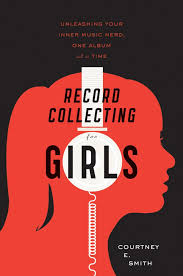
ImageWhat books about music do you recommend for our next book conversation? Past books we have discussed have included ‘Record Collecting for Girls’ by Courtney E. Smith, ‘Guided by Voices: A Brief History: Twenty-One Years of Hunting Accidents in the Forests of Rock and Roll’, ‘Waging Heavy Peace’ by Neil Young, and ‘Petal Pusher’ by Laurie Lindeen of Zuzu’s Petals. All terrific books by and about musicians.  What book would you recommend to Dr. and Mrs. J to read and then discuss on Your Tuesday Afternoon Alternative in a few weeks?

Come on… we need the suggestions folks!  We will then read and review the book on-air.  You can join the conversation.  Won’t that be fun!