Please, Please, Please Let Me See the Show (This Time)

Morrissey has always been a weather system, not a touring artist. You don’t buy a ticket to see him so much as you gamble—you place a small, hopeful wager against history, logistics, exhaustion, grievance, the universe, and Morrissey himself. And in the last several years, the house has been winning.

Let’s talk numbers, because numbers have a way of cutting through myth. Since roughly 2019, Morrissey has canceled a staggering share of his scheduled concerts. Tracking sites that obsess over these things, think of them as the baseball-card collectors of broken promises, suggest that in the most recent stretch alone, he’s canceled nearly half of what he’s booked. In 2024, nine out of twenty-three shows vanished. In 2025, thirty-two out of sixty-three evaporated. Early 2026? Two more were gone before the coffee finished brewing on the new year. Forty-three cancellations in about two years. Forty-nine of his last hundred shows, period. Flip a coin. Heads, you get “There Is a Light That Never Goes Out.” Tails, you get an apologetic Instagram post.

Last Night I Dreamt That Somebody Played the Show

Now, before the comment section of this blog lights up like a bonfire of sanctimony, let’s be clear: this isn’t a hit job. Morrissey doesn’t need one. He’s been doing his own PR demolition derby for decades. This is about what it means when an artist who once articulated romantic alienation for an entire generation now can’t reliably show up in the flesh to sing about it.

Because live music, real, sweaty, inconvenient, human live music, is a contract. It’s not just a transaction, not a barcode scan, and a T-shirt upsell. It’s a promise: I will be there if you are. And when that promise breaks often enough, it stops feeling tragic and starts feeling structural.

Here’s where we can kick open the door and start yelling: rock and roll is not supposed to be a reliable thing, but it is supposed to be an act of presence. You can be sloppy, you can be late, you can be drunk, you can be transcendent or terrible, but you have to exist on the stage. Cancellation is the anti-performance. It’s a ghost story told by a promoter.

This Charming Man Will Not Appear Tonight

Morrissey’s defenders will point to his health, exhaustion, the cruelty of touring in one’s sixties, and the meatless catering demands of a man who has turned vegetarianism into performance art. All fair points! Touring is brutal. Capitalism eats its elders. The road is a grinder, but it has better lighting. But here’s the problem: Morrissey’s cancellation habit isn’t a sudden decline—it’s a pattern. A long, well-documented, almost conceptual-art-level commitment to not showing up.

And patterns change how we listen.

Once upon a time, Morrissey’s flakiness felt romantic. The same way The Smiths felt impossibly fragile, like they might dissolve if you looked at them too hard. You forgave the missed shows because the songs felt like secrets whispered directly into your ear. You forgave him because you believed—wrongly, beautifully—that sensitivity was incompatible with reliability.

But fast-forward to now, where entire tour legs disappear like a Vegas magician’s assistant, and the romance curdles into consumer fatigue. Fans book flights. Fans take time off work. Fans arrange childcare. Fans in Latin America, Europe, the Midwest—people for whom a Morrissey show is not a casual Tuesday night but a once-in-a-decade pilgrimage—get left holding the emotional bag.

Schrödinger’s Morrissey: The Show Both Exists and Doesn’t

At some point, the question stops being “Why does Morrissey cancel?” and becomes “Why do we keep pretending this is surprising?”

This is where Morrissey becomes less a singer and more a metaphor for late-stage rock stardom. He is the walking embodiment of the contradiction: an artist whose work once validated vulnerability now presiding over a system that treats audience trust as optional. He’s not alone in this, but he’s the most extreme case study because his cancellation rate is so high it borders on performance itself. It’s almost as if the absence is the point.

And maybe that’s the cruel irony. Morrissey, the great bard of loneliness, has perfected a way to make tens of thousands of people feel collectively stood up.

The tragedy isn’t that he cancels. The tragedy is that the cancellations have become part of the brand. They are baked into the expectation. “Did the show happen?” becomes the first question, not “Was it good?” That’s a catastrophic downgrade in cultural terms. Rock and roll isn’t supposed to be a Schrödinger’s cat.

Meanwhile, somewhere down the street, a local band is loading their own gear into a van that smells like old coffee and regret. They will play whether ten people show up or two hundred. They will play sick. They will play tired. They will play because showing up is the whole damn point. They don’t get to cancel half their dates and still be mythologized. They get one no-show before the scene quietly moves on without them.

That’s the contrast that hurts. Morrissey can cancel forty-nine out of a hundred shows and still sell tickets to the next one because nostalgia is the most powerful drug in the world. It keeps whispering, Maybe this time. It keeps telling us that the version of him we loved in 1986 is still hiding somewhere behind the scrim of lawsuits, grievances, and canceled soundchecks.

And look—I get it. I’d probably still roll the dice myself. To be perfectly honest, I have taken the chance, and I was fortunate in seeing a Morrissey show. That’s the sickness and the beauty of loving music that mattered to you when you were young. You keep hoping for communion even when history tells you to expect a refund.

How Soon Is Now? Very Possibly Never

But let’s stop pretending this is just bad luck. Over the last six years, the data tells a story as clear as any lyric Morrissey ever wrote: absence has become as defining as presence. Cancellation is no longer an exception; it’s a feature.

This isn’t a moral failing so much as a cosmic joke. The man who taught us how to feel has turned unreliability into an art form. The fans keep showing up to an empty stage, humming along to songs about disappointment, living inside the metaphor, whether they like it or not.

And maybe that’s the final, bitter punchline: Morrissey still understands his audience perfectly. He just doesn’t have to be there to prove it.

New Music Isn’t Dead, You Just Stayed Home

They keep saying it like it’s a diagnosis, like a doctor lowering his voice: There’s no good new music anymore. As if the patient is culture itself, lying flatlined under a white sheet, while the rest of us are supposed to nod solemnly and accept that the last real song was written sometime around when they were sixteen and emotionally combustible. This is nonsense, of course, the laziest kind of nonsense, the kind that requires no listening, no leaving the house, no risk, no sweat, no awkward eye contact in a half-lit room where the band is setting up next to a stack of amps that smell like beer, ozone, and promise.

New music is not dead. It’s just not coming to you. It’s not ringing your doorbell or algorithmically tucking itself into your ears while you scroll. It’s happening out there, in rooms that require pants and presence and a willingness to be changed, even slightly. And that’s the real problem: new music demands participation. It demands that you show up.

The great (boy, would he hate that sentiment) rock critic, Lester Bangs, understood this instinctively. He knew that music wasn’t an artifact to be archived, but a live wire, something that crackles when bodies gather, and sound hits air, and something unpredictable happens. The excitement of new music isn’t about novelty for novelty’s sake; it’s about the shock of recognition when you hear something you didn’t know you needed until it’s already inside your head, rearranging the furniture.

Going out to see local music—real local music, not brand-approved “scenes” packaged for export—is a civic act. It’s how communities remember they’re alive. You walk into a bar, a VFW hall, a coffee shop after hours, a basement with questionable wiring, and suddenly you’re part of a temporary republic founded on volume and intent. You’re standing next to people who live where you live, who work the jobs you know, who are writing songs not because it will scale, but because it has to come out. That matters. That changes things.

The need for new music isn’t abstract. It’s psychic. It’s the need to hear someone else articulate the same confusion, joy, dread, or stubborn hope you’re carrying around without a language. No documentation, just a real human need. When people say nothing is exciting being made anymore, what they’re really saying is that they’ve stopped being curious about other people’s interior lives. They want the old songs because the old songs already agree with them. New music argues back, it’s the packaging/re-packaging of human feelings in new bottles.

And that argument is healthy. It keeps culture from calcifying into a museum gift shop stocked with endlessly remastered memories. Live local music reminds us that art is a process, not a product. Bands miss notes. Lyrics change. Drummers (guitarists, bass players, etc.) quit. Someone forgets the bridge and laughs. These imperfections are not flaws; they’re evidence of life. They’re proof that the thing you’re witnessing hasn’t been fully decided yet.

The positive consequences ripple outward. You support a venue, which supports staff, which keeps a place open where people can gather without a screen between them. You give musicians a reason to keep writing, to keep rehearsing, to keep believing that the hours spent hauling gear and arguing about tempos aren’t insane. You create informal networks—musicians meet other musicians, shows lead to collaborations, friendships form, ideas cross-pollinate. This is how scenes happen, not because someone declares one into existence, but because enough people decide that showing up matters.

Local music also recalibrates your sense of scale. Not everything needs to be monumental to be meaningful. A great song played for forty people can hit harder than a festival set swallowed by branding and distance. There’s an intimacy in local shows that can’t be replicated: eye contact with the singer, the thump of the kick drum in your sternum, the shared glance when a chorus lands just right. You don’t leave as a consumer; you leave as a witness to something that you cannot quite describe.

And let’s be honest about the frustration. The claim that nothing compelling is being released now is often a cover for disengagement. It’s easier to blame the times than to admit you’ve stopped listening actively. The world didn’t run out of ideas; you ran out of patience. Meanwhile, musicians are still out here folding genres into new shapes, writing songs about now—about precarity, community, grief, humor, survival—with tools and influences that didn’t exist twenty years ago.

If you want excitement, you have to seek it out. You have to court it. You have to risk boredom, risk disappointment, risk being wrong. That’s the deal. New music doesn’t owe you greatness on demand; it asks for your attention in exchange for the possibility of revelation.

So go out. Stand in the back or press up front. Clap awkwardly. Buy the record/CD/download/tape. Talk to the band. Argue with your friends about what you heard. This is how culture stays porous and human. This is how a town sounds like itself instead of a rerun.

The future of music isn’t missing—it’s tuning up, waiting for you to get off the couch and walk through the door.

A Night at the Altar of Rock: The Tisburys, Super City, and The Laughing Chimes, and the Resurrection of Everything that Matters

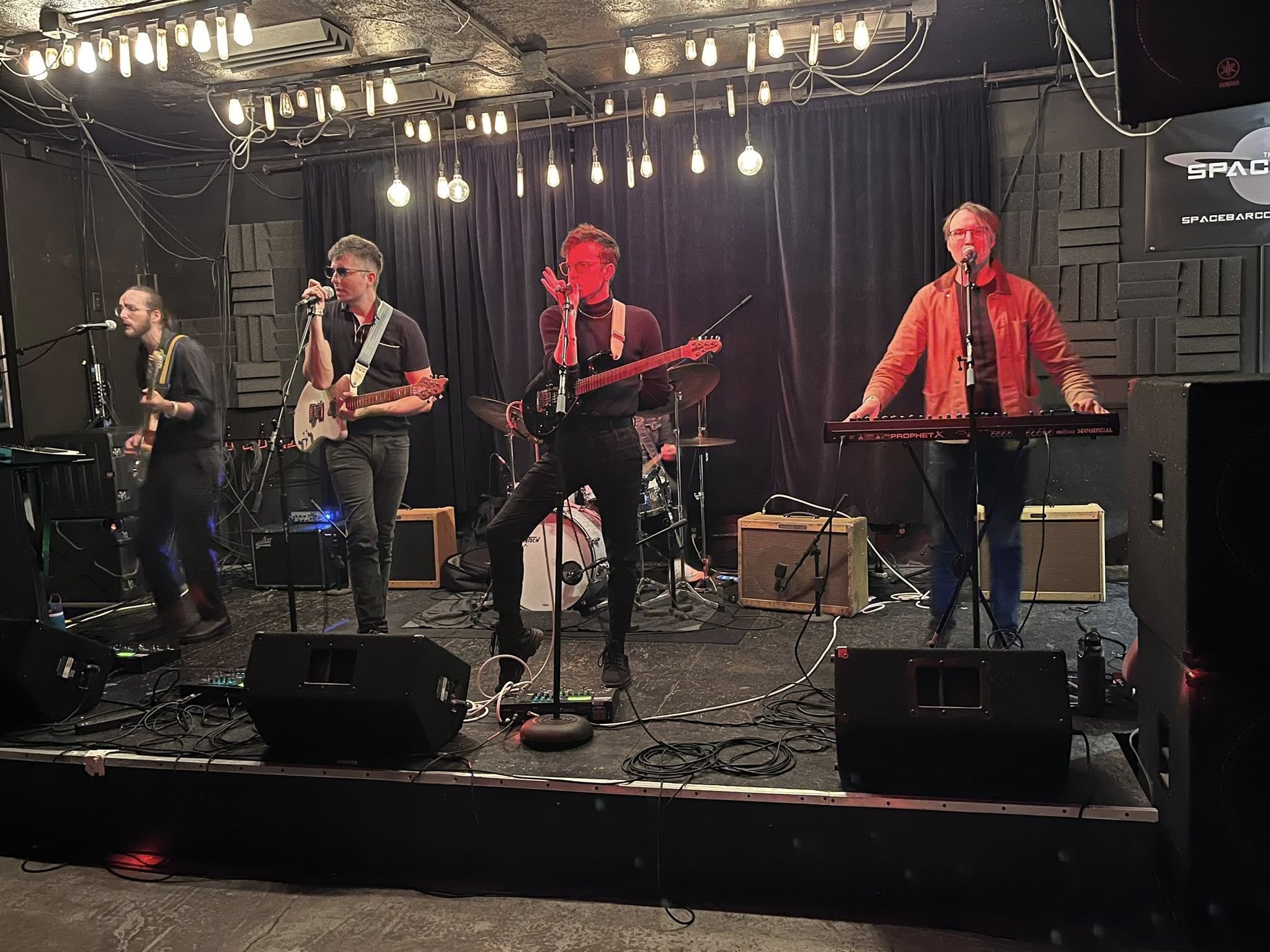
My caffeine-fueled thought about last night’s amazing rock and roll show — By a Lapsed Believer Dragged Kicking and Screaming into Rapture at The Spacebar (May 29, 2025) aka Dr. J.

It started with the silence.

Not the good kind—the pregnant pause before the snare cracks or the breath before a chorus explodes—but the stifling, suffocating kind. The kind that crept in during the pandemic and never fully left. The kind that replaced feedback with buffering wheels, pit sweat with couch inertia, and the sacred communion of the club with the sad, soft glow of your phone or laptop screen.

We all said it was temporary. Just a phase. A pause button. But then people stopped going back. Live music—the lifeblood, the altar, the therapy session-meets-street fight that had once given life to every meaningful moment of youth—was suddenly an option, not a necessity. A niche. A “might”, an “interested” instead of a “must.” Streaming replaced sweat. Earbuds replaced speakers. Watching someone strum a guitar in portrait mode while you folded laundry became the sad parody of what used to be a spiritual act.

And yeah, I bought in. Who didn’t? We got older, softer, more afraid. Netflix kept churning, Spotify never ran dry, and the couch never charged a cover. They had my favorite snacks. Maybe we forgot. Or maybe we chose to forget—because remembering what it was like to feel something, shoulder-to-shoulder with strangers, might have been just too much.

But then, on a random Thursday night in Columbus, Ohio, in a cinderblock joint that still smells like 1994 and regrets, it all came roaring back like a freight train with a grudge. Three bands. A tiny stage. A room. And somewhere in the middle of it all, I found what I didn’t even know I’d lost: the magic.

Maybe we have all been a bit burnt out lately with every morning bringing menace and dread, a thin-skinned attack built on ego, narcissism, and a culture of outrage.

These past few years have felt emotionally scabbed over by years of algorithmic playlists, music discovery if it happens at all is toed strivtly to our personal past choices. And in 2025 so many mainstream limp bands more concerned with brand aesthetics than the beautiful noise of guitar feedback.

Rock and roll has become a ghost in a shaken Polaroid, a relic of denim-scraped memories buried beneath held up poster board ironic mustaches and Instagram filters. The whole thing felt embalmed, pickled, taxidermied—played through boutique pedals and boutique egos, an infinite loop of tasteful mediocrity.

But then came Last Night. One of those nights that swings down from the cosmos like a flaming power chord, grabs you by the lapels, and reminds you why you ever gave a damn in the first place. It happened at The Spacebar in Columbus, Ohio—a cinderblock cathedral tucked between bars, food joints, and a laundromat — the kind of dilapidated storefronts that might still sell VHS tapes or lottery tickets. A venue that smelled of rock and till fightingg for relevance or at least survival. The smell of the grease of good intentions.

The perfect place for resurrection.

Enter Super City.

Super City hit the stage like a lightning bolt fused with a math equation — too tight to be this wild, too wild to be this tight, like if Devo and Thin Lizzy got into a car crash and left the wreckage bleeding glitter and BPMs.

These guys didn’t play songs so much as detonate them, launching off the stage like human fireworks, synchronized like a goddamn robot army but with all the twitchy, unhinged soul of a band that knows every note could be their last. Guitars traded licks like knife-fighters in a Baltimore alley, drums cracked like whips in a circus gone feral, and the whole thing pulsed with that rare, raw urgency—the kind that makes your brain light up and your spine want to sprint straight through the drywall. It was art-damaged rock and roll with a future-funk death wish, a sound so electrified you could taste the ozone in the room.
And hell, the choreography—yes, choreography—but not in some “industry plant showcase” way. No, this was choreography as combat, synchronized movement not to seduce but to bludgeon, to commit to a kinetic madness so complete it looped around into transcendence.

One minute they were locked in like Kraftwerk with heart palpitations, the next they were thrashing their bodies across the stage like the floor was lava and the only salvation was dance. The whole room went from “I don’t know this band” to “I want to join this band” in under three minutes. They didn’t restore your faith in rock and roll—they reminded you that maybe it had evolved into something new, something faster, weirder, sweatier. Something that lives not in the past but right here, right now, sweating all over you in a bar on a Tuesday night like salvation with a tremolo pedal.

And then The Tisburys took the stage.

You ever see a band that walks out looking like maybe they’re just some regular dudes, guys you know, your co-workers at the local record store or your trivia-night competition—and then proceed to absolutely decimate your soul with rock and roll? That’s the Tisburys. They have that thing. The thing you can’t name without sounding like a lunatic or a prophet. The thing that separates the lifers from the LARPers.

From the first note, they tore into their set like a pack of dogs breaking into a butcher shop—joyful chaos, unrelenting passion, the sonic equivalent of smashing glass just to hear the sound. Think Springsteen’s storytelling welded to Big Star’s chiming melancholia, dragged through the gravel of Philly punk grit and splattered with just enough modern neurosis to feel like now. The guitars rang out like church bells for the godless. The rhythm section didn’t just keep time—they commanded it, like Kronos punching the clock with a snarl.

There was one song—title lost to the ecstatic fog of the moment—that built up slow, with this patient, pleading guitar line that felt like someone whispering secrets at the edge of the world. And when it broke? Jesus. It was like the roof lifted six inches and the universe cracked open just wide enough for all of us—sweaty, cynical, slack-jawed—to catch a glimpse of what music is for.

The Laughing Chimes.

Two minutes into their set, I was already sweating through my cynicism. These kids (and yes, kids—the kind that probably still think Hüsker Dü is a weird Scandinavian joke until they learn better) came out swinging with jangle-pop hooks like they’d just stumbled out of a time portal from Athens, Georgia, circa 1985, blinking into the fluorescence with nothing but Rickenbackers and righteous intention. There was no ironic detachment, no arch knowingness—just melodies sharp enough to slice through the smog of apathy I’d been inhaling since 2016.

They played like they meant it. You know what that means? Probably not. Because meaning it is a lost art. Meaning it is standing in front of twenty-something beer-slingers and 40-year-olds wearing Dinosaur Jr. shirts with a rhythm section that gallops like a dog finally let off the leash and singing about small towns, lost dreams, and heartbreaks that aren’t filtered through TikTok.

I felt young. Not “young” like your skincare ad says—you know, dewy and delusional—but young like: I want to start a band tonight and scream into a microphone until the cops come.

By the time The Laughing Chimes slashed through their final number—a feedback-drenched love letter to the Replacements that made me want to punch the air and cry at the same time—I was halfway converted. I could feel the old hunger stirring, the one that used to wake me up at 2 a.m. with a desperate need to play “Radio Free Europe” at bone-rattling volume.

Not money. Not TikTok virality. Not Spotify streams.

Connection. Defiance. Salvation.

And it wasn’t just the bands. It was us, the crowd—pressed together marinated in secondhand dreams, all there for the same unspoken purpose. To feel something real. I saw a guy in a vintage Guided by Voices tee taking it in like a benediction. I saw a girl lean her head on her girlfriend’s shoulder during a bridge that could have melted glaciers. I saw the bartender nodding along in the back like they’d forgotten they were on the clock. Magic. Not sleight-of-hand, not showbiz gloss—but ancient, electric, and utterly earned.

By the end, I was a puddle. Broken down and rebuilt by the raw, gorgeous power of three bands who didn’t need a light show or viral video to get through to me—just guts, melody, and an unshakable belief in the redemptive fire of a great song, played loud, in a room too small to contain it.

I walked out into the Columbus night buzzing like a man struck by divine lightning. My ears rang with the ghost-echoes of feedback and harmony. My body ached in that holy way, the kind you feel after love, surviving a riot, or finally remembering who the hell you are if even for a fleeting moment.

Rock and roll isn’t dead. It’s just waiting for you at a place like The Spacebar, on a night like that, where belief is possible again. Super City, The Tisburys and The Laughing Chimes didn’t just play a show.

They started a revival.

Video of The Day: Knotts – Good Morning

Knotts, a dynamic artistic band hailing from Cincinnati, Ohio, has captivated audiences with their innovative approach to musical art. Comprising vocalist and multi-instrumentalist Adalia Powell-Boehne, Keyboardist Antoine Franklin, guitarist Jordan Wilson and drummer Isaiah Cook, KNOTTS has carved a niche for itself in the contemporary music scene through their catchy collaborative melodic weaving of rock, soul, loops, electronic and boundary-pushing sonic creations. Together, the band creates immersive moving personal musical experiences that challenge conventional notions of identity, connection and perception.

One of Knotts‘ most captivating and haunting songs is “Good Morning,” a large-scale sonic architecture that explores the interconnectedness of humanity, kindness and the irreplaceable act of uniting and building a relationship. Adalia’s powerful, plaintive, and emotional voice feels like the embrace of a long lost friend. The spark, heck the joy in the song springs from her incredible voice. The Song feels as if it comprises thousands of intricately woven musical threads suspended from the heart, forming a dense canopy that envelops listeners as they navigate the powerful act of deciding to spend a life together. Each thread of the song represents a human connection, symbolizing the invisible ties that bind individuals together in a shared experience of living.

As listeners move through the song (and the dare I say happy and vibrant accompanying video), they become acutely aware of their presence within this web of connections, prompting introspection and contemplation of their relationships with others. But this is not a heavy drowning question, it is has color and energy — saying yes to being with someone is supposed to be magical, mysterious and fun. Would you stay with someone while your face — and you — slowly age as demonstrated with the coming of lines on your face? The immersive and joyful bounce in the song allows for a deeply personal engagement with the music , transcending the boundaries of the all too often casual love song. “Good Morning” expresses the contentment and adventure of being with someone when you want to be there.

Knotts‘ work is characterized by a sense of fluidity and transformation, with many of their songs evolving over time in response to the questions of connection, identity, and being entangled within one another. By layering lyrical images and a sweep of keyboards, guitars and drums, they create a composition that challenge listeners to confront the realities of would they make the same decision to stay.

In a world increasingly characterized by division and isolation, Knotts offers a beacon of hope and connectivity through their music. By challenging listeners to reconsider their relationships with themselves and others, they inspire a renewed sense of empathy and understanding in an ever-changing world. As they continue to push the boundaries of artistic expression of love and connection in their music, KNOTTS remains a vital voice in the local music scene, reminding us of the transformative power of creativity and collaboration.

Knotts are playing tonight — Friday, March 1st at 7pm — with the powerhouse Heather Redman & The Reputation at The Oregon Express. Go Go Go!

Matt Moran & The Palominos in Dayton!

This past Tuesday it was a real pleasure to have Matt Moran, Dan Moran, Jonas Walker, and James Gedda in the YTAA studio and then have the opportunity to go to The Hidden Gem Music Club and see them play a fantastic show. The concert was ably opened by James Gedda. His baritone and alt-country swagger reminds a listener of Dave Alvin crossed with Darius Rucker with just a pinch of Sturgill Simpson. Gedda’s humor and authentic sensibility set the perfect mood for the night. Give a listen to his excellent music!

Then Matt Moran & The Palominos kicked the night into the stratosphere! An incredible set of songs that featured tunes from Matt Moran’s excellent Heartache Kid and Heartache Kid Acoustic records. The band was tighter than a fused bolt. Across a sonic theater that included a high-energy cover of ‘Atlantic City,’ the band barrelled like a runaway train going downhill. To say that the band demonstrated the kind of chemistry that a group would sell their soul to possess is an understatement.

The harmonies between Matt and Dan Moran had that blood harmony that is only held by brothers who not only grew up together but know where all the bodies are buried and hold the secrets of one another close to their hearts. Speaking of Dan Moran, his bass runs were impressive and yet never overwhelmed the songs. If bass is the secret weapon in music, then Dan is the guard of the armory.

I would be remiss if I did not mention the incredible work behind the drum kit. Jonas Walker added the right amount of percussion, fills, and sways to every song regardless of the tempo. His enthusiasm was infectious while bobbing his head, smiling, and adding the occasional yelp and scream but only when it added spice to the song.

Matt’s voice is an all too rare gift. Even when he is singing a song written about characters he created from his fertile imagination about a restaurant that he regularly drove by but could not go in because the reality might not match the story written in one’s mind – ‘Break Her Heart‘ – you would swear that he was singing about a heartbreak that he could only have experienced himself to be able to draw upon such emotion.

If you are unfamiliar with Matt Moran & The Palominos, then you have some musical homework. Don’t worry, you are going to love it. Matt is on Twitter, Instagram, Facebook, and Bandcamp. Plus his own site.

Bottlecap Mountain is on the show today!

One of Dr. J’s favorite bands, Bottlecap Mountain, will be in Dayton on Tuesday, March 28, 2023, and that is a cause for celebration.

After a visit to Your Tuesday Afternoon Alternative for an interview and some live acoustic songs during our second hour they will play a set at Blind Bob’s in Dayton tonight!

Imagine a great indie pop rock band with a side of funk and a Replacements meet Uncle Tupelo vibe. This is a band that has no problem stepping into various genres and styles — Folk, Indie, Americana, Rock, or even Power Pop — with a sense of humor and sly social commentary served with a side of melody.

Do not let the band’s playfulness disguise the lyrically rich storytelling and musicianship that they can demonstrate in a single song like ‘Canoe’ or ‘Dream On, Come On’. The bass lines, keyboard, and slashing guitar on ‘AstralFunk’ show how the band can make a slinky funky tune that will carry you along. “Resurrection Blues’ has a powerful pull that recalls Folk and Americana at their most urgent. And this band rocks! ‘My Little Demon’ is an honestly heavy, bluesy confection that urges all of us to soulful reflection.

Their latest album is a well-made affair while keeping a whimsical look at the subjects of everyday life. They are tight, and not afraid of crunchy guitars, bubbly bass, and a keyboard foundation which is a real pleasure. In fact, one of the strengths of the band is the ability to move from quiet to loud or vice versa without being jarring or precious. The vocals on the record are nothing short of perfect. This is a record to be played loudly and often.

Come see the Austin, Texas quartet play songs from their sixth album ‘O! Fantastik Melancholy’ at Blind Bob’s tonight!

Show time with Nicholas Johnson

We were fortunate to be able to see a knock-your-socks-off set at Blind Bob’s in Dayton from Nicholas Johnson who is finishing up a punishing schedule of shows in support of his latest record, Shady Pines Vol. 2.

Coming to town with The Pinkerton Raid and joined by hometown heroes, Age Nowhere – he played one heck of a show featuring music from not only the new record but the excellent Back Upstate and Shady Pines Vol. 1!

Before the show, we spoke with him about the tour and we were amazed that he not only played the classic one show a night but also played multiple shows on the same day in different towns. However, you would never know the demanding itinerary for the tour from his performance. He was energetic and charismatic which drew the crowd into the experience because of his enthusiasm.

If you ever have a chance to see a Nicholas Johnson show. Do it. You will not be disappointed.

Nicholas Johnson in Dayton!

What a Night!

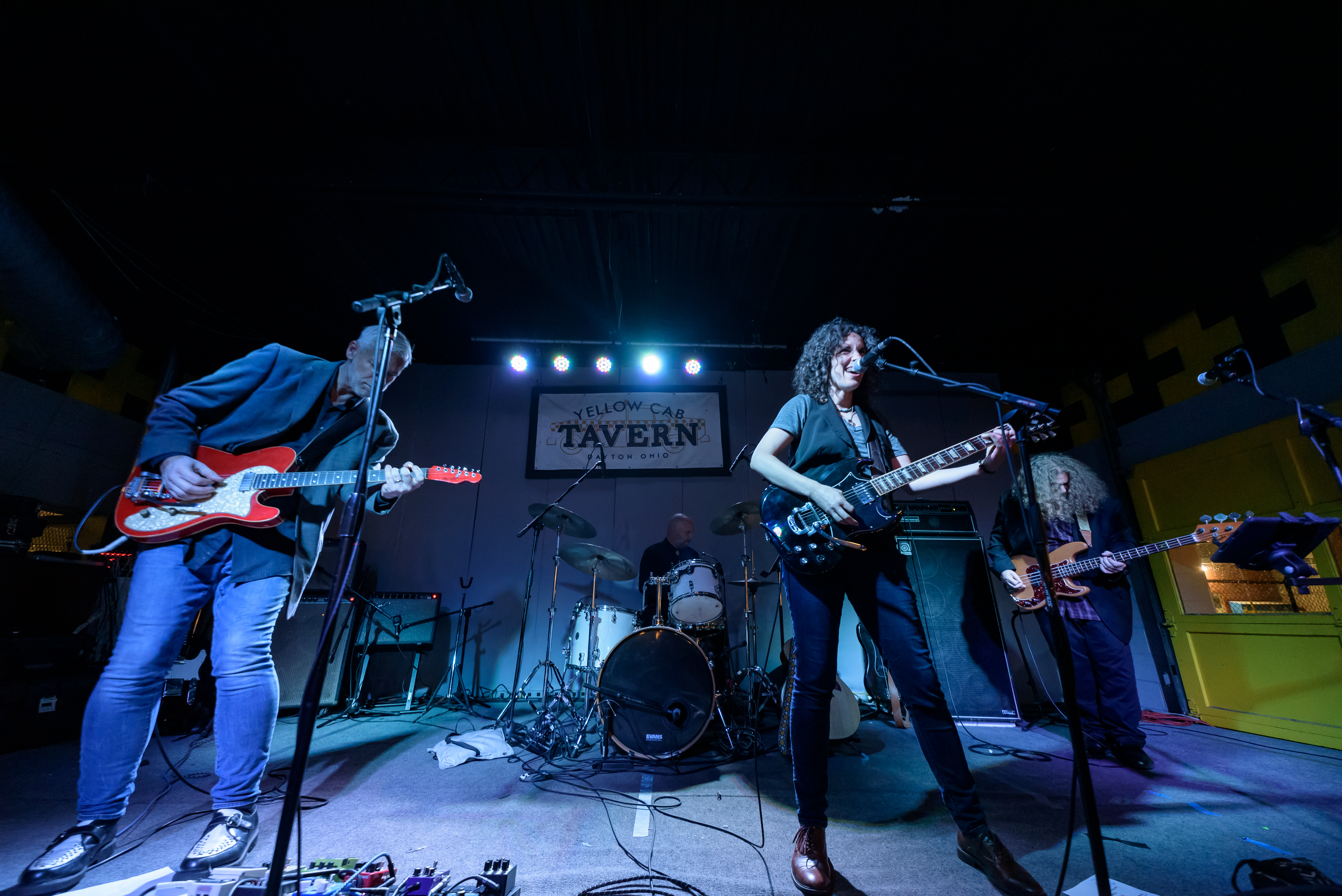
On September 16th, Nick Kizirnis, Kyleen Downes, and Isicle played a stellar show for us at Your Tuesday Afternoon Alternative and several classes from the University of Dayton at the Yellow Cab Tavern. It was a fantastic show full of amazing music and spectacular performances! Thank you, Nick, Kyleen, and Isicle! All photos by Tom Gilliam Photography!

Cool Show Alert! The 1984 Draft always Best Friends Forever

We have good news for you Music Friends!

The new year begins with all of the vibrancy of a guitar on overload! And that is because the latest full-length album from the power-pop-punk of the Joe Anderl-led The 1984 Draft arrives this week on January 19th! The Dayton quartet’s latest record will remind you that music does still matter and perhaps it means even more today. The new album combines the urgency of The Smoking Popes with the intensity of Bob Mould’s post-Husker Du project, Sugar, thrown headlong into the pure and direct heartbreak of The Replacements. The Draft plays every song like their lives depend on it.

The first two singles await your listening pleasure now via streaming!

The new record comes our way courtesy of the fine music-loving folks at Dayton, Ohio-based Poptek Records with assistance from Sell the Heart Records and Engineer Records (in the UK and EU). You can order the 12″ vinyl now or get a copy at the big record-release show in Dayton on January 20 at the legendary Yellow Cab Tavern. And we highly recommend that you go to the concert!

And speaking of that show, The Draft has invited friends and sonic heroes like Josh Caterer (Smoking Popes), Paige Beller, Shane Sweeney (Two Cow Garage), Josh Goldman (The Raging Nathans), Narrow/Arrow, Abiyah, and Josh Arnold to play the record release celebration. Best friends forever, indeed!

Time is running out to make your plans! But today is your lucky day because we are here to help! You can scoop up your advance tickets now and save $5 off the admission to the Yellow Cab Tavern in Dayton by grabbing that ticket a few days before the big show. Be a friend of The Draft and get a ticket now.

Winterfolk is Back!

Cold, right now? Check. Grey skies… look outside, yup. And Winterfolk! Yeah.

Need something to do this weekend? One of our pals and the Golden Voice of Dayton Roots Music Mr. Harold Hensley has put together another blow-the-roof-off shows! If you have had the good fortune to be able to attend a past Winter Folk then you know that this is a music event that you miss at your peril. You will kick yourself for quite some time if you miss this event.

As always Winterfolk is back with an incredible collection of artists at the Yellow Cab Tavern this Saturday, January 14th! In celebration of this annual concert of Folk, Bluegrass, and Americana we will be playing music from many of the artists on Your Tuesday Afternoon Alternative today — The Shady Pine, Harold Hensley & His Band, California Howdy, Cory Breth, Kyleen Downes, and Derek Gooley!

Info: The cover starts at 7pm, music starts at 8pm, and tickets are $12 in advance and $15 at the doors. All ages are welcome with a guardian. Discounted presale tickets end at Midnight on January 13th so get yourself a ticket right away!

You can buy the presale tickets at Ten High Productions!

7000Apart in Dayton

We often say that any day of the week you can experience great music in our fine community of Dayton, Ohio and that was clearly demonstrated as truth last night with 7000Apart, K.Carter and Mike Bankhead playing Blind Bob’s. 7000Apart is on tour right now! If you have a chance to see any of these terrific artists, do it! Support Your Local Music Scene!

7000Apart, K.Carter and Mike Bankhead playing Blind Bob's in Dayton.

The Mayor of Tune Town

Andy Smith was one of the amazing musicians who played our 15 year anniversary show. This is the sound of heart break.