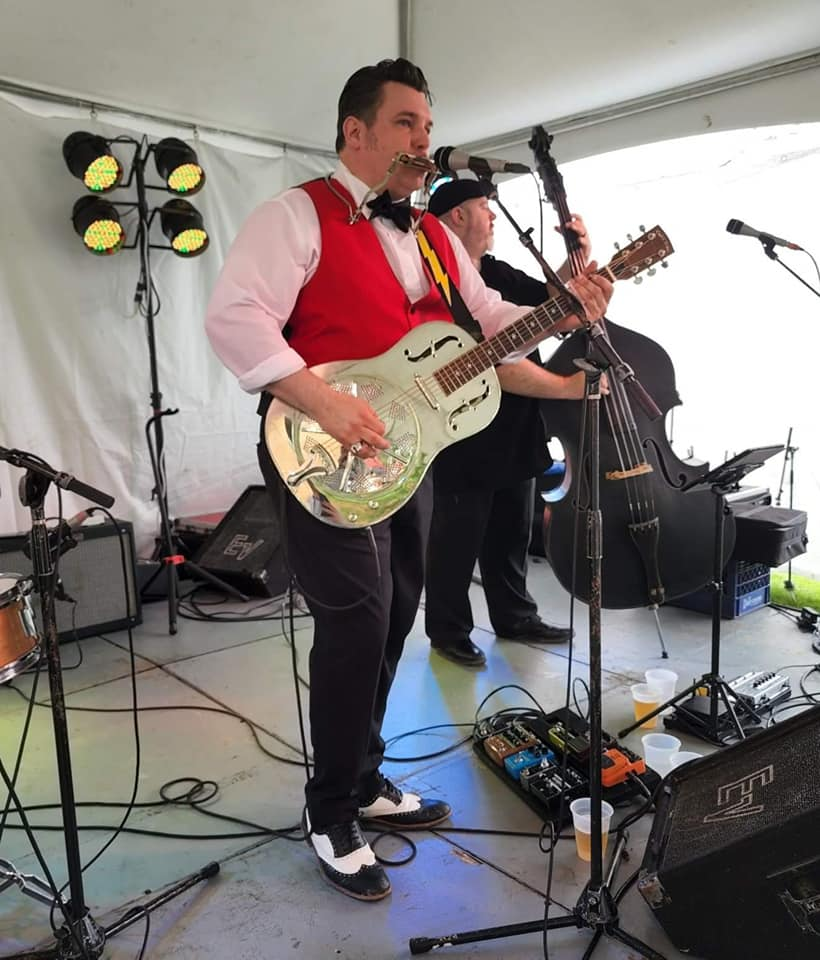
Some cities hum, and some cities grind, and then there’s Dayton, Ohio, which does both at once, like it’s chewing aluminum foil and smiling through the sparks. Out of that glorious Midwestern feedback loop comes Todd The Fox—musician, songwriter, performer, singer—padding into your ears tomorrow on Your Tuesday Afternoon Alternative from 4–5 p.m. Eastern, impeccably dressed as if from a nineteenth-century sepia-toned picture, eyes bright, ready to knock over your preconceptions and maybe a lamp or two. This isn’t a press-release animal. This is the kind of musician who lives in the alley behind the club and somehow knows your name and the story of how you met.
Let’s get something straight before the bio-police arrive with their clipboards: Todd The Fox isn’t a “local act” the way people say “local” when they mean “small.” Dayton has always been a factory for nervous systems—Guided by Voices turning beer-soaked basements into libraries of genius, the Breeders bending melody until it smiles back, far too many funk ghosts rattling the windows to mention them all. Todd The Fox comes from that lineage of people who treat songs like living organisms, not products. The music breathes. It snarls. It slips between rock and roll styles the way a fox slips under a fence: quick, quiet, leaving you wondering how it got there and beautiful.
Listen closely, and you hear a songwriter who understands the dirty miracle of rockabilly, rock ‘n’ roll, juke joint, rock AND roll, pop, and more—how a hook can feel like salvation if you let it—and who also understands how to break the hook on purpose just to see what bleeds out. Todd’s songs don’t ask permission. They don’t knock. They kick the door, apologize sincerely, then steal your favorite record and give it back with new fingerprints. There’s classic melody here, yes, but it’s the kind that’s been roughed up by real nights and real mornings, the kind that knows the difference between romance and survival.
Performance-wise, Todd The Fox doesn’t “take the stage” so much as make it a living room and then light a match. There’s a physical intelligence to it, a sense that the body is another instrument and the crowd is a choir that doesn’t know it’s rehearsing. You don’t watch so much as get pulled into orbit. To call him a showman would truly understate it. That’s the secret sauce: the generosity. Even when the songs bite, they’re offered with an open palm. You’re invited to bleed a little, too. It’s communion with better jokes.
And here’s the thing the algorithms won’t tell you: Todd The Fox understands time. Not in the “retro” sense—this isn’t cosplay—but in the way great rock & roll always has, a kind of temporal vandalism. The performance of the songs feels like they all could’ve been written yesterday or twenty years from now, which is to say they live in the only time that matters: the one where you’re paying attention. There’s craft without fussiness, ambition without the TED Talk, and a willingness to leave the seams showing because that’s where the electricity leaks out.
Tomorrow’s hour on Your Tuesday Afternoon Alternative isn’t a content drop; it’s a rendezvous. Radio still matters when it’s alive, when it’s a room you can step into and feel the air change. From 4–5 p.m. Eastern, Todd The Fox comes by to talk shop, spin yarns, and let the music do what it does best: make a mess and call it truth. Expect stories that zig when you think they’ll zag, expect songs that refuse to sit still, expect the kind of conversation that remembers radio is a human act, not a playlist with a personality disorder.
If you’re tired of music that arrives pre-chewed, if you miss the feeling that something might go wrong in the best possible way, tune in. Todd The Fox is the sound of a city, of a tradition that learned how to survive by inventing its own fun, the sound of a songwriter who trusts the song more than the strategy. There’s wit here, and bite, and that elusive thing critics pretend to quantify: soul. Not the museum kind. The living, twitching kind that looks you in the eye and dares you to stay.
So set the dial. Clear the hour. Let the fox into the henhouse of your afternoon and see what survives. Tomorrow, 4–5 p.m. Eastern. Your Tuesday Afternoon Alternative. This is how radio remembers what it’s for.
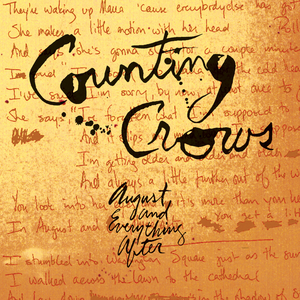
How often have you been asked to name your top ten albums, or debated which records you’d take to a desert island? The “desert island album” is a familiar, hypothetical concept among music fans: the one record you could listen to endlessly and never tire of. It’s simply a way of naming your most cherished, all-time favorite album. For Dr. J, one of those perfect records is Counting Crows’ 1993 debut, August and Everything After.
Some records arrive like polite guests, shaking hands with the radio, smiling for the cameras, making sure not to spill anything on the carpet. And then some records kick in the door at 3 a.m., overwhelmed on their own feelings, bleeding a little, asking you if you’ve ever actually lived or if you’ve just been killing time until something breaks your heart. August and Everything After is the latter. It doesn’t so much introduce Counting Crows as it announces them, like a cracked-voiced preacher stumbling into town with a suitcase full of secrets and a head full of weather. That it’s their first record feels almost obscene. Bands aren’t supposed to sound this fully formed, this bruised, this emotionally articulate right out of the gate. This is supposed to take years of failure, challenges, and ill-advised love affairs. But here it is, fully alive, staring you down.
If genius means anything in rock and roll—and it does, despite all the sneering irony we’re trained to wear like armor—it means the ability to translate private confusion into public communion. Adam Duritz doesn’t just write songs; he writes confessions that somehow feel like yours, even when you’ve never lived in California, never stood on a street corner at night wondering who you were supposed to be, never tried to make sense of love after it’s already gone feral and bitten you. These songs don’t explain feelings; they inhabit them. They sit in the mess. They let the awkward silences linger. They don’t clean up after themselves. And that’s why people keep coming back.
“Round Here” opens the album not with a bang but with a question mark. It’s a song about dislocation, about being young enough to believe that identity is something you can find if you just look hard enough, and old enough to know that it might already be slipping away. “She says she’s tired of life, she must be tired of something,” Duritz sings, and it’s not melodrama—it’s reportage. He’s documenting the emotional static of a generation that grew up on promises it didn’t quite believe. There’s no manifesto here, no slogans. Just the sound of someone pacing around a parking lot trying to figure out how to be real in a world that feels increasingly wrong and staged.
And that’s the trick of August and Everything After: it sounds intimate without being precious, expansive without being bombastic. The band plays like they’re backing a nervous breakdown that somehow learned how to swing. The guitars shimmer and sigh; the rhythm section keeps things grounded, like a friend who knows when to let you rant and when to hand you a glass of water. T Bone Burnett’s production (Burnett also contributed guitar and vocals to the record) gives everything room to breathe, which is crucial because these songs need the oxygen. Smother them, and they’d collapse into self-pity. Instead, they hover in that dangerous space between vulnerability and confidence, where the best rock records live.
“Omaha” — one of my favorite songs on the record — is where the album first threatens to explode. It’s restless, jittery, propelled by a sense that staying still is a kind of death. Duritz sounds like someone running not toward something but away from the version of himself he’s afraid to become. This is a recurring theme throughout the record: movement as salvation, travel as therapy, geography as a stand-in for emotional states. Cities become characters, roads become metaphors, and every mile marker is another chance to start over, or at least pretend you can.
Then there’s “Mr. Jones,” the song that doomed the band to a lifetime of misunderstanding by becoming a hit. People heard it as an anthem of ambition, a singalong about wanting to be famous, to be seen. But listen closer, and it’s a song about emptiness, about mistaking visibility for connection. “We all want to be big stars,” Duritz sings, and it’s not triumph—it’s confession. The song pulses with the anxiety of someone who knows that being watched isn’t the same as being known. That radio stations turned it into a party song is almost beside the point; the genius is that it works despite the misreading, smuggling existential dread onto pop playlists like contraband.
The middle stretch of the album is where August and Everything After really earns its indispensability. “Perfect Blue Buildings” and “Anna Begins” slow things down, letting the emotional weight settle in your chest. These are songs about relationships not as fairy tales but as negotiations, as ongoing attempts to be less alone without losing yourself entirely. “Anna Begins” in particular feels like eavesdropping on someone thinking out loud, trying to talk himself into love and out of fear at the same time. It’s hesitant, messy, human. The song doesn’t resolve so much as it exhales, which is exactly right. Love rarely comes with neat conclusions. And remember, this is the band’s first record — wow.
What makes this record one that everyone has either owned, borrowed, stolen, or at least absorbed through cultural osmosis is how unapologetically it centers feeling in an era that was increasingly suspicious of it. The early ’90s had irony for days. Grunge made disaffection fashionable; alternative radio thrived on detachment. Counting Crows, meanwhile, walked in waving their emotions like a white flag and dared you to flinch. They didn’t hide behind distortion or sarcasm. They sang about longing, loneliness, and the aching desire to matter. And people listened because, beneath all the posturing, that’s what everyone was dealing with anyway.
“Time and Time Again” and “Rain King” push the album toward something almost mythic. Duritz begins to sound less like a diarist and more like a prophet with stage fright, evoking imagery that feels both biblical and personal at the same time. “Rain King” is particularly a masterclass in building atmosphere. It swells and recedes, gathering momentum until it feels like the sky might actually open up. It’s about control and surrender, about wanting to command the elements of your life while knowing that you’re mostly at their mercy. It’s the sound of someone learning to live with uncertainty rather than trying to conquer it.
And then there’s “A Murder of One,” the closer that doesn’t tie things up so much as leave them humming in your bloodstream. It’s expansive, reflective, tinged with regret but not crushed by it. Ending the album here feels intentional: after all the searching, all the restless motion, the record concludes not with answers but with a kind of hard-won acceptance. Life is complicated. Love is risky. Identity is a moving target. The best you can do is keep singing, keep reaching out, keep trying to make sense of the mess.
What’s staggering is that this is a debut. Not a tentative first step, not a collection of demos dressed up for release, but a fully realized statement of purpose. Counting Crows sound like a band that already knows who they are, even as their songs wrestle with uncertainty. That tension—between confidence and doubt, polish and rawness—is what gives August and Everything After its staying power. It feels lived-in, like these songs existed long before they were recorded, waiting for the right moment to surface.
In the end, the genius of August and Everything After isn’t just in its songwriting or performances, though both are exceptional. It’s in its insistence that emotional honesty is a form of rebellion. That talking about loneliness, about the hunger for connection, about the struggle to define yourself in a world that keeps changing the rules—that all of this matters. This is a record that people return to at different stages of their lives and hear something new each time, because it grows with you. Or maybe it just reminds you of who you were when you first heard it, and who you thought you might become.
Either way, it’s indispensable. Not because it tells you what to feel, but because it reminds you that feeling deeply is still possible. And for a debut album to pull that off—to make itself a permanent fixture in the emotional furniture of rock and roll—that’s not just impressive. That’s a small miracle, wrapped in August light and delivered just in time.
If rock & roll really is supposed to be dead, then The Tisburys clearly didn’t get the memo, becauseA Still Life Revisited sounds like the kind of record made by people who still believe guitars can change your pulse rate and a chorus can rescue you from the beige grind of everyday life. It’s big-hearted, jangly, melodically drunk on its own hookiness, and just earnest enough to make cynics roll their eyes—right before quietly admitting that, okay fine, this rules. In an era where “indie rock” has become an algorithmic suggestion instead of a real-time human exhale, The Tisburys are writing songs that swing for transcendence without pretending they’re saints. They’re too busy making music that actually moves. And that might be the most subversive thing any band can do in 2025.
There’s a delicate alchemy in making music that sounds both freshly urgent and comfortably familiar. With A Still Life Revisited, The Tisburys — a Philadelphia band led by singer-songwriter Tyler Asay — manage that trick across ten tracks that feel immediate, carefully arranged, and, surprisingly, wise. The album moves with the confidence of a band that’s learned how to translate small domestic crises (turning thirty, marriages, memory, the peculiar ache of hometowns) into classic, hook-driven indie rock: chiming guitars, harmonized choruses, and narratives that reward close listening. In other words, this is modern power-pop with a conscience, and it may be the Tisburys’ sharpest collection yet.
What makes A Still Life Revisited sound like more than a solo songwriter backed by colleagues is the apparent solidity of the lineup and the way each instrumental voice gets its moment. The Tisburys cohere around Tyler Asay’s warm, slightly plaintive voice and his knack for melody, but the record belongs to a group: guitarist John Domenico’s tasteful leads, Jason McGovern’s keyboards and co-production instincts, Ben Cardine’s steady bass and Dan Nazario’s drums. The band’s website and press materials emphasize that this is “a band record,” one where arrangements were built by people who have been playing together for years and know how to leave space for each other. That chemistry is audible: the guitars converse, the rhythm section moves like a unit, and the keys add texture rather than crowding the mix.
Sound and lineage: power pop, indie rock, and a Philly-Jersey DNA
If you trace the DNA of A Still Life Revisited, you’ll find a lineage that ranges from jangly 90s college rock to the more melodically ornate sides of the early 2000s indie wave. The Tisburys wear those influences proudly — there are echoes of The Replacements’ emotional bluntness and Beatles-style melodic craft, but also the stadium-ready shimmer of bands who balanced grit with sheen. Yet the album never sounds like a pastiche. It’s unmistakably contemporary: production is bright without being slick, vocal harmonies land with the immediacy of a live show, and arrangements are built to make choruses stick. The band explicitly cites its Philly and Jersey Shore influences, and that regional grounding shows up in the record’s blend of small-town narrative detail and seaside, sing-along energy.
What makes The Tisburys special — and what lifts A Still Life Revisited above many power-pop records — is their attention to lyrical detail. Tyler Asay writes about ordinary moments in a way that strips them of cliché. Songs on the record address the “first half” of life — relationships, nostalgia, homecomings — without falling into mawkishness. Lines about family photographs, local landmarks, and the strange combination of comfort and claustrophobia that comes with returning to familiar places make these songs feel lived in. The best of the album pairs those specifics with anthemic choruses: you can sing along, but you can also listen closely and discover a story unfolding. Critics have singled out the band’s knack for marrying hooky arrangements with narrative songwriting as a central strength. And, you know, they are absolutely right.
Ordinary lives, big choruses
A Still Life Revisited isn’t a concept album in the strict sense, but the sequencing creates a coherent emotional arc — from longing to reflection to a kind of defiant hope. Several tracks stand out for the way they crystallize the band’s gifts.
“Forever” opens the record with a declaration:
“April days are forever Nineteen days not together Show my flaws through a camera lens No more lies waiting to forget”
Armed with a chorus designed to lodge in the skull. It’s a song built slowly: clearly, Asay rewrote and revised the arrangement until the parts clicked, and that patience shows. The song’s telescoping structure — verse to pre-chorus to a cathartic refrain — demonstrates the band’s skill at sculpting dynamics so that the chorus lands like a communal exhale. It feels right.
Elsewhere, the album dips into more reflective territory. Tracks rich in harmonies and piano offer moments of tenderness: memories, small defeats, and reconciliations appear in detail rather than in sweeping generalities. The sonics are dynamic, bloom with backing vocals and subtle keyboards — a technique the band uses repeatedly to give emotional weight to otherwise modest lines.
Other songs lean into the band’s power-pop muscles. Hooks here are not mere commercial concessions but emotional amplifiers; when the group sings together, the effect is immediate and communal. The closing track “Here Comes the Lonesome Dove” — described in reviews as an “urgent, upbeat” send-off — mixes strong harmonies, urgent rhythm, and slightly darker lyrical shades to finish the album on a note that feels both celebratory and bittersweet. It’s a perfect closer, an effective summation of the album’s themes: growth, memory, and the ambiguity of home.
Production and studio choices: warm, direct, human
Recorded at Mt. Slippery (Dr. Dog’s suburban studio) with longtime engineer/producer Justin Nazario, the album’s sonic identity favors clarity and warmth over gimmickry. That environment — a comfortable, band-friendly studio with analog sensibilities — helps the band capture immediacy without losing fidelity. The drums snap, guitars shimmer, and the vocal center is forward without being overly compressed; harmonies sit naturally in the room rather than stuck on top of a slick production. Listeners who prize the feeling of a live band in a room will find much to like here.
If you know The Tisburys’ older releases, the evolution on A Still Life Revisited is noticeable but not jarring. Earlier records leaned more heavily on 90s radio rock and could feel rawer in places; here, the songwriting feels tighter and more collaborative. Reviews suggest this is the band’s “most collaborative effort to date,” with multiple members contributing production and arrangement ideas — a shift from a single songwriter model to a more democratic studio approach. The result is songs that are fuller in texture but no less intimate; the details of domestic life are still central, but the band now frames them with broader, more anthemic musical gestures.
Importantly, the Tisburys haven’t abandoned their core voice. Where some bands try to “grow up” by abandoning what made them distinctive, The Tisburys have expanded their palette while preserving their melodic instincts and narrative focus. That balance — between continuity and growth — is what makes this album feel like a genuine step forward instead of a rebrand.
Who will love this album?
A Still Life Revisitedwill appeal to a broad swath of listeners: fans of modern power pop, devotees of literate indie rock, and anyone who finds comfort in songs that sound like they were written by people who noticed life’s small edges and decided to sing them out loud. In 2025, when many records either chase novelty or hide behind irony, there’s a particular pleasure in music that foregrounds craft and communal warmth. The Tisburys offer both: the skill of well-constructed pop songs and the feeling of a band that wants to connect, not merely perform.
Sure, everyone says that no record is perfect, and A Still Life Revisited has modest limits. For listeners looking for radical sonic innovation that avoids melody or confrontational protest-based lyrical stances, this is not the album for you. The album’s strengths: finely tuned melodies, thoughtful narratives, and a band that clearly knows how to shape a song’s emotional arc make this record a stellar release for 2025.
A band refining its craft
Ultimately, A Still Life Revisited reads like the work of a group that has learned how to harness its influences — The Beatles’ melodic sense, 90s power-pop energy, and early-aughts indie bombast — and direct them toward songs that feel honest and communal. The album isn’t trying to shock or to invent an entirely new style; it’s trying to do something arguably harder: write memorable songs that respect the listener’s intelligence and reward repeated listening.
For a modern band based in a city with a cultural identity as rich and complicated as Philadelphia’s, making an album this warm, melodic, and grounded is no small feat. A Still Life Revisited is The Tisburys at their most assured: a record of small truths and big choruses, sung by a band that understands the difference between a catchy line and a song that stays with you. If you like your indie rock crafted, communal, and emotionally direct, this is an album worth putting on repeat.
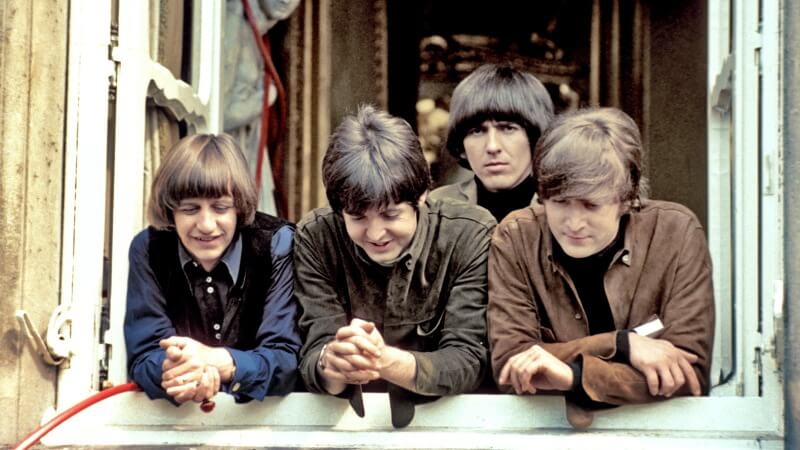
You know what? Saying rock and roll really began with Rubber Soul isn’t some heretical bolt from the blue; it’s the kind of wild-eyed truth you only admit after years of peeling back the layers of myth and noise. Because that record wasn’t just an album; it was the moment the Beatles stopped being mop-topped charm merchants and turned into full-blown sonic arsonists.
Rubber Soul is where the walls blew open — where pop hooks sprouted strange new limbs, where folk met psychedelia in a dark alley and decided to run away together, where music discovered it didn’t have to smile to be loved.
You can feel the whole future of rock wriggling under the skin of those tracks. It was the Big Bang disguised as a studio experiment, the blueprint for everyone who ever wanted their guitar to be both a confession and a weapon. So yeah — call it the beginning. Plenty of albums came before, but Rubber Soul is where rock stopped crawling and started walking into the fire.
“Rock and roll as we know it began with Rubber Soul” isn’t just a clever line—it’s the truth Paste is tapping into.Released on December 3rd in 1965, the album marks the moment the Beatles stepped out of the frenzy of Beatlemania and into a more mature, deeply intentional era of songwriting. Rubber Soul didn’t just elevate their own sound; it challenged everyone around them—most famously pushing the Beach Boys to rethink their sun-soaked formulas and ultimately inspiring Pet Sounds.
What makes Rubber Soul so enduring is how confidently it bridges pop accessibility with artistic experimentation. The band broadened the emotional and musical palette of rock, weaving in introspection, sharper storytelling, and new textures that hinted at the psychedelic shift to come. It’s the point where John, Paul, George, and Ringo became not just stars, but innovators—artists who were actively reshaping the possibilities of popular music.
Paste is right to celebrate it: Rubber Soul wasn’t just another release—it was the hinge on which the Beatles’ legacy, and arguably modern rock itself, turned.
December ’65 the Beatles were supposed to be polished mascots of Beatlemania, grinning through another round of yeah-yeah-yeahs. Instead they walked into the studio, slammed the door behind them, and came out holding a whole new universe in their hands.
Rubber Soul is the moment they stopped playing the pop-star game and started playing God with melody and mood. Suddenly the harmonies got darker, the jokes got stranger, and the whole band sounded like they’d actually been listening—to Dylan, to each other, to the static in their own heads. And the Beach Boys? Forget surfboards; this album practically shoved Brian Wilson into a sensory deprivation tank and dared him to come back with something better.
What Paste gets right is that Rubber Soul isn’t just a “mature” Beatles record—it’s the pivot where the mop-tops mutated into the mad scientists we mythologize. A band shedding its skin in real time. A warning shot to everyone else who thought they were making serious music.
If rock and roll has a Year Zero, this album is one of the few places you can actually hear the fuse catching.
Indie rock has always thrived on the fringes: small venues, tiny labels, and the slow-building careers that reward patience more than hype. Few contemporary bands embody this spirit better than Elephants and Stars, the Canadian band whose latest album, Under the Earth and Above Heaven, feels like the result of years dedicated to refining melody, guitar as truth, rock and roll meaning, and a hard-won optimism tempered with a slight sarcasm that comes from not taking oneself too seriously. A real understanding that life has ups and downs.
The album’s title suggests a band thinking about place, about being suspended between hardship and hope, about grounding themselves even as they reach. And in many ways, this duality captures the spirit of Elephants and Stars themselves: musicians who write like they’ve lived a little, but still believe that a good chorus can solve something in the soul. A great song can change the world.
Under the Earth and Above Heaven is, simply put, their most confident and emotionally resonant work to date. But the record is also a reminder of why rock, guitars, harmonies, and honest storytelling still matter.
The band behind the sound To understand the record, it helps to understand the people who made it. Elephants and Stars operate in a tradition familiar to fans of early 2000s alternative rock: tight rhythm sections, guitars that shimmer and crunch, and lyrics that manage sincerity without slipping into sentimentality.
The lineup, anchored by frontman Manfred Sittmann, whose signature vocals blend warmth with a slight rasp, has solidified into a group whose interplay feels lived-in. Sittmann writes and sings with the clarity of someone who knows the exact weight of each line, but the band behind him keeps things agile rather than precious. Sittmann’s melodic instincts shape much of the band’s identity. He’s joined by Adam Seed, whose lead guitar work brings a sharp, expressive edge to their sound, and longtime collaborator Michael MacMillan, whose bass lines provide both structure, rhythm, and warmth. The rhythm section finds its heartbeat in drummer Stewart McKinney, while Simon Head expands the band’s sonic palette with textured, atmospheric keyboard layers. Together, they create a modern rock sound grounded in pop-punk roots. Music that’s unmistakably hook-driven yet designed with a clear mission: to help bring rock back to the forefront.
The band’s story stretches back years, especially for Sittmann and MacMillan, who previously played together in the excellent group Soap Opera. Their long creative history gives the songs on their latest release a natural chemistry and ease, the feeling of musicians who know exactly how to respond to one another. That chemistry reaches a new peak on Under the Earth and Above Heaven, released in February of this year and produced by Ian Blurton, a collaboration that sharpens their sound while preserving the emotional immediacy that defines their work.
The guitars, often handled in layered pairs, move between bright open-chord passages and more aggressive leads. The bass lines are melodic without overpowering the mix, and the drumming is purposeful and punchy where it should be, restrained where the lyrics need breathing room. The result is a sound built on chemistry rather than simply studio polish.
The band feels like a cohort of people who know how to play to each other’s strengths. This matters because Under the Earth and Above Heaven is an album that depends on emotional pacing: crescendos that feel earned, shifts in tone that feel organic, and choruses that arrive with the momentum of a live show.
A sound defined by uplift without naïveté From the opening track, Elephants and Stars make it clear that they are uninterested in the cynicism that often dominates modern rock. Their guitars ring with a kind of unguarded cascade of sonic joy, even when the lyrics are wrestling with frustration or loss. One of the most striking qualities of this album is how hope and melancholy coexist—not in competition, but in conversation.
The production leans into this duality. Vocals sit slightly forward in the mix, giving Sittmann’s storytelling a sense of directness and intimacy. The guitars, meanwhile, expand outward: wide, textured, layered. It’s the kind of sound associated with late-afternoon festival sets—sunlight still visible, the air cooling, the crowd settling into a collective feeling. And the sound? Loud, propulsive, aggressive, like a sonic caress.
What keeps the record from drifting into nostalgia is the band’s sense of precision. Each song feels built, not merely written. The hooks land with purpose. The bridges feel like necessary expansions, not detours. And the choruses—Elephants and Stars’ greatest strength—arrive like emotional confirmations. This is a band that believes in melody the way some bands believe in distortion pedals: as the emotional engine of the music.
The lyrical world of the album If the sound carries the emotional lift, the lyrics provide the grounding. Under the Earth and Above Heaven reads like a record about transition—moving from one stage of life to another, reconciling who you were with who you’re trying to become. The “earth” and “heaven” of the title function less as metaphysical spaces and more as metaphors for the pressures we carry and the aspirations we hold. Across the record, recurring themes emerge.
Across Under the Earth and Above Heaven, Elephants and Stars weave a thematic through-line that feels both deeply personal and universally readable. The record begins by making peace with the past, returning again and again to the bittersweet truth that old mistakes never quite vanish. Yet the band refuses to sink into regret. Instead, they treat memory like an old photograph—something to regard with a mix of tenderness and hard-earned gratitude for having made it through. That reflective stance sets the stage for one of the album’s central concerns: the search for steadiness in a world that rarely offers it. Life, as their lyrics suggest, often feels precarious, a suspended moment in which you’re “almost there” but never fully settled. But rather than express anxiety, the band leans toward determination, riding out the instability with resolve.
That determination is buoyed by another recurring insight: the importance of connection. Throughout the album, relationships of all kinds—romantic partners, close friends, the communities we build around ourselves—appear as the forces that keep us grounded. These songs push against the temptation to withdraw, insisting instead that meaning comes from being in the world with others. And within that engagement, the band finds flashes of transcendence in the most ordinary places: singing in the car, watching the sunrise after a sleepless night, catching the sound of someone’s laughter at just the right moment. These quiet, luminous details echo the “above heaven” imagery of the album’s title, suggesting that the extraordinary often reveals itself in the spaces where we least expect it.
The record carries an autobiographical weight without tipping into confession. Rather than offering a straightforward personal narrative, it gestures toward shared emotional terrain—less “here is my story” and more “here is a feeling you have probably known.” And while a full song-by-song analysis would exceed the scope of this discussion, several tracks stand out for the way they shape the album’s emotional arc, guiding listeners through reflection, uncertainty, connection, and ultimately the little but meaningful possibilities of joy.
The opener: urgency with clarity The opening track, The Ceiling, wastes no time establishing the album’s stakes. A driving beat, guitars that arrive fully formed, and lyrics that describe the moment when indecision becomes action. It feels like a thesis statement: the band is not here to wallow; they are here to move. A bit more than midway through the record comes a standout track that shifts the tempo and deepens the tone, ‘Unlucky.’ This is where the band’s lyrical strengths shine: reflections on resilience, the cost of growth, and the quiet strength found in simply continuing. The arrangement builds around a groove—guitar, sway in the keyboards, more subtle percussion, then a full electric swell—mirroring the emotional climb.
The late-album surge: an anthem of uplift As the album nears its conclusion, the band leans into one of their most triumphant choruses to date on ‘Paint Me Alive’. It’s the kind of moment designed to be shouted back at the stage, hands in the air, the kind of collective catharsis that only rock music can produce. The lyrics, which center on choosing light even when darkness is familiar, feel earned precisely because the album has carried listeners through doubt and tension.
The final track, The Ghosts, does something rare: it provides closure without collapsing into tidy resolution. It acknowledges the uncertainties that remain but offers a melodic reassurance that moving forward—however imperfectly—is worth celebrating.
Three elements make Under the Earth and Above Heaven one of Elephants and Stars’ most compelling releases: 1) Musical consistency without monotony. 2) The band has refined their sound without becoming predictable. And 3) Each song feels connected to the whole, but no two entries collapse into each other.
Emotional honesty that creates community In an era where irony often dominates indie music discourse, Elephants and Stars commit wholeheartedly to sincerity. Their stories are earnest but never naive. The band creates A sense of community embedded in the music. Listening to the album feels like being welcomed into a shared emotional space. It’s personal, but it’s not private.
Elephants and Stars occupy an interesting place in today’s musical world. They are neither trend-chasers nor purists. Instead, they carry forward the tradition of emotionally articulate guitar rock: bands like The Weakerthans, early Jimmy Eat World, or mid-period The Hold Steady—artists who treat songwriting as craft rather than marketing. Their music reminds listeners that rock still has a role to play in articulating everyday emotional life. Not the grand dramas, but the subtle struggles: trying to be better, trying to stay hopeful, trying to find footing. In a digital era marked by fragmentation and fatigue, Under the Earth and Above Heaven feels refreshingly grounded.
Perhaps the greatest achievement of the album is its replayability. The first listen offers immediacy—hooks that land, choruses that stick. But subsequent listens reveal the details: the way a harmony hangs in the background, the way a guitar line subtly echoes a lyrical theme, the way the rhythm section builds tension without overstating it. This is music built not just to impress, but to accompany. It is the kind of record listeners grow with and discover far more over repeated listens.
An album for the moment we’re in Under the Earth and Above Heavensucceeds because it feels like an album made by people committed to the power of song—not spectacle, not persona, but the craft of building moments of connection. In a fractured cultural moment, that feels almost radical.
Elephants and Stars may never be the kind of band that dominates streaming algorithms or headlines massive festivals. But this record demonstrates why they matter: they make music that sees listeners clearly. They make music that names the feelings many of us carry. They make music that reaches upward, outward, toward one another.
And sometimes, that’s exactly what good rock music is supposed to do.
We could have easily titled this column ‘Making Sense of It All: The Kyle Sowashes and the Enduring Power of Indie Rock Honesty,’ because the band’s new record not only showcases their musical growth but also highlights how their plainspoken sincerity continues to resonate in a genre often crowded with irony and affectation.
Independent rock has long thrived on the margins—small rooms, frayed gear, and bands that carve out meaning from the ordinary. Few groups embody this spirit as honestly and as energetically as The Kyle Sowashes, the long-running Columbus, Ohio outfit centered around singer, guitarist, and songwriter Kyle Sowash. Their terrific new record, Start Making Sense, feels both like a culmination of years of steady work and a refreshed sense of purpose. It is an album that sounds lived-in yet ambitious, familiar yet surprisingly expansive.
Like so many of their releases, it is driven by a collaborative band spirit, anchored by Sowash’s unmistakable songwriting voice. But on Start Making Sense, the musicians around him play an especially notable role. This is not merely a collection of songs written by a single songwriter—it is a group effort in the best sense, marked by thoughtful arrangements, spirited performances, and a chemistry that can only develop after years of making music together. The result is a record that feels warm, wry, cathartic, and deeply human.
A Band Made of People, Not Parts
The Kyle Sowashes have always been a band that foregrounds musicianship over mythology. No one is placed on a pedestal; every member shapes the sound. On Start Making Sense, the interplay among the musicians is central to what makes the record feel so alive.
At the center, of course, is Kyle Sowash, the principal songwriter, guitarist, and narrator of the band’s emotional landscape. His style has always blended self-deprecation with sincerity, humor with frustration, resignation with hope. He writes songs the way people talk when they’ve stopped trying to impress anyone. That honesty, paired with a gift for sticky melodies and driving chord progressions, continues to anchor the band.
But the supporting cast expands and elevates the material. The rhythm section, always a strength for the group, is especially tight on this release. The basslines give songs bounce and propulsion, while the drumming adds both momentum and nuance—capable of big-room punch but also subtle shifts in tone that mirror Sowash’s lyrical turns. Together they give the album its shape: urgent when needed, contemplative when the songs pull inward.
The guitar arrangements, too, show a band deeply comfortable playing with space. There are moments of noisy celebration, fuzzed-out riffs, and guitar lines that nod to 90s indie rock and power pop without ever feeling derivative. But there is also restraint when the songs call for it—arpeggiated lines, single-note phrases, and open-chord patterns that accent Sowash’s vocal pacing. The band understands when to push and when to stay out of the way, and that mutual sensitivity is one of the record’s quiet triumphs.
All of this makes Start Making Sense feel less like a front-person project and more like a snapshot of a genuine musical community. The band members are collaborators—not session players—and the record reflects that shared vision.
Sound: An Indie Rock Dial Tuned Just Right
The defining pleasure of listening to The Kyle Sowashes is the feeling that the band knows exactly who they are and that they approach their sound not as a limitation but as an expressive engine. Start Making Sense follows this tradition, delivering songs that are rooted in classic indie rock but refreshed through craft, energy, and emotional clarity.
The album’s guitar-forward sound recalls the big-hearted crunch of bands like Superchunk, The Weakerthans, early Guided by Voices, and 90s midwestern basement rock. But The Kyle Sowashes are not imitators. Their tone is warmer, their pacing more deliberate, their hooks more conversational. They capture what it feels like to be a functional adult who still carries adolescent anxieties; what it feels like to want to grow but not always know how.
The production strikes a careful balance. It is clean enough to reveal the band’s tight musicianship but raw enough to preserve the lived-in charm that defines their identity. The vocals are present but never over-polished; the guitars are textured but not overly layered; the drums have a live-room feel that makes even the more introspective songs sound communal.
This approach is particularly effective because Sowash’s songwriting thrives on immediacy. These songs feel like they were meant to be played in small rooms full of people who understand what it’s like to try, fail, and try again. The sonic palette—guitars that jangle and buzz, drums that sprint and shuffle, bass that grounds and guides—mirrors the emotional palette of the songs themselves.
What the Lyrics Reveal: Vulnerability Without Pretension
What has always separated Kyle Sowash from many of his indie rock peers is his ability to write lyrics that feel like real conversations. He avoids metaphors that spin out into abstraction and instead leans on the everyday: the tension between optimism and exhaustion, the mundane rhythms of adulthood, the stubborn persistence of doubt.
On Start Making Sense, the lyrics feel particularly pointed. There is a thematic thread running through the record about wanting to take stock of one’s life, wanting to be better (or at least different), but also feeling the tug of old habits or long-held insecurities. This tension animates the album emotionally.
Sowash wrestles with questions familiar to anyone who has lived long enough to feel the weight of their own decisions:
Am I becoming the person I hoped to be?
Am I letting people down without realizing it?
Is it too late to make meaningful changes?
Why does clarity arrive when I am least prepared for it?
And yet, the writing never lapses into self-pity. Sowash has a rare talent for pairing difficult emotions with flashes of humor or casual understatement. His delivery—half earnest, half exasperated—adds to this effect. Even in the most introspective moments, he trusts his audience. He doesn’t sermonize or hide behind dense metaphor. He simply tells the truth as he sees it.
The Album as a Whole: Why Start Making Sense Works
The strength of the record lies not just in its individual songs but in its overall narrative arc. Start Making Sense feels like a journey, not in a conceptual or theatrical sense, but in the emotional progression from beginning to end.
The early tracks tend to have a forward-thrusting, energetic urgency—songs filled with questions, doubts, and attempts to find clarity. As the album unfolds, the pacing shifts: there are moments of introspection, acceptance, humor, resignation, and renewed commitment.
By the final songs, the album arrives somewhere quieter and more grounded. The narrator has not solved everything—far from it—but there is a sense of movement, of incremental progress. And that sense is arguably more meaningful than any dramatic revelation would be.
This emotional pacing mirrors the band’s musical pacing. The guitars pull back when the lyrics sink deeper; the rhythm section tightens when the narrator feels unsettled; the arrangements widen when Sowash leans into hopeful refrains. The band listens to the songs, and the songs reward that attention.
Why They Matter Now
There is something profoundly refreshing about hearing a band like The Kyle Sowashes release a record like Start Making Sense in 2025. In a music culture where so many albums are shaped by algorithms, trends, or online personas, this record feels defiantly human. It is made by musicians who value craft, community, and honesty over spectacle.
Moreover, the themes of Start Making Sense—struggle, ambivalence, small victories, persistent hope—resonate in a cultural moment marked by fatigue and uncertainty. Many listeners will hear echoes of their own lives in the record: the feeling of trying to recalibrate when everything seems slightly off; the desire to “start making sense” of things that once felt straightforward.
The album does not promise transformation or transcendence. Instead, it offers companionship—a reminder that confusion and self-questioning are universal, and that music can help make sense of things even when life does not.
A Career Highlight and a Quiet Triumph
Start Making Sense stands as one of The Kyle Sowashes’ most affecting and best-crafted albums. It blends the energy of earlier records with a deeper emotional palette; it shows a band confident in its identity yet open to growth. The musicianship is sharp, the lyrics are resonant, and the sound manages to be both comfortingly familiar and subtly evolved.
It is not merely a strong indie rock record—it is a document of adulthood, of persistence, of reassessment, of trying again. In its modesty, it finds profundity; in its humor, it finds catharsis; in its unvarnished honesty, it finds connection. For longtime fans, Start Making Sense will feel like a natural and satisfying next chapter. For new listeners, it offers a compelling introduction to a band that has quietly built one of the most sincere bodies of work in Midwestern indie rock. And for everyone, it offers something increasingly rare: a rock album that makes you feel less alone.
“Damage the Pearl,” the standout title track from Third of Never’s latest record, is one of those songs that feels instantly lived-in—emotionally weathered, musically tight, and lyrically honest in ways that reward repeat listens. What Third of Never does so well across their catalog, melding melodic rock with angular edges, reflective lyricism, and a sense of drama that never tips into excess, comes into sharper focus here. The song is as much about mood as it is about narrative, and it invites the listener into a world where beauty and fracture sit side-by-side.
From the opening seconds, the track establishes a sonic landscape marked by contrast. Guitars shimmer and bite, building a foundation that feels both urgent and dreamlike. That duality mirrors the song’s thematic tension: “damage” and “pearl” aren’t just opposing concepts; they’re the twin poles around which the emotional arc revolves. The metaphor is simple but resonant—the “pearl” as something precious, hard-won, and vulnerable to harm; the “damage” as both external force and self-inflicted consequence.
Doug McMillen’s vocal performance lends the song much of its emotional depth. His delivery is unhurried but charged, as though he’s carefully excavating each phrase. There’s a rasp at the edges that suggests long nights, regrets, and resilience. He doesn’t dramatize the lyrics so much as inhabit them, giving the impression that the story being told has been carried quietly for a long time before finally being voiced.
Musically, the band strikes an impressive balance between tight arrangement and spacious atmosphere. Steve Potak’s keyboard textures ripple through the mix, adding color without overwhelming the guitars. His playing brings a sense of uplift to the darker corners of the track, hinting that even in the midst of damage, there’s clarity or even transcendence to be found. The rhythm section keeps the song grounded, propulsive without being forceful, allowing the emotional tension to breathe.
Lyrically, “Damage the Pearl” explores the fragile points in relationships—the places where trust is tested, where mistakes leave marks, where people confront the limits of what can be repaired. But the song resists cynicism. Instead, it seems to inhabit that complicated emotional terrain where hope and regret coexist. When the chorus opens up, the sense of release is less cathartic triumph and more a weary, honest exhalation. The band understands that complexity is sometimes more powerful than resolution.
The production enhances this emotional palette. Clean, spacious, and unafraid of subtle imperfections, it allows each instrument to carry its own weight. There’s no sense of overpolishing; the track feels human, textured, and lived-in. That sense of authenticity shapes the listening experience: the song sounds like a confession whispered and then amplified into the open air.
“Damage the Pearl” ultimately succeeds because it serves as both a strong standalone track and a thematic touchstone for the album bearing its name. It captures Third of Never’s ability to marry craft and feeling—to write rock music that is polished but soulful, introspective but accessible. It lingers after it ends, like a bruise you only notice when you press on it, and like a pearl that gleams all the more for having survived pressure.
It’s been a while since I found the time to upload a full show to Mixcloud! I promise to be better about posting them. The latest episode of YTAA 11-18-2025 is now available on Mixcloud. Please do me a favor and give it a listen when you have a chance.
Finding the time to post full episodes of Your Tuesday Afternoon Alternative on Mixcloud has been more of a challenge than I ever expected. What seems, on the surface, like a simple matter of uploading a show ends up being far more complicated once you stack it next to the responsibilities of everyday life, the planning that goes into each week’s broadcast, and the desire to make sure everything I share is as polished, listenable, and enjoyable as possible. I want to take the time to explain why it has taken me longer than it should to get full shows posted and—more importantly—to apologize for the delay and talk honestly about my commitment to becoming more consistent on Mixcloud.
First, producing Your Tuesday Afternoon Alternative isn’t just a matter of showing up, pressing “record,” and walking away. Even after so many years of doing the show, each episode requires preparation: listening to new music, organizing playlists, writing notes, checking information about artists, aligning segments, and making sure the flow feels right. That’s the part listeners hear directly. What listeners don’t see is everything that comes after the live broadcast—cleaning up the audio file, leveling tracks, trimming silence, removing dead air, tagging the episode, writing show notes, creating artwork, uploading everything, then double-checking it all to make sure it’s correct and accessible. It’s a process I care about, because sharing independent, alternative, and emerging music has always been something that deserves care.
But caring takes time, and time has been harder to come by lately.
Over the last several months (and, if I’m honest, probably longer than that), life has piled on its normal assortment of responsibilities: work, family, health, grading, teaching, commitments that can’t be rescheduled, and the thousand small tasks that accumulate without asking for permission. None of these things are unusual; they’re simply the parts of life that everyone negotiates in their own way. Yet what has happened, unintentionally, is that by the time I sit down to work on getting a full show uploaded, the day has already stretched far beyond the hours I planned on using.
Mixcloud uploads aren’t something I want to do halfway. I don’t want to toss a show online with minimal detail or sloppy audio just to say it’s there. That has never been the spirit of Your Tuesday Afternoon Alternative. The whole point is to introduce people to music worth hearing—bands pouring their hearts into their work, musicians making something genuine, songs with meaning and craft. That deserves a certain level of attention. It deserves to be done right.
And yet, even with the best intentions, the backlog grew.
So I want to be completely direct: I’m sorry. Sorry for taking so long to get episodes uploaded. Sorry for not communicating more clearly when I fell behind. Sorry for making listeners wait when so many of you reached out asking when the next show would be posted. Those messages were kind, encouraging, and patient—and every time I read one, it reminded me how much the show means to people who want to listen on their own schedule.
When people care enough to ask, that means something. And I don’t take that lightly.
The good news is that when you fall behind long enough, eventually you recognize that doing nothing only makes the problem larger. It is time to fix it. It is time to get the shows uploaded more consistently. It is time to make the Mixcloud archive what it should have been all along: a reliable place where listeners can catch up, re-listen, discover new music, or hear an episode they missed live.
I am committing—publicly and sincerely—to posting more consistently. That means setting aside designated time each week to prepare, edit, and upload the shows, even if that means reshuffling other tasks or being more disciplined about how I manage my schedule. It means breaking the work into smaller chunks so that it doesn’t feel overwhelming. It also means giving myself permission not to overthink every detail. The show should sound good, absolutely—but perfectionism can be just as paralyzing as disorganization.
More importantly, posting consistently is a way of honoring the musicians and bands who trust me with their art. It’s also a way of honoring the listeners who tune in every Tuesday afternoon, who send notes and recommendations, who say kind words about the music I share, and who make this show a genuine joy rather than another responsibility. If the live broadcast is about community, energy, and immediacy, then the Mixcloud archive is about access—about giving people the freedom to listen when and how they want, no matter their schedule.
I realize that promises are only as meaningful as the follow-through. Saying I will be more consistent is easy; actually doing it requires effort, planning, and accountability. So here is the practical plan: older shows will be uploaded in batches, and new episodes will go up shortly after each Tuesday broadcast. It may take a little time to clear the backlog, but the process has already begun, and I intend to keep it moving in a steady, realistic rhythm.
If you have been waiting, thank you—for your patience, your encouragement, your interest, and your willingness to stick with the show. If you’re new to the Mixcloud archive, welcome. And if you’re one of the many people who loves discovering under-the-radar music, I promise there is a lot coming your way.
In the end, Your Tuesday Afternoon Alternative has always been about connection: connecting listeners with artists, connecting independent musicians with audiences who want something outside the algorithm, and connecting a community that values creativity, heart, and authenticity in music. Getting the shows onto Mixcloud more reliably is part of strengthening those connections. It is part of respecting your time and honoring the work that musicians put into their craft.
So yes—it took me far too long. And yes—I am genuinely sorry for that.
But I am also incredibly grateful for everyone who continues to listen, share, and support the show. I appreciate you more than you know. And going forward, you can expect more consistent uploads, more reliable access to every episode, and the same commitment to sharing the best independent and alternative music I can find.
Thank you, sincerely—and stay tuned. The next batch of shows is on its way.
In 2025, we’re plugged in, logged on, and supposedly “connected,” but more often than not, we’re trapped in algorithmic echo chambers, scrolling past everything that might actually challenge us or make us feel. Enter indie radio—the last refuge of the real, the unpolished, the alive. Stations that spotlight local bands, spin weird tracks nobody else dares touch, and actually talk to listeners remind us that music isn’t just noise—it’s a social act. Defiance, scored in sound – insurgent spirit.
Shows like ours, Your Tuesday Afternoon Alternative, prove that listening doesn’t have to be lonely. It can be messy, communal, even dangerous in its honesty. Indie radio is where discovery collides with conversation, where culture isn’t handed down in sterile corporate playlists but grown organically, like a basement jam session gone right.
And let’s be blunt: in a media landscape ruled by conglomerates, corporate homogenization, and the soulless chase for clicks, community radio is a lifeline. It champions voices that don’t fit the formula, celebrates the weird, the regional, the overlooked, and keeps local identity breathing while everything else flattens into sameness.
As the noise around us grows louder, the need for authentic closeness grows sharper. Indie radio reminds us that music is a shared experience, conversation is sacred, and community—built on passion, rebellion, and mutual respect—is not optional. It’s essential.
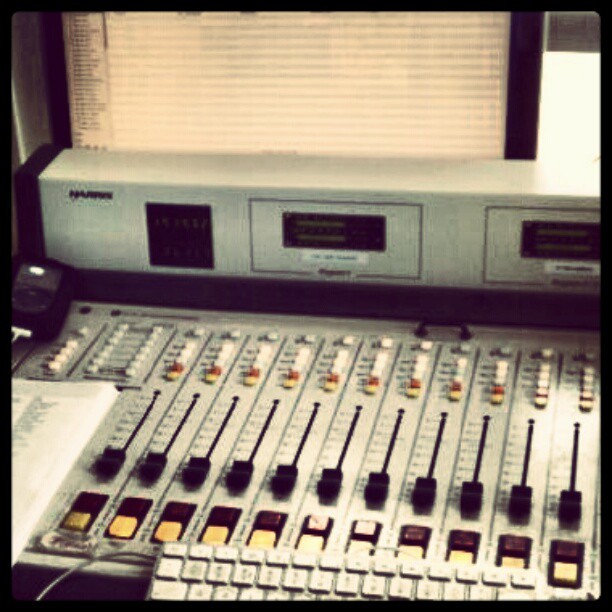
The last YTAA Show of 2024 broadcast on 12-31-2024 is up on the YTAA Mixcloud page! Please give the show a listen and share it with all of your friends. The first time you sit behind the mic and hear that low hum of the studio, you realize it’s a weird kind of experience. You’re not broadcasting a war, no, you’re not even sending out a weather report; you’re sending out your heartbeat. You’re putting yourself on the line, with nothing but an inch-thick foam divider and a sliding board full of dials between you and the abyss of total silence, the void of being utterly ignored. But that’s the thing. Even when you feel apart and separated from others, you’re not really alone.
There’s something visceral about radio. Yeah, even in 2024. It’s a love affair with anonymity after a fashion — you’re sending out these fragments of yourself, these half-thoughts, barely strung together sentences (I try, I actually am trying for something snappy and catchy), hoping someone, anyone, will hear. But even when no one’s listening, it doesn’t matter. You can say the weirdest stuff. You can be as loud as you want, or as quiet as you need to be in that moment. It’s like a secret between you and the speakers on the other side of the room. Who knows if anyone’s tuned in? Does it matter? Perhaps, it doesn’t matter. You’ve got the mic, and in this space, it’s yours even if it is only for three hours. You’re not just DJing songs; you’re performing the act of being. Becoming.
And there’s a rhythm to it, a pulse you can feel in your chest. The songs bleed into each other, and you start talking, almost without thinking, like an out-of-body experience. You riff, you ramble, you may talk about everything and nothing — akin to late-night rants, whispered secrets, some tale of life in the margins. It’s punk, it’s soul, it’s funk, it’s rock ‘n’ roll, and if you’re doing it right, it’s all on the edge of disaster, waiting to fly off the rails at any moment. And that’s the magic. You could screw it up. You probably will. But that’s what makes it real. In an increasingly overproduced, AI-scam-laden world, radio may be messy but that is what creates some of the joy in doing it.
Well, folks, here we are at the end of 2024, and I gotta say—thank you for sticking with me through the weirdness, the noise, and the absolute chaos that is Your Tuesday Afternoon Alternative. You could’ve been anywhere, listening to anything, but you chose to tune in to this mess of records, rants, and ramblings. Maybe you were searching for something new, or maybe you just wanted to escape the grind. Either way, I’m grateful for your ears, your time, and your madness. This isn’t just my show—it’s our show, so keep riding the wave, wherever it takes us in 2025.
In the coming weeks we celebrate the holidays in full indie music style — is that really a thing? On Tuesday, December 17th we will be playing new, classic, and cover holiday songs on the show. Another year has come and gone. Can anyone else believe that we have been doing this for at least fourteen years, sheesh time does pass fast!
Indie holiday music is like that stray cat you take in—scrappy, scruffy, full of attitude, but somehow comforting. It’s the sound of bells and lo-fi drum beats weaving through a haze of reverb and melancholy, like a cold winter’s night painted in pastel hues. Forget those sugar-coated carols, these songs are the unsung heroes of the season, cloaked in irony, aching for connection amidst the forced cheer. They’ve got that off-kilter honesty, a rawness that refuses to conform to the Hallmark image of Christmas. It’s a quiet rebellion, but hell, it’s also really kind of beautiful.
We know that there is a lot of stress during the holidays with all the planning, shopping, and whatever else we are told to do during the holiday season. Well, we believe that any task goes better with music. So, pour yourself the ‘Nog, eat a cookie or three and let us help you relax with some great indie holiday music. If you have a suggestion for a cool holiday tune, let us know on drjytaa on the gmail!
Dr. J can’t wait to co-host the 14th Annual Indie Holiday Radio Show on WUDR Flyer Radio 99.5/98.1’s Your Tuesday Afternoon Alternative with our good friend and frequent guest on the program, Tom Gilliam, who always brings some interesting holiday music to the mix. And as always, the talented Mrs Dr. J has made many a fine contribution to the show as well! You expect nothing less.
This year you have two chances to hear the indie holiday festivities! The first broadcast is on Tuesday, December 17th from 3-6 PM. Listen on 99.5 FM in Dayton, Ohio, USA, or stream the broadcast at wudr.udayton.edu. And if that was not enough we load the show into Mixcloud! You can listen on Wednesday at our Mixcloud page! We just can’t wait to play new and classic indie holiday songs for you. Save us some of the ‘nog.
Every year, like clockwork, the music world implodes into its annual rite of passage: the “Best of” lists. It doesn’t matter whether we need them or not. We could all be listening to something that absolutely shreds, some obscure record that deserves reverence. Still, here we are, obsessing over arbitrary rankings, as if these lists will unlock some divine, objective truth. It is as if, somehow, this tiny, self-appointed cult of critics, bloggers, and tastemakers can distill the whole sprawling mess of 365 days of music into neat little categories that tell you what was really good.
It’s a bit comical, really. These lists are nothing more than trendy cultural currency, an exercise in opinion policing. As if, come December, we all need some authority to tell us what albums we should have liked. Sure, there are some gems in those Top 10s, some records that hit like a lightning bolt, that maybe wouldn’t have been discovered without the almighty guidance of Pitchfork or Rolling Stone. But let’s not kid ourselves – the list itself is a product, a marketing tool, another algorithm feeding on your desire for validation. The music may be real, but the rankings? Please.
Every December, the ritual plays out like a predictable drama: the same predictable indie hits, the same half-baked arguments, the same flavor-of-the-month that gets hyped until the world collectively shrugs and moves on. It’s all just noise. And yet, we devour it like it’s gospel, eagerly waiting for the validation that maybe, just maybe, our choices are “correct.” But here’s the thing: music is personal. These lists? They’re just noise. It’s time we recognize them for what they are: empty, meaningless packaging for a world that’s forgotten how to just listen.
And with all that said, we do an annual show featuring several hours of bands, musicians, songs and albums that impressed the hell out of us. But not going to make some silly rank order, just a bunch of songs that we thought were incredible. So, yeah if this is a bit speaking from both sides of the mouth, so be it.
Our YTAA Faves of 2024 show includes music from many excellent musicians, such as Tamar Berk, Wussy, Palm Ghosts, Nada Surf, Waxahatchee, MJ Lenderman, JD McPherson, Jeremy Porter, Former Champ, Jason Benefield, J. Robins, Dreamjacket, David Payne, Bad Bad Hats, Bike Routes, Brian Wells, The Campbell Apartment, Amy Rigby, The Armoires, Librarians With Hickeys, Bottlecap Mountain, Liv, The Popravinas, The Nautical Theme, Smug Brothers, The Cure, The Reds, Pinks & Purples, The Umbreallas, Nick Kizirnis, Guided By Voices, and The English Beat and The Tragically Hip re-releases.
So, if this is just another end-of-the-year ritual that nobody needs but everybody wants, then maybe it is worthwhile as a way to share some of the music that deserves to be heard.
Streaming Forward, Powered By The Past - if you love the 80s music, new music, Eurovision, cheesy pop and awesome playlists then let's get this pop party started!