 In our ninth installment of ’11 Questions with…’ column, we are excited to feature Todd Farrell Jr of Benchmarks. Todd is the main songwriter, guitarist and vocalist for the Nashville based band. We want to publicly thank Todd for taking the time out of his busy day to answer these questions for us here at YTAA!
Benchmarks have been making some of the most thoughtful and passionate rock and roll of the past several years. Lyrics that elevate the listener to personal introspection rather than confound. Todd’s lyrics about the past, community, connection and challenges of everyday life reached an incredible level with the band’s album Our Undivided Attention in 2017. The band returned in August 2020 with the exceptional Summer Slowly.
 Benchmark’s first album in 2015, American Nights, set the field for their energetic and reflective songs. The album included compelling narratives that were both relatable and organic. The record featured ‘Roman Candles,‘ ‘April Fire’, ‘American Nights’ and ‘Paper Napkins.’ The last song being revisited in 2017 on Our Undivided Attention. As Todd sings on ‘American Nights’ “It was a middle Tennessee Summer, It was 102 degrees, we had everywhere to go and nowhere to be, there’s a million ways for people, to get to where they go, some prefer a ladder, we prefer the road, let’s get out of here while we still can, lets get out of here while we are still alive.” Much like songwriters who capture the experience of being both free and stuck in place at the same time, Benchmarks have a way with feelings of alienation and connection. Their music recognizes that the bond we have between us is fragile and constricting at the same time. The songs on Benchmarks records realize the simultaneous dream and nightmare that comes from carrying along with us where we think we belong.
 The band followed American Nights with the stellar Our Undivided Attention. The album opens with the evocative ‘This Year’ and launches into the poppy ‘Frames’ and then the other eight songs explores the emotional terrain of life, challenges of making and touring music and revisiting the ups and down of childhood and friendships. The album closes with the optimistic and impactful ‘Next Year’ with the chorus we need to hear: ‘I know next year, things will be better.” The lyrics are extraordinarily descriptive, clever and absorbing. Recognizing that we are our own worst enemies and coming to terms with that in a way that is not dismissive remains the lyrical superpower of this band. 2018 led to a split release with Bud Bronson and The Good Timers that included ‘The Good Fight.’ Almost two years later, Benchmarks released their latest record, Summer Slowly.
 With Summer Slowly, the band explore nostalgia, regret and memory using elements of punk and rock and roll to convey introspection and reflection without compromise. The swirl of the guitars, the passionate drumming, and innovative bass lines come together to musically support the themes and narratives that are the heart of the lyrics. The songs are not about stories, they are about feeling and understanding our experiences. A welcome indie rock sensibility emanates from this record.
Dr. J: What can you share with us about when and how you started writing your latest album Summer Slowly?
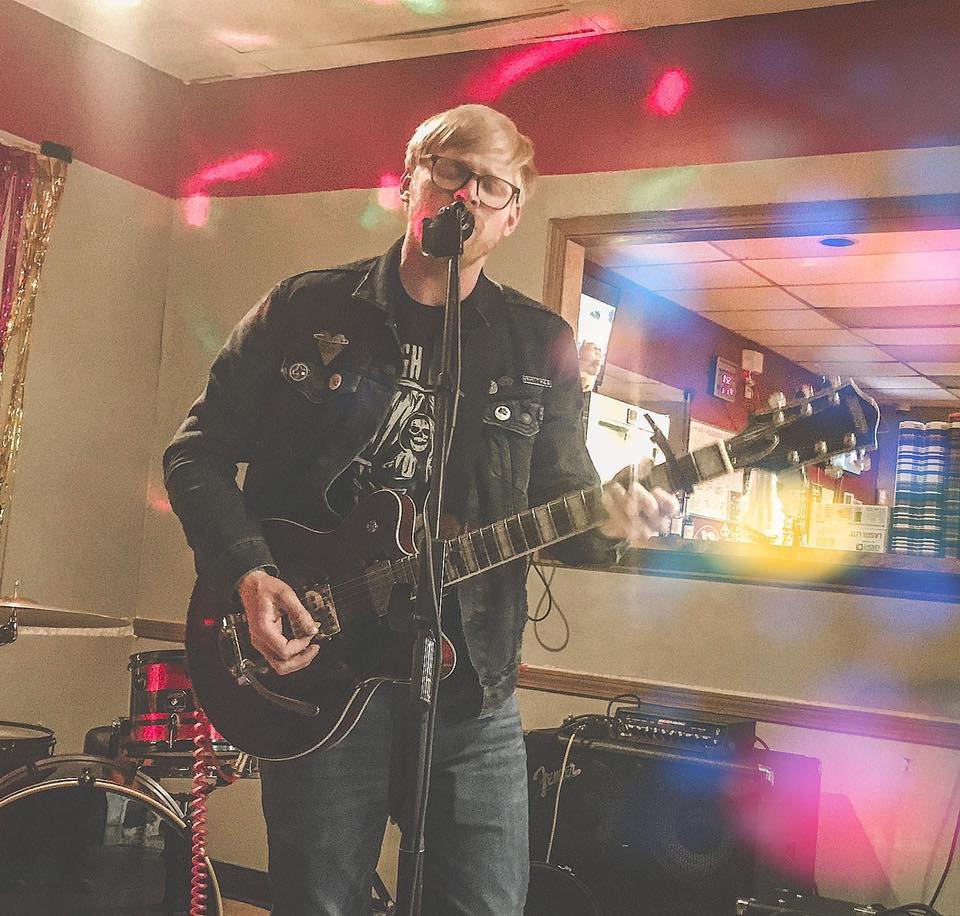 Todd Farrell (TF): I started writing this record before the last one (Our Undivided Attention) even came out. I was on the road with Two Cow Garage a lot, and kind of unsatisfied with much I was doing musically. I wasn’t very satisfied with the last Benchmarks record, and I felt like I was limited in what I could do with Two Cow. After walking away from that band, I took a guitar gig on a tour with my friend Sammy Kay supporting the Creepshow for 6 weeks in the US and Canada in the Fall of 2017. On about day 4 of this tour, my wife and I found out we were pregnant with our first child, which made an already long tour even longer. I did a lot of thinking and soul searching on that tour, trying to figure out what makes me happy, and what wanted to do, and what kind of father I wanted to be for my kid. Simultaneously, watching the continent change from Summer to Fall from a van window influenced a lot of the imagery and shaped the overall theme. I was also listening to a lot of music that may be outside the normal realm of what people probably associate with this band… lots of black metal, synthwave, dark pop, etc. I loved the textures and melodrama to it, and wanted to apply those moods and sounds to what Benchmarks does. I also wanted to embrace playing big dramatic guitar solos again. All of this sort of came together at the same time, and when I got home from that tour, I had a good outline of what I wanted to do with this record.

Dr. J: What is your approach like in the studio? What are your biggest challenges when creating new music? What is the biggest reward for you when making new music?
TF: Because we record ourselves in a very limited environment, the studio process can take… some time. We recorded the drums in a cabin west of Nashville, and the rest of it in Jack’s (drums, co-producer) bedroom. I know a lot of people joke about the DIY thing, but we literally built an amp box out of plywood and foam, and a vocal booth out of PVC pipe and moving blankets. Part of the studio approach was literally “making” a studio with power tools in my garage.
Because of this, our biggest challenge is probably knowing when to stop. Because everything other than the drums was an overdub, it meant we could add a thousand guitars to a part if we wanted to. We set some rules early on though… no more than 3 guitar tracks at once, unless it’s a guitar solo. The other challenge is just time. During the time we made this album, band members got married, had kids, worked their jobs, moved, changed jobs, not to mention going on tour and playing shows and dealing with other band and life related issues. Trying to be a good partner, parent, and friend while trying to handle making a record is incredibly challenging.
 However difficult, finally getting this one out has been incredibly rewarding. There’s, of course, all the superficial stuff like blogs putting us in their “Top 10 of 2020” etc, and I would be lying if I said we didn’t read that stuff. We do, and it’s really amazing that people responded to the record in a way that influenced them to set it in such high esteem. More importantly, I’m very proud of this record because it very clearly captured a moment in time for me. This is something I will be able to show my children, if I never make any music ever again, and say “this is what your dad’s art sounded like”. I think I finally said (both lyrically and musically) what I wanted to say in a full record. The timing of its release was also interesting. The messages in the songs (very much about change) came at a time in this country where we’re dealing with the pandemic, experiencing a new surge in the fight for racial justice, and all the other socio-political issues happening all at once. People were able to relate and find comfort in the songs while dealing with a very real and at times terrifying reality, and I’m very proud and happy that people were able to feel some sort of sanctuary in it.
Dr. J: Technicolor is a powerful song for those who seek human connection away from the technology that we use every day; did you set out to address the concerns and challenges of social connection outside of screens when starting to work on that song?
TF: “Technicolor” is one of my favorite songs on the record for many reasons. Of course, the technology aspect is there. I was (and am still) having a love/hate relationship with social media and my phone. If I had the guts, I’d switch to a Nokia brick and go about my day, but I realize I have other needs and uses for a smartphone and all the things that come with it. I still don’t really have an answer, other than deciding that my happiness is not determined by how many Spotify plays my band gets, or how many likes a post gets, or even how many tour dates I’m able to post about. If I had a manager, they would hate to hear this, but I’m happy to just be able to make music and not feel the need to push it into people’s faces. If people like it, they like it. I’m not here to force my friends to consume my art just because they’re on the same digital platform that I am. I just want to make cool shit, put it out there, and hopefully it makes someone out there feel good.
Dr. J: Summer Slowly seems to address themes related to isolation and the vulnerability of community – whether self-imposed or a result of social lives that we do not stop and think about. I am thinking songs like The Good Fight, Technicolor, Our Finest Hour, Holding on to Summer, The Price of Postcards all raise questions about connection and community, would you say that a fair interpretation? In addition, if that is correct, did you intend to address how we are connected to one another or did the songs evolve from other concerns?
TF: Absolutely. I think we take for connections and relationships for granted in effort to achieve some sort of social status. I think we’re pretty conscious of it too, but we don’t really care because we’re all starved of true companionship and interaction, so we need the endorphin rush of the “like” button. As I said previously, I am certainly guilty of this too.
Dr. J: How did Our Finest Hour come together musically for you?
TF: “Our Finest Hour” started as an effort to write a Japandroids type song. I wanted something with a quick drum beat and a very anthemic chorus about good vs evil, etc. The key change guitar solo is one of my favorite moments on the album. I was playing it in my living room on an acoustic guitar shortly after the 2016 election, and the women’s marches and the immigrant marches were starting, and the lyrics sort of came from my thought process on what I want to say that might help the cause, and what I want to say that might actually hurt the cause because of who I am. I wanted to make very clear that as a straight, white, male person who wants to be considered an “ally”, I did not want my words to take the place of those who are less privileged than I am. I just want to try my best to fight, but be conscious of those I’m fighting for, and have conversations with them before I just open my mouth. It was difficult to construct the words to properly convey what I was trying to say, but I think I at least got close.
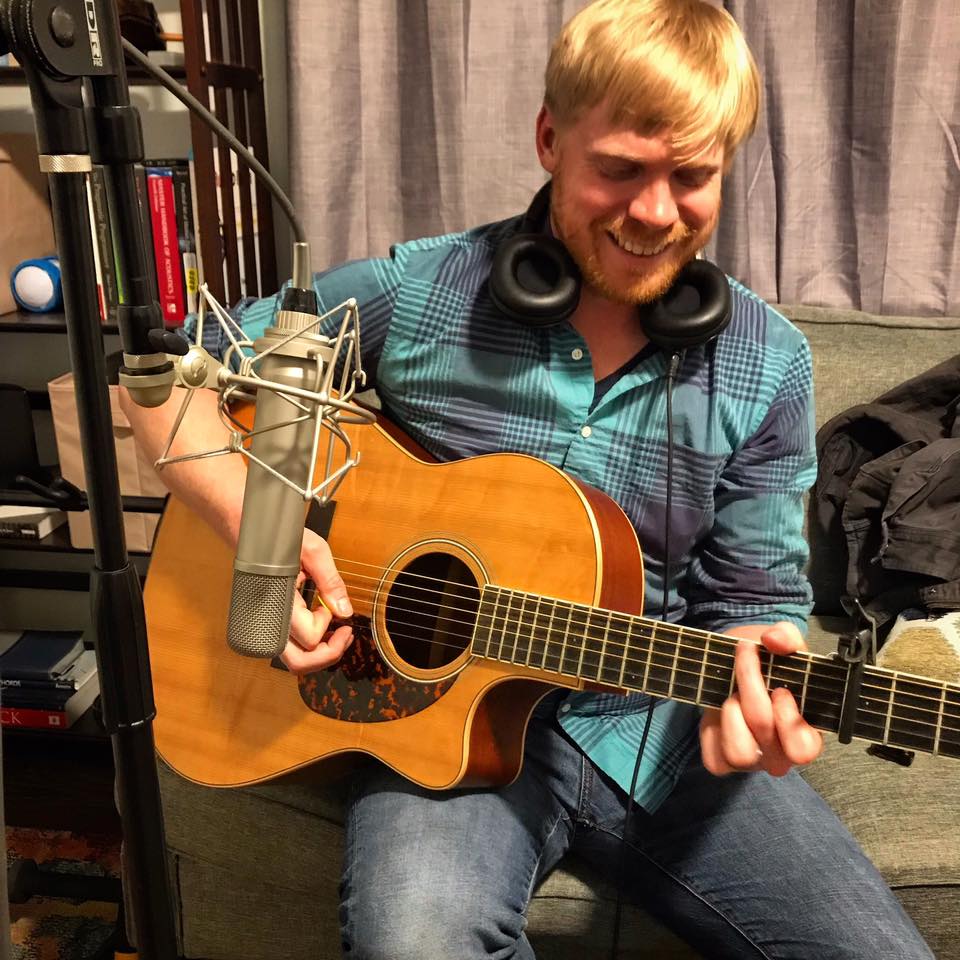 Dr. J: Where do you often derive inspiration to make music?
It’s a cliché answer, but life and the human experience. I think the most interesting stories aren’t necessarily about these big and bold characters or events that everyone has heard about, but everyday thoughts and emotions. Lyrics usually stem from a conversation, or a phrase of some kind that I overheard and made me think about what it means. The music comes from an emotion or feeling, and wanting to fully unpack it into riffs and melodies.
 Dr. J: How would you describe the music that you typically create? How has that process evolved or changed over time (especially as you think about your journey from Our Undivided Attention to Summer Slowly)?
TF: The band has a lot of inside jokes as to what kind of music we make, like “arena emo” or “blackened pop punk” or “post orgcore” etc. I think Our Undivided Attention is an interesting experiment in us trying to figure it out. I think half of that album fits nicely with what we do now, and half of it sort of missed the mark for what we were trying to do. At current, we’re a rock band because we play distorted guitars and bass and drums. There are pop elements, there are punk elements, there are Iron Maiden guitar solos and Taylor Swift hooks (I mean, we wish). With this album, we tried to sort of throw the parameters out the window and just make cool music.
Dr. J: What is next for you musically? How would you describe your thoughts at this point for your next project after Summer Slowly?
TF: At current, I think I’m going to take a break from Benchmarks. With the pandemic still in full force, there are no tours or shows to happen anytime soon, so I’m going to take the opportunity to focus on some different projects. I’ve sort of unintentionally started an internet melodic black/death metal band, so I’ve been demoing that. I have a lot of songs that don’t necessarily fit into the Benchmarks format, so I may try and put them together and release some solo material. After it took so long to construct this album, I want to try and do something completely different and just put out as much music as I can, as it comes up, regardless of how it fits together genre-wise. If I write a metal song, I’m going to record it and put it out there. If I write a folk song, I’m going to record it and put it out there. No sense of waiting anymore. Hopefully we all survive the next year or so, and maybe I’ll be ready to put together another full-length Benchmarks record.
Dr. J: What is your favorite song to perform? What makes it a current favorite in your
performances?
TF: This is a hard one, because Summer, Slowly contains so many of my favorite songs, but almost none of them have been performed live, and certainly not since the album has been out. On the Our Undivided Attention tour cycle, we often closed with “Next Year”, and it was really fun to have the anticipation build to the crescendo of that song. It’s a fitting parting song, and usually some of the other bands and members of the crowd would jump on stage with us and sing the lyric “I know next year things will be better”. It sort of captures the intention of that song. We’re here, and things are loud and noisy and messed up, but we’re all together.
Dr. J: What is one message you would hope that listeners find in the unique nature of your latest music?
TF: What I hope we capture in our music is a sense of belonging and companionship. We’re not the best band out there, but we’re not in it to be the best. Whether it’s aggressive or contemplative, we just want to make music that makes us feel good, and hopefully makes the listener feel good too.
Dr. J: As a musician, how are you adapting to the challenges of the Coronavirus?
TF: What I hope we capture in our music is a sense of belonging and companionship. We’re not the best band out there, but we’re not in it to be the best. Whether it’s aggressive or contemplative, we just want to make music that makes us feel good, and hopefully makes the listener feel good too.
You can follow Todd Farrell and Benchmarks on various social media including:
Facebook Twitter at @benchmarksmusic Instagram at benchmarksmusic
 We want to extend our sincere gratitude to Todd for answering our questions and continuing to make some really excellent music! Click on the links throughout the article to visit Benchmarks’s Bandcamp page! If any musicians or artists would like to participate in future ’11 Questions’ columns, please feel free to email us at drjytaa@gmail.com. All photos and images courtesy of Todd Farrell/Benchmarks.

 The band has been incredibly active from 2005 – 2019, releasing several excellent Midwestern indie rock album including the fantastic On The Way to the Punchline, the powerfully inventive Woodpecker Paradise and the amazingly accessible and catchy, Disco Maroon. In a just musical world (do not hold your breath waiting!), Disco Maroon would have produced top 40 singles with ‘Hang Up’ and ‘My Little Crowd Pleaser.’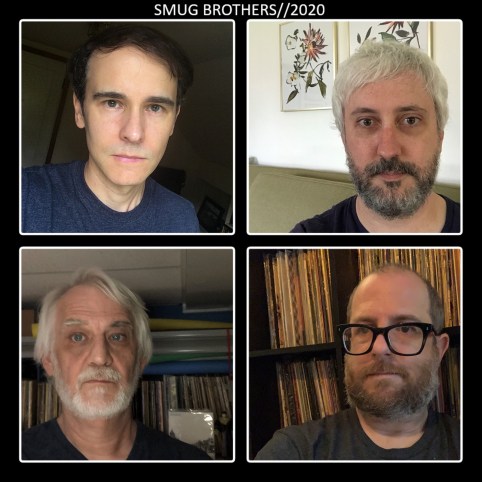
 Dr. J: What can you share with us about when and how you started writing the latest album Room Of The Year?
 so comfortable using without asking what it means to be so dependent. I am thinking Radiator One, Good To Know Your Axis and Freshman Zephyr lyrically raise questions about technology. Would you say that is accurate? What themes were you addressing?
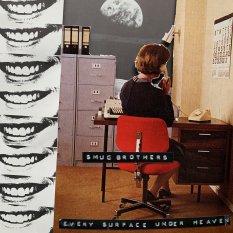 Dr. J: How would you describe the music that you typically create? How has that process evolved or changed over time (especially as you think about your journey from Attic Harvest to Serve A Thirsty Moon to Flame Verbatim and Room of the Year)?
 KM: Not playing shows has been a real bummer this year. First year since I started playing in bands in 1992 that I won’t do a single gig. But there’s always time to work on music and I’m grateful the four of us figured out how to work remotely to keep the ball moving. I miss “the Brothers,” but we did a Zoom call recently just to have a hang. That’s what band practice is like in 2020.
 This past March, The Paint Splats released a terrific EP
  Life goes on
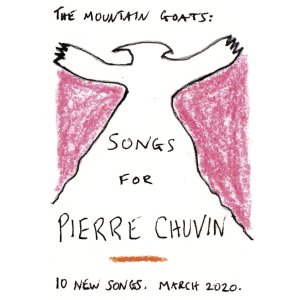 The Mountain Goats – Songs for Pierre Chuvin

 Dr. J: What can you share with us about when and how you started writing your latest released song, “
 Dr. J: A previous song “
 Dr. J: How would you describe the music that you typically create? How has that process evolved or changed over time (especially as you think about your journey from the album “
 KW: I’m spending time working on myself. It’s leveled the playing field – No one can tour. We only have our songs now. I’m honing my craft and trying to elevate my work so it’s more than just noise. I think you have to practice being honest with yourself, and this is one of those difficult times when no one can really ‘look away’ we can only look at the problems we’ve created for ourselves as a society. I don’t like saying that we’re going to ‘get a lot of good art out of this (quarantine/the COVID crisis)’ because artists are under the same kind of pressure everyone else is, and our industry was collapsing years before COVID. Touring was one of the last ways musicians could make money. Artists can’t survive on streaming royalties- please directly support the artists that you like if you want them to continue making music. Between the death of album sales and now touring, we sure could use a break. I just want to survive this in more ways than one.
 Every month Dr. J write a run down of 8 to 10 singles that came out the previous month.
 It would be wrong to pigeonhole High on Stress, they pay homage to their city and at the same time transcend the categorization that comes from the label of Minneapolis music. Consider checking into their earlier records especially ‘

 Let us take a moment and introduce our latest feature, Short Takes. We are asking musicians, artists, DJs, writers,
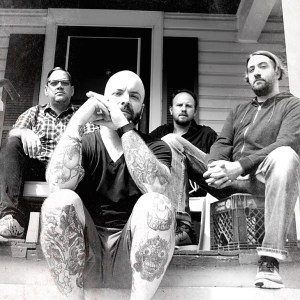 As quarantine and social distancing continue, as the world burns around us, and as I find myself filled with more and more rage over the ignorance and injustice in our county, I have found myself searching deeper in my music catalog for little nuggets of joy. Songs that remind of the past. Songs from simpler times. The thing is, there were never simpler times. Just different times. That being said, there can often be comfort in nostalgia, joy in discovering something new, and a new wave of emotions caused by a song listened to in a different phase of life.
 As I watched all the videos and reminisced about wrapping tin foil around my boom box antenna to pick up
 Last but not least, ‘Dyslexic Heart’ by
 MB: Absolutely. I wanted to write a Bob Pollard song. If you listen to the song again, you’ll notice it has no chorus. Part of that was a mild form of protest against “the music business”… so much of the advice that gets thrown at songwriters takes the form of someone saying “don’t bore us, get to the chorus”… First, if someone is bored because the chorus didn’t happen during the first 20 to 30 seconds of a song, thta’s not a person that I think I want to be listening to my music. Second, how about no chorus at all then? The structure of the song is A A B C. There are plenty of Guided By Voices songs that are quite brief and have no chorus, but they’re catchy anyway. With that in mind, part of this was definitely meant as a form of admiration for Bob and his work, I kind of hope he hears it someday. I like to imagine it as a GBV song, and I can kind of see Bob doing that little hopping dance he does. The outro is heavily influenced by Fountains Of Wayne. That lead riff is played on guitar, but it could just as easily have been played on synth, after all, I wrote it on a piano. You’ll find some synth leads in their catalog. I also wanted a bunch of harmony vocals in there, which you’ll hear all over Fountains Of Wayne songs. All of the above to say that I wanted to take some of the things from these specific influences, but end up with a song that still sounds like ME, and I think we were able to get that done.
 Dr. J: How did the song come together musically for you?
 Dr. J: How would you describe the music that you typically create? How has that process evolved or changed over time (especially as you think about your journey from
  Dr. J: What is next for you musically? How would you describe your thoughts at this point for your next project after
  your tuesday afternoon alternative