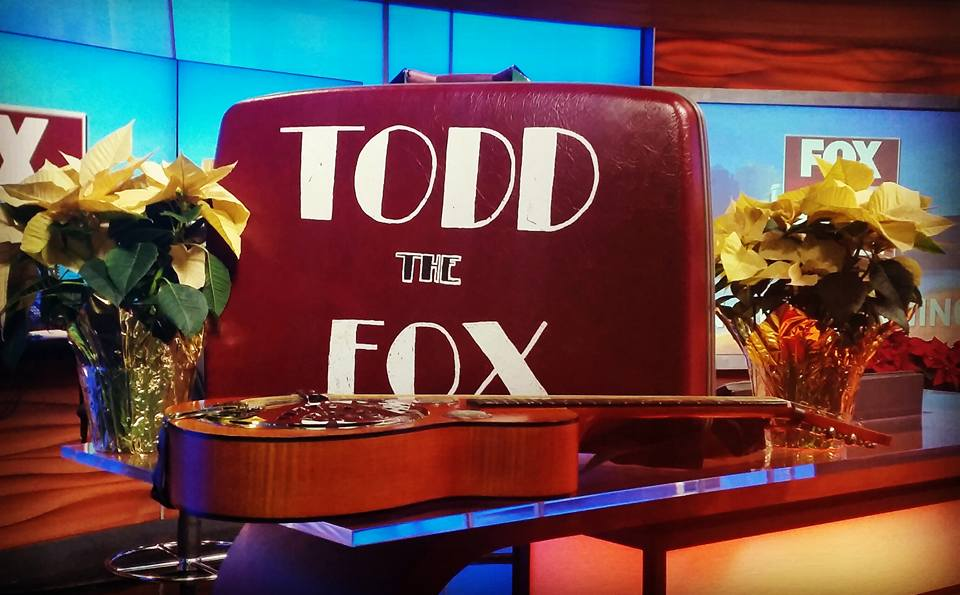
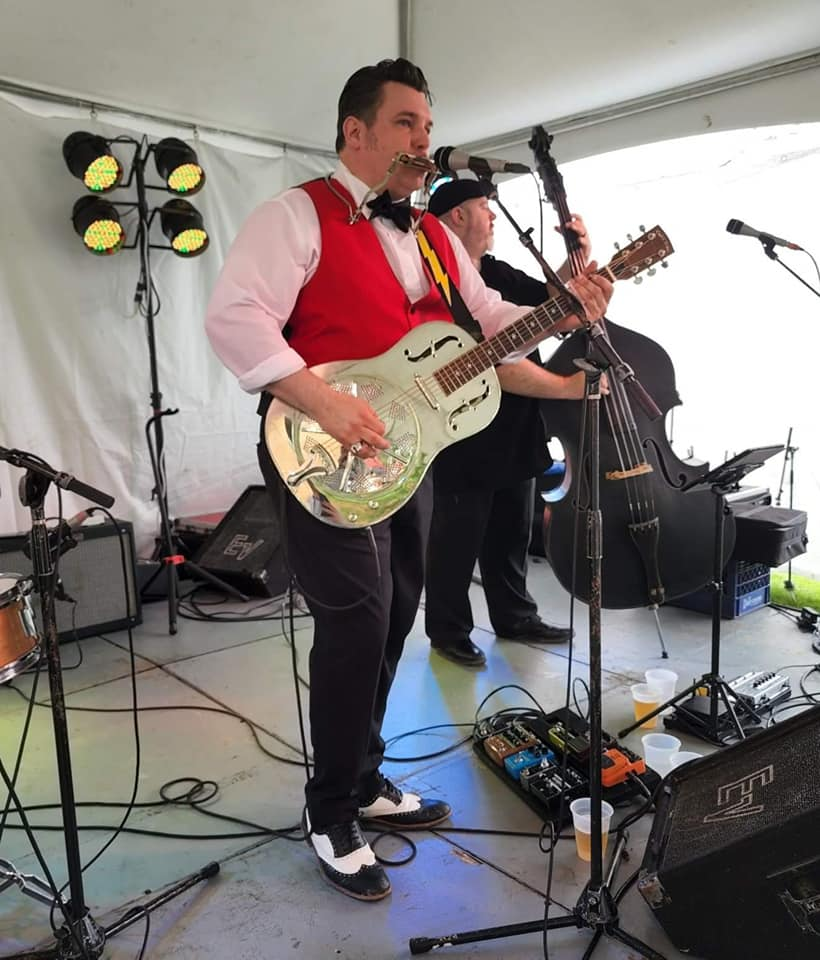
Some cities hum, and some cities grind, and then there’s Dayton, Ohio, which does both at once, like it’s chewing aluminum foil and smiling through the sparks. Out of that glorious Midwestern feedback loop comes Todd The Fox—musician, songwriter, performer, singer—padding into your ears tomorrow on Your Tuesday Afternoon Alternative from 4–5 p.m. Eastern, impeccably dressed as if from a nineteenth-century sepia-toned picture, eyes bright, ready to knock over your preconceptions and maybe a lamp or two. This isn’t a press-release animal. This is the kind of musician who lives in the alley behind the club and somehow knows your name and the story of how you met.
Let’s get something straight before the bio-police arrive with their clipboards: Todd The Fox isn’t a “local act” the way people say “local” when they mean “small.” Dayton has always been a factory for nervous systems—Guided by Voices turning beer-soaked basements into libraries of genius, the Breeders bending melody until it smiles back, far too many funk ghosts rattling the windows to mention them all. Todd The Fox comes from that lineage of people who treat songs like living organisms, not products. The music breathes. It snarls. It slips between rock and roll styles the way a fox slips under a fence: quick, quiet, leaving you wondering how it got there and beautiful.
Listen closely, and you hear a songwriter who understands the dirty miracle of rockabilly, rock ‘n’ roll, juke joint, rock AND roll, pop, and more—how a hook can feel like salvation if you let it—and who also understands how to break the hook on purpose just to see what bleeds out. Todd’s songs don’t ask permission. They don’t knock. They kick the door, apologize sincerely, then steal your favorite record and give it back with new fingerprints. There’s classic melody here, yes, but it’s the kind that’s been roughed up by real nights and real mornings, the kind that knows the difference between romance and survival.
Performance-wise, Todd The Fox doesn’t “take the stage” so much as make it a living room and then light a match. There’s a physical intelligence to it, a sense that the body is another instrument and the crowd is a choir that doesn’t know it’s rehearsing. You don’t watch so much as get pulled into orbit. To call him a showman would truly understate it. That’s the secret sauce: the generosity. Even when the songs bite, they’re offered with an open palm. You’re invited to bleed a little, too. It’s communion with better jokes.
And here’s the thing the algorithms won’t tell you: Todd The Fox understands time. Not in the “retro” sense—this isn’t cosplay—but in the way great rock & roll always has, a kind of temporal vandalism. The performance of the songs feels like they all could’ve been written yesterday or twenty years from now, which is to say they live in the only time that matters: the one where you’re paying attention. There’s craft without fussiness, ambition without the TED Talk, and a willingness to leave the seams showing because that’s where the electricity leaks out.
Tomorrow’s hour on Your Tuesday Afternoon Alternative isn’t a content drop; it’s a rendezvous. Radio still matters when it’s alive, when it’s a room you can step into and feel the air change. From 4–5 p.m. Eastern, Todd The Fox comes by to talk shop, spin yarns, and let the music do what it does best: make a mess and call it truth. Expect stories that zig when you think they’ll zag, expect songs that refuse to sit still, expect the kind of conversation that remembers radio is a human act, not a playlist with a personality disorder.
If you’re tired of music that arrives pre-chewed, if you miss the feeling that something might go wrong in the best possible way, tune in. Todd The Fox is the sound of a city, of a tradition that learned how to survive by inventing its own fun, the sound of a songwriter who trusts the song more than the strategy. There’s wit here, and bite, and that elusive thing critics pretend to quantify: soul. Not the museum kind. The living, twitching kind that looks you in the eye and dares you to stay.
So set the dial. Clear the hour. Let the fox into the henhouse of your afternoon and see what survives. Tomorrow, 4–5 p.m. Eastern. Your Tuesday Afternoon Alternative. This is how radio remembers what it’s for.
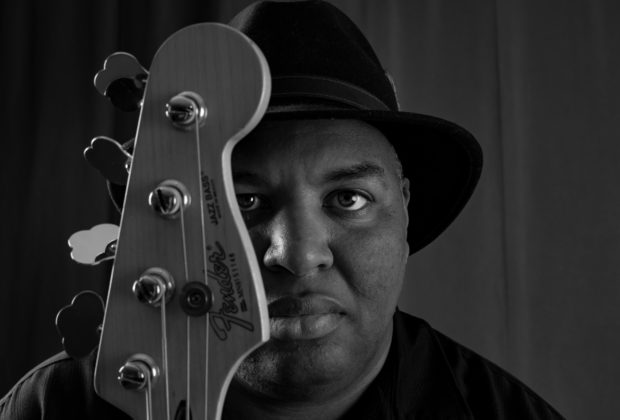
Mike Bankhead’s “Something That I Can’t Explain” doesn’t so much begin as it leaks out of the speakers, a humid, half-remembered confession that carries a feeling from basements, barroom carpets, and the ghost of every rehearsal space Dayton ever forced into existence. You don’t listen to this song so much as you wander into it, like opening the wrong door in a familiar house and finding a room you forgot was there. That’s Bankhead’s trick: he makes the local feel mythic and the mythic feel like it’s leaning against a busted amp, waiting for the others to arrive.
Dayton has always been one of America’s great under-credited noise factories, and yup, I am ready to die on that hill. We gave the world funk, post-punk, industrial weirdness, and enough basement-bred genius to stock a dozen glossy documentaries that will never get made. Mike Bankhead sits right in the middle of that lineage—not as a tourist or a revivalist, but as a lifer. He’s one of those musicians who doesn’t just play in a scene; he is part of its circulatory system, hauling gear, showing up for other people’s gigs, recording, mixing, encouraging, needling, and generally making sure the whole messy organism keeps breathing. Every scene needs someone like Mike, part fan, part musician, part reminder of the reasons people do this.
“Something That I Can’t Explain” sounds like it was written by someone who’s been around long enough to know that the best songs aren’t about clarity; they’re about staying with the confusion. Sometimes the grey area matters more than the easy answers. The melody lurches forward like it’s got something urgent to tell you and then second-guesses itself halfway through the sentence. The vocals don’t demand your attention—they sidle up to it, muttering truths they’re not totally sure they’re allowed to say. This is not stadium rock. This is backroom metaphysics.
What makes Bankhead essential to Dayton isn’t just that he writes songs like this; it’s that he’s helped create the conditions where songs like this can exist at all. Scenes don’t survive on big breaks. They survive on people who show up. Bankhead has been one of those gravitational figures who make it easier for others, strangers, and the less confident artists to take the leap. When someone tells you, “Yeah, Mike’s involved,” you know it means things will actually happen—records will get finished, shows will get booked, weird ideas will be taken seriously instead of laughed out of the room.
There’s a Dayton-specific emotional weather system in “Something That I Can’t Explain.” It’s in the way the song refuses to resolve cleanly, the way it keeps circling a feeling instead of pinning it down. Dayton’s a town that’s been promised a lot and delivered just enough to keep hoping. Bankhead understands that tension, and he doesn’t try to smooth it over. He lets it hum, like feedback you don’t quite know how to kill without losing the song.
Lester Bangs used to say that the best rock and roll made you feel less alone in your own weirdness. Bankhead does that, but he does it with a Dayton accent—gritty, affectionate, slightly suspicious of success, deeply loyal to the people who were there before anyone else cared. “Something That I Can’t Explain” isn’t just a song; it’s a little flare shot up from a city that keeps reinventing itself in basements and back rooms. And Mike Bankhead, bless him, keeps striking the matches.
They keep saying it like it’s a diagnosis, like a doctor lowering his voice: There’s no good new music anymore. As if the patient is culture itself, lying flatlined under a white sheet, while the rest of us are supposed to nod solemnly and accept that the last real song was written sometime around when they were sixteen and emotionally combustible. This is nonsense, of course, the laziest kind of nonsense, the kind that requires no listening, no leaving the house, no risk, no sweat, no awkward eye contact in a half-lit room where the band is setting up next to a stack of amps that smell like beer, ozone, and promise.
New music is not dead. It’s just not coming to you. It’s not ringing your doorbell or algorithmically tucking itself into your ears while you scroll. It’s happening out there, in rooms that require pants and presence and a willingness to be changed, even slightly. And that’s the real problem: new music demands participation. It demands that you show up.
The great (boy, would he hate that sentiment) rock critic, Lester Bangs, understood this instinctively. He knew that music wasn’t an artifact to be archived, but a live wire, something that crackles when bodies gather, and sound hits air, and something unpredictable happens. The excitement of new music isn’t about novelty for novelty’s sake; it’s about the shock of recognition when you hear something you didn’t know you needed until it’s already inside your head, rearranging the furniture.
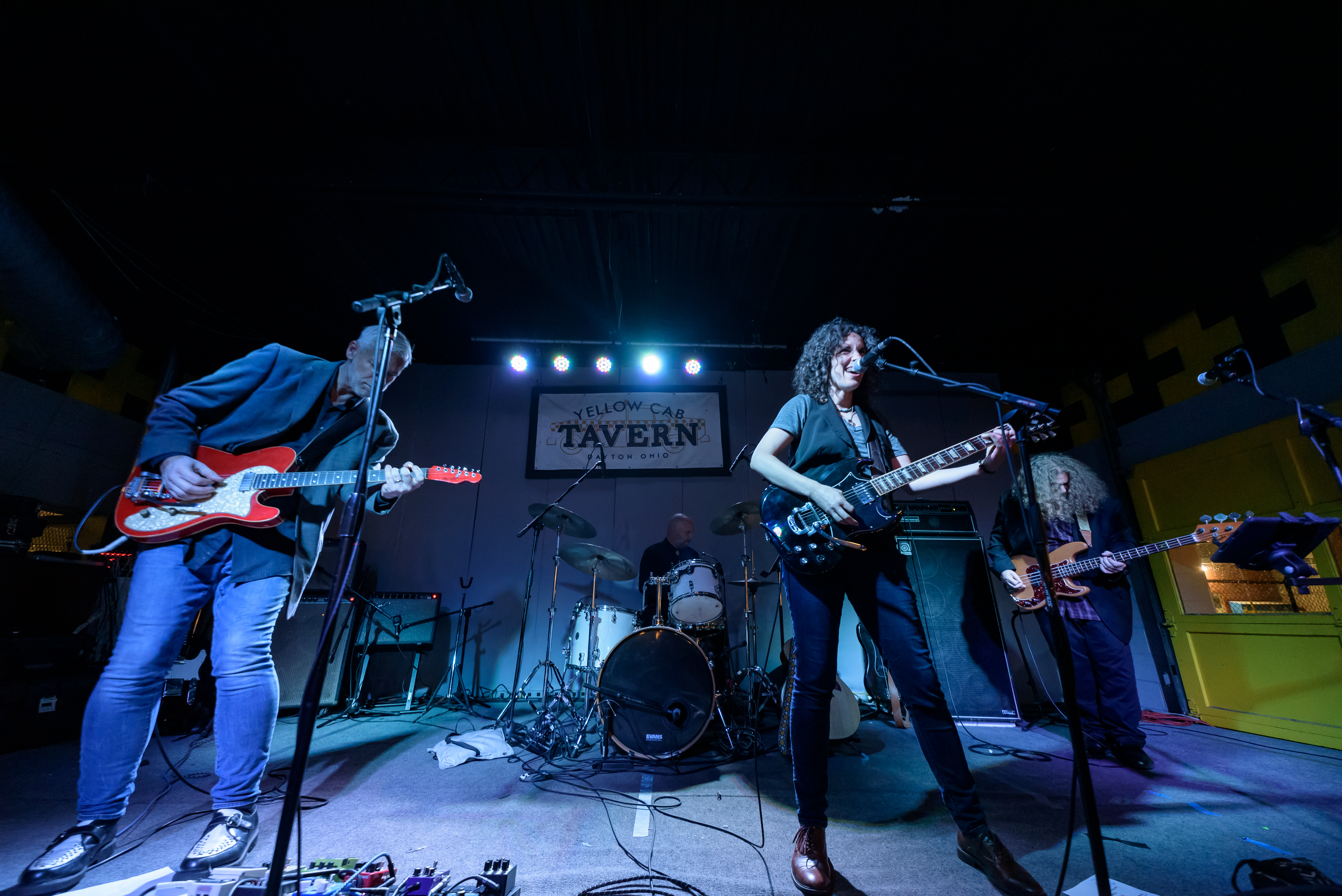
Going out to see local music—real local music, not brand-approved “scenes” packaged for export—is a civic act. It’s how communities remember they’re alive. You walk into a bar, a VFW hall, a coffee shop after hours, a basement with questionable wiring, and suddenly you’re part of a temporary republic founded on volume and intent. You’re standing next to people who live where you live, who work the jobs you know, who are writing songs not because it will scale, but because it has to come out. That matters. That changes things.
The need for new music isn’t abstract. It’s psychic. It’s the need to hear someone else articulate the same confusion, joy, dread, or stubborn hope you’re carrying around without a language. No documentation, just a real human need. When people say nothing is exciting being made anymore, what they’re really saying is that they’ve stopped being curious about other people’s interior lives. They want the old songs because the old songs already agree with them. New music argues back, it’s the packaging/re-packaging of human feelings in new bottles.
And that argument is healthy. It keeps culture from calcifying into a museum gift shop stocked with endlessly remastered memories. Live local music reminds us that art is a process, not a product. Bands miss notes. Lyrics change. Drummers (guitarists, bass players, etc.) quit. Someone forgets the bridge and laughs. These imperfections are not flaws; they’re evidence of life. They’re proof that the thing you’re witnessing hasn’t been fully decided yet.
The positive consequences ripple outward. You support a venue, which supports staff, which keeps a place open where people can gather without a screen between them. You give musicians a reason to keep writing, to keep rehearsing, to keep believing that the hours spent hauling gear and arguing about tempos aren’t insane. You create informal networks—musicians meet other musicians, shows lead to collaborations, friendships form, ideas cross-pollinate. This is how scenes happen, not because someone declares one into existence, but because enough people decide that showing up matters.
Local music also recalibrates your sense of scale. Not everything needs to be monumental to be meaningful. A great song played for forty people can hit harder than a festival set swallowed by branding and distance. There’s an intimacy in local shows that can’t be replicated: eye contact with the singer, the thump of the kick drum in your sternum, the shared glance when a chorus lands just right. You don’t leave as a consumer; you leave as a witness to something that you cannot quite describe.
And let’s be honest about the frustration. The claim that nothing compelling is being released now is often a cover for disengagement. It’s easier to blame the times than to admit you’ve stopped listening actively. The world didn’t run out of ideas; you ran out of patience. Meanwhile, musicians are still out here folding genres into new shapes, writing songs about now—about precarity, community, grief, humor, survival—with tools and influences that didn’t exist twenty years ago.
If you want excitement, you have to seek it out. You have to court it. You have to risk boredom, risk disappointment, risk being wrong. That’s the deal. New music doesn’t owe you greatness on demand; it asks for your attention in exchange for the possibility of revelation.
So go out. Stand in the back or press up front. Clap awkwardly. Buy the record/CD/download/tape. Talk to the band. Argue with your friends about what you heard. This is how culture stays porous and human. This is how a town sounds like itself instead of a rerun.
The future of music isn’t missing—it’s tuning up, waiting for you to get off the couch and walk through the door.
One of the benefits of doing a radio show is the opportunity to explore music with musicians who make incredible art. To sweeten the pot, the chance to interview musicians who write genuine songs that speak to you as a person is a gift. When Sarah Rudy who records as Hello June, agreed to answer some of our questions, we were overjoyed. Hello June’s ‘Artifacts’ was our top pick for album of the year in 2023 which was a rich year for music. What especially moves us is the authenticity of the music that Hello June creates.
The power of authentic music lies in its ability to transcend barriers, evoke emotions, and create connections that resonate deeply within individuals and communities. Sar Rudy possesses an incredible ability to create music that does exactly that. Authentic music, born from genuine expression and sincerity, possesses a unique capacity to speak to the human experience in profound ways. And this is deeply needed.
One of the most striking aspects of authentic music is its ability to communicate universal emotions without feeling false, fake or unreal. Regardless of language or cultural background, the raw honesty and genuine expression found in authentic music can touch the hearts of listeners wherever they might live. Whether it’s a quiet – yet powerful – ballad like ‘Napkin’ or ‘The Moon’, or a spiritual folk tune ‘Soft Love’, or a passionate rock anthem ‘Faded Blue’, ’23’, or ‘California’, authentic music made by musicians who themselves feel what they are playing has a way of tapping into shared feelings of love, loss, joy, and longing, fostering empathy and understanding among people from diverse walks of life. We all have all felt this way. And the music of Hello June, carries all of those characteristics and even more.
Moreover, Hello June‘s authentic music serves as a powerful tool for cultural preservation and expression. Through reinterpretation of traditional songs ‘Country Roads’, gorgeous guitar tone ‘California’ and ‘No Easy Answer’, and incredible melodies — the whole record! — artists preserve their experience, heritage, pass down personally meaningful stories, and celebrate their unique identities. Authentic music becomes a vessel through which cultural narratives are woven, ensuring that rich histories and traditions that do receive the favored celebrations of an ever decreasing set of themes in the mainstream music industry are not lost to time but instead are celebrated and cherished for generations to come.
In addition to its cultural significance, authentic music has the power to inspire and provoke change. As listeners we are changed when we hear this music. A whisper — ‘Country Roads’, ‘Soft Love,’ ‘The Moon’ — can be as powerful as the loudest cry in the mix of hope and despair — ‘California,’ ‘No Easy Answer’. A protest song does not always require a message to fuel social movements with anthems of resilience and hope in the face of adversity, that can be accomplished within a deeply personal statement as well. Music has historically played a pivotal role in driving social and political change. Through its ability to rally people around common experience and ignite a sense of solidarity from the ebbs and flows of pain, authentic music becomes a catalyst for action at all levels, challenging the status quo and advocating for a better world, even if the focus is in your neighborhood or your home.
Dr. J: What can you share with us about when and how you started writing music?
Sarah Rudy (SR): I started to learn to play guitar in high school, but I wasn’t truly focusing on the act of songwriting yet. It wasn’t until college, where I spent a lot of time exploring with different artistic mediums and experimenting with different forms of creating. This is where I started to really feel an affinity towards writing songs.
Dr. J: What first led to your recording music? How do you approach production?
SR: I started to craft songs on the GarageBand DAW (Digital Audio Workstation) about the same time I started writing. Using a DAW in my workflow made sense, even at that point, because I wanted to work out fairly full arrangements. I wasn’t happy with just writing the bones of the song – I needed to feel the environment that song created. I guess my thought with this has always been that if I can’t get the song to “feel right” in physical space, I wouldn’t want it released. These days, I’ve found that my process is less of a rush to the production phase of things.
For me, the daw has been an integral part of my writing, but when it comes to recording an album, I’ve let others steer the ship. I’ve loved each studio experience I’ve had, but Ive learned so much that I can’t imagine giving up that much creative control on the next one. For the next releases, I plan to record those here in our studio and I plan on pulling in some good musician/engineering friends as needed. With the next releases, I want the recordings to be as vulnerable and closeup as they can be and I feel like it’s my job to figure out how to get there.
Dr. J: The song ‘California’ captures a remarkable constellation of musical influences. The song seems to have an almost 1980s feel. Is that a correct interpretation? If that is correct, did you intend to create a song that connects to that time period? If that is not correct, how would you describe the feeling of the song?
SR: I wanted the song to have a “nostalgic” feel – that was my main goal, tone-wise. I wanted California to capture the feeling of charged love – the kind that feels exciting and scary. In order to write the song, I really needed to take myself back to the “me” that existed in my 20s. I wanted the song to capture a certain hue/tone/light – I love that it takes you back to a particular place.
Dr. J: Where do you often derive inspiration to make music?
SR: I like to be completely focused, immersed, and filled up by the things I’m working on. If there is a thought, a line, a feeling, anything that sparks something in me that makes me tilt my head or feel a bit of magic, I usually feel inclined to chase it. I have found though, that the hardest thing is pulling inspiration from an anxious or avoidant mind, so in order to allow myself the freedom to create, I try to practice self awareness and allow myself the grace to come back to an idea if my mind/body isn’t in a favorable state to produce something meaningful. In terms of what I’m writing about lately – this week I’ve written a song that nods back to a time in my childhood and another one about feeling sort of feeling like an outsider. I guess I’m always just trying to process the thoughts that go through my mind.
Dr. J: How would you describe the music that you create? How has that process evolved or changed over time (especially as you think about your journey in the last few years)?
SR: Hmmm – great question. I usually tell people that we are an “indie rock band” that has been accepted in the Americana crowds. Live, we like to get down really soft and vulnerable and we like to bring the volume up just as heavy in those big parts. I love to marinate in the details of ambient sound, so that aspect usually isn’t too far away. I try to write songs that heal my head because i do feel like we’re all sharing around ideas and latching onto the ones that resonate with us. I guess I just hope that I get a chance to resonate with the right people.
Dr. J: What is next for you musically? How would you describe your thoughts at this point for your next project or release?
SR: I feel like I am just now really starting to understand who I am as a musician, as a singer, and as someone who is committed to living a creative life. I just had a few really exhaustingly rough months – this industry is tough. I do, now though, feel like I can clearly see my path forward, and I haven’t felt that, until now. I feel strong, autonomous, and I’m moving with purpose and allowing myself to nurture my creative spirit in ways that I haven’t felt able until now.
We will be launching a Patreon here in a month or two and I couldn’t be more excited about all that comes with it. We’ve labored so much over these thoughts. My next moves, including the Patreon, are a shift away from asking the industry to see me. The industry isn’t healthy enough for anyone to lean on, so leaning seems like a bad idea, right? To me it does, and I’m unwilling to spin my wheels anymore, I guess. I want a conversation directly with my fans. I want a way to build a community up in the way that I want to – not what someone else thinks I should be doing. It’s maybe an unglamorous and practical way to see it, but I hope to be a voice in this realm and I believe we need more alternatives thrown around. My hope is that my fans (and others) begin to see that the industry only serves the very top artists – the rest are hoping, floundering, and making bad decisions that they feel like they have to make, just to be seen. As an artist, you’re told many things you “need to do” and a lot of these things are distractions from what we should be spending time on. I’ve built a strategy that is not reliant on any industry because I refuse to be dragged around, and that’s where I felt I was.
That all being said, I am working on my first solo record. I am separately working with a small group of people on a brand new Hello June record. What’s more exciting to me than that is how much I’ll be incorporating Patreon into these releases. For instance, one perk of the Patreon that I’m super excited about is letting our fans in on our process. By that, I mean, incorporating them into the process – they will get access to bits and pieces (say, a verse and a chorus in length) and they’ll be able to choose which songs we move forward with as a band. We’ll then get to work and have “fly on the wall” sessions where they are invited to watch the next steps of the process. We’ll come back around to everyone with full songs, and some those full songs will eventually be released. I’m hoping to bring my fans closer to the project, be creating more than I am “content posting” and really grow and learn as musicians and artists in the meantime.
Dr. J: What is your favorite song to perform live? What is your favorite song to perform in general? What makes that song a current favorite in your performances?
SR: I think I’ll always be fond of playing “Handshakes” live – the flow of that one live is just really really fun. When people lock in with me, it’s as if we’re actively having a conversation and they get me. They hear me. The same goes for Interstate. That song has bridged gaps and has healed my heart in ways that only sharing that song with fans would have allowed. I love looking out to audience and knowing that our experience is shared. I’ve had many beautiful experiences with this song.
We also have a currently unreleased song called “Another Life.” We decided not to put it on Artifacts, but it’s been a fan-favorite since we’ve played it live. It stems from the same story-line as “California,” so I’d say you can expect a similar air to it. Our Patreon folks will get that one early for sure.
We want to extend our sincere gratitude to Sar Rudy for answering our questions and continuing to make truly authentic excellent music! Click on the links below the article to visit Hello June’s social media or to listen to the songs that we discussed! If any musicians or artists would like to participate in future ’Questions with…’ columns, please feel free to email us at drjytaa@gmail.com. All photos and images courtesy of Hello June.
Neo American Pioneers visited Your Tuesday Afternoon Alternative on August 14, 2018! The band joined us for an interview and were kind enough to play a few songs for us! Happy to report that they are hard at work on a new record!
We wanted to both thank Sean and Mark of The Brothers Kaschak for calling into the show to talk about their upcoming performances and their new EP! And yes, they are actually brothers!
You can find out more information about them on their facebook page!
Mrs. Dr. J and I want to thank Cathy over at Big Cats, Little Cats for calling into the show yesterday! You can support the fundraiser over at their blog!
Join your weekly music concierges Mrs. Dr. J and Dr. J as we discuss a vast array of new releases, upcoming new stuff, our wrap-up of area shows for the next few weeks and the upcoming 2nd Cancer Awareness Benefit featuring The Rebel Set and Sam at Eleven with Mavis Pearly on May 11th! You will want to make this show. The Rebel Set have been working on new music and we know that audible treats will be given by Sam at Eleven and Mavis Pearly.
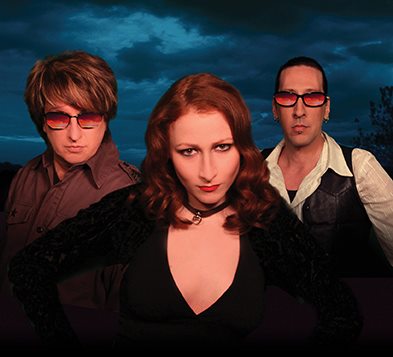
We will be joined this week by members of The Lost Patrol via the power of the magical telephone lines. If you are not listening to their new CD, Driven… well, you should be. More information for you can be found at their website: http://www.thelostpatrol.com/
Expect music from The Lost Patrol, The Rebel Set, Sam at Eleven, Mowgli, The Davenports, The View, Phoenix, Son Volt, Phosphorescent, Billy Bragg, The Dandy Warhols, Amanda Palmer and the Grand Theft Orchestra, Foxygen, Ex Cops, American Authors, The Pillowfights, and much more!
Our on-air discussion question for this week: The first indie song or band that you fell in love with was…? What was that song that showed you that there was new and exciting music that was not pre-packaged and then sold to you? So, help us help you with a batch of new music releases and musical self discovery on Your Tuesday Afternoon Alternative on wudr.udayton.edu! See you there music lovers!
Streaming Forward, Powered By The Past - if you love the 80s music, new music, Eurovision, cheesy pop and awesome playlists then let's get this pop party started!










 your tuesday afternoon alternative