
If you want to understand American music, you don’t start in the places that market themselves as capitals. You start in places where people have learned how to survive without being watched. Dayton, Ohio, is one of those places. It’s not a brand; it’s a frequency—sometimes distorted, sometimes melodic, often both at once. It’s the sound of basements, nondescript halls, record stores, radio studios on the left side of the dial, and people who keep making music because not making it would be worse.
Dayton has long lived with the mythology of The Ohio Players, Brainiac, The Breeders, and Guided By Voices, and rightly so. Those bands didn’t just “come from” Dayton; they carried its nervous system with them. The Ohio Players reshaped the structure of music. Brainiac turned post-industrial anxiety into neon futurism. The Breeders made abrasion feel intimate. Guided By Voices proved that lo-fi wasn’t an aesthetic so much as a work ethic—songs written because they had to be written, not because the market asked for them. But the mistake outsiders make is assuming the story ended there, like a museum exhibit frozen in amber. Dayton never stopped. It just got better at multiplying.
What makes Dayton’s music community distinct is density. Musicians don’t just play in one band; they circulate. You’ll see David Payne one night in The New Old Fashioned, another night anchoring something else entirely, as if styles were jackets you try on before walking back out into the weather. You’ll hear Rich Reuter bring the same melodic intelligence to Kittinger. You can see Howard Hensley sing the narratives of your life that you keep hidden in a private journal. You’ll catch Kyleen Downes making vulnerability sound like strength, then turn around and hear Chad Wells and Aarika Voegele in Cricketbows and Creepy Crawlers remind you that psychedelia is still a radical act.
There’s a particular Dayton knack for bands that feel communal rather than hierarchical. Shrug operated like a shared engine—power pop with muscle memory, hooks built from collective trust. Smug Brothers do something similar in an indie lo-fi manner, but with a wink, as if to say: yes, we love the song, but we also love the joke inside it. Me Time pares things down until you can hear the room breathe, while Oh Condor leans into texture and atmosphere, stretching Dayton’s sound outward without losing its spine where punk urgency meets craft instead of fighting it.

And then there’s the streak of theatricality that runs through the city—not showbiz gloss, but the drama of people who know that art is a way to survive the week. Moira thrives on that tension between polish and pulse, while Todd The Fox reminds us that music doesn’t have to be ironic to be intelligent. Novena creates music that wraps around you and takes you through the experiences that you need not categorize but live within. Ghost Town Silence and Sadbox explore all of the corners, not as cosplay, but as honest terrain. They understand that Midwestern quiet can be loud if you listen closely enough.
Dayton also knows how to honor the songwriters—the ones who can stop a room with a voice and a guitar. Shannon Clark and The Sugar balance heart and harmony without sentimentality. Nick Kizinis crafts music that feels deeply personal and belonging to all of us at the same time. Mike Bankhead and Heather Redman carry storytelling traditions forward without turning them into nostalgia acts. Charlie Jackson, Sharon Lane, and Colin Richards and Spare Change all work in that space where craft meets community, where the goal isn’t fame but connection.
What’s striking is how the city supports experiments that don’t fit easy categories. The Nautical Theme reminds us that pop intelligence doesn’t have to announce itself with a thesis statement. Motel Faces and Motel Beds (separate names, shared grit) translate restlessness into motion, road songs for people who might not leave but still want to move. John Dubuc’s Guilty Pleasures embraces joy without apology, while Nick Kizirnis’s various projects show how longevity comes from curiosity, not branding.
Dayton’s rap and hip hop scene carries the same DIY backbone as its rock underground, but filtered through sharp lyricism, lived experience, and a deep sense of place. Tino delivers verses with clarity and purpose, balancing organic storytelling with an ear for hooks that stick without softening the message. Illwin brings a cerebral edge, blending introspection and technical skill in ways that reward close listening, while KCarter operates with a commanding presence, turning personal narrative into something anthemic and communal. Around them is a broader network of MCs, producers, DJs, and collaborators who treat hip hop not as a trend but as a language—one spoken fluently across clubs, community spaces, and independent releases. Like every vital Dayton scene, it thrives on collaboration over competition, local pride over imitation, and the belief that telling your own story, in your own voice, is the most radical move there is.
One of Dayton’s greatest strengths, too often undersold, never underpowered, is the depth and range of its women songwriters and musicians, artists who write with clarity, risk, and emotional authority. Amber Heart brings a fearless intimacy to her songs, pairing melodic grace with lyrical honesty that cuts clean through pretense. Samantha King writes with a restless intelligence, her work balancing vulnerability and bite, proof that introspection can still swing. Khrys Blank bends genre until it gives way, crafting songs that feel both deeply personal and quietly defiant, while Sharon Lane carries a lineage of soul, grit, and resilience that anchors the community itself. Add to this constellation the many other women shaping stages, sessions, and scenes across the city—singers, instrumentalists, bandleaders, collaborators—and a clearer picture emerges: Dayton doesn’t just feature women in its music culture; it is being actively defined by them. Their presence isn’t a sidebar or a trend. It’s the spine, the pulse, and the future of the sound.
Poptek Records operates like a pressure valve for Dayton pop intelligence, a label that understands hooks are a form of radical communication. The 1984 Draft brings nervy, literate indie punk rock that sounds like it’s pacing the room while thinking three steps ahead—melody sharpened by urgency, guitars wired straight into the bloodstream. Jill & Micah offer a different kind of voltage: intimate, harmonically rich, emotionally precise songs that trust quiet moments as much as crescendos, proving that restraint can hit just as hard as distortion. XL427 leans into power pop’s finest tradition—tight structures, smart turns, choruses that land without asking permission—while still carrying that unmistakable Dayton DNA of grit and sincerity. Taken together, and alongside the label’s other releases, Poptek’s roster feels less like a genre exercise and more like a shared belief system: songs matter, craft matters, and community matters. It’s pop music that knows where it’s from, isn’t embarrassed by joy, and refuses to confuse ambition with emptiness.
This ecosystem works because Dayton listens to itself. Bands go to each other’s shows. Musicians play on each other’s records. Area radio, house shows, small clubs, and DIY spaces form an infrastructure that doesn’t depend on permission. You can hear that lineage in The New Old Fashioned’s country infused power precision, in Oh Condor’s punk economy, in The Paint Splats’ melodic insistence, in Guided By Voices’s expansive moods still evolving. It’s a scene where influence flows sideways instead of top-down.
If the great rock critic, Lester Bangs (who I have been reading a lot of lately) taught us anything, it’s that scenes matter not because they’re perfect, but because they’re alive. Dayton’s scene is alive in the way a good band rehearsal is alive—messy, loud, generous, occasionally miraculous. It’s alive in the refusal to wait for validation. It’s alive in the way new bands grow up hearing old ones not as legends, but as neighbors.
So yes, celebrate Brainiac, The Breeders, and Guided By Voices. You should. But don’t stop there. Pay attention to Sharon Lane, Shrug, Amber Heart, Smug Brothers, The 1984 Draft, Age Nowhere, Moira, Tino, The Heisy Glass Company, Harold Hensley, Todd The Fox, Ghost Town Silence, Sadbox, Novena, Me Time, Oh Condor, Motel Faces, Motel Beds, Mike Bankhead, Cricketbows and Creepy Crawlers, The Nautical Theme, Illwin, Khrys Blank, Seth Canan, XL427, Samantha King, The Typical Johnsons, KCarter and all the songwriters and collaborators who keep showing up. Dayton isn’t a chapter in a rock history book. It’s an ongoing argument about why music matters—and it keeps winning that argument one show at a time.


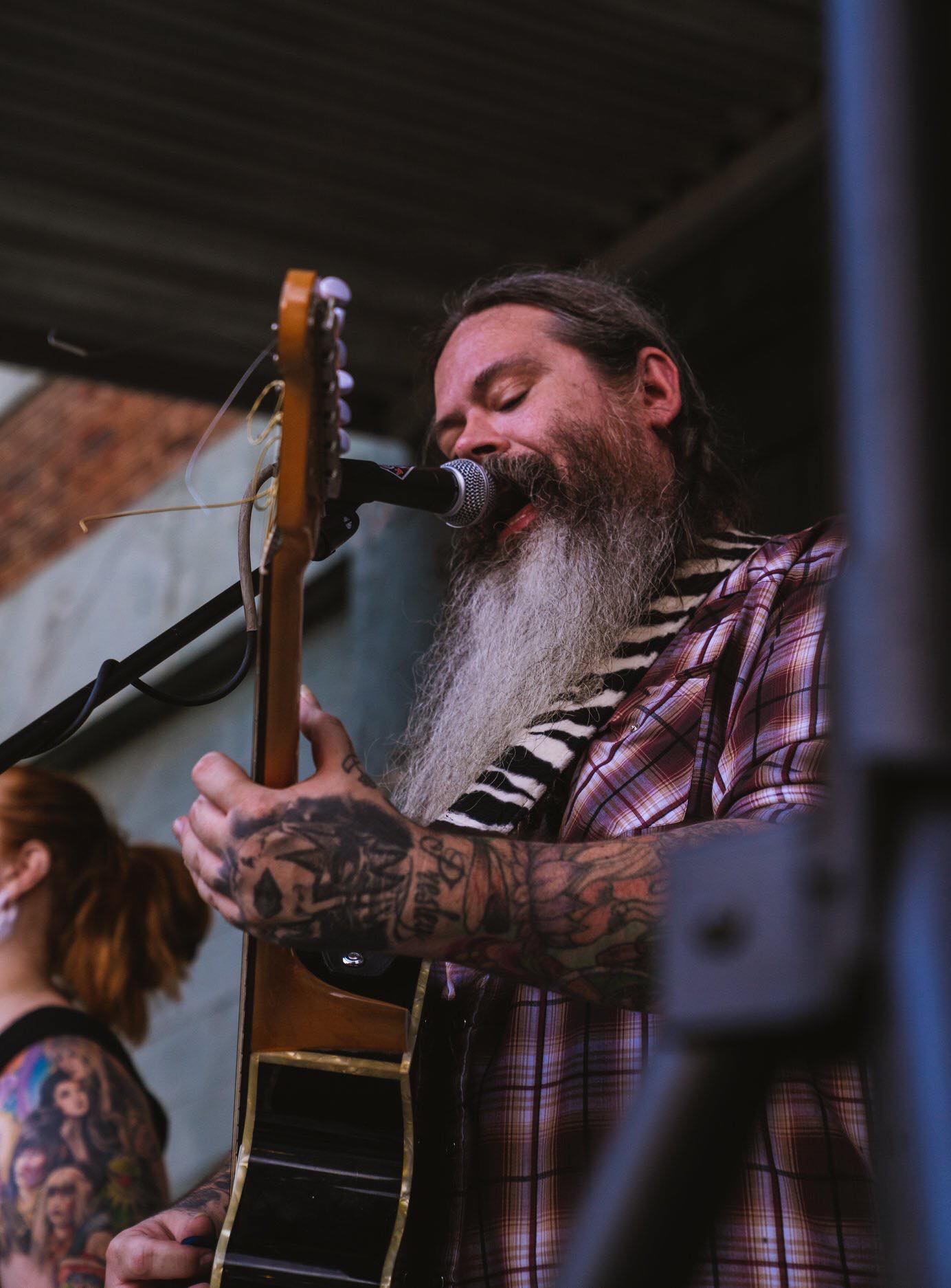
 We could not be more excited about an ’11 Questions with…’ column, then we are to have songwriter, guitarist, singer, visual artist, philosopher, tattoo artist/business owner and Revered — Chad Wells! He graciously answered these questions a few months ago. To call Chad a renaissance man is to understate all of his gifts. As with all of the musicians who are so kind to participate in this effort, we want to publicly thank him for taking the time out of his busy schedule to answer these questions!
 If you do not know the music of
  The latest Cricketbows album ‘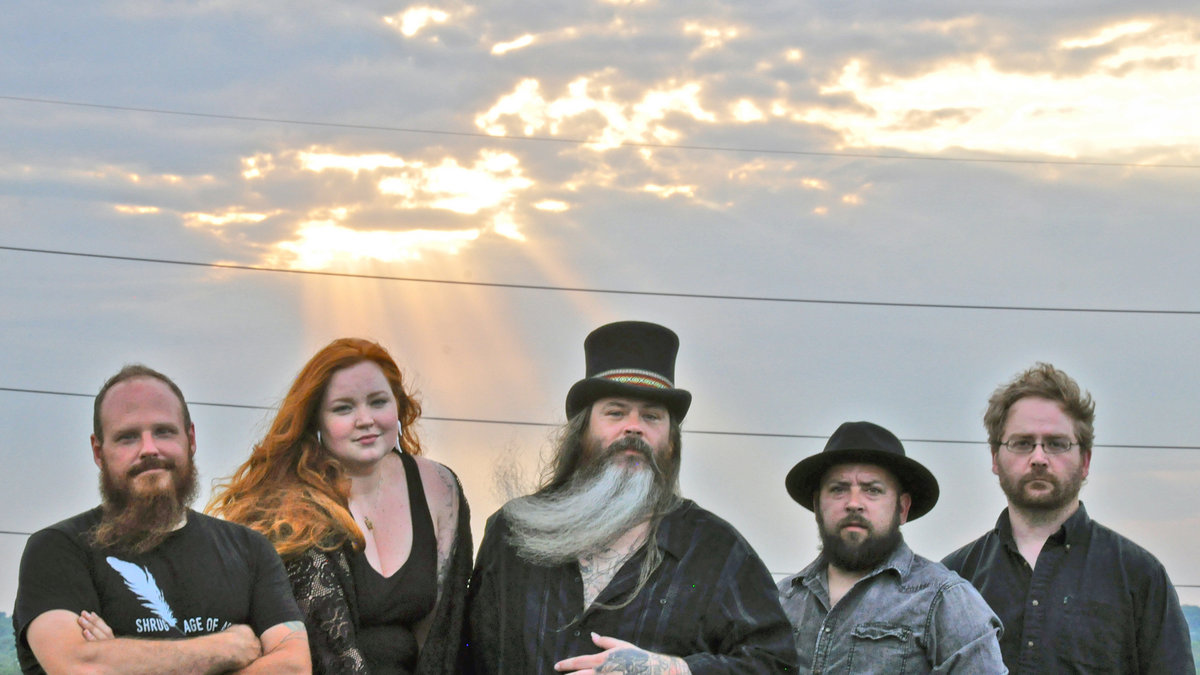
 CW: I definitely didn’t start with a list or motive to include all of those specific artists, songs or albums. I had the first line “I speak electric guitar, in fire orange and bright blue” which was a nod to the fact that Aarika and I both suffer from or are gifted with a bit of Synesthesia – a condition where sounds may be experienced in the brain as a color or shape or taste instead of just as sound. From there, I wanted to expand on that line in a direction that talked about how my mind works the way it does because I was raised in a world where Rock And Roll music was not just a backdrop to life, but was an important element of life. We weren’t religious really and we weren’t sports or military people. Everything that a so-called “normal” person might get from those family traditions and lifestyles, I got from Rock And Roll – so I tried to touch on some of the cornerstones and recurring images and symbols of that part of my upbringing. So I reference the “lightning” of “Elvis and Bowie and Frehley” as well as referring to The Beatles as the “Saints” I say prayers to along with nods to everything from Fats Domino to Pink Floyd.
 Dr. J: Where do you often derive inspiration to make music?
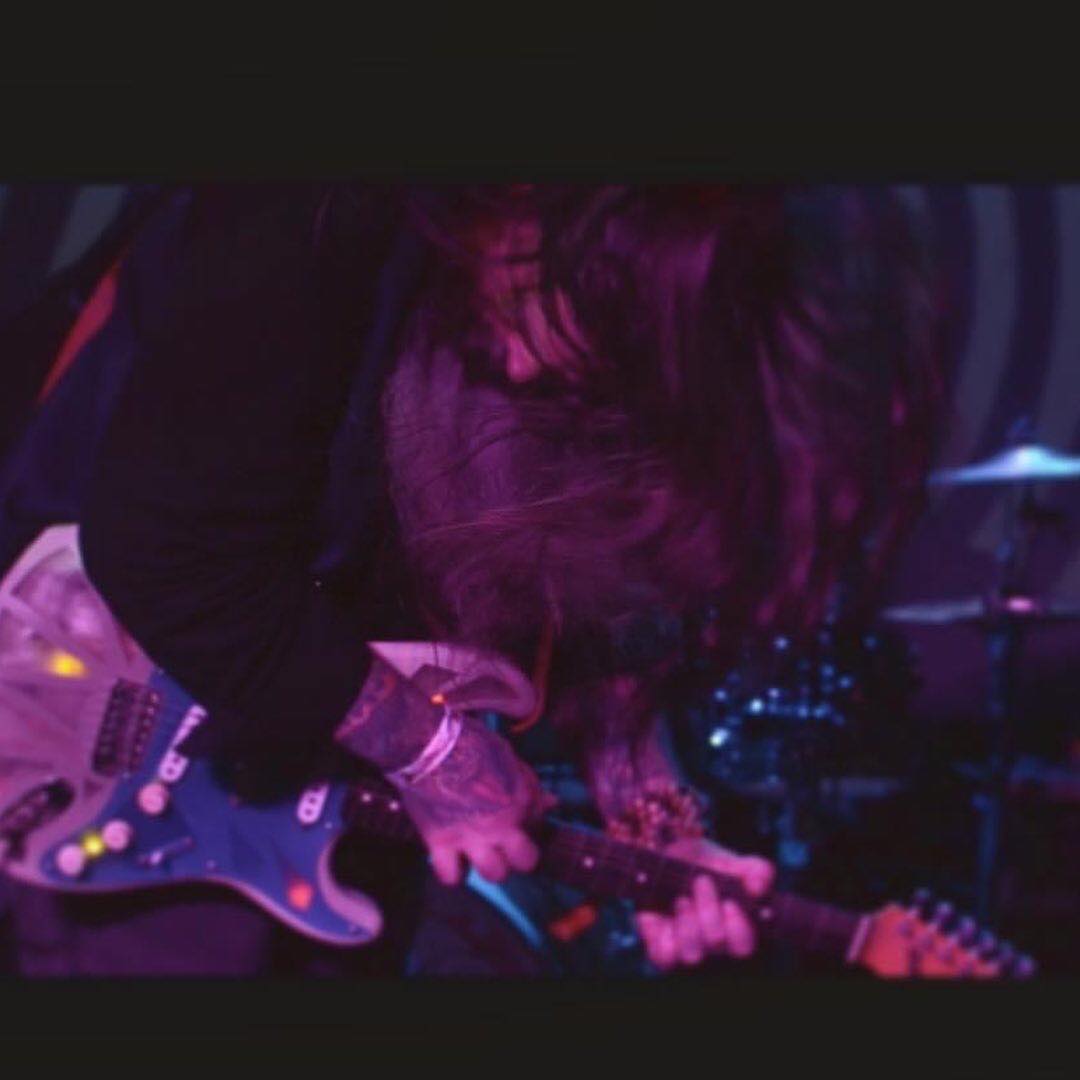 CW: I have no idea how we’re going to move forward with a new record in the current state of the world. I hope that vaccines work and that we’re eventually able to be in a room together again. If not, it’s going to be some interesting home recording stuff. We have been playing around with some cover songs recorded remotely. We released a Black Crowes (“Good Friday”) cover back around the beginning of the Pandemic and lockdowns and it was pretty fun and interesting. We have a couple others in the can that we may or may not release. One is a cover of “I Think We’re Alone Now” that is pretty fun. Side projects are also a thing. Aarika and I do a couple different projects together that work well as far as remote recording and things like that – New Way Vendetta, a new-wave influenced electro-punk band and Wells & Watson – a darker Americana themed acoustic project. We have plans to release a bunch of stuff under a bunch of different names in the near future. As for Cricketbows, we’ll just be patient and see where it all goes.
 We want to extend our sincere gratitude to Revered Wells for answering our questions and continuing to make some really excellent music! Click on the links throughout the article to visit Cricketbows’
  Today’s Short Takes come care of the Reverend Chad Wells. He is in many ways a polymath — songwriter, artist, musician, tattoo artist, business owner, reverend and more. Chad is an accomplished musician with his band

 And On That note…
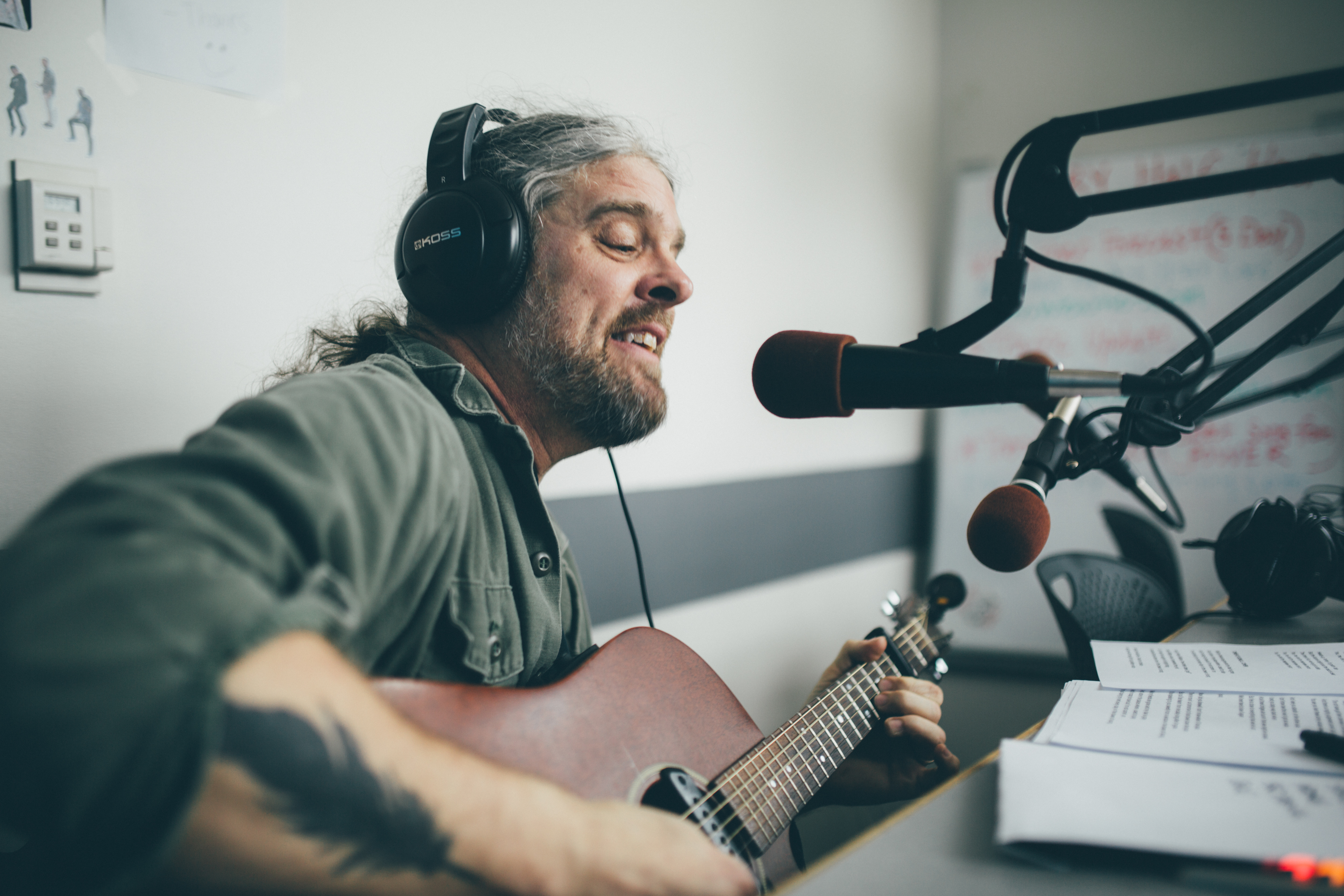
 This week on Your Tuesday Afternoon Alternative, Dr. J is playing new music from Cricketbows, Manray, Lillie Mae, The Castros, Arcade Fire, Lioness, Jesse W. Johnson, Tomas Pagan Motta, The New Pornographers, Dearly Beloved, Dan Auerbach, Lia Menaker, The Afghan Whigs, Joe Anderl, Debra Devi, Alvvays, The War on Drugs, The Texas Gentlmen, Mare Island, Chain & The Gang, The Good Graces, Beach House, Vandoliers, Tigerdog, Shabazz Palaces, Salvadore Ross and more. Because who does not want more music in their life?
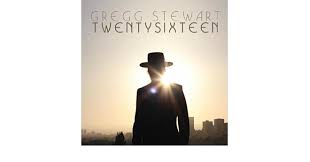 Also on tap for the program is a very cool cover of ‘You Spin Me Round’ from Gregg Stewart. This sounds completely different than what Pete and the boys in Dead or Alive came up with. And Mr. Stewart has an an entire record of covers from artists who passed in 2016, appropriately titled ‘TwentySixteen.’
 And since attendance is mandatory at the Company Man Retreat on August 4th we have a few songs from Company Man in the set! We cannot wait for our net worth to move from boring billions to terrific trillions! Thanks CO man!
 Our featured video is of


 your tuesday afternoon alternative