Short Songs Have Every Reason to Live

Apologies to Randy Newman for the title, I just could not help myself. We all love a good, long album, don’t we? The sprawling epics, the suites, the ambitious arcs that stretch into the horizon like the great classic rock composers, forever nudging us to find meaning in the slow build, the dramatic rise, and the quiet moments in between. But what about the short, sharp, explosive bursts of sound? What about the brief moments when the band isn’t asking you to follow them through a journey or listen to their complicated metaphors for life? No. These songs grab you by the throat, punch you in the gut, and leave you feeling strangely satisfied, if not slightly unsettled. They take less time than most elevator rides, yet they can leave an emotional scar more enduring than any prog-rock symphony.

So what is it about these short songs that keeps us coming back for more? Why do they work on us so profoundly, often without the luxury of extended introspection or complicated arrangements? Perhaps it’s because they are the sound of life itself—imperfect, intense, and fleeting. Some of the joy is in the very fact of existence. As much as the towering albums of our favorite bands represent a broader spectrum of emotion, there’s something brutally honest and pure about a song that cuts through all the clutter, hits you, and leaves. Let’s take a look at the power of these little bangers, and why they can sometimes be the most influential songs in the world.

Short Songs: The Art of the Quick Impact

Lester Bangs, god rest his sarcastic and critical soul, understood the beauty of brevity. Bangs wasn’t one to be bogged down by theory or length—he appreciated the visceral punch of the immediate, unfiltered emotion that comes from a quick blast of sound. Short songs demand attention, forcing listeners into an intense, often surprising relationship with the music. There’s no room for pretension or self-indulgence. The song either works, or it doesn’t. It’s just you and the music, for as long as it lasts—maybe a minute, maybe three, but never more. The art of the short song lies in its ability to do something profound in a limited time frame, leaving you with a lasting impression, or even a gnawing feeling, long after the final note has passed. This is something that Robert Pollard is an undisputed master of.

Consider a song like The Ramones’ “Blitzkrieg Bop.” It’s barely two minutes long, yet it feels like the embodiment of youthful rebellion, an anthem that encapsulates everything that punk was about—raw energy, simplicity, and urgency. You can hear it, and it’s already over before you’ve had time to think about it. The beauty of this lies in the idea that this song doesn’t ask for reflection, doesn’t demand your intellectual labor, and doesn’t beg for analysis. It just exists—a blur of riffs and hooks that sums up a generation in its frantic sprint.

The brevity of such songs allows them to penetrate deeper than a 10-minute waltz ever could, or at least with more immediate results. A song like “I Wanna Be Your Dog” by The Stooges, which comes in at just under three minutes, does more in those 180 seconds than most of the bloated albums of its time could ever hope to accomplish. It’s simple, dirty, primal, and unrelenting—stirring up more in you in a few short moments than you might expect from an entire album. The impact of these songs is often direct, like a cold slap in the face, forcing you to reckon with them immediately.

The Radio Effect: Why Short Songs Work on the Airwaves

Here’s the thing—short songs don’t just get to your head. They get to the ears of the listener. That’s because brevity is a tool that radio stations, especially in the era before streaming, loved to exploit. The shorter the song, the more it could be played in a given timeframe, and the more it could break through the noise. The best of these songs—ahem, the ones that actually had something to say—became iconic because they didn’t overstay their welcome.

Let’s talk about The Clash for a minute. Their song “London Calling” clocks in at just over three minutes. Sure, it’s a little longer than “Blitzkrieg Bop,” but it still falls into that sweet spot where it feels like a complete statement that doesn’t need to drag on. It’s infectious, it’s compelling, and it doesn’t waste time telling you what’s wrong with the world—it shows you. The energy of the song doesn’t let you get bogged down in excessive flourishes or unnecessary complexity. By stripping away the fat, the band leaves you with pure, unadulterated punk rock power.

Even though London Calling might not be the shortest song on the airwaves, its ability to harness the raw spirit of rebellion in such a brief time makes it the epitome of what a short song can do—take over the world, turn everything upside down, and leave you wanting more. Which, let’s face it, is what we all want from a song, anyway.

The Punch and the Aftertaste: How Short Songs Leave Their Mark

Here’s the funny thing about short songs—they often don’t have the time to linger. But that’s what gives them their staying power. They are designed to stick with you, like a one-night stand that leaves you with a hangover of thoughts and feelings you can’t shake off. After just a brief encounter, they slip into your subconscious, grabbing your brain and twisting it in unexpected ways. They linger, even though they don’t have the time to do so.

Take for example, a song like “Fell In Love With a Girl” by The White Stripes. It’s a burst of electric energy that clocks in at just under two minutes. But what makes it so unforgettable is its immediacy. The riff, the rhythm, the lyrics—they don’t give you time to do anything but react. You’re in it, you’re out of it, but the song sticks with you, lingering in your head long after it’s over.

This is the power of a short song. It may be over before you’ve even had time to process it fully, but that doesn’t matter because the impact is there. Bangs would understand that these moments—these songs that don’t let you breathe—carry an emotional weight that’s disproportionate to their length. The brevity works because it doesn’t give you time to second guess, to dissect, or to overthink. It’s pure, undiluted emotion that cuts through the noise, like a sucker punch to the gut.

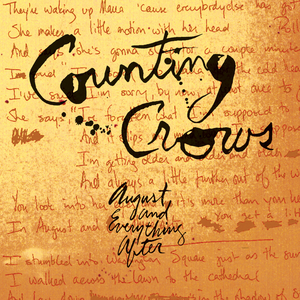
“Walkaways” by Counting Crows is the kind of song that hits like a slow-motion crash—strummed guitar and Adam Duritz’s vocals unraveling with all the desperation of a last-ditch attempt to save something that was doomed from the start. There’s a bittersweet, almost reckless honesty in the way he sadly almost pleads the lines:

I’ve gotta rush away
She said, I’ve been to Boston before
And anyway, this change I’ve been feeling
Doesn’t make the rain fall
No big differences these days
Just the same old walkaways

The rhythm is wistful and haunting, like a dream you can’t escape but desperately need to get farther and farther from it and then find you did not take a single step. It’s a beautiful mess—a reflection of how all of us bleed, falter, and still somehow move forward.

Short Songs and the Change They Ignite

Now let’s get to the meat of it—the impact these songs have on listeners. Why are they so powerful? Because they demand attention. You blink and it’s gone. In a world saturated with noise, social media distractions, and endless content, these short songs remind us of a time when music could be something immediate, spontaneous, and anarchic. They explode into your world and leave you questioning everything, and then, before you can fully comprehend it, they vanish.

They also create a sense of community. Every fan of punk rock, indie, or garage knows that feeling when you’re in a room full of people and the first few chords of a short, familiar song kick in. The energy shifts. You can feel the collective understanding—everyone knows the song, everyone knows the intensity, and it’s about to hit us all at once. That communal feeling, that shared experience, amplifies the effect of the song, making it a primal ritual, a call to arms that’s delivered in the simplest of packages.

Short songs give us permission to feel in ways that long-winded tracks often can’t. They teach us that the most significant moments are often the briefest. That intensity doesn’t have to take hours to build. That revolution, rebellion, love, and loss can be boiled down to a few lines, a few chords, a few seconds. The brevity is part of their power.

Smug Brothers’ “Hang Up” is a sweaty, gritty blast of pop-punk that comes at you like a shot of espresso chased by a beer. It’s raw, it’s relentless, and it doesn’t care if you’re ready for it. The guitars jangle like a rusty chain being dragged across pavement, while the lyrics tap into that familiar frustration, the kind that never seems to go away. But the brilliance of this song is its brevity—it hits hard, gives you no room to breathe, and then it’s gone, leaving you half-alive, craving more. It’s chaos wrapped in catchy melodies—perfectly imperfect. Smug Brothers understand the power of a brilliant song can sometimes be best demonstrated by not lingering.

The Brief, the Bold, and the Beautiful

In the end, short songs are, to borrow from Lester Bangs himself, a “shotgun blast of truth” that demands to be felt, not analyzed. They are the anthems of chaos, the rebellion of simplicity, and the embodiment of that glorious moment when everything aligns just right. These songs may be brief, but in that briefness lies their eternal power.

Bangs would’ve told you that these little ditties are a reflection of life’s fleeting nature. Sometimes, you get a moment that burns so brightly, you’re left staring at the ashes afterward, not even sure how it happened. And the short song is the perfect vehicle for that kind of magic. Whether it’s two minutes, three minutes, or less, these songs will always have something to say—something that’s too urgent to stretch out, something that can only be told in a flash, like a lightning strike across the sky.

Video of the Day: The Pinkerton Raid – A Long December

All too often critics apply a sharp, snarky perspective on music, and approach covers with a detached cold perspective. And sometimes that separation would truly miss the point. The Pinkerton Raid’s cover of Counting Crows’ A Long December needs recognition of both the emotional core and the transformation of the song. A good review would highlight the poignant ways in which the cover reimagines the original, focusing on the evolving resonance of the song in the hands of a different band, and the way the passage of time deepens its meaning.

The original A Long December, with its aching melancholy and sense of yearning for resolution, comes from Counting Crows’ Recovering the Satellites, a record defined by its bittersweet reflection on personal pain and recovery. Adam Duritz’s vocal performance, simultaneously raw and hopeful, narrates a painful yet comforting nostalgia. However, when the Pinkerton Raid takes on this track, they strip it down, peeling back the layers of polished production, leaving space for vulnerability in their own rendition.

A critic would likely notice how the Pinkerton Raid, often associated with a more stripped-down Americana sound, injects new textures into the song. Their version transforms the hopeful melancholy of the original into something a little more haunting, a little more restrained, while the song is given room to breathe the emotional release feels suffocating — it is literally breathtaking. The arrangement, grounded in folk instrumentation, slows the pace, allowing the lyrics to move, perhaps breathe, and resonate in a way that invites even deeper introspection than the original, and that is saying something. The spaciousness of the arrangement highlights the sense of emotional isolation, with each guitar strum and piano/organ note echoing a quiet sense of longing.

How covers interact with their originals is a common discussion among critics. These critics would also note how this version of A Long December recontextualizes the meaning of the song for listeners in the 2020s, giving the track a new sense of grief. In a time when shared emotional experience is often overshadowed by fragmentation, the Pinkerton Raid’s version of A Long December offers a gentle, bittersweet reminder that despite everything, we still carry the weight of our pasts with us. You can pre-save or pre-add the studio version on APPLE, SPOTIFY or DEEZER, download it on BANDCAMP, or order the physical CD or vinyl.

Screaming in the Dark: How Rock Lyrics Tear Your Soul Open and Leave You Wanting More

Rock and roll has always been a violent, all-consuming beast that claws at your insides and leaves you aching for more. But it’s not just the guitar riffs that keep you coming back; it’s the words. The lyrics, when they hit, can get under your skin, lodge in your brain, and make you feel like you’ve been struck by lightning—or a falling star, depending on how poetic you want to get. The best rock songs are often the ones that tear down the walls between the listener and the songwriter, making you feel as if you’re walking through the fires of their soul, even if they don’t want you there.

This kind of raw vulnerability, this open wound of expression, can’t be faked. And if it is, you know it. But when it’s authentic? When it comes from a place that is somehow both personal and universal? That’s when you hear it: the sound of someone throwing everything they have into their lyrics, turning something that might just be a scribbled note into an anthem for the disillusioned.

And that’s where songs like those from The Connells, The Counting Crows, R.E.M., and The Replacements come in. They’ve got it—whatever it is. And they know how to wield it like a sword, carving out spaces for us all to exist inside their verses. It’s not just about being clever or complex. It’s about being real. It’s about making you feel something.

So what makes these lyrics powerful? Let’s dive in and break it down.

The Connells – The Beauty of the Everyday Struggle

Let’s start with The Connells. They’re like that band you heard on the radio and never quite knew whether you were supposed to cry or just nod along to the rhythm. Their song “74-75” is a classic example of lyrics that don’t just tell a story—they pull you into the middle of it, making you feel like a participant rather than an observer.

The thing about “74-75” isn’t the narrative; it’s the way it captures a feeling, a sense of longing for a time that’s already passed, a time that exists only in memory. The line “I was the one who let you know
I was your “sorry ever after”/’74-’75”
hits with the subtle melancholy of a songwriter who knows that the world they once envisioned didn’t quite turn out as expected. There’s no bitterness, no anger—just a quiet resignation. It’s not the anger of punk or the bombast of glam rock, but something more delicate: a personal and collective sadness.

This sense of fading away, of history marching on regardless of your desire to keep up, is where The Connells find their power. The lyrics don’t scream for attention. They don’t force you to accept them. Instead, they settle in, like the dust in an old attic that you haven’t bothered to clean. In a way, The Connells’ ability to articulate the passing of time, the things that slip away without us even realizing it, taps into a very human vulnerability: we can’t stop the inevitable, but we can remember, and sometimes that’s enough.

Counting Crows – The Beauty of Messy, Imperfect Souls

Counting Crows are often described as the quintessential ‘90s band, and while that might seem like a dismissive label to some, it’s hard to ignore how well they captured the emotional complexity of that era. The lyrics in songs like “Mr. Jones” or “A Long December” are imbued with a kind of longing that speaks to the frustrations of being stuck in your own head, lost in self-reflection, while also looking outward toward the world and wondering why it all feels so… empty.

There’s a rawness in Adam Duritz’s delivery, a sense of vulnerability that comes across as both introspective and confessional. In “A Long December,” Duritz sings, “And it’s been a long December, and there’s reason to believe / Maybe this year will be better than the last.” The power here isn’t just in the lines themselves but in the tone—the weariness in Duritz’s voice, the way it wavers, suggesting that this isn’t just about a bad month or a rough time. It’s about the constant cycle of hope and despair, the cyclical nature of life that repeats even though you don’t want it to. The power of Counting Crows’ lyrics lies in their ability to capture that very human struggle: the push-pull between wanting to believe things can get better and the awareness that life often doesn’t give you any guarantees.

But it’s not just about the sad, reflective moments. Counting Crows are also masters of finding beauty in the messiness of life. In “Mr. Jones,” Duritz sings about longing for fame and success, but in a way that’s almost self-deprecating, revealing the insecurity that so often accompanies dreams of grandeur. There’s something painfully human about the way he expresses these desires, especially when paired with the upbeat, almost celebratory musical backdrop. It’s as if Counting Crows are trying to convince themselves that they can rise above their own doubts, even if they don’t fully believe it. This contradiction—wanting something so badly while knowing it won’t solve your problems—is what makes their lyrics hit so hard.

R.E.M. – The Beauty of Ambiguity and Mystique

Now, R.E.M. is where things get interesting. They’re a band known for their obtuse, enigmatic lyrics—songs that you can never quite figure out, yet they speak to you as if they understand your deepest thoughts. “Losing My Religion” is the prime example of this. Michael Stipe’s lyrics are fragmented, filled with obscure references, and yet they carry an emotional weight that speaks to the very heart of human confusion and self-doubt.

“Losing My Religion,” for instance, is about more than just faith; it’s about the moment when you realize that the rules you’ve followed might not hold true anymore. The phrase “losing my religion” isn’t literal. It’s not about God or theology—it’s about that overwhelming sense of being on the verge of breaking, of seeing everything you thought was true start to unravel. Stipe’s voice doesn’t just sing these words; it resonates with the sorrow of understanding that, sometimes, there is no answer. The ambiguity is powerful because it reflects the messiness of our own lives: we’re all searching for meaning in a world that doesn’t provide any simple answers.

R.E.M.’s strength lies in their ability to articulate universal feelings—loss, confusion, longing—through highly ambiguous lyrics. You might not always know exactly what they’re talking about, but you know what it feels like. And that’s what makes their songs so potent. They create a space where the listener can impose their own experiences, their own meanings, into the lyrics, making each song feel personal.

The Replacements – The Beauty of Chaos and Rebellion

And then there are The Replacements. If R.E.M. is ambiguity, The Replacements are the messy, unpolished, chaotic force that says, “Here I am, take me or leave me. Either way, we don’t care.” There’s an undeniable power in their ability to capture the feeling of disillusionment with the world, but they do it with a defiance that borders on self-destructive. Their lyrics are often frantic, raw, and vulnerable as if the band is afraid that, if they don’t get it all out in one go, they might implode.

Take “Bastards of Young,” for example. It’s a call to arms for the disaffected youth, the ones who are always on the outside, looking in. The repeated refrain “We are the sons of no one / Bastards of young” rings with both anger and an almost celebratory tone—like a badge of honor worn by those who never quite fit into society’s neat little boxes. What’s powerful about this is that it isn’t just about rebellion for the sake of rebellion. It’s about a deep-seated sense of alienation, a recognition that the world may never accept you, and maybe that’s okay.

There’s a sense of desperation in these lyrics, a feeling that maybe the only way to survive is to burn everything down. But there’s also humor, even in the chaos, a reminder that life is messy, imperfect, and sometimes beautiful in its destruction.

The Power of Lyrics in Rock and Roll

The lyrics that make rock and roll so potent aren’t the ones that try to fit neatly into a box or explain everything away. They’re the ones that dive into the mess of human existence and say, “This is who I am, for better or worse.” It’s the raw vulnerability of The Connells’ reflections on time, the longing and self-doubt of Counting Crows, the cryptic mystery of R.E.M.’s disillusionment, and the raw, unvarnished chaos of The Replacements that make rock and roll lyrics so powerful. It’s not simply about the clever wordplay or the polished metaphors—it’s the truth, delivered with all the mess and pain that comes with it.

Rock and roll is about real emotions. And the best songs? They make you feel something, deep down—whether you want to or not. And we are all the better for it.