
The Cords: how a band turns pop instincts into craft
If rock and roll really is dead, then The Cords clearly missed the memo, because their new self-titled record kicks the coffin lid open, steals the eulogy notes, and sets the funeral pyre dancing like it’s 1979 again and tomorrow doesn’t exist. This thing isn’t just a debut—it’s a declaration, a sugar-buzzed jolt of pop-bright indie rock that doesn’t pretend to be cool, doesn’t hide behind irony, and doesn’t give a damn about whatever trend some influencer is spoon-feeding their followers this week. It’s melody as oxygen, chorus as lifeline, guitars strummed like they’re trying to shake loose every last excuse you’ve ever had for not feeling something. And thank God for that—because in a year drowning in algorithmic uselessness, The Cord showed up with color, conviction, and the kind of hooks that tattoo themselves on your spine: refreshingly infectious, all-ages indie-pop and jangle pop collection with bright, melodic hooks and irresistible harmonies.
When a band chooses to release a self-titled record deep into a career or at a moment of reinvention, it’s rarely an accident. A self-title asks listeners to pay attention: this is who we are, for better or worse. On The Cords, that gesture reads less like self-importance and more like quiet confidence. The album crystallizes a group whose greatest gift is the paradox of seeming easy: songs that land as immediate, catchy pop but reveal, on repeat listens, careful craftsmanship — arrangements that balance lift and restraint, choruses that stick without shouting, and lyrics that prize specificity over cliché.
This review explores why The Cords has quickly emerged as one of 2025’s most beloved releases (or at least for us at Your Tuesday Afternoon Alternative), examining how the record was made, what each musician brings to its radiant clarity, and how the band’s sound fits squarely—and confidently—within contemporary indie-pop and power-pop currents. Reviewers have praised the album’s effervescent hooks, bright harmonies, and early-Beatles-meets-C86 charm, calling it a reminder that joy, immediacy, and craft can still feel revelatory. By looking closely at the songs and the meticulous yet exuberant musicianship behind them, this piece makes the case echoed by critics across the board: The Cords proves that in an era of over-processed noise, genuine craftsmanship not only still matters—it stands out.
Who are The Cords?
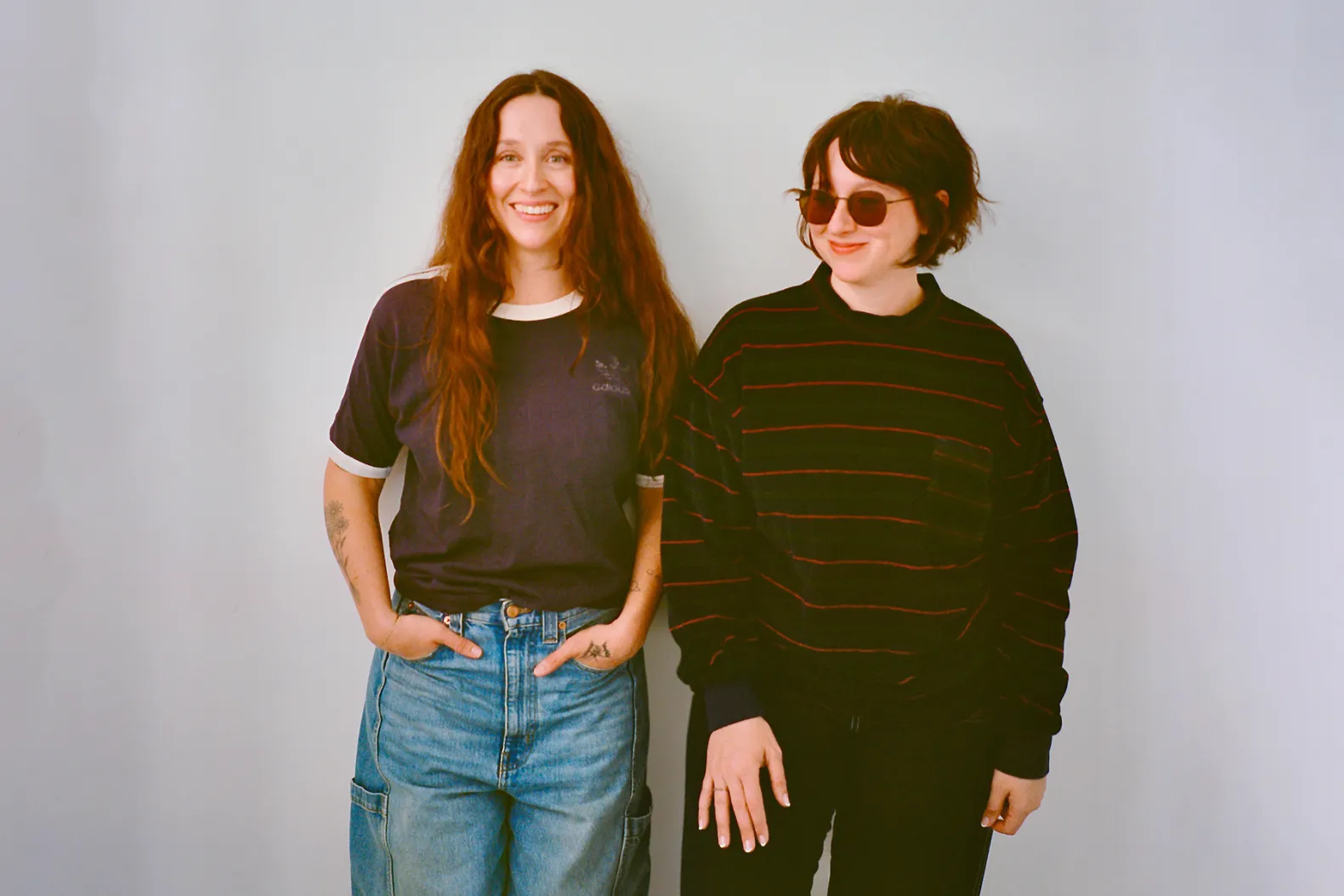
Asking “Who are The Cords?” is entirely reasonable, especially given how quickly the duo seemed to burst onto the 2025 music landscape with a fully formed sound and a debut record that feels more like the work of seasoned veterans than newcomers. Their name appeared almost overnight in reviews, playlists, and year-end lists, prompting curious listeners to wonder how a band this polished could arrive with so little advance fanfare. The question reflects both genuine intrigue and the natural impulse to understand the people behind a record that has connected so widely, so suddenly. Ok, ok… let’s answer the question directly: The Cords are a rising Scottish indie-pop sister duo, Eva (guitar, vocals) and Grace (drums and percussion) Tedeschi, known for their catchy, jangle-pop sound reminiscent of ’80s/90s C86 indie, featuring loud guitars, drums, and infectious melodies. They gained buzz in the UK indie scene, playing with major bands like Belle and Sebastian, and released their self-titled debut album this year, solidifying their place as exciting new musicians with a fresh take on classic indie pop.
So, sure, The Cords are a rising indie rock band whose self-titled debut has pushed them from regional curiosity to one of the year’s most talked-about new acts. That love comes honestly. It is built around a shared love of sharp pop melodies, jangling guitars, and choruses designed to ignite rooms both small and large. The band blends classic power-pop instincts with the earnest shimmer of modern indie. While each member brings a distinct musical background to the project—ranging from DIY home-recording scenes to more polished studio work—they come together with a unity of purpose: to make songs that feel immediate, heartfelt, and boldly melodic. Their chemistry is unmistakable, the kind of collaborative spark that makes a first record sound less like a beginning and more like a band arriving fully formed.
A band in the room, not a solo project on a laptop
One of the first things you notice about The Cords is its sense of feel. The record breathes the way a live band breathes: near-mic’d guitars trade phrases, the bass doesn’t merely hold down the root but sings counterlines, and the drums are both precise and human — they click when they should and push when the song needs momentum. That sonic chemistry suggests an actual group in a room rather than a single songwriter piling tracks onto a click-track.
On this record, the players are careful taste-makers: a lead vocalist who carries the melody with an effortless honesty; a guitar riff is economical but unforgettable; bass lines that anchor and color in equal measure; a drummer who doubles as a dynamic architect; and occasional keys and backing vocals that thicken textures without smothering them. The album’s production is shaped in large part by Jonny Scott and Simon Liddell, who not only handled the recording and overall sonic direction but also contributed additional bass and keyboard parts. Their involvement adds depth, texture, and subtle melodic detail, helping the songs land with a clarity and fullness that elevate the duo’s core ideas. That production leans toward warm melody rather than slick overprocessing — vocals swirl, the guitars ring, and harmonies bloom in native stereo. The effect is immediate and intimate, like a favorite radio station that somehow still surprises you with classic Scottish indie pop, bringing energy and authenticity to the genre.
Classic hooks, modern precision
Musically, The Cords live at the intersection of indie-pop and modern indie rock. If power-pop is the art of building irresistible choruses around smart songcraft, this record nods to that lineage while keeping its feet in the present. The guitars often prefer jangle and concise counter-motifs over endless studio tinkering with reverb; the drum sounds favor snap and presence within the mix; the bass is melodic. Production choices keep the songs forward and communicative.
What’s clever about the album is how it uses contrast. A sleek, hummable chorus might follow a verse that’s rhythmically skittish or harmonically unusual; a bright hook will sit atop an unexpectedly rueful lyric. That push-and-pull keeps songs from flattening into mere earworms. The band knows how to write a chorus that hooks on first listen, but they’re more interested in building shoulders for those hooks to stand on so the singer can mean what she has to say within the sway of the song.
Ordinary detail, emotional honesty
Lyric writing on The Cords resists broad platitudes. Instead of grand pronouncements, these songs live in particulars: a lit street outside an apartment window, the wrong song playing on a cheap jukebox, saying goodbye, not knowing what to say. Those details anchor the songs emotionally; they make choruses feel earned rather than handed to the listener.
Themes recur — the ache of imperfect relationships, the friction between wanting to leave and wanting to belong, the peculiar loneliness of modern urban life — but the band treats these themes as lived experience, not albums’ worth of slogans. There’s tenderness here, an ability to hold both humor and regret in the same line. When the chorus opens up into sing-along clarity, the words are often small but direct, the kind that a listener can latch onto and repeat in daily life.
Rather than a list of titles, the album’s architecture is worth noting: it opens with a confident, urgent cut, “Fabulist” that announces the band’s melodic ambitions; it centers itself with a pair of mid-album songs that reveal its lyrical depth while stilling rocking (“You” and “I’m Not Sad”); and it closes with a return to the jangle with a reflective piece that leaves more questions than answers, “When You Said Goodbye” — a satisfying structure that mirrors human experience rather than manufactured catharsis.
The opener works as a thesis statement: brisk tempo, jangly guitars, a pre-chorus that sets up the payoff, and a chorus that lands like a bright bruise — it’s immediate and impossible to ignore. The arrangement focuses on guitar and drums, yet leaves space for letting the lyric breathe before swelling into a harmony-rich chorus. That dynamic — economy vs. abundance — is where the record’s emotional intelligence shows. The listener feels tugged along rather than pushed.
Musicianship: pop instincts, instrumental care
One of the pleasures of The Cords is hearing instrumentalists who understand restraint within the landscape of Scottish indie pop. The lead guitar rarely indulges in long solos; instead, short melodic figures become hooks in themselves. The bass often carries melodic interest in places a secondary vocal might have; the drums use space and silence as effectively as fills and cymbal swells. These are not instrumental showpieces; they are choices made to serve the song.
Backing vocals are used sparingly but to great effect: stacked parts in choruses heighten the sense of communal voice, whereas single harmony lines in bridges add emotional nuance. Keys and synths make tasteful cameos — a pad here, a tuned key there — supporting rather than competing. The overall musicianship communicates a band comfortable with pop’s mechanics yet allergic to disposable glitz.
Production plays a crucial role in a record like this. The engineers and producers behind The Cords opt for a live-room warmth; you can hear the string of the guitar and the breath before the vocal. The mix privileges midrange clarity so the melodies cut through without overwhelming the low end. Transients on percussion are preserved to give the drums snap, and the stereo image is used to place instruments in space rather than to dazzle with effects. That sonic philosophy — preserve the room, let the song guide the mix — keeps the album feeling human. It’s pop music with a pulse rather than sterilized pop.
For whom this record is made
The Cords will appeal to listeners who prize tunes that reward attention. Fans of classic power-pop and jangly indie rock will find the hooks irresistible, but casual listeners will also appreciate the plainspoken choruses and immediate melodies. The record sits comfortably between the worlds of radio friendliness and indie credibility: radio programmers get singable choruses; critics get craft and nuance.
Younger listeners who grew up with playlist culture may be surprised by how an album built around consistent melodic logic can still create small shocks of recognition — the kind of “I know this” feeling that a succinct chorus can produce. Older listeners will appreciate the band’s affinity for tradition without nostalgia.
This record matters
In a popular music moment dominated by hyper-production, viral singles, and an ever-shortening attention span, a record like The Cords is quietly radical. It insists on songcraft: beginning, middle, and end; it assumes the listener will return; it foregrounds human voices and real instruments. The album’s lack of pretense is, paradoxically, its statement. It shows how pop can be both pleasurable and thoughtful, how choruses can be cathartic without being manipulative.
For a listener who wants immediacy without cheapness — a hook that doesn’t insult intelligence — The Cords offers reassurance: good songs still matter, and a band playing together still sounds like something worth cherishing.
A self-titled album is a claim. The Cords lay claim to that title gently but firmly: here is a band confident in its pop instincts and literate in its emotional choices. The record’s charm rests on the marriage of classic pop construction with modern precision, the musicians’ disciplined instincts, and songwriting that values detail over slogan. It isn’t a manifesto; it’s a practice. And in an era of flash, there’s a particular pleasure in watching a band quietly do the work of making songs that last.










 your tuesday afternoon alternative