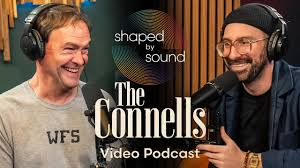
There’s something quietly radical about the endurance of The Connells. In an industry that chews up regional bands and spits them out as trivia questions, they have persisted—less as nostalgia act, more as a living argument for melody, craft and community. Their appearance on Shaped by Sound, the PBS North Carolina series devoted to the state’s rich musical ecosystem, feels less like a retrospective than a homecoming.
The show’s format—interweaving live studio performances with intimate conversation—suits them. From the opening notes of “Scotty’s Lament” (00:33), you’re reminded that the Connells’ power has never been about bombast. It’s about architecture. Two brothers—guitarist and songwriter Mike Connell and bassist David Connell—alongside a tight circle of friends from Raleigh, built one of North Carolina’s most enduring bands not on spectacle but on structure: chiming guitars, melodic bass lines, and choruses that feel both inevitable and earned.
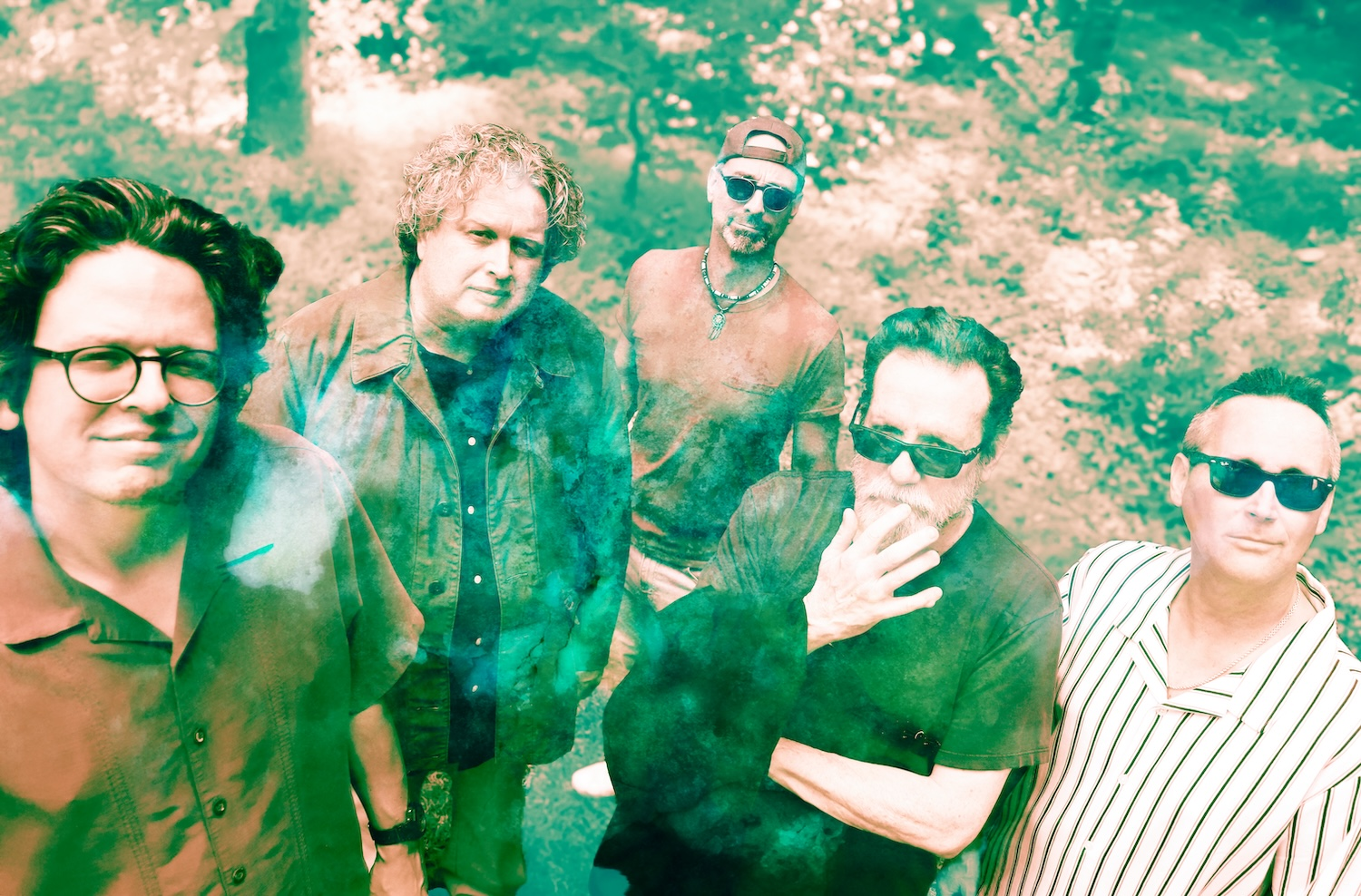
PBS NC wisely lets the songs breathe. “Carry My Picture” (05:37) shimmers in the studio lights, its emotional directness framed by Doug MacMillan’s unmistakable voice—clear, yearning, unforced. Keyboardist Steve Potak adds texture and lift, while guitarist Mike Ayers and drummer Chris Stephenson lock into a groove that’s crisp but never clinical. Trumpeter Mike Mole, a later addition to the lineup, colors the arrangements with subtle brass flourishes, a reminder that this band has always been willing to expand its palette without abandoning its core.
That core, as the full conversation reveals, was forged in Raleigh in the early 1980s. A group of friends playing local gigs, hauling gear into clubs, refining songs night after night. They were part of a regional circuit that rewarded perseverance more than hype. The Connells didn’t arrive fully formed; they were shaped by the rooms they played, the audiences who showed up, and the belief that songcraft mattered.
Then comes the moment casual viewers may be waiting for: “’74–’75” (11:22). The band’s surprise overseas hit—particularly in Europe—remains one of the great stories of American alternative rock’s second tier. Released in the mid-1990s, it didn’t explode immediately at home. But abroad, the song connected, its nostalgic meditation on lost youth and passing time resonating across language barriers. On Shaped by Sound, the performance feels less like a victory lap and more like a reckoning. The arrangement is lean; the melody carries the emotional weight. When MacMillan sings about photographs and the quiet ache of growing older, the years between then and now collapse.
What’s striking in the interview segments is the absence of cynicism. There’s no bitterness about near-misses or industry vagaries. Instead, the Connells speak about the slow accumulation of work—about studio memories, about learning how to layer guitars without cluttering a mix, about the discipline of editing a song until only what matters remains. They talk about how “Seven” (17:28) and “Over There” (22:40) fit into their evolving catalogue, each song a chapter in a longer narrative rather than a bid for reinvention.
This is where Shaped by Sound’s broader mission comes into focus. The series—produced by PBS North Carolina in partnership with the Department of Natural and Cultural Resources and presented by Come Hear North Carolina—spotlights artists across indie rock, hip-hop, R&B, alt-country, jazz, bluegrass, and folk. We highly recommend the episodes on Wednesday and Superchunk. By placing the Connells within this living, breathing statewide scene, the show resists the myth that meaningful music only comes from coastal capitals. North Carolina is not just a backdrop; it’s an incubator.
For the Connells, community is not branding. It’s origin story. Two brothers, a handful of friends, and a city that allowed them to grow at their own pace. That ethos still animates the band. You can hear it in the way the guitars interlock without competing, in the steady pulse of the rhythm section, in the democratic space each member occupies. No one is posturing. Everyone is serving the song.
In an era of algorithmic playlists and disposable singles, The Connells’ appearance on Shaped by Sound is a reminder that durability is its own form of rebellion. Songs built carefully, performed faithfully, and shared within a community can travel far—sometimes all the way across the Atlantic—and still return home intact.
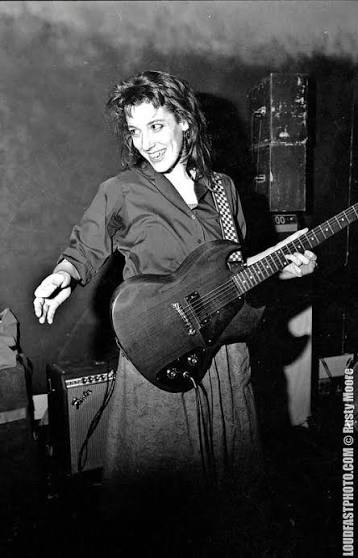
Lynn Blakey never needed to raise her voice to be heard. She sang the way a good front-porch storyteller talks—leaning in just enough to make you feel like the song was meant for you and you alone. And for decades around Raleigh and the wider North Carolina music scene, that feeling wasn’t an illusion. It was her gift.
It is hard to believe that Blakey, beloved North Carolina indie-rock singer and member of Tres Chicas, Let’s Active, and Oh-OK, has died at 63 on February 6, 2026, of metastatic cancer. Her voice helped define a fiercely independent Southern music scene in the 1980s and ’90s—clear-eyed, melodic, and emotionally direct—and she was the inspiration behind The Replacements’ “Left of the Dial,” a college-radio anthem that captured the scrappy romance of underground rock.
Blakey first emerged in the orbit of Athens, Georgia’s post-punk ferment before becoming a cornerstone of North Carolina’s Triangle scene, bringing a jangly intelligence and unforced warmth to every project she touched. With Let’s Active, she helped marry the British Invasion sparkle to Southern introspection. In Oh-OK, she contributed to a band that, though short-lived, became cult-beloved for its artful minimalism. And in Tres Chicas, she found a late-career home for luminous three-part harmonies and songwriting that felt both rooted and timeless.
She was never the loudest person in the room, but when she sang, rooms leaned in. Her phrasing carried both ache and assurance, the sound of someone who understood that understatement can hit harder than volume. Across decades and lineups, she remained a musician’s musician—collaborative, literate, and grounded—whose influence far exceeded her fame.
Blakey’s passing leaves a quiet but undeniable absence in the community she helped build. The records remain: bright guitars, close harmonies, and that unmistakable voice—forever just left of the dial, and right at the heart of a scene she helped make possible.
Blakey was also known as a founding member of Tres Chicas, the harmony-rich trio she formed with Caitlin Cary (formerly of Whiskeytown) and Tonya Lamm (formerly of Hazeldine) in the late 1990s. But even that shorthand doesn’t quite capture her range. Before Tres Chicas, she fronted Glory Fountain, a jangly, literate outfit that blended folk-rock shimmer with a songwriter’s eye for the telling detail. And outside of bands, she was the sort of musician who could slip into a room with a guitar and quietly rearrange the emotional furniture.
If you were around the Triangle during the years when local record stores doubled as community centers and midweek shows felt like reunions, you probably remember the first time you heard her voice. It had a clarity that cut through bar noise without ever sounding sharp. There was ache in it, but not self-pity; resolve, but never bluster. She sang about love, distance, and the small negotiations of everyday life in a way that suggested she’d done her homework—on people, on history, on herself.
Tres Chicas arrived at a moment when harmony-driven Americana was enjoying a modest renaissance, and their self-titled debut felt both rooted and new. The trio’s blend nodded to classic country and Laurel Canyon without getting stuck there. Blakey’s presence in that mix was crucial. Cary brought a flinty edge, Lamm a warm steadiness, and Blakey a kind of luminous center. When the three voices locked in, it sounded less like three singers competing for space and more like a conversation among old friends who trusted one another enough to leave room.
That sense of trust extended beyond the stage. Blakey was, by all accounts, a musician’s musician—generous with time, quick with encouragement, and allergic to pretense. In a scene that has always prized authenticity, she embodied it without trying. She showed up. She learned the songs. She listened. Those qualities don’t make headlines, but they build communities.
Her work with Glory Fountain hinted early on at the strengths she would refine over the years: a knack for melody that felt inevitable rather than flashy, lyrics that rewarded close listening, and arrangements that gave songs space to breathe. There was often a literary bent to her writing, but never at the expense of heart. She understood that the best songs carry their intelligence lightly.
In performance, Blakey had a way of making even well-worn covers feel personal. She didn’t overpower a song; she inhabited it. You could hear her respect for the material, whether it was a country standard or a deep-cut folk tune. And when she stepped forward for an original, there was a quiet authority in the way she delivered a line—an assurance that she had something worth saying and trusted you to meet her halfway.
Like many artists who balance creativity with the practicalities of life, Blakey’s path wasn’t a straight line. There were stretches when family and work took precedence, when the spotlight dimmed and the songs were written in the margins of busy days. But even then, she remained woven into the fabric of the scene. Appearances might have been less frequent, yet when she returned to a stage, it felt less like a comeback and more like a continuation of a conversation paused but never ended.
Part of what made her so beloved was the absence of ego. She seemed more interested in the collective sound than in staking out territory. In Tres Chicas, that meant surrendering to three-part harmonies that required precision and humility. In solo settings, it meant letting a lyric land without overselling it. She trusted the audience to hear what she was offering.
In recent years, as the music industry grew louder and more frantic, Blakey’s approach felt almost radical. She stood for craft over clamor, for community over competition. The North Carolina scene has produced its share of nationally known acts, but it has always depended just as much on artists like her—people who stay, who mentor, who make the local feel consequential.
The measure of a musician isn’t only in album sales or marquee placement. It’s in the way songs linger after the last chord fades. It’s in the younger songwriter who finds the courage to share a new tune because someone like Lynn Blakey once did the same for them. It’s in the audience member who walks out of a show feeling a little less alone.
Blakey leaves behind recordings that still shimmer and a network of friends, collaborators, and listeners who carry her harmonies with them. In a town and a region that pride themselves on musical depth, she was one of the quiet pillars. Not flashy, not loud—just steady, thoughtful, and true.
In the end, that may be the most fitting tribute. Lynn Blakey made music that felt like an honest conversation. And for those who were lucky enough to hear her—live in a small club, on a record spinning late at night, or in the shared hush of a harmony line—that conversation continues.
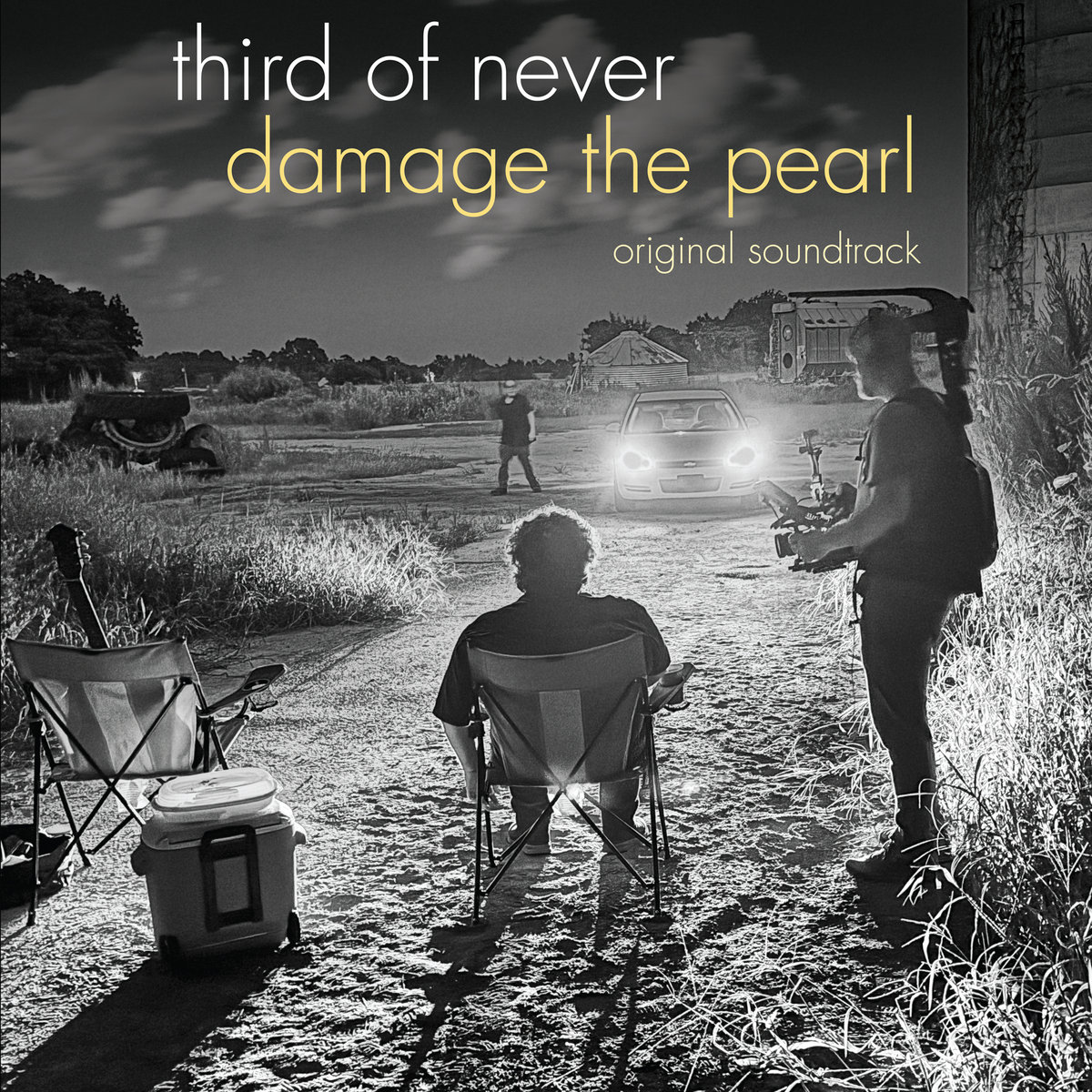
In a year filled with shiny indie-rock releases, Damage the Pearl — the latest from Third of Never — stands out not just as a strong album but as a daring creative leap. It presents itself as an “Original Soundtrack,” blending rock, psychedelia, cinematic touches, and lyrical reflection into a unified whole. Instead of chasing hits, Third of Never offers a record that feels like a story, a mood, and an emotional piece all in one.
What follows in this favorite of 2025 consideration is an exploration of the key musicians behind the record, their roles, contributions, and chemistry, followed by a detailed analysis of the album’s sound, themes, and emotional impact. I argue that Damage the Pearl is not only one of the most compelling independent albums of 2025 but also a statement about what rock music can still be: inventive, collaborative, and emotionally powerful.
The musicians behind the music
At the heart of Third of Never is founder and guitarist/songwriter Jon Dawson, but Damage the Pearl also benefits from contributions by longtime collaborators and special guests.
Doug MacMillan — best known for his work with The Connells — handles lead vocals on the album. His voice offers a familiar yet fresh focus: a tone that blends vulnerability, grit, and a touch of wistful depth, perfect for the record’s haunting atmosphere. Jode Haskins plays bass (credited as “lead bass” on tracks like “Grab the Ground”), anchoring the record with a strong low-end that supports both the rockier and more psychedelic passages. Charles Cleaver contributes keyboard and possibly synth textures, giving some songs a layered, atmospheric dimension that broadens the sonic palette beyond straightforward rock. Brandon Ruth — on drums — drives the record’s rhythmic backbone, moving skillfully between finesse and force as the song’s mood calls for.
Beyond the core lineup, Damage the Pearl benefits from notable guest contributions: legendary keyboardist John “Rabbit” Bundrick (of The Who fame) and Steve Kilbey (of The Church), among others. Their input adds depth, history, and sonic color — reminding listeners that this is not a lo-fi one-man bedroom project but a fully realized band effort.
Together, they craft something alive — a vibrant collaboration of musicians, textures, and sensibilities.
A cinematic, psychedelic journey
Listening to Damage the Pearl feels less like playing an album and more like exploring a film’s soundtrack you haven’t seen yet. From the first moments, you’re pulled into a world of shifting moods: garage sparks, dreamy psychedelia, cinematic sweeps, and rock-driven hooks.
The lead single and our favorite track, “Grab the Ground,” sets the tone. Its shimmering guitars and steady groove evoke movement—literally and metaphorically—like a car speeding down a deserted highway under neon lights. This sense of motion aligns with the album’s larger goal: it is both a static work and a journey.
Other tracks lean toward subtle psychedelia or atmospheric rock: through keyboards, ambient touches, echoed vocals — layering mood over melody, feeling over immediacy. The guest contributions from Bundrick and Kilbey are especially effective here, broadening the band’s sonic identity beyond traditional rock tropes.
Even when the songs are more conventional rock-based (“groove + guitar + bass + drums + vocals”), the production gives them weight and space. The album rarely feels over-produced; Instead, it balances rawness and polish — capturing a tension between vulnerability and strength. As one review puts it: it “adds the right level of balance between instrumentation and vocals, so the full emotional effect of each song hits.”
What emerges is an album that’s both immediate and expansive — perfect for late-night introspection or full-volume road-trip listening.
Vulnerability and Resilience: Lyrics and emotional weight
One of the most powerful and compelling aspects of Damage the Pearl is how its lyrical themes, often focused on vulnerability, survival, identity, and inner conflict, intersect with the music’s cinematic and psychedelic character. The title track, Damage the Pearl, provides a sort of thematic statement for the record: the repeated line “What strikes the oyster doesn’t damage the pearl” suggests a reflection on resilience—inner fragility protected by layers of shell, with inner worth enduring outside shocks.
Lyrics like “remain cheerful despite your painful brain” suggest mental struggles, emotional effort, and the difficulty of staying light amid weight.
But there’s more here than just grief or melancholy. There is defiance, survival, and even hope. In relation to the sound—shifting from gritty to dreamy, rock to ambient—the album feels like an honest struggle with inner turmoil and external pressures. It doesn’t offer easy answers or neat closure. Instead, it welcomes listeners into a space of acknowledgment: “Yes, I feel what you feel,” it seems to say.
In interviews, the band confirms that Damage the Pearl was designed not just as an album but as a soundtrack to a film — a visual story that enhances its thematic goals. According to founder Jon Dawson, the cinematic concepts emerged late in the recording process, after the lines and moods had come together into something narratively suggestive.
This framing as “Original Soundtrack” shifts how you listen — every song becomes a scene, each mood a frame, and every lyric a line of dialogue in a larger story. And that story? It feels less like a tidy arc and more like a winding road trip through memory, loss, hope, and survival.
What Damage the Pearl does well, and where it leaves space
One of the album’s biggest strengths is its cohesion. Despite featuring multiple collaborators and a variety of sonic textures — from rock to psychedelia to ambient keys — the record feels unified. This is partly thanks to careful production and mixing, where every instrument, including vocals, occupies its own space, but also due to a consistent emotional and narrative tone. The listener isn’t jarred by sudden tonal shifts; instead, there’s a smooth flow and a clear internal logic — like a movie soundtrack that understands its scenes.
Moreover, the choice to present the album as a soundtrack is more than just stylistic; it enhances the listening experience. It sparks the imagination. It requires attention. It allows the listener to feel, reflect, and maybe even project their own stories onto the music.
At the same time, Damage the Pearl isn’t perfect — and that’s part of its honesty. It doesn’t always resolve its tensions. Some songs end softly, others fade into ambiguity. The “story” the album suggests is fragmented, impressionistic; you might find yourself with more questions than answers by the end. But maybe that’s the point. Maybe some emotional truths resist tidy closure.
There are moments when the cinematic ambition borders on grandiosity, where the mood threatens to overpower the song’s structure. But often, the balance — of texture, mood, simplicity, and complexity — pulls things back just in time.
Why Damage the Pearl matters — for Third of Never, for independent music, for listeners
For Third of Never, this album feels like a redefinition. No longer just a rock band producing standard records — they’ve expanded into a multimedia vision: soundtrack + album + film + narrative. It’s risky, ambitious, and yet grounded. It shows that the band is not moving backward into nostalgia or convention, but pushing forward into new possibilities.
For independent music in 2025 — when much of it feels packaged, algorithm-driven, and commercially safe — Damage the Pearl serves as a reminder that records can still be daring, mysterious, and emotionally intense. It demands something from the listener: patience, openness, and imagination. In return, it offers a lot: suspense, beauty, catharsis, resonance.
For listeners—especially those drawn to emotional honesty, moody textures, and music that feels alive rather than polished—this album is a gift. It doesn’t flinch from pain or uncertainty. It doesn’t offer easy answers. It provides space for reflection, for memory, for human complexity.
A soundtrack for the unsettled, a refuge for the introspective
In a musical landscape filled with albums that often feel like products — short, polished, predictable — Damage the Pearl feels like true art. It is chaotic, cinematic, full of emotion, and deeply human. It demonstrates what can happen when a band refuses to stick to a formula, when musicians collaborate across generations and genres (rock, psychedelia, cinematic ambition), and when they allow vulnerability and imagination to lead the work.
Third of Never and their individual collaborators — Jon Dawson, Doug MacMillan, Jode Haskins, Charles Cleaver, Brandon Ruth, John “Rabbit” Bundrick, Steve Kilbey — have created something that feels timeless, genre-blending, and fiercely genuine. This is not background music. It demands attention. It rewards patience.
If you haven’t heard Damage the Pearl yet — or if you’ve only listened once on shuffle, consider this a gentle nudge: put on headphones, turn down the lights, maybe grab a drink or nothing at all, and let the record wash over you. Maybe you’ll discover something in it you didn’t know you needed: a soundtrack for uncertainty, a companion for sleepless nights, or a mirror for unspoken feelings.
In a noisy world, Damage the Pearl is a subtle rebellion — an invitation to feel. And it’s one of the most worthwhile albums of 2025 so far.
In American music, there are artists whose regional roots run deep, intertwining with the cultural fabric of their home state. Greg Humphreys, the charismatic frontman of Dillon Fence, has spent decades carving out a musical niche that echoes the soulful resonance of North Carolina. His solo endeavors, marked by a fusion of rock, blues, jazz, and Americana, showcase a maturity that comes from a life dedicated to the pursuit of authentic sound.
Humphreys’ musical journey began in the late ’80s with the formation of Dillon Fence, a Chapel Hill-based alternative rock band that became synonymous with the burgeoning music scene in North Carolina. The band’s sound, characterized by jangly guitars, introspective lyrics, and Humphreys’ powerful, soulful emotive vocals, contributed to the distinctive Southern sound emerging from that fertile music community that also gave rise to The Connells, The Veldt, Fetchin’ Bones, Superchunk, Let’s Active and The dBs.
Fast forward to the present, and Humphreys has embarked on a solo career that demonstrates both evolution and continuity. His 2021 release, “Spanish Steps,” stands as a testament to his ability to navigate diverse musical waters while maintaining a distinct Southern sensibility. His most recent single, “Take a Trip (Catch a Plane)” crosses soul, ’70s pop, jazz, and smooth strands of rock and roll. Humphreys’ voice, weathered by years of musical exploration but never beaten down, lends a richness that serves as the perfect vehicle for the emotional weight carried by his lyrics. The song weaves a narrative that touches on love, loss, and the inexorable pull of life’s forces, creating a compelling experience.
Humphreys skillfully blends genres, drawing from the deep well of American musical traditions. He is equally comfortable channeling a rootsy, folk vibe with acoustic guitars or when creating a sonic laid-back atmosphere. He is also just as skillful when letting everything hang out in a full-blown rock song. Humphreys’ ability to seamlessly integrate elements of the South’s musical heritage into a contemporary framework is one reason out of the many characteristics of his songs that make them feel like lifelong friends.
Whether one is listening to Greg’s solo work or his efforts in Dillon Fence and Hobex, the songs he makes allow him to flex his songwriting muscles, delivering introspective lyrics with a raw vulnerability that resonates with listeners. “Take a Trip (Catch a Plane)” stands out as a poignant exploration of the complexities of life and the enduring power of hope, driven by Humphreys’ soulful crooning and the subtle, never forced, instrumentation that accompanies it. Humphreys’ guitar work, a hallmark of his style, shines throughout the tune, demonstrating both technical proficiency and an intuitive understanding of the emotional nuances embedded in his compositions.
In a musical landscape often dominated by trends, the passing ‘sound of the moment’, and fleeting fads, Greg Humphreys stands as a beacon of authenticity, his music is tangibly real… it resonates. Greg’s music not only pays tribute to the distinctive musical heritage of North Carolina but also adds another chapter to Humphreys’ ongoing exploration of sound and emotion. His most recent music invites listeners to journey through the landscapes of the South, guided by a seasoned troubadour whose passion for music burns as passionately and brightly as ever.
Dr. J: What can you share with us about when and how you started writing music?
I started writing songs in high school. My high school garage band “The Trash” decided to start playing our original music… our members would bring songs in to try. My early songs make me wince a bit, but you have to start somewhere. Dillon Fence bass player (and fellow The Trash member) Chris Goode and I will often sing a line or two from these old songs for a few chuckles.
I have to say, my basic appreciation and understanding of songcraft came from my dad. He was always listening to his favorite songs learning them and playing them on his guitar in his spare time.
I also think that my strong desire/need to create, expressed through art and music, comes from my mom. She’s been a visual artist for as long as I can remember and has had some different, interesting periods to her artistic expression.
Dr. J: What first led to your recording music? How do you approach production?
I started recording on a boombox, then a couple of boomboxes. I remember re-creating the harmony solos on Boston’s “Peace of Mind” with two boom boxes in High School.
After a couple years of this, my parents helped me get a Fostex 4 track recorder, which was my constant companion until I started learning ProTools / DAW recording in the late 90s. I have boxes and boxes of songs and music ideas I recorded in the 90s on that 4 track.
Of course, I learned a lot from the professional engineers and producers I worked with early on when making records with Dillon Fence and Hobex: Steve Gronback, John Plymale, Lou Giordano, Ron St. Germain, Mark Williams, David Leonard. I’ve also been lucky to sit in/take part in sessions with pros like John Wood, Joe Boyd, Al Kooper, Bill Symczyk, Chris Stamey, Mitch Easter, Don Dixon, and Jim Dickinson.
As far as my production approach, I think my main attitude is, that there’s no “correct” way to do things. All that really matters is do you have an end result that is compelling and/or worthy of listening to over and over. If budget was no issue, I’d probably do a more collaborative recording with other musicians/engineers/studios, but I do enjoy making records on my own.
I try to keep in mind that some of my favorite records were made with some of the most basic recording technology. I believe that what is going on in front of the mic is usually the most important factor in recording most musicians or singers.
Dr. J: ‘Take a Trip (Catch a Plane)’ is your most recent music, what led to the making of that song? What were the main influences on your recording of this song?
I talked about it at length in my bio over greghumphreys.net if you’d like to pull from that/peruse that. but essentially it’s a song I wrote for my wife kind of trying to express one of those feelings that’s personal yet universal. Hopefully, the song has the same quality.
Dr. J: The song ‘Take a Trip (Catch a Plane)’seems to capture a remarkable constellation of musical influences.The songseems to have a 1970s soul feel. Is that a correct interpretation? If that is correct, did you intend to create a song that connects to that style? If that is not correct, how would you describe the feeling of the song?
The rhythm section definitely has a ’70s soul vibe – Marvin Gaye records are always a North Star for me. I played bass guitar on this track, which is also a lot of fun and something I haven’t been doing on my trio records. This track is basically a taste of an approach I’ve been taking. Using drum machine sounds to create grooves. Building songs around a melody, groove, or musical idea using a looper. Then, building the arrangement over time either in live performance or in the studio.
It’s not really that different from a songwriting approach I’ve used for bands I’ve fronted over the years. It’s just that I am able to create more of a “keeper” version on my own these days.
The song really started from being inspired by a moment in a George Shearing “Lullaby of Birdland” recording where the musicians play the melody (Jazz terminology would be “the head”) together. I wanted to use that vibraphone sound, and I wrote a melody that is vaguely reminiscent of the Shearing tune – not as harmonically sophisticated, but still good. After that, I just followed my instincts to complete the song.
Dr. J: Where do you often derive inspiration to make music?
Looking back on my songwriting path, I’d say my main wellspring of music-making has been expressing myself – getting out all those feelings I have difficulty manifesting any other way. The confessional songwriting thing has definitely been a big part of who I am as a writer. That being said, I like switching it up and trying different approaches, and that shows up in my songs as well.
Dr. J: How would you describe the music that you create? How has that process evolved or changed over time (especially as you think about your journey in the last few years)?
I feel like in the back of my mind I’m always trying to create something that is timeless and universal. The quality that a great piece of music or song has – if you take it out of its cultural context, does it still resonate? I think that’s why I enjoy going down the wormhole with music from different eras or time periods and finding songs that grab me.
Dr. J: What is next for you musically? How would you describe your thoughts at this point for your next project or release?
I am close to the finish line on a couple of recording projects. One is a Dillon Fence live album that we recorded in April 2023. I think it captures the energy of the band in a good way and I’m looking forward to sharing it with our fans. I am proud of that catalog of music.
The second is another solo album in the same fashion as my 2021 album “Spanish Steps,” using a lot of the approaches and techniques I mentioned earlier. “Take a Trip (Catch a Plane)” will be included on this album, as well as some other songs I’ve been writing over the last 3-4 years. I find that these days with my family life taking precedence I’m not nearly as prolific as I used to be. The songs that I do complete tend to be real “keepers” – songs that I keep coming back to over time.
Dr. J: What is your favorite song to perform live? What is your favorite song to perform in general? What makes that song a current favorite in your performances?
I think the song that I usually enjoy performing live most is usually my most recent song that I really believe in – the song that fits that category lately is called “Fall into the Sea.” That being said, I’ve gotta give props to a song I co-wrote with my old friend Jim Smith, “Windows,” which was originally on the Hobex LP “Back in the 90s.” I still play that song in almost every show. It just works, it connects, it makes people happy, and that makes me happy.
Hopefully, they’ll find inspiration to renew their love for their significant other. That’s what it’s really about. The ‘Take a trip’ part is just an impetus to do that.
Dr. J: As a musician, how are you adapting to the challenges of creating music? What are your biggest challenges in creating music?
That’s a big question. Honestly, I don’t really know which way to go. The sheer volume of music produced these days and the torrential nature of media consumption are obviously on my mind, as far as what is ahead. I consider myself lucky I have an (admittedly boutique) audience that still comes to see me play and listen to my music online, but obviously, the Internet disruption is real and it has affected my life. It has always been a rollercoaster ride and a struggle to pursue a creative life, though.
I think my biggest challenge is managing the balance between my family life and my desire to pursue my art and music. There’s just not enough time in the day to do what I’d like to do. Once I have the time, I’m often too tired to do it!
We want to extend our sincere gratitude to Greg Humphreys for answering our questions and continuing to make some really excellent music! Click on the links throughout the article to visit his social media or to listen to various songs that were discussed! If any musicians or artists would like to participate in future ’11 Questions with…’ columns, please feel free to email us at drjytaa@gmail.com. All photos and images courtesy of Greg Humphreys.
Saturday, September 27, 2014, 3:30 pm(event ends at 8:00 pm) Raleigh Little Theatre, Raleigh, NC $15-$20.00
This is the first show of several that we will dedicate to this awesome occasion! So we are playing many classics this week from The Replacements, U2, R.E.M., The Pixies, The Cure, and more! And, yes you can expect a whole slew of current indie bands and stuff.
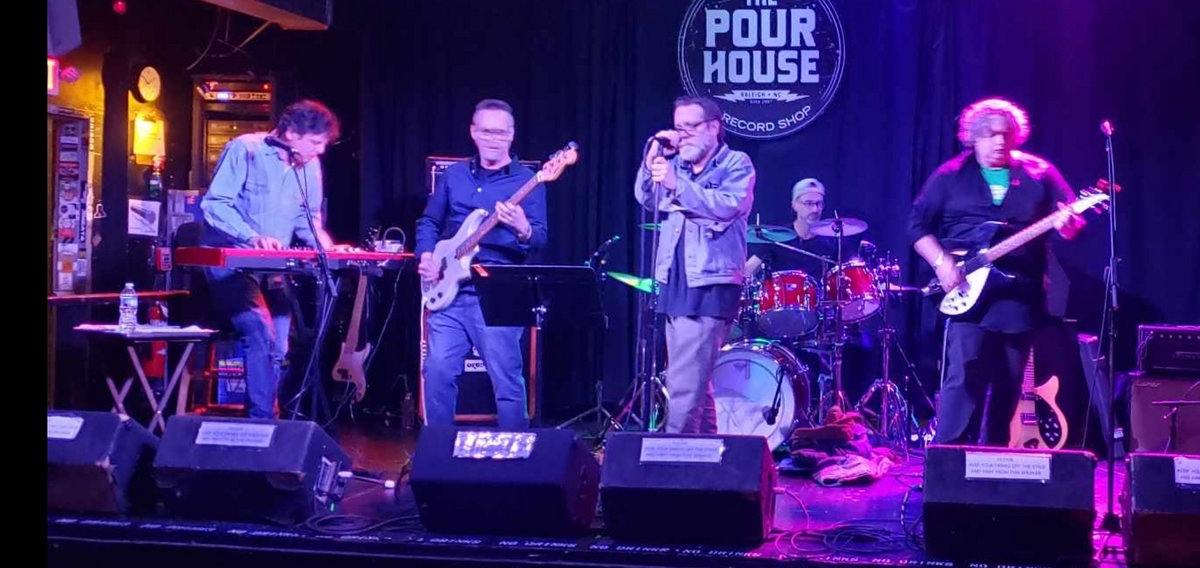
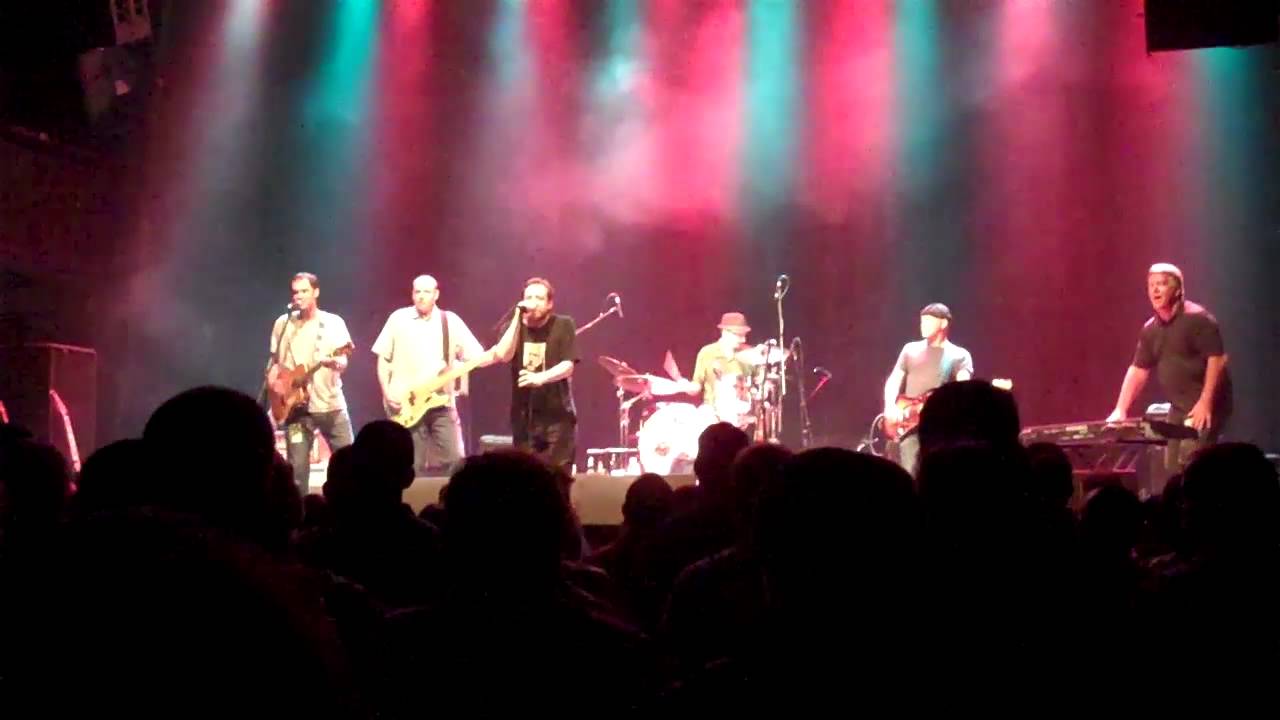
Hometown institution The Connells bring their distinct brand of guitar-oriented, melodic, power pop to The Lincoln Theatre for their annual holiday party! With new material in the works and most of their catalog now available through Amazon and iTunes, the band continues to play throughout the southeast US at festivals, fundraisers and clubs. The Connells current lineup features:
Mike Connell – Guitar, Vocals
David Connell – Bass
Doug MacMillan – Vocals
Mike Ayers – Lead Guitar
Steve Potak – Keyboard
Rob Ladd – Drums
Joel Rhodes – Trumpet
“Five men, one mission: musical stratospherics, stellar arrangements and guitar heroics. Coming soon to a theater near you!” Sixteen Tons is a brand new ensemble from North Carolina composed of an all star lineup of veteran musicians including:
Rod Abernethy – Guitar
Jon Heames – Bass, Bass VI
Mike Krause – Guitar
Chris Stephenson – Drums
Bo Taylor – Guitar
They have performed and/or recorded with a wide spectrum of established artists from North Carolina and beyond including Arrogance, Paul Rothchild (The Doors, Bonnie Raitt), John Anthony (Roxy Music, Queen), David Lord (Peter Gabriel, Tori Amos, Tears for Fears, The Pretenders), Let’s Active, Motocaster, Tonk, Bandway, Tift Merritt, Caitlin Cary (Mary Chapin-Carpenter, Ryan Adams), Big Al Anderson (NRBQ, World Famous Headliners), Chris Stamey, Thad Cockrell, International Orange (Ben Folds Five, The Old Ceremony, Bus Stop), Andy Kuncl, The Connells, John Howie Jr. and the Rosewood Bluff and members of Patty Griffin, Levon Helm, The Jayhawks and the Dex Romweber Duo among others.
Known for her multi-faceted artistic expression and fearless individuality, emerging musician, photographer and actress Hanna Elsie Chapman is just as likely to capture imagery through her lens and jump into character as she is to compose a piece of music. Angelic and hypnotic, bold and melodic… Chapman challenges her listeners to see ones vulnerability in lifes fleeting moments . “I am always absorbed in some medium of person-to-person communication. Striving for artistic expression is like burning into nothingness during atmosphere re-entry; vulnerable, risky, terrifying and necessary” says Chapman. Make sure to arrive in time to see Hannah kick the night off at 8:30!
Streaming Forward, Powered By The Past - if you love the 80s music, new music, Eurovision, cheesy pop and awesome playlists then let's get this pop party started!







 your tuesday afternoon alternative