When the Music Stops: Reflecting on Loss, Legacy, and the Artists We Grieve

Each year on Your Tuesday Afternoon Alternative, we come together for our annual memorial show, a space to reflect on and honor the musicians and friends we’ve lost over the past year. It is always a meaningful broadcast, but especially so when we are joined by our friend Tom Gilliam of Ghost Town Silence, who brings both personal memory and musical perspective to the conversation. The show becomes more than a playlist—it becomes a shared act of remembrance, storytelling, and gratitude for the artists whose work continues to shape and inspire us.

Reflecting on the musicians we have lost in 2025 invites a deeper consideration of how music becomes woven into memory, identity, and emotion. When a musician dies, especially one whose work has accompanied listeners through formative or difficult moments, the loss often feels intensely personal, even for people who never met them.

This sense of grief is not only about the individual artist, but also about what their music represented—comfort, rebellion, joy, heartbreak, or belonging. In 2025, as in other years, the passing of influential musicians has reminded fans that while recordings remain, the living presence behind them is irreplaceable.

For many listeners, musicians are companions across time. A song heard in adolescence can remain tied to a specific feeling of freedom or confusion decades later. When artists pass away, fans often revisit their catalogs not just as entertainment, but as a form of remembrance.

This act of listening again can feel like both mourning and gratitude: mourning for the absence of a creative voice, and gratitude for the body of work left behind. The emotional connection is especially strong with artists whose music was deeply personal or culturally defining, because their songs often feel like shared emotional language rather than distant performances.

Grief in response to a musician’s death also reflects the way popular music creates intimacy at scale. A singer’s voice can feel familiar after thousands of listens, even though it is mediated through speakers or headphones. That familiarity can produce a paradoxical sense of closeness—fans may feel they “know” an artist through lyrics, interviews, or live performances.

When that artist dies, the loss can resemble the loss of someone within one’s extended emotional world. This is part of why public mourning for musicians is so widespread and visible, with tributes, playlists, and social media reflections becoming collective rituals of remembrance.

The deaths of musicians in 2025 also highlight how different generations experience cultural loss differently. Older fans may grieve artists who shaped entire eras of music, while younger listeners may mourn musicians, they discovered later but who still played a defining role in their personal soundtrack. In both cases, grief is shaped by recognition that a creative era has ended, even if its influence continues.

Music, after all, does not disappear when its creators do; instead, it takes on a historical quality, becoming a record of a life and time that can no longer evolve.

At the same time, there is something uniquely enduring about musical legacy that can soften the pain of loss. Unlike many other forms of human achievement, music remains alive through performance and playback. A song can be rediscovered, reinterpreted, or newly appreciated long after its creation.

This continuity allows fans to maintain a relationship with artists even after death. However, it is a changed relationship—one that exists only through memory and sound rather than future creation. For many, this ongoing presence becomes a source of comfort, even as it underscores absence.

Ultimately, reflecting on musicians lost in 2025 also reflects on why music matters so deeply in human life. The grief felt by fans is a testament to the power of artistic expression to transcend time and circumstance. It reminds us that music is not simply background noise, but a form of shared experience that can shape how we understand ourselves and the world.

While the passing of musicians marks the end of new contributions from those individuals, their work continues to resonate, evolve in meaning, and accompany listeners across generations. In this way, grief and gratitude exist side by side—mourning what has been lost while honoring what remains.

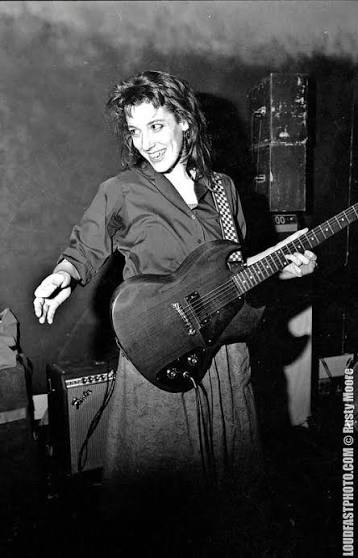
Lynn Blakey, Indie-Rock’s Clear Voice and Muse Behind “Left of the Dial,” Dies at 63

Lynn Blakey never needed to raise her voice to be heard. She sang the way a good front-porch storyteller talks—leaning in just enough to make you feel like the song was meant for you and you alone. And for decades around Raleigh and the wider North Carolina music scene, that feeling wasn’t an illusion. It was her gift.

It is hard to believe that Blakey, beloved North Carolina indie-rock singer and member of Tres Chicas, Let’s Active, and Oh-OK, has died at 63 on February 6, 2026, of metastatic cancer. Her voice helped define a fiercely independent Southern music scene in the 1980s and ’90s—clear-eyed, melodic, and emotionally direct—and she was the inspiration behind The Replacements’ “Left of the Dial,” a college-radio anthem that captured the scrappy romance of underground rock.

Blakey first emerged in the orbit of Athens, Georgia’s post-punk ferment before becoming a cornerstone of North Carolina’s Triangle scene, bringing a jangly intelligence and unforced warmth to every project she touched. With Let’s Active, she helped marry the British Invasion sparkle to Southern introspection. In Oh-OK, she contributed to a band that, though short-lived, became cult-beloved for its artful minimalism. And in Tres Chicas, she found a late-career home for luminous three-part harmonies and songwriting that felt both rooted and timeless.

She was never the loudest person in the room, but when she sang, rooms leaned in. Her phrasing carried both ache and assurance, the sound of someone who understood that understatement can hit harder than volume. Across decades and lineups, she remained a musician’s musician—collaborative, literate, and grounded—whose influence far exceeded her fame.

Blakey’s passing leaves a quiet but undeniable absence in the community she helped build. The records remain: bright guitars, close harmonies, and that unmistakable voice—forever just left of the dial, and right at the heart of a scene she helped make possible.

Blakey was also known as a founding member of Tres Chicas, the harmony-rich trio she formed with Caitlin Cary (formerly of Whiskeytown) and Tonya Lamm (formerly of Hazeldine) in the late 1990s. But even that shorthand doesn’t quite capture her range. Before Tres Chicas, she fronted Glory Fountain, a jangly, literate outfit that blended folk-rock shimmer with a songwriter’s eye for the telling detail. And outside of bands, she was the sort of musician who could slip into a room with a guitar and quietly rearrange the emotional furniture.

If you were around the Triangle during the years when local record stores doubled as community centers and midweek shows felt like reunions, you probably remember the first time you heard her voice. It had a clarity that cut through bar noise without ever sounding sharp. There was ache in it, but not self-pity; resolve, but never bluster. She sang about love, distance, and the small negotiations of everyday life in a way that suggested she’d done her homework—on people, on history, on herself.

Tres Chicas arrived at a moment when harmony-driven Americana was enjoying a modest renaissance, and their self-titled debut felt both rooted and new. The trio’s blend nodded to classic country and Laurel Canyon without getting stuck there. Blakey’s presence in that mix was crucial. Cary brought a flinty edge, Lamm a warm steadiness, and Blakey a kind of luminous center. When the three voices locked in, it sounded less like three singers competing for space and more like a conversation among old friends who trusted one another enough to leave room.

That sense of trust extended beyond the stage. Blakey was, by all accounts, a musician’s musician—generous with time, quick with encouragement, and allergic to pretense. In a scene that has always prized authenticity, she embodied it without trying. She showed up. She learned the songs. She listened. Those qualities don’t make headlines, but they build communities.

Her work with Glory Fountain hinted early on at the strengths she would refine over the years: a knack for melody that felt inevitable rather than flashy, lyrics that rewarded close listening, and arrangements that gave songs space to breathe. There was often a literary bent to her writing, but never at the expense of heart. She understood that the best songs carry their intelligence lightly.

In performance, Blakey had a way of making even well-worn covers feel personal. She didn’t overpower a song; she inhabited it. You could hear her respect for the material, whether it was a country standard or a deep-cut folk tune. And when she stepped forward for an original, there was a quiet authority in the way she delivered a line—an assurance that she had something worth saying and trusted you to meet her halfway.

Like many artists who balance creativity with the practicalities of life, Blakey’s path wasn’t a straight line. There were stretches when family and work took precedence, when the spotlight dimmed and the songs were written in the margins of busy days. But even then, she remained woven into the fabric of the scene. Appearances might have been less frequent, yet when she returned to a stage, it felt less like a comeback and more like a continuation of a conversation paused but never ended.

Part of what made her so beloved was the absence of ego. She seemed more interested in the collective sound than in staking out territory. In Tres Chicas, that meant surrendering to three-part harmonies that required precision and humility. In solo settings, it meant letting a lyric land without overselling it. She trusted the audience to hear what she was offering.

In recent years, as the music industry grew louder and more frantic, Blakey’s approach felt almost radical. She stood for craft over clamor, for community over competition. The North Carolina scene has produced its share of nationally known acts, but it has always depended just as much on artists like her—people who stay, who mentor, who make the local feel consequential.

The measure of a musician isn’t only in album sales or marquee placement. It’s in the way songs linger after the last chord fades. It’s in the younger songwriter who finds the courage to share a new tune because someone like Lynn Blakey once did the same for them. It’s in the audience member who walks out of a show feeling a little less alone.

Blakey leaves behind recordings that still shimmer and a network of friends, collaborators, and listeners who carry her harmonies with them. In a town and a region that pride themselves on musical depth, she was one of the quiet pillars. Not flashy, not loud—just steady, thoughtful, and true.

In the end, that may be the most fitting tribute. Lynn Blakey made music that felt like an honest conversation. And for those who were lucky enough to hear her—live in a small club, on a record spinning late at night, or in the shared hush of a harmony line—that conversation continues.

Shane MacGowan: A Poet of the Streets, a Balladeer of Rebellion

In musical history, certain figures stand out as rebels, challenging conventions and giving voice to the unspoken sentiments of their generation. Shane MacGowan, the enigmatic frontman of The Pogues, was undeniably one such luminary. With his gravelly voice, poetic lyricism, and unapologetic embrace of Irish roots, MacGowan became a defining force in the world of punk and folk fusion. As we celebrate the indomitable spirit of his artistic legacy, it’s essential to delve into the essence of the man who breathed life into timeless anthems of rebellion and romance with a bemused wry smile.

Shane Patrick Lysaght MacGowan was born on December 25, 1957, in Pembury, Kent, to Irish parents. Raised in Tipperary, Ireland, he absorbed the rich tapestry of Irish culture, folklore, and music from an early age. This upbringing would later weave its way into the fabric of The Pogues’ music, shaping the band’s distinctive sound and catapulting them to the forefront of the folk-punk movement in the late ’70s and 1980s.

The Pogues emerged in the early 1980s, a tumultuous period where punk’s raw energy collided with traditional Irish folk, giving birth to a genre-bending sonic landscape. MacGowan, with his unruly hair, torn clothing, and a perpetual cigarette dangling from his lips, embodied the rebellious spirit of the times. His persona was a paradox — a punk poet who found solace in the echoes of Ireland’s past while navigating the gritty reality of London’s streets.

At the heart of MacGowan’s brilliance lay his songwriting. His lyrics were a patchwork of vivid narratives, drawing inspiration from the struggles of the working class, the beauty of love, and the tumultuous history of Ireland. “Fairytale of New York,” arguably The Pogues’ magnum opus, encapsulates this duality. Released in 1987 and included on the excellent “If I Should Fall from Grace with God,” the song is a bittersweet tale of love, dreams, and disappointment, set against a backdrop of an Irish immigrant’s Christmas in New York City. MacGowan’s poignant lyrics, combined with Kirsty MacColl’s haunting vocals, created an enduring masterpiece that transcended genres and resonated across generations. The song is just as powerful today as it was when it was first shared with the world.

MacGowan’s ability to infuse punk’s rawness with traditional Irish folk melodies was a testament to his musical prowess. The Pogues’ sound was a collision of tin whistle, accordion, and mandolin, melding seamlessly with electric guitars and drums. This fusion created an anthemic quality that resonated with audiences far beyond the punk and folk scenes. The band’s discography, including albums like “Rum, Sodomy & the Lash” and “If I Should Fall from Grace with God,” became a sonic pilgrimage for those seeking a rebellious yet nostalgic journey through the Irish soul.

Beyond the music, Shane MacGowan’s stage presence was a spectacle itself. Often appearing disheveled and seemingly unbothered by conventional norms, he commanded attention with an almost hypnotic charisma. His performances were raw, unfiltered, and charged with an energy that mirrored the rebellious heartbeat of punk. Whether he was stumbling across the stage or bellowing lyrics with raw intensity, MacGowan’s presence was a visceral experience that left an indelible mark on anyone fortunate enough to witness it.

However, behind the chaotic exterior and raucous performances, Shane MacGowan grappled with personal demons. Substance abuse, particularly his well-documented struggles with alcohol, became a defining aspect of his narrative. It was a tumultuous dance with self-destruction that added an element of tragedy to his story. Yet, even in the midst of personal battles, MacGowan’s commitment to his craft remained unwavering. His resilience, coupled with an unyielding passion for storytelling through music, showcased the depth of his artistic dedication.

As the years passed, MacGowan’s physical appearance became a visual testament to the toll his lifestyle had taken. The once-youthful firebrand now sported weathered features, a visible testament to the battles fought both on and off the stage. Despite the toll of time and excess, his voice retained its distinctive rasp, a testament to the enduring power of his artistry.

The Pogues disbanded in 1996, marking the end of an era. While the band members pursued individual projects, MacGowan continued to make music and collaborate with various artists. His solo work, including the critically acclaimed “The Snake” album, showcased a more introspective and nuanced side of his songwriting. Even in the absence of The Pogues’ collective energy, MacGowan’s solo endeavors demonstrated his ability to evolve while staying true to his roots.

Shane MacGowan’s impact extends beyond the realm of music. His influence reverberates through the works of countless artists who found inspiration in the collision of punk’s defiance and folk’s storytelling. The Pogues’ legacy, anchored in MacGowan’s vision endures as a testament to the enduring power of musical rebellion and cultural fusion.

In the wake of his passing, the world mourns not just a musician but a poet, a storyteller, and a provocateur. Shane MacGowan’s journey was one of highs and lows, a tumultuous ride through the corridors of creativity and chaos. His legacy, however, is etched into the very fabric of musical history, an indomitable force that continues to inspire those who seek the unbridled spirit of rebellion and the timeless beauty of poetic expression.