Once upon a time country music was made with an eye toward capturing authentic experience and real storytelling reigned supreme. David Payne’s latest release, “Best Intentions,” stands as a testament to the genre’s ability to capture the complexities of life. With its poignant yet accessible lyrics, soul-stirring melodies, and raw, unfiltered sound, Payne invites listeners on a profound sonic journey that delves into the depths of human emotion. The music video made to accompany the single deftly captures the feeling of the song.
The song opens with a twangy guitar riff that immediately sets the tone for what’s to come, the guitar lines bounce with a syncopation that reminds the listener of The Buckaroos’ Don Rich. Payne’s vocals, weathered by experience, carry the weight of the narrative, creating a sense of sincerity that resonates with the listener. It’s a classic country setup, but as the lyrics unfold, it becomes evident that “Best Intentions” is not just another run-of-the-mill country song. Instead, it navigates the intricacies of relationships, regrets, and the inevitability of life’s unpredictable twists. Sometimes we all need to step out for just a minute as the song reminds us.
At its core, the song explores the universal theme of good intentions gone awry. Payne’s lyrics paint a vivid picture of a protagonist grappling with the consequences of choices made with the purest of motives. The verses unfold like pages from a personal journal, revealing a depth of self-awareness and vulnerability rarely found in mainstream country music.
The driving rhythm and syncopation are where “Best Intentions” truly shines. A blend of heartfelt sincerity and a touch of melancholy, the refrain captures the essence of the human experience. Payne’s delivery is both soulful and genuine, carrying the weight of the narrative with every note he sings. It’s the kind of song that lingers in the mind, inviting introspection and resonating with those who have faced the complexities of relationships and the bittersweet nature of good intentions. Why do we need time away from those we care about? How does the time get away from us and suddenly — at least to us it seems a surprise — it’s “last call.”
The instrumentation plays a crucial role in shaping the song’s emotional landscape. The twangy guitars and fuzzy bass evoke a sense of nostalgia, paying homage to the traditional country sound, especially Buck Owens and The Buckaroos while infusing a modern edge. The arrangement is masterfully crafted, allowing each instrument to breathe and contribute to the overall sonic palette. Payne’s decision to keep the production stripped down and authentic enhances the song’s emotional impact, creating an intimate connection between the artist and the listener. The video enhances that idea by keeping the visual narrative of Payne in a bar drinking by himself.
It’s worth noting that “Best Intentions” stands out in the country music scene for its refusal to conform to formulaic trends. In an era where many artists prioritize commercial success over artistic integrity, Payne embraces the roots of country music, blending tradition with innovation. The song harkens back to a time when storytelling was at the forefront of the genre, and each note carried the weight of genuine emotion.
One of the most compelling aspects of “Best Intentions” is its ability to transcend the confines of country music and appeal to a broader audience. The themes of love, loss, and redemption are universal, making the song relatable to listeners across genres. Payne’s genuine approach as a storyteller shines through, creating an emotional resonance that extends beyond the boundaries of a single genre. Moreover, the song’s narrative depth opens the door for interpretation, allowing listeners to find their own meaning within the lyrics and the reason that the narrator needs some space to think. Whether reflecting on personal experiences or simply appreciating the artistry of the storytelling, “Best Intentions” invites a level of engagement that goes beyond casual listening.
David Payne’s “Best Intentions” is a standout addition to contemporary country music. Through its authentic storytelling, soul-stirring vocals, driving rhythm, and refusal to conform to industry norms, the song encapsulates the essence of a commitment to celebrating genuine artistic expression. As a sonic journey through the heart of a modern country, “Best Intentions” serves as a reminder of the power of music to connect us all through the shared experiences of the human condition.
Video By Brandon Berry at Broken Tape, LLC. The song was written by M. D. Payne Jr. It was produced, engineered, and mixed by Patrick Himes and David Payne on 2″ analog tape at Reel Love Recording Company in Dayton, Ohio. The song was mastered by Tim Pritchard at Great Horned Audio, Dayton, Ohio. Thanks to Magnaphone Records for releasing this country music gem.
The players: David Payne: Vocals, Acoustic Guitar Patrick Himes: Precision Bass, Percussion Brian Hoeflich: Drums Dan Spaugy: Electric Guitar Matt Spaugy: Tic Tac Bass, Fuzz Bass
The allure of a particular song is a multifaceted phenomenon, weaving its magic through a combination of emotional resonance, relatability, and the intricate interplay of melody and lyrics. As subjective as musical taste is, the reasons people fall deeply in love with a specific song are as diverse as the songs themselves. How often do music fans argue about a band’s best song or best album?
At the heart of this enchantment lies the emotional connection. People feel that connection in a direct visceral way. Music, as a universal language, has an unparalleled ability to evoke feelings and memories. A song that we love feels like a part of us. It can feel like a part of our body. A song can transport us to a specific moment in time, rekindling the flames of nostalgia or unlocking emotions long buried, whether they should have stayed there or not. The melody becomes a vessel for sentiments that words alone might struggle to express. Whether it’s the joyous melody that accompanies a carefree summer (consider the body of work of The Beach Boys) or the melancholic strains of a breakup (Taylor Swift, Adele, and far too many singers and bands come to mind), people gravitate towards songs that serve as emotional anchors in their lives.
Relatability plays a crucial role in why we love the songs that we do. A song becomes a personal anthem when its lyrics resonate with the listener’s experiences, beliefs, or aspirations. When an artist articulates something the listener has felt but couldn’t put into words, an instant connection forms. It’s this shared human experience that allows a song to transcend its role as mere entertainment, transforming it into a companion on life’s journey. The lyrics become a mirror reflecting the listener’s own narrative, fostering a sense of understanding and kinship; perhaps the relatable song helps us become better people.
The melody itself, with its power to evoke mood and emotion, is another pivotal factor. A well-crafted melody possesses the ability to bypass the conscious mind, directly influencing the listener’s emotional state. We emote alongside the song. Whether it’s the soaring crescendo of a powerful ballad or the infectious rhythm of an upbeat pop song or that jangle that refuses to let us go, the melody is the sonic fingerprint that distinguishes one song from another. People fall in love with a song because its melody or rhythm is ingrained in their minds, creating a sonic imprint that resonates long after the final note has faded. This is the reason that people hear or hum or feel a song long after it is done.
Songs are also tied to places. The cultural and societal context in which a song emerges contributes to its appeal. Certain songs become anthems for entire generations, encapsulating the spirit of an era. Classic rock songs or pivotal albums wield an oversized influence because of their connection to time and place. The social and political climate during the release of a song can imbue it with additional layers of significance, turning it into a symbol of its time. Did Bruce Springsteen mean for ‘Born in the USA’ to become an anthem that its lyrics would dispute? As a result, people develop a profound connection to songs that encapsulate the collective experiences and sentiments of their generation. The Who’s ‘Won’t Get Fooled Again’ or R.E.M.’s Everyone Hurts illustrate such a generational charge.
The artist’s persona and authenticity also play a crucial role in cultivating a love for a song. When listeners perceive that an artist is genuine and transparent in their expression, it fosters a deeper connection. Did Nirvana’s ‘Smells Like Teen Spirit’ become such a transcendent hit because listeners were drawn to the idea that Kurt Cobain meant every single word with boundless passion? Authenticity resonates, and when an artist’s sincerity aligns with the listener’s values, it creates a bond that extends beyond the music itself. Most of Neil Young’s or Bob Dylan’s catalog demonstrates this idea.
In essence, the reasons people fall in love with a particular song are as complex and diverse as the human experience. Whether through emotional resonance, relatability, melody, cultural significance, or the authenticity of the artist, a song’s ability to captivate and enthrall lies in its capacity to tap into the myriad facets of the human soul. Ultimately, the love affair between a listener and a song is a testament to the profound impact that music, as an art form, can have on the human spirit.
In this new column, ‘I’m In Love With That Song’ — clearly a reference to The Replacements tune ‘Alex Chilton,’ we are going to explore songs that we love and the reasons we love them so much. The first song we consider is Buffalo Tom’s Tail Lights Fade from their 1992 record ‘Let Me Come Over.’
In the tapestry of my musical memories, there exists a thread that glows with the hazy warmth of nostalgia and the bittersweet tinge of unspoken emotions. It’s a thread spun by the melodic enchantment of Buffalo Tom’s “Tail Lights Fade,” a song that has embedded itself in the very fabric of my musical existence. As the needle of time etches its marks on the vinyl of my life, this track remains a constant groove, its resonance undiminished by the years. I remember the first time I heard it while working a lonely internship in a city far from my home. I was listening to a radio station that played “college rock” and in between R.E.M., Green Day, Nirvana, INXS, and The Gin Blossoms, late one night I heard a song with a brilliant jangly guitar and impressive passionate voice that picked me up and shook me.
Buffalo Tom, a band that emerged from the indie rock scene of the late ’80s, had an uncanny ability to distill the essence of emotional turbulence into their music. “Tail Lights Fade,” a standout track from their 1992 album “Let Me Come Over,” encapsulates this prowess with an immediacy that resonates far beyond its initial release. In the spirit of sharing, let me unravel the layers of affection I harbor for this song. It is not at all an overstatement to say “I love this song.”
The opening chords of “Tail Lights Fade” announce themselves with a quiet insistence, like the distant murmur of a storm on the horizon. Bill Janovitz’s vocals, a blend of raw vulnerability and raspy resilience, invite the listener into a world where heartache and hope collide. I immediately and wholeheartedly appreciated the way Buffalo Tom seamlessly wove elements of indie rock, alternative, and even hints of Americana into a sonic tapestry that defied easy categorization.
The song’s narrative unfolds like a poignant short story, each verse a snapshot capturing the ephemeral beauty of moments, people, and things we need slipping away. “Sister can you hear me now, The ringing in your ears, I’m down on the ground, My luck’s been dry for years,” sings Janovitz, painting a vivid tableau of a relationship marked by a subtle disconnect. It’s a narrative that immediately invites dissecting the intricacies of the writing in this song. What were the experiences that led someone to say their luck has been dry for years? The lyrics, sparse yet evocative, leave ample room for the listener to project their own experiences onto the canvas of the song. Maybe we all feel like we are sitting on the ground, looking around ourselves and wondering what happened to that luck that people seem to find so easily in the movies.
As the chorus (of sorts) arrives, the guitars surge with an emotional intensity that feels like a sonic catharsis. I believe that anyone with a discerning ear for musical craft can feel the way Buffalo Tom made a chorus that serves as both a melodic climax and an emotional release. The chorus is an anthem for those caught in the undertow of fading love — the powerless feeling of driving away. It is a refrain that reverberates with universal resonance. As Janovitz sings: “I’ve hit the wall, I’m about to fall, But I’m closing in on it, I feel so weak, On a losing streak, Watch my taillights fade to black.” And while the lyrics in this part of the song change with each telling, the loss only grows. It feels tangible. This is not just the reaping of an imaginary whirlwind, this loss is mine.
“Tail Lights Fade” has a distinctive sound, a blend of jangly guitars and melodic hooks that straddle the line between indie rock, alternative, and alt-country. The band clearly has a commitment to exploring the fringes of musical genres. Part of what draws me into the song is the way the band’s ability to seamlessly blend elements of Americana into their sound. The guitars can be loud and evoke wide-open spaces and dusty highways, adding a layer of nostalgia that enhances the song’s emotional weight. The sound of the instrumentation is heavy. Burdened with passionate yet unsuccessful purpose and lost hope. The narrator has already lost. They know they have lost. Anything else they tell themself as they drive away is a lie and they know it’s a lie.
The movement of “Tail Lights Fade” is full of sonic departure, and moments of introspection within the song’s dynamic journey. bands that dared to experiment, would likely commend Buffalo Tom for this unexpected twist. The bridge, with its stripped-down arrangement and Janovitz’s plaintive vocals, provides a brief respite before the song surges back into its anthemic chorus.
But beyond the musicality, it’s the emotional honesty of “Tail Lights Fade” that cements its place in my heart. Buffalo Tom doesn’t romanticize heartbreak; they lay it bare, unadorned, and achingly real. Anyone with a commitment to authenticity in music would appreciate the way Buffalo Tom captured the messy, imperfect beauty of love in its twilight. I must acknowledge the cultural and historical context of “Tail Lights Fade.” The early ’90s were a tumultuous time for alternative music, with the underground bubbling to the surface of mainstream consciousness. Buffalo Tom, nestled in the bosom of this musical revolution, embodied the spirit of a generation searching for meaning in the dissonance of the post-punk landscape.
“Tail Lights Fade” was a beacon for those navigating the emotional terrain of the era. Being open to contextualizing music within the broader cultural landscape would likely celebrate the song’s role as a soundtrack for a generation caught between the fading echoes of the ’80s and the impending roar of the grunge era.
As I reflect on my enduring love for “Tail Lights Fade,” I realize that my affection for the song extends beyond its musical attributes. It’s a talisman, a sonic artifact that has accompanied me through the various chapters of my life. When I have felt that no matter how hard I have tried to accomplish something I have failed at, this song has always been there for me. In that way, this song has become a marker of my personal history. It is alright to fail.
We all want to believe that given an opportunity we would champion the underdogs and celebrate the mavericks of the world, but do we? The power of Buffalo Tom and “Tail Lights Fade” is in its stark reveal that we lost, we were always going to lose and life continues. One of the reasons that I hear and feel the song long after listening to it is because it creates an image of loss, but also of endurance. “Tail Lights Fade” is a timeless testament to the power of music to capture the ineffable complexities of the human experience.
In the tapestry of rootsy Americana music, Trapper Schoepp emerges as a singular and unyielding thread, weaving tales that resonate with a raw cinematic voice of American storytelling. Hailing from the heartland of Wisconsin, Schoepp is not just a musician; he is a troubadour, a poet, and a chronicler of the human experience. In April of this year, Trapper embarked on a journey and invited us to come along. His last album remains a fast drive on a gravel road through lyrical landscapes and melodic realms. Of his album, Siren Songs,’ — perhaps more a collection of stories from the heart and bone of life — we can feel the distance in time, place, and relationships.
Schoepp’s music is an alchemy of tradition and innovation, a fusion of folk, rock, and Americana that defies easy categorization. Schoepp’s work is imbued with a sense of timelessness, a nod to the roots of American music while fearlessly exploring his own territories. His songs are not mere compositions; they are living entities, breathing and evolving with each note, each chord, and each carefully chosen word.
The lyrical prowess of Trapper Schoepp is reminiscent of the great storytellers who have graced the American musical landscape. It is clear that Schoepp is a connoisseur of lyrics that cut to the core of the human experience and find solace in vivid portraits with words. Whether unraveling the complexities of love or navigating the tumultuous waters of contemporary society, Schoepp’s lyrics are a mirror reflecting the question of where we go from here, when we are not even sure what that means.
Yet, Schoepp is not content with resting on the laurels of tradition. Schoepp fearlessly tackles pressing social issues, offering poignant commentary on the state of the world. His music becomes a vessel for introspection and societal critique, echoing the sentiments of an artist committed to using his craft as a force for change.
Trapper Schoepp stands as a beacon. Through his unwavering commitment to authenticity and unrelenting passion for storytelling, Schoepp not only pays homage to the roots of American music but also pushes the boundaries, leaving an indelible mark on the ever-evolving tapestry of sound. Thank you for taking the time to answer our questions, good sir!
Dr. J: What can you share with us about when and how you started writing music?
I herniated a disc in my back when I was fifteen. My mother signed me up for guitar lessons and here I am! Still at it. My dentist at the time also gave me and my brother a box set of early Bob Dylan CDs. I think it was just serendipitous timing that I found music. Also, the stillness of a small town makes any kid start looking for a world outside of the one they see.
Dr. J: What first led to your recording music? How do you approach production?
Songs first! I just did an album at Johnny Cash’s Cabin and I used the same two mics for 14 songs. Granted, very nice mics! But I try not to obsess too much on the technical side of recording. Leave it to the pros! We had two really great producers on my latest album – Patrick Sansone of Wilco and John Jackson of The Jayhawks. Both brought a lot of wisdom and joy to the recording process.
I recorded my first album along Lake Pepin in Wisconsin with a group called Patchouli. I stripped the paint off their house in exchange for recording time. However ya gotta get it done, it gets done. I think a lot of artists feel this need to do it. That’s important.
Dr. J: The cover of Lefty Frizzell’s ‘Long Black Veil’ is your most recent music, what led to the making of that song? What were the main influences on your recording of this song?
Obviously, Johnny Cash! You’ve heard of him?! I think he’s the last thing we Americans all agreed on…It’s a beautiful and haunting tune we’ve been ending our shows with. The story of a love triangle gone wrong with a public hanging in the town square… Classic folk music. Sign me up!
Dr. J: The song ‘Cliffs of Dover’ is the lead track on your last full-length album, Siren Songs seems to capture a remarkable constellation of musical influences. The song seems to have a pop feel. Is that a correct interpretation? If that is correct, did you intend to create a song that connects to that style? If that is not correct, how would you describe the feeling of the song?
I’m obsessed with classic pop music from the 60s and 70s. Stuff like Paul McCartney, Gilbert O’Sullivan, Harry Nillson, Randy Newman…Songwriter’s songwriters. Those singers inspire me a lot but I’m also listening to old-school hip-hop, Brian Eno’s ambient records, and early folk and blues music. I try to be open to any kind of music as long as it moves me.
Dr. J: How did the song ‘Cliffs of Dover’ come together musically for you?
I think I was listening to the song “Ca Plane Pour Moi” by Plastic Bertrand while news of the end of the Afghanistan war was on the TV. I felt so heartbroken for all those lost, as well as those dealing with PTSD. The lyrics describe a veteran struggling and the chorus takes us back to Vera Lynn’s WW2 anthem.
Dr. J: Where do you often derive inspiration to make music?
As a songwriter, I’m always hot on the trail for the next song idea. It could be anything. A TV show, a good meal, an overheard conversation…Anything can inspire a song if you let it.
Dr. J: How would you describe the music that you create? How has that process evolved or changed over time (especially as you think about your journey in the last few years)?
For better or worse, I’m an inspired writer. I’m typically not sitting down, hammer and nail, pounding out songs every day. I try to write and sing what I’m excited about at that moment. There’s no particularly great mystery to it. It can be thought of as a trade as anything else. There is a magic to it, though.
Dr. J: What is next for you musically? How would you describe your thoughts at this point for your next project or release?
I’m interested in the classic country now but we’ll see if I still have my old boots around…
Dr. J: What is your favorite song to perform live? What is your favorite song to perform in general? What makes that song a current favorite in your performances?
Typically whatever is the newest to the set. Going into that great unknown musically can be a thrill. We play a Dylan song “Meet Me In The Morning” after the song I published with Bob Dylan, “On, Wisconsin.”
Dr. J: What is one message you would hope that listeners find in ‘Cliffs of Dover’?
It’s a call to peace in a sense. We’re living through difficult times now and I think music can be good balm. Despite the darkness and war in the world right now, I’m hoping we find some light through art and music.
Dr. J: As a musician, how are you adapting to the challenges of creating music? What are your biggest challenges in creating music?
Finding the time! I think performers of all kinds are pulled in a lot of different directions and it’s good to make that time for yourself to write.
We want to extend our sincere gratitude to Trapper Schoepp for answering our questions and continuing to make some really excellent music! Click on the links throughout the article to visit his social media or to listen to various songs that were discussed! If any musicians or artists would like to participate in future ’11 Questions with…’ columns, please feel free to email us at drjytaa@gmail.com. All photos and images courtesy of Trapper Schoepp.
In the ever-shifting of the goalposts in indie music, Hello June emerges as a formidable force — see our review of their excellent Artifacts album — and their latest music video is for the song, “Napkin.” The song is a masterstroke that underscores their authenticity and musicality.
Hello June’s frontwoman, Sarah Rudy, unfurls a narrative drenched in raw emotion, reflecting on moments of vulnerability and self-discovery. “Napkin” is an intimate confessional, delivered with a hauntingly beautiful voice that captures the essence of a soul laid bare. The haunting instrumental arrangement until an unexpected explosion paints a sonic picture that runs the emotional tumult of the lyrics, further strengthening the song’s resonance.
The track’s compelling lyrics reveal the intricacies of human relationships, akin to the crumpled napkins that soak up spilled drinks and hidden sorrows. Rudy’s lyrical craft is akin to a modern-day poet, channeling the complexities of love, longing, and the leaving of pieces of ourselves with one another even if we are no longer a part of each other’s lives, with profound authenticity. As the song unfolds, it’s impossible not to feel the weight of these words:
All the houses were glowing – in the distance there like stars When you and me were dreaming, we weren’t counting any scars I wrote it on this napkin that I would never be what you need Couldn’t tell myself it’s over, so I left a piece of me, so I left a piece of me
Musically, “Napkin” is a brilliant patient song of understated perfection. The delicate interplay between the guitars and Rudy’s ethereal vocals creates a sonic atmosphere that is both melancholic and mesmerizing. The song builds with an inexorable, yet restrained force, culminating in a cathartic crescendo as Rudy sings:
Cause I heard that I’m a good time And I’m just another alibi I’m the one in your dreams I’m the ghost down the hall The love of your life But I’m nothing at all
And that leaves an indelible mark on the listener’s soul. “Napkin” and the evocative music video has Hello June clearly proving their mettle as storytellers and musicians. Their ability to capture the fragile beauty of human frailty and vulnerability sets them apart from the crowd. This is not just a song; it’s an experience that leaves you both moved and enlightened. You wonder what piece of yourself you left with someone else whether you meant to or not.
In a time when the world craves authenticity and emotional depth in music, Hello June’s “Napkin” delivers on all fronts. It’s a song that more than deserves to be heard and cherished.
Van Plating, the enigmatic musical virtuoso, has taken us on yet another mesmerizing journey through the polychromatic landscapes of her fertile musical imagination with her latest record, “Orange Blossom Child.” In this auditory odyssey — her third full-length album — Van Plating weaves together elements of Americana, bluegrass, folk, country, and rock music to create an album that’s nothing short of a contemporary sonic gestalt. With a nod to the spirit of experimentation and innovation that characterizes the country music troubadours, Outlaw Country, and innovators of the past (notably Tom Petty, Lucinda Williams, and Gram Parsons), Van Plating presents us with a record that sounds both nostalgic and profoundly modern; eschewing the contemporary bro-culture of country music, she has created a record that spins from introspection to controlled chaos while staying pure within a perspective that is far too rare in the country music of the charts. This is personal music made by a real, genuine person not by a committee trying to cram in all of the right words into a song to win a future promise of commerical endorsements.
Van Plating has always been a visionary artist, do yourself a favor and listen to her unbelievably captivating “The Way Down” from 2021 to hear her ability to paint a song with a hum or a vocalization. She has always been unafraid to traverse uncharted musical territories or bring together strands of sounds that when spun together capture the listener of a web of imaginative weaves of sound. She has accomplished this musical aerobatic artistry while staying true to her musical vision, and “Orange Blossom Child” is no exception. From the beginning of the album, it’s clear that Van Plating has embarked on a new sonic exploration that shows how country music can be made personal and political simultaneously. The record opens with the title track, “Orange Blossom Child,” a slow-build composition that blends drums, slinky guitar, and ethereal backing vocals, setting the stage for the sonic journey ahead. Plating’s distinctive vocals, filled with a sense of longing and wonder, guide us through this hypnotic dreamscape.
The album’s production quality is nothing short of exceptional. Every instrument and sound is meticulously crafted, and it’s evident that Van Plating and her team spared no effort in making every note count. The richness and depth of the arrangements are a testament to her dedication to her craft, as well as his commitment to delivering a listening experience that transcends the ordinary. The songs on this record defy the expected overly slick feel of contemporary country music.
One of the standout tracks on “Orange Blossom Child” is “Hole in My Chest (Big Feelings),” a sprawling acoustic and otherworldly composition that showcases Van Plating’s penchant for experimentation. Featuring Kirby Brown, the song begins with a mesmerizing guitar cadence that gradually gives way to layers of intricate vocals and haunting vocal harmonies. The result is an auditory space that feels both hauntingly beautiful and transcendental. Van Plating’s lyrics in this track delve into themes of being lost and yearning, adding an emotional depth that complements the musical intricacy.
Another highlight of the album is the track “The Heron,” which is a testament to Plating’s songwriting prowess. This song, featuring Elizabeth Cook, has a timeless quality to it, with a melody that feels like it could have been plucked from the annals of classic country music or written in the car listening to Lucinda Williams whether the road is gravel or paved. Van Plating’s storytelling ability shines through in this tune, with lyrics that invite the listener into a world of vivid imagery of place and a few moments of introspection about what we take from the places we come from and only realize later that impact was real and powerful. The song’s arrangement, featuring steel guitar, fiddle, and perfectly paired voices, creates a sense of intimacy and nostalgia that will have all of us wondering about how much of who we have become was/is a result of where we were raised.
“Orange Blossom Child” is an album that rewards deep and repeated listening. It’s a sonic tapestry that reveals new layers and nuances with each play that take elements of various genres and reassemble them. The complexity of Plating’s compositions is paired with a sense of accessibility, making it a record that can be enjoyed by both seasoned music aficionados and casual listeners alike. One can be a fan of Bluegrass and see the album as a revelation for its use of fiddle and peddle steel. Another listener could be a fan of Tom Petty and love the swing in the arrangements. An Outlaw Country fan can feel the influence of Willie Nelson, Waylon Jennings, and Jessi Colter across several tracks. The album’s diversity is evident in tracks like “The Hard Way” and “Jesus Saved Me On The Radio” which introduce a heavier, melodic electrified sound, reminiscent of the country rock of the late ’60s and ’70s with a sly nod to Gram Parsons and The Flying Burrito Brothers. Van Plating effortlessly shifts between musical styles, showcasing her versatility as an artist.
The record’s later section introduces a sense of introspection and vulnerability, with tracks like “The Sugar Plam Club” and “Zion is a Woman.” These songs offer a quieter and at the same time almost more playful side of Van Plating’s artistry. “Joel Called The Ravens” features a sway that captivates a listener with gentle vocal harmonies that lay upon the ground never forced but still inescapable, creating a hushed and meditative atmosphere. The spoken section of the song only adds to the storytelling as well as builds the music into the emotional depth of the song even further. “Joshua,” on the other hand, is a fiddle-driven ballad that showcases Van Plating’s ability to convey deep emotions through her voice and lyrics. Sometimes a whisper, a hum, a carried note convey as much as the loudest, longest yell.
As the album progresses, it becomes clear that “Orange Blossom Child” is a thematically connected album of sorts, with recurring themes and motifs that link the songs together through a reflection on place – often depictions and symbols of Florida – but many of the references could be from many different locations. Several songs explore the consequences of the choices we have made and the search for family and connections that move all of us. Often it is in the eyes of others that we truly see ourselves. The sense of a narrative arc is enhanced by Van Plating’s meticulous track sequencing, which takes the listener on a journey of self-discovery and opens the door to the possibility of self-transformation. The album’s closing track in particular, “Joshua,” ties the various threads of the record together, delivering a cathartic climax that leaves a lasting impression as the song fades around a heartfelt piece on the fiddle.
Lyrically, “Orange Blossom Child” is a poetic and personal journey about the places we feel and call home. Van Plating’s lyrical themes touch on universal subjects such as love, time, and the human condition. Her words are imbued with a sense of profound spirituality, inviting the listener to contemplate the deeper mysteries of life. Lines like “Good girls have edges that the boys can’t break” (from the opening title track) exemplify the lyrical depth and personal subject matter found throughout the album.
In terms of musicianship, Van Plating is joined by a talented ensemble of musicians who contribute to the album’s rich and diverse sound. All of the featured musicians add to the musical stew in unexpected and exciting ways. The synergy among the musicians is palpable, creating a sense of cohesion that is vital to the album’s overall impact. The intricate guitar work, the ethereal textures on fiddle, peddle steel, and the percussion arrangements whether intricate or all flat out on fire all come together to assemble a sonic landscape that is uniquely Van Plating’s own.
“Orange Blossom Child” is a testament to the power of music to transport and transform even if the discussion is tied to home. It’s an album that invites listeners to immerse themselves in its otherworldly sonic tapestry and embark on a journey of self-discovery while revealing the roots of where we stand and live. Van Plating has once again proven herself to be a musical visionary, unafraid to push the boundaries of creativity and artistry. With “Orange Blossom Child,” she has gifted us an album that will surely show country musicians that a statement can be so much more than a facile sing-along looking for a corporate sponsor. The album is a classic that transcends the confines of any specific era of country music.
In a country music industry often dominated by commercialism and formulaic compositions, Van Plating’s “Orange Blossom Child” is a refreshing and ambitious work of art that reminds us of the boundless possibilities of music. It’s a record that demands to be experienced, to be savored, and to be contemplated. Listen to this album with friends because you will want to talk about it. With this album, Van Plating has solidified her place as one of the most innovative and imaginative musicians of our time, and “Orange Blossom Child” is evidence of her enduring commitment to the pursuit of musical discovery.
In the throes of a vibrant local music scene, one might expect shows in the community to be a cultural cornerstone, drawing diverse crowds in droves for a singular reason, seeing great local music. Yet, in recent years, there has been a decline in the attendance of these grassroots gatherings. Even before the Covid-19 pandemic, a decline in the number of people attending music events was shrinking. As I dig deep into this challenge, we take some time and think about the many reasons why people are increasingly opting to stay home rather than stepping out for a night of live music. In the spirit of trying to understand this so that we can encourage attendance at local shows, let’s embark on a brief effort to explore the dynamics that are reshaping the landscape of local music event attendance.
I have to be honest about my motivation. I am an active show-goer! I attend many local, regional, and national music events and shows. I am a passionate supporter of local, Dayton, Ohio, and regional music — a major premise of Your Tuesday Afternoon Alternative.
I was fortunate to experience some amazing music during my college years (1983-1988) in the state of Minnesota during a time of unbelievable explosion in creativity attending shows from Husker Du, The Replacements, Soul Asylum, Prince, The Gear Daddies, The Suburbs, The Jayhawks, Run Westy Run, ZuZu’s Petals, and so many more. I also saw touring bands such as R.E.M., The Connells, The dbs, NRBQ, Miracle Legion, The Ramones, and far more than there is time to list. And since the 2000s, I have attended more local shows in the Dayton, Ohio area than I can list here. Mrs. Dr. J and I spend time each week planning what shows we will attend and there are more shows that we would go see than we have time.
The Allure of Digital Convenience
One inescapable factor reshaping the landscape of local music event attendance is the digital age. In an era where the world is at our fingertips, streaming services and virtual concerts offer an unparalleled level of convenience. The ease of tuning into your favorite artist’s live stream from the comfort of your own home is a siren song that has seduced many away from the raucous atmosphere of local venues.
Digital platforms not only offer ease of access but also empower fans to curate their music experiences. With personalized playlists and algorithmic recommendations, listeners can indulge in a highly tailored musical journey, often without the need to step one single foot outside. The pull of the digital realm is undeniably strong and presents a substantial challenge for local music scenes. That coupled with the abysmally low compensation for digital streams can create a financial hardship for bands and musicians.
Economic Considerations
Local music events have traditionally been an affordable and accessible option for music fans. However, the economics of entertainment have been shifting beneath our feet. Ticket prices, particularly for well-known local acts, have been creeping upwards, costs that were under $20 for a couple have now increased as acts and venues seek to recoup expenses. Considering the cost of transportation, parking, drinks, and merchandise, attending local music events can strain the budgets of many.
Furthermore, the gig economy has reshaped the financial stability of younger generations, making disposable income scarcer. This financial precariousness forces potential attendees to weigh the value of a night out against other financial priorities and expenses. For some, the fun of local music events is overshadowed by the economic realities of life in the 21st century.
Changing Tastes
Music, like any art form, evolves over time, and so do its listeners. What fans want to hear changes. The kinds of performances that draw a crowd evolve. The changing demographics of music audiences have led to a diversification of musical tastes and preferences. Local music events, with their challenge of advertising — the perennial problem of ‘getting the word out’ — may not always reach the eclectic tastes of a diverse audience.
As a result, individuals who prefer genres or styles not typically showcased at local events may be disinclined to attend. The widening spectrum of musical genres, coupled with the ease of access to niche music communities online, means that many can explore their musical interests without ever leaving their comfort zones.
We also have to consider that the reluctance to attend local shows may have increased post-pandemic. There may be a greater concern about being in a crowd due to health concerns.
The Urbanization Conundrum
In the shifting demographic landscape, urbanization has played a critical role in reshaping local music event attendance. Cities are cultural hubs teeming with artistic expression, and local music scenes thrive in these environments. Yet, the downside of urbanization is the relentless pace of life and the reluctance of folks who live in the suburbs to come into the city to experience music events. For some city dwellers, the cacophony of daily life is enough to discourage them from seeking out additional auditory stimulation at local events.
Furthermore, urban areas are often marked by high living costs, making it challenging for residents to prioritize regular attendance at local music events. The erosion of affordability in urban centers can lead to a decline in the vibrancy of local music scenes.
The Virtual Spectacle vs. the Live Experience
The allure of virtual entertainment, I discussed above, has challenged the primacy of the live music experience. Virtual concerts and livestreams allow artists to reach global audiences without the constraints of venue capacity or geographic location. While this may be a boon for artists, it poses a dilemma for local music scenes. If you can see your favorite artists without leaving home, why go to a local show?
The virtual spectacle, enhanced by breathtaking visuals and immersive technology, can rival the in-person experience. As artists invest in creating jaw-dropping digital performances, the question of whether the palpable energy of a live crowd can compete arises for us. For some, the convenience and spectacle of virtual entertainment outweigh the communal experience of local music events. However, the solitary experience of watching a concert in your living room separated from your friends and fellow music lovers can feel hollow. Of course, this assumes that people want to experience music together with people they may not know.
The decline in local music event attendance is a complex web of economic factors, shifting cultural tastes, technological convenience, and the pull of virtual entertainment. As the music industry continues to evolve in the digital age, local scenes must adapt to these changing dynamics to remain relevant and vibrant. To lure audiences back into the heart of their local music communities, venues and artists alike must offer experiences that transcend the allure of digital convenience and rekindle the magic of the live music event and the community that is built in those experiences. In doing so, we can ensure that the fading applause of local music events reverberates once more, echoing through the spaces where music is played.
What factors would you add to this consideration? What can we do to encourage more people to attend music events and shows in our local communities?
The new year begins with all of the vibrancy of a guitar on overload! And that is because the latest full-length album from the power-pop-punk of the Joe Anderl-led The 1984 Draft arrives this week on January 19th! The Dayton quartet’s latest record will remind you that music does still matter and perhaps it means even more today. The new album combines the urgency of The Smoking Popes with the intensity of Bob Mould’s post-Husker Du project, Sugar, thrown headlong into the pure and direct heartbreak of The Replacements. The Draft plays every song like their lives depend on it.
The new record comes our way courtesy of the fine music-loving folks at Dayton, Ohio-based Poptek Records with assistance from Sell the Heart Records and Engineer Records (in the UK and EU). You can order the 12″ vinyl now or get a copy at the big record-release show in Dayton on January 20 at the legendary Yellow Cab Tavern. And we highly recommend that you go to the concert!
And speaking of that show, The Draft has invited friends and sonic heroes like Josh Caterer (Smoking Popes), Paige Beller, Shane Sweeney (Two Cow Garage), Josh Goldman (The Raging Nathans), Narrow/Arrow, Abiyah, and Josh Arnold to play the record release celebration. Best friends forever, indeed!
Time is running out to make your plans! But today is your lucky day because we are here to help! You can scoop up your advance tickets now and save $5 off the admission to the Yellow Cab Tavern in Dayton by grabbing that ticket a few days before the big show. Be a friend of The Draft and get a ticket now.
Drummer turned guitarist Kim Ware has been making emotionally powerful indie folk rock since 2009’s Bring on the Tambourines! Her last full length, 2019’s Prose and Consciousness merged her sense of melody with layered songwriting that pulled the listener into a rich world of Southern culture, meditations on life and efforts to improve ourselves. Kim’s music often raises questions about how we make real lasting relations in our communities. Stand out tracks like ‘Three’, ‘His Name was the Color that I Loved’ and ‘Wants + Needs’ brought Ware’s mature songwriting together with music that allows listeners to feel the experience even if it is for all too brief a moment. Kim has continued to release new music such as 2021’s ‘capital R (single)‘ and 2020’s powerful ‘Stopped Making Plans‘ and ‘Things Will Be Better in the Morning.’ These songs demonstrate her commitment to intelligent musical discourse. It was a real pleasure to correspond with Kim about her music.
1. What can you share with us about when and how you started writing your latest song, ‘Stopped Making Plans’?
This song had some pretty weird origins that were both very intentional but also very accidental at the same time! I say that because it came to be thanks to an assignment for a songwriting group I’m part of.
We meet on Mondays; it was a Sunday afternoon and I thought, “I don’t have a new song to share tomorrow.” The prompt was “foreign languages” so I simply started by thinking about countries I’d like to visit. My mind went to Germany first; my husband is from there but I’ve never visited. I was thinking about how my friend Andy had also booked a trip to Italy in late 2019 but of course it didn’t happen.
Anyway, I sort of organized those thoughts to be more about plans falling through, and missing loved ones. In the case of the Italy mention, rather than focusing on Andy’s trip I very intentionally thought about Michele Gazich. He plays violin for Mary Gauthier, and though I don’t know him well I’ve met him at Song School in Colorado, and we’re friends on Facebook. Back around last February / March, before Covid had severely impacted the US but was taking its toll on Italy, where he lives, he was posting about what was going on. It was so frightening. That, plus my working for a major digital publisher at the time (which happens to be health-focused), led me to take all this pretty seriously from the very beginning.
It’s been such a mental and emotional drain. I kept thinking it might be something I’d write about but it all just seemed too big. Suddenly, approaching it this way (very indirectly at first) just worked. Once I realized what I wanted the song to capture (the trials of last year, with a focus on plans being cancelled), it came together pretty quickly.
I also feel the need to say before writing it I had just finished reading Viktor Frankl’s “Man’s Search for Meaning” for graduate school. In it, he focuses a good bit on hope, and imagining a future, and how important it is to our existence. That seemed to be top of mind – that the roughest part of all this, for me (a natural planner) was adapting to not making plans.
2. In the past you have had strong collaborations, did the coronavirus/Covid-19 situation change how you wrote and worked on the song?
Very much. In November 2019, the Good Graces played our release show for “Prose and Consciousness.” That was such a wonderful experience, like everything just came together for that show. Little did we know we’d only be able to play a couple more together. I would have loved to have included the folks who played that show with me on this song, but logistically that’s a lot harder to coordinate now. I also moved last summer, from Atlanta (where they are all based) to North Carolina, to be closer to elderly family members. The combination of Covid plus just being in a place where I don’t know as many musicians meant I felt very, very isolated. That’s definitely changed how I work on music now. I wrote the song alone, and then recorded my guitar and vocal tracks at home. I sent those to engineer/producer Jerry Kee, and he added everything else. We’re working on a full album this way. Though it’s not what I would have imagined had you asked me last year how I’d make my next album, it’s working really well.
3. ‘Stopped Making Plans’ is a song that explores the impact of the pandemic, police violence and other social issues, did you set out to address these particular ideas when starting to work on that song?
Not at all! As I mentioned up top, it didn’t start out being about that at all. But, it quickly turned into that. I just wanted to be very honest. Those are the things that took so much of my mental energy and empathy last year. So once I started going there, I couldn’t really avoid them.
4. Many of your songs have addressed the strength or weakness of social bonds – is that a correct interpretation of some of the lyrics and the feel of your music? If that is correct, do you intend to write about social bonds and connections or did the song evolve in that direction over time?
That’s so interesting, and really insightful. I put a lot of thought into relationships, I suppose. And not just a-b relationships, but like my place, my role in a given community. How we all “relate”. And connections – that’s definitely something I’ve been very focused on exploring, for years now. All that said though, I don’t think I ever intentionally write about them. I’m very much an in-the-moment songwriter. Something comes to me, and I try to follow it. Sometimes I can shape it into something that makes some sense, but as often it falls by the wayside, I guess to make room for something else. I’m studying to get my master’s in counseling, and social bonds and connections is a big focus there. So I imagine that will continue to come up, either directly or indirectly, in my music.
5. How did ‘Stopped Making Plans’ come together musically for you?
Once I figured out the direction and general melody, the vocal part came together quickly. That tends to be what happens for most of my songs. The guitar part was the challenge. I’d say my finger-picking skills are pretty novice. But I really pushed myself to give this particular guitar part a real “part,” a real presence in the song. Really I thought the recorded version would stay pretty minimal. So I worked really hard to figure out that guitar melody and actually be able to execute it. The bridge was particularly tricky! But finally I got it; it’s a lot different from my playing on most all my other songs which is typically either very strummy and rhythmic, or very very simple, repetitive picking. Anyway, as I mentioned above, once I sent it to Jerry he had a very different vision for it! At first I wasn’t sure about it, but by the end I really loved everything he brought to it (and I still have my original demo with just me – that’s posted on my Bandcamp, too – If I ever really feel like hearing or sharing that more minimal version).
6. Where do you often derive inspiration to make music?
I think of songwriting a lot like dreams. I’ve always thought dreams just “mean” whatever you decide they mean, and if you asked someone else, they might have a very different interpretation. To me, dreams seem to mostly just be a way of processing whatever has happened that day. Songs are very much the same. I process through them. I’m not sure I “figure stuff out,” but – when I get it right – I manage to put something pretty complex and challenging for me to even talk about into a 3-or-4-minute piece of art. That is just the coolest thing to me! It’s the single thing I love most about songwriting.
So I guess I’m saying I get inspiration from challenges – but it’s almost never intentional. My mind just always wants to solve problems, I think. Or at least take a complex problem and break it down into something simpler, more manageable. I think it’s my need to do that that inspires me to write songs. It’s my means of processing.
7. How would you describe the music that you typically create? How has that process evolved or changed over time (especially as you think about your journey from Set Your Sights (in 2017) to Prose and Consciousness (2019) to your recent music)?
I think it’s always been really personal and honest. That’s sort of the metric for me; sometimes I write for “side projects” and one of the things that makes it a Good Graces song vs. a song for one of those other projects is if it’s so honest that I’d probably be uncomfortable talking about it.
I think that’s been consistent, from my very first song back in ’07 or so. It’s evolved a lot; I guess it’s gotten a little more polished? And I’ve had a lot of different folks contribute to it over the years. They’ve all inspired and had an influence on me, the songwriting, and the final product in one way or another. I do think now I’m starting to veer just slightly from Americana and folk and maybe more towards indie and bedroom pop (which is a place I’m also pretty familiar with, I think my 2014 album “Close to the Sun” was more that sort of style). The southern influence isn’t going anywhere though, I think that’s unavoidable due to my vocals. But working with Jerry here recently, and him adding things like drum machine and keys, has made me realize a sort of different way to present the songs.
8. What is next for you musically? How would you describe your thoughts at this point for your next project after Stop Making Plans?
Jerry and I have about 16 or 17 songs we’re trying to get through this year. I think we’ve finished up 5 so far. I’d like to release a few more singles and then maybe around the fall or so start pulling everything together for an album. But that said, last year taught me to just sort of be more in the moment and not get too married to any one idea or method when it comes to releasing music. I recently launched a Patreon which I’m really enjoying – my focused is shifting just a little from “the next album” to “what am I making this week?” I will always love making albums though, and the format, it’s just that right now it feels like there’s got to be something more, or different from that, you know? One thing I’ve noticed is that I’m pretty burnt out on the traditional way of making and promoting music. It was getting so focused on likes, pageviews, followers, etc. That’s why I like doing things like Patreon. Sure, it’s great if the numbers go up. But for me what’s far more important is the connection I’m making through songs. If I’m even lucky enough to make one. That’s the greatest thing. I’m trying to focus more on little things that remind me of that connection.
Oh! I also recently launched a podcast that sort of talks about these things so I may as well plug that here! It’s called Quarantined With the Good Graces and you can find it on most all the podcast platforms. It’s an interview podcast and I’m releasing a new episode each Tuesday. At the moment, I’m focusing as much on that as I am my songs, and it feels really right to me.
9. What is your favorite song to perform? What makes it a current favorite in your performances?
It’s almost always “7-Year Sentence (Going to Hell)”. Back in Atlanta, I’d usually have a group of friends come sing the end choruses with me. It was a highlight of our shows, and really cathartic. I tend to sing that song louder and more emotionally than a lot of my other songs, and it always feels really good.
10. What is one message you would hope that listeners find in the unique nature of your latest music?
That we’re all struggling through this in our own way. If nothing else connects us, I think that does.
11. As a musician, how are you adapting to the challenges of the Coronavirus?
I’ve really been trying to immerse myself in my new life – my husband and I moved into my aunt’s old farmhouse at the beginning of this year. It’s right beside my dad’s peach orchard. He passed away a couple of summers ago, but being here, right beside everything that was so much a part of him, I feel really close to him. The other day I walked around the perimeter of the orchard; it was soooo cold! But during that time, I thought, this is exactly where I’m supposed to be, and exactly what I’m supposed to be doing in this moment. I guess that’s how I’m trying to adapt. By being present and focused on thethings that are important.
I left my day job at the beginning of the year (2021), so I could focus more on school and all this life stuff with the house and my family. So, I’m still sort of trying to figure out what my new life even is. But I’m also doing some things that I wanted to do but never had time to. I took an online improv class through Second City and I absolutely loved it. And I’m currently taking a songwriting class. That’s a little more like “work” for me, which is interesting. But I’m grateful to have a little more time to spend on that now. I’m viewing this time as a transition for me; I don’t feel particularly settled yet, but I feel like that’s starting to come more into view.
We want to extend our sincere gratitude to Kim Ware for answering our questions and continuing to make some really excellent music! Click on the links throughout the article to visit Kim’s social media or to listen to various songs that were discussed! If any musicians or artists would like to participate in future ’11 Questions’ columns, please feel free to email us at drjytaa@gmail.com. All photos and images courtesy of Kim Ware/The Good Graces.
Some time ago songwriter Jayne Sachs agreed to answer our 11 Questions for this column! We appreciate Jayne taking the time out of her busy schedule to respond to these questions about songwriting, music making and performing. In 2015, she was a Daytonian of the Week!
Singer/Songwriter Jayne Sachs has been crafting songs in the Dayton Music Scene and beyond for several years. Jayne is currently a songwriter at Matt Lindsey Music in Nashville. She is an award winning songwriter with two first place wins in the prestigious John Lennon Songwriting Contest in the country and pop music categories, a rare occurrence. She is also a top winner in The UK Songwriting Contest and the International Acoustic Music Awards in the country category, we could go on and list the extensive recognition for her songwriting skills and techniques but that is not what this column is about. Our purpose here is to learn about songwriting and music directly from Jayne. However, I would be remiss if I did not take a moment to thank her because Jayne has also been very kind with her time agreeing to speak to Dr. J’s classes about music and songwriting.
What can you share with us about when and how you started writing your latest music?
For the last eight years I have been writing songs for pitching in the Nashville country market. Before this, I was in the indie/alt pop genre as an artist and performer.
When my dad on his death bed (sorry, I always go dark!) asked me about my future in music he asked what publishers do and if I could “get one”. I was pretty sure I couldn’t just “get one” but didn’t know enough about what they do and how I could actually ever get signed by one. I knew that publishers were located in all the music cities, with Nashville being the closest.
After my dad died, I received a letter that he had written to me while he was still alive. He told me how proud he was of my music journey and if I should ever decide to not continue, I should be happy with what I’ve done. Since I had no intention of slowing down I thought back to our conversation about publishers and decided to understand that side of the industry. One thing lead to another and I learned the country genre inside and out and actually ended up getting signed by a long time Nashville publisher. I write daily and turn songs into him for pitching. I wish I could tell my dad.
2. You worked closely with several musicians throughout your career, what led to your collaborations?
The musicians I’ve worked with the most and the longest are my band mates Steve VanEtten, Scott Shiverdecker and Kelly Morelock. I worked with Kelly prior to that with a different line up as well. What lead to that collaboration originally was my need for a live band, but also musicians who could take the songs and help arrange them in cool ways. Each one of these players is an expert on his instrument. Without them the songs would have remained acoustic based, but these guys put muscle behind my singer songwriter diddies.
3. Rain is a personal favorite, so I am curious about it. The song seems different to me from some of your other songs and music. What were you trying to capture with that song?
I wrote “Rain” about the music industry. But it’s a song that can be interpreted in any way that resonates with the listener. I guess I was feeling that the rain I was hoping for would wash the dirt of trying to get signed off of me so I could just feel free.
4. Rain also seems to address some ideas about expressing oneself. If that is correct, did you intend to address that theme?Is there a theme that you find yourself working with in your songs?
If that is your interpretation, then I meant to address it! I am all for the meaning of a song being how the listener takes it, except for my Nashville songs which can’t leave anything up for interpretation. Stuff is very literal in that market. But the theme of Rain for me is breaking out and washing shit off of myself and feeling carefree. I’ve always wanted to dance naked in an alley.. who wouldn’t?! Well maybe not in the bitter winter.. but even…
Rain is on a cd called Velveteen Girl. It was the only project I recorded with musicians other than my mates. I was working with a producer in Nashville, Lij Shaw, and he brought in his friends who do a lot of studio work. My band was on a break at that time as Scott and Steve already had kids and needed some time with their families. I’m proud of that cd and then my band emulated the songs so well once we got back together for live shows.
6. Where do you often derive inspiration to make music?
My songs as an artist tend to be dark and somewhat personal, whether they sound more ballad or more up tempo, sad or sarcastic. The song may not be about me specifically, but there is always an emotional bed that the song is lying on that I can relate to completely… the emotion. So to answer your question, the inspiration is the emotion. I may have just heard something that made me tear up, or laugh or feel empathy… and then if that feeling sticks around longer than a minute I may grab my guitar and try to dance with that feeling a bit. Listening to other’s songs that resonate with me is always inspiring. When I hear something I really love, my favorite thing to do is grab my own guitar and write.
7. How would you describe the music that you typically create? How has that process evolved or changed over time (especially as you think about your journey across your various projects such as your earlier music compared to the music you are making now)?
Writing for the Nashville market is what I’m concentrating on now but my journey in music started around age 18 at OSU when I started playing out a bit. As soon as I started writing original songs, I always wrote to perform them and then to record them and then to play them for an audience. I left music for a long while to have a normal career, even though I picked TV (a story in itself), but brought music back into my life in my 30’s. That is when I really got serious about writing and finding my true voice as an artist. That’s when I started playing live with a band and my career grew beautiful and crazy fun wings! This continued for years and years until I started writing for Nashville, a total shift in focus.
Learning how to write for the masses was like getting a PhD in neurosurgery. I dove into it with a fierce need to understand It and it’s been no different than learning a very specific skill.. or maybe brainwashing.. not sure! I feel I am a better writer now in general because I understand crafting for marketability purposes, but the trade off is not having the carefree heart as I did as an artist just writing for my project. I struggle to keep “me” in my writing now, but too much of “me” limits the chance of an artist wanting to record it. I’m writing for other artists now who are looking to record songs that resonate with them… and those artists are choosing songs that their audience will like… and those songs are being dissected by their label and team to figure out which ones could become singles and possibly a #1 on radio. So when I sit down to write now, I am trying to write a hit. And I’m still trying to keep a bit of me in it so I can still somehow relate to the emotion in the song.. but writing it in a way that will appeal to the masses. It’s f’n hard!! It’s the hardest writing I’ve ever attempted.
8. What is next for you musically? How would you describe your thoughts at this point for your next project?
I’m not sure what is next. I’m neck deep in Nashville. If I drown, I drown… but I’m a fairly resilient human who can dog paddle like an expert dog paddler! I’m extremely goal oriented and the goal is to get a major artist to cut one of my songs. I’m getting closer. Garth Brooks put a vocal on one of my co-written songs but then he ultimately passed on it. I heard that he sent it to another artist who he thought it might be better suited for. But we didn’t hear anything else on it. Ugh!! We were all holding our breaths on that one!
9. What is your favorite song to perform? What makes it a current favorite in your performances?
Oh let me see… a favorite? That’s hard to pick. I have a song I wrote for the Nashville market called “Somewhere” which I love to perform. I wrote it two years ago. It happened to win The John Lennon Songwriting Contest in the country category which was pretty darn validating.
10. What is one message you would hope that listeners find in the unique nature of your latest music?
Since my latest music is not for myself as an artist, I would say I hope listeners would still hear “me” in there as I struggle to keep that heart beating while writing in a completely different way.
11. As a musician, how did you adapt to the challenges of the Coronavirus? Is that changing for your now as music events are opening up again?
Since Covid, I’ve been co-writing via Zoom instead of being in a physical room with people in Nashville. I was traveling to music city every three weeks or so but I haven’t been back since the beginning of Covid. During the last year, I’ve done a few sets live via Facebook, so that is new territory for me. I miss the stage greatly. It’s where I honestly feel at home. Now that things are opening up, I hope to do a few shows every now and then.
You can follow Jayne Sachs on various social media including:
We want to extend our sincere gratitude to Jayne Sachs for answering our questions and continuing to make some really excellent music! Click on the links throughout the article to visit Jayne’s social media or to listen to various songs that were discussed! If any musicians or artists would like to participate in future ’11 Questions’ columns, please feel free to email us at drjytaa@gmail.com. All photos and images courtesy of Jayne Sachs.
2021 was a solid year for independent music which is quite remarkable given the challenges that we all faced. Music has always existed as a way for us to process the dilemmas, struggles and losses that we face in life.
We are very excited for 2022 on Your Tuesday Afternoon Alternative! Our 18th year doing this radio show is shaping up great! Next week on January 4th we start strong right out of the gate with special guests Lavender Honey on the YTAA program! Their atmospheric funky electro dream pop debut comes out early in the new year. Their single ‘In The Evening‘ can regularly be heard on the show! You can keep up with their plans on twitter, Instagram and their webpage.
Age Nowhere
Then our pal Paul Monnin of Age Nowhere joins us on January 11th to talk about the terrific sophomore effort ‘Age Nowhere Strikes Again‘! We were blown away by the texture and real feeling of this band’s first record, Airport Sounds. The follow-up album is another example of the fine variety of music that is consistently released on Magnaphone Records! Authentic country music is all too rare these days. You can keep an eye on Age Nowhere on Instagram! And we suggest that you do so! Tune in on the 11th and hear Dr. J chat with Paul about the new record from them!
The Touchy Feelys
A week later on January 18th The Touchy Feelys come in and chat about their excellent new album – ‘Break Up Songs about Staying Together‘ which was produced by The Wizard Patrick Himes at Reel Love Studios! In fact, Patrick was involved with that new music from Age Nowhere, Neo American Pioneers, The New Old-Fashioned and more this past 2021. The Touchy Feelys play with well… passion and feeling that capture the weight and of relationships. You can learn more about their music on their bandcamp page! They are also on Instagram – you have to love the video of them slicing the cake with the cover of their new record on it!
The month concludes with our good friend Tom Gilliam in the studio for our annual memorial program! As is the case every year, Tom joined us for our annual indie holiday effort, made suggestions for our ‘faves’ of 2021 shows and is kind to join us to reflect on the musicians and artists who left this realm in the past year.
And the train keeps rolling down the track because in February as we have Samantha J King in the studio to talk about her new single — coming out you on January 7th! — and playing a few songs acoustic live for us. Then later in the month of love we have Kurt Lee Wheeler in the studio to discuss his amazing record ‘On Our Way‘ and playing a show at Yellow Cab Tavern! Don’t worry, we will be talking about these upcoming shows soon.
In our latest installment of ’11 Questions with…’ column, we are excited to feature Jeffrey Dean Foster. We reached out to him a few months ago with 11 questions for this column. He is a gifted songwriter, singer, guitarist and more. We want to publicly thank him for taking the time out of his schedule to answer these questions for us here at YTAA!
Jeffrey has been making some of the most thoughtful and energetic music being made anywhere over four decades. His music encompasses a compassion that is direct and reflective. Jeffrey is able to create rock, folk, alt-country among other genres that feels inviting and invigorating. His touch with a lyric demonstrates both his fresh insight and a call for recognizing the connection and community that we all have a place we can call home together. Add the swirl of electric guitars, bass, drums and keyboards to the mix and then the music feels like an invocation!
Jeffrey Dean Foster has been making music in a prestigious list of bands for quite some time: The Right Profile, The Carneys and The Pinetops are on his resume! He has had an active solo career as well. The Right Profile was sought after and signed by Clive Davis for Arista Records. In these groups and in his solo work, he has created music that tells stories about the social bonds that hold us together even when we do not feel that comfort. His latest record, ‘I’m Starting to Bleed’ is being released on vinyl this weekend for Record Store Day (on Saturday, June 12 this year). All proceeds from vinyl sales will go to support The Shalom Project based in Winston-Salem, North Carolina – an organization that supports families in need. Chris Stamey, The Veldt and The Backsliders are all releasing EPs for The Shalom Project as well. On July 30th ‘I’m Starting To Bleed’ will be made available on CD and on all streaming platforms.
‘I’m Starting To Bleed’ channels an inner dialogue over how to combat cruelty and a loss of compassion. Like so many of us, Jeffrey Dean Foster watched the social protests following George Floyd’s murder and he felt the need to respond to the inhumanity and hostility of that senseless death. ‘I’m Starting To Bleed’ is a musical response to that loss. While wide-eyed and recognizing the challenge in creating change and reimagining healthy communities, the songs on this record move between an almost pastoral, agrarian feel to passionate Big Star and Kinks influenced rock and roll. Several of the songs, while hopeful, carry the weight of the difficult worlds we find ourselves challenged to change and remake.
Dr. J: What can you share with us about when and how you started writing your latest music?
Jeffrey Dean Foster (JDF): I never really stopped writing but this past pandemic year did give me some impetus to focus a few things. Having the world kind of stop and be still had it’s good points.
Dr. J: You worked closely with Don Dixon and Mitch Easter, what led to your recording with them?
JFD: I’ve known them for 35 years. Dixon was one of the first “rock stars” that would talk to me when I’d go see his totally rocking band Arrogance. They had really great songs AND they were gloriously loud in the clubs. Mitch produced the very first record that I ever made around 1982. Since then Mitch and Don have been involved in almost every record I’ve ever made in one form or another. Dixon produced a tape that ultimately got my first band [The Right Profile] signed to Arista Records. Mitch has mixed my last two albums (‘Million Star Hotel’ and ‘The Arrow’) They are just trusted friends that I can call on for musical or life advice.
Dr. J: Tell Somebody is a personal favorite, so I am naturally curious about it. The song is compelling and driving musically. The lyrics seem very optimistic. Did you set out to write a song about human connection when starting to work on that song?
JDF: I think I was alone at home one night and some fave musician had just died. That of course is going to keep happening with more and more frequency as time marches on. My last album The Arrow seemed to have a lot to do with mortality and we lost a lot of friends in the years leading up to it. Most of Tell Somebody came really quickly as just a wake up call to reach out to your pals and loved ones before you can’t.
Dr. J: Headin’ Home also addresses other connection and the comfort of home – is that a correct interpretation of some of the lyrics and feel of the song? In addition, if that is correct, did you intend to address connection, love, and community or did the song evolve in that direction over time?
JFD: Headin’ Home was definitely a product of the pandemic lock down way of life. I just started playing and singing about homebound snapshots. It’s a bit of a laugh. I recorded it all real quick and then made an entire video on my iPhone in several hours. It was pretty tossed off but it kind of inspired me to see that I could do that, record something at home that folks might wanna hear.
Dr. J: How did the ‘I’m Starting To Bleed’ record come together musically for you?
JDF: After week after week of police brutality last spring and summer I wanted to get something out of me. I didn’t know if anyone would ever hear it or even if they should hear what a white singer songwriter had to say about any part of the black experience. I thought a lot about that and almost thought that it shouldn’t see the light of day. After talking to some friends I came to terms with it. Michael Kurtz from Record Store Day heard the song and came back with the idea of putting it out as a vinyl EP for Record Store Day. We decided that it would be a benefit for The Shalom Project where I work. I help run a free medical clinic, food pantry and clothing closet there. We even talked some of my other NC friends into contributing an EP for the cause. My old friend Tabitha Soren of MTV News fame had the perfect photo for the album cover too.
Dr. J: Where do you often derive inspiration to make music?
JDF: I live out in the woods on a lake and every window I look out shows me some kind of nature and wildlife. I don’t end up writing songs about that wildlife but I think it makes me feel part of something larger than me. A lot of my songs can be pretty internal and puzzling and I like that. The songs that are making up the ‘I’m Starting to Bleed’ record are probably the most straightforward and external that I’ve written. More outward looking than inward.
Dr. J: How would you describe the music that you typically create? How has that process evolved or changed over time (especially as you think about your journey from ‘I’m Starting To Bleed’)?
JDF: I’m not the one to tell you much about the songs that I come up with. I’ve think people that I like write songs because they can’t talk about the ideas or emotions in them. I’m totally fine with art not spelling things out for me, whether it’s Bob Dylan or David Lynch. I’ll tell you one bit of trivia though. When I was writing and recording I’m Starting to Bleed I wanted something almost like a Smokey Robinson song but with a healthy shadow of dread. Of course, I can’t come anywhere close to Smokey but that was something to shoot for.
Dr. J: What is next for you musically? How would you describe your thoughts at this point for your next project after I’m Starting To Bleed? You can read an early review from The Big Takeover.
JDF: I have some other tracks already mixed and I’d like to finish a few more and make a new full length JDF album. ‘I’m Starting to Bleed’ feels like a kind of special record. Everything about it could have only happened in this weird time of 2020/2021.
Dr. J: What is your favorite song to perform? What makes it a current favorite in your performances?
JDF: Well nobody is performing much these days. I have a song called ‘So Lonesome I Could Fly’ that I’ve probably played more than any other. It’s had a full life, from being covered by Marti Jones to being included in the soundtrack to the Ang Lee film ‘Billy Lynn’s Long Halftime Walk’ I still don’t get tired of playing it.
Dr. J: What is one message you would hope that listeners find in the unique nature of your latest music?
JDF: Any message that listeners can tune into is fine with me. If they feel anything, you’ve succeeded in some way. I just know that music that affected me during my life just got under my skin and now is just part of me. I mean ‘Waterloo Sunset’ by The Kinks might as well be tattooed on me. It’s that much a part of me.
Dr. J: As a musician, how are you adapting to the challenges of the Coronavirus?
JDF: I’ve done some streaming shows that some very professional and careful people having arranged. Playing on good looking stages and filming and recording the happening and then beaming it out to the internet. I have no desire to try and take some dumb shortcut and try and get folks packed into a club scene. I’m comfortable out here in the woods too!
You can follow Jeffery Dean Foster on various social media including:
We want to extend our sincere gratitude to Jeffrey for answering our questions and continuing to make some really excellent music! Click on the links throughout the article to visit Jeffrey’s Bandcamp page! If any musicians or artists would like to participate in future ’11 Questions’ columns, please feel free to email us at drjytaa@gmail.com. All photos and images courtesy of Jeffrey Dean Foster.
In our tenth installment of ’11 Questions with…’ column, we are excited to feature Kyleen Downes. She is a gifted songwriter, singer, guitarist, pianist and ukulele player. We want to publicly thank Kyleen for taking the time out of her schedule to answer these questions for us here at YTAA!
Kyleen have been making some of the most open and energetic yet introspective music in the Dayton Music Scene. She has a clever way with words that inspires listeners while not feeling calculated to produce a particular feeling. Kyleen is able to turn a phrase in a way that is direct and welcoming. Her insightfulness allows a listener to see themselves and their experiences cast with an unfailing honest optimism and generosity of spirit that opens the heart.
Kyleen has been making music since 2009 when she took inspiration from the social bond of those involved in the Dayton music community. This sense of attachment and commitment led to 2016’s ‘Maybe Sometimes.’ This first collection of songs from Kyleen demonstrate her range as both a vocalist and multi-instrumentalist. The seven songs on this album stretch across a continuum of personal reflection (‘Things Change‘) to the accessible optimism of finding those splendid moments with those you care about (‘Perfect Ending‘) and the percussive staccato of ‘Talk Like You Don’t Know‘.
Kyleen’s next record in 2018 was the enthusiastic ‘Friends‘ EP. Kicking off with the driving ‘Exhale‘ and then flowing into the rocker ‘And So It Goes.’ An excellent One-Two punch. The upbeat attitude on ‘Goes‘ pulls one into a happy space. The next two songs, the confessional ‘Six Years‘ and imaginative ‘In Dreams‘, showcase creative guitar work and inventive lyrics. The album demonstrates her humor and continuing evolution as a songwriter. ‘Friends‘ marks Kyleen’s collaboration with producer extraordinaire Patrick Himes. Himes’ analog approach to recording allows the songwriting to stand on its own in a way that digital recording all too often interferes with. Instead of approaching recording the music in an overly serious manner or in a heavy handed way, Downes and Himes establish an accessible palette that still explores deep and real emotion. The delightfulness of the album is a strength. The partnership with Himes will lead her to the most recent album ‘Come On Sit Down.’
Come On Sit Down opens with the community jam ‘Give Up The Ghost.’ The handclaps and percussion drive this sing along! The next song, the single, ‘Last Drop‘ demonstrates the strength of Kyleen and her band. They can move across genres, styles and arrangements surprisingly easily without feeling contrived. Authenticity is a rare pleasure in popular music. Kyleen’s background in music and as a guitar teacher/instructor are consistently illustrated on this record. The background vocals from a Dayton Power trio of vocalists — Khrys Blank, Amber Hargett and Heather Redman elevate ‘Last Drop‘ into a remarkably evocative ending. ‘All My Life‘ leads the record into personal reflection which is then followed by the poppy ‘Keep Your Ways.’ ‘Tiny Little Table‘ courses with an electricity and humor that are distinctive to Kyleen Downes. The album closes with the meditation on thankfulness of ‘In The Dark.’ Consistently, Kyleen’s lyrics are descriptive, accessible and deeply affecting. If you have had the opportunity to see her perform, you know that Kyleen’s stage presence is charismatic.
Dr. J: What can you share with us about when and how you started writing your latest album Come On Sit Down?
Kyleen Downes (KD): I had written a few new songs in 2018 and started working on them with the band. I booked some studio time in November of 2018 and unfortunately, the band hadn’t had enough rehearsal prior to going into the studio.
I went to the studio solo and brought in two low-key songs, In the Dark and All My Life. I had initially thought of releasing a few singles but once the band started recording in 2019, the song list began to grow. So I figured I’d hold out and do a big sha-bang of a full length LP to be released on vinyl (a first for me!) I really liked the idea of combining songs I worked on with the band, with the songs that I fleshed out in the studio with just myself and my producer Patrick Himes.
Dr. J: You worked closely with Patrick Himes at Reel Love Recording Company here in Dayton, Ohio, what led to your recording with Patrick?
KD: Patrick reached out to me several years ago, just to say hi and introduce himself. Which is a great example of just how cool Dayton musicians are! I knew of his work through Paige Beller when he worked on her live album, Live and a Person. After seeing her show and hearing that recording, I knew once I had material to record I wanted to work with him. It’s an added bonus that he records analog, or to tape, because that was a new experience I wanted to try!
Dr. J: ‘Myself’ is a personal favorite, so I am curious about it. The song is compelling and driving musically. Yet the lyrics seem to address loneliness. Did you set out to address the concerns and challenges of human connection when starting to work on that song?
KD: I really appreciate the thoughtfulness of this question, it’s almost like you knew my state of mind when I wrote it! I was spending a lot of time by myself and with my thoughts. Even after spending time with others I was coming home to just me. I had recently gone through a very challenging separation after a long relationship. I was desperately trying to find security within myself, because I was realizing how it can be unhealthy to have it only come from someone else.
Dr. J: All My Lifealso addresses other connection – is that a correct interpretation of some of the lyrics and feel of the song? In addition, if that is correct, did you intend to address connection, love, and relationships or did the song evolve in that direction over time?
KD: That song came out of strumming chords in waltz time, which I wonder if that made me feel a certain sweetness about it when the lyrics started to flow. It’s definitely rooted in the sense of connection you feel when you realize you’ve longed for a certain feeling all your life and now that you have it, you must not take it for granted.
Dr. J: How did Myself come together musically for you?
KD: Funny enough, it came to life after opening my front door and hearing a melodic squeak from the hinge. I hummed it and went down to my basement to harmonize it on the guitar. Then I let the lyrics flow. I was so caught up in this song, I wrote some of it while sitting in my personal finance class, haha! The song was originally an acoustic song, but when I was prepping to take it into the studio, I really wanted to play around with amping it up. I started by playing it on the electric guitar and then adding some guitar parts. I heard a song on the radio one day and used that for my drum inspiration. I’ll be honest, it still feels like a puzzle to me, so I’m really happy to hear it resonates with you!
Dr. J: Where do you often derive inspiration to make music?
KD: Through listening to music. As a kid, I loved singing a catchy song or letting music transport my daydreams. Then once I started playing guitar, the sound of it inspired me to create different musical ideas. So often, I will come up with an idea after or while listening to music. If I connect with the vibe, I like to channel my own version of it. And undoubtedly if there is a guitar in my hands, I end up playing something that catches my ear and I want to start fleshing it out (which can sometimes lead to late bedtimes, ha ha!)
Dr. J: How would you describe the music that you typically create? How has that process evolved or changed over time (especially as you think about your journey from Friends to Come On Sit Down)?
KD: I describe my music as sonically approachable. As I’ve progressed, I’m getting more comfortable with taking risks and I feel/hope my music has become a little more candid since the beginning of my journey.
Dr. J: What is next for you musically? How would you describe your thoughts at this point for your next project after Come On Sit Down?
KD: I have several thoughts on future projects BUT I know I need to focus on the material first. There are several songs I am excited to finish. I think once the music comes to life, the projects will reveal themselves more clearly. I’ve also lost a few songs along the way because they get pushed aside once a project starts. I plan on finding them though! (They may have fallen under my couch, who knows!?)
Dr. J: What is your favorite song to perform? What makes it a current favorite in your
performances?
KD: I LOVE performing Tiny Little Table, it has SO much fun guitar stuff. I have a looper pedal which allows me to layer different guitar riffs and solo. I use my looper to harmonize vocals as well, which is a new skill for me. When I am playing with my band, Six Years will forever energize and empower me!
Dr. J: What is one message you would hope that listeners find in the unique nature of your latest music?
KD: We are all human and we are only human.
Dr. J: As a musician, how are you adapting to the challenges of the Coronavirus?
KD: I’ve taken this forced downtime to put effort into my website, creating a virtual store, and performing some livestream shows. I’ve learned a lot about the different technology available that can help me be more creative and produce new content. I’ve also been maintaining a consistent newsletter. I used to get so overwhelmed about writing a newsletter, but now I’m so happy about being able to engage with people, it’s become a fun part of my month!
You can follow Kyleen Downes on various social media including:
We want to extend our sincere gratitude to Kyleen for answering our questions and continuing to make some really excellent music! Click on the links throughout the article to visit Kyleen’s Bandcamp page! If any musicians or artists would like to participate in future ’11 Questions’ columns, please feel free to email us at drjytaa@gmail.com. All photos and images courtesy of Kyleen Downes and Gary Mitchell.
Streaming Forward, Powered By The Past - if you love the 80s music, new music, Eurovision, cheesy pop and awesome playlists then let's get this pop party started!


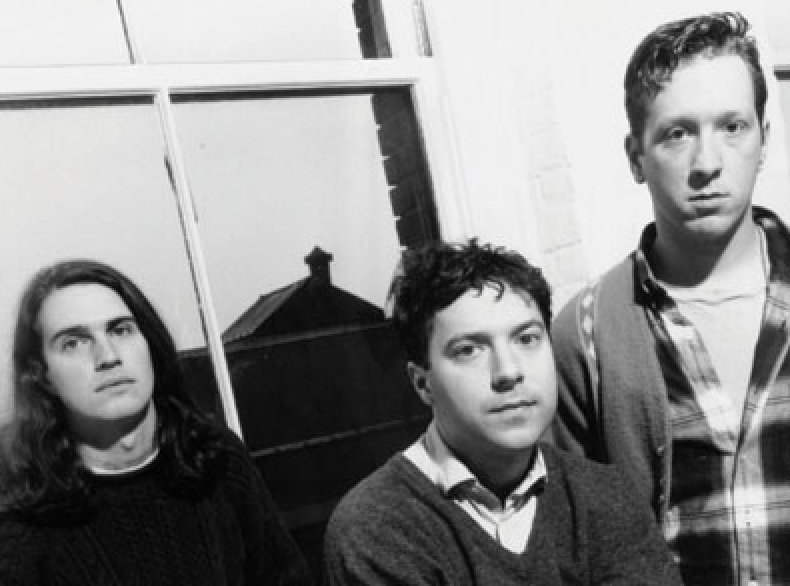


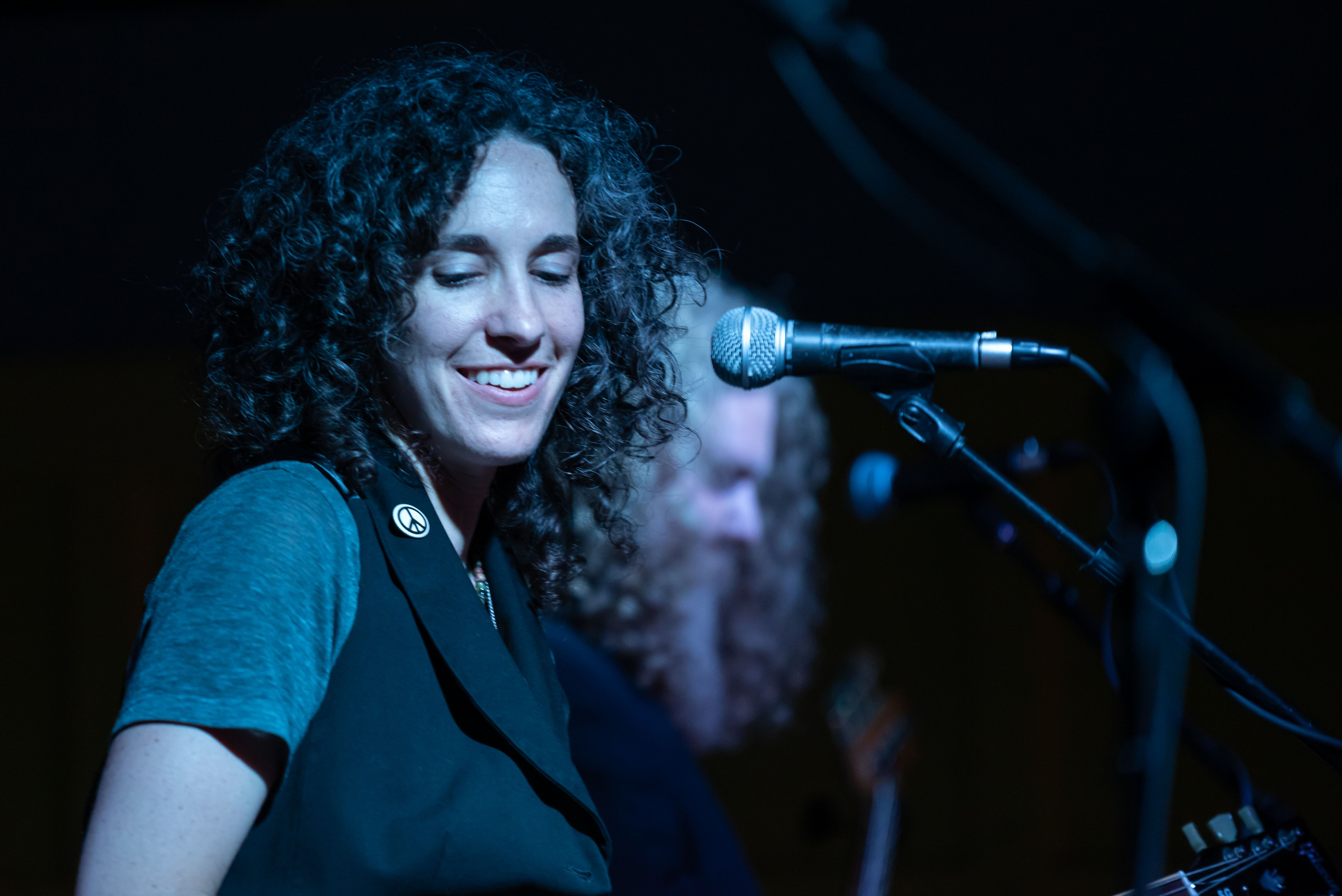

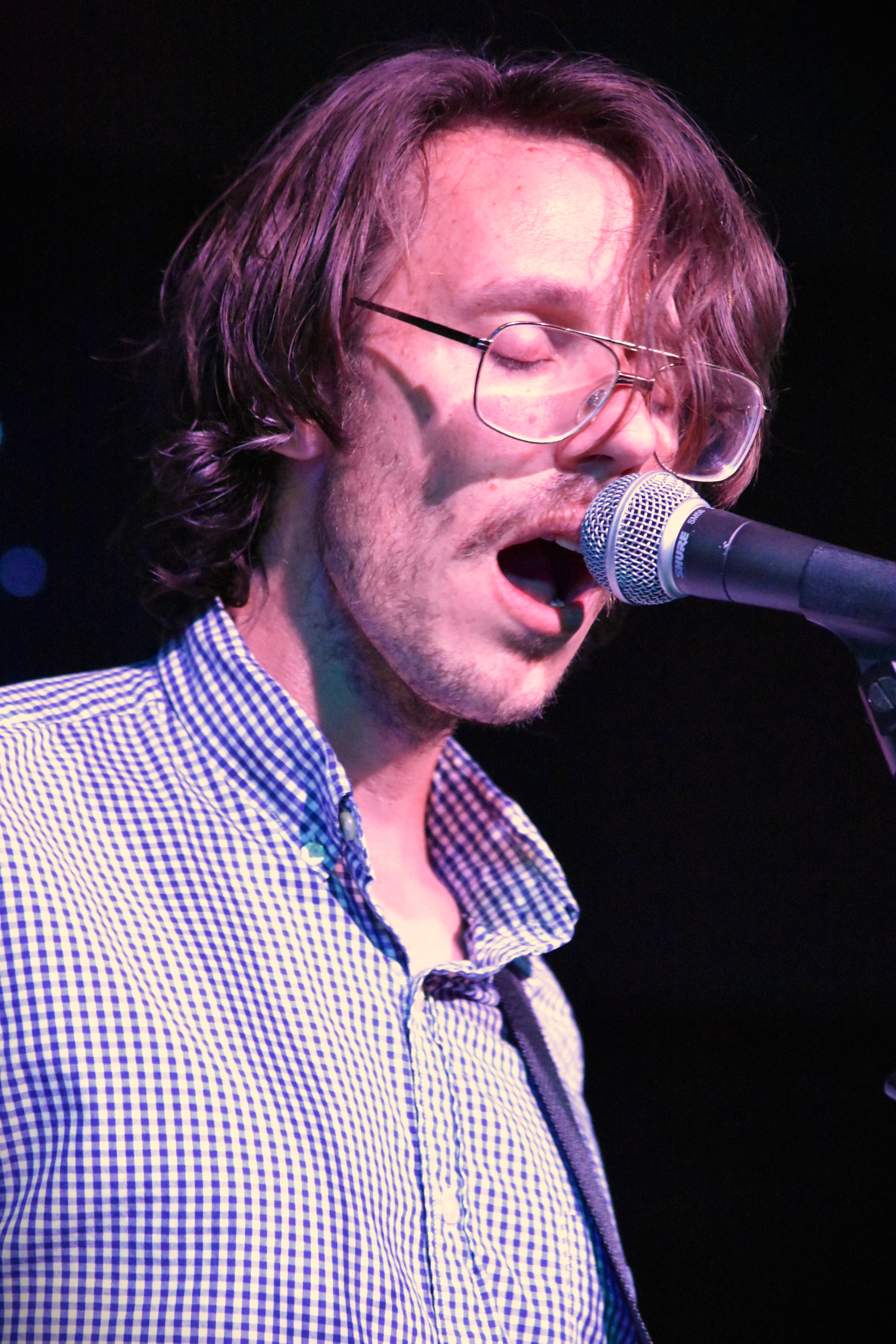
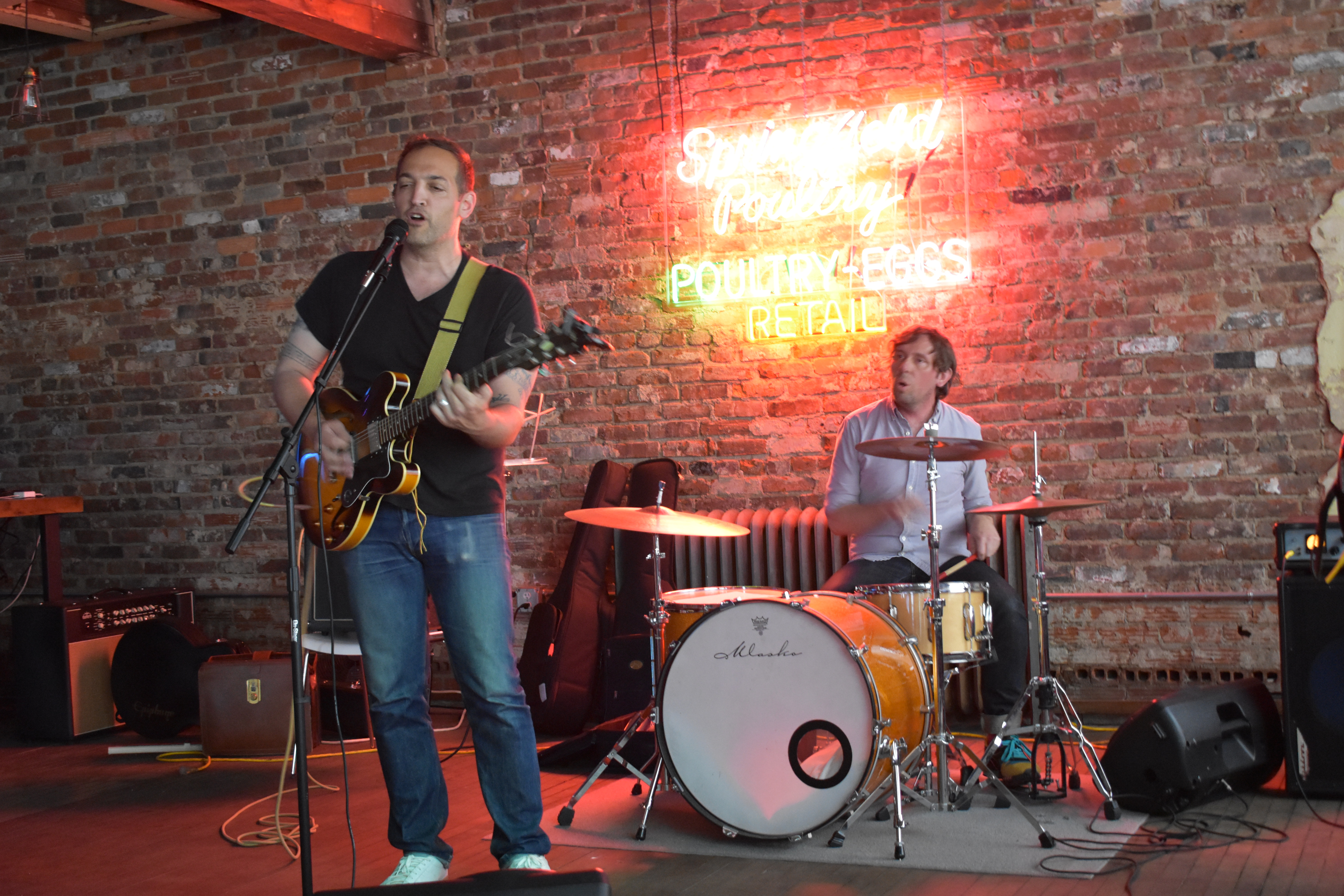


 In our latest installment of ’11 Questions with…’ column, we are excited to feature
  Jeffrey Dean Foster has been making music in a prestigious list of bands for quite some time: The Right Profile, The Carneys and
  ‘I’m Starting To Bleed’ channels an inner dialogue over how to combat cruelty and a loss of compassion. Like so many of us, Jeffrey Dean Foster watched the social protests following George Floyd’s murder and he felt the need to respond to the inhumanity and hostility of that senseless death. ‘I’m Starting To Bleed’ is a musical response to that loss. While wide-eyed and recognizing the challenge in creating change and reimagining healthy communities, the songs on this record move between an almost pastoral, agrarian feel to passionate Big Star and Kinks influenced rock and roll. Several of the songs, while hopeful, carry the weight of the difficult worlds we find ourselves challenged to change and remake.
 Dr. J: Where do you often derive inspiration to make music?
 We want to extend our sincere gratitude to Jeffrey for answering our questions and continuing to make some really excellent music! Click on the links throughout the article to visit Jeffrey’s
  Kyleen has been making music since 2009 when she took inspiration from the social bond of those involved in the Dayton music community. This sense of attachment and commitment led to 2016’s ‘
 Kyleen’s next record in 2018 was the enthusiastic ‘
 Dr. J: What can you share with us about when and how you started writing your latest album
  Dr. J: Where do you often derive inspiration to make music?
 your tuesday afternoon alternative