Our video of the day comes courtesy of Izzy True (they/them) The band formed in upstate New York in 2015, currently based in Chicago, IL. The project has gone through many lineups over the years, always led by Izzy Reidy (guitar, vocals). These days, Reidy is joined by their friends Sam Goldstein (drums) and Curtis Oren (bass, sax, flute). The slow buildup of this song captures a feeling and sensibility around trying to understand the reasons that someone is upset. The music sways and swirls around that idea of wanting to know the reason that someone is angry.
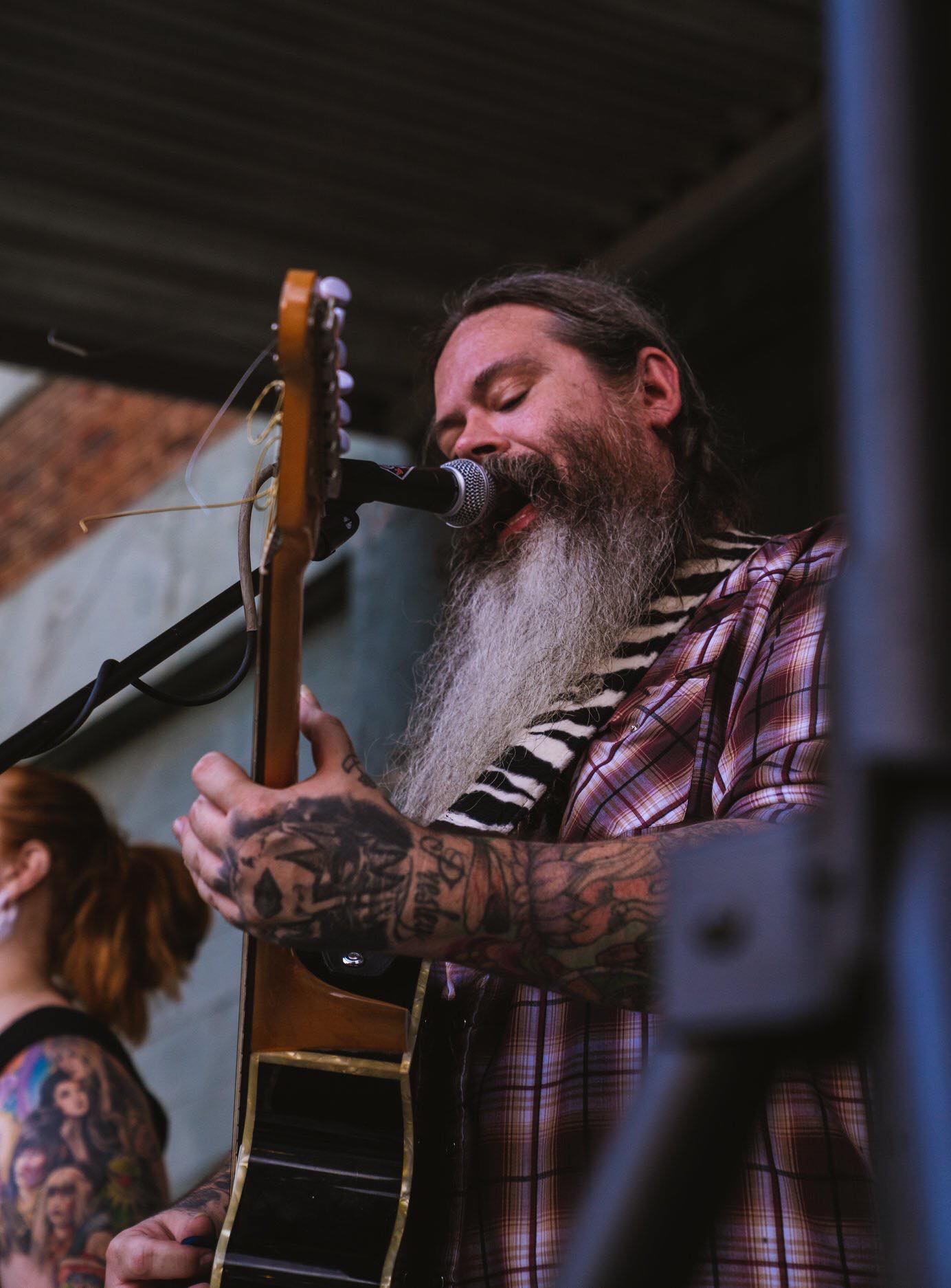
We could not be more excited about an ’11 Questions with…’ column, then we are to have songwriter, guitarist, singer, visual artist, philosopher, tattoo artist/business owner and Revered — Chad Wells! He graciously answered these questions a few months ago. To call Chad a renaissance man is to understate all of his gifts. As with all of the musicians who are so kind to participate in this effort, we want to publicly thank him for taking the time out of his busy schedule to answer these questions!
Chad has a lengthy music resume. His time in COH, The Jackalopes, Cricketbows, Wells & Watson and more has given him the opportunity to make some of the most creative atmospheric psychedelic punk rock this side of… well, to be honest these projects are incredibly unique and comparisons just end up showing that the writer’s reach exceeds their grasp.
We have been fans of Cricketbows since their fantastic album, ‘Diamonds‘. That record careens across classic rock to country to an excellent Monkees cover (Porpoise Song) to straight-forward rock and roll (All the Way Down and Kiss Alive) to psychedelic rock (Little Tiny Houses and Landing on The Moon) and tremendous emotional territory in-between all of those genres. Chad’s music has evolved over time from in your face, direct punk made with an eye toward embracing the emotions you are feeling to reflective psychedelia and folk rock in the Wells & Watson duo. And unlike this writer, Revered Wells’ reach is easily within his orbit.
If you do not know the music of Cricketbows then I am excited for you! There is significant music discovery in your future. What started as a solo project transformed over several records into a full band. In fact, the excellent ‘Diamonds‘ which was recorded in 2014 with Grammy winning Producer Brian Olive (Soledad Brothers, The Greenhornes) was the first full length record as a complete group released in 2015. The following EP ‘Communion‘ incorporated pop music intro the band’s repertoire in songs like ‘Beat of My Heart‘. During the challenging year of the pandemic, Chad was even able to create a set of dystopian electronic singles under the moniker New Way Vendetta. Check out the 80’s homage in ‘Light as a Feather.’
The latest Cricketbows album ‘Raised on Rock and Roll‘ raises the stakes higher. While maintaining the sonic elements of their previous recordings, ‘Raised‘ questions the nature of connections that we all too often take for granted. What is it to speak like ‘Electric Guitars’ as Chad sings in the title track? What does it mean to pretend that you care for others when you really do not (‘Saccharine Sweet‘). Remember when you would listen to music when you were supposed to go to sleep but the thrill of discovery kept you awake? The song ‘Raised on Rock and Roll‘ explores the consciousness shaping experience of hearing music that is part of your identity for the first time. Not putting on the cast off identity of your parents and family, but a sense of who you are in music that is not reducible to what others around you are doing. This is so powerful for those of us who had to work to discover music in the pre-Internet era. Even if that experience occurred under the covers when you were supposed to be sleeping. And now when we can hear almost anything at any time in any place, finding music you can call your own is just as life affirming.
Shaped not only by the pandemic but the search for the most captivating melody while still holding the idea of experimentation in their hearts, Cricketbows capture the challenges of identity, social bonds, the faces we show to others and the faces that make us who we truly are as people, as citizens, as family.
Dr. J: What can you share with us about when and how you started writing your latest Cricketbows record?
Chad Wells (CW): We started writing the songs that would become the new Cricketbows record around the same time that our ‘Communion‘ EP came out (Fall 2017). I’m kind of always writing and to collect my ideas, I use everything from quick iPhone video and audio recordings, to scraps of paper and napkins. Generally, these ideas make their way to the band slowly – a song at a time – and we work them up in rehearsal, play them live for a while and eventually we feel like we have enough material to record an album and we go do that. In this case, Zachary Gabbard of The Buffalo Killers had Produced our EP ‘Communion‘ and almost as soon as that collection was released, he called us back to the studio to start working on the next release before we had even had time to start really working on any new material. So, the songs for “Raised On Rock And Roll” were culled from existing demos I had laying around in various states of non-completion and we also chose a couple songs that we had been playing live for some time that I had released as Cricketbows before the band really existed. We went into the studio at Howler Hills (Gabbard’s studio) but the sessions didn’t end up on the final album because the songs just didn’t feel like they were fully together yet. So we took the songs on the road, playing as many shows as we could and we continued reworking the demos in our rehearsal space and we hammered them into shape. Once we finally had a tight set of songs together, we went into the Candyland Recording Studio in Dayton, Kentucky and laid down the tracks that would become the album.
Dr. J: In the past you worked closely with your bandmates in Cricketbows, did the coronavirus/Covid-19 situation change how you wrote and worked on the record?
CW: The record was fully written and recorded prior to the Pandemic so it didn’t really affect the writing or production of the album. It did monumentally delay the release of the album and the mixing process had to be done remotely. Whereas in the past we would sit in on mixing sessions with an engineer and sort of have our hands on the board and our suggestions acted upon in real time, in this case we would get mixes from Mike Montgomery via email, listen and send him back notes about what to turn up, what to turn down, what to EQ differently and things like that.
Dr. J: ‘Raised on Rock and Roll‘ is a song that lists several artists, albums and lyrical imagery from several classic rock and roll songs, did you set out to address these particular artists/musicians/creatives when starting to work on that song?
CW: I definitely didn’t start with a list or motive to include all of those specific artists, songs or albums. I had the first line “I speak electric guitar, in fire orange and bright blue” which was a nod to the fact that Aarika and I both suffer from or are gifted with a bit of Synesthesia – a condition where sounds may be experienced in the brain as a color or shape or taste instead of just as sound. From there, I wanted to expand on that line in a direction that talked about how my mind works the way it does because I was raised in a world where Rock And Roll music was not just a backdrop to life, but was an important element of life. We weren’t religious really and we weren’t sports or military people. Everything that a so-called “normal” person might get from those family traditions and lifestyles, I got from Rock And Roll – so I tried to touch on some of the cornerstones and recurring images and symbols of that part of my upbringing. So I reference the “lightning” of “Elvis and Bowie and Frehley” as well as referring to The Beatles as the “Saints” I say prayers to along with nods to everything from Fats Domino to Pink Floyd.
Dr. J: ‘Kentucky Mountain Lady‘ also addresses love and personal connection – is that a correct interpretation of some of the lyrics and the feel of the song? In addition, if that is correct, did you intend to address love or did the song evolve in that direction over time?
CW: I wrote that song after a road trip down to Menifee County, Kentucky with my wife and my Father to visit the final resting place of my Grandfather, Bethard Wells. While we were there, we drove around the area where my paternal Grandparents grew up. The smells of those woods and the beautiful fog filled hollows between the hills and mountains was extremely inspiring to me and left me with a yearning to get back there. I imagined a world where my wife and I could live and love and survive on the fruits of what that land provides. I tried to paint a pretty straightforward picture of that magical area and how the environment itself could be a sort of rural utopia perfectly suited to living a life with someone you love outside the rat race of the city.
CW: I tend to play with a few alternate tunings and one of my favorites is called “open G”. When a player that’s used to playing in standard tunings, sets their instrument up in an alternate tuning, they tend to find and unlock creative ideas that they wouldn’t necessarily stumble upon in the standard tuning. Chord shapes are different and note relationships between the strings are different. So I had stumbled across these very jazzy, warm chords that ended up being the verse chords of the song. Open G lends itself to a very country, bluesy, rural folk sound so the sound of the tuning and playing around with different droning patterns with moving melodic patterns was the perfect bed for the song. In hindsight I hear a lot of Joni Mitchell influence in the song and music and it also feels very similar to “Echoes” by Pink Floyd – as does our song “Raggedy Hillside” which is also in Open G. I think that the experiments with Americana style music by Led Zeppelin, The Rolling Stones, Crosby, Stills And Nash and groups like that have always been some of my favorite music but I rarely wrote anything in that style until Cricketbows came together and we just sort of drifted into that kind of sound together as a band when we started using less distortion and effects and started playing a lot more acoustic music and using very clean sounds.
Dr. J: Where do you often derive inspiration to make music?
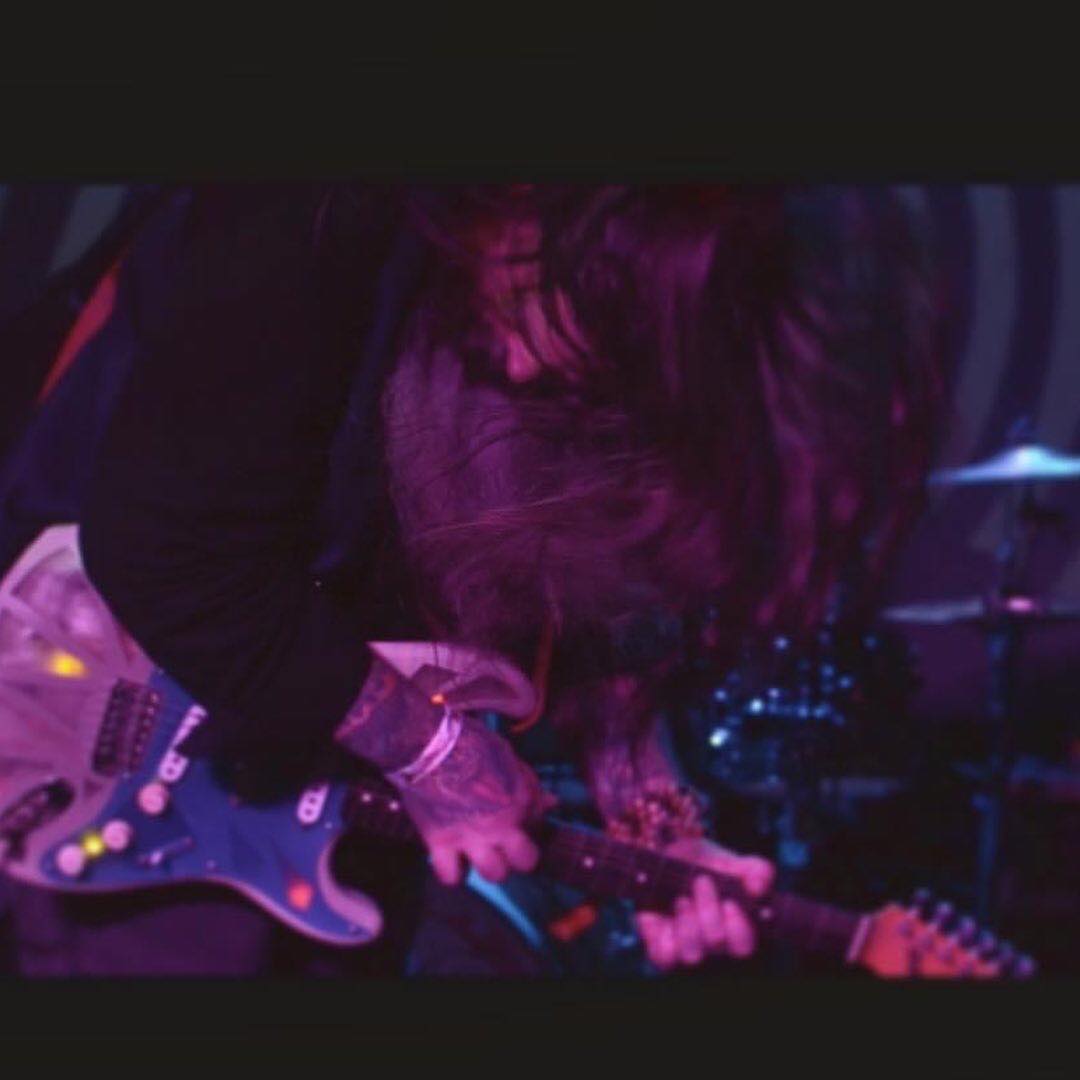
CW: My inspiration to create is compulsive. I communicate better with lyrics and sound than I do just trying to talk. I listen to a ton of music and when I hear something that gives me an emotional response, I am often inspired to try to recreate that response myself with my own music. I’m not talented enough as a player to just learn someone else’s song and get the emotional response that way, so I experiment and fiddle about until I find things that speak to me. Also, playing with the players in Cricketbows is so inspirational. I can play two notes and everyone will join in and play along and expand a song into new territories through improvisation that is really amazing. The average listener, just happening upon one of our jam sessions would believe that we had written and rehearsed something a million times because it’s so cohesively fluid – but in reality we are probably playing the thing for the first time.
Dr. J: How would you describe the music that you typically create? How has that process evolved or changed over time (especially as you think about your journey from ‘Diamonds’ to the ‘Communion’ EP to the most recent album)?
CW: Cricketbows has always been about being honest. My previous bands were always sort of me playing a character or a role that is about the theme of the band. In Cricketbows I found a place where I could write from my heart and soul and not worry about what the audience might think. As we’ve progressed as a group, I think that we’re developing a sound that is pretty hard to pin down but it’s also extremely recognizable in some way. Our disparate influences come together to form something that’s all at once new and exciting but is also steeped in the traditions of what I can only call “Classic Rock”. Cricketbows is psychedelic but we tend to stray away from the trappings of typical psychedelia. We’re not using silly voices and effects that sound like we’re other-dimensional ghosts. We’re not using a bunch of effects that make the guitars go “WAHWAHWAHWAHWAH”. We’re using ultra clean signals and real voices with minimal effects. It is far more relative to early Elton John, Blind Faith, Eric Clapton and Fleetwood Mac than it is to MGMT. or King Gizzard or whatever modern psych is. I guess in the simplest terms, we’re more like “The White Album” than we are like “Sgt. Peppers”.
Dr. J: What is next for you musically? How would you describe your thoughts at this point for your next project after ‘Raised on Rock and Roll‘?
CW: I have no idea how we’re going to move forward with a new record in the current state of the world. I hope that vaccines work and that we’re eventually able to be in a room together again. If not, it’s going to be some interesting home recording stuff. We have been playing around with some cover songs recorded remotely. We released a Black Crowes (“Good Friday”) cover back around the beginning of the Pandemic and lockdowns and it was pretty fun and interesting. We have a couple others in the can that we may or may not release. One is a cover of “I Think We’re Alone Now” that is pretty fun. Side projects are also a thing. Aarika and I do a couple different projects together that work well as far as remote recording and things like that – New Way Vendetta, a new-wave influenced electro-punk band and Wells & Watson – a darker Americana themed acoustic project. We have plans to release a bunch of stuff under a bunch of different names in the near future. As for Cricketbows, we’ll just be patient and see where it all goes.
Dr. J: What is your favorite song to perform? What makes it a current favorite in your performances?
CW: “Ride Or Die” from the new album is my favorite to perform as it has a country-gospel intro with lots of harmony and prettiness and then kicks into a beefed up glam punk song that is a really strong, tight rock song.
Dr. J: What is one message you would hope that listeners find in the unique nature of your latest music?
CW: I think this new music is about honesty and love. Be true and do love stuff!
Dr. J: As a musician, how are you adapting to the challenges of the Coronavirus?
CW: It’s very hard. It’s hard to watch the people who are out trying to play shows and do stuff as if Coronavirus is not happening – or as if it’s worth the risk. We haven’t been in a room together as a band during this whole thing. We haven’t played a note in the same room together as a band in over a year now but I sit at home and watch all kinds of people who are still cramming into studios and onto stages together. I know how little these players get paid to perform. I know how few people are coming out to see them play. Music is my life to the degree that I’ve risked everything to do it. Gone broke trying to do it. Passed on jobs and money and all kinds of opportunities to do other things because the music was more important than anything else. But I’ve seen what the virus has done to friends and members of my family who got it – and if my music was responsible for one single Coronavirus case it would absolutely destroy me. People who are playing shows will say that they’re being careful, but what about the people who might come to your show that aren’t being careful?
So here we sit, not playing any album release shows. Not booking anything for the future and hoping that it’ll all go away. In the meantime, I’m trying to use the time constructively. I’ve learned new recording programs, I’ve learned to do animation that we use in our videos and I’ve focused on a lot of the behind the scenes, nuts and bolts parts of our online presence and band management stuff that usually gets overlooked.
You can follow Chad Wells and Cricketbows on various social media including:
We want to extend our sincere gratitude to Revered Wells for answering our questions and continuing to make some really excellent music! Click on the links throughout the article to visit Cricketbows’ Bandcamp page! If any musicians or artists would like to participate in future ’11 Questions’ columns, please feel free to email us at drjytaa@gmail.com. All photos and images courtesy of Chad Wells and Gabrielle Elizabeth Studios photography.
Our fine city of Dayton, Ohio, US not only has a storied history of music with Brainiac, The Breeders, Guided By Voices, Shrug not to mention all of the funk music legends, but it is also home to some of the most exciting music being made today! Adding to that musical legacy is Oh Condor. The post-punk quartet has an exciting new record for you! Equal parts indie, noise rock, math rock, alternative — this is a band that quite rightly defies labels.
In our latest installment of ’11 Questions with…’ column, we are excited to feature Jeffrey Dean Foster. We reached out to him a few months ago with 11 questions for this column. He is a gifted songwriter, singer, guitarist and more. We want to publicly thank him for taking the time out of his schedule to answer these questions for us here at YTAA!
Jeffrey has been making some of the most thoughtful and energetic music being made anywhere over four decades. His music encompasses a compassion that is direct and reflective. Jeffrey is able to create rock, folk, alt-country among other genres that feels inviting and invigorating. His touch with a lyric demonstrates both his fresh insight and a call for recognizing the connection and community that we all have a place we can call home together. Add the swirl of electric guitars, bass, drums and keyboards to the mix and then the music feels like an invocation!
Jeffrey Dean Foster has been making music in a prestigious list of bands for quite some time: The Right Profile, The Carneys and The Pinetops are on his resume! He has had an active solo career as well. The Right Profile was sought after and signed by Clive Davis for Arista Records. In these groups and in his solo work, he has created music that tells stories about the social bonds that hold us together even when we do not feel that comfort. His latest record, ‘I’m Starting to Bleed’ is being released on vinyl this weekend for Record Store Day (on Saturday, June 12 this year). All proceeds from vinyl sales will go to support The Shalom Project based in Winston-Salem, North Carolina – an organization that supports families in need. Chris Stamey, The Veldt and The Backsliders are all releasing EPs for The Shalom Project as well. On July 30th ‘I’m Starting To Bleed’ will be made available on CD and on all streaming platforms.
‘I’m Starting To Bleed’ channels an inner dialogue over how to combat cruelty and a loss of compassion. Like so many of us, Jeffrey Dean Foster watched the social protests following George Floyd’s murder and he felt the need to respond to the inhumanity and hostility of that senseless death. ‘I’m Starting To Bleed’ is a musical response to that loss. While wide-eyed and recognizing the challenge in creating change and reimagining healthy communities, the songs on this record move between an almost pastoral, agrarian feel to passionate Big Star and Kinks influenced rock and roll. Several of the songs, while hopeful, carry the weight of the difficult worlds we find ourselves challenged to change and remake.
Dr. J: What can you share with us about when and how you started writing your latest music?
Jeffrey Dean Foster (JDF): I never really stopped writing but this past pandemic year did give me some impetus to focus a few things. Having the world kind of stop and be still had it’s good points.
Dr. J: You worked closely with Don Dixon and Mitch Easter, what led to your recording with them?
JFD: I’ve known them for 35 years. Dixon was one of the first “rock stars” that would talk to me when I’d go see his totally rocking band Arrogance. They had really great songs AND they were gloriously loud in the clubs. Mitch produced the very first record that I ever made around 1982. Since then Mitch and Don have been involved in almost every record I’ve ever made in one form or another. Dixon produced a tape that ultimately got my first band [The Right Profile] signed to Arista Records. Mitch has mixed my last two albums (‘Million Star Hotel’ and ‘The Arrow’) They are just trusted friends that I can call on for musical or life advice.
Dr. J: Tell Somebody is a personal favorite, so I am naturally curious about it. The song is compelling and driving musically. The lyrics seem very optimistic. Did you set out to write a song about human connection when starting to work on that song?
JDF: I think I was alone at home one night and some fave musician had just died. That of course is going to keep happening with more and more frequency as time marches on. My last album The Arrow seemed to have a lot to do with mortality and we lost a lot of friends in the years leading up to it. Most of Tell Somebody came really quickly as just a wake up call to reach out to your pals and loved ones before you can’t.
Dr. J: Headin’ Home also addresses other connection and the comfort of home – is that a correct interpretation of some of the lyrics and feel of the song? In addition, if that is correct, did you intend to address connection, love, and community or did the song evolve in that direction over time?
JFD: Headin’ Home was definitely a product of the pandemic lock down way of life. I just started playing and singing about homebound snapshots. It’s a bit of a laugh. I recorded it all real quick and then made an entire video on my iPhone in several hours. It was pretty tossed off but it kind of inspired me to see that I could do that, record something at home that folks might wanna hear.
Dr. J: How did the ‘I’m Starting To Bleed’ record come together musically for you?
JDF: After week after week of police brutality last spring and summer I wanted to get something out of me. I didn’t know if anyone would ever hear it or even if they should hear what a white singer songwriter had to say about any part of the black experience. I thought a lot about that and almost thought that it shouldn’t see the light of day. After talking to some friends I came to terms with it. Michael Kurtz from Record Store Day heard the song and came back with the idea of putting it out as a vinyl EP for Record Store Day. We decided that it would be a benefit for The Shalom Project where I work. I help run a free medical clinic, food pantry and clothing closet there. We even talked some of my other NC friends into contributing an EP for the cause. My old friend Tabitha Soren of MTV News fame had the perfect photo for the album cover too.
Dr. J: Where do you often derive inspiration to make music?
JDF: I live out in the woods on a lake and every window I look out shows me some kind of nature and wildlife. I don’t end up writing songs about that wildlife but I think it makes me feel part of something larger than me. A lot of my songs can be pretty internal and puzzling and I like that. The songs that are making up the ‘I’m Starting to Bleed’ record are probably the most straightforward and external that I’ve written. More outward looking than inward.
Dr. J: How would you describe the music that you typically create? How has that process evolved or changed over time (especially as you think about your journey from ‘I’m Starting To Bleed’)?
JDF: I’m not the one to tell you much about the songs that I come up with. I’ve think people that I like write songs because they can’t talk about the ideas or emotions in them. I’m totally fine with art not spelling things out for me, whether it’s Bob Dylan or David Lynch. I’ll tell you one bit of trivia though. When I was writing and recording I’m Starting to Bleed I wanted something almost like a Smokey Robinson song but with a healthy shadow of dread. Of course, I can’t come anywhere close to Smokey but that was something to shoot for.
Dr. J: What is next for you musically? How would you describe your thoughts at this point for your next project after I’m Starting To Bleed? You can read an early review from The Big Takeover.
JDF: I have some other tracks already mixed and I’d like to finish a few more and make a new full length JDF album. ‘I’m Starting to Bleed’ feels like a kind of special record. Everything about it could have only happened in this weird time of 2020/2021.
Dr. J: What is your favorite song to perform? What makes it a current favorite in your performances?
JDF: Well nobody is performing much these days. I have a song called ‘So Lonesome I Could Fly’ that I’ve probably played more than any other. It’s had a full life, from being covered by Marti Jones to being included in the soundtrack to the Ang Lee film ‘Billy Lynn’s Long Halftime Walk’ I still don’t get tired of playing it.
Dr. J: What is one message you would hope that listeners find in the unique nature of your latest music?
JDF: Any message that listeners can tune into is fine with me. If they feel anything, you’ve succeeded in some way. I just know that music that affected me during my life just got under my skin and now is just part of me. I mean ‘Waterloo Sunset’ by The Kinks might as well be tattooed on me. It’s that much a part of me.
Dr. J: As a musician, how are you adapting to the challenges of the Coronavirus?
JDF: I’ve done some streaming shows that some very professional and careful people having arranged. Playing on good looking stages and filming and recording the happening and then beaming it out to the internet. I have no desire to try and take some dumb shortcut and try and get folks packed into a club scene. I’m comfortable out here in the woods too!
You can follow Jeffery Dean Foster on various social media including:
We want to extend our sincere gratitude to Jeffrey for answering our questions and continuing to make some really excellent music! Click on the links throughout the article to visit Jeffrey’s Bandcamp page! If any musicians or artists would like to participate in future ’11 Questions’ columns, please feel free to email us at drjytaa@gmail.com. All photos and images courtesy of Jeffrey Dean Foster.
Not able to listen to Your Tuesday Afternoon Alternative when we air the show on Tuesdays from 3-6pm on WUDR Flyer Radio? We now have a Mixcloud page where you can listen to YTAA at your convenience! Please take a moment and visit our Mixcloud page!
The video for ‘Seven’ has been around since the release of The Connells‘ first album Darker Days. The album has recently been released digitally for the first time by the group on their bandcamp page! Tim Harper, the band’s long time soundman re-mastered the album this year. The name of the song ‘seven’ harkens back to a time when Mike Connell, the main songwriter at the time, numbered songs as he wrote them.
The Don Dixon, Dave Adams, Steve Gronback and Rod Dash-produced album was first released in 1985 on the band’s independent label Black Park Records in the United States, and on Elvis Costello’s Demon Records in the UK and Europe. The Black Park and Demon versions of the record are quite unique with different cover art and running order. Most significant is the substitution of “In My Head” for the instrumental “Dial It”, and several tracks were remixed. The Black Park version of the album was re-released in 1987 on TVT Records after the band signed with that label which they would be with until the end of the 1990s. The last record for TVT was 1998’s Still Life. The Connells released Old School Dropouts on their Black Park Records in 2001.
The Connells are preparing to release their latest record ‘Steadman’s Wake’ later this year.
“Hot & Heavy” is from Lucy Dacus’ upcoming album ‘Home Video’ out on Matador Records on June 25. Pre-order at: https://lucydacus.ffm.to/homevideo. Dacus is making some of the catchiest and melodic songs around. This follow-up to ‘Thumbs‘ uses swirling guitars and nostalgia to great effect. The build on this song alone is worth the price of admission. Do yourself a favor and give a listen to her covers of ‘In The Air Tonight‘ and ‘Dancing in the Dark‘. It is so refreshing to hear covers that while inspired from the original versions bring a unique voice and interpretation to well known songs.
Dolph Chaney is making some of the finest indie influenced power pop around! This version of ‘Now I Am A Man‘ is a new interpretation of the song he originally recorded in 2008. This dynamic version includes backing vocals from the always impressive Lindsay Murray of Gretchen’s Wheel! His new record, ‘This is Dolph Chaney‘ is up for pre-order and comes out on February 20, 2021 courtesy of the fine folks at Big Stir Records. We highly recommend that you check it out!
Today’s Short Takes comes courtesy of Dayton songwriter Andy Smith. We call Andy the ‘Mayor of Tune Town’ for his amazing approach to melody. He has been in several projects including Andrew and The Pretty Punchers with their incredible ‘Goodbye Ohio’ to projects such as Me Time with their most recent single “Catch Your Eye” and the full length Vol. 2. Andy has a rare lyrical gift that makes his music sound timeless. Check out their bandcamp page for more music!
What are you listening to right now? Little Ann – “Deep Shadows.” I always love “discovering” overlooked soul from the 60’s and Little Anne’s “Deep Shadows” may be the crown jewel. The songs, recordings, and her vocal performance are all unbelievable. The title track, “What Should I Do”, and “Who Are You Trying to Fool?” are standout tracks from the vinyl release but it’s solid all the way through. A true gem.
Paint – “Spiritual Vegas.” One of the newer albums I’ve been really enjoying is “Spiritual Vegas” by Paint. It’s the side project of the lead guitar player from the Allah-Las. It feels old and new simultaneously, which I like. The standout track for me is “Land Man” but the whole album has a nice flow to it.
Hailu Mergia & Dahlak Band – “Wede Harer Ouzo.” Though I haven’t listened to this album very recently it was on heavy rotation for a solid year for me. I’ve never been a huge world music guy, but there’s something different about this album. The lo-fi recording, the group choruses, and Mergia’s intense organ playing had me revisiting the whole album over and over again. “Bati Bati” and “Minlbelesh” are a couple favorite but I feel like this album is best listened to in it’s entirety. Perfect for cleaning the house, taking a drive, or being alive.
Jack Name – “Magic Touch.” I preordered this album after hearing the first single “Karolina” one time. I think that song is magical. The rest of the album held up, too. It’s a sad, thoughtful record. The vocals were recorded very close-up so it sounds extra personal and introspective. Another great release from my current go-to record label, Mexican Summer.
Many thanks to Andy for sharing what he has been listening to with us!
If you would like to contribute to a future Short Takes essay, just let us know at drjytaa on gmail.com! Our contact us through this page. We would love to feature more artists and listeners of Your Tuesday Afternoon Alternative!
On December 24, 2020 Jeremy Street released his latest record ‘The Jeremy Street’ EP. One of the standout tracks on the record is his song about his hometown, Dayton. The song is appropriately called ‘Dayton’ and features production by “Txger Vppercvt” and mixing by “KO” of “The Lost Order.” The chorus on this is an ear worm of the highest order. You will be singing that chorus.
In our tenth installment of ’11 Questions with…’ column, we are excited to feature Kyleen Downes. She is a gifted songwriter, singer, guitarist, pianist and ukulele player. We want to publicly thank Kyleen for taking the time out of her schedule to answer these questions for us here at YTAA!
Kyleen have been making some of the most open and energetic yet introspective music in the Dayton Music Scene. She has a clever way with words that inspires listeners while not feeling calculated to produce a particular feeling. Kyleen is able to turn a phrase in a way that is direct and welcoming. Her insightfulness allows a listener to see themselves and their experiences cast with an unfailing honest optimism and generosity of spirit that opens the heart.
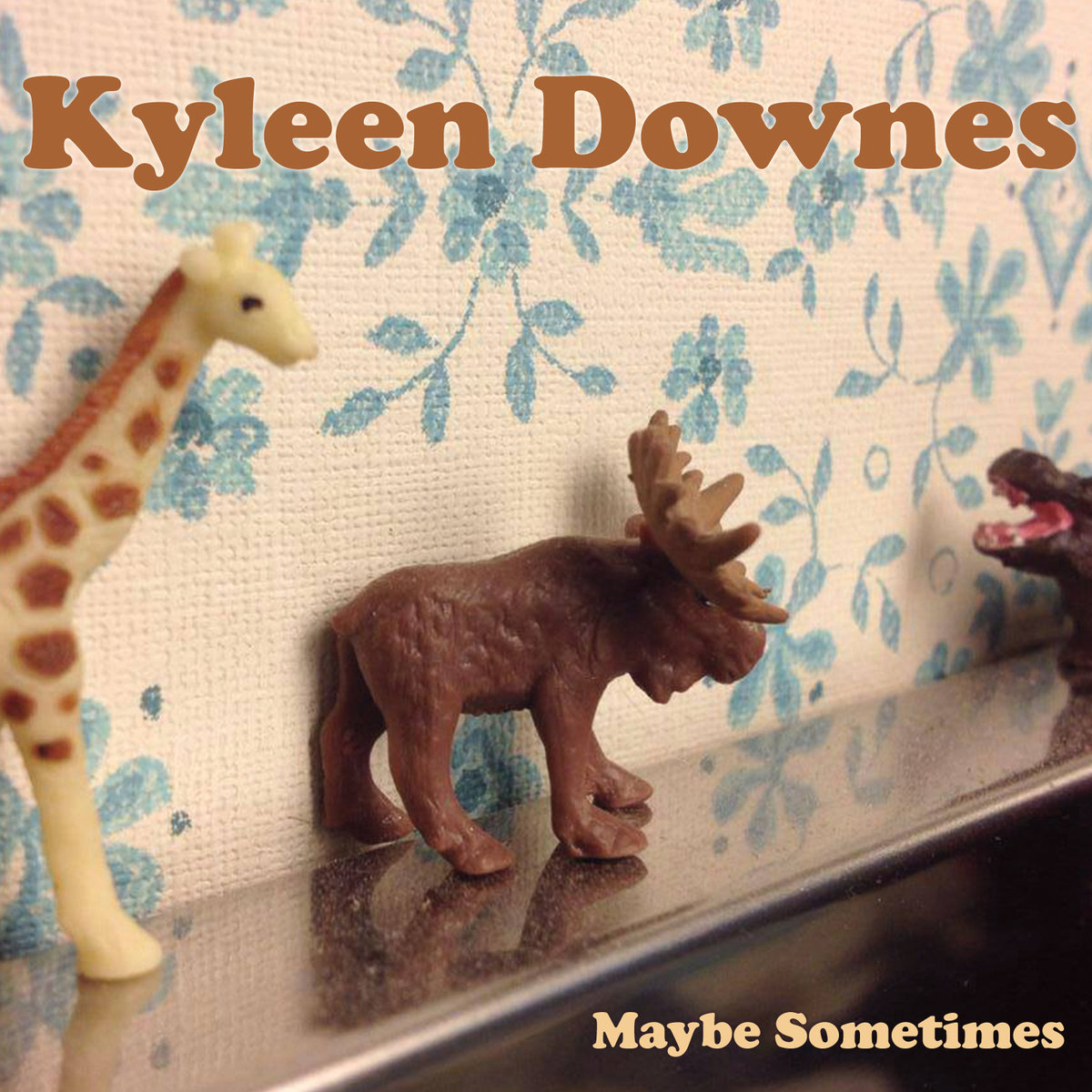
Kyleen has been making music since 2009 when she took inspiration from the social bond of those involved in the Dayton music community. This sense of attachment and commitment led to 2016’s ‘Maybe Sometimes.’ This first collection of songs from Kyleen demonstrate her range as both a vocalist and multi-instrumentalist. The seven songs on this album stretch across a continuum of personal reflection (‘Things Change‘) to the accessible optimism of finding those splendid moments with those you care about (‘Perfect Ending‘) and the percussive staccato of ‘Talk Like You Don’t Know‘.
Kyleen’s next record in 2018 was the enthusiastic ‘Friends‘ EP. Kicking off with the driving ‘Exhale‘ and then flowing into the rocker ‘And So It Goes.’ An excellent One-Two punch. The upbeat attitude on ‘Goes‘ pulls one into a happy space. The next two songs, the confessional ‘Six Years‘ and imaginative ‘In Dreams‘, showcase creative guitar work and inventive lyrics. The album demonstrates her humor and continuing evolution as a songwriter. ‘Friends‘ marks Kyleen’s collaboration with producer extraordinaire Patrick Himes. Himes’ analog approach to recording allows the songwriting to stand on its own in a way that digital recording all too often interferes with. Instead of approaching recording the music in an overly serious manner or in a heavy handed way, Downes and Himes establish an accessible palette that still explores deep and real emotion. The delightfulness of the album is a strength. The partnership with Himes will lead her to the most recent album ‘Come On Sit Down.’
Come On Sit Down opens with the community jam ‘Give Up The Ghost.’ The handclaps and percussion drive this sing along! The next song, the single, ‘Last Drop‘ demonstrates the strength of Kyleen and her band. They can move across genres, styles and arrangements surprisingly easily without feeling contrived. Authenticity is a rare pleasure in popular music. Kyleen’s background in music and as a guitar teacher/instructor are consistently illustrated on this record. The background vocals from a Dayton Power trio of vocalists — Khrys Blank, Amber Hargett and Heather Redman elevate ‘Last Drop‘ into a remarkably evocative ending. ‘All My Life‘ leads the record into personal reflection which is then followed by the poppy ‘Keep Your Ways.’ ‘Tiny Little Table‘ courses with an electricity and humor that are distinctive to Kyleen Downes. The album closes with the meditation on thankfulness of ‘In The Dark.’ Consistently, Kyleen’s lyrics are descriptive, accessible and deeply affecting. If you have had the opportunity to see her perform, you know that Kyleen’s stage presence is charismatic.
Dr. J: What can you share with us about when and how you started writing your latest album Come On Sit Down?
Kyleen Downes (KD): I had written a few new songs in 2018 and started working on them with the band. I booked some studio time in November of 2018 and unfortunately, the band hadn’t had enough rehearsal prior to going into the studio.
I went to the studio solo and brought in two low-key songs, In the Dark and All My Life. I had initially thought of releasing a few singles but once the band started recording in 2019, the song list began to grow. So I figured I’d hold out and do a big sha-bang of a full length LP to be released on vinyl (a first for me!) I really liked the idea of combining songs I worked on with the band, with the songs that I fleshed out in the studio with just myself and my producer Patrick Himes.
Dr. J: You worked closely with Patrick Himes at Reel Love Recording Company here in Dayton, Ohio, what led to your recording with Patrick?
KD: Patrick reached out to me several years ago, just to say hi and introduce himself. Which is a great example of just how cool Dayton musicians are! I knew of his work through Paige Beller when he worked on her live album, Live and a Person. After seeing her show and hearing that recording, I knew once I had material to record I wanted to work with him. It’s an added bonus that he records analog, or to tape, because that was a new experience I wanted to try!
Dr. J: ‘Myself’ is a personal favorite, so I am curious about it. The song is compelling and driving musically. Yet the lyrics seem to address loneliness. Did you set out to address the concerns and challenges of human connection when starting to work on that song?
KD: I really appreciate the thoughtfulness of this question, it’s almost like you knew my state of mind when I wrote it! I was spending a lot of time by myself and with my thoughts. Even after spending time with others I was coming home to just me. I had recently gone through a very challenging separation after a long relationship. I was desperately trying to find security within myself, because I was realizing how it can be unhealthy to have it only come from someone else.
Dr. J: All My Lifealso addresses other connection – is that a correct interpretation of some of the lyrics and feel of the song? In addition, if that is correct, did you intend to address connection, love, and relationships or did the song evolve in that direction over time?
KD: That song came out of strumming chords in waltz time, which I wonder if that made me feel a certain sweetness about it when the lyrics started to flow. It’s definitely rooted in the sense of connection you feel when you realize you’ve longed for a certain feeling all your life and now that you have it, you must not take it for granted.
Dr. J: How did Myself come together musically for you?
KD: Funny enough, it came to life after opening my front door and hearing a melodic squeak from the hinge. I hummed it and went down to my basement to harmonize it on the guitar. Then I let the lyrics flow. I was so caught up in this song, I wrote some of it while sitting in my personal finance class, haha! The song was originally an acoustic song, but when I was prepping to take it into the studio, I really wanted to play around with amping it up. I started by playing it on the electric guitar and then adding some guitar parts. I heard a song on the radio one day and used that for my drum inspiration. I’ll be honest, it still feels like a puzzle to me, so I’m really happy to hear it resonates with you!
Dr. J: Where do you often derive inspiration to make music?
KD: Through listening to music. As a kid, I loved singing a catchy song or letting music transport my daydreams. Then once I started playing guitar, the sound of it inspired me to create different musical ideas. So often, I will come up with an idea after or while listening to music. If I connect with the vibe, I like to channel my own version of it. And undoubtedly if there is a guitar in my hands, I end up playing something that catches my ear and I want to start fleshing it out (which can sometimes lead to late bedtimes, ha ha!)
Dr. J: How would you describe the music that you typically create? How has that process evolved or changed over time (especially as you think about your journey from Friends to Come On Sit Down)?
KD: I describe my music as sonically approachable. As I’ve progressed, I’m getting more comfortable with taking risks and I feel/hope my music has become a little more candid since the beginning of my journey.
Dr. J: What is next for you musically? How would you describe your thoughts at this point for your next project after Come On Sit Down?
KD: I have several thoughts on future projects BUT I know I need to focus on the material first. There are several songs I am excited to finish. I think once the music comes to life, the projects will reveal themselves more clearly. I’ve also lost a few songs along the way because they get pushed aside once a project starts. I plan on finding them though! (They may have fallen under my couch, who knows!?)
Dr. J: What is your favorite song to perform? What makes it a current favorite in your
performances?
KD: I LOVE performing Tiny Little Table, it has SO much fun guitar stuff. I have a looper pedal which allows me to layer different guitar riffs and solo. I use my looper to harmonize vocals as well, which is a new skill for me. When I am playing with my band, Six Years will forever energize and empower me!
Dr. J: What is one message you would hope that listeners find in the unique nature of your latest music?
KD: We are all human and we are only human.
Dr. J: As a musician, how are you adapting to the challenges of the Coronavirus?
KD: I’ve taken this forced downtime to put effort into my website, creating a virtual store, and performing some livestream shows. I’ve learned a lot about the different technology available that can help me be more creative and produce new content. I’ve also been maintaining a consistent newsletter. I used to get so overwhelmed about writing a newsletter, but now I’m so happy about being able to engage with people, it’s become a fun part of my month!
You can follow Kyleen Downes on various social media including:
We want to extend our sincere gratitude to Kyleen for answering our questions and continuing to make some really excellent music! Click on the links throughout the article to visit Kyleen’s Bandcamp page! If any musicians or artists would like to participate in future ’11 Questions’ columns, please feel free to email us at drjytaa@gmail.com. All photos and images courtesy of Kyleen Downes and Gary Mitchell.
Streaming Forward, Powered By The Past - if you love the 80s music, new music, Eurovision, cheesy pop and awesome playlists then let's get this pop party started!

 We could not be more excited about an ’11 Questions with…’ column, then we are to have songwriter, guitarist, singer, visual artist, philosopher, tattoo artist/business owner and Revered — Chad Wells! He graciously answered these questions a few months ago. To call Chad a renaissance man is to understate all of his gifts. As with all of the musicians who are so kind to participate in this effort, we want to publicly thank him for taking the time out of his busy schedule to answer these questions!
 If you do not know the music of
  The latest Cricketbows album ‘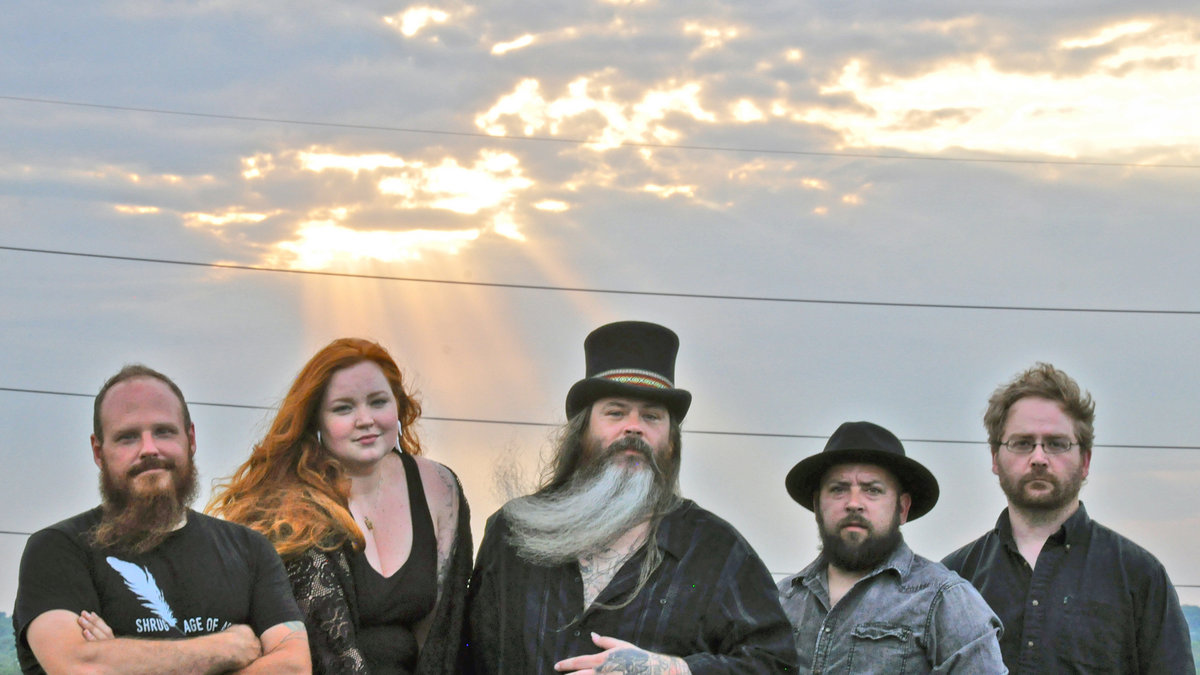
 CW: I definitely didn’t start with a list or motive to include all of those specific artists, songs or albums. I had the first line “I speak electric guitar, in fire orange and bright blue” which was a nod to the fact that Aarika and I both suffer from or are gifted with a bit of Synesthesia – a condition where sounds may be experienced in the brain as a color or shape or taste instead of just as sound. From there, I wanted to expand on that line in a direction that talked about how my mind works the way it does because I was raised in a world where Rock And Roll music was not just a backdrop to life, but was an important element of life. We weren’t religious really and we weren’t sports or military people. Everything that a so-called “normal” person might get from those family traditions and lifestyles, I got from Rock And Roll – so I tried to touch on some of the cornerstones and recurring images and symbols of that part of my upbringing. So I reference the “lightning” of “Elvis and Bowie and Frehley” as well as referring to The Beatles as the “Saints” I say prayers to along with nods to everything from Fats Domino to Pink Floyd.
 Dr. J: Where do you often derive inspiration to make music?
 CW: I have no idea how we’re going to move forward with a new record in the current state of the world. I hope that vaccines work and that we’re eventually able to be in a room together again. If not, it’s going to be some interesting home recording stuff. We have been playing around with some cover songs recorded remotely. We released a Black Crowes (“Good Friday”) cover back around the beginning of the Pandemic and lockdowns and it was pretty fun and interesting. We have a couple others in the can that we may or may not release. One is a cover of “I Think We’re Alone Now” that is pretty fun. Side projects are also a thing. Aarika and I do a couple different projects together that work well as far as remote recording and things like that – New Way Vendetta, a new-wave influenced electro-punk band and Wells & Watson – a darker Americana themed acoustic project. We have plans to release a bunch of stuff under a bunch of different names in the near future. As for Cricketbows, we’ll just be patient and see where it all goes.
 We want to extend our sincere gratitude to Revered Wells for answering our questions and continuing to make some really excellent music! Click on the links throughout the article to visit Cricketbows’
 Jeffrey Dean Foster has been making music in a prestigious list of bands for quite some time: The Right Profile, The Carneys and
  ‘I’m Starting To Bleed’ channels an inner dialogue over how to combat cruelty and a loss of compassion. Like so many of us, Jeffrey Dean Foster watched the social protests following George Floyd’s murder and he felt the need to respond to the inhumanity and hostility of that senseless death. ‘I’m Starting To Bleed’ is a musical response to that loss. While wide-eyed and recognizing the challenge in creating change and reimagining healthy communities, the songs on this record move between an almost pastoral, agrarian feel to passionate Big Star and Kinks influenced rock and roll. Several of the songs, while hopeful, carry the weight of the difficult worlds we find ourselves challenged to change and remake.
 Dr. J: Where do you often derive inspiration to make music?

 Today’s Short Takes comes courtesy of Dayton songwriter Andy Smith. We call Andy the ‘Mayor of Tune Town’ for his amazing approach to melody. He has been in several projects including
 Kyleen has been making music since 2009 when she took inspiration from the social bond of those involved in the Dayton music community. This sense of attachment and commitment led to 2016’s ‘
 Kyleen’s next record in 2018 was the enthusiastic ‘
 Dr. J: What can you share with us about when and how you started writing your latest album
  Dr. J: Where do you often derive inspiration to make music?
