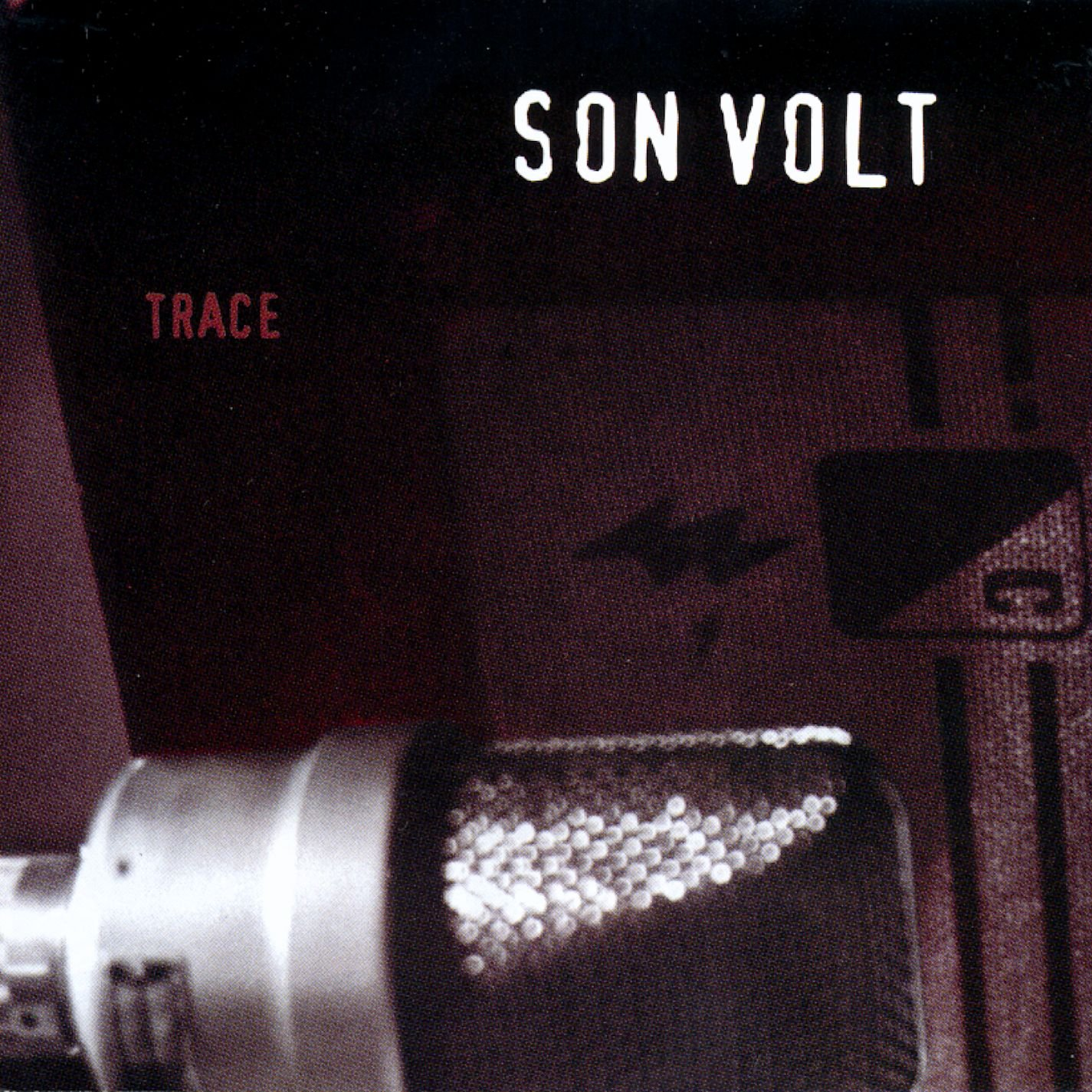
The first time I heard Son Volt’s Trace, I thought, “Ah hell, here it is: Uncle Tupelo’s divorce decree, notarized on reel-to-reel, filed away in some Missouri courthouse basement where the plaster peels and the janitor drinks Falstaff or Bud Light out of a Styrofoam cup.” Jay Farrar stomps out of the wreckage, lugging his guitar like a busted-down jalopy radiator, and instead of screaming, he sighs, drawls, lets the words leak out slow like oil seeping into gravel. This isn’t rock and roll as firecracker catharsis; it’s rust-belt requiem. It’s the sound of gas stations going dark one by one on Route 66 and every half-drunk loner still praying the neon sign will flicker back to life.
See, Farrar isn’t interested in saving your soul or even giving you a hook to hum while you brush your teeth. He’s interested in reminding you that America has grit and grime, and the old idols, they are rotting.
Listen to “Windfall.” That harmonica doesn’t soar; it wheezes like your uncle’s lungs after three decades underground in coal mines. Yet it lifts you anyway, like catching a breeze on a road you know dead-ends in thirty miles. Farrar’s voice is carved from stone, immovable, half-asleep but never indifferent. He sings like he’s standing in the ruins of the sixties, looking around and muttering, “Guess this is what we’ve got left.” And dammit, what we’ve got left sounds gorgeous.
Trace isn’t alt-country. Alt-country is a marketing gimmick, an excuse for journalists to pretend they’ve discovered a new continent when really they’ve just found the same sad barstools Willie and Merle already angry because they don’t recognize the place. Trace is country with its skin peeled off, electrified and nailed to a telegraph pole. It’s Neil Young after the hangover, it’s Gram Parsons without the messiah complex. It’s the hum of America when the AM station fades out and all you’ve got is static—and suddenly the static is more moving than the song that was playing ever was.
Take “Drown.” Farrar growls it like a prophecy for people already underwater. The guitars crash like waves on cheap levees, the kind that always break. It’s furious and exhausted at the same time, the way you get when you’ve fought too long and realized the fight was fixed from the start. Then there’s “Tear Stained Eye,” where he asks if seeing a river run dry will make you start crying. Spoiler: it won’t. You’ll just stare and keep driving, and that numbness is exactly what Farrar’s documenting—he’s the archivist of our collective shrug.
But here’s the trick, the brilliance: instead of despair, Trace gives you dignity. The dignity of standing in a field that used to be a town, looking at the weeds grow through concrete and saying, “Okay, maybe this is freedom.” Farrar doesn’t want your hope. He wants your honesty. The honesty that says America’s dreams are boarded-up diners and broken jukeboxes, but inside those ruins, a few songs still rattle around like sacred relics.
And maybe that’s why Trace still matters. Because it’s not trying to sell you redemption. It’s not asking you to believe in the comeback of some mythic heartland. It’s just holding up the Polaroid of what’s gone and saying, “Here, take a look. Doesn’t it hurt beautifully?”
In the end, Trace is a ghost road record. It takes you down highways that don’t exist anymore, past radio towers that no longer transmit, through towns that can’t even hold onto their own zip codes. But by the time you get to the last track, you don’t feel lost. You feel found—because someone finally put into music that vague ache you’ve been hauling around, the one you thought was just your private sorrow. Turns out it’s everybody’s sorrow. And Jay Farrar, God bless his gravelly heart, sang it so we could all drive through it together.
In 2025, we’re plugged in, logged on, and supposedly “connected,” but more often than not, we’re trapped in algorithmic echo chambers, scrolling past everything that might actually challenge us or make us feel. Enter indie radio—the last refuge of the real, the unpolished, the alive. Stations that spotlight local bands, spin weird tracks nobody else dares touch, and actually talk to listeners remind us that music isn’t just noise—it’s a social act. Defiance, scored in sound – insurgent spirit.
Shows like ours, Your Tuesday Afternoon Alternative, prove that listening doesn’t have to be lonely. It can be messy, communal, even dangerous in its honesty. Indie radio is where discovery collides with conversation, where culture isn’t handed down in sterile corporate playlists but grown organically, like a basement jam session gone right.
And let’s be blunt: in a media landscape ruled by conglomerates, corporate homogenization, and the soulless chase for clicks, community radio is a lifeline. It champions voices that don’t fit the formula, celebrates the weird, the regional, the overlooked, and keeps local identity breathing while everything else flattens into sameness.
As the noise around us grows louder, the need for authentic closeness grows sharper. Indie radio reminds us that music is a shared experience, conversation is sacred, and community—built on passion, rebellion, and mutual respect—is not optional. It’s essential.
Let’s talk about sad songs. Not just the ones that make you sniffle politely into your latte or stare wistfully out the bus window like you’re in a Sofia Coppola montage. I mean the real gut-wrenchers. The ones that hit like a tire iron to the heart at 2 a.m., that make you want to lie down in the wreckage of your own teenage angst and just feel things, goddammit. Why do these songs—these elegies in three chords and a cloud of distortion or whispered strings—move us in ways that triumph, joy, or even white-hot rage rarely can?
It’s because melancholy is the one universal that doesn’t require a passport. You don’t have to be fluent in a language, rich, cool, or even particularly literate to feel the weight of a minor chord progression in your bones. It slips through the gaps in your defenses like cigarette smoke under a locked door. Everyone, everywhere, has had their heart broken, or their dreams flicker out like busted neon. And sad songs? They’re the mixtape we make for our ghosts.
And look, I’m not talking about some weepy Ed Sheeran tripe here. I mean the good sad songs. The Big Stars and Elliott Smiths and Billie Holidays of the world. Galaxie 500 staring blankly at the floor through layers of reverb. Nick Drake whispering from inside a velvet-lined coffin. Songs that ache, that bleed, that mean it.
Sad music, real sad music, doesn’t pretend to fix you. It meets you in your pit and pulls up a folding chair. It doesn’t offer a hug so much as sit in the corner, staring into the same void you are, nodding along like, “Yeah, man. It’s messed up. Pass the bottle.” And in that moment, in that terrible mutual silence, there is communion.
Melancholy is Truth in a World of Happy Lies
Let’s face it: most of life is a hustle. A series of grins, resumes, likes, and hollow how-you-doins. Upbeat songs are marketing jingles for this illusion of perpetual sunshine. But sadness? Melancholy doesn’t lie. It doesn’t sell. It just is.
In a world obsessed with productivity and performative optimism—“good vibes only” and “rise and grind” and all that garbage—sad songs are the last rebellion. They remind you it’s okay to break down. That you can’t always be okay. That maybe you’re not the only one dragging a bag of old regrets down a long hallway of wrong turns.
Lester Bangs once said music should be honest, even if it’s ugly. Especially if it’s ugly. And sadness is honest. It’s the realest thing there is. It comes uninvited and leaves when it damn well pleases. And the best artists don’t try to outrun it—they give it a voice. They tune it into something spectral and strange and heartbreakingly beautiful.
It’s in the Sound, Man—That Wound in the Note
Musically, sadness is baked into the DNA. Minor chords, descending progressions, dissonance—it’s a language the body understands instinctively. You don’t think a sad song. You feel it.
Take a piano and slam out a C major. Clean. Uplifting. Now slide that E down to an E-flat. Boom: C minor. Everything changes. That one little shift, and suddenly it’s not a party anymore—it’s a funeral. That’s the thing about music—it doesn’t have to explain itself. The note is the feeling.
And then there’s the delivery. The human voice, trembling at the edge of breaking, is the most honest instrument on Earth. When Nina Simone sang “I Loves You, Porgy,” she wasn’t just performing—she was confessing. When Kurt Cobain howled “I miss you / I’m not gonna crack,” you knew he already had. Sadness in song isn’t neat or polished. It’s raw. Unfiltered. It stumbles through the chorus half-drunk and bleeding.
The best sad songs sound like they barely made it to the end. Like the tape is unraveling, the band is falling apart, the singer might cry or disappear or explode. And that tension? That’s the beauty. It’s art made from the edge.
The Autobiography of a Heartbreak
Every sad song is a memory in search of a body. A soundtrack for the first time you watched someone walk away, or the night you stared at the ceiling wishing you could just hit “off” on your brain. And when a song gets it—when it echoes your exact misery back at you—it feels like it was written just for you, by someone who snuck into your life and took notes.
There’s a strange comfort in that, isn’t there? In knowing someone else has suffered just as deeply, cried just as stupidly, hurt just as foolishly. It’s the one-sided conversation that makes you feel less alone. You don’t even have to reply. Just press play, and bleed.
It’s not just nostalgia—it’s mythologizing your own damn sorrow. The sad song turns your pain into cinema. Suddenly your heartbreak is artistic, your suffering noble. You’re not just sad—you’re part of some great, tragic lineage of sad bastards stretching from Schubert to Phoebe Bridgers. It makes the pain feel important.
We Like Feeling Things (Even the Bad Stuff)
Let’s get perverse for a second: people like sad songs because they want to feel bad. Or more accurately, because they want to feel, period.
In an age of numbing—social media scrolls, medicated serenity, binge distractions—we’re desperate for something real. And sadness, for all its discomfort, is real. It’s proof we’re alive. Listening to a sad song is like picking at a scab: you know it’ll sting, but at least you can feel it.
Bangs would’ve said something like: music is supposed to jolt you out of your dumb meat-puppet routine and make you confront yourself. A sad song is a mirror you can’t look away from. And sometimes we need that. We need to wallow a little, scream into the void, and be broken for three and a half minutes.
There’s an odd sort of euphoria in it, too. A bittersweet ecstasy. Like how crying can feel like a release. Or how Leonard Cohen could make you feel elevated even as he dismantled your soul one verse at a time. Because sadness, in music, is not despair. It’s transcendence through pain. It’s catharsis with a backbeat.
Because Some Beauty Only Exists in the Sadness
There’s a kind of beauty you can only find in sadness. Not in spite of it, but because of it. The cracked voice, the wilted melody, the lyric that says “I’m sorry” without ever using the word—it’s like watching a flower bloom in a war zone. Fragile. Defiant. Weirdly hopeful.
And maybe that’s the secret at the core of it all. Sad songs aren’t just depressing—they’re affirming. They remind you that you’re not alone in the chaos. That your pain is shared, even if no one around you knows what to say. That someone, somewhere, felt exactly this way—and made something beautiful out of it.
It’s that transmutation that makes it powerful. Turning grief into grace. Hurt into harmony. It’s alchemy, man. Pure magic.
The Final Chorus
So why are sad songs so emotionally moving?
Because they mean it. Because they speak when you can’t. Because they let you feel when everything else tells you to shut up and move on. Because they remind you of everything you’ve lost, everything you’ve survived, and everything you still carry.
Because they are the soul, laid bare. A guitar with no filter. A voice with no armor. A truth with no apology.
And let’s be real: nobody ever got goosebumps from a happy song at 3 a.m. Nobody stood in the dark, half-drunk and broken, and put on “Walking on Sunshine.” No. They reached for “Holocaust” by Big Star. For “Between the Bars” by Elliott Smith. For that one Radiohead song that always sounds like winter.
Because sadness, in music, is a kind of salvation. Not escape—but understanding. A sacred ache. A wounded love letter to the worst parts of being human.
And that, friends, is why the sad song always hits harder. Even when—especially when—you don’t want it to.
End Scene. Drop the needle. Cue violins. Fade to silence.
The last YTAA Show of 2024 broadcast on 12-31-2024 is up on the YTAA Mixcloud page! Please give the show a listen and share it with all of your friends. The first time you sit behind the mic and hear that low hum of the studio, you realize it’s a weird kind of experience. You’re not broadcasting a war, no, you’re not even sending out a weather report; you’re sending out your heartbeat. You’re putting yourself on the line, with nothing but an inch-thick foam divider and a sliding board full of dials between you and the abyss of total silence, the void of being utterly ignored. But that’s the thing. Even when you feel apart and separated from others, you’re not really alone.
There’s something visceral about radio. Yeah, even in 2024. It’s a love affair with anonymity after a fashion — you’re sending out these fragments of yourself, these half-thoughts, barely strung together sentences (I try, I actually am trying for something snappy and catchy), hoping someone, anyone, will hear. But even when no one’s listening, it doesn’t matter. You can say the weirdest stuff. You can be as loud as you want, or as quiet as you need to be in that moment. It’s like a secret between you and the speakers on the other side of the room. Who knows if anyone’s tuned in? Does it matter? Perhaps, it doesn’t matter. You’ve got the mic, and in this space, it’s yours even if it is only for three hours. You’re not just DJing songs; you’re performing the act of being. Becoming.
And there’s a rhythm to it, a pulse you can feel in your chest. The songs bleed into each other, and you start talking, almost without thinking, like an out-of-body experience. You riff, you ramble, you may talk about everything and nothing — akin to late-night rants, whispered secrets, some tale of life in the margins. It’s punk, it’s soul, it’s funk, it’s rock ‘n’ roll, and if you’re doing it right, it’s all on the edge of disaster, waiting to fly off the rails at any moment. And that’s the magic. You could screw it up. You probably will. But that’s what makes it real. In an increasingly overproduced, AI-scam-laden world, radio may be messy but that is what creates some of the joy in doing it.
Well, folks, here we are at the end of 2024, and I gotta say—thank you for sticking with me through the weirdness, the noise, and the absolute chaos that is Your Tuesday Afternoon Alternative. You could’ve been anywhere, listening to anything, but you chose to tune in to this mess of records, rants, and ramblings. Maybe you were searching for something new, or maybe you just wanted to escape the grind. Either way, I’m grateful for your ears, your time, and your madness. This isn’t just my show—it’s our show, so keep riding the wave, wherever it takes us in 2025.
Indie holiday songs, unlike their mainstream counterparts, are often an unpolished celebration of the quirky, the imperfect, and the raw. Maybe it’s an odd take on a Carol or a rousing ode to jingling bells sung by a motley choir. To truly understand what makes these songs stand out, we must first look at the world of indie music itself. Indie artists, who thrive on identities of authenticity, willingness to take risks and creative freedom, often take traditional holiday tropes and turn them upside down. For example, Dolph Chaney sings a rocking version of “Jingle Bells” to Van Halen’s Panama. These artists carve their own paths, making holiday tunes that feel like a moment of honesty amidst the well-worn path of commercial jingles and grand orchestras.
So, what does it take to craft a great indie holiday song?
The heart of it is emotion, not necessarily the big, grand gestures associated with festive anthems. It is not simply about snow, ice, and a blanket of white, Indie songs lean into subtlety, sometimes with a melancholic twist that contrasts with the usual holiday cheer. Picture a song with hushed vocals that almost sound like they’re being whispered just for you, with soft guitar strums or synths that pull at your heartstrings in a way that’s intimate, not loud. This feeling of quietude is what gives the song an unrelenting emotional weight. It’s not about being in your face; it’s about creating a space where the listener feels like they’re a part of something private, something personal. It’s a kind of vulnerability that mainstream holiday tunes often lack. Of course, there is also the sarcasm, picture of the Waitresses’ “Christmas Wrapping” or The Ramones’ “Merry Christmas (I Don’t Want to Fight Tonight)” as examples of mixing the dark with the season of light. The Killers twisting the convention of Santa Claus with “I Feel It In My Bones” is a delightful dark take on the rules imposed by that red suit-wearing perhaps not-so-jolly Kringle.
Just because a holiday song is quiet does not make it unimportant. Take a song like Sufjan Stevens’ “Christmas in the Room”. Here, Sufjan’s delicate falsetto paired with minimalistic instrumentation creates a sense of emotional distance, yet closeness at the same time. The song doesn’t scream “holiday” but gently reflects on love, loss, and the passing of time — which, when you think about it, is what the holidays are all about. This blend of melancholy and nostalgia is a defining feature of the best indie holiday tracks: they understand that the holiday season is often complex, not just filled with cheer, but tinged with reflections on the year gone by.
Another key element for an indie holiday is quirkiness. Indie music, after all, is about breaking norms, and holiday songs should reflect that characteristic. Where mainstream holiday music might rely on brass bands, bells, and bells (again, just in case you missed it), indie artists will look to different sound textures: distorted vocals, electronic flourishes, offbeat rhythms. They play with expectation. A holiday song that’s anything but “sugary sweet” — one that challenges conventions, and presents an alternate universe where the holidays aren’t just a simple happy ending, can be far more impactful.
The lyrical themes of indie holiday music also elevate it above typical holiday fare. Instead of the generic joy and family love, these songs may dive into topics like loneliness, isolation, or the bittersweet nature of reunions. Kathleen Edwards sings about simply surviving the holidays, which flies in the face of how we are “supposed” to feel during the holiday season. Come on, isn’t the relief when it’s all over demonstrate the truth in the lies we tell ourselves about forced cheerfulness.
Think of the way indie artist Phoebe Bridgers reinterprets festive themes — there’s always a sense of both humor and sadness woven through her lyrics. Embracing the positive and negative side of the human condition does not take a holiday during the holiday season.
Sure, there can be some room for reflection on personal growth, the complexities of relationships, and how the holidays can bring those things into sharp relief. This makes indie holiday songs so relatable, as they tap into the messy realities that many people face during the season. This realism is a much-needed counterpoint to the consumer-driven holiday cheer that often drowns out any feelings of uncertainty or sadness.
A final note on what makes a great indie holiday song is the power of uniqueness. A truly great indie holiday song sounds like nothing you’ve heard before. It doesn’t rely on the same old cliches or harmonic progressions. Instead, it experiments with sound, emotion, and form, creating something that feels new yet timeless. I know that sounds oxymoronic, and perhaps it is. It may not be a song you’ll hear on every department store playlist, but that’s precisely why it stands out.
We can imagine that what makes a great indie holiday song is its ability to feel — to evoke something real in pain, in joy, in anticipation, in being let down. Maybe a good holiday indie tune gives us a few minutes of genuine emotion, whether joy, melancholy, or nostalgia. It’s about being authentic and true to oneself, embracing imperfections, and telling a story that feels real, even within the fantastical world of holiday music, where we sing about flying reindeer, jolly old elves, snow creatures, and toys.
In the coming weeks we celebrate the holidays in full indie music style — is that really a thing? On Tuesday, December 17th we will be playing new, classic, and cover holiday songs on the show. Another year has come and gone. Can anyone else believe that we have been doing this for at least fourteen years, sheesh time does pass fast!
Indie holiday music is like that stray cat you take in—scrappy, scruffy, full of attitude, but somehow comforting. It’s the sound of bells and lo-fi drum beats weaving through a haze of reverb and melancholy, like a cold winter’s night painted in pastel hues. Forget those sugar-coated carols, these songs are the unsung heroes of the season, cloaked in irony, aching for connection amidst the forced cheer. They’ve got that off-kilter honesty, a rawness that refuses to conform to the Hallmark image of Christmas. It’s a quiet rebellion, but hell, it’s also really kind of beautiful.
We know that there is a lot of stress during the holidays with all the planning, shopping, and whatever else we are told to do during the holiday season. Well, we believe that any task goes better with music. So, pour yourself the ‘Nog, eat a cookie or three and let us help you relax with some great indie holiday music. If you have a suggestion for a cool holiday tune, let us know on drjytaa on the gmail!
Dr. J can’t wait to co-host the 14th Annual Indie Holiday Radio Show on WUDR Flyer Radio 99.5/98.1’s Your Tuesday Afternoon Alternative with our good friend and frequent guest on the program, Tom Gilliam, who always brings some interesting holiday music to the mix. And as always, the talented Mrs Dr. J has made many a fine contribution to the show as well! You expect nothing less.
This year you have two chances to hear the indie holiday festivities! The first broadcast is on Tuesday, December 17th from 3-6 PM. Listen on 99.5 FM in Dayton, Ohio, USA, or stream the broadcast at wudr.udayton.edu. And if that was not enough we load the show into Mixcloud! You can listen on Wednesday at our Mixcloud page! We just can’t wait to play new and classic indie holiday songs for you. Save us some of the ‘nog.
Every year, like clockwork, the music world implodes into its annual rite of passage: the “Best of” lists. It doesn’t matter whether we need them or not. We could all be listening to something that absolutely shreds, some obscure record that deserves reverence. Still, here we are, obsessing over arbitrary rankings, as if these lists will unlock some divine, objective truth. It is as if, somehow, this tiny, self-appointed cult of critics, bloggers, and tastemakers can distill the whole sprawling mess of 365 days of music into neat little categories that tell you what was really good.
It’s a bit comical, really. These lists are nothing more than trendy cultural currency, an exercise in opinion policing. As if, come December, we all need some authority to tell us what albums we should have liked. Sure, there are some gems in those Top 10s, some records that hit like a lightning bolt, that maybe wouldn’t have been discovered without the almighty guidance of Pitchfork or Rolling Stone. But let’s not kid ourselves – the list itself is a product, a marketing tool, another algorithm feeding on your desire for validation. The music may be real, but the rankings? Please.
Every December, the ritual plays out like a predictable drama: the same predictable indie hits, the same half-baked arguments, the same flavor-of-the-month that gets hyped until the world collectively shrugs and moves on. It’s all just noise. And yet, we devour it like it’s gospel, eagerly waiting for the validation that maybe, just maybe, our choices are “correct.” But here’s the thing: music is personal. These lists? They’re just noise. It’s time we recognize them for what they are: empty, meaningless packaging for a world that’s forgotten how to just listen.
And with all that said, we do an annual show featuring several hours of bands, musicians, songs and albums that impressed the hell out of us. But not going to make some silly rank order, just a bunch of songs that we thought were incredible. So, yeah if this is a bit speaking from both sides of the mouth, so be it.
Our YTAA Faves of 2024 show includes music from many excellent musicians, such as Tamar Berk, Wussy, Palm Ghosts, Nada Surf, Waxahatchee, MJ Lenderman, JD McPherson, Jeremy Porter, Former Champ, Jason Benefield, J. Robins, Dreamjacket, David Payne, Bad Bad Hats, Bike Routes, Brian Wells, The Campbell Apartment, Amy Rigby, The Armoires, Librarians With Hickeys, Bottlecap Mountain, Liv, The Popravinas, The Nautical Theme, Smug Brothers, The Cure, The Reds, Pinks & Purples, The Umbreallas, Nick Kizirnis, Guided By Voices, and The English Beat and The Tragically Hip re-releases.
So, if this is just another end-of-the-year ritual that nobody needs but everybody wants, then maybe it is worthwhile as a way to share some of the music that deserves to be heard.
Let’s get something straight from the jump: independent radio—college stations, community stations, those hissing, crackling signals of barely legal wattage—are more than relics. They’re lifelines, and in a world drowning in curated blandness, they’re salvation that is desperately needed. Sure, you’ve got your algorithmic playlists and big-budget streaming platforms that can spit out the sonic equivalent of a hamburger combo meal, but let me ask you this: when’s the last time one of those songs on the apps and services truly blew your mind? When’s the last time a Spotify playlist made you feel something raw, something real, something alive?
Enter the humble, often-overlooked world of independent radio. These stations don’t play by the rules and thank God for that. College and community DJs who aren’t bound by focus groups or corporate overlords telling them which ten songs to cycle endlessly. They’re the anarchists of the airwaves, throwing down pop punk at 3 a.m., jazz fusion at noon, and some spoken-word poetry over ambient noise just because they can. They’re the kid in the back of the record store who’ll tell you that the B-side of a 7” pressed in someone’s basement in 1984 will change your life—and they’re right. Forgive me if this sounds trite or self-serving, but we believe in the power of music to change your life.
This is radio as it was meant to be: unpolished, unpredictable, and unafraid to go weird. College radio, especially, is often powered by the most crucial demographic for musical discovery—students who don’t yet know the rules they’re breaking. These DJs are sometimes just learning what it means to piece together a playlist, to tell a story in 20-minute sets, to unearth that obscure track nobody else has heard of. It’s raw, and it’s beautiful because it’s real.
And let’s not forget the community stations—the hyper-local powerhouses keeping neighborhoods and subcultures alive. These aren’t just radio shows; they’re conversations. They’re where you tune in to hear the pulse of your city, the heartbeat of your neighbors. It’s where activists and artists collide, where voices ignored by the mainstream get a microphone. It’s radio as rebellion, as resistance, as a refuge from the overpowering heavy challenges we all face.
Here’s the thing the big media conglomerates and tech giants don’t want you to realize: not everything should be convenient. Finding great music—or a great anything—takes work. It takes passion. That’s what makes it matter. Independent radio doesn’t spoon-feed you the hits; it hands you a map, points vaguely in a direction, and says, “Go get lost.” And in that wandering, you discover magic. You stumble across a DJ spinning a 10-minute opus made by an area band or a live set from some local group that sounds like they’re playing from the edge of the world. And you want to go there so you can be part of it.
In an era where everything feels like it’s been prepackaged, sanitized, and optimized for maximum engagement, independent radio stands as a glorious middle finger to the machine. It’s messy, it’s chaotic, and it’s alive in ways that nothing else in the modern media landscape can touch even thought they try to say that experimentation came from them.
What’s more, independent radio matters because it’s often the training ground for the voices we’ll be listening to in 10, 20, or 30 years. Think about all the media icons who got their start in college radio. Two words: Howard Stern. Ever heard of Rick Rubin? He was just some punk kid spinning records at NYU before founding Def Jam. Or Ira Glass, who honed his storytelling chops on the airwaves before becoming public radio’s golden boy. The indie stations are incubators for talent because they’re places where experimentation isn’t just allowed—it’s expected.
And don’t let anyone tell you radio is dead. Sure, the format’s shifted, and the big commercial stations are shells of their former selves, but indie radio persists because it’s adaptable. College stations now stream online, bringing their wild, untamed ethos to a global audience. Community stations podcast their shows, extending their reach far beyond the low-powered transmitter on the roof.
But more than that, indie radio matters because it’s personal. It’s not just about the music—it’s about the human connection. There’s something deeply comforting about hearing another person on the other end of the signal, someone who isn’t trying to sell you something, someone who’s just as excited about this obscure Brazilian psych-rock track as you are now that you’ve heard it. It’s a reminder that music isn’t just content—it’s communion.
And yeah, maybe it’s a little romantic to wax poetic about this scrappy corner of the media world. Maybe it’s easier to dismiss it as nostalgia for a pre-streaming era. But dismissing indie radio is to dismiss the very soul of music, the thing that makes it matter in the first place. It’s the idea that art doesn’t have to be perfect, that it doesn’t have to be profitable, that it can just be.
So the next time you’re scrolling through an endless stream of playlists that all sound the same, do yourself a favor: tune in to the static. Find the frequency where some over-caffeinated college kid is ranting about a new band you’ve never heard of, or where a local DJ is spinning records in a tiny room plastered with band posters and graffiti. Listen with your whole heart, and remember what it feels like to discover.
Because independent radio isn’t just a medium—it’s a movement. And in a world that desperately wants you to settle for the lowest common denominator, it’s the one place still daring to reach higher.
Let me tell you something about Your Tuesday Afternoon Alternative with Dr. J on WUDR, broadcasting from the unassuming outpost of Dayton, Ohio: it’s not just a radio show; it’s a séance for the musically restless. Dr. J, equal parts professor (sorry), music priest, and punk-rock lifer, orchestrates a sonic sermon that grabs you by the collar and drags you kicking, screaming, and grinning through the unpolished spaces of independent and local music.
This isn’t your prepackaged corporate playlist drivel, churned out by some algorithm. No, this is real-deal, deep-dive, bloodshot-eye curation. We don’t just play songs; we conduct a reckless, unhinged exploration of soundscapes that defy the mainstream’s sterilized borders. One minute you’re grooving to the jangly guitars of a Midwest indie gem; the next, you’re pummeled by fuzz-soaked shoegaze or swept away by a tender acoustic ballad. It’s a rollercoaster for your ears, and you’re strapped in tight for the ride.
The show’s strength lies in its refusal to compromise. We are not here to appease Spotify metrics or chase TikTok trends. We pride ourselves on digging into the marrow of what makes music vital: the stories, the sweat, and the imperfections that turn a song into a revelation. Local bands? We’ve got them. Overlooked gems? You bet. It’s a treasure map to sounds you didn’t know you needed but now can’t imagine living without.
Sure, the production’s raw, the format loose, but that’s part of the charm. A little nerdy? You betcha! It feels like you’re eavesdropping on a record store conversation in town. If music is a lifeline, Your Tuesday Afternoon Alternative is one of the buoys that keeps us from drowning in the sea of mediocrity. Dayton might be criminally overlooked, but we strive to ensure it’s never unheard of.
As we celebrate 20 years of Your Tuesday Afternoon Alternative, we thought we would ruminate for a moment or two on how music is selected for the show. It is never easy. There is always more that we want to play than we have the time to fit onto a show setlist. Curating a compelling playlist for any radio show is an art form that goes beyond just picking popular tracks or personal favorites. For an indie DJ, like myself, especially one focusing on alternative or non-mainstream genres, the process involves a balance of passion, research, intuition, and a non-ending effort to understand an audience. So, many listeners have asked how we choose music for Your Tuesday Afternoon Alternative, I thought I would create a list of key points and explain how we have been picking music over our 20 year history.
So, take a drink, and let’s jump in. Here’s a personal deep dive into the sometimes chaotic journey of how we select music for this radio show.
1. Understanding the Show’s Identity
The starting point for any DJ is a clear vision of the show’s identity. Being an indie DJ means that here at YTAA we strive to avoid the known names and focus on artists who are making incredible music but are overlooked for oh-so-many damn reasons. We typically try to craft a unique niche to stand out amidst the sea of mainstream programming. Whether the focus is alternative, indie-folk, dream pop, lo-fi beats, underground electronic, or indie rock, this identity serves as a guiding principle for music selection. When we say that we play “Music in all Directions!” this is what we mean.
Theme: Does the show explore specific themes, like nostalgia, indie holidays, memorial shows for those artists that we lost in the previous year, or emerging artists? We often decide to spotlight unsigned musicians or dedicate episodes to genres like shoegaze or post-punk revival.
Mood: We often prioritize mood over rigid genre boundaries. Whether the vibe is mellow, energetic, or experimental, the music should align with the emotional tone they aim to create. We might let more than the usual four songs and then radio break pattern because we don’t want to interfere with the groove, flow, or vibe.
2. Know the YTAA Audience
Understanding the audience is pivotal in crafting a playlist that resonates. While we often play music and artists we love, it is not exclusively about us. An indie DJ often caters to listeners who are adventurous, open to discovering new sounds, and appreciative of diversity. This is a critical piece of song selection for us at Your Tuesday Afternoon Alternative.
Demographics: Who is tuning in? College students might appreciate indie pop and fresh remixes, while an older audience might gravitate toward timeless indie rock or alt classics from the 80s and 90s alternative scenes.
Engagement Patterns: Over the years, we have tried to find ways to interact with the audience through social media, email requests, or live call-ins. Feedback from listeners helps shape future playlists, as we gain insights into what resonates and why those sounds or those artists mean something to the listener.
By understanding an audience, hopefully, we strike a balance between challenging listeners with fresh sounds and offering comfort through familiar tracks. Adventure and comfort may sound like contradictions, and perhaps that is not a problem.
3. Endlessly Scouting for New Music
Fear of missing out on an exciting song is something that drives Dr. J. One of the most exciting yet challenging aspects of being an indie DJ is the constant search for new music. Indie/Alternative music thrives on discovery, and looking for hidden gems means we may listen to hundreds of songs in the week before the show airs.
Digital Platforms: Streaming services like Spotify, Bandcamp, and SoundCloud are goldmines for discovering up-and-coming artists, even though those services have serious problems and refuse to compensate artists for the art they create. Playlists curated by other indie enthusiasts, labels, and blogs often serve as inspiration for YTAA.
Music Blogs and Reviews: Sites like Pitchfork, Stereogum, and Consequence of Sound provide reviews and spotlights on emerging indie artists. Niche blogs that focus on specific genres are especially valuable. Writers in local city papers can be worth their weight in gold in helping us find new artists and new music.
Live Performances: Attending local shows, festivals, and open mic nights allows us to experience new music firsthand and connect with artists in the Dayton community. This direct interaction often results in exclusive tracks or insider knowledge that we can share about the artists.
Labels and Press Kits: Indie labels like Rough Trade, Carpark Records, Gas Daddy Go, Sub Pop, 4AD, Sofaburn Records, Poptek Records, and Matador Records regularly send promotional material to DJs. Receiving press kits with unreleased tracks gives DJs access to fresh music before it hits mainstream platforms.
4. Balancing Familiarity with Discovery
One of the hallmarks of a great indie radio show is its ability to introduce listeners to new music while maintaining a sense of familiarity. That balance is always a challenge – we like to think of it as familiar without being too familiar.
Anchor Tracks: These are well-loved songs by established indie artists that help ground the playlist. For example, including tracks from artists like Tame Impala, The National, or Phoebe Bridgers can provide a touchstone for listeners.
Deep Cuts and Rarities: We often dig into back catalogs of popular bands to find lesser-known tracks, giving fans a deeper appreciation of their favorite artists.
Spotlighting the Unknown: The thrill of indie radio lies in the discovery of fresh talent. By including tracks from unsigned bands or debut singles, hopefully, we contribute, in some small way to creating an air of excitement and exclusivity.
Balancing these elements ensures the show is approachable while staying true to the indie ethos of exploration.
5. Crafting an Authentic Narrative or Flow
Great playlists tell a story or create a sonic journey. We carefully consider the sequence of songs to maintain engagement and evoke a range of emotions. Not too many fast songs in a row, not too many slow songs. We think of it as creating a wave and movement — ups and downs, fits and starts — that keeps the audience engaged and interested.
Opening and Closing Tracks: The first song sets the tone, grabbing the listener’s attention immediately. Over 20 years we usually start with a rocking driving tune. The closing track often leaves a lasting impression, so we choose something memorable or reflective, something that feels like it matters. Something that has the effect of a closer.
Transitions: Songs are placed in an order that feels natural, with smooth transitions in tempo, key, or mood. For instance, an upbeat indie-pop track might flow into a mid-tempo electronic piece before tapering into a dreamy ballad.
Themes: Some shows revolve around specific themes, like a “Summer Nostalgia” episode or a “Women in Music” feature. Thematic playlists require careful curation to ensure cohesiveness.
6. Incorporating Listener Input
Interactive elements often play a significant role across many of our radio shows. We incorporate song requests or dedicate segments to listener suggestions.
Requests: Allowing listeners to request songs fosters a sense of community and makes the show more dynamic. This is a sacred duty. It is important for us to do this to ensure these requests fit the show’s overall vibe.
Shoutouts: Listeners often feel a deeper connection to the show when their recommendations or dedications are acknowledged on air and in social media.
7. Staying True to Personal Taste
Any indie DJ’s personal taste is often the driving force behind their show. And we hope that is true for us. Passion for music is infectious, and when we share tracks we genuinely love, hopefully, it resonates with listeners. Our deep respect and love for local music is a critical hallmark to Your Tuesday Afternoon Alternative.
Signature Style: Do we have a style? Hmmm… this is an interesting question. We often try to develop a signature style that makes the YTAA show distinctive. This could be an affinity for quirky lo-fi sounds, obscure indie, or lush dreamscapes. We love it all.
Experimentation: We might take risks by featuring avant-garde or unconventional tracks, and it does not always work. While not every experiment will succeed, these moments often create the most memorable radio experiences.
8. Navigating Practical Constraints
Despite their creative freedom, we operate within certain boundaries that influence our choices. Yeah, left to our own devices, we would probably play songs with the occasional swear but we can’t. Or more correctly, we shouldn’t because there are consequences if we do so. Does anyone have a spare $25,000 to cover us for a song… right? Yeah, let’s not do that.
Time Limits: A radio hour typically includes advertisements, station IDs, and announcements, leaving about 40-50 minutes for music. We must prioritize tracks that fit the allotted time. This is why we rarely play long songs (five minutes or more is our definition here).
Licensing and Permissions: We often face restrictions on what we can play, depending on the station’s licensing agreements. This can limit access to certain tracks, especially from major or regional labels.
Technical Considerations: Some tracks may require editing for length, explicit content, or spoken elements in the beginning or ending of songs. Again, we have to ensure every song fits seamlessly into the show’s format.
9. Highlighting Diversity and Inclusivity
This matters. We often champion diversity by including music from a wide range of backgrounds, genres, and cultures.
Global Sounds: Many indie DJs explore music scenes from around the world, introducing listeners to genres like Afrobeat, K-indie, or Latinx dream pop.
Underrepresented Voices: Highlighting female artists, queer voices, or musicians of color can enrich the playlist and provide representation often missing in mainstream radio.
10. Staying Current While Embracing Timelessness
Balancing the latest trends with timeless classics is a delicate dance. While we pride ourselves on staying ahead of the curve (if we are lucky), we also appreciate the value of songs that transcend time.
New Releases: Every Tuesday afternoon we regularly update the station libraries with the latest tracks, ensuring YTAA shows feel fresh and relevant.
Evergreens: Some indie songs never lose their charm. Revisiting tracks from influential artists like The Replacements, R.E.M., or Uncle Tupelo can add depth to a playlist.
Conclusion: We are doing our best but wish we could play more.
Choosing music for an indie radio show is both an art and a science. It requires personal dedication, creativity, and a deep connection to the music. For us, every playlist is a reflection of our identity, a bridge to an audience, and a celebration of the vibrant, ever-evolving world of indie music. By blending passion with thoughtful curation, we hope to craft shows that are not just entertaining but deeply meaningful experiences for listeners. Thank you for sharing your valuable time with us over these 20 years. It means the world to us here.
Today’s program featured music from Wussy, The Tragically Hip, Fancy Gap, Latvian Radio, Shai Fox, Rockaway, The English Beat, The Talking Heads, The Boxcar Suite, Smug Brothers, Friedberg, Brian Lisik, and much more. We also heard two songs recorded by and two live songs performed by our guests, Kyleen Downes and Sisco Red of Freya’s Felines.
Freya’s Felines is an engaging band from Dayton, Ohio, blending a unique mix of indie rock and folk influences with a touch of ethereal storytelling. The group’s name, inspired by Freya, the Norse goddess associated with love, beauty, and cats, reflects their whimsical yet deeply introspective artistic vision. Their music resonates with themes of nature, mysticism, and human connection, offering a fresh sound that has captivated local audiences.
The band, which began as a trio, is now composed of four members: guitarists and vocalists Kyleen Downes and Sisco Red form an unshakeable foundation. Their voices blend in waves of evocative yet accessible timbre, pitch, and flow. Abigail Moone’s hauntingly soulful voice serves as a key part of their sound. The most recent member Gabriella Erbacher is a bassist who brings a rhythmic pulse to their tracks with an almost soulful groove. Moone also contributes drumming whose subtle yet powerful beats add depth to their arrangements. Together, these musicians weave a sonic atmosphere that feels both intimate and expansive, drawing listeners into their world.
Doing local indie radio for 20 years is a labor of love, a commitment to the community, and a constant source of joy. At least, it sure has been for us at YTAA! Indie radio is a unique space where personality and passion shine through, where the constraints of commercial programming give way to creativity, spontaneity, and local voices. For two decades, the joy has been in connecting people through sound, amplifying voices that would otherwise go unheard, and showcasing music, stories, and topics that truly reflect the heart of music in times of darkness and light.
One of the most rewarding aspects of this journey has been building connections with listeners. Over the years, these listeners become more than just people tuning in—they become a family. Calls, emails, tweets, comments, posts, and even the occasional letter remind us that the work is meaningful and that there’s an audience who feels seen, heard, and represented by what’s being aired. In a world where media often feels homogenized and so darn artificial, we would like to believe that indie radio creates an unbreakable bond with its listeners by staying local, rooted, and real.
Another source of joy for us here at YTAA is discovering and promoting new, underrepresented music. The indie scene is full of gems that don’t always make it to mainstream playlists (for shame!), and introducing these sounds to an eager audience is incredibly fulfilling, heck – you might say it is the thing that keeps us coming back for more. The excitement of finding a new track or local artist and knowing that it will resonate with someone out there makes the work feel fresh, even after so many years.
The joy of indie radio also lies in the freedom to take risks, to be unconventional, and to experiment. Unlike larger stations tied to strict playlists or advertising pressures, an indie station, like WUDR, has the freedom to talk about niche issues, dive into deep conversations, and let shows develop organically. After 20 years, it’s clear that indie radio is more than just broadcasting; it’s about fostering a shared experience, celebrating local culture, and continuing a legacy of creativity and authenticity.
Streaming Forward, Powered By The Past - if you love the 80s music, new music, Eurovision, cheesy pop and awesome playlists then let's get this pop party started!







 your tuesday afternoon alternative