Feedback, Heartbreak, and Other Ohio Miracles: Smug Brothers at 20

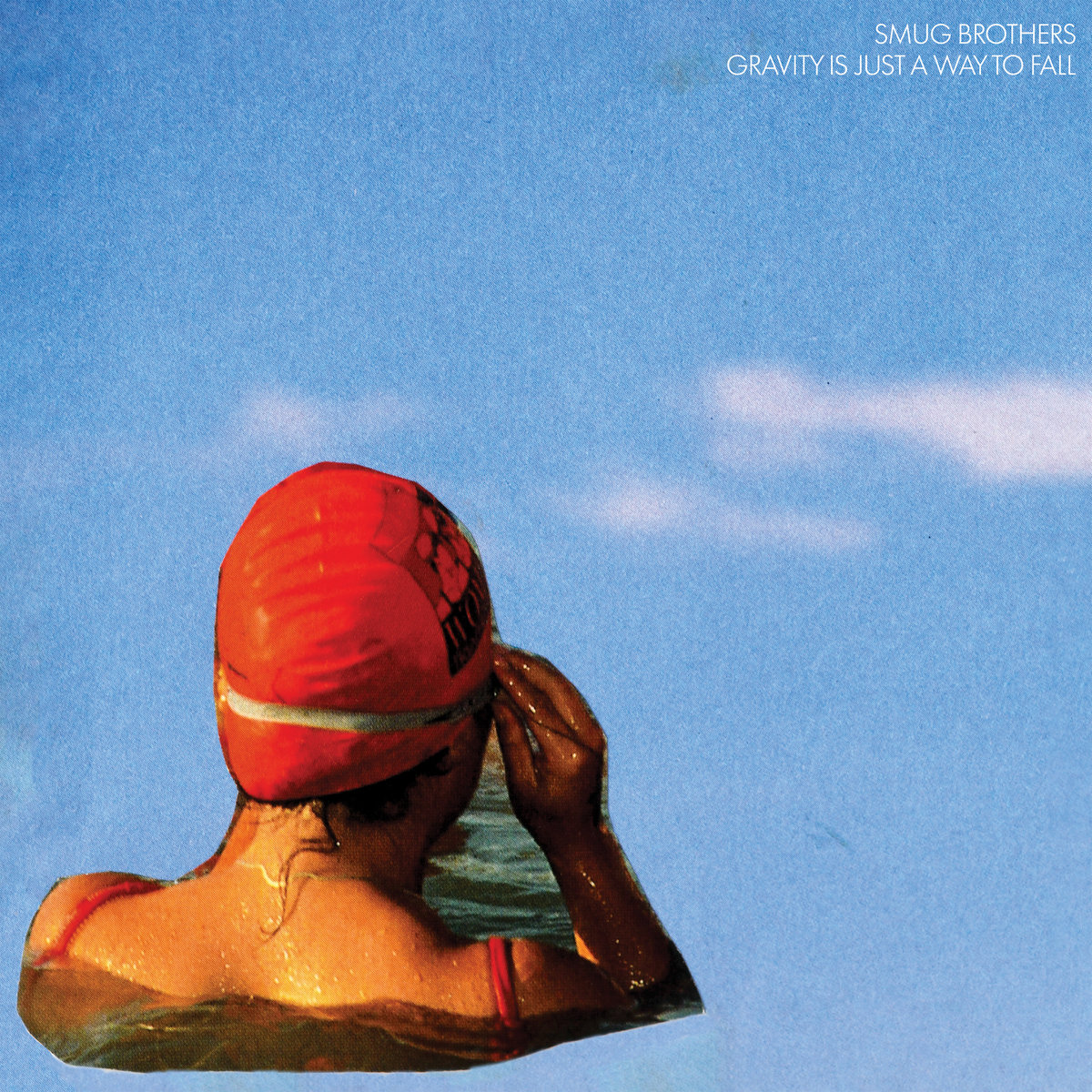
If rock and roll has gravity, it’s the kind that pulls you sideways — toward the basement show, the overdriven amp, the song that sounds like it was recorded in a kitchen but somehow rearranges your emotional furniture. And for twenty years, Dayton/Columbus, Ohio’s Smug Brothers have been quietly defying that gravity by embracing it. Their forthcoming 20-year retrospective, Gravity Is Just A Way To Fall (out May 15, 2026), isn’t a victory lap so much as a beautifully scuffed scrapbook — a reminder that some of the best American guitar music of the last two decades has been hiding in plain sight.

To understand Smug Brothers, you have to start in Dayton and then take a drive to Columbus, Ohio — that stubbornly fertile patch of Midwest soil that has produced more sharp, strange guitar bands than the coasts would like to admit. Think Guided by Voices, think Times New Viking, think Cloud Nothings, think Heartless Bastards. Bands that made imperfection a matter of principle. Beautiful chaos. Bands that treated melody like contraband — something to be smuggled past the gatekeepers of taste.

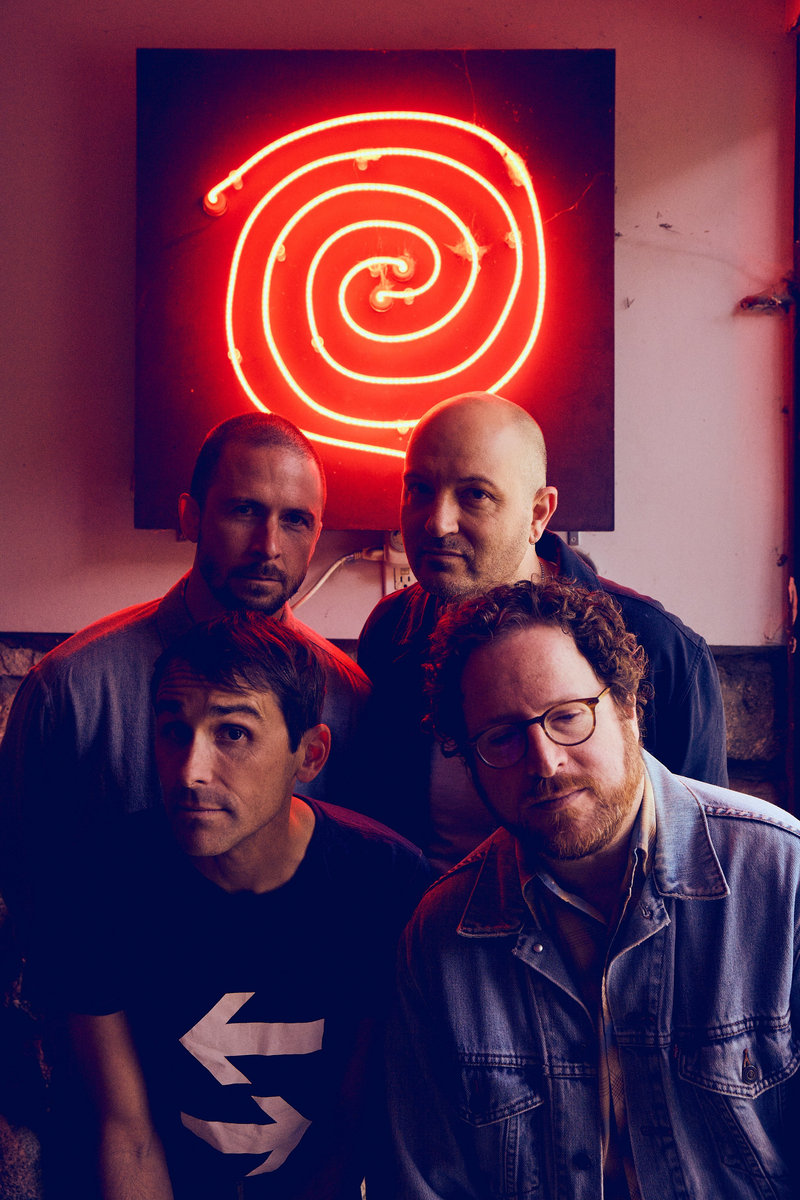
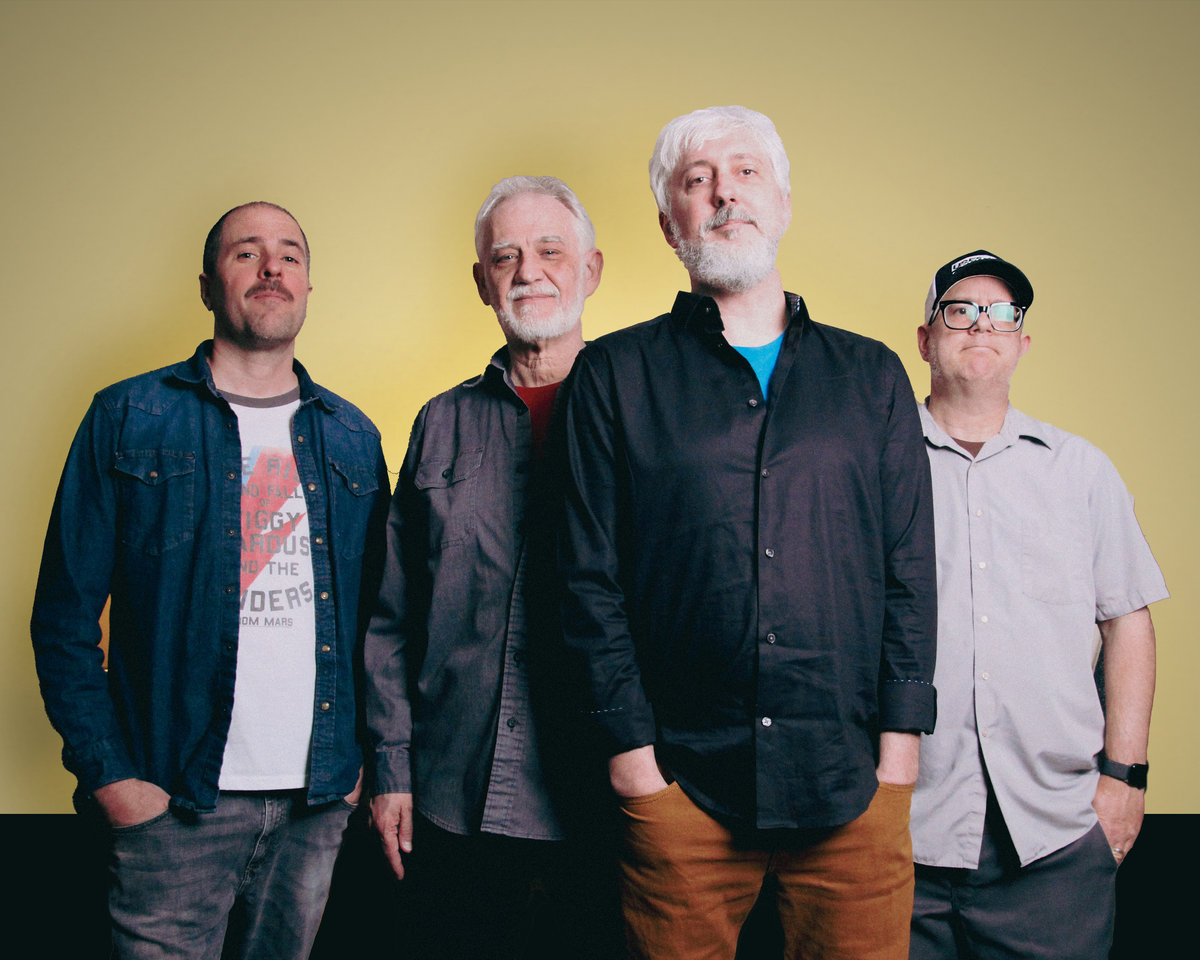
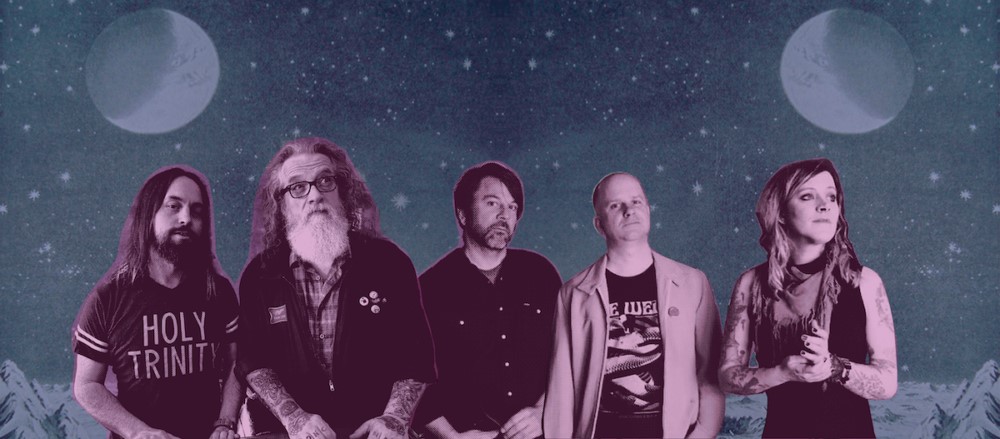
Smug Brothers fit that lineage, but they also complicate it. What began in the mid-2000s as a scrappy recording project between singer/guitarist Kyle Melton and Darryl Robbins (of Motel Beds) hardened into something deeper and more resilient when legendary drummer Don Thrasher — yes, that Don Thrasher from Guided by Voices and Swearing at Motorists — joined the fold. Since 2009, Melton and Thrasher have formed the core of a band that feels less like a stable lineup and more like an ongoing conversation over music. Over the years, that dialogue has included a rotating cast — Marc Betts, Brian Baker, Shaine Sullivan, Larry Evans, Scott Tribble, Kyle Sowash, Ryan Shaffer — all contributing to a catalog that’s as collector-friendly as it is emotionally direct. Each player adding something distinctive to the records they worked on.

But here’s the beautiful irony: you don’t need to track down the cassettes, the limited LPs, or the out-of-print CDs. Gravity Is Just A Way To Fall does the curatorial work for you. Several tracks have been remastered; some have never appeared on vinyl; a few have never existed in any physical format at all. After twenty years, the band decided to “summarize the work up to this point.” That word — summarize — sounds almost academic. What they’ve actually done is distill the fever.

And what a fever it is.

Smug Brothers have always specialized in the kind of riff-driven indie pop that feels both handmade and cosmically aligned. The early lo-fi recordings hinted at greatness — fuzzed-out guitars, melodies that ducked and weaved, drums that sounded like they were daring the tape machine to keep up. But even in those rough cuts, you could hear the bones: a Beatlesque instinct for earworms, an affection for left turns, a refusal to sand down the serrated edges.

Over time, Melton’s recording finesse sharpened. He recorded and mixed much of this retrospective himself, with key collaborations from Darryl Robbins and Micah Carli. Everything was mastered by Carl Saff, whose touch has become something of a seal of quality in indie circles. The result is a set of songs that feel alive rather than embalmed. This isn’t nostalgia; it’s voltage.

What makes Smug Brothers matter — especially now — is their commitment to the album as an artifact and as an attitude that reflects the music within. The front cover, “Solutions Vary With Regions.” The back cover, “The Hungry Rainmaker” (Artwork by PHOTOMACH. Layout by Joe Patterson and PHOTOMACH). These aren’t afterthoughts; they’re part of the argument. In an era where music is often stripped of context and shuffled into algorithmic soup, Smug Brothers insist on the tactile, the visual, the deliberate. Even when the songs are streaming in invisible code, they carry the residue of collage and ink.

And then there are the songs themselves — all written by Kyle Melton. That authorship matters. Across two decades, Melton has built a body of work that feels diaristic without being self-indulgent. The hooks sneak up on you. The choruses don’t explode so much as insist. The guitars jangle, scrape, shimmer. The drums propel rather than pummel. You find yourself humming along before you realize you’ve been converted.

A retrospective like Gravity Is Just A Way To Fall lives or dies by sequencing, and Smug Brothers have always understood that an album isn’t just a container — it’s a mood swing you consent to. These thirteen tracks trace the band’s restless melodic intelligence, moving from punchy immediacy to sly introspection without ever losing that basement-show voltage. It opens with “Let Me Know When It’s Yes,” a title that feels like a thesis statement for the entire catalog — yearning wrapped in defiance. And to be fair, a song that we have often played on YTAA. The guitars chime with that familiar Midwestern shimmer, but there’s an undercurrent of impatience here, a sense that indecision is the real antagonist. It’s a perfect curtain-raiser: concise, hook-forward, emotionally ambivalent in the best way.

“Interior Magnets” (clocking in at an impressively tight 3:01) is classic Smug Brothers compression — all tension and release packed into a pop-song frame. The rhythm section locks in with that loose-tight chemistry Kyle Melton and Don Thrasher have refined over the years, while the melody spirals inward. It’s a song about attraction and repulsion, about the invisible forces that keep people circling each other. One of our favorite Smug Brothers’ songs, “Meet A Changing World,” expands the lens. There’s something almost anthemic about it — not stadium-anthemic, but neighborhood-anthemic. The guitars layer into a bright, bracing wash, as if the band is daring uncertainty to make the first move. In contrast, “It Was Hard To Be A Team Last Night” — a simply brilliant tune — pulls the focus back to the micro-level of human friction. It’s wry, a little bruised, propelled by a riff that sounds like it’s arguing with itself.

“Beethoven Tonight” is pure Smug Brothers mischief — high culture dragged through a fuzz pedal. The song plays with grandeur without surrendering to it, balancing a classical wink with garage-rock muscle. Then comes “Hang Up,” lean and kinetic, built around the kind of chorus that arrives before you’ve fully processed the verse. It’s sharp, unsentimental, and irresistibly replayable. “Javelina Nowhere” may be the record’s most evocative left turn. The title alone suggests a desert hallucination, and the arrangement follows through a slightly off-center, textural, humming with atmosphere. “Take It Out On Me” snaps the focus back into a tight melodic frame, pairing vulnerability with propulsion. It’s accusatory and generous at once, a hallmark of Melton’s songwriting.

“Silent Velvet” glides toward you, in contrast, with a softness in the title, grit in the execution. There’s a dream-pop shimmer brushing against serrated guitar lines. “Seemed Like You To Me” feels like an old photograph discovered in a jacket pocket: reflective, warm, edged with ambiguity. Late-album highlights “Pablo Icarus” and “Every One Is Really Five” showcase the band’s love of conceptual wordplay. The former fuses myth and modernity, soaring melodically before tilting toward the sun. The latter is rhythmically insistent, almost mathy in its phrasing, but anchored by a chorus that keeps it human.

Closing track “How Different We Are” is less a statement of division than an acknowledgment of complexity. The guitars don’t explode; they bloom. The rhythm section doesn’t crash; it carries. As finales go, it’s quietly expansive — a reminder that across twenty years, Smug Brothers have thrived on tension: between polish and rawness, intimacy and noise, gravity and lift.

If last year’s Stuck on Beta (2025) suggested a band still hungry, still refining, still pushing outward, this retrospective confirms the long arc. Smug Brothers didn’t burn out. They didn’t calcify. They kept writing, recording, releasing, playing shows, and deepening their chemistry. Gravity, in their hands, isn’t a force that pins you down; it’s the thing you learn to fall through with style.

There’s something profoundly Midwestern about that ethos. No grand manifestos. No self-mythologizing. Just songs that are stacked one after another, each carrying its own small revelation. In a culture obsessed with the new thing, retrospectives can feel like retirement parties. But Gravity Is Just A Way To Fall plays more like a dispatch from a band still in motion.

Twenty years in, Smug Brothers remind us that indie rock isn’t a genre so much as a practice: keep the overhead low, keep the guitars loud, keep the songs sharp, keep the faith. The noise may be louder than ever, the platforms more crowded, the attention spans shorter. But when a riff locks in, when a chorus lifts, when a drumbeat nudges your pulse into alignment, none of that matters.

Gravity is just a way to fall. And sometimes, falling is how you learn what’s been holding you up all along.

Songs Against the Sirens

When the helicopters circle low over a neighborhood, they make a sound that feels older than electricity. It is the thrum of authority announcing itself. In Minneapolis last winter, that sound mixed with others: the clatter of hurried suitcases, the click of phones spreading warnings in Spanish, Somali, Hmong, and English, the uneasy quiet of schoolrooms where too many desks sat empty. Federal immigration enforcement swept through the Twin Cities with a force that startled even communities accustomed to living with uncertainty.

And, as has happened so many times before in American history, musicians began turning the noise into music.

Protest songs rarely arrive as tidy manifestos. They appear instead as fragments of feeling—ballads scribbled on tour buses, verses tested at benefit shows, choruses sung in church basements and union halls. Bruce Springsteen has spent half a century mastering this art: the ability to take a specific injustice and fold it into the larger story of who we are. His recent live sets have revived “The Ghost of Tom Joad” and “American Skin (41 Shots),” reframing them for a new era in which questions of policing, borders, and belonging are once again painfully urgent. When he introduces those songs now, he often speaks directly about families living in fear of raids, making the connection between past struggles and present ones impossible to miss.

Springsteen has also used newer material to gesture toward the same terrain. In “Rainmaker,” from 2020’s Letter to You, he warns of leaders who “steal your dreams and kill your prayers,” a lyric that fans have increasingly heard as an indictment of the politics that enable harsh immigration crackdowns. At concerts in the Midwest, he has dedicated “Long Walk Home” to immigrant communities, turning an older song about alienation into a present-day pledge of solidarity. The message is classic Springsteen: America belongs to those who build it, not merely to those who police it.

Bruce Springsteen’s “Streets of Minneapolis” stands as one of the most direct and urgent protest songs of his long career, written and released in January 2026 in response to violent federal immigration enforcement actions in Minneapolis. The song’s lyrics paint a stark picture of a city under duress—“a city aflame fought fire and ice ’neath an occupier’s boots”—and explicitly name the deaths of Alex Pretti and Renée Good at the hands of ICE agents as catalysts for the track’s creation. Springsteen recorded the song within days of the events and dedicated it to “the people of Minneapolis, our innocent immigrant neighbors,” underscoring its solidarity with those resisting what he called “state terror.” Musically, it begins with a spare acoustic arrangement before building into a fuller folk-rock chorus that includes a chant of “ICE out of Minneapolis,” transforming the narrative from lament to communal call to action. By invoking local streets and specific victims, Springsteen shifts from abstract critique to vivid storytelling, grounding national debates over immigration enforcement in the lived experiences of a particular place and its people.

Across the Atlantic, Billy Bragg has been sharpening his own brand of melodic concern. Bragg’s music has always insisted that politics is not an abstract debate but a lived experience. In recent years, he has circulated new compositions such as “The Sleep of Reason” and “King Tide and the Sunny Day Flood,” songs that connect nationalism, xenophobia, and state power in plainspoken language.

Billy Bragg’s recent song “City of Heroes” exemplifies how veteran protest singers are responding in real time to state violence and grassroots resistance. Written, recorded, and released in less than 24 hours in late January 2026, the track was inspired by the killing of Alex Pretti and the earlier death of Renée Good—both widely reported incidents involving U.S. Immigration and Customs Enforcement agents in Minneapolis, Minnesota. Bragg frames the song around a powerful invocation of Martin Niemöller’s famous warning about silence in the face of oppression, repurposing its structure to insist that individuals must stand up when “they came for the immigrants… refugees… five-year-olds… to my neighborhood.”

Rather than dwelling solely on the perpetrators of violence, the song centers the courage of ordinary Minneapolis residents who “will protect our home” despite tear gas, pepper spray, and intimidation, making the city itself a locus of collective heroism and moral witness. Through its stark lyrics and urgent folk-punk delivery, “City of Heroes” both honors local resistance and challenges listeners everywhere to confront injustice rather than look away.

What is different now is how quickly these songs travel and how intimately they are connected to specific communities. In Minnesota, local artists have woven themselves into the fabric of resistance. Somali American rapper Dua Saleh’s “body cast,” though not written solely about immigration, captures the claustrophobia of living under constant surveillance. Minneapolis songwriter Chastity Brown released “Back Seat” after volunteering with local advocacy groups; the song tells of a mother trying to explain to her son why “men in badges came before the sun.” Musicians have often turned their songs into anthems at rallies.

Nationally, a wave of artists has confronted immigration enforcement head-on. The Drive-By Truckers’ blistering “Babies in Cages” remains one of the clearest condemnations of family separation ever recorded, and the band has revived it repeatedly as raids intensify. Margo Price has performed the song at fundraisers, adding her own spoken-word verses about rural Midwestern towns emptied by deportations. Latin pop star Residente’s “This Is Not America” links border policy to a longer history of hemispheric violence, while Mexican-American band Las Cafeteras’ recent single “If I Was President” imagines a world where “no kid sleeps in a holding cell.”

Music becomes a form of accompaniment. It says to frightened families: you are not alone in this story.

Music critic Ann Powers has often observed that songs do not replace policy. They cannot halt a raid or change a law. But they shape the emotional climate in which those laws are debated. They help define what cruelty feels like and what compassion sounds like. In moments of crisis, they keep the human stakes visible. The current wave of immigration enforcement has produced images that feel almost medieval: agents in tactical gear arriving at dawn, children escorted past news cameras, workplaces emptied in minutes. Musicians respond by insisting on the modernity—and the intimacy—of these events.

These acts may seem small, but protest music has always worked through accumulation. One song becomes a hundred, then a thousand. The civil-rights anthems of the 1960s did not end segregation on their own, yet they provided the soundtrack that made the movement recognizable to itself. Today’s musicians are doing similar cultural labor, stitching together a sense of shared purpose across neighborhoods and genres. There is also a new bluntness in the language. Where earlier generations sometimes relied on metaphor, many contemporary artists name ICE directly. Punk bands from Duluth to Des Moines sell T-shirts that list hotline numbers on the back. Choirs gather outside detention centers to sing lullabies in many languages, turning public space into an improvised concert hall of solidarity.

Still, the best songs resist becoming mere slogans. Springsteen’s gift has always been his ability to locate the political inside the personal: the worker who just wants to get home, the teenager who dreams of a wider world, the immigrant who believes the promises printed on postcards. Bragg, too, mixes anger with tenderness, pairing sharp choruses with melodies that invite sing-alongs. Protest music must be welcoming as well as confrontational; it has to create a community big enough to hold grief and hope at the same time.

In Minneapolis and beyond, that community is gathering wherever music is made. At a recent benefit concert on the West Bank, performers from Somali jazz groups, Hmong folk ensembles, and indie-rock bands passed a guitar from hand to hand while families shared homemade food. Between songs, organizers explained how to donate to emergency housing funds and accompany neighbors to court hearings. The event felt less like a show than a temporary village, built out of rhythm and resolve.

This is how culture pushes back against fear. Not with grand gestures, but with steady, persistent acts of care. A chorus sung together. A lyric that tells the truth. A melody that refuses to look away.

The helicopters will eventually move on. Policies will change, as they always do. What remains are the stories people tell about how they treated one another when the pressure was on. Musicians like Springsteen and Bragg—and the countless local artists standing beside them—understand that their job is to help write those stories in sound: to give courage a tune that can be carried home and passed along.

Somewhere tonight in Minnesota, a teenager is learning three guitar chords and trying to fit the chaos around them into a song. That, too, is part of the resistance. In the long American argument over who belongs, music keeps insisting on an answer both simple and radical: everyone who can sing along.

Under the Floorboards, Past the Hype: Jim Basnight and the Power of Under the Rock

Rock records don’t arrive like messages from the future anymore; they crawl out from under the floorboards, smelling of time, sweat, and unfinished conversations. Under the Rock is one of those stubborn artifacts that refuses to die quietly. Jim Basnight doesn’t sell you revelation; he hands you proof, the sound of a songwriter who outlasted the noise, survived the cycles, and came back swinging not with volume, but with authority.

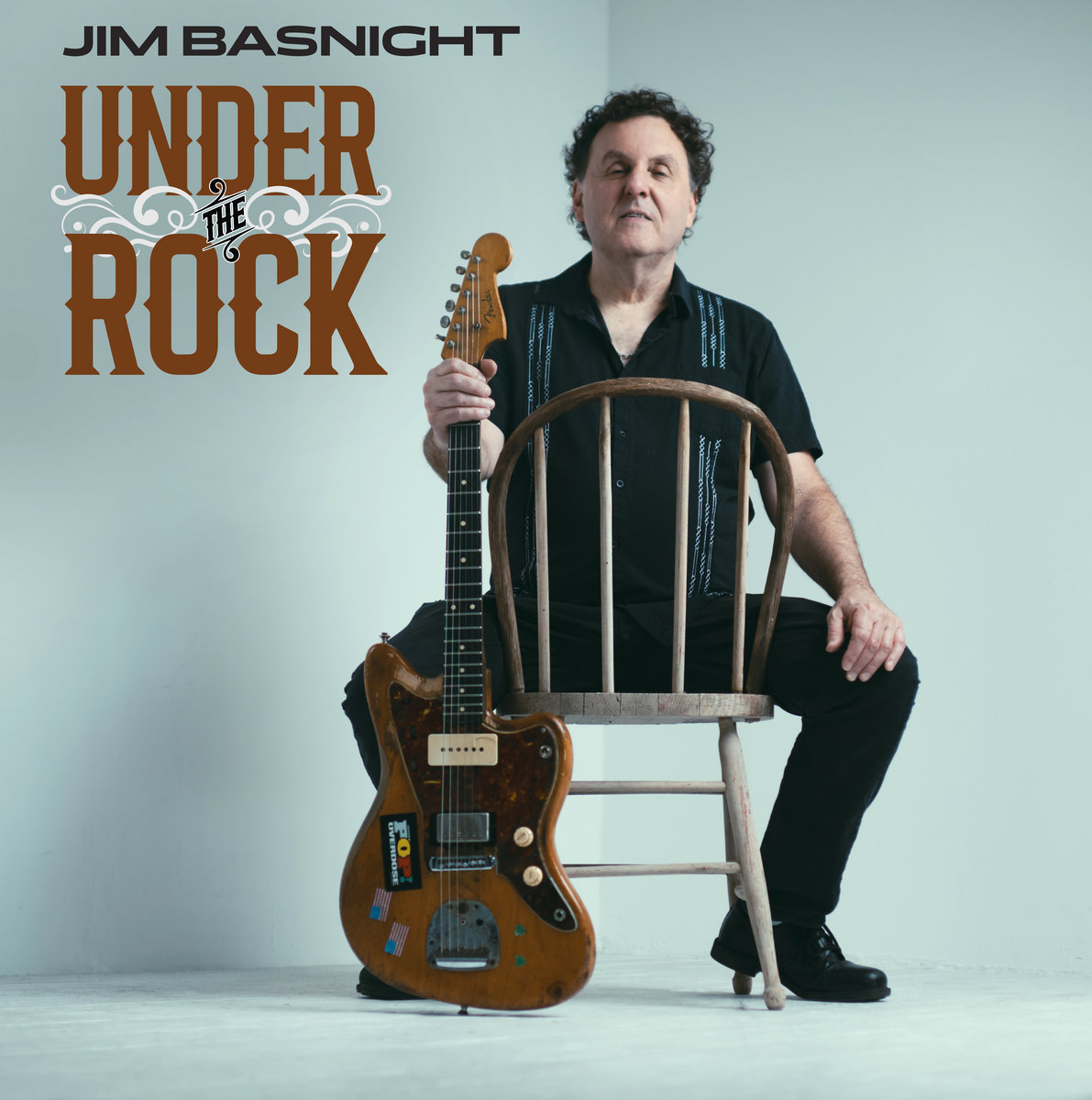
Jim Basnight has never been interested in novelty, only in arrivalUnder the Rock sounds like the moment when a long-argued idea finally stops pacing the room and sits down and stays, perfectly certain it belongs there. This is his first album of all-new originals since 2019’s Not Changing, and it doesn’t sound like a comeback so much as a consolidation—five years of songwriting, touring, and living boiled down to something sturdy, melodic, and quietly defiant in the space of swaggering rock and roll.

Basnight has always written songs that know better than to scream at you. These are songs that wait for you outside in the undeniable groove of guitar and percussion. Under the Rock draws from the strongest material he’s written over the past half-decade, along with a few older pieces that have been dragged through the miles and sharpened by repetition. You can hear the refinement not as polish, but as confidence. The record captures a sound Basnight has been chasing for years. A sound imagined long before it existed, finally realized through patience, trust, and a refusal to rush the good parts.

Much of the album grew out of years on the road with drummer Sean Peabody and vocalist Beth Peabody, and it shows. Touring doesn’t just tighten a band—it creates a shared grammar, a way of knowing when not to play. Sean Peabody’s drumming is about feel rather than flash, locking into grooves that give the songs room to breathe without ever losing momentum. There’s an unspoken understanding at work here: the song always comes first.

Beth Peabody is one of the quiet revelations of Under the Rock. Her vocals don’t compete with Basnight’s; they complete them. Her phrasing is attentive, her pitch dead-on, but more importantly, her vocal personality has grown into something assured and expressive. She brings emotional shading that deepens the arrangements, turning good songs into lived-in ones. This isn’t backup singing—it’s partnership.

When Glenn Hummel steps in on drums for later sessions, he carries forward the rhythmic feel with the ease of someone who has been inside this music before, because he has. A longtime collaborator from the Jim Basnight Band, Hummel doesn’t reinvent the wheel; he keeps it rolling straight and true. The continuity matters. Under the Rock sounds cohesive because it is.

At the center of it all is Garey Shelton—bassist, engineer, mixer, and co-producer—anchoring every track. Thirty years of collaboration buys you something money can’t: trust without explanation. Working largely from his Seattle-area studio, Shelton often guided the project independently, shaping performances and sonics with an ear tuned not to trends but to truth. The bass playing is patient and grounded, the mixes clear without being sterile, warm without being nostalgic. Shelton helps realize the album’s clearest expression by knowing exactly when to intervene—and when to let Basnight be Basnight.

And that’s the thing: Under the Rock isn’t chasing relevance. It assumes it. Basnight writes like someone who understands that pop craft isn’t about youth or volume, but about clarity of intent. These songs carry melody the way some people carry history along with them, without strain, without apology. There’s rock here, yes, but also folk sense, power-pop instincts, and the accumulated wisdom of someone who’s learned that restraint is its own form of rebellion. Sometimes the music cooks best when you don’t throw everything possible in the stew.

The great music writer, reviewer, and critic Lester Bangs used to write about artists who meant it, who didn’t confuse sincerity with spectacle. Under the Rock is one of those records. It doesn’t beg for attention. It doesn’t posture. It just stands there, solid, humming with lived experience, daring you to mistake rock and roll arrangements for weakness.

Jim Basnight didn’t reinvent himself on Under the Rock. He didn’t need to. He just finally caught the sound he’d been hearing all along—and let it speak.

Video of the Day: The Pinkerton Raid – A Long December

All too often critics apply a sharp, snarky perspective on music, and approach covers with a detached cold perspective. And sometimes that separation would truly miss the point. The Pinkerton Raid’s cover of Counting Crows’ A Long December needs recognition of both the emotional core and the transformation of the song. A good review would highlight the poignant ways in which the cover reimagines the original, focusing on the evolving resonance of the song in the hands of a different band, and the way the passage of time deepens its meaning.

The original A Long December, with its aching melancholy and sense of yearning for resolution, comes from Counting Crows’ Recovering the Satellites, a record defined by its bittersweet reflection on personal pain and recovery. Adam Duritz’s vocal performance, simultaneously raw and hopeful, narrates a painful yet comforting nostalgia. However, when the Pinkerton Raid takes on this track, they strip it down, peeling back the layers of polished production, leaving space for vulnerability in their own rendition.

A critic would likely notice how the Pinkerton Raid, often associated with a more stripped-down Americana sound, injects new textures into the song. Their version transforms the hopeful melancholy of the original into something a little more haunting, a little more restrained, while the song is given room to breathe the emotional release feels suffocating — it is literally breathtaking. The arrangement, grounded in folk instrumentation, slows the pace, allowing the lyrics to move, perhaps breathe, and resonate in a way that invites even deeper introspection than the original, and that is saying something. The spaciousness of the arrangement highlights the sense of emotional isolation, with each guitar strum and piano/organ note echoing a quiet sense of longing.

How covers interact with their originals is a common discussion among critics. These critics would also note how this version of A Long December recontextualizes the meaning of the song for listeners in the 2020s, giving the track a new sense of grief. In a time when shared emotional experience is often overshadowed by fragmentation, the Pinkerton Raid’s version of A Long December offers a gentle, bittersweet reminder that despite everything, we still carry the weight of our pasts with us. You can pre-save or pre-add the studio version on APPLE, SPOTIFY or DEEZER, download it on BANDCAMP, or order the physical CD or vinyl.

Wussy: The Best Rock Band in America

Wussy is one of those bands that everyone should know. They are an ongoing musical effort for over two decades with a deep catalog. The band’s lyrics — courtesy of Chuck Cleaver and Lisa Walker — are inescapable without being cloying or false, and the band’s observations are relatable, accurate, frighteningly honest, and perhaps more than a little sad. Yet, the dark lyrics hold a unique power to connect deeply with listeners, offering catharsis and shared understanding. They articulate complex emotions like heartbreak, grief, failure no matter what we do, the creeping realization of loss, or loneliness in ways that often resonate universally. We all have felt this way. We have all had to pick ourselves up and pack it up and continue.

This band does not ‘talk down’ or excuse the all too often unbearable. This shared complexity alongside relatability can provide solace, reminding us that struggles and loss are part of a broader human experience. Artists like Leonard Cohen, Nick Drake, XTC, and Wussy use poignant imagery and evocative language to turn personal pain into something captivatingly beautiful and communal. Research in psychology suggests that sad music, especially lyrics, can paradoxically uplift by helping listeners process emotions, offering empathy and a sense of emotional release.

Wussy’s music thrives on atmosphere and contrasts: jangly, distorted guitars and bending pedal steel coexist with heartfelt melodies, while lyrical introspection is paired with propulsive energy. The driving drums and bass arrangements further cement the band’s gravitational pull. This mix defines their aesthetic, often drawing comparisons to The Pixies, Sonic Youth, and Yo La Tengo for their dynamic range.

The band’s dual-vocal approach, featuring Chuck Cleaver and Lisa Walker, adds an emotionally layered dimension to their sound. Their harmonies weave between tenderness and grit, reflecting the tension and warmth present in their lyrics. Themes of heartache, resilience, and the mundane beauty of everyday life emerge vividly, often set against rich, guitar-driven arrangements. Wussy’s sonic identity also incorporates regional pride, as clearly evident in their references to Cincinnati and the Midwest. Critics frequently praise their ability to turn intimate, local stories into universal experiences. Their use of reverb-heavy production and jangling guitar textures evoke both nostalgic warmth and emotional depth, earning them cult status among fans and critics alike. This unique fusion of raw emotion, lyrical storytelling, and sonic experimentation cements Wussy as one of the most compelling voices in contemporary music. Their music is deeply personal yet profoundly accessible, it reminds us that we are not alone.

I consider Wussy an iconic band. Not because of a pose or prophetic statements. Their swirl and sway of instruments and voices are completely unique. No one sounds like them. Wussy, may be labeled an indie rock band from Cincinnati, Ohio, but that does not fully capture what they do. The band has returned with a highly anticipated album titled Cincinnati, Ohio (released on Friday, November 15, 2024) and we are all better for it. This record marks their first full-length album in six years and their first since the passing of guitarist and co-founder John Erhardt (who had been in The Ass Ponys with Cleaver) in 2020. Known for blending honest heartfelt storytelling with robust, guitar-driven sounds, Wussy’s latest work reflects a nuanced exploration of loss, resilience, and their enduring love for their hometown.

The new record, released through hometown label and actual record store, Shake It Records, features ten tracks, including the singles “The Great Divide,” “Sure as The Sun,” and “Inhaler.” The band’s characteristic mix of Americana, Post-Punk, lo-fi noise pop, and introspective lyrics remains central to their sound. Tracks like “The Great Divide” showcase their ability to layer droning, propulsive rhythms with deeply evocative storytelling, capturing the emotional intensity fans have come to expect from Wussy’s catalog. These songs signify a period of renewal and creativity after a period of reflection during their hiatus. Many fans are excited about the release of these songs having heard acoustic versions of several of them during live streams during the lockdown of the Covid Pandemic.

The album draws from personal experiences and the band’s shared history in Cincinnati, a city they frequently reference in their music and where they live. Themes of identity, community, and memory are woven throughout the record, with a tone that both mourns and celebrates. This duality underscores the resilience of a band that has endured significant changes while staying true to its artistic roots. The band members do not pretend or play false flag arguments about their ties to their hometown. The ties that bind here are part of the band’s identity.

Wussy also released two accompanying EPs, The Great Divide and Cellar Door, further showcasing their ability to experiment with sound and storytelling. This multi-release strategy highlights their dedication to producing layered and diverse music for their audience. And Wussy fans are happy for these releases.

The band is known — and rightly celebrated — for its DIY ethos and deeply collaborative nature. Since their formation in 2001, Wussy has been widely praised for their raw authenticity and ability to merge genres seamlessly. Cincinnati, Ohio continues this tradition while evolving their sound to address both personal and universal themes, making it a compelling addition to the discography.

You can explore the album further, and I recommend that you do so! Or better yet purchase it through Shake It Records or Bandcamp. For more insights into the band and their new music, check out their official site or the well-deserved recent press coverage.

Traveling Lo-fi Locations: ‘Take A Trip’ Through Mythical Motors’ ‘Upside Down World'”

In the space where Guided By Voices, Neutral Milk Hotel, and Pavement are the well recognized signposts of indie rock, bands often struggle to carve out a distinct identity, Mythical Motors’ latest offering, “Upside Down World,” emerges as a refreshing assured guitar driven lo-fi beauty. Their sound is a kaleidoscope of rock aesthetics, alternative swagger, garage rock grit, and melodic hooks that ensnare the listener in a whirlwind of sonic exploration. Released amidst a sea of all too predictable soundscapes, this album boldly ventures into uncharted territory, blending elements of psychedelic rock, folk, and dream pop to create a mesmerizing sonic journey. If fairness truly existed, this band would be a household name.

At the heart of Mythical Motors’ sonic identity is their penchant for brevity and spontaneity. Each song feels like a fleeting moment captured in time, with abrupt transitions and a sense of urgency that keeps the listener on their toes. The lo-fi production quality adds a layer of authenticity, as if the music is being transmitted directly from the garage where it was conceived.

From the opening track, “Take A Trip,” Mythical Motors invites listeners into a swirling and swaying universe where reality blurs and imagination reigns supreme. The passionate vocals soar over layers of equal parts jangling and fuzzy guitars next to driving bass and sparkle of intense percussion, setting the tone for the album’s sonic palate. Amidst the fuzz and distortion, there’s an undeniable pop sensibility that shines through in the form of catchy melodies and infectious hooks. Mythical Motors has a knack for crafting earworms that burrow their way into your subconscious, lingering long after the music has stopped. You will hum the tune long before you know the words.

Throughout “Upside Down World,” Mythical Motors demonstrate a remarkable ability to seamlessly weave together disparate musical influences without losing the Ramones-ian power pop finish. Tracks like “The Office of Royal Discovery” and “Grand January High” showcase the band’s penchant for crafting immediate atmospheric environment reminiscent of ’60s psychedelia, while songs like “Plastic Saturn,” “Upside Down World,” and “Book of Broken Man” incorporate early alternative melodies and harmonies as if Peter Buck played in early Guided By Voices.

One of the album’s standout moments comes in the form of “Court of The Beekeepers,” a fantastic song that showcases emotive vocals against a backdrop of synth blips, fuzz guitar and perfect backing vocals. Feels like ‘A Bell is a Cup… until its Struck’-era Wire. The song’s introspective lyrics explore themes of introspection and self-discovery, adding a layer of depth to the album’s gravity. And that last ten seconds of call and response will make you want to play the song over and over again.

Yet, for all its lo-fi allure, “Upside Down World” is not without its moments of raw energy and intensity. Tracks like “Elijah Stop Spinning” and “Stop The Sun” inject a dose of adrenaline into the album’s sonic tapestry, with driving rhythms and distorted guitars that propel the listener into a frenetic cascade of sound that feels like the listener should be spinning.

But perhaps the most remarkable aspect of “Upside Down World” is its ability to evoke a sense of nostalgia while still feeling decidedly contemporary. Drawing inspiration from the music of alternative past while embracing the present, Mythical Motors crafts a sound that feels both timeless and fresh, inviting listeners to lose themselves in its hypnotic melodies and evocative lyrics.

Upside Down World” is more than just an album—it’s a transcendent experience that transports listeners to another realm entirely. With its near constant guitar attack, captivating vocals, and expansive sonic palette, Mythical Motors has crafted a musical odyssey that is sure to resonate with fans of indie rock and beyond. In a world where conformity runs the shop, Mythical Motors dares to defy expectations, offering up a sonic journey that is as daring as it is beautiful.

Facebook Soundcloud Bandcamp Songkick Instagram

Best Wishes for Harmonious Horizons in the New Year of 2024

As we stand on the threshold of a new year, 2024, let us consider the promise of discovery and the enchantment of melodies yet to be heard. This time of year we reflect on the past, let’s look to the future as well. Every year holds great songs, fantastic albums, and life changing concerts that we did not expect.

The world of music is vast and ever-expanding, offering a symphony of possibilities waiting to be explored. In the coming year, let our aspirations harmonize with the rhythm of new beats and the melody of fresh voices, creating an orchestra of experiences that resonate with joy and fulfillment. We find that we are not alone in how we feel. Through music we can build community.

Here at Your Tuesday Afternoon Alternative we believe wholeheartedly that music is a universal language that transcends borders and cultures and has the extraordinary ability to evoke emotions, trigger memories, and connect individuals across time and place. Music helps us feel. It matters. It is a source of solace, inspiration, and celebration, reflecting the challenges we all face. When we feel passionately, music reflects and shows us that what we feel matters. As we extend our best wishes for the new year, let us acknowledge the transformative and important power of music and its potential to elevate our spirits, stimulate our minds, and unite us in shared moments of harmony and rhythm. The best music becomes part of who we are as individuals and members of a community. Music speaks to us.

The pursuit of discovering new music is like setting sail on uncharted waters, with each note and rhythm representing a new island waiting to be explored. In 2024, let curiosity be our compass, guiding us through unexplored genres, hidden gems, surprises, unexpected adventures, and emerging artists. Music is teeming with innovation and diversity, offering a rich tapestry of sounds that cater to every taste and preference. Explore our favorites of 2023 for just a few suggestions of where to start exploring if you need a place to start.

In the spirit of the new year, make a resolution to step out of your musical comfort zone. Whether it’s delving into genres you’ve never explored or supporting local, independent artists (And we cannot emphasize checking out local music enough! Do it!), the journey of musical discovery is as much about embracing the unfamiliar as it is about cherishing the familiar. There is so much music being made that is available to you wherever you happen to be, whatever you call home.

One of the most exciting aspects of exploring diverse music is the opportunity to appreciate the unique stories and cultural expressions embedded in each sound composition. In 2024, let us break down barriers and build bridges through the universal language of music, fostering a broad and rich music community that cherishes and respects the richness of our collective sonic heritage. Diversity is the heartbeat of the musical world. There is so much “out there” — whatever that really means — that taking risks with music you do not know can be the best gift that you give yourself. In the coming year, let us celebrate the richness of musical traditions from wherever they originate. The world offers a myriad of sonic treasures waiting to be uncovered. Your new favorite song is waiting.

The dawn of a new year brings with it the promise of new beginnings for aspiring musicians. As we extend our best wishes for 2024, let us also pledge to support and uplift emerging artists. The music industry is a dynamic ecosystem, constantly evolving with the emergence of fresh talents eager to share their unique perspectives with the world.

Platforms such as independent music festivals, online streaming services, and local music scenes are fertile grounds for discovering hidden gems. Make it a resolution to attend live performances, explore local music scenes, and follow independent artists on digital platforms. Sign up for their mailing lists and notifications so that when these artists release music, you will know and be able to listen to it. Give this music a chance, that is all we are asking, all we are suggesting. By doing so, you not only contribute to the growth of emerging talents but also enrich your own musical journey with the thrill of new discoveries.

Music is a communal experience that gains its true power when shared. In the coming year, let us make a conscious effort to connect with others through the joy of music. Whether it’s attending concerts with friends, participating in musical communities online, or introducing loved ones to your favorite tunes, the act of sharing music enhances its magic. Remember the first time you heard a song you could not get “out of your head”? Share what you find with others, ask them to share their discoveries with you. Build community, one new song, one unique album, one new found artist at a time.

Create collaborative playlists, organize music-themed gatherings, and engage in conversations about your favorite tracks. Visit your favorite water hole and share what you have found with other music fans. By fostering a culture of shared musical experiences, we not only strengthen our connections with others but also create a ripple effect, spreading the joy of music to those around us.

The advent of technology has revolutionized the way we discover and consume music. Streaming platforms, social media, and algorithm-driven recommendations have made it easier than ever to stumble upon new and exciting sounds. In the new year, let us not only embrace the opportunities technology offers for musical exploration but use these new tools to support artists directly through attending shows, buying merchandise and obtaining physical copies of the music whenever possible.

Strive to explore personalized playlists, discover artists through social media platforms, and engage with music communities online. Take advantage of the wealth of information at your fingertips to unearth hidden treasures and create a customized and adventurous musical journey that reflects your evolving tastes and preferences and do not fear going beyond the familiar terrain that you have so long enjoyed. Take a chance. Make a leap. Listen to something new.

As the clock ticks down to the beginning of 2024, let the promise of a new year inspire us to embrace the vast world of music with open hearts and eager ears. The journey of musical discovery should be a lifelong adventure, and in the coming year, may the symphony of new sounds resonate with joy, fulfillment, and the boundless possibilities that await.

In extending our best wishes for the new year, let us celebrate the transformative power of music, the diversity of sound and lyrics, and the talents of emerging artists. May the melodies of 2024 be a soundtrack to our shared experiences, connecting all of us through the universal and binding nature that is music. Cheers to a harmonious and melodious new year filled with the joy of discovering new musical horizons!

Let’s Take a Journey without Going Anywhere

We Met in Paris‘ “Mont Blanc Massif” is a shock wave that leaves you gasping for breath in the rarified air of musical transcendence. This track is like a rollercoaster ride through the turbulent landscapes of human emotion, an exploration that takes you to the summit of musical ecstasy. It’s a song that grabs you by the ears and doesn’t let go until it’s wrung every drop of emotion from your soul.

From the opening notes, “Mont Blanc Massif” is a relentless force, like a raging river carving its path through the mountains. The driving rhythm section — including driving bass lines — provides the foundation for a cascade of sound that crashes over you like an avalanche, sweeping you up in its turbulent flow. The guitars roar like thunder, and the drums are the thunderclaps that punctuate this musical storm.

And then there’s the voice of Ruth Fawcett, a voice that’s simultaneously haunting and full of longing. It’s a voice that cuts through the noise and reaches into the very core of your being. It’s a voice that tells a story, a story full of depth that does not shirk yearning and despair. It’s a voice that doesn’t just sing the words; it embodies them, living and breathing every syllable.

The lyrics themselves are powerful, a raw and unfiltered outpouring of emotion about the sensation of being surrounded by natural beauty. They paint a picture of action that’s as majestic and treacherous as the Mont Blanc Massif itself. It’s an experience that soars to dizzying heights and plummets to unfathomable depths, a journey that feels fast, beautiful, and possibly destructive.

But it’s not just the individual elements of the song that make it so intense; it’s the way they come together in a perfect storm of sound and emotion. The arrangement is a masterclass in dynamics, building and releasing tension with expert precision. It’s a song that takes you on a rollercoaster of emotion, from the quiet introspection of the verses to the explosive release of the choruses.

Mont Blanc Massif” is not just a song; it feels full of movement and that is appropriate since it is a song written about being within the Mont Blanc Massif mountain range. The song is a reminder that music has the power to touch us in ways that words alone cannot. It’s a testament to the enduring power of rock and roll that, even in our darkest moments, there is beauty to be found all around us.

In a world filled with disposable music whose only concern is staying with formulaic pursuits in both style and content, We Met in Paris‘ “Mont Blanc Massif” stands as an impressive achievement of the enduring power of rock and roll to move us, challenge us, and remind us of the beauty and complexity of the human experience. It’s a song that demands to be heard, and once you’ve heard it, you’ll never be the same.

Rock and Roll Lives!

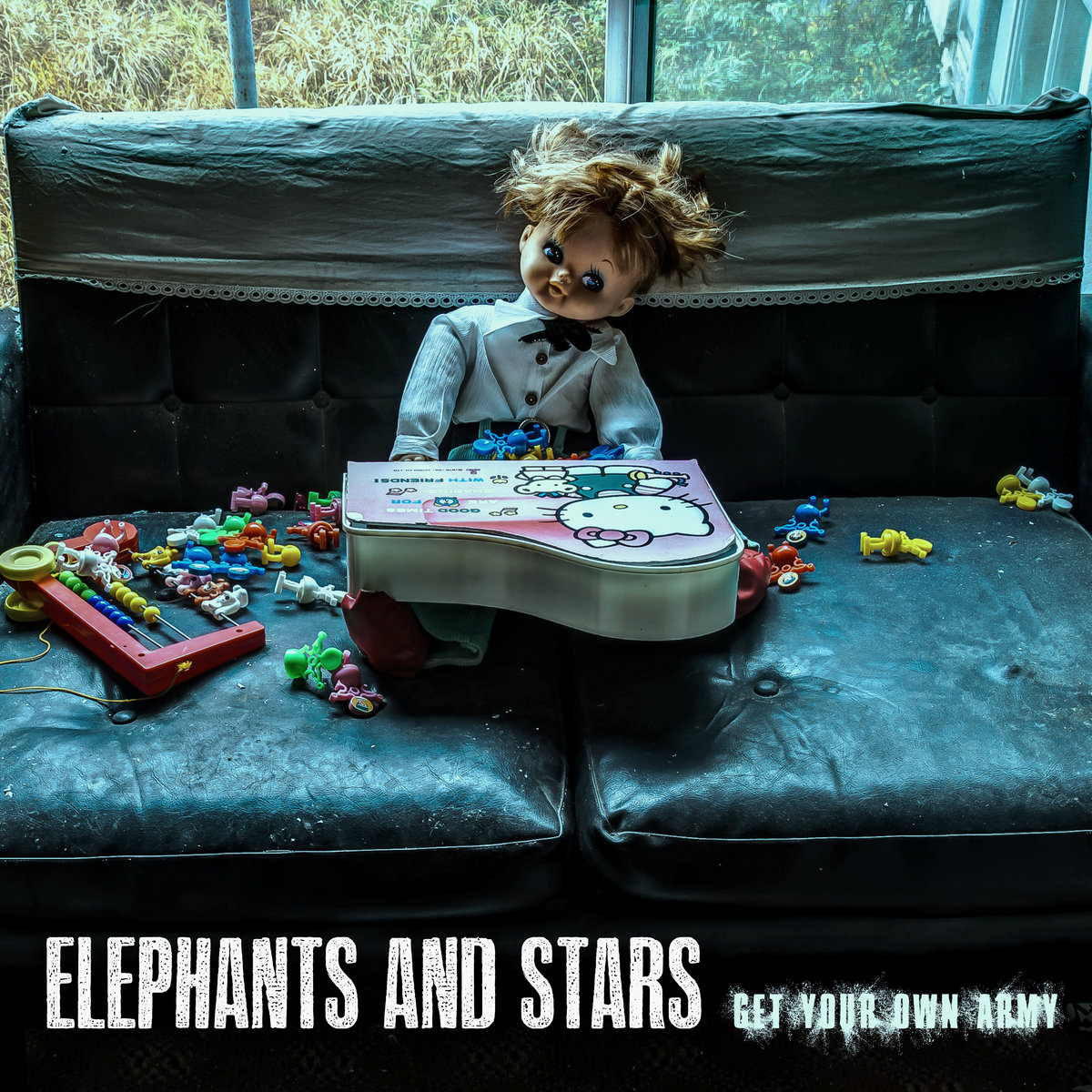
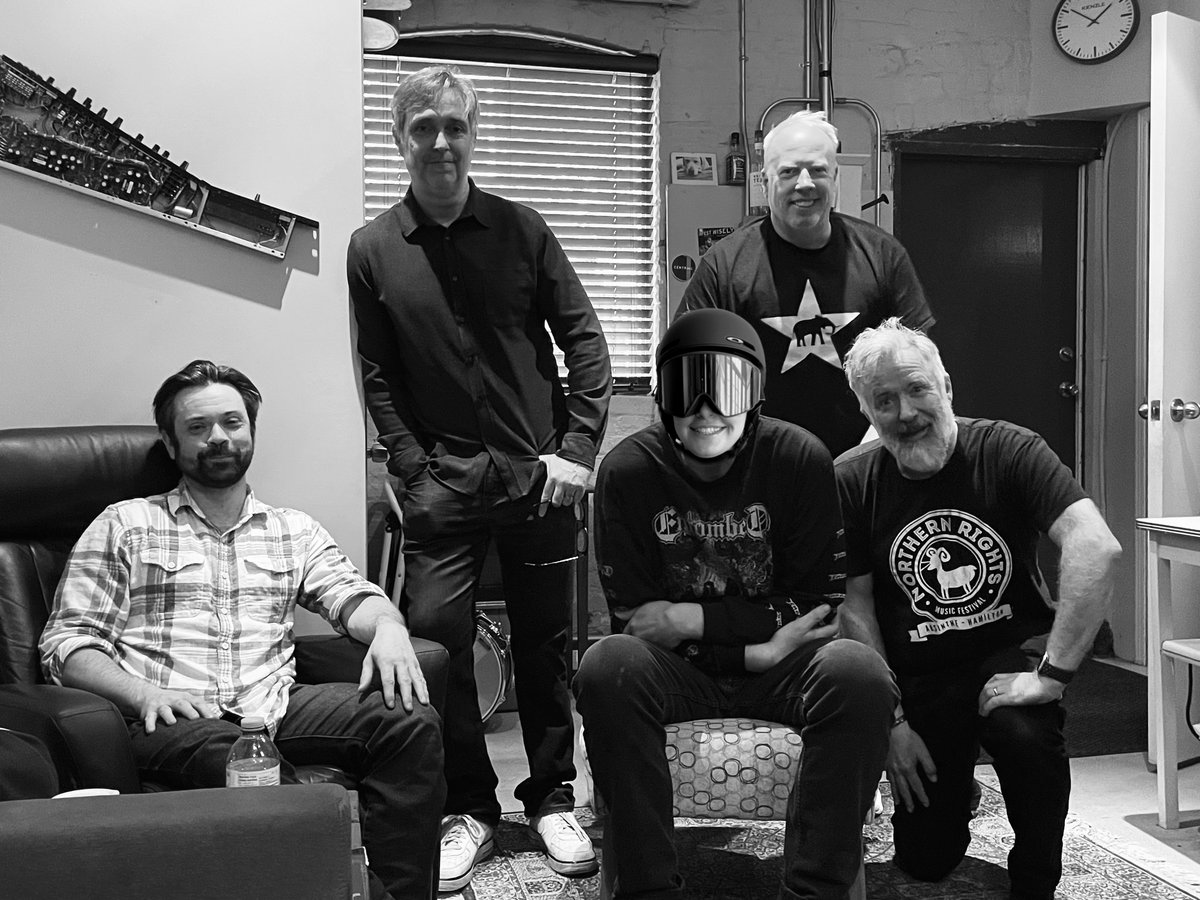
Elephants and Stars have put out an impressive array of albums in a few short years — Recovery (2020), Dreamland (2021), Last Chance Power Drive (2022) and Get Your Own Army (2023) — and have already made a meaningful impact to rock and roll with their incredible body of work. This Toronto-based band is like a supernova in the making, bursting onto the scene with a sound that’s as expansive and enthralling as the night sky. Elephants And Stars is the third project formed around the long-running creative partnership of Manfred Stittmann and bassist Mike MacMillan, both of whom also formed the core of the late-90s/early-2000s groups Soap Opera and The First Time. The band has consistently delivered well-crafted songs with catchy melodies and thoughtful lyrics.

In the tradition of the great melodic rock and roll and New Wave bands of the ’70s and ’80s, Elephants and Stars takes us on a voyage of emotional release through their latest ‘Get Your Own Army‘. Their sonic palette is a rich tapestry woven with elements of rock, new wave, power pop, psychedelia, and folk, creating a sound that feels both nostalgic and refreshingly contemporary, a task that is hard to do in an authentic way. From the opening chords to the final fade-out, this album is a rollercoaster ride of musical nostalgia and contemporary innovation that illustrates that a music group can be versatile while delving into various musical styles. The band’s name itself suggests a blend of the colossal and the celestial, and their music lives up to this cosmic promise in perfect melodies that sway around deep storytelling and powerful lyrics.

The album kicks off with a thunderous guitar riff that immediately grabs your attention, setting the tone for what’s to come. “Gimme Ketamine,” is a true rock and roll track that grabs the listener and refuses to let go. Lead vocalist Stittman’s voice is a force of nature, akin to the gravitational pull of a black hole, drawing listeners into the band’s orbit. The instrumentation, featuring muscular guitar work, bouncing rhythms, and Cars-like synths, provides the perfect sonic backdrop for the band’s passions.

Throughout the album, the musicianship is outstanding. The guitars shred through parts large and small. The solos are played with precision and passion, while the rhythm section provides a solid foundation that keeps the songs grounded. One of the standout tracks is “Green Lights to Pasadena,” a sprawling epic that stretches the boundaries of the rock road song. It is a reflection on travel, perhaps personal, that takes the listener on a sonic adventure through landscapes of longing for effort and feeling lost: “We try until we don’t / Just die a little more.” The band’s musicianship shines here, with each member contributing to a propulsive and immersive sonic gestalt, everything mixed together with just a pinch of chaos. And you may find yourself swaying despite your resistance.

While Elephants and Stars draws inspiration from the past, they infuse their music with a modern sensibility and directness that keeps it from feeling like a mere nostalgia trip. Tracks like “Bled Out at the Scene” and “How Can It Be?” blend vintage influences with contemporary production techniques, creating a sound that’s both timeless, cutting-edge and so damn catchy. How often do we want to sing along to the slow realization of the death of a relationship?

Get Your Own Army” is not just an album; it’s a sonic voyage through the heart of relationships viewed through a rock and roll lens. Elephants and Stars have crafted another fantastic record that showcases their immense talent and promises even greater rock and roll adventures in the future even while singing about the end, “On Your Deathbed (I wonder what you’ll think about).” With their captivating sound and down-to-earth vision, this Canadian band is poised to shine brightly in the ever-expanding universe of rock music with the simple realization that rock music lives.

How do you find music?

Today it seems that keeping up with new music is like trying to take a drink from an open fire hydrant. One of the consequences of music streaming and related online tools is the geometric increase in music widely and — most importantly — easily available to us at any time, for any reason. But a single snowflake can be lost in a snowstorm. How do you find music given the wide variety available? Of course, this assumes that people want to find music. One of the possible outcomes of so much music being so accessible is that the experience of music becomes less important to some of us.

The constant torrent of new songs, re-releases, remixes, live recordings, and more can feel like a whirl of glimpses and phrases. While few bands and artists are as prolific as Guided By Voices/ Robert Pollard, there are over 2,000 albums released every week. And that does not measure the backlog of older music and more.

On the show yesterday, we discussed the different tools that we use to try and keep up with music releases. We use a mix of streaming services, music aggregators, emails from song pluggers, magazines, blogs, and newsletters. We also find that social media can be helpful in trying to expand what we play on YTAA. What are people interested in music talking about? What new music are the artists we admire excited about? What are they listening to at the moment?

On YTAA, we are trying to avoid the ‘big’ artists who are on the major record labels or who comprise what Alan Krueger called “The Superstar Economy” in concerts and music releases. The “Winner Take All” assumption of the music industry overlooks thousands of artists who have good qualities that deserve praise, support, attention, etc. Since the beginning of the show in 2004, we have focused on indie, alternative, and local music that we believe deserves more support than it gets. This is just as true today as it was when we started almost 19 years ago.

So, the question remains: What do you do to keep up with new music releases? How do you track down new music? What tools, services, and approaches help you find new music that you love? Send us any thoughts you would like to share at drjytaa at gmail.com.

How do you find music?

Video of The Day: Nicholas Johnson – New Vampire

Nicholas Johnson has not only released a new incredible record, Shady Pines Vol. 2, but played an incredible record release show at Urban Artifact in Cincinnati that we were able to see! Damn, what a good show. The celebration of new music from Nicholas included stellar sets from The New Old-Fashioned’s David Payne and Kent Montgomery (longtime listeners of the show will know that TNOF is a big fave of YTAA) and The Pinkerton Raid. He is coming back to Dayton on Thursday, March 23rd at Blind Bob’s and you should make plans now to catch that show (again with The Pinkerton Raid and Dayton alt-country heroes, Age Nowhere joining the bill).

I cannot pick a favorite song from Shady Pines Vol. 2 but the latest video from Mr. Johnson is a standout on the record. New Vampire is lyrically deep and musically rich. The song is propelled with a gravity of its own that explores the idea of how we experience evenings. The rhythms on this song are deceptively seductive. Nicholas does not have to scream to create an inescapable emotional impact. When he sings “The west is calling, the west is falling” — you believe him because you have felt the same way.

To say that he has a gift with a clever turn of phrase is a sincere moment of understatement. Nicholas takes the anomie and alienation that swells around us that feels like we are being pulled under the surface by a current of our own creation and makes it a statement that does not have the hollow ring of melancholy. The words reveal the power and passion of inescapable frenzy and yet surprisingly tantalizing prospect of loneliness of the current age in which we find ourselves:

Premonition and the prophet screams
Rage into the void of a restless dream
Phone screen burns like man makes fire
Ushers in the age of the new vampire

New skin
Paper thin
Don’t you feel the new age dawning
I can feel it move through my bones
All the places I call home
Yeah we crawl into the unknown
Ah the west is calling
The west is calling
The west is falling

Video of The Day: Joe Anderl of The 1984 Draft with ‘Last Summer’

One of the new albums we are excited about in the new year comes from Dayton, Ohio’s The 1984 Draft. This is a band that combines the twin guitar attack of Eli Alban and Joe Anderl, with some of the most intense bass runs from Chip Heck and the pounding machine on drums of Justin Satinover. On January 19, 2023, The 1984 Draft is releasing their latest full-length group of songs entitled ‘Best Friends Forever’ on Poptek Records. You can hear the band’s fusion of ’90s rock and punk shaped by the love of Elton John, Smoking Popes, and Bob Mould.

The eleven-track album features collaborations with Susie Ulrey (Pohgoh), Todd Farrell Jr. (Benchmarks, Two Cow Garage), and Sean Gardner (Kopaz, The Reciever, Winter Makes Sailors, Minnows) and the addition of Dayton-based artist Cherry Fullam on vocals. These collaborations help elevate the music of The 1984 Draft to another level.

The 1984 Draft celebrates the release of their new record “Best Friends Forever” with special guests including Paige Beller, Shane Sweeney, Josh Arnold, Josh Goldman, Narrow/Arrow, Abiyah, and very special guest Josh Caterer of the Smoking Popes. Pre-order tickets are available at Poptek Records! The energy, enthusiasm, and emotion of a ‘Draft show is not to be missed. Wear your hearts on your sleeves and believe that rock and roll can change the world because this band certainly embodies this idea.

You can pre-order the record now from Poptek Records, Sell the Heart, and Engineer Records (in the UK).