Hello there Music Friends! It is Spring and what better way to celebrate than with music!
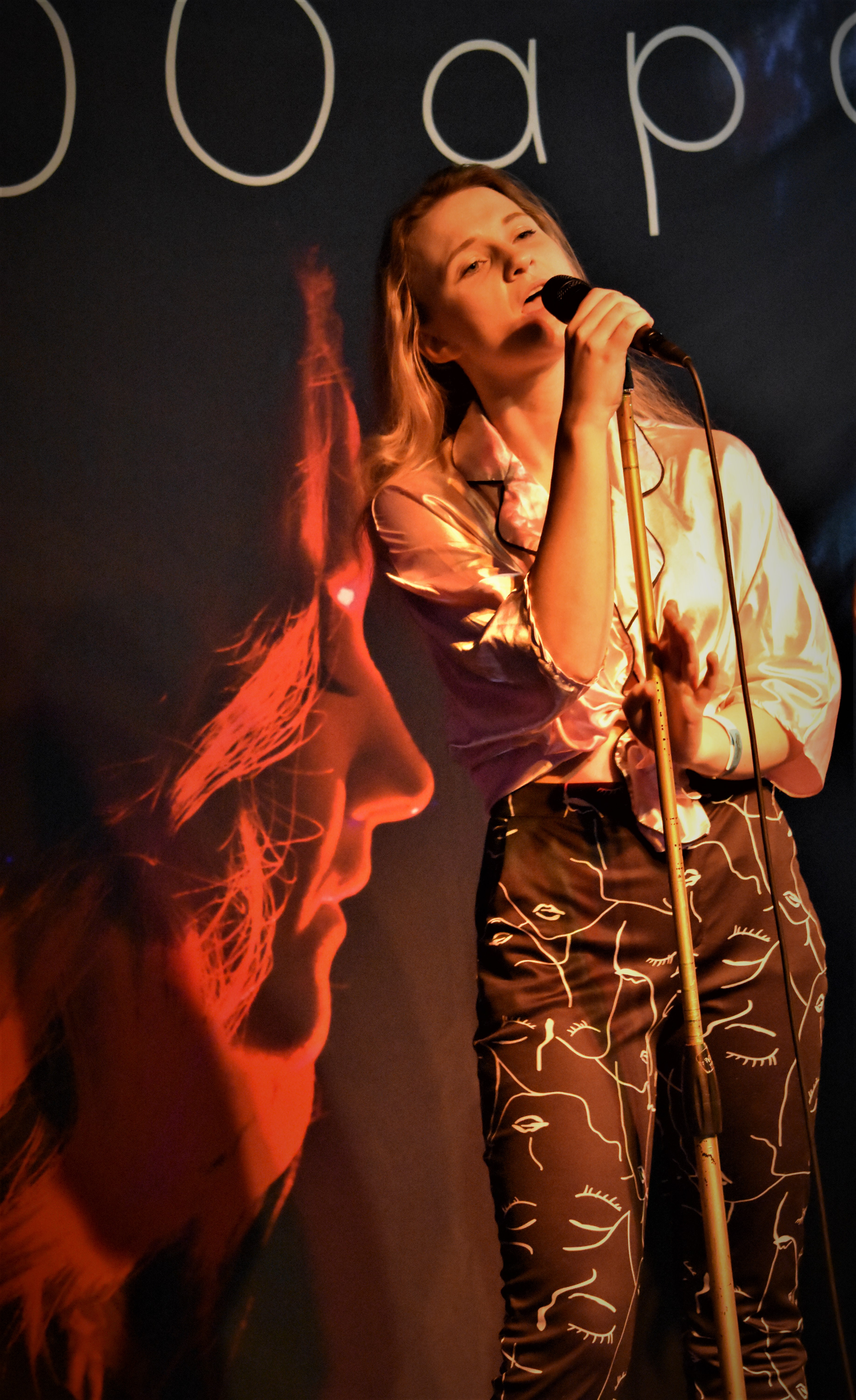
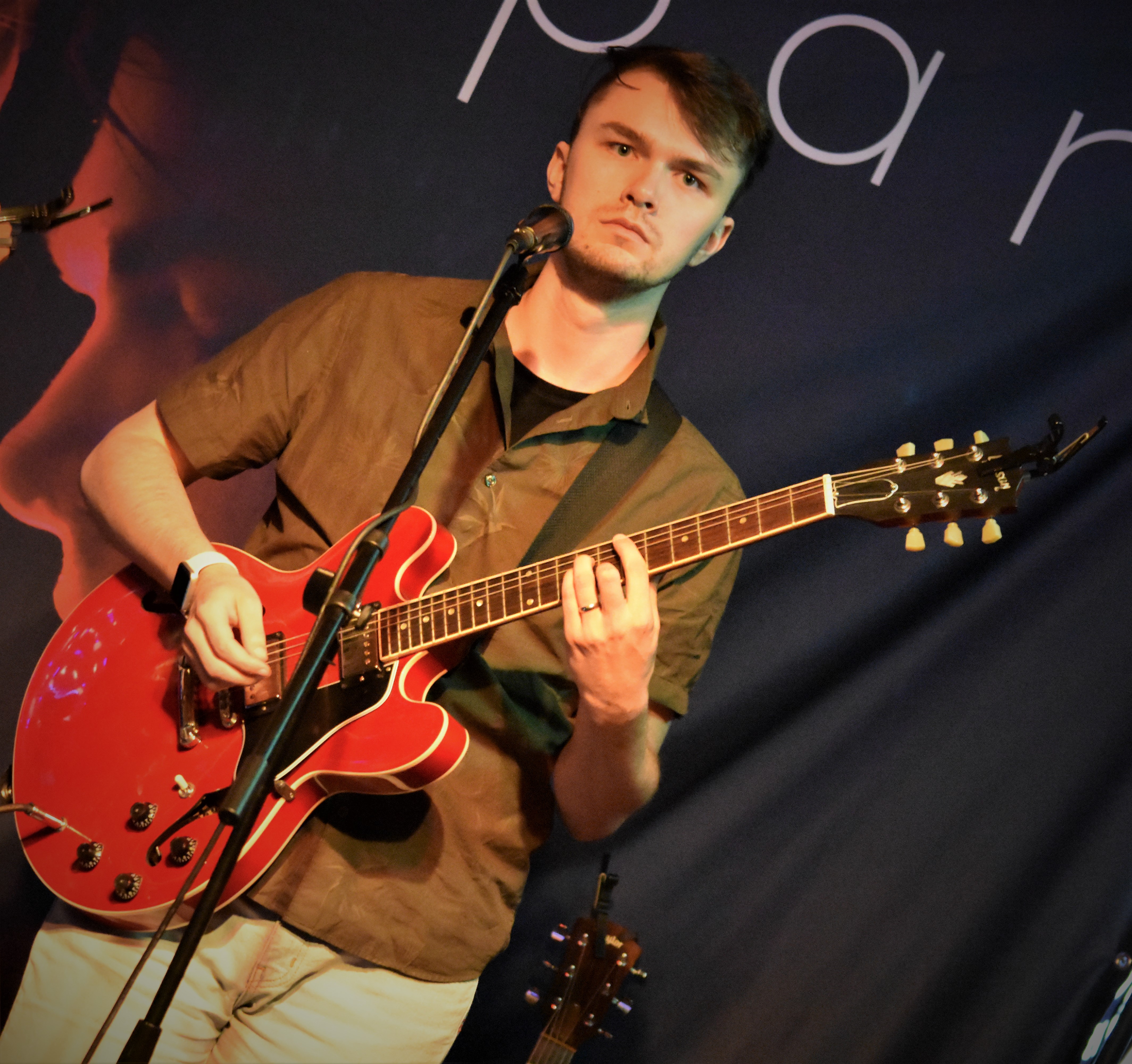
Today we have a brand new Your Tuesday Afternoon Alternative on WUDR Flyer Radio with the incredible Dayton-based musician, guitarist and songwriter and all around great guy Nick Kizirnis!
Nick has been making incredible music for years across genres and styles! Whether you want to hear surf rock, indie, guitar-led orchestra, power pop – Nick is accomplished across several styles of music. His 2020 album ‘The Distance‘ was one of our favorites of the last several years! It is a real pleasure to welcome him to the show today! We are excited to hear him play a few songs live in the studio!
Join us from 3-6pm today! And hey, just so you know… most of the music we are playing today was chosen specifically by Nick!
Dayton musician, songwriter, guitarist and producer Rich Reuter joined D. J on Your Tuesday Afternoon Alternative on March 22, 2022 in Dayton, Ohio on WUDR Flyer Radio at The University of Dayton. He played live and chatted about his recent music, new EP ‘Endless Parade‘, his work on Nicholas Johnson’s Back Upstate record and his work on his next full length ‘The Captain II’. You can discover his music at bandcamp. We discussed his approach to songwriting, production and performing the music.
You can follow Rich on social media. He is on Twitter and Instagram! You can listen to Rich’s music at Soundcloud! And Spotify:
On Your Tuesday Afternoon Alternative this coming Tuesday — March 8th — we have a terrific electro indie pop artist, Serin Oh! We were fortunate to see her perform at the Dayton Battle of the Bands contest and were truly impressed with her stage presence, amazing voice and clever arrangements. It is fair to say that she had that audience raptured with her songs and effortless vocal delivery. She even persuaded the crowd to chant Korean to one of her songs. It was a fun, engaging and dynamic performance.
We immediately were struck by the thought that her music adds an important element to the thriving Dayton Music Scene! Born in Suwon, South Korea, Serin moved to Ohio with her family at the age of six. Growing up in church, she was surrounded by gospel music in her formative years. During her time at the prestigious Berklee College of Music she discovered her love for jazz and R&B, whilst also rediscovering her Korean roots through the lens of K-Pop.
Serin has started a musical journey in her effort to search for a sound that would allow her to express the duality and contradictions of her identity through her music. Serin’s goals extend beyond music to using music culture to create opportunities for other musicians and creatives who are often not part of music culture. She hopes to uplift ‘third culture kids’ in the creative world through her music, especially fellow ‘third culture kids and secret outcasts.’ Using music to forge connection is a welcome approach!
It is with great pleasure that we welcome Serin Oh to Your Tuesday Afternoon Alternative! You can find out more about her and her music through her social media, Soundcloud and Bandcamp pages!
Tod Weidner is an institution in his home town of Dayton, Ohio. Tod is a visionary songwriter making music that drives a listener to tap their toes without realizing the impactful lyric until one has been hooked. Tod has led the incredible band Shrug for decades. The admiration for Tod’s music has been well earned from a songcraft that brims with a direct and honest rock and roll that veers across rock, indie, folk and more. Tod’s gift for writing catchy songs that open an honest dialogue is one of the most important characteristics of his music! While Tod has relocated to the Bay Area, his music continues the sonic journeys he started in Dayton.
Dr. J: What can you share with us about when and how you started writing music?
Lyrically speaking, I’ve been hugely influenced by my dad. He was a high school English and Literature teacher for over 30 years, and he passed on to me a love of words and how to put them together.
Musically Speaking, I started playing guitarin my sophomore year of high school, in January of 1986. I grew up in a rural area of Ohio, about 25 miles geographically and a thousand light years philosophically from Dayton. Underground rock (“college rock” as it was known then) was a thing, but it hadn’t really reached our sheltered little school to any real extent. We just had the radio – AOR or Top 40. If I had been more familiar with punk and DIY indie bands of the day, it may have occurred to me that I could write my own music as soon as I had a couple chords under my belt but, as it was, those radio formats instilled a feeling that these artists were untouchable superhuman beings descended down from Mt. Olympus, so the best we mortals could do was to learn how to play their music and- maybe, if we were good enough- join a cover band.
At some point around 1990, I began to realize that I didn’t have to play covers of other people’s music. The early “gateway drug” bands that lured me from the flashy ‘80s hard rock into more organic, underground stuff were Jane’s Addiction, Soundgarden, Mother Love Bone, Screaming Trees, Masters of Reality, Faith No More, and bands like that. I started coming up with riffs and developing them into truly dreadful early attempts at songs. Those bands led me to early R.E.M., Robin Hitchcock & The Egyptians, and other groups that had a little more “jangle” to their sound, and that was a turning point in my sense of songcraft. In 1993 I joined a short-lived Dayton band called Tim, which is where I first started contributing my own songs. After a year or so, I left Tim and started Shrug, and that’s where I really shifted into a higher gear. I was a sponge- I was devouring music as fast as I could find it, and learning about songwriting along the way.
Dr. J: What first led to your recording music? How do you approach production?
TW: When I was just starting out writing songs, my bandmate and I found this huge monstrosity of a stereo called a Sinclair Studio 100 at a close-out furniture store in Columbus. It was about the size of a window unit air conditioner, with a turntable, a tuner, and a dual cassette deck. The thing was, though, that it also had a setting where you could use it as a four-track recorder- the EQ sliders turned into faders, and you could record multitrack demos on it. My buddy and I each bought one, and I developed some extremely rudimentary recording chops, by trial and error. I haven’t listened to any of those cassettes I made for years and years; it would be somewhere between amusing and horrifying to hear them again.
How do I approach production? That’s a complicated question. It’s always evolving. My favorite way to do it is to get everyone in a room together and just play live. Let some happy accidents and mistakes happen- that’s where the good stuff lives. That’s not always doable, though. Sometimes space or noise limitations force you to build songs one or two instruments at a time, which gives you more control over the finished product and opens up the song to some interesting possibilities for experimentation.
There’s a time and a place for both approaches. Ideally, I like to let the song dictate the method. Having said that, I’ve been writing and recording demos alone on GarageBand lately, so building the song piece by piece is kind of the default mode for me at the moment, at least as far as pre-production goes.
The solo singles I’ve released so far and the ones in the immediate pipeline- aside from “The Boys of Summer” (which was done by myself at home) have been mostly recorded in a beautiful, big, spacious studio in Los Angeles, and I’ve been blessed to have some monster musicians on the sessions, so the lion’s share of the music gets tracked live, with vocals and some extra guitar overdubs added later. It’s a good mix of the two methods.
Dr. J: Boys of Summer is your most recent music, what led to the making of that song? What was the main influence on your recording this cover?
TW: It was serendipity- pure happenstance. I’ve always adored the original version, written by Mike Campbell and Don Henley. It’s such an evocative song about nostalgia, and it resonates with me more and more the older I get. I always thought it would be cool to cover it at some point.
So it happened that, this past New Year’s Day, 2022, I was at home, in my music room, with a few hours to kill, so I just started messing around with the song, kind of flying by the seat of my pants. I didn’t want to do a copy of the original; I never understand it when artists do that. What’s the point? I had an idea to keep it sparse- dark and skeletal, kind of turning the upbeat mood of the original into something that delivers the same sentiment in a more brooding way. Don Henley’s version is, in my eyes, sung by a successful alpha-type guy who’s reminiscing about an old flame. But he never really gets close to owning up to taking any blame in why the relationship ended. The narrator of my version of the song is a loser. He let the best thing that ever happened to him drift away, and he knows it.
I had no intention of doing anything with my version- it was just sort of something to do for a few hours. I sent it to my manager on a whim, because I knew he liked the original as much as I did. He really liked my version, and convinced me that we should release it. I have a song coming out soon that we really want all the pieces in place for, so releasing a version of a song that people are already familiar with makes a certain amount of sense from a business standpoint. We figured a cover would reach a few new ears to give us that much bigger of an audience when the “real next course” gets served up. How that goes remains to be seen, but the response to “The Boys of Summer” has been really great so far, so I’m already considering it a win.
I’m actually glad I recorded the song with no lofty goals for it to be released, because there’s a vulnerability in the vocal performance that probably wouldn’t have survived all the overthinking I would have done had I been trying for “a single”. “Quick, dirty, and instinctive” is the way to go sometimes.
Dr. J: The song ‘City of San Jose’ captures a remarkable constellation of musical influences. The song seems to have an almost 1970s feel. Is that a correct interpretation? If that is correct, did you intend to create a song that connects to that time period? If that is not correct, how would you describe the feeling of the song?
TW: No, I’d say that’s a very accurate assessment. Most of what I do is rooted in the music of the 60s and 70s, either directly or one generation removed, and most of my favorite artists were doing their best work back then.
Dr. J: How did the song ‘City of San Jose’ come together musically for you?
TW: The song is kind of a love letter to a section of the San Francisco Bay Trail near where I live. During the peak of Lockdown, it was a great place to get some exercise away from a lot of other people. I also came up with a lot of lyrics for this current batch of songs out there.
I used an alternate tuning on my guitar for that one- DADGAD, a tuning that a lot of British artists gravitated towards in the late 60s and 70s; people like Bert Jansch, John Martyn, and Nick Drake. Jimmy Page used DADGAD on a lot of Led Zeppelin tracks, as well. My original demo for the song was very much in the British Folk vein- a bit quieter, more pastoral. When we got in the studio to record the actual version it became much more upbeat, but I’m not mad about that at all. I like both approaches a lot, and the final version we did in the studio served as a good introduction to the world of “Tod Weidner as a solo artist.”
Dr. J: Where do you often derive inspiration to make music?
TW: Well, it’s a compulsion, really. Playing guitar is really the one thing in my life that never fails to make me feel better. If I’m depressed, anxious, or out of sorts, there’s nothing I like better than to just pick up the guitar and lose myself for an hour or two. It’s my form of meditation. More often than not, a kernel of an idea will pop up somewhere in the course of my aimless noodling. The “voice memos” app on my phone is overflowing with minute-long ideas that either eventually will or already have become full-fledged songs.
Lyrically, I’ve been really making an effort over the past few years to simplify. In the beginning, I delighted in using big flowery words in my songs just for their own sake. While there’s certainly nothing wrong with that, per se, I’ve been fascinated lately with the songcraft of people like John Prine, Johnny Cash, or Tom Petty: songwriters who can lay down a simple truth that everyone can relate to, but with a clever little spin on it that just makes it land like a bomb. There’s a deceptively fine art to that, and I’m always trying to get better at it. Fewer words, more impact.
Dr. J: How would you describe the music that you typically create? How has that process evolved or changed over time (especially as you think about your journey in the last few years)?
TW: My standard line about my music is “songs about Love, Loss, The Loss of Love, and The Love of Loss”. There tends to be a touch of yearning, or wistfulness, a bit of melancholy in most of my music- “Sad Bastard Music”, as some people call it. It’s not dark all the time, but I think most artists have a tendency to ruminate about things, at least the ones I gravitate to.
Moving to California from Ohio was already a big new chapter in my life in and of itself, but the prospect of starting a solo career with a new tribe of people also definitely represents a turning of the page. Dayton will always be home, and I thank my lucky stars that I got to learn how to be a musician and writer in such an amazingly fertile music scene as Dayton’s, but there comes a time when a nurturing, close-knit environment runs the risk of becoming an insular echo chamber-type situation. In all honesty, that’s what Dayton started feeling like toward the end of my time there. It was time to get somewhere new and try my stuff out on people who hadn’t known me for decades. It’s a healthy thing to do.
My dear old friend, and now manager, Jack Piatt, has always championed my music, and through him, I’ve gotten to meet and work with people out here from very different backgrounds than mine. Which is also a healthy thing to do. Nomad, the gentleman who has produced my first five singles, has a resume that includes- among other things- a long stint as Babyface’s musical director. So he has a strong background in Soul and R&B, and that gives him a much different perspective than I have, coming from a more-or-less strict rock background. The “me” from 10 or 15 years ago would’ve been very skeptical of working with someone like that. But, as I said, this is a major new chapter of my life and career. I told myself, “Tod, you’ve been doing things a certain way for over 25 years. If you want to continue in the same bubble you’ve been operating in, you might as well just go back to Dayton and record the usual stuff with the same people at the same places.” If I want to get somewhere new, it’s a good idea to take some new outside advice, be open to change, and let go of some of my innate urges to control every aspect of the situation. I decided to start saying “yes”, instead of, “I dunno, that’s not how I usually do it.” And I have to say- it’s been working out really well so far. It’s refreshing, and exciting.
Dr. J: What is next for you musically? How would you describe your thoughts at this point for your next project?
TW: The next single is coming out sometime in February, and I think it’s going to really surprise people who are familiar with my back catalog. I’m very excited about this track, and the people I recorded it with. That’s all I want to say about it for now.
The plan is to release a digital single at a rate of about one a month, and eventually end up with enough songs for a full, physical album. I’m still old school enough that I like to hold a record or a CD in my hand and read liner notes and whatnot.
I came out of Lockdown with about 20 new songs, and I’m as proud of them as any I’ve ever written; I really believe it’s some of my best work, and I am dying to get on the road and play them for people.
Dr. J: What is your favorite song to perform live? What is your favorite song to perform in general? What makes that song a current favorite in your performances?
TW: I don’t know if I have a favorite song to perform. I have favorite types of songs, maybe. I love playing a song that lets me stretch out and go somewhere on the guitar because, at the end of the day, I still think of myself as a guitar player.
And I love a song that I can crawl inside and live in while I’m singing it. I just want to play something that moves people. That’s the objective: to play with sincerity and move people. There’s not much point in doing anything else.
Dr. J: What is one message you would hope that listeners find in the unique nature of your latest music?
TW: Well, as I said earlier, I tend to lean toward the darker end of the emotional spectrum with my songs, but lately- with this latest batch of songs, especially- I’ve been making more of a concerted effort to include a little ray of sunlight here and there in the songs. With the last several years of trauma and uncertainty, I think Hope is a valuable, rare commodity, and people need as much of it as they can get.
Music, and Art in general, serves multiple purposes: it can provide a feeling of escape for the listener, a chance to forget their troubles and go somewhere else for a few minutes. That’s a lovely thing.
But Music can also be a hand to hold in the dark. It can tell the listener, “You’re going through some painful times. I know how you feel, I feel that way, too. Let’s feel that way together.” That can be a beautiful thing, too- letting the listener know they’re not alone. I know Music has gotten me through some dark days and nights, and if my songs can help someone in that way, then I’ve done my part.
Dr. J: As a musician, how are you adapting to the challenges of the Coronavirus?
TW: Same as everyone, I suppose. It depends on the day. I miss playing shows, I know that. I hope that, sooner than later, I can get back to playing a gig without worrying about people going home sick. I’m also very aware of the privileged position from which I’m speaking.; my wife has been working from home, and we’re getting by alright. A lot of folks don’t have that luxury.
The silver lining for me, as a musician, has been the enforced down time. As I mentioned, it’s allowed me to really buckle down and work and produce a lot of songs I’m proud of. I’m thankful that I have songwriting as a way to work out my fear, dread, and anxiety. Again, a lot of people don’t have an outlet like that.
I guess it comes back to what I touched on in the previous question. As a singer/songwriter during this whole mess, I have a responsibility to reflect the times, relate to the listener, and provide them with some degree of solace. All things considered, it’s not a bad job to have.
We want to extend our sincere gratitude to Tod for answering our questions and continuing to make some really excellent music! Click on the links throughout the article to visit his social media or to listen to various songs that were discussed! If any musicians or artists would like to participate in future ’11 Questions with…’ columns, please feel free to email us at drjytaa@gmail.com. All photos and images courtesy of Tod Weidner.
The album was recorded with Jarrett Nicolay at Mix Tape Studios in Alexandria, VA. To say that Jarrett contributed to the sound of this project would be a vast understatement. Jarrett not only lent his production skills to the effort, he played all of the instruments as well. Mann and Nicolay together crafted a unique sonic vision.
The band’s album captures the diverse musical influences of Mann’s kaleidoscopic and encyclopedic sonic grasp. The arrival of No One Sphere fills a need for an indie rocker that is not a statement about something, a song that is not pretentious or precious. The single Ceiling Fan manages to create a chantlike chaos of melodic deconstruction that is similar to the musical heart of Wilco’s experimental period. The slinky stagger of the bass line moves along a jazzy rhythm that would not be out of place on a funk record. The lyrics sway from meaningful self disclosure to deliberate non-sensical rhyming. In that way, the song feels akin to Wilco’s deconstruction era of Yankee Hotel Foxtrot and A Ghost is Born. Yet the jangly indie rock center of the song has a Pixies-like gravity.
Ceiling Fan pulls from many classic independent influences in its barely over three minute length. Listeners hear elements of Wire, Gang of Four, mid-’90s era R.E.M., the before mentioned Pixies, Half Japanese and The Replacements.
If the music industry were a fair minded affair, No One Sphere would be at the top of everyone’s new album recommendations. You can follow No One Sphere on Twitter and Instagram. We also recommend that you keep an eye out on their YouTube channel!
RIYL: Wire, Gang of Four, The Pixies, Half Japanese, R.E.M., The dbs, and The Replacements
Samantha J. King joined Dr. J in the studio for Your Tuesday Afternoon Alternative on Tuesday, February 8, 2022. This was our sixth show of 2022! Sam talked about her approach to songwriting, where she draws inspiration for her music, her experience of working on music with Patrick Himes in the Reel Love Recording Studio and much more! Sam’s current song, Southpark released on January 7th and is available everywhere you can experience music.
You can learn more about her on Facebook and get her music on Bandcamp.
You can watch more videos of past studio guests on this page or over at our YouTubeChannel. Past episodes of YTAA are available on Mixcloud. If you have questions, comments or suggestions, please contact Dr. J on gmail at drjytaa.
Jason Trout of The Touchy Feelys joined Dr J in the studio for Your Tuesday Afternoon Alternative on Tuesday, January 18, 2022. This was our third new show of 2022. Jason talked about songwriting, working as a duo with Amanda Dawn Courts, their approach to recording and their debut record. The Touchy Feelys is an indie/folk band from Athens and Dayton, Ohio.
Their debut album BREAK-UP SONGS ABOUT STAYING TOGETHER was released on December 3, 2021. You can learn more about them on Facebook and Bandcamp. You can also contact them on email at thetouchyfeelys@gmail.com. The duo is also on Instagram as thetouchyfeelys.
You can watch more videos of past studio guests on this page or over at our YouTubeChannel. Past episodes of YTAA are available on Mixcloud. If you have questions, comments or suggestions, please contact Dr. J on gmail at drjytaa.
Paul “Trip” Ryan of the one man band, Super 8, has been making some of the most melodic psychedelic indie-pop music around! Much of UK-based Trip’s music shimmers and sways into exquisitely crafted ear worms. In addition to his knack for melody, Trip also makes music with a lightness that sometimes hides the melancholy. This back and forth is most welcome in these days of challenge. As a one man band playing all of the instruments, an atmosphere is raised that allows listeners to drop into a musical concoction that does not ever disappoint. Each delicious single and the incredible collaboration with the incredible Lisa Mychols, crackles and glistens with just the right amount of sonic tension. If one were to look up ‘catchy songs’ in an encyclopedia, the entry would simply say ‘Super 8.’
Dr. J: What can you share with us about when and how you started writing music?
Super 8 (Trip): Well first off, thanks so much for taking the time to formulate these questions and for your interest in this music I make. OK, here goes then … I have always loved music! A very early memory of mine was listening to Simon & Garfunkel played in the family car when I was a kid and really connecting with the harmonies and rhythms. Later in my early teens I found an old, beat up guitar in an attic. In hindsight it was a truly terrible instrument with only four (rusty!) strings but, for a few months at least, I actually thought it was the greatest thing in the world! To encourage my enthusiasm my Folks later bought me a better acoustic guitar and, from there, I saved up pocket money to buy an electric one. I’m still ‘wheeling’n’dealing’ musical instruments to this day and still get that buzz that I had as a kid when I get to play a new instrument. In fact, my latest musical instrument fixation is the birthday present I received from my thoughtful wife at Hogmanay – a small bass harmonica. I’m so taken with it I put it to good use straight away – it’s a feature instrument on the new single (‘Out of My Head’). You can see me getting to grips with it in the video.
As for how I started writing music … it’s something I just fell into naturally. It just feels like the right thing for me to be doing in this life. I’ve had no formal training as such, I just try to capture the sounds I hear in my head as best I can with whatever musical tools I have at my disposal at any given time.
Dr. J: What first led to your recording music as SUPER 8? How do you approach production?
Trip: I trod the musical boards in a few local bands growing up in the North West of England. With Liverpool a short train ride to the west and Manchester another short train ride to the east it was an inspiring place to grow up (Warrington). I moved north to Scotland around the turn of the millennium and, borne of necessity without any band mates around, I tentatively started to make music on my own. (I had never sung one of my own songs prior to coming to Scotland – there must be something in the water here!) There was a brief spell at the beginning of the century where I tried the whole ‘band thing’ again but it didn’t work out… so ever since I’ve just accepted that I’m a solo studio artist (read: ‘hermit’!).
That said over the last couple of years as well as keeping my hand in with solo SUPER 8 stuff I have been collaborating remotely with the LA-based artist Lisa Mychols (more on that later). As to how I approach production? I’m not the world’s most technical guy I must admit. I’m not interested in the latest ‘must-have!’ fad gadget nor tweaking software for hours on end, I just use my ears until I find sounds that work well together. I play everything you hear on my solo records. Some instruments I can play better than others but I will give anything a go to try to get a tune out of it, whatever works for the song really. At the end of the day it’s ALL about the song!
Dr. J: Out of My Headis your most recent music, what led to the making of that song? What was the main influence on your songwriting at that time that you wrote this?
Trip: ‘Out Of My Head’ came together really quickly. I had the embryonic idea for it just before Christmas and threw down a rough musical sketch before heading south to England for the festive period. On my return I realized it would benefit from being faster and ‘quirkier’. As I said, I had been gifted a bass harmonica by this point so, after a quick crash course in bass harmonica technique (and discovering you can only blow into it, there’s no sound if you suck!) I attempted to put it to good use right away. The single came together really quickly after that. The wife and I made a quick (daft!) video for it last Wednesday and it was released (via Bandcamp) over the weekend just gone. As a composer I like it when inspiration strikes like that! What was just a rough idea can become a fully-formed & finished piece with a quick turnaround. I feel I do my best work when I’m ‘lost in music’ and ‘in the zone’ as it were! It’s inspiring and keeps me on my toes. I’m naturally a pretty impulsive person who needs to keep motivated. I tend to tire and lose interest when projects drag on.
As for the main influence for this particular song. Hmm… I hadn’t really thought about it but, now you ask, MAYBE it’s about a love that has been lost? And/or rejection? Or a feeling of being stuck in a certain situation out of one’s control with no apparent clear plan for the way forward. That and the knock-on doubts, personal frustration and disorientation as a result hence the title ‘Out Of My Head’. Or maybe it’s not about any of that and it’s about what book to read next? (I’m currently reading Brian Wilson’s autobiography). I dunno, some songs are hard to explain. They just ‘are what they are’ – a musical snapshot of a moment in time. I personally don’t write a diary so it all has to come out in some way I guess. As you can see, I’m not that great at explaining my songs – I prefer to just let the songs do the talking.
Dr. J: ‘Lisa Mychols & SUPER 8 album’ was the album you released in 2020 with Lisa Mychols. The songs on that record seem almost purposefully lighter hearted. Is that a correct interpretation of the record? If that is correct, did you intend to create an album that was purposefully more fun?
Trip: Ahh yeah, the debut album with Lisa was great fun – an absolute blast from start to finish! It just seemed to come along at the perfect time (for both of us I think!) It all started with a one-off single (‘Time Bomb’). We had such a laugh making that one (including being cast as clay figures in the video by my talented wife Gill!) that we decided to carry on and see where this 5,000 mile remote collaboration might lead. (Lisa lives in LA, I reside in Scotland so the whole album was made via file sharing. Believe it or not we have never actually met in person!)
Before too long we had what we thought was going to make a strong EP but then we did a couple more songs together and just thought: “Hey! What the heck? Let’s try for a full length album!” We were ping-ponging files back and forth across the Atlantic and just vibing off the whole project. It wasn’t our intention to make an entire Summer-themed album, that’s just the way it came out. We just let the songs inform us as to how THEY wanted to go. All very organic and natural sounding, nothing on that album was forced or premeditated, not written to order, we just went with the flow and within the space of just a few very creative months we had our album ‘in the can’. On its release (via the cool Canadian label: ‘The Beautiful Music’) it received numerous rave reviews with many folk referring to it as their ‘Album of the Summer’. I’m still very proud of that album. It definitely bottled a musical moment in time. Happy days & good vibrations! File under: ‘California/Brit Pop!’
Dr. J: How did the song ‘All My Worries’ come together musically for you?
Trip: I have to hold my hand up and admit that I was listening to a lot of Beatles around the time this was written. (Who am I trying to kid, I’m ALWAYS listening to The Beatles!) I guess I just soaked up some extra Beatles vibe around this time and it came out in this song. Again, not premeditated, the way this one panned out is the way this song informed me how it wanted to be. (That said, I admit it IS very Beatles-y-sounding …. to my ears anyway!)
Dr. J: Where do you often derive inspiration to make music?
Trip: Well, there’s The Beatles (see above – LOL!) but it doesn’t just come from listening to other folk’s music. It’s hard to explain really but I shall at least try …. most of the music I write actually comes to me ‘from within’ … and usually at the most inopportune moments! For example, I’ll be out walking somewhere and “BOOM!” I get a melody or a riff popping into my head and have to scrabble to capture it before it’s gone. (The voice recorder on my phone has helped me remember quite a few songs that would otherwise have been lost!) Another example? I could be mid-shave say and … “AARGGH! Here we go again!” It’s a curse at times but I can’t complain. The most exasperating situation? At night. I’m a light sleeper and most nights I find it very difficult to get off to sleep – it takes a long time for my mind to shut down! It’s often just when I’m (finally!) in that strange Twilight Zone place between conscious and unconscious thought that “PING!” a new song idea will choose to present itself! When it does, I either have to: A) wake myself up to capture it somehow or B) just let it slide hoping that, by rights, if it’s good enough then I should be able to just remember it until I wake at a civilized time in the morning, right?
Dr. J: How would you describe the music that you typically create? How has that process evolved or changed over time (especially as you think about your journey in the last few years?
Trip: Again, quite a difficult question as I find it very hard to describe my music ….. it’s more ‘a feeling’. I try not to pigeon-hole the music I make. There’s plenty of acts out there that play to their strengths and tastes as in: “We’re a Ska band!” or “We’re a Power Pop band!” (Whatever ‘Power Pop’ is – ha!) but, for me, I like to mix it up and keep fans of my music on their toes. I like the fact that I can, for example, write a little jazzy bossanova tune with Lisa (eg: ‘Your Summer Theme’) then go from that to an out ’n’ out Rocker with a medieval baroque section in 6/8 timing just thrown in for good measure (LOL!) There’s actually a lot of humour embedded into these songs I write. How would I sum them all up? It’s all just a big pick’n’mix musical melting pot really! As to how my songwriting process has evolved, I’d like to think I’m getting better as I go along here but, that said, I do not wish to get ‘too good’. I like all the ‘happy accidents’ that happen in the studio …. and the things that don’t seem to make sense. If I actually knew what I was doing and all the theory behind it then perhaps these chance moments would vanish and I’m not prepared to take that risk so I’ll just keep doing this while I can and not think too much about the process. So long as making music continues to be a fun, creative outlet for me then I shall endeavour to keep making it.
Dr. J: What is next for you musically? How would you describe your thoughts at this point for your next project?
Trip: Well it’s the start of a new year so we’re supposed to have resolutions, right? Musically speaking I already know I don’t want another year like last year! Looking back on it I got way too distracted with musical commissions and I completely took my eye off the ball (or should that be ‘ear’?) where making NEW music was concerned. So much so that I actually only managed to finish a mere handful of self-penned original songs (which is not like me at all – prior to 2021 I had a reputation for being prolific!) Here now in 2022 I need to turn that around and ‘get back’ to the one thing I feel I’m good at i.e.: being ‘a songwriter’. I hope to have two new albums out in 2022, one SUPER 8 solo and a follow-up with Lisa – watch this space!
Dr. J: What is your favorite song to perform live? What is your favorite song to perform in general? What makes that song a current favorite in your performances?
Trip: Like I say, I’m more of what you’d call ‘a studio musician’ nowadays. Being a solo ‘one man band’ as it were, I haven’t played a gig in the longest time. I guess my performances these days are on the records I make, what I play into the microphone when I’m multi-tracking a song. I tend to just let the songs do the talking now pretty much! I don’t really tend to have ‘a favourite’. I just go from recording one song to the next really.
Dr. J: What is one message you would hope that listeners find in the unique nature of your latest music?
No real ‘message’ as such more ‘a feeling’. That the music I present makes the listener feel good in themselves. Not one ‘thing’ in particular, just ‘a connection’. I write from the heart I guess and just try to be true to my school as it were – to write music that I like and, if I like it, hopefully others might too. ‘Tis a strange and magical thing ‘music’. It’s all so subjective!
Dr. J: As a musician, how are you adapting to the challenges of the Coronavirus?
Trip: Like everyone, I wish this thing would just disappear and let us all get back to and on with ‘normal’ life as we knew it – we live in hope! In the meantime we have to just keep our heads up and deal with the cards we’ve been dealt here. Musically speaking the one good thing to come out of all of this I guess is that us musicians have realised the potential of making music via file-sharing. I can’t really think of anything else positive to say on the whole ‘Corona’ front! Anyway, stay safe and thanks for reading!
We want to extend our sincere gratitude to Trip for answering our questions and continuing to make some really excellent music as Super 8! Click on the links throughout the article to visit his social media or to listen to various songs that were discussed! If any musicians or artists would like to participate in future ’11 Questions with…’ columns, please feel free to email us at drjytaa@gmail.com. All photos and images courtesy of Trip.
The indie-rock Rust Belt Dayton band Yuppie led by Zack Sliver has been making some of the most enthralling rock and roll over the past several years! ‘Get There’ continues the musical vision that speaks to the authentic emotion of community.
Zack notes that: “The song is about how someone’s words can follow you throughout your life, taking on different forms; through different people and weigh on you. The choice is whether you listen to them, or strive to find where you belong in this weird place we all call ours.
We also highly recommend the bands’ A Place to Call My Own and the compelling video the band made to go with that terrific song:
It has been our goal since we started the Gem City Alternative Playlist to get to 24 hours of all local and Dayton music. We wanted to create 24 hours of music that is amazing and under-represented on radio! We are sooooo close. Suggestions for the playlist? If you are a band in Miami Valley of Ohio, we want to hear from you!
This concept video for ‘Sweet Smell of Success’ from German musician Molly Nilsson‘s latest album ‘Extreme‘ just out on January 15, 2022 is our latest video of the day. The melancholy of this song is built around powerful guitars and a swirling mix that continues the evolution of sound away from the neo-synth of her previous music. The song holds a heavy ‘almost’ shoegaze feel. Combining elements of pop, indie, shoegaze and synth, Nilsson sings about a begrudging optimism delivered in her impassive vocals that deliver emotion without having direct statements about love, shame or anger. The chorus will become stuck in your head for days. Check out her other music on bandcamp.
Drummer turned guitarist Kim Ware has been making emotionally powerful indie folk rock since 2009’s Bring on the Tambourines! Her last full length, 2019’s Prose and Consciousness merged her sense of melody with layered songwriting that pulled the listener into a rich world of Southern culture, meditations on life and efforts to improve ourselves. Kim’s music often raises questions about how we make real lasting relations in our communities. Stand out tracks like ‘Three’, ‘His Name was the Color that I Loved’ and ‘Wants + Needs’ brought Ware’s mature songwriting together with music that allows listeners to feel the experience even if it is for all too brief a moment. Kim has continued to release new music such as 2021’s ‘capital R (single)‘ and 2020’s powerful ‘Stopped Making Plans‘ and ‘Things Will Be Better in the Morning.’ These songs demonstrate her commitment to intelligent musical discourse. It was a real pleasure to correspond with Kim about her music.
1. What can you share with us about when and how you started writing your latest song, ‘Stopped Making Plans’?
This song had some pretty weird origins that were both very intentional but also very accidental at the same time! I say that because it came to be thanks to an assignment for a songwriting group I’m part of.
We meet on Mondays; it was a Sunday afternoon and I thought, “I don’t have a new song to share tomorrow.” The prompt was “foreign languages” so I simply started by thinking about countries I’d like to visit. My mind went to Germany first; my husband is from there but I’ve never visited. I was thinking about how my friend Andy had also booked a trip to Italy in late 2019 but of course it didn’t happen.
Anyway, I sort of organized those thoughts to be more about plans falling through, and missing loved ones. In the case of the Italy mention, rather than focusing on Andy’s trip I very intentionally thought about Michele Gazich. He plays violin for Mary Gauthier, and though I don’t know him well I’ve met him at Song School in Colorado, and we’re friends on Facebook. Back around last February / March, before Covid had severely impacted the US but was taking its toll on Italy, where he lives, he was posting about what was going on. It was so frightening. That, plus my working for a major digital publisher at the time (which happens to be health-focused), led me to take all this pretty seriously from the very beginning.
It’s been such a mental and emotional drain. I kept thinking it might be something I’d write about but it all just seemed too big. Suddenly, approaching it this way (very indirectly at first) just worked. Once I realized what I wanted the song to capture (the trials of last year, with a focus on plans being cancelled), it came together pretty quickly.
I also feel the need to say before writing it I had just finished reading Viktor Frankl’s “Man’s Search for Meaning” for graduate school. In it, he focuses a good bit on hope, and imagining a future, and how important it is to our existence. That seemed to be top of mind – that the roughest part of all this, for me (a natural planner) was adapting to not making plans.
2. In the past you have had strong collaborations, did the coronavirus/Covid-19 situation change how you wrote and worked on the song?
Very much. In November 2019, the Good Graces played our release show for “Prose and Consciousness.” That was such a wonderful experience, like everything just came together for that show. Little did we know we’d only be able to play a couple more together. I would have loved to have included the folks who played that show with me on this song, but logistically that’s a lot harder to coordinate now. I also moved last summer, from Atlanta (where they are all based) to North Carolina, to be closer to elderly family members. The combination of Covid plus just being in a place where I don’t know as many musicians meant I felt very, very isolated. That’s definitely changed how I work on music now. I wrote the song alone, and then recorded my guitar and vocal tracks at home. I sent those to engineer/producer Jerry Kee, and he added everything else. We’re working on a full album this way. Though it’s not what I would have imagined had you asked me last year how I’d make my next album, it’s working really well.
3. ‘Stopped Making Plans’ is a song that explores the impact of the pandemic, police violence and other social issues, did you set out to address these particular ideas when starting to work on that song?
Not at all! As I mentioned up top, it didn’t start out being about that at all. But, it quickly turned into that. I just wanted to be very honest. Those are the things that took so much of my mental energy and empathy last year. So once I started going there, I couldn’t really avoid them.
4. Many of your songs have addressed the strength or weakness of social bonds – is that a correct interpretation of some of the lyrics and the feel of your music? If that is correct, do you intend to write about social bonds and connections or did the song evolve in that direction over time?
That’s so interesting, and really insightful. I put a lot of thought into relationships, I suppose. And not just a-b relationships, but like my place, my role in a given community. How we all “relate”. And connections – that’s definitely something I’ve been very focused on exploring, for years now. All that said though, I don’t think I ever intentionally write about them. I’m very much an in-the-moment songwriter. Something comes to me, and I try to follow it. Sometimes I can shape it into something that makes some sense, but as often it falls by the wayside, I guess to make room for something else. I’m studying to get my master’s in counseling, and social bonds and connections is a big focus there. So I imagine that will continue to come up, either directly or indirectly, in my music.
5. How did ‘Stopped Making Plans’ come together musically for you?
Once I figured out the direction and general melody, the vocal part came together quickly. That tends to be what happens for most of my songs. The guitar part was the challenge. I’d say my finger-picking skills are pretty novice. But I really pushed myself to give this particular guitar part a real “part,” a real presence in the song. Really I thought the recorded version would stay pretty minimal. So I worked really hard to figure out that guitar melody and actually be able to execute it. The bridge was particularly tricky! But finally I got it; it’s a lot different from my playing on most all my other songs which is typically either very strummy and rhythmic, or very very simple, repetitive picking. Anyway, as I mentioned above, once I sent it to Jerry he had a very different vision for it! At first I wasn’t sure about it, but by the end I really loved everything he brought to it (and I still have my original demo with just me – that’s posted on my Bandcamp, too – If I ever really feel like hearing or sharing that more minimal version).
6. Where do you often derive inspiration to make music?
I think of songwriting a lot like dreams. I’ve always thought dreams just “mean” whatever you decide they mean, and if you asked someone else, they might have a very different interpretation. To me, dreams seem to mostly just be a way of processing whatever has happened that day. Songs are very much the same. I process through them. I’m not sure I “figure stuff out,” but – when I get it right – I manage to put something pretty complex and challenging for me to even talk about into a 3-or-4-minute piece of art. That is just the coolest thing to me! It’s the single thing I love most about songwriting.
So I guess I’m saying I get inspiration from challenges – but it’s almost never intentional. My mind just always wants to solve problems, I think. Or at least take a complex problem and break it down into something simpler, more manageable. I think it’s my need to do that that inspires me to write songs. It’s my means of processing.
7. How would you describe the music that you typically create? How has that process evolved or changed over time (especially as you think about your journey from Set Your Sights (in 2017) to Prose and Consciousness (2019) to your recent music)?
I think it’s always been really personal and honest. That’s sort of the metric for me; sometimes I write for “side projects” and one of the things that makes it a Good Graces song vs. a song for one of those other projects is if it’s so honest that I’d probably be uncomfortable talking about it.
I think that’s been consistent, from my very first song back in ’07 or so. It’s evolved a lot; I guess it’s gotten a little more polished? And I’ve had a lot of different folks contribute to it over the years. They’ve all inspired and had an influence on me, the songwriting, and the final product in one way or another. I do think now I’m starting to veer just slightly from Americana and folk and maybe more towards indie and bedroom pop (which is a place I’m also pretty familiar with, I think my 2014 album “Close to the Sun” was more that sort of style). The southern influence isn’t going anywhere though, I think that’s unavoidable due to my vocals. But working with Jerry here recently, and him adding things like drum machine and keys, has made me realize a sort of different way to present the songs.
8. What is next for you musically? How would you describe your thoughts at this point for your next project after Stop Making Plans?
Jerry and I have about 16 or 17 songs we’re trying to get through this year. I think we’ve finished up 5 so far. I’d like to release a few more singles and then maybe around the fall or so start pulling everything together for an album. But that said, last year taught me to just sort of be more in the moment and not get too married to any one idea or method when it comes to releasing music. I recently launched a Patreon which I’m really enjoying – my focused is shifting just a little from “the next album” to “what am I making this week?” I will always love making albums though, and the format, it’s just that right now it feels like there’s got to be something more, or different from that, you know? One thing I’ve noticed is that I’m pretty burnt out on the traditional way of making and promoting music. It was getting so focused on likes, pageviews, followers, etc. That’s why I like doing things like Patreon. Sure, it’s great if the numbers go up. But for me what’s far more important is the connection I’m making through songs. If I’m even lucky enough to make one. That’s the greatest thing. I’m trying to focus more on little things that remind me of that connection.
Oh! I also recently launched a podcast that sort of talks about these things so I may as well plug that here! It’s called Quarantined With the Good Graces and you can find it on most all the podcast platforms. It’s an interview podcast and I’m releasing a new episode each Tuesday. At the moment, I’m focusing as much on that as I am my songs, and it feels really right to me.
9. What is your favorite song to perform? What makes it a current favorite in your performances?
It’s almost always “7-Year Sentence (Going to Hell)”. Back in Atlanta, I’d usually have a group of friends come sing the end choruses with me. It was a highlight of our shows, and really cathartic. I tend to sing that song louder and more emotionally than a lot of my other songs, and it always feels really good.
10. What is one message you would hope that listeners find in the unique nature of your latest music?
That we’re all struggling through this in our own way. If nothing else connects us, I think that does.
11. As a musician, how are you adapting to the challenges of the Coronavirus?
I’ve really been trying to immerse myself in my new life – my husband and I moved into my aunt’s old farmhouse at the beginning of this year. It’s right beside my dad’s peach orchard. He passed away a couple of summers ago, but being here, right beside everything that was so much a part of him, I feel really close to him. The other day I walked around the perimeter of the orchard; it was soooo cold! But during that time, I thought, this is exactly where I’m supposed to be, and exactly what I’m supposed to be doing in this moment. I guess that’s how I’m trying to adapt. By being present and focused on thethings that are important.
I left my day job at the beginning of the year (2021), so I could focus more on school and all this life stuff with the house and my family. So, I’m still sort of trying to figure out what my new life even is. But I’m also doing some things that I wanted to do but never had time to. I took an online improv class through Second City and I absolutely loved it. And I’m currently taking a songwriting class. That’s a little more like “work” for me, which is interesting. But I’m grateful to have a little more time to spend on that now. I’m viewing this time as a transition for me; I don’t feel particularly settled yet, but I feel like that’s starting to come more into view.
We want to extend our sincere gratitude to Kim Ware for answering our questions and continuing to make some really excellent music! Click on the links throughout the article to visit Kim’s social media or to listen to various songs that were discussed! If any musicians or artists would like to participate in future ’11 Questions’ columns, please feel free to email us at drjytaa@gmail.com. All photos and images courtesy of Kim Ware/The Good Graces.
Streaming Forward, Powered By The Past - if you love the 80s music, new music, Eurovision, cheesy pop and awesome playlists then let's get this pop party started!