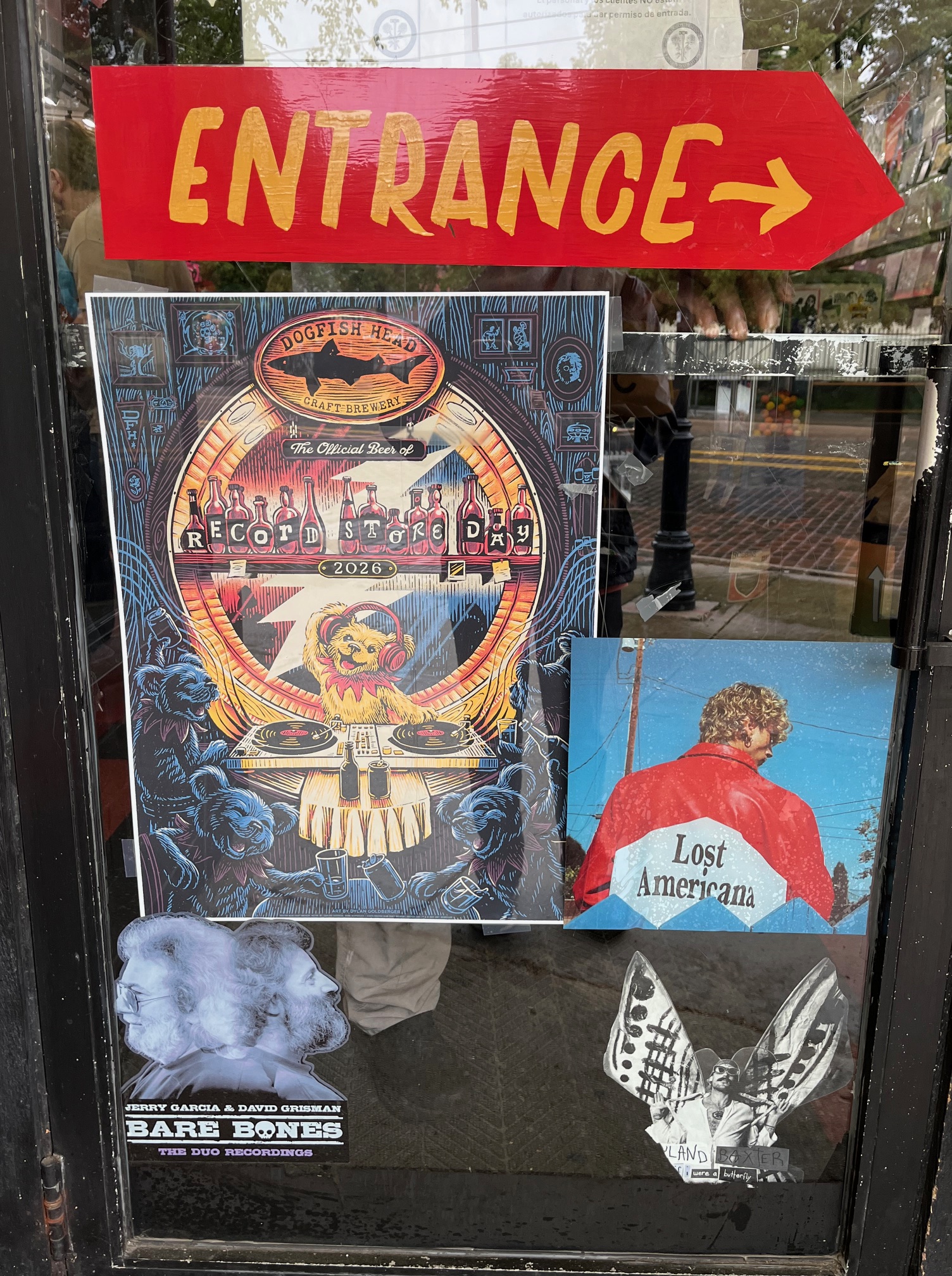
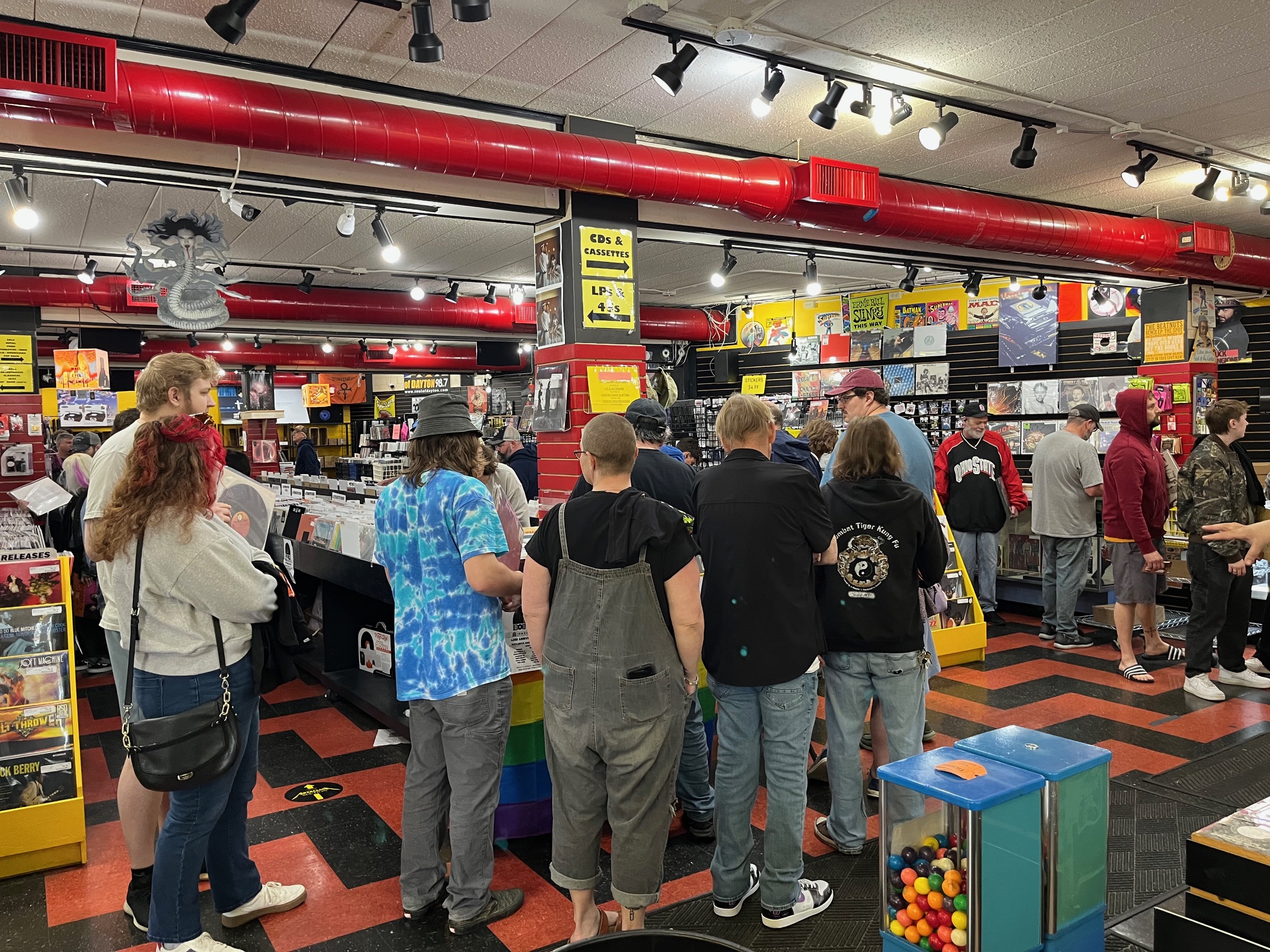
Going to Omega Music for Record Store Day 2026 felt a little like stepping into a living archive of the city’s musical life. The line had already formed when I arrived downtown: people in band tees, parents with teenagers, longtime collectors trading stories about past finds, and that familiar hum of anticipation that only happens when music becomes a shared event rather than a private stream. Inside, the bins were packed with special releases and reissues, but just as memorable were the conversations: staff recommending records, strangers debating pressings, and the occasional cheer when someone found the album they had been hunting for. It reminded me that record stores are not just retail spaces; they are social spaces, places where music culture is performed collectively, one record at a time.
Music lovers around the world will come together today to celebrate Record Store Day. Conceived in 2007 to highlight the cultural significance of independent record stores and to champion vinyl culture, the occasion is now marked by live performances, exclusive releases, artist meet-and-greets, and other in-store events across the globe. One of its original aims—keeping vinyl records alive—has, in many ways, been fulfilled: vinyl is no longer a relic in need of saving.
In fact, vinyl’s resurgence remains one of the more unexpected cultural reversals of the digital age. In the United States, vinyl album sales increased for the 19th consecutive year in 2025. According to the Recording Industry Association of America (RIAA), 46.8 million EPs and LPs were sold last year, a dramatic rise from fewer than one million in 2006, when the format’s revival began.
At first glance, these figures might suggest a widespread return to analog listening. But vinyl’s resurgence tells a more complex—and more sociologically revealing—story than a simple narrative of nostalgia. Rather than displacing streaming, vinyl has found new meaning within a digital landscape of abundance and convenience—offering a more tangible, intentional way of engaging with music.
A comeback measured in decades
The vinyl revival is unusual because it has unfolded slowly and steadily rather than explosively. In an era defined by rapid technological change, vinyl’s growth has been incremental but persistent. The format has now logged nearly two decades of consecutive expansion, culminating in a milestone year in 2025 when U.S. vinyl sales surpassed $1 billion for the first time since the early 1980s.
Yet perspective matters. Vinyl is thriving, but it is not dominant. Streaming remains the overwhelming force in the music economy, accounting for roughly 82 percent of U.S. music revenue. Physical formats—including vinyl—collectively represent only a small share of overall consumption. This dual reality helps explain why vinyl feels simultaneously resurgent and niche. It is growing rapidly within a shrinking category. Vinyl now outsells CDs and dominates physical media, but physical media itself is no longer the center of the industry.
Historically, the difference is striking. During the peak of vinyl’s popularity in the 1970s, Americans purchased hundreds of millions of records annually. By comparison, today’s sales—while impressive relative to the early 2000s—remain far below those earlier highs.
Having collected records for decades, that contrast is easy to feel. I remember when vinyl wasn’t a niche or a statement—it was simply how music lived in the world. record stores were not destinations in the curated, event-driven sense we see today; they were routine stops, woven into everyday life. New releases arrived as communal moments, and the physical act of flipping through bins, pulling out a sleeve, and committing to an album was part of a shared cultural rhythm.
What stands out now is not just the scale, but the shift in meaning. Buying a record today carries a different kind of intentionality. It feels slower, more deliberate—sometimes even a little defiant. Where vinyl once dominated by default, it now persists by choice. For longtime collectors, that shift is palpable: the medium hasn’t just returned, it’s been recontextualized, taking on new symbolic weight in a landscape where music is otherwise instant, invisible, and everywhere at once.
In other words, vinyl is not returning to its past dominance. It is reinventing itself for a different cultural moment.
Ownership in an age of access
One of the most revealing facts about vinyl’s resurgence is that many buyers do not regularly play the records they purchase. Industry research suggests that roughly half of vinyl buyers do not even own a record player.
From the perspective of someone who has spent decades collecting and listening to records, that shift is both surprising and strangely understandable. For years, my relationship to vinyl was inseparable from the act of playing it: lowering the needle, hearing the soft crackle before the music begins, sitting with an album all the way through because skipping tracks required effort. Records were meant to be used, worn in, lived with.
Today, I still see younger collectors flipping through crates with the same excitement I remember, but the meaning of the object has changed. I’ve had conversations in record stores with people who carefully select albums for their artwork, their symbolic value, or the feeling of ownership—sometimes without any immediate intention of listening. The record becomes less a playback device and more a cultural artifact: something to display, to collect, to hold onto in a world where music itself often feels fleeting.
That doesn’t make the practice any less meaningful, but it does mark a profound shift. For longtime collectors, it reframes what it means to “own” music. The ritual of listening may no longer be central for everyone, but the desire for something tangible—for a physical connection to sound—remains as strong as ever.
This statistic might seem paradoxical, but it makes sense when viewed through the lens of contemporary consumer culture. Music streaming has solved the problem of access. With a smartphone and a subscription, listeners can hear almost any song instantly. What streaming cannot provide is a sense of ownership.
Vinyl fills that gap.
A record is tangible. It has weight, artwork, liner notes, and a physical presence that digital files lack. In sociological terms, vinyl functions as a symbolic object—something that represents identity, taste, and affiliation. Owning a record communicates commitment to an artist or genre in ways that clicking “save” on a playlist does not.
This dynamic helps explain why vinyl sales are often driven by dedicated fan communities and major cultural events. Blockbuster album releases and limited-edition pressings can transform records into collectible artifacts. In recent years, artists have released multiple versions of the same album—different colors, covers, or bonus tracks—encouraging fans to purchase more than one copy.
Collectors, not casual listeners, are increasingly shaping the market.
The role of independent record stores
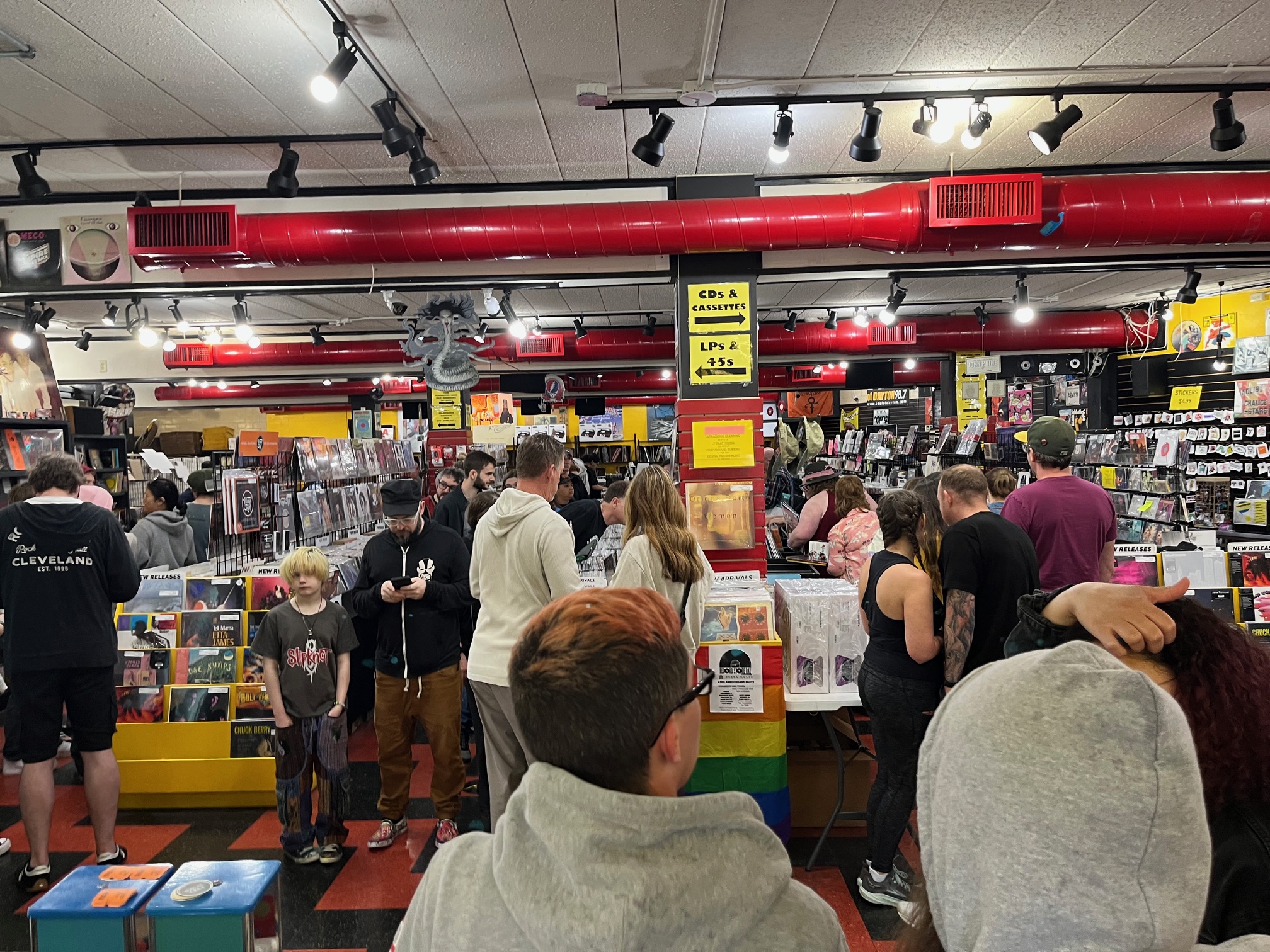
Record Store Day itself points to another key factor in vinyl’s survival: community. Independent record stores today function as cultural hubs as much as retail spaces, hosting live performances, organizing listening parties, and creating opportunities for music fans to gather in ways that feel increasingly rare. These are experiences no algorithm can replicate.
Having spent years in and around these spaces, what stands out is how much of the experience has always been social, even when it wasn’t formally organized. I can think of countless afternoons spent in record stores where conversations unfolded naturally—over what was playing on the speakers, over a shared appreciation for an artist, or over a recommendation offered across the counter. You didn’t just discover music; you discovered it with other people.
That sense of connection feels even more pronounced now. On Record Store Day, I’ve watched lines wrap around city blocks, not just for exclusive releases but for the chance to participate in something collective. Inside, the atmosphere is part celebration, part ritual: strangers talking like old friends, staff curating not just inventory but experience, music filling the room in a way that demands presence. It’s a reminder that listening has always been, at least in part, a social act.
Independent stores remain central to this ecosystem in more material ways as well. A significant share of vinyl sales still flows through these local shops rather than large online marketplaces, reinforcing their role not just as nostalgic holdovers, but as active intermediaries in how music circulates today. For longtime collectors, that continuity matters. Even as formats and habits change, the record store endures—not just as a place to buy music, but as a place to belong.
From a sociological perspective, this matters because it reflects a broader shift toward experiential consumption. People are not simply buying products; they are seeking meaningful interactions. Visiting a record store, browsing shelves, and talking with staff or fellow customers creates a sense of belonging that streaming services cannot easily reproduce.
The resurgence of vinyl is therefore also a story about place. It is about the persistence of local culture in a global digital economy.
Nostalgia—and something more
Nostalgia is often cited as the primary driver of vinyl’s comeback, and it certainly plays a role. Many listeners associate records with earlier periods in their lives or with imagined past eras of musical authenticity. The tactile ritual of placing a needle on a record can evoke memories of childhood, adolescence, or family traditions.
But nostalgia alone cannot explain why younger generations—many of whom grew up entirely in the streaming era—are embracing vinyl. Surveys and retail observations suggest that Gen Z listeners are among the most enthusiastic vinyl buyers. For them, records are not reminders of the past. They are discoveries.
Younger consumers often describe vinyl as offering a more intentional listening experience. Unlike streaming, which encourages skipping and multitasking, records require attention. You must choose an album, place it on the turntable, and listen to one side at a time. The format imposes limits, and those limits create focus.
In a culture saturated with digital content, that sense of deliberateness can feel refreshing.
The future of the analog object
So how big is vinyl’s comeback really? Should we all dust off our old record players to prepare for an analog future of music Probably not.
Streaming will almost certainly remain the dominant mode of music consumption for the foreseeable future. Its convenience, affordability, and massive catalog make it difficult to displace. But vinyl does not need to replace streaming to remain relevant.
Instead, vinyl has carved out a stable niche as a premium, collectible format. It is less a competitor to digital music than a complement to it. Many listeners stream music daily but purchase vinyl occasionally, treating records as souvenirs of artists, concerts, or personal milestones.
This pattern reflects a broader truth about technology and culture: new media rarely eliminate old media entirely. They change how older formats are used. Books survived television. Radio survived podcasts. And vinyl, once written off as obsolete, has become a symbol of durability in an age defined by constant innovation. That may be the most important lesson of the vinyl revival. Even in a world dominated by streaming and cloud storage, physical objects still matter. They anchor memories, signal identity, and create connections that digital files alone cannot provide.
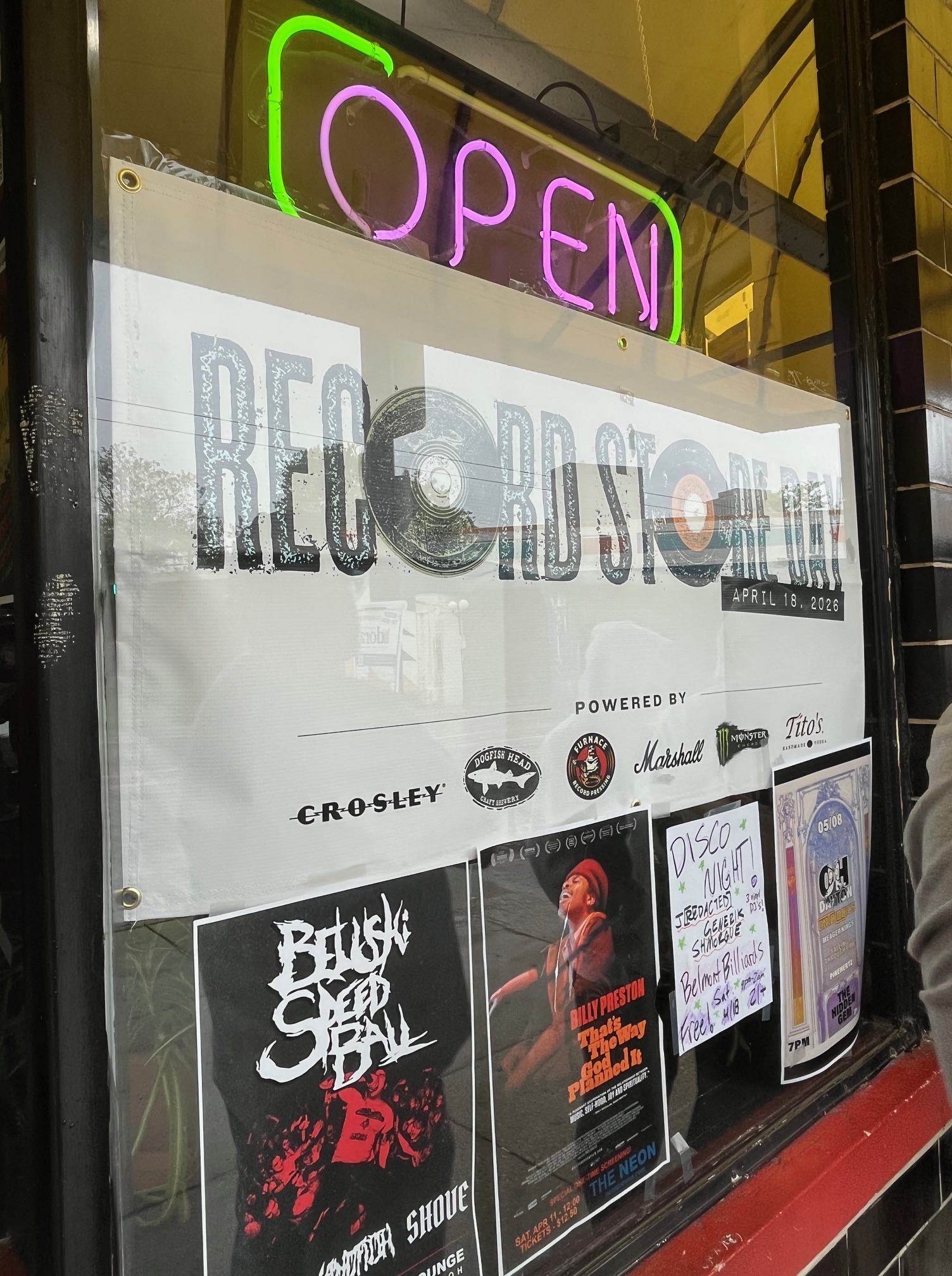
As Record Store Day celebrations unfold this year, the long lines outside local shops will serve as a reminder of that enduring appeal. Vinyl is not just a medium for music. It is a cultural artifact—one that continues to spin, quite literally, into the future.

 your tuesday afternoon alternative