Knotts, a dynamic artistic band hailing from Cincinnati, Ohio, has captivated audiences with their innovative approach to musical art. Comprising vocalist and multi-instrumentalist Adalia Powell-Boehne, Keyboardist Antoine Franklin, guitarist Jordan Wilson and drummer Isaiah Cook, KNOTTS has carved a niche for itself in the contemporary music scene through their catchy collaborative melodic weaving of rock, soul, loops, electronic and boundary-pushing sonic creations. Together, the band creates immersive moving personal musical experiences that challenge conventional notions of identity, connection and perception.
One of Knotts‘ most captivating and haunting songs is “Good Morning,” a large-scale sonic architecture that explores the interconnectedness of humanity, kindness and the irreplaceable act of uniting and building a relationship. Adalia’s powerful, plaintive, and emotional voice feels like the embrace of a long lost friend. The spark, heck the joy in the song springs from her incredible voice. The Song feels as if it comprises thousands of intricately woven musical threads suspended from the heart, forming a dense canopy that envelops listeners as they navigate the powerful act of deciding to spend a life together. Each thread of the song represents a human connection, symbolizing the invisible ties that bind individuals together in a shared experience of living.
As listeners move through the song (and the dare I say happy and vibrant accompanying video), they become acutely aware of their presence within this web of connections, prompting introspection and contemplation of their relationships with others. But this is not a heavy drowning question, it is has color and energy — saying yes to being with someone is supposed to be magical, mysterious and fun. Would you stay with someone while your face — and you — slowly age as demonstrated with the coming of lines on your face? The immersive and joyful bounce in the song allows for a deeply personal engagement with the music , transcending the boundaries of the all too often casual love song. “Good Morning” expresses the contentment and adventure of being with someone when you want to be there.
Knotts‘ work is characterized by a sense of fluidity and transformation, with many of their songs evolving over time in response to the questions of connection, identity, and being entangled within one another. By layering lyrical images and a sweep of keyboards, guitars and drums, they create a composition that challenge listeners to confront the realities of would they make the same decision to stay.
In a world increasingly characterized by division and isolation, Knotts offers a beacon of hope and connectivity through their music. By challenging listeners to reconsider their relationships with themselves and others, they inspire a renewed sense of empathy and understanding in an ever-changing world. As they continue to push the boundaries of artistic expression of love and connection in their music, KNOTTS remains a vital voice in the local music scene, reminding us of the transformative power of creativity and collaboration.
Knotts are playing tonight — Friday, March 1st at 7pm — with the powerhouse Heather Redman & The Reputation at The Oregon Express. Go Go Go!
One of the benefits of doing a radio show is the opportunity to explore music with musicians who make incredible art. To sweeten the pot, the chance to interview musicians who write genuine songs that speak to you as a person is a gift. When Sarah Rudy who records as Hello June, agreed to answer some of our questions, we were overjoyed. Hello June’s ‘Artifacts’ was our top pick for album of the year in 2023 which was a rich year for music. What especially moves us is the authenticity of the music that Hello June creates.
The power of authentic music lies in its ability to transcend barriers, evoke emotions, and create connections that resonate deeply within individuals and communities. Sar Rudy possesses an incredible ability to create music that does exactly that. Authentic music, born from genuine expression and sincerity, possesses a unique capacity to speak to the human experience in profound ways. And this is deeply needed.
One of the most striking aspects of authentic music is its ability to communicate universal emotions without feeling false, fake or unreal. Regardless of language or cultural background, the raw honesty and genuine expression found in authentic music can touch the hearts of listeners wherever they might live. Whether it’s a quiet – yet powerful – ballad like ‘Napkin’ or ‘The Moon’, or a spiritual folk tune ‘Soft Love’, or a passionate rock anthem ‘Faded Blue’, ’23’, or ‘California’, authentic music made by musicians who themselves feel what they are playing has a way of tapping into shared feelings of love, loss, joy, and longing, fostering empathy and understanding among people from diverse walks of life. We all have all felt this way. And the music of Hello June, carries all of those characteristics and even more.
Moreover, Hello June‘s authentic music serves as a powerful tool for cultural preservation and expression. Through reinterpretation of traditional songs ‘Country Roads’, gorgeous guitar tone ‘California’ and ‘No Easy Answer’, and incredible melodies — the whole record! — artists preserve their experience, heritage, pass down personally meaningful stories, and celebrate their unique identities. Authentic music becomes a vessel through which cultural narratives are woven, ensuring that rich histories and traditions that do receive the favored celebrations of an ever decreasing set of themes in the mainstream music industry are not lost to time but instead are celebrated and cherished for generations to come.
In addition to its cultural significance, authentic music has the power to inspire and provoke change. As listeners we are changed when we hear this music. A whisper — ‘Country Roads’, ‘Soft Love,’ ‘The Moon’ — can be as powerful as the loudest cry in the mix of hope and despair — ‘California,’ ‘No Easy Answer’. A protest song does not always require a message to fuel social movements with anthems of resilience and hope in the face of adversity, that can be accomplished within a deeply personal statement as well. Music has historically played a pivotal role in driving social and political change. Through its ability to rally people around common experience and ignite a sense of solidarity from the ebbs and flows of pain, authentic music becomes a catalyst for action at all levels, challenging the status quo and advocating for a better world, even if the focus is in your neighborhood or your home.
Dr. J: What can you share with us about when and how you started writing music?
Sarah Rudy (SR): I started to learn to play guitar in high school, but I wasn’t truly focusing on the act of songwriting yet. It wasn’t until college, where I spent a lot of time exploring with different artistic mediums and experimenting with different forms of creating. This is where I started to really feel an affinity towards writing songs.
Dr. J: What first led to your recording music? How do you approach production?
SR: I started to craft songs on the GarageBand DAW (Digital Audio Workstation) about the same time I started writing. Using a DAW in my workflow made sense, even at that point, because I wanted to work out fairly full arrangements. I wasn’t happy with just writing the bones of the song – I needed to feel the environment that song created. I guess my thought with this has always been that if I can’t get the song to “feel right” in physical space, I wouldn’t want it released. These days, I’ve found that my process is less of a rush to the production phase of things.
For me, the daw has been an integral part of my writing, but when it comes to recording an album, I’ve let others steer the ship. I’ve loved each studio experience I’ve had, but Ive learned so much that I can’t imagine giving up that much creative control on the next one. For the next releases, I plan to record those here in our studio and I plan on pulling in some good musician/engineering friends as needed. With the next releases, I want the recordings to be as vulnerable and closeup as they can be and I feel like it’s my job to figure out how to get there.
Dr. J: The song ‘California’ captures a remarkable constellation of musical influences. The song seems to have an almost 1980s feel. Is that a correct interpretation? If that is correct, did you intend to create a song that connects to that time period? If that is not correct, how would you describe the feeling of the song?
SR: I wanted the song to have a “nostalgic” feel – that was my main goal, tone-wise. I wanted California to capture the feeling of charged love – the kind that feels exciting and scary. In order to write the song, I really needed to take myself back to the “me” that existed in my 20s. I wanted the song to capture a certain hue/tone/light – I love that it takes you back to a particular place.
Dr. J: Where do you often derive inspiration to make music?
SR: I like to be completely focused, immersed, and filled up by the things I’m working on. If there is a thought, a line, a feeling, anything that sparks something in me that makes me tilt my head or feel a bit of magic, I usually feel inclined to chase it. I have found though, that the hardest thing is pulling inspiration from an anxious or avoidant mind, so in order to allow myself the freedom to create, I try to practice self awareness and allow myself the grace to come back to an idea if my mind/body isn’t in a favorable state to produce something meaningful. In terms of what I’m writing about lately – this week I’ve written a song that nods back to a time in my childhood and another one about feeling sort of feeling like an outsider. I guess I’m always just trying to process the thoughts that go through my mind.
Dr. J: How would you describe the music that you create? How has that process evolved or changed over time (especially as you think about your journey in the last few years)?
SR: Hmmm – great question. I usually tell people that we are an “indie rock band” that has been accepted in the Americana crowds. Live, we like to get down really soft and vulnerable and we like to bring the volume up just as heavy in those big parts. I love to marinate in the details of ambient sound, so that aspect usually isn’t too far away. I try to write songs that heal my head because i do feel like we’re all sharing around ideas and latching onto the ones that resonate with us. I guess I just hope that I get a chance to resonate with the right people.
Dr. J: What is next for you musically? How would you describe your thoughts at this point for your next project or release?
SR: I feel like I am just now really starting to understand who I am as a musician, as a singer, and as someone who is committed to living a creative life. I just had a few really exhaustingly rough months – this industry is tough. I do, now though, feel like I can clearly see my path forward, and I haven’t felt that, until now. I feel strong, autonomous, and I’m moving with purpose and allowing myself to nurture my creative spirit in ways that I haven’t felt able until now.
We will be launching a Patreon here in a month or two and I couldn’t be more excited about all that comes with it. We’ve labored so much over these thoughts. My next moves, including the Patreon, are a shift away from asking the industry to see me. The industry isn’t healthy enough for anyone to lean on, so leaning seems like a bad idea, right? To me it does, and I’m unwilling to spin my wheels anymore, I guess. I want a conversation directly with my fans. I want a way to build a community up in the way that I want to – not what someone else thinks I should be doing. It’s maybe an unglamorous and practical way to see it, but I hope to be a voice in this realm and I believe we need more alternatives thrown around. My hope is that my fans (and others) begin to see that the industry only serves the very top artists – the rest are hoping, floundering, and making bad decisions that they feel like they have to make, just to be seen. As an artist, you’re told many things you “need to do” and a lot of these things are distractions from what we should be spending time on. I’ve built a strategy that is not reliant on any industry because I refuse to be dragged around, and that’s where I felt I was.
That all being said, I am working on my first solo record. I am separately working with a small group of people on a brand new Hello June record. What’s more exciting to me than that is how much I’ll be incorporating Patreon into these releases. For instance, one perk of the Patreon that I’m super excited about is letting our fans in on our process. By that, I mean, incorporating them into the process – they will get access to bits and pieces (say, a verse and a chorus in length) and they’ll be able to choose which songs we move forward with as a band. We’ll then get to work and have “fly on the wall” sessions where they are invited to watch the next steps of the process. We’ll come back around to everyone with full songs, and some those full songs will eventually be released. I’m hoping to bring my fans closer to the project, be creating more than I am “content posting” and really grow and learn as musicians and artists in the meantime.
Dr. J: What is your favorite song to perform live? What is your favorite song to perform in general? What makes that song a current favorite in your performances?
SR: I think I’ll always be fond of playing “Handshakes” live – the flow of that one live is just really really fun. When people lock in with me, it’s as if we’re actively having a conversation and they get me. They hear me. The same goes for Interstate. That song has bridged gaps and has healed my heart in ways that only sharing that song with fans would have allowed. I love looking out to audience and knowing that our experience is shared. I’ve had many beautiful experiences with this song.
We also have a currently unreleased song called “Another Life.” We decided not to put it on Artifacts, but it’s been a fan-favorite since we’ve played it live. It stems from the same story-line as “California,” so I’d say you can expect a similar air to it. Our Patreon folks will get that one early for sure.
We want to extend our sincere gratitude to Sar Rudy for answering our questions and continuing to make truly authentic excellent music! Click on the links below the article to visit Hello June’s social media or to listen to the songs that we discussed! If any musicians or artists would like to participate in future ’Questions with…’ columns, please feel free to email us at drjytaa@gmail.com. All photos and images courtesy of Hello June.
Dayton, Ohio’s magnificent duo, The Nautical Theme have released the first single from their up-coming record “Do Something.” The song and the video are perfect compliments to the allure of the lyrics, bewitching sway of the vocals and the music that lays a solid terra firma around the composition.
Any long time listener to Your Tuesday Afternoon Alternative knows that we are fans of this band. And the magnetic pull of The Nautical Theme is tied to the essential quality of there music. In songs like “I’m Not Ready” there exists a magical phenomenon that transcends the boundaries of sound and captures the essence of human emotion—the beauty of two voices perfectly intertwined in a song. This captivating synergy elevates the musical experience, creating a harmonious blend that resonates with the listener’s soul. The combination of the two distinct voices of Matt Shelter and Tesia Mallory weaving together in a delicate dance brings forth an enchanting tapestry of sound that is both powerful and profoundly moving.
At its core, the beauty of these two voices entwined in song lies in the alchemy of harmony. When two voices merge seamlessly, a unique and transcendent sound is born. The interplay between melodies, harmonies, and tones creates a dynamic sonic landscape that draws the listener into a mesmerizing space. It is a delicate balance, a musical dance where each voice complements the other, enhancing the emotional impact of the song. Real emotion is found in those moments.
The human voice possesses a remarkable ability to convey a wide range of emotions, and when two voices come together in perfect harmony, they amplify the emotional and social depth of the music. Whether expressing love, heartbreak, joy, or sorrow, the dual voices intertwine to tell a compelling story, leaving an indelible mark on the listener’s heart and mind. And honestly, I am not entirely sure which emotion was the songwriter’s goal but all of them can be felt by the listener of this song.
One of the most enchanting aspects of two voices entwined in song is the power of contrast. Each voice brings its own unique timbre, color, and character to the composition. The contrast between high and low tones, soft and powerful dynamics, and different vocal qualities creates a rich and diverse auditory experience. In a well-executed merging like “I’m Not Ready,” the voices complement and contrast with each other, adding layers of complexity to the musical arrangement. The interplay between a soprano and a tenor, in this case, creates a captivating juxtaposition that elevates the overall impact of the song. This interweaving of diverse vocal elements captures the listener’s attention, inviting them to explore the nuances within the music.
The emotional resonance of melding voices is unparalleled in “I’m Not Ready,” as the combined voices create a sense of intimacy and connection. The shared experience of singing together fosters a profound sense of unity, both for the performers and the audience. The act of simply singing together is heightened when the voices convey a shared narrative or a dialogue between the singers. The listener becomes a participant in the journey, connecting with the lyrics on a personal level. The intertwining voices act as vessels, carrying the weight of the song and delivering it directly to the hearts of those who are fortunate enough to experience it.
Two voices entwined in song not only convey emotional depth but also showcase the technical prowess of the performers. The seamless coordination of vocal dynamics, pitch, and timing requires a high level of skill and precision. The beauty of a song like “I’m Not Ready” lies not only in the emotional resonance but also in the technical mastery displayed by the singers. The interplay of harmonies, counterpoint, and synchronized phrasing requires a deep understanding of musical theory and an acute sense of timing. When executed flawlessly, as is the case with “I’m Not Ready” the result is a breathtaking display of vocal artistry that leaves a lasting impression. The technical complexity adds another layer of appreciation for the beauty that emerges when two voices come together in perfect unison.
The beauty of two voices entwined in song remains a timeless and enchanting phenomenon for any music fan. The alchemy of harmony, the power of contrast, emotional resonance, and technical mastery combine to create a musical experience that transcends the ordinary. As listeners, we are fortunate to witness the magic that unfolds when two voices come together in perfect unison, creating a symphony of emotions that lingers in our hearts long after the final note has faded away. The beauty of two voices entwined in song is a proof of the enduring power of music to touch our souls and connect us on a meaningful and universal level.
Musician Tamar Berk is a gifted, meaningful songwriter who has a rare talent to craft songs that hit with an undeniable power. She is able to weave deeply personal narratives that remain honest statements of life, loss, grief, joy and everything across that continuum. Evocative songs, such as ‘Permanent Vacation’ possess a unique ability to stir deep emotions and create a lasting impact on listeners. Sonic compositions like ‘Permanent Vacation’ often go beyond the surface, tapping into the realms of nostalgia, love, melancholy, or even inspiration. They have the power to transport individuals to specific moments in their lives or trigger a range of emotions that resonate on a personal level. And while writing about deep subjects with an unflinching approach, the music swings and swirls. Tamar Berk’s music is catchy, driving and undeniably captivating. This is one of the reasons that Berk’s 2023 album ‘Tiny Injuries’ was one of our favorite records of last year.
One defining characteristic of evocative songs is their ability to convey a narrative or a mood through a combination of powerful lyrics and emotive melodies. The lyrics may tell a compelling story, exploring themes of love, heartbreak, resilience, or social issues. Simultaneously, the music complements these themes, enhancing the emotional experience and leaving a lasting impression on the listener. Tamar Berk excels at shining a light on these experiences.
These songs often become timeless classics, transcending cultural and generational boundaries. Tamar Berk is an artist who excels in creating evocative songs are adept at capturing the essence of the human experience, translating complex emotions into a musical language that resonates universally. Whether it’s the haunting vocals or the dynamic arrangement, ‘Permanent Vacation’ is a song that possess an undeniable allure that goes beyond mere entertainment. However, the video for ‘Permanent Vacation’ possesses a sense of fun that highlights the friction between powerful statement and the need to move beyond the weights we carry and the burdens that hold us down.
Listeners often connect with evocative songs on a personal level, finding solace, inspiration, or understanding in the music. The power of these songs lies in their ability to mirror the diverse facets of the human condition, offering a sense of companionship and shared experience. They remind us that we are not alone. How we feel matters. What we feel matters.
‘Permanent Vacation’ is an example of an evocative and damn catchy song that shares the common thread of leaving a profound impact while creating a lasting emotional resonance that extends far beyond the duration of the song itself. It is alright to need a break.
The new year opens with the return of our 11 Questions with… column. Given Names is an exciting new project from Dr. J’s home state of Minnesota. That state has always been home to thrilling music such as The Replacements, Husker Du, Soul Asylum, Prince, Semisonic, Babe in Toyland, The Jayhawks, The Suburbs, and many more.
Given Names is a group of friends who create music that combines elements of indie, rock, dream pop, and power pop, with hints of synth and dance. The group is an exciting indie pop quartet based in Mankato and Minneapolis, featuring Laura Schultz (lead vocals, rhythm guitar), Meghan Irwin (synth, backing vocals), Michelle Roche (drums, backing vocals), and Mandy Wirig (lead guitar, backing vocals). In 2023, they released their debut single, “Makin’ Eyes’ last year. It is a song that channels their influences while incorporating their distinctive musical vision. It is also one of our favorite singles from this past year.
Given Names creates a swirling yet solid indie dream pop that encapsulates the ethereal essence of dreams through a distinctly feminine lens. It is a musical realm where the boundaries between reality and imagination blur, and emotions cascade in a surreal mix of sound. The musicians collaborate to craft a sonic dreamscape that is both otherworldly and intimately connected to the intricacies of experience. It is real.
Dream pop is often characterized by its atmospheric soundscapes and lush melodies, sound becomes a canvas for these artistic collaborations to explore themes of loss, love, empowerment, and self-discovery. The almost ethereal vocals, layered and harmonized, transport listeners into a transcendent-like state where time seems to slow down, and emotions are amplified. The dreamy quality of the music is a manifestation of the artists’ collective desire to create a space that reflects the intricacies of the psyche.
Lyrically, ‘Makin Eyes’ delves into introspective narratives that navigate the complexities of relationships, self-realization, connection, and the pursuit of one’s dreams. Themes of resilience and empowerment seem to subtly weave through the verses, creating a tapestry of emotions that resonate with listeners on a deeply personal level.
The collaborative nature of Given Names fosters a bond among the artists involved, each contributing a unique perspective to the collective soundscape. This collaboration extends beyond the music itself, influencing the visuals, single art, and live performances. The result is a holistic artistic expression that celebrates the diversity of artists’ voices and experiences. As dreamy all-women-created power pop continues to evolve, it not only pushes the boundaries of musical exploration but also challenges preconceived notions about femininity in the music industry. It remembers and celebrates the creative prowess of women in shaping the sonic landscapes of sonic dreams and emotions, inviting listeners to immerse themselves in a world where the line between reality and reverie is beautifully blurred.
We contacted the band and Laura and Mandy kindly answered our questions for this column (LS: Laura Schultz; MW: Mandy Wirig).
Dr. J: What can you share with us about when and how you started writing music?
LS: I started writing music with a good friend, Laura MacDonald, in high school. She and I wrote songs about strange dreams we had or our World History Teacher, (some lyrics were “Mr. Schnieder, you’re a really cool guy. In World History, you taught us to ask why”). I started doing it more seriously in undergrad in Oshkosh, WI, where I played with some absolutely amazing musicians and friends.
MW: I started writing music in high school. I began playing guitar at thirteen and was in my first band, a punk band, at 16-17. I’ve always been influenced by singer/songwriters and the very melody-driven sounds of the sixties, particularly The Beatles and McCartney, and that influence can be found in almost all of my guitar parts.
Dr. J: What first led to your recording music? How do you approach production?
LS: I see recording as a snapshot of a song in a moment. It may not be how we always perform the song, but it is representative of that moment, with those players and resources that we had at the time. I think of a producer as an editor, someone who can look more objectively at the song and make suggestions, or provide an outside perspective that we might not have been able to access, since we are closer to the song itself.
Dr. J: ‘Makin Eyes’ is your most recent music, what led to the making of that song? What were the main influences on your recording this song?
LS: From the writing perspective, almost all of my songs are written the same way I wrote them with my high school friend, Laura. I free-write a full page of words, careful not to judge them as they come out, not thinking of them as lyrics but just as phrases or strings of words, then I go back and circle words or phrases I like, then I figure out how they all make sense together. The music comes last for me, but it comes easiest for me after I have lyrics.
MW: My love of melody is what inspired the main guitar riff in the song. I’ve always loved how “hummable” George Harrison’s guitar solos are, and how prominent melodic guitar work is in so much of the British Invasion and Power Pop songs that I love. I wanted a lead guitar part that could stand on its own as a melody while still incorporating that shimmery, jangly sound.
Dr. J: The song ‘Makin Eyes’ seems to capture a remarkable constellation of musical influences. The song seems to have an ‘80s pop feel. Is that a correct interpretation? If that is correct, did you intend to create a song that connects to that style? If that is not correct, how would you describe the feeling of the song?
LS: Well thank you! I think you can interpret the song however you like! ’80s pop feel sounds good to me! I try not to think about what style I’m writing songs in, just kind of letting the song ask for what it needs.
MW: I think it definitely hearkens back to bands like The Go-Gos and The Bangles, who themselves were influenced by a lot of Power Pop and earlier styles of music, and I love that you’ve grouped “Makin Eyes” in that category.
Dr. J: How did the song ‘Makin Eyes’ come together musically for you?
MW: Laura is our principal songwriter, and she brought the lyrics and chords to us shortly after I joined the band, so this is one of the first songs that was a true full-band collaboration for us. Within two weeks of our first rehearsal, I had brought the song home and developed what became the signature guitar riff, and the song has really fleshed out during the last couple of years as we’ve continued to perform it live. To see how it’s evolved into the multi-tracked studio version with all of its jangle and shimmer has been really gratifying.
Dr. J: Where do you often derive inspiration to make music?
LS: I think of my lyrics as a sort of amalgamation of what is happening in my life, the way I am consciously or unconsciously feeling about things; the worries or thrills or boredoms of everyday life. I think of songs as a container for my present moment experience.
MW: I’m also a visual artist in addition to a musician, and each medium has always influenced the other. I also derive inspiration from surrounding myself with art of all types—the books I read, the music I listen to, the films I watch, the events I attend. And as cliche as it sounds, there’s nothing quite like a hot shower, a weird dream, or boredom to spark an idea that can be scribbled down for creation.
Dr. J: What is next for you musically? How would you describe your thoughts at this point for your next project or release?
MW: We’re currently in the process of finishing up our first album and getting ready to choose our second single for release. The plan is to get those squared away, and then to start performing more often, hopefully expanding the areas we’re booking shows in beyond our southern Minnesota roots.
Dr. J: How would you describe the music that you create? How has that process evolved or changed over time (especially as you think about your journey in the last few years)?
MW: We describe the music we create as Indie Pop, which is a pretty broad category in and of itself. We originally began as a four-piece with a synth player, and that synth-heavy ‘80s influence is still prevalent in our work, but we also include influences like the Velvet Underground, Low, and reverb-heavy guitar work from the mid- to late-‘60s.
Dr. J: What is your favorite song to perform live? What is your favorite song to perform in general? What makes that song a current favorite in your performances?
MW: My personal favorite is “Game Was Rigged.” It’s a story of love gone wrong set to a bouncy melody that’s impossible not to dance to when you’re playing it.
Dr. J: What is one message you would hope that listeners find in ‘Makin Eyes’?
LS: Honestly what first comes to mind is that I’m interested in narrowing the gap between performer and audience member. I want people to feel as though they could write a song too, they could perform it, they could record it! If it’s something that inspires you, please let it! Let’s all make things.
Dr. J: a musician, how are you adapting to the challenges of creating music? What are your biggest challenges to creating music?
MW: We’ve got a somewhat unique situation where we don’t all live in the same location anymore, with Laura and Michelle living in Mankato while I’ve moved almost an hour-and-a-half away to Minneapolis. Things like practices and recording sessions definitely need to be planned out pretty well in advance to accommodate this. We’re also three very busy women juggling full-time careers in addition to the band—I’m an artist, teaching artist, and gallery owner, Laura is a social worker, and Michelle is a full-time musician and music teacher who plays in several groups—which can make it challenging to not only coordinate our schedules, but also to make time for things like social media and finding new venues to perform.
We want to extend our sincere gratitude to Given Names and especially Laura and Mandy for answering our questions and continuing to make some really excellent music! Click on the links below the article to visit their social media or to listen to the song that we discussed! If any musicians or artists would like to participate in future ’11 Questions with…’ columns, please feel free to email us at drjytaa@gmail.com. All photos and images courtesy of Given Names.
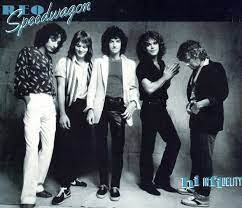
In the vast and diverse landscape of musical tastes, there are certain songs that hold a special place in our hearts, even if we’re reluctant to admit it. Reo Speedwagon’s “Keep on Loving You” is one such track that falls into the category of guilty pleasures. Released in 1980 as part of their album “Hi Infidelity,” the song encapsulates the essence of 80s power ballads of an era that reveled in that style. Despite its sometimes cheesy lyrics and over-the-top production, there’s an undeniable charm to the song that draws listeners in and keeps them hooked.
Before delving into the guilty pleasure that is “Keep on Loving You,” it’s essential to understand Reo Speedwagon’s rise. Formed in 1967, the band went through several lineup changes before finding success in the late 1970s and early 1980s. Their breakthrough came with the release of “Hi Infidelity,” an album that not only topped the charts but also became a defining record of the rock and pop landscape of the early 1980s. The album’s title was an awkward play on both ‘hi fi’ and the fact that so many pop songs were about relationships.
At its core, “Keep on Loving You” is a quintessential power ballad, a genre that dominated the airwaves in the early 1980s. The song is characterized by its emotive lyrics, soaring melodies, and a dramatic build-up that culminates in a powerful chorus. Lead singer Kevin Cronin’s soulful delivery adds a layer of sincerity to the track, making it resonate with listeners on a personal level. We could ask is the song about a real relationship? Is it Cheesy or Heartfelt?
One of the reasons “Keep on Loving You” falls into the guilty pleasure category for us is its unabashedly romantic and, some might say, cheesy lyrics. Lines like “And I’m gonna keep on loving you / ‘Cause it’s the only thing I wanna do” may seem cliché, but there’s an earnestness in Cronin’s delivery that transcends the lyrics’ simplicity. The song captures the universal theme of love and devotion, striking a chord with listeners who appreciate unabashed sentimentality. The over the top delivery of an over the top line creates a resonance, unlike the detached above it all approach of so many artists and band’s of the 1970s and early 1980s, Reo Speedwagon’s exuberant embrace of the exaggeration only makes the song land with even more strength.
Another aspect that contributes to the guilty pleasure status of the song is its production. “Keep on Loving You” is drenched in the sonic aesthetics of the early 1980s, with its prominent use of synthesizers, piano, power chords, and a bombastic drum sound. Some may argue that the production is excessive, extreme and overblown… perhaps even dated, but for others, it’s a nostalgic trip back to a time when music was unapologetically flashy and theatrical. The immoderate nature of the song is part of its charm, it is not subtle.
The term “guilty pleasure” often implies a sense of shame or embarrassment associated with enjoying something that may be considered outside one’s usual tastes. In the case of “Keep on Loving You,” the guilt may stem from a perceived lack of sophistication in its musical elements or a fear of judgment from those who favor more critically acclaimed genres. But we wonder why someone should feel the need to explain away the eye rolls and judgement of others. Embrace the love you feel for a song with a sly chagrin and acceptance, you love the song… even if it is not beloved by others. No one should ever have to justify the music that speaks to them.
However, guilt in this context is subjective, and embracing a guilty pleasure can be a liberating experience. In a world that often demands adherence to certain musical standards, allowing oneself to enjoy a song like “Keep on Loving You” becomes a rebellious act — a rejection of musical elitism in favor of personal enjoyment, you love the song even if others do not.
Part of the allure of guilty pleasures lies in the power of nostalgia. For those who grew up in the late 1970s and 1980s, “Keep on Loving You” serves as a time capsule, transporting them back to a period of big hair, neon lights, and cassette tapes. The song becomes a soundtrack to memories and experiences, making it more than just a musical indulgence, it is a faithless trip to the past.
In the realm of guilty pleasures, Reo Speedwagon’s “Keep on Loving You” stands as a testament to the enduring appeal of power ballads and the emotional resonance of nostalgic music. Whether it’s the cheesy lyrics, the bombastic production, or the unabashed romanticism, the song has earned its place in the hearts of many as a guilty pleasure worth celebrating. So, let go of the guilt, turn up the volume, and let the soaring melodies and heartfelt lyrics of Reo Speedwagon take you on a journey to a time when music was unapologetically loud, direct and bold.
On December 1st, The Plus Four released an EP. However, that band is actually a trick, a sly slight of hand from Paul ‘Trip’ Ryan of SUPER 8. All songs on the EP were written, performed, recorded, and produced by Mr. Ryan. The music incorporates love of The Beatles, a sweet nod to Donovan, early ’60s melody and melancholy, and an unflinching focus on pop songwriting. The music of the 1960s stands as a testament to a revolutionary era, marked by social upheaval, cultural shifts, and artistic innovation. Drawing inspiration from this golden age of music allows contemporary artists such as ‘Trip’ to tap into a rich reservoir of creativity, blending nostalgia with modern sensibilities.
The ability to take influence of the past and build on to it is a testament to enduring impact on the evolution of the music being made by Mr. Ryan. From innovative approaches to sound and studio techniques to timeless songwriting and eclectic influences, music of the 1960s and 1970s continues to provide a rich tapestry for artists and musicians to draw inspiration. As indie musicians continue to forge their own paths in the ever-changing whirlwind of the music industry, the bands and musicians of the past remain a guiding light, a source of encouragement to embrace experimentation, celebrate diversity, and pursue artistic independence. The spirit of The Beatles, The Rolling Stones, The Who, The Kinks, The Animals, The Searchers, Donovan and The Dave Clark Five lives on in the independent music scene via innovative artists like Paul ‘Trip’ Ryan. He holds a sacred testament to the timeless and transcendent nature of music that is catchy and thoughtful.
Remember that when the beat leads you to sway, clap and hum with a smile on your face — even if the lyrics are telling you terrible things can happen to all of us — it is because of the undeniable gravity of the pop hook. And, Trip is a master of the pop hook. Sometimes looking back allows us to move forward.
The elusive secret of the pop hook lies in its ability to transcend the boundaries of musical genres and captivate the listener’s attention with infectious melodies. Trip’s music, and especially this EP, stands in the present while looking back over his shoulder to a past that still sounds fresh and meaningful. A pop hook is that magical element that makes a song unforgettable, a snippet of sound that embeds itself in the listener’s mind and refuses to let go. It’s the sonic glue that binds the entire composition together, creating a memorable and often addictive experience. And that magic is the stock and trade of Paul Ryan.
At its core, a pop hook is a concise and catchy musical phrase that serves as the focal point of a song. It can manifest as a catchy vocal melody, an irresistible chord progression, or a combination of both in most of Trip’s songs. The secret lies in its simplicity and universality, making it accessible to a broad audience. Whether it’s the sing-along chorus or the infectious riff of a guitar, the pop hook has the power to resonate with listeners across diverse musical tastes.
The elusive nature of the pop hook is in its ability to strike a delicate balance between familiarity and novelty. It draws upon musical conventions and structures that are recognizable to the listener, providing a sense of comfort and predictability. Yet, at the same time, it introduces a unique twist or unexpected element that sets it apart from the mundane, ensuring that it stands out in the crowded landscape of popular music. This ability to hold these competing ideas together at the same time is a gift that Trip was blessed to possess.
The pop hooks of Paul Ryan whether we call him ‘Trip,’ ‘Super 8’ or ‘The Plus Four’, possess a magical quality that transcends cultural and linguistic barriers. It communicates directly with the listener’s emotions, creating an instant connection that transcends words. You want to sway, hum, and nod your head. The simplicity of a well-crafted pop hook allows it to become a universal language of emotion, enabling it to resonate with people around the world or across the years. Trip’s music is a carefully crafted combination of simplicity and uniqueness that transcends genres and cultures, leaving an indelible mark on the listener’s musical memory. As long as there are ears to listen, Trip’s quest for the perfect pop hook will continue to inspire anyone interested in great pop music regardless of the label we put on it or the time period in which it is generated.
The holiday season is traditionally accompanied by the familiar sounds of sleigh bells, cheerful choirs, and iconic tunes from well-established artists. However, for those with an inclination towards alternative and independent music, the indie rock genre offers a refreshing twist to the festive soundtrack. On November 21st, Tom Gilliam and I celebrated our 13th annual YTAA Indie Holiday show. We played music from Dolph Chaney, The Popravinas, The Ramones, The Pogues, Darling West, Heather Redman, Fitz and The Tantrums, My Morning Jacket, Van Plating, Olivia Frances, The Surfajettes, Best Coast, Trey Stone and The Ringers, Calexico, Librarians with Hickeys, Debra Devi, Fountains of Wayne, The Decemberists, Joey Ramone, Bad Religion, Heartless Bastards, The Killers, and Dayton’s own Escape Velocity among others over three hours. I wanted to publicly thank Tom Gilliam of the excellent Dayton-based band Ghost Town Silence, for doing this special show with me for over a decade. I wondered what is it about independent music that allows for the creation of exciting new holiday music. So, if you will indulge me as we enter the holiday season, I will delve into the world of indie rock holiday songs, exploring the charm and uniqueness they bring to the season.
Taking a break from tradition can be a healthy and positive experience. Indie rock holiday songs provide a welcome departure from the conventional jingles and carols that dominate the airwaves during the festive season. Unlike the predictability of traditional holiday music, indie rock artists infuse their creativity into the lyrics and melodies, offering a fresh and sometimes irreverent take on the holiday spirit. The departure from traditional sounds allows listeners to experience the season with a new perspective, embracing the diversity that indie rock brings to the table.
One of the hallmarks of indie rock is its ability to convey complex emotions through music, expressing complex emotions — that special sense of being hit “in the feels” can be a moment of self-reflection. While traditional holiday songs often focus on joy and celebration, indie rock holiday tunes explore a broader spectrum of feelings associated with the season. From the melancholic reflections on solitude during the holidays to the bittersweet nostalgia of past celebrations, indie rock captures the multifaceted nature of the holiday experience. Artists like Sufjan Stevens, The Shins, Debra Devi, and Heartless Bastards weave intricate narratives that resonate with those who may find the holiday season to be a mix of joy and introspection. The Decemberists’ reinterpretation of Big Star’s Jesus Christ, from their album 3rd released in 1974, illustrates this approach quite clearly. The band’s official video incorporates the idea of a Yule Log experience into the music video.
Indie rock holiday songs showcase a range of perspectives on the holidays, reflecting the diversity of experiences within the indie rock community. One of the great aspects of alternative and independent music is the opening to diverse perspectives on the holidays. These songs often touch upon themes like non-traditional celebrations, unconventional family dynamics, and the challenges of navigating societal expectations during the festive season. The narratives presented in indie rock holiday songs provide a sense of relatability for listeners who may not find their own experiences mirrored in more mainstream holiday music. The 2016 original holiday song, “I Feel It In My Bones” from The Killers’ alternative holiday album “Don’t Waste Your Wishes” takes a dark, almost sinister interpretation of Santa Claus.
Indie rock, by its very nature, is a genre that thrives on experimentation and innovation. The best characteristic of an independent song is the surprise you discover when you hear it. Dolph Chaney’s excellent “Jingle Bells” set to Van Halen’s “Panama” is a complete surprise as well as a delight! Big Stir Records has released several fantastic indie holiday songs as part of their Yuletide Wave. When applied to holiday music, the willingness to explore and recreate results in a rich tapestry of unique soundscapes in which to capture the seasonal vibe. From the indie alt-country and folk-infused sounds of Trey Stones and The Ringers’ “Santa, Please Bring Me a Guitar” to the rock and roll vibes of The Ramones “Merry Christmas (I Don’t Want to Fight Tonight),” these songs reimagine the sonic landscape of the holidays. The infusion of indie rock elements into holiday music introduces listeners to a sonic experience that goes beyond the traditional, breathing new life into the seasonal soundscape.
Indie rock holiday songs offer a delightful departure from the familiar tunes that dominate the airwaves during the festive season. By expressing complex emotions, presenting diverse perspectives, and exploring unique soundscapes, indie rock artists contribute a distinct flavor to the holiday music repertoire. The unconventional jingles and alternative carols provide an avenue for listeners to connect with the holiday spirit in ways that resonate with the ever-evolving nature of contemporary music. So, this holiday season, consider expanding your playlist to include indie rock gems that bring a touch of creativity and innovation to the festive sounds we hear this time of year.
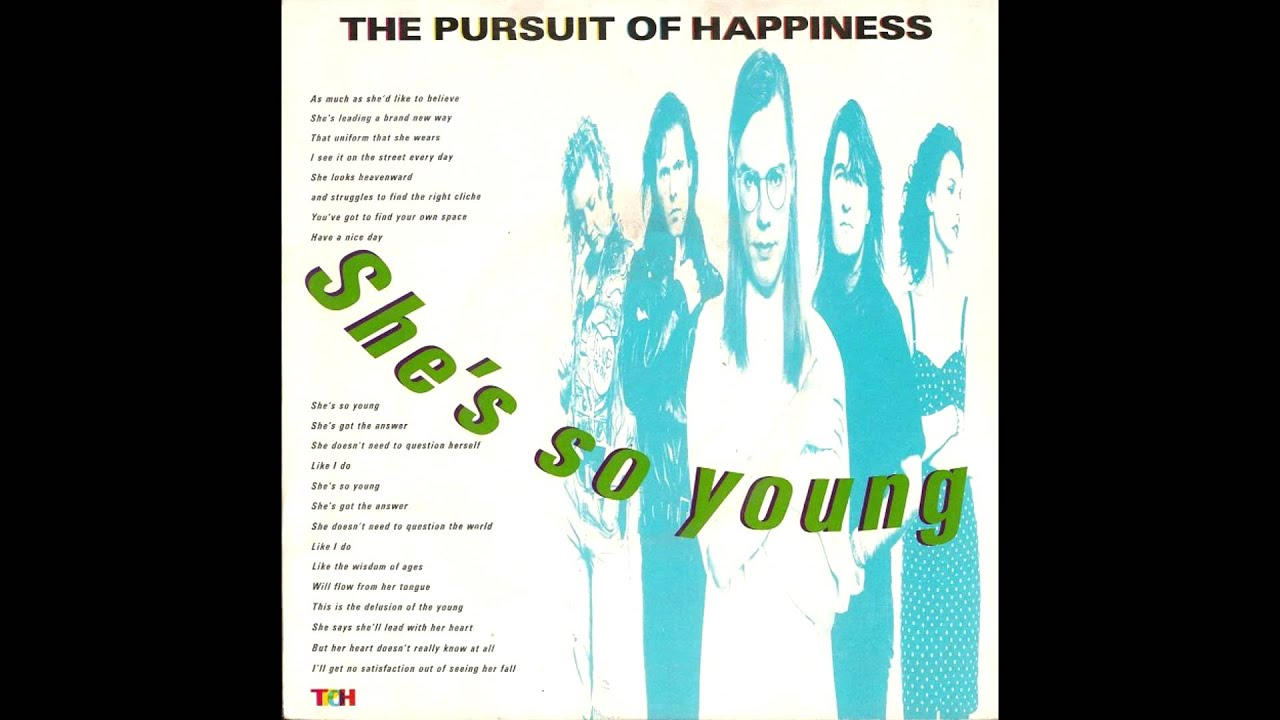
In the era of 90s alternative rock, The Pursuit of Happiness emerged as a jangly powerpop force, weaving tales of love, longing, and the tumultuous journey through a conflicted maze of human emotions. Among their repertoire of hits, “She’s So Young” stands as a beautiful jangly gem, capturing the essence of youthful passion and the bittersweet symphony of burgeoning adulthood versus the slow realization of growing older.
Released as a single in the same year as their debut album in 1989 as part of their Todd Rundgren-produced debut album “Love Junk.” The song from the Edmonton, Alberta band should have earned them much more critical acclaim and a much larger fan base across the world. Several decades later, this stunning melodic arrangement should have become an even more celebrated piece of music. Although the album was certified platinum in Canada, the band did not have similar success in the United States. Penned by band leader and lead singer Moe Berg in 1985, “She’s So Young” delves into the complexities of infatuation, desire, jealousy over the illusion of having everything figured out, and the rollercoaster of emotions that accompany the discovery of love in its most youthful, unadulterated form.
The track opens with an immediate vocal and jangly guitar riff that sets the stage for a sonic journey into the heart of lust, anxiety, and angst. Berg’s vocals, tinged with a perfect blend of vulnerability and raw passion, draw listeners into the narrative. As the lyrics unfold, a story of confused and unrequited love takes shape, encapsulating the universal experience of yearning for the unattainable and possibly unattainable for good reason.
Berg’s lyrical prowess shines through in lines like “Like the wisdom of ages, Will flow from her tongue, This is the delusion of the young, She says she’ll lead with her heart, But her heart really doesn’t know at all, I’ll get no satisfaction out of seeing her fall.” Here, he masterfully captures the paradox of youth—a time when the intensity of emotions often outweighs the depth of understanding. The song becomes a vessel for exploring the inherent contradictions of adolescence, where the naivety of youth coexists with the profoundness of burgeoning desires.
(Image credit: Jim Steinfeldt/Michael Ochs Archives/Getty Images)
The melodic cadence of “She’s So Young” mirrors the unpredictability of young love, seamlessly shifting between moments of exuberance and introspection. The instrumentation, marked by catchy hooks and a rhythm section that propels the narrative forward, mirrors the emotional turbulence of the song’s protagonist. It’s a musical engine where the energy of youth converges with the introspection of maturity, creating a sonic space that resonates across generations.
The chorus, a resounding declaration of unrequited love, encapsulates the universal theme of yearning that underpins the track. In fact, the original version of the song began with the chorus instead of the first verse. When re-recording the song for “Love Junk,” the band changed the order to build more tension in the song. Yet, the infectious chorus is power pop bliss: “She’s so young, She’s got the answers, She doesn’t need to question herself like I do” becomes a rallying cry for anyone who has experienced the all-consuming nature of a crush—an emotion that transcends time and space as it moves beyond rational understanding.
Beyond its musical allure, “She’s So Young” invites listeners to reflect on the transient nature of youth and the fleeting beauty of innocence. The song becomes a vessel for nostalgia, a sonic time capsule that transports the audience back to the moments of their own youthful infatuations. In this sense, The Pursuit of Happiness achieves a rare feat—capturing a specific moment in time while crafting a narrative that remains universally relatable.
While the song’s thematic elements resonate on a personal level, it also taps into the broader cultural landscape of the late 80s and early 90s. The alternative rock scene was undergoing a transformative phase, with bands like The Pursuit of Happiness contributing to the evolution of the genre. “She’s So Young” exemplifies the era’s preoccupation with introspective lyrics and a departure from the bombast of ’80s glam rock.
Decades after its release, “She’s So Young” endures as a song of authentic storytelling and infectious melodies. Its influence reverberates. “She’s So Young” stands as a compelling song that celebrates the complexities of human emotion, a reminder that the pursuit of happiness often involves navigating the labyrinth of love, loss, and the eternal quest for connection. This song remains a shining gem and a clear eyes wide-open statement of a collective memory of those who have embarked on the tumultuous yet beautiful journey of growing up.
As the holiday season wraps the world in its embrace, certain songs emerge as timeless classics that capture the essence of the Christmas season. One such masterpiece is “Fairytale of New York” by The Pogues, a ballad that has become synonymous with the festive spirit. Released in 1987, this iconic track has not only stood the test of time but has also woven itself into the fabric of holiday and seasonal celebrations around the globe. As we celebrate the music and spirit of Shane MacGowan, now seems a perfect time to revisit this evocative song.
At its core, “Fairytale of New York” is a love story set against the backdrop of a dark, gritty, and realistic Christmas in New York City. The Pogues, known for their fusion of traditional Irish folk and punk rock, bring a unique energy to the song, infusing it with equal parts melancholy and exuberance. The haunting accordion and tin whistle melodies, along with Shane MacGowan’s distinctive gravelly vocals, set the tone for a narrative that is as raw and painful as it is heartwarming and full of optimism.
Shane MacGowan’s voice has a distinctive tone, characterized by its raw authenticity and unconventional beauty. What sets MacGowan apart is not just his vocal range or technical prowess, but the sheer emotive power, a sense of brokenness embedded in his delivery. His gravelly, almost weathered voice possesses a rare ability to convey a myriad of emotions, from gritty defiance to heartfelt vulnerability. MacGowan’s vocal style is deeply rooted in his Irish heritage, channeling a feeling of being vulnerable, powerful, and carefree all at the same time. It carries the weight of experience and authenticity, echoing the struggles and joys of life.
It’s in the imperfections of his voice that MacGowan finds his uniqueness. The rough edges and unpolished quality lend a genuine and unfiltered quality to his singing. Whether he’s belting out energetic punk anthems or delivering poignant ballads, there’s an undeniable sincerity in every note.
MacGowan’s voice is inseparable from his lyrical strength. His storytelling prowess comes alive directly through his vocal delivery, turning each song into a vivid narrative. It sounds like each word is spit out from a hole deep inside himself. The words matter especially because of how much he feels them. The combination of his distinct vocal timbre and poetic lyricism creates a musical experience that is both timeless and unmistakably his own. Shane MacGowan’s voice is a testament to the notion that true artistry often lies in the embracing of individuality and authenticity rather than perfection.
The song’s opening lines immediately transport listeners to a cold, harsh Christmas Eve in the ‘Big Apple,’ with MacGowan’s vivid storytelling painting a picture of a city that is frustrating, enchanting, drenched in drink, and unforgiving. Kirsty MacColl’s response to MacGowan’s verses adds sonic depth and emotion, creating a duet that feels authentic and emotionally charged. Her tone cast again MacGowan’s almost growl fuse the vocals with sweet and unsavory in the same moment. The characters in the song, who appear to have seen better days together in the past, convey an unrelinquished sense of resilience and hope despite their struggles. One wonders if they continued to be together after the song ends. The narrative of the song creates a feeling that they should go their separate ways while knowing that deep in their hearts they will always care for one another.
What sets “Fairytale of New York” apart is its ability to encapsulate the bittersweet nature of the holiday season. It acknowledges the hardships and challenges that many face during this time while simultaneously celebrating the enduring power of love and the warmth that comes with it. The lyrics capture a spectrum of emotions, from nostalgia and regret to optimism and love, making it a song that resonates with a wide audience.
Musically, the arrangement is rich and dynamic, incorporating elements of folk, punk, and traditional Irish music. The orchestration, featuring instruments like the accordion and whistle, gives the song a distinctive Celtic flavor, infusing it with a sense of cultural authenticity. The orchestral crescendo in the instrumental break further elevates the emotional intensity of the song, making it a powerful listening experience.
Despite its sometimes somber tone, “Fairytale of New York” is undeniably a festive anthem. Its staying power can be attributed to its ability to capture the complexities of the holiday season and failed (or is that failing?) relationships making it a song that transcends time and resonates with listeners. As we celebrate the music of Shane MacGowan and the enduring legacy of “Fairytale of New York,” it remains a compelling statement to The Pogues’ artistry and their ability to craft a Christmas classic that is both timeless and unforgettable.
In a music industry often dominated by bombastic beats and electronic wizardry, Real Estate has carved a niche for itself with their distinctive brand of indie rock, characterized by dreamy melodies and introspective lyricism. With their latest single, “Water Underground,” from the forthcoming album ‘Daniel’ – the band’s sixth record, the New Jersey-based quintet reaffirms their mastery of crafting serene sonic landscapes that invite listeners to wade into the depths of their introspection.
From the first strum of the guitar, “Water Underground” unfurls like a gentle current, drawing the listener into its tranquil embrace. The opening harmonies, signature to Real Estate’s sound, resonate with a timeless quality that harks back to the heyday of jangle-pop. There’s a certain effortlessness in the way the instrumentation converges, creating a shimmering pool of sound that serves as the perfect canvas for the band’s lyrical exploration. The song is a ripple of melodic grace.
Martin Courtney’s vocals, soft and contemplative, guide us through the submerged depths of emotion. The lyrics, much like a quiet current, weave a narrative that touches upon themes of introspection and self-discovery. “Water Underground” is a lyrical exploration into the recesses of the soul, navigating submerged depths of emotion, and exploring the quietude beneath the surface of our daily lives. The words are poetic yet accessible, inviting the listener to reflect on their own internal challenges.
Real Estate has always excelled in creating intricate yet accessible instrumental textures, and “Water Underground” is no exception. The interplay between Julian Lynch’s intricate guitar work, Matt Kallman’s Keyboards, and Alex Bleeker’s melodic basslines is a testament to the band’s collaborative prowess. The drumming, courtesy of Sammi Niss, provides a steady undercurrent that propels the song forward, like a gentle stream flowing through a serene meadow.
The instrumental breaks showcase Real Estate’s ability to balance complexity with simplicity. The guitar solos, while understated, add a layer of richness to the overall composition. It’s in these moments that the band’s chemistry truly shines, creating a sonic tapestry that envelops the listener in a comforting warmth.
The production of “Water Underground” demonstrates the band’s commitment to melodic clarity. The mix is pristine, allowing each instrument to occupy its own space within the musical spectrum. The production choices echo the thematic elements of the song, providing a sense of clarity amidst the complexities of life. It’s as if the band has distilled their sound to its purest essence, inviting the listener to immerse themselves in the crystal-clear waters of Real Estate’s musical vision.
In a world that often feels turbulent and chaotic, Real Estate’s “Water Underground” offers a respite – a tranquil oasis where one can wade into the soothing waters of introspection. The song is a testament to the band’s ability to evolve while staying true to their sonic roots. Real Estate continues to be a beacon in the indie rock scene, guiding listeners through landscapes of sound that are as comforting as they are thought-provoking.
The video for the song is a tribute to the much-loved ’90s Nickelodeon series ‘The Adventures of Pete & Pete,’ with visual references to specific episodes, and the actors who played ‘The Petes’ themselves, Danny Tamberelli and Michael Maronna, frequently appearing in different roles in the video. This visual love letter to a fantastic series that would probably not be made today because of its elliptical and often surreal storylines was brilliantly directed by Edmond Hawkins. The idea for the music video was a team effort, coming from the fertile imaginations of Tamberelli and Maronna, with ‘Pete & Pete’ creators Chris Viscardi and Will McRobb which undoubtedly explains the incredible attention to detail.
“Water Underground” is not just a single; it’s an invitation to explore the depths within ourselves while we relive some of the fun of a past adventurous television show. Real Estate has once again demonstrated their prowess in crafting music that transcends the ephemeral trends of the industry, leaving the listener with a sense of serenity that lingers long after the final notes have faded away. As we navigate the currents of our own lives, “Water Underground” stands as a reminder that, sometimes, it’s in the quiet depths that we find the most profound revelations.
Once upon a time country music was made with an eye toward capturing authentic experience and real storytelling reigned supreme. David Payne’s latest release, “Best Intentions,” stands as a testament to the genre’s ability to capture the complexities of life. With its poignant yet accessible lyrics, soul-stirring melodies, and raw, unfiltered sound, Payne invites listeners on a profound sonic journey that delves into the depths of human emotion. The music video made to accompany the single deftly captures the feeling of the song.
The song opens with a twangy guitar riff that immediately sets the tone for what’s to come, the guitar lines bounce with a syncopation that reminds the listener of The Buckaroos’ Don Rich. Payne’s vocals, weathered by experience, carry the weight of the narrative, creating a sense of sincerity that resonates with the listener. It’s a classic country setup, but as the lyrics unfold, it becomes evident that “Best Intentions” is not just another run-of-the-mill country song. Instead, it navigates the intricacies of relationships, regrets, and the inevitability of life’s unpredictable twists. Sometimes we all need to step out for just a minute as the song reminds us.
At its core, the song explores the universal theme of good intentions gone awry. Payne’s lyrics paint a vivid picture of a protagonist grappling with the consequences of choices made with the purest of motives. The verses unfold like pages from a personal journal, revealing a depth of self-awareness and vulnerability rarely found in mainstream country music.
The driving rhythm and syncopation are where “Best Intentions” truly shines. A blend of heartfelt sincerity and a touch of melancholy, the refrain captures the essence of the human experience. Payne’s delivery is both soulful and genuine, carrying the weight of the narrative with every note he sings. It’s the kind of song that lingers in the mind, inviting introspection and resonating with those who have faced the complexities of relationships and the bittersweet nature of good intentions. Why do we need time away from those we care about? How does the time get away from us and suddenly — at least to us it seems a surprise — it’s “last call.”
The instrumentation plays a crucial role in shaping the song’s emotional landscape. The twangy guitars and fuzzy bass evoke a sense of nostalgia, paying homage to the traditional country sound, especially Buck Owens and The Buckaroos while infusing a modern edge. The arrangement is masterfully crafted, allowing each instrument to breathe and contribute to the overall sonic palette. Payne’s decision to keep the production stripped down and authentic enhances the song’s emotional impact, creating an intimate connection between the artist and the listener. The video enhances that idea by keeping the visual narrative of Payne in a bar drinking by himself.
It’s worth noting that “Best Intentions” stands out in the country music scene for its refusal to conform to formulaic trends. In an era where many artists prioritize commercial success over artistic integrity, Payne embraces the roots of country music, blending tradition with innovation. The song harkens back to a time when storytelling was at the forefront of the genre, and each note carried the weight of genuine emotion.
One of the most compelling aspects of “Best Intentions” is its ability to transcend the confines of country music and appeal to a broader audience. The themes of love, loss, and redemption are universal, making the song relatable to listeners across genres. Payne’s genuine approach as a storyteller shines through, creating an emotional resonance that extends beyond the boundaries of a single genre. Moreover, the song’s narrative depth opens the door for interpretation, allowing listeners to find their own meaning within the lyrics and the reason that the narrator needs some space to think. Whether reflecting on personal experiences or simply appreciating the artistry of the storytelling, “Best Intentions” invites a level of engagement that goes beyond casual listening.
David Payne’s “Best Intentions” is a standout addition to contemporary country music. Through its authentic storytelling, soul-stirring vocals, driving rhythm, and refusal to conform to industry norms, the song encapsulates the essence of a commitment to celebrating genuine artistic expression. As a sonic journey through the heart of a modern country, “Best Intentions” serves as a reminder of the power of music to connect us all through the shared experiences of the human condition.
Video By Brandon Berry at Broken Tape, LLC. The song was written by M. D. Payne Jr. It was produced, engineered, and mixed by Patrick Himes and David Payne on 2″ analog tape at Reel Love Recording Company in Dayton, Ohio. The song was mastered by Tim Pritchard at Great Horned Audio, Dayton, Ohio. Thanks to Magnaphone Records for releasing this country music gem.
The players: David Payne: Vocals, Acoustic Guitar Patrick Himes: Precision Bass, Percussion Brian Hoeflich: Drums Dan Spaugy: Electric Guitar Matt Spaugy: Tic Tac Bass, Fuzz Bass
Streaming Forward, Powered By The Past - if you love the 80s music, new music, Eurovision, cheesy pop and awesome playlists then let's get this pop party started!








 your tuesday afternoon alternative