Favorites of 2025: Kim Ware and The Good Graces – Grand Epiphanies

I’ll just say it: Grand Epiphanies is one of the most human records you’re going to hear in 2025, and maybe one of the few that doesn’t insult your intelligence along the way. While many releases this year seem hell-bent on either drowning themselves in studio varnish or hiding behind hipster irony, Kim Ware walks in like someone who’s survived a few things and isn’t afraid to speak plainly about the bruises. These songs don’t howl, they don’t posture—they breathe. And in an era when pop throws confetti over every emotional breakdown and calls it catharsis, Ware has the guts to sit with the silence, to let the ache settle, to make music that’s actually about feeling something and not just Instagramming the wreckage. This is a record that believes in sincerity, and for that alone, it hits like a revelation.

Deepening the craft: Why Grand Epiphanies matters

When Grand Epiphanies was released in September 2025 via Fort Lowell Records, it arrived not as a gimmick or a throwback — but as an earnest statement from a songwriter who has spent nearly two decades refining her voice. For fans of Kim Ware and The Good Graces, the EP represents both continuity and evolution. It retains the emotional honesty and Southern-tinged indie-folk roots listeners have come to expect, while embracing fuller arrangements, sharper lyrical clarity, and a maturity of perspective that only time (and living) can provide.

What emerges is a collection of songs that treat heartbreak, regret, longing, and self-doubt not as melodrama, but as shared human truths. Ware doesn’t write to shock, to boast, or to gloss over. She writes to reach — to offer a mirror to listeners, and maybe a little company in whatever dark or quiet moment they find themselves. This EP is a reminder: vulnerability doesn’t have to be pretty. It just has to be honest.

The team: musicians behind the music

Although Kim Ware remains the creative heart of The Good Graces — vocals, guitar, and songwriting — Grand Epiphanies is a collaborative effort, supported by skilled players and producers who understand how to highlight nuance rather than mask it.

On this release, producers and multi-instrumentalists Steven Fiore and Justin Faircloth play central roles, adding guitar, piano, keyboards, bass, and even backing vocals, and in doing so, help shape the record’s rich but still intimate sonic layers. Their presence builds on a long tradition within The Good Graces: throughout previous albums, different collaborators have drifted in and out of the lineup, each contributing something distinct to the band’s evolving sound. That kind of fluid membership has always been part of the project’s identity, keeping Kim Ware’s songwriting deeply personal while allowing the music itself to remain open, flexible, and continually renewed rather than fixed in a single form.

This flexible model echoes what Ware once said about the band: not as a fixed entity but as a “very talented group of friends,” coming together when inspiration, time, and circumstance allow.

In practice, this means Grand Epiphanies doesn’t feel overproduced or manufactured. Instead, it feels like friends gathered in a room, listening, playing, and creating together — a mood that invites trust and intimacy rather than distance and gloss.

Sound and style: picking up old threads, weaving new ones

Listeners familiar with earlier Good Graces albums — from Sunset Over Saxapahaw (2008) through Ready (2022) — will find much that’s familiar on Grand Epiphanies. Ware’s Southern-tinged twang, her blend of folk, country, and indie-rock sensibilities, the unhurried melodies, the earnest vocal delivery — these remain essential.

Yet this EP also feels more expansive than some earlier efforts. The production, led by Fiore and Faircloth, layers guitars, piano, subtle harmonies, and occasionally banjo or other acoustic touches to build a richer emotional landscape around Ware’s voice. Although personal taste will always shape which tracks linger the longest, several songs on Grand Epiphanies stand out for the way they crystallize what the record does best. Take the track “Old/New”: its guitar strumming and vocal lines evoke late-afternoon melancholy, but as the song unfolds, piano and backing instrumentation widen the space — giving the listener room to sink into memory, longing, and possibility. unfolds like a gentle meditation on what we leave behind and what we carry forward, its subtle layers of instrumentation creating room for genuine emotional reflection.

Wish I Would’ve Missed You approaches heartbreak without melodrama, turning regret and longing into something more like the experience of leafing through old photographs—quiet, tender, and unexpectedly overwhelming. And then there is Missed the Mark,” a song that speaks directly to the insecure, the hopeful, and the uncertain, offering both an appeal for human connection and a confession of imperfection that feels disarmingly honest.

The choice to include a cover — a reimagined version of Some Guys Have All the Luck — also signals the confidence in balancing reverence and reinvention. On this EP, the cover doesn’t feel like a novelty; instead, it sits comfortably alongside Ware’s originals, transformed gently to align with the EP’s mood and tone. Some Guys Have All the Luck serves as a bridge between past and present, inspiration and reinterpretation. It doesn’t overshadow the original; it complements it, reminding listeners that songs evolve just as people do.

Overall, the sound of Grand Epiphanies suggests maturity without restraint, emotional depth without melodrama — the kind of record that lingers long after the final note fades.

The gift in the songs: everyday life, honest reflection, and human connection

What often sets the best singer-songwriters apart is a gift for translating ordinary moments into emotional touchstones. On Grand Epiphanies, Kim Ware exercises that gift with clarity and courage. Rather than lean on clichés — heartbreak melodrama, romantic tropes — she mines the subtler, messier terrain of real experiences: regret, nostalgia, second chances, self-doubt, hope, and quiet resilience. Many of these themes resonate universally: longing and loneliness, memory and loss, the ache of roads not taken, the fragile optimism that hums beneath everyday life.

In Wish I Would’ve Missed You”, Ware reflects on regret and longing with a spare lyricism that strikes more powerfully than most breakup ballads. “Spent it all on grad school… every now and then a memory stops me in my tracks,” she sings — not flaunting heartbreak but confessing to being human, vulnerable, flawed.

Elsewhere — in songs like “Missed the Mark” — she turns the lens inward, wrestling with feelings of inadequacy, uncertainty, and the desperate hope to connect. “I scan the room and hope the messages I send / Somehow reach a brand new stranger, and they become a brand new friend,” she confesses, exposing the artist’s fear and longing behind performing.

The album doesn’t promise closure. It doesn’t pretend that “everything works out.” Instead, it offers companionship: a voice that says, “I feel a lot of this too.” In that way, Grand Epiphanies avoids insulting the listener’s intelligence by offering simplistic solutions. It acknowledges complexity. It honors pain. And it believes in healing — not as a fairy tale but as a slow, sometimes messy process.

How Grand Epiphanies compares to previous work

To appreciate Grand Epiphanies, it helps to see it against the backdrop of Kim Ware’s musical journey. The Good Graces began in 2006 after Ware picked up an old acoustic guitar and started composing songs rooted in Southern indie-folk traditions.

Earlier records, like Close to the Sun (2014), showed a willingness to experiment — to mix folk and country, to play with ambient touches, drum machines, and subtle electronic textures. But even then, the core remained familiar: Ware’s voice, simple guitar patterns, emotionally candid lyrics.

With Ready (2022), the songwriting felt sharper, more intentional; melodies caught between wistful longing and restless urgency. Yet Grand Epiphanies pushes further. The songs are more cohesive; the instrumentation more deliberate; the emotional stakes clearer. Listeners can trace how time, experience, and loss have deepened Ware’s perspective.

This latest EP also suggests a renewed trust in collaboration. Rather than relying solely on acoustic minimalism — the refuge of vulnerability — Ware embraces fuller arrangements. The result isn’t flashy, but it feels abundant in feeling. It’s as though she’s saying: “These aren’t just my stories alone anymore; they are ours.”

Why Grand Epiphanies feels especially relevant in 2025

We live in a time when noise is constant — in our politics, our social media, our media cycles. Simplicity and quiet reflection often feel like luxuries. In that environment, an EP like Grand Epiphanies doesn’t just matter musically; it matters morally. It represents a kind of resistance — not flashy or confrontational, but human.

Kim Ware doesn’t demand answers; she offers empathy. She doesn’t pretend life gets clean after the hard parts; she reminds us that even when scars remain, beauty can survive. For listeners who feel worn down, uncertain, or haunted by memory, these songs can be small lamps in a dark room. For those simply seeking honest songwriting in a sea of glossy distractions, the EP offers relief.

Moreover, the collaborative, evolving model of The Good Graces — weaving friends, producers, rotating musicians into a living tapestry — speaks to music as community, not commodity. In an age of streaming algorithms and viral hits, that matters.

A few honest limitations — and why they don’t hurt the EP’s purpose

As with any release built around vulnerability and introspection, Grand Epiphanies may not cater to all tastes. Listeners expecting polished pop hooks, glossy production, and immediate gratification might find its pacing too slow, its mood too muted. The EP’s strength lies precisely in its restraint — in accepting that some feelings don’t come wrapped up neat and loud.

And with only five tracks, Grand Epiphanies can feel more like a snapshot than a full portrait. Themes are introduced, emotional arcs hinted at, but not always resolved. The sense is less of closure and more of continuation. Which, in many ways, may be the point: life rarely offers tidy endings.

Still — if you’re open to being held in uncertainty for a little while; if you’re willing to sit with a guitar, a voice, and a few gentle chords — the EP offers something rare: a place to breathe.

Kim Ware and The Good Graces — still speaking, still feeling

In a musical climate often dominated by spectacle, loudness, and overstated sentiment, Grand Epiphanies stands out not because it demands attention, but because it deserves it. Kim Ware’s songwriting remains a gift: honest, gentle, unguarded, but never cloying or insincere. Backed by The Good Graces, she continues to prove that folk and indie rock can still speak to our messy, uncertain lives with clarity and heart.

For longtime listeners, the EP will feel like a meaningful evolution — a band maturing, growing more confident, more open to collaboration. For those just discovering Ware, it offers a doorway into a catalogue full of stories that don’t hide behind cliches or affectation. And for anyone longing for music that reflects rather than distracts, that comforts rather than commodifies — Grand Epiphanies is a small, glowing jewel.

In 2025, when the world often seems determined to overwhelm us with noise, Kim Ware and The Good Graces invite us to slow down, listen, and remember: we are not alone. We are human. We are trying. And maybe — just maybe — that’s enough.

Favorites of 2025: Elephants and Stars – Under The Earth and Above Heaven

Indie rock has always thrived on the fringes: small venues, tiny labels, and the slow-building careers that reward patience more than hype. Few contemporary bands embody this spirit better than Elephants and Stars, the Canadian band whose latest album, Under the Earth and Above Heaven, feels like the result of years dedicated to refining melody, guitar as truth, rock and roll meaning, and a hard-won optimism tempered with a slight sarcasm that comes from not taking oneself too seriously. A real understanding that life has ups and downs.

The album’s title suggests a band thinking about place, about being suspended between hardship and hope, about grounding themselves even as they reach. And in many ways, this duality captures the spirit of Elephants and Stars themselves: musicians who write like they’ve lived a little, but still believe that a good chorus can solve something in the soul. A great song can change the world.

Under the Earth and Above Heaven is, simply put, their most confident and emotionally resonant work to date. But the record is also a reminder of why rock, guitars, harmonies, and honest storytelling still matter.

The band behind the sound
To understand the record, it helps to understand the people who made it. Elephants and Stars operate in a tradition familiar to fans of early 2000s alternative rock: tight rhythm sections, guitars that shimmer and crunch, and lyrics that manage sincerity without slipping into sentimentality.

The lineup, anchored by frontman Manfred Sittmann, whose signature vocals blend warmth with a slight rasp, has solidified into a group whose interplay feels lived-in. Sittmann writes and sings with the clarity of someone who knows the exact weight of each line, but the band behind him keeps things agile rather than precious. Sittmann’s melodic instincts shape much of the band’s identity. He’s joined by Adam Seed, whose lead guitar work brings a sharp, expressive edge to their sound, and longtime collaborator Michael MacMillan, whose bass lines provide both structure, rhythm, and warmth. The rhythm section finds its heartbeat in drummer Stewart McKinney, while Simon Head expands the band’s sonic palette with textured, atmospheric keyboard layers. Together, they create a modern rock sound grounded in pop-punk roots. Music that’s unmistakably hook-driven yet designed with a clear mission: to help bring rock back to the forefront.

The band’s story stretches back years, especially for Sittmann and MacMillan, who previously played together in the excellent group Soap Opera. Their long creative history gives the songs on their latest release a natural chemistry and ease, the feeling of musicians who know exactly how to respond to one another. That chemistry reaches a new peak on Under the Earth and Above Heaven, released in February of this year and produced by Ian Blurton, a collaboration that sharpens their sound while preserving the emotional immediacy that defines their work.

The guitars, often handled in layered pairs, move between bright open-chord passages and more aggressive leads. The bass lines are melodic without overpowering the mix, and the drumming is purposeful and punchy where it should be, restrained where the lyrics need breathing room. The result is a sound built on chemistry rather than simply studio polish.

The band feels like a cohort of people who know how to play to each other’s strengths. This matters because Under the Earth and Above Heaven is an album that depends on emotional pacing: crescendos that feel earned, shifts in tone that feel organic, and choruses that arrive with the momentum of a live show.

A sound defined by uplift without naïveté
From the opening track, Elephants and Stars make it clear that they are uninterested in the cynicism that often dominates modern rock. Their guitars ring with a kind of unguarded cascade of sonic joy, even when the lyrics are wrestling with frustration or loss. One of the most striking qualities of this album is how hope and melancholy coexist—not in competition, but in conversation.

The production leans into this duality. Vocals sit slightly forward in the mix, giving Sittmann’s storytelling a sense of directness and intimacy. The guitars, meanwhile, expand outward: wide, textured, layered. It’s the kind of sound associated with late-afternoon festival sets—sunlight still visible, the air cooling, the crowd settling into a collective feeling. And the sound? Loud, propulsive, aggressive, like a sonic caress.

What keeps the record from drifting into nostalgia is the band’s sense of precision. Each song feels built, not merely written. The hooks land with purpose. The bridges feel like necessary expansions, not detours. And the choruses—Elephants and Stars’ greatest strength—arrive like emotional confirmations.
This is a band that believes in melody the way some bands believe in distortion pedals: as the emotional engine of the music.

The lyrical world of the album
If the sound carries the emotional lift, the lyrics provide the grounding. Under the Earth and Above Heaven reads like a record about transition—moving from one stage of life to another, reconciling who you were with who you’re trying to become. The “earth” and “heaven” of the title function less as metaphysical spaces and more as metaphors for the pressures we carry and the aspirations we hold. Across the record, recurring themes emerge.

Across Under the Earth and Above Heaven, Elephants and Stars weave a thematic through-line that feels both deeply personal and universally readable. The record begins by making peace with the past, returning again and again to the bittersweet truth that old mistakes never quite vanish. Yet the band refuses to sink into regret. Instead, they treat memory like an old photograph—something to regard with a mix of tenderness and hard-earned gratitude for having made it through. That reflective stance sets the stage for one of the album’s central concerns: the search for steadiness in a world that rarely offers it. Life, as their lyrics suggest, often feels precarious, a suspended moment in which you’re “almost there” but never fully settled. But rather than express anxiety, the band leans toward determination, riding out the instability with resolve.

That determination is buoyed by another recurring insight: the importance of connection. Throughout the album, relationships of all kinds—romantic partners, close friends, the communities we build around ourselves—appear as the forces that keep us grounded. These songs push against the temptation to withdraw, insisting instead that meaning comes from being in the world with others. And within that engagement, the band finds flashes of transcendence in the most ordinary places: singing in the car, watching the sunrise after a sleepless night, catching the sound of someone’s laughter at just the right moment. These quiet, luminous details echo the “above heaven” imagery of the album’s title, suggesting that the extraordinary often reveals itself in the spaces where we least expect it.

The record carries an autobiographical weight without tipping into confession. Rather than offering a straightforward personal narrative, it gestures toward shared emotional terrain—less “here is my story” and more “here is a feeling you have probably known.” And while a full song-by-song analysis would exceed the scope of this discussion, several tracks stand out for the way they shape the album’s emotional arc, guiding listeners through reflection, uncertainty, connection, and ultimately the little but meaningful possibilities of joy.

The opener: urgency with clarity
The opening track, The Ceiling, wastes no time establishing the album’s stakes. A driving beat, guitars that arrive fully formed, and lyrics that describe the moment when indecision becomes action. It feels like a thesis statement: the band is not here to wallow; they are here to move. A bit more than midway through the record comes a standout track that shifts the tempo and deepens the tone, ‘Unlucky.’ This is where the band’s lyrical strengths shine: reflections on resilience, the cost of growth, and the quiet strength found in simply continuing. The arrangement builds around a groove—guitar, sway in the keyboards, more subtle percussion, then a full electric swell—mirroring the emotional climb.

The late-album surge: an anthem of uplift
As the album nears its conclusion, the band leans into one of their most triumphant choruses to date on ‘Paint Me Alive’. It’s the kind of moment designed to be shouted back at the stage, hands in the air, the kind of collective catharsis that only rock music can produce. The lyrics, which center on choosing light even when darkness is familiar, feel earned precisely because the album has carried listeners through doubt and tension.

The final track, The Ghosts, does something rare: it provides closure without collapsing into tidy resolution. It acknowledges the uncertainties that remain but offers a melodic reassurance that moving forward—however imperfectly—is worth celebrating.

Three elements make Under the Earth and Above Heaven one of Elephants and Stars’ most compelling releases: 1) Musical consistency without monotony. 2) The band has refined their sound without becoming predictable. And 3) Each song feels connected to the whole, but no two entries collapse into each other.

Emotional honesty that creates community
In an era where irony often dominates indie music discourse, Elephants and Stars commit wholeheartedly to sincerity. Their stories are earnest but never naive. The band creates A sense of community embedded in the music. Listening to the album feels like being welcomed into a shared emotional space. It’s personal, but it’s not private.

Elephants and Stars occupy an interesting place in today’s musical world. They are neither trend-chasers nor purists. Instead, they carry forward the tradition of emotionally articulate guitar rock: bands like The Weakerthans, early Jimmy Eat World, or mid-period The Hold Steady—artists who treat songwriting as craft rather than marketing. Their music reminds listeners that rock still has a role to play in articulating everyday emotional life. Not the grand dramas, but the subtle struggles: trying to be better, trying to stay hopeful, trying to find footing. In a digital era marked by fragmentation and fatigue, Under the Earth and Above Heaven feels refreshingly grounded.

Perhaps the greatest achievement of the album is its replayability. The first listen offers immediacy—hooks that land, choruses that stick. But subsequent listens reveal the details: the way a harmony hangs in the background, the way a guitar line subtly echoes a lyrical theme, the way the rhythm section builds tension without overstating it. This is music built not just to impress, but to accompany. It is the kind of record listeners grow with and discover far more over repeated listens.

An album for the moment we’re in
Under the Earth and Above Heaven succeeds because it feels like an album made by people committed to the power of song—not spectacle, not persona, but the craft of building moments of connection. In a fractured cultural moment, that feels almost radical.

Elephants and Stars may never be the kind of band that dominates streaming algorithms or headlines massive festivals. But this record demonstrates why they matter: they make music that sees listeners clearly. They make music that names the feelings many of us carry. They make music that reaches upward, outward, toward one another.

And sometimes, that’s exactly what good rock music is supposed to do.

Favorites of 2025: Sadbox – Everything’s A Shame

Sadbox and Everything’s A Shame

In a musical landscape flooded with glossy production and instant-stream forgettability, Everything’s A Shame stands out — not because it tries to conform, but because it embraces messy humanity: raw ideas, family schedules, basement rehearsals, and songs born from everyday chaos. The EP from Dayton-based rock band Sadbox (released October 3, 2025) feels intimately local while resonating with universal truths.

For a band balancing real-life demands — kids, careers, responsibilities — Sadbox delivers a sound that is energetic, quirky, honest, and sometimes unsettling. The result is a three-song burst of “technical weirdo rock,” as some have called it — music that doesn’t aim for radio-friendly formulas or uniform polish but seeks genuine expression, emotional depth, and a touch of controlled chaos.

In what follows, I examine who these musicians are, how the EP was created, what their sound and lyrics reveal, and why Everything’s A Shame feels like a small but significant critique of the sanitized norms of mainstream rock.

Who’s making the noise — the people behind Sadbox

Sadbox isn’t a typical rock band that churns out songs just for fame. It’s a group of musicians grounded in everyday life, each with responsibilities beyond music. Sadbox is led by guitarist and lead singer Paul Levy, whose dual role as a surgeon brings a unique mix of precision and spontaneity to the band’s sound. He’s joined by Eli Alban on guitar, who also plays in The 1984 Draft and adds extra tonal nuance and energy to the group. Ryan Goudy provides the band’s steady, melodic bass foundation, while Ray Owens propels the songs with his dynamic, intuitive drumming. Completing the lineup for this release is Rachele Alban, whose vocals and keyboard work expand Sadbox’s sonic palette and deepen the emotional texture of the record.

The record — recorded, mixed, and mastered by local engineer/producer Fred Vahldiek known as Fredzo at Fredzoz Studio (one of our favorite records from The 1984 Draft, Best Friends Forever was recorded there) — is simple, direct, and straightforward. As drummer Ray Owens mentioned in an interview, balancing family life (with a collective total of 13 kids in the band) means music sometimes has to be as spontaneous and immediate as a family dinner: “the practice forum is similar to a live show.” That constraint — rather than hurting the music — seems to sharpen it, giving the band’s sound a rough clarity and urgency that polished over-production often hides.

Sound and style: “technical weirdo rock” with heart and edge

Sadbox’s music has been described as “alternapop / college-rock-style,” but Everything’s A Shame doesn’t fit neatly into any single category. Instead, it combines elements of grunge, rock, and weird-pop, with occasional narrative or character-driven lyrics that evoke theatrical rock or even prog-lite experiments.

The opening track — “Dust” — leans into ’90s grunge style. Over-amped vocals, gritty guitar sounds, and a tight rhythm section evoke the emotional chaos and existential worry of that time. The feeling of movement — a car speeding down a lonely road, a restless mind at midnight — stands out. That tension fits especially well with the lead singer’s dual identity: the precision of his professional life contrasted with the rough edges of his artistic side.

The second track, “All Rhymes for Scoop,” initially seems like a playful word game, but that expectation is overturned. Instead of listing rhymes for “scoop,” the song acts as a critique — perhaps — of shallow social media echo chambers. Lyrics and rhythms clash unpredictably, reflecting discomfort, discontent, and disillusionment. The syncopated beat combined with semi-nonsensical lyrical stutters mirrors the noise and overload of the digital age. The song reminds us of a previous outting, Mish Mash, from their 2021 record Future Copy.

The final song, “New Low,” slows things down. Clean arpeggiated guitar, minimal percussion, and dual vocals (Paul and Rachele) frame a sad, spare story: one of abandonment, loss, and longing. The song — reportedly inspired by the band finding a stray cat after a tenant move-out — becomes a narrative of innocence left behind, waiting in vain. Its emotional weight comes not from grand gestures but from quiet detail: the missing water dish, the empty stoop, the echo of loss.

Taken together, the three songs create a mini-arc: from restless escape, to social critique, to quiet grief and regret. The textures shift, the pacing varies, but the emotional flow — vulnerability, discomfort, longing — stays consistent.

Lyrics and themes: shame, impermanence, and the small cruelties of modern life

The title Everything’s A Shame seems both faintly sarcastic and deeply earnest. The songs reflect that duality — loss feels tragic, but also mundane; social collapse feels absurd, but also real; emotional weight is often disguised under everyday details.

As Paul Levy put it in an interview: “I am the consequence of the road I travel.” That line — repeated in “Dust” — connects personal history, existential weight, and the unpredictability of life. It frames identity not as a fixed point, but as something shaped by context, time, memory, and chance.

In “All Rhymes for Scoop,” the band critiques the vacuity of online life — the “argument platform,” the endless scroll, the performance of discourse without depth. Using lyrical non sequiturs and abrupt rhythmic shifts, Sadbox turns the song into a kind of musical protest against emptiness disguised as connection.

Then “New Low” returns to personal — and small — narratives: the lonely cat, the abandoned stoop, the emptiness left behind. It’s a portrait not of a sweeping life crisis, but of countless smaller traumas: displacement, abandonment, neglect. The catastrophic becomes quiet, ordinary, and all the more haunting for that.

These are not songs about grand despair or romantic heartbreak. They’re about surviving — surviving social collapse, familial pressure, shifting identity, emotional stasis. There’s shame in defeat, longing in loss, but also a stubborn, human need to speak, to express, to hold on.

The making of the EP: collaboration, constraints, and creative honesty

Given their busy lives — kids, jobs, daily responsibilities — the fact that Sadbox managed to write, rehearse, record, and release Everything’s A Shame is a testament to their dedication. In a  radio interview, drummer Ray Owens explained how the band’s workflow had evolved: what used to be chaotic, slow jams now flow with precision; what once needed prompts and cues now occurs with a glance or shared rhythm. That improved chemistry is evident on the record.

Recording, mixing, and mastering were done by Fredzo at Fredzoz Studio — and the production shows an honesty-over-polish vibe. The guitars bite, the vocals crack, and the drums thud. Space is intentional: silence between notes, breaths between lyrics. Nothing feels overdone; everything feels essential.

That rawness—balanced with musical discipline—gives the EP its power. It’s not perfect, but it doesn’t need to be. It’s lived-in, human, sometimes ragged, and in its raggedness lies its truth.

What Everything’s A Shame achieves — and what it leaves unresolved

One of the EP’s main strengths is its coherence. Despite the sonic and lyrical variety (grunge-inspired rock, indie quirks, quiet ballads), the three tracks feel connected — through mood, theme, and emotional honesty. That sense of unity makes the EP seem like more than a random collection: it feels like a snapshot, a statement, a short film in three acts.

It also demonstrates what a band rooted in real life can achieve when they are committed: even with family obligations and limited time, Sadbox shows that artistic ambition and emotional honesty don’t require big budgets or months in the studio. Sometimes all it takes is clarity, teamwork, and the desire to record what you feel.

However, the EP also leaves space for growth. With just three tracks, listeners might want more — more depth, more storytelling, more time to pause. The ideas hinted at in “Dust,” “All Rhymes for Scoop,” and “New Low” seem like the start of something bigger. There’s a feeling of beginning, not ending.

Furthermore, the looseness that gives Sadbox its charm can also come across as unpolished, even rough around the edges. Listeners expecting tight arrangements or radio-ready vocals might find some of the vocal delivery off-kilter, the rhythms unsettled, and the mood dark. However, for others—those looking for realism, emotional depth, and spontaneous honesty—that roughness is part of the album’s appeal.

Why this EP matters — for the band, for Dayton, for listeners who crave honesty

For Sadbox, Everything’s A Shame reaffirms their commitment: they are serious about music despite life’s demands. Their willingness to embrace their circumstances — family, time constraints, the need for immediacy — doesn’t weaken their art; it enhances it. Their music is more about authenticity than perfection.

For their hometown of Dayton and the broader Ohio music scene, the EP is a tribute to the energy of independent music: small bands, DIY studios, local stages, real lives. It’s a reminder that creativity doesn’t wait for perfect conditions — sometimes it comes from necessity, urgency, and the quiet desperation of juggling everything we care about.

For listeners outside that scene, Everything’s A Shame offers a rare kind of intimacy. It doesn’t pretend to solve problems. It doesn’t promise catharsis or closure. It offers fragments: a line about regret, a wobbly chord, a story about a lost cat, a sigh in the vocal mic. And sometimes fragments are enough — enough to make you pause, reflect, and feel a little less alone.

Everything’s A Shame — a small record with big heart

In 2025, when music often feels disposable — a background for playlists, streams, and fleeting attention — Sadbox’s Everything’s A Shame acts as a quiet form of resistance: a plea to listen, to feel, to inhabit sound rather than glide past it. It’s unpolished. It doesn’t seek easy consumption. It requests patience, presence, and empathy.

Paul Levy, Eli Alban, Ryan Goudy, Ray Owens, Rachele Alban — they’re not rock stars living for tours or hits. They’re humans with lives, demands, imperfections. And yet they created something lovingly imperfect, collaborative, and genuine. That spirit — of DIY honesty, embracing constraints, and channeling everyday life into art — is as rare as it is essential.

Everything’s A Shame might be small — only three songs. But within those songs lie questions, longing, critique, grief, and hope. It doesn’t aim to cover the entire world. It seeks to share a piece of it. And sometimes, a piece is all we need.

Favorites of 2025: Tamar Berk – ‘ocd’

Why Tamar Berk deserves your attention

Tamar Berk is one of those rare musical talents who not only pour raw emotion into her songs but also writes, records, and produces them herself — forging a sound world that’s intensely personal, lo-fi‑grounded, and vivid. On her new 2025 album ocd, she delivers what many consider her most ambitious and emotionally immersive work yet: a reverb-soaked journey into looping thoughts, obsessions, and the restless inner life.

Raised on classical piano and early Disney soundtracks, Berk eventually gravitated toward influences like The Beatles, David Bowie, Liz Phair, and Elliott Smith — a mix that shaped her instinct for melody, emotional catharsis, and lyrical truth. What she makes now, though, is something singular: indie rock and dream‑pop fused with DIY grit, emotional honesty, and the courage to bare her inner world.

In what follows, I want to explore Tamar Berk’s strengths as a musician — her multi-instrumentalism, her knack for mood and texture — and how on ocd she channels overthinking, vulnerability, and occasional panic into songs that feel like listening to someone thinking aloud.

Multi‑layered musician: instruments, production & power of solo control

One of the most striking aspects of Tamar Berk’s work is how much of it she controls herself. On ocd, she handles not only vocals and songwriting but also guitars, piano, synths, Wurlitzer, organ, bass, strings, programming, percussion — often layering sounds to produce something both intimate and richly textured.

That DIY ethos gives her music a special honesty. Because she’s involved in nearly every aspect, nothing feels over-polished or disingenuous — the distortions, reverb, and ambient murkiness all serve the truth of her emotional landscape. The result: a sound that lingers, unsettles, and stays with you.

In musical terms, that means ocd isn’t strictly an indie‑pop or alt‑rock album. It’s more like a fever dream — alternately noisy and delicate, sometimes urgent, sometimes hazy. The instrumentation shifts fluidly: thick, fuzzy guitars and sparse, somber piano; ghostly synths and grounded bass; literal sonic loops echoing the mental loops the lyrics describe.

At times, Berk leans into distortion and echo to evoke disorientation; at others, she strips things down to nothing but light keys, soft vocals, and a sense of fragile introspection. That dynamic — the back‑and‑forth between chaos and calm — is exactly what gives ocd its power.

Lyrical honesty: overthinking, mental spirals, and the beauty inside the mess

If the music gives you the frame, the lyrics are the beating heart of ocd. This is an album that wears its anxieties on its sleeve — about obsession, memory, identity, self-doubt, longing, and the loops of anxiety and overthinking. As Berk puts it, she called the album ocd because she “lives in loops. I overthink everything. But this record helped me make a little bit of beautiful sense out of that.”

The lead single ‘Stay Close By’ sets the tone for the album: dreamy guitars and soft vocals weave around lyrics of indecision, longing, and inertia — “I don’t know why I can’t reply on time, or can’t make up my mind,” she sings. The result feels like a confession whispered in a quiet room: vulnerable, real, and ache-filled.

But not all of ocd wallows plaintively. The title track ocd itself confronts mental spirals head‑on, repeating lines like “I got OCD … over and over and over,” rendering the relentlessness of intrusive thoughts in musical form: looping, dizzying, claustrophobic.

Elsewhere, Berk’s songwriting explores memory, regret, longing, and desire for escape — or at least some kind of emotional catharsis. The songs move between bleak introspection and moments of fragile hope, capturing that tension many of us live with: the part that fears and ruminates, and the part that still wants connection, meaning, or release. As one summary puts it, ocd “invites listeners into her inner thoughts” — messy, complicated, yet somehow familiar and human.

A sonic and emotional arc: ocd as a map of inner turbulence

What makes ocd compelling — and perhaps unique in the indie scene this year — is how well its musical and lyrical elements align to create an overall arc: it feels less like a collection of songs and more like a single, immersive experience. Berk seems to want to draw listeners into her mind, step by step, track by track.

The album shifts between dream‑pop haze and rock‑tinged fervor, between introspective hush and emotional outburst. That dynamic — of contrast and layering — mirrors the experience of anxiety, overthinking, and identity searching. On one track you might be floating in soft guitars and wistful melodies; on the next you’re confronting distortion, repetition, and confessional urgency.

That tonal range reflects the alternation many of us know well: memory and regret, hope and despair, the attempt to control thoughts and the surrender when it becomes too much. In that sense, ocd isn’t just music — it’s a kind of emotional landscape, felt in sound as much as in words.

Importantly, Berk doesn’t pretend to provide tidy resolutions. Her voice doesn’t promise that overthinking will end, or that clarity will come. Instead, she offers catharsis, empathy, and solidarity — a map for all the tangled thoughts, the dark nights, the loops. It’s messy. It’s real. But it’s shared.

Why ocd matters as growth

For longtime followers of Tamar Berk, ocd may feel familiar in some ways: there are still fuzzy guitars, melodic hooks, and a DIY spirit. But this album marks a new level of ambition and vulnerability. As one review noted, this is her “most personal and intense work yet.”

Her growth is obvious — not just as a songwriter, but as a producer and composer. The fact that she plays multiple instruments, layers them herself, and co-produces the record gives ocd a cohesiveness and authenticity that few albums achieve. The emotional weight doesn’t come across as polished or packaged — it feels lived, raw, and human.

Moreover, at a time when mental health, overthinking, and the pressures of modern life feel increasingly pervasive, ocd offers something rare: a mirror that’s honest but compassionate. It doesn’t romanticize anxiety; it doesn’t idealize healing. It simply says: this is what it feels like. And maybe that’s enough — maybe that kind of honesty is exactly what art should do.

In that sense, Tamar Berk isn’t just writing songs — she’s doing what few musicians do: giving voice to inner chaos, shaping it into melody and texture, and inviting you to sit with it all. ocd isn’t easy listening. It’s hard, sometimes disquieting. But it’s real. And in its messy honesty lies its power.

Final thoughts: Tamar Berk as a voice for the over‑thinkers, the dreamers, the stranded

There’s a long tradition in music of turning pain into beauty, chaos into catharsis — but few artists do it with as much rawness, intimacy, and creative control as Tamar Berk. On ocd, she doesn’t just invite you in: she opens the door, hands you something fragile, and says, “this is what it feels like.”

That willingness to expose uncertainty, loops of thought, doubt — is an act of bravery. And as a listener, you’re not just a spectator: you become a companion in the spirals. Maybe you don’t walk out with answers. But you walk out with somewhere to begin.

If you’ve ever felt your thoughts spin too fast, if you’ve ever felt stuck in loops of regret or longing — ocd is for you. And even if you haven’t, this record might just show you what you never knew you could feel so deeply: the strange beauty of overthinking — and the power of turning it into art.

Give it a listen. Turn the lights down. And let Tamar Berk lead you through the loops.

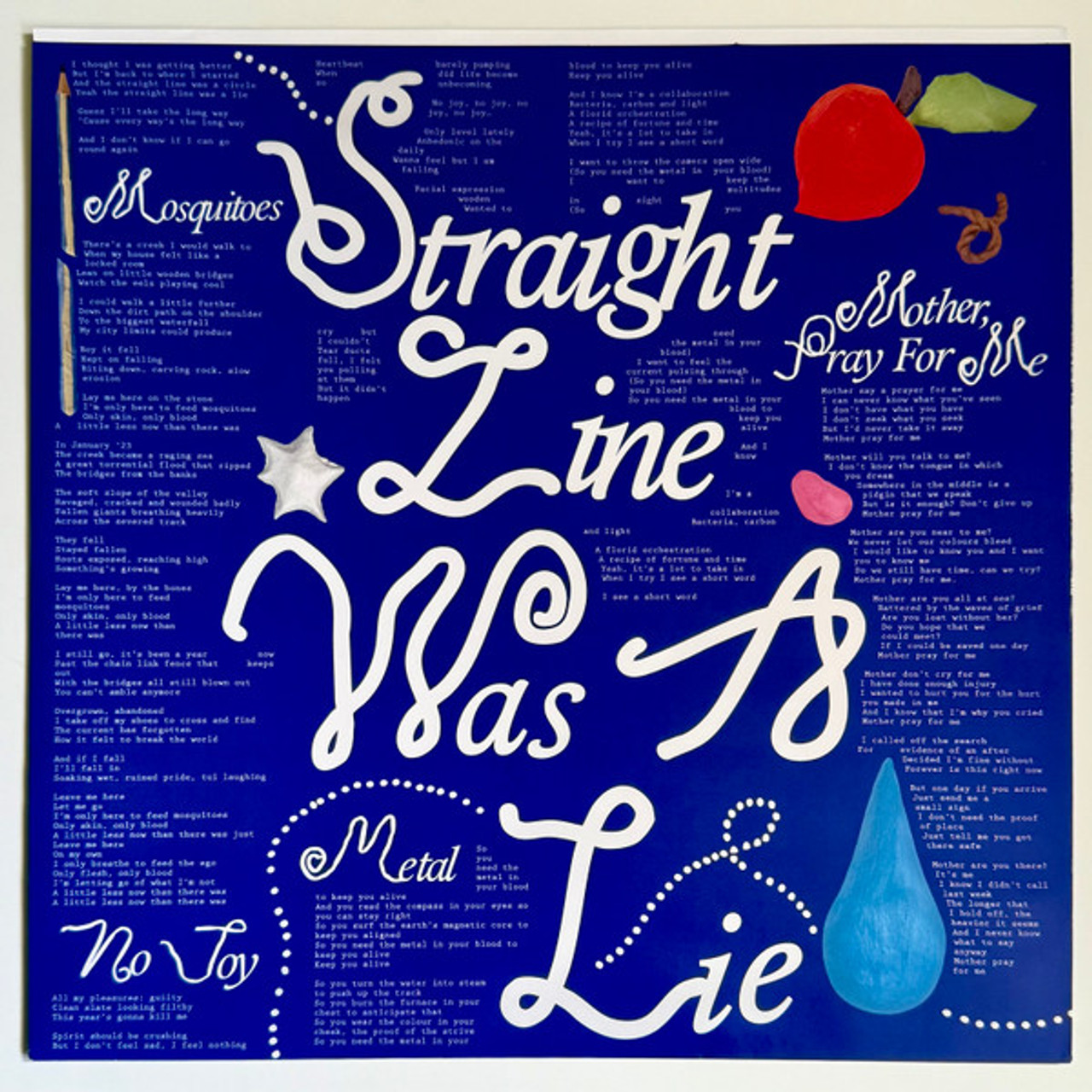
Favorite of 2025: The Beths – Straight Line Was A Lie

Introduction: Why The Beths Matter

The New Zealand indie‑pop quartet The Beths have long stood out for their sharp songwriting, earworm melodies, and the emotional honesty that pulses through their lyrics. With their 2025 album Straight Line Was a Lie, they arrive at a new peak — refined in sound yet deeply raw in sentiment. It’s a record that doesn’t just reaffirm what makes them special; it feels like a rebirth: more considered, more textured, and more vulnerable than ever. As the band enters this next chapter, it’s become increasingly clear that The Beths aren’t just good at what they do — they’re extraordinary.

I want to take a moment and explore how each member’s musical contributions blend to form the band’s signature sound, and how the lyrics on Straight Line Was a Lie carve out an intimate, unsettling, yet hopeful portrait of life, growth, and mental health.

First, a quick refresher on the lineup. The Beths consist of:

  • Elizabeth Stokes – lead vocals, rhythm guitar, main songwriter
  • Jonathan Pearce – lead guitar, backing vocals, producer/engineer (on this record)
  • Benjamin Sinclair – bass guitar, backing vocals
  • Tristan Deck – drums, cymbals and percussion, backing vocals

In past releases, The Beths were already celebrated for their “jangly” guitar pop, shimmering harmonies, and driving rhythm section.  On Straight Line Was a Lie, each member seems to lean more deeply into their strengths, and — crucially — into experimentation.

Elizabeth Stokes remains the heart of the band. Her voice — often conversational, sometimes aching — carries the emotional weight; her lyrical voice is sharper, more introspective, grappling frankly with themes of mental health, existential anxiety, familial ties, self-doubt, and the paradoxes of healing. The songs come from a place of personal upheaval, shaped by her experiences with health struggles, medication, and self‑reflection.

Jonathan Pearce wears dual hats on this record: lead guitarist and producer / engineer / mixer (on most tracks). That shift seems to have given the album a more cohesive, textured sonic palette: guitars (both his lead and Stokes’s rhythm) shimmer, sizzle, crash — sometimes jangly, sometimes atmospheric, sometimes dissonant. On songs like “Take,” the guitar solos ring with a fresh urgency; on “Ark of the Covenant,” guitar lines meld with subtle ambient touches to build something cinematic and haunting.

Benjamin Sinclair’s bass underpins the album with steady, often driving low‑end that grounds even the most introspective or experimental moments. While bass can be underappreciated in guitar‑heavy pop, here it anchors songs like “Take” with a muscular backbone that gives weight to the emotional landscape, and in upbeat numbers it drives the momentum forward, pushing choruses into sing‑along territory. The result is a rhythm section that feels both steady and alive.

Tristan Deck’s drumming and percussion complete the engine. On Straight Line Was a Lie, the drums don’t just keep time — they accentuate mood, shake loose tension, and steer transitions between jubilation and melancholy. Whether it’s propulsive beats on faster tracks or minimal, contemplative rhythms on the quieter ones, Deck’s playing adapts to the emotional terrain without overshadowing it. Backing vocals from Deck and Sinclair add subtle harmonic depth, reinforcing what has always been The Beths’ hallmark: layered vocal harmonies that linger.

Together, these four don’t just play instruments — they channel mood, memory, and meaning. On this record, the result feels less like a “band playing songs” and more like four people collaboratively mapping emotional terrain.

The sound of Straight Line Was a Lie: More than “jangly” pop

One of the defining qualities of The Beths’ earlier albums was that “jangly guitar + power‑pop hooks + emotional honesty” formula — and it worked beautifully. On Straight Line Was a Lie, they keep the hooks, but deepen the textures. The production (led by Pearce) emphasizes space, layering, contrast; songs can shift from bright, chiming pop to darker, atmospheric, even gritty territory. Critics note this album as “bigger, better and more complicated than they’ve ever been.”

The opening track and title song begins with a false start — a spoken “sorry I was thinking about something else” — a move that feels deliberate: it sets the tone for an album preoccupied with interruption, derailment, and return. The lyric “I thought I was getting better / But I’m back to where I started / And the straight line was a circle / Yeah the straight line was a lie” resounds as a central thesis. Life, the record suggests, is not a linear progression but a messy, looping, often contradictory journey.

Meanwhile, tracks like “No Joy” jolt with nervy urgency — the upbeat melody and driving beat bely lyrics that speak to anhedonia and existential stasis: “All my pleasures, guilty / Clean slate looking filthy / This year’s gonna kill me … Spirit should be crushing / But I don’t feel sad, I feel nothing.”

On “Metal,” they give form to something beautiful and strange: a metaphor about being alive as a “collaboration of bacteria, carbon and light,” needing “the metal in your blood to keep you alive.” It’s biological, cosmic, grounded, and dreamlike all at once — marrying emotion, science, and wonder in a simple but powerful package.

There’s also room for quiet minimalism. “Mother, Pray for Me” strips things back: gentle picking, soft vocals, aching longing. It’s a song about complicated family, grief, and generational wounds — and it lands not through bombast but through tender reserve.

Even the album’s final moments — on “Best Laid Plans” — feel bittersweet: jangly guitars and a buoyant rhythm, but implicit in the instrumentation and tone is a sense of unresolved longing, of “unfinished business.” It’s the sound of hope, but also of memory’s weight.

In sum: Straight Line Was a Lie isn’t simply “jangly indie pop with hooks” — it’s more ambitious: emotionally deeper, texturally richer, and willing to lean into shadows as much as light.

Lyrical worlds: Mental health, Memory, and the Myth of Progress

If the musical side is about textures, the lyrical work is about truth. On this record, The Beths — primarily through Stokes’s pen — interrogate themes of mental health, healing, identity, memory, and the uneasy breaks in between. The album’s title succinctly captures its philosophical impulse: that “linear progression is an illusion.” Life doesn’t follow a neat arc; healing does not happen on a straight line.

Much of that perspective comes from Stokes’s own life. In recent years she’s navigated serious health challenges (including a diagnosis with Graves’ disease), anxiety, and the disorienting effects of starting antidepressants for the first time. That upheaval forced a radical shift in how she writes: among other changes, she turned to stream‑of‑consciousness writing on a typewriter, exploring memories and feelings she’d avoided, and forcing herself to reckon with difficult emotions.

That kind of emotional honesty shows up throughout. On “Mosquitoes,” she wanders a creek near her home — a haven when “my house felt like a locked room” — only to find devastation: the same creek turned into a “raging sea” after floods. The song becomes quietly terrifying: an elegy to disappearance, impermanence, and the fragility of refuge.

In “Til My Heart Stops,” there’s a longing for simple embodied pleasures — riding a bike in the rain, flying a kite, dancing — even as the world feels heavy and weightless at once. According to one review, the song, with its unsettling distortion and ghostly atmosphere, “charts the fragility of life itself,” its abrupt ending like a heart’s final beat.

Elsewhere, “Ark of the Covenant” and “Best Laid Plans” explore inner excavation: digging through memory, confronting “fossilised nightmares,” searching for meaning — or closure — in the negative space of the self.

But it’s not purely despair or existential weight. There’s still wry humour, sharp imagery, and defiant tenderness. The need for “metal in your blood” in “Metal” — a call for grounding, resilience, a kind of elemental insistence on life — turns the personal and biological into something poetic and universal.

Taken together, the lyrics on Straight Line Was a Lie don’t just reflect mental health struggles or personal trauma — they interrogate the myth of constant improvement. They suggest healing is messy; growth is circular; humanity is fragile, often contradictory — but still worthy of wonder.

What this album means: Growth, Maturation, and a New Chapter for The Beths

For longtime fans, Straight Line Was a Lie may at first sound familiar: The Beths still write songs that stick in your brain. But this time, there’s a sense of expansion, of maturity, of ambition being reframed with nuance. Production is richer, the emotional stakes higher, and nothing feels simply disposable or background music. This is an album that rewards — demands — close listening.

Critically, the record has been widely praised. On aggregators it earns a strong Metascore, reflecting generally favorable to enthusiastic reviews. Reviewers note the band is “bigger, better and more complicated than they’ve ever been.” Others call it perhaps their “most incisive” album yet, one where existential anxieties and lyrical ambition meet pop hooks and evocative soundscapes.

Moreover, Straight Line Was a Lie feels like a milestone — not just in their discography, but in their artistic evolution. The move to have guitarist Jonathan Pearce handle production and engineering gives the album a more unified sonic identity. The decision by Stokes to overhaul her songwriting method — to face trauma, memory, and illness head‑on — brings a weight and vulnerability previously only hinted at. The whole band seems aligned: playing not just with precision and popcraft, but with emotional honesty.

For listeners, this album offers more than catchy choruses: it offers fellowship. It whispers that you are not alone if you’ve felt lost, stuck, or numb. It suggests that healing is not always about triumphs or tallies of progress, but about maintenance — about showing up, living, feeling, enduring. And it does all that while giving you songs you can dance to, or cry to, or sing loud at a concert.

Conclusion: The Beths as Emotional Architects

In a world that often feels driven by optimization, forward momentum, and constant productivity, Straight Line Was a Lie comes as a quiet, necessary reckoning. It refuses the idea that healing, growth, or life itself must follow a neat, linear trajectory. Instead, The Beths propose a different metaphor: life as cyclical, messy, and ongoing — something to be maintained, revisited, reflected upon, not “completed.”

As a band, The Beths have always been more than the sum of their catchy hooks or jangly guitars. On this album, they feel less like a pop act and more like emotional architects — sculptors of feeling, memory, and existential wonder. Each band member’s contribution is essential — from Stokes’s wrenching lyrics to Pearce’s layered production, from Sinclair’s grounding bass to Deck’s subtle but powerful rhythms.

Straight Line Was a Lie may end up being a soundtrack for an era — an album for when the world feels too fast, too forward, too relentlessly optimistic. It offers instead a different rhythm: patience, honesty, acceptance, and defiance.

If you haven’t listened to it yet — or haven’t listened closely — this is the moment: sit back, headphones on, and let The Beths guide you down the crooked, beautiful trail.

A YTAA Partial List of Album Favorites of 2024

In 2024, the whole idea of picking a “favorite” album has become a weird, near-impossible task. The rise of streaming and electronic releases means thousands of songs and records are loaded onto streaming services. While the music industry continues a myopic focus on a handful of pre-selected artists, even if one is focused on a particular genre, thousands of records are still released annually. So, consider this essay part 1 of a process.

You can’t even hear every album released in a year, let alone listen to it enough to form an attachment. We’re swimming in so many options, flooded with algorithms, data-driven playlists, and music on demand, it’s like trying to spot a needle in a haystack of needles. Is it even possible to have a favorite anymore, or has music become like fast food – consumed and forgotten as quickly as you can hit “skip”?

The sheer volume of albums released across every genre is staggering. Every week feels like a new universe of sound waiting to be explored, each project just another entry in an endless scroll. And even if you could sit down and spend the time with each record, there’s no guarantee it would even stick—music’s lifespan has shrunk. It’s not about being obsessed with one album anymore; it’s about how quickly you can absorb the next wave of songs that everyone is talking about.

Then there’s the issue of context. How do you even judge music anymore when the experience is so fragmented? You might be listening on headphones while juggling a dozen other things, or streaming on a platform that throws random playlists at you every day. Did you even listen to that album, or did it just buzz in the background while you were doomscrolling on Twitter? The very act of consuming music has become disjointed, superficial, almost disposable. And that’s not even to mention how every album is now fighting for attention in a hyper-competitive marketplace, where an artist’s moment of cultural relevance can be over before the album’s out of the top 50.

So yeah, picking a favorite in 2024? It’s almost like picking your favorite slice of sand. In a world where every track is a click away, music’s becoming more about the journey than the destination. It’s not about finding one album that speaks to you; it’s about surviving the endless flood of everything else.

And with that major caveat and due diligence, I still want to share some albums that did resonate with me. Sharing a list of your favorite albums from the year is a declaration of your personal battle with the noise, a way of saying, “This is what mattered to me in this overwhelming, chaotic universe of music.” It’s not about being a gatekeeper or playing curator; it’s about creating a map of your own emotional and sonic landscape. In a world where we’re buried under an avalanche of new releases, these lists are worthy lifelines. They cut through the static and say, “Here, this is what survived, what made the trip worth it.” Because music, like life, needs to be seen and shared. Sure, it’s idiosyncratic and deeply personal, but it is not worthless. It is like one side of an argument, this may mean something to some others who agree but it is still one perspective to be considered. Not truth. Make a case and perhaps other music listeners agree with you and some do not. This is why we prefer the term ‘favorites’ and not ‘Best of.’

So, here we go in no particular order:

Waxahatchee – Tigers Blood

Waxahatchee’s Tigers Blood is at the top of my favorites for the year. A record that feels like a masterclass in songwriting, crafting lyrics, and confessional yet accessible songs. Tigers Blood is an emotionally fierce, raw, and unapologetically beautiful record that feels like the sound of someone finding their own fire again, rising out of the ashes, and realizing they’ve got the guts to burn everything down in the process. Yet maybe what is needed is awareness not anger. From the moment the opening track hits, you know this isn’t some soft, introspective folk record—it’s an album of reckoning, self-discovery, and picking apart the ugly truths you’ve been avoiding from yourself. Katie Crutchfield doesn’t just sing on Tigers Blood—she exhales her soul into every line, every chord, every heartbreaking note that shines with authenticity as powerful as the slide of her compelling and unapologetic accent.

The album pulses with an energy that is somehow both tender and vicious, each track pulling you deeper into her world. Crutchfield’s voice is sharp (when she wants it to be) but vulnerable, cutting through the thick haze of instruments, notably acoustic and electric guitars, piano, and steady drums with a rawness that feels earned, not forced. There’s this magnificent tension between the fragility of the lyrics and the power in the music itself—a constant push-pull between moments of delicate reflection and damn catchy hook-laden catharsis. It’s the sound of someone who has been through the fire and come out the other side not unscathed, but stronger and more alive.

Songs like “3 Sisters”, “Crowbar”, “Bored” and “Right Back to It” (featuring MJ Lenderman) carry this weight of yearning and anger, but with such a beautiful clarity that you can’t help but feel every emotion bubbling up and spilling over. There’s no hiding behind metaphors here—Crutchfield is direct, honest, and relentless. She sings about heartbreak, self-doubt, and the aftermath of it all, but somehow there’s a catharsis in it all, a feeling of release.

Tiger’s Blood is an album of quiet explosions—each song a declaration, a confession, and a battle all rolled into one. The build is worthwhile, the entire time. It’s one of those records that grabs you by the throat, makes you confront your own demons, and leaves you standing on the other side, a little bruised but more whole for it.

Nada Surf – Moon Mirror

Nada Surf’s Moon Mirror is the kind of record that saunters up to you and says ‘Hi There!’ It is an album that wraps itself around your heart before you even know what hit you. It’s a masterclass in rock and roll architecture, sophisticated wordplay, and emotional subtlety, the kind of album that doesn’t need to shout to get your attention, but instead pulls you in with its perfect rock and roll musicianship and depth. This is a band that has spent decades honing their craft, and on Moon Mirror, they capture that perfect balance between indie rock, melancholic pop, and the kind of songwriting that feels true, like it’s been tested by time, pain, and triumph.

From the opening track, it’s clear that Nada Surf isn’t interested in playing the same game everyone else is. There’s a maturity to these songs, a knowing, a sense that they’ve weathered the storm and are now walking through the wreckage with open eyes. The guitars shimmer with an effortless grace, and the drums pulse with a steady, comforting rhythm, like the beat of your own heart when you’ve found peace after the chaos. But it’s Matthew Caws’ voice that really carries the weight here—his delivery is just so damn soothing, yet tinged with enough ache to make you feel every word.

Moon Mirror is full of songs that feel like they’ve been plucked from some kind of twilight zone, the space between dreams and waking. Tracks like “Second Skin”, “In Front of Me Now” and “Losing” are perfect examples of Nada Surf’s ability to create this expansive, emotional atmosphere. It’s not just about big hooks or electrifying guitar solos; it’s about crafting a moment that resonates, a feeling that sticks with you. These are songs that speak to the quiet, fleeting moments of life—the ones that linger in your memory long after they’ve passed — ensconced in the shimmer of power pop.

This isn’t just an album; it’s a world unto itself, and if you let it, Moon Mirror will pull you in and never let go. In an era of disposable music, this is a record that demands your full attention, and damn if it doesn’t make every second of it feel worth it.

The Umbrellas – Fairweather Friend

The Umbrellas’ Fairweather Friend is the sound of youth burned into a perfect snapshot—like the morning sun casting long shadows over an endless summer, yet tinged with the inevitable nostalgia that follows every great moment. There’s an aching sweetness to this album, a bittersweetness that’s as infectious as it is melancholic. The guitars jangle like they’ve been plucked from an old indie rock treasure chest, the kind of sound that drips with influences but never feels like a rip-off. They know their history, but they’re not here to mimic it—they’re here to breathe new life into it, to put their own mark on a genre that’s so often stuck in its own past.

From the first song, you know you’re in for something special. The Umbrellas take the jangly guitar pop we all know and love and mix it with a sense of unpretentious joy. There’s an immediacy in the way the songs unfold, a rush of energy that carries through every riff and melody. But beneath the surface is something deeper—a sense of longing, of impermanence, of trying to make sense of fleeting moments that always seem to slip away just as you’re getting a grip on them.

The band isn’t trying to reinvent the wheel, but they do something far more valuable: they remind you of the feeling that first made you fall in love with music in the first place. Songs like “Three Cheers!”, “Games” and “Goodbye” are drenched in that pure pop perfection, mixing upbeat tempos with lyrics that reflect the uncertainty of relationships, youth, and the fragility of it all. The energy is unmistakable, but it’s also undercut with that quiet sense of resignation that makes Fairweather Friend hit all the harder. The Umbrellas don’t need to be loud, they just need to be honest, and in doing so, they’ve crafted one of the year’s most memorable records.

Jr. Juggernaut – Another Big Explosion

Jr. Juggernault’s Another Big Explosion is the kind of record that punches you in the gut and makes you grateful for the bruises. It’s raw, ferocious, and doesn’t give a damn about rules or your delicate sensibilities. This isn’t about slick production or polished hooks—it’s about chaos, energy, and soul-scorching urgency. The guitars are jagged, the drums are a goddamn wrecking ball, and Juggernault’s vocals howl like a man/men possessed. The is a great guitar record. And we sure could use more of those. Every track feels like it’s on the verge of completely falling apart, but that’s the magic. This is music that doesn’t ask for your attention; it demands it. And you give it.

Palm Ghosts – Facades

Palm Ghosts’ Facades is a glorious, hypnotic propulsive attack of an album that makes you feel both like you’re drifting through a dream and stumbling through the wreckage of something you can’t quite recall. This album, a combination of EPs is a declaration. It’s like the band took everything that was ever great about post-punk, new wave, and shoegaze and smashed it all together, yet somehow came out sounding fresh, urgent, and dangerously alive. The shimmering guitars and languid basslines swirl in and out, creating this thick, intoxicating atmosphere that makes you want to dive deeper into the murk but also leaves you gasping for air.

The vocals are equal parts ethereal and gritty—softly crooning, yet laden with desperation. They balance somewhere between hope and despair, almost like the singer is talking you down from the edge of a nervous breakdown. And just when you think you’ve pinned the band down, Facades hits you with a groove that’s suddenly danceable, only to drag you back into darker waters. It’s a record that doesn’t do anything easy, and that’s what makes it remarkable. Palm Ghosts know their sound isn’t for everyone (even thought it really should be), but damn if they don’t craft an atmosphere so immersive you feel it in your bones. This isn’t just music—it’s an experience.

The Cure – Songs of A Lost World

Some returns are so welcome, and so anticipated that you cannot possibly measure up to the hype. And then there are those come-back records that remind you why you fell in love with the band in the first place. The Cure’s Songs of a Lost World is a revelation—a reminder that even in a world of endless streaming playlists, some bands can still shake you to your core with the kind of haunting melancholy that only they can conjure. It’s not just another nostalgia trip for the goth kids of the ‘80s; it’s something deeper, darker, and far more timeless. This record pulses with a yearning that hits like a gut punch. It’s a meditation on loss, on the passage of time, on the things that slip through your fingers and vanish into the ether.

Robert Smith’s voice is still as fragile and aching as ever, but now there’s a weariness, a quiet resignation that adds layers to every lyric. The guitars shimmer and wail in that unmistakable Cure way, but there’s an undercurrent of menace here—songs that start as sweet, glistening reflections of sorrow but unravel into something far more unsettling. The rhythms lurch and sway, dragging you through every emotional twist and turn. What makes Songs of a Lost World so vital is its refusal to rest on past laurels. It’s a record that doesn’t scream for attention but instead invites you in, all while leaving you with that delicious, bittersweet ache. It’s the Cure at their finest, and it’s still damn intoxicating.

Wussy – Cincinnati, Ohio

Wussy’s Cincinnati, Ohio is the kind of record you want to keep in your back pocket, the one you pull out at 2 a.m. when the world’s spinning just a little too fast and you need something to ground you. The album is rough around the edges, but that’s what makes it so damn beautiful. It’s that perfect mix of grit and heartache that’s become the secret weapon in the indie rock arsenal, and Wussy have honed it into something that sounds like both an escape and a homecoming.

From the opening track, you’re hit with a sound that’s immediately familiar and completely original. There’s a certain timelessness to it, a blend of alt-country, grunge, and that unmistakable Midwestern soul. It’s the sound of a band who’s spent years working through their demons and now, finally, have the scars to show for it.

The songwriting is what elevates Cincinnati, Ohio from good to great. Each track feels like it’s been lived in, like the band has been inside these stories, these struggles, for years. Whether it’s the punchy guitars or the way the vocals intertwine—especially the male-female harmonies—it all just clicks into place. Wussy doesn’t rely on bombast or big hooks; they know that sometimes, the most powerful moments come in the quiet, in the spaces between the noise.

This isn’t a record you just listen to; it’s a record you feel. It’s the sound of a band that’s found its voice and isn’t afraid to let it crack, shout, or whisper its way through every song. Wussy’s Cincinnati, Ohio is an honest, unpretentious masterpiece, and in 2024, that’s worth celebrating.

Tamar Berk – Good Times for a Change

Tamar Berk’s Good Times for a Change is one of those albums that hits in just the right way. Berk has released some of the finest indie rock records of the past few years. If there was any justice in the musical world, her talent would be recognized and celebrated by all. Yeah, that might read like hyperbole but go listen to Berk’s last few records and you will know it to be true. Good Times for a Change is indie rock at its finest—meaningful, emotionally vulnerable, and raw, yet unflinchingly melodic. Berk’s latest record is simply overflowing the brim with a kind of honesty that feels like a breath of fresh air in a world of hollow, algorithmic pop. From the opening chords, Berk grabs you and doesn’t let go. The guitars vibrate with just the right amount of fuzz, the drums crash with a sense of urgency, and Berk’s voice—oh, that voice—sounds like she’s been singing for years in dim-lit rooms full of cigarette smoke and spilled beer. It’s full of heartache, but there’s a joy in it, too, like finding solace in a song after the world’s been unkind.

The album’s title is perfect because this is an album about change—change in yourself, in the world, in relationships—and it hits that balance of hopefulness and disillusionment that so many fail at. Tracks like “Good Impression” and “Artful Dodger” are power pop rock confessionals, but they’re not angry—they’re just real. Berk doesn’t pretend to have all the answers, but she knows exactly how to channel confusion, frustration, and moments of fleeting joy into something visceral and unforgettable. There’s no grandiose pretension here, just songs that feel like they matter.

What’s so remarkable about Good Times for a Change is how effortlessly it sneaks under your skin. It’s the kind of record that becomes your companion through sleepless nights, the soundtrack to your own quiet rebellion. Tamar Berk doesn’t need to shout to make a statement—she’s already made it with every note. This is an album that sticks the landing.

American Werewolf Academy – Beyond Lost Days

American Werewolf Academy’s Beyond Lost Days is a record that howls at the moon and drags you right along with it. It’s messy, it’s urgent, it’s every bit the cathartic ride you didn’t know you needed. From the first crashing chords, you know this isn’t going to be some polished indie affair—it’s the raw energy of a band that’s living in the music, not just playing it. The guitars rip with an intensity that borders on unhinged, yet every track carries this feeling of control—like they’ve found a way to channel their chaos into something purposefully beautiful.

The vocals are an attack, somewhere between a howl of frustration and a cry for freedom. There’s a defiance in every word, and you can’t help but get swept up in it. The rhythm section pounds away, relentless, like it’s pushing against something bigger, something unknowable. And the lyrics? Well, they don’t come easy, but they’re worth deciphering. Beyond Lost Days is a record about searching, about finding meaning in a world that seems to run on autopilot.

What makes this album so gripping is its honesty. It’s not afraid to be ugly, but somehow, that’s where its beauty lies. American Werewolf Academy doesn’t just play rock music—they live it, and they make you feel every second. This is a record that demands attention, and damn if it doesn’t deserve it.

Jeremy Porter – Dynamite Alley

Jeremy Porter’s Dynamite Alley is the kind of album that grabs you by the collar and says, “Wake up!” It’s a swaggering, heart-on-sleeve dose of Americana-infused rock ‘n’ roll that doesn’t pretend to be anything it’s not—there’s no smoke and mirrors here, just straight-ahead songs about life, love, and the endless grind. It’s gritty, it’s raw, and it’s as real as the grease under your fingernails after a long day of work. Porter isn’t out to impress you with fancy tricks or studio wizardry. No, he’s here to kick your ass with songs that feel like they’ve been lived in, songs that make you remember what it’s like to feel alive.

The album opens with a bang, a combination of dirty guitar riffs and that unmistakable punk-meets-Americana energy. Porter’s voice—rough around the edges but smooth enough to catch your ear—sells every word with a sense of urgency. Tracks like “Big Spender” and “I Don’t Want to Break Your Heart” burst with an energy that’s impossible to ignore. It’s the kind of music you want to hear blaring from the jukebox in a smoky dive bar, the kind that makes you want to crack open a beer and sing along.

But don’t mistake this for self-indulgent country or down-on-your-luck rock and roll. There’s depth here. Dynamite Alley is about reckoning with your mistakes, growing up, and facing down the tough times. It’s not just a collection of songs—it’s an experience, one that you don’t just listen to, you live it. Jeremy Porter proves here that sometimes the simplest rock ‘n’ roll is the most enduring. This album is a hell of a ride.

Assistant – Certain Memories

Assistant’s Certain Memories is the kind of album that feels like a revelation, not because it’s flashy or groundbreaking, but because it’s honest in a way that most bands can’t even imagine. This is a record that grabs you by the heart and gives it a good shake. From the first track, you’re thrown into a landscape of wistful reflection and emotional complexity. The guitars shimmer like fading stars, the drums pulse like a heartbeat, and the vocals—oh man, the vocals—are a raw, aching reminder that music is about feeling, not just technique.

There’s a subtle tension in these songs, like the whole album is held together by the thin thread of memory. Assistant doesn’t need to throw a bunch of noise at you to make you feel something. Instead, they build these slow-burning, intricate soundscapes that stick with you long after the last note fades. Tracks like “My Phone Began to Ring” and “Overwhelming” reveal a band not interested in grand gestures, but in those quiet, fleeting moments that make up a life. This isn’t an album for the casual listener—this is the kind of record that demands your full attention, the kind you put on when you need to work through something when you need to connect with your own memories.

What makes Certain Memories so powerful is its emotional restraint. It’s a meditation on loss, time, and those little moments you can never quite forget. It’s the sound of a band that isn’t trying to impress you—they’re just trying to make you feel the pain and the hurt that we surround ourselves with and try not to drown in it. And in that, Assistant has succeeded in a way most albums can’t touch.

mxmtoon – Liminal Space

mxmtoon’s Liminal Space is a haunting record, the kind of album that creeps up on you with its delicate, almost fragile beauty, yet has a resonance that lingers long after the final track fades. The thing about this album is that it doesn’t scream for attention—it whispers and invites you into its world. You can almost hear the vulnerability in every note, the raw honesty in every lyric, as if mxmtoon is letting you peek behind the curtain of her mind, one soft melody at a time. It’s both an exploration of the self and an attempt to make sense of the chaos surrounding us.

There’s a certain melancholy that pervades Liminal Space, but it’s not the kind that crushes you. Instead, it’s the kind of melancholy that comforts you, that makes you feel like you’re not alone in your own internal mess. The production is minimal but powerful—simple arrangements that leave plenty of space for her voice to shine through. mxmtoon doesn’t need to rely on fancy effects or flashy instrumentation; her voice is a raw, unfiltered force that captures every bit of the longing, the doubt, and the quiet hope that infuses these songs with a whisper.

Tracks like “dramatic escape” and “passenger side” feel like whispered confessions, full of wonder and insecurity, like she’s trying to make sense of this strange, liminal phase she’s in. The whole album is a journey through a transitional space, where you’re not quite sure who you are or where you’re going, but you know that, somehow, the act of going through it matters.

Liminal Space isn’t just an album; it’s an invitation to sit with your feelings, to lean into the uncertainty. And in a world that moves too fast, that’s something we could all use more of.

Some favorite re-releases

Re-releases—yeah, they’re a cash grab for labels, but every so often, one comes along that makes you realize why we ever needed the song file, the vinyl, cassettes, or CDs in the first place. These aren’t just remasters; they’re time capsules that blast you into the past, forcing you to reckon with that pure, unfiltered emotional chaos you felt the first time you heard a record that changed your life. Take a great album, throw in unreleased tracks, remixes, liner notes, and a couple of live performances, and you’re not just hearing it again—you’re hearing more of it, from angles you never thought about before.

Think about it: Exile on Main St. with its dusty bonus cuts, or an album like Electric Ladyland, which becomes a new experience every time you dive into the bonus material. Those “special editions” that seem like a cash grab end up being roadmaps to understanding an album’s true genius. They’re not just nostalgia—they’re revelations, shedding light on the songs you thought you knew and making you hear them in a way that makes them feel like they never left.

Yeah, re-releases can be a racket. But when they’re done right, they turn a record you’ve played a thousand times into something new, something worth loving all over again. And sometimes, that’s exactly what you need. For me, there were a few very special re-releases in 2024 that I want to talk about.

The English Beat – Special Beat Service

The re-release of Special Beat Service is one of those glorious moments where nostalgia and revelation collide. The English Beat’s 1982 album has always been an overlooked gem in the ska-pop universe, and this expanded edition digs deep into the soul of a record that deserved more attention back then—and deserves even more now. Sure, it’s easy to dismiss them as part of the second wave of ska, lumping them in with the whole “Two-Tone” movement, but Special Beat Service is far more than just catchy hooks and horn sections. It’s a perfect snapshot of a band that could juggle upbeat, infectious rhythms with political edge and heartfelt sincerity, all without ever sounding too serious or smug.

The bonus tracks here are the real treat: unreleased demos, live cuts, and extended mixes that shed light on the studio experimentation that went into making this album tick. You hear the rawness, the groove, the soul in these outtakes, and you realize how much was left on the cutting room floor. But even the main tracks still feel fresh, urgent, and timeless. The mix of ska, punk, and new wave is an infectious cocktail of joy, and this re-release proves that the English Beat wasn’t just another band—they were a moment and that deserves to be remembered.

The Tragically Hip – Up To Here

The Tragically Hip’s Up To Here re-release is a full celebration of the raw, unfiltered power this band unleashed on an unsuspecting world in 1989. Let’s not kid ourselves—Up To Here isn’t just a debut album; it’s a statement. It’s one of those records that captures the spirit of a time and place but also transcends it with something deeply, hauntingly human. The Hip were never just another alt-rock band—they were Canada’s answer to what it means to feel rock ‘n’ roll in your bones.

The re-release pulls you back into the band’s early magic, with live tracks, demos, and studio outtakes that show how raw the whole thing really was. Sure, the band eventually became Canada’s band, but here, on Up To Here, you can hear them just on the cusp, still hungry, still working out who they were. Gord Downie’s voice is pure fire—gritty, passionate, and more alive than a lot of the bands that were hyped up in the same era. The way he intertwines cryptic storytelling with rock swagger is unmatched.

What makes this re-release so glorious is how it reminds you that Up To Here isn’t just nostalgia; it’s essential. The Hip’s spirit is still alive, and this record proves they were always ahead of the curve.

Thanks for reading!

Alright, if you’ve stuck with me this long, I owe you a drink—or at least a fist bump. I know I’ve thrown a lot of words your way, maybe too many, but that’s the thing with music: it demands the kind of attention that doesn’t always come easy. So, if you’ve waded through all this, through the ranting and the raving, through the digressions and the moments of pure, unbridled nonsense, I salute you. We’re all just trying to make sense of the chaos, and hell, sometimes it takes a little longer to get there. Thanks for hanging in. More thoughts on favorite albums and songs from this year are coming your way soon.

11 Questions with… Given Names

Happy New Year to everyone! Welcome to 2024!

The new year opens with the return of our 11 Questions with… column. Given Names is an exciting new project from Dr. J’s home state of Minnesota. That state has always been home to thrilling music such as The Replacements, Husker Du, Soul Asylum, Prince, Semisonic, Babe in Toyland, The Jayhawks, The Suburbs, and many more.

Given Names is a group of friends who create music that combines elements of indie, rock, dream pop, and power pop, with hints of synth and dance. The group is an exciting indie pop quartet based in Mankato and Minneapolis, featuring Laura Schultz (lead vocals, rhythm guitar), Meghan Irwin (synth, backing vocals), Michelle Roche (drums, backing vocals), and Mandy Wirig (lead guitar, backing vocals). In 2023, they released their debut single, “Makin’ Eyes’ last year. It is a song that channels their influences while incorporating their distinctive musical vision. It is also one of our favorite singles from this past year.

Given Names creates a swirling yet solid indie dream pop that encapsulates the ethereal essence of dreams through a distinctly feminine lens. It is a musical realm where the boundaries between reality and imagination blur, and emotions cascade in a surreal mix of sound. The musicians collaborate to craft a sonic dreamscape that is both otherworldly and intimately connected to the intricacies of experience. It is real.

Dream pop is often characterized by its atmospheric soundscapes and lush melodies, sound becomes a canvas for these artistic collaborations to explore themes of loss, love, empowerment, and self-discovery. The almost ethereal vocals, layered and harmonized, transport listeners into a transcendent-like state where time seems to slow down, and emotions are amplified. The dreamy quality of the music is a manifestation of the artists’ collective desire to create a space that reflects the intricacies of the psyche.

Lyrically, ‘Makin Eyes’ delves into introspective narratives that navigate the complexities of relationships, self-realization, connection, and the pursuit of one’s dreams. Themes of resilience and empowerment seem to subtly weave through the verses, creating a tapestry of emotions that resonate with listeners on a deeply personal level.

The collaborative nature of Given Names fosters a bond among the artists involved, each contributing a unique perspective to the collective soundscape. This collaboration extends beyond the music itself, influencing the visuals, single art, and live performances. The result is a holistic artistic expression that celebrates the diversity of artists’ voices and experiences. As dreamy all-women-created power pop continues to evolve, it not only pushes the boundaries of musical exploration but also challenges preconceived notions about femininity in the music industry. It remembers and celebrates the creative prowess of women in shaping the sonic landscapes of sonic dreams and emotions, inviting listeners to immerse themselves in a world where the line between reality and reverie is beautifully blurred.

We contacted the band and Laura and Mandy kindly answered our questions for this column (LS: Laura Schultz; MW: Mandy Wirig).

Dr. J: What can you share with us about when and how you started writing music?

LS: I started writing music with a good friend, Laura MacDonald, in high school. She and I wrote songs about strange dreams we had or our World History Teacher, (some lyrics were “Mr. Schnieder, you’re a really cool guy. In World History, you taught us to ask why”). I started doing it more seriously in undergrad in Oshkosh, WI, where I played with some absolutely amazing musicians and friends.

MW: I started writing music in high school. I began playing guitar at thirteen and was in my first band, a punk band, at 16-17. I’ve always been influenced by singer/songwriters and the very melody-driven sounds of the sixties, particularly The Beatles and McCartney, and that influence can be found in almost all of my guitar parts.

Dr. J: What first led to your recording music? How do you approach production?

LS: I see recording as a snapshot of a song in a moment. It may not be how we always perform the song, but it is representative of that moment, with those players and resources that we had at the time. I think of a producer as an editor, someone who can look more objectively at the song and make suggestions, or provide an outside perspective that we might not have been able to access, since we are closer to the song itself.

Dr. J: ‘Makin Eyes’ is your most recent music, what led to the making of that song? What were the main influences on your recording this song?

LS: From the writing perspective, almost all of my songs are written the same way I wrote them with my high school friend, Laura. I free-write a full page of words, careful not to judge them as they come out, not thinking of them as lyrics but just as phrases or strings of words, then I go back and circle words or phrases I like, then I figure out how they all make sense together. The music comes last for me, but it comes easiest for me after I have lyrics.

MW: My love of melody is what inspired the main guitar riff in the song. I’ve always loved how “hummable” George Harrison’s guitar solos are, and how prominent melodic guitar work is in so much of the British Invasion and Power Pop songs that I love. I wanted a lead guitar part that could stand on its own as a melody while still incorporating that shimmery, jangly sound.

Dr. J: The song ‘Makin Eyes’ seems to capture a remarkable constellation of musical influences. The song seems to have an ‘80s pop feel. Is that a correct interpretation? If that is correct, did you intend to create a song that connects to that style? If that is not correct, how would you describe the feeling of the song?

LS: Well thank you! I think you can interpret the song however you like! ’80s pop feel sounds good to me! I try not to think about what style I’m writing songs in, just kind of letting the song ask for what it needs.

MW: I think it definitely hearkens back to bands like The Go-Gos and The Bangles, who themselves were influenced by a lot of Power Pop and earlier styles of music, and I love that you’ve grouped “Makin Eyes” in that category.

Dr. J: How did the song ‘Makin Eyes’ come together musically for you?

MW: Laura is our principal songwriter, and she brought the lyrics and chords to us shortly after I joined the band, so this is one of the first songs that was a true full-band collaboration for us. Within two weeks of our first rehearsal, I had brought the song home and developed what became the signature guitar riff, and the song has really fleshed out during the last couple of years as we’ve continued to perform it live. To see how it’s evolved into the multi-tracked studio version with all of its jangle and shimmer has been really gratifying.

Dr. J: Where do you often derive inspiration to make music?

LS: I think of my lyrics as a sort of amalgamation of what is happening in my life, the way I am consciously or unconsciously feeling about things; the worries or thrills or boredoms of everyday life. I think of songs as a container for my present moment experience.

MW: I’m also a visual artist in addition to a musician, and each medium has always influenced the other. I also derive inspiration from surrounding myself with art of all types—the books I read, the music I listen to, the films I watch, the events I attend. And as cliche as it sounds, there’s nothing quite like a hot shower, a weird dream, or boredom to spark an idea that can be scribbled down for creation.

Dr. J: What is next for you musically? How would you describe your thoughts at this point for your next project or release?

MW: We’re currently in the process of finishing up our first album and getting ready to choose our second single for release. The plan is to get those squared away, and then to start performing more often, hopefully expanding the areas we’re booking shows in beyond our southern Minnesota roots.

Dr. J: How would you describe the music that you create? How has that process evolved or changed over time (especially as you think about your journey in the last few years)?

MW: We describe the music we create as Indie Pop, which is a pretty broad category in and of itself. We originally began as a four-piece with a synth player, and that synth-heavy ‘80s influence is still prevalent in our work, but we also include influences like the Velvet Underground, Low, and reverb-heavy guitar work from the mid- to late-‘60s.

Dr. J: What is your favorite song to perform live? What is your favorite song to perform in general? What makes that song a current favorite in your performances?

MW: My personal favorite is “Game Was Rigged.” It’s a story of love gone wrong set to a bouncy melody that’s impossible not to dance to when you’re playing it.

Dr. J: What is one message you would hope that listeners find in ‘Makin Eyes’?

LS: Honestly what first comes to mind is that I’m interested in narrowing the gap between performer and audience member. I want people to feel as though they could write a song too, they could perform it, they could record it! If it’s something that inspires you, please let it! Let’s all make things.

Dr. J: a musician, how are you adapting to the challenges of creating music? What are your biggest challenges to creating music?

MW: We’ve got a somewhat unique situation where we don’t all live in the same location anymore, with Laura and Michelle living in Mankato while I’ve moved almost an hour-and-a-half away to Minneapolis. Things like practices and recording sessions definitely need to be planned out pretty well in advance to
accommodate this. We’re also three very busy women juggling full-time careers in addition to the band—I’m an artist, teaching artist, and gallery owner, Laura is a social worker, and Michelle is a full-time musician and music teacher who plays in several groups—which can make it challenging to not only coordinate our schedules, but also to make time for things like social media and finding new venues to perform.

We want to extend our sincere gratitude to Given Names and especially Laura and Mandy for answering our questions and continuing to make some really excellent music! Click on the links below the article to visit their social media or to listen to the song that we discussed! If any musicians or artists would like to participate in future ’11 Questions with…’ columns, please feel free to email us at drjytaa@gmail.com. All photos and images courtesy of Given Names.

Bandcamp  Instagram  YouTube

Faves of 2023: Van Plating – Orange Blossom Child

In November, we wrote a review of Van Plating’s excellent “Orange Blossom Child.” The record is not only one of our favorites of 2023 but carries an important legacy forward. Honestly, that review still expresses some of the reasons that her record spoke to us here at Your Tuesday Afternoon Alternative. It was a real, authentic record made by a true original.

Authentic country music is more than just a genre; it’s a soulful narrative that weaves together the threads of everyday life, love, heartbreak, challenge and the “ups and downs” and occasional sideways glance of the anything but simple, human experience. Rooted in the rural landscapes of America but over time about far more than bucolic existence, this musical genre emerged from the folk traditions of the 19th century and has since evolved into a distinct and influential form of artistic expression while exploring the problems of place. One can become too rooted. However, for Van Plating that is not a dilemma without solution. Her music answers the mysteries of place and self in a language that does not speak down to the listener. That authentic puzzle solving is part of what makes Van Plating’s music so damn powerful. Through this record we come to see ourselves and wonder about the places, spaces and home that made us.

At its core, authentic country music resonates with credible, truthful and genuine storytelling. The lyrics often mirror the struggles and triumphs of ordinary people, reflecting the joys and sorrows of life. Artists like Hank Williams, Johnny Cash, Willie Nelson, Loretta Lynn, and Dolly Parton have become iconic figures, not only for their musical talents but also for their ability to capture the essence of the human condition through their songs. And equally important is the characteristic of real country music that all too often becomes a punch line of a bad joke — a sense of place. This idea of place, town, community, neighborhood, or area becomes part of the music. Whether the lyric is focused on an effort to escape the clutches of being held down because of where you come from or a reflection of the myriad influences of the place you once called home. Those experiences — in that place — made you who and what you are as a person. Home is inescapable because it lives within you. These musicians, and we count Van Plating among them, have played a pivotal role in shaping of modern country music and contributing to its enduring appeal.

One hallmark of authentic country music is its connection to the roots of lived experience and culture. With influences from folk, blues, and gospel music, country songs tell the stories of hardworking individuals, the beauty of the countryside, and the complexities of human relationships. The twang of a steel guitar, the melancholy of a fiddle, and the honesty in the lyrics create a unique and evocative sound that speaks to the soul.

Furthermore, authentic country music serves as a reflection of one’s cultural identity. It often embraces regional nuances, providing a snapshot of life in that place, that home. Whether it’s the dusty trails of the Southwest, the rolling hills of Appalachia, or the vast expanses of the Midwest, country music paints a vivid picture of the landscapes that have shaped its artists and their stories.

In a world where musical genres continuously evolve, authentic country music stands as a timeless sacrament to the enduring power of storytelling through song. Its ability to connect with listeners on a deeply personal level transcends generations, making it a cherished and enduring form of musical expression. As long as there are stories to tell and emotions to convey, authentic country music will continue to resonate, carrying the rich tradition of music into the future. And Van Plating with her spirited and vibrant “Orange Blossom Child” carries that tradition forward.