Favorites of 2025: Tamar Berk – ‘ocd’

Why Tamar Berk deserves your attention

Tamar Berk is one of those rare musical talents who not only pour raw emotion into her songs but also writes, records, and produces them herself — forging a sound world that’s intensely personal, lo-fi‑grounded, and vivid. On her new 2025 album ocd, she delivers what many consider her most ambitious and emotionally immersive work yet: a reverb-soaked journey into looping thoughts, obsessions, and the restless inner life.

Raised on classical piano and early Disney soundtracks, Berk eventually gravitated toward influences like The Beatles, David Bowie, Liz Phair, and Elliott Smith — a mix that shaped her instinct for melody, emotional catharsis, and lyrical truth. What she makes now, though, is something singular: indie rock and dream‑pop fused with DIY grit, emotional honesty, and the courage to bare her inner world.

In what follows, I want to explore Tamar Berk’s strengths as a musician — her multi-instrumentalism, her knack for mood and texture — and how on ocd she channels overthinking, vulnerability, and occasional panic into songs that feel like listening to someone thinking aloud.

Multi‑layered musician: instruments, production & power of solo control

One of the most striking aspects of Tamar Berk’s work is how much of it she controls herself. On ocd, she handles not only vocals and songwriting but also guitars, piano, synths, Wurlitzer, organ, bass, strings, programming, percussion — often layering sounds to produce something both intimate and richly textured.

That DIY ethos gives her music a special honesty. Because she’s involved in nearly every aspect, nothing feels over-polished or disingenuous — the distortions, reverb, and ambient murkiness all serve the truth of her emotional landscape. The result: a sound that lingers, unsettles, and stays with you.

In musical terms, that means ocd isn’t strictly an indie‑pop or alt‑rock album. It’s more like a fever dream — alternately noisy and delicate, sometimes urgent, sometimes hazy. The instrumentation shifts fluidly: thick, fuzzy guitars and sparse, somber piano; ghostly synths and grounded bass; literal sonic loops echoing the mental loops the lyrics describe.

At times, Berk leans into distortion and echo to evoke disorientation; at others, she strips things down to nothing but light keys, soft vocals, and a sense of fragile introspection. That dynamic — the back‑and‑forth between chaos and calm — is exactly what gives ocd its power.

Lyrical honesty: overthinking, mental spirals, and the beauty inside the mess

If the music gives you the frame, the lyrics are the beating heart of ocd. This is an album that wears its anxieties on its sleeve — about obsession, memory, identity, self-doubt, longing, and the loops of anxiety and overthinking. As Berk puts it, she called the album ocd because she “lives in loops. I overthink everything. But this record helped me make a little bit of beautiful sense out of that.”

The lead single ‘Stay Close By’ sets the tone for the album: dreamy guitars and soft vocals weave around lyrics of indecision, longing, and inertia — “I don’t know why I can’t reply on time, or can’t make up my mind,” she sings. The result feels like a confession whispered in a quiet room: vulnerable, real, and ache-filled.

But not all of ocd wallows plaintively. The title track ocd itself confronts mental spirals head‑on, repeating lines like “I got OCD … over and over and over,” rendering the relentlessness of intrusive thoughts in musical form: looping, dizzying, claustrophobic.

Elsewhere, Berk’s songwriting explores memory, regret, longing, and desire for escape — or at least some kind of emotional catharsis. The songs move between bleak introspection and moments of fragile hope, capturing that tension many of us live with: the part that fears and ruminates, and the part that still wants connection, meaning, or release. As one summary puts it, ocd “invites listeners into her inner thoughts” — messy, complicated, yet somehow familiar and human.

A sonic and emotional arc: ocd as a map of inner turbulence

What makes ocd compelling — and perhaps unique in the indie scene this year — is how well its musical and lyrical elements align to create an overall arc: it feels less like a collection of songs and more like a single, immersive experience. Berk seems to want to draw listeners into her mind, step by step, track by track.

The album shifts between dream‑pop haze and rock‑tinged fervor, between introspective hush and emotional outburst. That dynamic — of contrast and layering — mirrors the experience of anxiety, overthinking, and identity searching. On one track you might be floating in soft guitars and wistful melodies; on the next you’re confronting distortion, repetition, and confessional urgency.

That tonal range reflects the alternation many of us know well: memory and regret, hope and despair, the attempt to control thoughts and the surrender when it becomes too much. In that sense, ocd isn’t just music — it’s a kind of emotional landscape, felt in sound as much as in words.

Importantly, Berk doesn’t pretend to provide tidy resolutions. Her voice doesn’t promise that overthinking will end, or that clarity will come. Instead, she offers catharsis, empathy, and solidarity — a map for all the tangled thoughts, the dark nights, the loops. It’s messy. It’s real. But it’s shared.

Why ocd matters as growth

For longtime followers of Tamar Berk, ocd may feel familiar in some ways: there are still fuzzy guitars, melodic hooks, and a DIY spirit. But this album marks a new level of ambition and vulnerability. As one review noted, this is her “most personal and intense work yet.”

Her growth is obvious — not just as a songwriter, but as a producer and composer. The fact that she plays multiple instruments, layers them herself, and co-produces the record gives ocd a cohesiveness and authenticity that few albums achieve. The emotional weight doesn’t come across as polished or packaged — it feels lived, raw, and human.

Moreover, at a time when mental health, overthinking, and the pressures of modern life feel increasingly pervasive, ocd offers something rare: a mirror that’s honest but compassionate. It doesn’t romanticize anxiety; it doesn’t idealize healing. It simply says: this is what it feels like. And maybe that’s enough — maybe that kind of honesty is exactly what art should do.

In that sense, Tamar Berk isn’t just writing songs — she’s doing what few musicians do: giving voice to inner chaos, shaping it into melody and texture, and inviting you to sit with it all. ocd isn’t easy listening. It’s hard, sometimes disquieting. But it’s real. And in its messy honesty lies its power.

Final thoughts: Tamar Berk as a voice for the over‑thinkers, the dreamers, the stranded

There’s a long tradition in music of turning pain into beauty, chaos into catharsis — but few artists do it with as much rawness, intimacy, and creative control as Tamar Berk. On ocd, she doesn’t just invite you in: she opens the door, hands you something fragile, and says, “this is what it feels like.”

That willingness to expose uncertainty, loops of thought, doubt — is an act of bravery. And as a listener, you’re not just a spectator: you become a companion in the spirals. Maybe you don’t walk out with answers. But you walk out with somewhere to begin.

If you’ve ever felt your thoughts spin too fast, if you’ve ever felt stuck in loops of regret or longing — ocd is for you. And even if you haven’t, this record might just show you what you never knew you could feel so deeply: the strange beauty of overthinking — and the power of turning it into art.

Give it a listen. Turn the lights down. And let Tamar Berk lead you through the loops.

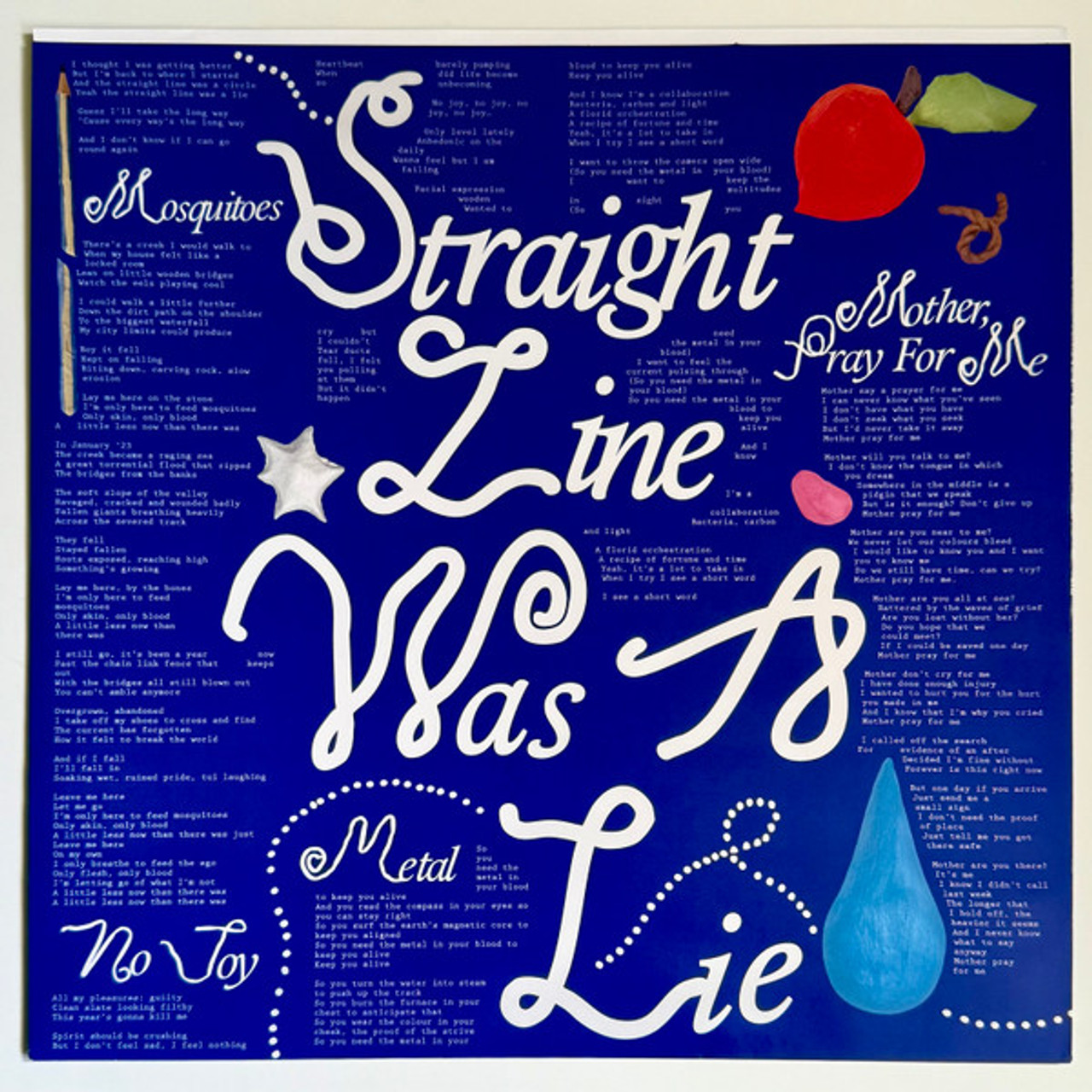
Favorite of 2025: The Beths – Straight Line Was A Lie

Introduction: Why The Beths Matter

The New Zealand indie‑pop quartet The Beths have long stood out for their sharp songwriting, earworm melodies, and the emotional honesty that pulses through their lyrics. With their 2025 album Straight Line Was a Lie, they arrive at a new peak — refined in sound yet deeply raw in sentiment. It’s a record that doesn’t just reaffirm what makes them special; it feels like a rebirth: more considered, more textured, and more vulnerable than ever. As the band enters this next chapter, it’s become increasingly clear that The Beths aren’t just good at what they do — they’re extraordinary.

I want to take a moment and explore how each member’s musical contributions blend to form the band’s signature sound, and how the lyrics on Straight Line Was a Lie carve out an intimate, unsettling, yet hopeful portrait of life, growth, and mental health.

First, a quick refresher on the lineup. The Beths consist of:

  • Elizabeth Stokes – lead vocals, rhythm guitar, main songwriter
  • Jonathan Pearce – lead guitar, backing vocals, producer/engineer (on this record)
  • Benjamin Sinclair – bass guitar, backing vocals
  • Tristan Deck – drums, cymbals and percussion, backing vocals

In past releases, The Beths were already celebrated for their “jangly” guitar pop, shimmering harmonies, and driving rhythm section.  On Straight Line Was a Lie, each member seems to lean more deeply into their strengths, and — crucially — into experimentation.

Elizabeth Stokes remains the heart of the band. Her voice — often conversational, sometimes aching — carries the emotional weight; her lyrical voice is sharper, more introspective, grappling frankly with themes of mental health, existential anxiety, familial ties, self-doubt, and the paradoxes of healing. The songs come from a place of personal upheaval, shaped by her experiences with health struggles, medication, and self‑reflection.

Jonathan Pearce wears dual hats on this record: lead guitarist and producer / engineer / mixer (on most tracks). That shift seems to have given the album a more cohesive, textured sonic palette: guitars (both his lead and Stokes’s rhythm) shimmer, sizzle, crash — sometimes jangly, sometimes atmospheric, sometimes dissonant. On songs like “Take,” the guitar solos ring with a fresh urgency; on “Ark of the Covenant,” guitar lines meld with subtle ambient touches to build something cinematic and haunting.

Benjamin Sinclair’s bass underpins the album with steady, often driving low‑end that grounds even the most introspective or experimental moments. While bass can be underappreciated in guitar‑heavy pop, here it anchors songs like “Take” with a muscular backbone that gives weight to the emotional landscape, and in upbeat numbers it drives the momentum forward, pushing choruses into sing‑along territory. The result is a rhythm section that feels both steady and alive.

Tristan Deck’s drumming and percussion complete the engine. On Straight Line Was a Lie, the drums don’t just keep time — they accentuate mood, shake loose tension, and steer transitions between jubilation and melancholy. Whether it’s propulsive beats on faster tracks or minimal, contemplative rhythms on the quieter ones, Deck’s playing adapts to the emotional terrain without overshadowing it. Backing vocals from Deck and Sinclair add subtle harmonic depth, reinforcing what has always been The Beths’ hallmark: layered vocal harmonies that linger.

Together, these four don’t just play instruments — they channel mood, memory, and meaning. On this record, the result feels less like a “band playing songs” and more like four people collaboratively mapping emotional terrain.

The sound of Straight Line Was a Lie: More than “jangly” pop

One of the defining qualities of The Beths’ earlier albums was that “jangly guitar + power‑pop hooks + emotional honesty” formula — and it worked beautifully. On Straight Line Was a Lie, they keep the hooks, but deepen the textures. The production (led by Pearce) emphasizes space, layering, contrast; songs can shift from bright, chiming pop to darker, atmospheric, even gritty territory. Critics note this album as “bigger, better and more complicated than they’ve ever been.”

The opening track and title song begins with a false start — a spoken “sorry I was thinking about something else” — a move that feels deliberate: it sets the tone for an album preoccupied with interruption, derailment, and return. The lyric “I thought I was getting better / But I’m back to where I started / And the straight line was a circle / Yeah the straight line was a lie” resounds as a central thesis. Life, the record suggests, is not a linear progression but a messy, looping, often contradictory journey.

Meanwhile, tracks like “No Joy” jolt with nervy urgency — the upbeat melody and driving beat bely lyrics that speak to anhedonia and existential stasis: “All my pleasures, guilty / Clean slate looking filthy / This year’s gonna kill me … Spirit should be crushing / But I don’t feel sad, I feel nothing.”

On “Metal,” they give form to something beautiful and strange: a metaphor about being alive as a “collaboration of bacteria, carbon and light,” needing “the metal in your blood to keep you alive.” It’s biological, cosmic, grounded, and dreamlike all at once — marrying emotion, science, and wonder in a simple but powerful package.

There’s also room for quiet minimalism. “Mother, Pray for Me” strips things back: gentle picking, soft vocals, aching longing. It’s a song about complicated family, grief, and generational wounds — and it lands not through bombast but through tender reserve.

Even the album’s final moments — on “Best Laid Plans” — feel bittersweet: jangly guitars and a buoyant rhythm, but implicit in the instrumentation and tone is a sense of unresolved longing, of “unfinished business.” It’s the sound of hope, but also of memory’s weight.

In sum: Straight Line Was a Lie isn’t simply “jangly indie pop with hooks” — it’s more ambitious: emotionally deeper, texturally richer, and willing to lean into shadows as much as light.

Lyrical worlds: Mental health, Memory, and the Myth of Progress

If the musical side is about textures, the lyrical work is about truth. On this record, The Beths — primarily through Stokes’s pen — interrogate themes of mental health, healing, identity, memory, and the uneasy breaks in between. The album’s title succinctly captures its philosophical impulse: that “linear progression is an illusion.” Life doesn’t follow a neat arc; healing does not happen on a straight line.

Much of that perspective comes from Stokes’s own life. In recent years she’s navigated serious health challenges (including a diagnosis with Graves’ disease), anxiety, and the disorienting effects of starting antidepressants for the first time. That upheaval forced a radical shift in how she writes: among other changes, she turned to stream‑of‑consciousness writing on a typewriter, exploring memories and feelings she’d avoided, and forcing herself to reckon with difficult emotions.

That kind of emotional honesty shows up throughout. On “Mosquitoes,” she wanders a creek near her home — a haven when “my house felt like a locked room” — only to find devastation: the same creek turned into a “raging sea” after floods. The song becomes quietly terrifying: an elegy to disappearance, impermanence, and the fragility of refuge.

In “Til My Heart Stops,” there’s a longing for simple embodied pleasures — riding a bike in the rain, flying a kite, dancing — even as the world feels heavy and weightless at once. According to one review, the song, with its unsettling distortion and ghostly atmosphere, “charts the fragility of life itself,” its abrupt ending like a heart’s final beat.

Elsewhere, “Ark of the Covenant” and “Best Laid Plans” explore inner excavation: digging through memory, confronting “fossilised nightmares,” searching for meaning — or closure — in the negative space of the self.

But it’s not purely despair or existential weight. There’s still wry humour, sharp imagery, and defiant tenderness. The need for “metal in your blood” in “Metal” — a call for grounding, resilience, a kind of elemental insistence on life — turns the personal and biological into something poetic and universal.

Taken together, the lyrics on Straight Line Was a Lie don’t just reflect mental health struggles or personal trauma — they interrogate the myth of constant improvement. They suggest healing is messy; growth is circular; humanity is fragile, often contradictory — but still worthy of wonder.

What this album means: Growth, Maturation, and a New Chapter for The Beths

For longtime fans, Straight Line Was a Lie may at first sound familiar: The Beths still write songs that stick in your brain. But this time, there’s a sense of expansion, of maturity, of ambition being reframed with nuance. Production is richer, the emotional stakes higher, and nothing feels simply disposable or background music. This is an album that rewards — demands — close listening.

Critically, the record has been widely praised. On aggregators it earns a strong Metascore, reflecting generally favorable to enthusiastic reviews. Reviewers note the band is “bigger, better and more complicated than they’ve ever been.” Others call it perhaps their “most incisive” album yet, one where existential anxieties and lyrical ambition meet pop hooks and evocative soundscapes.

Moreover, Straight Line Was a Lie feels like a milestone — not just in their discography, but in their artistic evolution. The move to have guitarist Jonathan Pearce handle production and engineering gives the album a more unified sonic identity. The decision by Stokes to overhaul her songwriting method — to face trauma, memory, and illness head‑on — brings a weight and vulnerability previously only hinted at. The whole band seems aligned: playing not just with precision and popcraft, but with emotional honesty.

For listeners, this album offers more than catchy choruses: it offers fellowship. It whispers that you are not alone if you’ve felt lost, stuck, or numb. It suggests that healing is not always about triumphs or tallies of progress, but about maintenance — about showing up, living, feeling, enduring. And it does all that while giving you songs you can dance to, or cry to, or sing loud at a concert.

Conclusion: The Beths as Emotional Architects

In a world that often feels driven by optimization, forward momentum, and constant productivity, Straight Line Was a Lie comes as a quiet, necessary reckoning. It refuses the idea that healing, growth, or life itself must follow a neat, linear trajectory. Instead, The Beths propose a different metaphor: life as cyclical, messy, and ongoing — something to be maintained, revisited, reflected upon, not “completed.”

As a band, The Beths have always been more than the sum of their catchy hooks or jangly guitars. On this album, they feel less like a pop act and more like emotional architects — sculptors of feeling, memory, and existential wonder. Each band member’s contribution is essential — from Stokes’s wrenching lyrics to Pearce’s layered production, from Sinclair’s grounding bass to Deck’s subtle but powerful rhythms.

Straight Line Was a Lie may end up being a soundtrack for an era — an album for when the world feels too fast, too forward, too relentlessly optimistic. It offers instead a different rhythm: patience, honesty, acceptance, and defiance.

If you haven’t listened to it yet — or haven’t listened closely — this is the moment: sit back, headphones on, and let The Beths guide you down the crooked, beautiful trail.