Librarians with Hickeys — what a name. You hear it and you immediately start constructing the image in your head: a tangle of smudged glasses, bookish rebellion, a zine-spun ethos slashing through the overcast skies of suburban ennui. Their track “Hello Operator” is nothing short of a jangle pop-fueled call to arms for the underachiever, the bored teenager, the disillusioned adult trapped in a system that runs on decibels of monotonous corporate soul-sucking. But instead of screaming bloody murder or railing against the system, they just slap it in the face with a smirk and soaring ringing guitars. The song is the lead track from their excellent — and one of our favorites of 2024 — record, How To Make Friends By Telephone (out on Big Stir Records).
The song’s pulse is a sweet relentless stomp, feeling like the clock ticking down to something important, but what? Who knows. There’s this sense of the need for connection and the futility of that need, an operator on the other side who may or may not be listening, a technological abyss where human connections dissolve into nothing. The song sweeps forward, like an old jukebox with a bad needle sharing thoughts and desires from one jump thought to the next. And isn’t that just the way? We’re all dialing up, trying to make a connection with something—another person, a higher power, ourselves—and getting lost in the static.
The lyrics, always a strength of this band, are power-pop blissful clarity in the deeply felt reaching out: “Hello operator, can you tell me one more time, what do people say when they talk to you? Hello operator, I really hope you don’t mind. I would like to talk to you. Yes, I would like to talk to you. I think I would like to talk to you.” It’s not just a plea for communication, but a brutal statement about how we’re all caged in by our own methods of connection. Forget the pleasant humdrum of politeness versus the insanity of the world around us, this is the telephone line, frayed and half-spliced, where any answer you get is an accident.
The kicker is the sound. At times driving power-pop cascading, ringing, jangling, like a late-night jam session fueled by too many cans of cheap beer and a pile of too many bad ideas that we took to heart instead of ignoring them. Yet somehow, in this pop gem chaos, there’s a profound sense of liberation. The cry of “hello” is the message.
Tamar Berk’s latest song, “That’s Not a Lie,” from her recent excellent album Good Times for a Change, dives deep and explores the critical themes of honesty and vulnerability within relationships (and in an expansive canvas not simply romantic connections) and addresses a central question about how ready are we for the vulnerability that all relationships require. Consider how much are we willing to risk? Are we prepared for rejection? For appearing to be the fool — or foolish — in the face of striving to say what we feel directly and honestly.
The song is front and center on the uncomfortable truths people often face, exploring the complexity of admitting past mistakes and accepting one’s limits and flaws. Because we all have flaws even when we do not want to accept them. They stay with us, with every breath, every moment. Set against a rock and roll dynamic soundscape of driving electric guitar and drums, Berk’s emotive vocals convey and evoke both rawness, presence, and nostalgia, adding to the song’s emotional depth from the first note that she sings. This track carries an introspective tone, as Berk reflects on personal accountability, the challenges of openness, and the power of self-acceptance within partnerships.
The music video complements these themes by adopting a playful retro, almost interrogative visual style that feels present around us. It’s as though Berk is confronting herself, embodying the intense self-reflection that characterizes the song — she is doing the work. In her lyrics, she addresses a tension between the desire for honesty and the fear of vulnerability, a feeling that resonates across the album. Vulnerability is a recurring theme in her work reaching back to Starball, tying into her broader artistic exploration of personal growth and relationships. Berk wants to make music that means something and while this is not an after-school special kind of false sentimentality but a real discussion on the heart and the challenge of being gentle and risky with one’s heart. Precarity is a necessary condition of any connection.
We are fans of Berk’s earlier music and notice her brilliant mix of introspection and compelling indie-rock, dare we say ‘wall of sound.’ The song’s production style easily draws comparisons to ’90s rock influences, with a pitch pure effective blend of rock authenticity and modern polish. Ultimately, “That’s Not a Lie” stands out as a powerful statement within Berk’s ever-expanding and captivating discography, capturing her unique ability to weave personal narratives into relatable and engaging music that matters.
The Nautical Theme is a musical duo based in Dayton, Ohio, consisting of singer-songwriters Matt Shetler and Tesia Mallory. Known for their melodic, harmonious approach to folk and indie rock, the band combines Mallory’s bright, captivating vocals with Shetler’s rich, grounding tone, creating a deeply moving vocal interplay. Formed in 2016 from their previous project – Good Luck Year, The Nautical Theme emerged from Dayton’s vibrant indie scene, bringing their introspective, emotionally resonant music to local stages and steadily expanding their fanbase.
Their sound often features acoustic instrumentation that leans into folk sensibilities, with varying soft and propulsive piano, guitar, and occasionally percussive elements, allowing the raw storytelling and emotional intensity of their lyrics to shine through. They are adept at conveying themes of love, loss, and personal growth, providing listeners with an authentic experience that resonates on a deeply personal level. Their music is described as both soothing and thought-provoking, marked by a sensitivity that reflects the depth of their songwriting.
In 2018, they released their debut album Float an introspective collection of tracks highlighting the duo’s harmonies and storytelling prowess. The album was well-received, gaining attention for its vulnerability and sincerity, showcasing the depth of their collaborative process. Since then, The Nautical Theme has continued to release music that delves into universal human experiences with a nuanced, reflective perspective.
In March of 2020, the duo released Lows and Highs, an album that encapsulates the rollercoaster of emotions encountered during challenging times. This release demonstrated a maturation in their songwriting and production, expanding on their signature sound with more complex arrangements while still preserving the simplicity that makes their music so accessible. Something Old, Something New, Something Borrowed was released in 2021 which like the title suggests shows the dynamic musical duo playing an older song, a new composition, and a cover.
Roughly four years later, the duo released, Do Something which included two impressive EPs, Do Something and Get Somewhere (released in 2023) that showed their musical adventurism. Their most recent single expands on the adventure and the sonic palette that Matt and Tesia usually carry in their music. To say that we are excited by the broadening of the soundscapes that normally are explored by The Nautical Theme is an understatement.
MJ Lenderman’s “She’s Leaving You” is a poignant exploration of heartbreak and longing, delivered with an authenticity that resonates deeply. You feel it in your soul. The track seamlessly blends indie rock with elements of folk, creating a sound that feels both fresh and nostalgic. Lenderman’s voice is raw yet soothing, capturing the emotional weight of the lyrics with a delicate balance of vulnerability and resilience.
Lyrically, the song delves into the complexities of love and loss, painting a vivid picture of a relationship on the brink of collapse or is that in the final stages of failure? Lines filled with longing and regret evoke a sense of bittersweet nostalgia, making it relatable for anyone who has faced similar heartache. The imagery he uses is strikingly accessible almost laconic, allowing listeners to visualize the moments that lead to the inevitable separation. It’s this lyrical depth that sets Lenderman apart, inviting listeners to reflect on their own experiences while immersed in the music.
Musically, “She’s Leaving You” is anchored by a melodic guitar riff that is both catchy and melancholic, driving the emotional narrative forward. The production is polished yet retains a not too perfect intimate quality, as if Lenderman is sharing his story directly with each listener over beers at the bar. The instrumentation builds subtly, allowing the vocals to take center stage, and creating a sense of crescendo that mirrors the emotional climax of the narrative.
Overall, MJ Lenderman’s “She’s Leaving You” is a standout track that showcases his talent as a songwriter and musician. It’s a heartfelt anthem for those grappling with the pain of separation, delivered with a sincerity that lingers long after the song ends. This track cements Lenderman’s place in the indie scene, making listeners eager to see what he’ll create next.
Nestled in the vibrant musical space of Asheville, North Carolina, Wagging emerges as a breath of fresh air, combining elements of country, folk, rock, and indie to create a sound that’s uniquely their own. With their captivating melodies, heartfelt lyrics, and at equal times dynamic and whispered performances, Wagging has swiftly become a cornerstone of Asheville’s excellent music scene.
At the heart of Wagging’s appeal lies their commitment to authenticity — any long time listener to our show will know how deeply that matters to us at Your Tuesday Afternoon Alternative. From the raw emotion in their lyrics to the organic instrumentation that permeates their sound, every aspect of their music feels genuine and unfiltered. This authenticity is evident from the moment you press play on one of their tracks, transporting listeners to a world where vulnerability is celebrated, perhaps even nurtured and all the while honesty is paramount.
One of the band’s most striking attributes is their ability to craft poignant narratives that resonate with audiences on a deeply personal level. Whether they’re exploring themes of love, loss, or the human condition, Wagging approaches each subject with a sincerity that is both refreshing and relatable. Songs like “Alien” and “Bent” showcase their talent for storytelling, painting vivid portraits of life’s triumphs and tribulations with poetic finesse.
But Wagging’s appeal extends far beyond their lyrical prowess. Musically, the band is a tour de force, effortlessly blending elements of alt country, folk, rock, and indie to create a sound that is at once timeless and contemporary. From the twang of the jangly guitar to the wail of a bouncy bass, every instrument in Wagging’s arsenal serves a purpose, adding depth and texture to their songs.
Central to Wagging’s sound is their dynamic instrumentation and tight-knit harmonies. Lead singer Alison’s haunting vocals soar above the lush backdrop of acoustic guitars and pulsating rhythms, creating a sense of intimacy and urgency that is impossible to ignore. Meanwhile, the rest of the band provide the perfect complement to Alison’s vocals, weaving intricate melodies and driving rhythms that keep listeners captivated from start to finish.
But perhaps what sets Wagging apart from their peers is their updated College Rock swagger. In live performance, the band proves that a trio continue to create an impenetrable harmonic wall of sound. Wagging’s live shows are not to be missed. Whether they’re playing to a sold-out crowd at a local venue or busking on the streets of downtown Asheville, the band approaches each show with an infectious energy and enthusiasm that is impossible to resist. From the moment they take the stage, it’s clear that Wagging is more than just a band—they’re a collective force of nature, hell-bent on spreading their message of love and solidarity to anyone willing to listen.
Wagging is a band on the rise, poised to make a significant impact on the musical landscape of Asheville and beyond. With their authentic sound, heartfelt lyrics, and electrifying live performances, they have carved out a space for themselves in the crowded world of indie folk rock, and it’s only a matter of time before the rest of the world takes notice. So do yourself a favor and check out Wagging—you’ll be glad you did.
Dayton, Ohio’s magnificent duo, The Nautical Theme have released the first single from their up-coming record “Do Something.” The song and the video are perfect compliments to the allure of the lyrics, bewitching sway of the vocals and the music that lays a solid terra firma around the composition.
Any long time listener to Your Tuesday Afternoon Alternative knows that we are fans of this band. And the magnetic pull of The Nautical Theme is tied to the essential quality of there music. In songs like “I’m Not Ready” there exists a magical phenomenon that transcends the boundaries of sound and captures the essence of human emotion—the beauty of two voices perfectly intertwined in a song. This captivating synergy elevates the musical experience, creating a harmonious blend that resonates with the listener’s soul. The combination of the two distinct voices of Matt Shelter and Tesia Mallory weaving together in a delicate dance brings forth an enchanting tapestry of sound that is both powerful and profoundly moving.
At its core, the beauty of these two voices entwined in song lies in the alchemy of harmony. When two voices merge seamlessly, a unique and transcendent sound is born. The interplay between melodies, harmonies, and tones creates a dynamic sonic landscape that draws the listener into a mesmerizing space. It is a delicate balance, a musical dance where each voice complements the other, enhancing the emotional impact of the song. Real emotion is found in those moments.
The human voice possesses a remarkable ability to convey a wide range of emotions, and when two voices come together in perfect harmony, they amplify the emotional and social depth of the music. Whether expressing love, heartbreak, joy, or sorrow, the dual voices intertwine to tell a compelling story, leaving an indelible mark on the listener’s heart and mind. And honestly, I am not entirely sure which emotion was the songwriter’s goal but all of them can be felt by the listener of this song.
One of the most enchanting aspects of two voices entwined in song is the power of contrast. Each voice brings its own unique timbre, color, and character to the composition. The contrast between high and low tones, soft and powerful dynamics, and different vocal qualities creates a rich and diverse auditory experience. In a well-executed merging like “I’m Not Ready,” the voices complement and contrast with each other, adding layers of complexity to the musical arrangement. The interplay between a soprano and a tenor, in this case, creates a captivating juxtaposition that elevates the overall impact of the song. This interweaving of diverse vocal elements captures the listener’s attention, inviting them to explore the nuances within the music.
The emotional resonance of melding voices is unparalleled in “I’m Not Ready,” as the combined voices create a sense of intimacy and connection. The shared experience of singing together fosters a profound sense of unity, both for the performers and the audience. The act of simply singing together is heightened when the voices convey a shared narrative or a dialogue between the singers. The listener becomes a participant in the journey, connecting with the lyrics on a personal level. The intertwining voices act as vessels, carrying the weight of the song and delivering it directly to the hearts of those who are fortunate enough to experience it.
Two voices entwined in song not only convey emotional depth but also showcase the technical prowess of the performers. The seamless coordination of vocal dynamics, pitch, and timing requires a high level of skill and precision. The beauty of a song like “I’m Not Ready” lies not only in the emotional resonance but also in the technical mastery displayed by the singers. The interplay of harmonies, counterpoint, and synchronized phrasing requires a deep understanding of musical theory and an acute sense of timing. When executed flawlessly, as is the case with “I’m Not Ready” the result is a breathtaking display of vocal artistry that leaves a lasting impression. The technical complexity adds another layer of appreciation for the beauty that emerges when two voices come together in perfect unison.
The beauty of two voices entwined in song remains a timeless and enchanting phenomenon for any music fan. The alchemy of harmony, the power of contrast, emotional resonance, and technical mastery combine to create a musical experience that transcends the ordinary. As listeners, we are fortunate to witness the magic that unfolds when two voices come together in perfect unison, creating a symphony of emotions that lingers in our hearts long after the final note has faded away. The beauty of two voices entwined in song is a proof of the enduring power of music to touch our souls and connect us on a meaningful and universal level.
Musician Tamar Berk is a gifted, meaningful songwriter who has a rare talent to craft songs that hit with an undeniable power. She is able to weave deeply personal narratives that remain honest statements of life, loss, grief, joy and everything across that continuum. Evocative songs, such as ‘Permanent Vacation’ possess a unique ability to stir deep emotions and create a lasting impact on listeners. Sonic compositions like ‘Permanent Vacation’ often go beyond the surface, tapping into the realms of nostalgia, love, melancholy, or even inspiration. They have the power to transport individuals to specific moments in their lives or trigger a range of emotions that resonate on a personal level. And while writing about deep subjects with an unflinching approach, the music swings and swirls. Tamar Berk’s music is catchy, driving and undeniably captivating. This is one of the reasons that Berk’s 2023 album ‘Tiny Injuries’ was one of our favorite records of last year.
One defining characteristic of evocative songs is their ability to convey a narrative or a mood through a combination of powerful lyrics and emotive melodies. The lyrics may tell a compelling story, exploring themes of love, heartbreak, resilience, or social issues. Simultaneously, the music complements these themes, enhancing the emotional experience and leaving a lasting impression on the listener. Tamar Berk excels at shining a light on these experiences.
These songs often become timeless classics, transcending cultural and generational boundaries. Tamar Berk is an artist who excels in creating evocative songs are adept at capturing the essence of the human experience, translating complex emotions into a musical language that resonates universally. Whether it’s the haunting vocals or the dynamic arrangement, ‘Permanent Vacation’ is a song that possess an undeniable allure that goes beyond mere entertainment. However, the video for ‘Permanent Vacation’ possesses a sense of fun that highlights the friction between powerful statement and the need to move beyond the weights we carry and the burdens that hold us down.
Listeners often connect with evocative songs on a personal level, finding solace, inspiration, or understanding in the music. The power of these songs lies in their ability to mirror the diverse facets of the human condition, offering a sense of companionship and shared experience. They remind us that we are not alone. How we feel matters. What we feel matters.
‘Permanent Vacation’ is an example of an evocative and damn catchy song that shares the common thread of leaving a profound impact while creating a lasting emotional resonance that extends far beyond the duration of the song itself. It is alright to need a break.
In popular music, certain songs become more than there frames of sound to become cultural phenomena. Band Aid’s “Do They Know It’s Christmas?” is undeniably one such song. Released in 1984, this track emerged as a powerful anthem of compassion and a call to action, rallying the global community to address the famine crisis in Ethiopia. On Christmas Day, 2023, we explore the genesis of the collaboration, consider it’s impact, and ponder the enduring legacy of “Do They Know It’s Christmas?” as a positive example by some in the music industry for reach for an opportunity to create music in order to inspire social change.
The catalyst for the creation of Band Aid and its subsequent anthem was the devastating famine that swept across Ethiopia in the early 1980s. Witnessing the horrifying images of starvation and suffering on their television screens, Bob Geldof, lead singer of The Boomtown Rats, and Midge Ure, Ultravox’s frontman, felt compelled to channel their concern, grief, and empathy into action. The result was the formation of Band Aid, a collective of some of the most prominent British and Irish musicians of the time.
“Do They Know It’s Christmas?” penned by Geldof and Ure in a whirlwind of creativity. The songwriting process was fueled by a desire to craft a poignant yet accessible message that would resonate with listeners and inspire them to contribute to the relief efforts. The lyrics, though simplistic in structure, carried a profound emotional weight, urging people to reflect on their own fortunes and consider the less fortunate, particularly those directly affected by the Ethiopian famine.
The recording of “Do They Know It’s Christmas?” was a momentous event that brought together an unprecedented gathering of popular musicians. On November 25, 1984, a constellation of pop stars, including all of the members of Duran Duran, Bono of U2, Boy George of Culture Club, Phil Collins of Genesis, George Michael of Wham!, Bananarama, and Sting of The Police, members of Status Quo, Spandau Ballet, Kool and the Gang, Heaven 17, among others, converged at SARM West Studios in London to contribute their vocals to the charity single. The collaborative effort resulted in a rich tapestry of voices, each lending its unique timbre to the song’s emotional resonance.
Produced by Trevor Horn, the musical arrangement seamlessly blended pop and rock elements, providing a catchy and uplifting backdrop to the poignant lyrics. The opening piano riff, the iconic chorus, and the heartfelt solos all contributed to the song’s timeless quality. Moreover, the collective nature of the project reinforced the idea that music could be a powerful force for unity and positive change.
Released on December 3, 1984, “Do They Know It’s Christmas?” achieved immediate success, soaring to the top of the charts in multiple countries. Beyond its commercial success, the song became a symbol of solidarity and compassion, raising awareness about the Ethiopian famine and inspiring a global movement for charitable giving. The song sold over two million copies around the globe and raised more than $24 million dollars.
The accompanying music video, featuring clips of the recording sessions and footage from Ethiopia, served as a visual reinforcement of the song’s message. Viewers were confronted with the stark reality of the famine, prompting a visceral emotional response that transcended geographical boundaries. The visual impact of the music video further fueled the charitable momentum, prompting viewers to take action and contribute to the cause.
One of the key aspects of “Do They Know It’s Christmas?” was its explicit call to action. The song urged listeners to “Feed the World” and implored them to recognize the shared responsibility of the global community in addressing issues of poverty and famine. This call to action resonated with millions, fostering a sense of collective responsibility and encouraging individuals to make a tangible difference through charitable donations.
While “Do They Know It’s Christmas?” remains a revered song for many people, it has not been immune to criticism. Some have argued that the song perpetuates a Eurocentric and paternalistic perspective, portraying Africa as a monolithic entity in need of Western saviors. The line “Well tonight thank God it’s them instead of you” has been particularly scrutinized for its potentially insensitive implications. Some critics have noted that the “over the top” approach in the music leaves little sonic space for introspection and reflection. The bombastic arrangement, capitalistic enterprise and self-righteous nature of the effort have also drawn criticism.
In response to these critiques, it is essential to acknowledge the historical context in which the song was created. Band Aid’s intention was not to perpetuate stereotypes or reinforce a colonialist mindset but rather to urgently address a humanitarian crisis using music to convey the need for action. Nevertheless, the criticisms underscore the complexities inherent in using music as a tool for social change and the importance of approaching such endeavors with sensitivity and cultural awareness.
Despite the criticisms, the positive impact of “Do They Know It’s Christmas?” cannot be understated. The song’s success catalyzed the Live Aid concerts in 1985, which raised substantial funds for famine relief in Ethiopia. The ripple effect of Band Aid’s initiative also inspired subsequent charity singles, such as USA for Africa’s “We Are the World.” These collective efforts demonstrated the potential of the music industry to mobilize significant resources for humanitarian causes, leaving an indelible mark on the intersection of music and social responsibility. Band Aid and Live Aid combined raised about $150 million dollars for the famine relief effort in Ethiopia.
Band Aid II was formed in the 1989 to re-record the song. Band Aid II’s version of “Do They Know It’s Christmas?” was produced by the legendary songwriting and production team Stock, Aitken and Waterman and took the song in a different direction. The follow-up was released on December 11, 1989, it topped the UK Christmas charts for 3 weeks. The line-up featured some of the biggest British stars of the late ’80s. In 2014, Band Aid 30, Bob Geldof and Midge Ure relaunched the project with music artists in an effort to draw attention to the Ebola crisis in Western Africa.
Despite the criticisms that have been leveled against the song, “Do They Know It’s Christmas?” by Band Aid stands as an example of the transformative power of music in addressing pressing global issues. Born out of a genuine desire to make a difference, the song became a rallying cry for compassion, unity, and social responsibility. Its impact affected the charts, influencing a generation of musicians and listeners to recognize the potential of their art to effect positive change.
While acknowledging the song’s imperfections and criticisms of it, we believe it is crucial to view “Do They Know It’s Christmas?” within the historical context and empathy of its creation. The song’s enduring legacy lies not only in its music but also in its ability to galvanize people to contribute to the greater good. As we reflect on the song’s influence over the decades, it serves as a reminder that music has the power not only to entertain but also to inspire, challenge, and, ultimately, change the world.
On December 1st, The Plus Four released an EP. However, that band is actually a trick, a sly slight of hand from Paul ‘Trip’ Ryan of SUPER 8. All songs on the EP were written, performed, recorded, and produced by Mr. Ryan. The music incorporates love of The Beatles, a sweet nod to Donovan, early ’60s melody and melancholy, and an unflinching focus on pop songwriting. The music of the 1960s stands as a testament to a revolutionary era, marked by social upheaval, cultural shifts, and artistic innovation. Drawing inspiration from this golden age of music allows contemporary artists such as ‘Trip’ to tap into a rich reservoir of creativity, blending nostalgia with modern sensibilities.
The ability to take influence of the past and build on to it is a testament to enduring impact on the evolution of the music being made by Mr. Ryan. From innovative approaches to sound and studio techniques to timeless songwriting and eclectic influences, music of the 1960s and 1970s continues to provide a rich tapestry for artists and musicians to draw inspiration. As indie musicians continue to forge their own paths in the ever-changing whirlwind of the music industry, the bands and musicians of the past remain a guiding light, a source of encouragement to embrace experimentation, celebrate diversity, and pursue artistic independence. The spirit of The Beatles, The Rolling Stones, The Who, The Kinks, The Animals, The Searchers, Donovan and The Dave Clark Five lives on in the independent music scene via innovative artists like Paul ‘Trip’ Ryan. He holds a sacred testament to the timeless and transcendent nature of music that is catchy and thoughtful.
Remember that when the beat leads you to sway, clap and hum with a smile on your face — even if the lyrics are telling you terrible things can happen to all of us — it is because of the undeniable gravity of the pop hook. And, Trip is a master of the pop hook. Sometimes looking back allows us to move forward.
The elusive secret of the pop hook lies in its ability to transcend the boundaries of musical genres and captivate the listener’s attention with infectious melodies. Trip’s music, and especially this EP, stands in the present while looking back over his shoulder to a past that still sounds fresh and meaningful. A pop hook is that magical element that makes a song unforgettable, a snippet of sound that embeds itself in the listener’s mind and refuses to let go. It’s the sonic glue that binds the entire composition together, creating a memorable and often addictive experience. And that magic is the stock and trade of Paul Ryan.
At its core, a pop hook is a concise and catchy musical phrase that serves as the focal point of a song. It can manifest as a catchy vocal melody, an irresistible chord progression, or a combination of both in most of Trip’s songs. The secret lies in its simplicity and universality, making it accessible to a broad audience. Whether it’s the sing-along chorus or the infectious riff of a guitar, the pop hook has the power to resonate with listeners across diverse musical tastes.
The elusive nature of the pop hook is in its ability to strike a delicate balance between familiarity and novelty. It draws upon musical conventions and structures that are recognizable to the listener, providing a sense of comfort and predictability. Yet, at the same time, it introduces a unique twist or unexpected element that sets it apart from the mundane, ensuring that it stands out in the crowded landscape of popular music. This ability to hold these competing ideas together at the same time is a gift that Trip was blessed to possess.
The pop hooks of Paul Ryan whether we call him ‘Trip,’ ‘Super 8’ or ‘The Plus Four’, possess a magical quality that transcends cultural and linguistic barriers. It communicates directly with the listener’s emotions, creating an instant connection that transcends words. You want to sway, hum, and nod your head. The simplicity of a well-crafted pop hook allows it to become a universal language of emotion, enabling it to resonate with people around the world or across the years. Trip’s music is a carefully crafted combination of simplicity and uniqueness that transcends genres and cultures, leaving an indelible mark on the listener’s musical memory. As long as there are ears to listen, Trip’s quest for the perfect pop hook will continue to inspire anyone interested in great pop music regardless of the label we put on it or the time period in which it is generated.
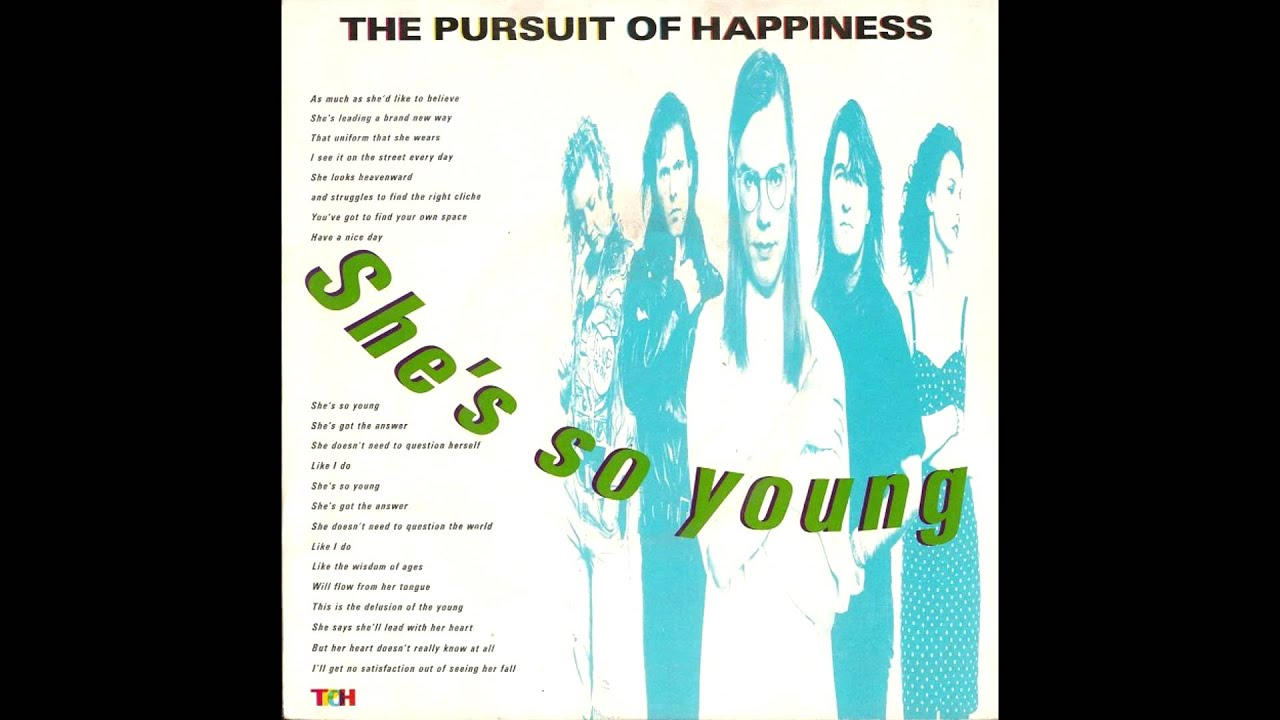
In the era of 90s alternative rock, The Pursuit of Happiness emerged as a jangly powerpop force, weaving tales of love, longing, and the tumultuous journey through a conflicted maze of human emotions. Among their repertoire of hits, “She’s So Young” stands as a beautiful jangly gem, capturing the essence of youthful passion and the bittersweet symphony of burgeoning adulthood versus the slow realization of growing older.
Released as a single in the same year as their debut album in 1989 as part of their Todd Rundgren-produced debut album “Love Junk.” The song from the Edmonton, Alberta band should have earned them much more critical acclaim and a much larger fan base across the world. Several decades later, this stunning melodic arrangement should have become an even more celebrated piece of music. Although the album was certified platinum in Canada, the band did not have similar success in the United States. Penned by band leader and lead singer Moe Berg in 1985, “She’s So Young” delves into the complexities of infatuation, desire, jealousy over the illusion of having everything figured out, and the rollercoaster of emotions that accompany the discovery of love in its most youthful, unadulterated form.
The track opens with an immediate vocal and jangly guitar riff that sets the stage for a sonic journey into the heart of lust, anxiety, and angst. Berg’s vocals, tinged with a perfect blend of vulnerability and raw passion, draw listeners into the narrative. As the lyrics unfold, a story of confused and unrequited love takes shape, encapsulating the universal experience of yearning for the unattainable and possibly unattainable for good reason.
Berg’s lyrical prowess shines through in lines like “Like the wisdom of ages, Will flow from her tongue, This is the delusion of the young, She says she’ll lead with her heart, But her heart really doesn’t know at all, I’ll get no satisfaction out of seeing her fall.” Here, he masterfully captures the paradox of youth—a time when the intensity of emotions often outweighs the depth of understanding. The song becomes a vessel for exploring the inherent contradictions of adolescence, where the naivety of youth coexists with the profoundness of burgeoning desires.
(Image credit: Jim Steinfeldt/Michael Ochs Archives/Getty Images)
The melodic cadence of “She’s So Young” mirrors the unpredictability of young love, seamlessly shifting between moments of exuberance and introspection. The instrumentation, marked by catchy hooks and a rhythm section that propels the narrative forward, mirrors the emotional turbulence of the song’s protagonist. It’s a musical engine where the energy of youth converges with the introspection of maturity, creating a sonic space that resonates across generations.
The chorus, a resounding declaration of unrequited love, encapsulates the universal theme of yearning that underpins the track. In fact, the original version of the song began with the chorus instead of the first verse. When re-recording the song for “Love Junk,” the band changed the order to build more tension in the song. Yet, the infectious chorus is power pop bliss: “She’s so young, She’s got the answers, She doesn’t need to question herself like I do” becomes a rallying cry for anyone who has experienced the all-consuming nature of a crush—an emotion that transcends time and space as it moves beyond rational understanding.
Beyond its musical allure, “She’s So Young” invites listeners to reflect on the transient nature of youth and the fleeting beauty of innocence. The song becomes a vessel for nostalgia, a sonic time capsule that transports the audience back to the moments of their own youthful infatuations. In this sense, The Pursuit of Happiness achieves a rare feat—capturing a specific moment in time while crafting a narrative that remains universally relatable.
While the song’s thematic elements resonate on a personal level, it also taps into the broader cultural landscape of the late 80s and early 90s. The alternative rock scene was undergoing a transformative phase, with bands like The Pursuit of Happiness contributing to the evolution of the genre. “She’s So Young” exemplifies the era’s preoccupation with introspective lyrics and a departure from the bombast of ’80s glam rock.
Decades after its release, “She’s So Young” endures as a song of authentic storytelling and infectious melodies. Its influence reverberates. “She’s So Young” stands as a compelling song that celebrates the complexities of human emotion, a reminder that the pursuit of happiness often involves navigating the labyrinth of love, loss, and the eternal quest for connection. This song remains a shining gem and a clear eyes wide-open statement of a collective memory of those who have embarked on the tumultuous yet beautiful journey of growing up.
As the holiday season wraps the world in its embrace, certain songs emerge as timeless classics that capture the essence of the Christmas season. One such masterpiece is “Fairytale of New York” by The Pogues, a ballad that has become synonymous with the festive spirit. Released in 1987, this iconic track has not only stood the test of time but has also woven itself into the fabric of holiday and seasonal celebrations around the globe. As we celebrate the music and spirit of Shane MacGowan, now seems a perfect time to revisit this evocative song.
At its core, “Fairytale of New York” is a love story set against the backdrop of a dark, gritty, and realistic Christmas in New York City. The Pogues, known for their fusion of traditional Irish folk and punk rock, bring a unique energy to the song, infusing it with equal parts melancholy and exuberance. The haunting accordion and tin whistle melodies, along with Shane MacGowan’s distinctive gravelly vocals, set the tone for a narrative that is as raw and painful as it is heartwarming and full of optimism.
Shane MacGowan’s voice has a distinctive tone, characterized by its raw authenticity and unconventional beauty. What sets MacGowan apart is not just his vocal range or technical prowess, but the sheer emotive power, a sense of brokenness embedded in his delivery. His gravelly, almost weathered voice possesses a rare ability to convey a myriad of emotions, from gritty defiance to heartfelt vulnerability. MacGowan’s vocal style is deeply rooted in his Irish heritage, channeling a feeling of being vulnerable, powerful, and carefree all at the same time. It carries the weight of experience and authenticity, echoing the struggles and joys of life.
It’s in the imperfections of his voice that MacGowan finds his uniqueness. The rough edges and unpolished quality lend a genuine and unfiltered quality to his singing. Whether he’s belting out energetic punk anthems or delivering poignant ballads, there’s an undeniable sincerity in every note.
MacGowan’s voice is inseparable from his lyrical strength. His storytelling prowess comes alive directly through his vocal delivery, turning each song into a vivid narrative. It sounds like each word is spit out from a hole deep inside himself. The words matter especially because of how much he feels them. The combination of his distinct vocal timbre and poetic lyricism creates a musical experience that is both timeless and unmistakably his own. Shane MacGowan’s voice is a testament to the notion that true artistry often lies in the embracing of individuality and authenticity rather than perfection.
The song’s opening lines immediately transport listeners to a cold, harsh Christmas Eve in the ‘Big Apple,’ with MacGowan’s vivid storytelling painting a picture of a city that is frustrating, enchanting, drenched in drink, and unforgiving. Kirsty MacColl’s response to MacGowan’s verses adds sonic depth and emotion, creating a duet that feels authentic and emotionally charged. Her tone cast again MacGowan’s almost growl fuse the vocals with sweet and unsavory in the same moment. The characters in the song, who appear to have seen better days together in the past, convey an unrelinquished sense of resilience and hope despite their struggles. One wonders if they continued to be together after the song ends. The narrative of the song creates a feeling that they should go their separate ways while knowing that deep in their hearts they will always care for one another.
What sets “Fairytale of New York” apart is its ability to encapsulate the bittersweet nature of the holiday season. It acknowledges the hardships and challenges that many face during this time while simultaneously celebrating the enduring power of love and the warmth that comes with it. The lyrics capture a spectrum of emotions, from nostalgia and regret to optimism and love, making it a song that resonates with a wide audience.
Musically, the arrangement is rich and dynamic, incorporating elements of folk, punk, and traditional Irish music. The orchestration, featuring instruments like the accordion and whistle, gives the song a distinctive Celtic flavor, infusing it with a sense of cultural authenticity. The orchestral crescendo in the instrumental break further elevates the emotional intensity of the song, making it a powerful listening experience.
Despite its sometimes somber tone, “Fairytale of New York” is undeniably a festive anthem. Its staying power can be attributed to its ability to capture the complexities of the holiday season and failed (or is that failing?) relationships making it a song that transcends time and resonates with listeners. As we celebrate the music of Shane MacGowan and the enduring legacy of “Fairytale of New York,” it remains a compelling statement to The Pogues’ artistry and their ability to craft a Christmas classic that is both timeless and unforgettable.
In a music industry often dominated by bombastic beats and electronic wizardry, Real Estate has carved a niche for itself with their distinctive brand of indie rock, characterized by dreamy melodies and introspective lyricism. With their latest single, “Water Underground,” from the forthcoming album ‘Daniel’ – the band’s sixth record, the New Jersey-based quintet reaffirms their mastery of crafting serene sonic landscapes that invite listeners to wade into the depths of their introspection.
From the first strum of the guitar, “Water Underground” unfurls like a gentle current, drawing the listener into its tranquil embrace. The opening harmonies, signature to Real Estate’s sound, resonate with a timeless quality that harks back to the heyday of jangle-pop. There’s a certain effortlessness in the way the instrumentation converges, creating a shimmering pool of sound that serves as the perfect canvas for the band’s lyrical exploration. The song is a ripple of melodic grace.
Martin Courtney’s vocals, soft and contemplative, guide us through the submerged depths of emotion. The lyrics, much like a quiet current, weave a narrative that touches upon themes of introspection and self-discovery. “Water Underground” is a lyrical exploration into the recesses of the soul, navigating submerged depths of emotion, and exploring the quietude beneath the surface of our daily lives. The words are poetic yet accessible, inviting the listener to reflect on their own internal challenges.
Real Estate has always excelled in creating intricate yet accessible instrumental textures, and “Water Underground” is no exception. The interplay between Julian Lynch’s intricate guitar work, Matt Kallman’s Keyboards, and Alex Bleeker’s melodic basslines is a testament to the band’s collaborative prowess. The drumming, courtesy of Sammi Niss, provides a steady undercurrent that propels the song forward, like a gentle stream flowing through a serene meadow.
The instrumental breaks showcase Real Estate’s ability to balance complexity with simplicity. The guitar solos, while understated, add a layer of richness to the overall composition. It’s in these moments that the band’s chemistry truly shines, creating a sonic tapestry that envelops the listener in a comforting warmth.
The production of “Water Underground” demonstrates the band’s commitment to melodic clarity. The mix is pristine, allowing each instrument to occupy its own space within the musical spectrum. The production choices echo the thematic elements of the song, providing a sense of clarity amidst the complexities of life. It’s as if the band has distilled their sound to its purest essence, inviting the listener to immerse themselves in the crystal-clear waters of Real Estate’s musical vision.
In a world that often feels turbulent and chaotic, Real Estate’s “Water Underground” offers a respite – a tranquil oasis where one can wade into the soothing waters of introspection. The song is a testament to the band’s ability to evolve while staying true to their sonic roots. Real Estate continues to be a beacon in the indie rock scene, guiding listeners through landscapes of sound that are as comforting as they are thought-provoking.
The video for the song is a tribute to the much-loved ’90s Nickelodeon series ‘The Adventures of Pete & Pete,’ with visual references to specific episodes, and the actors who played ‘The Petes’ themselves, Danny Tamberelli and Michael Maronna, frequently appearing in different roles in the video. This visual love letter to a fantastic series that would probably not be made today because of its elliptical and often surreal storylines was brilliantly directed by Edmond Hawkins. The idea for the music video was a team effort, coming from the fertile imaginations of Tamberelli and Maronna, with ‘Pete & Pete’ creators Chris Viscardi and Will McRobb which undoubtedly explains the incredible attention to detail.
“Water Underground” is not just a single; it’s an invitation to explore the depths within ourselves while we relive some of the fun of a past adventurous television show. Real Estate has once again demonstrated their prowess in crafting music that transcends the ephemeral trends of the industry, leaving the listener with a sense of serenity that lingers long after the final notes have faded away. As we navigate the currents of our own lives, “Water Underground” stands as a reminder that, sometimes, it’s in the quiet depths that we find the most profound revelations.
Streaming Forward, Powered By The Past - if you love the 80s music, new music, Eurovision, cheesy pop and awesome playlists then let's get this pop party started!




 your tuesday afternoon alternative