If you’ve ever driven around town with the radio on and the sun doing that late-afternoon slant that makes everything look like a memory already—gas stations glowing, parking lots half empty, the air buzzing with possibility and dread—then you already understand what Your Tuesday Afternoon Alternative is supposed to feel like.
And now, for the first time in a while, the last two full three-hour broadcasts are sitting online in all their sprawling, unruly glory over on Mixcloud. That’s six straight hours of music, ideas, weird segues, accidental poetry, and the kind of radio that only really works when nobody is trying too hard to make it work. Which, if we’re being honest, is the best kind.
Think of it as a kind of sonic time capsule: three hours where the world’s chaos gets distilled into guitars, synthesizers, a stray folk lament, maybe a punk blast that lasts ninety seconds but somehow resets your whole nervous system. Then you do it all again the next week. Radio as ritual. Radio as wandering conversation.
The thing about listening to these shows after the fact is that they become something slightly different than they were in the moment. Live radio is adrenaline and improvisation—you throw a song into the air and see what it does to the room. But on replay, the structure reveals itself. Themes emerge like ghosts in the static. Songs talk to each other across decades. A jangly indie track from 2024 suddenly feels like it’s answering a garage-rock scream from 1966.
That’s the secret architecture of good radio: it sounds loose but it’s secretly a web of connections. Which makes these two archived episodes especially fun to revisit. Over six hours, the mood drifts the way an actual Tuesday afternoon does. One minute the sun is out and everything sounds hopeful; the next minute you’re staring out the windshield thinking about every mistake you’ve ever made while some beautifully melancholy track hums through the speakers.
And that emotional whiplash is the point.
Great radio—especially college radio—has always been about resisting the algorithm. The streaming services want to smooth everything out into playlists that never challenge you. But real DJs still believe that music should occasionally knock the wind out of you. A dreamy pop song might suddenly give way to something ragged and noisy, and then a minute later you’re floating through a slow acoustic tune that feels like someone left a window open in your heart. That’s not bad programming. That’s life.
The two newly available shows capture that beautifully messy spirit. Across the six hours, you’ll hear indie rock rubbing shoulders with folk, garage, synth-pop, and the occasional left turn that makes you sit up and say, “Wait—what was that?” The answer, of course, is that it doesn’t always matter. Discovery is half the thrill.
And because the shows were recorded live, you also get the little human moments that make radio feel alive: the slightly crooked transitions, the spontaneous reflections, the sense that the whole thing could veer off the rails at any moment but somehow lands exactly where it needs to.
It’s the opposite of polished. It’s the sound of someone digging through a record collection and saying, You need to hear this.
Which is why having the full episodes archived on Mixcloud matters. Instead of a clipped highlight or a tidy playlist, you get the whole ride—the long arc of the afternoon, the gradual build, the strange emotional geography of three uninterrupted hours.
Sometimes the world feels like it’s running a little too hot.
Everywhere you look there’s another argument, another disaster, another reminder that people can be cruel to each other in ways that are exhausting just to witness. The noise of it all can make the world feel smaller, harsher… like kindness is getting drowned out.
And that’s where music comes in.
Because music does this strange, beautiful thing: it reminds us that other people are feeling the same things we are. Someone, somewhere, picked up a guitar or sat down at a piano and turned confusion, anger, heartbreak, hope—whatever it was—into sound.
And when you hear it, something clicks.
Maybe it’s a melody that suddenly lifts the weight of the day. Maybe it’s a lyric that says the exact thing you couldn’t find the words for. Maybe it’s just a drumbeat that makes you remember you’re still alive and moving forward.
That’s the magic of music.
It connects strangers. It softens the edges of the world. It gives us a place to breathe when everything else feels like too much.
So tonight, wherever you are, let the songs do what they’ve always done.
Turn the volume up a little. Listen closely. And remember that even in a noisy, difficult world, people are still making beautiful things.
There’s a particular electricity to walking into a college radio station on a Tuesday afternoon that no algorithm has yet figured out how to bottle. The hallway smells faintly of burnt coffee and overworked carpet, even in the new Glass Center. The console used to look like it survived three administrative restructurings and at least one existential crisis. Maybe I am just channeling the ghost of the old board from when WUDR was in ArtStreet. Regardless, somewhere in the hum of the board, you can hear the ghost of every DJ who ever believed that three minutes and twenty seconds of noise could change a life.
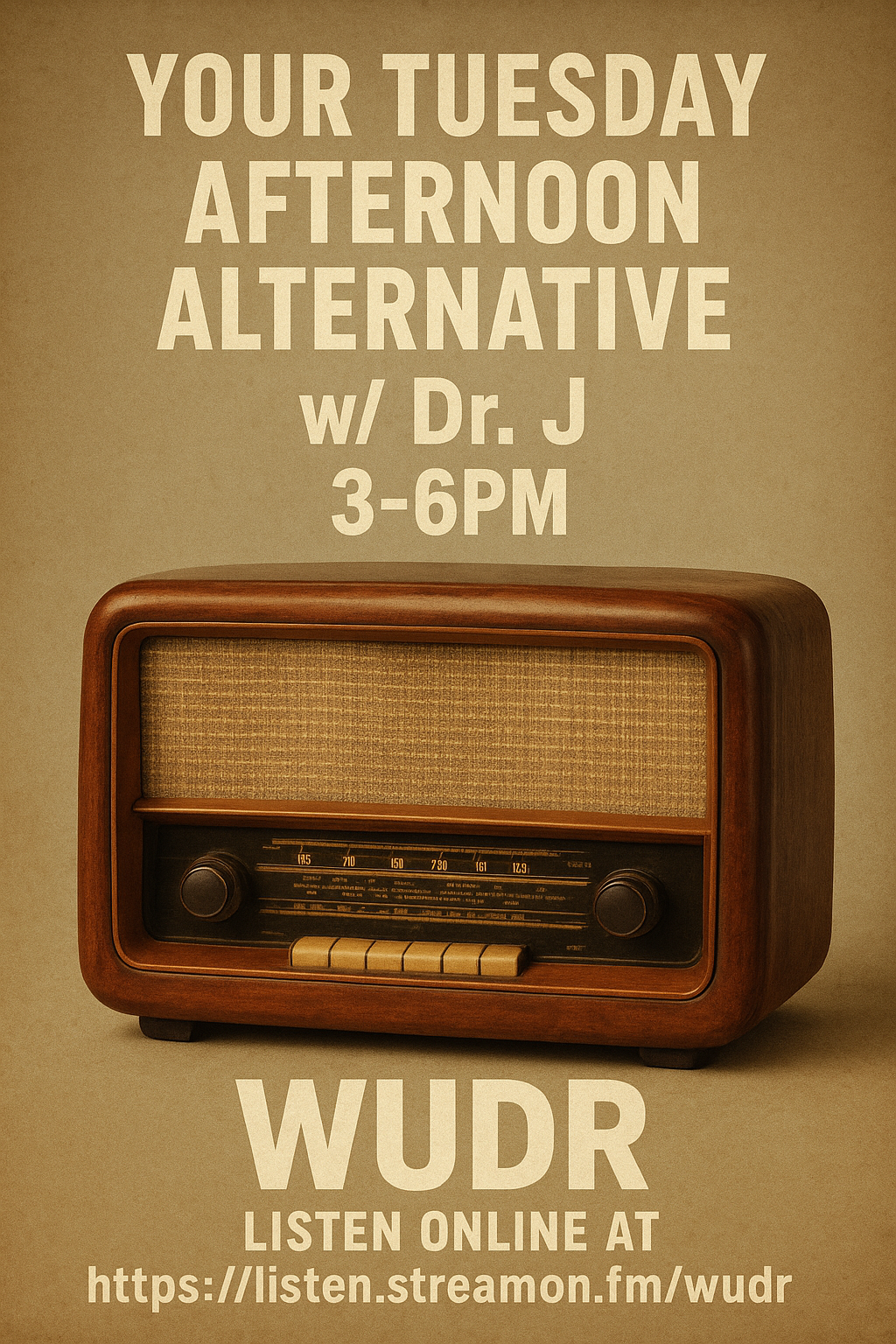
Welcome to Your Tuesday Afternoon Alternative on WUDR Flyer Radio, broadcasting from the heart of Dayton, where the signal wobbles just enough to remind you that perfection is for tyrants and streaming platforms.
We open with “Se Llama (Tell Me What You Want)” by The Props from their Arrow – EP, and it’s the kind of track that doesn’t ask what you want so much as demand you admit you don’t know. It’s all nervous propulsion and sideways glances, the guitars like somebody rifling through your emotional junk drawer. I let it breathe. College radio isn’t about polite fades; it’s about letting the song finish its cigarette before you barge back in with your baritone wisdom.
Then comes “Delete Ya” by Djo (you know, the guy who played Steve on Stranger Things) from his record, The Crux. Now there’s a title for our era. Delete ya. Unfriend, unfollow, unremember. The song kicks like a garage door slamming shut on a relationship that was already half-packed. It’s jagged, but it’s catchy, the kind of melody that worms into your skull and starts redecorating. I imagine some sophomore in a dorm room texting someone they shouldn’t while this is playing and thinking it’s a sign from the universe. It’s not a sign. It’s just a good hook.
“Gone Baby Gone,” courtesy of Aysanabee from his Edge Of The Earth album, follows, and suddenly we’re in widescreen. Reverb like a prairie sky. Drums that sound like they were recorded in an abandoned aircraft hangar somewhere off I-75. This is the moment in the set where the car windows roll down even though it’s 42 degrees out, because transcendence doesn’t check the forecast.
“Regrets” from the Double Exposure record released by Penny Arcade (the secret name of James Hoare) doesn’t wallow; it smirks. It knows you’ll have them, and it’s already writing the sequel. There’s a kind of tensile bounce to it, a reminder that remorse can dance if you let it. I talk over the intro just a hair—because that’s the DJ’s prerogative—and muse about how regret is just memory with better lighting.
Then we snap into “Feelin’ A Rise” by Pimmer from their recent release, Trans Am. Now we’re cooking with circuitry. This is the motorik heartbeat of a robot who read too much Kerouac. The synths pulse like fluorescent lights in a 24-hour laundromat. You can’t half-listen to this; it drags you by the collar and says, “Move.”
We pause for the “Mrs. Dr. J WUDR legal ID,” eleven seconds of bureaucratic poetry. There is something profoundly punk about the legal ID. It’s the FCC’s reminder that even anarchy has paperwork. And then—right back into the fray.
“Nevermind” from the excellent record The Refrigerator created with love by Remember Sports. A title that shrugs and a band name that hums in the kitchen at 2 a.m. The song feels domestic in the best way—small-room guitars, a vocal that sounds like it was recorded with the singer leaning against the sink. It’s intimate without being precious. You can hear the plumbing in the walls.
“The Bitter End” (from The Bitter End – Single) by Trashcan Sinatras is next, and yes, we are aware of the recursion. Bitter about the end? Or is the end itself bitter? The track surges forward like it’s trying to outrun its own conclusion. There’s something defiant in it, a refusal to go quietly into whatever good night Spotify has queued up next. “Nothing” by nerve scales arrives like a gray cloud that’s decided it enjoys being gray. It sprawls. It hums. It lets the guitars smear into each other like oil paints. This is the point in the show where I remind listeners that silence is overrated and distortion is honest.
We keep it clean—“Nobody’s Heroes (CLEAN)” – The Menzingers and “Born To Kill (CLEAN)” by Social Distortion—because college radio lives in that tightrope space between rebellion and regulation. “Nobody’s Heroes” punches upward, as it should. It’s a rallying cry for the beautifully unexceptional. “Born To Kill,” scrubbed for broadcast, still crackles with danger. You can remove a word, but you can’t take out an attitude.
“Private” by The Neighborhood from their excellent album (((((ultraSOUND))))) feels like a transmission intercepted from a basement laboratory. It’s angular and twitchy, guitars cutting in geometric shapes. If privacy is dead, this song is the autopsy report. Then the sweet ache of “Can I Call You Tonight?” from Dayglow from the atmospheric Fuzzybrain. The melody glows like a phone screen in the dark. It’s longing in four minutes and thirty-nine seconds, the kind that makes you reconsider every “you up?” text you ever sent. I let that one play almost untouched. Some songs need space to confess.
“You got time and I got money” from Smerz Big city life strolls in with a grin. It’s transactional romance turned into a groove. There’s swagger here, but it’s self-aware, like it knows the joke is partly on itself. And that is the first hour in the books. We hit the Smug Brothers YTAA Theme—thirty-five seconds of identity—and then the “Dr. J New WUDR legal ID,” twenty-seven seconds reminding you that this is real, terrestrial, imperfect radio. Not a curated playlist assembled by a machine learning model with a minor in heartbreak.
The Pretty Flowers YTAA Theme Song blooms briefly, and then we dive into “It Is What It Isn’t” from The Black Watch from the collection, Varied Superstitions. Seven minutes and change. Now we’re talking. The guitars stretch out like they’ve paid rent on the horizon. The rhythm section locks into a trance. This is where the show stops being background and becomes an environment. You could build a small philosophy inside this track and still have room for doubt.
“Here’s The Thing” from Fontaines D.C. off of their Romance record snaps us back to conversational scale. It’s concise, almost cheeky. Here’s the thing: love is complicated, and so are guitar pedals. The song knows both. “Holy Roller” by The Format taken from Boycott Heaven thunders in next. There’s righteous fire here, but it’s not sanctimonious. It’s sweaty, urgent, maybe a little unhinged. The drums sound like they’re trying to kick down the pearly gates just to see what happens.
Independent music for everyone!
Then, because radio loves a wink—“Private Eyes” K.T. Tunstall from NUT released in 2022. You think you know that title, but this isn’t your dad’s yacht-rock paranoia. It’s sharper, more nervous, like someone swapped the sunglasses for safety goggles. “Cold Waves (featuring Mac McCaughan)” by Crooked Fingers (Eric Bachman’s project of the moment) from the album Swet Deth glides in with a chill that feels earned. The guest vocal threads through the mix like a lighthouse beam. It’s melancholy without surrender. The guitars shimmer, the drums keep their cool, and the whole thing feels like driving past Lake Erie in November with the heater on full blast.
Another “Mrs. Dr. J WUDR legal ID”—because the law insists—and then “Machines” from HAPPY LANDING. Aptly titled. The rhythm clanks and whirs, but there’s a human pulse inside it, a reminder that we built the machines in our image and then acted surprised when they reflected us. “Coming Home” from Lucky Now by Lande Hekt softens the edges. It’s all warmth and open chords, the musical equivalent of a porch light left on. After the clang and crash, it feels like forgiveness.
“The River Knows” from The Steeldrivers flows steadily and patiently. It suggests that maybe the landscape outlasts our noise. The guitars ripple. The drums roll like a current over stones. And “Dusking” from Concerns Of Wasp And Willow by The Corner Laughers. So damn glad to see that band back. It is a beautiful song. A title that sounds like a line from a lost pastoral poem. The song is brief, but it lingers. Twilight in two minutes and fifty-four seconds. The guitars fade not into silence, but into possibility.
That’s the thing about a Tuesday afternoon alternative show. It’s not about dominance or metrics. It’s about curation as conversation. It’s about trusting that somewhere in Dayton, someone heard one of these songs at exactly the right moment and felt less alone. And that is just part of the second hour for the show today!
The board goes quiet. The red “on air” light clicks off. And for a second, the room hums with the afterimage of sound. Radio isn’t dead. It’s just waiting for someone reckless enough to press play.
Someone asked me the other day if we actually write notes for all of the music we play on the show. And I love that question, because it gets at the heart of what this whole strange, beautiful ritual is about.
The short answer? Yes. Absolutely. Maybe not always in the neat, bullet-point, producer-approved sense. But every song has a story attached to it. Every track gets time, attention, a listen with the lights low or the car windows cracked. We don’t just drag and drop files into a playlist and hope for magic. The magic is in the listening.
Sometimes the notes are scribbled in a notebook—half-legible phrases about a guitar tone that sounds like “late summer asphalt” or a chorus that feels like it’s trying to outrun heartbreak. Sometimes they’re typed up neatly: where the band’s from, who produced the record, why this particular track matters right now. And sometimes the notes are just a feeling we carry into the mic—a memory, a connection, a reason this song needs to be heard tonight.
Writing notes is a way of honoring the artists. Someone spent months, maybe years, making that three-minute song. They argued over snare sounds. They rewrote verses. They risked something personal in the lyrics. The least we can do is meet that effort with attention. To listen closely. To ask: what is this song trying to say? Where does it sit in the arc of the record? Why does it belong in this hour, next to these other songs?
It’s also about you—the listener. When we share a few thoughts before or after a track, we’re not trying to lecture. We’re building a bridge. Maybe you’ll hear a lyric differently. Maybe you’ll catch a harmony you might’ve missed. Maybe you’ll go home and play the whole album because something about it stuck.
Radio, at its best, is companionship. It’s someone in the dark saying, “Hey, listen to this.” The notes are part of that companionship. They’re proof that this isn’t background noise. It’s a conversation. A relationship. A shared moment in time.
So yes, we write notes. We think about sequencing. We care about transitions. We argue lovingly over which song should close the set. Because music deserves that care. And honestly? So do you.
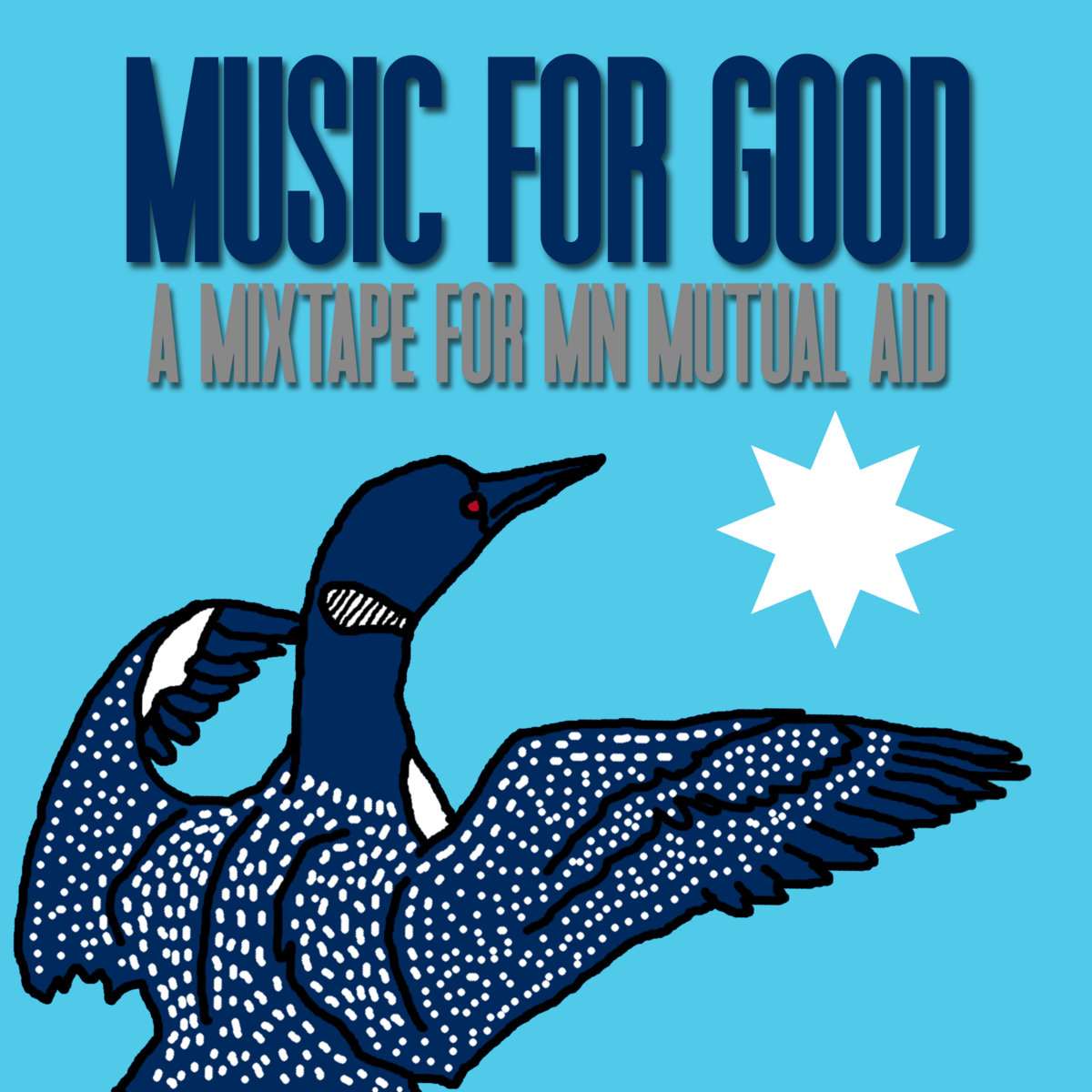
Music for Good: A Mixtape for MN Mutual Aid is a powerful example of how music can be mobilized in service of community care. The project brings together a range of local and independent artists from Minnesota, each contributing their voices and sound to something larger than themselves. The result feels intentional and generous, a reminder that creative work can be rooted in solidarity as much as self-expression.
In this moment, efforts like this are especially meaningful because it goes beyond listening for enjoyment alone. This is art that directly supports mutual aid efforts in Minnesota, turning creativity into tangible assistance for people who need it. The diversity of styles and approaches across the songs reflects the strength of collective action: many perspectives, many sounds, working toward a shared goal.
Projects like this demonstrate the real potential of independent music scenes—not just to entertain, but to build community, amplify care, and encourage listeners to participate in doing good for one another.
I consider it a hopeful release that demonstrates how collaboration and compassion can be woven into art in ways that truly matter.
Community Aid Network MN (CANMN) Aid is a grassroots mutual aid organization based in the Bancroft neighborhood of Minneapolis, Minnesota. They are a volunteer-led, community-run mutual aid group that formed in August 2020 during the twin crises of the COVID-19 pandemic and heightened racial injustice following the murder of George Floyd. It emerged from the merger of several pop-up volunteer efforts — including The People’s Library Mutual Aid at MCAD, Pimento Relief Services, and Provision Community Restaurant — that were already providing essential support to underserved neighbors in Minneapolis.
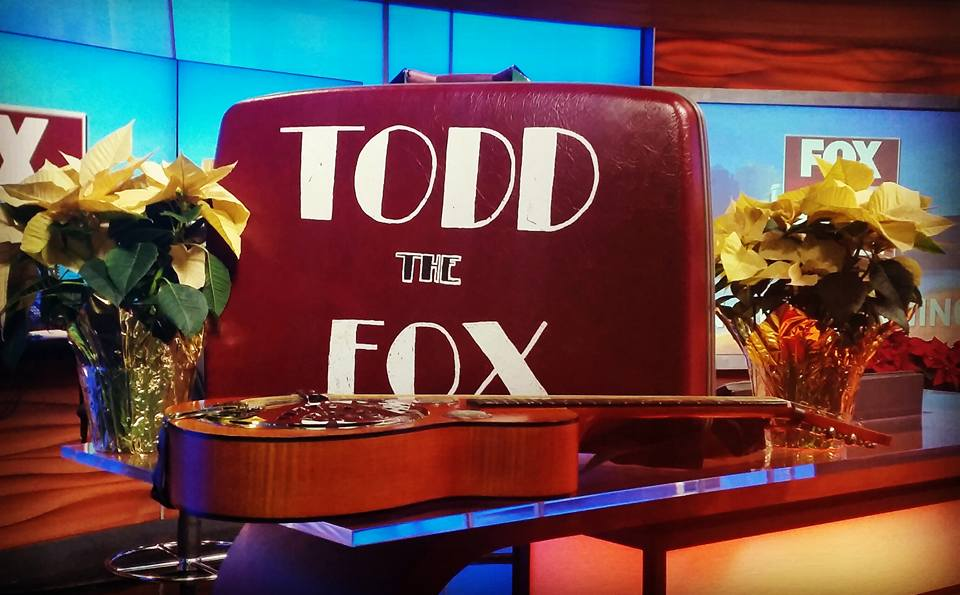
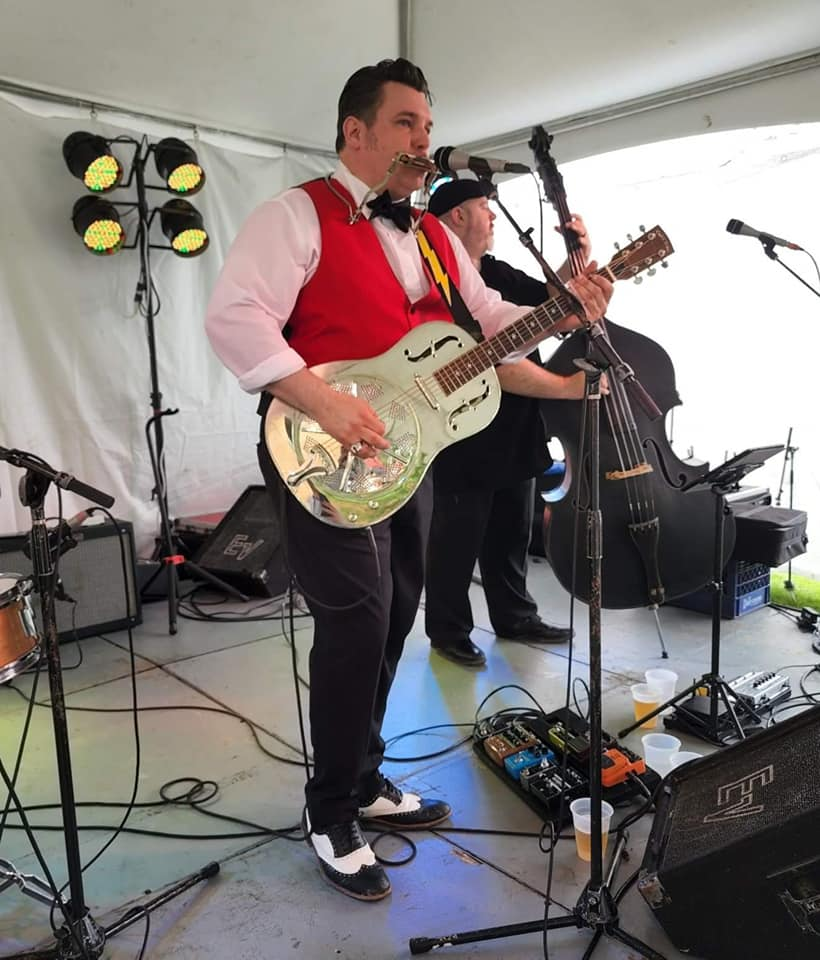
Some cities hum, and some cities grind, and then there’s Dayton, Ohio, which does both at once, like it’s chewing aluminum foil and smiling through the sparks. Out of that glorious Midwestern feedback loop comes Todd The Fox—musician, songwriter, performer, singer—padding into your ears tomorrow on Your Tuesday Afternoon Alternative from 4–5 p.m. Eastern, impeccably dressed as if from a nineteenth-century sepia-toned picture, eyes bright, ready to knock over your preconceptions and maybe a lamp or two. This isn’t a press-release animal. This is the kind of musician who lives in the alley behind the club and somehow knows your name and the story of how you met.
Let’s get something straight before the bio-police arrive with their clipboards: Todd The Fox isn’t a “local act” the way people say “local” when they mean “small.” Dayton has always been a factory for nervous systems—Guided by Voices turning beer-soaked basements into libraries of genius, the Breeders bending melody until it smiles back, far too many funk ghosts rattling the windows to mention them all. Todd The Fox comes from that lineage of people who treat songs like living organisms, not products. The music breathes. It snarls. It slips between rock and roll styles the way a fox slips under a fence: quick, quiet, leaving you wondering how it got there and beautiful.
Listen closely, and you hear a songwriter who understands the dirty miracle of rockabilly, rock ‘n’ roll, juke joint, rock AND roll, pop, and more—how a hook can feel like salvation if you let it—and who also understands how to break the hook on purpose just to see what bleeds out. Todd’s songs don’t ask permission. They don’t knock. They kick the door, apologize sincerely, then steal your favorite record and give it back with new fingerprints. There’s classic melody here, yes, but it’s the kind that’s been roughed up by real nights and real mornings, the kind that knows the difference between romance and survival.
Performance-wise, Todd The Fox doesn’t “take the stage” so much as make it a living room and then light a match. There’s a physical intelligence to it, a sense that the body is another instrument and the crowd is a choir that doesn’t know it’s rehearsing. You don’t watch so much as get pulled into orbit. To call him a showman would truly understate it. That’s the secret sauce: the generosity. Even when the songs bite, they’re offered with an open palm. You’re invited to bleed a little, too. It’s communion with better jokes.
And here’s the thing the algorithms won’t tell you: Todd The Fox understands time. Not in the “retro” sense—this isn’t cosplay—but in the way great rock & roll always has, a kind of temporal vandalism. The performance of the songs feels like they all could’ve been written yesterday or twenty years from now, which is to say they live in the only time that matters: the one where you’re paying attention. There’s craft without fussiness, ambition without the TED Talk, and a willingness to leave the seams showing because that’s where the electricity leaks out.
Tomorrow’s hour on Your Tuesday Afternoon Alternative isn’t a content drop; it’s a rendezvous. Radio still matters when it’s alive, when it’s a room you can step into and feel the air change. From 4–5 p.m. Eastern, Todd The Fox comes by to talk shop, spin yarns, and let the music do what it does best: make a mess and call it truth. Expect stories that zig when you think they’ll zag, expect songs that refuse to sit still, expect the kind of conversation that remembers radio is a human act, not a playlist with a personality disorder.
If you’re tired of music that arrives pre-chewed, if you miss the feeling that something might go wrong in the best possible way, tune in. Todd The Fox is the sound of a city, of a tradition that learned how to survive by inventing its own fun, the sound of a songwriter who trusts the song more than the strategy. There’s wit here, and bite, and that elusive thing critics pretend to quantify: soul. Not the museum kind. The living, twitching kind that looks you in the eye and dares you to stay.
So set the dial. Clear the hour. Let the fox into the henhouse of your afternoon and see what survives. Tomorrow, 4–5 p.m. Eastern. Your Tuesday Afternoon Alternative. This is how radio remembers what it’s for.
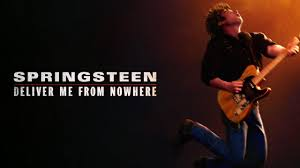
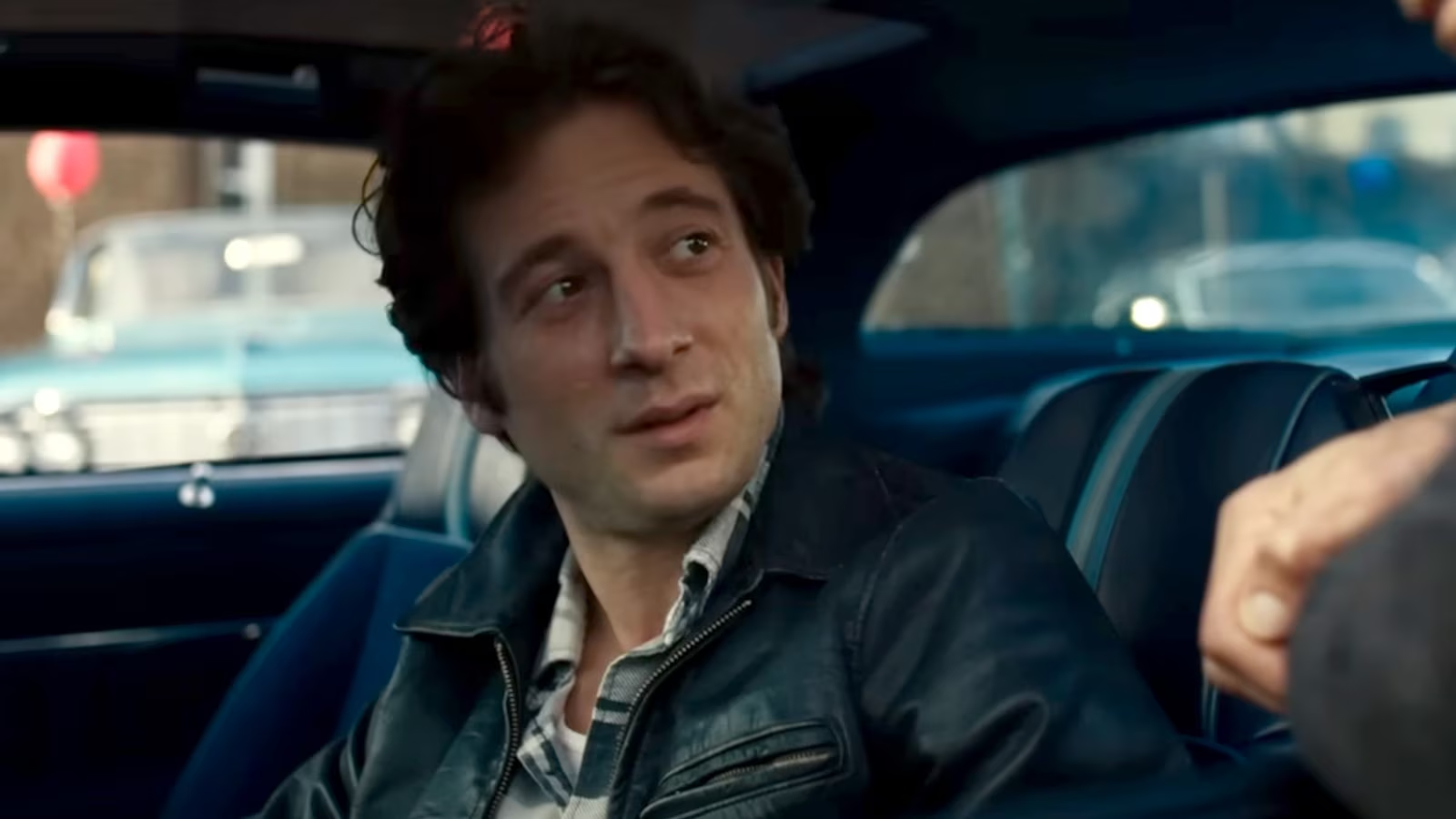
I have been watching a lot of music movies and documentaries. One of the most interesting music films I have seen is Deliver Me From Nowhere.
So, sure… I’m supposed to talk about a movie here, Deliver Me From Nowhere, which already sounds like a bootleg lyric scribbled on a diner napkin at 3 a.m., which is exactly right, because if you’re going to make a movie about Bruce Springsteen and you don’t start from the place where he’s half-lost, half-feral, recording songs alone with ghosts rattling around the room, running around his mind, then you’re just making another shrine, another museum exhibit with the volume turned down.
The trick with Springsteen—especially for film—is that he’s been embalmed while still breathing. Bandanas, stadiums, flag-waving, the myth of blue-collar transcendence with a backbeat you can chant to while buying merch. All of that is real enough, but it’s also the loudest, safest version of him. Deliver Me From Nowhere wisely points the camera in the opposite direction: toward the guy sitting alone with a cheap recorder, a harmonica, and a head full of the past that we all are trying to outrun from when we were kids, running as much from as well as to American dread. Toward Nebraska.
Let’s get this out of the way right now: Nebraska is one of the best albums Bruce Springsteen ever made. Maybe the best. And before the E Street choir starts humming “Born to Run” in protest, understand that this isn’t a knock on the big stuff. Those records are monuments. Nebraska is a crime scene. And crime scenes tell you more about a culture than monuments ever do.
The movie—at least in spirit, and somewhat in execution—gets that Nebraska wasn’t a detour or a demo tape that accidentally escaped. It was a confrontation. Springsteen stares straight into the cracked mirror of American masculinity and says, “Okay, let’s not lie about this.” No big band. No catharsis-by-chorus. Just flat voices telling flat stories about people who don’t get saved, or don’t even believe in salvation anymore (honestly, which is worse?).
If you want to understand why Deliver Me From Nowhere matters, you have to understand that Nebraska is a record made by someone who had already “won.” The success machine was humming. He could have turned the crank again and printed another anthem. Instead, he made a record where the American Dream shows up already foreclosed, the lawn brown, the marriage strained, the highway leading nowhere in particular.
That’s not an accident. That’s a choice. And it’s a deeply uncommercial one, which is what makes it all the more meaningful.
What the movie seems to grasp—again, fingers crossed as it doesn’t chicken out—is that Springsteen’s genius isn’t just empathy. A lot of critics stop there, because empathy is safe. Empathy doesn’t ask uncomfortable questions. But Nebraska isn’t just empathetic; it’s accusatory. Not in a preachy way, but in the way a good true-crime story accuses you by refusing to tidy itself up.
Take the title track. A killer talks. No moral lesson. No orchestral swell telling you how to feel. Just a voice explaining itself, almost bored, almost numb over the fact that the world is a place full of mean, anger, and hostility. That’s radical. Rock music, especially in the early ’80s, wasn’t supposed to do that. Rock was about triumph, even when it pretended to be about suffering. Nebraska lets suffering sit there without redemption, like an unpaid bill that you read in the dark after the electricity has been turned off.
A film about this period has to resist the urge to explain too much. Explanation is the enemy of dread. If Deliver Me From Nowhere turns into a neat psychological case study—“here’s why Bruce felt sad”—then it misses the point. The power of Nebraska is that it doesn’t psychoanalyze its characters. It listens to them. And sometimes listening is more disturbing than understanding.
What makes Nebraska one of Springsteen’s best albums (I know, I already said that) is precisely what made it risky: it’s unfinished in all the right ways. The tape hiss is part of the meaning. The thin sound isn’t lo-fi nostalgia; it’s a sonic moral choice. These songs don’t deserve polish because their lives don’t have it. You don’t add reverb to a confession. You do not turn up a whisper, you lean in and listen hard.
If the movie captures that—if it lets silence do some of the talking—it could be one of the rare music films that understands restraint. Most biopics are loud because they’re afraid. Afraid the audience will get bored, afraid the myth won’t survive scrutiny. But Nebraska survives because it’s small. It’s the sound of someone realizing that being heard by millions doesn’t mean you’ve said what you needed to say. There’s also something profoundly American about the timing. Nebraska comes out in the early Reagan years, when optimism was being sold wholesale again, when flags were back in fashion, and the word “hardship” was being politely escorted off the stage. Springsteen responds not with protest anthems but with stories about people who don’t make it into speeches. That’s political without being programmatic. It’s sociology disguised as folk noir.
And here’s where the movie has an opportunity most Springsteen narratives avoid: showing that this record isn’t an aberration but a key. You can draw a line from Nebraska forward—to The Ghost of Tom Joad, to the quieter corners of Tunnel of Love, to every moment when Springsteen chooses unease over uplift. Nebraska isn’t the opposite of the stadium-Bruce; it’s the engine room underneath it.
In the end, Deliver Me From Nowhere doesn’t need to convince us that Springsteen is important. That argument was settled decades ago. What it needs to do is remind us that importance isn’t always loud, and greatness isn’t always communal. Sometimes it’s one guy, alone, trying to tell the truth without a safety net.
That’s why Nebraska endures. Not because it’s bleak, but because it’s honest. It refuses to fake hope, and in doing so, it earns whatever hope you find in it. If the movie understands that—if it trusts the audience to sit with discomfort, with ambiguity, with the hiss of the tape still running—then it won’t just be another rock biopic. It’ll be something rarer: a film that knows the quietest records sometimes make the most noise.
Listening to new music is one of the last ways left to genuinely surprise yourself—no plane ticket, no self-help seminar required. It sneaks up on you. One minute you’re a fully formed adult with opinions calcified like bad arteries—I know what I like, thank you very much—and the next minute some racket you’ve never heard before is rewiring your nervous system. That’s the trick of new music: it doesn’t ask permission. It doesn’t care about your nostalgia. It kicks the door in and rearranges the furniture.
Because when you listen to new music—really listen, not the polite nodding you do while scrolling your phone—you’re admitting you might still be wrong about yourself. That’s a radical act. It means you’re willing to let a stranger sing directly into your bloodstream and tell you something you didn’t know you needed to hear. New music exposes the lie that your taste peaked at nineteen, that everything afterward is just footnotes and reissues. It says, No, pal, the story’s still going, and you’re in it whether you like it or not.
And here’s the positive part they don’t put on the brochure: new music keeps you human. It keeps you porous. It reminds you that other people are out there, sweating over guitars or laptops or busted drum kits, trying to translate whatever chaos is rattling around in their skulls into something that might connect. When you let that in, you’re practicing empathy without calling it that. You’re learning new emotional vocabulary. You’re discovering fresh ways to feel lousy, ecstatic, confused, horny, or hopeful—all of which beat the hell out of emotional reruns.
Listening to new music also wrecks your comfort zones in the best possible way. It makes you uncomfortable, and discomfort is growth with a lousy publicist. That weird rhythm you don’t “get”? That voice that sounds wrong to you? Those are the edges of your imagination being stretched. If you only listen to what already agrees with you, you’re not listening—you’re just reaffirming. New music says, Shut up for three minutes and try this on.
Most importantly, new music refuses to let you become a museum exhibit of your former cool. It doesn’t care that you once saw the band before they were famous or that you still own the original vinyl. It belongs to now, and by listening, you’re choosing to belong to now too. You’re saying that curiosity beats certainty, that becoming is better than having been.
So yeah, listening to new music shapes you in a positive way. It keeps you alert. It keeps you vulnerable. It keeps you alive. And in a world hell-bent on turning everyone into a predictable playlist, that might be the most rebellious thing you can still do.
It’s 2026, and if someone tells you that the gatekeepers have vanished, they’re half right — because the old ones never really left, and the new ones are algorithms you can’t talk to over a beer. But out here in the dust-soaked landscape where indie music still breathes, artists are inventing their own economies, building their own tribes, and sustaining entire careers without waving to Spotify’s backstage bouncer. This is the story of the new DIY pipeline — where radical drive, community, and patronage outshine cold, digital playlists.
Let’s start with a truth that should be shouted from every rooftop: you don’t need a major label to be heard anymore — you just need someone who’ll listen.That’s both terrifying and beautiful, especially when artists like Hello June come along and remind you why indie music is still worth the trouble. You might know Hello June as the West Virginia-rooted outfit whose reverb-soaked guitars and poetic introspection make a perfect late-night soundtrack to driving somewhere you shouldn’t be. Their songs, like “Mars” and “Honey I Promise,” shimmer with emotional clarity — the kind of music that makes you feel seen in the dark. Critics from Paste to NPR Music cited them early on, and they’ve carved a lane in the hearts of listeners without a “Major” label deal ever steering their ship.
Meanwhile, from the Midwest — not far from our own Dayton scene — artists like Beth Bombara have spent years building careers outside the corporate churn. Bombara, originally from Grand Rapids, relocated to St. Louis, Missouri, in 2007, where she became a prominent figure in the city’s Americana and roots music scene, blending folk and indie rock with a strong work ethic and a distinctive sound. She funded her first full-length in 2010 with Kickstarter and has since navigated life as a working artist armed with nothing more than her incredible voice, her evocative guitar, and her fans’ belief.
These are not anomalies — they’re the new normal.
The digital era promised democratization, but what we actually got was decentralization: power pulled out of a few hands and spread across millions of screens. No longer is the major label the only entity that can bankroll an album, book tours, or create community. Instead, bands, solo musicians, and writers are turning to platforms that were once footnotes in industry thinkpieces — places like Patreon, Bandcamp, Discord, and direct mailing lists, among other creative tools of communication.
So what’s the deal with Patreon? First co-invented by musician Jack Conte as a direct lifeline between artist and audience, Patreon operates on a simple but subversive idea: fans will pay if what you make matters to them — not just as background noise, but as something alive in their lives.
At its core, Patreon is a membership platform where a listener can become a patron — literally a supporter — of an artist they believe in. This isn’t an iTunes download or a Spotify stream; it’s ongoing support. The model flips the script: instead of chasing playlist placements and algorithm boosts, musicians offer exclusive content, early access to songs, behind-the-scenes videos, and even livestreams of rehearsals or songwriting sessions. It’s the 21st-century version of knocking on your favorite artist’s green room door after a show, but without the awkwardness and with a monthly subscription.
Let’s take Amanda Palmer as an example — not because she’s the only one doing it, but because she made it look possible for everyone. Palmer is a prominent example of an artist bypassing traditional music industry structures, having pioneered a sustainable career through direct-to-fan crowdfunding and patronage. Her success with Patreon, which at times saw her supported by over 11,000 patrons for her content, highlights a shift toward, and the viability of, an independent, community-funded model. With thousands of patrons, she has funded entire projects, released music on her own terms, and keeps her creative life spinning outside the corporate wheelhouse. Palmer’s success proves that authentic connection beats algorithmic luck every time.
Amanda Palmer isn’t alone — she’s just the loudest proof of concept. Once the door cracked open, a lot of artists realized they didn’t need permission anymore.
Take Pomplamoose, for instance. Jack Conte and Nataly Dawn didn’t just use Patreon — Conte co-built it after realizing that viral success on YouTube didn’t equal financial stability. Pomplamoose flipped the script by inviting fans into the process: behind-the-scenes videos, early releases, and transparent explanations of how music actually gets made and paid for. Their Patreon isn’t about mystique; it’s about trust. Fans know where their money goes, and in return, the band keeps control of its sound, schedule, and sanity.
Then there’s Jonathan Coulton, a cult hero long before “crowdfunding” became a buzzword. Coulton built his career through mailing lists, web releases, and fan support years before Patreon existed. When he later embraced patronage platforms, it felt less like a pivot and more like a natural extension of a relationship he’d already cultivated. His success reminds us that this model isn’t about tech — it’s about consistency and connection.
Erin McKeown offers another blueprint. A fiercely independent songwriter with a restless creative streak, McKeown has used Patreon to support not just albums but experimentation itself — new sounds, collaborations, and political engagement. Patrons aren’t just buying songs; they’re underwriting artistic freedom. That’s the real revolution here: the ability to fail, explore, and grow without a label hovering over your shoulder asking about “marketability.”
In the indie-folk and Americana world, artists like Dessa have also leaned into direct support. Through Patreon and direct fan engagement, Dessa has funded releases, tours, and multimedia projects while maintaining ownership of her work and her narrative. What stands out is how these artists talk to their supporters — not as consumers, but as collaborators in a shared cultural project.
Even younger, genre-blurring artists have taken notice. Jacob Collier turned his Patreon into a living room — a place for listening parties, deep musical nerdery, and real-time feedback from fans who care about chord changes and time signatures. It’s not mass culture; it’s micro-culture. And that’s exactly the point. Collier reimagined his Patreon into a hub for superfans: album recommendations, Zoom “hangs,” and listening parties — experiences you can’t get anywhere else.
What ties all of these artists together isn’t genre, fame level, or even platform — it’s a shared refusal to treat listeners like anonymous clicks. In each case, Patreon becomes less of a paywall and more of a campfire: a place where artists explain what they’re doing, why it matters, and how supporters are part of it.
This model scales down beautifully, too. The same logic that sustains Amanda Palmer or Pomplamoose works for regional and DIY artists — including those orbiting scenes like Dayton’s. An artist doesn’t need 11,000 patrons; sometimes 100 deeply invested listeners are enough to fund a record, press vinyl, or take a tour without going broke. That’s the quiet power of the system.
What all of this proves — over and over — is that authentic connection beats algorithmic luck every time. Algorithms reward sameness and volume. Communities reward honesty, risk, and presence. Patreon didn’t invent that truth — it just gave it a payment button. And once artists realized they could build sustainable lives by talking with their audiences instead of shouting at them, there was no going back.
Now take a beat and imagine that same mentality applied locally: imagine Dayton-area artists building scenes not by random algorithmic chance, but by actual conversation. Bands like The Nautical Theme, whose work has caught attention around the region and beyond — a duo with rich lyricism and intimate sound — are the perfect candidates for this kind of direct support model.
Instead of waiting for a mysterious playlist curator to decide whether they “fit,” these artists can launch a Patreon and say: “Here’s our new track before anyone else hears it.” “Here’s a video of us working through this melody.” “Here’s a Q&A or a private live chat.”
And the fans — the listeners who feel like family — respond.
This approach is not without its skeptics. Some fans grumble that putting music behind a paywall feels transactional, a betrayal of the free-streaming age. Others worry that Patreon can become a grind: you owe monthly content, you owe engagement, you owe something beyond the music itself. That criticism isn’t wrong — but it’s missing the bigger picture: Patreon isn’t about hiding your art, it’s about valuing your art.
Because here’s a fact nobody will whisper: streaming services pay ‘peanuts.’ Artists make fractions of pennies, and touring income can evaporate overnight (as COVID taught us). Patreon isn’t a silver bullet, but it gives back the dignity of direct support — something that crowdfunding pioneers like Bombara were already practicing a decade ago with Kickstarter.
And so we come full circle. This new DIY pipeline isn’t about rejection of platforms like Spotify or Apple Music — they still matter — it’s about not depending on them exclusively. It’s about deepening the relationship between artist and audience, and about building sustainable careers outside traditional structures.
You can see this new ecosystem everywhere you look:
Exclusive releases on Bandcamp that let fans pay more than the minimum — paying what they want to support the artist directly;
Patreon communities that reward superfans with behind-the-scenes access;
Local scenes where bands exchange audiences and cross-promote shows;
And yes, tiny micro-labels started by fans that release cassette tapes because who says they can’t?
It resembles the old punk DIY ethos as much as it does the post-internet world: make your art, find your people, and don’t wait for permission. Leave the algorithms to sort cookies — the real thing happens where hearts beat, and feet stomp at house shows, where fans feel like participants instead of data points.
Maybe there’s something inherently human about all this — after all, music has always been about connection. Whether it was someone handing you a mixtape in the ‘90s, a friend whispering about a local band at a bar, or a Patreon post that makes you feel like you’re part of the creative process — that’s what sustains music. Not corporate endorsements. Not algorithmic pushes. People who feel something choose to support something real.
And in 2026, that might just be the most radical thing of all.
We should all see Howie Klein as one of the rare suits who never really became a suit at all: a true believer who smuggled punk, new wave, moral panic, and messy joy into the executive offices. Lester Bangs, who saw music-label executives as the enemy, would have trusted Klein because Klein trusted noise, contradiction, and artists who scared the right people. In Bangs’s universe, that made Klein less an industry man than a necessary co-conspirator—someone who understood that rock and roll only mattered when it refused to behave.
In the history of popular music, influence is often measured by hits, chart positions, or stadium tours. But some of the most consequential figures operate far from the spotlight, shaping the conditions that allow music—and musicians—to matter. Howie Klein, who died in December 2025 at the age of 77, was one such figure. He was not a performer, nor a household name to casual listeners. Yet his impact on popular music, especially from the late 1970s through the 1990s, was profound. As a radio DJ, independent label founder, major-label executive, and free-speech advocate, Klein helped bring punk, new wave, and alternative music into the mainstream while insisting that artistic freedom was not merely a marketing slogan but a civic value. Klein’s career offers a revealing lens into how popular music evolved during a period of intense cultural change—and how the industry’s internal battles over creativity, commerce, and censorship mirrored larger political struggles.
Klein’s career offers a revealing lens into how popular music evolved during a period of intense cultural change—and how the industry’s internal battles over creativity, commerce, and censorship mirrored larger political struggles.
From campus concerts to counterculture radio
Born Howard Klein in Brooklyn in 1948, Klein came of age as rock music was becoming both a mass medium and a site of generational conflict. While studying at Stony Brook University in the late 1960s, he immersed himself in music journalism and concert promotion. As a student, he helped bring artists such as Jimi Hendrix, Janis Joplin, the Doors, Pink Floyd, and the Who to campus—an early indication of his instinct for recognizing music that was pushing boundaries.
This formative period mattered. The late 1960s were not only a high point of musical experimentation but also a moment when music and politics were deeply intertwined. Klein absorbed the idea that popular music could challenge authority, expand cultural horizons, and create communities of dissent—an idea that would guide his work for decades.
After spending time abroad, Klein settled in San Francisco in the 1970s, a city then reinventing itself musically. The psychedelic era was fading, and a rawer, more confrontational sound was emerging. As a DJ at KSAN-FM, Klein hosted one of the earliest American radio programs dedicated to punk rock and new wave. At a time when such music was often dismissed as noise or nihilism, his show gave airtime—and legitimacy—to artists like the Sex Pistols, Iggy Pop, Devo, and other early punk innovators.
Radio, in this context, was not just a promotional tool. It was a cultural gateway. Klein’s programming helped translate a subcultural movement into something legible to a broader audience, without sanding down its edges.
415 Records and the logic of independence
In 1978, Klein co-founded 415 Records, an independent label named after San Francisco’s area code. The label embodied the do-it-yourself ethos of the punk era while operating with a keen awareness of the industry’s mechanics. 415 signed and developed bands such as Romeo Void, Translator, the Nuns, and the Units—artists who captured the tension of late-1970s urban life with angular guitars, synthesizers, and politically charged lyrics.
While 415 Records never rivaled the major labels in scale, its significance lay elsewhere. It demonstrated that independent labels could serve as incubators for innovation, nurturing artists who might later cross over into the mainstream. When 415 eventually entered a distribution deal with Columbia Records, it reflected a broader shift in the music business: the growing recognition that underground scenes were not threats to commercial music but its future.
Klein’s experience at 415 prepared him for a larger stage, but it did not diminish his skepticism toward corporate control. He remained committed to the idea that labels should serve artists, not the other way around.
Inside the majors: Sire and Reprise
Klein joined Sire Records in 1987, a label already known for bridging the underground and the mainstream. Sire’s roster included artists such as Talking Heads, the Ramones, and Depeche Mode—acts that had once been marginal but were now reshaping popular music. Klein fit naturally into this environment, bringing with him a sensibility formed in radio booths and independent offices rather than boardrooms.
In 1989, he was appointed president of Reprise Records, a Warner Music imprint with a storied history. During his tenure, which lasted until 2001, Klein oversaw releases by an extraordinarily diverse group of artists, including Neil Young, Lou Reed, Green Day, Alanis Morissette, Eric Clapton, Fleetwood Mac, Talking Heads, and The Ramones.
What distinguished Klein was not simply the commercial success of these artists—though many achieved it—but his reputation for protecting creative autonomy. At a time when consolidation was intensifying within the music industry, he resisted the pressure to reduce artists to demographic niches or short-term profit centers. Musicians frequently described him as an executive who listened, trusted, and intervened only when necessary.
This approach paid dividends. Albums like Green Day’s Dookie and Alanis Morissette’s Jagged Little Pill did more than sell millions of copies; they brought alternative and confessional voices into the center of popular culture. Klein understood that authenticity, even when messy or confrontational, could resonate more deeply than formula.
Music, censorship, and the politics of expression
Klein’s influence extended beyond artist development into the political arena. During the late 1980s and early 1990s, the American music industry became a battleground over censorship, most visibly in debates sparked by the Parents Music Resource Center (PMRC) and the introduction of “Parental Advisory” labels.
Unlike many executives who treated the controversy as a public relations problem, Klein framed it as a civil liberties issue. He argued that efforts to regulate lyrical content were less about protecting children than about disciplining dissent and reinforcing cultural hierarchies. Music, in his view, was an extension of free speech—and therefore deserving of the same constitutional protections.
His activism connected him to organizations such as the American Civil Liberties Union, which later recognized him with awards for his defense of free expression. He also played a role in Rock the Vote, a nonpartisan initiative aimed at encouraging young people—many mobilized through music culture—to participate in democratic life.
These commitments were not tangential to Klein’s work in music. They reflected a consistent philosophy: that popular culture shapes political consciousness, and that restricting artistic expression ultimately weakens democratic society.
A legacy beyond the charts
Howie Klein died on December 24, 2025, after battling pancreatic cancer. Tributes from musicians, journalists, and activists emphasized not only his professional accomplishments but his moral clarity. In an industry often caricatured as cynical or exploitative, Klein was remembered as someone who believed in music as a public good.
His career helps explain how punk and alternative music moved from the margins to the mainstream without entirely losing their critical edge. It also illuminates the role that behind-the-scenes figures play in determining which voices are amplified and which are silenced.
At a moment when debates over censorship, corporate consolidation, and cultural polarization are once again intensifying, Klein’s example feels newly relevant. He understood that popular music is never just entertainment. It is a space where power, identity, and freedom collide—and where the choices made by executives, programmers, and advocates can have consequences far beyond the record store or streaming chart.
In that sense, Howie Klein’s legacy is not only musical. It is civic. He believed that defending artists was inseparable from defending democracy itself, and he spent a lifetime acting on that belief.
It’s been a while since I found the time to upload a full show to Mixcloud! I promise to be better about posting them. The latest episode of YTAA 11-18-2025 is now available on Mixcloud. Please do me a favor and give it a listen when you have a chance.
Finding the time to post full episodes of Your Tuesday Afternoon Alternative on Mixcloud has been more of a challenge than I ever expected. What seems, on the surface, like a simple matter of uploading a show ends up being far more complicated once you stack it next to the responsibilities of everyday life, the planning that goes into each week’s broadcast, and the desire to make sure everything I share is as polished, listenable, and enjoyable as possible. I want to take the time to explain why it has taken me longer than it should to get full shows posted and—more importantly—to apologize for the delay and talk honestly about my commitment to becoming more consistent on Mixcloud.
First, producing Your Tuesday Afternoon Alternative isn’t just a matter of showing up, pressing “record,” and walking away. Even after so many years of doing the show, each episode requires preparation: listening to new music, organizing playlists, writing notes, checking information about artists, aligning segments, and making sure the flow feels right. That’s the part listeners hear directly. What listeners don’t see is everything that comes after the live broadcast—cleaning up the audio file, leveling tracks, trimming silence, removing dead air, tagging the episode, writing show notes, creating artwork, uploading everything, then double-checking it all to make sure it’s correct and accessible. It’s a process I care about, because sharing independent, alternative, and emerging music has always been something that deserves care.
But caring takes time, and time has been harder to come by lately.
Over the last several months (and, if I’m honest, probably longer than that), life has piled on its normal assortment of responsibilities: work, family, health, grading, teaching, commitments that can’t be rescheduled, and the thousand small tasks that accumulate without asking for permission. None of these things are unusual; they’re simply the parts of life that everyone negotiates in their own way. Yet what has happened, unintentionally, is that by the time I sit down to work on getting a full show uploaded, the day has already stretched far beyond the hours I planned on using.
Mixcloud uploads aren’t something I want to do halfway. I don’t want to toss a show online with minimal detail or sloppy audio just to say it’s there. That has never been the spirit of Your Tuesday Afternoon Alternative. The whole point is to introduce people to music worth hearing—bands pouring their hearts into their work, musicians making something genuine, songs with meaning and craft. That deserves a certain level of attention. It deserves to be done right.
And yet, even with the best intentions, the backlog grew.
So I want to be completely direct: I’m sorry. Sorry for taking so long to get episodes uploaded. Sorry for not communicating more clearly when I fell behind. Sorry for making listeners wait when so many of you reached out asking when the next show would be posted. Those messages were kind, encouraging, and patient—and every time I read one, it reminded me how much the show means to people who want to listen on their own schedule.
When people care enough to ask, that means something. And I don’t take that lightly.
The good news is that when you fall behind long enough, eventually you recognize that doing nothing only makes the problem larger. It is time to fix it. It is time to get the shows uploaded more consistently. It is time to make the Mixcloud archive what it should have been all along: a reliable place where listeners can catch up, re-listen, discover new music, or hear an episode they missed live.
I am committing—publicly and sincerely—to posting more consistently. That means setting aside designated time each week to prepare, edit, and upload the shows, even if that means reshuffling other tasks or being more disciplined about how I manage my schedule. It means breaking the work into smaller chunks so that it doesn’t feel overwhelming. It also means giving myself permission not to overthink every detail. The show should sound good, absolutely—but perfectionism can be just as paralyzing as disorganization.
More importantly, posting consistently is a way of honoring the musicians and bands who trust me with their art. It’s also a way of honoring the listeners who tune in every Tuesday afternoon, who send notes and recommendations, who say kind words about the music I share, and who make this show a genuine joy rather than another responsibility. If the live broadcast is about community, energy, and immediacy, then the Mixcloud archive is about access—about giving people the freedom to listen when and how they want, no matter their schedule.
I realize that promises are only as meaningful as the follow-through. Saying I will be more consistent is easy; actually doing it requires effort, planning, and accountability. So here is the practical plan: older shows will be uploaded in batches, and new episodes will go up shortly after each Tuesday broadcast. It may take a little time to clear the backlog, but the process has already begun, and I intend to keep it moving in a steady, realistic rhythm.
If you have been waiting, thank you—for your patience, your encouragement, your interest, and your willingness to stick with the show. If you’re new to the Mixcloud archive, welcome. And if you’re one of the many people who loves discovering under-the-radar music, I promise there is a lot coming your way.
In the end, Your Tuesday Afternoon Alternative has always been about connection: connecting listeners with artists, connecting independent musicians with audiences who want something outside the algorithm, and connecting a community that values creativity, heart, and authenticity in music. Getting the shows onto Mixcloud more reliably is part of strengthening those connections. It is part of respecting your time and honoring the work that musicians put into their craft.
So yes—it took me far too long. And yes—I am genuinely sorry for that.
But I am also incredibly grateful for everyone who continues to listen, share, and support the show. I appreciate you more than you know. And going forward, you can expect more consistent uploads, more reliable access to every episode, and the same commitment to sharing the best independent and alternative music I can find.
Thank you, sincerely—and stay tuned. The next batch of shows is on its way.
Indie music unites us because it thrives on authenticity, creativity, and emotional honesty. Unlike heavily commercialized tracks, it often reflects personal stories, experimentation, and unique perspectives that feel relatable. Fans connect through shared emotions—heartbreak, joy, longing, or defiance—finding meaning in sounds and lyrics that resonate with their own lives. The community around indie music also matters: attending shows, sharing discoveries, and supporting artists fosters a sense of belonging, where people celebrate individuality while feeling part of something bigger.
The Beths’ Best Laid Plans exemplifies the power of rhythm and groove in creating an irresistible musical experience. At its core, the song is anchored by tight, punchy percussion and a driving bassline that create both energy and momentum. This rhythmic foundation gives the track a sense of forward motion, allowing the melody and vocals to shine while the listener is physically engaged—tapping toes, nodding heads, or even dancing along. The combination of percussive precision and melodic bass makes the song feel immediate and alive, illustrating how the “feel” of a song is just as important as its harmonic or lyrical content.
This attention to rhythm and groove is a hallmark of many artists across indie and alternative music. Tamar Berk, for instance, uses nuanced percussion to build layers of tension and release in her music, creating songs that feel both intimate and expansive. Bird Streets similarly blends melodic hooks with a driving rhythm section, demonstrating how bass and drums can define a track’s emotional pulse. Guided By Voices, with their lo-fi yet meticulously arranged recordings, often showcase how a tight rhythm section can make even a chaotic-sounding song feel cohesive and infectious. The Connells and The Cords similarly emphasize song craft, where the music propels the storytelling and emotional impact.
Meanwhile, vocalists like Kim Ware and her effort, The Good Graces, highlight the interplay between rhythm and vocal delivery. In Kim’s songs, the percussive drive and melodic bassline not only support the vocal narrative but enhance the emotional resonance, creating moments of release and catharsis that linger with the listener. Just as The Beths use rhythm to energize Best Laid Plans, these artists leverage bass and percussion to make the music physically and emotionally engaging, proving that the “feel” of a song—its groove, drive, and momentum—is a central component of its power.
Ultimately, what unites these artists is a deep understanding of how guitar, percussion, bass, and overall feel can transform a song from a static composition into a living, breathing experience. From The Beths’ infectious grooves to Bird Streets’ emotive rhythms, from Guided By Voices’ lo-fi magic to Kim Ware’s soulful pulse, these musicians remind us that feel, texture and rhythm are not just accompaniment—it’s a force that connects listeners, moves bodies, and conveys emotions that words alone cannot capture.
Streaming Forward, Powered By The Past - if you love the 80s music, new music, Eurovision, cheesy pop and awesome playlists then let's get this pop party started!





 your tuesday afternoon alternative