Echoes of a Quiet Rebel: Remembering Slim Dunlap, The Heartbeat of The Replacements

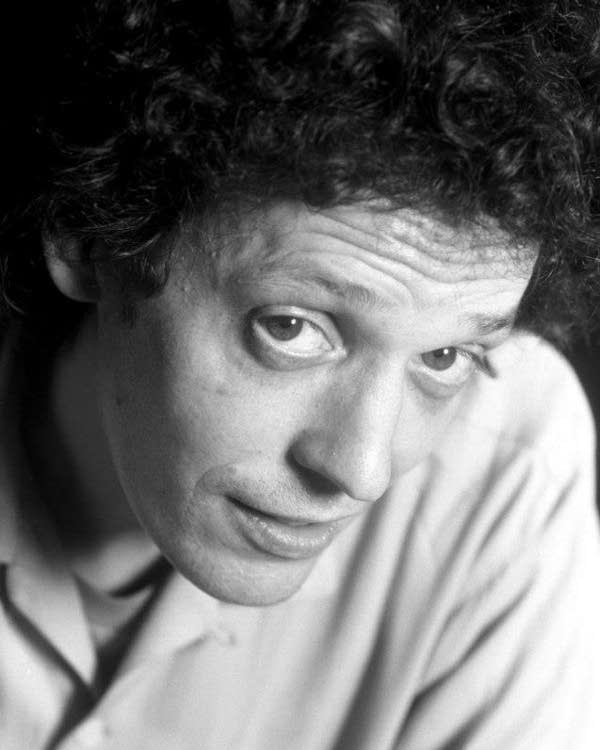
Slim Dunlap portrait courtesy of Songs for Slim. Tony Nelson | 2013

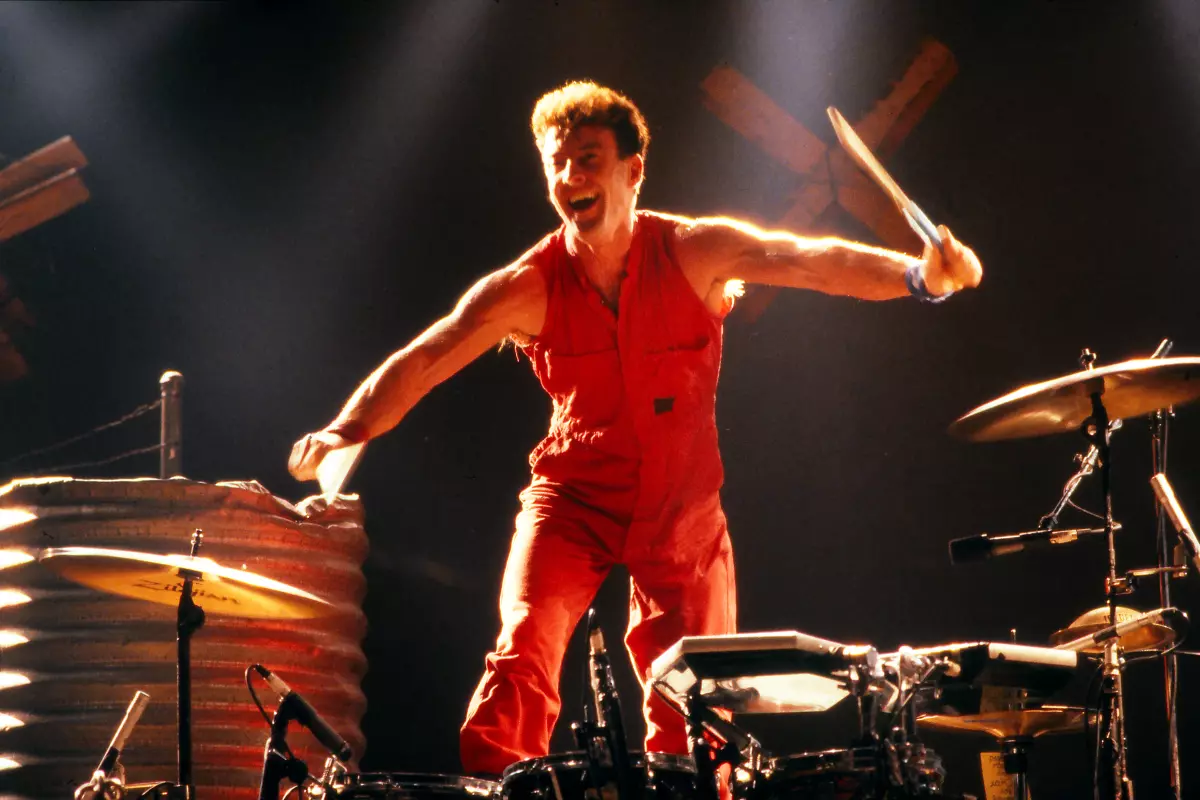
In alternative rock, few figures have had the understated yet deeply impactful legacy Slim Dunlap left behind. As a guitarist for The Replacements after Bob Stinson, Slim didn’t just play music—he shaped it in a way that resonates to this day, even though he remained a somewhat enigmatic figure throughout his life. On the surface, Slim Dunlap might not have been the flashiest or the most publicly celebrated member of the band, but the impact he had on the Minneapolis scene, indie rock, and countless fans around the world is undeniable.

Born on August 14, 1951, in Plainview, Minnesota, Robert “Slim” Dunlap was far from an obvious choice to become a member of one of the most influential bands in American rock history (Yup, I am prepared to die on that hill). But when he was recruited by The Replacements in 1987 to replace founding guitarist Bob Stinson, the band had already passed through several distinct phases. At that point, the group had moved beyond their punk rock origins, beginning to experiment with more expansive sounds and complex emotional undercurrents. They were on the cusp of achieving something bigger, and Slim Dunlap was a missing piece they needed.

The Replacements and the Arrival of Slim Dunlap

Before Dunlap’s arrival, The Replacements were known for their chaotic, often self-destructive live shows and their raw, raucous recordings. Their earlier albums like Sorry Ma, Forgot to Take Out the Trash (1981) and Hootenanny (1983) captured the brash spirit of the early 80s indie scene—songs that were loud, fast, and fueled by youthful defiance. Yet, as the band matured, their sound began to evolve, influenced by a more nuanced approach to songwriting that incorporated elements of rock, folk, country, and pop.

By the time they were recording Pleased to Meet Me (1987), The Replacements were at a crossroads. Bob Stinson, the band’s original guitarist, had been dismissed due to his erratic behavior and substance abuse issues in a far less kind way than he deserved and the band required a stable, skilled guitarist to match their new, evolving direction. That’s when Slim Dunlap entered the picture.

Slim was a seasoned musician with experience in various bands around Minneapolis, most notably playing with Curtiss A, the Rythmaires, Thumbs Up, and offshoot project called Spooks. Dunlap often played with groups as an uncredited journeyman guitar player. He wasn’t a flashy virtuoso but a guitarist who understood how to serve the song. His style was one that was inherently rock ‘n’ roll but was also imbued with a level of restraint that made him an ideal fit for the band’s new sound.

Dunlap’s arrival marked the beginning of a new era for The Replacements. While Pleased to Meet Me was the only Replacements record recorded as a trio of Paul Westerberg, Tommy Stinson, and Chris Mars. Dunlap joined the band shortly after the recording was completed. Although he did not play on PTMM, on tour Slim’s guitar playing shone through in songs like “Alex Chilton,” a tribute to the legendary Big Star frontman, and “Can’t Hardly Wait,” where his melodic sensibility perfectly complemented Paul Westerberg’s aching, almost fragile vocals. What was remarkable about Dunlap was that he didn’t try to outshine anyone; rather, he played in service of the song, knowing exactly when to add a tasteful lick or when to let the space breathe. In doing so, he became an indispensable part of the band’s musical journey.

While Pleased to Meet Me is often regarded as one of The Replacements’ finest works, it’s worth noting that Slim Dunlap’s role was a defining factor in the public’s response to the album in concert. The songs were more textured, with layers of subtlety and nuance that weren’t as clearly present. There were moments of vulnerability—emotional crescendos that wouldn’t have hit quite the same way without Dunlap’s guitar work, which ranged from jangly and bright to soulful and deeply expressive.

Slim Dunlap’s Sound: A Blend of Simplicity and Complexity

In the world of guitar heroes, Slim Dunlap was no virtuoso in the traditional sense. He wasn’t known for lengthy solos or technical wizardry. Instead, his genius lay in his ability to make every note count, to bring out the emotional heart of the song through a simple but powerful approach. Slim had an uncanny ability to play just enough—and sometimes, not even that much. His understated style was influenced by a variety of sources, including classic rock, blues, and country, yet he had a way of blending them into something uniquely his own. Dunlap could wring more emotion from a sustained note than many guitar players.

One of the key aspects of Slim Dunlap’s playing was his use of space. He never overplayed. Slim did not overstay his welcome, allowing the rhythm section to carry the groove while his guitar lines punctuated the songs with purpose. His tone was often clean, ringing with a sense of clarity that gave his solos and licks a kind of elegance. He could throw in a few tasteful notes that elevated a song, never showing off, but always making a statement.

On Don’t Tell a Soul (1989), Slim’s style continued to shine through, even as the band moved in a more mainstream direction. Tracks like “I’ll Be You” and “They’re Blind” featured his ability to craft memorable, singable guitar lines that stayed with you long after the song ended. While Paul Westerberg’s songwriting was front and center, it was Slim’s guitar that often made these tracks feel fully realized. His contributions, though not as heralded as Westerberg’s vocals, were essential in bridging the gap between raw rock ‘n’ roll and the polished pop moments that The Replacements were embracing.

The Legacy of Slim Dunlap

In the years that followed, The Replacements’ career would continue to fluctuate, and by the early ’90s, they were done as a band. Despite this, Slim Dunlap’s work with them would remain a defining moment in the band’s legacy, especially after their breakup. While Westerberg went on to enjoy a successful solo career, Slim remained a more low-key figure. He spent time playing with other musicians and working on his own projects, but it wasn’t until the release of The Old New Me (1993)—his debut solo album—that we truly saw him step into the spotlight on his own terms.

Sadly, Slim Dunlap’s career was cut short by health problems. In 2012, he suffered a debilitating severe stroke, which left him unable to speak or play guitar. It was a devastating blow to the music community, and to the many fans who had followed his career from his days with The Replacements. However, the outpouring of support from his peers, friends, and fans was a testament to the deep love and respect they held for him. His family, and the wider community, came together to raise funds for his care, and a tribute concert was held to honor his incredible influence.

In the years since his stroke, Slim Dunlap’s memory has lived on not just in the music he made, but in the countless tributes from those who were inspired by his work. Fans of The Replacements, in particular, remember him for the warmth and humanity he brought to the band, as well as his quietly brilliant contributions to some of the greatest records in indie rock history.

Slim Dunlap passed away on December 18, 2024, after years of battling health complications. His death marked the end of an era, but his impact on rock music, and on The Replacements in particular, remains indelible. Dunlap may not have been a household name, but his work lives on, proving that sometimes the most important artists are the ones who choose to remain in the background, letting their music do the talking.

In the words of Paul Westerberg, “Slim was the real deal—he was a good guy, a talented guy, and he was just a rock ‘n’ roll soul.” That’s Slim Dunlap: a humble, brilliant musician whose heart and soul poured through every note he played. His legacy will continue to live on through the music that shaped the sonic landscape. Thanks, Slim.

Shane MacGowan: A Poet of the Streets, a Balladeer of Rebellion

In musical history, certain figures stand out as rebels, challenging conventions and giving voice to the unspoken sentiments of their generation. Shane MacGowan, the enigmatic frontman of The Pogues, was undeniably one such luminary. With his gravelly voice, poetic lyricism, and unapologetic embrace of Irish roots, MacGowan became a defining force in the world of punk and folk fusion. As we celebrate the indomitable spirit of his artistic legacy, it’s essential to delve into the essence of the man who breathed life into timeless anthems of rebellion and romance with a bemused wry smile.

Shane Patrick Lysaght MacGowan was born on December 25, 1957, in Pembury, Kent, to Irish parents. Raised in Tipperary, Ireland, he absorbed the rich tapestry of Irish culture, folklore, and music from an early age. This upbringing would later weave its way into the fabric of The Pogues’ music, shaping the band’s distinctive sound and catapulting them to the forefront of the folk-punk movement in the late ’70s and 1980s.

The Pogues emerged in the early 1980s, a tumultuous period where punk’s raw energy collided with traditional Irish folk, giving birth to a genre-bending sonic landscape. MacGowan, with his unruly hair, torn clothing, and a perpetual cigarette dangling from his lips, embodied the rebellious spirit of the times. His persona was a paradox — a punk poet who found solace in the echoes of Ireland’s past while navigating the gritty reality of London’s streets.

At the heart of MacGowan’s brilliance lay his songwriting. His lyrics were a patchwork of vivid narratives, drawing inspiration from the struggles of the working class, the beauty of love, and the tumultuous history of Ireland. “Fairytale of New York,” arguably The Pogues’ magnum opus, encapsulates this duality. Released in 1987 and included on the excellent “If I Should Fall from Grace with God,” the song is a bittersweet tale of love, dreams, and disappointment, set against a backdrop of an Irish immigrant’s Christmas in New York City. MacGowan’s poignant lyrics, combined with Kirsty MacColl’s haunting vocals, created an enduring masterpiece that transcended genres and resonated across generations. The song is just as powerful today as it was when it was first shared with the world.

MacGowan’s ability to infuse punk’s rawness with traditional Irish folk melodies was a testament to his musical prowess. The Pogues’ sound was a collision of tin whistle, accordion, and mandolin, melding seamlessly with electric guitars and drums. This fusion created an anthemic quality that resonated with audiences far beyond the punk and folk scenes. The band’s discography, including albums like “Rum, Sodomy & the Lash” and “If I Should Fall from Grace with God,” became a sonic pilgrimage for those seeking a rebellious yet nostalgic journey through the Irish soul.

Beyond the music, Shane MacGowan’s stage presence was a spectacle itself. Often appearing disheveled and seemingly unbothered by conventional norms, he commanded attention with an almost hypnotic charisma. His performances were raw, unfiltered, and charged with an energy that mirrored the rebellious heartbeat of punk. Whether he was stumbling across the stage or bellowing lyrics with raw intensity, MacGowan’s presence was a visceral experience that left an indelible mark on anyone fortunate enough to witness it.

However, behind the chaotic exterior and raucous performances, Shane MacGowan grappled with personal demons. Substance abuse, particularly his well-documented struggles with alcohol, became a defining aspect of his narrative. It was a tumultuous dance with self-destruction that added an element of tragedy to his story. Yet, even in the midst of personal battles, MacGowan’s commitment to his craft remained unwavering. His resilience, coupled with an unyielding passion for storytelling through music, showcased the depth of his artistic dedication.

As the years passed, MacGowan’s physical appearance became a visual testament to the toll his lifestyle had taken. The once-youthful firebrand now sported weathered features, a visible testament to the battles fought both on and off the stage. Despite the toll of time and excess, his voice retained its distinctive rasp, a testament to the enduring power of his artistry.

The Pogues disbanded in 1996, marking the end of an era. While the band members pursued individual projects, MacGowan continued to make music and collaborate with various artists. His solo work, including the critically acclaimed “The Snake” album, showcased a more introspective and nuanced side of his songwriting. Even in the absence of The Pogues’ collective energy, MacGowan’s solo endeavors demonstrated his ability to evolve while staying true to his roots.

Shane MacGowan’s impact extends beyond the realm of music. His influence reverberates through the works of countless artists who found inspiration in the collision of punk’s defiance and folk’s storytelling. The Pogues’ legacy, anchored in MacGowan’s vision endures as a testament to the enduring power of musical rebellion and cultural fusion.

In the wake of his passing, the world mourns not just a musician but a poet, a storyteller, and a provocateur. Shane MacGowan’s journey was one of highs and lows, a tumultuous ride through the corridors of creativity and chaos. His legacy, however, is etched into the very fabric of musical history, an indomitable force that continues to inspire those who seek the unbridled spirit of rebellion and the timeless beauty of poetic expression.

2022 Memorial Show Today

This week we take a moment and remember many of the musicians that we lost in 2022. Our good friend Tom Gilliam of the terrific Dayton band Ghost Town Silence joins Dr. J to pay tribute to those we lost last year. We will play music made, written, and produced by artists such as Taylor Hawkins (Foo Fighters), Jim Stewart (Stax Records), Jerry Allison (Buddy Holly and The Crickets), Don Wilson (The Ventures), Christine McVie (Fleetwood Mac), Anita Pointer (The Pointer Sisters), Jerry Lee Lewis, Dino Danelli (The Rascals), Lamont Dozier (amazing part of the Holland-Dozier-Holland songwriting team), Joe Messina (The Funk Brothers), Andy Fletcher (Depeche Mode), Mimi Parker (Low), Terry Hall (The Specials, among other projects), Ronnie Spector (legendary led vocalist of The Ronnettes), Meat Loaf, Tyronne Downie (Bob Marley & The Wailers) among many others.

Neal Casal Music Foundation: A Worthy Effort

Neal Casal FoundationThe Neal Casal Music Foundation is an exciting effort to support a number of charitable initiatives that were a part of Neal Casal interests, most notably provide music instruments and lessons to students in New Jersey and New York state schools where Neal was born and raised. The NCMF is also seeking to strengthen mental health care among musicians.

A Kickstarter has been launched to help raise money for the foundation through two primary packages: a 30-plus song tribute album, ‘Highway Butterfly: The Songs of Neal Casal’ and a coffee table photography book, ‘Tomorrow’s Sky: Photographs by Neal Casal.’ We are happy to report that the kickstarter has already raised over $33,000 toward the NCMF’s good works!

Visit the Foundation’s website to investigate the campaign and to read Rolling Stone’s feature about the foundation. The site also has video premiere of Billy Strings with Circles Around The Sun performing Neal’s song “All The Luck In The World.” The Neal Casal Foundation is hard at work completing this amazing project with a full release planned for spring 2021. Also check out their Facebook page where they will share more exclusive details on this amazing album and other initiatives over the next several weeks!

your-tuesday-afternoon-alternative-color copy

YTAA 2017 Memorial Show

WUDR before

Every year Tom Gilliam and Dr. J play music from all of the musicians and artists that we lost in the previous year. 2017 was an especially challenging year with the passing of Tom Petty, Tommy Keene, Gregg Allman, Chris Cornell, Joni Sledge, Al Jarreau, Malcolm Young, Prodigy, Chester Bennington, J. Giels, Clyde Stubblefield, Glen Campbell, David Cassidy, Pete Young, Walter Becker, Mel Tellis, Butch Trucks, John Wetton, and Pat DiNizio; as well as the loss of musical trailblazers like Fats Domino and Chuck Berry.

So, join Tom and Dr. J as we reflect on the musicians that joined the heavenly choir on Your Tuesday Afternoon Alternative from 3-6pm on WUDR Flyer Radio. You can listen along at wudr.udayton.edu or 99.5 & 98.1fm in Dayton, Ohio!

Video of the Day: The Afghan Whigs featuring James Hall – You Want Love (Pleasure Club Cover)

The Afghan Whigs’ new single is a cover song that they recorded in tribute to the band’s late guitarist Dave Rosser, who passed away last month following a brave battle with inoperable colon cancer.  Rosser’s incredible guitar work can be heard on 2014’s ‘Do To The Beast’ and the album released this year ‘In Spades.’  Rosser had also played with Greg Dulli and Mark Lanegan in The Gutter Twins and in the post-Whigs project, The Twilight Singers, prior to the return of The Afghan Whigs in 2011.

“You Want Love” was first recorded by the now-defunct New Orleans band Pleasure Club, whose musical force James Hall contributes vocals to The Afghan Whigs’ new version of the song.  Thank you for the fine music Mr. Rosser.

The Afghan Whigs: http://afghanwhigs.com/
Twitter: https://twitter.com/theafghanwhigs
Facebook: https://www.facebook.com/TheAfghanWhi…
Instagram: https://www.instagram.com/theafghanwh…
on Tour: http://www.subpop.com/tours/the_afgha…
Sub Pop Records http://www.subpop.com

cropped-cropped-ytaa-monster-cropped.jpg

Karl Benge Memorial Show

11150665_10204190926193961_8367249748040504488_nThis week we have a heavy heart on Your Tuesday Afternoon Alternative

It is so often said that music makes all of us connected to one another. It makes us family. Days ago we unexpectedly lost a member of the Dayton, Ohio music family. Our good friend Karl Benge left us for another new adventure far too soon. And while we grieve for this loss, we come together to remember Karl and his contributions as a musician and a sound engineer.

In an effort to assist his family, members of the Dayton music community have organized a fantastic fundraising benefit show to help with the funeral expenses. The concert fundraiser will be held at the Oregon Express on May 16 from 9pm to 1:30am. The cost for this event is a $3 donation (although you can certainly contribute more if you wish). Do not miss this event! Information about where you can make a donation if you cannot attend will be shared soon.

All performers are donating their time to help raise money for Karl’s family. The lineup so far includes Tim Berger, Sharon A. Lane, Charles Hartman of OldNews, Brian Hoeflich, David Payne of The New Old-Fashioned, Paige Beller, Dip Spit, Todd T. Fox, a not to be missed reunited Orange Willard, and most appropriately the show will close with The White Soots performing without Karl.

The show this week will include music and memories of Karl Benge and in order to do justice to his memory – Tim Berger, Kyle Byrum, and Gretchen Reise Kelly will join us in studio discussing their friend Karl with all of us.

If you have a story that you wish to share — please email drjwudr@gmail.com or feel free to post it on our Facebook page. If you would like to share a remembrance during the show, please call 937-229-2774 between 3-6pm (e). Remember to hold onto one another during the challenging times. Life may hold pain, but life is not pain.

More information will also be posted on the event page for the fundraiser as it becomes available.

Phillip Bremer Memorial Fund

Sadly we have lost one of our own in the music community in Dayton.

The Phillip Bremer Memorial Fund has been established at the Montgomery county credit union at 409 E Monument Ave. Dayton, OH 45402. 937-224-4050 for Phillip Bremer. Phillip passed unexpectedly and we are seeking support. He leaves two young children behind so please give what you can. The website for the credit union where the fund has been set up is http://www.mccuinc.com.

Please consider donating.