The Shining Sound of Soft White Gold

Just watched the Music Box documentary on Yacht Rock and while I really enjoyed the doc and learned a lot, I have a few thoughts.

Let’s get something straight right away. What you think you know about yacht rock, the fluffy sound of pastel sunsets and private islands that has become this new-age cultural obsession, probably isn’t it. You’ve heard it described as “easy listening,” “smooth,” and “classic,” but that’s missing the point. It’s not just the music. It’s the myth, the lifestyle, and more importantly, the swagger of a scene that existed so perfectly between 1975 and 1984 that it might as well have been designed by a board of directors on a private jet circling above Malibu. But let’s go deeper. Let’s talk about the boat.

Now, I know what you’re thinking. “Dr. J, come on, you’re gonna write a whole column about yacht rock? About that thing that’s been hijacked by irony and people who don’t even know who Steely Dan is?” Yes. Yes, I am. Because yacht rock isn’t just about the Steely Dan hits or Hall & Oates’s most absurdly catchy singles. It’s about capturing that moment in time when the music was way too smooth for its own good, when it gleamed like a diamond but had a heart of condescending, bougie brass. This is the kind of music that, if it were a drink, would be a gin and tonic mixed by someone who’d never seen a factory, whose whole life had been spent swimming through trust funds and palm trees. And that’s what makes yacht rock not only fascinating but, in a sick way, beautiful.

The term itself came from a set of YouTube videos where some twentysomething comedians, probably using too much gel in their hair, tried to describe the genre by showing clips of a pretend Michael McDonald crooning into a microphone in a ridiculously pristine studio and footage of people on boats with their aviator glasses reflecting back the California sun. It was a term born out of the early 2000s nostalgia machine, washed through a modern lens of irony and undercut by hipsters who loved to act like they were the first to discover what we were already all too familiar with from an incessant amount of radio airplay. But when you put the irony aside—yes, even you, Mr. Mustache and Lumberjack Flannel Guy—the truth is undeniable: yacht rock is brilliant, and in its own way, it’s a microcosm of the 1970s and early ’80s: the last days of the American dream before it descended into the ironic, grating corporate nightmare it would later become. Think in terms of the corporate rock of ’80s Journey or later period Styx.

Yacht Rock isn’t just music—it’s a way of being. A sonic ritual, a testament to the last great age of the American elite who could pull off a smirk without breaking a sweat or even the tiniest hint of sarcasm. The millionaires who sat at dinner parties telling stories about private planes, untraceable offshore bank accounts, and their perfectly groomed Labradoodles. And, yeah, when they popped in a Hall & Oates tape or fired up the Boz Scaggs album on vinyl, they weren’t just looking for an aesthetic. No, this was the soundtrack to their lives, their enviable lives where everything was polished and dripped with the perfect mixture of effortless cool, and terrifying boredom.

Yacht Rock is fundamentally lazy. This isn’t rock music for people who give a damn about being rebellious or standing for anything. This is the sound of those who’ve long given up on caring and instead embraced the art of looking like they don’t care at all. And if you’ve ever wondered what happens when the desire for wealth and success collides with a complete and utter lack of passion—look no further. This is yacht rock’s emotional landscape. Look at the lyrics of “Africa” by Toto, for instance: it’s the sonic equivalent of sitting in a mansion in a hot tub while someone brings you another margarita. There’s no world-threatening crisis in the background, no apocalyptic landscape looming on the horizon. The only looming thing is the sunset on a yacht deck, the plush leather seats in the air-conditioned salon, and the real prospect of not doing anything for the next 45 minutes while a vague sense of satisfaction pervades your soul.

I’m not saying yacht rock isn’t talented. It’s composed with musical precision that I, and maybe you too, have to admit is impossible to ignore. The chord progressions are impeccable, smooth without crossing into sugary. The musicianship? Slicker than a greased weasel. Michael McDonald’s falsetto was made to soar over a sea of impeccably placed synthesizers and guitars that no longer knew how to rock—only to glide, dream-like, toward the horizon. Jeff Porcaro’s drumming on Toto’s hits has a loose-tight perfection that makes you feel like you’re cruising, even if you’re sitting in your bedroom, staring at a T-shirt with a tiger on it.

But there’s an undercurrent to yacht rock that sets it apart from your average cheesy ‘70s pop. It’s the dark side of paradise, the awareness of its own emptiness, a reflection of a time when everyone, in a desperate attempt to have it all, realized that they had lost it. It’s that strange, magnetic pull between desperation and detachment.

Take, for example, the 1979 smash hit “What a Fool Believes” by the Doobie Brothers. It’s a killer track, sure—undeniably catchy, sweet, and clean. But the song’s protagonist, though utterly convinced he’s still in the game with some former lover, is a fool. It’s almost a warning, but not quite, a portrait of men in their prime, still obsessed with their fading youth, convinced they can recapture it, even though they never could. Yacht rock is rife with these kinds of paradoxes. The juxtaposition of slick, professional presentation and emotional desolation makes it deeply compelling, even as it lures you into its own trap.

Some would say that yacht rock is just ’70s soft rock with the volume turned down. I get it; it’s easy to dismiss. It’s easy to call this stuff middle-aged dad music or even worse, corporate background noise. But dismissing yacht rock is like dismissing the materialism of the 1980s by calling it just ‘cheap plastic.’ You don’t really get it unless you understand that the music was the product of an era, a time when the American dream was sold with a glossy, well-packaged exterior but was as hollow as the yachts it was named after. The lush, tropical sounds could’ve only come from an era obsessed with excess but hiding an ugly truth beneath the surface. There’s something unsettling about yacht rock, an idea that keeps pulling you in even as you feel yourself getting stuck. It’s like a perfectly formed trapeze swing at the edge of the world—inviting, smooth, but ultimately designed for you to fall off into the unknown.

Yacht rock also does something even rarer—it’s tragic without being overtly melancholic. When I listen to Steely Dan’s “Peg,” for instance, I can hear a longing in the gleaming production, a sense of trying to perfect something that can never be perfected. The track glistens like the dashboard of a car you never want to get out of. The keyboard melodies are so tight you could cut glass with them, but then Donald Fagen sings about a love that doesn’t care. And that’s the thing: Yacht Rock is all about yearning for something just out of reach, even as it sips from the top of the financial food chain. It’s crafted into a beautiful lie we’re all willing to buy into because we think that we need it. In the end, the joke’s on us, but the joke sounds damn good as we gently nod or heads to the tune.

Let’s not kid ourselves. Yacht rock is not about rocking. This isn’t your punk or your heavy metal or even your classic rock. This is smooth sailing, low-effort, aesthetically tuned, self-aware decadence that’s more about the vibe than the actual substance. It’s a celebration of excess, yes, but more than that—it’s the soundtrack of the very realization that excess itself is meaningless. So let’s set aside the hipster irony and take the music for what it is: a time capsule of a world that floated effortlessly toward the horizon without ever looking back. A place where love and loss, wealth and alienation, beauty and emptiness were all woven together in a smooth, crystalline melody with unassailable harmonies.

And here’s the thing—if you’ve ever found yourself on a boat, or even just on the edge of a dream, trying to forget the world for a moment, yacht rock will be there waiting for you, like an old friend who never quite left. So yeah, it’s Yacht Rock. It’s slick, it’s soft, and it’s, in its own absurd way, the music of a generation that sailed too close to the sun.

And God help us, it still shines.

Short Songs Have Every Reason to Live

Apologies to Randy Newman for the title, I just could not help myself. We all love a good, long album, don’t we? The sprawling epics, the suites, the ambitious arcs that stretch into the horizon like the great classic rock composers, forever nudging us to find meaning in the slow build, the dramatic rise, and the quiet moments in between. But what about the short, sharp, explosive bursts of sound? What about the brief moments when the band isn’t asking you to follow them through a journey or listen to their complicated metaphors for life? No. These songs grab you by the throat, punch you in the gut, and leave you feeling strangely satisfied, if not slightly unsettled. They take less time than most elevator rides, yet they can leave an emotional scar more enduring than any prog-rock symphony.

So what is it about these short songs that keeps us coming back for more? Why do they work on us so profoundly, often without the luxury of extended introspection or complicated arrangements? Perhaps it’s because they are the sound of life itself—imperfect, intense, and fleeting. Some of the joy is in the very fact of existence. As much as the towering albums of our favorite bands represent a broader spectrum of emotion, there’s something brutally honest and pure about a song that cuts through all the clutter, hits you, and leaves. Let’s take a look at the power of these little bangers, and why they can sometimes be the most influential songs in the world.

Short Songs: The Art of the Quick Impact

Lester Bangs, god rest his sarcastic and critical soul, understood the beauty of brevity. Bangs wasn’t one to be bogged down by theory or length—he appreciated the visceral punch of the immediate, unfiltered emotion that comes from a quick blast of sound. Short songs demand attention, forcing listeners into an intense, often surprising relationship with the music. There’s no room for pretension or self-indulgence. The song either works, or it doesn’t. It’s just you and the music, for as long as it lasts—maybe a minute, maybe three, but never more. The art of the short song lies in its ability to do something profound in a limited time frame, leaving you with a lasting impression, or even a gnawing feeling, long after the final note has passed. This is something that Robert Pollard is an undisputed master of.

Consider a song like The Ramones’ “Blitzkrieg Bop.” It’s barely two minutes long, yet it feels like the embodiment of youthful rebellion, an anthem that encapsulates everything that punk was about—raw energy, simplicity, and urgency. You can hear it, and it’s already over before you’ve had time to think about it. The beauty of this lies in the idea that this song doesn’t ask for reflection, doesn’t demand your intellectual labor, and doesn’t beg for analysis. It just exists—a blur of riffs and hooks that sums up a generation in its frantic sprint.

The brevity of such songs allows them to penetrate deeper than a 10-minute waltz ever could, or at least with more immediate results. A song like “I Wanna Be Your Dog” by The Stooges, which comes in at just under three minutes, does more in those 180 seconds than most of the bloated albums of its time could ever hope to accomplish. It’s simple, dirty, primal, and unrelenting—stirring up more in you in a few short moments than you might expect from an entire album. The impact of these songs is often direct, like a cold slap in the face, forcing you to reckon with them immediately.

The Radio Effect: Why Short Songs Work on the Airwaves

Here’s the thing—short songs don’t just get to your head. They get to the ears of the listener. That’s because brevity is a tool that radio stations, especially in the era before streaming, loved to exploit. The shorter the song, the more it could be played in a given timeframe, and the more it could break through the noise. The best of these songs—ahem, the ones that actually had something to say—became iconic because they didn’t overstay their welcome.

Let’s talk about The Clash for a minute. Their song “London Calling” clocks in at just over three minutes. Sure, it’s a little longer than “Blitzkrieg Bop,” but it still falls into that sweet spot where it feels like a complete statement that doesn’t need to drag on. It’s infectious, it’s compelling, and it doesn’t waste time telling you what’s wrong with the world—it shows you. The energy of the song doesn’t let you get bogged down in excessive flourishes or unnecessary complexity. By stripping away the fat, the band leaves you with pure, unadulterated punk rock power.

Even though London Calling might not be the shortest song on the airwaves, its ability to harness the raw spirit of rebellion in such a brief time makes it the epitome of what a short song can do—take over the world, turn everything upside down, and leave you wanting more. Which, let’s face it, is what we all want from a song, anyway.

The Punch and the Aftertaste: How Short Songs Leave Their Mark

Here’s the funny thing about short songs—they often don’t have the time to linger. But that’s what gives them their staying power. They are designed to stick with you, like a one-night stand that leaves you with a hangover of thoughts and feelings you can’t shake off. After just a brief encounter, they slip into your subconscious, grabbing your brain and twisting it in unexpected ways. They linger, even though they don’t have the time to do so.

Take for example, a song like “Fell In Love With a Girl” by The White Stripes. It’s a burst of electric energy that clocks in at just under two minutes. But what makes it so unforgettable is its immediacy. The riff, the rhythm, the lyrics—they don’t give you time to do anything but react. You’re in it, you’re out of it, but the song sticks with you, lingering in your head long after it’s over.

This is the power of a short song. It may be over before you’ve even had time to process it fully, but that doesn’t matter because the impact is there. Bangs would understand that these moments—these songs that don’t let you breathe—carry an emotional weight that’s disproportionate to their length. The brevity works because it doesn’t give you time to second guess, to dissect, or to overthink. It’s pure, undiluted emotion that cuts through the noise, like a sucker punch to the gut.

“Walkaways” by Counting Crows is the kind of song that hits like a slow-motion crash—strummed guitar and Adam Duritz’s vocals unraveling with all the desperation of a last-ditch attempt to save something that was doomed from the start. There’s a bittersweet, almost reckless honesty in the way he sadly almost pleads the lines:

I’ve gotta rush away
She said, I’ve been to Boston before
And anyway, this change I’ve been feeling
Doesn’t make the rain fall
No big differences these days
Just the same old walkaways

The rhythm is wistful and haunting, like a dream you can’t escape but desperately need to get farther and farther from it and then find you did not take a single step. It’s a beautiful mess—a reflection of how all of us bleed, falter, and still somehow move forward.

Short Songs and the Change They Ignite

Now let’s get to the meat of it—the impact these songs have on listeners. Why are they so powerful? Because they demand attention. You blink and it’s gone. In a world saturated with noise, social media distractions, and endless content, these short songs remind us of a time when music could be something immediate, spontaneous, and anarchic. They explode into your world and leave you questioning everything, and then, before you can fully comprehend it, they vanish.

They also create a sense of community. Every fan of punk rock, indie, or garage knows that feeling when you’re in a room full of people and the first few chords of a short, familiar song kick in. The energy shifts. You can feel the collective understanding—everyone knows the song, everyone knows the intensity, and it’s about to hit us all at once. That communal feeling, that shared experience, amplifies the effect of the song, making it a primal ritual, a call to arms that’s delivered in the simplest of packages.

Short songs give us permission to feel in ways that long-winded tracks often can’t. They teach us that the most significant moments are often the briefest. That intensity doesn’t have to take hours to build. That revolution, rebellion, love, and loss can be boiled down to a few lines, a few chords, a few seconds. The brevity is part of their power.

Smug Brothers’ “Hang Up” is a sweaty, gritty blast of pop-punk that comes at you like a shot of espresso chased by a beer. It’s raw, it’s relentless, and it doesn’t care if you’re ready for it. The guitars jangle like a rusty chain being dragged across pavement, while the lyrics tap into that familiar frustration, the kind that never seems to go away. But the brilliance of this song is its brevity—it hits hard, gives you no room to breathe, and then it’s gone, leaving you half-alive, craving more. It’s chaos wrapped in catchy melodies—perfectly imperfect. Smug Brothers understand the power of a brilliant song can sometimes be best demonstrated by not lingering.

The Brief, the Bold, and the Beautiful

In the end, short songs are, to borrow from Lester Bangs himself, a “shotgun blast of truth” that demands to be felt, not analyzed. They are the anthems of chaos, the rebellion of simplicity, and the embodiment of that glorious moment when everything aligns just right. These songs may be brief, but in that briefness lies their eternal power.

Bangs would’ve told you that these little ditties are a reflection of life’s fleeting nature. Sometimes, you get a moment that burns so brightly, you’re left staring at the ashes afterward, not even sure how it happened. And the short song is the perfect vehicle for that kind of magic. Whether it’s two minutes, three minutes, or less, these songs will always have something to say—something that’s too urgent to stretch out, something that can only be told in a flash, like a lightning strike across the sky.

Screaming in the Dark: How Rock Lyrics Tear Your Soul Open and Leave You Wanting More

Rock and roll has always been a violent, all-consuming beast that claws at your insides and leaves you aching for more. But it’s not just the guitar riffs that keep you coming back; it’s the words. The lyrics, when they hit, can get under your skin, lodge in your brain, and make you feel like you’ve been struck by lightning—or a falling star, depending on how poetic you want to get. The best rock songs are often the ones that tear down the walls between the listener and the songwriter, making you feel as if you’re walking through the fires of their soul, even if they don’t want you there.

This kind of raw vulnerability, this open wound of expression, can’t be faked. And if it is, you know it. But when it’s authentic? When it comes from a place that is somehow both personal and universal? That’s when you hear it: the sound of someone throwing everything they have into their lyrics, turning something that might just be a scribbled note into an anthem for the disillusioned.

And that’s where songs like those from The Connells, The Counting Crows, R.E.M., and The Replacements come in. They’ve got it—whatever it is. And they know how to wield it like a sword, carving out spaces for us all to exist inside their verses. It’s not just about being clever or complex. It’s about being real. It’s about making you feel something.

So what makes these lyrics powerful? Let’s dive in and break it down.

The Connells – The Beauty of the Everyday Struggle

Let’s start with The Connells. They’re like that band you heard on the radio and never quite knew whether you were supposed to cry or just nod along to the rhythm. Their song “74-75” is a classic example of lyrics that don’t just tell a story—they pull you into the middle of it, making you feel like a participant rather than an observer.

The thing about “74-75” isn’t the narrative; it’s the way it captures a feeling, a sense of longing for a time that’s already passed, a time that exists only in memory. The line “I was the one who let you know
I was your “sorry ever after”/’74-’75”
hits with the subtle melancholy of a songwriter who knows that the world they once envisioned didn’t quite turn out as expected. There’s no bitterness, no anger—just a quiet resignation. It’s not the anger of punk or the bombast of glam rock, but something more delicate: a personal and collective sadness.

This sense of fading away, of history marching on regardless of your desire to keep up, is where The Connells find their power. The lyrics don’t scream for attention. They don’t force you to accept them. Instead, they settle in, like the dust in an old attic that you haven’t bothered to clean. In a way, The Connells’ ability to articulate the passing of time, the things that slip away without us even realizing it, taps into a very human vulnerability: we can’t stop the inevitable, but we can remember, and sometimes that’s enough.

Counting Crows – The Beauty of Messy, Imperfect Souls

Counting Crows are often described as the quintessential ‘90s band, and while that might seem like a dismissive label to some, it’s hard to ignore how well they captured the emotional complexity of that era. The lyrics in songs like “Mr. Jones” or “A Long December” are imbued with a kind of longing that speaks to the frustrations of being stuck in your own head, lost in self-reflection, while also looking outward toward the world and wondering why it all feels so… empty.

There’s a rawness in Adam Duritz’s delivery, a sense of vulnerability that comes across as both introspective and confessional. In “A Long December,” Duritz sings, “And it’s been a long December, and there’s reason to believe / Maybe this year will be better than the last.” The power here isn’t just in the lines themselves but in the tone—the weariness in Duritz’s voice, the way it wavers, suggesting that this isn’t just about a bad month or a rough time. It’s about the constant cycle of hope and despair, the cyclical nature of life that repeats even though you don’t want it to. The power of Counting Crows’ lyrics lies in their ability to capture that very human struggle: the push-pull between wanting to believe things can get better and the awareness that life often doesn’t give you any guarantees.

But it’s not just about the sad, reflective moments. Counting Crows are also masters of finding beauty in the messiness of life. In “Mr. Jones,” Duritz sings about longing for fame and success, but in a way that’s almost self-deprecating, revealing the insecurity that so often accompanies dreams of grandeur. There’s something painfully human about the way he expresses these desires, especially when paired with the upbeat, almost celebratory musical backdrop. It’s as if Counting Crows are trying to convince themselves that they can rise above their own doubts, even if they don’t fully believe it. This contradiction—wanting something so badly while knowing it won’t solve your problems—is what makes their lyrics hit so hard.

R.E.M. – The Beauty of Ambiguity and Mystique

Now, R.E.M. is where things get interesting. They’re a band known for their obtuse, enigmatic lyrics—songs that you can never quite figure out, yet they speak to you as if they understand your deepest thoughts. “Losing My Religion” is the prime example of this. Michael Stipe’s lyrics are fragmented, filled with obscure references, and yet they carry an emotional weight that speaks to the very heart of human confusion and self-doubt.

“Losing My Religion,” for instance, is about more than just faith; it’s about the moment when you realize that the rules you’ve followed might not hold true anymore. The phrase “losing my religion” isn’t literal. It’s not about God or theology—it’s about that overwhelming sense of being on the verge of breaking, of seeing everything you thought was true start to unravel. Stipe’s voice doesn’t just sing these words; it resonates with the sorrow of understanding that, sometimes, there is no answer. The ambiguity is powerful because it reflects the messiness of our own lives: we’re all searching for meaning in a world that doesn’t provide any simple answers.

R.E.M.’s strength lies in their ability to articulate universal feelings—loss, confusion, longing—through highly ambiguous lyrics. You might not always know exactly what they’re talking about, but you know what it feels like. And that’s what makes their songs so potent. They create a space where the listener can impose their own experiences, their own meanings, into the lyrics, making each song feel personal.

The Replacements – The Beauty of Chaos and Rebellion

And then there are The Replacements. If R.E.M. is ambiguity, The Replacements are the messy, unpolished, chaotic force that says, “Here I am, take me or leave me. Either way, we don’t care.” There’s an undeniable power in their ability to capture the feeling of disillusionment with the world, but they do it with a defiance that borders on self-destructive. Their lyrics are often frantic, raw, and vulnerable as if the band is afraid that, if they don’t get it all out in one go, they might implode.

Take “Bastards of Young,” for example. It’s a call to arms for the disaffected youth, the ones who are always on the outside, looking in. The repeated refrain “We are the sons of no one / Bastards of young” rings with both anger and an almost celebratory tone—like a badge of honor worn by those who never quite fit into society’s neat little boxes. What’s powerful about this is that it isn’t just about rebellion for the sake of rebellion. It’s about a deep-seated sense of alienation, a recognition that the world may never accept you, and maybe that’s okay.

There’s a sense of desperation in these lyrics, a feeling that maybe the only way to survive is to burn everything down. But there’s also humor, even in the chaos, a reminder that life is messy, imperfect, and sometimes beautiful in its destruction.

The Power of Lyrics in Rock and Roll

The lyrics that make rock and roll so potent aren’t the ones that try to fit neatly into a box or explain everything away. They’re the ones that dive into the mess of human existence and say, “This is who I am, for better or worse.” It’s the raw vulnerability of The Connells’ reflections on time, the longing and self-doubt of Counting Crows, the cryptic mystery of R.E.M.’s disillusionment, and the raw, unvarnished chaos of The Replacements that make rock and roll lyrics so powerful. It’s not simply about the clever wordplay or the polished metaphors—it’s the truth, delivered with all the mess and pain that comes with it.

Rock and roll is about real emotions. And the best songs? They make you feel something, deep down—whether you want to or not. And we are all the better for it.

Exploring the Tragedy of Unheard Records

In the digital streaming age where we all have instant access to an unparalleled variety of music — at least for now, it may seem paradoxical to consider the existence of unheard records. With thousands of records released every year and thousands of songs uploaded to streaming services every week, the sheer amount of available music is overwhelming. The vastness of the musical releases, coupled with the continuous influx of new creations and the persistent legacy of past works, results in an overwhelming number of records that remain unheard each year. Let’s delve into the reasons behind this phenomenon, exploring the factors contributing to the vast pool of undiscovered musical gems and considering the implications for both artists and listeners.

One of the strengths of music culture is the unending craft of music creation. The United States has long been a melting pot of diverse cultures, each contributing to the fantastic mix of musical genres and styles. From the birth of jazz in New Orleans to the rise of hip-hop in the Bronx, to the adventure of electronic music across the country, American music has evolved and branched out into an extraordinary array of forms. This constant evolution, driven by creativity and cultural cross-pollination, ensures a continuous influx of new records into the musical ecosystem.

The music industry, with its multifaceted nature, encompasses not only mainstream genres but also a plethora of incredible niche and independent scenes. While popular artists dominate the radio airwaves and streaming platforms, countless talented musicians operate in the peripheries, creating music that often goes unnoticed by the mainstream audience which we consider a distressing fact — and a mission of Your Tuesday Afternoon Alternative to address. YTAA as a radio show always focused on independent, local and amazing music that needs to be heard.

The expansive musical universe, we all inhabit, ensures that a considerable number of records go unheard each year simply due to the sheer volume of new releases and a cultivated ignorance of the mainstream record labels to push a limited number of artists and records, and a continuation of a narrowcasting approach by radio and streaming services. Consider Spotify’s financial model focusing on records that have high sales and high engagement. And this problem — and we think of the situation as a problem — is occurring despite an increase in the sales of physical copies of records. According to Oliver Payne, writing at Music Tech.com, “Physical album sales overall also saw a notable rise of 13.3 per cent in 2023, with 41.5 million physical copies sold compared to 2022’s 36.7 million. Notably, direct-to-consumer vinyl sales experienced substantial growth, reaching 2.6 million sales.”

The advent of digital technology and the rise of streaming platforms have revolutionized the way we consume music. It is not unreasonable to think of this as a digital deluge. While this has undoubtedly increased accessibility, it has also contributed to the phenomenon of unheard records. The democratization of music production means that anyone with a creative spark and basic equipment can produce and release music independently. And this opening for musicians is to be applauded and supported so that musicians regardless of reach can create music. Consequently, the sheer volume of music flooding online platforms can be overwhelming, making it challenging for even the most dedicated music enthusiasts to sift through the multitude of releases. An amazing song or incredible record can fall through the proverbial cracks all too easily.

Moreover, as we allude to earlier, the algorithms employed by streaming services often prioritize popular and commercially viable tracks, relegating many lesser-known gems to obscurity. As a result, artists operating outside the mainstream are faced with the daunting task of breaking through the digital noise to capture the attention of potential listeners. This digital deluge, while providing unprecedented opportunities for artists to share their work, also contributes to the growing pool of unheard records.

Economic realities and the struggle for visibility in a highly competitive music industry, is a core concern tied to unheard records. The economic considerations play a significant role in determining which records rise to prominence and which remain in relative obscurity. Major record labels, with their considerable resources, can afford extensive marketing campaigns and promotion efforts to elevate their artists into the public eye. Independent and unsigned musicians often face financial constraints that limit their ability and time to invest in promotion. Which assumes that artists are even interested in promotion in a challenging media and advertising environment in the first place. This issue motivated us to have conversations with musicians invested in music promotion on our podcast, Uncool Music Conversations with Andy & Art.

The lack of financial backing can result in talented artists creating exceptional records that languish in the shadows, unable to break into mainstream consciousness. In this context, the economic realities of the music industry contribute to the perpetuation of unheard records, creating a barrier for many artists to achieve the visibility they so richly deserve.

Taste curation, both on an individual and collective level, plays a pivotal role in determining which records gain traction and which fade into uncertainty regardless of how compelling an album or a song is for someone. Individual listeners often gravitate toward familiar genres, artists, or styles, limiting their exposure to a broader spectrum of musical offerings. Additionally, the collective taste of society, shaped by trends and cultural influences, can create a homogenized musical landscape that excludes many innovative and boundary-pushing works. Part of the challenge is encouraging music fans to listen to music that they do not know. Taking a chance on unfamiliar music remains a serious impediment for getting music heard.

Furthermore, the influence of music critics, radio stations, and streaming service playlists can shape public opinion and contribute to the perpetuation of certain genres or artists at the expense of others. This taste curation, while serving as a valuable guide for listeners, can inadvertently lead to the neglect of numerous records that fall outside the established norms.

The existence of unheard records has profound implications for artists, both established and emerging. For established artists, the pressure to conform to market trends and maintain commercial success can stifle experimentation and creativity. This not only limits the artist’s ability to explore new musical territories but also contributes to the saturation of certain genres at the expense of others.

Emerging artists, on the other hand, face the uphill battle of gaining visibility and recognition amid the vast sea of unheard records. The struggle for attention in a crowded digital landscape can be disheartening, and many talented musicians may find themselves overlooked simply due to the fierce competition for audience engagement.

The phenomenon of unheard records is not merely a challenge for individual artists but also has broader implications for the overall diversity and innovation within the space of music. The musical diversity and innovation are limited when all of the attention in music is devoted to just a handful of artists or albums. When a significant portion of the musical output remains undiscovered, the potential for cross-pollination of genres, the emergence of new styles, and the evolution of musical forms is hindered.

Diversity in music is a crucial aspect of cultural expression, reflecting the myriad perspectives and experiences within society. The failure to recognize and appreciate a wide range of musical creations diminishes the richness of the cultural tapestry of music, limiting the potential for innovation and the exploration of new sonic frontiers.

Let’s consider potential solutions and avenues for discovery for a moment. Addressing the issue of unheard records requires a multifaceted approach that involves both industry stakeholders and listeners. Increased support for independent and niche scenes, including financial backing for promotion and distribution, can empower artists who operate outside the mainstream. Streaming platforms can refine their algorithms to better highlight diverse and underrepresented music, ensuring that listeners are exposed to a broader range of offerings. Independent and local labels can and should be embraced and supported! Music fans can contribute to a healthy music ecosystem by supporting local labels! Our area has several independent labels such as Magnaphone Records, Poptek Recs, and Gas Daddy Go.

Supporting local record stores create physical and online spaces where music fans can expand their knowledge and experience of music. A simple solution is to go to these stores and support them. Talk to the staff who work there as they may have amazing recommendations for bands, artists and records that you may not know about yet. We recommend Omega Music, Blind Rage Records, Skeleton Dust Records, Toxic Beauty Records, Shake It Records, Everybody’s Records just to name some of the shops we regularly visit in our area.

Initiatives that celebrate musical diversity, such as festivals, awards, and curated playlists that explore songs beyond popular artists, can play a pivotal role in bringing attention to unheard records. Music enthusiasts can also contribute by actively seeking out and sharing lesser-known works, supporting local scenes, and engaging with a variety of genres to expand their musical horizons. In our city we have several incredible festivals such as Dayton Music Fest, Dayton Porchfest, Holidayton, Dayton Battle of The Bands, Showcase Thursdays at The Yellow Cab Tavern, Dayton Sideshow, and Winterfolk Dayton, again just scratching the surface of music events in the Gem City. Wherever you call home there are likely to be terrific music events where you can explore far more amazing music. Social media platforms and chat rooms where music fans respectfully share music that moves them is another source of information on unheard songs and albums.

The phenomenon of unheard records in the United States is a complex and multifaceted issue, shaped by the interplay of cultural, economic, and technological factors. This is not a concern that is easily resolved. But just because the challenge is difficult does not mean that it is impossible to address. As the music industry continues to evolve, addressing this challenge requires a collective effort from artists, industry stakeholders, and listeners alike. By fostering a culture that values diversity, embraces innovation, and supports independent voices, we can hope to unravel the symphony of unheard records and ensure that the full spectrum of musical creativity finds its audience. Take a chance and listen to something you do not know, it might be the next musical love of your life.

Swaying in the Radio Waves

In a dimly lit space of my basement home studio, surrounded by an array of vinyl records, cassette tapes along a small wall, stacks of vintage vinyl 45s, piles of CDs, and an eclectic mix of posters from local and underground shows, I sit hunched over a laptop, ready to embark on music discovery. With a cat on my lap and another nearby, I listen to new songs, local music, and pieces of someone’s heart that they have kindly shared with Your Tuesday Afternoon Alternative. This is my sanctuary, the cockpit from which I navigate a vast sea of independent music. As an indie music radio DJ, I’ve made it my mission to curate and broadcast tunes that I believe in, music that resonates beyond the mainstream. There is no shame in loving the music that speaks to you, mainstream or not. But I want to find something new, something unique. Perhaps it is an overwhelming sense of fear of missing out on something incredible, something wonderful that was released and far too few have heard it. Providing a conduit for the amazing music that has gone overlooked has kept me interested in radio for over 19 years at WUDR and for many years prior.

My love affair with indie music began in the smoky corners of obscure spaces, crowded clubs, and hidden venues in Minneapolis in the 1980s. And that interest was heightened in 1983 when I joined KUMM Student Radio at the University of Minnesota at Morris. I had chosen a college a few hours away from home, Herman, Minnesota population 550. My graduation class only had 25 students in it. I was not sure what I wanted to become when I went to college, but I knew one thing quite clearly — I wanted to leave the confines of small-town Minnesota life. The albums that my classmates loved were not my music, they did not feel real and authentic to me. The music that I heard on the few radio stations — mostly country music — did not speak to me nearly as much as the obscure bands and music that I found on late-night TV shows or magazines like The Trouser Press, Cream, and Crawdaddy.

I had a few musically progressive friends and a cousin who was like a brother to me who broadened my music experience. I was exposed to so many unique bands and records by cool friends who introduced me to bands like The Ramones, Big Star, Alice Cooper, R.E.M., early KISS records, The Replacements, The Suburbs, Loud Fast Rules (who later changed their name to Soul Asylum), and Prince. I am still prepared to argue that his first three records were and are brilliant records that fused soul, funk, R&B, pop, and punk. While I enjoyed the British New Wave of Gary Numan and the Romance Wave of Roxy Music, it was Duran Duran who led me to Joy Division, Adam and The Ants, Spandau Ballet, and The Cure. From ‘Planet Earth’ and ‘Girls on Film,’ I found ‘Love Will Tear Us Apart,’ ‘Transmission,’ ‘Ant Music,’ ‘True’ and ‘Boys Don’t Cry’ — I then spent years over Robert Smith’s catalog. I was captivated one late night when David Bowie’s music video for Ashes to Ashes played on some obscure program. It was life-changing and led me to seek out music from Ziggy Stardust in all of his personas and identities.

While others were getting lost in the polished melodies of chart-toppers, I found solace in the raw, unfiltered sounds of independent artists. It wasn’t just about the music; it was about the stories told through the lyrics, the rebellion against conformity, and the genuine passion that fueled every chord, every snap of the drum, every note that was delivered with passion. These sounds and bands were authentic and real to me. I read a story in a music magazine — Melody Maker, New Music Express, Smash Hits… to be completely honest I do not remember — about a band named after a plane, U2, and that eventually led me to their first album ‘Boy’ and that again, led me to be changed. Now, to be fair I was listening to a seriously concerning amount of Pink Floyd, Nick Drake, Television, and Patti Smith. The gateway of The Ramones led to The Sex Pistols, The Clash, Blondie (especially those early records), and more. While I did enjoy some truly strange fascination for some rock and pop groups, I had records and the usual posters on my bedroom walls of Scandal, Rick Springfield, Journey, Styx, Hall & Oates, and a brief fling with The Eagles’ Hotel California and Long Run (that led me to The Flying Burrito Brothers and Graham Parsons — thanks for sharing your records, mom!).

When I got to college, I decided to take this passion to the airwaves, embracing the role of a sonic designer. Armed with a microphone and a collection of gems that I could not wait to share, I set out to carve a niche for myself in the crowded world of radio, one that would champion the unheard and challenge the established norms. It helped tremendously that bands like R.E.M., U2, Ministry, Depeche Mode, Red Rockers, The Cure, and far more than I have the time (or you dear reader – the interest in reading) to recount here were releasing amazing records in the 1980s. The time period of 1983 to 1988 was not only my college years but an amazingly fertile time for what became known as College Rock then was labeled as Alternative or Post-Punk.

It has not always been easy trying to build bridges with the unknown for me. Being an indie music DJ is more than just spinning records or pushing play or fading sounds in and out; it’s about building bridges between artists and listeners. In a world saturated with predictable playlists, my goal is to be a conduit for the undiscovered. I sift through submissions from garage bands in Brooklyn to folk troubadours in the Pacific Northwest, searching for that spark of authenticity that sets them apart. We have a policy at YTAA, anything shared with us gets a listen. And in those perfect moments when we want to hear a song again, that captures our attention when there are so many records to preview, there is magic in the sound waves.

It’s not always about polished production or catchy hooks; it’s about the genuine emotion that reverberates through the music. Each song is a unique brushstroke on the canvas of the YTAA show, painting a sonic landscape that moves beyond the conventional. The thrill of introducing listeners to a hidden beauty, the adrenaline of playing a track that might just become someone’s favorite song – that’s the heartbeat of our radio station. I cannot express how much joy is experienced when someone requests a song we have played or calls the station to ask who was that amazing musician or band that they heard.

In the sprawling landscape of commercial radio, where playlists are often dictated by corporate interests or worse an inhumane algorithm, maintaining independence is a dance on a tightrope. Yet, this dance is the very essence of the existence of Your Tuesday Afternoon Alternative and my role as a DJ. There’s a certain liberation in knowing that a YTAA playlist is not dictated by market trends or corporate interests. Sometimes it is an accident of happenstance or from a connection on social media. Whatever the reason, it’s a rebellion against the formulaic, an assertion that there’s value in the unconventional, the unknown, the liminal. I would like to believe that we have built a community of listeners who crave the unexplored, and who trust this program to guide them through sonic places and spaces of undiscovered music.

Behind every track played lies a story – the struggle of an indie artist trying to be heard, the triumphs and tribulations of navigating an industry that often favors the polished over the genuine. It’s not just about the music; it’s about the people who create it. It is a privilege to interview artists whose stories are as compelling as their melodies. From the indie folk singer who busked on street corners to fund her first album to the punk rock trio that converted an abandoned warehouse into a recording studio, each narrative adds depth to the sonic tapestry we weave on the airwaves. These stories resonate with our listeners, connecting them to the music in ways that transcend the superficial. These are real experiences told by real people about the authentic music they have made to present some feelings, emotions, and ideas — the search for solidarity and connection through music is important and it should be protected at all costs.

One of the joys of indie radio is the freedom to be unpredictable. While commercial stations follow rigid playlists curated by algorithms, YTAA revels in the spontaneity of crafting a playlist that mirrors the ebb and flow of emotions. From ethereal dream pop to gritty pop-punk anthems, the playlist is a rollercoaster ride that keeps listeners on the edge of their seats wondering what is coming up next. One of the most exciting experiences in music is when we are surprised.

On YTAA we are not afraid to delve into uncharted territories, juxtaposing genres in a way that challenges preconceived notions. A haunting acoustic ballad might be followed by a raucous electronic track, or a looking-back indie classic creating a musical journey that mirrors the unpredictability of life itself. It’s a sonic adventure that invites listeners to step outside their comfort zones and embrace the diversity of the indie music landscape.

As an indie music DJ, my connection with the audience goes beyond the confines of the radio waves. Social media has become a virtual extension of the studio, a platform where listeners can engage in real-time discussions about the music they love. We endeavor to play as many requests that we receive as possible. Sometimes a request can take the show in a different, unplanned direction, and isn’t that an opportunity? The sense of community that has emerged is a testament to the power of indie music to unite diverse souls under a common sonic umbrella. It has been a rare honor to connect with other music fans on Twitter, Instagram, Facebook, and on this page. From virtual album listening parties to live Q&A sessions with artists, the digital realm has allowed us to amplify the sense of camaraderie that defines the indie music scene. It’s not just about broadcasting music; it’s about fostering a community where passion for the unconventional is celebrated.

Navigating the indie wilderness is not without its challenges. Limited resources, the constant struggle for visibility, and the ever-present threat of obscurity are hurdles that indie artists face daily. As a DJ, I’ve witnessed the frustration of talented musicians grappling with a system that often seems designed to favor the established. Yet, it’s precisely these challenges that fuel the fire of the indie spirit. The tenacity of artists who refuse to be silenced, and the resilience of a community that thrives on the fringes – these are the stories that inspire me to keep pushing boundaries and championing the cause of the independent. It is possible that the unknown music can be even more captivating than the known.

As I peer into the future of my journey as an indie music DJ, the horizon is both exciting and uncertain. The music industry is in a state of constant flux, with new platforms and technologies reshaping how people find music. Yet, one thing remains constant – the hunger for authenticity, the craving for sounds that defy the cookie-cutter formulas of mainstream music. I envision a future where indie music continues to be a beacon of diversity and creativity. Whether through virtual concert experiences or immersive audio storytelling, the indie spirit will find new avenues to flourish. My role as a sonic guide will evolve, adapting to the changing currents of technology while staying true to the essence of independent expression. Maybe in some way, I am still the same person who knew that there was exciting and cool music waiting to be discovered, the only question was how to find it. Perhaps now the problem is how to find that music in an oversaturated culture of the moment; the internet is both friend and foe.

In the closing moments of every radio show, as the last notes of an indie anthem fade into the ether, I reflect on the journey that brought me to this point. From the dimly lit venues of my youth to the expansive world of radio waves, it’s been a ride fueled by passion, rebellion, and an unwavering belief in the power of independent music. In the vast sea of sonic possibilities, I continue to navigate the waves, a lone captain on a ship of indie music treasures. As long as there are artists pushing boundaries, as long as there are listeners hungry for the unconventional, the journey will endure. For in the realm of indie music, every note is a declaration of independence, and every DJ is a storyteller weaving tales of sonic rebellion. Now, let’s go listen to some interesting music we have not heard before.

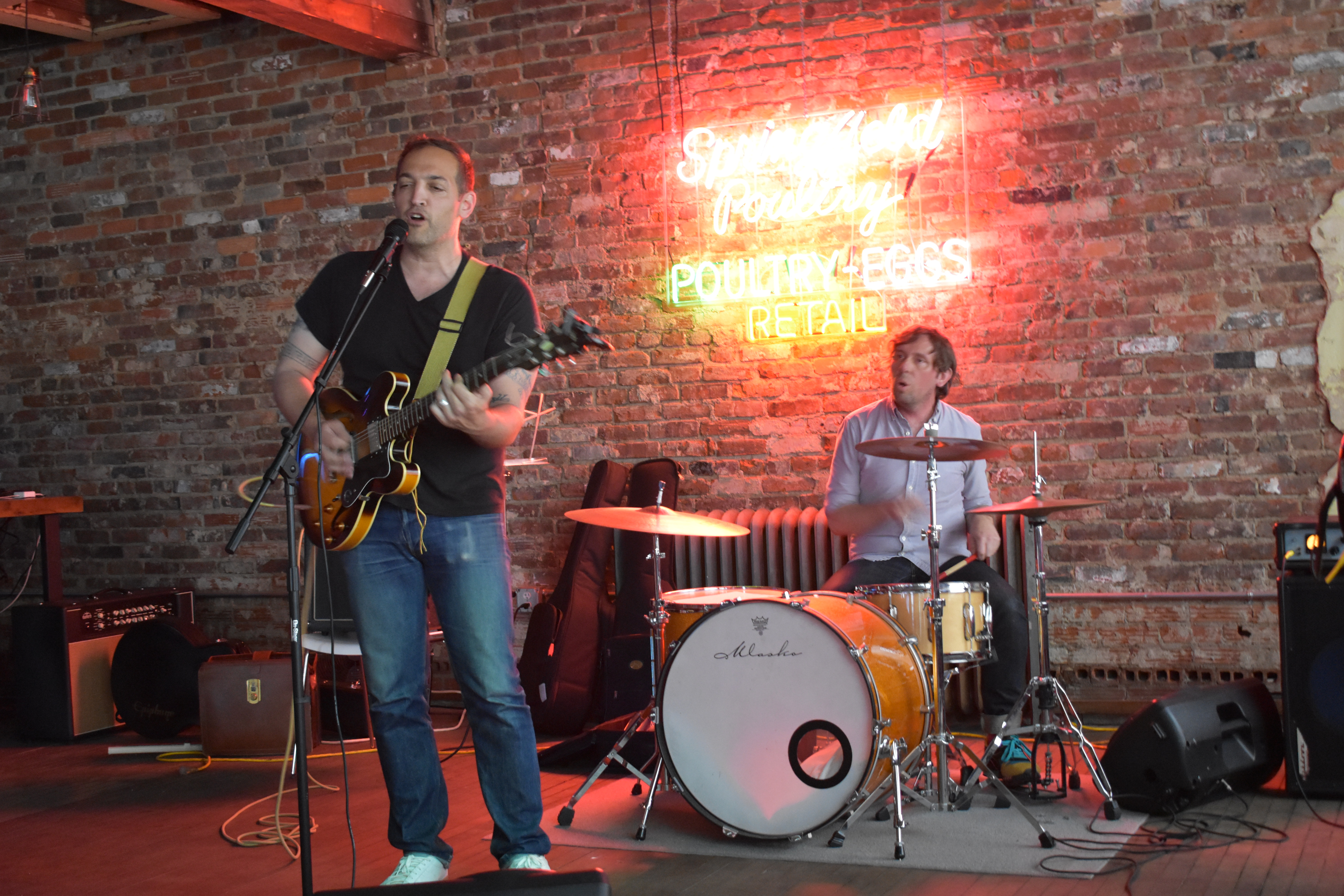
All station photos by Tom Gilliam Photography. Photos used with permission.

Fading Applause: Unearthing Some Reasons Behind the Decline in Attending Local Music Shows

In the throes of a vibrant local music scene, one might expect shows in the community to be a cultural cornerstone, drawing diverse crowds in droves for a singular reason, seeing great local music. Yet, in recent years, there has been a decline in the attendance of these grassroots gatherings. Even before the Covid-19 pandemic, a decline in the number of people attending music events was shrinking. As I dig deep into this challenge, we take some time and think about the many reasons why people are increasingly opting to stay home rather than stepping out for a night of live music. In the spirit of trying to understand this so that we can encourage attendance at local shows, let’s embark on a brief effort to explore the dynamics that are reshaping the landscape of local music event attendance.

I have to be honest about my motivation. I am an active show-goer! I attend many local, regional, and national music events and shows. I am a passionate supporter of local, Dayton, Ohio, and regional music — a major premise of Your Tuesday Afternoon Alternative.

I was fortunate to experience some amazing music during my college years (1983-1988) in the state of Minnesota during a time of unbelievable explosion in creativity attending shows from Husker Du, The Replacements, Soul Asylum, Prince, The Gear Daddies, The Suburbs, The Jayhawks, Run Westy Run, ZuZu’s Petals, and so many more. I also saw touring bands such as R.E.M., The Connells, The dbs, NRBQ, Miracle Legion, The Ramones, and far more than there is time to list. And since the 2000s, I have attended more local shows in the Dayton, Ohio area than I can list here. Mrs. Dr. J and I spend time each week planning what shows we will attend and there are more shows that we would go see than we have time.

The Allure of Digital Convenience

One inescapable factor reshaping the landscape of local music event attendance is the digital age. In an era where the world is at our fingertips, streaming services and virtual concerts offer an unparalleled level of convenience. The ease of tuning into your favorite artist’s live stream from the comfort of your own home is a siren song that has seduced many away from the raucous atmosphere of local venues.

Digital platforms not only offer ease of access but also empower fans to curate their music experiences. With personalized playlists and algorithmic recommendations, listeners can indulge in a highly tailored musical journey, often without the need to step one single foot outside. The pull of the digital realm is undeniably strong and presents a substantial challenge for local music scenes. That coupled with the abysmally low compensation for digital streams can create a financial hardship for bands and musicians.

Economic Considerations

Local music events have traditionally been an affordable and accessible option for music fans. However, the economics of entertainment have been shifting beneath our feet. Ticket prices, particularly for well-known local acts, have been creeping upwards, costs that were under $20 for a couple have now increased as acts and venues seek to recoup expenses. Considering the cost of transportation, parking, drinks, and merchandise, attending local music events can strain the budgets of many.

Furthermore, the gig economy has reshaped the financial stability of younger generations, making disposable income scarcer. This financial precariousness forces potential attendees to weigh the value of a night out against other financial priorities and expenses. For some, the fun of local music events is overshadowed by the economic realities of life in the 21st century.

Changing Tastes

Music, like any art form, evolves over time, and so do its listeners. What fans want to hear changes. The kinds of performances that draw a crowd evolve. The changing demographics of music audiences have led to a diversification of musical tastes and preferences. Local music events, with their challenge of advertising — the perennial problem of ‘getting the word out’ — may not always reach the eclectic tastes of a diverse audience.

As a result, individuals who prefer genres or styles not typically showcased at local events may be disinclined to attend. The widening spectrum of musical genres, coupled with the ease of access to niche music communities online, means that many can explore their musical interests without ever leaving their comfort zones.

We also have to consider that the reluctance to attend local shows may have increased post-pandemic. There may be a greater concern about being in a crowd due to health concerns.

The Urbanization Conundrum

In the shifting demographic landscape, urbanization has played a critical role in reshaping local music event attendance. Cities are cultural hubs teeming with artistic expression, and local music scenes thrive in these environments. Yet, the downside of urbanization is the relentless pace of life and the reluctance of folks who live in the suburbs to come into the city to experience music events. For some city dwellers, the cacophony of daily life is enough to discourage them from seeking out additional auditory stimulation at local events.

Furthermore, urban areas are often marked by high living costs, making it challenging for residents to prioritize regular attendance at local music events. The erosion of affordability in urban centers can lead to a decline in the vibrancy of local music scenes.

The Virtual Spectacle vs. the Live Experience

The allure of virtual entertainment, I discussed above, has challenged the primacy of the live music experience. Virtual concerts and livestreams allow artists to reach global audiences without the constraints of venue capacity or geographic location. While this may be a boon for artists, it poses a dilemma for local music scenes. If you can see your favorite artists without leaving home, why go to a local show?

The virtual spectacle, enhanced by breathtaking visuals and immersive technology, can rival the in-person experience. As artists invest in creating jaw-dropping digital performances, the question of whether the palpable energy of a live crowd can compete arises for us. For some, the convenience and spectacle of virtual entertainment outweigh the communal experience of local music events. However, the solitary experience of watching a concert in your living room separated from your friends and fellow music lovers can feel hollow. Of course, this assumes that people want to experience music together with people they may not know.

The decline in local music event attendance is a complex web of economic factors, shifting cultural tastes, technological convenience, and the pull of virtual entertainment. As the music industry continues to evolve in the digital age, local scenes must adapt to these changing dynamics to remain relevant and vibrant. To lure audiences back into the heart of their local music communities, venues and artists alike must offer experiences that transcend the allure of digital convenience and rekindle the magic of the live music event and the community that is built in those experiences. In doing so, we can ensure that the fading applause of local music events reverberates once more, echoing through the spaces where music is played.

What factors would you add to this consideration? What can we do to encourage more people to attend music events and shows in our local communities?