Please, Please, Please Let Me See the Show (This Time)

Morrissey has always been a weather system, not a touring artist. You don’t buy a ticket to see him so much as you gamble—you place a small, hopeful wager against history, logistics, exhaustion, grievance, the universe, and Morrissey himself. And in the last several years, the house has been winning.

Let’s talk numbers, because numbers have a way of cutting through myth. Since roughly 2019, Morrissey has canceled a staggering share of his scheduled concerts. Tracking sites that obsess over these things, think of them as the baseball-card collectors of broken promises, suggest that in the most recent stretch alone, he’s canceled nearly half of what he’s booked. In 2024, nine out of twenty-three shows vanished. In 2025, thirty-two out of sixty-three evaporated. Early 2026? Two more were gone before the coffee finished brewing on the new year. Forty-three cancellations in about two years. Forty-nine of his last hundred shows, period. Flip a coin. Heads, you get “There Is a Light That Never Goes Out.” Tails, you get an apologetic Instagram post.

Last Night I Dreamt That Somebody Played the Show

Now, before the comment section of this blog lights up like a bonfire of sanctimony, let’s be clear: this isn’t a hit job. Morrissey doesn’t need one. He’s been doing his own PR demolition derby for decades. This is about what it means when an artist who once articulated romantic alienation for an entire generation now can’t reliably show up in the flesh to sing about it.

Because live music, real, sweaty, inconvenient, human live music, is a contract. It’s not just a transaction, not a barcode scan, and a T-shirt upsell. It’s a promise: I will be there if you are. And when that promise breaks often enough, it stops feeling tragic and starts feeling structural.

Here’s where we can kick open the door and start yelling: rock and roll is not supposed to be a reliable thing, but it is supposed to be an act of presence. You can be sloppy, you can be late, you can be drunk, you can be transcendent or terrible, but you have to exist on the stage. Cancellation is the anti-performance. It’s a ghost story told by a promoter.

This Charming Man Will Not Appear Tonight

Morrissey’s defenders will point to his health, exhaustion, the cruelty of touring in one’s sixties, and the meatless catering demands of a man who has turned vegetarianism into performance art. All fair points! Touring is brutal. Capitalism eats its elders. The road is a grinder, but it has better lighting. But here’s the problem: Morrissey’s cancellation habit isn’t a sudden decline—it’s a pattern. A long, well-documented, almost conceptual-art-level commitment to not showing up.

And patterns change how we listen.

Once upon a time, Morrissey’s flakiness felt romantic. The same way The Smiths felt impossibly fragile, like they might dissolve if you looked at them too hard. You forgave the missed shows because the songs felt like secrets whispered directly into your ear. You forgave him because you believed—wrongly, beautifully—that sensitivity was incompatible with reliability.

But fast-forward to now, where entire tour legs disappear like a Vegas magician’s assistant, and the romance curdles into consumer fatigue. Fans book flights. Fans take time off work. Fans arrange childcare. Fans in Latin America, Europe, the Midwest—people for whom a Morrissey show is not a casual Tuesday night but a once-in-a-decade pilgrimage—get left holding the emotional bag.

Schrödinger’s Morrissey: The Show Both Exists and Doesn’t

At some point, the question stops being “Why does Morrissey cancel?” and becomes “Why do we keep pretending this is surprising?”

This is where Morrissey becomes less a singer and more a metaphor for late-stage rock stardom. He is the walking embodiment of the contradiction: an artist whose work once validated vulnerability now presiding over a system that treats audience trust as optional. He’s not alone in this, but he’s the most extreme case study because his cancellation rate is so high it borders on performance itself. It’s almost as if the absence is the point.

And maybe that’s the cruel irony. Morrissey, the great bard of loneliness, has perfected a way to make tens of thousands of people feel collectively stood up.

The tragedy isn’t that he cancels. The tragedy is that the cancellations have become part of the brand. They are baked into the expectation. “Did the show happen?” becomes the first question, not “Was it good?” That’s a catastrophic downgrade in cultural terms. Rock and roll isn’t supposed to be a Schrödinger’s cat.

Meanwhile, somewhere down the street, a local band is loading their own gear into a van that smells like old coffee and regret. They will play whether ten people show up or two hundred. They will play sick. They will play tired. They will play because showing up is the whole damn point. They don’t get to cancel half their dates and still be mythologized. They get one no-show before the scene quietly moves on without them.

That’s the contrast that hurts. Morrissey can cancel forty-nine out of a hundred shows and still sell tickets to the next one because nostalgia is the most powerful drug in the world. It keeps whispering, Maybe this time. It keeps telling us that the version of him we loved in 1986 is still hiding somewhere behind the scrim of lawsuits, grievances, and canceled soundchecks.

And look—I get it. I’d probably still roll the dice myself. To be perfectly honest, I have taken the chance, and I was fortunate in seeing a Morrissey show. That’s the sickness and the beauty of loving music that mattered to you when you were young. You keep hoping for communion even when history tells you to expect a refund.

How Soon Is Now? Very Possibly Never

But let’s stop pretending this is just bad luck. Over the last six years, the data tells a story as clear as any lyric Morrissey ever wrote: absence has become as defining as presence. Cancellation is no longer an exception; it’s a feature.

This isn’t a moral failing so much as a cosmic joke. The man who taught us how to feel has turned unreliability into an art form. The fans keep showing up to an empty stage, humming along to songs about disappointment, living inside the metaphor, whether they like it or not.

And maybe that’s the final, bitter punchline: Morrissey still understands his audience perfectly. He just doesn’t have to be there to prove it.


MTV Signs Off in 2025 With the Song That Started It All

On December 31, 2025, a landmark moment in music and television history quietly unfolded: MTV’s dedicated 24-hour music video channels ended their broadcast run by playing the very same music video they debuted with 44 years earlier—The Buggles’ “Video Killed the Radio Star.”  

This poetic symmetry, beginning and ending with the same song, is more than a nostalgic shrug. It reflects the arc of MTV’s influence on music, media, and popular culture, while offering a symbolic close to the era of television as a primary gateway for music discovery, as I discussed yesterday.

A Revolution Begins: MTV’s 1981 Launch

When MTV (Music Television) went on the air at 12:01 a.m. on August 1, 1981, its format was radical: a channel devoted exclusively to music videos playing around the clock. The first video ever broadcast was “Video Killed the Radio Star” by the British new wave band The Buggles.  

The choice was as fitting as it was prophetic. Released in 1979 under Island Records, the song was itself a commentary on technological change in media—the rise of recorded music, video and digital production threatening the primacy of radio. Written by Trevor Horn, Geoff Downes and Bruce Woolley, and propelled by its synth-pop sound, it topped charts in many countries and became synonymous with the dawn of a new musical era.  

For MTV, the video was more than a catchy tune—it was an emblem. By placing a visual experience at the forefront of music consumption, MTV helped redefine how generations discovered artists, songs and styles.

MTV’s Golden Age: Cultural Force and Industry Shaper

Throughout the 1980s and early 1990s, MTV’s influence spread far beyond the small number of U.S. homes that could first receive its signal. Shows like Headbangers Ball, Yo! MTV Raps and 120 Minutes brought genres from indie to heavy metal to hip-hop into living rooms worldwide. Music videos became central to an artist’s identity and success.

The phrase “I want my MTV,” popularized in early marketing campaigns, became shorthand for youthful aspiration and cultural currency. The network propelled personalities such as Daisy Fuentes, Andy Dick and Kenneth “Babyface” Edmonds into stardom, and helped launch the careers of artists from Madonna to Nirvana.  

MTV did more than broadcast music; it shaped how music was made. Record labels invested heavily in video production, and artists began approaching videos as art and narrative: from Michael Jackson’s cinematic Thriller to Peter Gabriel’s innovative visuals. These were not mere promotional tools—they were cultural events.

Shifting Tastes and the Digital Era

But the very forces that made MTV as indispensable in the 1980s, technology and shifting media consumption, also contributed to its decline as a music video destination. As cable expanded and then fragmented into dozens of channels, MTV began incorporating non-music programming like The Real World, Jersey Shore, and Ridiculousness as ratings drivers.

By the early 2000s, the rotation of music videos on MTV substantially diminished in the United States. Viewers found new ways to access music videos online through platforms like YouTube, Vevo, and later social media apps, eroding the unique value proposition that MTV once held.  

MTV’s decision to shift toward reality and entertainment formats, while commercially sensible, signaled a transformation of its brand identity. Instead of music television, it became a hub for youth-oriented pop culture broadly defined.

2025: The Last Music Videos Go Dark

The decision in 2025 to discontinue MTV’s 24-hour music video channels (including MTV Music, MTV 80s, MTV 90s, and MTV Live) marks the end of an era. While the core MTV channel remains on the air in some regions, focusing on reality programming, the dedicated music video channels that once defined the brand’s global footprint went dark as of December 31, 2025.  

In the U.K., Ireland, France, Germany, Poland, Australia and Brazil, MTV’s music video stations signed off in a series of final broadcasts that referenced the channel’s own history. Most poignantly, MTV Music’s final transmission featured “Video Killed the Radio Star”—the very track that launched MTV in 1981.  

This choice was deeply symbolic. It acknowledged MTV’s roots while also recognizing a cultural moment in which traditional broadcast television has largely ceded music video discovery to the internet and mobile platforms. The channels’ sign-off was not a quiet disappearance into obscurity but a deliberate nod to the entire arc—from analogue radio and early cable to the digital screens of today.

Why This Matters Beyond Nostalgia

MTV’s lifecycle mirrors broader shifts in media: from centralized broadcasting to decentralized, on-demand digital networks. In its heyday, MTV was both a curator and creator of popular culture; it influenced fashion, language, and musical trends globally. The end of its music video channels underscores how much control over media audiences and creators now wield through algorithms and digital distribution.

Yet, the enduring relevance of “Video Killed the Radio Star” is telling. The song’s narrative, about innovation displacing older forms of media, remains the story of MTV itself. MTV didn’t just broadcast music videos; it embodied a shift in how people engage with music as a multisensory, visual, and social experience.

The song’s symbolic role at both MTV’s inception and sign-off offers a poignant bookend: a reminder that media landscapes evolve, often in ways that creators and audiences could hardly predict.

A Cultural Footprint That Endures

As MTV’s music video channels sign off forever, the network’s legacy lives on. It reshaped the music business, redefined television programming, and helped forge the visual vernacular of contemporary pop culture. Its final act—playing the same iconic music video that introduced the network in 1981—celebrates a remarkable 44-year journey.

In closing with “Video Killed the Radio Star,” MTV did not signal an end to music videos or visual creativity; rather, it acknowledged that the battleground for such creativity has moved. Music videos now thrive on digital platforms, created by artists and audiences alike. Yet the memory of MTV’s rise, and its graceful farewell, reminds us of a time when a single song could announce not just a broadcast, but a cultural revolution.

Finding MTV in College: Staying Up All Night With a New Cultural World

MTV pulling the plug on music video play feels less like a funeral and more like the end of a long, weird afterparty where the jukebox kept looping the same hits. This moment begs reflection, not because something pure just died, but because the illusion finally did. Music never belonged to the screen—it belonged to the noise, the sweat, the argument, the room. With the videos gone, maybe we’re forced back to the dangerous idea that songs have to stand on their own again. But that also means considering what we gained, what we lost, maybe what we never truly possessed.

For many Americans, like me, who came of age in the early 1980s, MTV was not something that simply arrived in their lives—it was something they discovered. That discovery often depended on geography, access to cable television, and a move away from home. For students who grew up in small towns, MTV could feel less like a TV channel and more like a portal to an entirely different cultural universe.

I graduated from high school in 1983 from a small town in West Central Minnesota, a place where musical discovery still relied heavily on local radio stations, record stores, and whatever happened to make its way into the school gym at dances. Cable television was limited, and MTV—still new, still experimental—was not part of everyday life. Music existed primarily as sound, not spectacle.

For me, that changed in college.

Encountering MTV for the first time was a sensory shock. Here was a channel that played nothing but music—all night, uninterrupted, from artists I had barely heard of to songs that sounded like they came from the future. I remember staying up all night watching it, unable to turn it off, as if sleep had suddenly become optional. Each video flowed into the next, creating a kind of visual mixtape that felt both intimate and overwhelming. It felt so cool.

What made MTV so powerful in that moment was not just the music, but the sense of connection. For students arriving on campus from rural or small-town America, MTV offered a crash course in youth culture, fashion, politics, and identity. British new wave bands, ska-influenced neo-soul, the sly, stylish new romantics, and later West Coast hip-hop artists and glam-metal performers all shared the same screen, collapsing distance and difference in ways that radio never could. You didn’t just hear the music—you saw how artists dressed, moved, and imagined themselves. The possibilities for musical identity felt endless, a perspective that now feels far too ‘pie in the sky Pollyannaesque’ optimism.

Those late-night viewing sessions were also communal. Dorm rooms became gathering spaces where people argued over favorite videos, discovered new bands together, and learned the visual language of a generation. MTV didn’t just reflect youth culture—it actively taught it, especially to those of us encountering it for the first time after leaving home.

Looking back, it is striking how formative those nights were. MTV functioned as an informal education in popular culture, one that filled gaps left by geography and access. For students from places like small-town Minnesota, it was a reminder that culture was bigger, louder, and more visually expressive than anything we had previously experienced.

That sense of discovery—of staying up all night because you couldn’t stop watching—is difficult to replicate in today’s algorithm-driven media environment. But for a generation that found MTV in college, those nights remain a vivid memory of what it felt like to stumble into a shared cultural moment and realize that the world was far larger than you had imagined.

New Music Isn’t Dead, You Just Stayed Home

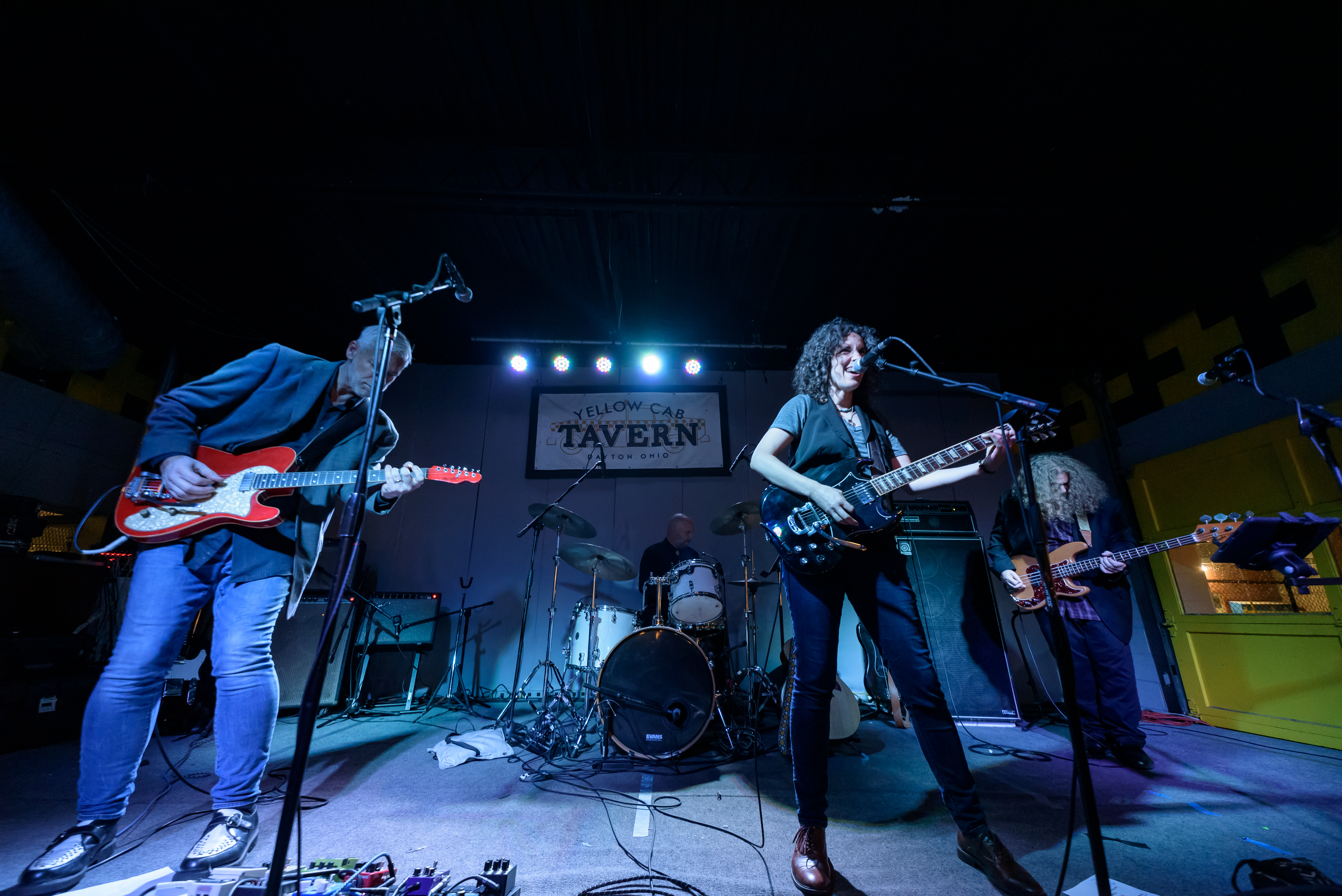
They keep saying it like it’s a diagnosis, like a doctor lowering his voice: There’s no good new music anymore. As if the patient is culture itself, lying flatlined under a white sheet, while the rest of us are supposed to nod solemnly and accept that the last real song was written sometime around when they were sixteen and emotionally combustible. This is nonsense, of course, the laziest kind of nonsense, the kind that requires no listening, no leaving the house, no risk, no sweat, no awkward eye contact in a half-lit room where the band is setting up next to a stack of amps that smell like beer, ozone, and promise.

New music is not dead. It’s just not coming to you. It’s not ringing your doorbell or algorithmically tucking itself into your ears while you scroll. It’s happening out there, in rooms that require pants and presence and a willingness to be changed, even slightly. And that’s the real problem: new music demands participation. It demands that you show up.

The great (boy, would he hate that sentiment) rock critic, Lester Bangs, understood this instinctively. He knew that music wasn’t an artifact to be archived, but a live wire, something that crackles when bodies gather, and sound hits air, and something unpredictable happens. The excitement of new music isn’t about novelty for novelty’s sake; it’s about the shock of recognition when you hear something you didn’t know you needed until it’s already inside your head, rearranging the furniture.

Going out to see local music—real local music, not brand-approved “scenes” packaged for export—is a civic act. It’s how communities remember they’re alive. You walk into a bar, a VFW hall, a coffee shop after hours, a basement with questionable wiring, and suddenly you’re part of a temporary republic founded on volume and intent. You’re standing next to people who live where you live, who work the jobs you know, who are writing songs not because it will scale, but because it has to come out. That matters. That changes things.

The need for new music isn’t abstract. It’s psychic. It’s the need to hear someone else articulate the same confusion, joy, dread, or stubborn hope you’re carrying around without a language. No documentation, just a real human need. When people say nothing is exciting being made anymore, what they’re really saying is that they’ve stopped being curious about other people’s interior lives. They want the old songs because the old songs already agree with them. New music argues back, it’s the packaging/re-packaging of human feelings in new bottles.

And that argument is healthy. It keeps culture from calcifying into a museum gift shop stocked with endlessly remastered memories. Live local music reminds us that art is a process, not a product. Bands miss notes. Lyrics change. Drummers (guitarists, bass players, etc.) quit. Someone forgets the bridge and laughs. These imperfections are not flaws; they’re evidence of life. They’re proof that the thing you’re witnessing hasn’t been fully decided yet.

The positive consequences ripple outward. You support a venue, which supports staff, which keeps a place open where people can gather without a screen between them. You give musicians a reason to keep writing, to keep rehearsing, to keep believing that the hours spent hauling gear and arguing about tempos aren’t insane. You create informal networks—musicians meet other musicians, shows lead to collaborations, friendships form, ideas cross-pollinate. This is how scenes happen, not because someone declares one into existence, but because enough people decide that showing up matters.

Local music also recalibrates your sense of scale. Not everything needs to be monumental to be meaningful. A great song played for forty people can hit harder than a festival set swallowed by branding and distance. There’s an intimacy in local shows that can’t be replicated: eye contact with the singer, the thump of the kick drum in your sternum, the shared glance when a chorus lands just right. You don’t leave as a consumer; you leave as a witness to something that you cannot quite describe.

And let’s be honest about the frustration. The claim that nothing compelling is being released now is often a cover for disengagement. It’s easier to blame the times than to admit you’ve stopped listening actively. The world didn’t run out of ideas; you ran out of patience. Meanwhile, musicians are still out here folding genres into new shapes, writing songs about now—about precarity, community, grief, humor, survival—with tools and influences that didn’t exist twenty years ago.

If you want excitement, you have to seek it out. You have to court it. You have to risk boredom, risk disappointment, risk being wrong. That’s the deal. New music doesn’t owe you greatness on demand; it asks for your attention in exchange for the possibility of revelation.

So go out. Stand in the back or press up front. Clap awkwardly. Buy the record/CD/download/tape. Talk to the band. Argue with your friends about what you heard. This is how culture stays porous and human. This is how a town sounds like itself instead of a rerun.

The future of music isn’t missing—it’s tuning up, waiting for you to get off the couch and walk through the door.