The Night That Never Roared: Mourning the Gig That Vanished Into Thin Air

You don’t really understand anticipation until you’ve bought a ticket to a concert months in advance and then built a small private cathedral around it.

I’m talking about the slow, devotional kind of waiting, you know… the kind where the date sits there on the calendar like a lighthouse. You circle it in red ink, maybe even write the band’s name in big block letters, and every lousy Tuesday afternoon between now and then becomes a little more tolerable because somewhere out there, in the future, there will be noise. Not just noise, but your noise. The sound that rearranges the furniture in your head and makes your pulse behave like a teenager who just discovered caffeine and rebellion at the same time.

You start planning in ways that feel half practical, half superstitious. You think about where you’ll stand. You imagine the opening chords, the smell of sweat soaked into the floorboards, the moment when the lights go down, and the room turns into a living organism—with total strangers sweating, breathing, vibrating to the same frequency. You remember the last time you saw that band, or the first time, or the time you missed them and swore you never would again. You tell friends. You replay records. You rehearse your own joy like an actor memorizing lines.

And then—bam—the email arrives. Or worse, you show up to the venue only to see the wrong date on the marquee and feel that strange anxiety in the pit of your stomach. And maybe without realizing it, you swore.

The message, if you get one in advance, is not dramatic. Not cruel. Just flat. Administrative. The language of disappointment delivered in the tone of someone reminding you to renew your car registration. You open it with a flicker of unease, already suspecting the worst, and there it is: the concert has been cancelled or rescheduled for the next night when you cannot be there. Again, without realizing it, you swore out loud.

No thunderclap. No villain twirling a mustache. No conspiracy. Just a quiet erasure. And the strangest thing is how big the absence suddenly feels.

Because what gets cancelled isn’t just a show. It’s a future memory. It’s a night you had already begun to inhabit in your imagination. You had started living there—mentally trying on the evening like a jacket, picturing the setlist, the crowd, the way the guitars would hit your chest like a second heartbeat. You had invested time in that imaginary place, and when the show disappears, so does the version of yourself who was going to be there.

That’s where the grief sneaks in—not loud, not theatrical, but real.

It’s the same low-grade melancholy you feel when a summer storm washes out the county fair or when a long-awaited reunion gets postponed. Nothing catastrophic has happened. The world keeps spinning. The band is probably safe, the crew is regrouping, and the venue lights are still hanging from the rafters. Rationally, you understand all of this. You understand that music is made by human beings with bodies that get sick, vehicles that break down, weather that plays with the best of intentions, families that need them, and weather that refuses to cooperate (yeah, I said this one twice because weather is fickle on the subject of music experiences).

But understanding doesn’t cancel the feeling.

There’s a peculiar intimacy to live music that makes its absence sting in a way streaming never will. Records are reliable because they sit there patiently on your shelf or in your phone, ready to spin at a moment’s notice. But concerts are fragile, like soap bubbles or lightning strikes. They exist only once, in a specific room, at a specific hour, with a specific collection of strangers who somehow become a temporary tribe. You can’t rewind them. You can’t download them later. If they vanish, they vanish completely.

So when the cancellation hits, you feel the air go out of something inside you.

You might find yourself wandering around the house that evening with a vague restlessness, like a dog that expected a walk and got a rain check instead. You might still play the band’s records, but the sound lands differently now—less like a promise, more like an echo. The songs are still great, but they don’t have that electric charge of impending experience. They feel suspended, waiting for their moment to become flesh and sweat and feedback.

And maybe—if you’re honest—you feel a little foolish for caring so much. But that’s the wrong lesson to take.

Because caring is the whole point of this ridiculous, glorious racket we call rock and roll. It’s supposed to matter. It’s supposed to feel like something is at stake. The ticket in your pocket isn’t just paper or pixels on a phone; it’s a handshake with the future. It says, On this night, we will gather in one place and make noise together until the ordinary world loosens its grip.

When that handshake gets withdrawn, you feel the absence of connection before it ever had a chance to happen. Still, there’s a strange grace in the disappointment.

You start to realize how much you needed the show, not as an escape but as a reminder that life still contains moments of communal joy—loud, messy, unrepeatable joy. The cancellation doesn’t destroy that truth; it reveals it. It shows you how hungry you are for those shared bursts of sound and sweat and collective release.

And so you wait again.

You keep the ticket confirmation tucked in your email archive like a pressed flower. You watch for the rescheduled date. You hold onto the possibility that the band will return, that the amps will hum, that the crowd will surge forward when the lights dim. You carry the anticipation forward, slightly bruised but still breathing. Because music, at its core, is an act of faith.

Faith that the next show will happen.
Faith that the next chord will ring out.
Faith that somewhere down the line, in some dimly lit room, you and a few hundred strangers will stand shoulder to shoulder and feel the same vibration travel through your bones.

And when that night finally arrives—whenever it arrives—you’ll walk through the doors with a deeper appreciation, a sharper hunger, and the quiet knowledge that nothing about live music is guaranteed.

Which is exactly why it means so damn much when it finally happens.
Six Hours in the Wild: The Latest Your Tuesday Afternoon Alternative Shows Land on Mixcloud

If you’ve ever driven around town with the radio on and the sun doing that late-afternoon slant that makes everything look like a memory already—gas stations glowing, parking lots half empty, the air buzzing with possibility and dread—then you already understand what Your Tuesday Afternoon Alternative is supposed to feel like.

And now, for the first time in a while, the last two full three-hour broadcasts are sitting online in all their sprawling, unruly glory over on Mixcloud. That’s six straight hours of music, ideas, weird segues, accidental poetry, and the kind of radio that only really works when nobody is trying too hard to make it work. Which, if we’re being honest, is the best kind.

Think of it as a kind of sonic time capsule: three hours where the world’s chaos gets distilled into guitars, synthesizers, a stray folk lament, maybe a punk blast that lasts ninety seconds but somehow resets your whole nervous system. Then you do it all again the next week. Radio as ritual. Radio as wandering conversation.

The thing about listening to these shows after the fact is that they become something slightly different than they were in the moment. Live radio is adrenaline and improvisation—you throw a song into the air and see what it does to the room. But on replay, the structure reveals itself. Themes emerge like ghosts in the static. Songs talk to each other across decades. A jangly indie track from 2024 suddenly feels like it’s answering a garage-rock scream from 1966.

That’s the secret architecture of good radio: it sounds loose but it’s secretly a web of connections. Which makes these two archived episodes especially fun to revisit. Over six hours, the mood drifts the way an actual Tuesday afternoon does. One minute the sun is out and everything sounds hopeful; the next minute you’re staring out the windshield thinking about every mistake you’ve ever made while some beautifully melancholy track hums through the speakers.

And that emotional whiplash is the point.

Great radio—especially college radio—has always been about resisting the algorithm. The streaming services want to smooth everything out into playlists that never challenge you. But real DJs still believe that music should occasionally knock the wind out of you. A dreamy pop song might suddenly give way to something ragged and noisy, and then a minute later you’re floating through a slow acoustic tune that feels like someone left a window open in your heart. That’s not bad programming. That’s life.

The two newly available shows capture that beautifully messy spirit. Across the six hours, you’ll hear indie rock rubbing shoulders with folk, garage, synth-pop, and the occasional left turn that makes you sit up and say, “Wait—what was that?” The answer, of course, is that it doesn’t always matter. Discovery is half the thrill.

And because the shows were recorded live, you also get the little human moments that make radio feel alive: the slightly crooked transitions, the spontaneous reflections, the sense that the whole thing could veer off the rails at any moment but somehow lands exactly where it needs to.

It’s the opposite of polished. It’s the sound of someone digging through a record collection and saying, You need to hear this.

Which is why having the full episodes archived on Mixcloud matters. Instead of a clipped highlight or a tidy playlist, you get the whole ride—the long arc of the afternoon, the gradual build, the strange emotional geography of three uninterrupted hours.

In other words: real radio.

When the Noise Gets Loud, Turn Up the Music

Sometimes the world feels like it’s running a little too hot.

Everywhere you look there’s another argument, another disaster, another reminder that people can be cruel to each other in ways that are exhausting just to witness. The noise of it all can make the world feel smaller, harsher… like kindness is getting drowned out.

And that’s where music comes in.

Because music does this strange, beautiful thing: it reminds us that other people are feeling the same things we are. Someone, somewhere, picked up a guitar or sat down at a piano and turned confusion, anger, heartbreak, hope—whatever it was—into sound.

And when you hear it, something clicks.

Maybe it’s a melody that suddenly lifts the weight of the day. Maybe it’s a lyric that says the exact thing you couldn’t find the words for. Maybe it’s just a drumbeat that makes you remember you’re still alive and moving forward.

That’s the magic of music.

It connects strangers. It softens the edges of the world. It gives us a place to breathe when everything else feels like too much.

So tonight, wherever you are, let the songs do what they’ve always done.

Turn the volume up a little. Listen closely. And remember that even in a noisy, difficult world, people are still making beautiful things.

And that’s something worth holding onto.

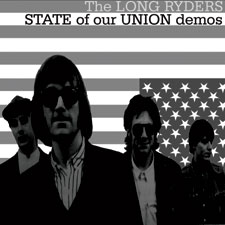
Jangling Toward the American Dream: Why State of Our Union by The Long Ryders Still Roars

There’s a particular kind of American music that feels like it was discovered rather than invented. It sounds dusty even when it’s new. It rattles like a truck driving too fast down a county road. And every so often a band comes along that grabs that tradition by the collar and reminds you that rock and roll didn’t begin in a boardroom or end in a streaming playlist.

That’s exactly what The Long Ryders did with State of Our Union, their 1985 album that still sounds like a transmission from the backroads of American rock. If you care about where country rock, punk energy, and jangling guitar pop collide, this record is one of the great unsung documents of the era.

The easiest way to understand the album is to remember what the mid-1980s looked like musically. MTV had turned pop into a fluorescent spectacle. Synthesizers were everywhere. Hair metal was rising like some chrome-plated monster out of Los Angeles clubs. Meanwhile, the American roots tradition—folk, country, and the raw rock that grew out of them—was often treated like a museum exhibit.

But beneath the gloss, something else was happening. A loose constellation of bands started digging into the country-rock sound that had once been pioneered by groups like the Byrds, the Flying Burrito Brothers, and Gram Parsons. Instead of simply copying the past, they plugged those sounds into the urgency and speed of punk.

The Long Ryders were one of the most electrifying results of that collision. Led by singer and songwriter Sid Griffin alongside guitarist Stephen McCarthy, the band had already shown promise on their earlier records. But State of Our Union is where everything clicked: the songwriting, the politics, the guitar sound, and the sense that American rock history was not a relic but a living, noisy thing you could still push forward.

The first thing that hits you when listening to the album is the guitars. They don’t shimmer politely. They jangle like someone shaking a tambourine in the middle of a thunderstorm. McCarthy and Griffin build a sound that clearly nods to the Byrds’ twelve-string brilliance, but they play it with the kind of punch that makes it feel less like nostalgia and more like a revival meeting.

This is roots music with adrenaline. Take the album’s opening stretch and you immediately hear a band that understands the power of momentum. The songs move quickly, guitars ringing and drums pushing forward like the band knows that hesitation is the enemy of rock and roll. There’s a sense of restless motion running through the record, as if the entire album is happening somewhere between towns on a highway.

That movement is part of the album’s emotional core. State of Our Union is obsessed with America—its promises, its myths, and its contradictions. The title alone suggests a national report card, and several songs lean directly into that idea. Griffin, in particular, writes lyrics that sound like dispatches from someone who loves the country but refuses to look away from its problems. This isn’t flag-waving patriotism. It’s closer to what you might call critical affection: the belief that a place matters enough to argue about.

One of the album’s most famous tracks, “Looking for Lewis and Clark,” captures this spirit perfectly. On the surface, it’s a rollicking road song, guitars chiming and the rhythm section pushing ahead like the band’s van has just crossed a state line. But beneath the surface is a sly question about exploration and identity. The historical reference becomes a metaphor for searching—searching for direction, for meaning, for some version of the American dream that hasn’t been completely worn out.

That balance between exuberance and reflection is what gives the album its staying power.

Musically, the record is incredibly tight without ever sounding stiff. The rhythm section of Greg Sowders on drums and Tom Stevens on bass provides a steady, muscular foundation that keeps the songs grounded even when the guitars soar. Their playing has that crucial rock and roll quality: it swings just enough to keep things human. You can feel the band breathing together.

And then there’s the production, which wisely avoids the glossy excess that swallowed so many records in the 1980s. Instead of burying everything under layers of studio polish, the album keeps the sound open and immediate. It feels like you’re hearing a band in a room rather than a computer simulation of one.

That decision turned out to be prophetic. Decades later, when the alternative country movement started gaining attention in the 1990s with bands like Uncle Tupelo and the broader Americana scene, the blueprint was already sitting there in records like State of Our Union. The Long Ryders had essentially mapped the territory years earlier: take the storytelling and instrumentation of country rock, add the urgency of punk, and let the songs speak honestly about American life.

In other words, they helped invent a language that other bands would later become famous for speaking. Yet the album has never quite received the mainstream recognition it deserves. Part of that might be timing. The Long Ryders were slightly ahead of the curve, arriving before the industry knew what to do with this kind of hybrid sound. They existed in that awkward space between genres—too country for some rock audiences, too loud for traditional country radio.

But sometimes the records that slip through the commercial cracks are the ones that age the best. Listening to State of Our Union today, what stands out is how alive it feels. The guitars still sparkle and crash with purpose. The lyrics still resonate in a country that continues to wrestle with its own identity. And the band plays with a kind of joyous determination that reminds you why rock music mattered in the first place.

Because at its best, rock and roll isn’t just entertainment. It’s a way of arguing with the world. The Long Ryders understood that. They built an album that celebrates the open road while questioning where it leads. They took the ghosts of American music—folk songs, country laments, Byrds-style jangle—and ran them through amplifiers until those ghosts started dancing again.

That’s the real miracle of State of Our Union. It doesn’t sound like a history lesson. It sounds like a band discovering that the past still has gasoline in the tank. And once that engine starts, the ride is impossible to resist.

Signal in the Static: Confessions from Your Tuesday Afternoon Alternative

There’s a particular electricity to walking into a college radio station on a Tuesday afternoon that no algorithm has yet figured out how to bottle. The hallway smells faintly of burnt coffee and overworked carpet, even in the new Glass Center. The console used to look like it survived three administrative restructurings and at least one existential crisis. Maybe I am just channeling the ghost of the old board from when WUDR was in ArtStreet. Regardless, somewhere in the hum of the board, you can hear the ghost of every DJ who ever believed that three minutes and twenty seconds of noise could change a life.

Welcome to Your Tuesday Afternoon Alternative on WUDR Flyer Radio, broadcasting from the heart of Dayton, where the signal wobbles just enough to remind you that perfection is for tyrants and streaming platforms.

We open with “Se Llama (Tell Me What You Want)” by The Props from their Arrow – EP, and it’s the kind of track that doesn’t ask what you want so much as demand you admit you don’t know. It’s all nervous propulsion and sideways glances, the guitars like somebody rifling through your emotional junk drawer. I let it breathe. College radio isn’t about polite fades; it’s about letting the song finish its cigarette before you barge back in with your baritone wisdom.

Then comes “Delete Ya” by Djo (you know, the guy who played Steve on Stranger Things) from his record, The Crux. Now there’s a title for our era. Delete ya. Unfriend, unfollow, unremember. The song kicks like a garage door slamming shut on a relationship that was already half-packed. It’s jagged, but it’s catchy, the kind of melody that worms into your skull and starts redecorating. I imagine some sophomore in a dorm room texting someone they shouldn’t while this is playing and thinking it’s a sign from the universe. It’s not a sign. It’s just a good hook.

“Gone Baby Gone,” courtesy of Aysanabee from his Edge Of The Earth album, follows, and suddenly we’re in widescreen. Reverb like a prairie sky. Drums that sound like they were recorded in an abandoned aircraft hangar somewhere off I-75. This is the moment in the set where the car windows roll down even though it’s 42 degrees out, because transcendence doesn’t check the forecast.

“Regrets” from the Double Exposure record released by Penny Arcade (the secret name of James Hoare) doesn’t wallow; it smirks. It knows you’ll have them, and it’s already writing the sequel. There’s a kind of tensile bounce to it, a reminder that remorse can dance if you let it. I talk over the intro just a hair—because that’s the DJ’s prerogative—and muse about how regret is just memory with better lighting.

Then we snap into “Feelin’ A Rise” by Pimmer from their recent release, Trans Am. Now we’re cooking with circuitry. This is the motorik heartbeat of a robot who read too much Kerouac. The synths pulse like fluorescent lights in a 24-hour laundromat. You can’t half-listen to this; it drags you by the collar and says, “Move.”

We pause for the “Mrs. Dr. J WUDR legal ID,” eleven seconds of bureaucratic poetry. There is something profoundly punk about the legal ID. It’s the FCC’s reminder that even anarchy has paperwork. And then—right back into the fray.

“Nevermind” from the excellent record The Refrigerator created with love by Remember Sports. A title that shrugs and a band name that hums in the kitchen at 2 a.m. The song feels domestic in the best way—small-room guitars, a vocal that sounds like it was recorded with the singer leaning against the sink. It’s intimate without being precious. You can hear the plumbing in the walls.

“The Bitter End” (from The Bitter End – Single) by Trashcan Sinatras is next, and yes, we are aware of the recursion. Bitter about the end? Or is the end itself bitter? The track surges forward like it’s trying to outrun its own conclusion. There’s something defiant in it, a refusal to go quietly into whatever good night Spotify has queued up next. “Nothing” by nerve scales arrives like a gray cloud that’s decided it enjoys being gray. It sprawls. It hums. It lets the guitars smear into each other like oil paints. This is the point in the show where I remind listeners that silence is overrated and distortion is honest.

We keep it clean—“Nobody’s Heroes (CLEAN)” – The Menzingers and “Born To Kill (CLEAN)” by Social Distortion—because college radio lives in that tightrope space between rebellion and regulation. “Nobody’s Heroes” punches upward, as it should. It’s a rallying cry for the beautifully unexceptional. “Born To Kill,” scrubbed for broadcast, still crackles with danger. You can remove a word, but you can’t take out an attitude.

“Private” by The Neighborhood from their excellent album (((((ultraSOUND))))) feels like a transmission intercepted from a basement laboratory. It’s angular and twitchy, guitars cutting in geometric shapes. If privacy is dead, this song is the autopsy report. Then the sweet ache of “Can I Call You Tonight?” from Dayglow from the atmospheric Fuzzybrain. The melody glows like a phone screen in the dark. It’s longing in four minutes and thirty-nine seconds, the kind that makes you reconsider every “you up?” text you ever sent. I let that one play almost untouched. Some songs need space to confess.

“You got time and I got money” from Smerz Big city life strolls in with a grin. It’s transactional romance turned into a groove. There’s swagger here, but it’s self-aware, like it knows the joke is partly on itself. And that is the first hour in the books. We hit the Smug Brothers YTAA Theme—thirty-five seconds of identity—and then the “Dr. J New WUDR legal ID,” twenty-seven seconds reminding you that this is real, terrestrial, imperfect radio. Not a curated playlist assembled by a machine learning model with a minor in heartbreak.

The Pretty Flowers YTAA Theme Song blooms briefly, and then we dive into “It Is What It Isn’t” from The Black Watch from the collection, Varied Superstitions. Seven minutes and change. Now we’re talking. The guitars stretch out like they’ve paid rent on the horizon. The rhythm section locks into a trance. This is where the show stops being background and becomes an environment. You could build a small philosophy inside this track and still have room for doubt.

“Here’s The Thing” from Fontaines D.C. off of their Romance record snaps us back to conversational scale. It’s concise, almost cheeky. Here’s the thing: love is complicated, and so are guitar pedals. The song knows both. “Holy Roller” by The Format taken from Boycott Heaven thunders in next. There’s righteous fire here, but it’s not sanctimonious. It’s sweaty, urgent, maybe a little unhinged. The drums sound like they’re trying to kick down the pearly gates just to see what happens.

Imagine you are standing in front of the music board for the radio station.
Independent music for everyone!

Then, because radio loves a wink—“Private Eyes” K.T. Tunstall from NUT released in 2022. You think you know that title, but this isn’t your dad’s yacht-rock paranoia. It’s sharper, more nervous, like someone swapped the sunglasses for safety goggles. “Cold Waves (featuring Mac McCaughan)” by Crooked Fingers (Eric Bachman’s project of the moment) from the album Swet Deth glides in with a chill that feels earned. The guest vocal threads through the mix like a lighthouse beam. It’s melancholy without surrender. The guitars shimmer, the drums keep their cool, and the whole thing feels like driving past Lake Erie in November with the heater on full blast.

Another “Mrs. Dr. J WUDR legal ID”—because the law insists—and then “Machines” from HAPPY LANDING. Aptly titled. The rhythm clanks and whirs, but there’s a human pulse inside it, a reminder that we built the machines in our image and then acted surprised when they reflected us. “Coming Home” from Lucky Now by Lande Hekt softens the edges. It’s all warmth and open chords, the musical equivalent of a porch light left on. After the clang and crash, it feels like forgiveness.

“The River Knows” from The Steeldrivers flows steadily and patiently. It suggests that maybe the landscape outlasts our noise. The guitars ripple. The drums roll like a current over stones. And “Dusking” from Concerns Of Wasp And Willow by The Corner Laughers. So damn glad to see that band back. It is a beautiful song. A title that sounds like a line from a lost pastoral poem. The song is brief, but it lingers. Twilight in two minutes and fifty-four seconds. The guitars fade not into silence, but into possibility.

That’s the thing about a Tuesday afternoon alternative show. It’s not about dominance or metrics. It’s about curation as conversation. It’s about trusting that somewhere in Dayton, someone heard one of these songs at exactly the right moment and felt less alone. And that is just part of the second hour for the show today!

The board goes quiet. The red “on air” light clicks off. And for a second, the room hums with the afterimage of sound. Radio isn’t dead. It’s just waiting for someone reckless enough to press play.