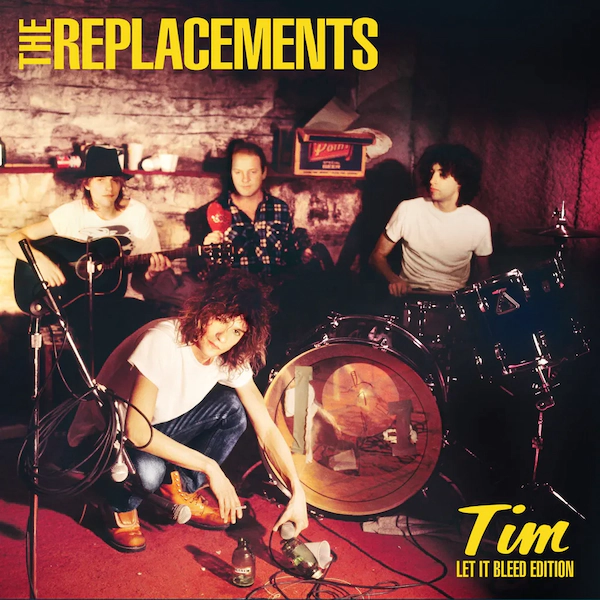
When a classic album from the annals of rock history gets the remix treatment, fans often approach it with a mixture of excitement and trepidation. In the case of The Replacements’ seminal record ‘Tim,’ which recently received a remix that was discussed in a video ‘Behind the Sound: Replacements’ ‘Tim’ gets remastered,’ this cautious optimism was well-founded. The result is a meticulous and loving restoration of an album that not only preserves its raw emotional power but also enhances its sonic experience for a new generation.
Originally released in 1985, ‘Tim’ was an album that catapulted The Replacements into the alternative rock pantheon. Known for their punk-influenced sound, the band’s music always possessed a gritty, midwestern unpolished charm, and ‘Tim’ was no exception. But with this remixed edition, listeners are treated to an experience that remains faithful to the band’s raw essence while elevating it to new heights.
One of the most remarkable aspects of ‘Tim’ has always been its emotional depth. It’s an album that’s often regarded as a cornerstone of American alternative rock, thanks to its introspective and sometimes turbulent lyrics. With the remix, this emotional core is brought into sharper focus. The subtle nuances in Paul Westerberg’s raspy vocals and the poignant lyrical themes are now more pronounced, allowing listeners to delve deeper into the album’s soul.
The instrumental components of ‘Tim’ have been given a thorough makeover as well. The album’s instrumental arrangements, once somewhat obscured by the lo-fi production values of the 1980s, now shine through with greater clarity. Chris Mars’ drumming, Tommy Stinson’s basslines, and Bob Stinson’s searing guitar work are all more defined. Each instrument is allowed to breathe, and their combined efforts are all the more powerful for it.
The soundstage of this remix deserves special praise. The separation of instruments, the placement of Westerberg’s vocals, and the overall balance of the mix are executed with remarkable finesse. In songs like ‘Bastards of Young’ and ‘Swingin Party,’ the emotional punch is delivered with newfound precision. The album’s quieter moments, such as ‘Here Comes a Regular,’ showcase a depth and subtlety that were somewhat muted in the original release.
The remix process, handled by Ed Stasium who clearly understands the album’s significance, respects the integrity of ‘Tim.’ It doesn’t attempt to transform the music into something it’s not. Instead, it removes the layers of sonic muddiness and distortion that had accumulated over the years, allowing the album’s authenticity to shine through. The result is an album that feels fresh and relevant, even decades after its initial release.
Despite the overall sonic improvements, there’s a warmth to the remixed ‘Tim’ that retains the album’s original character. The imperfections and rough edges that make The Replacements so beloved remain intact, a reminder of the band’s DIY ethos and punk roots.
For fans of The Replacements who have cherished ‘Tim’ for years, the Tim: Let It Bleed edition is a gift that allows them to experience the album in a new light. For those who are new to the band, it’s a fantastic entry point that showcases the band’s musical brilliance.
In conclusion, ‘Behind the Sound: Replacements’ ‘Tim’ gets remastered’ is an exceptional example of how a remaster can enhance a classic album without sacrificing its essence. The emotional depth of ‘Tim’ remains untouched, while the sonic quality is remarkably improved. This remix not only does justice to an important album in alternative rock history but also demonstrates the enduring power of The Replacements’ music. Whether you’re a long-time fan or just discovering the band, this remastered ‘Tim’ is a must-listen that captures the essence of an era while sounding fresh and captivating in the present.
In the realm of indie music, authenticity often takes precedence over grandeur, and artistic expression triumphs over commercial trends. Enter Hello June, a band that embodies these very principles in their latest release, “Artifacts.” An album that invites listeners on an introspective and emotionally charged listening experience through topics deeply intimate and as common as drawing a breath, “Artifacts” is a striking work in modern music. Let’s take a deep dive into this record to uncover the soul and depth that sets Hello June apart from so many.
West Virginia, the band’s home, is a state renowned for its scenic beauty, rugged terrain, and rich cultural tapestry woven by generations of hardworking folks. It’s a place where deep-rooted traditions blend with the influences of a changing world, and it’s within this remarkable backdrop that the band Hello June emerges as an undeniable musical force with their latest album. In a landscape where Appalachia’s legacy reverberates through the ages, Hello June’s music matters, and it matters profoundly.
From the moment you drop the needle or press play on your digital device, “Artifacts” envelops you in music that represents an almost cinematic soundscape. The album’s opening track, “Sometimes,” immediately transports you to a realm of personal frustration and introspection. Sarah Rudy’s dreamy yet resolute voice captures the essence of a dusty, winding road through the present, the past perhaps even the future, where forgotten memories reside.
The album’s title is aptly chosen, as “Artifacts” indeed feels like a collection of found treasures that capture real life, authentic emotion, and the yearning — that cuts so deep it hurts — for human connection. The band manages to imbue each track with a sense of personal history and weight, making it feel like you’re unearthing hidden secrets about yourself with every listen. “Sometimes” sets the tone by asking us to think about the emotion that might only leave us with enough to “fall down” and reflect, as if the band is guiding us through a museum of personal history.
The music of Hello June matters for a multitude of reasons. They are the torchbearers of Appalachian resilience, masters of atmospheric sound, and poets of profound introspection. Their artistic journey extends beyond mere sonic experimentation; it’s an exploration of life’s rawest emotions, the intricacies of human foibles, and the undeniable allure of places and communities often overlooked in the annals of popular music as real social locations. These places we are from matter. They shape us in ways we recognize and ways that we only understand later.
Throughout “Artifacts,” Hello June balances both hushed intimacy and roaring intensity. “Honey I Promise” serves as an example of this delicate equilibrium. The melancholic verses, driven by almost moody guitar work, lead to an explosive chorus where Rudy’s vocals soar and the band’s rhythm section, consisting of Whit Alexander and Caleb Crosby (Tyler Bryant and the Shakedown), propels the song to greater heights. It’s a rollercoaster of emotions that demands your attention, echoing the complexities of real-life relationships. The track’s steady drumbeat and echoing guitars build an emotional crescendo that mirrors the turbulence of a departure from a failed relationship.
“Artifacts” explores the theme of emotional bonds — “tied up together” from a variety of angles. “Interstate” paints a vivid picture of distance and separation. The imagery in Rudy’s lyrics transports you to a highway somewhere, capturing the bittersweet feeling of watching someone you love fly away. The fading away is the most heartbreaking. And realizing that last word, that last conversation, the last laugh between the two of you may not have been the one you would want to have as the last moments together, but it is all you have to hold on to. Sharing the fact that you love someone may elude your grasp whether it’s because of foolish pride or “picking a fight.”
Hello June’s penchant for poignant storytelling shines in “Napkin.” Rudy’s lyricism reveals a haunting narrative, evoking vivid images of a flickering film reel of memories. Her vocals convey vulnerability and raw emotion, ensuring that the listener is left hanging on to every word. The song’s dreamy, almost country-like atmosphere provides a stark contrast to the album’s more intense moments, illustrating the band’s ability to traverse a broad emotional and musical spectrum.
One of the standout tracks on “Artifacts” is “Faded Blue” which demonstrates the band’s ability to harness raw, unbridled energy. Rudy’s vocals take on a more rebellious tone here, while the band delivers a raucous performance. The lyrics of defiance and self-reliance cut through the music like a sharpened blade:
kneeled down beside you – scared of all my sins I’d wait to be forgiven and I’d wait to forget Start the day with a new fixation An awkward waltz and a chain reaction Tell me where do you go, tell me where do you go?
Hello June challenges societal expectations, calling for authenticity and independence. Hold on to the past but don’t let it alone define who you are and what you mean.
In the almost introspective Whiskeytown-like “23”, Sarah Rudy sings about looking back on one’s youth from the safe perch of years down the road. The driving feel of the song only makes the nostalgia that much more bitter and sweet. The driving drums and slinky guitar propel a rhythm that almost hides the intent of the song.
Tracks like “Soft Love” and “The Moon” showcase the band’s ability to harness the enduring spirit of self-disclosure, vulnerability, and the question of being enough for someone else. These songs feel ethereal and spacious while taking their time and in that patience transform evocative melodies that seem almost sparse as if our attention is required. Through Sarah Rudy’s captivating vocals and the intricate guitar work, they weave narratives of love, loss, and the indomitable strength of the human spirit. In the lineage of folk and Americana greats like Bob Dylan and Joni Mitchell, Hello June’s sound is unmistakably imbued with the DNA of a true heartland. Their intricate instrumentation, coupled with Sarah Rudy’s haunting vocals, allows for the construction of intricate auditory experiences. These are not merely songs, but living, breathing entities that envelop you, provoke emotions, and invite you to explore the depths of your own thoughts and feelings.
As we traverse deeper into the album, “No Easy Answer” presents itself as a fascinating almost swaying swagger departure. Its arrangement showcases the band’s experimentation with sound, offering listeners an instrumental match to the passionate lyrics before the song builds to a powerful climax. The passionate, powerful quality of “No Easy Answer” allows the listener’s mind to wander, creating an atmosphere that is equal parts introspective and worldly and yet able to grasp that there is in fact, “No Easy Answer” to most questions, at least to the questions that matter.
But it’s the penultimate track, “California,” that truly encapsulates the essence of “Artifacts.” A sweeping song of epic proportions, it’s a testament to the band’s ability to deliver an amazing groove without sacrificing intimacy. Rudy’s vocals once again shine, delivering a message of reassurance and understanding in a world that often feels chaotic and overwhelming.
Closing the album is “Take Me Home, Country Roads,” an introspective cover of that well-known tune that seems to bring the journey of the album full circle. Hello June, with all the heartfelt sentiment they can muster, bid farewell to the past. As Rudy sings the refrain “Take me home…” the band encourages us to embrace the present and move forward with the knowledge and strength gained from our personal artifacts.
“Artifacts” by Hello June is a rare record in the world of modern indie music. It’s an album that manages to be both nostalgic and forward-looking, intimate and grand, all at once. The band’s ability to capture complex emotions and translate them into music is nothing short of extraordinary. Sarah Rudy’s vocals, poetic lyricism, and the band’s masterful instrumentation create a unique, captivating sonic experience that stands out in an increasingly homogenized musical landscape. “Artifacts” is an album that deserves to be dissected, analyzed, and celebrated for its depth, creativity, and emotional resonance. It’s an album that reminds us of the power of music to touch our souls and make us reflect on our own “artifacts” in this ever-evolving path called life.
This music transcends time and place, resonating with listeners in their quest for meaning and understanding. The lyrics serve as a mirror, reflecting the innermost thoughts and emotions that often remain unspoken. Hello June’s “Artifacts” is a sonic masterpiece — and we are prepared to die on that hill to defend that assertion — that deserves a place in the hearts of all music fans. It is a timeless record that captures the essence of the human experience, a treasure chest of emotions waiting to be discovered with each listen. As we leave the album’s soundscape behind, we’re reminded that sometimes the most precious artifacts are the ones that reside within ourselves, waiting to be explored, cherished, and shared with the world.
The Replacements were a pivotal band in my life on so many levels. I was an awkward 15-year-old stoner metalhead (Still a metalhead, not so much a stoner) living in a new city. I was terrible around girls, but I had some new friends and they were into (gasp!) PUNK. It was all punk…REM was punk to me. I was trying, I really was. I needed friends, and these guys seemed ok, but this music! Where were the epic guitar solos, high-pitched screams, pointy guitars, and chained-up bikini-girls in the videos?
One day my friends were in the living room with their girlfriends doing whatever teenage boys do with their girlfriends when mom and dad weren’t home, and I was (typically) alone in my buddy’s room, sitting on the bed, with some PUNK album playing, thinking about leaving.
What the hell is this racket? What am I doing here? Wait a minute, this sounds familiar…
“Out on the streets for a livin’, you know it’s only begun…”
HOLY SHIT they’re doing a KISS song! What is this? WHO is this? That was the very moment I rounded the corner. Across that bridge between KISS and The Replacements was my door to a new life. I sat there staring at the cover of Let it Be and it may as well have been my new friends and me sitting on that roof, shaking off an afternoon hangover before band practice and more partying.
A few months later The Replacements released Tim and we got it the day it came out. I was in a band called The Regulars long before “Here Comes a Regular” hit the streets. Our singer’s name was Tim, and he was quite literally, as the song goes, “A drinkin’ buddy that’s bound to another town” as his family was moving away, despite his desperate objections and pleas. We’d sit around out of our skulls and analyze these coincidences like they were prophecy.
It didn’t hurt that the music was fucking incredible either. Paul Westerberg was me and I was him; the skinny, flannel-clad, gangly, zitty burnout who waits all day for the bus ride home just to see the girl I’m obsessing over, wanting so bad that kiss, but ultimately keeping my fantasy to myself, somewhat spoiled by the sausage-stuffed, Skoal-chewing, football player boyfriend sharing her bench. It’s an old story that’s been told a million times: Guy wants a girl and can’t have her. “I Wanna Hold Your Hand,” basically. “I Want You to Want Me.” “Layla.” “Every Little Thing She Does is Magic.” Half of rock and roll is about unrequited love. But Westerberg’s genius was making “Kiss Me on the Bus” about the bus, the transfer, the stop, the gazing classmates, the juvenile heartache, all setting the cliche on its head, and then, more importantly, putting me on that bus, two benches back. “Okay, don’t say hi then” is a genius adolescent play-it-cool-but-I’m-really-not line, Paul somehow tapping the mind of every pubescent loser kid who ever muttered it. “They’re all waaaatching uuuuuuuusssssss!” OK, no one was watching me, but that movie played in my head every day for an entire school year.
Swingin’ Party hit a similar chord. Back to that awkward kid, this time not on a bus but at a party, terrified to talk to anyone, but wanting nothing more than to do just that. “If bein’ afraid is a crime we’ll hang side by side…at the swingin’ party down the line.” It’s poetry, and it’s the raw truth, up against the fraud and facade of the flag-carrying, lampshade-wearing protagonist earlier in the song who makes it like everything’s cool on the outside, all the while dying on the inside. Two party-goers, a boy and a girl, hanging by their necks from a leafless tree, their silhouettes gently swaying against a burning red, orange, and black sunset, perfectly content to sacrifice it all rather than risk the possibility of rejection at their mutual friend’s kegger party. That’s what I see, and what I lived more than a few times at parties in the basements of my friends’ houses and in the woods adjacent to the beaches in our town. And that match strike and cigarette inhale at the end? Yeah, we heard that in 1985 and thought it was the coolest thing ever. A message from Paul. He was one of the best when it came to that kind of thing, the everyman’s songwriter, and Tim is his high water mark.
Over the years I put The Replacements on less and less. I don’t like the band any less – well, I sort of do after reading Trouble Boys, the great book by Bob Mehr that exposed them as damaged, selfish, and often horrible people – but I don’t like the music any less. I’ve heard those records a million times, I can play them in my sleep. When a random song comes on shuffle I perk up a little, and the flood of live albums and reissue box sets has been a great way for an old fan like me to revisit and reinvigorate their catalog.
The recent Tim: The Let it Bleed Edition box was just that – a chance to revisit this pivotal album and hear it with fresh ears. It takes me back to that bedroom in 1985, those parties, and that goddamn bus. But Stasium has elevated the experience beyond a nostalgic look back. He’s stripped the neon paint job down to the bare, exposed metal and stucco and allowed us to not only relive the music – but to rediscover it, to hear things we’ve never heard, and to feel things we’ve never felt. Front and center in the new mix is the visceral rawness and emotion in Paul’s voice. He gets the credit for the songs and for being the ringmaster of the shitshow, but rarely the accolades he deserves as an incredible rock vocalist. When I focus on the vocal performances that for the first time are clear and audible, I just get shivers. A discovery that profound on an album that’s 38 years old is quite extraordinary.
But that’s what art does – it affects you when you consume it. So you go back and consume it again if you can, or if you want to, and eventually, if you spend enough time with it, it becomes a part of you. And that’s what Tim did for me in 1985, and what it’s doing again in its new form today. It’s a gift, this remix, and one not to be taken for granted. We get a limited time on this toxic and flawed but beautiful and unpredictable marble, and it feels like we’ve gotten away with a second hand in the cookie jar with this one. Few things in life and art have this impact, and significantly fewer are given a second breath, a second chance at ripping your heart out, an opportunity for redemption. Here’s to rock and roll, and finally finding the courage somewhere to tell that girl on the bus that her boyfriend is a douche and she really needs to hang out with you. Xx
Finally, Autumn’s here (or ‘Fall’ as I believe my colonial chums prefer it!) and we’re back into the proper ‘grown up’ seasons. No more adverts with teeth-whitened, permatanned ‘eejits’ enquiring whether you’re body’s ‘beach ready’ in the accusative tone that suggests they’re talking about the latest pod of whales that’s lost its way and floundered! At last, we’re into the introspective comfort zone – the time of chilly dusks, open fires, unfashionable knitwear, and the thought of the rapidly approaching festive season.
Growing up in the UK in the early 90s, that glorious slide into Christmas and the New Year inevitably meant starting to ponder what John Peel would be including in his end-of-year ’Festive 50’ of favorite musical offerings from the preceding 12 months. After what seems to have been a particularly bountiful year so far, I was starting to mull over just that question; “What have been my songs/records of the year so far?” And, as happenstance would have it, this same quandary was also exercising the inestimable Dr J.
Thus, following a brief bit of Twitter banter, I found myself landed with some homework! I mean, I know in the ‘social media’ age everything’s more interactive, but I certainly didn’t foresee being set an assignment from my favorite DJ! So, buckle up, strap in, or just assume the brace position as we careen towards what I’m going to pompously call my ‘Festive Fiasco’! And if this doesn’t get me Magna Cum Laude in Rock ‘N Roll then harsh words will be had.
Anyway, enough of the waffle and down to business! Whilst it would be easy to dash off a massive list of all the songs that have really made a mark for me this year, I thought I’d try and just pick the five that have resonated the most. So, in no particular order, here goes…
1a. – Son Volt – Route (from the ‘Trace’ LP). Yes, I’m well aware this first surfaced in the mid-90s. But this is my post, so I make the rules. Capiche?! Anyway, my justification is that Dr. J played this on Your Tuesday Afternoon Alternative the other week and, frankly, everyone needs a bit of Jay Farrar in their lives. To my mind, he’s got an uncanny ability to make the listener empathize with the protagonist/antagonist in his songs, which leads us neatly onto…
1b. – Matt Derda & The High Watts – Moonshine. In a similar vein to Farrar, Matt Derda’s got the enviable ability to summon up characters that inhabit his songs in 3D, with fully rounded lives. None more so than the back woods distiller/bootlegger who’s the subject of ‘Moonshine’, originally featured in his 2022 ‘You Didn’t Know’ release. Whereas the album version can be thought of in terms of a widescreen, technicolor ‘family matinee’, the opening track from the gratefully received ‘The Law Office’ Live EP is the full John Woo ‘X-rated’ ketchup splatterer. Due in no part to young Derda’s blistering guitar work. More please!
2. Mike Bankhead – Latent. Ok, could easily have gone with the beautiful ‘Mont Blanc Massif’ from Mike’s project with Ruth Fawcett (Yeah! Up the Brits!), ‘We Met In Paris’, but just had to go with this barnstormer from the ‘I Am Experienced’ EP. Casting the mind back, I’ve got a feeling that the first episode of ‘Your Tuesday Afternoon Alternative’ that I caught featured Mike in session and that’s why this one’s probably stuck with me. Regardless, you just can’t argue with the driving riff and barely contained fury/disdain that Mike brings with the lyrics. Definitely get the impression that, if it wasn’t in polite company, this song would happily take you outside and give you a proper kicking by the stage door. Proper punk in my book. This brings me to my next pick…
3. Elephants & Stars – Bled Out At The Scene. The first salvo from their awe-inspiring ‘Get Your Own Army’ EP, which features more hooks than a pirate convention. Whilst featuring riffs that’d strip the paint off a battleship at 1,000 yards, there’s a real delicacy in the lyrics, that mourn the seemingly inevitable dissolution of a relationship. No anger, no accusations, just helplessly observing the inevitable. Which, inadvertently, segues neatly to my next pick.
4. Will Payne Harrison (feat. Liv.) – Full Moon Fever (from the ‘Tioga Titan’ Deluxe edition LP). If I was given an award for ‘Single of the Year’, then I think that this would definitely be somewhere in the top one. Unlike ‘Bled Out At The Scene’, this haunting beauty delicately documents the end of an affair with two parts regret, three-part recrimination, and a good dash of whisky in the face. Will’s deft lyricism and stripped-back musicianship are heartrendingly brought to life thanks to the vocal contribution of Liv., whose delivery here is nothing less than immaculate. Whilst the prevailing rule may be that ‘earworm’ tends to refer to more upbeat, ‘poppy’ numbers, this one sticks with you and you can’t help but find yourself humming along to it as you go about your day. A classic? Well, you tell me?
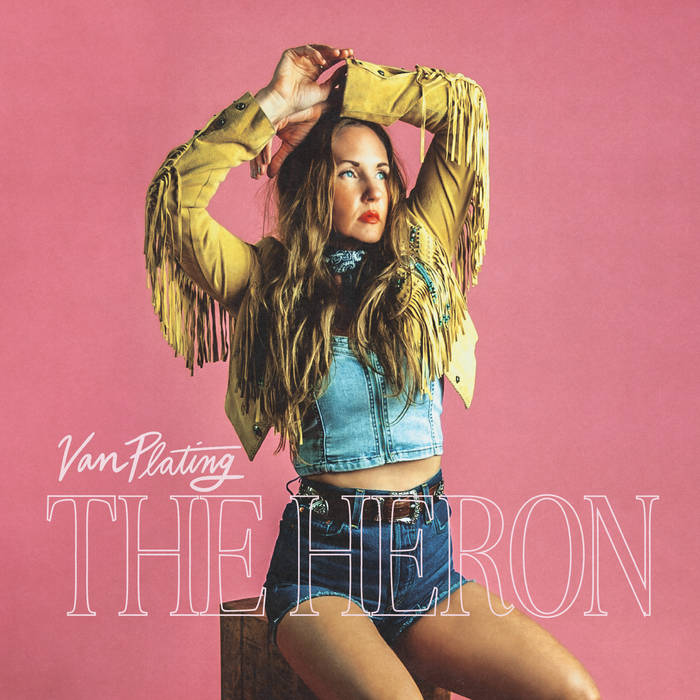
5. Van Plating – The Heron. To be totally transparent, I could quite happily have picked any and all tracks from Van’s new record, ‘Orange Blossom Child’, for my ‘best of the year’ so far. It really is the ‘Swiss Army Knife’ of records, from sumptuous stompers like the title track (featuring the aforementioned Mr Harrison on Killer Axe), through to the more delicate numbers like ‘Joshua’ that tug the heartstrings as deftly as the most practiced of pickpockets. However, for me, it’s this debut single that just demands attention. It’s not so much a song as the soundtrack to a songwriter’s life, where you just need to close your eyes and you’re utterly immersed in her environment. And yet, like all superstars (and I’m absolutely convinced that we’re lucky enough to be witnessing ‘one of our own’ heading ineffably towards the ‘big leagues’), The Heron wisely counsels that whilst we mere mortals can look, we’re not getting to the other side of the velvet rope. In the third verse, Van sings, “Looking for a hint to come my way. A billboard I could stand on.” And there’s a sense of inevitability about it. Some folks just belong on that billboard, and I’m convinced Van Plating is next in the queue. And if there’s one thing we Brits know about it’s queuing!
Hey there, Music Friends and Rock ‘n’ Roll rebels, gear up for a wild ride through the sonic landscapes of 2023! What is life without the beat, the rhythm, and the timeless melodies that drive us? It’s often said that music is the soundtrack of our lives, and the ‘Best Music/Fave Music of 2023’ list is the ultimate playlist for a year’s worth of unforgettable memories and moments. In a world where trends come and go like fleeting fads, these annual lists are a testament to the enduring power of music. So, in the next several weeks, we will explore favorites, new discoveries, and the return of old joys that were released in the past spin around the sun.
In a world that never stops evolving, the past is a treasure trove of pure, unadulterated rock ‘n’ roll magic. Enter the ‘Best Of’/’Faves Of’ releases for 2023 – those timeless lists and collections that remind us why rock music is not just an art form; it’s a way of life. A day without music is like a day without air. In the spirit of reflection and the drive for great music, let’s dive headfirst into the artists, albums, and music of 2023 and explore why they are a musical necessity that keeps the rock spirit alive. Think back to the blazing guitars of Bob Mould or the revolutionary sounds of The Replacements —those moments in music history when artists transcended their time and space and became icons. ‘Best Music of 2023’ celebrates the present while preserving a piece of our collective musical heritage. It reminds us that, amid the ever-changing landscape of the music industry, rock ‘n’ roll’s rebellious spirit persists in the discovery of new songs.
Unearthing Hidden Treasures
The world of music is an endless treasure chest, and some of its most precious gems often lie hidden in the shadows. Whether it’s a local indie band or an underground hip-hop artist, the list of favorite releases is a spotlight on these unsung heroes. It’s a celebration of the audacious, the avant-garde, and the artists who dare to defy conventions.
Imagine the joy of discovering a hauntingly beautiful ballad by an obscure folk artist or a mind-bending electronic composition that defies categorization. The list of favorite releases opens doors to musical experiences that might otherwise remain hidden from the mainstream. It encourages us to venture beyond the comfort of radio airwaves and explore the uncharted territories of sound.
A Testament to Innovation
Music is not a stagnant pool; it’s a river that flows with innovation and reinvention. Each year, the ‘Best Music/Fave Music of’ lists serve as a compass, guiding us through the ever-evolving landscape of genres and styles. They shine a light on the artists who are pushing the boundaries of what’s possible, reminding us that the spirit of experimentation is alive and well.
Consider the genre-bending fusion of jazz and hip-hop or the mesmerizing synthesis of electronic and classical elements. These boundary-breaking compositions are often tucked away from the mainstream spotlight, but ‘Best Music/Fave Music of 2023’ makes sure they get their moment in the sun. It is a testament to the artists who are fearlessly leading music into uncharted territories.
Cultural Time Capsules
Music is not just about melodies and lyrics; it’s also a reflection of the times we live in. The ‘Best Music/Fave Music of 2023’ list is a cultural time capsule that captures the essence of the year. It’s a snapshot of the collective consciousness, a mirror of society’s hopes, dreams, and struggles. These lists preserve the soundtrack of our era for generations to come.
In 2023, as we grapple with the complexities of a rapidly changing world, music remains a constant companion. The ‘Best Music/Faves of 2023’ list reminds us that, even in times of uncertainty, art continues to thrive. It’s a testament to the resilience of human creativity and the power of music to provide solace, provoke thought, and inspire change.
A Chronicle of Diversity
One of the greatest strengths of music is its ability to bridge divides and unite people from diverse backgrounds. The ‘Best Music/Fave Music of 2023’ list is a testament to the rich tapestry of voices, cultures, and perspectives that make up music. It celebrates the kaleidoscope of sounds and stories that define our world. Alternative, Acoustic, Americana, Country, Hip Hop, Indie, Soul, and more genres were well represented in terrific releases of 2023.
Whether it’s the country-soulful ballads of an incredible artist like Van Plating or the powerful and direct lyrics of Matt Derda these lists recognize that music knows no borders. It’s a universal language that speaks to the heart and soul, transcending linguistic and cultural barriers. In a world that sometimes feels divided, the ‘Best Music/Fave Music of 2023’ list reminds us of our shared humanity through the power of music. There is always new discovery to be found and that reminds us that there is something good in the world.
A Call to Musical Adventure
In an era where playlists are often curated by algorithms, ‘Best Music/Fave Music of 2023’ invites us to embark on a musical adventure. It encourages us to step outside our comfort zones, to explore new genres, and to embrace the unknown. It reminds us that, in the vast sea of music, there are endless treasures waiting to be discovered.
Picture yourself diving headlong into the psychedelic soundscape of a progressive rock band or getting lost in the poetic lyricism of a folk singer-songwriter. These annual lists are a call to arms for music lovers everywhere to expand their horizons and discover the beauty in the unfamiliar. They invite us to celebrate the diversity of music and to cherish the joy of exploration.
The ‘Best Music of 2023’ list is not just a compilation; it’s a testament to the enduring power of music to inspire, provoke, and unite. It reminds us that, in a world of fleeting trends and ever-changing landscapes, music remains a constant source of solace and inspiration.
So, fellow music fans, embrace the ‘Best Music/Fave Music of 2023’ list with open ears and open hearts. Let it guide you on a journey through the sonic wonders of the year, introducing you to artists and sounds that may become the soundtrack of your life. In a world that sometimes feels chaotic and uncertain, let music be your anchor, your refuge, and your source of boundless joy. Keep the turntable spinning, put the headphones on, and let the music of 2023 set your soul free.
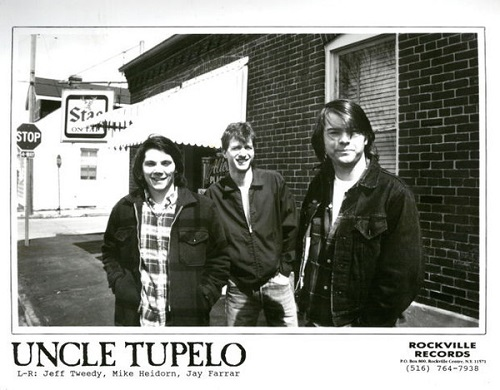
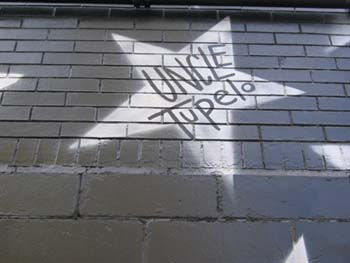
How often has someone asked what are your top ten albums in your record collection? Or how many of us have had one of those bar conversations where we are hypothetically trapped on a desert island with only ten records? A desert island album is meant to be a fun concept often discussed among music fans. It refers to an album that someone would choose to have with them if they were stranded on a desert island, again just hypothetically speaking — because no one is really trapped anywhere. An album in the desert island collection is considered a person’s absolute favorite, one they could listen to repeatedly and never tire of, making their isolation on the desert island more bearable, and more manageable until they are rescued. At least in my positive interpretation, there is a rescue. It’s essentially a way of asking someone to identify their all-time favorite or most cherished album. One of these perfect records, for Dr. J, is Uncle Tupelo’s sophomore effort, “Still Feel Gone.”
“Still Feel Gone,” is a raw and unapologetic exploration of the American heartland, capturing the essence of rural life with a blend of punk energy and alt-country sensibilities. Released in 1991, this album solidifies Uncle Tupelo’s place as pioneers of the burgeoning alternative country movement, paving the way for bands like Drive By Truckers, Calexico, Giant Sand, Whiskeytown, Lucero, Magnolia Electric Co., Kathleen Edwards, and far too many to mention, to follow. And, of course, the bands created in the wake of Jay Farrar and Jeff Tweedy’s breaking up of Uncle Tupelo, Wilco and Son Volt continue to mine the alt-country aesthetic in adventurous ways.
Uncle Tupelo were not the only alt-country band of that time, certainly The Old 97s, Lucinda Williams, Steve Earle, The Jayhawks, Cowboy Junkies, and Richard Buckner quickly come to mind, however the fusing of punk, folk, traditional music and country in authentic and personal lyrics within a melding of sonic forms that stayed true to a rock and roll aesthetic was unique.
The opening track, “Gun,” sets the tone for the entire album with its blistering guitars and rebellious lyrics. Jay Farrar and Jeff Tweedy’s distinctive voices, each with its own unique timbre, intertwine seamlessly throughout the record, creating a compelling dynamic. It’s a testament to their songwriting prowess that they can effortlessly switch from the hard-edged, punk-influenced sound of “Gun” to the melancholic and introspective “Looking for a Way Out.”
“Still Feel Gone” explores themes of isolation, longing, and disillusionment, often delivered through vivid storytelling drawn from relatable personal experiences. Songs like “True To Life”, “Discarded” “If That’s Alright” and “Fall Down Easy” paint pictures of a world where dreams have been deferred, and the protagonists are left grappling with the consequences of their choices. There is a profound difference in stopping yourself and being unable to grasp what has been denied you all the while knowing that you are missing something. The lyrics are poignant, introspective and poetic, reflecting the struggles of ordinary people trying to find their place in a changing world that does not look at all like what was promised.
The album’s musical diversity is one of its strengths. “Still Be Around” showcases the band’s ability to craft a memorable, melodic tune, while “D. Boon” pays tribute to the late, great guitarist from The Minutemen, a band that clearly influenced Uncle Tupelo’s punk leanings. Several songs broaden Uncle Tupelo’s palette incorporating more instrumentation than you find on a punk record.
Consistently the songs on “Still Feel Gone” carry a burden of working class life. And this accessibility to everyday experience without seeing it as precious but rather the hard fought requirements of making a living, however you can do that, is one of the many strengths of this record. This authentic lyrical approach cements a characteristic that comes to define the alt-country musical movement: testament to the incredible past music that continues to guide our steps as we think about why we are in the state of life we find ourselves and reinventing music to express the frustration, and occasional anger that brings, while staying true to emotions of the heart. Consistently the songs on ‘Still Feel Gone” have lyrics that feel like the band was writing about you or someone close to you that you wish you could help but nothing you try to do ever goes right.
One of the standout tracks on the album (and to be honest this is a record of ‘all killer, no filler’), for me, is “Watch Me Fall.” It’s a haunting and yet strangely bouncing tune that captures the essence of loneliness and despair with a clash of what feels like a counter-programming of melodic guitars, bouncy bass and damn near peppy percussion. Farrar and Tweedy’s vocals harmonize beautifully, creating a haunting and unforgettable listening experience that still puts a pep in your step. The song is not some simple “sad sack” depressive episode, it is the realization that maybe, just maybe you are going to fail because the house always wins:
Some folks find that their role in life is to fail at everything they try
while other folks see but not like me There’s one thing that they’re damn good at
Gather around you all Come around and see Those who stand tall Why don’t you please, watch me fall
This mix of lyrics reflecting the economic challenges of life with music that feels like it is taking you in a completely different direction reaches a highpoint with “Punch Drunk.” The song’s lyrics explore the existential challenge of hard work and hard living while the driving rock and roll that instead of reaching a screeching guitars crescendo, fades out. The music reflecting the subject matter perfectly. But perhaps the best line on the album — among so many powerful lyrics — is when Jay Farrar sings:
“Tried to stay, tried to run There’s never been enough reason To believe in anyone This trickle-down theory has left all these… pockets empty and the bar clock says three A.M. Fallout shelter sign above the door In other words, don’t come here anymore
The production on “Still Feel Gone” is intentionally unpolished, giving the album an authentic, DIY feel that complements the raw emotions conveyed in the songs. Producer Sean Slade’s decision to capture the band’s live energy pays off, allowing Uncle Tupelo’s passion and intensity to shine through whether the song holds a punkish pacing and energy or a languid, slow movement.
While “Still Feel Gone” may not have achieved the same commercial success as some of their contemporaries, it remains a timeless and influential record in the alt-country genre. Uncle Tupelo’s ability to blend punk and country elements with introspective lyrics makes this album a compelling and enduring work of art that captures real truth without ever feeling forced or a songwriter’s exercise. Jay and Jeff sing about the working class not as an academic survey but because of their life history. “Still Feel Gone” is a testament to the band’s vision and talent that their music still resonates with listeners, inviting them to explore the heartland’s complexities through their distinctive sonic frame.
And for all of these reasons and perhaps more, it is one of Dr. J’s Desert Island records.
The Nautical Theme, a guitar and keyboard-based indie duo hailing from the Gem City of Dayton, Ohio, have unleashed their latest music video for the first track from their excellent record ‘Get Somewhere‘, “Sun Won’t Rise.” In this harmonic experience through soundscapes, they craft a tapestry of emotions that envelop the listener like a warm, comforting embrace. When Matt Shetler (guitar, vocals) and Tesia Mallory (vocals, keyboard) sing they wrap their voices together as if they were the same person. With their unique blend of folk and indie-pop sensibilities, The Nautical Theme has produced a track that is nothing short of magic.
From the very first strum of the guitar, “Sun Won’t Rise” transports you to a dreamy space like a favorite comfy chair. The enchanting vocals blend with the intricate guitar work and blend together seamlessly with the keyboards, creating an atmosphere that is both melancholic and uplifting. Matt’s voice is like a beacon of light, guiding us through the song’s emotional labyrinth of finding your way home.
Lyrically, “Sun Won’t Rise” delves into themes of heartache and longing, painting a vivid picture of yearning for something just out of reach. The lyrics are perfect, evoking a sense of nostalgia and introspection. Lines like “Because the sun won’t rise, And the moon won’t shine when you’re gone” resonate deeply with anyone who has experienced the bittersweet beauty of yearning.
The production on this track is impeccable. The layers of instrumentation, from the delicate guitar to the keyboards to the percussion create a lush sonic landscape that is both intricate and immersive. Each element is carefully placed, contributing to the song’s emotional depth.
What sets “Sun Won’t Rise” apart from other songs is its ability to evoke a powerful sense of atmosphere. It feels like a soundtrack to a long-lost memory or a forgotten dream, a testament to The Nautical Theme’s mastery of creating sonic spaces that transcend the boundaries of traditional songwriting.
The Nautical Theme‘s “Sun Won’t Rise” stands as a beacon of originality and artistry. It’s a song that demands to be taken seriously, each time revealing new layers of its emotional depth. The Nautical Theme reminds us of the enduring power of music to touch the soul and transport us to places both familiar and uncharted.
As part of our ‘Revisiting’ series of essays, we are connecting with music fans, friends, writers, and fellow travelers to reflect on the meaning of the bands and music that has touched their lives. One of our favorite bands is The Connells.
Anyone who knows Dr. J is well aware of his passion and love for this incredible band. They and their music did connect Dr. J and Mrs. Dr. J, so perhaps there is some bias there. One of the most insightful music commentators is our good friend Rob Perry. Rob is thoughtful, contemplative and simply has some of the best taste in music. When we asked Rob if he would reflect on The Connells as they celebrate over 40 years as a band and 30 years since the release of their masterpiece, ‘Ring‘, Rob quickly sent the following essay. Many thanks to Rob for this and our public apology for taking so long to get it on the site.
Most who know me, understand that I am first and foremost a music fan. I always have been and always will be. While I grew up in a small town in Georgia, I used music to allow me to explore the world and other cultures, etc. Music has also always been a means of escape for me. At the age of 22 and in the Fall of 1986, while serving in the U.S. Air Force, I was assigned to the airbase in Goldsboro, NC. I typically listened to Raleigh’s WRDU FM radio station and was introduced to The Connells’ music by one of their deejays, Kitty Kinnon.
Now I don’t claim to be one of The Connells’ super fans. That title is reserved and bestowed on the truly worthy ones, some that I even know. What I do claim is a special bond with the band and their music that has woven itself into the fabric of my entire life and existence. Subconsciously and organically I’ve come to rely on their music and live shows to help cheer me up when I’m sad, to comfort me when I’m depressed, to give me hope when there is none, and to lead me to think about things I’ve never pondered. Their music has been there, front and center, throughout the joyous births of my three children, the excruciating pain of losing my daughter, and my two sons’ evolution into men of their own.
Whether purposefully or not, there are so many things related to The Connells’ music interwoven into my and my family’s lives. My children grew up listening to the band while strapped into their car seats in our second-hand Volvo wagon. They were rocked to sleep many nights as I sang “Lay Me Down” or “Much Easier” to them.
In a show of my love, I have gently passed onto them Darker Days, Boylan Heights, and all of the albums that came later, much like I would have my great-grandfather’s pocket knife or my grandmother’s favorite coffee cup. I want my children to fondly remember this music and how it makes them feel.
Whether it was The Connells’ small shows or big concerts, if there was a way for me to make it there I did. And still do! My first live experience seeing them was at Raleigh’s Dorton Arena when they played a Wake County-sponsored High School Graduation event. It was only intended for recent graduates but I figured out that I could volunteer to be a chaperone and actually get inside to see the show. Weird maybe, but I was desperate to see this band live. Soon afterward, other cities and venues would follow: Cat’s Cradle in Chapel Hill, The Ritz in Raleigh, The Fox Theatre in Atlanta, The Boathouse in Norfolk, Neighborhood Theatre in Charlotte, The National in Richmond, Variety Playhouse in Atlanta, and many, many more. Some shows were attended with groups of friends and some I ended up going alone. Whatever the case, I was never disappointed and enjoyed every live gig. I’ve even enjoyed bumping into members of the band out at other artists’ shows around the Triangle, NC area.
My relationship with The Connells continues to this day. It’s one that can’t be replaced and one that I couldn’t have lived without. For quite some time, I’ve wanted to submit these words to the public and thank the band for their art and music. My life would have been dramatically different and less fulfilled without the band in it.
Sending peace and positive light to The Connells band members, past and present, and their families.
As we celebrate the Ed Stasium remix of The Replacements album ‘Tim‘, we thought gathering other music lovers’ thoughts would be a great way to stop and consider the impact of this record. The second ‘Revisit’ comes from our friend and music writer, Kevin Alexander. Make sure you subscribe to his Substack!
There used to be a wall in downtown Portland Oregon, where someone had painted “Paul Westerberg is God.” Anytime my friends and I were down there, we’d see it, laugh, and make the sort of inside jokes funny only to us.
It would be ~25 years between seeing that sign and finally seeing the Replacements. My wife & I drove 75 miles to hear 26 songs, and it was worth every last minute. My ears bled like I thought they might. It was everything we expected. And more.
It would take 38 years for The Replacements’ Tim album to get the remix it deserves. The result is far more than merely “punching up the drums” or tweaking a note here or there. Ed Stasium has overhauled the record, resulting in a much more dynamic, heavier sound.
The original was produced by Tommy Erdelyi (better known as Tommy Ramone) and sounds tinny, nasally even. Despite being packed with songs we hold so close, there is a distance to it. It’s flat, but to my ear, that’s how most ‘Mats records before Don’t Tell A Soul sounded.
It was all part of the bargain and matched their (then) chaotic style, which never much lent itself to fidelity. The record production on Tim left a lot on the table, but The Replacements was always a band that rolled their eyes at terms like “potential,” so maybe that was part of the bargain too.
Tim represents an inflection point for the band where Westerberg’s lyrics start pivoting toward a more poignant place. Think less “Gary’s Got A Boner” and more “Little Mascara.“
With Stasium’s help, the sound is finally leveled up to match the words.
The usual box set ingredients (B-sides, live tracks, etc.) are here, but the original album tracks themselves are the real treasure. Listening to a fresh take on something so familiar can be fraught, but Stasium has gone to great lengths to amplify & enhance only the best parts and finally bring the music closer.
To my ear, the biggest changes are to the rhythm section. Tommy Stinson’s bass had always been relegated to the back, almost an afterthought as Westerberg and Bob Stinson battled it out on guitar. Here, his playing is much closer to the front, and the lines are much cleaner and clearer.
Chris Mars also benefits from revisiting the record. With Stasium’s touch, the drumming is revealed as much more intricate. Even listening with less-than-stellar headphones, you hear new fills here or a cymbal crash there. A record like Tim is one you grow to love by heart, down to every last note. Hearing a series of new parts in the equation is unexpected but in the best way.
Bob Stinson sees some posthumous redemption here, too. At this point in the original recording, he was already headed toward drug-fueled oblivion and had a much-reduced role on the record- almost as a vestigial nod to their louder, more raucous days than anything else. Part of that is down to his wrestling with his demons, but part of that might’ve been down to being on the outside looking in.
With Westerberg taking an increasing turn toward being a singer-songwriter, where’d he fit in?
Indeed, one of the two “Bob” tracks is “Dose Of Thunder,” a lovely homage to scoring speed. I used to regard it and “Lay It Down Clown” as two of the weaker tracks on the record. Neither will make any “favorite ‘Mats song of mine” lists, but both are improved significantly here, sounding more electrifying. More importantly, both highlight Stinson’s guitar work as someone who, despite going completely off the rails, could still nail it when the mood struck.
No track perhaps encapsulates all of this better than the “new” version of “Little Mascara.” Westerberg has a knack for squeezing an entire story into one verse; this is no exception. The original is good, but this is sublime. Parts have been moved around and overhauled. The intro is now the chorus, each verse a step up to the next, and the whole track is now somehow even more anthemic–and that’s before we get to the outro, which is much longer and features a ripping solo by Stinson.
It just might be my new favorite.
If you dig far enough on YouTube, there is cellphone footage from the show my wife and I were at. Like the early ‘Mats records, it’s raw and shaky. It’s short on production but long on enthusiasm.
As Westerberg tears into the opening riff of “Bastards of Young,” someone just out of frame says, “f**k yeah!” it’s more rapturous than anything– as if the person has been waiting their whole life to hear those chords in person. It’s a dream fulfilled.
In a lot of ways, the newly mixed “Tim” is the same way.
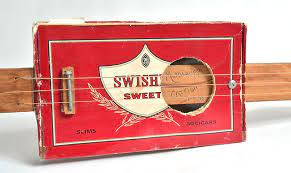
In the world of music, there are certain instruments that transcend their conventional roles, carrying with them the weight of history and the soul of a culture. Among these, the cigar box guitar has emerged as a true icon, steeped in bluesy mystique and a symbol of defiance against the conventional. This unassuming instrument, born from the ingenuity of impoverished musicians captured the essence of a genre so perfectly that it became emblematic of an entire musical movement. The electric guitar is undoubtedly one such instrument, carrying the weight of rock ‘n’ roll on its frets. Yet, nestled in the dusty corners of American musical heritage, there’s another instrument that’s been making a quiet but powerful comeback, breathing life into the roots of blues and folk music: the Cigar Box Guitar. This humble instrument, often crafted from repurposed materials like cigar boxes, reclaimed wood, and improvised hardware, has seen a resurgence in recent years, reviving the spirit of the Delta blues and capturing the imaginations of musicians and artisans alike.
The origins of the Cigar Box Guitar are as humble as the materials used to construct it. It traces its roots back to the mid-1800s when it first emerged in the American South. In those days, slaves and impoverished workers denied access to conventional musical instruments, turned to their resourcefulness. They pieced together these simple, resonant instruments from discarded cigar boxes, broomsticks, and whatever else was readily available. These creations, initially seen as products of necessity, soon became the voice of a generation. The sound of a Cigar Box Guitar wails with the sorrow of the Delta, echoing the hardships and hopes of its creators.
Fast forward to the early 20th century, and the Cigar Box Guitar found its place in the burgeoning blues scene. Musicians like Blind Willie Johnson, Lightnin’ Hopkins, and Hound Dog Taylor adopted these homemade instruments, which were often easier to obtain than store-bought alternatives. The raw, primal sound of the Cigar Box Guitar complemented the emotional intensity of the blues, resulting in a unique and unforgettable sonic experience. These instruments embodied the spirit of the working-class bluesmen, using whatever they had to create music that would resonate through the ages.
The revival of the Cigar Box Guitar can be attributed to a confluence of factors. First and foremost, there was a growing desire among musicians to break away from the homogenized sound of mass-produced instruments and return to a more authentic, raw, and grassroots approach to music-making. In an era dominated by digital technology and auto-tuned perfection, the Cigar Box Guitar stands as a symbol of authenticity, imperfections, and individuality.
Another catalyst for this resurgence was the DIY (do-it-yourself) movements that have periodically swept through the musical world. Musicians and hobbyists began building their own Cigar Box Guitars, drawing inspiration from the past while infusing their creations with modern design sensibilities. The internet played a crucial role in connecting like-minded enthusiasts, enabling them to share knowledge, tutorials, and resources for building and playing these unique instruments. This newfound sense of community further fueled the Cigar Box Guitar revival.
This revival was not limited to just musicians. Artisans and craftsmen embraced the Cigar Box Guitar as a canvas for their creativity. These instruments became works of art, adorned with intricate designs, and crafted with meticulous attention to detail. Luthiers experimented with different materials and techniques, pushing the boundaries of what a Cigar Box Guitar could be. The intersection of craftsmanship and music gave rise to a subculture of Cigar Box Guitar enthusiasts, turning these instruments into coveted collector’s items.
One of the most significant factors contributing to the resurgence of the Cigar Box Guitar was its role in the modern blues and roots music scene. Musicians like Ben Harper, Seasick Steve, Samanta Fish, and Jack White began incorporating Cigar Box Guitars into their performances and recordings, introducing a new generation of listeners to the instrument’s unique and evocative sound. These artists breathed fresh life into the blues tradition, using Cigar Box Guitars to connect with the genre’s deep roots while adding their own contemporary twists.
Moreover, Cigar Box Guitar festivals and gatherings started popping up across the country, providing a platform for enthusiasts to showcase their creations and talents. These events brought together musicians, luthiers, and fans, fostering a sense of camaraderie and celebration of the instrument’s rich history. The Cigar Box Guitar had officially made its comeback and was here to stay.
The resurgence of the Cigar Box Guitar has not only been a revival of a musical instrument but also a revival of a rich cultural and artistic tradition. It’s a testament to the enduring power of music to transcend time and place, to connect people across generations, and to keep the spirit of the blues alive.
Today, Cigar Box Guitars come in various shapes and sizes, from the traditional three-string models to more experimental creations with multiple strings and complex electronics. Some are adorned with intricate artwork, while others retain the rustic charm of their predecessors. What unites them all is the unmistakable sound that harks back to the origins of the blues—a sound that carries the weight of history and the soul of the Delta.
As the Cigar Box Guitar resurgence continues to gain momentum, it serves as a reminder of the enduring appeal of handmade, authentic music. It’s a tribute to the resourcefulness of those who, in times of hardship, crafted beauty from the simplest of materials. It’s a celebration of the blues, a genre born from pain but tempered with resilience and hope.
In an age where the music industry is often dominated by commercialism and conformity, the Cigar Box Guitar resurgence is a rebellious and refreshing movement. It reminds us that music is not just a product to be consumed but a living, breathing art form that can be reinvented, reimagined, and reclaimed by anyone with a passion for its power.
As the Cigar Box Guitar takes center stage once again, it beckons us to rediscover the roots of American music, honor the legacy of those who played it in the past, and to carry forward the torch of creativity and authenticity. In the hands of a new generation of musicians and artisans, the Cigar Box Guitar is not just an instrument; it’s a testament to the enduring spirit of the blues and a symbol of the boundless possibilities that can arise from the simplest of beginnings.
So, as you listen to the hauntingly beautiful strains of a Cigar Box Guitar, remember that it’s more than just an instrument; it’s a living piece of history, a testament to the enduring power of music, and a reminder that sometimes, the most extraordinary things can emerge from the most ordinary of materials. The Cigar Box Guitar resurgence is a testament to the timeless allure of handmade music, and it’s a revival that’s here to stay, carrying the spirit of the blues into a new era.
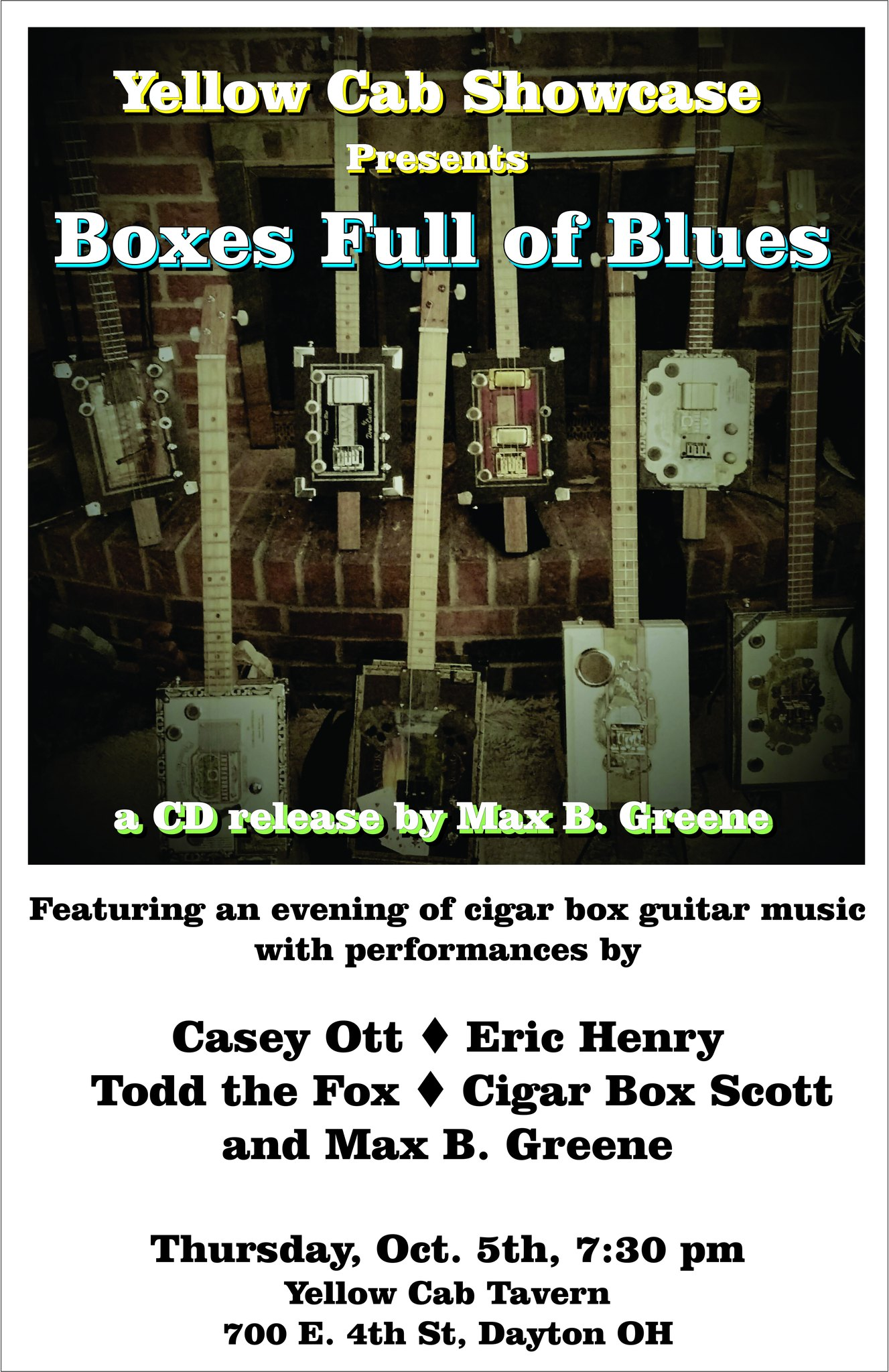
Dayton musician Max B. Greene has a new collection of blues music recorded on 3-string cigar box guitars that he is celebrating on Thursday, October 5th alongside guitarists Casey Ott, Eric Henry, Todd the Fox, and Cigar Box Scott. Max will be bringing in one of his guitars and playing a couple tunes on a cigar box guitar, as well as discussing the cigar box guitar phenomenon sweeping the country.
Tamar Berk’s “Shadow Clues” from her record “Tiny Injuries” is a haunting brilliant masterpiece that weaves a tapestry of emotions with each delicate note and evocative lyric. Much like a detective searching for hidden truths, Berk’s songwriting skillfully unravels the complexities of the human experience, leaving listeners mesmerized and introspective.
From the very first chords, “Shadow Clues” cast a spell, drawing you into its ethereal lightless world. Is it dark because of our choices, the slow realization that we can only hold back the long night for so long? Berk’s voice, a rich and emotive instrument in its own right, resonates with a raw vulnerability that feels like a whispered confession in the dead of night. Berk’s singing evokes Rebecca Gates. Her phrasing and delivery are reminiscent of great music storytellers, yet there’s a contemporary edge that makes the song uniquely her own. The slow build of the song encapsulates the twists and turns of both discovery and disconnection.
The lyrics of “Shadow Clues” are a masterclass in epic storytelling. Berk paints vivid images with her words, offering glimpses into a shadowy world of secrets that linger in both delicate exploration and uncertainty. Consider lines like:
"Because all that you learned was a solid stare
And a stiff upper lip and a handshake grip
And a deadpan expression with a frigid touch
Unresponsive to the needles that stab you so much"
These lyrics evoke a sense of mystery and intrigue, while the chorus’s refrain of “You know I never know What you’re feeling, Look for the shadow clues, On the ceiling” carries a sense of longing, fear, and nostalgia that is impossible to ignore. Yet you want to know what is being felt. But you can’t. Is this a song about losing someone we care about and watching them fade away from us when all we want is to see the life run back into their face, their hands, their spirit? It feels that way.
The arrangement of the song is equally captivating. The instrumentation is sparse and building, allowing Berk’s voice to take center stage, but every instrument is carefully chosen and expertly played. The haunting, almost cinematic quality of the music complements the lyrical themes, creating an atmosphere of suspense and melancholy that lingers long after the song fades.
In “Tiny Injuries,” Tamar Berk has crafted an album that explores the complexities of love, loss, and self-discovery through pain, and “Shadow Clues” stands out as a standout track that encapsulates the album’s emotional depth. It’s a song that demands repeated listens, revealing new layers of meaning and nuance with each playthrough.
“Shadow Clues” by Tamar Berk is a song that deserves to be celebrated and dissected, a beautiful piece of art that speaks to the human condition with honesty and grace. It’s a reminder of the power of music to touch the soul and stir the heart, and Tamar Berk is undoubtedly an artist more than capable of weaving a landscape of distance and closeness in unison. And this song catches in your throat like the effort to suppress a cry that traveled through you and within great distance in order to be released.
In the throes of a vibrant local music scene, one might expect shows in the community to be a cultural cornerstone, drawing diverse crowds in droves for a singular reason, seeing great local music. Yet, in recent years, there has been a decline in the attendance of these grassroots gatherings. Even before the Covid-19 pandemic, a decline in the number of people attending music events was shrinking. As I dig deep into this challenge, we take some time and think about the many reasons why people are increasingly opting to stay home rather than stepping out for a night of live music. In the spirit of trying to understand this so that we can encourage attendance at local shows, let’s embark on a brief effort to explore the dynamics that are reshaping the landscape of local music event attendance.
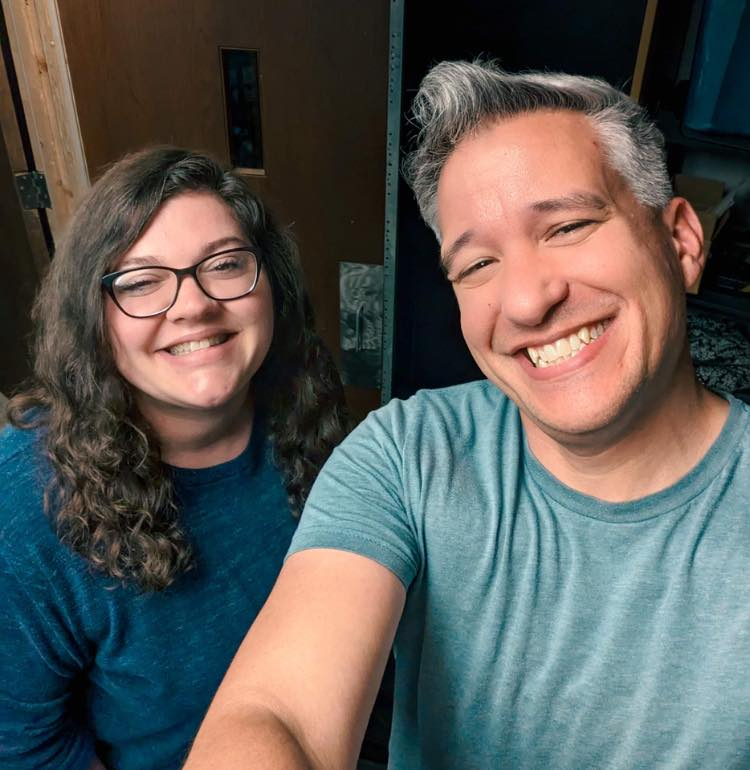
I have to be honest about my motivation. I am an active show-goer! I attend many local, regional, and national music events and shows. I am a passionate supporter of local, Dayton, Ohio, and regional music — a major premise of Your Tuesday Afternoon Alternative.
I was fortunate to experience some amazing music during my college years (1983-1988) in the state of Minnesota during a time of unbelievable explosion in creativity attending shows from Husker Du, The Replacements, Soul Asylum, Prince, The Gear Daddies, The Suburbs, The Jayhawks, Run Westy Run, ZuZu’s Petals, and so many more. I also saw touring bands such as R.E.M., The Connells, The dbs, NRBQ, Miracle Legion, The Ramones, and far more than there is time to list. And since the 2000s, I have attended more local shows in the Dayton, Ohio area than I can list here. Mrs. Dr. J and I spend time each week planning what shows we will attend and there are more shows that we would go see than we have time.
The Allure of Digital Convenience
One inescapable factor reshaping the landscape of local music event attendance is the digital age. In an era where the world is at our fingertips, streaming services and virtual concerts offer an unparalleled level of convenience. The ease of tuning into your favorite artist’s live stream from the comfort of your own home is a siren song that has seduced many away from the raucous atmosphere of local venues.
Digital platforms not only offer ease of access but also empower fans to curate their music experiences. With personalized playlists and algorithmic recommendations, listeners can indulge in a highly tailored musical journey, often without the need to step one single foot outside. The pull of the digital realm is undeniably strong and presents a substantial challenge for local music scenes. That coupled with the abysmally low compensation for digital streams can create a financial hardship for bands and musicians.
Economic Considerations
Local music events have traditionally been an affordable and accessible option for music fans. However, the economics of entertainment have been shifting beneath our feet. Ticket prices, particularly for well-known local acts, have been creeping upwards, costs that were under $20 for a couple have now increased as acts and venues seek to recoup expenses. Considering the cost of transportation, parking, drinks, and merchandise, attending local music events can strain the budgets of many.
Furthermore, the gig economy has reshaped the financial stability of younger generations, making disposable income scarcer. This financial precariousness forces potential attendees to weigh the value of a night out against other financial priorities and expenses. For some, the fun of local music events is overshadowed by the economic realities of life in the 21st century.
Changing Tastes
Music, like any art form, evolves over time, and so do its listeners. What fans want to hear changes. The kinds of performances that draw a crowd evolve. The changing demographics of music audiences have led to a diversification of musical tastes and preferences. Local music events, with their challenge of advertising — the perennial problem of ‘getting the word out’ — may not always reach the eclectic tastes of a diverse audience.
As a result, individuals who prefer genres or styles not typically showcased at local events may be disinclined to attend. The widening spectrum of musical genres, coupled with the ease of access to niche music communities online, means that many can explore their musical interests without ever leaving their comfort zones.
We also have to consider that the reluctance to attend local shows may have increased post-pandemic. There may be a greater concern about being in a crowd due to health concerns.
The Urbanization Conundrum
In the shifting demographic landscape, urbanization has played a critical role in reshaping local music event attendance. Cities are cultural hubs teeming with artistic expression, and local music scenes thrive in these environments. Yet, the downside of urbanization is the relentless pace of life and the reluctance of folks who live in the suburbs to come into the city to experience music events. For some city dwellers, the cacophony of daily life is enough to discourage them from seeking out additional auditory stimulation at local events.
Furthermore, urban areas are often marked by high living costs, making it challenging for residents to prioritize regular attendance at local music events. The erosion of affordability in urban centers can lead to a decline in the vibrancy of local music scenes.
The Virtual Spectacle vs. the Live Experience
The allure of virtual entertainment, I discussed above, has challenged the primacy of the live music experience. Virtual concerts and livestreams allow artists to reach global audiences without the constraints of venue capacity or geographic location. While this may be a boon for artists, it poses a dilemma for local music scenes. If you can see your favorite artists without leaving home, why go to a local show?
The virtual spectacle, enhanced by breathtaking visuals and immersive technology, can rival the in-person experience. As artists invest in creating jaw-dropping digital performances, the question of whether the palpable energy of a live crowd can compete arises for us. For some, the convenience and spectacle of virtual entertainment outweigh the communal experience of local music events. However, the solitary experience of watching a concert in your living room separated from your friends and fellow music lovers can feel hollow. Of course, this assumes that people want to experience music together with people they may not know.
The decline in local music event attendance is a complex web of economic factors, shifting cultural tastes, technological convenience, and the pull of virtual entertainment. As the music industry continues to evolve in the digital age, local scenes must adapt to these changing dynamics to remain relevant and vibrant. To lure audiences back into the heart of their local music communities, venues and artists alike must offer experiences that transcend the allure of digital convenience and rekindle the magic of the live music event and the community that is built in those experiences. In doing so, we can ensure that the fading applause of local music events reverberates once more, echoing through the spaces where music is played.
What factors would you add to this consideration? What can we do to encourage more people to attend music events and shows in our local communities?
Streaming Forward, Powered By The Past - if you love the 80s music, new music, Eurovision, cheesy pop and awesome playlists then let's get this pop party started!

















 your tuesday afternoon alternative